San Polo, Venice, Italy
Aman Venice
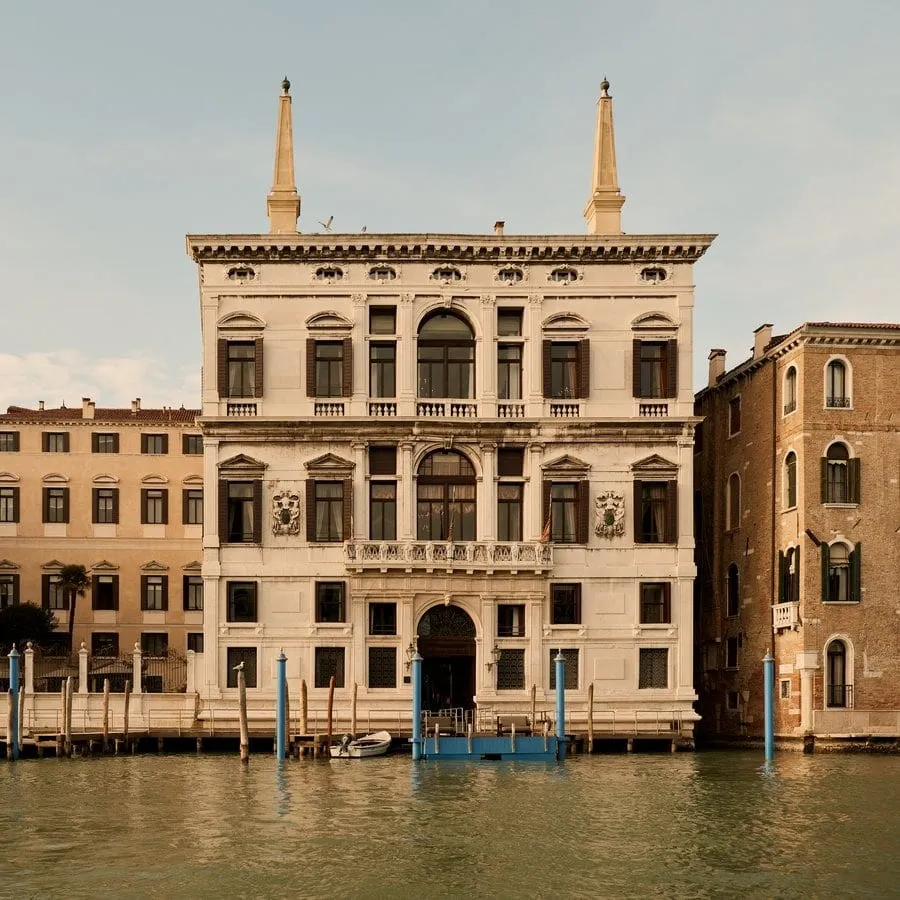
A 16th-century Grand Canal palazzo, frescoed by the Tiepolo family and fitted with a rare private garden, reopened in 2013 as Aman's first Italian address.
- Rates from
- From €1,800 per night
- Nearest airport
- Venice Marco Polo Airport (VCE)
- Transfer
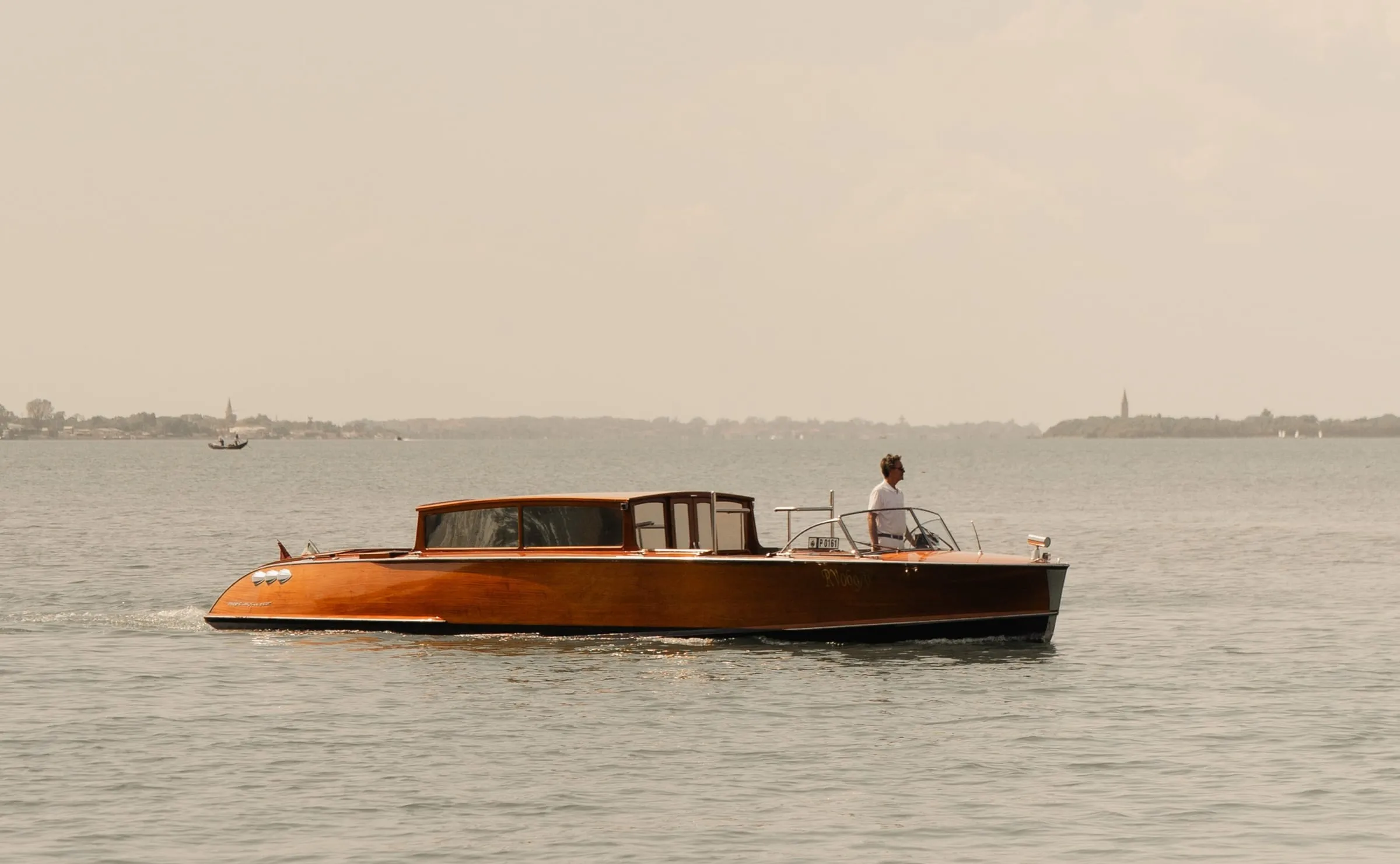
- Around 40 minutes by private water taxi across the lagoon and up the Grand Canal; no roads reach the hotel directly, so all arrivals are by boat or on foot from the nearest vaporetto stop
- Best months
- April to June and September to early October, for mild weather, the garden in bloom, and fewer crowds than deep summer or Carnevale
Venice does not give up private outdoor space easily. It is a city built on wooden piles in a lagoon, where every square metre of land was historically too valuable to leave ungardened, and where most hotels open straight onto a calle or a canal with no buffer at all. Aman Venice has one anyway: a walled garden on the Grand Canal, inherited from a 19th-century banking family who bought up the buildings next door specifically to make room for it. That garden, more than any single amenity, explains why this particular palazzo conversion reads differently from Venice’s many other historic hotel restorations.
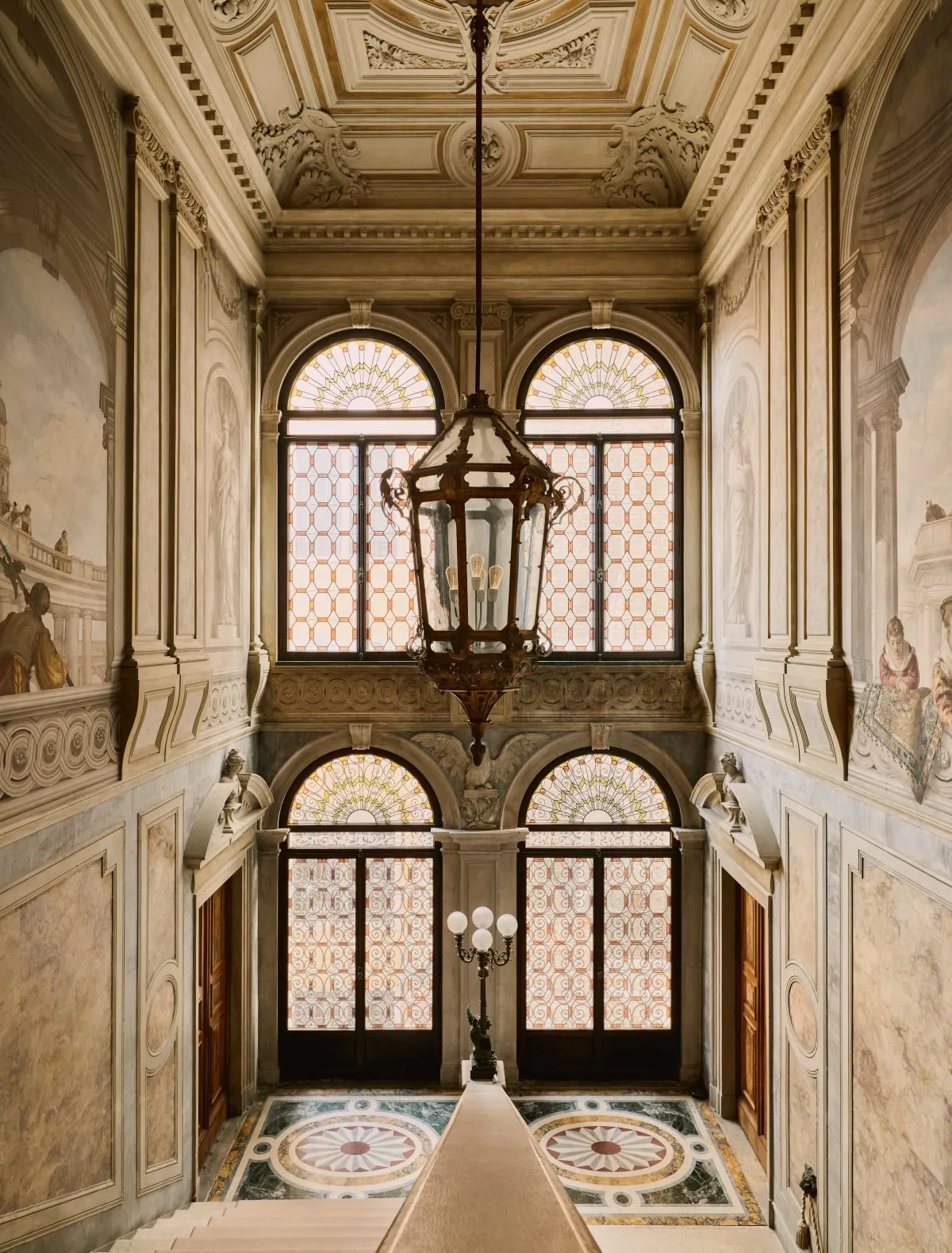
The building itself, Palazzo Papadopoli, has been rewritten by three sets of owners over four and a half centuries: the merchant family that commissioned it, the aristocratic family whose court painter frescoed its reception rooms, and the banking family whose name it now carries. Aman, which opened its first Italian property here in 2013, is the fourth act, and arguably the most restrained. Rather than restaging the palazzo as a costume-drama version of old Venice, the interior designer Jean-Michel Gathy set a quiet, contemporary scheme against walls the Tiepolo family had already finished decorating two and a half centuries earlier.
The result is a small hotel, 24 rooms in total, that trades the scale ambitions of some of its rivals for a specific, well-documented sense of place: a Grand Canal address between the Rialto Bridge and Palazzo Grassi, frescoed rooms that are protected heritage rather than reproductions, and a garden that turns one of the most photographed cities in the world into, briefly, somewhere a guest can sit outside in private.
Why It Stands Out
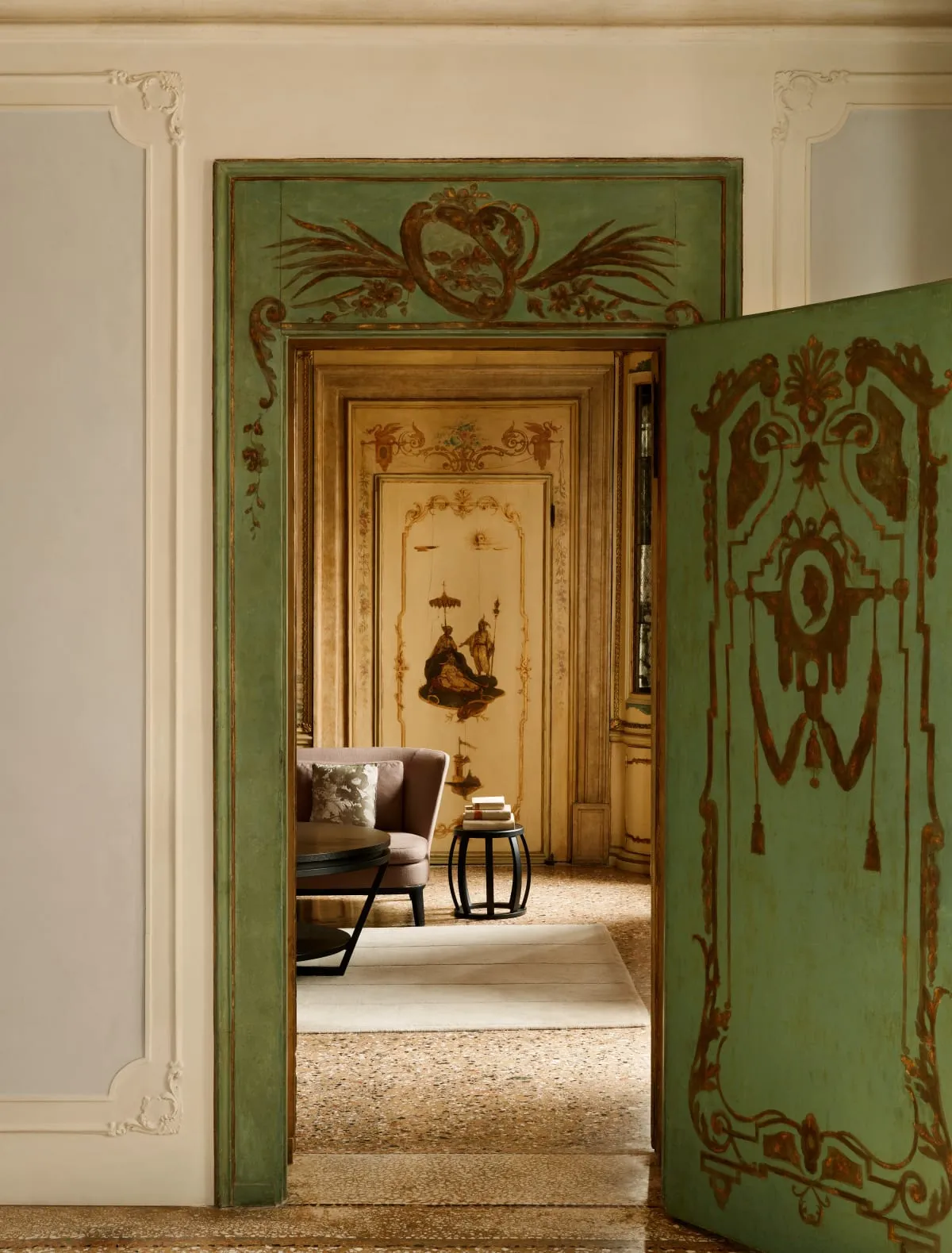
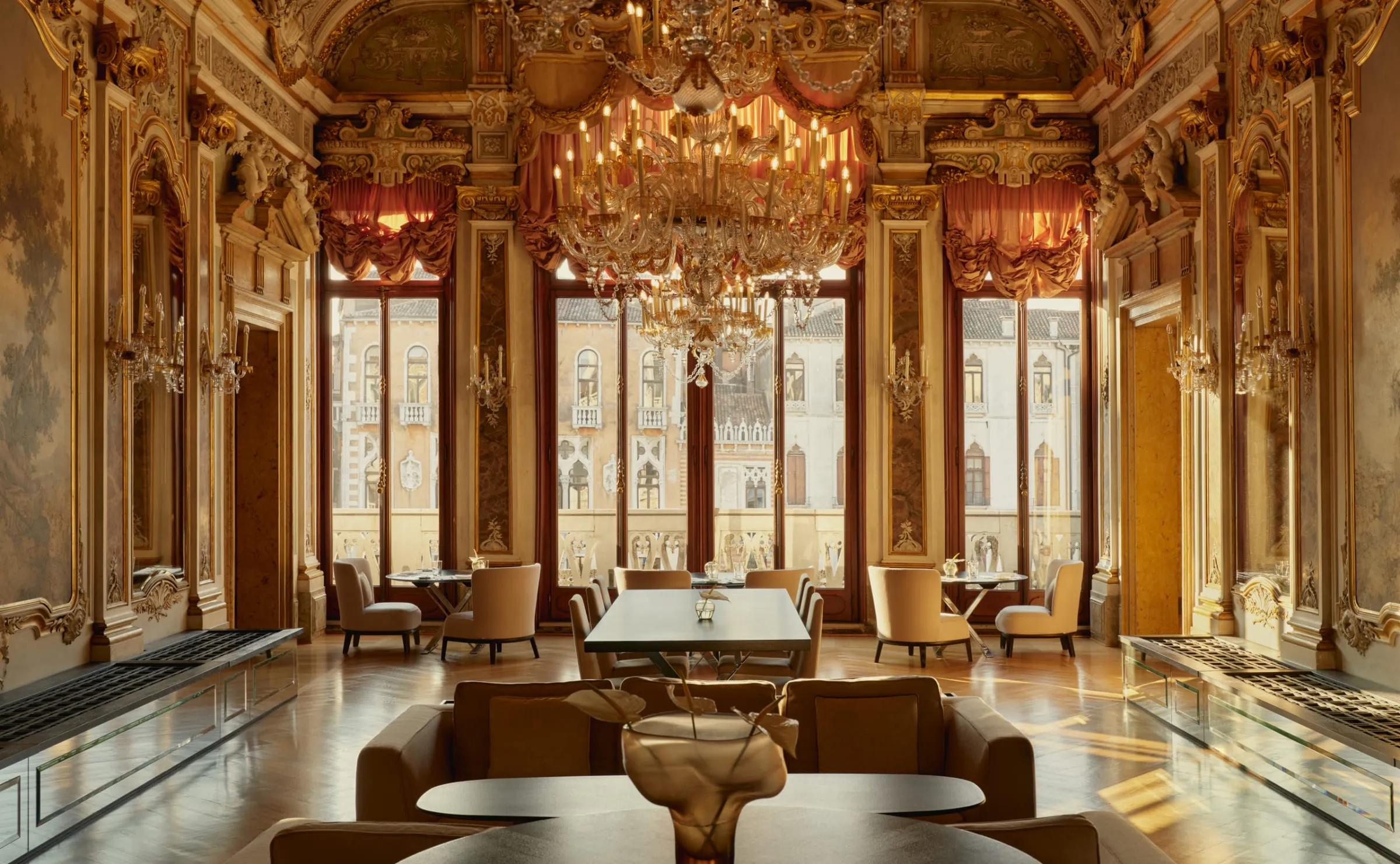
Most historic Venice hotels ask guests to choose between authenticity and comfort: either an old palazzo with old-fashioned rooms, or a modern hotel with none of the fabric that makes the city worth visiting in the first place. Aman Venice’s case for itself rests on not making that trade. Five reception rooms retain Giandomenico Tiepolo’s 1780s fresco cycle, among the most significant surviving private fresco programmes by the Tiepolo family anywhere in Venice, and Gathy’s interiors were built to frame that work rather than compete with or hide it. Add a private Grand Canal garden, a rarity bordering on nonexistent elsewhere in the city, and a footprint of only 24 keys, and the property occupies a narrow, well-defended niche: it is a museum-grade palazzo that also functions, convincingly, as a hotel.
Architecture
Palazzo Papadopoli was built in the middle of the 16th century, completed around 1570, commissioned by the Coccina family, wealthy Venetian merchants, from the architect Giangiacomo dei Grigi. The building is counted among only eight palazzi in the city that stand as monumental, freestanding structures directly on the Grand Canal, positioned between Palazzo Giustinian Businello and Palazzo Donà a Sant’Aponal in the San Polo district, a short walk from the Rialto Bridge.
Ownership passed to the Tiepolo family in the 18th century, and it was during this period that the palazzo’s most significant decorative work was carried out. The property changed hands again in 1864, when it was bought by Niccolò and Angelo Papadopoli, a family of Greek origin from Corfu who had entered the Venetian patriciate in 1791 and built a banking fortune in the city. Angelo Papadopoli undertook a Neoclassical refurbishment of the palazzo in 1874 and 1875, and, crucially for what the hotel offers today, purchased adjoining buildings to create private garden space, unusual in a city where land is at an absolute premium.
The palazzo was leased in 2011 for conversion into a hotel and reopened in 2013 as Aman Venice, the group’s first property in Italy. The restoration, reported to have been carried out under conservation specialist Claudio Rebeschini, was subsequently recognised with an Italian heritage prize for restoration, reflecting the scale of the technical work required to bring 16th-century load-bearing fabric, canal-facing foundations, and protected fresco surfaces up to hotel standard without compromising any of them.
Working inside a monument of this status imposes constraints most new-build luxury hotels never face. Grand Canal palazzi were built on wooden piles driven into the lagoon bed, and centuries of tidal movement, humidity, and periodic flooding put continuous stress on stonework, plaster, and foundations. A conversion of this kind has to reconcile modern hotel infrastructure, climate control, plumbing, life-safety systems, with a building whose ground-floor walls were never designed to keep water fully out and whose decorated ceilings could not be touched. That the fresco cycle survived the process intact is as much a measure of the restoration’s success as any single design decision that followed it.
Interior Design
Jean-Michel Gathy, the Malaysia-based designer behind interiors for Aman and other luxury hospitality groups worldwide, took on the scheme for Aman Venice, and his approach was defined largely by restraint. Where a lesser conversion might have layered heavy period pastiche onto every surface, Gathy’s rooms are comparatively pared back: neutral palettes, quiet contemporary furniture, and finishes that let the palazzo’s original stonework, timber-framed windows, and, in the reception rooms, ceiling frescoes carry the visual weight. The five ground and piano nobile reception rooms that retain their 18th-century Tiepolo frescoes were treated as fixed, protected elements around which the rest of the design had to work, rather than backdrops to be redecorated.
That discipline extends into the guest rooms and suites, where gilded detailing, marble, and the palazzo’s original architectural bones (fireplaces, high ceilings, canal-facing windows) sit alongside modern furniture and art by the Renaissance sculptor Sansovino among other historical references. The effect is closer to a well-edited private residence than a themed hotel interior, a distinction the design deliberately protects by resisting a single, repeatable decorative formula across all 24 keys.
Atmosphere
Aman Venice sits in San Polo, on the quieter side of the Grand Canal relative to the San Marco tourist core, close enough to the Rialto Bridge and its market to be genuinely central, far enough from Piazza San Marco to avoid its heaviest daytime crowds. Arrival is by water only: there is no vehicle access, so every guest’s first sight of the hotel is the same one 16th-century visitors would have had, a formal canal-side facade approached by boat.
Inside, the palazzo’s scale (grand stone staircases, tall piano nobile ceilings, a run of frescoed salons) gives the public spaces a weight and formality that most Venice hotels, working with smaller historic buildings, cannot match. The garden softens that formality considerably: from April to October, meals are served outdoors under trees and manicured planting, with gondolas passing on the canal just beyond the garden wall, a juxtaposition of private stillness and the city’s most famous waterway that is close to unique among Venice hotels.
Rooms and Suites
The hotel holds 24 rooms, suites, and apartments spread across two piano nobile floors, a deliberately small count that keeps circulation and service closer to a private house than a large hotel. Categories run from Garden Rooms, generally the entry-level accommodation with views over the courtyard or garden, and Canal Rooms and Signature Rooms with views toward the Grand Canal and features such as original fireplaces and timber-framed windows, up through named Suites and Apartments.
Among the suite and apartment categories, the Alcova Tiepolo and Sansovino suites take their names from the fresco and sculptural traditions represented in the palazzo, while the largest accommodations, including Coccina’s Apartment, occupy an entire floor (reportedly the fourth), sleep up to six guests, and come with private lift access; a separate Grand Canal Apartment configuration offers three bedrooms for families or groups travelling together. Room sizes and exact configurations vary by category and should be confirmed at the time of booking, since Aman periodically adjusts naming and layouts across its suite tiers.
What unites the categories more than any single finish is proportion. Because the hotel sits inside a palazzo built for aristocratic residence rather than hospitality, ceiling heights, window scale, and room footprints on the two piano nobile floors are generous by the standard of central Venice hotels, where historic buildings more often force compact, low-ceilinged rooms. Canal-facing categories look directly across the water toward the opposite bank, with the movement of boat traffic, vaporetti, gondolas, and delivery barges, forming a constantly changing view that is itself one of the property’s more understated draws.
Dining
The hotel’s principal restaurant is Arva, serving contemporary Italian food built around seasonal produce sourced in and around the Venetian lagoon: fresh Adriatic fish, olive oils from Tuscany and Liguria, and artisanal pasta from small producers. The restaurant’s menu concept has drawn on the expertise of Michelin-starred Italian chef Davide Oldani, reflecting Aman’s pattern of pairing signature chefs with its Italian dining rooms; guests should confirm current kitchen leadership directly with the hotel, since chef appointments at single-restaurant properties can change.
Beyond Arva, the hotel operates The Bar, a canal-facing space for cocktails and aperitivo, and offers a more intimate Palazzo Kitchen Table format for private dining. From April to October, the Grand Canal garden itself becomes a dining room, used for breakfast, lunch, and dinner and widely cited as one of the most distinctive settings for a meal in the city, not for spectacle but for the simple fact of eating outdoors, in private, on the Grand Canal.
Sourcing follows the lagoon’s own calendar as much as any fixed menu structure: fish and shellfish landed at the Rialto market a short walk away, seasonal vegetables from the Veneto mainland, and Adriatic catch that shifts through the year. That local sourcing sits alongside the wider Italian pantry, Ligurian and Tuscan olive oils, artisanal dried and fresh pasta from small producers, giving the kitchen a regional identity rather than a generic five-star hotel menu built to travel across markets.
Spa and Wellness
Aman Spa is tucked onto the third-floor mezzanine of the garden building, an intentionally low-key setting with three treatment rooms (one including a soaking tub) and a small fitness studio with skyline views over the city’s rooftops. Treatments draw on both Asian healing traditions and the Italian spa tradition, including mineral-rich thermal water treatments sourced from Salsomaggiore Terme in northern Italy, a signature exfoliating salt treatment called Tempio Della Salute Lissaggio, facials using the Aman Essential Skin line, and the Aman Venice Massage, which blends Swedish technique with reflexology and energy work. Spa rituals are organised around three broader pathways, described by the hotel as Grounding, Nourishing, and Purifying, and the spa is generally open to non-resident guests as well as hotel guests, subject to availability.
Experiences
The hotel’s Grand Canal address puts guests within easy walking distance of the Rialto Bridge, its fish and produce market, and the narrow calli of San Polo and Santa Croce, two of Venice’s less tourist-saturated sestieri. Boat-based experiences, from private gondola outings to chauffeured water taxi transfers around the lagoon, are a natural extension of a hotel reachable only by water. The garden and the frescoed reception rooms also function as experiences in their own right: private events, small gatherings, and simply an evening spent in an outdoor space most Venice visitors never get access to.
Who It Is For
Aman Venice suits couples marking an anniversary or honeymoon who want a formal, historic Venice stay without a large-hotel feel, and travellers with a genuine interest in Venetian art and architecture, given the surviving Tiepolo fresco cycle and the palazzo’s documented history. It also suits first-time Venice visitors who want a single, well-located base for exploring the city on foot and by water, and anyone for whom outdoor space, unusual anywhere in central Venice, is a meaningful part of how they want to spend an evening.
Best Time to Visit
Venice is at its most comfortable in late spring (April to June) and early autumn (September to early October), when temperatures are milder than deep summer and crowds are lighter than during Carnevale in February or the peak July and August season. The garden, open for dining from April to October, is a strong argument for visiting within that window specifically. Late autumn and winter bring a real risk of acqua alta, seasonal high-water flooding that can affect ground-floor access and street-level movement around the city, a factor worth weighing for a Grand Canal property.
How to Get There
Venice Marco Polo Airport (VCE) is the primary gateway, and because San Polo has no vehicle access, the standard route to the hotel is a private water taxi, a transfer of roughly 40 minutes across the lagoon and along the Grand Canal directly to the palazzo’s water entrance. Travellers arriving by car or by train into Santa Lucia station reach Piazzale Roma or the station’s own waterfront, then continue by public vaporetto or a chartered taxi boat, disembarking near the Rialto Bridge for a short walk to the hotel through San Polo’s calli.
Nearby Experiences
The Rialto Bridge and its historic market are a short walk away, making Aman Venice one of the better-placed hotels in the city for early-morning market visits before the crowds arrive. Palazzo Grassi and the Punta della Dogana, both contemporary art spaces on the Grand Canal, are within reach by a short boat ride or walk, as is Piazza San Marco, close enough for an evening visit without the hotel itself sitting inside the most saturated tourist zone. The San Polo and Santa Croce sestieri around the hotel are also worth exploring on foot for their quieter, more residential character relative to San Marco.
Things to Know Before Booking
There is no vehicle or land access to the hotel; all arrivals and departures are by boat or on foot from the nearest vaporetto stop, which is worth planning for with luggage. The garden and its outdoor dining are seasonal, generally April to October, so travellers visiting outside that window should not expect it to be a bookable feature of their stay. Room and suite naming has been reported inconsistently across different sources over the years (some referencing Stanze and Canal Room categories, Aman’s own current site referencing Rooms, Signature Rooms, Suites, and Apartments), so guests with a specific category or view in mind should confirm the exact current name, size, and outlook directly with the hotel at the time of booking.
Sustainability
Aman Venice’s core sustainability case rests on adaptive reuse: a protected 16th-century monument was converted into a hotel rather than demolished or left vacant, preserving both the building fabric and its irreplaceable fresco decoration for continued use. The 2013 restoration, carried out under conservation specialists and reported to have been recognised with an Italian heritage prize for restoration quality, prioritised the technical preservation of historic materials, structure, and artwork over faster or cheaper renovation methods. Specific published data on the property’s energy, water, or waste performance was not found and is not claimed here.
Practical Information
Rates at Aman Venice vary significantly by season and room category, with published data showing entry-level rooms starting from roughly the low four figures in euros per night in quieter periods and suite and apartment rates running considerably higher, particularly in peak autumn months; the figure given above is an indicative starting point rather than a live quote. Check-in is from 3:00pm and check-out by 12:00pm noon. The hotel’s address is Palazzo Papadopoli, Calle Tiepolo 1364, Sestiere San Polo, Venice, reachable only by water taxi, private boat, or on foot from the nearest vaporetto stop.
Editorial Conclusion
Aman Venice’s achievement is less about scale than about restraint applied in the right places: a small, 24-room count inside a genuinely significant historic monument, an interior design that frames rather than competes with an 18th-century fresco cycle, and a private garden that solves, at least for its own guests, one of the fundamental scarcities of staying in Venice. For travellers who want the city’s history at close range, delivered without pastiche, it remains one of the more considered hotel conversions on the Grand Canal.
In pictures
On the map
San Polo, Venice, Italy
Questions
Frequently asked
What building is Aman Venice in?
Aman Venice occupies Palazzo Papadopoli (also known as Palazzo Coccina Tiepolo Papadopoli), a mid-16th-century palazzo on the Grand Canal in the San Polo district, commissioned by the Coccina family and later home to the Tiepolo and then the Papadopoli families. It is one of only eight monumental palazzi that front directly onto the Grand Canal.
When did Aman Venice open and who designed the interiors?
The hotel opened in 2013, the first Aman property in Italy, after the palazzo was leased in 2011 and converted under interior designer Jean-Michel Gathy. His contemporary scheme was built around the surviving 18th-century Tiepolo frescoes and Rococo detailing rather than replacing them.
How many rooms does Aman Venice have?
Aman Venice has 24 rooms, suites, and apartments across two piano nobile floors of the palazzo, in keeping with Aman's preference for small room counts. Categories run from Garden and Canal-facing rooms up to named suites such as Alcova Tiepolo and the multi-bedroom Coccina's Apartment, which occupies the entire fourth floor.
Does Aman Venice really have a garden?
Yes, and it is one of the hotel's rarest features in a city with almost no private green space. The walled Grand Canal garden, roughly 260 square metres, is used for breakfast, lunch, and dinner from April to October, with gondolas passing on the canal beyond the wall.
How do guests get to Aman Venice from the airport?
There are no roads to the hotel, so the standard route from Venice Marco Polo Airport is a private water taxi directly to the palazzo's canal-side entrance, a trip of roughly 40 minutes. Guests arriving by car or train can reach Piazzale Roma or Santa Lucia station and continue by vaporetto or taxi boat, disembarking near the Rialto Bridge for a short walk.
Same destination
More hotel guides in Italy
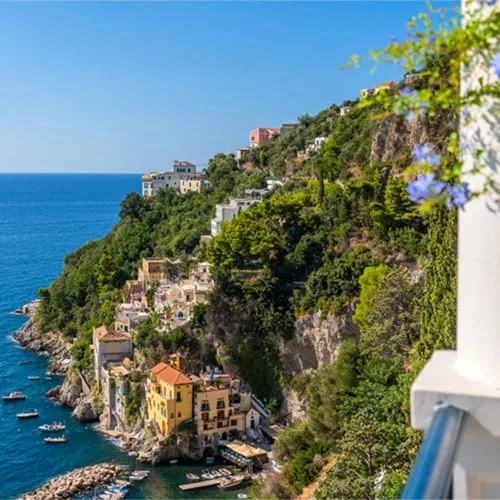
Amalfi, Amalfi Coast, Italy
Borgo Santandrea
A former 1950s seaside hotel rebuilt across nine cliffside levels above Conca dei Marini, reopened in 2022 as the first new luxury address on the Amalfi Coast in over a decade.
From €950 per night
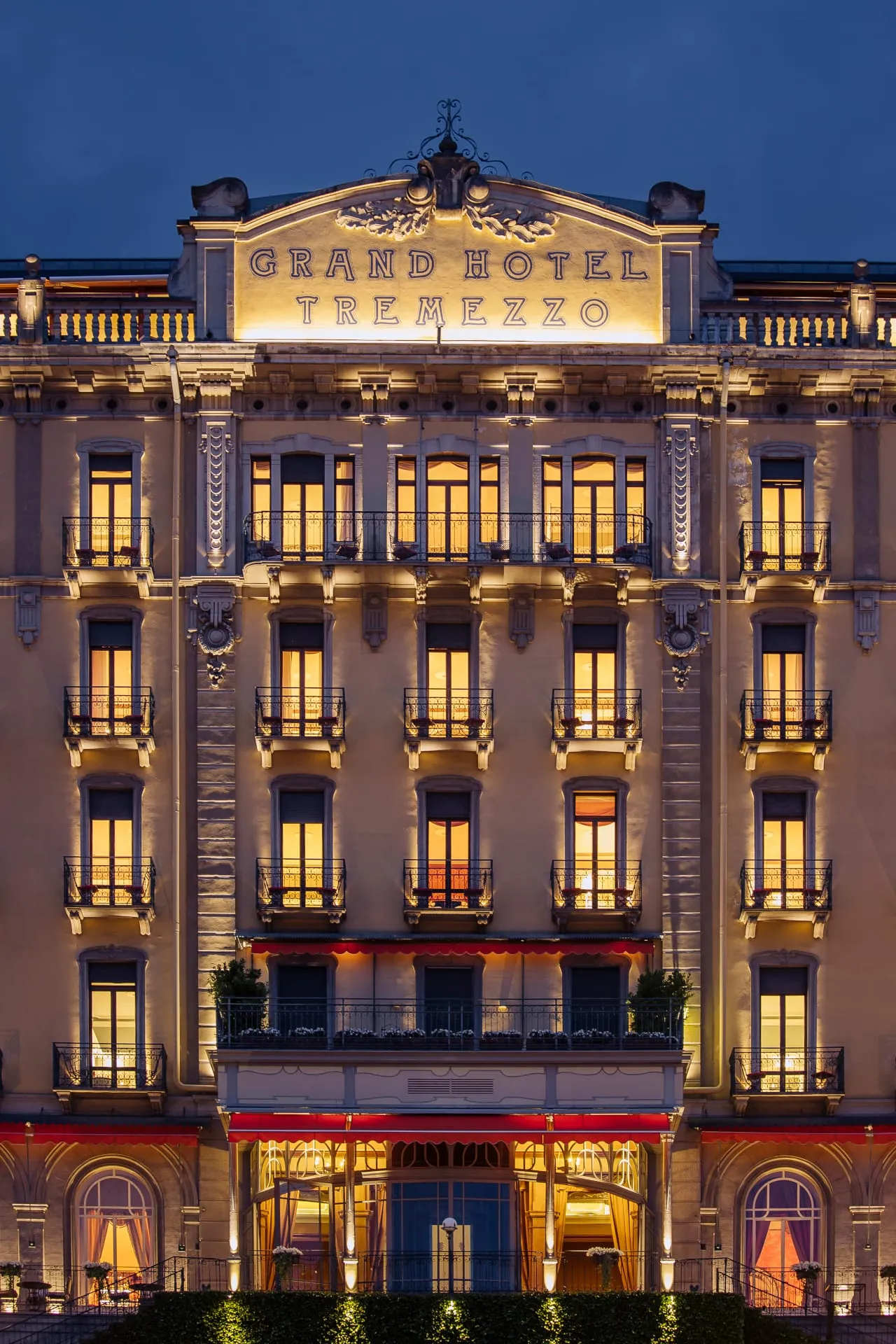
Tremezzo, Tremezzina, Lake Como, Italy
Grand Hotel Tremezzo
A 1910 Belle Époque palace on Lake Como with a heated pool that floats on the lake itself, still run by the family that also opened Passalacqua down the shore.
From €1,000 per night
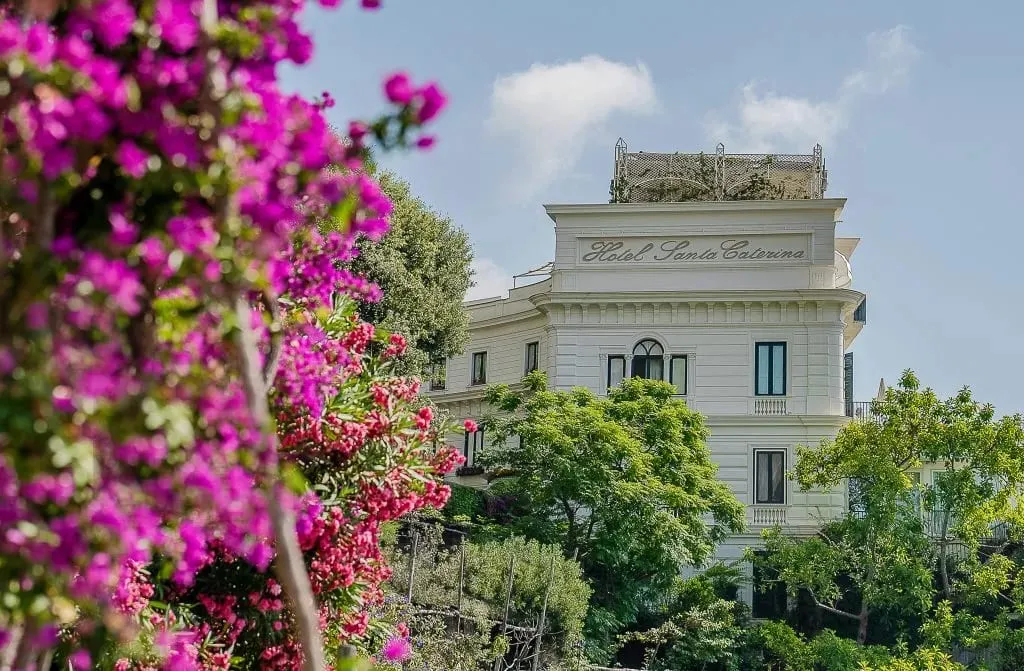
Amalfi, Amalfi Coast, Italy
Hotel Santa Caterina
A Liberty-style villa the Gambardella family has run above the Amalfi Coast since 1904, with a cliff-carved elevator down to its own beach club and a Michelin-starred table on the terrace above.
From €850 per night