Amalfi, Amalfi Coast, Italy
Borgo Santandrea
A former 1950s seaside hotel rebuilt across nine cliffside levels above Conca dei Marini, reopened in 2022 as the first new luxury address on the Amalfi Coast in over a decade.
- Rates from
- From €950 per night
- Nearest airport
- Naples International Airport (Capodichino, NAP)
- Transfer
- about 90 minutes by road, longer in peak-season traffic
- Best months
- Late April to mid-October, the hotel's operating season; May, June and late September offer the calmest weather before and after the July-August peak
There is a particular kind of Amalfi Coast hotel that trades on centuries of documented history: a former monastery, a cardinal’s summer palace, a nineteenth-century grand hotel where Wagner once stayed. Borgo Santandrea is not that. It occupies the site of the Grand Hotel Saraceno, a modest mid-century property built in the 1950s on a stretch of cliff between Amalfi and Conca dei Marini, and it makes no claim otherwise. What it offers instead is something rarer on this coastline: a hotel built almost entirely in this century, on a site that has been engineered, terrace by terrace, specifically for the way people want to experience the Amalfi Coast now, from a private beach and a saltwater pool to sea-view rooms that do not require a beach walk in either direction to reach the water.
When it opened in April 2022 after an unusually long, nearly four-year restoration, it was reported widely, including by PR Newswire and the trade press covering the launch, as the first substantial new luxury hotel to open on this coast in around fifteen years. That claim is difficult to independently verify in absolute terms, but it reflects a real scarcity: almost the entire Amalfi Coast hotel landscape consists of historic properties adapted over decades, not new builds. Borgo Santandrea’s answer to that scarcity was not to build something contemporary and glass-fronted, but to rebuild a mid-century hotel as if the intervening decades of design history, mid-century Italian furniture, Gio Ponti ceramics, hand-glazed local tile, had been folded back into it.
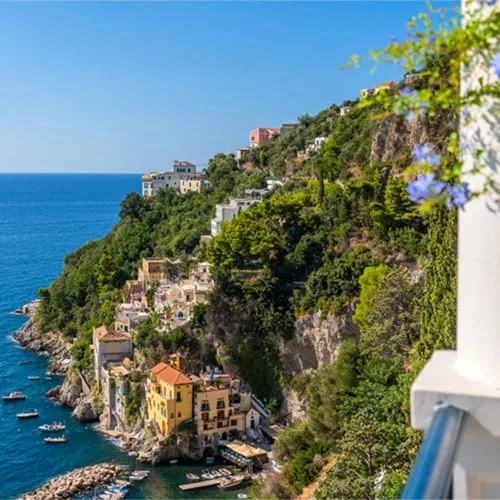
The result sits below the coastal road roughly midway between the town of Amalfi and the fishing village of Conca dei Marini, on a cliff the hotel’s own materials describe as roughly 90 metres above the sea. Reaching the water is not a metaphor here but a piece of engineering: eight lifts connect the clifftop reception to the private beach below, threading down through terraced gardens and a set of old stone coastal defence bulwarks that predate the hotel by centuries.
Why It Stands Out
The clearest distinction is chronological. Where Amalfi Coast luxury hospitality is otherwise built almost entirely on inherited nineteenth and early-twentieth-century buildings, Borgo Santandrea is a genuinely recent hotel, opened in 2022 on the footprint of a much smaller 1950s property. That gives it a level of engineering and infrastructure, from the eight-lift descent to the beach to bathrooms and suites built around contemporary plumbing and electrical standards, that older converted palazzi on this coast often cannot match without significant compromise.
The second distinction is the private beach and jetty at sea level, a genuine rarity on a coastline where sheer cliffs mean most hotels either have no direct beach access at all or share a public one. Marinella Beach Club is reserved for hotel guests, reached by lift rather than by a long staircase, with its own restaurant, bar and jetty for swimming and boat transfers.
The third is the design language itself. Rather than default to the whitewashed, bougainvillea-heavy look many newer coastal hotels reach for, Borgo Santandrea leans into a specific, researched mid-century Italian aesthetic: original and re-edition furniture from the 1950s, hand-thrown ceramics, and tilework developed with craftsmen from Vietri sul Mare drawing on decorative motifs found at Pompeii and Herculaneum. It reads as a considered design project rather than a generic luxury template, a point reinforced by its inclusion on the World’s 50 Best Hotels list and by Alici, its restaurant, holding a Michelin star in the 2026 guide under chef Crescenzo Scotti.
Architecture
The hotel’s footprint traces back to the Grand Hotel Saraceno, a hotel built in the 1950s on this cliff, itself sitting above a series of medieval stone coastal defence towers and bulwarks reinforced in the 1950s under the Banco di Napoli. Those older stone structures remain part of the site today, and guests descending to the beach pass through and alongside them rather than around them, a rare instance on this coast of a luxury hotel visibly incorporating genuine pre-modern coastal fortification into its everyday guest circulation.
The rebuild, led by architect Rino Gambardella, ran for close to four years from around 2017 to the 2022 opening, retaining the mid-century property’s basic bones while re-engineering it substantially. The most distinctive piece of that engineering is vertical: the hotel steps down the cliff across multiple terraced levels connected by a bank of eight lifts, built specifically to move guests and staff quietly between the reception at road level and Marinella Beach Club roughly 90 metres below, a detail the design team has pointed to as unusually smooth for such a geologically difficult site. Construction materials themselves had to be lifted onto the site by a 35-metre crane reassembled each winter and dismantled again before the beach season, a logistical detail that says something about how constrained this stretch of coastline is to build on at all.
Interior Design
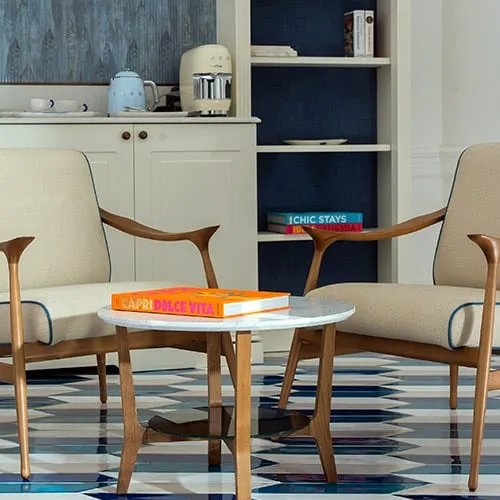
The interiors, developed with designer Nikita Bettoni alongside kitchen designer Andrea Viacava, commit to a specific mid-century Italian register rather than a generic five-star palette. Furnishings include original and re-edition pieces credited to figures including Gio Ponti, whose ceramic designs appear via Richard Ginori, alongside period furniture attributed to Englander & Bonta, re-editions by Molteni&C, armchairs associated with Fredrik Kayler, and lighting linked to Gerald Thurston, drawn substantially from one of the owning families’ own private design collection.
Layered onto that vintage furniture programme is a strong craft component: hand-painted ceramics and custom pottery, tilework developed with artisans from Vietri sul Mare using decorative patterns adapted from Pompeii and Herculaneum, and finishes in solid walnut and bronze. The palette across public spaces and guest rooms holds to blues and whites drawn directly from the sea and sky outside, with marble and glass used to keep individual rooms feeling bright rather than heavy. It is a design story built around specificity, a real design era and a real regional craft tradition, rather than an abstracted “Mediterranean luxury” mood board.
Atmosphere
Borgo Santandrea reads as considerably more private than its scale might suggest, partly a function of the site itself: a cliffside plot with a single access road and a beach reachable only by lift or a controlled path through the old bulwarks does not lend itself to passing foot traffic or day visitors in the way some Amalfi Coast hotels, with public promenades running past their front doors, do.
Within that setting, the mood shifts noticeably by area. The restaurants and pool terraces carry the animated, dressed-up energy typical of high-season Amalfi Coast dining, especially around Alici in the evening, while Marinella Beach Club by day runs closer to a relaxed Mediterranean beach club register, with the AQVA pizzeria and grill adding a deliberately more casual counterpoint at sea level. The overall sense is of a hotel designed to let guests choose their register, formal or unwound, rather than imposing one throughout.
Rooms and Suites
The hotel has 52 accommodations across two broad tiers. The 31 rooms span Classic, Superior and Deluxe Sea View categories, with Classic rooms generally facing the hotel’s internal courtyard and the higher categories opening directly onto the coast. The 21 suites run from Junior Suites up through Corner, Deluxe and Premium categories, several of which include a private terrace with an infinity-edge plunge pool set into the cliffside view, among the more sought-after configurations on this stretch of coast given how few Amalfi Coast hotels can offer a private pool alongside a sea view from the same terrace.
Every accommodation at Borgo Santandrea has a sea view, a deliberate design constraint given the site’s layout, which puts guests in a similar visual relationship to the coast whether they are staying in an entry-level Classic room or a Premium pool suite; the difference across categories is largely one of space, terrace configuration, and proximity to the water rather than whether the sea is visible at all. Interiors throughout carry the same mid-century furniture and handcrafted tile programme used across the property’s public spaces, rather than a simplified in-room version of it.
Dining
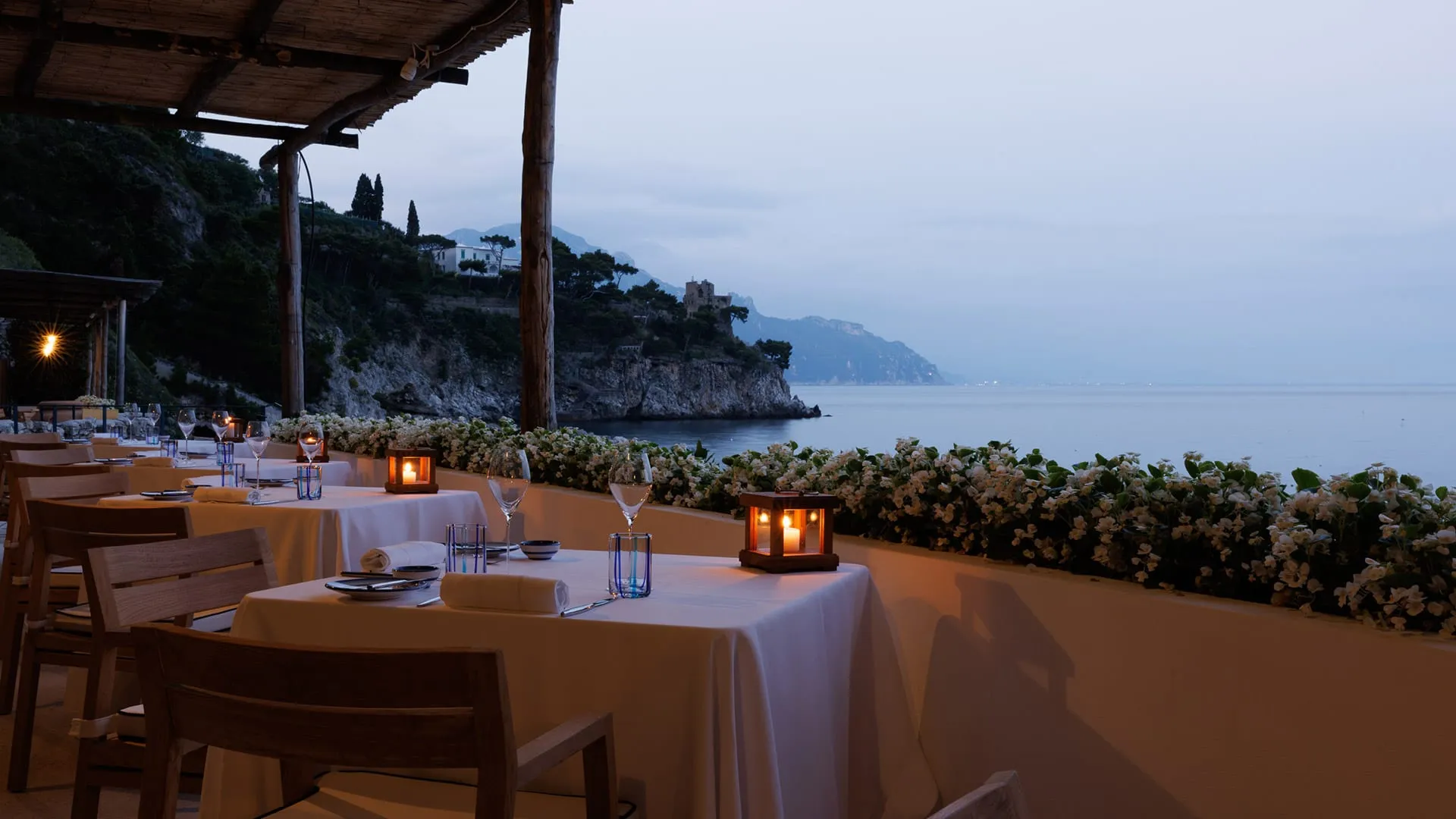
Dining at Borgo Santandrea runs across several distinct venues rather than one flagship restaurant. Alici, the hotel’s principal fine-dining room, holds one star in the 2026 Michelin Guide Italia under executive chef Crescenzo Scotti, whose background includes kitchens at Le Calandre and Agli Amici as well as leadership roles at Therasia Resort and Villa Cimbrone. Scotti’s cooking is built around Campania’s regional ingredients and technique used to sharpen rather than disguise them, served on what the hotel describes as a terrace suspended between the cliff and the sea.
Marinella, the hotel’s second restaurant, offers a somewhat less formal but still refined take on regional and seasonal Campanian cooking on its own sea-view terrace, while AQVA, set at the Marinella Beach Club at sea level, runs a pizzeria and grill geared toward lunch and casual dining by the water. Il Plumbago, the hotel’s bar, serves cocktails and coffee through the day into the evening, and the property maintains its own wine cellar. Across all of the venues, the emphasis stays on Campania and southern Italian ingredients rather than an internationalised luxury-hotel menu.
Spa and Wellness
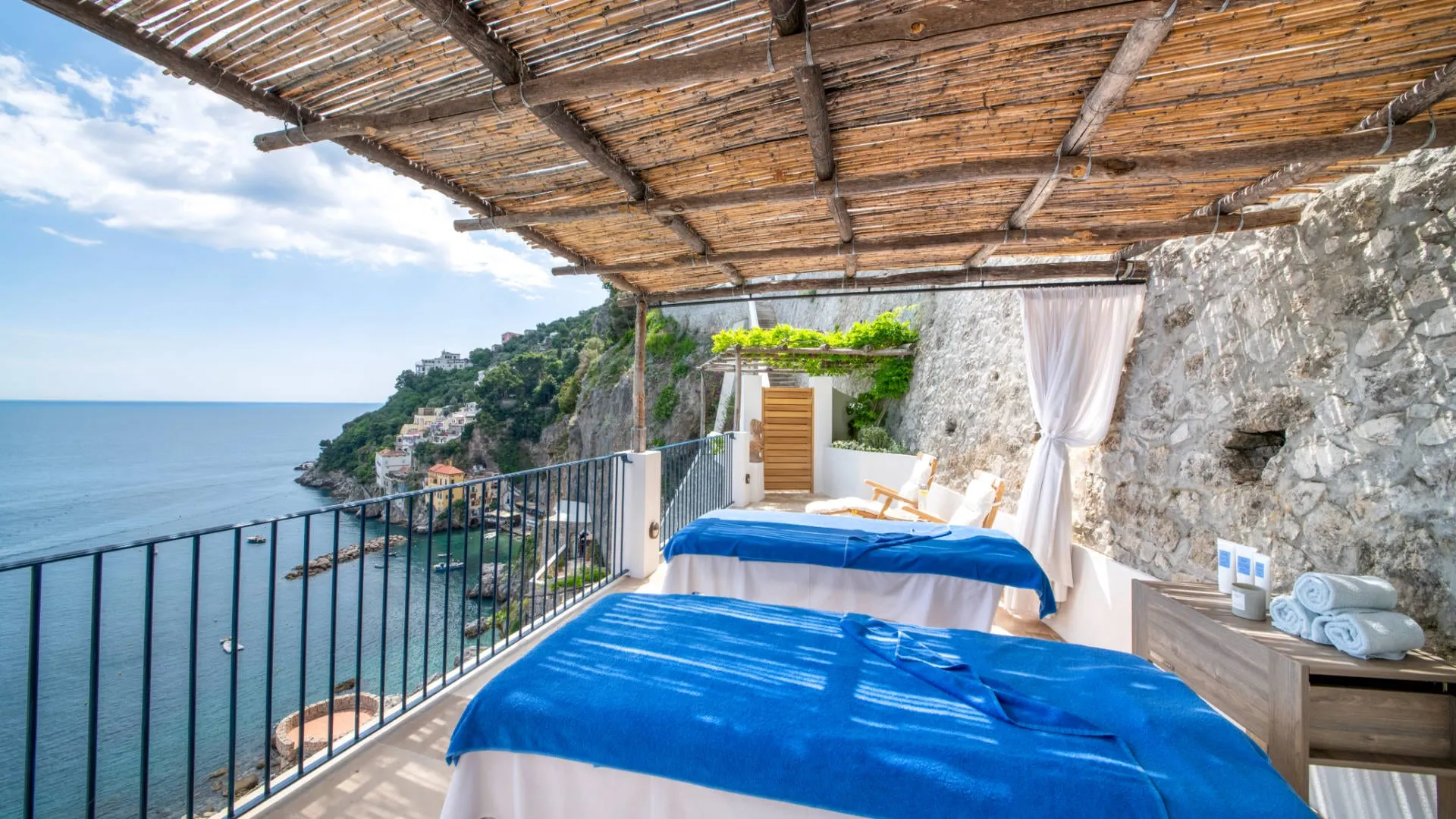
The Borgo Santandrea Wellness Retreat sits within the hotel’s terraced structure with its own sea-facing outdoor treatment terrace overlooking Conca dei Marini, alongside an indoor wellness area with dedicated treatment cabins and an emotional shower experience. Treatments run to massages, body rituals and beauty services delivered by an in-house team of therapists, with outdoor scheduled yoga sessions offered on the terrace for guests wanting to bookend the day with something quieter than the pool or beach club.
The adjoining fitness area is built around a sea-facing gym fitted with Technogym cardio and strength equipment, giving guests a workout option with the same coastal outlook as the rest of the hotel rather than a windowless basement gym, itself a small but telling detail of how consistently the property has applied its view to every part of the guest experience.
Experiences
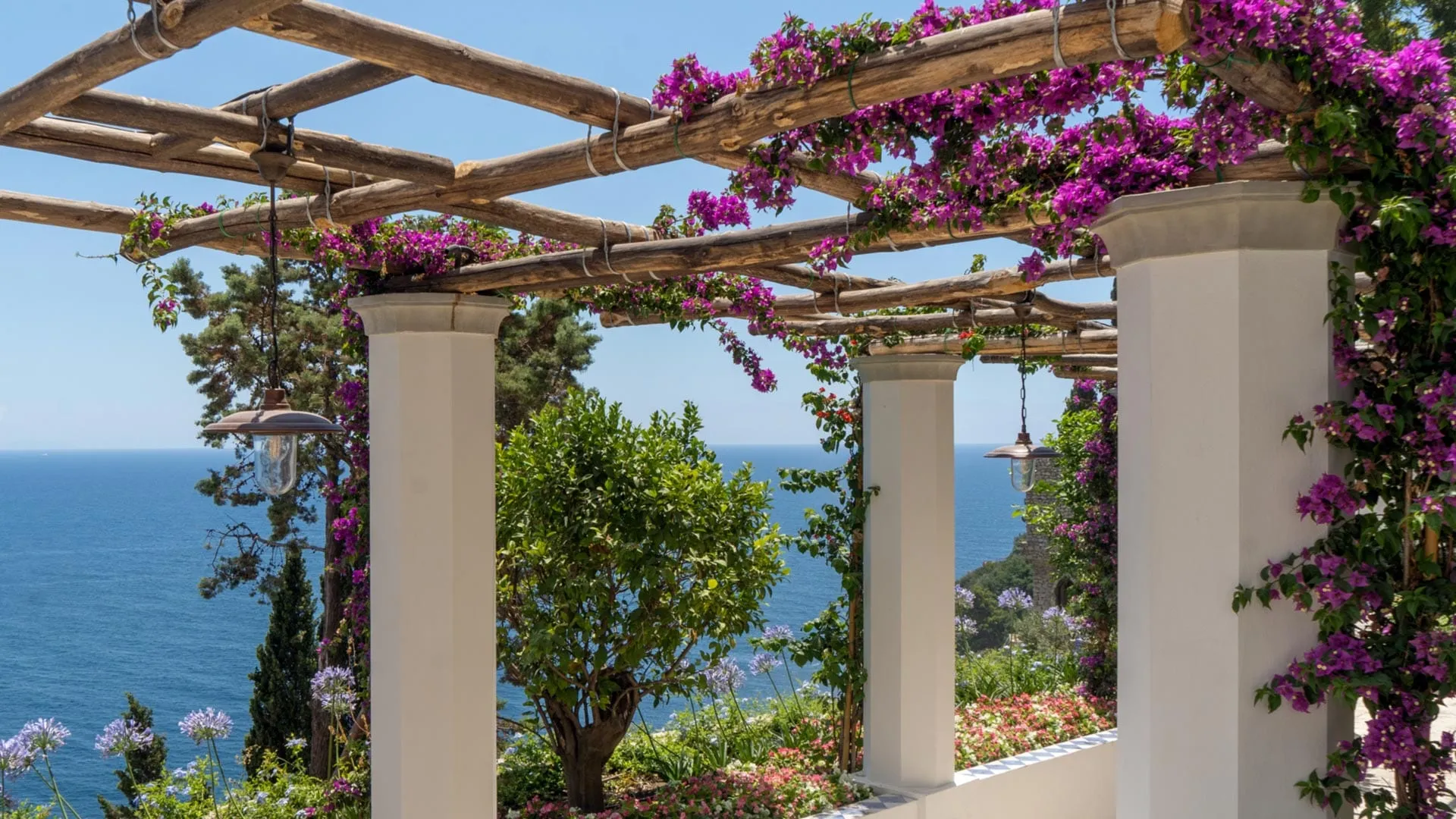
Given its private jetty at Marinella Beach Club, the hotel is well positioned for boat-based exploration of the coast, with private transfers arranged to Positano, Amalfi, Capri, Ischia and further afield to Paestum, options that suit a coastline where road travel between towns can be slow and congested in peak season. The hotel’s own saltwater pool and beach club cover more sedentary days, while the terraced gardens, planted with olive, lemon, pomegranate and centuries-old myrtle using traditional Arab-derived terracing techniques associated with just a handful of sites in Italy, offer a quieter, more horticultural way to spend an afternoon on the property itself.
Just below and along the coast sits the Grotta dello Smeraldo, the Emerald Grotto, a well-known sea cave near Conca dei Marini, reachable by a short boat trip or drive and a natural half-day excursion for guests based at the hotel. Amalfi town itself, with its cathedral, historic paper museum and waterfront, sits a few minutes from the hotel by road, making it straightforward to combine a stay here with the coast’s more conventional sightseeing without needing to relocate.
Who It Is For
Borgo Santandrea suits travellers who want the Amalfi Coast’s cliffside drama with the practical comforts of a genuinely modern hotel underneath it, notably direct, lift-served beach access and rooms built to current standards rather than adapted from a centuries-old floor plan. Couples and honeymooners are an obvious fit given the private-pool suite categories and the restaurant programme, and the property’s design specificity, its commitment to a real mid-century Italian aesthetic and regional craft rather than a generic luxury look, will particularly reward guests with an interest in architecture and design history.
It is less suited to travellers prioritising walkable access to Amalfi’s town centre and shops on foot, since the hotel sits a short drive rather than a stroll from town, or to larger groups and families needing extensive dedicated children’s facilities, which are not the property’s stated focus.
Best Time to Visit
The hotel operates seasonally in line with the rest of the Amalfi Coast’s luxury hospitality, generally open from spring through autumn. Late April through June and mid-September through October tend to offer the most reliable combination of warm weather, calmer roads and lower rates than the height of summer, while July and especially August bring the coast’s most crowded roads and highest prices alongside its warmest, most reliably dry conditions. Travellers prioritising a quieter pool, beach club and restaurant scene should lean toward the shoulder months either side of peak summer.
How to Get There
The nearest airport is Naples International Airport (Capodichino, NAP), roughly 90 minutes from the hotel by road under normal conditions, though the drive along the coast road can extend well beyond that during the busiest summer weeks and weekend traffic. The hotel can arrange private road transfers from Naples airport or from Naples Centrale and Salerno train stations, both served by direct high-speed rail from Rome. Guests driving themselves typically take the A3 motorway from Naples before joining the SS163 Amalfitana, the coastal road that runs along the cliffs connecting Sorrento, Positano, Amalfi and Conca dei Marini.
Given the hotel’s private jetty, sea transfer is also a practical option for parts of the journey, particularly from Naples, Capri or Salerno, and can be arranged directly with the hotel as an alternative to the coast road during peak-traffic periods. Rome’s Fiumicino airport is a further option for international arrivals, at roughly three hours by road from the hotel, generally worthwhile only when flight connections to Naples are impractical.
Nearby Experiences
Amalfi town, with its cathedral and historic centre, sits just a few minutes from the hotel by road, and Conca dei Marini, the fishing village the hotel overlooks from the clifftop, is close enough to visit on foot or by a short transfer. The Grotta dello Smeraldo, a well-known sea cave near Conca dei Marini reached by boat or a short drive, makes for a straightforward half-day excursion. Positano and Ravello are both within a manageable drive or boat ride along the coast, and the hotel’s jetty makes boat trips to Capri and, further south, the Greek and Roman ruins at Paestum, realistic day options for guests who prefer to avoid the coast road entirely.
Things to Know Before Booking
The hotel operates on a seasonal calendar, generally open from spring into autumn and closed over winter; travellers should confirm exact opening and closing dates for their intended travel window directly with the hotel or a booking partner, since these can shift year to year. As with most Amalfi Coast properties, room categories vary meaningfully in what they deliver: only the higher suite categories include a private plunge pool, and Classic rooms face the internal courtyard rather than the open sea, so travellers with a specific outlook or amenity in mind should check the category details closely before booking. The coast road that serves the hotel can be heavily congested in July and August, worth factoring into transfer time expectations and any plans to explore neighbouring towns by car during peak season.
Sustainability
Borgo Santandrea has built a number of operational sustainability measures into the property since opening, including home automation and energy-saving technology across guest rooms, a pool temperature capped at a maximum of 30 degrees Celsius to limit energy use, an electric vehicle fleet for on-site and local transfers, glass-only bottling to avoid single-use plastic, and organic waste compression systems. The hotel also prioritises locally sourced produce across its restaurants, aligning its kitchens with the same regional focus that runs through its design and craft programme.
The hotel’s terraced gardens themselves rely on traditional, water-conserving irrigation, using underground reservoirs that let plant roots draw on stored moisture gradually rather than through more wasteful surface watering, a technique tied to the traditional Arab-derived terracing methods used in the garden’s original design.
Practical Information
Borgo Santandrea is located at Via Giovanni Augustariccio 33, Amalfi, 84011, Salerno province, Italy, on the cliff between Amalfi and Conca dei Marini. Check-in is from 3:00pm and check-out by 12:00pm, both generally flexible subject to availability. The hotel is a member of Relais & Chateaux and a Virtuoso partner property, and holds one Michelin star in the 2026 guide for its Alici restaurant. Indicative published rates start from around 900 to 1,000 euros per night for entry-level Classic rooms in shoulder season, rising well beyond 2,000 euros a night for higher suite categories and peak summer dates; travellers should confirm current rates directly with the hotel or a trusted booking partner given how significantly Amalfi Coast pricing moves by season.
Editorial Conclusion
Borgo Santandrea’s real distinction on the Amalfi Coast is not that it is the most opulent or most historic hotel on this stretch of coastline, since neither claim would be accurate against properties with a century or more of continuous operation behind them. It is that it was built, almost entirely from scratch, to solve problems this coast’s older grand hotels structurally cannot: direct, engineered access from clifftop to sea, rooms designed around contemporary plumbing and space standards rather than retrofitted into a historic floor plan, and a private beach reachable by lift rather than a long public staircase. Layered onto that infrastructure is a genuinely specific design project, a real mid-century Italian aesthetic paired with regional craft rather than an interchangeable luxury look, and a kitchen at Alici serious enough to hold a Michelin star within a few years of opening. For travellers weighing the Amalfi Coast’s older institutions against something built for how the coast is actually visited today, Borgo Santandrea is the clearest recent answer to that question.
In pictures
On the map
Amalfi, Amalfi Coast, Italy
Questions
Frequently asked
When did Borgo Santandrea open?
It opened in April 2022, following an almost four-year restoration of a former 1950s and 1960s-era hotel, the Grand Hotel Saraceno, on the same clifftop site. At the time it was widely reported as the first entirely new luxury hotel opening on the Amalfi Coast in around fifteen years.
Who owns Borgo Santandrea?
The hotel is an independent, family-owned property, a joint project between the Orlacchio and De Siano families, two Italian families with generations of experience in Amalfi Coast hospitality. Maurizio Orlacchio, co-owner, oversaw the design and construction alongside his family from 2018.
How many rooms does Borgo Santandrea have?
The hotel has 52 accommodations in total: 31 rooms across Classic, Superior and Deluxe Sea View categories, and 21 suites, including Junior, Corner, Deluxe and Premium categories, several with private infinity pools. Every accommodation has a sea view.
Does Borgo Santandrea have a private beach?
Yes. Marinella Beach Club sits at sea level below the hotel and is reserved for guests, reached by lift or by walking down through the terraced gardens and the site's old stone coastal bulwarks. It has a private jetty used for swimming access and boat transfers along the coast.
Is Borgo Santandrea open all year?
No. Like most Amalfi Coast hotels of its kind, it operates seasonally, generally opening in April and closing in the autumn; travellers planning a winter visit should confirm current opening and closing dates directly with the hotel before booking.
Does Borgo Santandrea have a Michelin-starred restaurant?
Yes. Alici, the hotel's fine-dining restaurant led by executive chef Crescenzo Scotti, holds one star in the 2026 Michelin Guide Italia. The hotel also operates Marinella, a less formal sea-view restaurant, and AQVA, a pizzeria and grill at the beach club.
Same destination
More hotel guides in Italy
San Polo, Venice, Italy
Aman Venice
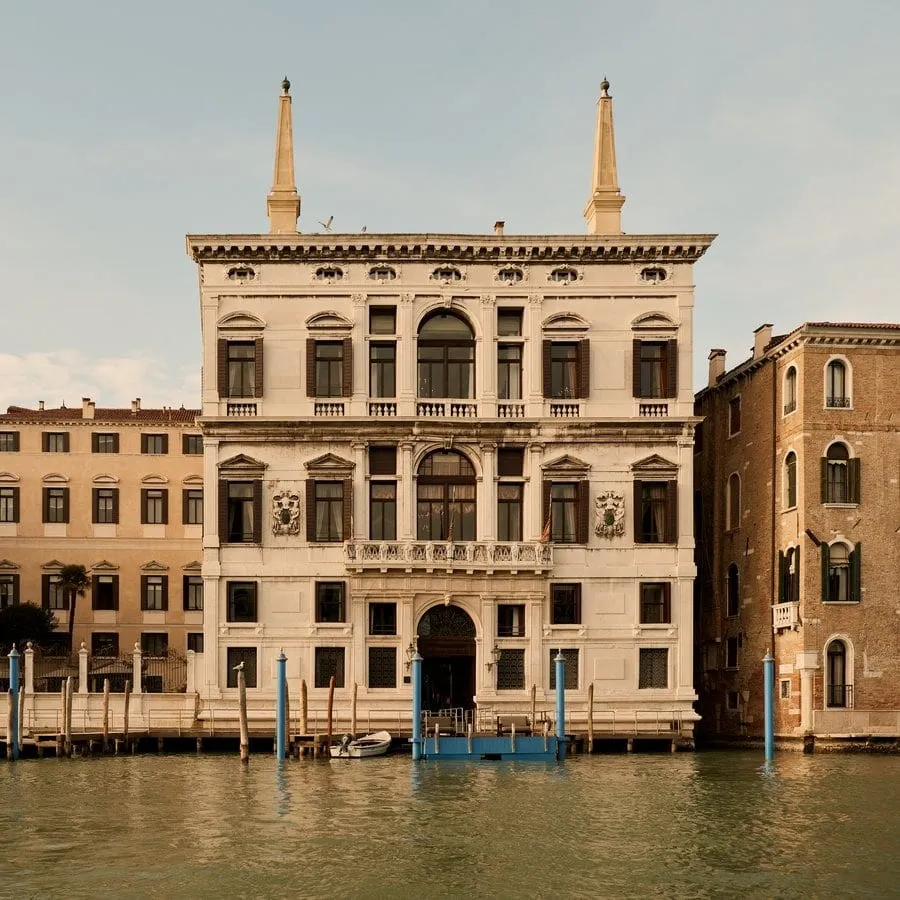
A 16th-century Grand Canal palazzo, frescoed by the Tiepolo family and fitted with a rare private garden, reopened in 2013 as Aman's first Italian address.
From €1,800 per night
Tremezzo, Tremezzina, Lake Como, Italy
Grand Hotel Tremezzo
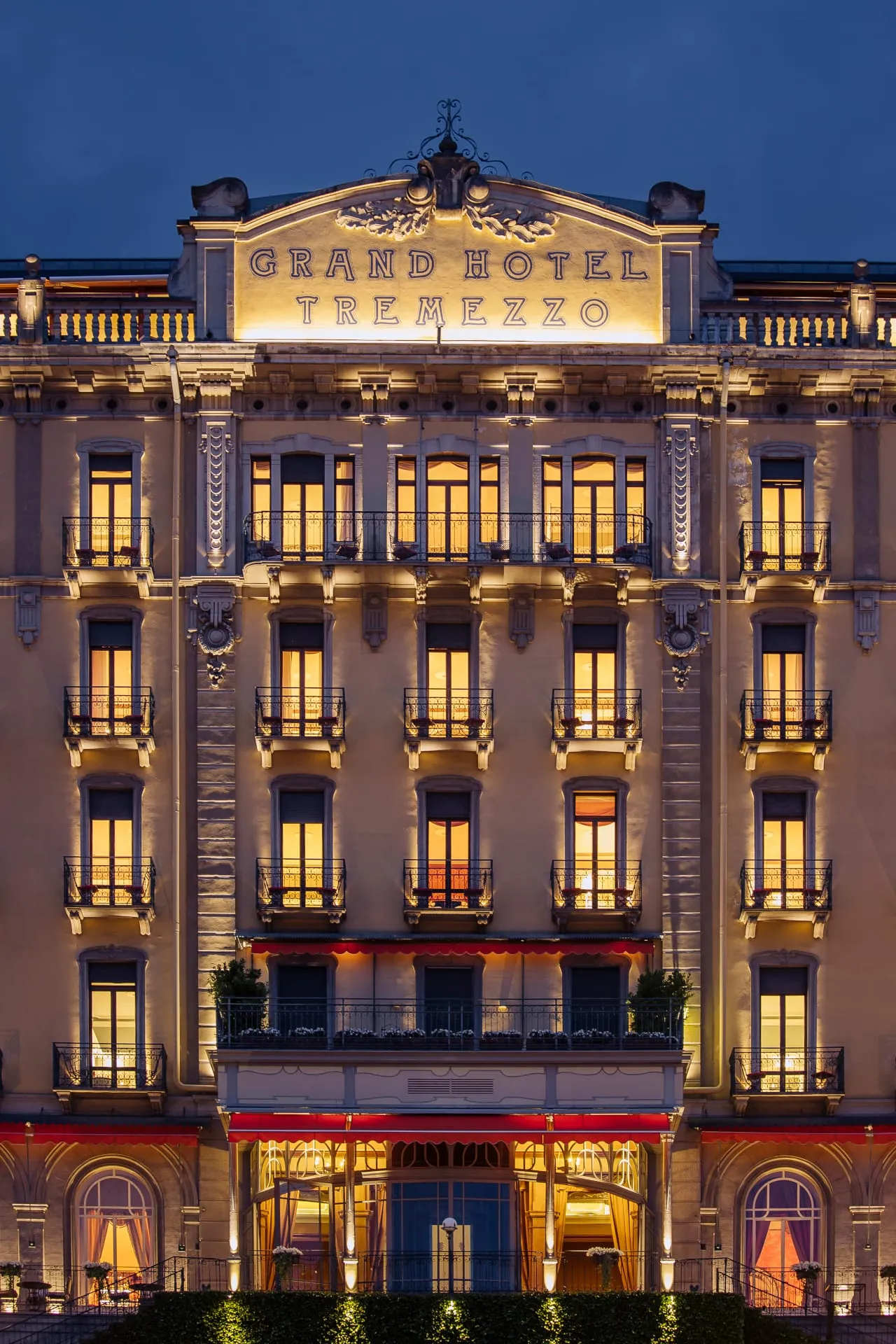
A 1910 Belle Époque palace on Lake Como with a heated pool that floats on the lake itself, still run by the family that also opened Passalacqua down the shore.
From €1,000 per night
Amalfi, Amalfi Coast, Italy
Hotel Santa Caterina
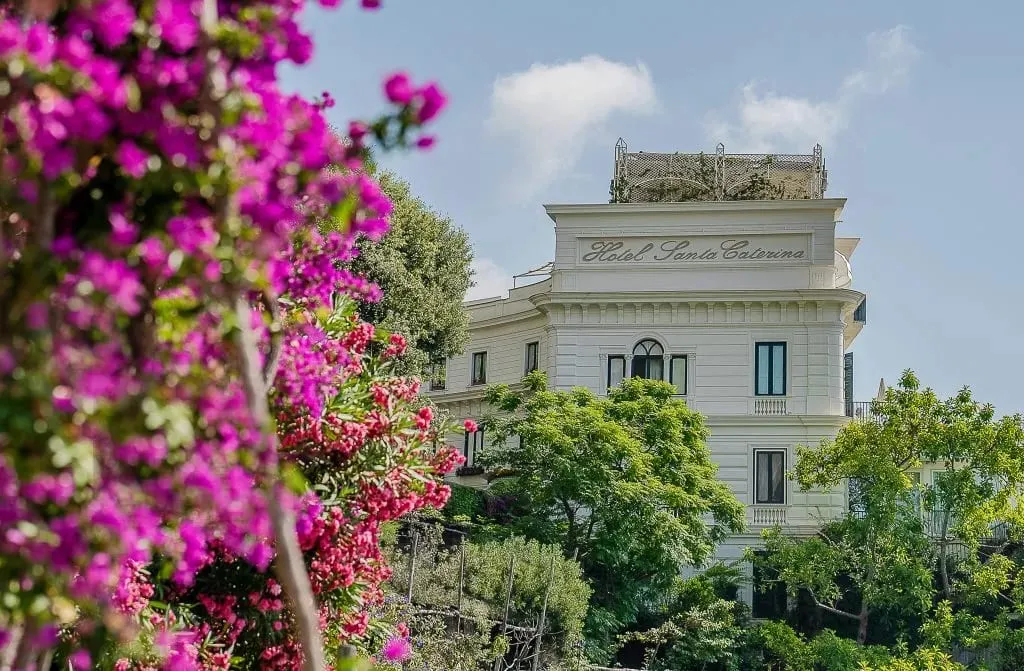
A Liberty-style villa the Gambardella family has run above the Amalfi Coast since 1904, with a cliff-carved elevator down to its own beach club and a Michelin-starred table on the terrace above.
From €850 per night