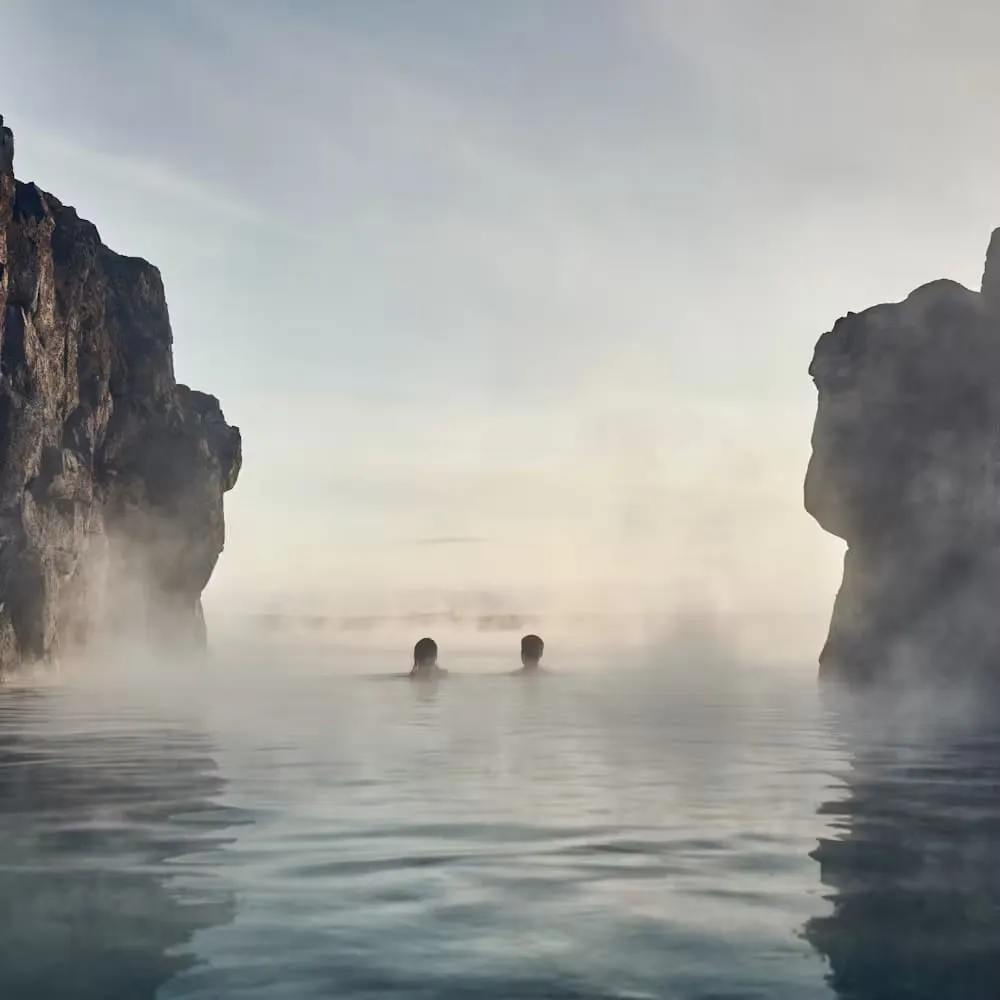
Iceland
A hotel tradition shaped entirely by geology and isolation: geothermal lagoons, glacier-fed valleys, and a handful of remote lodges built to put the country's volcanic, near-treeless landscape at the centre of the stay rather than competing with it.
- When to go
- June to August for near-continuous daylight and the most reliable access to the interior highlands; September to March for aurora viewing, with the shortest, darkest days around the winter solstice.
- Getting there
- Roughly 3 hours direct from most Western European hubs and 5 to 6 hours from the US East Coast to Keflavik.
- Best for
- wellness landscape honeymooners adventure photography
Iceland’s hotel geography is dictated almost entirely by its geology: geothermal fields, glacier valleys, and a landscape largely without trees, all of which push hotel design toward low, landscape-deferential forms rather than anything that competes with the terrain around it.
The regions, briefly
The Reykjanes Peninsula, near Keflavik airport and within reach of Reykjavik, holds Iceland’s most established geothermal hotel tradition, built around the mineral-rich lagoons the region’s volcanic activity produces.
The Troll Peninsula and the north, considerably more remote and reached by a longer drive or a short domestic flight, offer a quieter, less-visited Iceland: fjord landscapes, ski touring in season, and a small number of design-led rural retreats.
The South and interior highlands, encompassing glacier tongues, waterfalls, and volcanic desert, hold Iceland’s most experimental architecture, lodges built to withstand and frame an unusually harsh and dramatic environment.
Where to stay
Hotel guides in Iceland
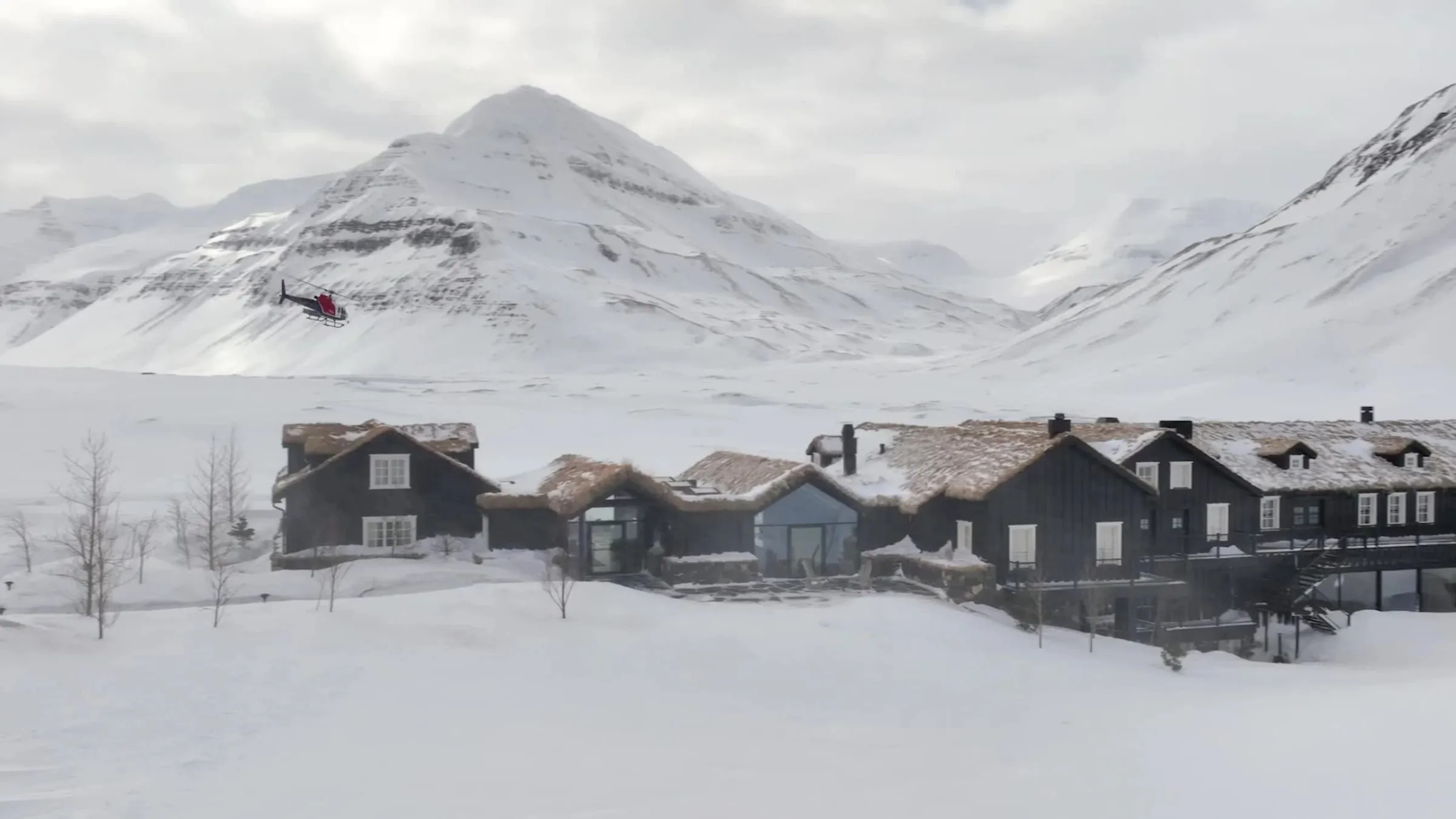
Fljot Valley, North Iceland, Iceland
Deplar Farm
A turf-roofed sheep farm on Iceland's remote Troll Peninsula, rebuilt into a 13-room adventure lodge where heli-skiing, fly fishing and a geothermal pool run on the same all-inclusive rhythm.
From $2,775 per night, all-inclusive
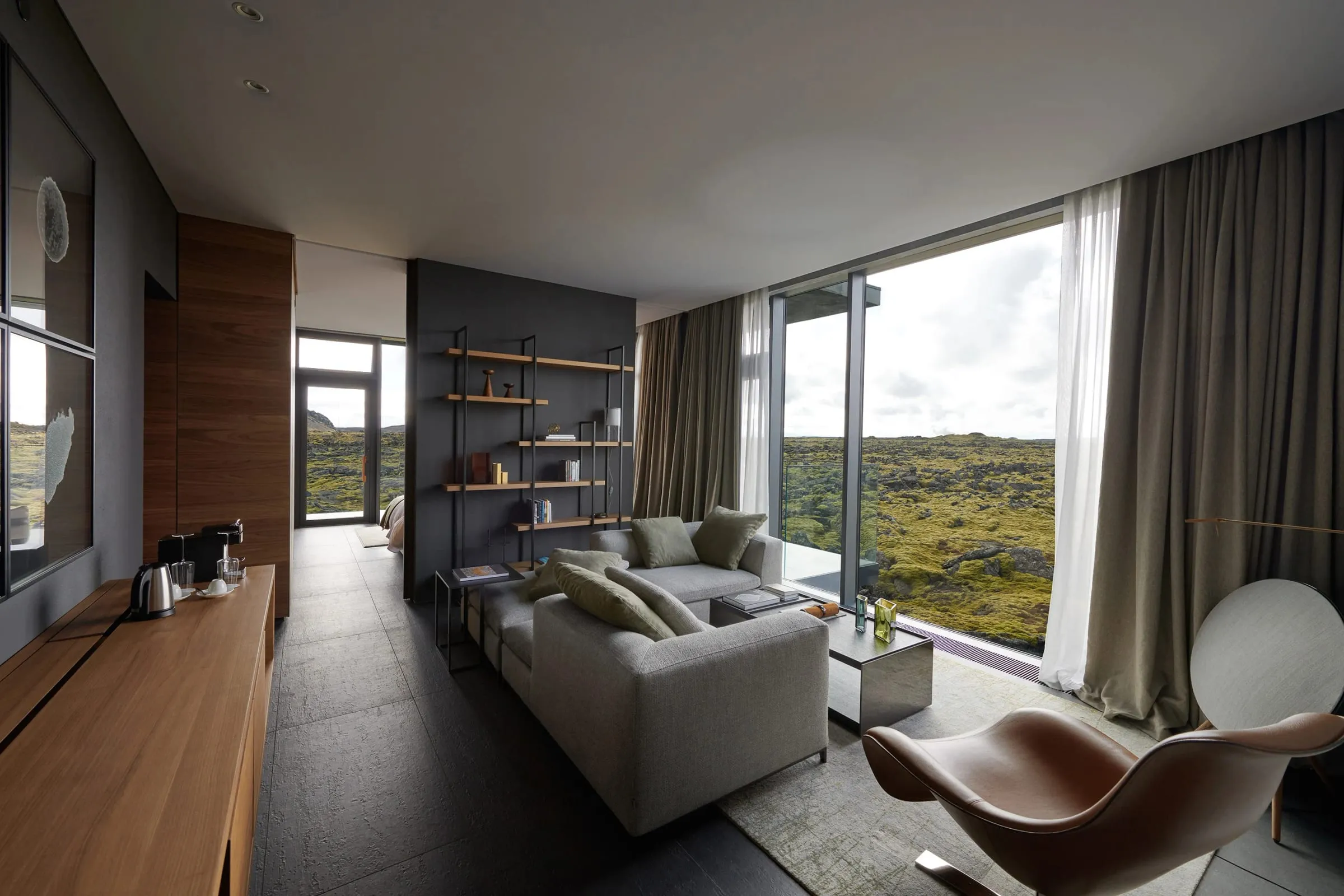
Grindavik, Iceland
The Retreat at Blue Lagoon
A 60-suite hotel built into an 800-year-old lava flow, with a private geothermal lagoon and Iceland's only Michelin-starred hotel restaurant.
From $1,844 per night
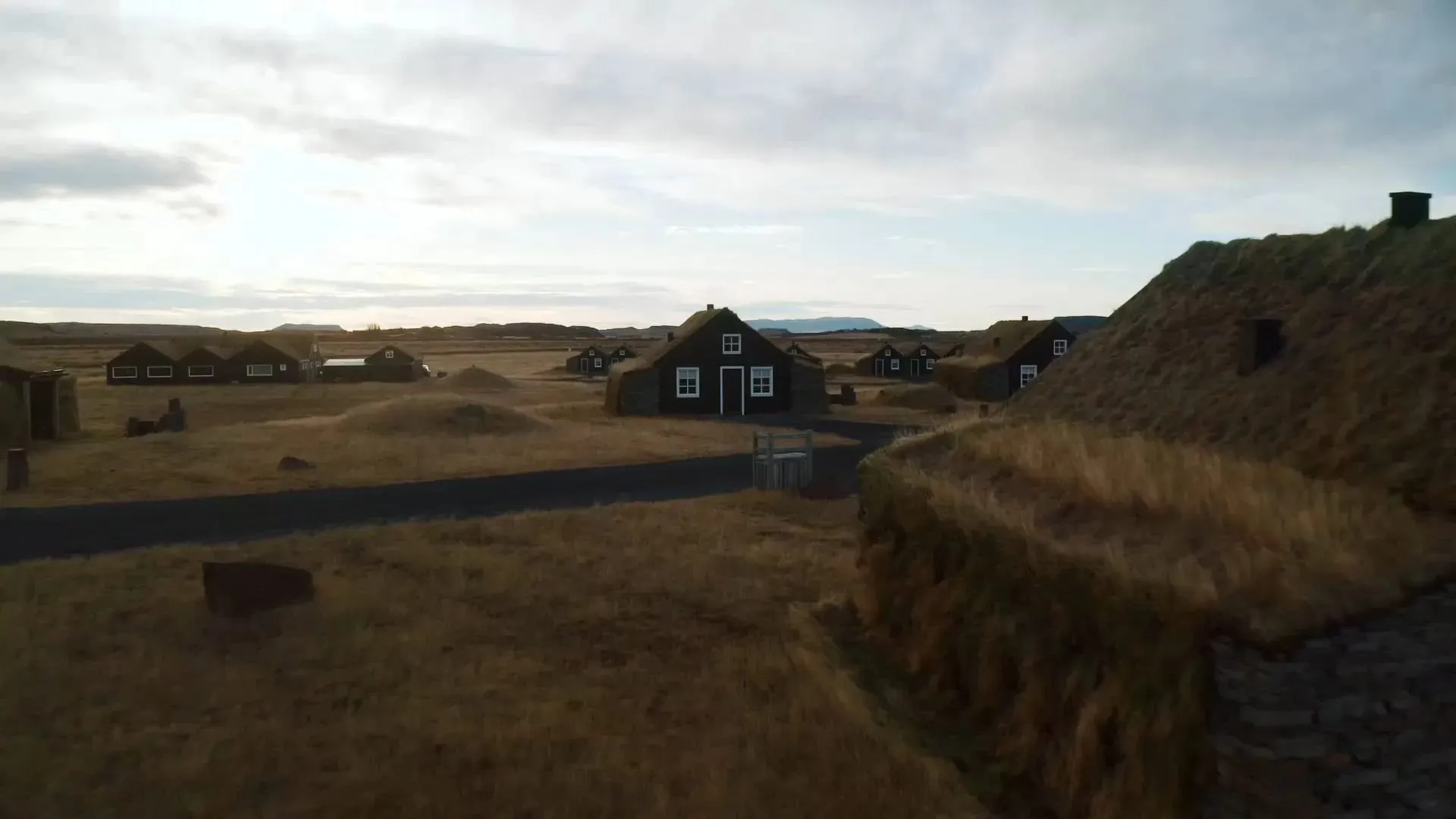
Near Thingvellir National Park, Iceland
Torfhus Retreat
A hamlet of grass-roofed suites on the Golden Circle, built on the memory of a Viking longhouse buried by a volcano nine centuries ago.
From $750 per night