Fljot Valley, North Iceland, Iceland
Deplar Farm
A turf-roofed sheep farm on Iceland's remote Troll Peninsula, rebuilt into a 13-room adventure lodge where heli-skiing, fly fishing and a geothermal pool run on the same all-inclusive rhythm.
- Rates from
- From $2,775 per night, all-inclusive
- Nearest airport
- Akureyri Airport (AEY)
- Transfer
- About 90 minutes by 4WD road transfer, or roughly 20 minutes by helicopter transfer
- Best months
- March through April for heli-skiing with longer daylight; June through August for the midnight sun, hiking and fishing; September through March for aurora viewing
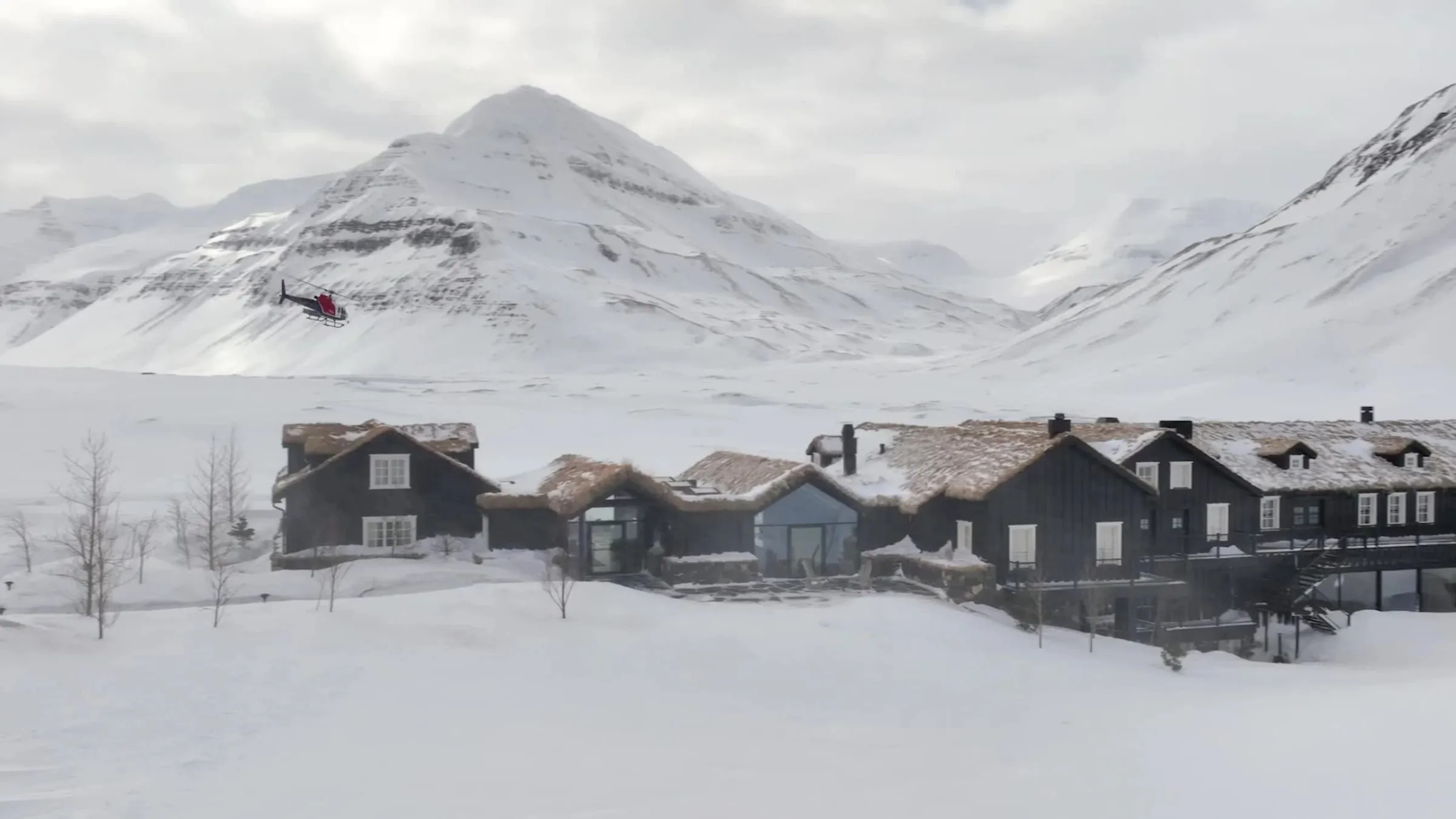
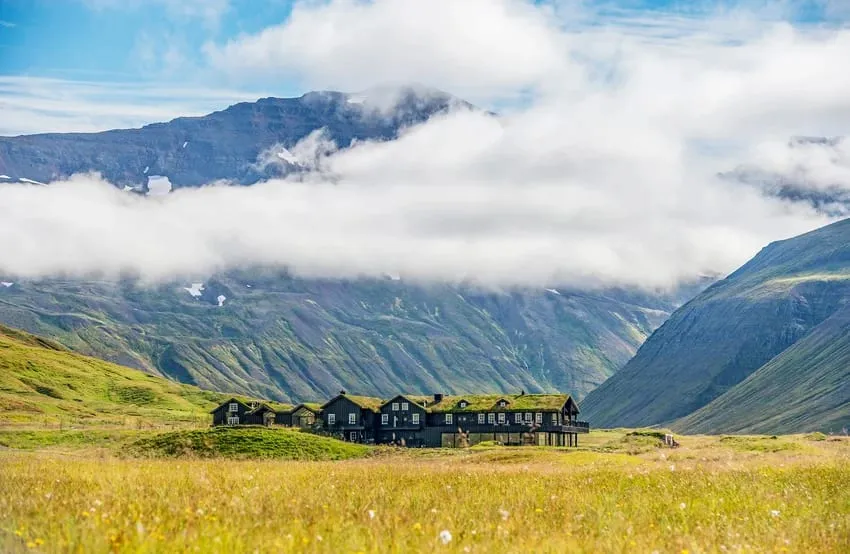
There is a specific kind of remoteness to the Fljot valley that most Icelandic hotels do not attempt to sell, because most Icelandic hotels are not in it. Deplar Farm is: a turf-roofed former sheep station folded into a wide, glacier-carved valley on the Troll Peninsula, ringed by peaks that rise straight to around 1,500 metres and by a fjord coastline that keeps the nearest town, Olafsfjordur, on the far side of a mountain pass. There is no village outside the gate, no strip of neighbouring hotels, no ambient light after dark beyond what the lodge itself throws off. What there is, instead, is one working idea, executed at length: put guests inside a genuinely wild landscape, hand them the guides and the equipment to move through it properly, and let the pace of the stay be set by snowpack, tides and daylight rather than a printed activity sheet.
Eleven Experience, the adventure-travel operator founded by former Blackstone real estate executive Chad Pike, built its reputation on exactly this model at a small number of remote lodges, and Deplar Farm is generally regarded as the one that made the company’s name. It reopened in 2016 after a lengthy rebuild that kept the farm’s original turf-roofed structure intact as the lodge’s social core, wrapping a new timber-and-stone wing around it rather than replacing it outright. Condé Nast Traveller named it to its Gold List of the world’s best hotels in 2023, recognition that sits somewhat oddly next to the property’s own description of itself as closer to a private house than a hotel: thirteen rooms, no signage on the road in, and a kitchen that runs three communal meals a day around one long table rather than a printed restaurant menu.
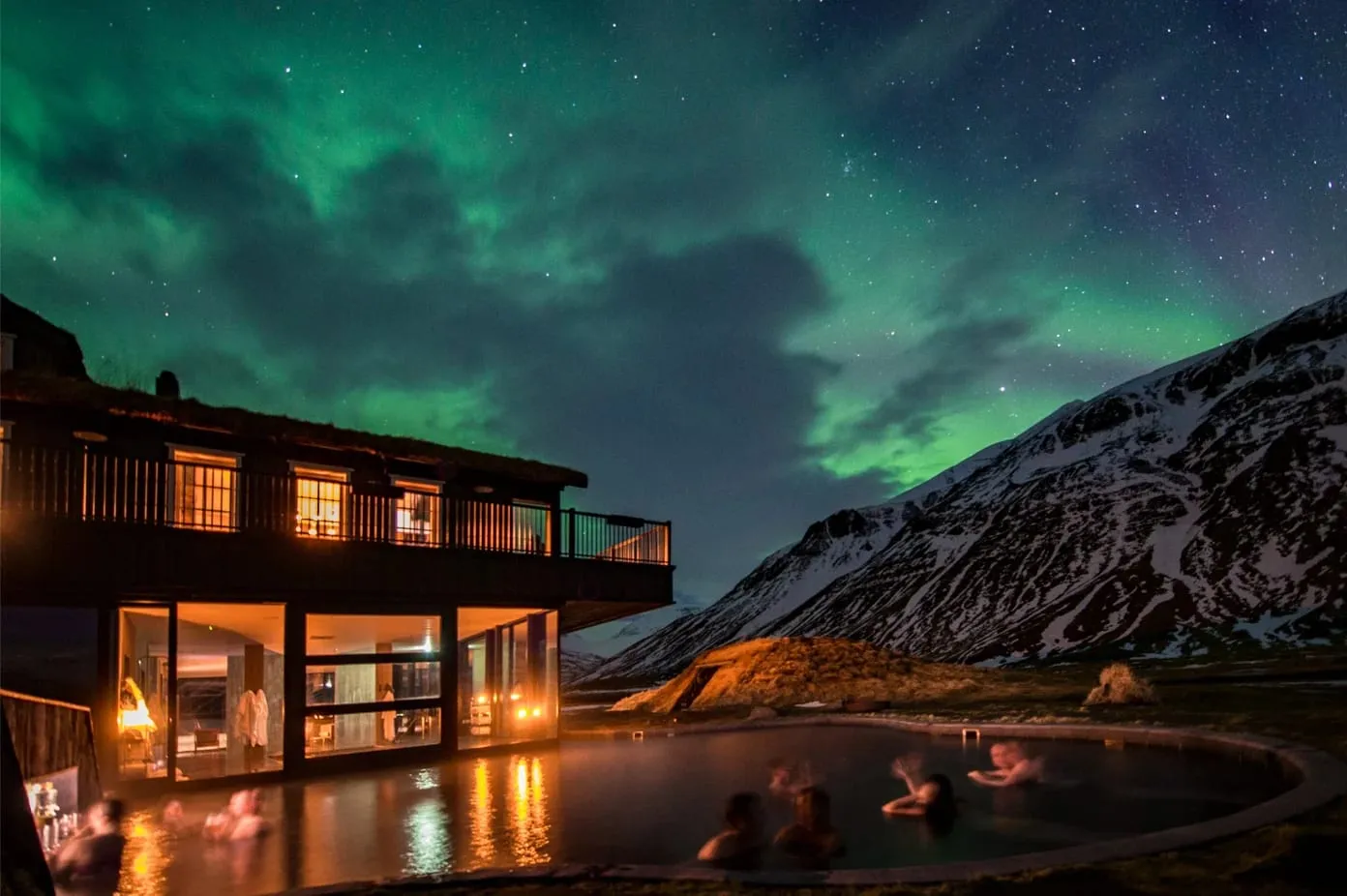
The two seasons at Deplar Farm are different enough that they read almost as two separate properties sharing an address. Winter belongs to heli-skiing, ski touring and the aurora, run against a backdrop of roughly a million acres of largely untouched skiable terrain accessible directly from the lodge’s own helipads. Summer, under a sun that barely sets, shifts the program to fly fishing for Arctic char, horseback riding, sea kayaking and hiking along ridgelines that stay snow-free for only a few months of the year. What holds both seasons together is the same all-inclusive structure, the same small guest count, and the same geothermal pool steaming quietly at the centre of the property regardless of what the mountains outside are doing.
This is not a stay built around a single marquee amenity or a signature dining room. It is built around a place that is genuinely difficult to get to, made comfortable rather than domesticated, and staffed to make the difficulty disappear once a guest actually arrives.
Why It Stands Out
Deplar Farm’s core distinction is that it treats hard-access wilderness and hotel-grade comfort as complementary rather than competing goals, and it has been doing so since well before “remote luxury lodge” became a crowded category. The Troll Peninsula is one of the least developed corners of an already sparsely populated country, and Eleven Experience chose to build here specifically because the terrain, roughly a million acres of skiable ground within helicopter range, was too good and too underused to pass up. Very few properties anywhere in the Northern Hemisphere can offer heli-skiing, ski touring, fly fishing, horseback riding and sea kayaking from the same address, switching between them not by changing hotels but by changing seasons.
The second distinguishing feature is scale, or the lack of it. Thirteen rooms is a genuinely small footprint for a property with two helipads, a 5,000-square-foot spa and a kitchen running three meal services a day, and that imbalance is deliberate. Deplar Farm is frequently taken as a full-property buyout by extended families, ski clubs or corporate groups, which changes the character of a stay considerably: the lodge effectively becomes a private house for the duration, with the entire adventure and dining program built around one group’s pace rather than shared with strangers. Even when booked room by room, the low guest count keeps the same intimate, unstructured rhythm intact.
The third is the geothermal pool, drawn from a borehole on the property itself rather than piped in or heated mechanically, a detail that matters more in Iceland than it might elsewhere given how central geothermal water is to the country’s hotel tradition generally. Few lodges combine a genuine on-site geothermal source with the kind of hard-adventure program Deplar Farm runs alongside it.
Architecture
The lodge is built around the shell of the original turf-roofed farm structure, preserved on the strength of its own vernacular logic: a low, grass-topped roofline that sheds wind and insulates against the valley’s long winters, a building type Icelandic farmers have used for centuries because it works. Eleven’s rebuild, carried out over roughly two years before the lodge reopened in 2016, added a new wing in timber and stone around that original structure rather than replacing it, so the finished property reads as one continuous building rather than a heritage piece bolted onto a modern annex.
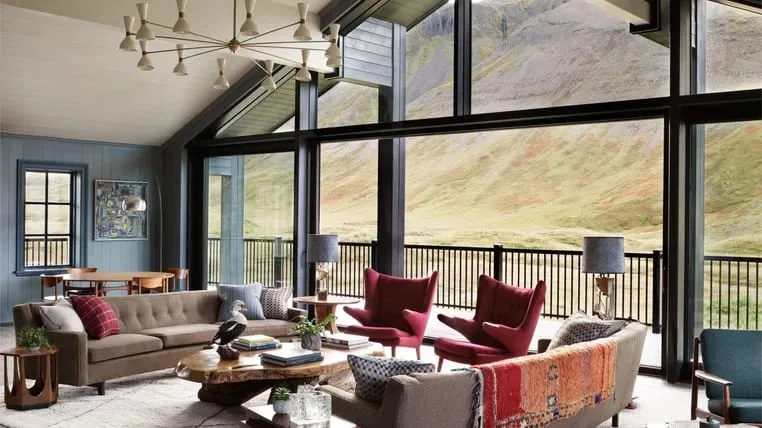
Extensive south-facing glazing runs through the newer sections, pulling the valley and the mountains beyond it into every communal space and many of the guest rooms, a choice that matters enormously given how much of the Icelandic year is spent indoors relative to warmer climates. Local basalt, hand-laid rather than quarried into uniform blocks, appears through common areas and exteriors, tying the building materially to the terrain around it. There is no attempt to disguise the lodge’s working-farm origins behind a more conventional resort facade; the turf roof, the low profile, and the general absence of anything resembling a lobby or reception desk are all treated as the point rather than something to be softened for hotel guests.
Interior Design
Inside, the design language stays close to its Icelandic materials: hand-hewn timber, hand-laid basalt and hand-woven Icelandic wool throws, set against a muted palette of greys and off-whites that keeps the outdoor landscape as the dominant colour in the room. The effect has been described by visiting press as hygge-inspired, a fair comparison given the emphasis on texture, low light and warmth over ornament, though the framing here leans more rugged Icelandic farmhouse than Scandinavian minimalism.
Guest rooms vary in configuration rather than following a single template. Several of the ten king rooms include a mezzanine sleeping loft, some fitted with a hammock rather than a second bed, a detail that plays into the lodge’s positioning toward families and multi-generational groups travelling together. The two queen rooms and the four-bed bunk room round out a guest roster built for flexibility across group sizes rather than a fixed hierarchy of suite categories. Communal spaces carry the same material language at a larger scale: a gabled living room built around a working band setup and instruments, a private recording studio (Floki Studios), a media room, and a long dining table set beneath the property’s largest run of floor-to-ceiling glass, facing directly down the valley.
Atmosphere
Deplar Farm’s atmosphere is shaped by two things operating at once: genuine isolation and a level of staffing that removes almost all the friction that isolation would otherwise create. There is no visible neighbouring property, no road traffic beyond the lodge’s own vehicles, and after dark, essentially no artificial light beyond what the building itself produces, conditions that make the aurora unusually easy to see on a clear winter night without any special positioning required.
Days are built around a single guide or “adventure host” assigned to steer each group’s itinerary, adjusted daily around weather, snow conditions and guest preference rather than fixed in advance. Evenings settle into a slower, communal register: dinner around the shared table, time in the geothermal pool as steam rises into cold air, and for musically inclined guests, informal sessions in the band loft or recording studio. The overall feel sits closer to a well-run private house party than a conventional hotel, an impression the lodge’s own marketing leans into directly by describing itself as having no signage and functioning “more as a house than a hotel.”
Rooms and Suites
Deplar Farm has 13 rooms across three categories. Ten king rooms form the core of the property, five of which include a mezzanine sleeping loft suited to families or groups sharing a room across generations. Two queen rooms offer a smaller footprint for couples, and a single bunk room, configured with four beds, gives larger groups or families with children an economical way to keep everyone under one roof without renting multiple rooms.
Regardless of category, rooms share the same material palette of hand-hewn timber, local basalt accents and wool textiles, and the same orientation toward the valley through generous glazing. There is no suite hierarchy in the conventional five-star sense, no presidential category set apart from the rest; the differentiation across categories is about bed configuration and group size rather than a tiered scale of luxury, consistent with a property that is as often booked whole as it is booked room by room.
Dining
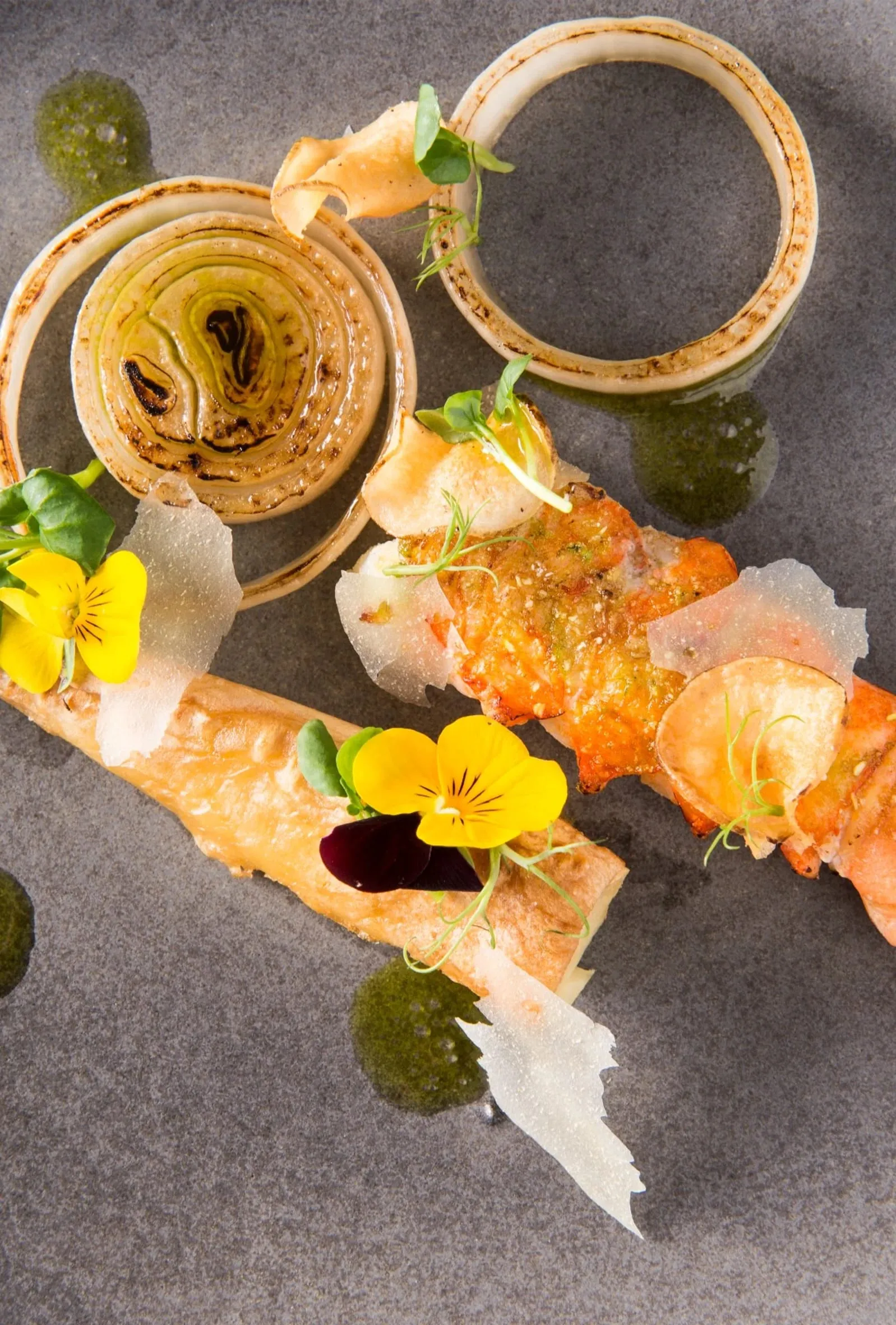
Deplar Farm runs a single integrated kitchen serving three meals a day, built around Icelandic-sourced ingredients: river fish, lamb, and dairy and cheese sourced in part from neighbouring farms in the valley, reflecting how little of Iceland’s food economy travels far from where it is produced. There is no à la carte restaurant in the conventional sense; the dinner program runs on fixed, chef-curated menus, typically three courses, served communally around the lodge’s long dining table beneath the floor-to-ceiling glass facing the valley.
The communal format is a deliberate extension of the lodge’s small-group, house-party positioning rather than an operational shortcut, putting guests from different rooms, or different families within the same buyout group, at the same table rather than in separate dining rooms. Given Iceland’s genuinely limited access to fresh produce outside the short summer growing season, the kitchen leans on the country’s stronger suits: seafood, lamb, dairy and foraged or preserved ingredients, rather than attempting a broader international menu that the local supply chain cannot easily support.
Spa and Wellness
The spa at Deplar Farm covers roughly 5,000 square feet and centres on the property’s geothermal pool, drawn from a borehole on-site and split between an indoor section run at a cooler, roughly 22 degrees Celsius, and an outdoor section closer to 38 degrees, connected so guests can move between the two without stepping outside into the cold. A swim-up bar sits within the pool itself, and an adjoining indoor hot tub gives a second, smaller soaking option.
Beyond the pool, the spa includes three treatment rooms, an indoor sauna and steam room, a separate outdoor “Viking” sauna, and two i-sopod flotation tanks, an unusual inclusion for a lodge this remote and one aimed squarely at guests coming off multiple days of heli-skiing or long days on the water. A dedicated sound-bathing studio adds a further, less conventional wellness option. A full gym, stocked with free weights, Peloton bikes, an elliptical, treadmill and rowing machine, along with a separate yoga and pilates studio, round out a wellness offering built less around pampering in the abstract and more around genuine physical recovery between demanding days outdoors.
Experiences
Deplar Farm’s activity program is genuinely seasonal rather than a single fixed roster with weather-dependent extras bolted on. Winter, roughly December through April, is built around heli-skiing across the Troll Peninsula’s roughly one-million-acre skiable terrain, launched directly from the lodge’s two helipads, alongside ski touring and cross-country skiing departing from the property’s own doorstep, snowmobiling, ice climbing, snowshoeing, and Northern Lights viewing that benefits from the valley’s near-total absence of light pollution.
Summer, roughly June through September, trades snow sports for fly fishing for Arctic char on the property’s own river access, horseback riding through the valley, sea kayaking and stand-up paddleboarding, whale watching, hiking along the peninsula’s ridgelines, whitewater rafting, and even surfing timed to the midnight sun. Fat biking and e-biking run across both shoulder seasons. Helicopter access underpins much of the program year-round, used for heli-skiing in winter and for reaching more remote fishing beats or simply for sightseeing flights over the fjords in summer, generally quoted as a paid add-on to the base all-inclusive rate. Each stay is shaped around a dedicated guide who adjusts the day’s plan to weather and group preference rather than following a printed schedule.
Who It Is For
Deplar Farm suits travellers who want genuine hard-adventure access, heli-skiing chief among it, without giving up hotel-grade comfort at the end of the day, and it is particularly well suited to multi-generational families and groups who can take advantage of the property’s mezzanine-loft rooms, bunk room and frequent full-buyout format. Its small size and communal dining model make it a natural fit for ski clubs, close friend groups and corporate retreats looking for a genuinely private, self-contained base rather than a hotel shared with unrelated guests.
It is a considerably weaker fit for travellers who want an à la carte restaurant, a conventional spa-and-pool resort routine, or the option to leave the property and explore independently; there is very little to do around Deplar Farm outside its own guided program, and the nearest town is a genuine drive away over a mountain pass. Solo travellers and couples are welcome and well accommodated, but the pricing and program are built with groups, and particularly buyouts, more clearly in mind than the individual-room booking model of a conventional luxury hotel.
Best Time to Visit
Winter, roughly December through April, is Deplar Farm’s original and still-defining season, with the strongest heli-skiing conditions typically arriving from March, when longer daylight hours combine with a more stable, settled snowpack across the Troll Peninsula’s terrain. This period also brings the best conditions for Northern Lights viewing, given the valley’s near-complete darkness on clear nights away from any town lighting.
Summer, roughly June through August, trades snow for the midnight sun, near-continuous daylight that extends the useful hours of every activity well past a conventional evening, and the lodge’s full roster of fishing, riding, hiking and water-based experiences. Shoulder periods, early May and late October in particular, see the lowest occupancy and, per some booking sources, comparatively better value, though guests travelling in these windows should expect a narrower activity roster as the lodge transitions between its two core seasons.
How to Get There
Most international guests fly into Keflavik International Airport near Reykjavik, then connect onward by a short domestic flight, typically departing from Reykjavik’s domestic airport, to Akureyri Airport in North Iceland. From Akureyri, Deplar Farm arranges the final leg of the journey either by road or by helicopter as part of its standard transfer service.
The road transfer runs through the Fljot valley and takes roughly 90 minutes by 4WD vehicle, a route that Eleven Experience’s own guides generally handle rather than leaving to a self-drive rental, particularly given how quickly conditions can change on the peninsula’s roads in winter. Where arranged, a helicopter transfer cuts that same journey to roughly 20 minutes and offers guests their first view of the Troll Peninsula’s terrain from the air before they have even checked in, an option typically booked as an upgrade rather than included as standard.
Nearby Experiences
Deplar Farm’s program is built to be almost entirely self-contained, and most of what guests see and do during a stay happens on the lodge’s own guided outings rather than at destinations reached independently. Olafsfjordur, the nearest town, sits roughly 23 kilometres away across a mountain pass and functions more as a logistical waypoint than a side trip, though its small fishing-village character offers a brief change of scale from the lodge’s isolation for guests who do make the drive.
Akureyri itself, roughly 67 kilometres from the lodge and reached en route from the airport, is North Iceland’s largest town and the most practical base for anyone wanting to extend a trip with independent sightseeing, botanical gardens, a small but active restaurant scene, and access to the wider Eyjafjordur fjord. Given the drive times and the terrain involved, most guests treat Deplar Farm as a self-contained multi-night stay rather than a base for day trips, with any wider Iceland sightseeing, the South Coast, the Golden Circle, the Reykjanes Peninsula’s geothermal lagoons, built into the itinerary as a separate leg before or after the lodge.
Things to Know Before Booking
Rates are quoted per room on an all-inclusive basis covering meals, house beverages, guided activities and equipment, pre-arrival trip planning, and scheduled transfers to and from Akureyri; helicopter skiing and fishing, premium wine selections and spa treatments are generally charged as add-ons. Pricing varies significantly by season, with winter heli-ski dates commanding the highest rates and full-property buyouts, which can run into the tens of thousands of dollars per night for the largest groups, priced separately from individual room bookings.
Because the lodge is genuinely remote and much of its program depends on weather, snow conditions and helicopter availability, guests should expect a degree of built-in flexibility in the daily schedule rather than a fixed itinerary confirmed weeks in advance. Road access can be affected by winter weather on the pass into the valley, which is part of why Eleven Experience manages transfers directly rather than leaving guests to arrange their own transport. Given the small room count and the frequency of full buyouts, availability for individual rooms can be limited during peak heli-ski weeks and should be confirmed well ahead of a planned stay.
Sustainability
Deplar Farm’s most tangible sustainability credential is also its most literal: the geothermal pool and much of the property’s heating draw on water sourced from a borehole on the land itself, a form of renewable energy use that is standard practice across Iceland’s hotel sector but still meaningfully reduces the property’s reliance on imported fuel for heating in a climate where heating demand runs high for most of the year.
The rebuild that produced the current lodge also chose to retain and build around the original turf-roofed farm structure rather than demolish it, a decision that limited new construction relative to starting from a cleared site and kept a genuinely old building, and a genuinely old building technique, in active use rather than replaced. The kitchen’s reliance on Icelandic-sourced ingredients, including dairy and cheese from neighbouring farms in the valley, keeps a meaningful share of the food supply chain local by necessity as much as by design, a function of how little produce travels easily to a location this remote.
Practical Information
Deplar Farm sits in the Fljot valley on Iceland’s Troll Peninsula, roughly 67 kilometres from Akureyri and reached by a roughly 90-minute road transfer or a roughly 20-minute helicopter transfer from Akureyri Airport. Check-in is at 4:00 PM and check-out at 11:00 AM. The lodge has 13 rooms across three categories (ten king rooms, five with sleeping lofts; two queen rooms; and a four-bed bunk room), a single communal dining room serving three meals a day, and a roughly 5,000-square-foot spa built around a geothermally heated indoor-outdoor pool. Rates are all-inclusive and vary substantially by season and by whether the property is booked as a full buyout; current pricing and availability are best confirmed directly through Eleven Experience given how significantly rates shift between peak heli-ski weeks and the summer and shoulder seasons.
Editorial Conclusion
Deplar Farm’s case rests on a fairly narrow but well-executed idea: that a genuinely remote, genuinely difficult landscape and a genuinely comfortable stay are not in tension if the operator is willing to invest in both at once. Eleven Experience did exactly that with the 2016 rebuild, keeping the bones of a centuries-old farm and wrapping a small, house-like lodge around it rather than building something larger or more conventionally resort-shaped. The result is a property that asks a fair amount of anyone visiting, a multi-leg journey, a genuinely isolated setting, a program built around weather rather than a printed schedule, and gives back an unusually direct kind of access to one of the more dramatic and least crowded corners of Iceland in return. For travellers, and especially groups, who want that trade, Deplar Farm remains one of the clearest examples of what the adventure-lodge category looks like when it is done at the highest level.
In pictures
On the map
Fljot Valley, North Iceland, Iceland
Questions
Frequently asked
How many rooms does Deplar Farm have, and how many guests can it sleep?
Deplar Farm has 13 rooms: 10 king rooms (five of which include a sleeping loft), 2 queen rooms, and a single bunk room that sleeps four. At full occupancy the lodge accommodates around 32 guests, and the entire property is frequently booked as a private buyout for large families, ski groups or corporate retreats rather than sold room by room.
How do guests get to Deplar Farm?
Guests typically fly into Keflavik International Airport near Reykjavik, connect on a short domestic flight to Akureyri Airport in North Iceland, and then complete the final leg to the lodge by road or helicopter. The road transfer through the Fljot valley takes roughly 90 minutes by 4WD vehicle, weather and season dependent, while the helicopter transfer, when arranged, takes about 20 minutes.
What is included in the nightly rate at Deplar Farm?
Deplar Farm is sold as a fully all-inclusive stay: three chef-prepared meals a day, in-room minibar, house wine, beer and spirits, guided adventure activities with equipment, pre-arrival trip planning with an Eleven Experience manager, and scheduled round-trip transfers to and from Akureyri. Helicopter skiing and fishing, premium wine, and spa treatments are typically quoted as add-ons rather than included in the base rate.
Is Deplar Farm only for skiers, or does it operate in summer too?
Deplar Farm runs a genuine two-season program. Winter, roughly December through April, centers on heli-skiing and ski touring across the Troll Peninsula's roughly one-million-acre terrain, alongside snowmobiling, ice climbing and Northern Lights viewing. Summer, roughly June through September, trades skis for fly fishing on the property's own river beats, horseback riding, sea kayaking, hiking, whale watching and helicopter sightseeing under the near-continuous daylight of the Icelandic summer.
What was Deplar Farm before it became a hotel?
The site has carried the Deplar farm name for centuries, and the property operated as a working sheep farm into the 2000s before Eleven Experience, the Colorado-based adventure-lodge operator founded by Chad Pike, acquired and rebuilt it. The redevelopment kept the original turf-roofed farm structure as the social heart of the lodge and added a new timber-and-stone wing around it, reopening as Deplar Farm in 2016.
Same destination
More hotel guides in Iceland
Grindavik, Iceland
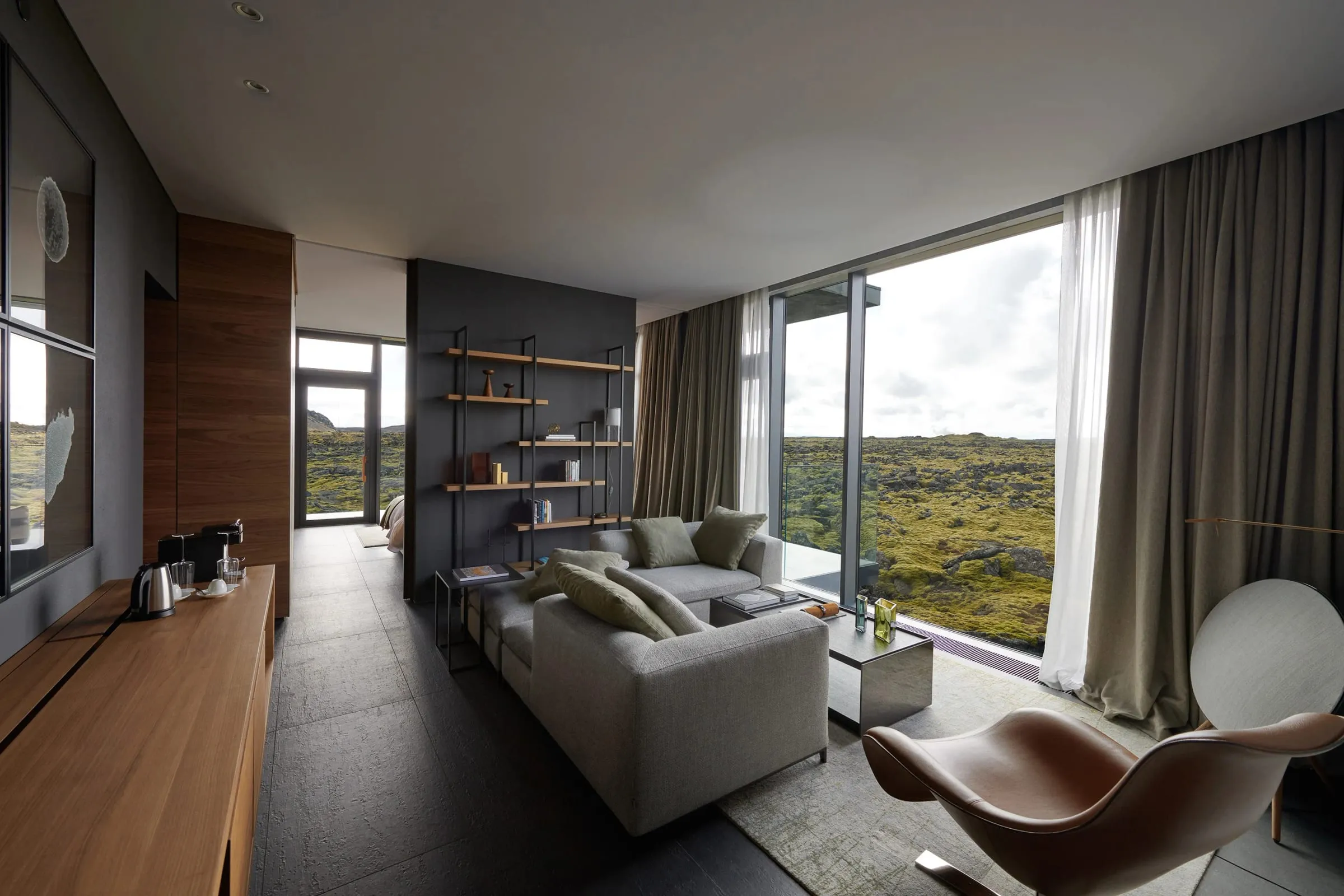
The Retreat at Blue Lagoon
A 60-suite hotel built into an 800-year-old lava flow, with a private geothermal lagoon and Iceland's only Michelin-starred hotel restaurant.
From $1,844 per night
Near Thingvellir National Park, Iceland
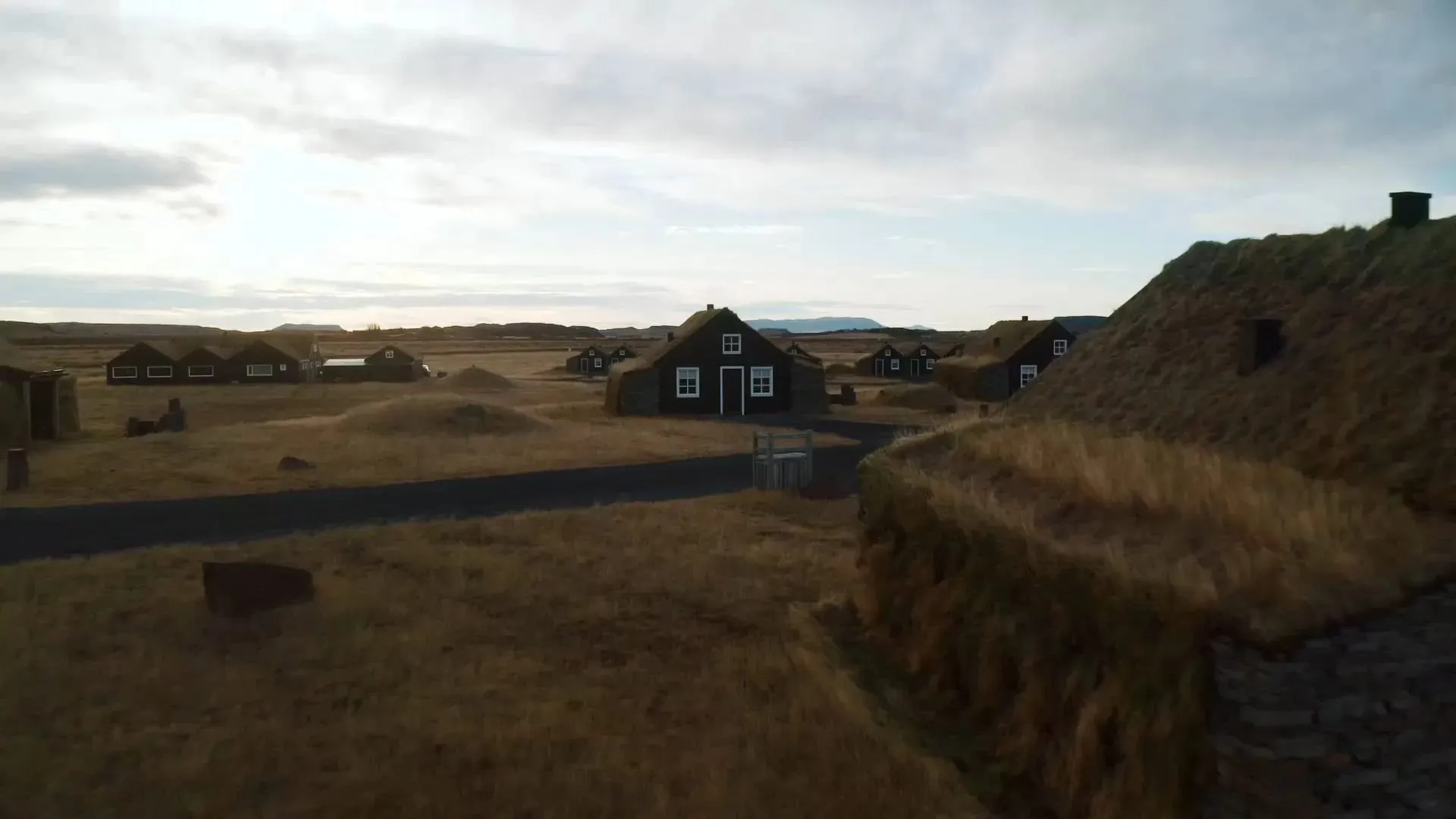
Torfhus Retreat
A hamlet of grass-roofed suites on the Golden Circle, built on the memory of a Viking longhouse buried by a volcano nine centuries ago.
From $750 per night