Grindavik, Iceland
The Retreat at Blue Lagoon
A 60-suite hotel built into an 800-year-old lava flow, with a private geothermal lagoon and Iceland's only Michelin-starred hotel restaurant.
- Rates from
- From $1,844 per night
- Nearest airport
- Keflavik International Airport (KEF)
- Transfer
- Around 15-20 minutes by road, one of the shortest airport-to-hotel transfers of any luxury property in Iceland
- Best months
- May to September for long daylight and easier road conditions, or late September to March for aurora viewing; winter travellers should plan for shorter days and variable weather
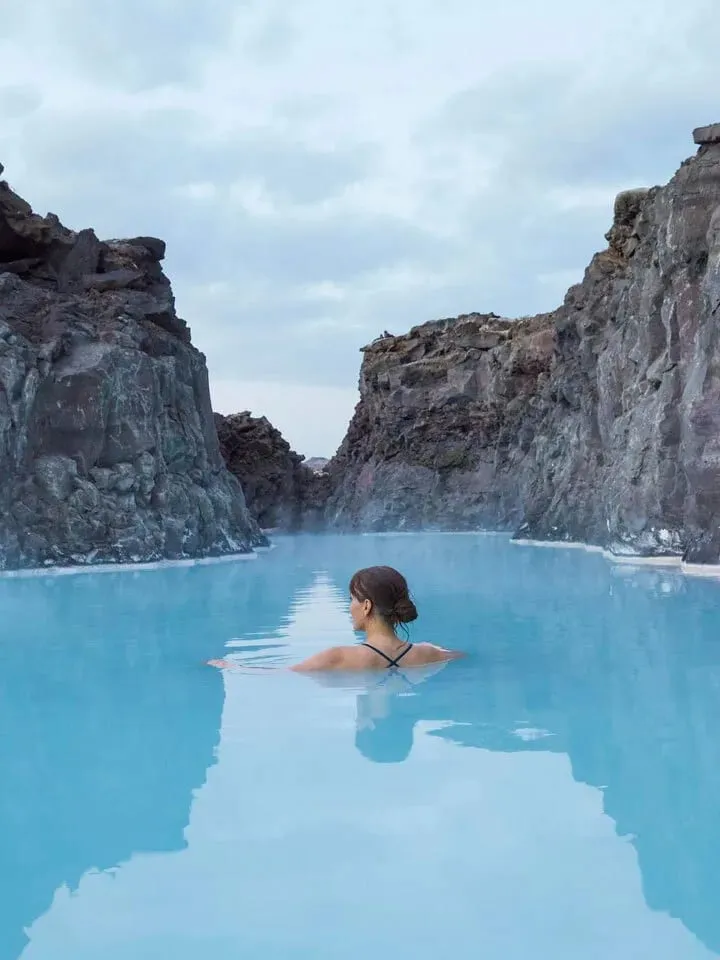
There is a version of the Blue Lagoon that most visitors never see. It sits a short walk from the milky-blue public pool that appears on nearly every Iceland itinerary, but it is walled off by lava rock, accessible only through a hotel lobby, and empty of the day-trip crowds that define the main lagoon’s reputation. That quieter pool, called the Retreat Lagoon, belongs exclusively to guests of The Retreat at Blue Lagoon, a 60-suite hotel that opened in September 2018 directly into the same 800-year-old lava field that has drawn bathers to this stretch of the Reykjanes Peninsula since the 1980s.
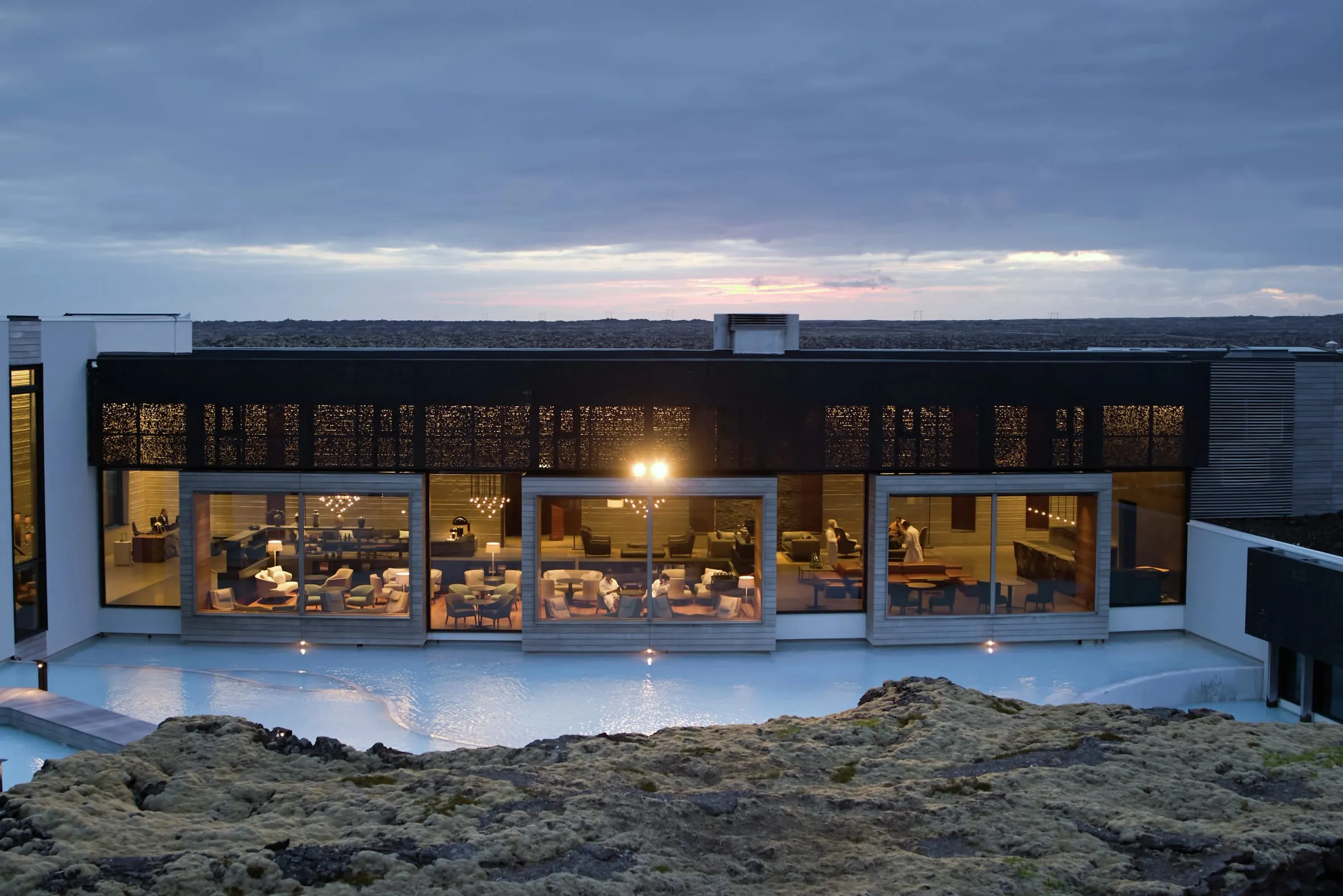
The Retreat’s premise is architectural as much as it is scenic: rather than building beside the lava field, Basalt Architects and Milan’s Design Group Italia built into it, cutting the hotel’s public spaces and spa down into cooled volcanic rock and letting guest suites sit low against the horizon so the building reads as topography rather than intrusion. It is a small hotel by international luxury standards, but a technically ambitious one, and it has become, since 2018, one of the more discussed pieces of hospitality architecture in the Nordic region.
It is also, unavoidably, a hotel operating in an active geological zone. The Reykjanes Peninsula has entered a new volcanic cycle since late 2023, with a series of eruptions along the nearby Sundhnukur crater row that have periodically closed the Blue Lagoon and the Retreat itself on a precautionary basis, most recently during an eruption in the summer of 2025. This guide addresses that history plainly rather than glossing over it, because any honest account of staying here in 2026 has to acknowledge the landscape’s volatility alongside its beauty.
Why It Stands Out
Most hotels near famous natural attractions keep a respectful, functional distance from them. The Retreat does the opposite: it shares its foundation, quite literally, with the lava field that makes the Blue Lagoon significant, and it converts that proximity into a private amenity, its own geothermal lagoon, that no day visitor to the public spa can buy access to. Add a subterranean spa carved roughly fifty feet into cooled lava, a restaurant that became the first in an Icelandic hotel to hold a Michelin star, and a room count kept deliberately small at 60 suites, and the result is a property whose central claim, genuine architectural and geological integration rather than a themed approximation of it, is unusually well supported by what a guest can actually see and touch.
Architecture
The Retreat occupies a site inside the Reykjanes UNESCO Global Geopark, built into a lava flow estimated at around 800 years old. Basalt Architects, the Reykjavik firm led by Sigriour Sigthorsdottir, designed the building’s structure and its relationship to the surrounding terrain, while Design Group Italia, based in Milan, developed the experiential and spatial design of the spa and public areas. The hotel opened its doors on 3 September 2018, following an expansion of the original Blue Lagoon site that had operated at this location since the 1990s.
The guiding idea, as the architects have described it, was that building and geology should read as a single continuous surface rather than as two separate systems in dialogue. In practice that meant sinking much of the hotel’s spa and circulation space directly into the lava rock, using steel and concrete structural elements finished in materials, including aluminium glazing systems and ceramic tiling, chosen to sit quietly against dark volcanic stone rather than compete with it. Guest suites, by contrast, are held low and horizontal, with expanses of glass rather than solid facade facing the lagoon and lava field, so that the building’s visible footprint above ground stays modest relative to its roughly 10,400 square metre total area.
Constructing on and into an active lava flow carries constraints that a conventional greenfield site does not. The rock itself is uneven, porous, and geologically young by any normal building standard, which shaped both the excavation approach for the subterranean spa and the foundation strategy for the suites above it. That the result reads as seamless, walls of dark basalt meeting cut lava with no visible transition in places, reflects the scale of technical coordination the project required between architect, engineer, and geologist.
Interior Design
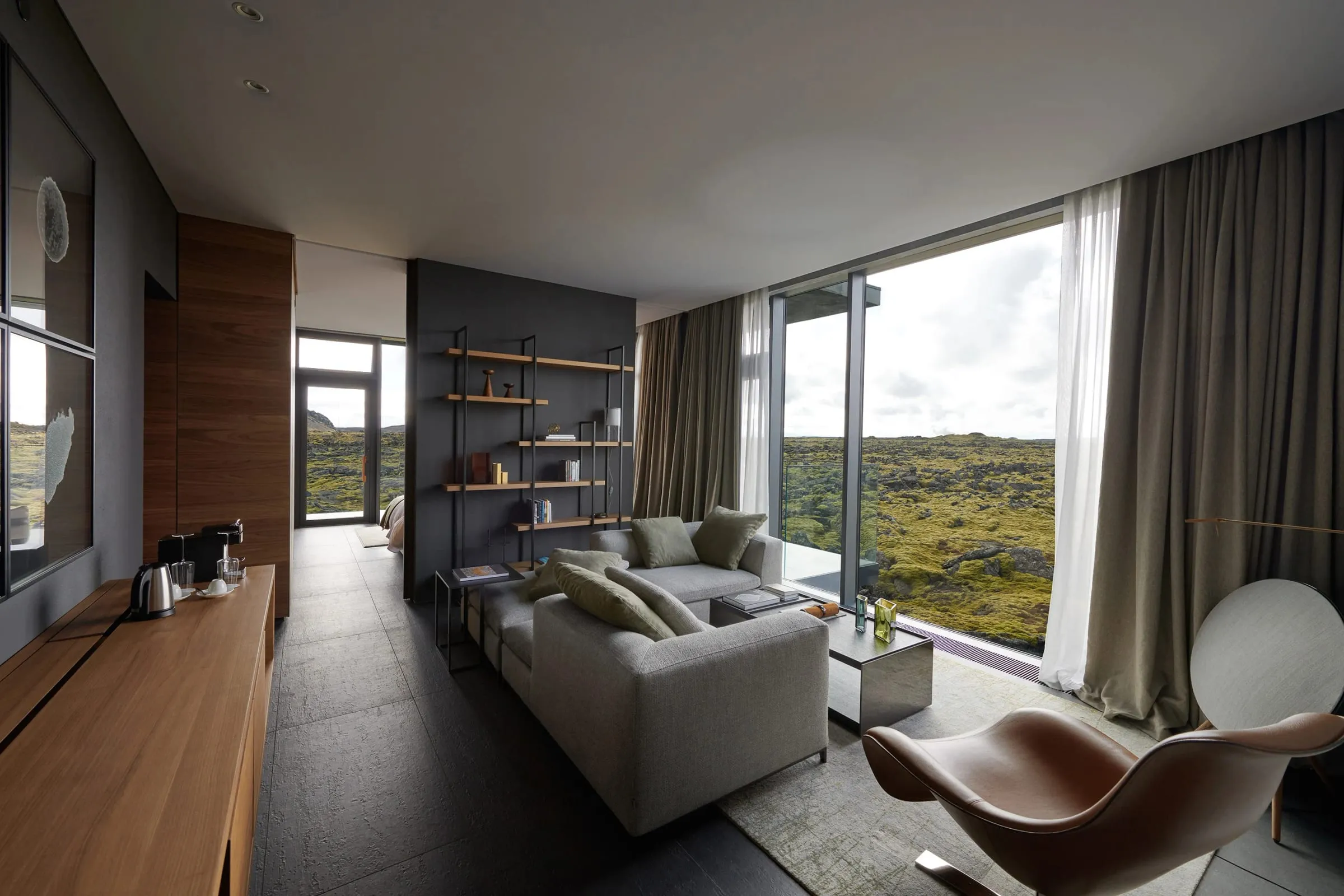
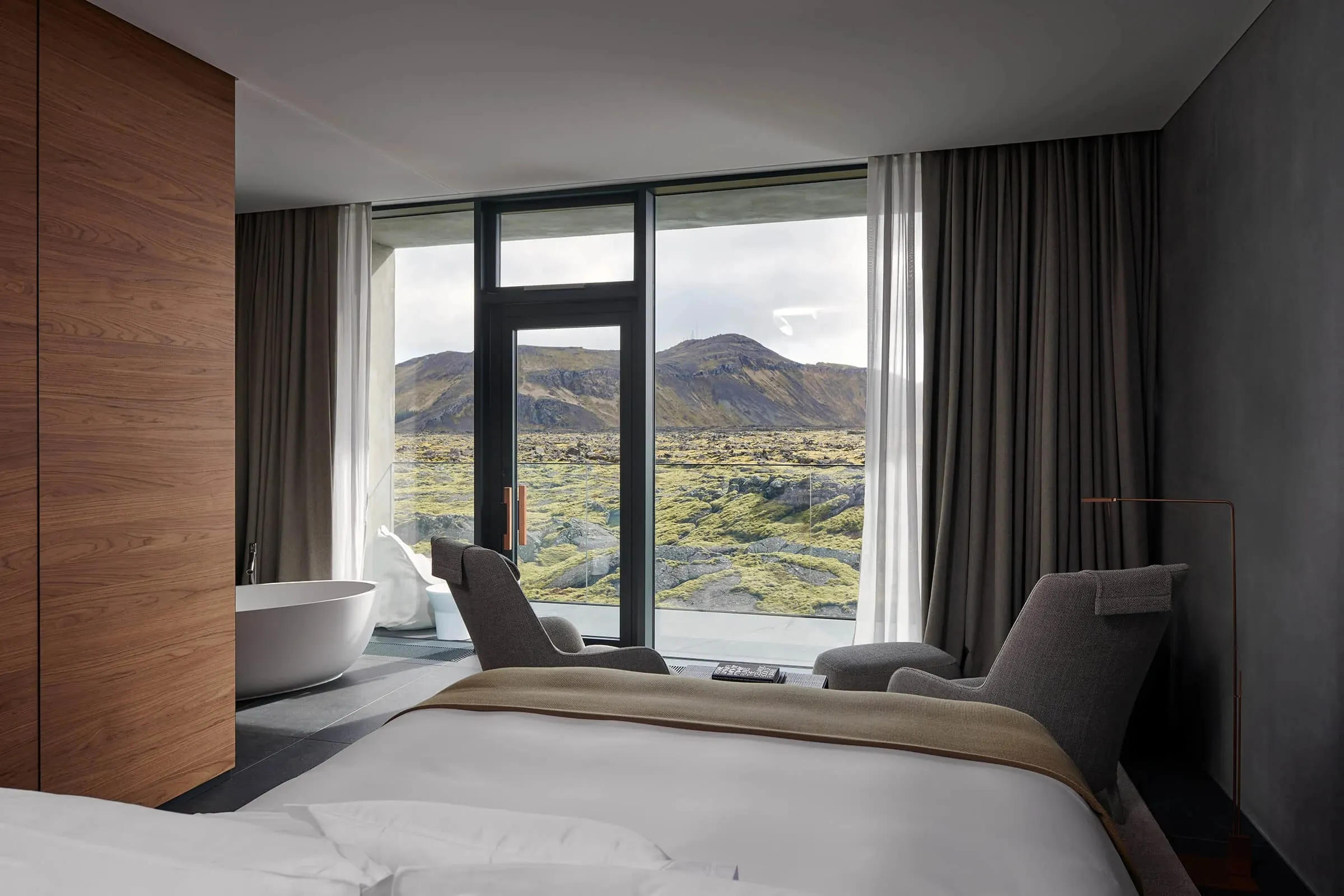
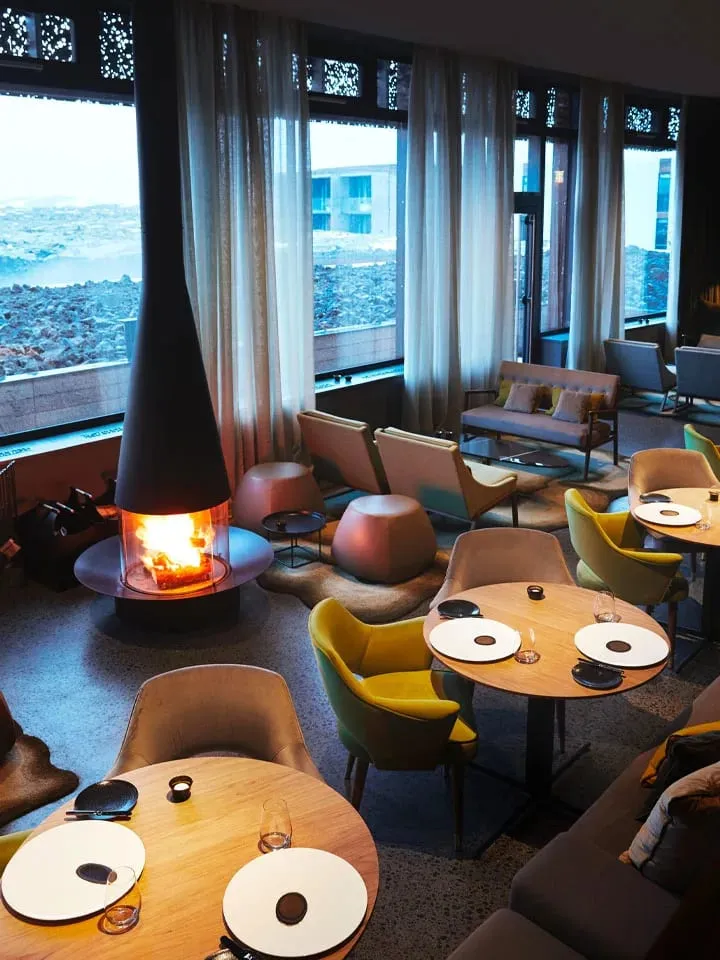
Inside, the design language set by Design Group Italia favours restraint: clean lines, natural and local textures, and a palette drawn from the surrounding landscape’s blacks, greys, and mineral blues rather than an imported luxury vocabulary. Suite interiors use timber panelling, stone, and glass in combination, with furnishings from Italian design houses set against finishes meant to feel indigenous to the site rather than dropped into it.
That discipline is most visible in how the interiors handle transparency. Floor-to-ceiling glazing throughout much of the guest accommodation and public spaces is treated as a primary design material in its own right, not simply a window onto a view, dissolving the boundary between the built interior and the lava field or lagoon outside. In the subterranean spa, the same restraint governs how artificial light and material meet raw rock: lighting is used sparingly, letting cut lava walls and dark water carry the visual weight of the space rather than layering decoration onto them.
Atmosphere
The Retreat sits within the same enclosed lava-field landscape as the public Blue Lagoon, but the experience of arriving as a hotel guest is deliberately separated from the day-visit crowds that queue at the main spa’s entrance. Check-in, suite access, and lagoon access all route guests around rather than through the public facility, and the effect is a hush that is unusual for a site this famous: guests can walk from a private suite to a private pool without encountering another day tripper.
That quiet extends to the exterior itself. The Reykjanes Peninsula’s landscape here is largely treeless, dominated by black lava rock, moss, and steam rising from the geothermal water, and the hotel’s low profile keeps sightlines toward that terrain largely uninterrupted. Depending on season, the atmosphere shifts considerably: near-endless daylight and pale evening light in June and July, or long dark evenings from October through February that make the property one of the more convenient bases in Iceland for aurora viewing, given its short distance from Keflavik and relatively low light pollution.
Rooms and Suites
The hotel holds 60 suites across six named categories. The Lava Junior Suite and Moss Junior Suite sit at the entry level, both built around forty square metres of interior space with private outdoor terraces facing either lava rock or the moss-covered fields that stretch toward the horizon. The Lagoon View Junior Suite adds direct sightlines to the water, with wood panelling, floor-to-ceiling glazing, and a freestanding bathtub as a consistent feature across the junior suite tier.
Moving up, the Moss Suite offers a private balcony over the lava fields, while the Lagoon Suite, at roughly 60 square metres with a 28 square metre terrace, includes its own private 30 square metre lagoon on a lower level, geothermal water piped directly to the room rather than shared with any communal pool. At the top of the range, the two-storey Blue Lagoon Suite pairs two bedrooms with a private lagoon, steam room, and sauna, along with a separate kitchen and dining area, making it the property’s only multi-bedroom configuration and a natural choice for small groups or families travelling together.
Published rates place the Lava Junior Suite and Moss Junior Suite from around USD 1,844 per night, rising through the Lagoon View Junior Suite from roughly USD 2,245 and the Moss Suite from around USD 2,525, up to the Lagoon Suite from roughly USD 3,527; the Blue Lagoon Suite is priced on request given its scale and inclusions. All categories include daily breakfast, unlimited access to the Retreat Spa, and unlimited access to the Retreat Lagoon for the duration of the stay.
Dining
Moss Restaurant, set at the highest point of the hotel with views over the lava field, is The Retreat’s signature dining room and the first hotel restaurant in Iceland to be awarded a Michelin star, which it received in 2023 and has retained since. Executive chef Aggi Sverrisson, previously of the Michelin-starred Texture in London, built the menu around a seven-course seasonal tasting format that pairs Icelandic ingredients, Arctic char, lamb, foraged herbs, and root vegetables among them, with technique drawn from Japanese and broader Asian cooking traditions. A sommelier-curated wine pairing runs alongside a non-alcoholic pairing option, and a more intimate Kitchen Table format, seating up to six guests, runs on selected evenings by separate reservation.
Beyond Moss, the hotel operates Lava Restaurant, a more relaxed dining room built into the lava rock itself and used for daily breakfast service as well as lunch and dinner, alongside a lobby bar that serves the hotel’s Icelandic coffee ritual and evening drinks. Sourcing across the kitchens leans heavily on the Reykjanes Peninsula and wider Iceland, seafood landed on the south coast, lamb from Icelandic farms, and produce grown using the country’s abundant geothermal energy in greenhouse cultivation.
Spa and Wellness
The Retreat Spa is the hotel’s defining wellness space: a roughly 2,300 square metre subterranean facility cut into the lava field about fifty feet underground, built specifically for the use of hotel guests and pre-booked spa-day visitors rather than the general public. Distinct zones inside the spa cover dry heat, steam heat, a cold plunge well, relaxation lounges, a panoramic viewing deck, and direct access to the Retreat Lagoon, all connected by passages cut through cooled lava rock.
The spa’s signature offering is the Blue Lagoon Ritual, a treatment sequence that moves guests through three interconnected chambers, each built around one of the geothermal water’s core natural elements: silica mud for detoxifying exfoliation, algae drawn from extremophile organisms native to the lagoon for nourishment, and mineral salt for circulation-boosting exfoliation, undertaken while floating in the mineral-rich water itself. In-water massage and float therapy sessions are offered from around USD 168, alongside facials and body treatments using the hotel’s own Blue Lagoon Skin Science skincare line, developed from the same silica and algae research that underpins the wider Blue Lagoon brand.
Experiences
Access to the private Retreat Lagoon and Retreat Spa is included with every stay and functions as the hotel’s primary experience in its own right, an enclosed geothermal pool framed by lava canyons that public Blue Lagoon visitors cannot enter. Morning yoga sessions run with views over the volcanic landscape, and the hotel periodically builds seasonal programming around Iceland’s celestial calendar; the total solar eclipse crossing Iceland in August 2026, with the Retreat positioned close to the centre of totality, is one such scheduled event.
Beyond the property, the Reykjanes Peninsula’s wider geopark status opens up guided lava-field walks, geothermal geology tours, and access to some of Iceland’s most concentrated volcanic scenery within a short drive, making the Retreat a workable base for excursions rather than a purely self-contained resort stay.
Who It Is For
The Retreat suits couples marking an anniversary or honeymoon who want a short, high-impact Iceland stay built around a single extraordinary amenity rather than a long touring itinerary. It also suits wellness travellers specifically drawn to geothermal bathing and spa culture, and design or geology enthusiasts curious about a building genuinely constructed into, rather than simply near, an active lava field. Because of its proximity to Keflavik, it works equally well as a decompression stop at the start or end of a longer Icelandic road trip as it does as a standalone destination.
Best Time to Visit
Summer, roughly May to September, brings near-continuous daylight, milder temperatures, and generally easier road conditions across the Reykjanes Peninsula, making it the more forgiving season for travellers combining the Retreat with wider exploration. Late September through March offers a real chance of aurora sightings given the hotel’s dark surroundings and short distance from Reykjavik’s light pollution, though winter travel comes with shorter days, colder temperatures, and occasionally disrupted road conditions that are worth planning around.
How to Get There
Keflavik International Airport (KEF) is the gateway for virtually all international arrivals to Iceland, and the Retreat sits roughly 15 to 20 minutes away by road, one of the shortest hotel transfers from any major airport in the luxury travel world. Reykjavik itself is a further 40 to 50 minutes beyond the hotel, meaning many guests choose to begin or end an Iceland trip at the Retreat before heading into the capital, rather than treating it as a day excursion from the city.
Nearby Experiences
The public Blue Lagoon geothermal spa sits immediately adjacent, offering a contrasting, more social bathing experience for guests who want to compare it with their private lagoon access. The fishing town of Grindavik lies a few kilometres away, and the wider Reykjanes UNESCO Global Geopark surrounding the hotel is threaded with lava fields, craters, and coastal geology worth exploring by car. Reykjavik, Iceland’s compact capital, is close enough for a half-day or full-day visit for guests extending their stay beyond the hotel itself.
Things to Know Before Booking
The Retreat’s suites are priced and structured for one to two adults per standard category, with the Blue Lagoon Suite the only configuration built for families or larger groups; travellers should confirm occupancy limits directly when booking. Rates vary meaningfully by suite category and season, and current published pricing should always be checked directly with the hotel rather than assumed from indicative figures. Most significantly, prospective guests should be aware that the Reykjanes Peninsula has experienced repeated volcanic and seismic activity since December 2023, and the Retreat, along with the public Blue Lagoon, has closed on a precautionary basis during several eruption episodes since then, including one in the summer of 2025. Iceland’s civil protection authorities and the hotel itself issue current status updates, and travellers with imminent bookings should check both before departure.
Sustainability
The Retreat draws its geothermal seawater from the same source that supplies the Blue Lagoon, water that originates as a by-product of the nearby Svartsengi geothermal power plant, which uses volcanic heat to generate both electricity and hot water for the wider Reykjanes region. That relationship gives the property a genuinely low-impact energy profile relative to conventional hotel heating and power sourcing, since it draws on Iceland’s renewable geothermal grid rather than fossil-fuel generation. The building’s construction approach, cutting spa space into existing lava rock rather than demolishing or flattening the site, was also intended to minimise the visible footprint of new construction against the surrounding geopark landscape. Specific published data on the property’s water recycling, waste management, or carbon accounting was not found and is not claimed here.
Practical Information
Rates begin from around USD 1,844 per night for the entry-level Lava Junior Suite and Moss Junior Suite categories, rising through the mid-tier Lagoon View Junior Suite and Moss Suite to roughly USD 3,527 for the Lagoon Suite, with the two-storey Blue Lagoon Suite priced on request; these figures reflect published rates and should be reconfirmed at the time of booking. Check-in is from 3:00pm and check-out by 12:00pm. The hotel’s address is Nordurljosavegur 11, Grindavik, Iceland, within the Reykjanes UNESCO Global Geopark and roughly 15 to 20 minutes by road from Keflavik International Airport.
Editorial Conclusion
The Retreat at Blue Lagoon makes a specific, well-supported argument: that a hotel can sit inside a genuinely significant natural landscape without diminishing it, if the architecture is disciplined enough and the guest experience private enough to justify the intrusion. A 60-suite count kept deliberately small, a spa cut directly into 800-year-old lava rock, a private lagoon unavailable to any day visitor, and a Michelin-starred kitchen working exclusively with Icelandic ingredients together make a strong case for that argument. The region’s ongoing volcanic activity since 2023 is a real and honest caveat, one worth checking before any booking, but it does not undercut what the Retreat has built: one of the more architecturally serious wellness hotels in Europe, on a site few other properties could claim to occupy at all.
In pictures
On the map
Grindavik, Iceland
Questions
Frequently asked
When did The Retreat at Blue Lagoon open and who designed it?
The Retreat opened on 3 September 2018, built directly into an 800-year-old lava flow beside the Blue Lagoon on the Reykjanes Peninsula. The architecture is by Reykjavik-based Basalt Architects, led by Sigriour Sigthorsdottir, with experiential and interior design by Milan-based Design Group Italia.
Is The Retreat the same as the Blue Lagoon day-visit spa?
No. The Retreat is a separate 60-suite hotel built adjacent to and sharing the same lava field and geothermal water source as the public Blue Lagoon, but hotel guests bathe in a private Retreat Lagoon that day visitors cannot access, plus a subterranean Retreat Spa reserved for hotel guests and spa-day bookers.
How many rooms does The Retreat at Blue Lagoon have?
The hotel holds 60 suites across categories including Lava Junior Suite, Moss Junior Suite, Lagoon View Junior Suite, Moss Suite, Lagoon Suite, and the two-storey Blue Lagoon Suite, which has its own private lagoon, steam room, and sauna.
Does The Retreat have a Michelin-starred restaurant?
Yes. Moss Restaurant, set at the highest point of the hotel, earned a Michelin star in 2023, the first hotel restaurant in Iceland to do so. Executive chef Aggi Sverrisson, previously of Texture in London, serves a seasonal tasting menu that blends Icelandic ingredients with Asian technique.
Is The Retreat affected by volcanic activity near Grindavik?
The Reykjanes Peninsula has experienced a series of volcanic eruptions and seismic events in the Sundhnukur crater row since December 2023, and the Blue Lagoon and Retreat have closed on a precautionary basis during several of these episodes, most recently around an eruption in July and August 2025. Keflavik Airport and the main road network have continued operating throughout, and as of mid-2026 the Retreat and Blue Lagoon are open; travellers should check current status directly with the hotel or Iceland's civil protection authorities before travelling.
Same destination
More hotel guides in Iceland
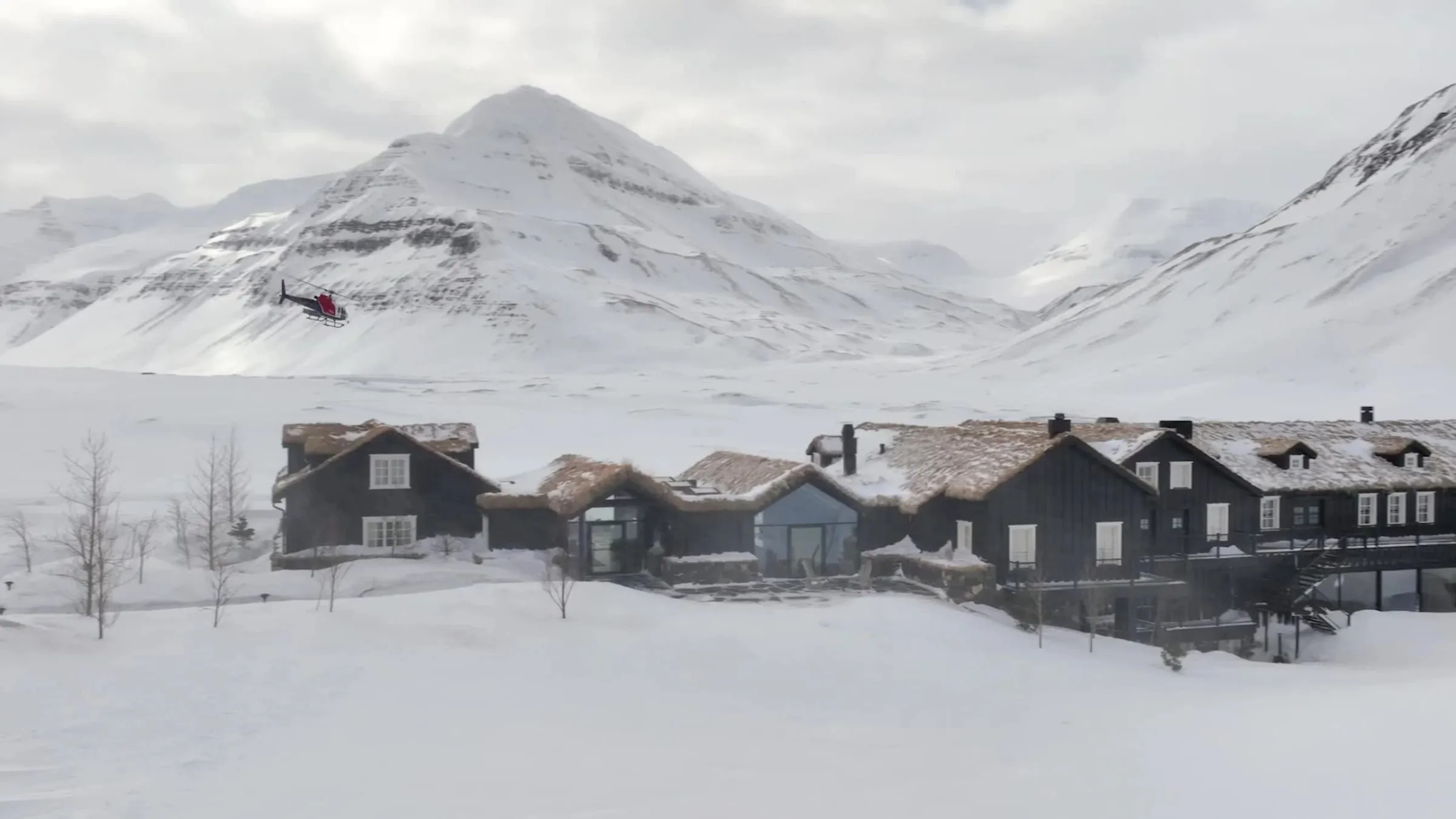
Fljot Valley, North Iceland, Iceland
Deplar Farm
A turf-roofed sheep farm on Iceland's remote Troll Peninsula, rebuilt into a 13-room adventure lodge where heli-skiing, fly fishing and a geothermal pool run on the same all-inclusive rhythm.
From $2,775 per night, all-inclusive
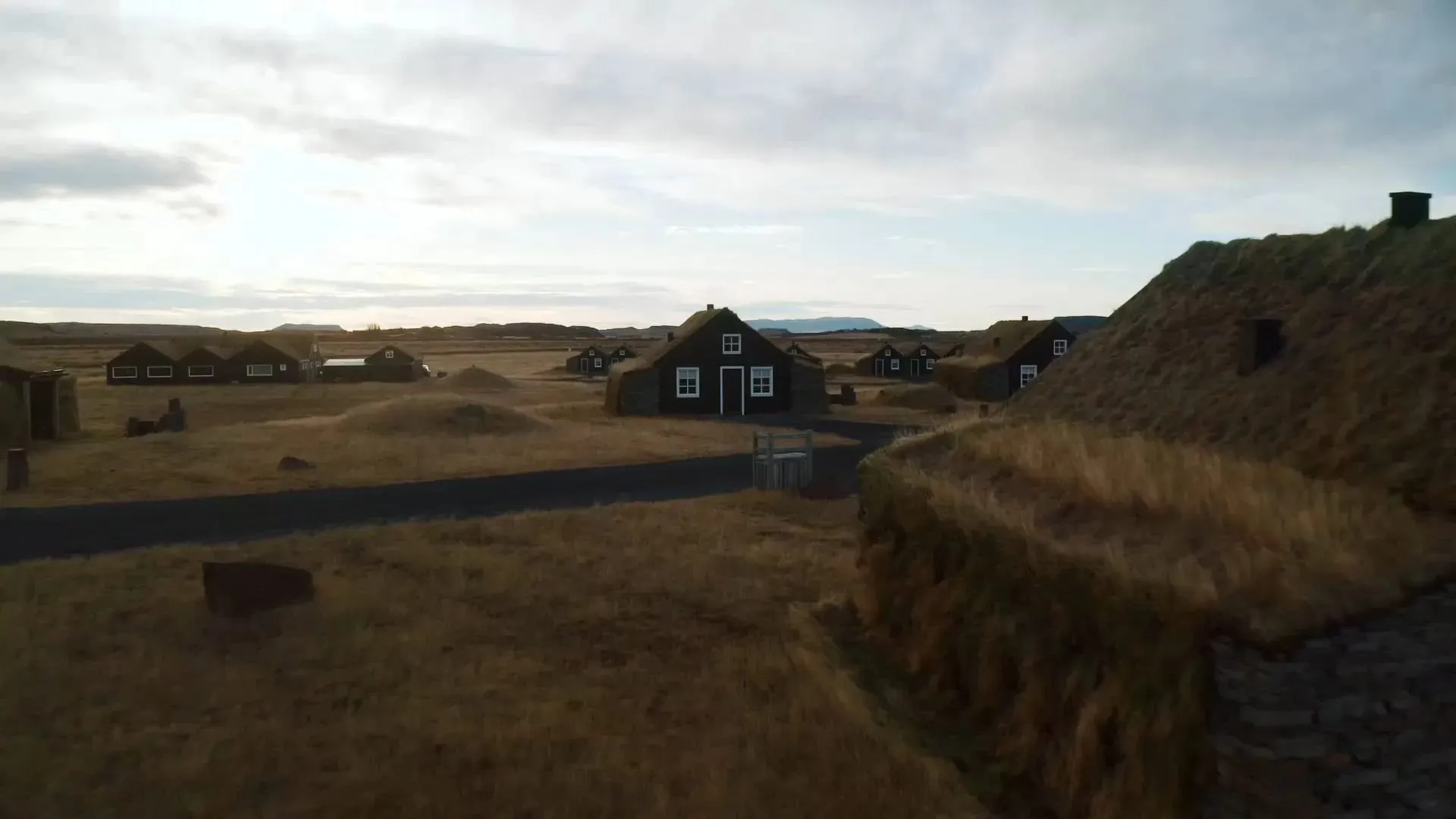
Near Thingvellir National Park, Iceland
Torfhus Retreat
A hamlet of grass-roofed suites on the Golden Circle, built on the memory of a Viking longhouse buried by a volcano nine centuries ago.
From $750 per night