Porto Heli, Greece
Amanzoe
A hilltop citadel of Doric columns and marble courtyards above Porto Heli, built as a modern-day temple to the Peloponnese coastline it overlooks.
- Rates from
- From €1,900 per night
- Nearest airport
- Athens International Airport (ATH)
- Transfer
- Around 2 to 2.5 hours by road from Athens, or roughly 25 to 30 minutes by private helicopter directly to the resort's own helipad
- Best months
- Late May to June and September into early October, for warm sea temperatures without the peak-August crush; the resort itself closes annually from mid-November to end of March
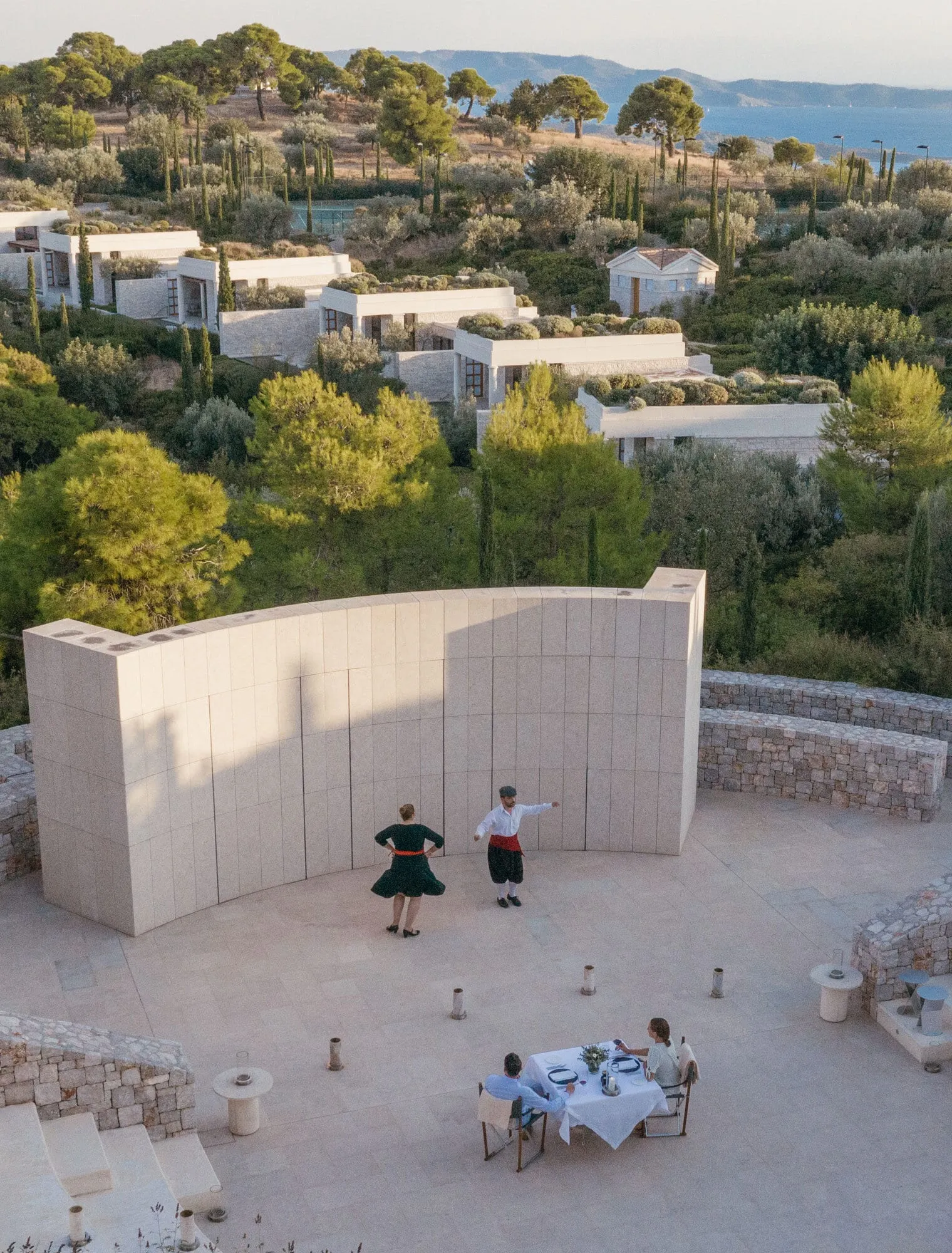
There is a particular kind of arrival sequence at Amanzoe that Aman’s marketing has never had to embellish: the road climbs out of Porto Heli, olive groves close in on either side, and then, at the top of the ridge, a row of flat-roofed, marble-clad pavilions appears against the sky, propped up on colonnades, looking for all the world like a Doric temple that has been reprogrammed for room service. It is the kind of building that photographs as a ruin and functions as a hotel, and that tension, between the austerity of an ancient form and the comfort of a five-star resort, is the whole premise of the place.
Amanzoe opened in August 2012 as Aman’s third resort in the Mediterranean, on a hilltop site of roughly eight hectares above Porto Heli in the Peloponnese, mainland Greece’s southern peninsula. The architect was Ed Tuttle, the American designer behind several of Aman’s founding properties in Asia, working here for the first time with the specific materials and mythology of Greece rather than Southeast Asia: beige and dark-green marble quarried thousands of kilometres apart, dry-stone cladding sourced regionally, and a silhouette borrowed loosely from the Acropolis rather than from any Thai or Balinese precedent.
What makes Amanzoe worth the two-and-a-half-hour drive from Athens (or the twenty-five-minute helicopter hop most guests actually take) is not novelty. Aman resorts rarely chase novelty. It is the completeness of the idea: a hilltop citadel of 38 pool pavilions and a separate cluster of villas, a spa built around Hippocratic principles of holistic health, and a private beach club six kilometres down the hill for when the austerity gets to be too much and guests want a swim in the actual sea. Few resorts in Greece commit this hard to a single architectural language and then build every other decision, dining, wellness, even the choice to close for winter, around protecting it.
Why It Stands Out
Amanzoe’s case rests on a fairly narrow but well-executed idea: build an ultra-private hilltop resort that reads, at a glance, as a piece of classical architecture, and then furnish it so thoroughly with private pools, marble, and 360-degree sea views that guests rarely need to leave their own pavilion. Every one of its 38 pavilions has a private pool. The resort sits at altitude, above the coastline rather than on it, trading direct beach access for panoramic views and a genuine sense of remove, with a private Beach Club supplied separately for guests who want sand and sea. Few hotels anywhere manage to feel simultaneously monumental (Doric colonnades, marble courtyards, flat temple-like roofs) and intimate (freestanding pavilions spaced for total privacy, a guest-to-staff ratio typical of Aman’s higher-touch properties). That combination, spectacle at the scale of the building, privacy at the scale of the stay, is what distinguishes it from both the Cycladic hotel style that dominates Greek luxury travel and the villa-rental model that competes for the same wealthy, privacy-seeking traveller.
Architecture
Ed Tuttle, who died in 2021, was one of the architects most closely associated with Aman’s early identity, having designed properties including the original Amanpuri in Phuket. At Amanzoe, working in Greece for the first time, he built what has been widely and repeatedly described, including by the hotel’s own marketing, as a modern-day acropolis: flat roofs held up by colonnades in a clear nod to classical Greek temple architecture, oriented to frame unobstructed 360-degree views across olive groves toward the Aegean and Argolic Gulf below.
The material palette was chosen specifically to evoke Greece rather than generic luxury minimalism. Tuttle used beige Sinai Pearl Antique marble and dark-green Guatemala Verde marble as primary finishes, alongside regional dry-stone cladding and timber pergolas, describing marble and stone as the most basic and noble materials the country has to offer. The landscape design, by the Athens-based firm Doxiadis+, took a similarly restrained approach: rather than imposing new planting, it worked with what was already on the roughly eight-hectare hilltop site, existing pine forest, aromatic maquis scrub, and centuries-old olive and carob trees, folding the resort into vegetation that predates it rather than replacing it with something more manicured.
The result is architecture that photographs as ruin-adjacent and ceremonial, but functions with the practical infrastructure of a contemporary resort: climate control, plumbing, and private pools built into a design language whose source material had none of those things. That contrast, between temple aesthetics and hotel-grade comfort, runs through nearly every part of the property.
Interior Design
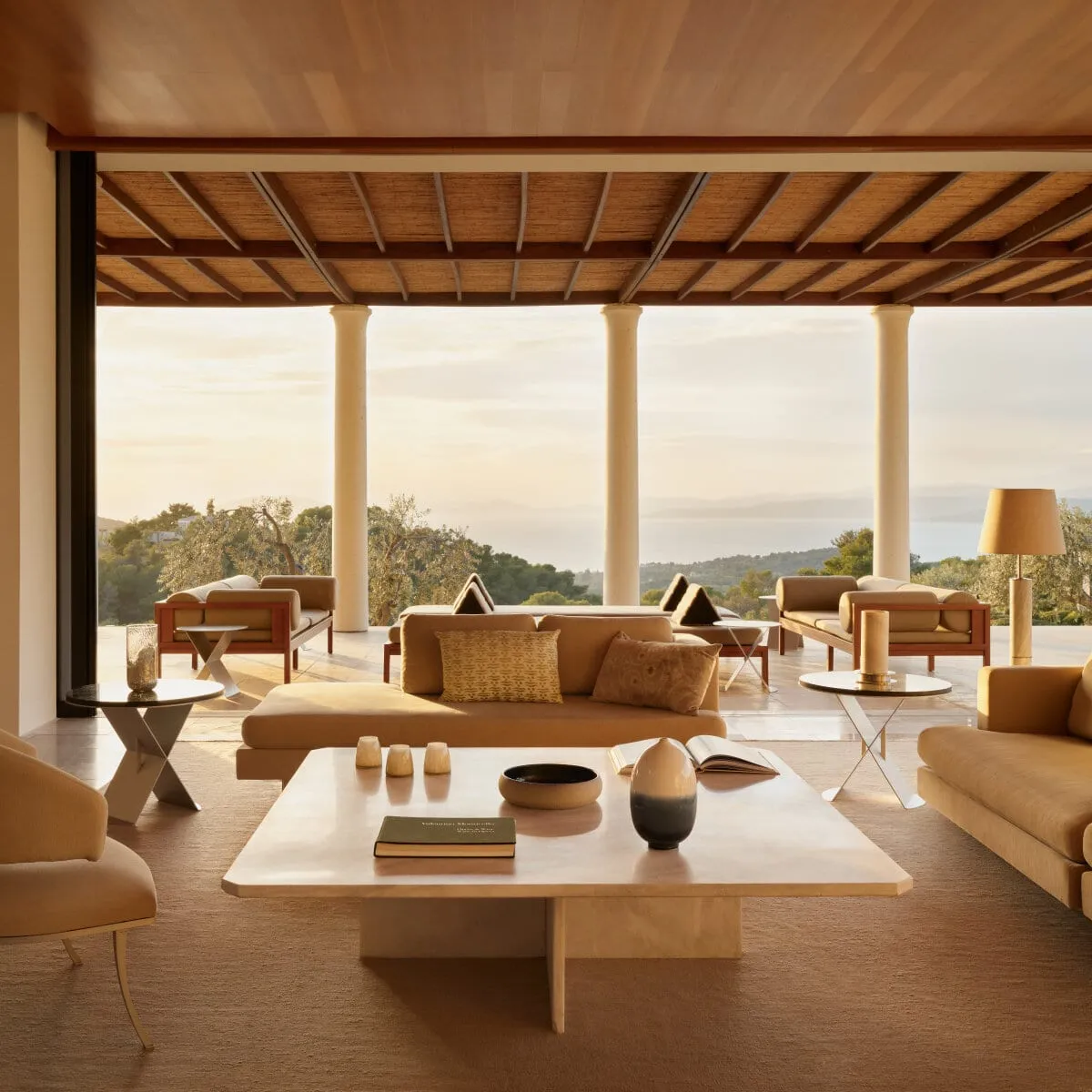
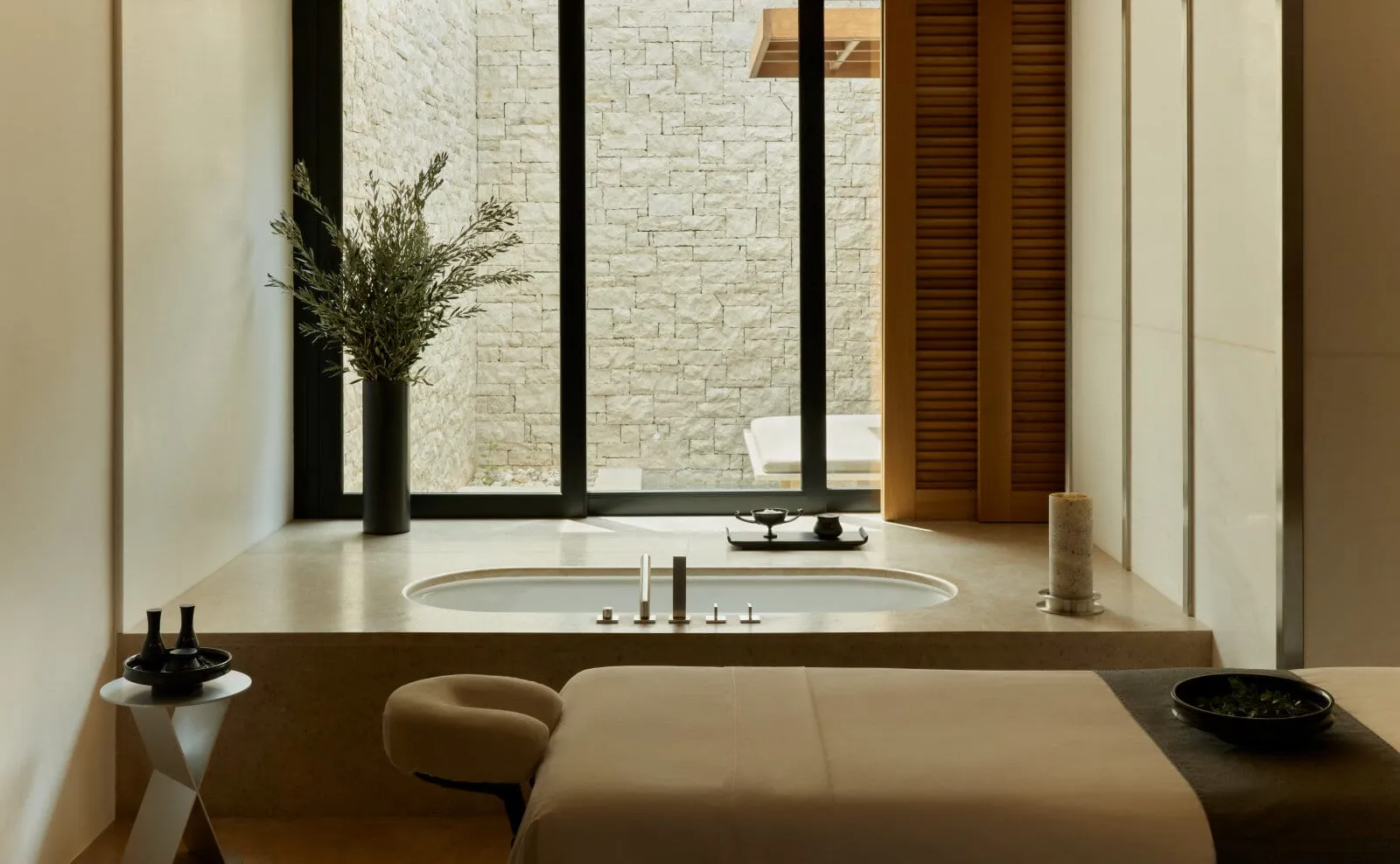
Inside the pavilions and public spaces, Tuttle’s interiors lean into a similar restraint: high ceilings, cold materials such as marble and natural stone offset by warmer oak accents, and green roofs with integrated vegetation on some structures, softening the buildings’ profile from above. The effect inside individual pavilions is closer to a private residence than a conventional hotel room, with pared-back furniture, neutral tones, and finishes chosen to let the marble and the view do most of the visual work rather than competing with either.
Public spaces carry the same discipline at a larger scale. The Aman Spa, at roughly 2,850 square metres, has been described as built around light, stone, lavender, and long uninterrupted sightlines, a calm register that is consistent with the resort’s wider approach: strip back ornament, let proportion and material carry the room. Villas, which range from one to nine bedrooms and are positioned apart from the main pavilion cluster, extend the same architectural vocabulary into a more domestic, family-oriented format, with private gardens, dedicated staff, and, in the case of the largest configurations, their own pools and spa facilities.
Atmosphere
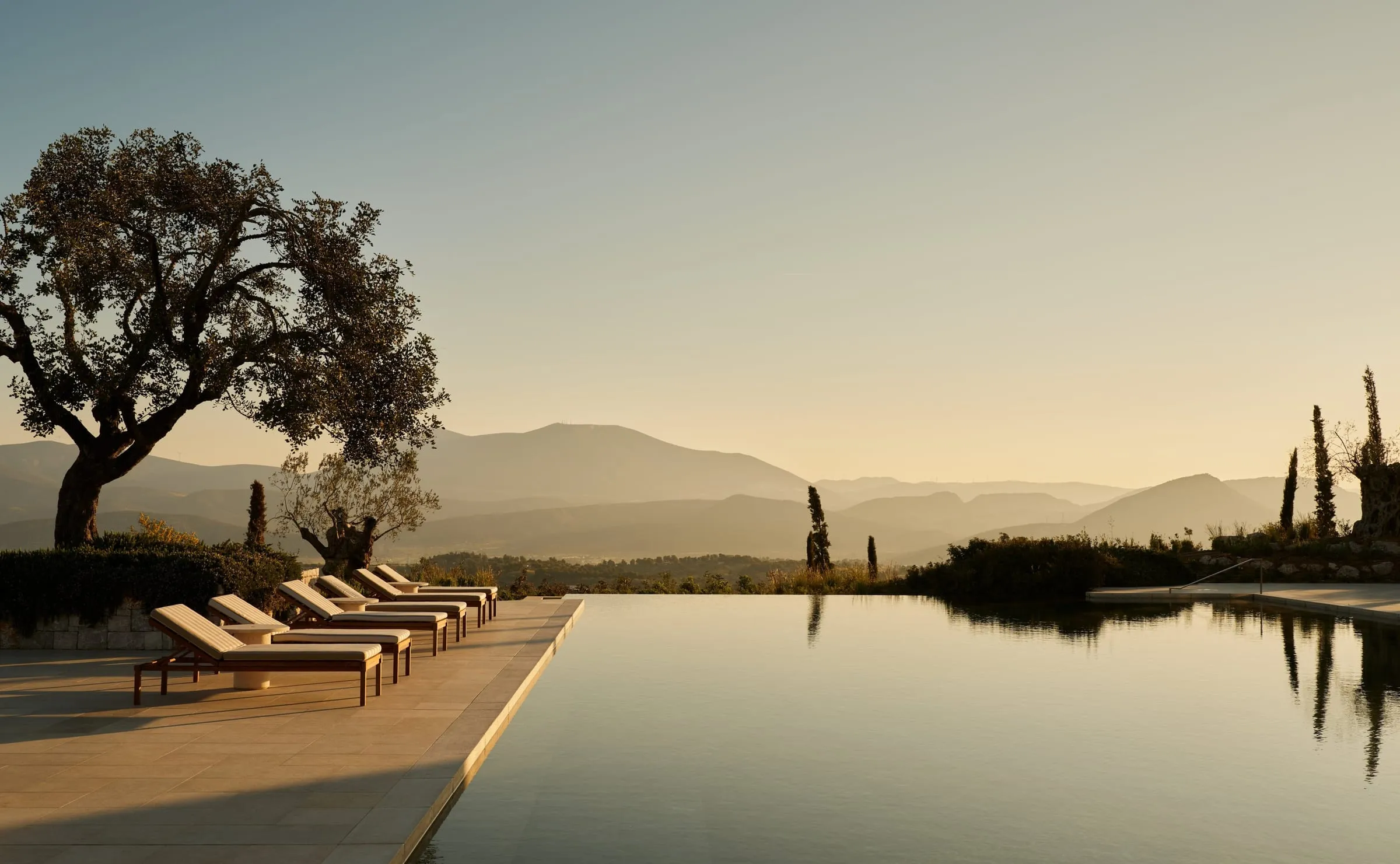
Amanzoe’s defining sensory fact is altitude. The resort sits on a ridge above Porto Heli rather than at sea level, and nearly every part of the guest experience, the pavilions, the hilltop pool, the spa, is built to exploit that position: wide-open views across olive groves to the Argolic Gulf and Aegean beyond, with a sense of exposure to sky and horizon that beachfront hotels, however luxurious, cannot replicate. That elevation also buys genuine quiet. Guests are removed from Porto Heli’s town centre and its yacht-set social scene, though close enough (a short drive) to visit when they want to.
The atmosphere shifts noticeably at the Beach Club, roughly six kilometres down the hillside on a sheltered bay: a more conventional, laid-back Mediterranean beach setting, with calmer water suited to swimming and watersports, in deliberate contrast to the hilltop’s ceremonial stillness. Guests effectively choose between two registers during a stay, monastic calm above, social beach energy below, without ever leaving the property.
Rooms and Suites
Amanzoe comprises 38 freestanding pavilions in total, including a small number of dedicated Beach Pavilions, arranged across the hillside for maximum privacy between units. Categories run from Pool Pavilions, with six-metre pools, up to Deluxe Pool Pavilions, with twelve-metre pools, with Sea View variants available within each tier. Every pavilion, regardless of category, comes with a private plunge or lap pool, a pergola-shaded terrace, high ceilings, and interiors built from the same marble and stone palette used throughout the resort.
Separately from the pavilions, Amanzoe operates a collection of multi-bedroom villas, from one-bedroom configurations up to Villa 20, a nine-bedroom, roughly 1.6-hectare complex spread across six levels with its own six pools and spa facilities, reportedly able to sleep up to twenty guests. The villas sit in their own grounds among the olive groves, each with a private garden, dedicated staff, and (in the larger configurations) private chefs, positioning them closer to a rented Mediterranean estate than a hotel suite. Exact villa counts and configurations are periodically adjusted by Aman, so travellers with a specific bedroom count in mind should confirm current availability directly with the resort.
Dining
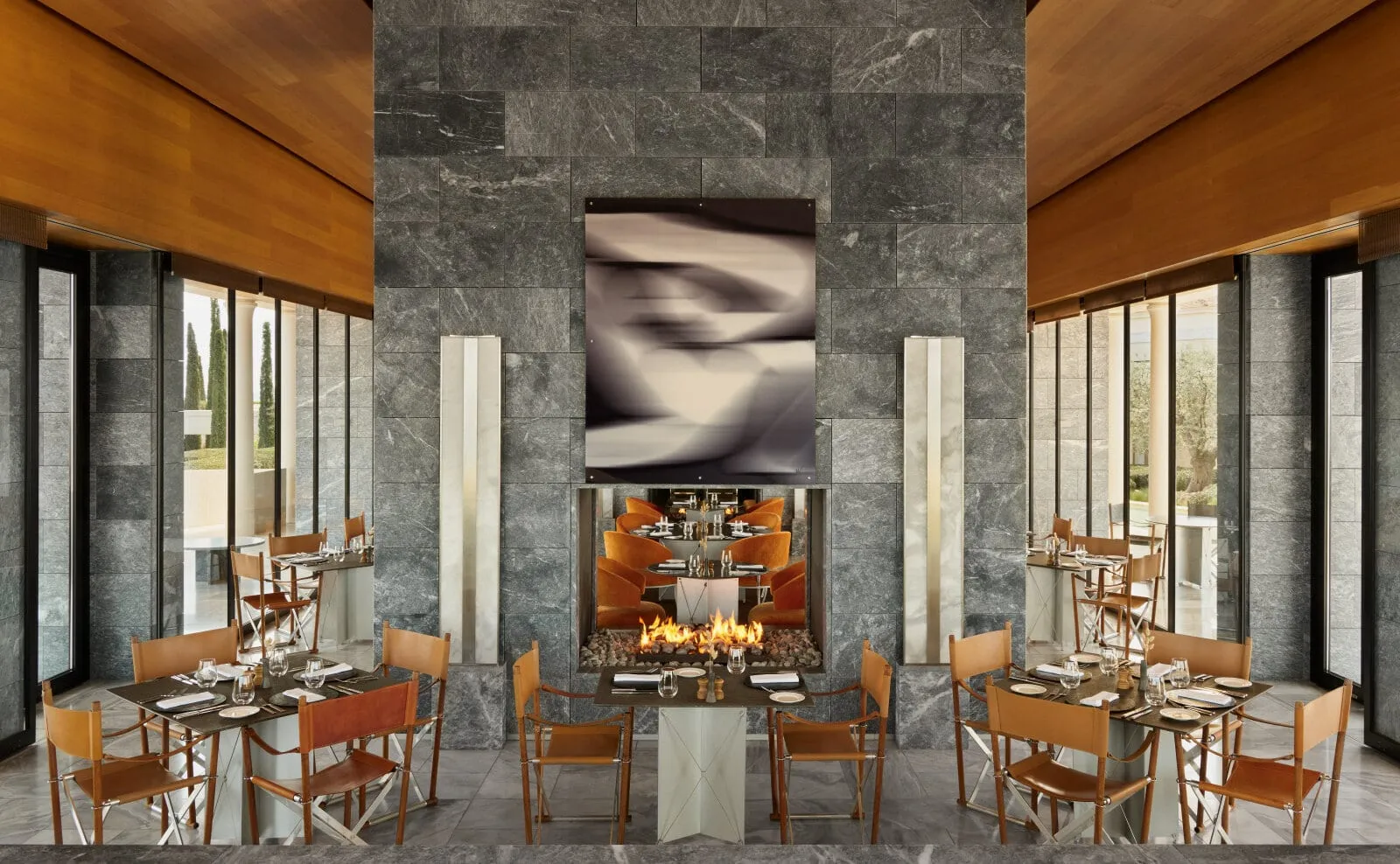
Amanzoe’s restaurant programme is built around several distinct venues rather than a single flagship. The Restaurant, the resort’s principal dining room, sits at the hilltop with sea views through floor-to-ceiling windows and serves Greek and wider Mediterranean cuisine, including a Greek degustation menu with wine pairings. Akari serves Japanese washoku cuisine in a light-filled, near-360-degree-view dining room by the main pool, dinner only, reflecting Aman’s now-established pattern of pairing a Japanese restaurant with its flagship dining room across many of its resorts. The Pool Restaurant offers a lighter, more casual Greek menu for lunch, including produce from the resort’s own gardens, while Nura operates as the restaurant at the Beach Club, serving a Mediterranean menu (with Spanish, Greek, and Italian influences) in a relaxed, al fresco beachfront setting. The Bar, with wraparound doors that open fully in summer, serves cocktails built around Mediterranean and local herbal ingredients, and Bostani, an outdoor taverna-style dinner set among the olive groves, runs on selected evenings for a more rustic, farm-to-table format. Chef appointments and exact venue names shift periodically at single-brand resorts of this kind, so guests planning a stay around a specific restaurant should confirm current details with the hotel.
Spa and Wellness
The Aman Spa at Amanzoe spans roughly 2,850 square metres, among the larger spa footprints in the Aman portfolio, with a mix of indoor treatment suites and outdoor pavilions, a dedicated facial room, a yoga pavilion, a Pilates studio, a gym, and a hair and grooming salon. Changing facilities include a hammam, sauna, cold plunge, and steam room, and treatments draw on both Hippocratic traditions, diet, movement, massage, and sea bathing, and Asian healing practices, applied with all-natural products. A Watsu pool supports water-based therapy work, and the resort has also hosted a Mobility and Recovery programme developed in partnership with tennis player Novak Djokovic, focused on longevity and movement-based recovery. Two floodlit tennis courts and a further, smaller spa outpost at the Beach Club round out the wellness offering, giving guests a wellness option at both the hilltop and the seafront ends of the property.
Experiences
Amanzoe’s private Beach Club, on its own sheltered bay roughly six kilometres from the hilltop, functions as the resort’s primary experience hub outside the pavilions themselves: four pools, private cabanas, a dedicated restaurant, and watersports equipment including kayaks, paddleboards, and small sailing boats, with calm, sheltered water suited to swimming and snorkelling. The resort also runs boat excursions to the nearby islands of Spetses and Hydra, both a short crossing from Porto Heli and known for their car-free streets and preserved 18th- and 19th-century architecture. On-site, Amanzoe periodically hosts art programming, including a seasonal exhibition series, alongside its established wellness and movement offerings. Given the surrounding olive groves and Doxiadis+‘s landscape work, walking the grounds themselves, past centuries-old trees and dry-stone terracing, is also a genuine part of the experience rather than simply transit between buildings.
Who It Is For
Amanzoe suits couples marking a honeymoon or anniversary who want architectural drama and total privacy rather than a busy island scene, and design-minded travellers with a specific interest in how classical forms translate into contemporary hospitality. Its villa collection, up to nine bedrooms with private staff, makes it a genuine option for extended families or groups travelling together, a format the pavilion-only Aman properties elsewhere do not offer at this scale. It is less suited to travellers who want direct beachfront access from their room, given the resort’s hilltop position and the separate, several-kilometre journey to its Beach Club, or to first-time Greece visitors wanting to combine a stay with easy access to Athens’s ancient sites or island-hopping beyond a Spetses or Hydra day trip.
Best Time to Visit
Amanzoe operates seasonally, closing annually from around mid-November to the end of March in line with several of Aman’s other Mediterranean resorts. Within its operating season, late May through June and September into early October offer warm, swimmable sea temperatures without the peak crowding and highest rates of July and August, which remain the property’s busiest and most expensive months, particularly around the Beach Club.
How to Get There
Athens International Airport (ATH) is the primary gateway, with the resort roughly 2 to 2.5 hours away by road along the Peloponnese coast. Given that distance, a meaningful share of guests instead book a private helicopter transfer, which takes approximately 25 to 30 minutes and lands directly at Amanzoe’s own on-site helipad; Porto Heli’s small local airfield has been closed to fixed-wing traffic since 2008, so helicopter charter, arranged either through the resort or independent operators, is the only current air option beyond Athens itself. Travellers driving from Athens pass through the towns of the eastern Peloponnese coast en route to Porto Heli and the final ascent to the hilltop property.
Nearby Experiences
Porto Heli itself, a small harbour town with a yacht-oriented social scene in high summer, sits a short drive from the resort. The islands of Spetses and Hydra are both reachable by boat from Porto Heli, generally within a short crossing, and are known for their car-free town centres, preserved architecture, and slower pace relative to the busier Cycladic islands. The wider Peloponnese also holds significant ancient sites, including the amphitheatre at Epidaurus and the archaeological remains at Mycenae, both within range of a day trip for guests willing to travel further inland from the coast.
Things to Know Before Booking
Amanzoe sits on a hilltop, not on the beach; guests wanting direct sea access from their room should know the private Beach Club is a separate facility roughly six kilometres down the hillside, reached by shuttle or short drive rather than on foot. The resort closes seasonally, typically from mid-November to the end of March, so it is not a year-round option. Villa and pavilion counts, categories, and exact configurations are periodically revised by Aman, so travellers with specific requirements, a particular villa size, a sea-view pavilion, a beachfront category, should confirm current inventory and terms directly with the hotel or a specialist travel advisor at the time of booking. Porto Heli’s small local airfield is not currently operational for fixed-wing aircraft, so travellers planning private aviation should arrange helicopter charter rather than assume a runway option exists.
Sustainability
Amanzoe’s most substantiated sustainability claim relates to its landscape design: rather than clearing the hilltop site and replanting it, Doxiadis+ built the resort’s grounds around what already existed, pine forest, aromatic maquis vegetation, and centuries-old olive and carob trees, an approach intended to reduce water use, pesticide requirements, and overall environmental disturbance relative to a fully landscaped alternative. The spa’s stated use of all-natural products and the kitchens’ sourcing of produce from the resort’s own gardens for some dishes point in a similar direction. Specific, independently verified data on the resort’s energy use, water consumption, or waste diversion was not found in public sources and is not claimed here.
Practical Information
Published rates for Amanzoe vary substantially by season and category, with entry-level Pool Pavilions starting from roughly the high hundreds to low thousands of euros per night in shoulder-season months and running considerably higher in July and August; multi-bedroom villas start well above that, into the five figures per night for the largest configurations such as Villa 20. The figure given above is an indicative shoulder-season starting point rather than a live quote and should be confirmed directly with the resort or a travel advisor. Check-in is from 3:00pm and check-out by 12:00pm noon. The resort’s address is Agios Panteleimonas, Kranidi, 213 00 Argolida, Greece, and it closes annually from mid-November to the end of March.
Editorial Conclusion
Amanzoe’s achievement is architectural conviction carried all the way through: a hilltop resort built to resemble a classical temple that also, unusually for a building working that hard on symbolism, functions as one of the more privacy-forward luxury stays in Greece. The split between a monumental, columned hilltop and a separate, more relaxed private beach six kilometres away gives guests two distinct registers within a single stay, while the villa collection extends the same design language to multi-generational groups in a way few comparable Mediterranean resorts attempt. For travellers who want Greece’s classical architectural language taken seriously, and who value seclusion over beachfront convenience, it remains one of the Peloponnese’s most fully realised luxury properties.
In pictures
On the map
Porto Heli, Greece
Questions
Frequently asked
Where exactly is Amanzoe located?
Amanzoe sits on a hilltop above the town of Porto Heli, on the eastern coast of the Peloponnese in Greece, in the area of Agios Panteleimonas near Kranidi. It occupies a ridge with 360-degree views over olive groves toward the Argolic Gulf and the Aegean Sea beyond.
When did Amanzoe open and who designed it?
Amanzoe opened in August 2012, Aman's third resort in the Mediterranean, designed by the American architect Ed Tuttle, who was responsible for several of the group's early flagship properties including the original Amanpuri in Thailand. Landscape design was handled by the Athens-based firm Doxiadis+.
How many rooms does Amanzoe have?
Amanzoe comprises 38 freestanding pavilions, including a small number of Beach Pavilions, plus a separate collection of multi-bedroom villas, ranging from one to nine bedrooms, set apart in their own grounds. Every pavilion has its own private pool, either 6 or 12 metres depending on category.
Does Amanzoe have a private beach?
Yes. The resort's Beach Club sits in a sheltered bay roughly 6 kilometres down the hillside from the main hilltop property, reachable by a short drive, with its own restaurant, pools, treatment rooms, and watersports equipment including kayaks, paddleboards, and small sailing boats.
How do guests get to Amanzoe from Athens?
The standard route is a road transfer of around 2 to 2.5 hours from Athens International Airport to Porto Heli. Aman also arranges private helicopter transfers, which take roughly 25 to 30 minutes and land directly at the resort's own helipad, a popular option given the distance by car.
Is Amanzoe open all year?
No. Like several other seasonal Mediterranean Aman properties, Amanzoe typically closes over the winter, from around mid-November to the end of March, and operates only for the spring, summer, and autumn season.
Same destination
More hotel guides in Greece
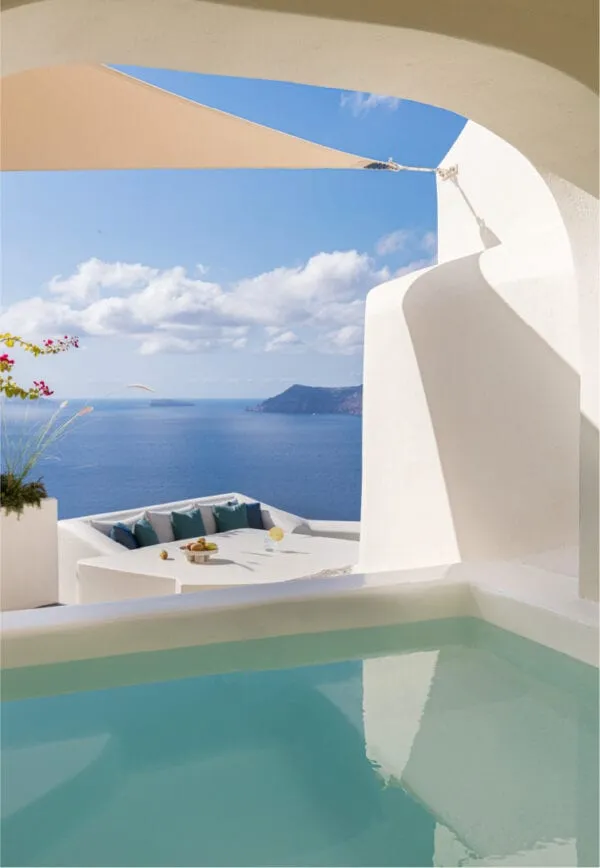
Oia, Santorini, Greece
Canaves Oia Suites
Cave suites cut into Oia's caldera cliff by the family that opened the village's first hotel, rebuilt cube by cube for a new generation of guests.
From €900 per night
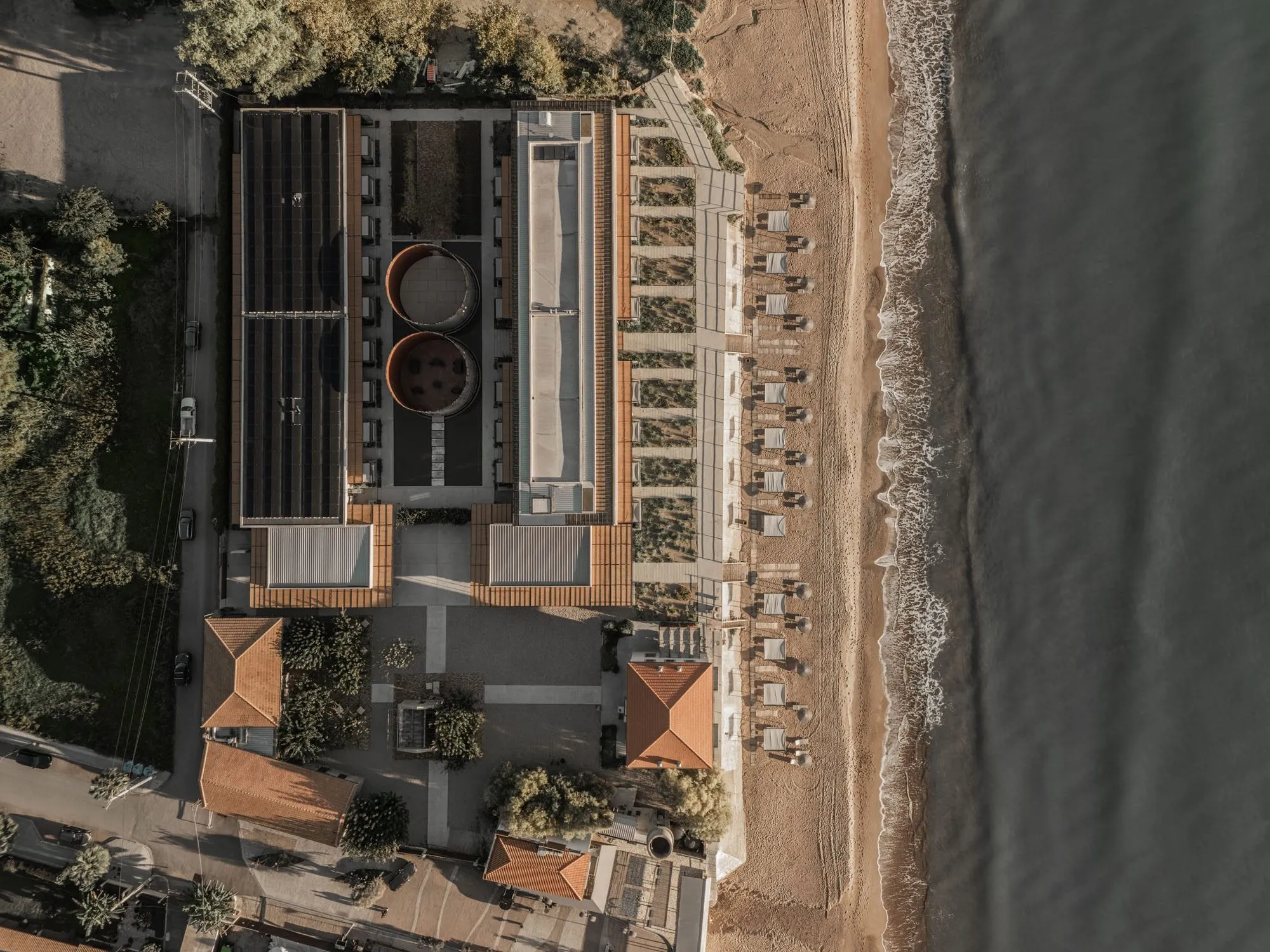
Kourouta, Ilia, Greece
Dexamenes Seaside Hotel
A 1920s currant-wine factory on a Peloponnese beach, its concrete fermentation tanks cut open one by one and turned into 44 suites facing the Ionian Sea.
From €260 per night
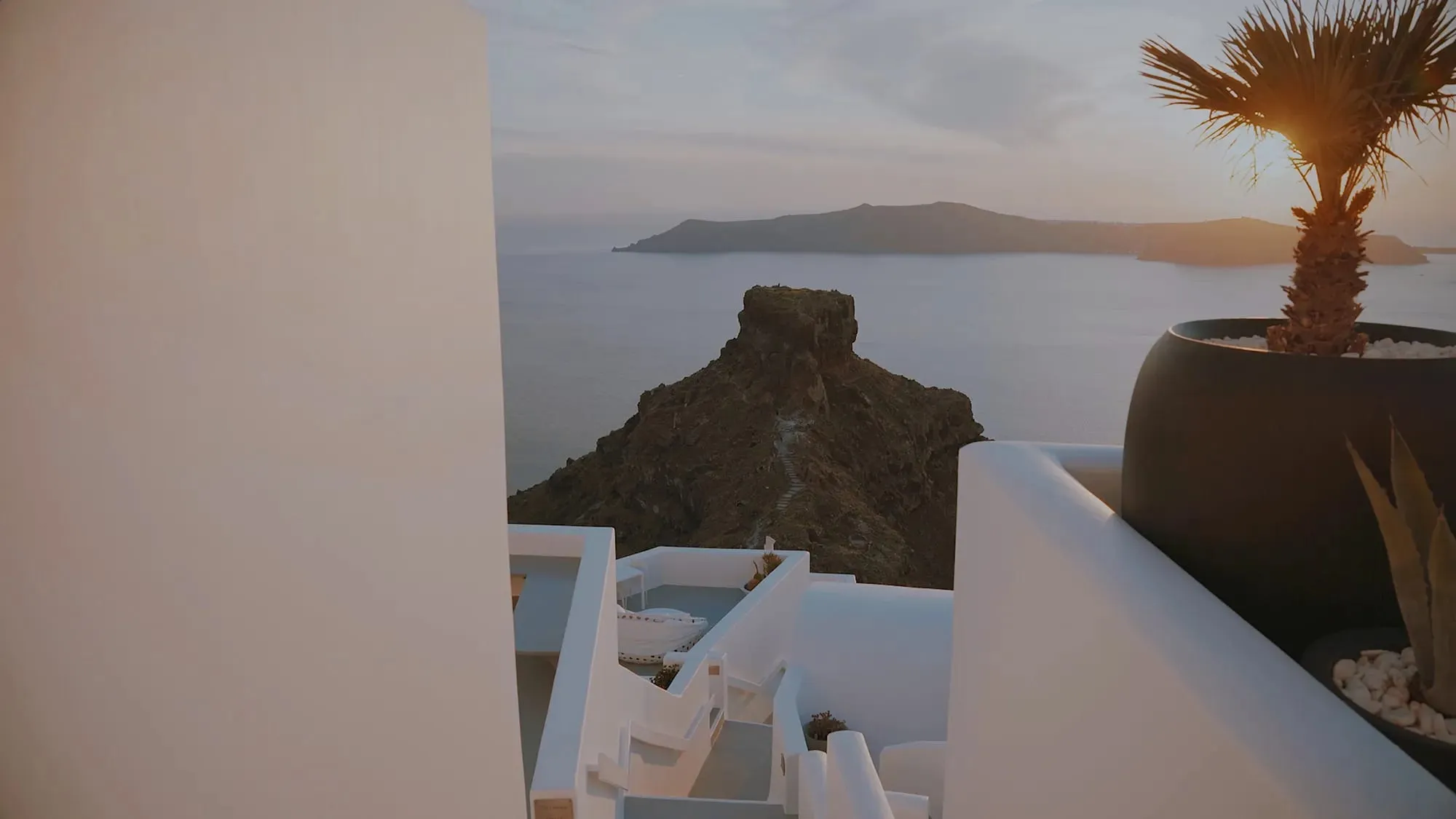
Imerovigli, Santorini, Greece
Grace Hotel Santorini
A cliffside stack of white cubist volumes in Imerovigli, built around a cascading infinity pool and a caldera view that Santorini's own tourism writers rank among the island's best.
From €850 per night