Kourouta, Ilia, Greece
Dexamenes Seaside Hotel
A 1920s currant-wine factory on a Peloponnese beach, its concrete fermentation tanks cut open one by one and turned into 44 suites facing the Ionian Sea.
- Rates from
- From €260 per night
- Nearest airport
- Kalamata International Airport (KLX)
- Transfer
- About 1hr45-2hr by road; the smaller, seasonal Araxos Airport (GPA) is closer at roughly 45 minutes, while Athens International Airport is about 3.5 to 4 hours
- Best months
- Late May to September for swimming weather; the hotel closes over winter, typically November to March
There is a particular kind of Greek building that tends to get demolished rather than saved: the concrete industrial shed, the shuttered factory, the roadside plant with no obvious postcard appeal. Dexamenes Seaside Hotel exists because someone looked at one of these buildings, a derelict currant-wine factory sitting directly on a beach in the western Peloponnese, and saw a hotel already half-built inside it. The rectangular concrete tanks where grape must once fermented needed no new footprint, no new foundations, barely a new floor plan. They needed a single cut, opened on the seaward side, and forty years of dust cleared away.
That is roughly what owner Nikos Karaflos and the Athens firm K-Studio did, starting in the mid-2010s and opening the first phase in 2019. The result reads less like a renovation than an argument: that a hotel can be built almost entirely from what a site already has, that raw concrete and rust stains can be a design language rather than a defect to be plastered over, and that the most memorable room in the Peloponnese might be a 1920s wine tank with the roof taken off.
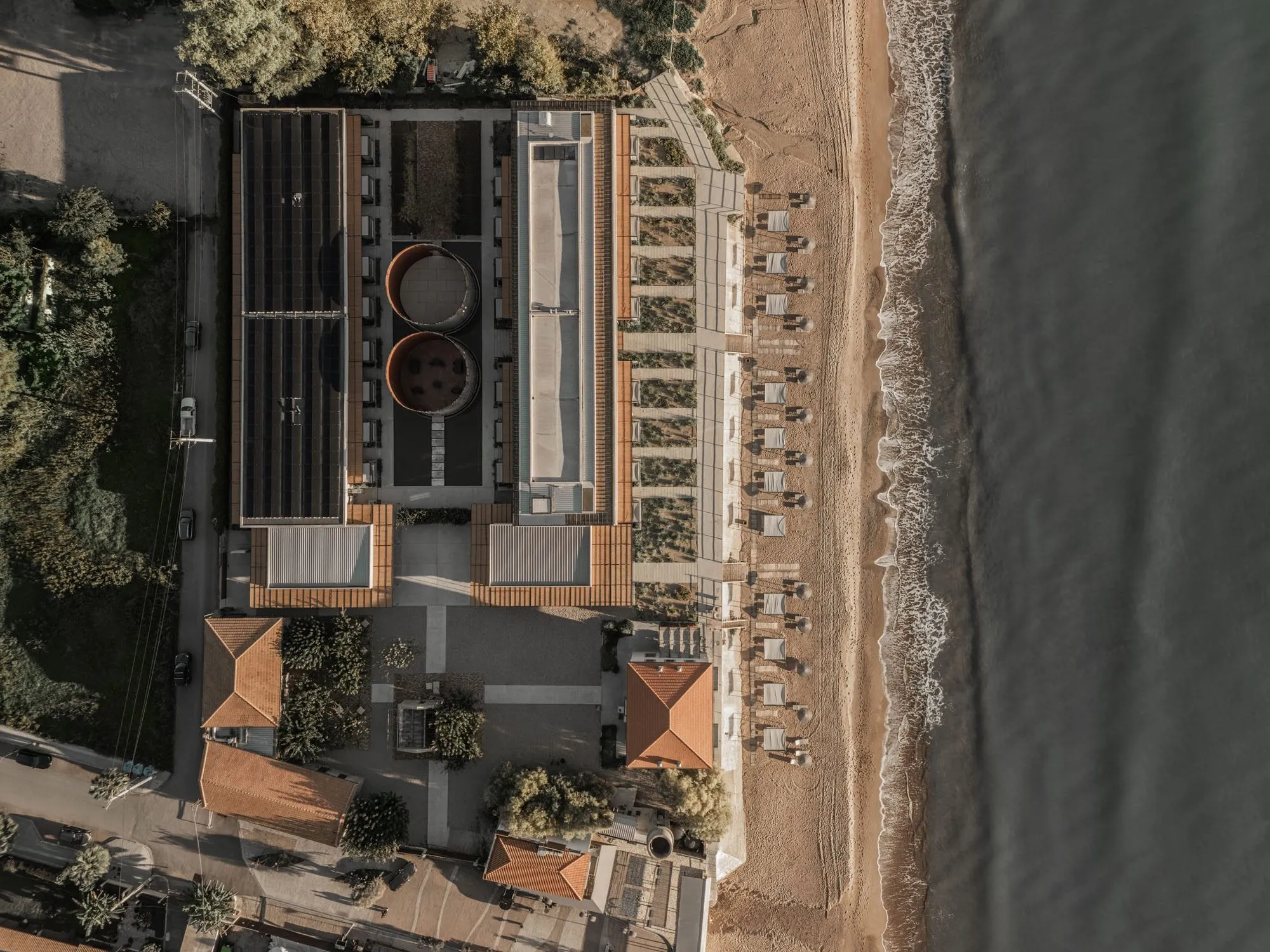
Dexamenes sits on Kourouta beach, in the Ilia region, a stretch of coastline more associated with the Black Corinth currant trade and the approach to Ancient Olympia than with design hotels. That relative obscurity is part of what makes the project legible: there is no competing resort infrastructure to blend into, no established hotel row to match. The factory’s own industrial bones, poured concrete, exposed rebar, the old loading geometry that let barrels move straight from tank to ship, are the hotel’s architecture, more or less unaltered in outline and radically altered in use.
Why It Stands Out
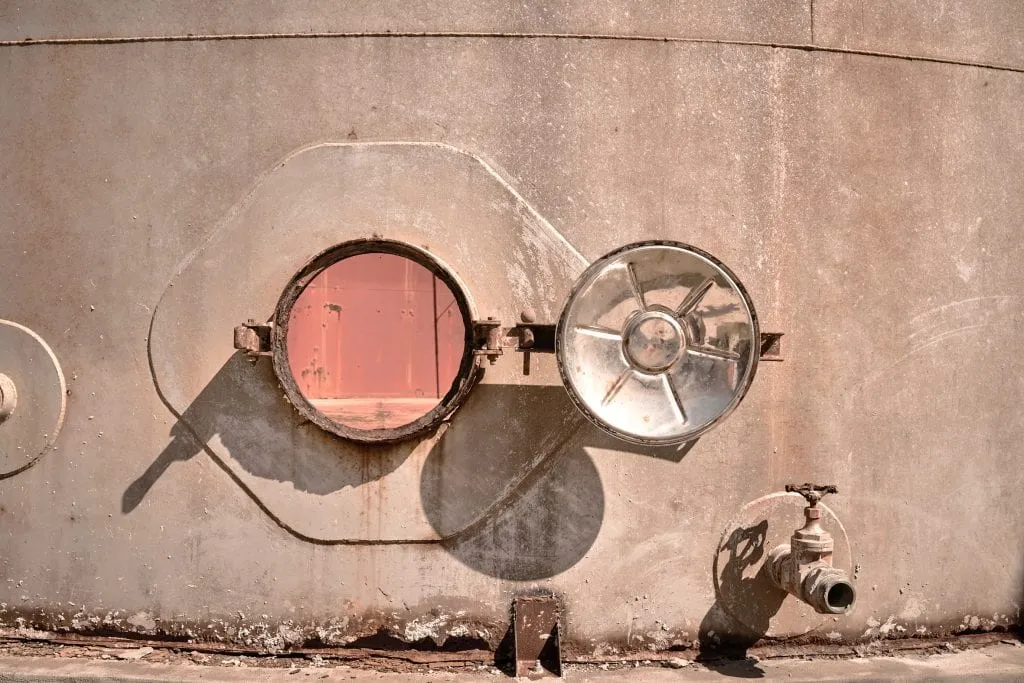
Most adaptive-reuse hotels borrow a handful of details from a former industrial life, exposed brick here, a salvaged beam there, while building conventional rooms around them. Dexamenes goes further: the original 1920s wine-fermentation tanks are not a decorative reference but the literal envelope of most of its suites. Each tank was sliced open on one seaward face, fitted with glazing, steel and timber, and left to read unmistakably as what it once was, a vessel for wine rather than a purpose-built hotel room. That level of formal commitment, keeping the raw concrete’s patina rather than repainting it, preserving damage and staining that a more conventional renovation would have sanded away, is unusual even within the adaptive-reuse category and has been the project’s most consistent talking point since it opened.
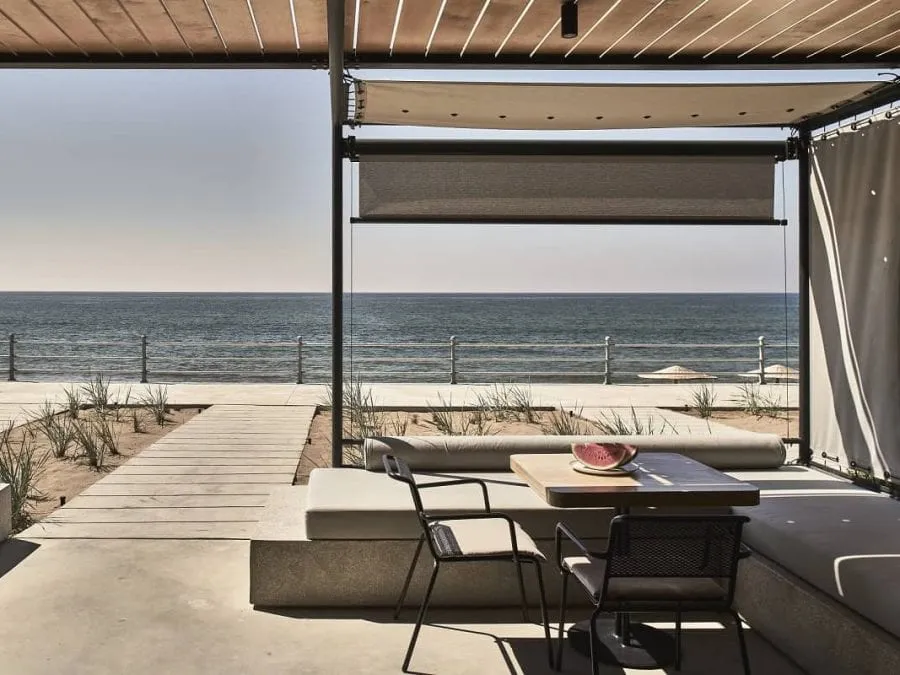
The second distinguishing fact is the setting itself. Dexamenes sits directly on Kourouta’s sandy beach, close enough to the water that the original factory was built specifically so wine could be pumped straight onto ships moored offshore. That waterfront proximity, combined with the tanks’ low, linear profile, gives the hotel an unusually intimate relationship to the sea for a property of its design ambition; there is no lawn, no pool deck, no buffer zone between the architecture and the Ionian Sea beyond a stretch of sand.
The project has also picked up serious design-world recognition rather than only travel-press attention: a shortlisting for the EU’s Mies van der Rohe Award, the Ultimate Accolade at the AHEAD Awards, and the International Building Beauty Prize at the World Architecture Festival, an unusually dense run of architecture honours for a 44-room beach hotel.
Architecture
K-Studio’s brief was constrained from the outset by what already existed: two rows of rectangular concrete tanks, a chemical laboratory building, an engine room, and a scatter of ancillary structures from the factory’s original 1920s construction. Rather than clear the site and build new, the practice treated the tanks as a found architectural module, cutting each one open along its seaward wall to create a glazed opening, then fitting a compact suite inside the resulting shell. The tanks’ original concrete, poured close to a century ago and left visibly weathered, forms the walls, floor and roofline of the finished rooms; K-Studio’s own account of the project describes convincing the construction crew to leave the patina alone rather than resurface it, a decision that shaped the hotel’s entire aesthetic more than any single material choice that followed.
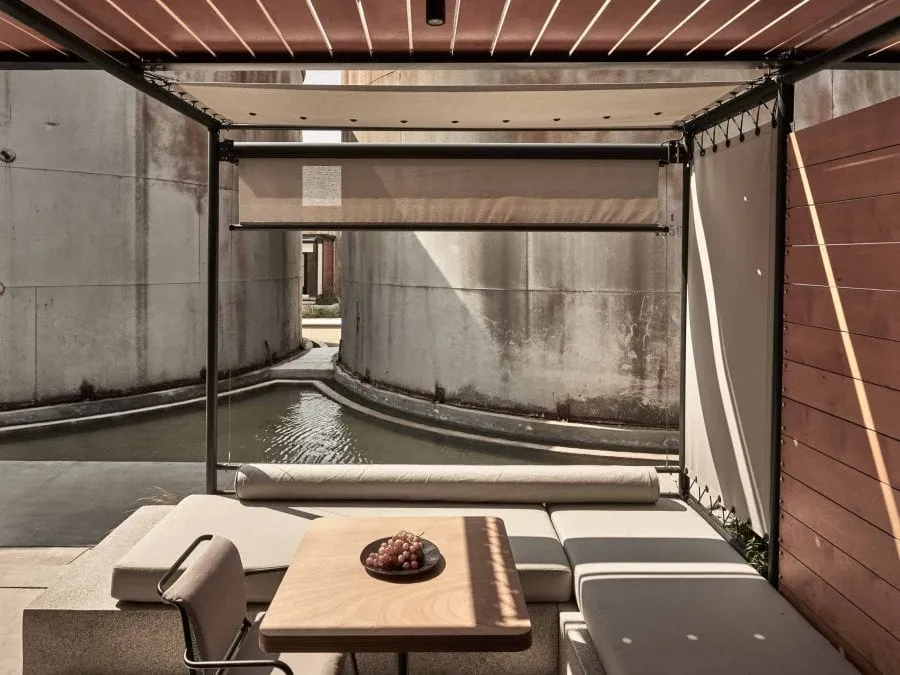
The most recent phase of construction, eight Seaview Terrace Suites completed for the 2026 season, extends the same logic upward rather than outward: a lightweight steel-and-timber structure built as a second storey directly above a run of the original tanks, with floor-to-ceiling glazing and a pergola-like timber canopy that appears to float clear of the concrete below. K-Studio has described the addition as a hovering frame set against the tanks’ heavy mass, a legible continuation of the same industrial vocabulary rather than a stylistic departure. Elsewhere on site, the former factory engine room and a separate chemical-laboratory building have been converted into, respectively, the hotel’s main dining venue and a pair of larger suites, keeping the property’s few non-tank structures within the same adaptive-reuse discipline as the rooms.
Interior Design
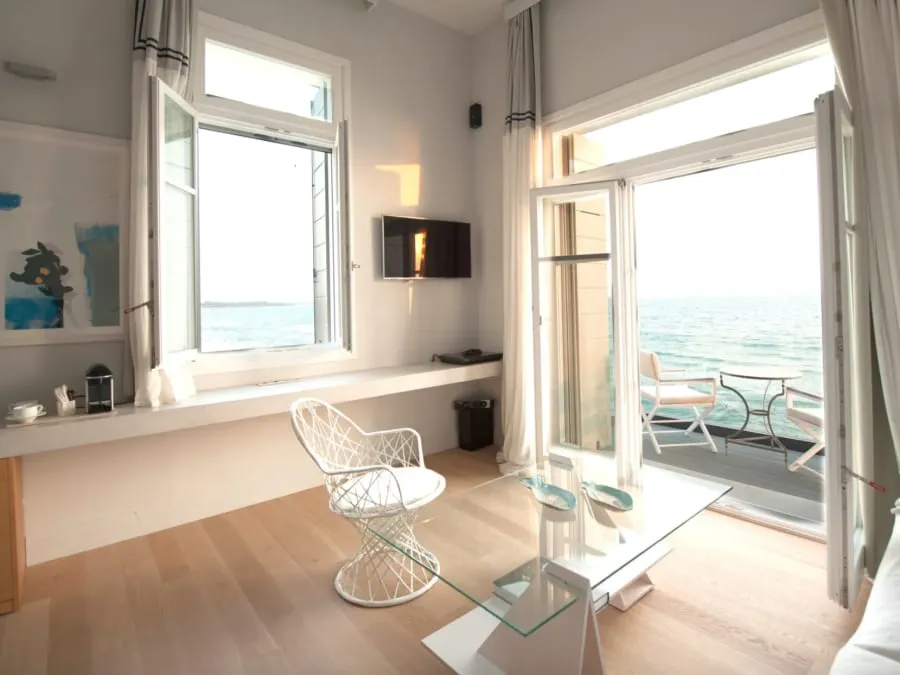
Inside the tanks, the material palette stays close to the building’s industrial origin: raw and lightly treated concrete, blackened steel framing, engineered glass, timber joinery and polished terrazzo, deployed with enough restraint that the rooms read as inhabited factory space rather than a themed interpretation of one. Bathrooms are typically separated from the sleeping area by textured or frosted glass rather than solid walls, a choice that keeps the tanks’ original volume legible and lets what little natural light enters the deep concrete shells travel further into the room.
Furnishings lean toward pared-back, tactile pieces, CocoMat beds among them, rather than ornament, and fittings like reclaimed water pipes repurposed as handrails or old wine-tank fragments reused as stepping stones carry the reuse ethic down to the smallest details. The overall effect is closer to a considered artist’s studio than a conventional luxury interior: nothing is hidden, the building’s working history stays visible at every turn, and comfort is layered onto that honesty rather than substituted for it.
Atmosphere
Dexamenes trades in a specific, slightly austere kind of beach glamour, closer to a design pilgrimage than a conventional resort holiday. Days run around the beach directly outside the rooms, unhurried meals at the hotel’s small cluster of dining venues, and a general absence of the amenity-stacked programming, spas, kids’ clubs, multiple pools, that defines most five-star Greek beach hotels. That absence is by design rather than oversight: the property positions itself around architecture, art and wine rather than resort infrastructure, and its evening programme of curated dinners and wine-tasting gatherings reinforces that identity more than any conventional entertainment schedule would.
The scale helps. With suites spread across a low, linear run of former tanks rather than stacked into a large building, Dexamenes never reads as a big hotel, and the working-factory bones, visible everywhere from the room shells to the old engine-room restaurant, keep the atmosphere grounded in the site’s actual history rather than a stylised version of it. It is a place that rewards travellers curious about the building itself nearly as much as those there for the beach.
Rooms and Suites
Dexamenes offers 44 suites as of the 2026 season, the great majority converted from the original wine-fermentation tanks. Beachfront WineTank Suites (9 units), Courtyard WineTank Suites (17 units) and Backyard WineTank Suites (8 units) each run to roughly 30 square metres of interior space plus a private patio of about 15 square metres, furnished with a king bed and a single sofa bed that allows up to three guests. The distinction between categories is largely one of proximity and outlook: Beachfront suites sit closest to the sand and the sea, Courtyard suites open onto shared garden space between the tank rows, and Backyard suites sit furthest back from the water.
At the top of the room hierarchy sit two larger categories. The Seaview ChemLab Suites, at roughly 50 square metres, occupy the former chemical-laboratory building rather than a tank, giving them a different shape and more generous proportions than the standard suites. The eight Seaview Terrace Suites, completed for 2026 and built as an elevated structure above a run of the original tanks, run to about 33 square metres with a private terrace, floor-to-ceiling glazing and, K-Studio’s own material notes, a water feature framing the sea view; these suites are adults-only. Interconnecting WineTank configurations, combining two adjoining suites into roughly 60 square metres with additional sofa beds, are available for families or groups travelling together, sleeping up to six.
Dining
Food and drink at Dexamenes runs across three named venues, each occupying a different piece of the former factory. dex.Machina, the hotel’s main restaurant, is a gastro-tavern set inside the winery’s old engine room, with outdoor seating under mulberry trees, serving Greek and Mediterranean dishes built around regional produce and traditional flavours. dex.Lab is a smaller cocktail bar built around a self-described “laboratory” approach to mixology, framed by the hotel around sustainability and wellbeing rather than a conventional beach-bar list. dex.Silo.01, the most unusual of the three, is a pop-up fine-dining space set inside one of the property’s original 1920s silo tanks, hosting themed dinners built around art, wine and the region’s viticultural history rather than running as a fixed nightly restaurant.
The hotel also maintains a wine cellar of roughly 100 labels, weighted toward the wines of the Ilia region and the wider Peloponnese, and periodically hosts Kantharos gatherings, curated evenings that combine wine tasting with performance art, tied to the site’s own history as a wine-producing plant. Across the food and beverage programme, the emphasis stays on regional sourcing and small local producers rather than an internationally styled fine-dining menu, consistent with the hotel’s broader adaptive-reuse and locality-first identity.
Spa and Wellness
Dexamenes does not operate a dedicated spa or treatment programme in the conventional resort sense, and there is no shared swimming pool on site; wellness here is framed loosely, through the dex.Lab bar’s stated focus on conscious, wellbeing-oriented drinks, and more substantially through the property’s direct beach setting itself. Guests use Kourouta’s sandy beach, immediately outside the rooms, as the primary relaxation amenity, with loungers and parasols provided beachfront. Travellers specifically seeking a structured spa or wellness programme should look elsewhere on the Peloponnese coast; Dexamenes’ relaxation case rests on architecture, sea and quiet rather than treatment menus.
Experiences
The hotel’s own on-site programming centres on its Kantharos wine-and-art gatherings and the periodic dex.Silo.01 pop-up dinners, both of which lean on the property’s history as a wine factory and its relationships with regional producers and artists. Beyond the property line, Dexamenes sits within reach of some of the Peloponnese’s most significant classical sites: Ancient Olympia, birthplace of the Olympic Games, is roughly 30 to 40 minutes away by road and is the obvious half-day or full-day excursion for most guests. The wider Ilia region also offers wineries connected to the area’s currant and grape-growing history, the Strofilia and Foloi forests for walking, and Kaiafas Lake, a thermal and freshwater lake near a stretch of pine-backed coastline south of the hotel.
Closer to the hotel, the port town of Katakolo, a regular cruise-ship stop for passengers visiting Olympia, and the town of Pyrgos, the region’s commercial centre, both sit within a short drive and offer a change of pace from the beach. The hotel can help arrange excursions to these sites, though much of what defines a Dexamenes stay happens on the property itself, in and around the beach and the converted tanks, rather than on organised outings.
Who It Is For
Dexamenes suits travellers drawn specifically to architecture and adaptive reuse, couples wanting a design-forward beach stay without a large resort’s amenity stack, and anyone curious about Greece’s industrial and wine-trade history rather than its more familiar whitewashed-village imagery. The compact scale of most rooms, the absence of a pool or spa, and the adults-only status of the newest suite category all point toward couples and design-minded travellers rather than families with young children, though interconnecting suites give larger groups or families with older children a workable option.
It is a considerably weaker fit for travellers wanting a conventional five-star resort experience: extensive spa facilities, a swimming pool, a large-scale kids’ programme or nightlife are not part of what Dexamenes offers, and guests expecting that kind of infrastructure alongside the design should look to other properties on the Peloponnese or Ionian coasts.
Best Time to Visit
Kourouta’s swimming season runs from roughly late May through September, with July and August the warmest and busiest months and June and September offering quieter, slightly cooler alternatives with much the same beach weather. Like many independent beach hotels on this stretch of coast, Dexamenes operates seasonally rather than year-round, typically closing over the winter months (broadly November through March) and reopening in spring; exact opening and closing dates shift slightly year to year and are worth confirming directly with the hotel before booking shoulder-season travel.
How to Get There
Kalamata International Airport (KLX), roughly 1hr45 to 2 hours from the hotel by road, has expanded its network of international and low-cost seasonal routes in recent years and is the airport most travel guides point toward for Dexamenes. Araxos Airport (GPA), a smaller facility used mainly for seasonal charter flights, is actually the closer option by distance, around 45 minutes and 50 kilometres away, though its scheduled international service is more limited. Athens International Airport, Greece’s main long-haul hub with the widest range of direct connections, is a longer transfer of roughly 3.5 to 4 hours by road. The hotel can arrange private transfers from any of the three airports with 48 hours’ notice; there is no scheduled shuttle, so most guests book a transfer in advance or arrange a rental car.
Nearby Experiences
Ancient Olympia, the archaeological site and museum marking the birthplace of the Olympic Games, sits roughly 30 to 40 minutes from Dexamenes by road and is the single most obvious excursion from the hotel, drawing history-minded guests for a half or full day. Katakolo, a working port that also serves as a popular cruise-ship call for passengers visiting Olympia, is a short drive away and offers a lively, low-key alternative for a lunch or afternoon outing. Pyrgos, the regional capital, provides a more workaday counterpoint to the beach, useful for guests wanting a sense of everyday Ilia life beyond the resort coastline.
Further afield, Kaiafas Lake and its pine-backed shoreline, along with the Strofilia and Foloi forests, give guests with a rental car options for walking and nature outings distinct from the beach itself, while the region’s smaller wineries, tied to the same currant and grape-growing history that built the original Dexamenes factory, offer tastings that connect directly back to the hotel’s own site history.
Things to Know Before Booking
Guests should know upfront that Dexamenes has no shared swimming pool and no conventional spa, both worth weighing against expectations set by other five-star Greek beach properties. Most standard WineTank suites are compact, around 30 square metres, reflecting the fixed dimensions of the original fermentation tanks rather than a purpose-built floor plan, so guests wanting larger rooms should look to the Seaview ChemLab or Seaview Terrace categories. The newest Seaview Terrace Suites are adults-only, and children over 11 or 12 are generally priced and treated as adults across the property, details worth confirming directly when booking with a family. The hotel operates seasonally, closing over winter, and airport transfers require 48 hours’ notice since there is no scheduled shuttle service. Dogs are welcome in some categories, generally up to 12 kilograms and two years old, for a one-time fee.
Sustainability
Sustainability at Dexamenes is bound up with the building’s core premise rather than layered on afterward: the extensive reuse of the original 1920s structure, its tanks, its engine room, its laboratory building, avoided the material and carbon cost of new construction on the site, and offcuts and demolition waste from the conversion were repurposed elsewhere on the property, old water pipes turned into handrails, fragments of tank concrete turned into furniture and stepping stones, rather than discarded. The hotel holds Green Key certification, an internationally recognised eco-label for tourism accommodation, and states that it generates roughly 90 percent of its electricity needs on site.
Water use is managed partly through landscaping built around native, low-irrigation planting, and the property has described using air-conditioning byproduct heat to help warm water for guests, an efficiency measure tied to its bioclimatic design approach. On the sourcing side, the hotel works directly with local farmers practising what it describes as conscious agriculture, and staffing draws heavily on the surrounding community. As with any hotel-authored sustainability programme, guests weighing these claims heavily in a booking decision should confirm current specifics directly with the property.
Practical Information
Dexamenes Seaside Hotel is located directly on Kourouta beach, in the municipality of Ilida, near Amaliada, in the Ilia regional unit of the western Peloponnese (postal code 272 00). Check-in begins at 3:00pm and check-out is at 11:00am. Rates for entry-level WineTank Suites start from roughly EUR 260 per night in the wider market, including breakfast on most rate plans, with pricing climbing for the larger Seaview ChemLab and Seaview Terrace categories and during the July-August peak. The hotel is a member of Design Hotels and holds Green Key sustainability certification. It operates seasonally, generally from spring through October, closing over the winter months. Most guests stay three to five nights, treating Dexamenes as a beach-focused base with an optional day trip to Ancient Olympia rather than a multi-stop touring itinerary.
Editorial Conclusion
Dexamenes makes its case through restraint rather than spectacle: a currant-wine factory’s concrete tanks, left largely as they were found, doing the work that an entirely new building would otherwise have to do. That decision, to cut a window into a fermentation tank rather than pour a new foundation beside it, has earned the project serious architectural recognition and a devoted following among design-minded travellers, and it gives the hotel a specificity that is difficult to replicate: there is exactly one former wine factory on this stretch of Kourouta beach, and Dexamenes is built entirely from what it once was. For travellers willing to trade a conventional resort’s pool and spa for that kind of architectural honesty, directly on the sand, facing the Ionian Sea, it remains one of the more distinctive beach stays in Greece.
In pictures
On the map
Kourouta, Ilia, Greece
Questions
Frequently asked
What was Dexamenes before it became a hotel?
It was a currant-wine factory built in the late 1920s on Kourouta beach, in Greece's Ilia region, at a time when the area's Black Corinth currant and wine trade shipped product directly from beachside plants onto boats moored offshore. The factory closed and sat derelict for decades before owner Nikos Karaflos and Athens firm K-Studio began converting it, opening the hotel in 2019 with the original concrete fermentation tanks, cut open on one side, reused almost one-to-one as guest suites.
How many rooms does Dexamenes have, and what are they like?
As of the 2026 season the hotel has 44 suites across several categories: 9 Beachfront, 17 Courtyard and 8 Backyard WineTank Suites converted from the original fermentation tanks (each around 30 square metres plus a patio), 2 larger Seaview ChemLab Suites built from the factory's former chemical laboratory, and 8 new Seaview Terrace Suites added atop the existing tanks for 2026. Interconnecting configurations are also available for families or groups.
Is there a swimming pool at Dexamenes?
No conventional swimming pool. The hotel sits directly on Kourouta's sandy beach and relies on the sea itself, with sun loungers and parasols provided beachfront; some of the newer Seaview Terrace Suites have a private plunge feature on their terrace, but there is no shared resort pool.
How do you get to Dexamenes from the airport?
Kalamata International Airport (KLX), which has grown its international network of seasonal and low-cost routes in recent years, is roughly 1hr45 to 2 hours away by road and is the airport most guides recommend. Araxos Airport (GPA), a smaller, largely seasonal charter airport, is actually closer at around 45 minutes and 50 kilometres, and the hotel can arrange transfers from either with 48 hours' notice. Athens International Airport, the country's main long-haul hub, is roughly 3.5 to 4 hours by road.
Is Dexamenes suitable for families with children?
Most of the WineTank and ChemLab suites are compact, adults-leaning spaces (around 30 to 50 square metres), and the Seaview Terrace Suites are adults-only, so the hotel is a closer fit for couples than for families with young children. Interconnecting suite configurations exist for groups travelling together, and the hotel's own policy treats children over 11 or 12 as adults for pricing and eligibility, worth confirming directly when booking with children in the party.
Same destination
More hotel guides in Greece
Porto Heli, Greece
Amanzoe
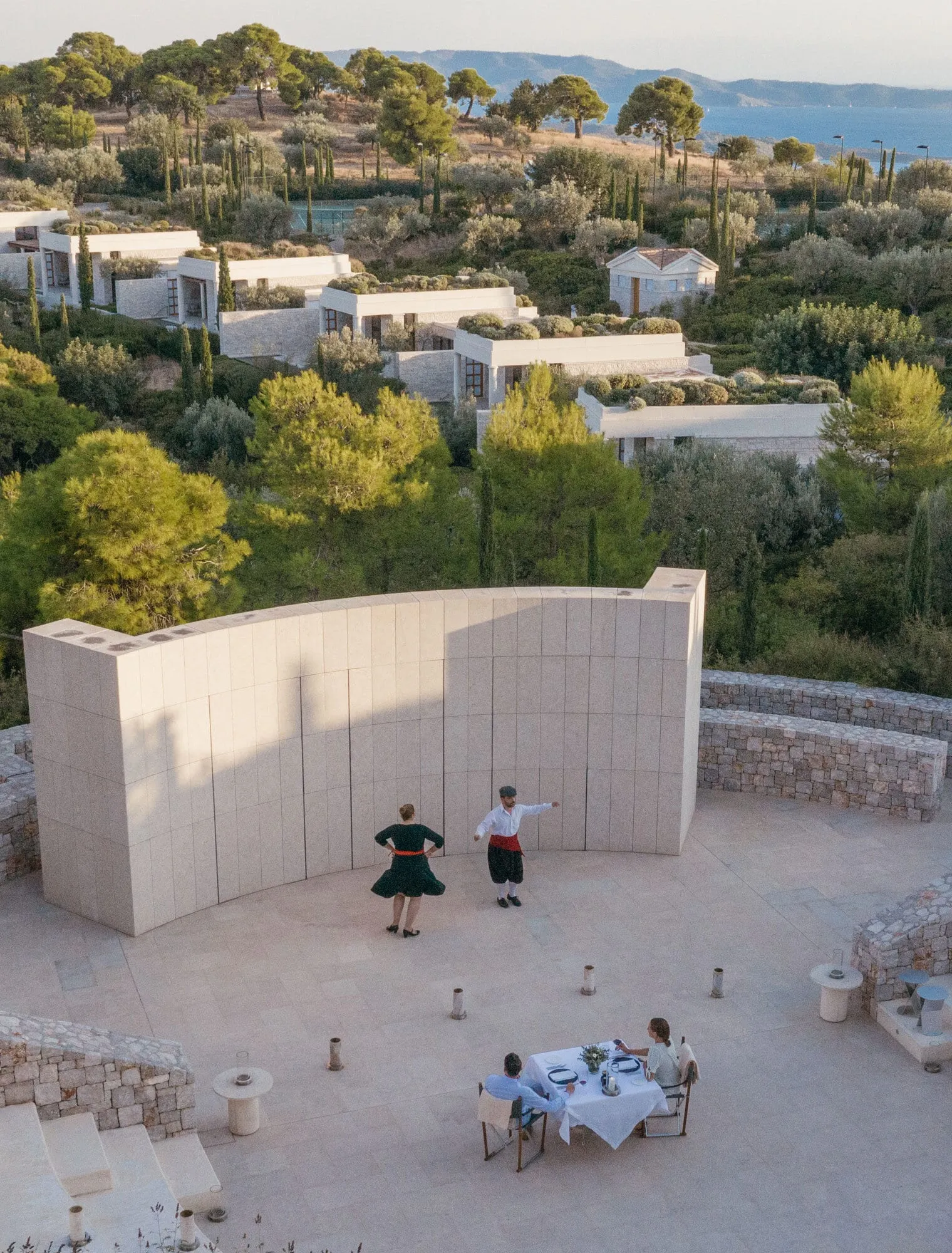
A hilltop citadel of Doric columns and marble courtyards above Porto Heli, built as a modern-day temple to the Peloponnese coastline it overlooks.
From €1,900 per night
Oia, Santorini, Greece
Canaves Oia Suites
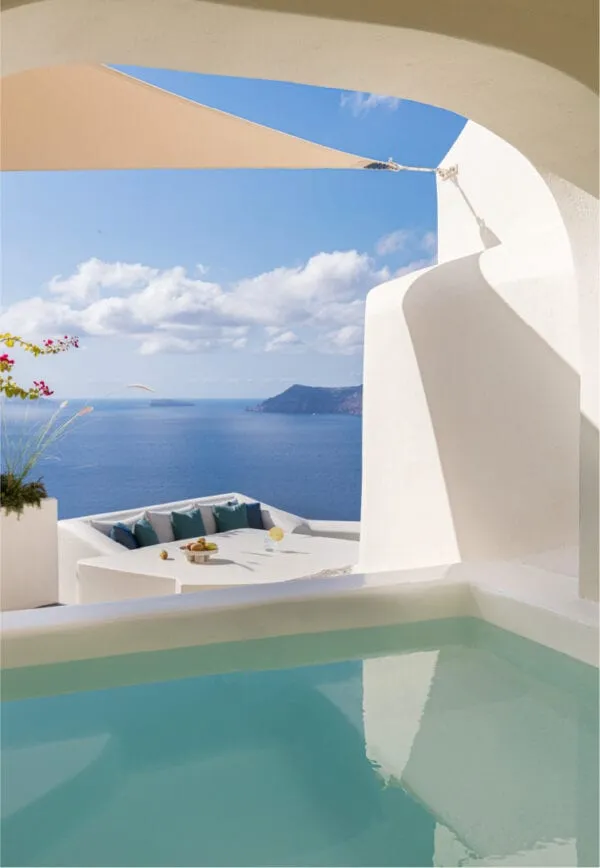
Cave suites cut into Oia's caldera cliff by the family that opened the village's first hotel, rebuilt cube by cube for a new generation of guests.
From €900 per night
Imerovigli, Santorini, Greece
Grace Hotel Santorini
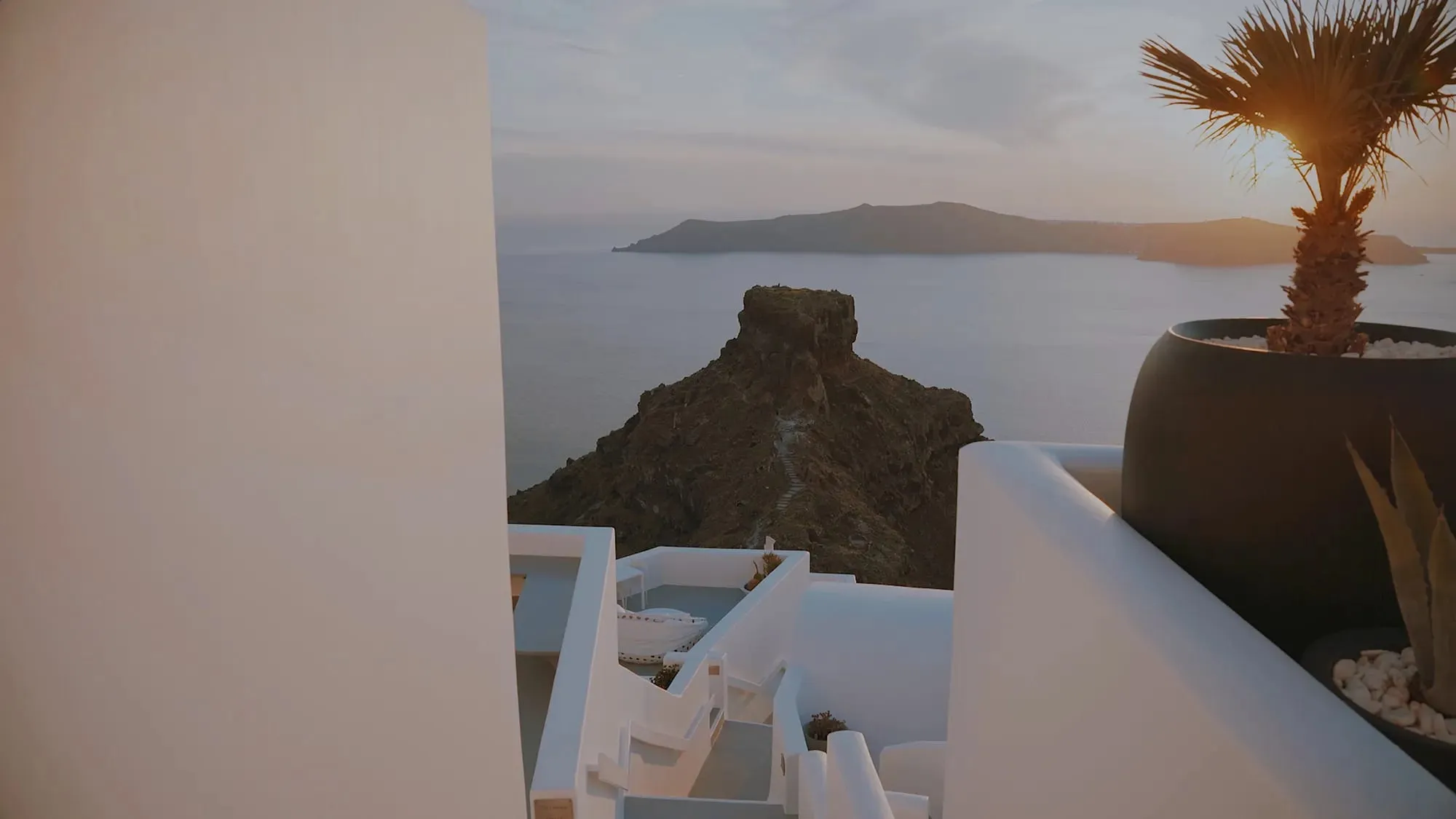
A cliffside stack of white cubist volumes in Imerovigli, built around a cascading infinity pool and a caldera view that Santorini's own tourism writers rank among the island's best.
From €850 per night