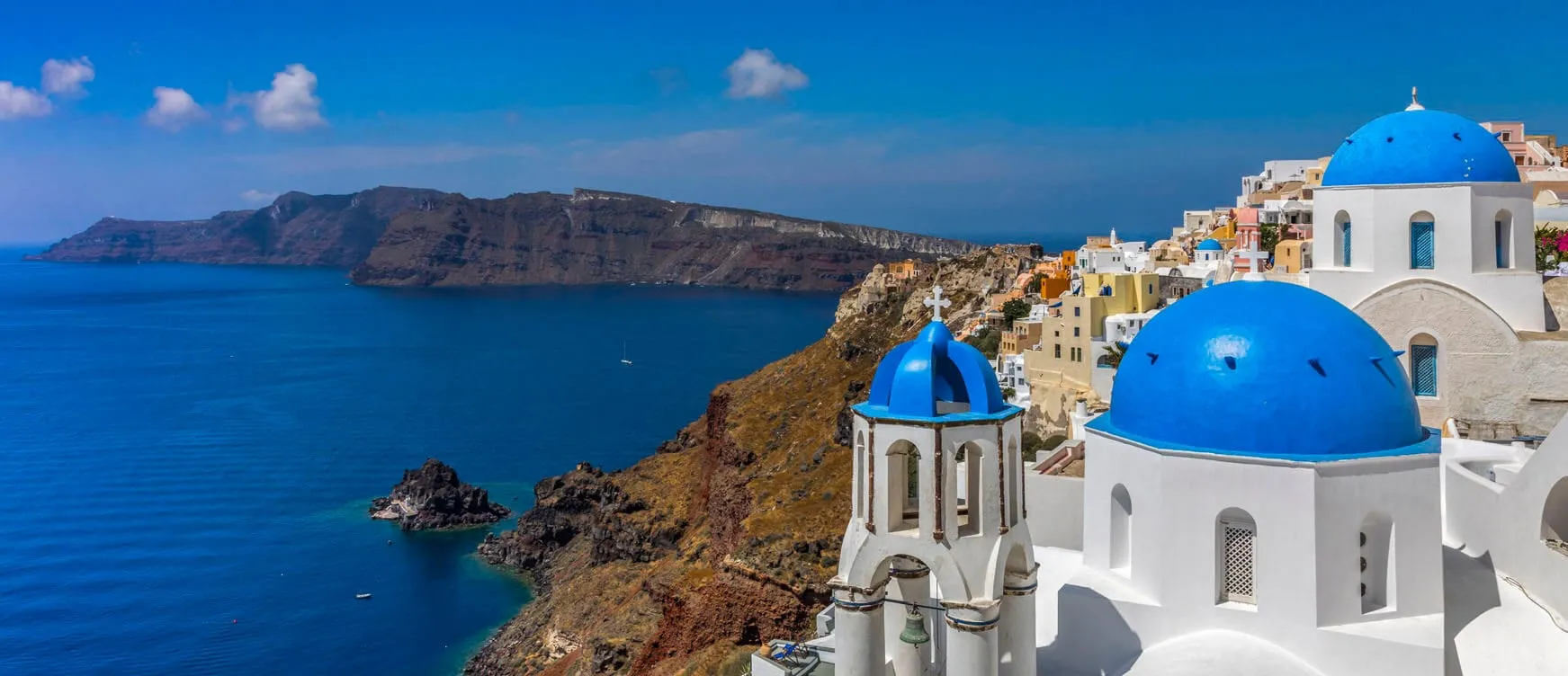
Greece
An archipelago hotel culture built almost entirely around the Cyclades' whitewashed, cubist architecture, Santorini's caldera-edge terraces and Mykonos's beach clubs and hillside villas, alongside the mainland Peloponnese's quieter, more private coastline.
- When to go
- Late May to June and September to early October for the islands, warm enough to swim without July and August's peak crowds and prices; the mainland Peloponnese holds its appeal slightly later into autumn.
- Getting there
- Roughly 3 to 4 hours direct from most Western European hubs to Athens, Santorini, or Mykonos in season.
- Best for
- beach design honeymooners island-hopping gastronomy
Greek luxury hospitality runs largely on the Cyclades’ distinctive architectural language, whitewashed, cubist volumes stepped into hillsides or cut into caldera cliffs, though the mainland Peloponnese has increasingly built a separate, quieter hotel identity of its own.
The regions, briefly
Santorini, formed by a volcanic caldera, has built its entire hotel geography around the cliff edge: rooms and pools carved into or perched above the caldera wall, with the view toward the water and the sunset functioning as the property’s defining feature more than any single architect’s signature.
Mykonos runs a different register, a more social island with a hotel scene split between beach-club-adjacent properties built for see-and-be-seen visibility and quieter hillside retreats set back from the island’s busier stretches.
The Peloponnese, mainland Greece’s southern peninsula, offers an intentionally lower-key alternative to the islands: ancient sites, olive groves, and a coastline with far fewer hotels but correspondingly more space and privacy around each one.
Beyond these three areas, islands including Crete, Rhodes, and the Ionian group carry their own distinct hotel traditions; the destination guide here reflects the regions covered so far.
Where to stay
Hotel guides in Greece
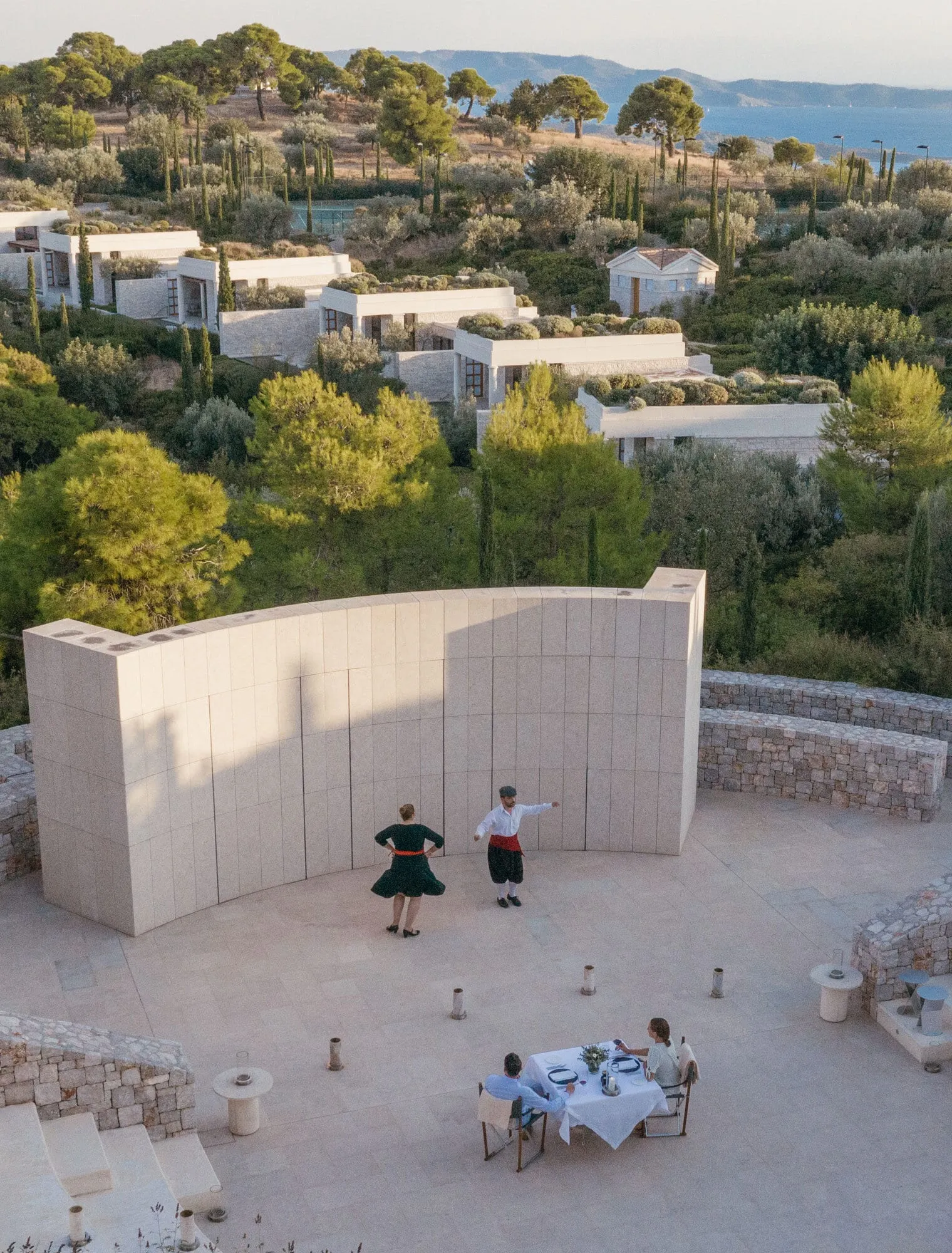
Porto Heli, Greece
Amanzoe
A hilltop citadel of Doric columns and marble courtyards above Porto Heli, built as a modern-day temple to the Peloponnese coastline it overlooks.
From €1,900 per night
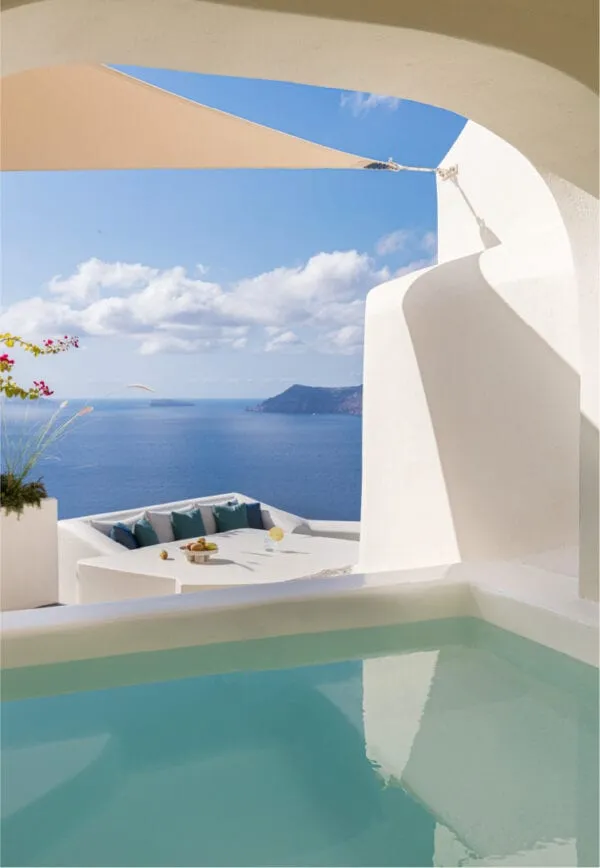
Oia, Santorini, Greece
Canaves Oia Suites
Cave suites cut into Oia's caldera cliff by the family that opened the village's first hotel, rebuilt cube by cube for a new generation of guests.
From €900 per night
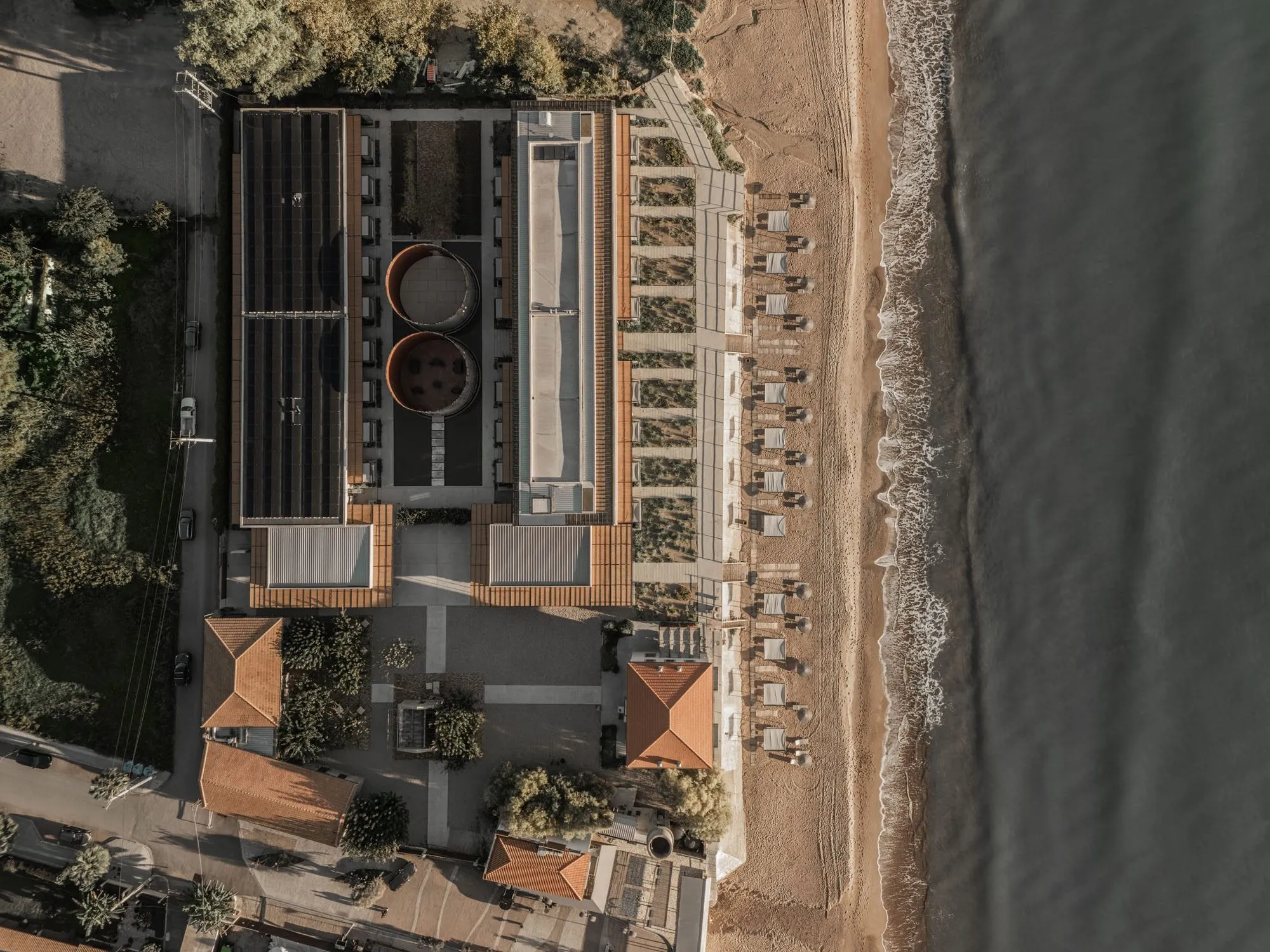
Kourouta, Ilia, Greece
Dexamenes Seaside Hotel
A 1920s currant-wine factory on a Peloponnese beach, its concrete fermentation tanks cut open one by one and turned into 44 suites facing the Ionian Sea.
From €260 per night
Imerovigli, Santorini, Greece
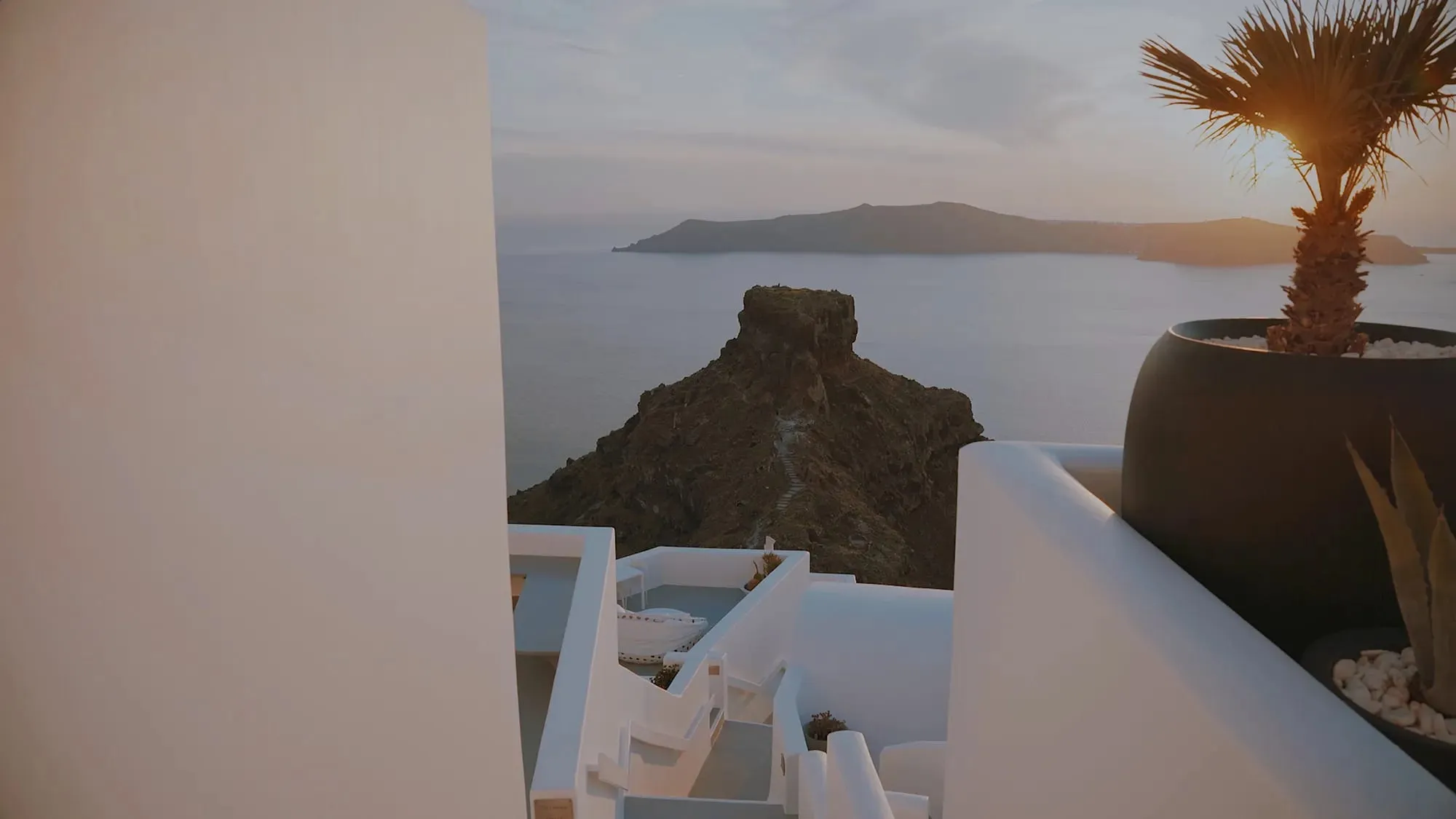
Grace Hotel Santorini
A cliffside stack of white cubist volumes in Imerovigli, built around a cascading infinity pool and a caldera view that Santorini's own tourism writers rank among the island's best.
From €850 per night

Ornos, Mykonos, Greece
Kalesma Mykonos
A whitewashed hillside village above Ornos Bay where every suite has its own heated pool and K-Studio's architecture reads less like a hotel than an extended Cycladic family home.
From €960 per night
Athens Riviera, Vouliagmeni, Greece
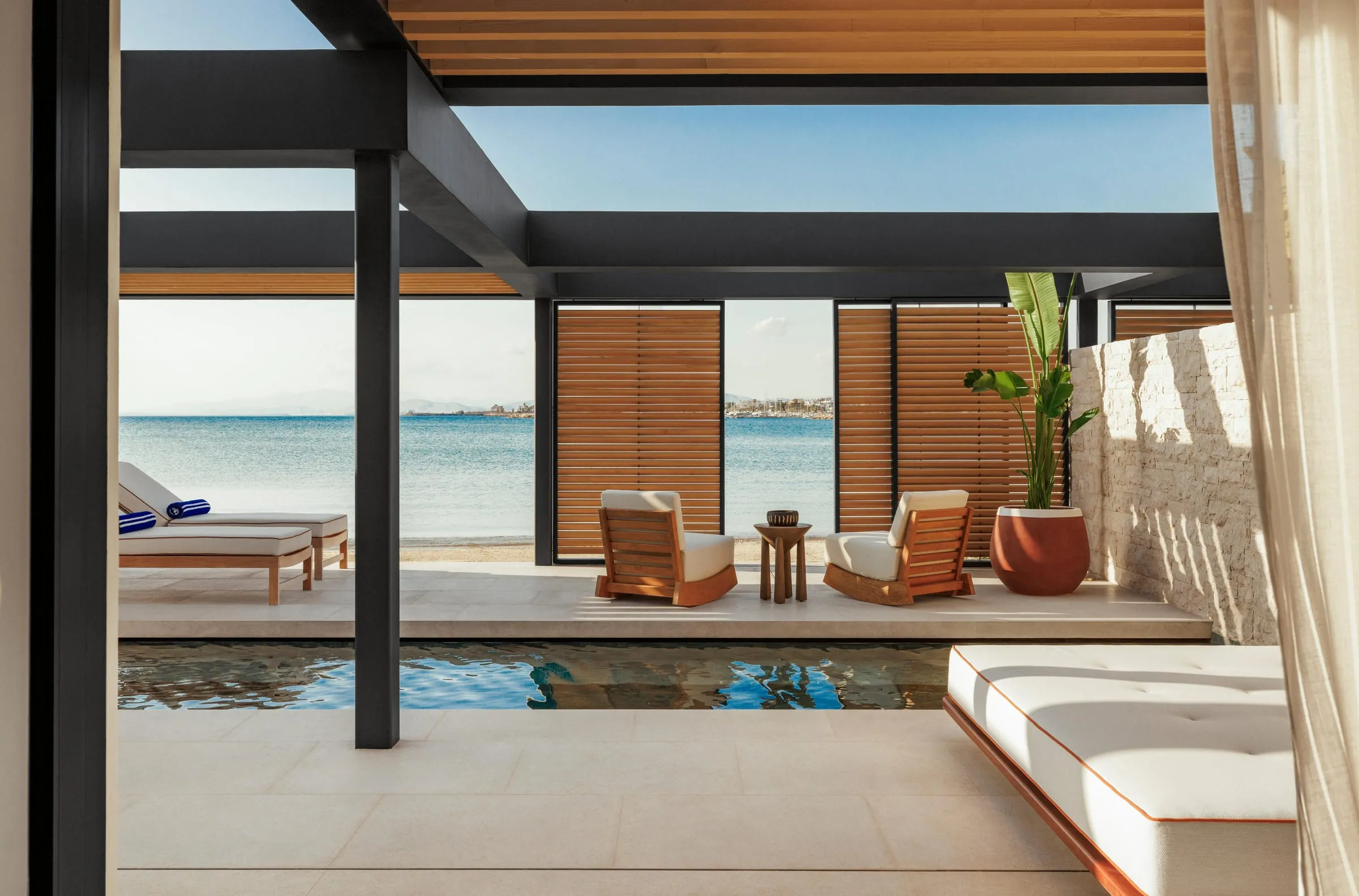
One&Only Aesthesis
A midcentury Athenian beach club, reborn as One&Only's first Greek address on the pine-shaded coast between Glyfada and Vouliagmeni.
From €850 per night