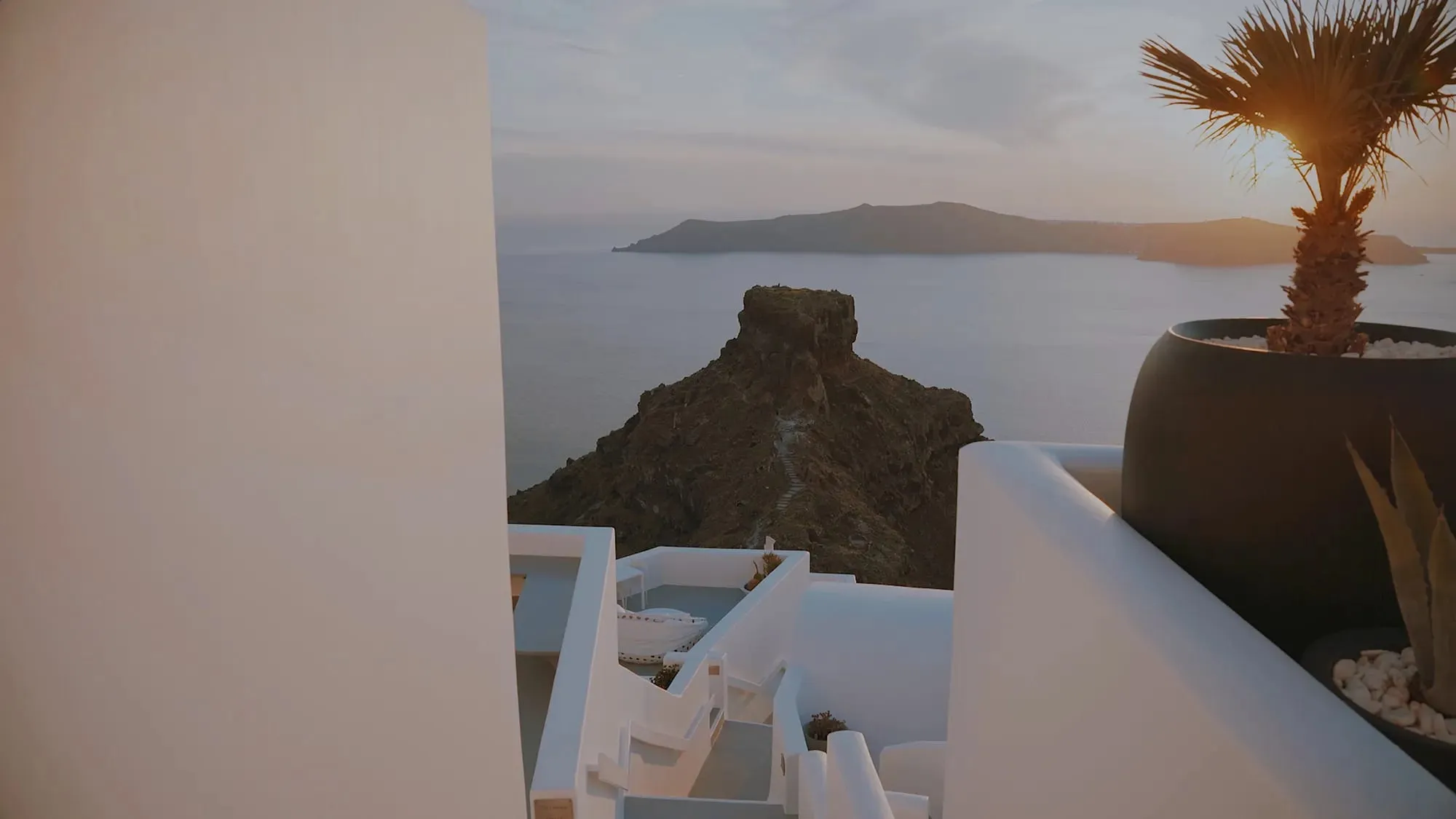
Imerovigli, Santorini, Greece
Grace Hotel Santorini
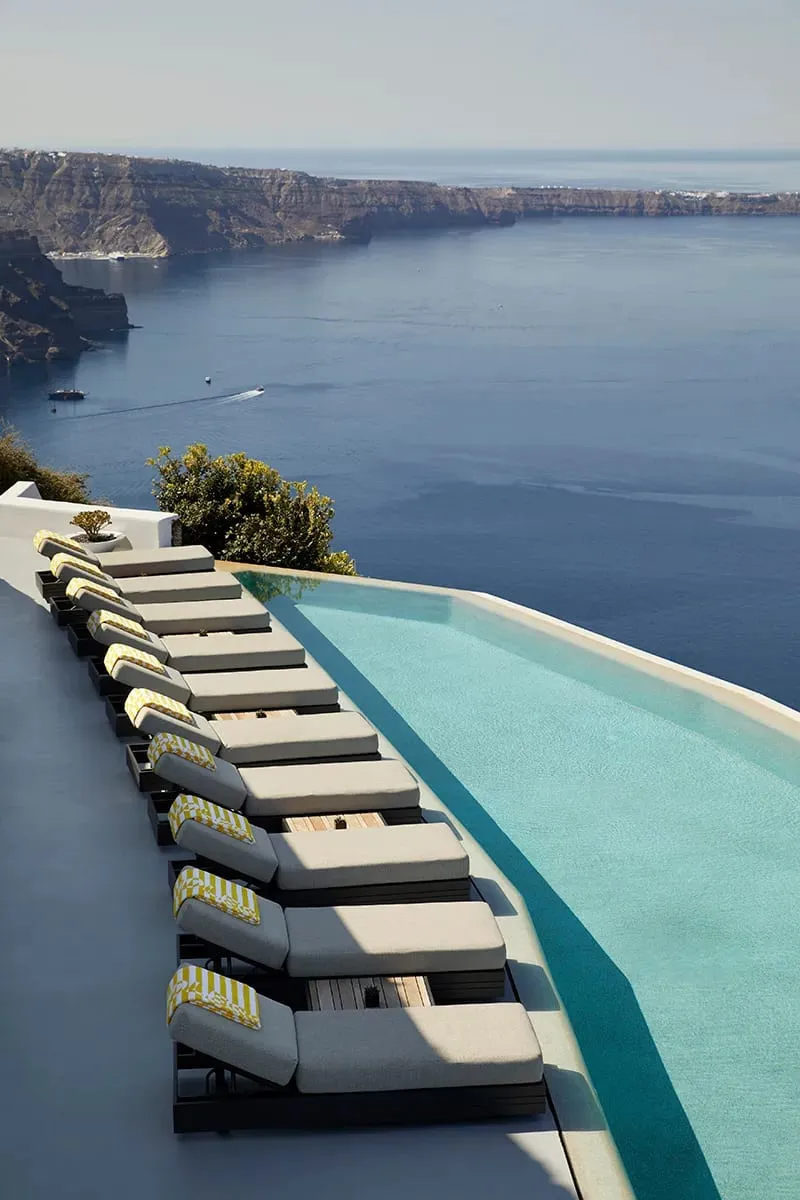
A cliffside stack of white cubist volumes in Imerovigli, built around a cascading infinity pool and a caldera view that Santorini's own tourism writers rank among the island's best.
- Rates from
- From €850 per night
- Nearest airport
- Santorini (Thira) National Airport (JTR)
- Transfer
- Around 15 to 20 minutes by road from the airport, roughly 8 kilometres; transfers to the hotel's cliffside entrance require a short walk or luggage transport from the nearest drop-off point
- Best months
- Late April to June and September to October, for warm weather, clear caldera views, and lighter crowds than the July to August peak
Imerovigli sits at the highest point on Santorini’s caldera rim, a fact the village’s own hoteliers rarely let visitors forget. It is why local tourism writers have long nicknamed it the “Balcony of Santorini,” and why a small cliffside hotel built here in 2010 could plausibly claim one of the best sightlines on an island already built almost entirely for its views. Grace Hotel Santorini takes that elevation seriously enough to have named its rooftop bar after it: 363 Bar sits 363 metres above the Aegean, a specific, verifiable number rather than a marketing flourish, and it has been enough to win the bar recognition as one of Europe’s best hotel bars in recent years.
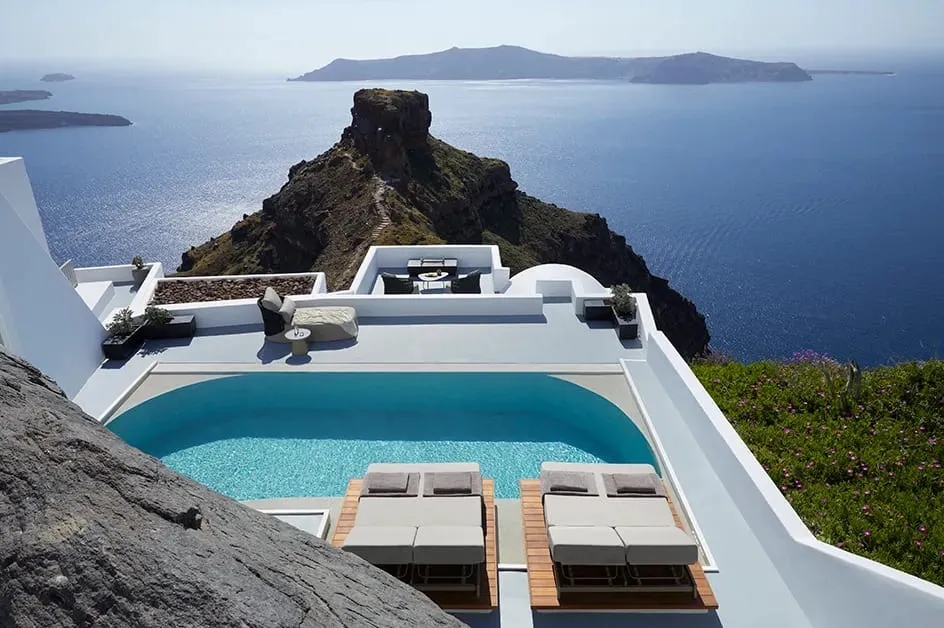
The hotel below that bar is a stack of cubist white volumes carved directly into the cliff face by the Athens studios Divercity Architects and Mplusm, completed in 2010 after roughly two years of construction. Twenty-one rooms and suites, plus a standalone two-bedroom villa added in 2012, descend the rock in cascading terraces toward an infinity pool whose jagged, stepped edge has made it one of the more widely reproduced hotel images in circulation, a shape borrowed deliberately from the zigzag stone paths that connect Santorini’s caldera villages.
Since 2018, the property has operated as part of Auberge Resorts Collection, after the American operator brought the small, Greek-founded Grace Hotels group into its portfolio. That affiliation has not much changed the physical hotel, still a genuinely small, 21-key property with an adults-oriented atmosphere, but it has brought consistent management, a Michelin-connected chef at the hotel’s restaurant, and a run of recent industry recognition, including a number one ranking in Europe and Greece on Travel + Leisure’s World’s Best Awards for resorts in 2025.
What follows is a researched account of what the hotel actually is: how it was built into one of the most constrained sites on the island, what a stay there involves, and where it sits relative to Imerovigli’s quieter, less crowded position on the caldera compared with Oia’s more famous but far busier sunset strip.
Why It Stands Out
Grace Hotel’s core claim rests on three things that are unusually easy to verify rather than simply assert. First, elevation: Imerovigli occupies the highest ground on the Santorini caldera rim, and the hotel’s own 363 Bar is named for its precise altitude in metres above sea level, a number that also explains why the terrace views here read as more expansive than those from lower-lying caldera towns. Second, the pool: a cascading, stepped infinity pool that architecture and travel press regularly describe as among the most photographed hotel pools anywhere, not for spectacle alone but because its zigzag outline was designed to mirror the footpaths cut into the caldera cliffs below it. Third, restraint: at 21 keys, the hotel is small even by the standards of Santorini’s boutique cliffside category, which keeps the terraced site from feeling crowded despite its popularity and its recent run of awards, including a 2025 Travel + Leisure ranking as the best resort in both Europe and Greece.
Architecture
The hotel was designed by the Athens-based practice Divercity Architects, led by architect Nikolas Travasaros, working in collaboration with Mplusm, whose principals Memos Filippidis and Marita Nikoloutsou contributed to the scheme. Design work ran through 2007 and 2008, with construction following from 2008 to 2010, when the hotel opened; a standalone two-bedroom villa was added in 2012, extending the same architectural language into a private, self-contained structure.
The brief was, in effect, to build on a nearly impossible site: a near-vertical cliff face roughly 300 metres above the Santorini caldera. Rather than disguising that constraint, the architects treated it as the organizing idea, describing the finished building as slotting into the landscape “like a stack of stone ledges,” a phrase that captures both the structure’s terraced section and its debt to the ruins of the nearby Skaros citadel, the medieval fortress promontory that has anchored Imerovigli’s skyline for centuries. The result reinterprets Santorini’s traditional yposkafa, cave dwellings cut directly into volcanic rock, in sharper, more contemporary lines than the rounded forms typical of the island’s older architecture.
One of the more distinctive technical details is a lattice of volcanic rock set directly into select window openings, a device that filters harsh Aegean sunlight, screens plunge pools and terraces for privacy, and allows ventilation, all without the need for conventional shading structures that would have interrupted the cliffside sightlines. The same stacked-terrace logic that organizes the guest floors carries down to the hotel’s public spaces, where terraces cascade from the reception level, past the sunset bar, down to the infinity pool at the lowest publicly accessible tier, a sequence that turns a simple walk through the property into a slow descent toward the caldera itself.
Interior Design
Inside, the palette leans on the contrast between volcanic black and Cycladic white, the two colours that define Santorini’s built landscape more broadly, deployed here through cubist, geometric forms rather than the softer curves of vernacular whitewashed architecture. Common areas are kept deliberately compact: this is a hotel that invests its architectural ambition in outdoor terraces and sightlines rather than expansive interior lounges, in keeping with a climate and a view that reward time spent outside.
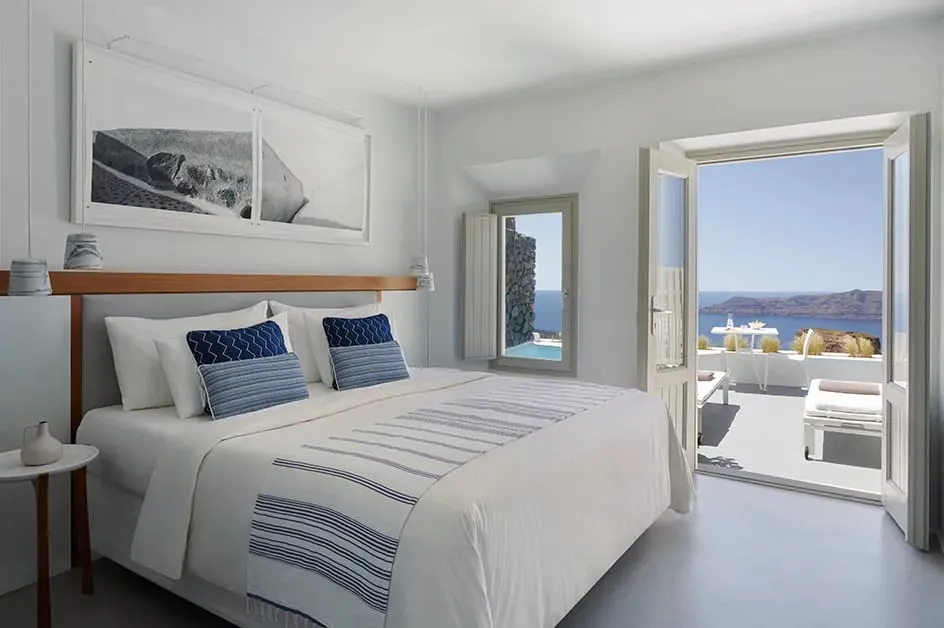
Guest rooms and suites carry the same restraint, with built-in furniture, arched or vaulted ceiling forms referencing the island’s traditional barrel-vaulted houses, and organic, locally sourced materials set against smooth white plasterwork. The volcanic rock window lattices recur inside individual rooms too, doubling as both a design signature and a practical response to Aegean light and wind. The result favours a considered, almost architectural minimalism over the more maximalist decor found at some competing caldera properties, an approach consistent with the practice’s stated aim of a contemporary reinterpretation of vernacular form rather than a literal period recreation.
Atmosphere
Imerovigli trades Oia’s crowds for quiet. It sits on the caldera rim between Fira, the island capital roughly two kilometres south, and Oia at the island’s northern tip, close enough to both for an easy visit but removed from the tour-bus traffic that fills Oia’s lanes before sunset. The village itself is small, home to fewer than 500 permanent residents, threaded by the narrow paved paths typical of Santorini’s caldera settlements, and anchored visually by Skaros Rock, the ruined medieval promontory a short walk from the hotel.
Because Grace Hotel operates on a largely adults-oriented basis (the standalone Villa is the only accommodation category that accepts children), the atmosphere across its terraces, pool deck, and restaurant leans toward a couples-focused calm rather than a family resort’s energy. The cascading terrace layout means there is rarely a single communal gathering point; instead, guests disperse across stacked levels, from the reception terrace down past the bar to the pool, each tier offering a slightly different angle on the same caldera view.
Rooms and Suites
The hotel holds 21 rooms and suites across nine categories: Deluxe Room, Deluxe Room with Plunge Pool, Junior Suite, Junior Suite with Plunge Pool, Honeymoon Suite, Superior Suite, VIP Suite, and Grace Suite, alongside the standalone Villa. Most categories above entry level, and several Deluxe Rooms as well, include a private plunge pool built directly into the room’s cliffside terrace, a design choice made possible by the site’s steep, stepped section.
The Villa is the property’s largest and most self-contained accommodation: two bedrooms with king beds and en-suite bathrooms, an open-plan kitchen, roughly 400 square metres of interior and outdoor space, its own private heated pool, a small spa area with hammam and jacuzzi, a wine and cigar cellar, and dedicated butler service. It is also the only accommodation category at the hotel that accepts children, making it the practical option for families who want to stay on the property.
Exact square footage for individual room categories varies by source and is best confirmed directly with the hotel at the time of booking, since Auberge periodically updates category names and configurations. What is consistent across published accounts is the terrace-first design logic: nearly every room is oriented for an unobstructed caldera view, with the volcanic rock window lattices used throughout to manage privacy on a site where rooms are stacked closely above and below one another.
Dining
The hotel’s signature restaurant is Varoulko Santorini, led by chef Lefteris Lazarou, the first Greek chef to earn a Michelin star, awarded to his eponymous restaurant Varoulko in Piraeus. The Santorini outpost serves Greek and Mediterranean cuisine with a strong seafood focus, offered through six- and eight-course tasting menus, with vegetarian and vegan options available. Dining takes place on the hotel’s lowest outdoor terrace, putting guests at the water’s-edge sightline of the caldera rather than looking down at it from above.
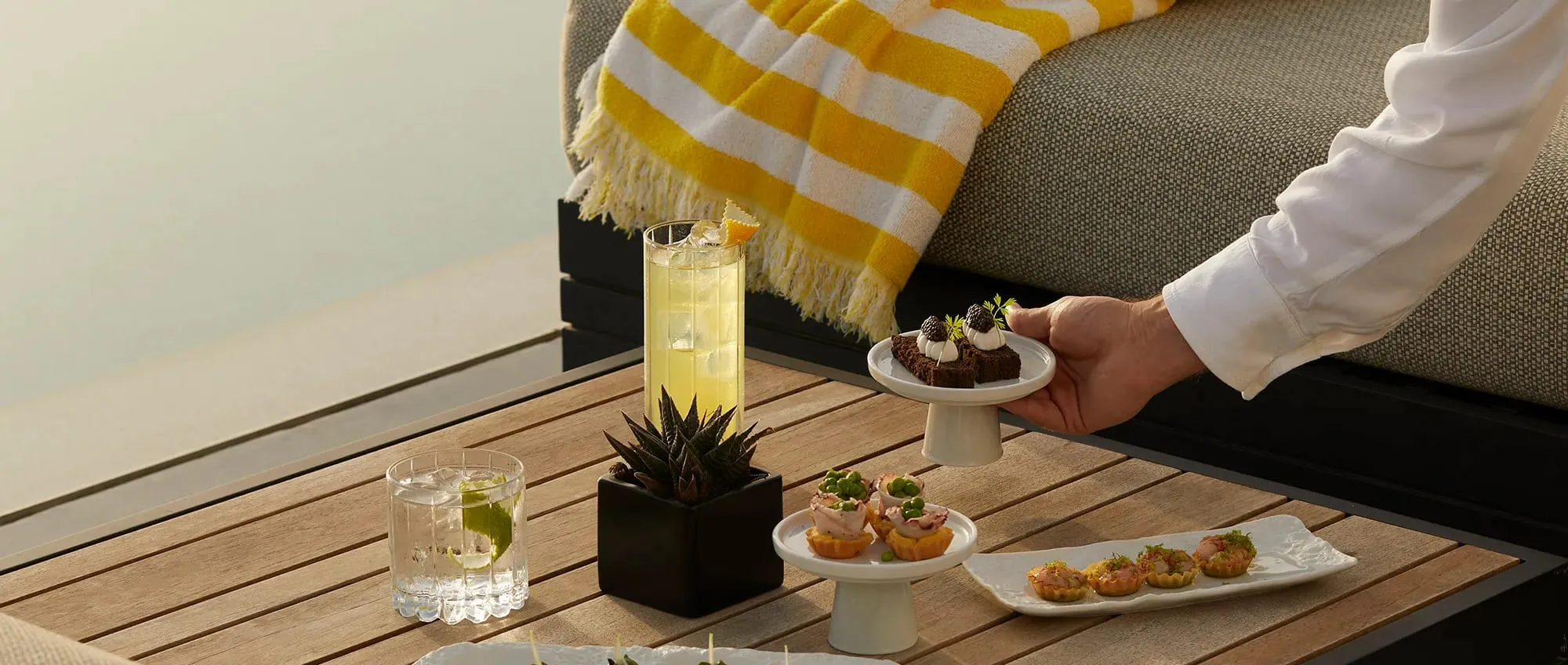
For drinks, 363 Bar, also referred to as the 363 Champagne Lounge, sits above the pool at the elevation that gives it its name, 363 metres above sea level. The bar has been recognised as one of Europe’s best hotel bars at the European Hospitality Awards, and its cocktail programme has drawn on a collaboration with Baba Au Rum, the Athens bar ranked among the World’s 50 Best Bars. An onsite botanical garden supplies some of the herbs and botanicals used behind the bar, tying the cocktail list to the property’s own grounds rather than exclusively imported ingredients.
Spa and Wellness
Grace Hotel does not operate a large standalone spa building; instead, spa treatments are delivered in-room, using organic Apivita products built around Greek plant extracts, beehive honey, and essential oils. The Villa is the exception, with its own private spa area including a hammam and jacuzzi.
Fitness facilities include a health club equipped with Technogym machines and a dedicated yoga and Pilates studio, both positioned to take advantage of the property’s caldera views. Complimentary daily yoga and Pilates sessions are offered, including sunrise and sunset sessions timed to the island’s light, alongside private personal training on request. In-room fitness kits, weights, mats, and Pilates balls, are also available for guests who prefer not to leave their terrace.
Experiences
The hotel’s position on the caldera rim makes sunset watching close to a default activity, though Imerovigli’s relative quiet, compared with the crowds that gather nightly in Oia, is itself one of the more valued experiences here. Skaros Rock, the ruined Venetian-era fortress promontory built in 1207 by Marco Sanudo, is roughly a seven-minute walk from the hotel and one of the more photographed viewpoints on the island, particularly at golden hour. The village’s whitewashed churches, including the Church of Ai-Stratis and the Monastery of Saint Nikolaos, sit within easy walking distance.
Given the property’s design pedigree, architecture-minded guests can treat the hotel itself as an experience, its stacked-terrace layout and volcanic rock detailing were built specifically to reward slow exploration on foot, level by level, down toward the pool. The botanical garden used in the bar’s cocktail programme also points to a broader interest in small, on-site experiences over bussed-in excursions, in keeping with a hotel whose main resource is the ground it is built on.
Who It Is For
Grace Hotel Santorini suits couples marking an anniversary or honeymoon who want a caldera-view stay with a quieter, more residential feel than Oia’s busier hotels offer. It also suits architecture and design-minded travellers, given the building’s documented pedigree and its deliberate, site-specific response to an extremely difficult cliffside plot. Sunset chasers who want the added altitude of Imerovigli’s position on the caldera, and who are willing to trade Oia’s postcard fame for a shorter walk to a quieter viewpoint, are also well served. Because the main hotel operates on a largely adults-oriented basis, it is a better fit for couples and groups of friends than for families travelling with young children, outside of the Villa.
Best Time to Visit
Late April through June and September into October offer the most reliable combination of warm weather, clear caldera visibility, and lighter crowds than the deep summer peak. July and August bring the busiest conditions and the highest room rates across Santorini generally, while the hotel itself typically operates seasonally, opening in spring and closing around early November, so travellers planning a winter trip should confirm operating dates directly with the property before booking.
How to Get There
Santorini (Thira) National Airport (JTR) is the island’s only airport and the standard gateway, roughly 8 kilometres from the hotel, a drive of around 15 to 20 minutes depending on traffic through Fira. Travellers arriving by ferry typically land at Athinios Port, roughly 12 kilometres from Imerovigli, with a longer transfer than from the airport. Because Imerovigli’s caldera-side lanes are narrow and largely pedestrian near the hotel itself, the final stretch of any arrival usually involves a short walk or porter assistance from the nearest vehicle drop-off point to the property’s cliffside entrance.
Nearby Experiences
Skaros Rock and its ruined Venetian fortress are around a seven-minute walk from the hotel, one of the defining landmarks of Imerovigli’s skyline. Fira, Santorini’s capital, sits roughly two kilometres south along the caldera rim, reachable on foot via the coastal path or by a short drive, and offers the island’s fuller range of shops, restaurants, and the Museum of Prehistoric Thera. Oia, famous for its own sunset views and considerably busier evening crowds, lies at the island’s northern tip, a drive of around 20 to 30 minutes depending on traffic. Imerovigli’s own village centre, with its whitewashed churches and caldera-view cafes, is a five-minute walk from the hotel.
Things to Know Before Booking
The hotel is built into a steep cliffside across multiple stacked terraces, and while its exact layout regarding lifts and stairs should be confirmed directly with the property, travellers with significant mobility concerns should ask about level access before booking, given the site’s naturally terraced topography. The main hotel operates on a largely adults-oriented basis, with the standalone Villa as the only category that accepts children, so families should confirm current age policies at the time of booking. The property, like most on the Santorini caldera, operates seasonally, generally from spring through early November, and closes over winter. Room and suite names and configurations have been updated periodically by Auberge Resorts Collection since it took over management in 2018, so guests with a specific category or view in mind should confirm exact current details directly with the hotel.
Sustainability
Grace Hotel Santorini holds ISO 14001:2015 certification for environmental management, awarded for two consecutive years and reported to be held by only one hotel in Santorini and few others across the wider Mediterranean region. The property eliminated plastic straws and moved to biodegradable packaging for catering operations starting in 2018. Its onsite botanical garden supplies herbs and botanicals used in the hotel bar’s cocktail programme, reducing reliance on imported ingredients for at least part of the beverage operation, and in-room amenities use Apivita products built around organic, Greek-sourced ingredients.
Practical Information
Published rates for Grace Hotel Santorini vary considerably by season and room category. Entry-level Deluxe Rooms have been reported starting from roughly the mid-hundreds of euros per night in shoulder season, while suite categories and the Villa run substantially higher, particularly across the July and August peak, when overall rates on the property have been reported well above 1,000 euros per night; the figure given above is an indicative shoulder-season starting point rather than a live quote, and travellers should confirm current rates directly with the hotel or Auberge Resorts Collection. Check-in is from 3:00pm and check-out by 11:00am, with late check-out available on request, subject to availability and fees after 2:00pm. The hotel’s address is Imerovigli, Thira 84700, Santorini, Greece, and it can be reached at +30 2286 021300.
Editorial Conclusion
Grace Hotel Santorini makes a specific, well-documented case for itself: a genuinely difficult cliffside site turned into an asset by architects willing to treat the slope as the design brief rather than an obstacle to it, a small, 21-key room count that keeps a heavily photographed property from feeling crowded, and an elevation, literally named on the hotel’s own bar sign, that gives Imerovigli’s already strong claim to the island’s best views an extra, verifiable few dozen metres over its lower-lying rivals. For travellers weighing Santorini’s crowded, famous caldera towns against its quieter, higher ones, it remains one of the clearer arguments for choosing the latter.
In pictures
On the map
Imerovigli, Santorini, Greece
Questions
Frequently asked
How many rooms does Grace Hotel Santorini have?
Grace Hotel Santorini holds 21 rooms and suites across nine categories, from entry-level Deluxe Rooms up to the Grace Suite, plus a standalone two-bedroom Villa with its own pool and spa. Most categories, including several Deluxe Rooms, come with a private plunge pool built into the cliffside terrace.
Is Grace Hotel Santorini part of a larger hotel group?
Yes. It operates as Grace Hotel, Auberge Resorts Collection. Auberge Resorts added the small Grace Hotels group, of which this property was the flagship, to its portfolio in 2018, and the Santorini hotel has traded under the Auberge Resorts Collection name since.
What is the hotel's pool known for?
Grace Hotel's main infinity pool cascades down the cliffside terraces below the reception and sunset bar, with a jagged, stepped outline that echoes the zigzag paths of the caldera villages. It is widely cited in travel and design press as one of the most photographed hotel pools in the world, and is generally described as the largest pool of its kind on the Santorini caldera.
Is Grace Hotel Santorini suitable for families with children?
The main hotel operates on an adults-oriented basis. The exception is The Villa, the property's standalone two-bedroom accommodation with a private pool, kitchen, and spa, which is the only category that accepts children. Families should confirm current age policies directly with the hotel before booking.
How far is Grace Hotel Santorini from the airport?
Santorini (Thira) National Airport (JTR) is around 8 kilometres from the hotel, roughly a 15 to 20 minute drive. The hotel sits in Imerovigli, on the caldera rim, so the final approach involves narrow village lanes and a short walk from the nearest vehicle drop-off to the cliffside property.
Same destination
More hotel guides in Greece
Porto Heli, Greece
Amanzoe
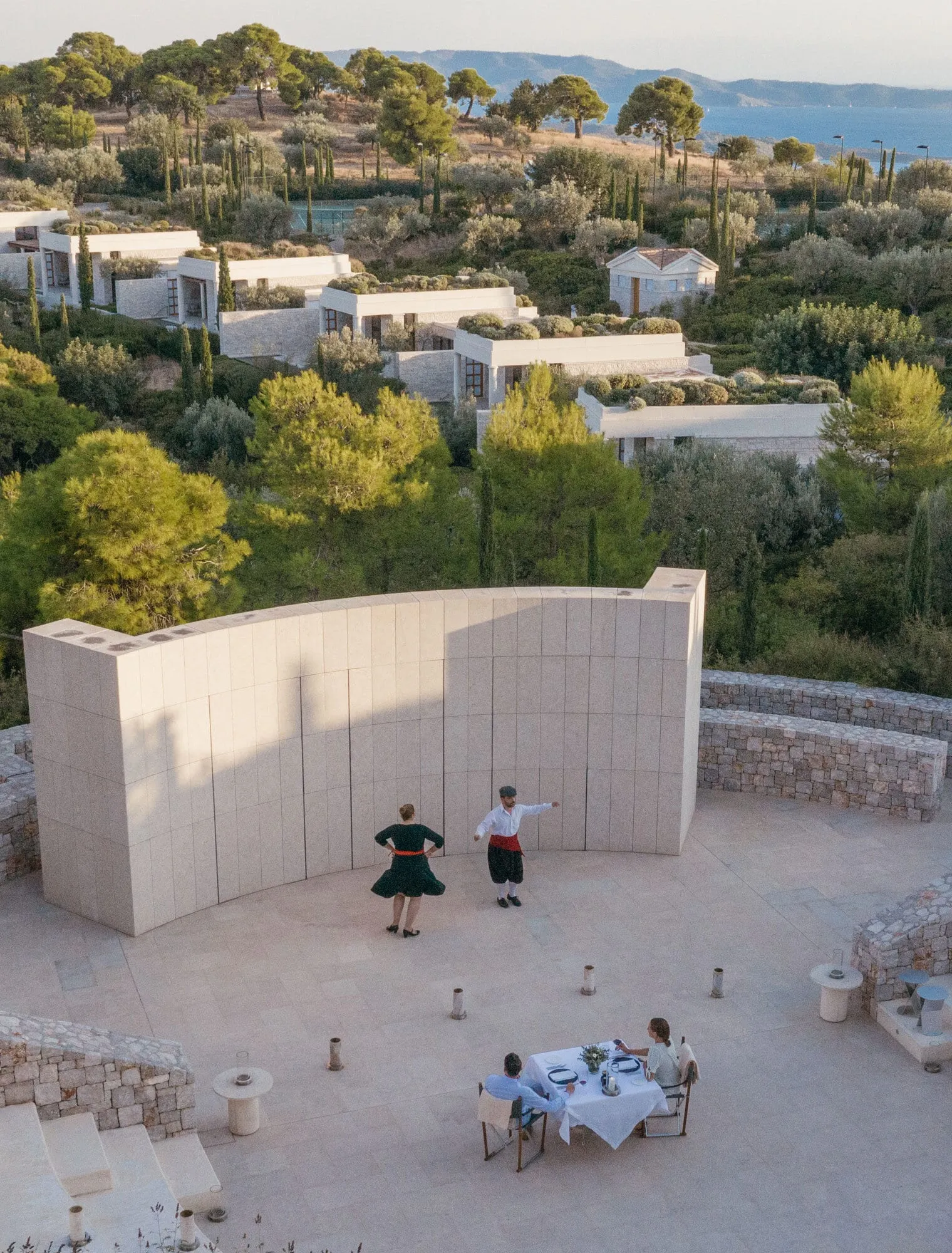
A hilltop citadel of Doric columns and marble courtyards above Porto Heli, built as a modern-day temple to the Peloponnese coastline it overlooks.
From €1,900 per night
Oia, Santorini, Greece
Canaves Oia Suites
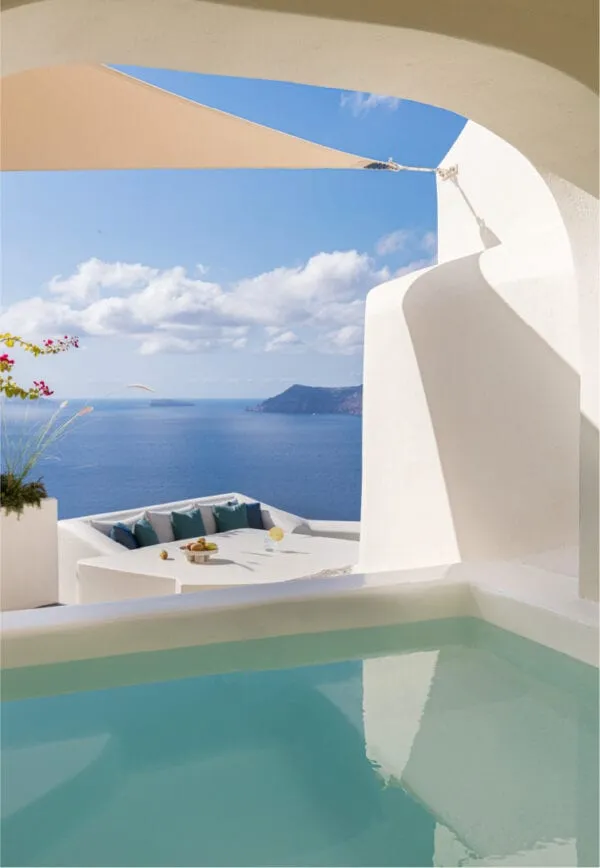
Cave suites cut into Oia's caldera cliff by the family that opened the village's first hotel, rebuilt cube by cube for a new generation of guests.
From €900 per night
Kourouta, Ilia, Greece
Dexamenes Seaside Hotel
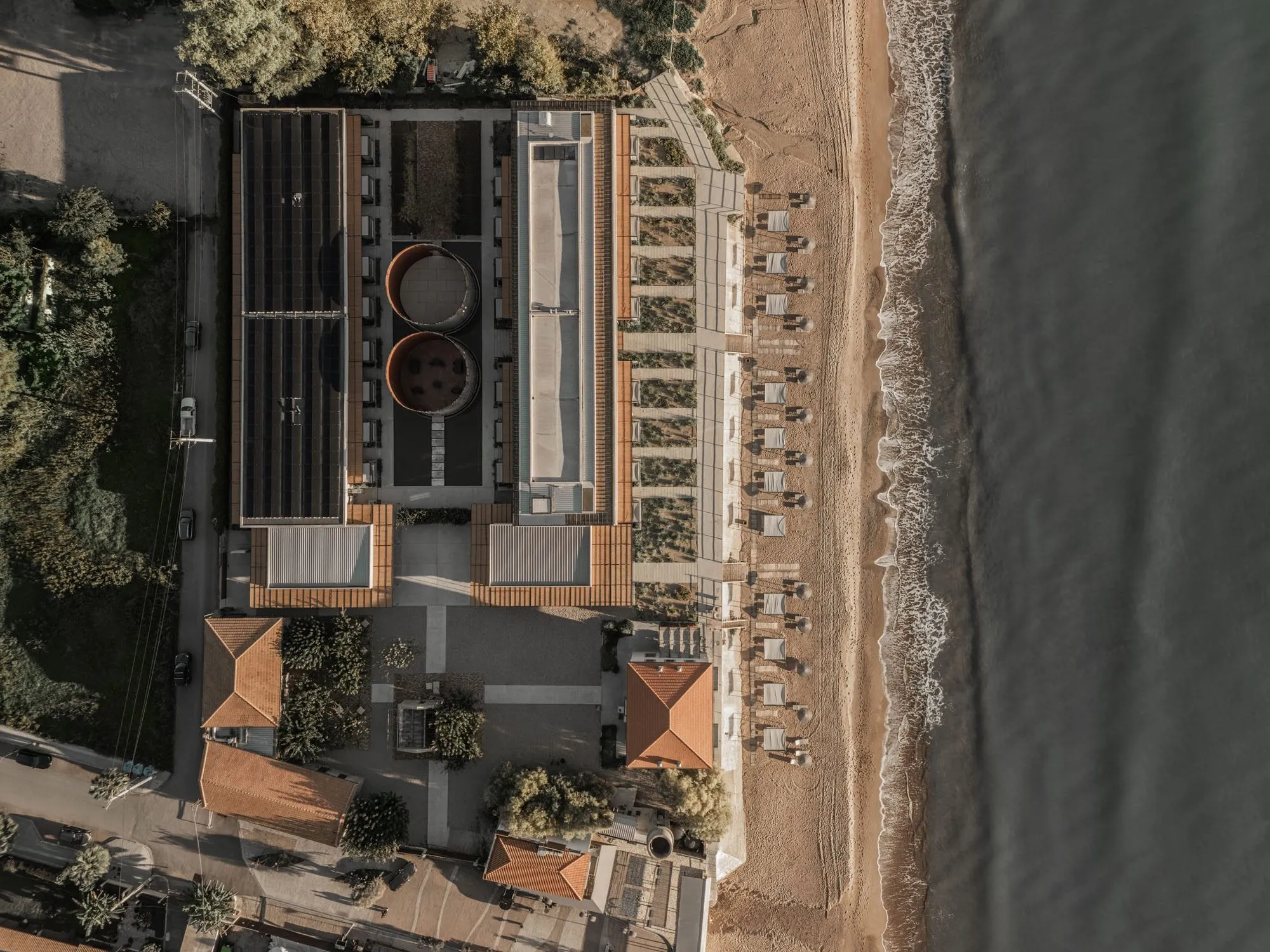
A 1920s currant-wine factory on a Peloponnese beach, its concrete fermentation tanks cut open one by one and turned into 44 suites facing the Ionian Sea.
From €260 per night