Uluwatu, Bukit Peninsula, Indonesia
Bulgari Resort Bali
A Milanese architecture firm cut 59 villas and five mansions into a limestone clifftop above the Indian Ocean, then built one of the longest hotel funiculars in the world to reach the private beach below.
- Rates from
- From $1,500 per night
- Nearest airport
- Ngurah Rai International Airport (DPS), Denpasar
- Transfer
- About 45 minutes to an hour by car, depending on traffic on the Bukit Peninsula's single main road
- Best months
- April to October, Bali's dry season, for calmer seas at the beach club and clearer views from the clifftop
The defining image of Bulgari Resort Bali is not a villa or a view, but a piece of infrastructure: an inclined funicular that drops roughly 150 metres down a sheer limestone cliff face, carrying guests from the main resort to a private beach cove that is otherwise unreachable by land or sea. It is a strange thing to build for a hotel, expensive, mechanically complex, and serving a single purpose, and it says something about how literally Bulgari and its architects took the site when they broke ground on the Bukit Peninsula in the early 2000s.
That site, a stretch of clifftop above the Indian Ocean near Uluwatu, was already one of the most dramatic in Bali before anyone built on it: limestone bluffs, tangled coastal scrub, and a coral-protected beach far below that surfers and fishermen knew about long before hoteliers did. Bulgari Hotels & Resorts, the joint venture between the Rome jeweller and Marriott International’s Ritz-Carlton Luxury Group, had opened its first property two years earlier in Milan, a city hotel inside a converted 18th-century palazzo. Bali, which opened in 2006, was the brand’s first resort, its first attempt at translating the same Italian design language onto a beach and clifftop setting rather than an urban one, and it set a template the brand has repeated since in London, Beijing, Shanghai, Tokyo, Dubai, and Rome: a small collection of very large, very private accommodations, built with an Italian architectural sensibility but worked, wherever possible, in local materials by local hands.
Two decades on, the resort’s reputation rests less on novelty (villa resorts with ocean views are not scarce in Bali) than on the specificity of its execution: a genuinely secluded clifftop position away from the island’s busier southern beaches, a small footprint of 59 villas and five mansions spread across roughly 8.4 hectares, and a level of architectural ambition, particularly in that funicular, that few resorts on the peninsula have matched. This guide sets out what the resort actually offers, room by room and experience by experience, for travellers weighing whether it earns its place among Uluwatu’s small handful of true ultra-luxury addresses.
Why It Stands Out
Bulgari Resort Bali’s core proposition is a specific kind of privacy: a clifftop position with no public beach access, a guest count capped by just 64 total accommodations, and a private beach cove that ordinary Uluwatu beachgoers cannot reach by land or sea. Where much of the Bukit Peninsula has filled in with surf hostels, beach clubs, and mid-market villas since the resort opened, Bulgari’s original site selection and low-density masterplan have aged well, the property still reads as isolated rather than merely gated. The Italian-Balinese design language, hand-cut volcanic lava stone paired with alang-alang thatched roofs, sets it apart from the more generic contemporary-luxury look adopted by many newer Bali resorts, and the presence of an acclaimed Italian chef’s restaurant alongside a serious Indonesian dining room gives it a culinary identity beyond the usual resort buffet-and-grill formula.
Architecture
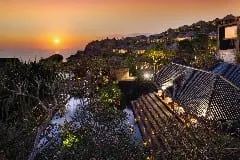
The resort was designed by ACPV Architects Antonio Citterio Patricia Viel, the Milan-based practice that has shaped the look of every Bulgari hotel since the brand’s Milan debut in 2004. Working across roughly 8.4 hectares of undulating clifftop terrain rising to around 150 metres above the Indian Ocean, the architects laid out low-rise villas and mansions that follow the contours of the land rather than flattening it. The landscaping itself borrows a distinctly Balinese logic: much of the site is terraced in the manner of the island’s rice fields, a stepped grading approach that keeps sightlines to the ocean largely uninterrupted from one property to the next while avoiding the flattened, bulldozed feel common to newer hillside resorts elsewhere on the peninsula.
Materials were chosen to root the buildings in Bali specifically rather than in a generic tropical vocabulary: hand-cut volcanic lava stone for structural walls and paving, native hardwoods for structural framing and joinery, and traditional alang-alang thatch, a local grass roofing material, worked over villa roofs by Balinese craftsmen using construction techniques passed down through generations. The result is a hybrid the brand has since made its signature: Italian architectural discipline (clean geometries, restrained material palettes, a strong sense of proportion) applied to a distinctly Balinese material and construction culture, rather than either aesthetic simply layered on top of the other.
The single most ambitious piece of architecture on site is the funicular connecting the main resort to the beach club below. Descending the cliff face on an incline, it is reported among the longest hotel funiculars of its kind anywhere, an engineering undertaking that reflects how central the private beach was to the original site plan, rather than an amenity added as an afterthought.
Interior Design
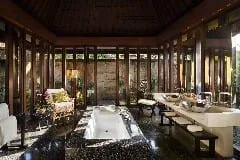
Inside the villas and mansions, the same Italian-meets-Balinese dialogue continues at a smaller scale. Interiors favour clean-lined, relatively unfussy furniture and neutral, natural palettes, limestone, dark hardwoods, woven textures, that let the architecture and the ocean views carry most of the visual weight, rather than the heavy carved-teak maximalism associated with older-generation Bali luxury resorts. Bathrooms are generously proportioned, typically finished in stone with deep soaking tubs positioned to take in the view, and villa living areas open directly onto private terraces and pools via wide sliding glass, blurring the line between interior and exterior in a way that suits Bali’s climate.
The larger mansions push this further, with fully equipped kitchens (reportedly fitted with Miele appliances), multiple living and dining zones, and two-tier private pools with dedicated sun decks, designed less like hotel suites and more like architect-built private villas that happen to come with resort service attached. The Bvlgari Villa, the top two-bedroom category, is a roughly 1,300-square-metre, two-storey structure clad entirely in stone, entered through its own private gate and built around a 20-metre heated swimming pool that steps down into a second, lower pool as it reaches toward the ocean, among the more striking individual features in the resort’s accommodation portfolio.
Atmosphere
The prevailing mood at Bulgari Resort Bali is quiet and self-contained. Villas are spaced for privacy rather than proximity, and the low-rise, low-density layout means guests are unlikely to encounter other visitors outside of the restaurants, spa, and beach club, a deliberate contrast to the busier beach clubs and surf breaks that have grown up elsewhere on the Bukit Peninsula since 2006. The clifftop setting itself does much of the atmospheric work: frangipani trees, ocean views from nearly every vantage point, and the sound of surf breaking against the cliff base far below.
That seclusion is reinforced by geography as much as design. The resort sits away from Uluwatu’s surf-tourism strip and the peninsula’s newer beach-club scene, on a stretch of coastline it effectively has to itself, which gives the property a stillness that contrasts with the more socially oriented energy of resorts closer to Uluwatu’s famous surf breaks and sunset bars.
Rooms and Suites
Accommodation runs across 59 villas and five separate mansions, all with private pools, spread over five main villa categories. One-bedroom categories include Ocean View Villas (around 300 square metres), Premier Ocean View Villas, Ocean Cliff Villas, and Serpenti Villas, while two-bedroom categories scale up through Premier Ocean View, Ocean Cliff, and the flagship Bvlgari Villa, the largest and most feature-rich of the two-bedroom options. Two-bedroom Ocean View configurations run to roughly 550 square metres.
The five mansions sit above the villa tier entirely: two-storey structures with three or five bedrooms, floor areas reported from around 1,700 up to more than 4,400 square metres, private two-tier pools, wraparound landscaped gardens, and fully equipped kitchens, built for families or groups who want the scale of a private estate with full resort service behind it. The Five-Bedroom Mansions in particular function as a resort within the resort: set on their own secluded upland plain adjacent to the main property, bordered by cliffs and reached through a dedicated separate entrance, they are designed to give occupants a fully private enclave, with their own staff and facilities, rather than simply a larger villa on the same shared grounds. Every accommodation category, from entry-level villa to five-bedroom mansion, comes with a dedicated butler and private plunge or infinity pool; villa and mansion names, sizes, and exact configurations are periodically revised by the resort, so guests booking a specific category should confirm current details directly with the hotel.
Dining
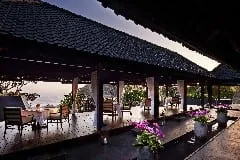
The resort’s principal restaurant is Il Ristorante, associated with the Italian chef Niko Romito, serving a modern take on Italian cooking with dishes developed specifically for the Bali property, set beside a reflection pool and backed by a wine list of roughly 200 bottles weighted toward Italian labels and Champagne. Sangkar, the resort’s other main dining room, occupies the highest point of the clifftop, with an indoor room decorated in a refined Balinese style, hanging sculptural rooster cages among the design details, and a terrace with sweeping Indian Ocean views; its kitchen serves contemporary Indonesian, wider Asian, and international dishes across breakfast, lunch, and dinner.
Beyond the two main restaurants, the resort operates the Bvlgari Bar for cocktails and its Italian aperitivo tradition, a pizza bar associated with pizzaiolo Pier Daniele Seu, a private dining room for smaller events, and food and beverage service down at the beach club, where the kitchen serves lighter fare suited to a day spent at the shore.
Spa and Wellness
The Bvlgari Spa draws on both Asian and European treatment traditions, with therapies built around deep-tissue massage using aromatic oils and warm volcanic stones placed along the body’s energy points, alongside more conventional facials and body treatments. Facilities extend to a gymnasium and tennis courts for guests who want a more active stay, and the resort’s complimentary programme includes private yoga instruction, offered as part of a broader roster of included activities rather than a paid add-on.
Experiences
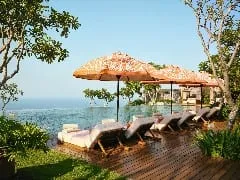
Complimentary experiences at the resort include private yoga sessions, guided walks through the surrounding village, and Balinese Hindu melukat purification ceremonies, activities designed to connect guests with Balinese culture beyond the resort’s perimeter without requiring them to leave the property. The beach club, reached via the cliffside funicular, is itself a full day’s experience: a reef-protected private beach roughly 1.5 kilometres long at low tide, inaccessible to the public, with loungers, cabanas, and dedicated food and beverage service. The resort’s Serpenti Pool Club, its main swimming pool facility, has been reimagined in recent years as a further social and relaxation hub separate from the beach below.
Who It Is For
Bulgari Resort Bali suits couples marking a honeymoon or anniversary who want architectural seriousness and total privacy rather than a livelier resort scene, and design or architecture enthusiasts drawn to the ACPV-designed buildings and the funicular in particular. Its mansion tier makes it a credible option for multi-generational families or groups travelling together who want the scale of a private estate with full resort infrastructure behind it, and its reef-protected private beach appeals to travellers who want beach time without navigating Uluwatu’s more crowded, surf-oriented public beaches.
Best Time to Visit
Bali’s dry season, roughly April to October, is the more reliable window for a clifftop resort built around outdoor pools, a beach club, and ocean views, with lower rainfall, calmer seas for beach club days, and generally clearer visibility from the clifftop restaurants and villas. The wet season, November through March, brings a higher chance of rain and rougher surf at the beach cove, though villas and interior spaces remain fully usable year-round and rates can be more favourable outside peak dry-season months.
How to Get There
Ngurah Rai International Airport (DPS) in Denpasar is the gateway for Bulgari Resort Bali, situated roughly 17 kilometres away on the same Bukit Peninsula. There is no direct expressway to the resort’s specific stretch of coastline, so the drive typically takes 45 minutes to an hour by car depending on traffic, longer during Bali’s frequent congestion around the airport, Kuta, and Jimbaran corridors. Most guests arrange a private transfer through the resort or a pre-booked driver rather than relying on street taxis for the final approach along the peninsula’s smaller coastal roads.
Nearby Experiences
Pura Luhur Uluwatu, one of Bali’s most important sea temples, sits on its own dramatic clifftop a short drive from the resort and is best known for sunset visits and its resident Kecak fire dance performance. The Bukit Peninsula’s renowned surf breaks, including Uluwatu, Padang Padang, and Bingin, lie within a short drive for guests who want to watch or take part in Bali’s surf culture, and the peninsula’s growing scene of independent beach clubs and clifftop dining rooms gives guests options beyond the resort’s own restaurants for an evening out. Jimbaran Bay, known for its beachfront seafood grills at sunset, is also within reach for a change of pace from the resort’s more formal dining rooms.
Things to Know Before Booking
The resort’s remoteness, a genuine asset for privacy, also means limited walkable options beyond the property itself; guests without a car or arranged transfers will rely on resort shuttles or taxis for excursions. The funicular to the beach, while a highlight, means the beach club is a short ride rather than a direct walk from most villas, worth factoring in for guests with mobility considerations. Villa and mansion naming and configurations have been adjusted by the resort over the years, so travellers with a specific category, view, or bedroom count in mind should confirm exact current details directly with the hotel at the time of booking. Bali’s Nyepi (Day of Silence), typically in March, affects check-in and check-out dates islandwide, including at this resort, and should be checked against travel dates.
Sustainability
Public, verifiable detail on Bulgari Resort Bali’s specific environmental programmes, energy use, water systems, or waste initiatives was not found in available sourcing and is not claimed here. The resort’s construction did lean on regionally sourced, traditional materials, hand-cut volcanic stone and alang-alang thatch worked by local craftsmen, which reduced reliance on imported or synthetic building materials relative to many newer resort developments, though this reflects a design and construction choice made in the early 2000s rather than a documented modern sustainability certification. Travellers with specific sustainability priorities should confirm current practices directly with the resort.
Practical Information
Bulgari Resort Bali is located at Jalan Goa Lempeh, Banjar Dinas Kangin, Uluwatu, Bali 80361, Indonesia. Check-in is from 3:00pm and check-out by 12:00pm noon, with a flexible policy for early or late requests subject to availability and possible fees. Indicative rates start from around USD 1,500 per night for entry-level villas in standard season, rising substantially for higher villa categories, mansions, and peak-season dates; the figure given here is a starting reference rather than a live quote, and travellers should confirm current rates directly with the resort or a travel advisor. The resort is reachable in roughly 45 minutes to an hour by car from Ngurah Rai International Airport (DPS) in Denpasar.
Editorial Conclusion
Bulgari Resort Bali’s case for itself has held up unusually well for a hotel approaching its twentieth year: a clifftop site chosen with real conviction, an architectural language, Italian discipline applied to Balinese material and craft, that the wider Bulgari Hotels & Resorts portfolio has since built a global identity around, and a piece of infrastructure, that 150-metre funicular to a private beach, that few competitors have matched or even attempted. For travellers weighing Bali’s crowded field of clifftop luxury resorts, it remains one of the few that justifies its position with something more specific than a good view.
In pictures
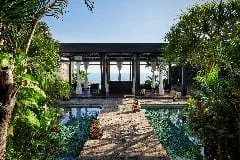
On the map
Uluwatu, Bukit Peninsula, Indonesia
Questions
Frequently asked
When did Bulgari Resort Bali open and who designed it?
The resort opened in 2006, two years after Bulgari Hotels & Resorts, the joint venture between the Rome jeweller and Marriott International's Ritz-Carlton Luxury Group, launched its first hotel in Milan. Bali was the brand's first resort property. It was designed by ACPV Architects Antonio Citterio Patricia Viel, the Milan-based firm behind Bulgari's other hotel properties, working with local Balinese craftsmen to translate an Italian design sensibility into volcanic stone, thatch, and native timber.
How many villas does Bulgari Resort Bali have?
The resort has 59 villas across one- and two-bedroom categories (Ocean View, Premier Ocean View, Ocean Cliff, Serpenti, and the two-bedroom Bvlgari Villa), plus five separate mansions with three or five bedrooms. Every villa and mansion has its own private pool. Exact configurations and villa names are periodically revised by the hotel, so travellers with a specific category in mind should confirm current details at the time of booking.
How do guests reach the beach at Bulgari Resort Bali?
An inclined funicular railway, reportedly among the longest of its kind at any hotel, descends roughly 150 metres down the cliff face from the main resort to a private beach cove. The beach is reef-protected and not accessible to the public by land or sea, and it hosts the resort's beach club with a dedicated kitchen, loungers, and cabanas.
What is the nearest airport to Bulgari Resort Bali?
Ngurah Rai International Airport (DPS) in Denpasar is the nearest airport, roughly 17 kilometres from the resort. The drive across the Bukit Peninsula typically takes 45 minutes to an hour depending on traffic, longer during peak arrival periods or Bali's frequent congestion around Kuta and Jimbaran.
What restaurants does Bulgari Resort Bali have?
The resort's main restaurants are Il Ristorante, an Italian fine-dining room associated with chef Niko Romito and a wine list weighted toward Italian labels, and Sangkar, serving contemporary Indonesian, Asian, and international dishes from the highest point of the cliff. There is also the Bvlgari Bar, a pizza bar, and private dining options, alongside food and drink service at the beach club below.
Same destination
More hotel guides in Indonesia
Uluwatu, Bukit Peninsula, Indonesia
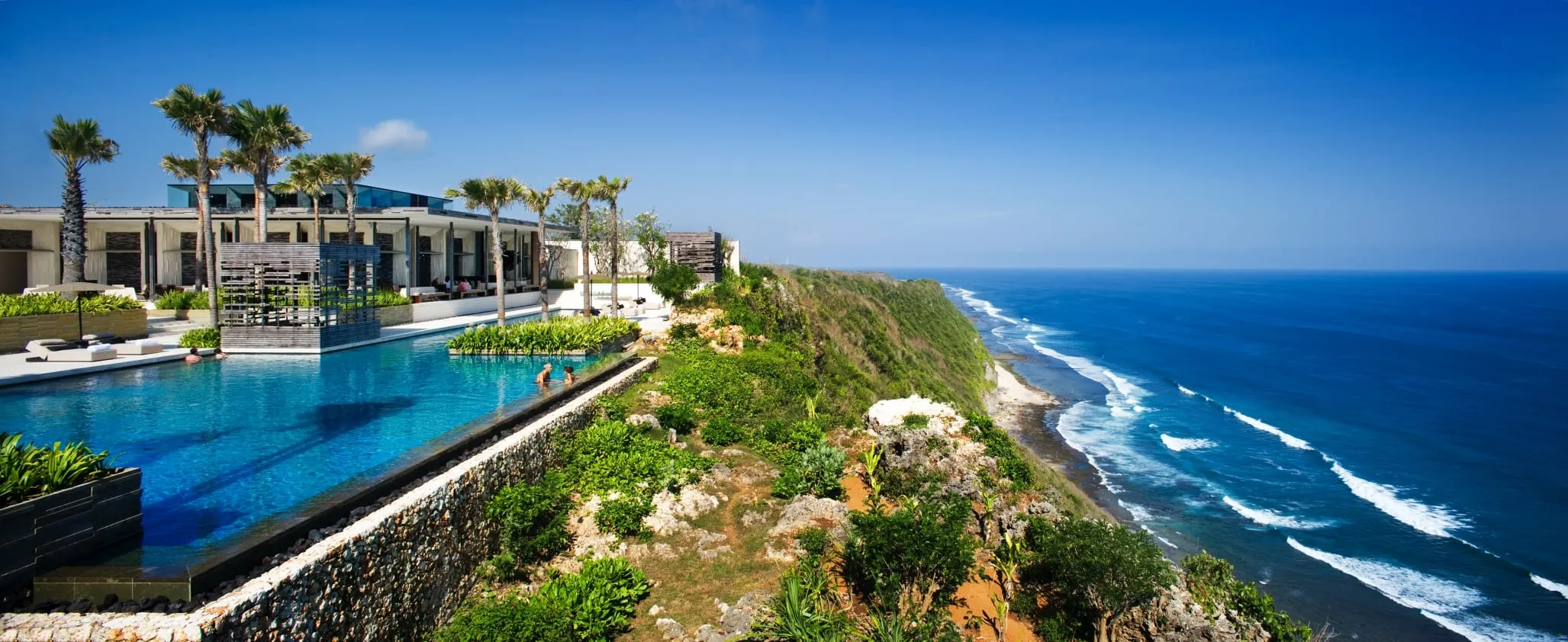
Alila Villas Uluwatu
A Singapore architecture firm carved a geometric limestone resort into a Bukit Peninsula clifftop in 2009, planting grass roofs across it so the whole property reads as an extension of the savannah it replaced.
From $800 per night
Sayan, Ubud, Indonesia
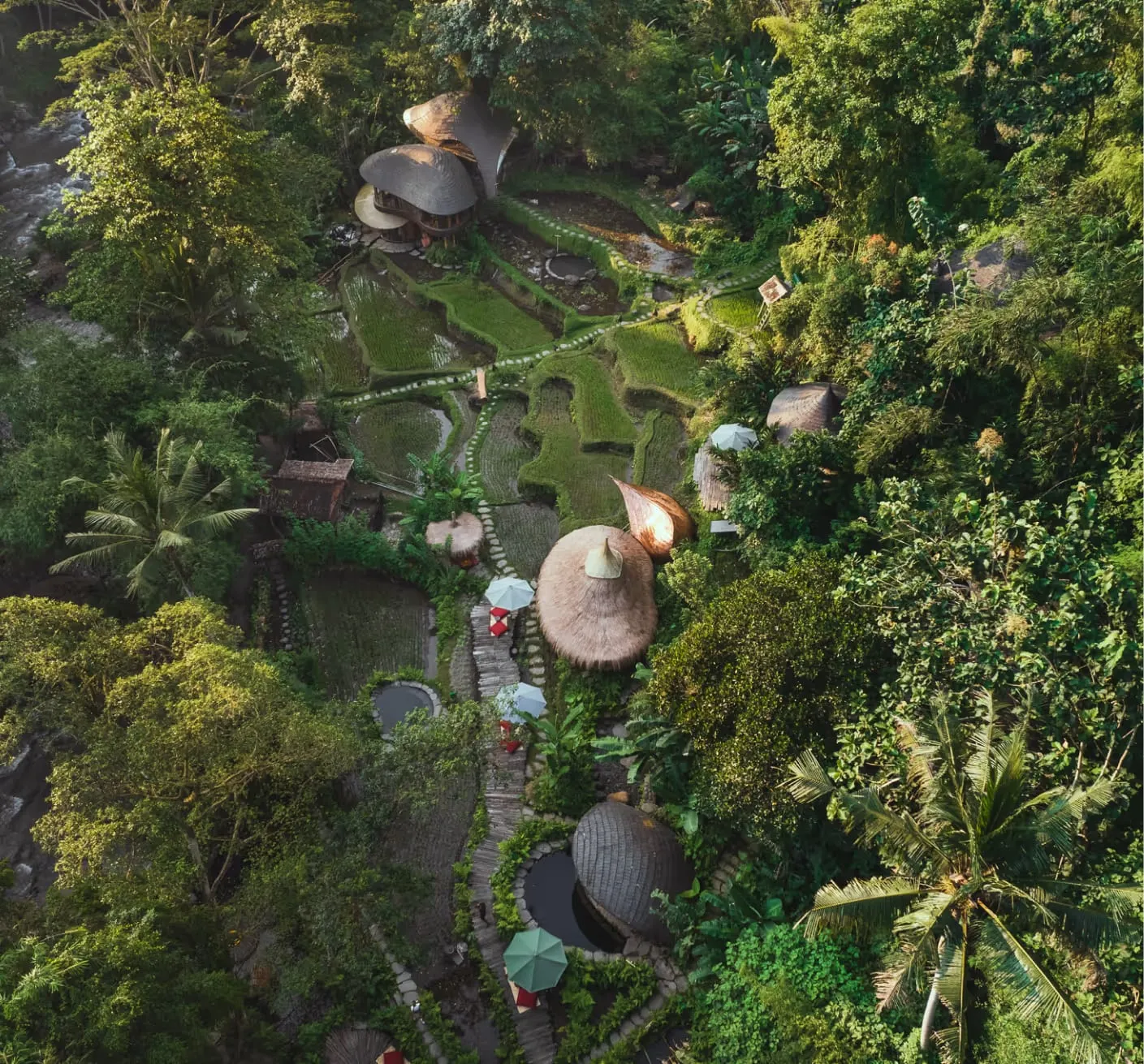
Bambu Indah
Antique Javanese bridal houses and hand-built bamboo pavilions, dismantled, relocated and rebuilt above the Ayung River gorge by the founders of Green School Bali.
From $250 per night
Keliki, Ubud, Indonesia
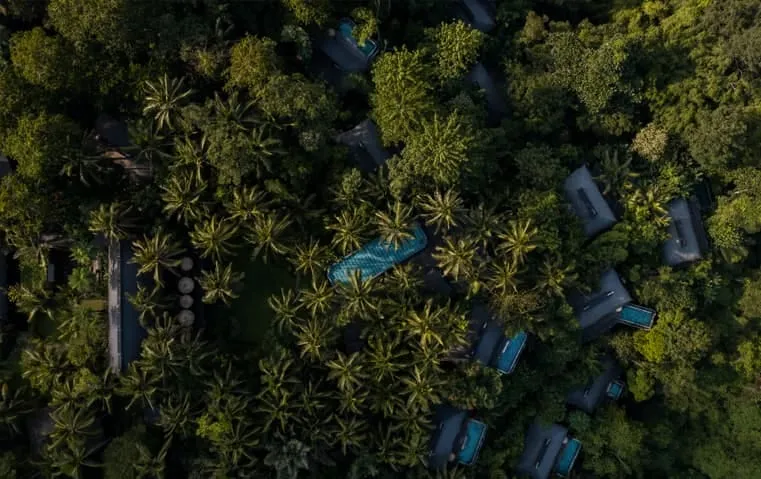
Capella Ubud
A colonial-era explorer's camp reimagined by Bill Bensley, its 23 tents strung along a jungle ridge above Ubud's Wos River valley.
From $660 per night