Jumeirah Bay Island, United Arab Emirates
Bulgari Resort Dubai
An Italian jeweller's idea of the Arabian Gulf, built on a seahorse-shaped island with its own marina, a two-Michelin-starred dining room, and 101 rooms that all face water.
- Rates from
- From $950 per night
- Nearest airport
- Dubai International Airport (DXB)
- Transfer
- Around 20-25 minutes by car, roughly 18 kilometres from the airport across a private bridge onto the island
- Best months
- November to March, for warm, dry, low-humidity weather; shoulder months of October and April are also workable, while June to September bring intense heat and humidity
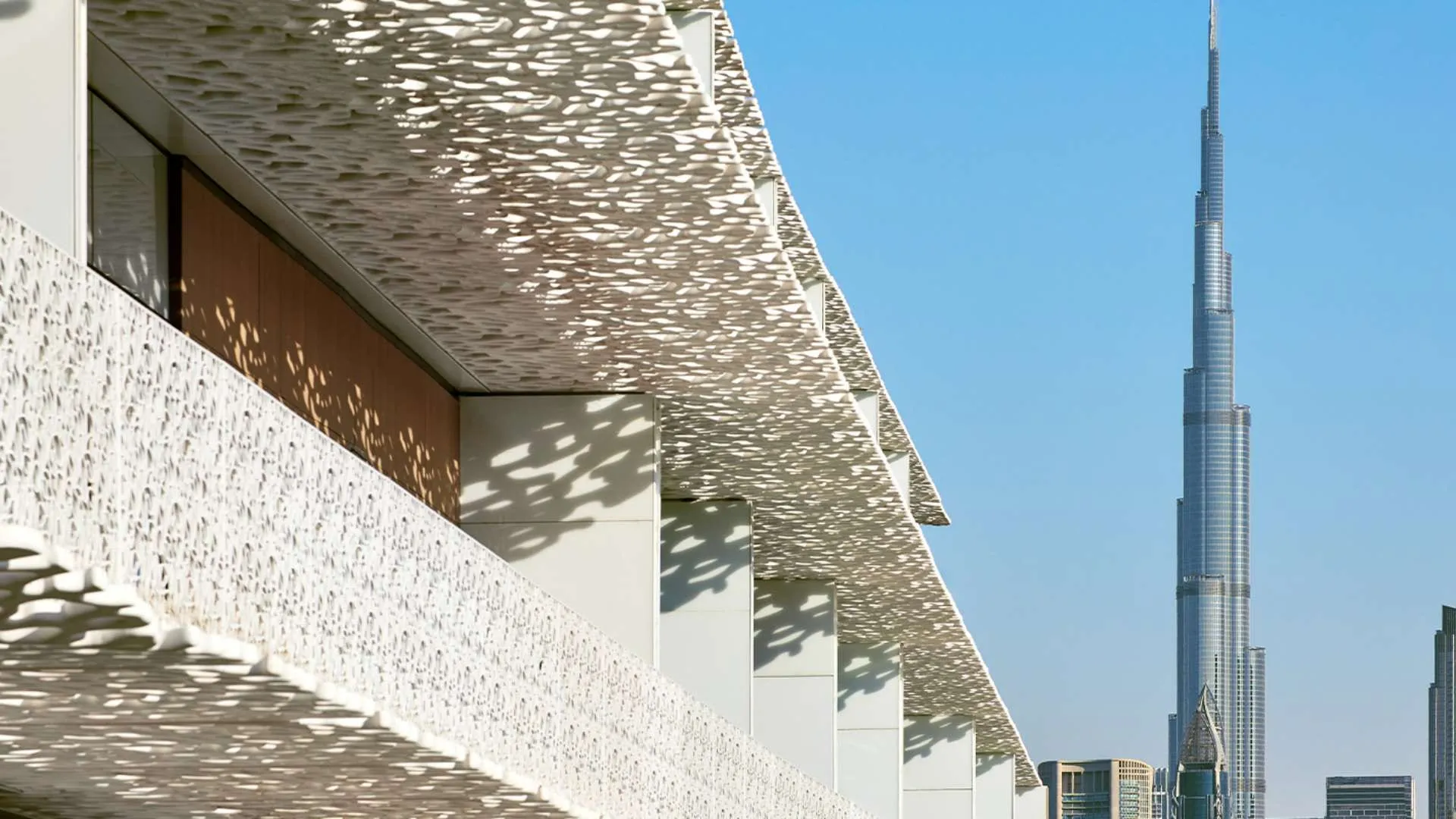
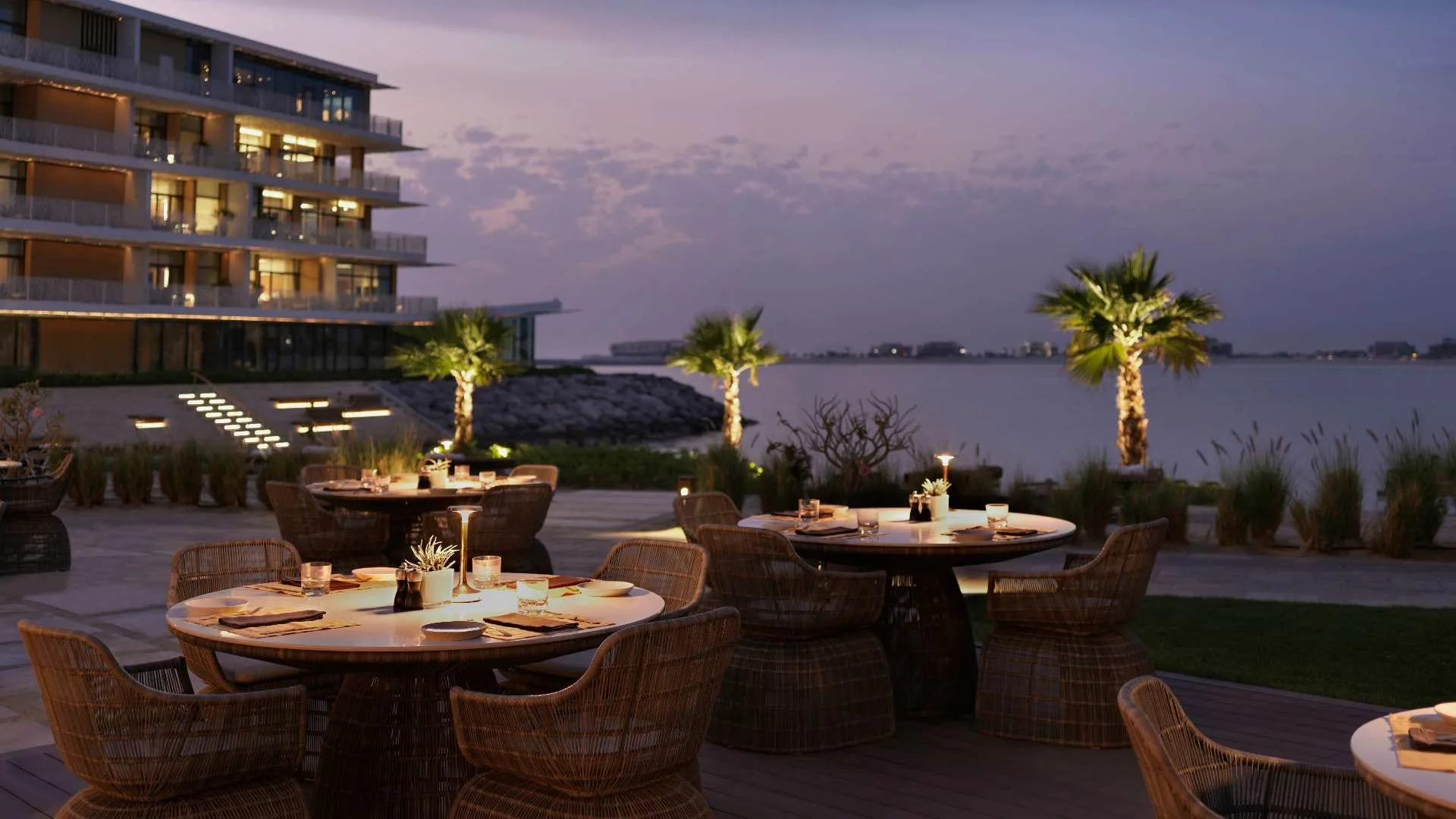
Dubai has no shortage of hotels built to be photographed from a helicopter. Bulgari Resort Dubai is one of the few built to be approached by boat. It sits at the far tip of Jumeirah Bay Island, a reclaimed spit of land shaped, quite deliberately, like a seahorse, linked to the mainland by a short bridge and ringed by its own private marina. Where much of Dubai’s beachfront competes on height, this resort competes on restraint: low-rise, travertine-clad, closer in spirit to Porto Cervo than to the Burj Khalifa skyline visible in the distance behind it.
That restraint is the point. Bulgari, the Roman jeweller turned hotel brand, built its hospitality business on the idea that Italian design sensibility, quiet luxury rather than maximalist spectacle, could be exported wholesale to a handful of cities and, since Dubai, to a genuine resort setting with a marina and a private beach attached. The Dubai property, which opened in November 2017 as the brand’s second hotel worldwide and its first full resort, was designed almost entirely by Antonio Citterio Patricia Viel, the Milan-based architecture and design practice responsible for the interiors, and here also much of the architecture, of every Bulgari hotel since the first opened in Milan in 2004.
The result is a 101-room, 20-villa resort with its own 46-berth marina, a two-Michelin-starred Italian restaurant helmed by chef Niko Romito, and a spa built around an indoor pool inspired by the Roman baths at Caracalla. It is, on paper and largely in practice, an attempt to relocate a certain register of European coastal luxury, a private island, a yacht harbour, unhurried Italian food, onto a stretch of reclaimed Gulf coastline built specifically to hold it.
Why It Stands Out
Most of Dubai’s marquee beach hotels sit on natural or long-established coastline and compete through scale: more towers, more pools, more square footage of lobby. Bulgari Resort Dubai instead occupies a purpose-built island shaped for it, and caps its own room count at 101 plus 20 villas, a small footprint by the standards of Dubai’s beach resort market. The pairing of a private marina (46 berths, up to 50 metres) with a genuinely low-rise, Italian-inflected design language, the work of Antonio Citterio Patricia Viel across architecture, interiors, and even much of the furniture, gives it a distinct identity: a resort built around water access and Mediterranean restraint rather than vertical spectacle. Add a restaurant, Il Ristorante - Niko Romito, that has independently earned two Michelin stars, and the property has a claim to being taken seriously on food terms alone, unusual for a resort hotel in this market.
Architecture
Jumeirah Bay Island itself is the first architectural fact worth understanding: a man-made landmass reclaimed from the Arabian Gulf and shaped, in plan, like a seahorse, connected to the Jumeirah 2 mainland by a bridge of roughly 300 metres. The resort and its associated residences occupy the island’s larger, southern lobe, with the marina positioned at the narrower point that separates the hotel from the residential towers and villas further along.
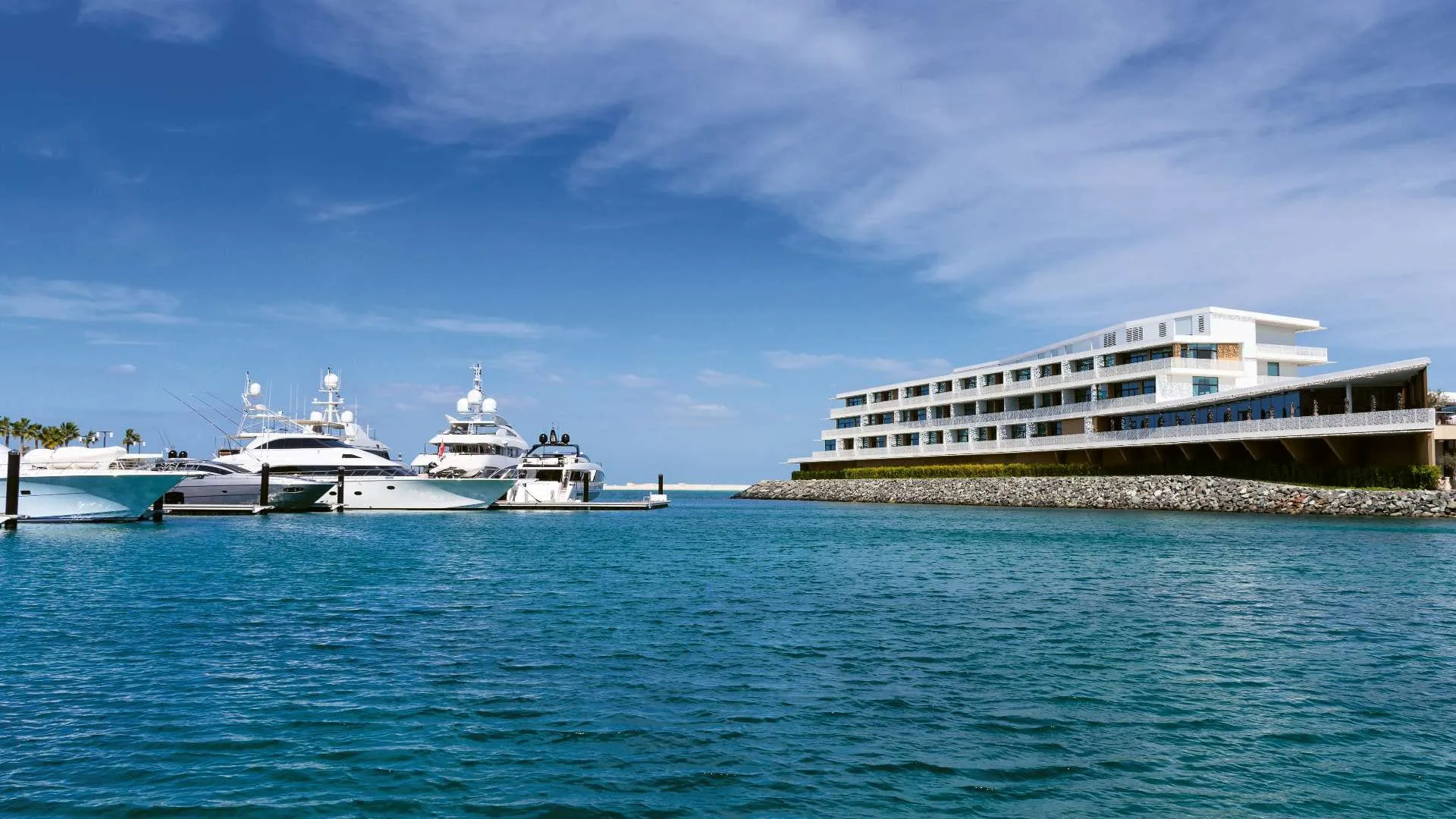
Antonio Citterio Patricia Viel, the Italian practice behind the interiors of every Bulgari hotel to date, took on a broader architectural role in Dubai than in Bulgari’s city properties, shaping the resort’s low-rise massing across a development reported at roughly 158,000 square metres. The buildings are deliberately restrained in height, travertine-clad low-rise blocks arranged around courtyards, water features, and the marina, a conscious departure from the glass towers that define much of Dubai’s skyline and a closer visual relative of an Italian coastal town than a Gulf mega-resort. The main resort building, the villas, the yacht club, and the spa are distributed across the site rather than stacked into a single tower, which keeps sightlines to the water open from most parts of the property and reinforces the sense of a low, horizontal Mediterranean village rather than a vertical hotel block.
The resort opened in November 2017, having originally been targeted for an earlier date, alongside the marina and yacht club, which opened that December. It was Bulgari’s second hospitality property after Milan (2004) and predates the brand’s later openings in Beijing, London, Shanghai, Tokyo, Rome, and Bali, making Dubai the brand’s first resort-format hotel and the template, in several respects, for Bulgari’s subsequent beach properties.
Interior Design
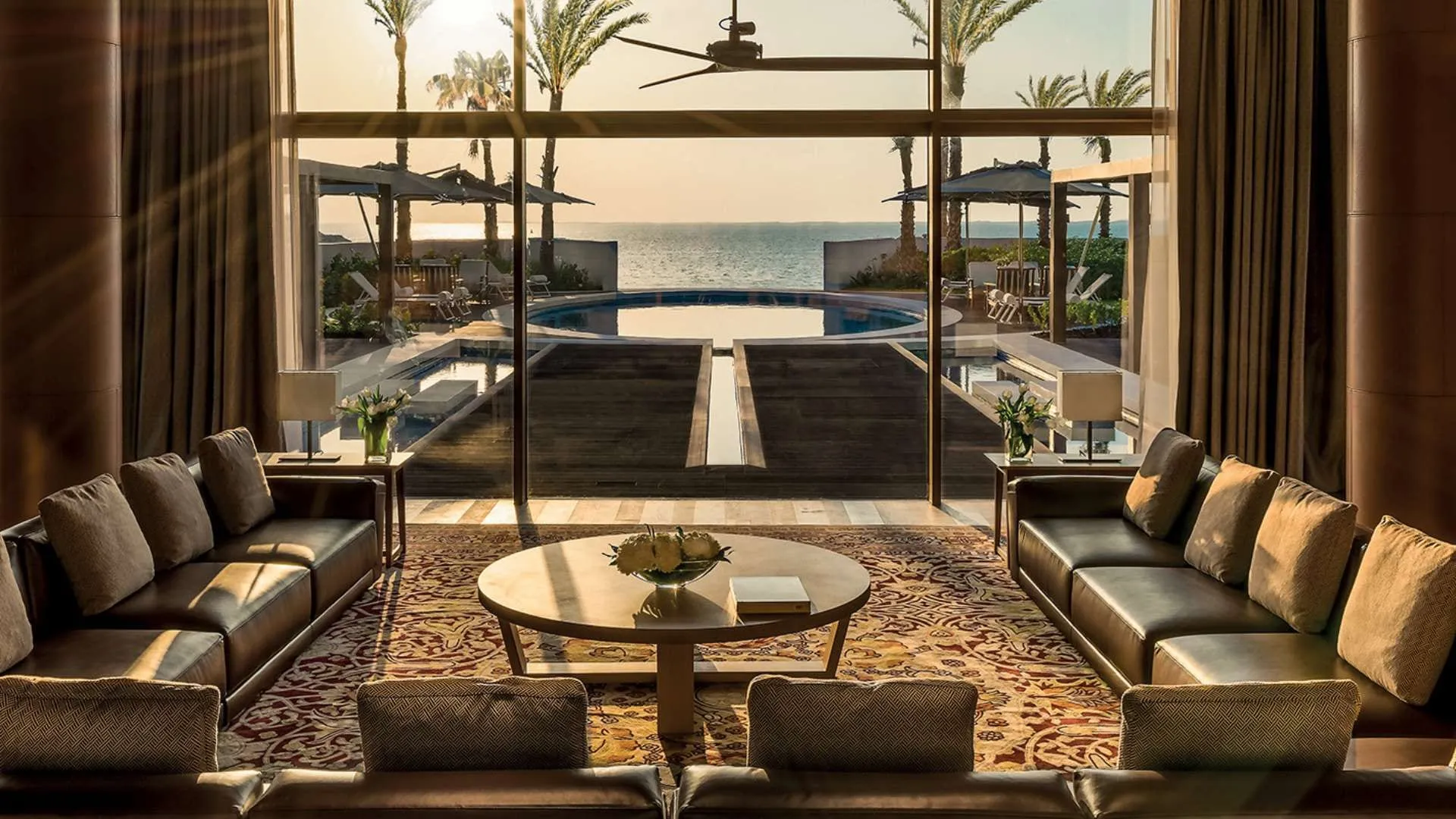
Antonio Citterio Patricia Viel’s interiors carry through the same Italian Riviera sensibility as the architecture: travertine and other natural stone, teak joinery, and a muted, sand-and-sea palette that leans toward whites, taupes, and blues rather than the gilded maximalism found at some rival Gulf resorts. Nautical references, rope detailing, brass fittings, striped textiles, run through public spaces and guest rooms alike, a deliberate nod to the marina at the property’s centre and to the yachting culture the resort was built to serve.
Guest rooms and suites follow the same restrained language: neutral tones, natural materials, and furniture that in several cases was designed by the same practice responsible for the architecture, giving the interiors an unusually high degree of internal consistency from building envelope down to the reading lamp on the nightstand. The effect Citterio has pursued across the Bulgari portfolio, quiet, considered, closer to a well-appointed private residence than a themed hotel suite, is arguably easier to achieve on this scale, a low-rise island resort with generous room sizes (all reported to exceed 53 square metres), than in Bulgari’s denser city properties.
Atmosphere
The defining fact of Bulgari Resort Dubai’s atmosphere is its isolation, of a specific, engineered kind. Jumeirah Bay Island is reachable only by the single bridge from Jumeirah 2 or by boat, and the resort occupies the tip of that island furthest from the mainland, which means the noise, density, and constant construction that characterise much of Dubai simply do not reach it. Guests move between low-rise buildings, a private beach, the marina promenade, and a series of internal courtyards and gardens, with the city’s skyline, including the Burj Khalifa, visible across the water as a backdrop rather than a neighbour.
That combination, a private island a short drive from a major global city, gives the resort a dual identity: quiet and beach-resort-paced during the day, with the marina and its restaurants providing a more active, see-and-be-seen evening register once yachts return to their berths and the Yacht Club fills up. It reads less like a conventional Dubai beach hotel and more like a small Mediterranean marina town relocated wholesale to the Gulf, with the scale, climate, and skyline adjusted accordingly.
Rooms and Suites
The main resort building holds 101 rooms and suites across a run of categories: Superior Rooms and Deluxe Beach View Rooms at the entry level, Premium Rooms, Junior Suites and Deluxe Suites in the middle tiers, and the Bvlgari Suite at the top, alongside a separate collection of Garden Rooms and Suites. All rooms are reported to exceed 53 square metres, generous by Dubai beach hotel standards, with suite categories running roughly from 80 to 120 square metres.
Separately, 20 villas sit apart from the main building, arranged as One and Two Bedroom Beach View Villas, Two and Three Bedroom Skyline View Villas, and a signature Bvlgari Villa, offering private pools, dedicated outdoor space, and, in the case of the larger configurations, room for families or small groups travelling together. Exact configurations, views, and current room names should be confirmed at the time of booking, since resort operators periodically adjust category naming and inventory. It is also worth noting that the wider Jumeirah Bay Island development includes privately owned Bvlgari-branded residences, mansions, and the more recent Bvlgari Lighthouse tower, a 27-storey building with 31 penthouses and a multi-storey Sky Villa; these are private homes rather than bookable hotel accommodation, though residence owners can access certain resort facilities.
Dining
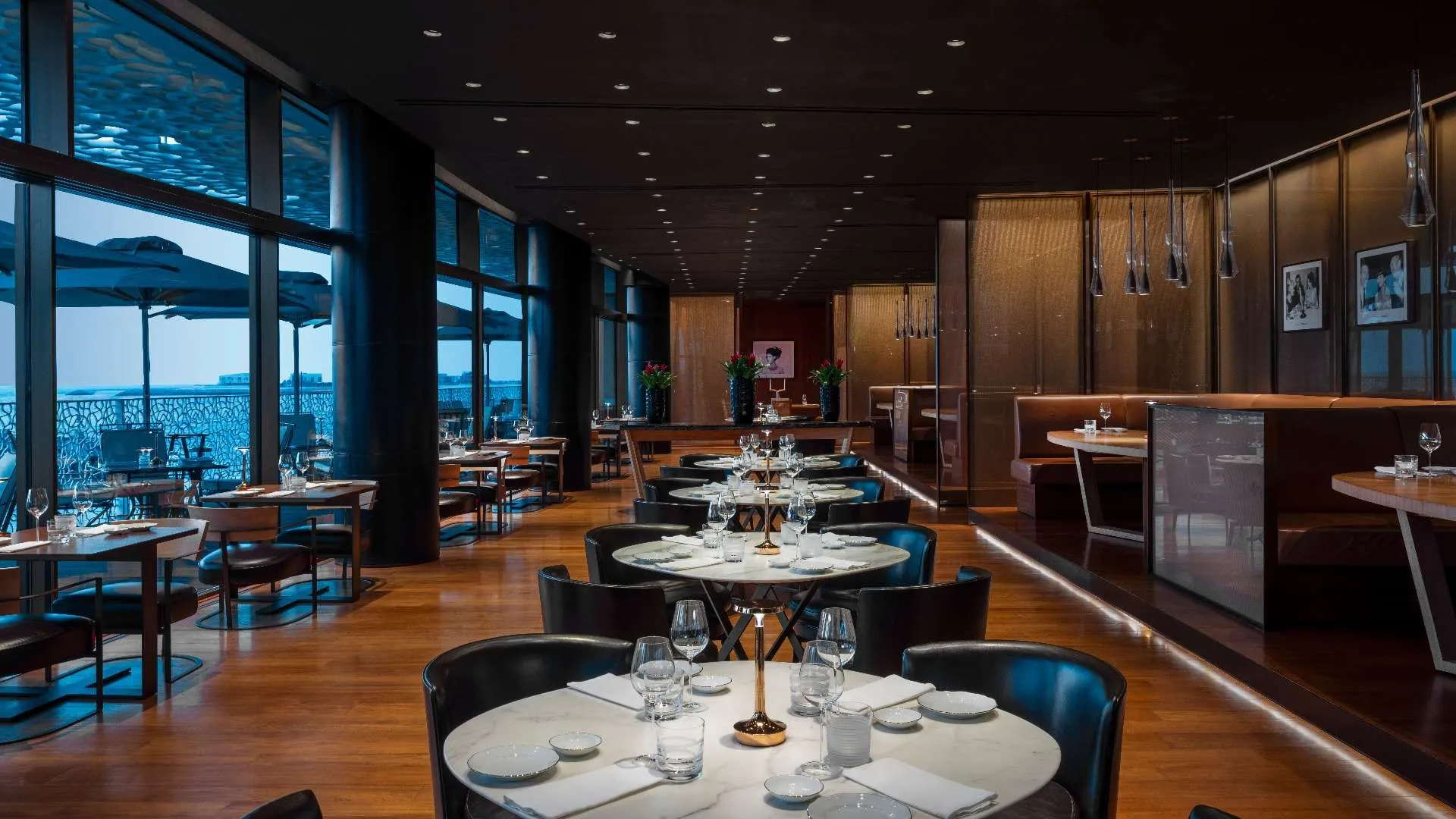
Il Ristorante - Niko Romito is the resort’s signature restaurant and its clearest claim to culinary distinction: curated by the Michelin-starred Italian chef Niko Romito and run on a daily basis by resident chef Giacomo Amicucci, the restaurant has held two Michelin stars in the Michelin Guide Dubai in successive years since 2022. The room itself, designed with raised banquettes facing the Arabian Gulf and a dark ceiling meant to evoke dining under a night sky, leans into a modern, pared-back interpretation of classical Italian cooking, with a strong emphasis on fish and pasta and ingredients flown in from Italy.
Beyond Il Ristorante, the resort operates a spread of other venues: a Japanese restaurant (Hōseki), a beachfront restaurant and the newer Serpenti Beach Club concept at La Spiaggia, a terrace restaurant, a lounge and bar, Yacht Club restaurants at the marina, and a dedicated gelato counter. The Serpenti Beach Club, introduced in 2025 and themed around Bulgari’s signature serpent motif, reworked the resort’s entire beachfront with new cabanas and sunbeds and opened day access to non-resident guests for a fee, a shift toward the kind of beach-club economy that has become increasingly common among Dubai’s five-star resorts.
Spa and Wellness
The Bulgari Spa occupies around 2,500 square metres on the resort’s ground floor, designed, like the rest of the property, by Antonio Citterio Patricia Viel. It holds seven treatment rooms including a couples’ suite, a hammam, a 25-metre indoor pool, and a vitality pool explicitly modelled on the ancient Roman baths of Caracalla, a fitting reference for an Italian brand building a wellness space in the Gulf. Additional facilities include mosaic-clad aroma steam rooms, a sauna, rainforest showers, an ice fountain, a traditional Italian barber, and hair and nail services, alongside a 24-hour gymnasium.
Treatments draw on the Amala product line, built around natural and organic botanical ingredients, alongside broader holistic and thermal bathing rituals. The spa is open to non-resident guests as well as hotel guests, subject to availability and a treatment booking, with facility hours typically running from 8am to 11pm and treatments available through most of the day.
Experiences
The resort’s private marina is itself the centrepiece experience: a 46-berth harbour able to accommodate vessels up to roughly 50 metres, arranged around a travertine promenade in the style of a small Mediterranean port, with dock-and-dine access for visiting boats as well as resort and residence-owner berthing. The adjoining Bulgari Yacht Club adds an outdoor pool, pool bar, members’ club, and a dedicated kids’ club, the Little Gems Club, extending the resort’s offering to families as well as yacht owners.
On land, the 2025-introduced Serpenti Beach Club reshaped the beachfront around Bulgari’s serpent motif, with day access sold separately to non-resident visitors, positioning the resort within Dubai’s broader trend of beach clubs as standalone social destinations rather than purely hotel amenities. The resort’s retail spread, a Bulgari boutique, a jewellery and lifestyle gallery (La Galleria), and a chocolate shop (Il Cioccolato), rounds out an offering built as much around Italian retail and craft as around beach and water sports.
Who It Is For
Bulgari Resort Dubai suits couples and honeymooners drawn to a quieter, more design-led register of Gulf luxury than Dubai’s larger beach resorts typically offer, and it suits yacht owners or charter guests specifically, given the marina is a core part of the property rather than an add-on. Fans of Italian design and food will find both taken seriously here, from the Citterio-designed architecture down to a restaurant with independently earned Michelin recognition. Families are also well served by the villa inventory, private pools, and dedicated kids’ club at the yacht club, though the resort’s overall tone, restrained, design-forward, adults-oriented in its public spaces, sits closer to a boutique Mediterranean property than to Dubai’s larger, more overtly family-focused beach resorts.
Best Time to Visit
Dubai’s most comfortable weather runs from November through March, with warm days, cooler evenings, and low humidity that make the beach, pool, and marina genuinely enjoyable to use outdoors. Shoulder months of October and April remain workable, if warmer. From June through September, temperatures regularly exceed 40 degrees Celsius with high humidity, and while the resort’s pools, indoor spa facilities, and air-conditioned interiors remain fully operational, outdoor time is considerably more limited, and this period also tends to bring lower room rates for travellers prioritising value over ideal weather.
How to Get There
Dubai International Airport (DXB) is the resort’s nearest gateway, roughly 18 kilometres away with a drive time of around 20 to 25 minutes depending on traffic, crossing onto Jumeirah Bay Island via the bridge that connects it to Jumeirah 2. Al Maktoum International Airport (DWC), Dubai’s secondary airport further south, is a longer transfer and used less frequently by international arrivals. The resort also offers direct marina access for guests arriving by private yacht, an option unique among Dubai’s five-star beach properties given the scale of the on-site harbour.
Nearby Experiences
Jumeirah Bay Island sits just off Jumeirah 2, close to Dubai’s established Jumeirah Beach corridor and within a short drive of landmarks including the Burj Al Arab and Madinat Jumeirah. Downtown Dubai, home to the Burj Khalifa and Dubai Mall, and the Dubai Marina and Bluewaters Island districts are both reachable within roughly 20 to 30 minutes by car, putting the resort within easy striking distance of the city’s principal sightseeing and shopping without sitting inside the density of those neighbourhoods. The wider Jumeirah Bay Island development, including its residential towers and the newer Bvlgari Lighthouse, is also visible from and adjacent to the resort itself, part of the same reclaimed island rather than a separate excursion.
Things to Know Before Booking
The resort is spread across a genuinely large, low-rise site, roughly 158,000 square metres, so guests who prefer a compact, everything-within-steps hotel should factor in more walking, or reliance on resort buggies, between rooms, dining venues, the spa, and the beach than a single tower hotel would require. Beach club access via Serpenti Beach Club carries a separate day-use fee for non-resident guests and, on weekends, is non-redeemable against food and drink, worth checking before assuming full beachfront access is included in a room rate. Because the property sits on a private island connected by a single bridge, guests without a car should confirm transfer arrangements, whether resort shuttle, taxi, or private transfer, in advance rather than assuming easy on-demand access to and from the mainland. Room, suite, and villa category names have shifted somewhat since the 2017 opening as the resort has refined its offering, so travellers with a specific category or view in mind should confirm the exact current name and configuration directly with the hotel at the time of booking.
Sustainability
Specific published sustainability data, energy or water performance figures, waste diversion rates, or third-party certifications, for Bulgari Resort Dubai was not found in available sources and is not claimed here. As with many large-scale reclaimed-island developments in the Gulf, the resort’s core environmental footprint is shaped substantially by the island’s original land reclamation and construction rather than by operational choices alone; travellers with specific sustainability questions should raise them directly with the property.
Practical Information
Rates at Bulgari Resort Dubai vary considerably by season and room category; published aggregator data shows entry-level rooms available from roughly the mid to high hundreds of US dollars per night in lower-demand periods, with suite and villa rates running well into four figures, particularly in the busier winter season. The figure given above is an indicative starting point rather than a live quote and should be confirmed directly with the resort or a travel advisor. Check-in is from 3:00pm and check-out by 12:00pm noon. The resort’s address is Jumeira Bay Island, Jumeira 2, Dubai, United Arab Emirates, reached by road across the bridge from Jumeirah 2 or directly by private boat into the resort’s own marina.
Editorial Conclusion
Bulgari Resort Dubai’s clearest achievement is coherence: a purpose-built island, a restrained Italian architectural language carried through by a single design practice, and a marina placed at the physical and experiential centre of the property rather than bolted on afterward. In a market where scale and spectacle are the default currency, the resort’s bet on a smaller room count, low-rise buildings, and a two-Michelin-starred Italian dining room is a distinct one, and largely a successful one, for travellers who want Dubai’s climate and connectivity without its more maximalist instincts.
In pictures
On the map
Jumeirah Bay Island, United Arab Emirates
Questions
Frequently asked
When did Bulgari Resort Dubai open and where exactly is it?
The resort opened in November 2017 on Jumeirah Bay Island, a man-made island shaped like a seahorse that extends into the Arabian Gulf off Jumeirah 2, connected to the Dubai mainland by a bridge of roughly 300 metres. It was Bulgari's second hotel and resort after Milan, and its first true resort format, adding a marina and yacht club that the brand's city hotels do not have.
Who designed Bulgari Resort Dubai?
The resort and its residences were designed by the Italian architecture and design firm Antonio Citterio Patricia Viel, which has shaped the interiors and, in varying degrees, the architecture of every Bulgari hotel to date. In Dubai the firm worked across roughly 158,000 square metres, applying a Mediterranean and Italian Riviera-inflected aesthetic, low-rise travertine-clad buildings, teak, and nautical detailing, to a site more commonly associated with glass towers.
How many rooms and villas does the resort have?
There are 101 rooms and suites in the main resort building, in categories running from Superior and Deluxe Beach View rooms up to Junior Suites, Deluxe Suites, and the top-tier Bvlgari Suite, plus 20 standalone villas with one to three bedrooms and beach or skyline views, including a signature Bvlgari Villa. All rooms are reported to exceed 53 square metres, with suites ranging roughly from 80 to 120 square metres. The wider Jumeirah Bay Island development also includes separately sold residences, mansions, and the more recent Bvlgari Lighthouse tower, which are private homes rather than part of the hotel inventory.
What is the food and drink like at Bulgari Resort Dubai?
The signature restaurant is Il Ristorante - Niko Romito, curated by Michelin-starred Italian chef Niko Romito and run day to day by resident chef Giacomo Amicucci; it has held two Michelin stars in the Michelin Guide Dubai since 2022. Beyond it, the resort operates several other venues across the hotel and marina, including a Japanese restaurant, a beachfront restaurant and bar, a yacht club restaurant, a lounge, and a gelato counter, giving guests a spread of formal and casual options without leaving the island.
Does the resort have its own marina?
Yes. The Bulgari Marina and Yacht Club opened alongside the resort in December 2017 and holds around 46 berths for boats between roughly 10 and 50 metres, arranged around a Mediterranean-village-style promenade in travertine. It functions as both a working marina for resort and residence owners and a 'dock and dine' stop for visiting boats, and sits at the physical centre of the seahorse-shaped island, between the hotel and the residential blocks.
Same destination
More hotel guides in United Arab Emirates
Dubai Desert Conservation Reserve, United Arab Emirates
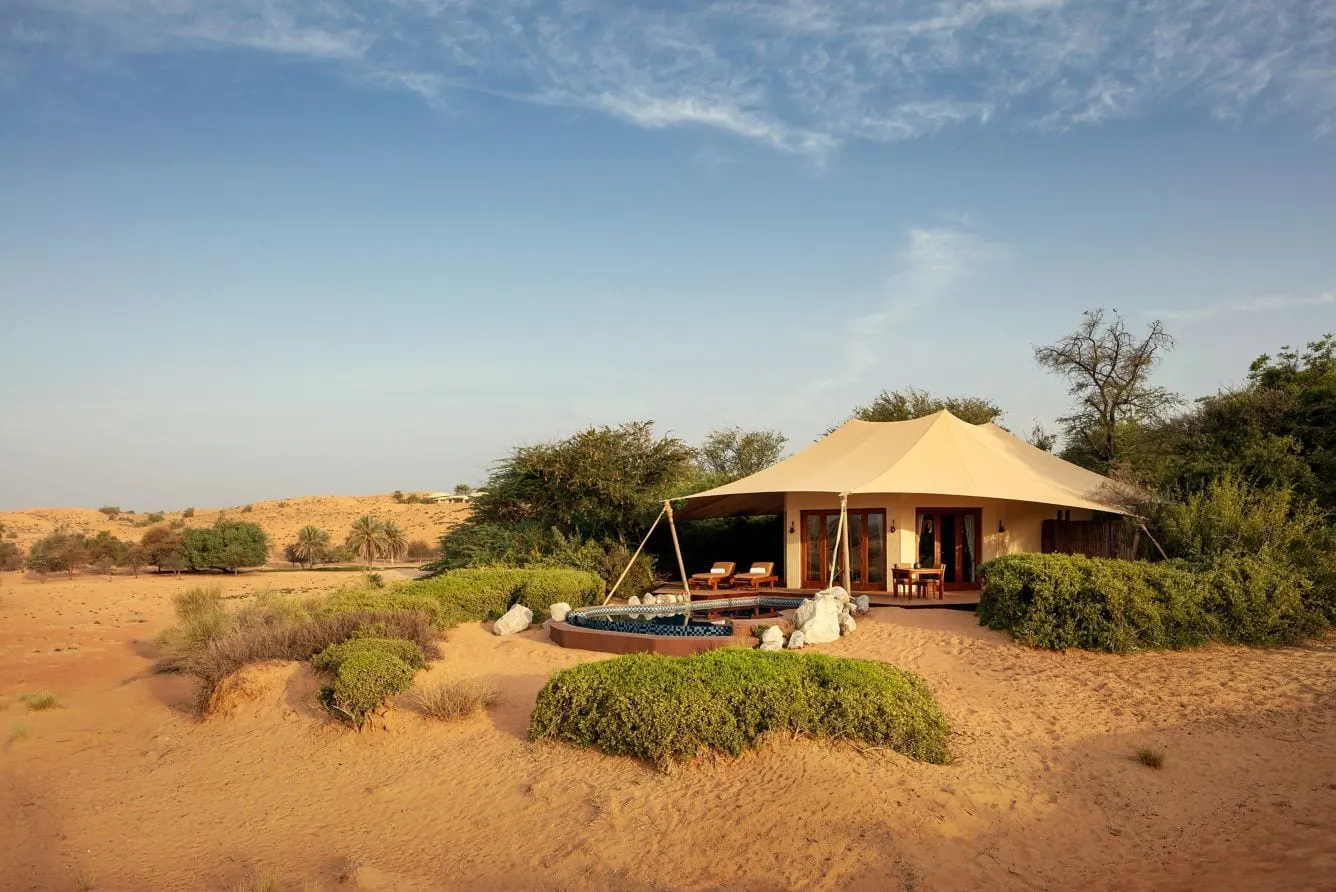
Al Maha, A Luxury Collection Desert Resort & Spa
A fenced private reserve of freestanding, sand-colored tented suites where the return of the Arabian oryx to the wild is the whole point of the stay, not a footnote to it.
From $950 per night
Palm Jumeirah, United Arab Emirates
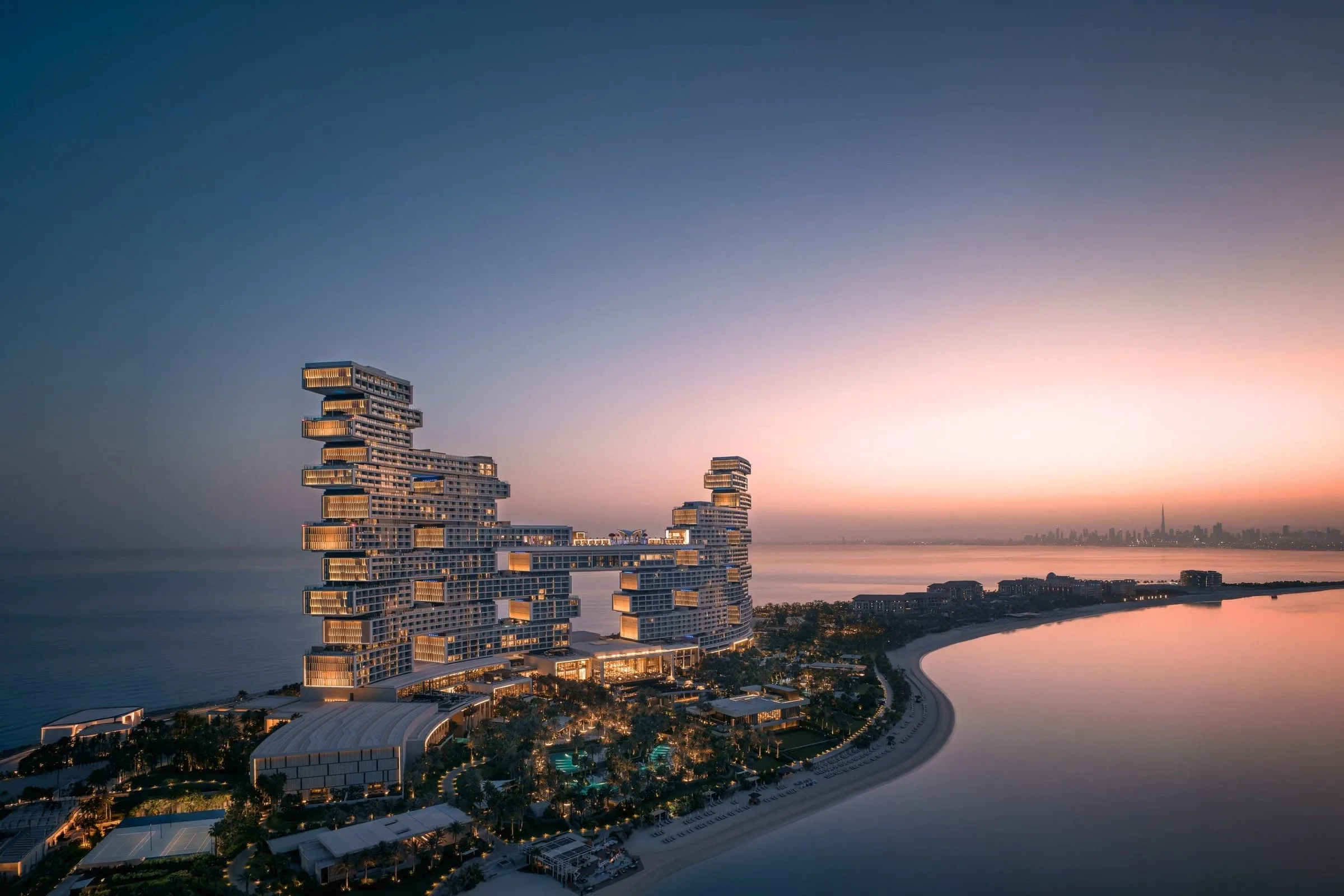
Atlantis The Royal
Six stacked towers, a 90-metre sky pool bridging them at height, and 795 rooms and suites arranged like a deliberately imperfect skyline on Palm Jumeirah.
From $650 per night
Palm Jumeirah, United Arab Emirates
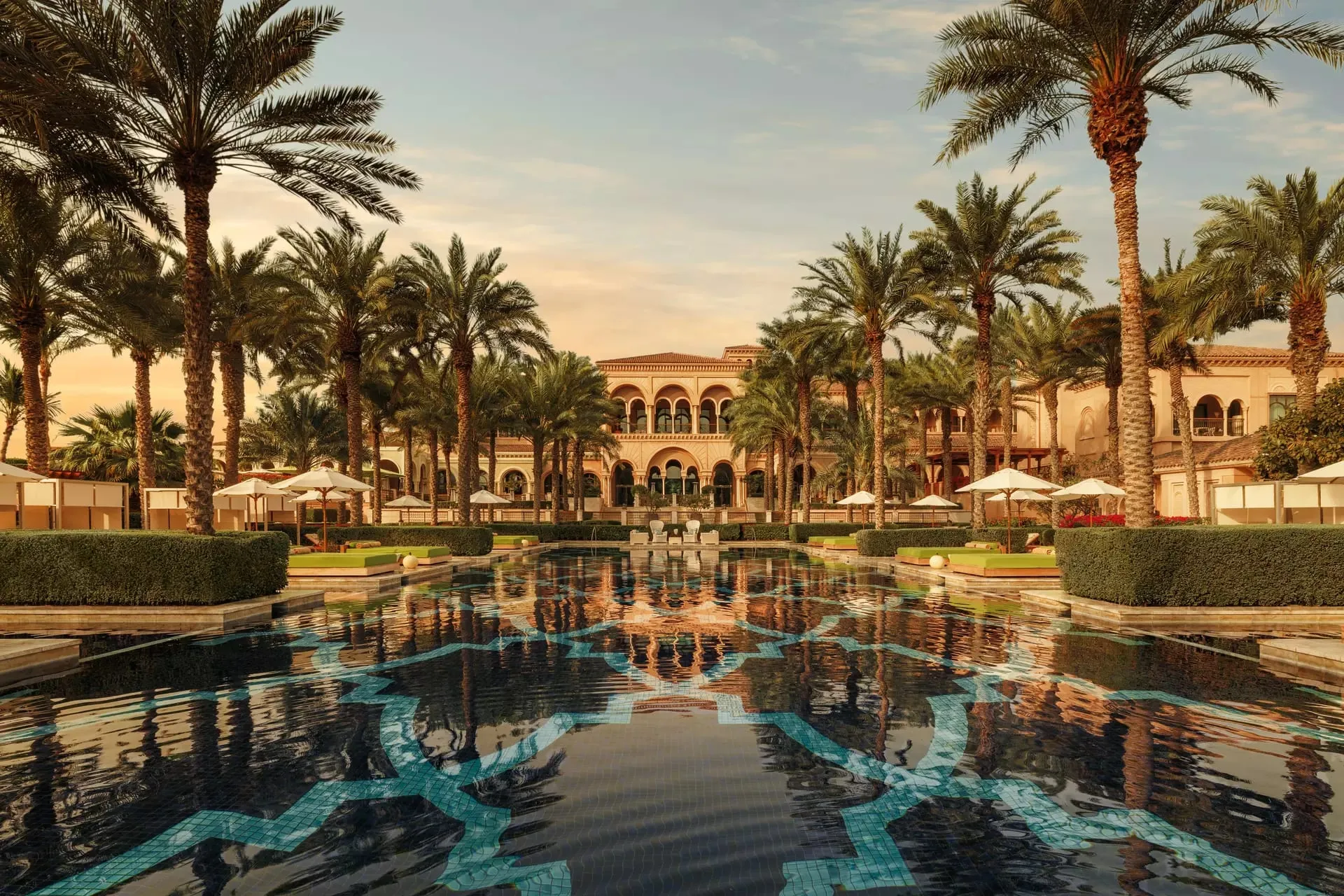
One&Only The Palm
A Moorish-Andalusian manor on the tip of Palm Jumeirah's West Crescent, built around a two-Michelin-star French dining room and four of Dubai's only private-pool beach villas.
From $650 per night