United Arab Emirates
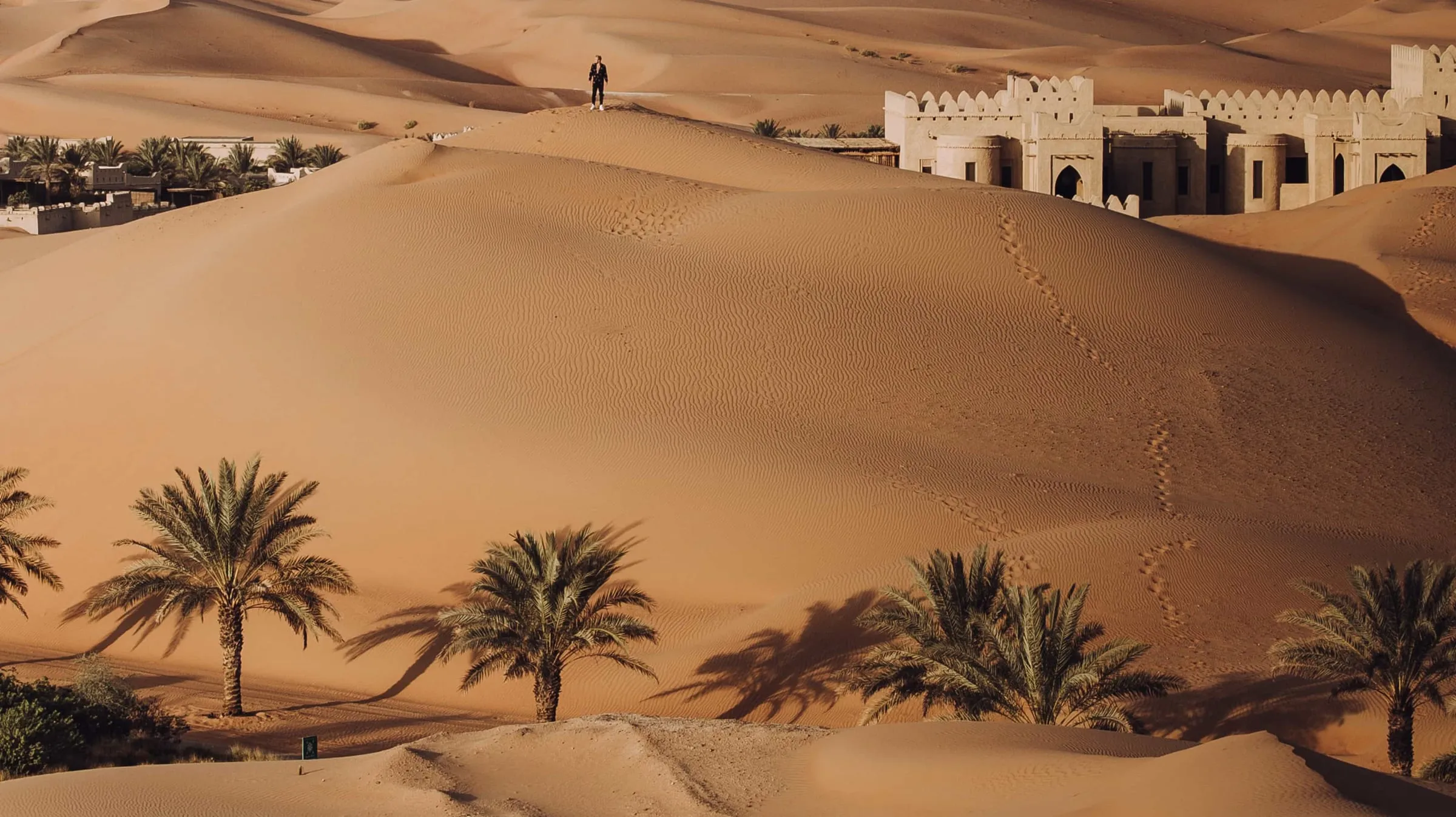
A hotel landscape split between Dubai's dense, engineered coastline, artificial islands, record-scale towers, record-scale ambition, and the empty-quarter desert an hour inland, where a handful of lodges trade the skyline for dunes and total silence.
- When to go
- November to March for temperatures comfortable enough for pools, beaches, and desert excursions alike; summer (June to September) brings extreme heat that pushes most activity indoors.
- Getting there
- Roughly 6 to 7.5 hours direct from most Western European hubs to Dubai; a major long-haul connecting hub for onward travel across Asia and Africa.
- Best for
- beach design desert honeymooners families
The United Arab Emirates’ luxury hotel identity runs through two almost entirely separate landscapes: Dubai’s built environment, artificial islands, engineered coastline, and a skyline defined by architectural superlatives, and the desert interior less than two hours inland, where the built environment recedes almost entirely.
The regions, briefly
Palm Jumeirah, an artificial archipelago shaped like a palm frond, holds some of Dubai’s most recognisable resort addresses, private beach frontage engineered into a stretch of coastline that didn’t exist two decades ago, and a scale of construction ambition that has become the area’s defining trait.
Downtown and the Dubai coastline more broadly carry the city’s tower hotels and beachfront resorts, ranging from record-height buildings to lower-rise, garden-set properties along the newer waterfront districts.
The desert interior, reached within one to two hours of the city, offers Dubai and Abu Dhabi’s genuine counterpoint: low-built lodges set among dunes, built around falconry, horseback and camel excursions, and a stillness the coast can’t offer.
Where to stay
Hotel guides in United Arab Emirates
Dubai Desert Conservation Reserve, United Arab Emirates
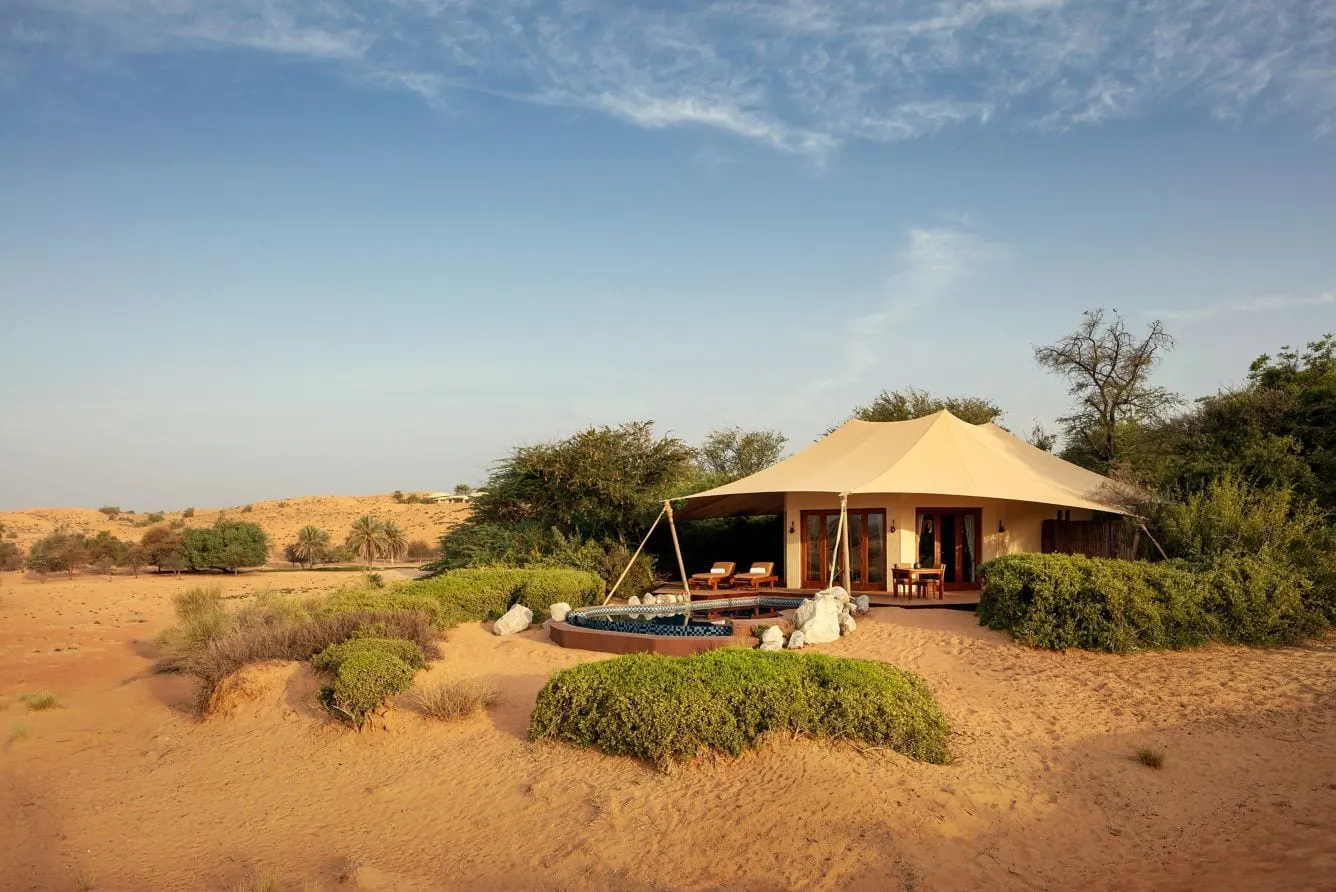
Al Maha, A Luxury Collection Desert Resort & Spa
A fenced private reserve of freestanding, sand-colored tented suites where the return of the Arabian oryx to the wild is the whole point of the stay, not a footnote to it.
From $950 per night
Palm Jumeirah, United Arab Emirates
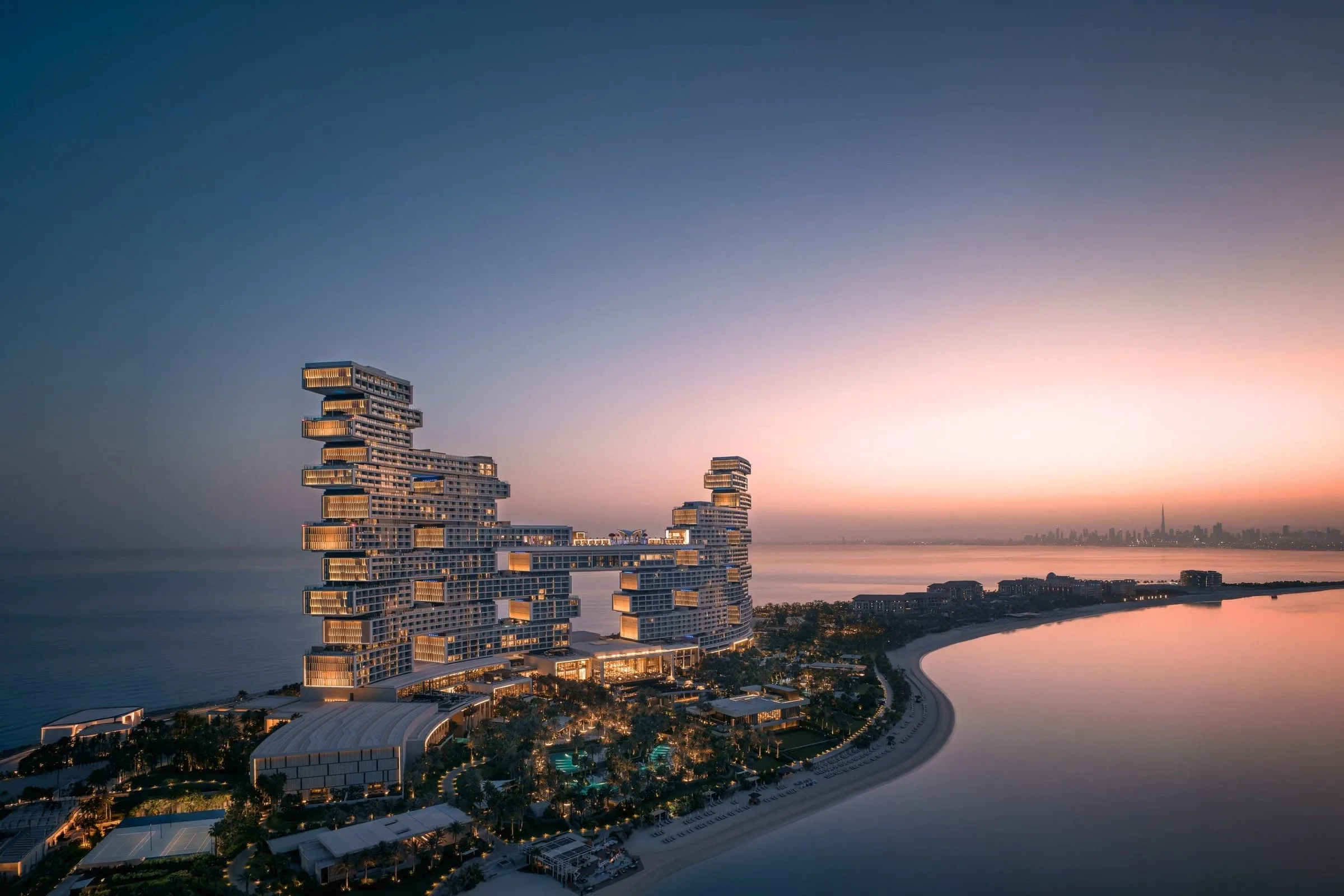
Atlantis The Royal
Six stacked towers, a 90-metre sky pool bridging them at height, and 795 rooms and suites arranged like a deliberately imperfect skyline on Palm Jumeirah.
From $650 per night
Jumeirah Bay Island, United Arab Emirates
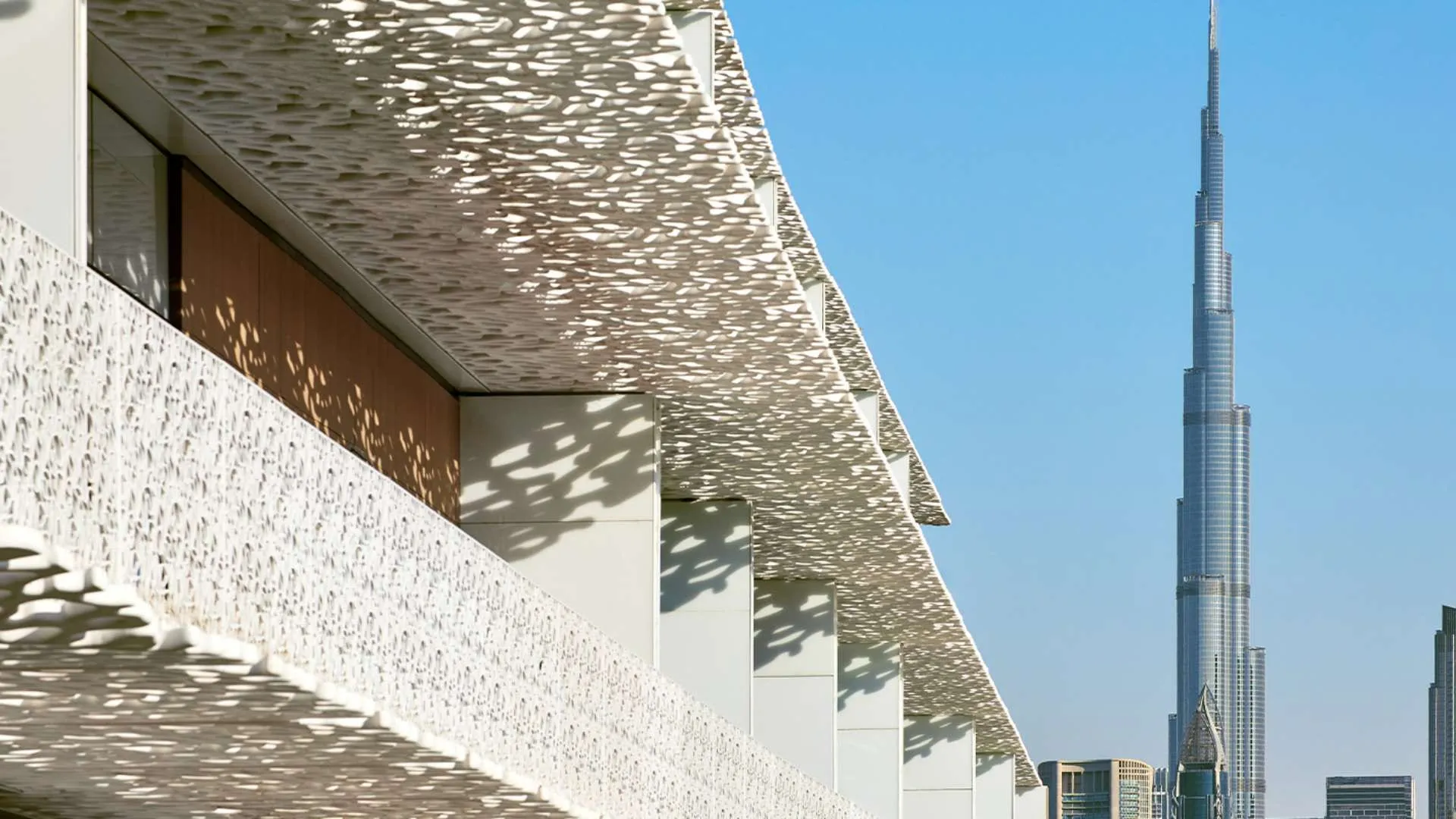
Bulgari Resort Dubai
An Italian jeweller's idea of the Arabian Gulf, built on a seahorse-shaped island with its own marina, a two-Michelin-starred dining room, and 101 rooms that all face water.
From $950 per night
Palm Jumeirah, United Arab Emirates
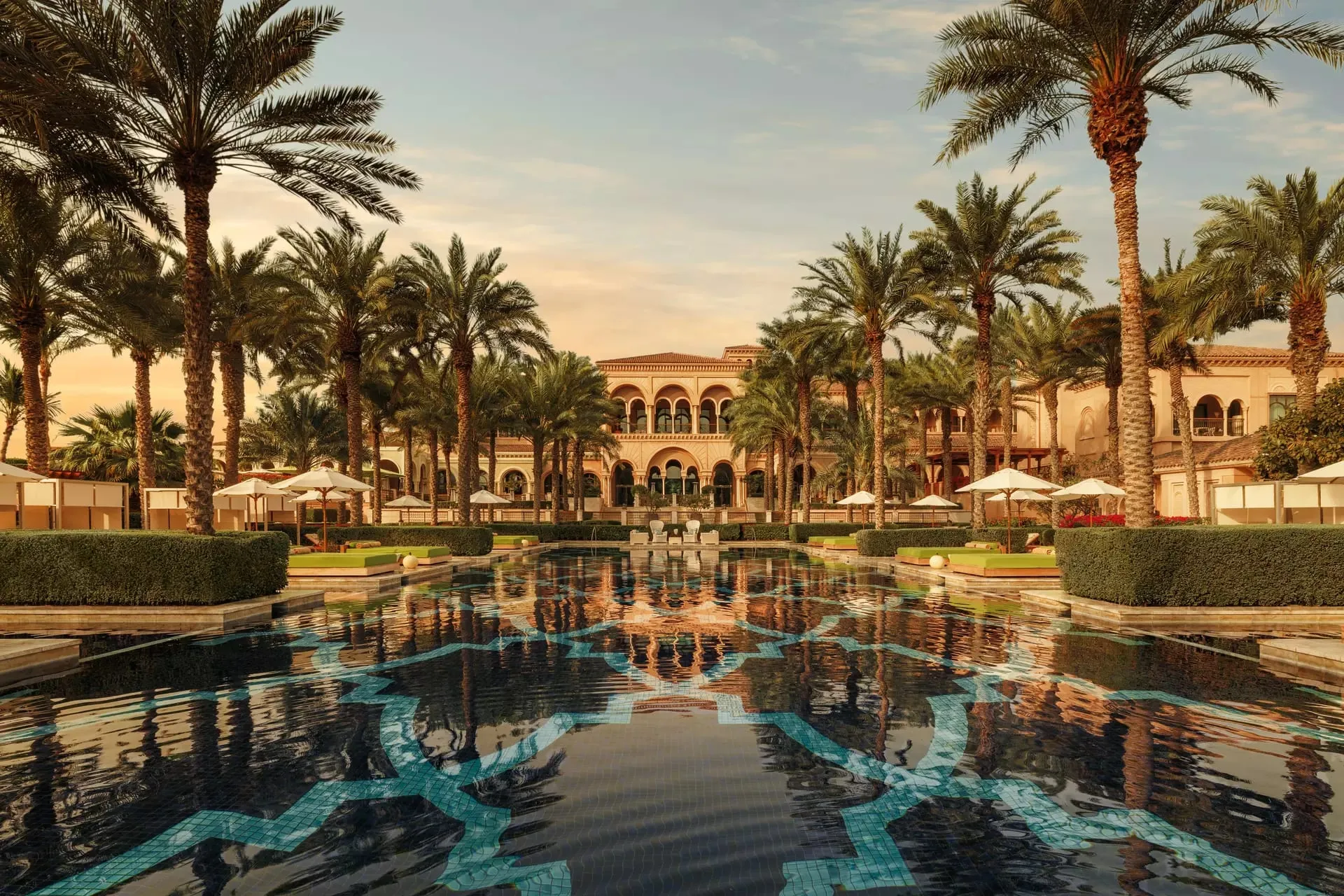
One&Only The Palm
A Moorish-Andalusian manor on the tip of Palm Jumeirah's West Crescent, built around a two-Michelin-star French dining room and four of Dubai's only private-pool beach villas.
From $650 per night
Liwa Desert, Empty Quarter, United Arab Emirates
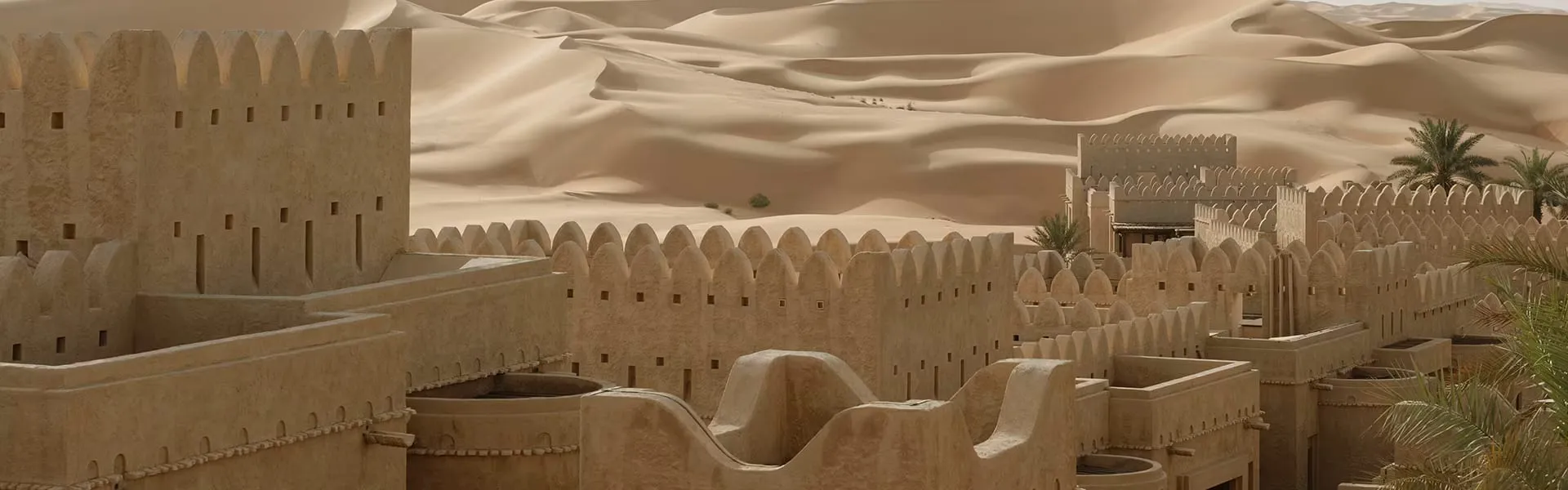
Qasr Al Sarab Desert Resort by Anantara
A fortress that appears to rise out of the dunes of the Empty Quarter, built so that the world's largest sand desert, not the hotel, remains the point of the stay.
From $368 per night