Palm Jumeirah, United Arab Emirates
One&Only The Palm
A Moorish-Andalusian manor on the tip of Palm Jumeirah's West Crescent, built around a two-Michelin-star French dining room and four of Dubai's only private-pool beach villas.
- Rates from
- From $650 per night
- Nearest airport
- Dubai International Airport (DXB)
- Transfer
- Around 45 minutes by car from Dubai International Airport, longer at peak traffic times; the resort's own launch service also crosses the marina from a mainland jetty for guests arriving without a car
- Best months
- November to March, for warm days, cooler evenings, and relief from the extreme heat and humidity of the Gulf summer
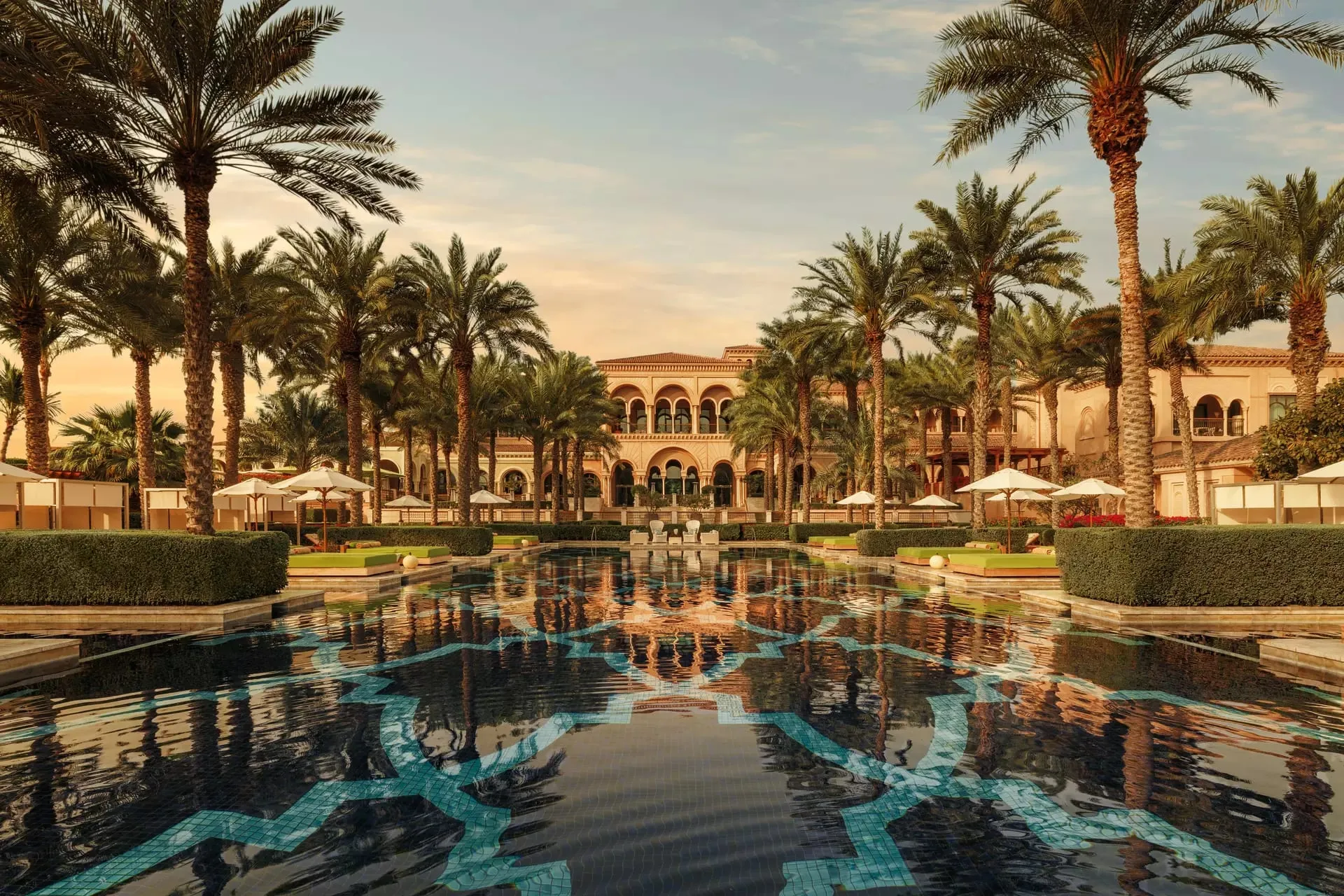
Dubai’s Palm Jumeirah is mostly a skyline of towers, an artificial archipelago whose fronds are lined, almost without exception, with high-rise hotels and residential blocks stacked toward the water. One&Only The Palm, sitting at the very tip of the island’s West Crescent, is one of the few resorts on the Palm that isn’t a tower at all. It is a low-rise cluster of Moorish-arched courtyards, colonnades, and private villas, built to feel more like a walled retreat borrowed from southern Spain than a beach outpost of a vertical city.
That deliberate contrast, low and horizontal against a skyline built almost entirely on height, has been the resort’s identifying trait since it opened in October 2010, on what was reported at the time as a symbolically chosen 10.10.10 launch date. Kerzner International’s design team looked to the Alhambra, the 14th-century Moorish palace complex above Granada, for its arched stonework and courtyard planning, then paired that historical reference with a private beach, a marina, and, more recently, a two-Michelin-star French dining room from chef Yannick Alleno.
Fifteen years on, the property’s core appeal has held steady even as Dubai’s hotel landscape around it has grown considerably more crowded: a genuinely private stretch of beach on an island where privacy is increasingly scarce, an architectural identity distinct from the glass towers on either side of it, and a small, boutique-scaled room count, around 90 rooms and suites plus four freestanding Beachfront Villas, that keeps it closer in feel to a private estate than a resort of Palm Jumeirah’s more typical scale.
Why It Stands Out
Most of Palm Jumeirah’s hotels are stacked vertically, competing for the same sea views from ever-higher floors. One&Only The Palm takes the opposite approach: a low-rise, courtyard-based resort spread horizontally across its plot at the crescent’s tip, with a private beach and a genuinely secluded arrival sequence that towers on the fronds either side of it cannot replicate. Its Moorish and Andalusian architecture, referencing Granada’s Alhambra rather than the contemporary Gulf vernacular used almost everywhere else on the Palm, gives it a visual identity that has aged distinctly rather than dating. And its dining programme, anchored by Yannick Alleno’s two-Michelin-star STAY, gives it a culinary credibility that few resort properties on Palm Jumeirah, built primarily around beach and pool time, can match.
Architecture
One&Only The Palm’s land-based buildings were designed around a deliberate historical reference: the Alhambra, the Moorish palace and fortress complex built above Granada in the 14th century under the Nasrid dynasty. WA International (WATG) led the architectural vision for the resort, working with DSA Architects International as lead concept architect, to translate that reference into a low-rise hospitality building rather than a literal reconstruction. The result favours simplified, pared-down versions of Moorish and Andalusian details, horseshoe and pointed arches, carved stone screens, colonnaded walkways, over the denser ornamentation of the original source material, producing what the design team has described as clean, contemporary forms built from historic vocabulary rather than a themed pastiche of it.
That Moorish and Andalusian language governs the resort’s land-side buildings, the Manor House, the low-rise mansion clusters, and the villa courtyards, arranged around gardens and water features in a plan that owes as much to Andalusian courtyard houses as to any single building at the Alhambra. On the marina-facing side of the property, the architecture shifts register: a more contemporary treatment that draws on both modern and historic nautical themes, acknowledging that this flank of the resort faces open water and boat traffic rather than a garden. The result is a resort that reads differently depending on which side a guest is standing on, formal and historicist on the courtyard side, lighter and more nautical along the marina, a split that was a deliberate part of the original design brief rather than an inconsistency.
Building at this scale on a man-made peninsula reclaimed from the Gulf brought its own constraints, shared with every other resort on Palm Jumeirah: engineering foundations for reclaimed land, managing salt exposure on stone and metalwork in a marine environment, and orienting low-rise buildings for shade and airflow in a climate where summer heat and humidity are extreme for much of the year. The choice to build low rather than tall, unusual for the location, meant absorbing a lower room count on valuable beachfront land in exchange for the courtyard planning and sense of enclosure the Moorish reference required.
Interior Design
Inside, the Moorish and Andalusian references set on the exterior continue into the resort’s public spaces and guest accommodation, simplified further for a contemporary hospitality context. Interior detailing draws on traditional Moorish motifs, geometric tilework, carved stone and timber screens, arched openings, reduced to cleaner, more contemporary lines and finishes rather than reproduced in full historic density. The effect across lobbies, corridors, and courtyards is one of restrained ornament: enough carved stone and pattern to make the historical reference legible, without turning every surface into a decorative set piece.
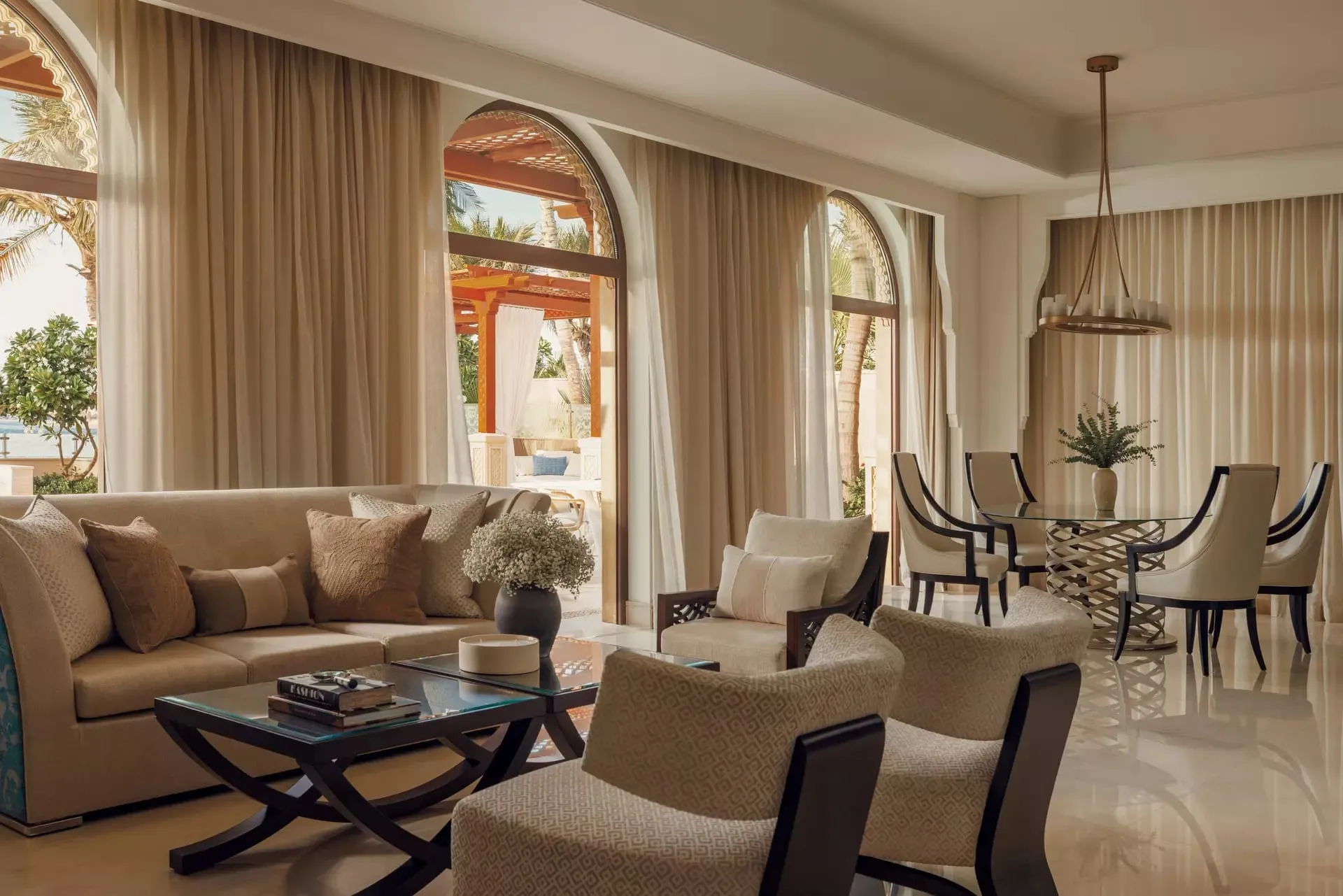
Guest rooms and suites carry a lighter version of the same language: neutral, warm-toned palettes, dark wood furniture, and marble bathrooms with freestanding soaking tubs, dual vanities, and rain showers, stocked with amenities from the French skincare and grooming house Montroi. The Guerlain Spa courtyard, discussed further below, is where the interior design leans hardest into its Andalusian reference, verdant planting, stone archways carved with Islamic geometric patterns, and water-edged walkways built specifically to evoke the gardens of a Moorish palace rather than a conventional hotel spa corridor.
Atmosphere
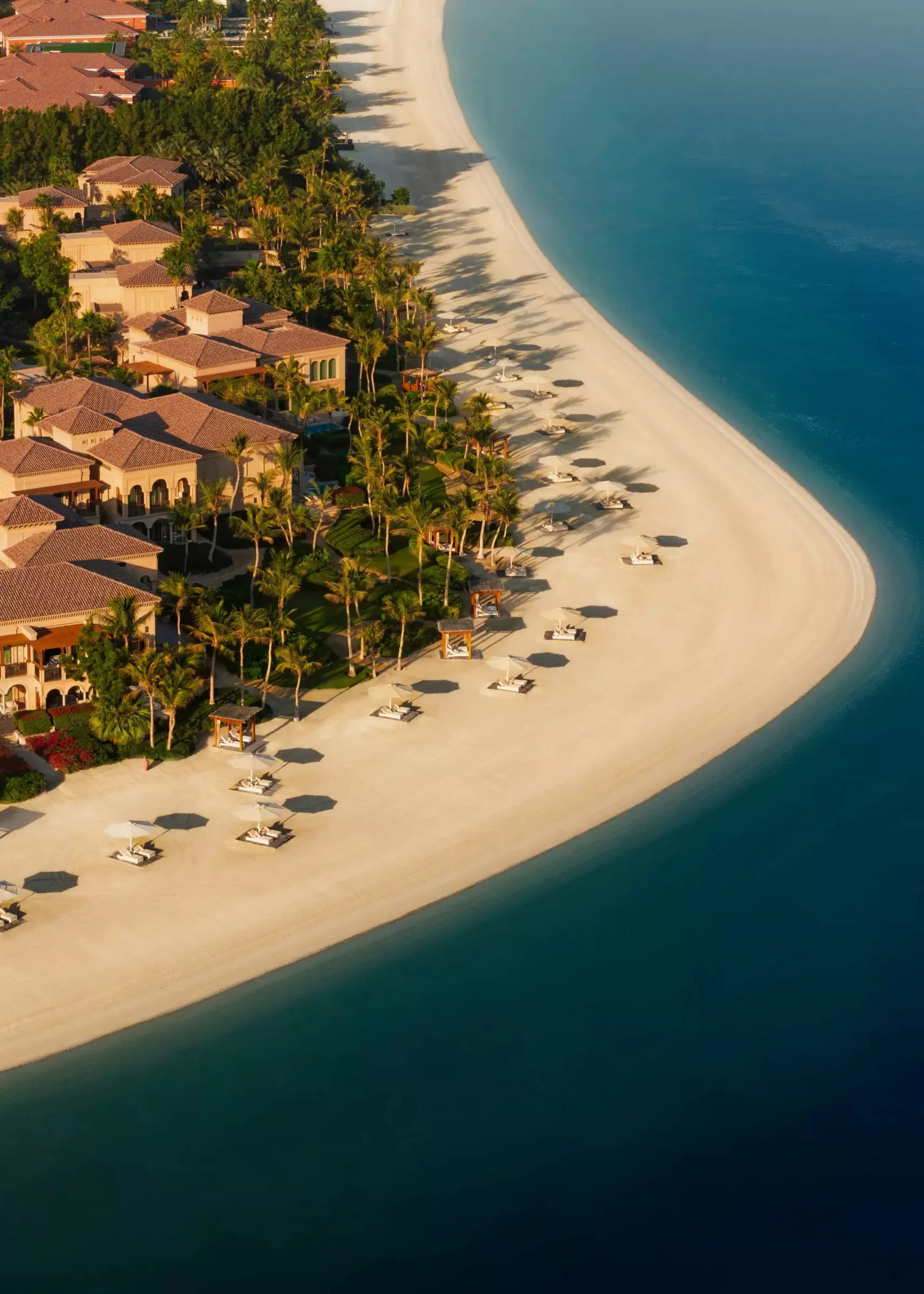
One&Only The Palm sits at the outer tip of Palm Jumeirah’s West Crescent, an end-of-the-line position that gives it a genuine sense of separation from the busier, more built-up base of the frond and trunk. Where much of the Palm feels dense with towers, traffic, and other resorts in close view, the West Crescent tip is comparatively open, with long sightlines across the Gulf toward the Dubai Marina and Jumeirah Beach Residence skyline on one side, and the wider Arabian Gulf on the other.
The low-rise, courtyard-based layout reinforces that sense of separation on arrival: rather than a lobby tower, guests move through a sequence of stone archways, gardens, and water features before reaching the beach or their room, an arrival experience built to feel like entering a private estate rather than checking into a large hotel. In the evening, that same layout, arched colonnades, courtyard lighting, a marina lined with boats and bars, gives the resort a quieter, more adult register after dark, even as its beach and pools cater to families for much of the day.
Rooms and Suites
The resort’s accommodation is split between land-based rooms and suites in the Manor House and adjacent low-rise mansion buildings, and four standalone Beachfront Villas set directly on the sand. Commonly cited figures put the room and suite count at around 64 rooms and 26 suites, roughly 90 in total, though the exact published breakdown has varied slightly across sources and years, likely reflecting periodic reconfiguration of suite categories rather than any change to the resort’s physical footprint. All rooms and suites are said to include a large terrace or balcony with garden or beach outlook, and select higher categories add a private, temperature-controlled plunge pool.
At the top of the land-based hierarchy, the Grand Palm Suite, located in the Manor House, is the resort’s signature suite: an entrance foyer, open-plan lounge, kitchenette, dedicated dining area, and workspace, built for guests who want a residence-scale footprint without leaving the main building. Marble bathrooms throughout the room and suite categories feature freestanding soaking tubs, dual vanities, and rain showers.
The four Beachfront Villas are the resort’s most distinctive accommodation category: two-bedroom villas spread over two levels, each with its own private plunge pool overlooking the beach, a furnished balcony, and a poolside gazebo. With only four of them on the entire property, they function less as a standard top-tier room category and more as a genuinely scarce, semi-private beach-house product within a resort that already positions itself as boutique in scale.
Dining
Dining is arguably where One&Only The Palm has most sharpened its identity over the past decade, anchored by STAY by Yannick Alleno, the resort’s French restaurant led by chef Yannick Alleno. STAY holds two stars in the Michelin Guide Dubai, one of only two restaurants in the city to do so across consecutive editions of the guide, and is built around Alleno’s modern French cuisine: classic technique reworked through an avant-garde approach to sauces, extraction, and fermentation. The dining room sits beneath vaulted ceilings under black crystal chandeliers, with a pastry library display case for desserts and a communal sharing table for group dining; menus run to a four-course “Emotions” and six-course “Experience” tasting format in the evening, alongside a three-course Le Dejeuner lunch menu.
ZEST, the resort’s all-day restaurant, serves Italian-leaning food, elevated starters and handcrafted pasta, alongside a dedicated pizza bar turning out Neapolitan-style pizza, and functions as the resort’s principal breakfast venue. 101 Dining Lounge & Bar sits on the resort’s private marina, serving Mediterranean-inspired food and tapas-style plates in a setting built around sunset views back toward the Dubai skyline, and functions as the resort’s main sundowner and cocktail venue. All three restaurants fall under the culinary direction associated with Yannick Alleno’s involvement at the property, giving the resort’s food and beverage programme a more unified chef-led identity than is typical for a resort of this size.
Spa and Wellness
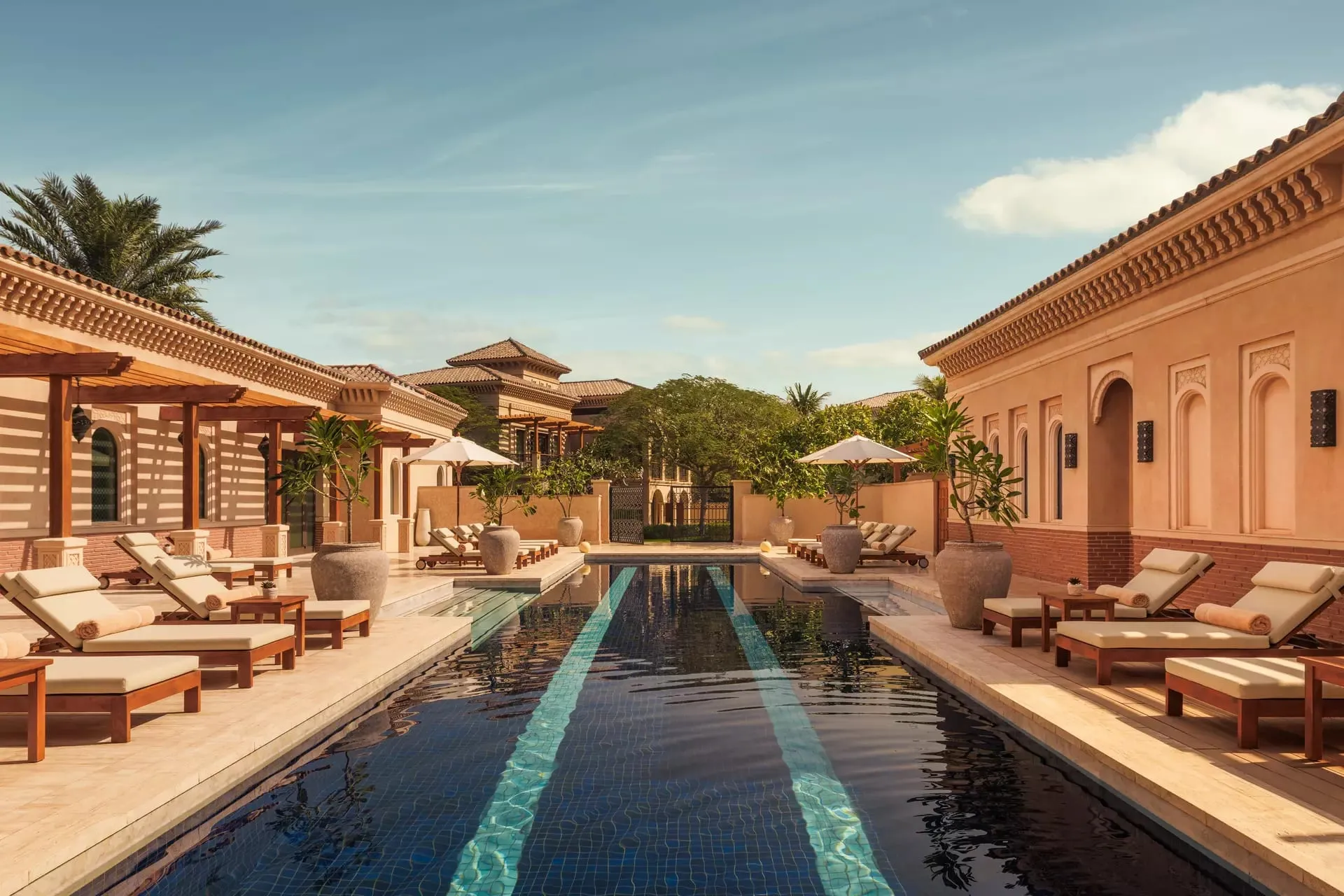
The Guerlain Spa at One&Only The Palm is the only Guerlain-branded spa in the United Arab Emirates, a distinction that gives it a degree of exclusivity beyond the resort itself. Spanning roughly 2,400 square metres, the spa is reached through a dedicated courtyard built explicitly to evoke the architecture of Andalusia’s Moorish palaces, stone archways carved with Islamic geometric patterns, verdant planting, and water-edged walkways, extending the resort’s Alhambra reference into its wellness facilities specifically.
The spa includes individual treatment suites, a dedicated couples’ suite with its own hammam facilities, a double scrub room and shower, a private steam room, two separate soaking baths, and a private lounge area, along with a general relaxation room, a private swimming pool, and a lounge. Treatments draw on the Parisian beauty house’s own product lines alongside techniques described as combining ancient and contemporary practices, including time-honoured Arabian ingredients and rituals reflecting the spa’s Gulf location. A fitness centre operates alongside the spa for guests wanting a conventional workout rather than a treatment-based visit.
Experiences
The resort’s private beach, roughly 450 metres of shoreline by some published accounts, and adjoining private marina are the core of its experience programme, supporting swimming, water sports, and boat-based excursions directly from the property rather than requiring guests to travel elsewhere on the Palm. An 850-square-metre swimming pool complex supplements the beach for guests who prefer to stay closer to the resort’s gardens.
Families are a significant part of the resort’s guest mix, supported by KidsOnly, a roughly 100-square-metre dedicated kids’ club with its own garden, technology and arts-and-crafts areas, and a programme split by age group: activities such as film screenings, art workshops, cooking classes, and henna art for younger children from around four to nine years old, and more active options, including kayaking, paddleboarding, yoga, and falconry, for children and teenagers up to sixteen. Beyond the kids’ club, the marina supports water-based excursions and boat charters, and the resort’s position on the West Crescent puts guests within reach of Palm Jumeirah’s wider attractions and Dubai’s mainland by car or arranged transfer.
Who It Is For
One&Only The Palm suits couples travelling for a honeymoon or anniversary who want a private beach setting with genuine fine-dining credibility attached, given STAY’s two Michelin stars, rather than a resort built purely around pool and beach time. It also suits serious food travellers visiting Dubai specifically for its restaurant scene, for whom a two-Michelin-star kitchen inside the hotel removes the need to leave the property for a destination meal. Families are well catered for through KidsOnly and the resort’s private beach and marina, and first-time Dubai visitors who want a self-contained resort base, distinct in style from the city’s glass-tower hotel landscape, will find the Moorish and Andalusian architecture and low-rise layout a meaningful point of difference.
Best Time to Visit
Dubai’s climate makes the shoulder and winter months, broadly November through March, the most comfortable window for a beach-focused stay at One&Only The Palm: daytime temperatures are warm rather than extreme, evenings are cooler, and humidity is markedly lower than during the Gulf summer. From roughly May through September, Dubai’s heat and humidity climb sharply, and while the resort’s pools, spa, and indoor dining rooms remain fully usable, prolonged time on the private beach becomes far less comfortable in the middle of the day. Guests prioritising beach time over rate savings should weight their planning firmly toward the cooler months.
How to Get There
Dubai International Airport (DXB) is the resort’s nearest gateway, roughly 45 minutes away by car depending on traffic and the specific route onto Palm Jumeirah’s West Crescent, with journey times extending further during Dubai’s peak road congestion periods. Al Maktoum International Airport (DWC), Dubai’s secondary airport further southwest, is a longer drive and used by a smaller share of international carriers. The resort can arrange private car transfers from either airport, and depending on arrival point, some guests reach the property by a short boat launch across the marina rather than entirely by road, an option worth confirming when booking.
Nearby Experiences
Palm Jumeirah itself offers Nakheel Mall and the Boardwalk promenade for shopping and casual dining within a short drive, along with Atlantis, The Palm at the island’s apex, home to its own aquarium and waterpark attractions. Dubai Marina and Jumeirah Beach Residence, visible across the water from the resort’s marina-facing restaurants, are a short drive away and offer a denser concentration of restaurants, bars, and the Marina Walk promenade. Further into the city, Downtown Dubai’s Burj Khalifa and Dubai Mall, and the older Jumeirah Beach stretch near Burj Al Arab, are both reachable within roughly 20 to 30 minutes by car, making the resort a workable base for guests who want to split their stay between beach time and mainland sightseeing.
Things to Know Before Booking
Summer heat and humidity, roughly May through September, significantly limit comfortable outdoor beach and pool time, a factor worth weighing heavily against any rate advantage in that season. Room, suite, and villa naming and exact key counts have been reported with minor inconsistencies across booking platforms and press sources over the years, so guests with a specific category, view, or villa in mind should confirm the current name, layout, and outlook directly with the resort at the time of booking. STAY by Yannick Alleno, given its Michelin status, typically requires advance reservation and, per published policy, a per-person pre-payment to secure a booking, a detail worth confirming directly with the restaurant ahead of a visit. Traffic onto and off Palm Jumeirah, and the drive to and from Dubai International Airport, can vary considerably depending on time of day, so transfer timing should be built in accordingly.
Sustainability
One&Only The Palm holds EarthCheck Silver certification, reflecting Kerzner International’s broader sustainability framework across its resorts, which the company has described as covering measures to reduce energy and water use and to manage waste more effectively across its properties. Specific, resort-level published data on One&Only The Palm’s energy, water, or waste performance beyond that certification status was not found and is not claimed here; guests wanting current detail on the resort’s environmental programmes should ask the property directly.
Practical Information
Published rates for One&Only The Palm vary considerably by season, room category, and booking channel, with entry-level king and premier rooms reported from roughly the mid to high 500s in US dollars per night in quieter periods, and rates for suites and the four Beachfront Villas running substantially higher, particularly during Dubai’s cooler, high-demand winter months; the figure given above is an indicative starting point rather than a live quote. Check-in is from 3:00pm and check-out by 12:00pm noon. The resort’s address is West Crescent, Palm Jumeirah, Dubai, United Arab Emirates, and Dubai International Airport (DXB) is the nearest airport, roughly 45 minutes away by car.
Editorial Conclusion
One&Only The Palm’s case for itself rests on a combination that is genuinely uncommon on Palm Jumeirah: a low-rise, Moorish and Andalusian-inspired footprint that stands apart from the island’s dominant tower typology, a private beach and marina on a boutique-scaled property of around 90 rooms and suites plus four beach villas, and a dining programme, led by Yannick Alleno’s two-Michelin-star STAY, with a level of culinary seriousness that few resort hotels of comparable size attempt. Fifteen years after its 2010 opening, it remains one of the more architecturally distinct and food-focused choices among Dubai’s beach resorts, better suited to travellers who want a defined sense of place and a serious kitchen than to those chasing the tallest view on the Palm.
In pictures

On the map
Palm Jumeirah, United Arab Emirates
Questions
Frequently asked
When did One&Only The Palm open?
The resort opened in October 2010, on a launch date widely reported at the time as 10.10.10 (10 October 2010). It was Kerzner International's second One&Only property in Dubai, following One&Only Royal Mirage on Jumeirah Beach, and remains one of only a handful of low-rise resorts on Palm Jumeirah rather than a high-rise tower.
What architectural style is One&Only The Palm built in?
The resort's land-based buildings are designed in a Moorish and Andalusian style, with the design team citing the Alhambra, the 14th-century Moorish palace complex in Granada, Spain, as a direct architectural reference. Arched colonnades, carved stone screens, and courtyard gardens run through the Manor House and villa clusters, while the marina-facing side of the property takes a more contemporary, nautically influenced approach.
Does One&Only The Palm have a Michelin-starred restaurant?
Yes. STAY by Yannick Alleno, the resort's French restaurant helmed by chef Yannick Alleno, holds two stars in the Michelin Guide Dubai, one of only two restaurants in the city to hold two stars in consecutive editions of the guide. It sits alongside ZEST, an Italian all-day restaurant with a pizza bar, and 101 Dining Lounge & Bar, a Mediterranean-leaning restaurant and bar on the resort's private marina.
How many rooms, suites, and villas does One&Only The Palm have?
The resort is built around roughly 90 rooms and suites, commonly cited as 64 rooms and 26 suites, plus four separate two-bedroom Beachfront Villas, each with a private plunge pool. Total key counts have been reported at slightly different figures across sources over the years (typically between 90 and 95), reflecting periodic reconfigurations of suite categories rather than expansion of the resort's footprint.
How do you get to One&Only The Palm from Dubai International Airport?
Dubai International Airport (DXB) is the nearest gateway, roughly 45 minutes away by car depending on traffic and the route onto Palm Jumeirah's West Crescent. The resort can arrange private transfers, and some guests reach the property by boat launch across the marina rather than by road, an option worth asking about when booking.
Same destination
More hotel guides in United Arab Emirates
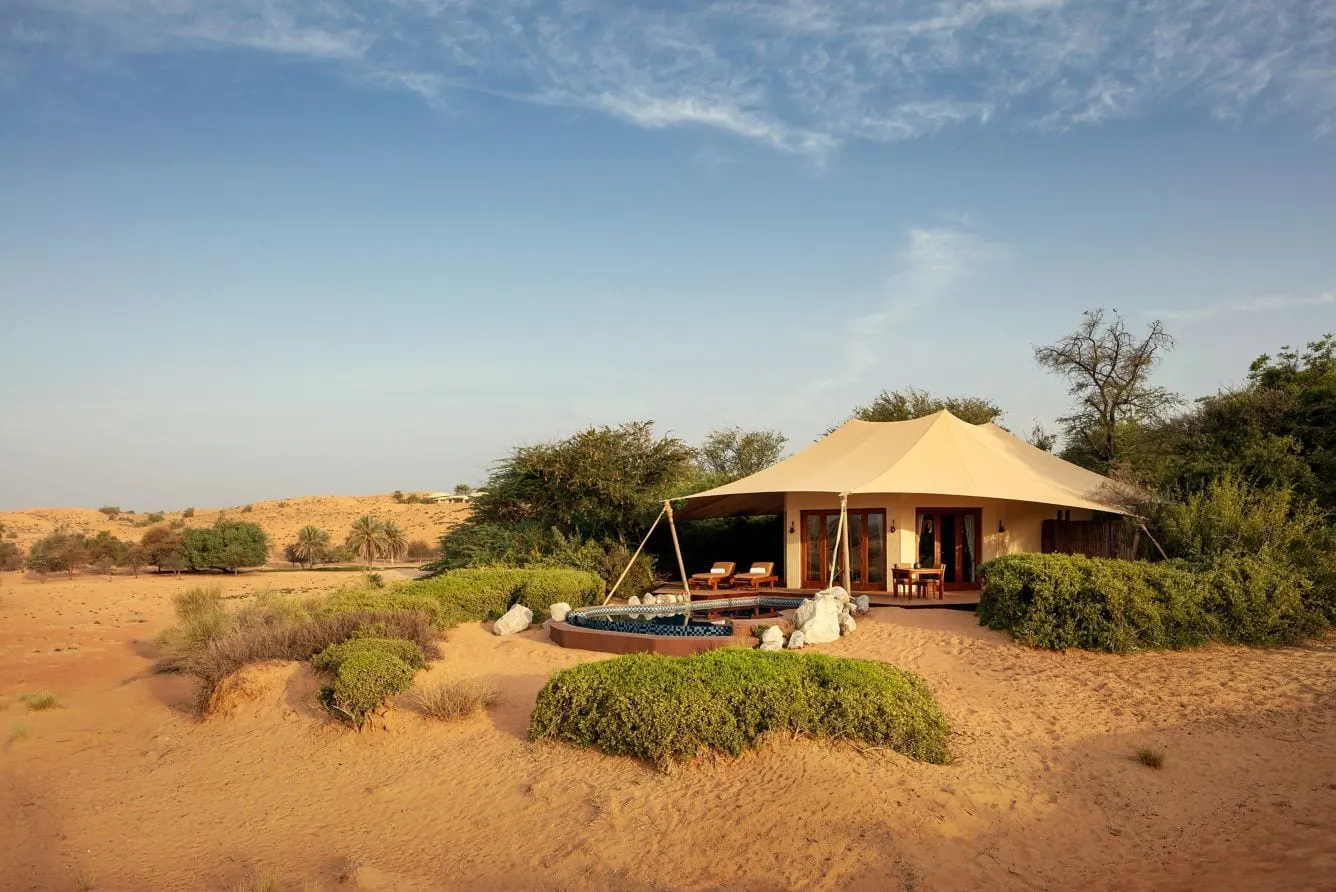
Dubai Desert Conservation Reserve, United Arab Emirates
Al Maha, A Luxury Collection Desert Resort & Spa
A fenced private reserve of freestanding, sand-colored tented suites where the return of the Arabian oryx to the wild is the whole point of the stay, not a footnote to it.
From $950 per night
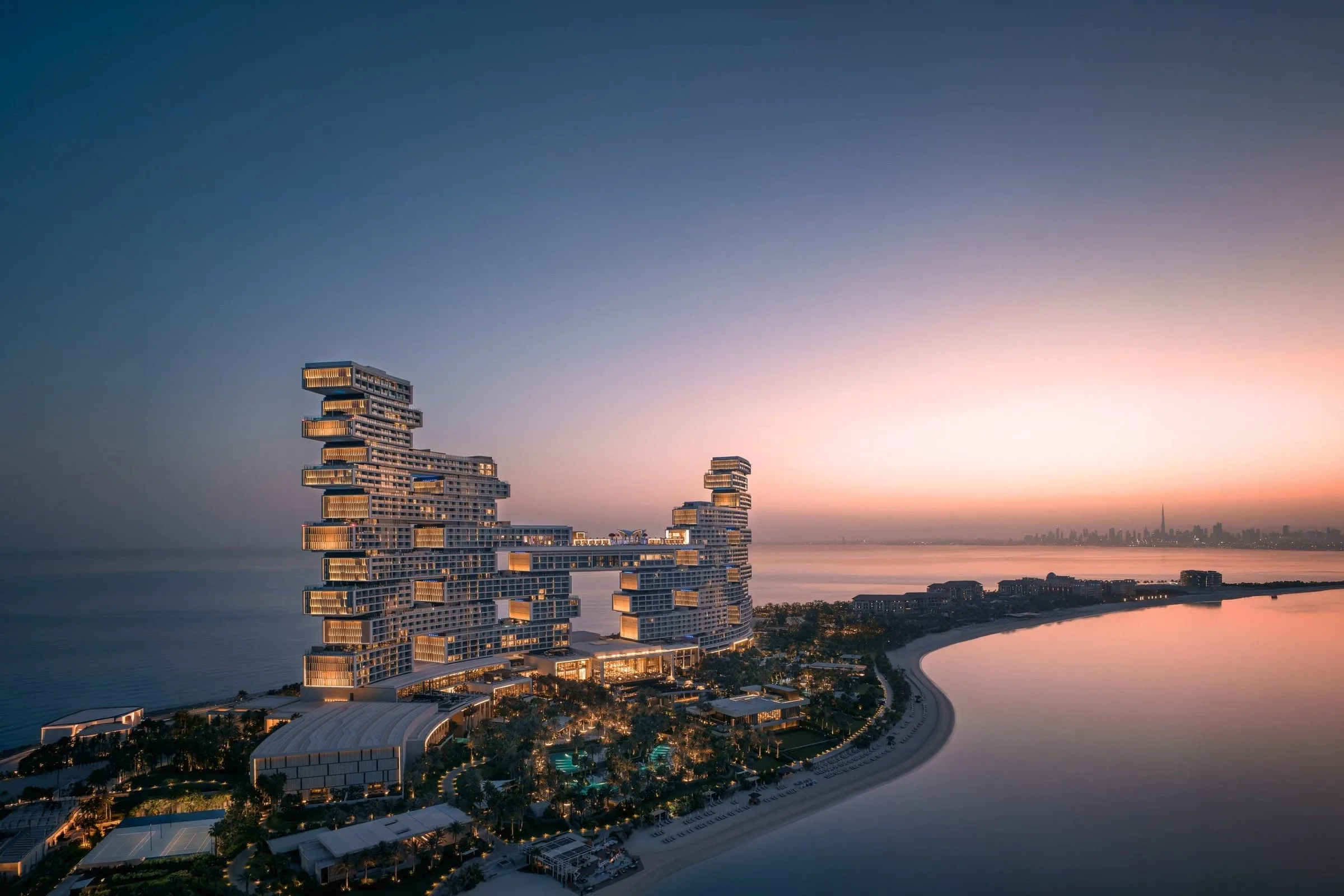
Palm Jumeirah, United Arab Emirates
Atlantis The Royal
Six stacked towers, a 90-metre sky pool bridging them at height, and 795 rooms and suites arranged like a deliberately imperfect skyline on Palm Jumeirah.
From $650 per night
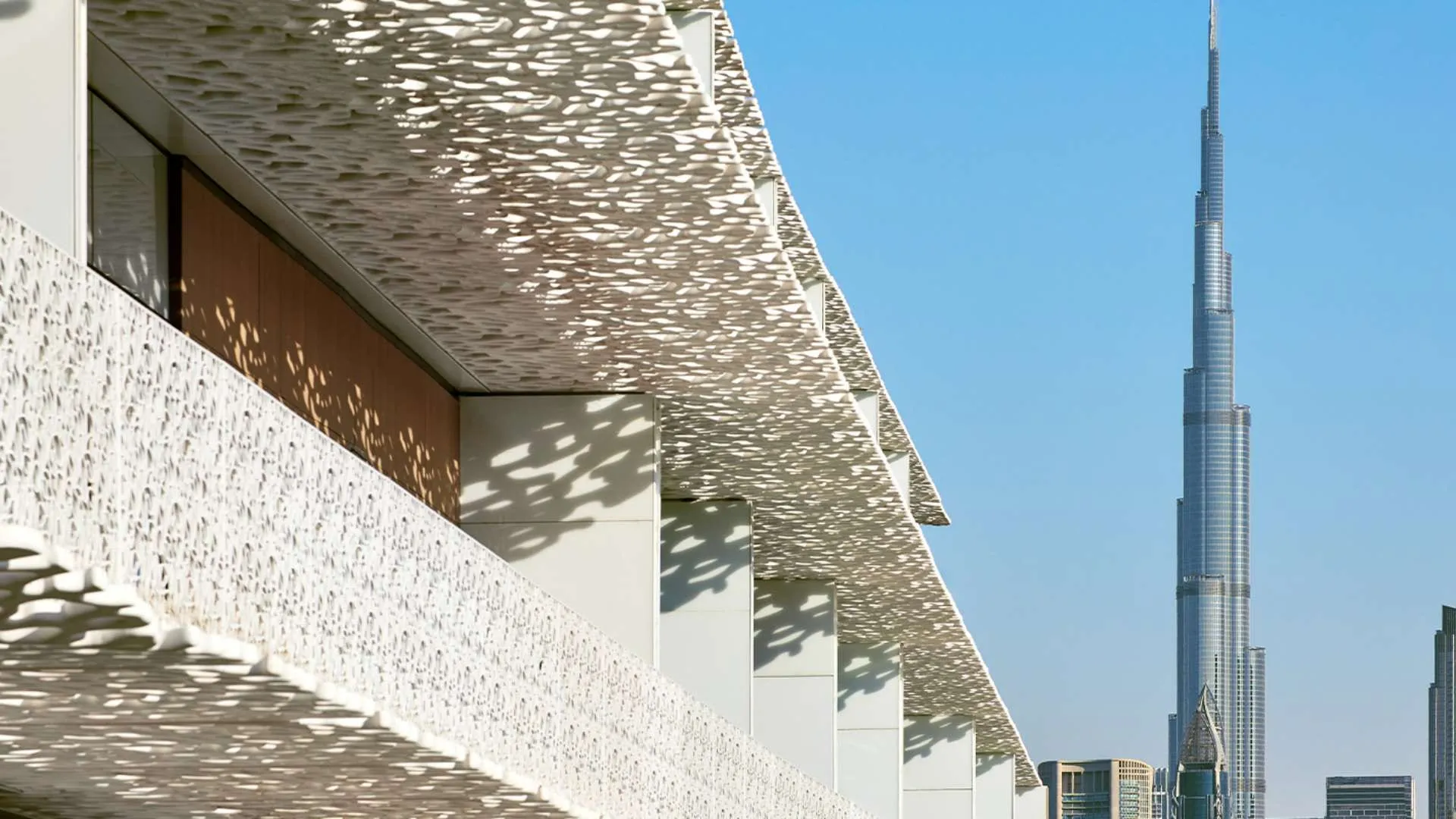
Jumeirah Bay Island, United Arab Emirates
Bulgari Resort Dubai
An Italian jeweller's idea of the Arabian Gulf, built on a seahorse-shaped island with its own marina, a two-Michelin-starred dining room, and 101 rooms that all face water.
From $950 per night