Mayfair, United Kingdom
Claridge's
A 1930s Art Deco time capsule on a Mayfair corner, still the most self-assured address in London.
- Rates from
- From £950 per night
- Nearest airport
- London Heathrow (LHR)
- Transfer
- 45-60 minutes by car, depending on traffic
- Best months
- Year-round, with December given over to the hotel's annual Christmas tree and March to June and September to October best for mild weather
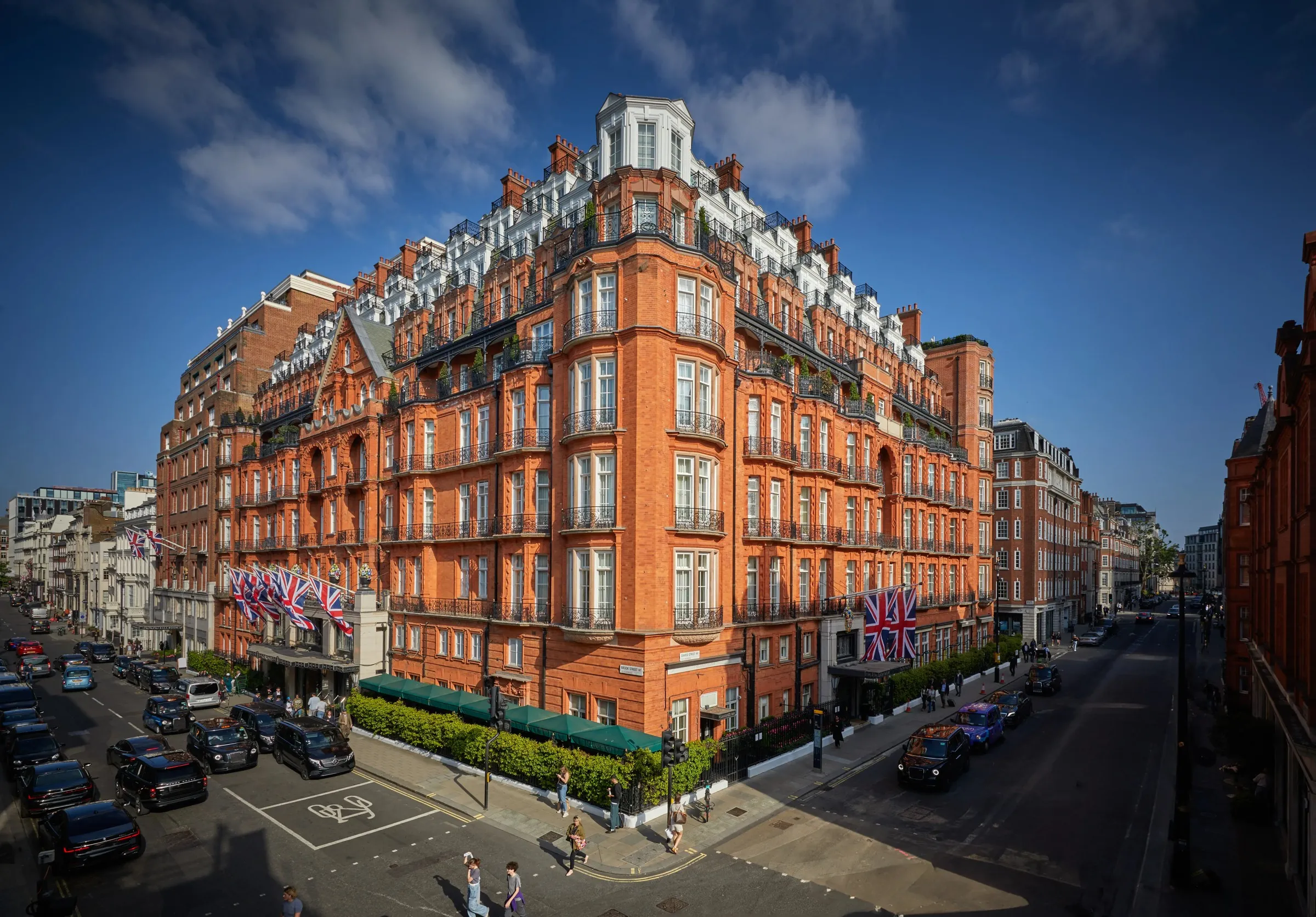
On the corner of Brook Street and Davies Street in Mayfair, a revolving door turns beneath a striped green awning and deposits arrivals into one of the most photographed lobbies in the world. Black and white marble runs out toward a mirrored Art Deco stairwell; overhead, a chandelier of curling glass by Dale Chihuly throws light across a room that has hosted exiled kings, film stars between takes, and a century of London’s most consequential lunches. Claridge’s has been standing at this address in some form since the early nineteenth century, but the hotel that exists today, its geometry, its restraint, its very particular sense of occasion, was fixed in a single decade: the 1930s, when Art Deco arrived in London and Claridge’s became its grandest civic expression.
It is a hotel that has outlasted its era rather than simply preserved it. Ownership has changed hands, restaurants have opened and closed inside its ground floor, and a spa has been added where none existed before. Through all of it, Claridge’s has kept faith with the same idea: that a grand hotel should feel less like a business and more like a very well-run private house, one that happens to have 190-odd bedrooms and a ballroom.
Why It Stands Out
Claridge’s is not London’s largest hotel, its newest, or even, by some measures, its most expensive. What it has instead is unbroken design authority. Few hotels anywhere can claim a coherent architectural identity dating to a specific decade and have it hold up, unforced, a century later. The 1929 to 1931 Art Deco renovation gave Claridge’s a visual grammar, geometric, symmetrical, materially rich, that later designers have chosen to extend rather than override. Thierry Despont’s 1990s restoration of the Foyer and Fumoir, Guy Oliver’s work on the Ballroom and Drawing Rooms, Diane von Furstenberg’s suites, and Andre Fu’s 2022 spa all read as additions to a single, ongoing conversation rather than a series of unrelated renovations.
There is also the matter of institutional memory. Claridge’s has functioned, at various points, as a discreet extension of the British and European royal courts: a suite was declared sovereign Yugoslav territory for a few hours in 1945 so that the future king could be born on his own nation’s soil, and the hotel’s guest list across the twentieth century reads like a cross-section of state visits, exiled monarchies, and diplomatic backchannels. That history is not staged for guests; it simply sits underneath the operation, occasionally surfacing in a story a long-serving doorman will tell if asked.
Architecture
The building on Brook Street today is not the hotel’s original structure. Claridge’s traces its name to 1856, when William and Marianne Claridge, who ran a smaller hotel next door, bought and merged it with the existing Mivart’s Hotel, founded in 1812. That combined property built a reputation quickly: Empress Eugenie of France stayed there in 1860 and entertained Queen Victoria within its walls, and Baedeker’s 1878 guide to London called it, without qualification, the city’s first hotel.
The Victorian building was demolished at the end of the century. Richard D’Oyly Carte, the impresario who had founded the Savoy Hotel a decade earlier, bought Claridge’s in 1893 and commissioned the architect C. W. Stephens to design a replacement equipped with the technical luxuries the Savoy had pioneered: passenger lifts, electric light, and en suite bathrooms in principal rooms. Stephens’s building opened in 1898, a red-brick and Portland stone structure in a loosely Anglo-French style, and it forms the structural bones of the hotel that still stands.
The Art Deco character for which Claridge’s is now best known arrived three decades later. In 1929, the decorator Basil Ionides was brought in to redecorate the interiors, and the architect Oswald Milne designed a new entrance and facade, completed the same year. Between 1930 and 1931, Milne oversaw an extension that added a new wing of eighty bedrooms and the hotel’s Ballroom. The result transformed a solid Edwardian hotel into a showcase for the geometric confidence of the interwar years: a revolving door, mirrored surfaces, and the leaping-deer lamps that still flank the entrance today. It is this 1929-1931 layer, rather than the 1898 shell beneath it, that gives Claridge’s its identity, and it is the reason architectural historians treat the hotel as one of the most significant surviving examples of Art Deco design applied at hotel scale anywhere in Britain.
Ownership of the building has moved through several hands since. The Savoy Group, which had controlled Claridge’s for most of the twentieth century, was bought by Blackstone and Colony Capital in 1998. In 2004, an investor consortium led by the Irish financier Derek Quinlan acquired Claridge’s, the Connaught, and the Berkeley from that group, and the three hotels were eventually brought together as the Maybourne Hotel Group. Control passed subsequently to the Barclay family and then, from 2019, to a structure backed by Qatari capital, which remains Maybourne’s owner today. Maybourne has since added a fourth London property, the all-suite Emory, but Claridge’s remains the group’s flagship and its most architecturally significant asset.
Interior Design
Inside, the hotel reads as a layered restoration rather than a single decorative scheme. The Foyer, arguably the most recognisable room in the building, was reworked by the New York-based designer Thierry Despont in 1996, who gave it a contemporary reading of Art Deco geometry without disturbing its 1930s bones. It was Despont, too, who conceived the Fumoir as it exists now, a jewel-box cocktail room fitted with Lalique glass panels and the original 1920s etched mirrors designed by Basil Ionides, on a site that had housed a smoking room since the hotel’s earliest Art Deco years. Claridge’s Bar carries an interior by the late David Collins, one of the defining hospitality designers of his generation, executed in the same period.
The Ballroom, French Salon, and principal Drawing Rooms were restored by the architect Guy Oliver, returning gilded cornices and period plasterwork to a standard consistent with the rest of the hotel. In 2010, Diane von Furstenberg took on her first hotel interiors commission anywhere, designing twenty rooms and suites with a lighter, more graphic hand than the hotel’s older Art Deco stock, proof that Claridge’s has been willing to let contemporary designers work within its historic frame rather than simply replicate it.
The single object most associated with the hotel’s interior is the Dale Chihuly chandelier suspended above the Foyer, a sculptural mass of more than eight hundred curling glass pieces the artist created for the space in 2000 and has periodically extended since. Every December, the Foyer’s Christmas tree is handed to a different designer or fashion house, a tradition that has drawn contributions from Karl Lagerfeld, Burberry’s Christopher Bailey, John Galliano, and Jony Ive and Marc Newson, among others, turning the lobby into an annual set piece in its own right.
Atmosphere
Claridge’s carries itself with a specific kind of confidence: understated rather than showy, formal without being stiff. Staff turnover is famously low, and a number of the hotel’s longest-serving doormen and butlers have worked there for decades, which gives return guests the unusual experience of being recognised on sight. The energy shifts through the day. Mornings in the Foyer are relatively quiet, given over to breakfast and business meetings conducted at low volume; by mid-afternoon, the same room fills for tea service, with a pianist working through the Great American Songbook on a Steinway while a queue of well-dressed guests waits at the concierge desk. Evenings belong to the bars: Claridge’s Bar draws a crowd for cocktails before dinner, and the Fumoir, tucked just off the lobby, stays busy and low-lit well past midnight.
It is a hotel that suits Mayfair rather than competes with it. Guests dress for dinner without being told to, and the overall register, art dealers meeting for lunch, family parties gathering for a christening tea, visiting executives working from the lobby sofas, feels closer to a private club that happens to rent bedrooms than a conventional five-star hotel.
Rooms and Suites
Claridge’s holds around 190 rooms and suites across the Stephens-designed 1898 building and Milne’s 1930s extension, and the split in vintage shows up in the room categories themselves. Mayfair Rooms lean into the hotel’s period character most directly, with gilded cornices, panelling, and patterns drawn from 1930s textile design; Claridge’s Rooms take a more contemporary approach to the same Art Deco vocabulary, pairing period detailing with a cleaner, present-day finish.
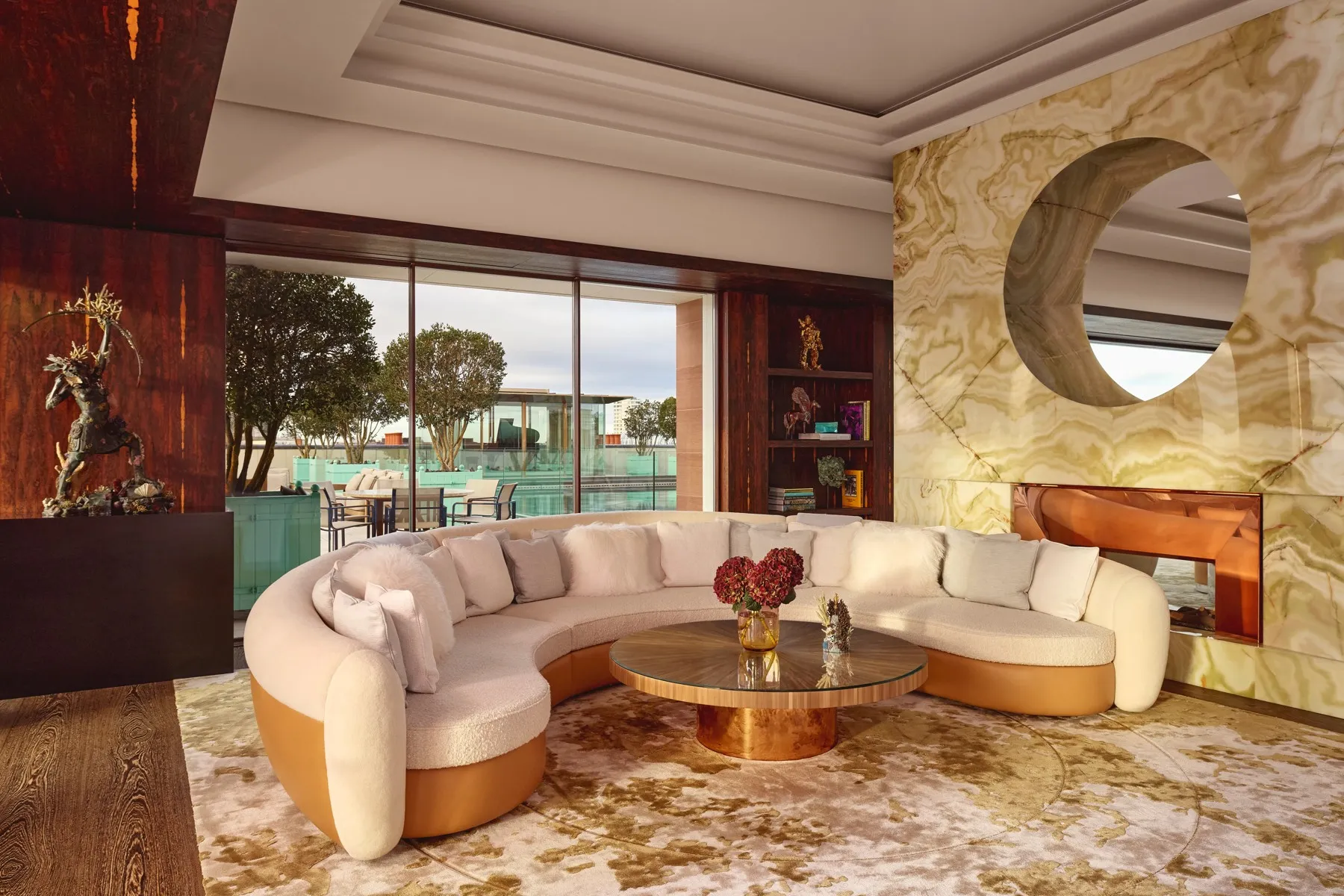
Suites range from the one-bedroom Claridge’s Suite, with its own sitting room and butler service, up through Corner Suites occupying the building’s distinctive rounded bays, to the Penthouse: a four-bedroom suite on the hotel’s uppermost floor with its own private pool and sweeping views across Mayfair’s rooftops. Every suite and a majority of the rooms come with access to Claridge’s 24-hour butler service, a holdover from the hotel’s earliest days that the current operation has kept largely unchanged rather than modernised into a generic concierge offering.
Dining
The ground floor’s main restaurant has changed hands more often than the rest of the building. Gordon Ramsay ran the hotel’s principal dining room for twelve years until 2013, after which the chef Simon Rogan opened the Michelin-starred Fera at Claridge’s, which closed in 2018. Daniel Humm’s Davies and Brook followed and operated until the end of 2021, closing after a disagreement between the chef and the hotel over Humm’s plan to move the restaurant to an entirely plant-based menu. Claridge’s Restaurant opened in the same space in 2023 and traded for just under three years before closing in May 2026.
Its successor is Dante Mayfair, opened as a permanent restaurant and bar in June 2026 by the New York restaurateurs Linden Pride and Nathalie Hudson, who run the original Dante in Greenwich Village, a bar founded in 1915 and named the World’s Best Bar at the World’s 50 Best Bars awards. The permanent opening followed a month-long residency at Claridge’s in the summer of 2025 that proved popular enough to be extended and then made permanent, bringing an Italian-American, aperitivo-led format to the hotel’s principal dining room for the first time.
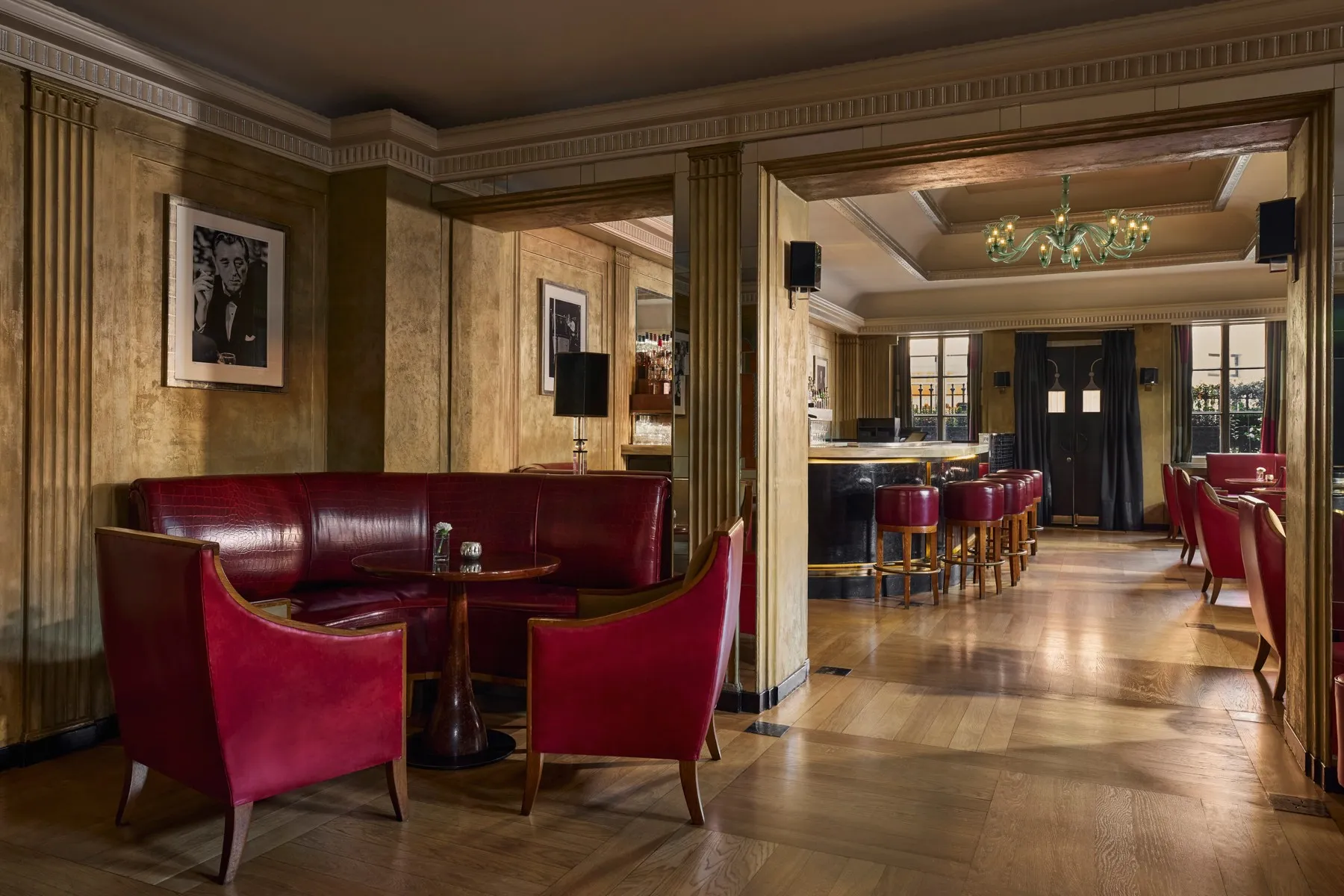
Elsewhere, the hotel’s older venues continue unchanged. Claridge’s Bar, with its David Collins interior, serves vintage champagnes and a serious spirits list ahead of dinner. The Fumoir, one floor down in atmosphere if not in fact, remains a fixture of London’s cocktail scene, its Lalique glass and low lighting largely as Thierry Despont left them in the 1990s. And the Foyer & Reading Room hosts what is probably still the single most famous afternoon tea service in London, taken beneath the Chihuly chandelier to live piano, with sittings that regularly require booking two to three weeks ahead for weekend slots.
Spa and Wellness
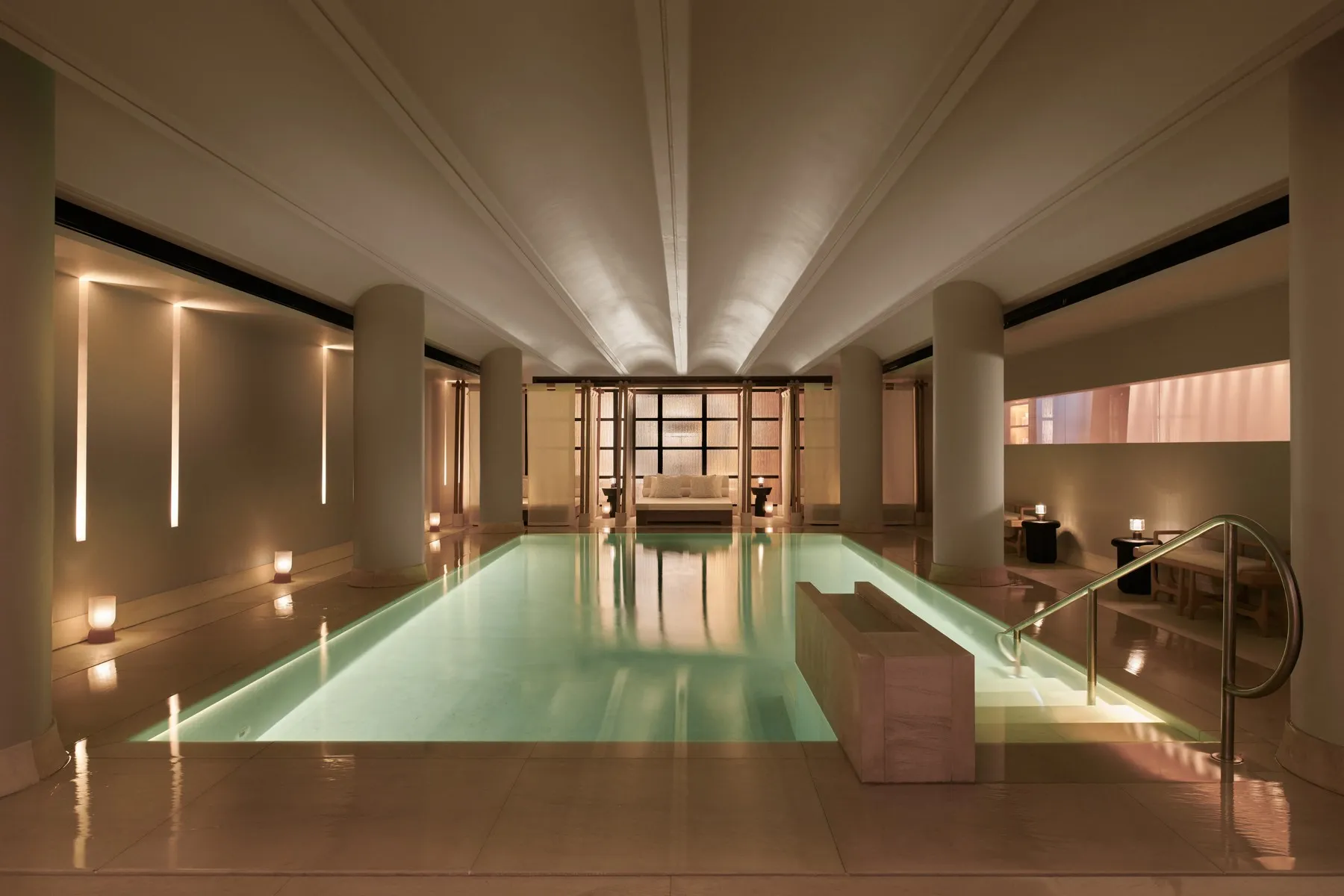
Claridge’s did not have a dedicated spa for most of its history; Claridge’s Spa opened only in 2022, designed by the Hong Kong-based architect Andre Fu and drawing explicitly on his travels through Japan’s traditional temples and Zen gardens. The result is markedly different in register from the hotel’s Art Deco public rooms: pale timber, stone, and quiet, considered proportions. The spa includes seven treatment rooms with private bathrooms, a steam room and sauna, a swimming pool, and a health and fitness studio equipped for guests keeping to a training routine while travelling. Its signature treatment, a ninety-minute Bamboo and Silk Ritual, combines a bamboo-stick massage with silk cocoons applied to the face, and has become one of the more sought-after bookings among London’s hotel spas since opening.
Experiences
Much of what Claridge’s offers is built around its own rooms rather than external excursions, a reflection of its position as a city hotel rather than a resort. Afternoon tea in the Foyer is the experience most closely associated with the property and the one most difficult to book without planning ahead. The annual Christmas tree unveiling, with a different designer commissioned each year, draws a genuine following beyond the hotel’s guest list, and December stays are booked out correspondingly early. The Ballroom and Drawing Rooms, restored by Guy Oliver, remain in active use for private events and are occasionally opened for smaller functions that hotel guests can request access to through the concierge.
For guests wanting to engage with the building’s design history directly, the concierge can arrange private tours that take in the Foyer’s restoration, the Fumoir’s original 1920s glasswork, and the Ballroom, framing the hotel as much as an architectural exhibit as a place to sleep.
Who It Is For
Claridge’s suits travellers for whom the point of a London stay is the hotel itself: guests drawn to Art Deco design, to the ritual of a proper afternoon tea, and to the particular comfort of being remembered by name at check-in. It works well for couples marking an anniversary, for family groups gathering for a London occasion such as a wedding or christening tea, and for business travellers who want a Mayfair base within walking distance of Bond Street and the West End’s gallery and auction-house circuit. It is less suited to travellers prioritising a resort-style spa stay or contemporary minimalist design; those guests are better served elsewhere in London’s five-star landscape. Families with young children are accommodated, but the hotel’s register, formal, adult-leaning, is built more around couples and grown-up parties than children’s amenities.
Best Time to Visit
Claridge’s operates year-round and, as a city hotel rather than a seasonal resort, has no true off-season in terms of what is available to guests. December carries a particular pull thanks to the Christmas tree tradition and the hotel’s holiday decorations, though rooms book up correspondingly early and at a premium. Late spring, roughly March through June, and early autumn, September into October, offer the most comfortable weather for exploring Mayfair on foot and coincide with London’s key auction, fashion, and gallery calendars. High summer brings warmer weather and longer days but also the thickest tourist traffic through the West End.
How to Get There
Claridge’s sits on Brook Street at its junction with Davies Street, in the heart of Mayfair, postcode W1K 4HR. The nearest airport is London Heathrow, roughly sixteen miles to the west; a car transfer typically takes forty-five minutes to an hour depending on traffic, with journeys during weekday peak periods sometimes running longer. Travellers arriving via London City Airport or Gatwick can expect broadly comparable transfer times into central Mayfair. Within London itself, the hotel is a five-minute walk from Bond Street Underground station, served by the Central and Jubilee lines, making onward travel across the city straightforward without a car.
Nearby Experiences
Mayfair unfolds in every direction from the hotel’s front door. Bond Street, split into Old and New sections, runs a few minutes’ walk south and east, lined with flagship stores for the major luxury houses alongside long-established auction houses and art dealers. Grosvenor Square, once home to the American embassy, sits a short walk northwest, while the galleries clustered around Cork Street and Savile Row’s tailoring houses are within easy reach for guests interested in art or bespoke clothing. Hyde Park and its Mayfair-facing corner near Park Lane offer green space for a walk or run, roughly fifteen minutes on foot from the hotel. The Royal Academy of Arts on Piccadilly and the shops and restaurants of Mount Street, one of Mayfair’s more recently fashionable strips, both sit within a ten-minute walk, making Claridge’s a genuinely central base for exploring the West End without needing to rely on transport for short trips.
Things to Know Before Booking
Standard check-in is from 3:00 PM and check-out by 12:00 PM, with early check-in and late check-out available on request and subject to availability. Afternoon tea in the Foyer & Reading Room should be booked well in advance, particularly for weekend sittings, as should tables at Dante Mayfair given its recent opening and existing profile from its 2025 residency. Dress at the hotel’s public rooms leans smart, and jacket requirements apply in some dining and bar areas in the evening; guests are advised to check current policy when booking. December stays, tied to the Christmas tree unveiling, should be arranged well ahead of the season, as should any request to view or use the Ballroom for private functions.
Sustainability
Claridge’s kitchens draw on produce grown for the hotel, including fruit, vegetables, and herbs used across its dining venues, an approach consistent with the wider sustainability commitments the Maybourne Hotel Group has been building out across its London properties. The group has also developed lower-impact accommodation nearby under the Claridge House concept on Davies Street, where stays are individually measured for carbon footprint using recognised protocols, reflecting a broader shift in how Maybourne frames its environmental commitments even as its flagship hotel remains, by necessity, a heritage-listed building with the retrofitting constraints that come with that status.
Practical Information
Claridge’s is located at Brook Street, Mayfair, London W1K 4HR, on the corner of Brook Street and Davies Street. Check-in is from 3:00 PM and check-out by 12:00 PM. The hotel is owned and operated by the Maybourne Hotel Group. Reservations, current dining information, and spa bookings can be made through the hotel’s official website.
Editorial Conclusion
Claridge’s has spent the better part of a century being copied and never quite matched. Other hotels have Art Deco flourishes; few have an entire architectural identity forged in a single renovation and maintained, largely unbroken, across nearly a hundred years of subsequent ownership changes and design commissions. What keeps the hotel current is its willingness to let its ground-floor restaurant turn over, from Ramsay to Rogan to Humm to Dante Mayfair, while leaving the Foyer, the Fumoir, and the Ballroom essentially untouched. That balance, a fixed architectural core with a restaurant scene allowed to evolve around it, is the clearest explanation for why Claridge’s still feels, on any given afternoon, like the most self-assured hotel in London.
In pictures
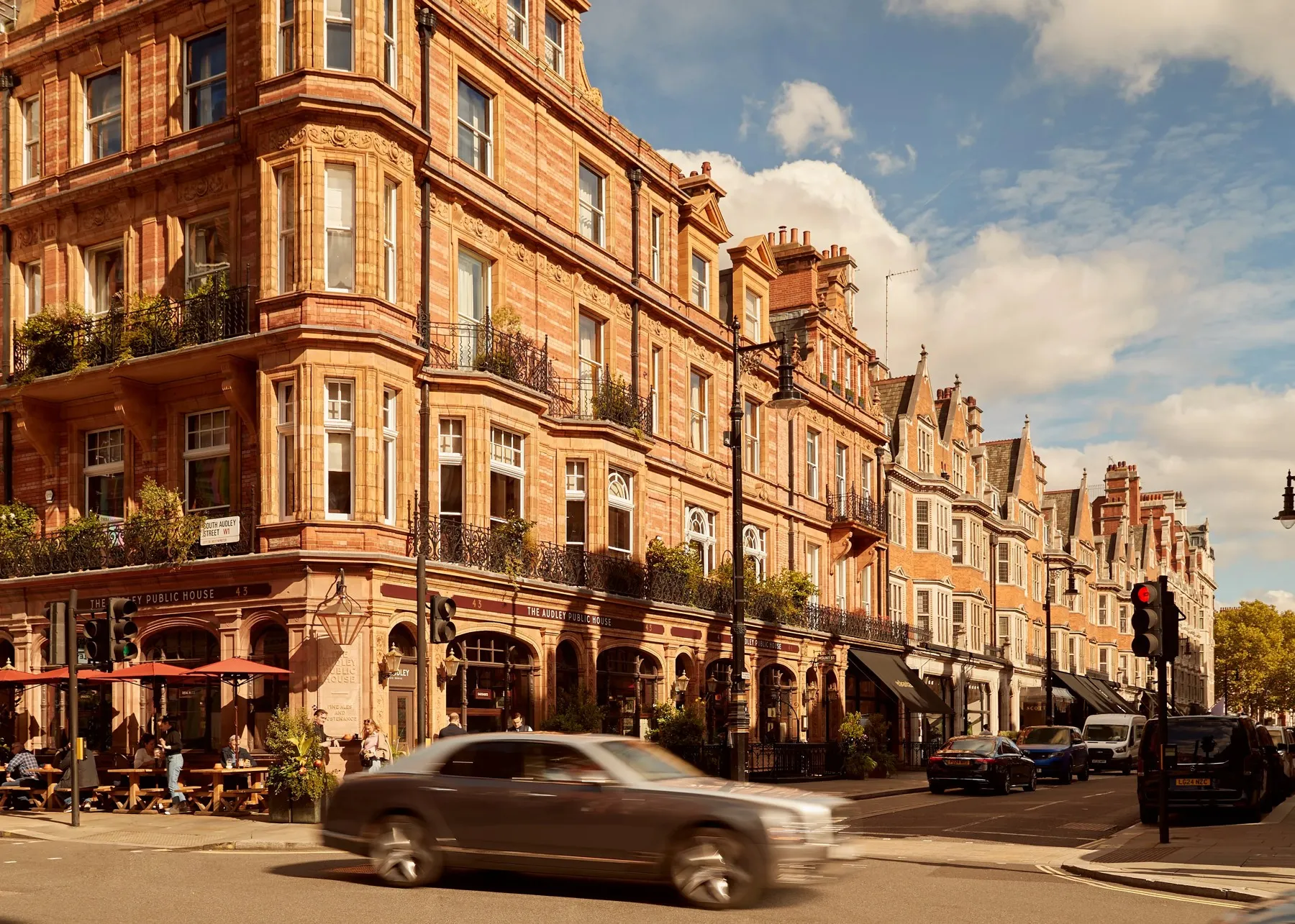
On the map
Mayfair, United Kingdom
Questions
Frequently asked
How old is Claridge's, and is the current building original?
The hotel's roots go back to Mivart's Hotel, founded in 1812, which was bought by William and Marianne Claridge in 1854 and renamed Claridge's in 1856. The building standing today is not that original property: Savoy founder Richard D'Oyly Carte bought the hotel in 1893, demolished the Victorian structure, and replaced it with the current building, designed by architect C. W. Stephens and completed in 1898. Its Art Deco character was added later, in a 1929 to 1931 renovation.
What is Claridge's known for architecturally?
Claridge's is one of London's foremost examples of Art Deco hotel design. The 1929 to 1931 renovation, overseen by decorator Basil Ionides and architect Oswald Milne, gave the hotel its mirrored entrance, geometric detailing, and a new wing containing the Ballroom. The Foyer was later reworked by Thierry Despont in 1996, and now holds a Dale Chihuly glass chandelier installed in 2000.
What is the current restaurant at Claridge's?
Dante Mayfair, run by New York restaurateurs Linden Pride and Nathalie Hudson, opened as the hotel's permanent restaurant and bar in June 2026, following a popular residency the previous summer. It took over the ground-floor dining room previously occupied by Claridge's Restaurant, which closed in May 2026. The hotel's other dining venues, Claridge's Bar, the Fumoir, and the Foyer & Reading Room for afternoon tea, continue to operate alongside it.
Does Claridge's have a spa?
Yes. Claridge's Spa opened in 2022, designed by the architect Andre Fu and inspired by traditional Japanese temple gardens. It includes seven treatment rooms with private bathrooms, a steam room and sauna, a swimming pool, and a health and fitness studio.
How far is Claridge's from central London sights and transport?
The hotel sits on the corner of Brook Street and Davies Street in Mayfair, a five-minute walk from Bond Street Underground station on the Central and Jubilee lines, and within easy walking distance of Bond Street's shops, the Royal Academy, and Hyde Park.
Who owns Claridge's today?
Claridge's is owned and operated by the Maybourne Hotel Group, which also owns The Connaught, The Berkeley, and The Emory in London. Maybourne took shape after a 2004 acquisition of the Savoy Group's hotels by an investor consortium, and has been backed by Qatari capital since 2019.
Same destination
More hotel guides in United Kingdom
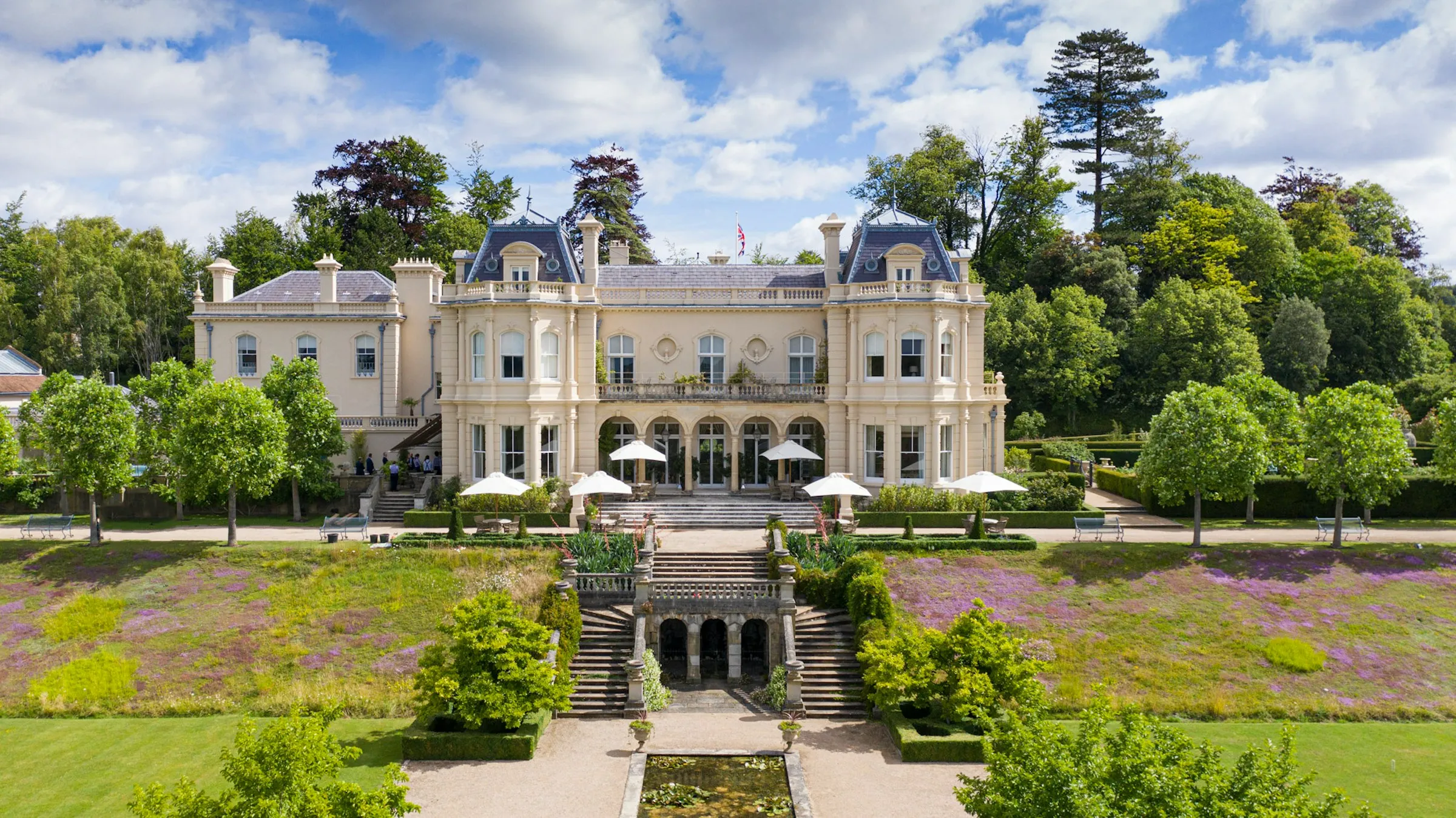
near Leatherhead, United Kingdom
Beaverbrook
A press baron's Surrey estate, once Churchill's wartime refuge, run today as one of England's most quietly assured country house hotels.
From £475 per night
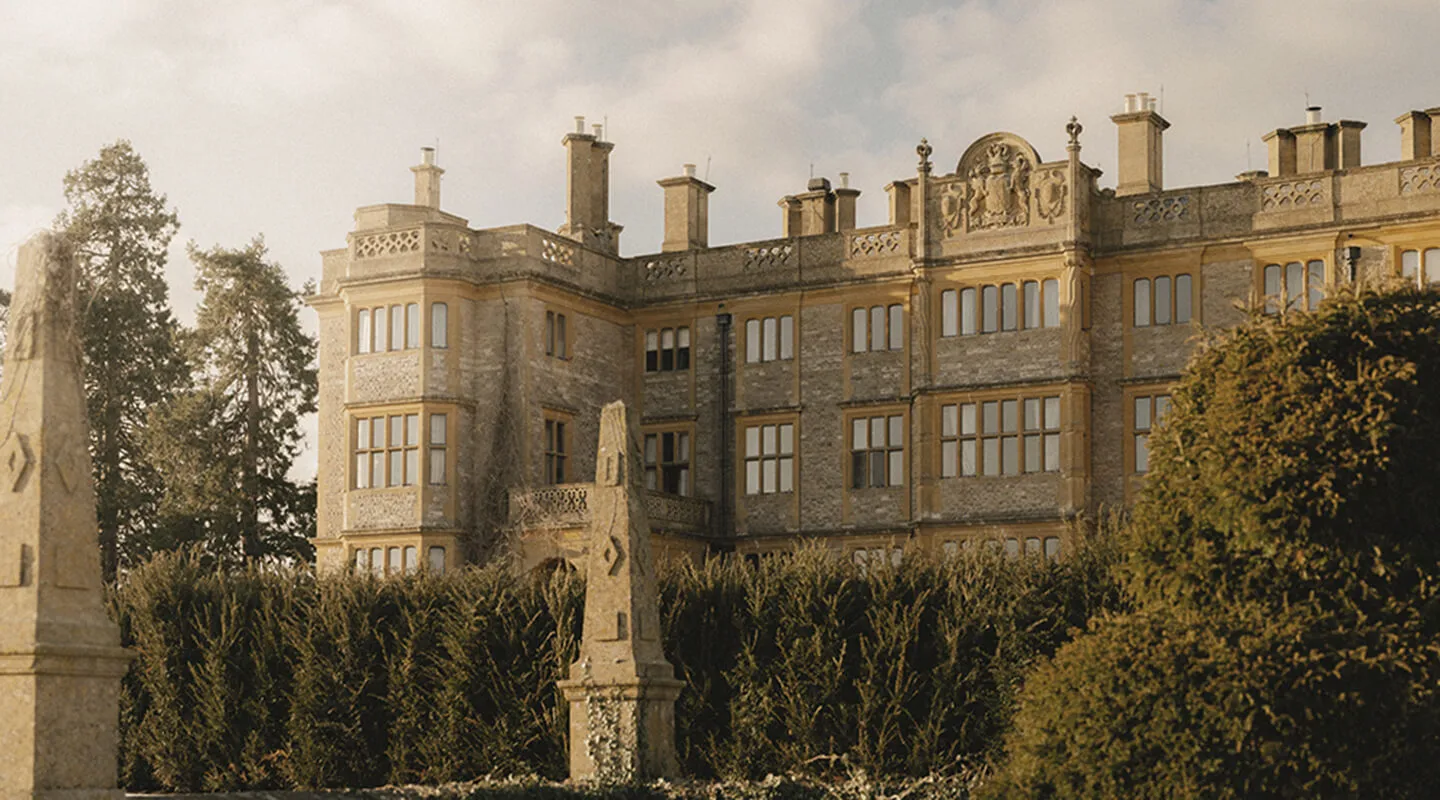
near Witney, United Kingdom
Estelle Manor
A Jacobethan manor turned country club, where a Roman-style bathhouse now sits where a police training centre once stood.
From £450 per night
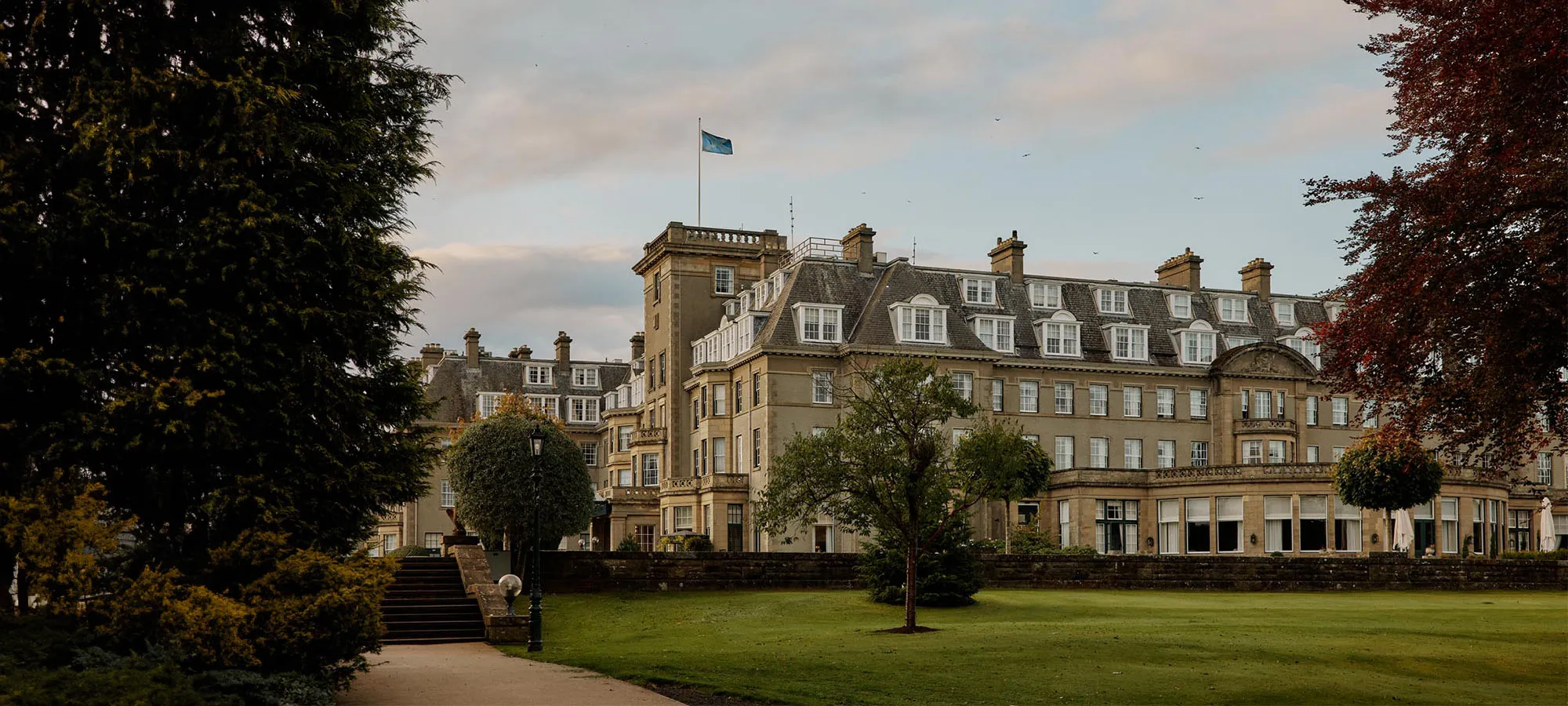
Auchterarder, United Kingdom
Gleneagles
A 1924 railway hotel turned golf pilgrimage site, still run on the scale that once hosted a G8 summit and a Ryder Cup.
From £650 per night