Marrakech medina, Morocco
El Fenn
A private art collector's riad turned hotel, stitched together from more than a dozen houses behind the walls of the Marrakech medina.
- Rates from
- From $480 per night
- Nearest airport
- Marrakech Menara Airport (RAK)
- Transfer
- About 15-20 minutes by road from Marrakech Menara Airport; the medina's lanes are pedestrian-only, so the final stretch from the drop-off point at Bab El Ksour is on foot
- Best months
- March to May and September to November, avoiding both the height of summer heat and the shorter, cooler days of deep winter
Behind an unmarked wooden door near Bab El Ksour, one of the medina’s old stone gateways, El Fenn does not announce itself the way a conventional hotel does. There is no signage to speak of, no grand porte-cochère, just a threshold that opens onto the first of more than a dozen interlinked courtyard houses, each one absorbed into the property over two decades of quiet expansion. What began in 2002 as a single derelict riad, bought sight-mostly-unseen by an art gallerist and a communications executive, is now a 41-room hotel that occupies roughly two acres of the medina’s dense fabric without ever losing the feeling of a private house that keeps opening into another room.
That gallerist was Vanessa Branson, sister of Richard Branson and a longtime figure in the London and international art worlds, and her business partner was Howell James, then a senior communications adviser who would go on to serve as vice-chairman of corporate affairs at Barclays. Neither had run a hotel before. What they had was a building, several buildings as it turned out, and a conviction that Marrakech’s traditional riad architecture, courtyard houses turned inward around a garden, a pool, a fountain, could hold a genuinely contemporary art collection without becoming a themed backdrop for it. El Fenn (the name means, roughly, “the art” or “house of art”) has spent the twenty-odd years since testing that idea, first as an independent project, more recently under a wider ownership group, and since November 2025 as part of a hotel collection run by a family with five generations of roots in the city.
Third Night’s brief is straightforward: assess whether a hotel earns its reputation on documented fact rather than atmosphere alone. El Fenn’s case rests on three things that can be checked rather than simply felt: a building history of genuine complexity, an art programme with real institutional weight behind it (the hotel’s co-founder went on to found the Marrakech Biennale), and a room count and layout that have grown organically rather than been masterplanned from day one. What follows sets out what is documented about the property, what remains genuinely a matter of taste, and what prospective guests should confirm directly before booking.
Why It Stands Out
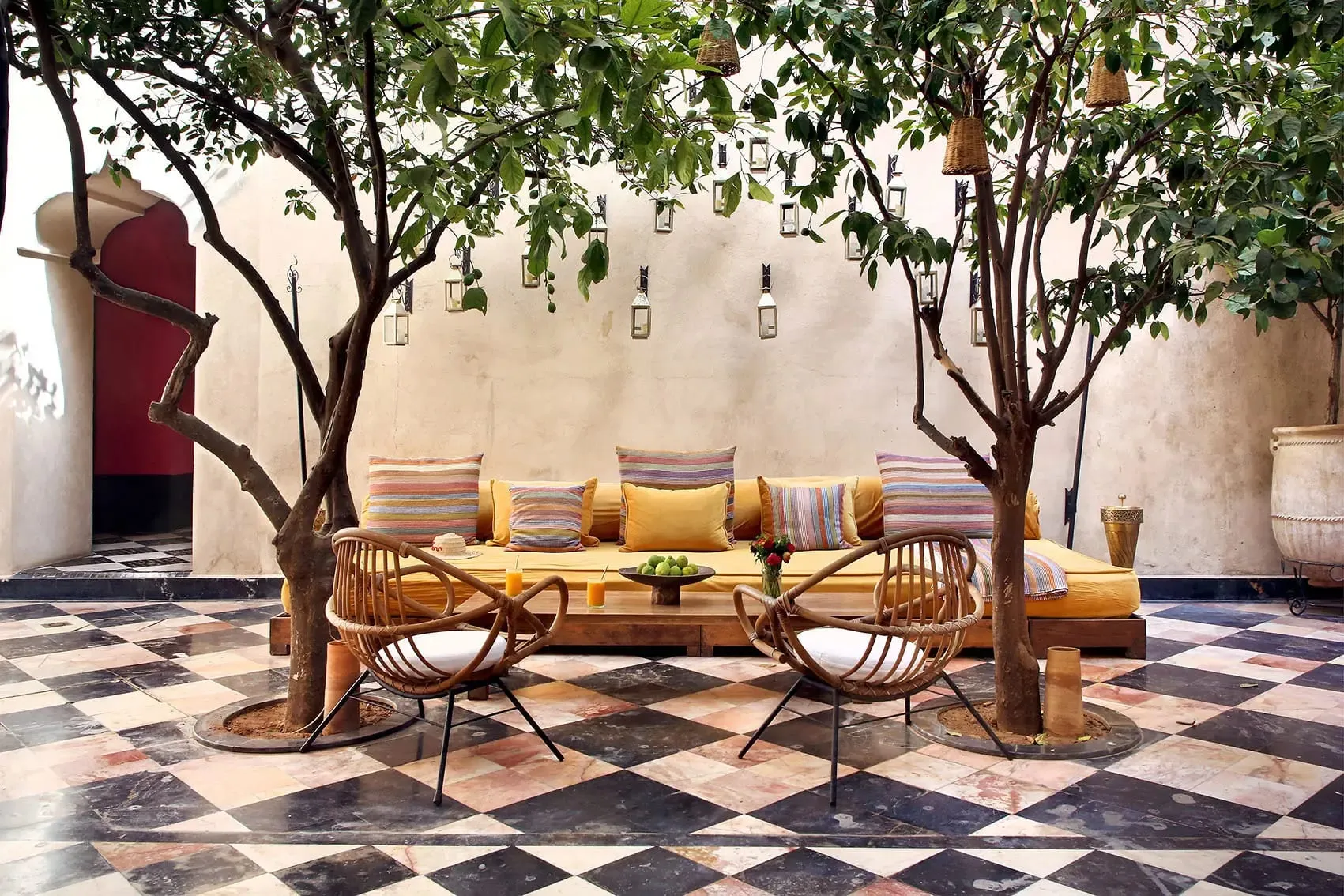
Marrakech has no shortage of riad conversions, but few have been built up over as long a period, or by owners with as specific an art-world pedigree, as El Fenn. The hotel’s founding couple bought a single crumbling riad in 2002 only to discover the deal came with four adjoining houses; rather than treating that as a problem to be solved with a single unifying renovation, they and successive owners spent the following two decades absorbing further neighbouring buildings, so that today’s 41 rooms sit across more than a dozen separate structures joined by corridors, staircases and courtyards rather than a single continuous floor plan. Layered onto that architecture is a rotating collection of contemporary Moroccan and African art, not incidental decoration but a programme with its own institutional history: co-founder Vanessa Branson went on to found the Marrakech Biennale in 2005, and El Fenn served as a venue for the event across its six editions. Add three pools, a 1,300-square-metre roof terrace, and a location a five-minute walk from Jemaa el-Fnaa, and the hotel occupies a specific niche: a medina riad that functions as a working art space as much as a place to sleep.
Architecture
The property’s oldest fabric is generally described as dating to the nineteenth century, part of the dense, centuries-old residential quarter that makes up the Marrakech medina, a UNESCO World Heritage Site since 1985. What makes El Fenn architecturally distinct is not any single building but the accretion of many: when Branson and James signed the contract on their original riad in 2002, they learned it came bundled with four adjoining houses, and over the next several years, roughly 2004 to 2007, the property continued to expand into neighbouring structures. Under the ownership group that took shape from 2017, the hotel grew further still, reaching its current footprint of 41 rooms and suites across more than a dozen interconnected riads and townhouses on a roughly two-acre site inside the medina walls.
That process, joining separate courtyard houses that were never designed to function as one building, is a different architectural problem from restoring a single historic structure intact. Each original riad keeps its own courtyard, staircase and roofline, and the restoration work that unified them (retaining traditional zellige tilework, tadelakt lime plaster, and hand-carved cedar joinery throughout) had to reconcile independent structures, at different heights and on different foundations, into a single circulation system for guests and staff. The result reads less as one grand building than as a small quarter of the medina, privately assembled, with the roof terraces of the various houses eventually linked into the hotel’s expansive 1,300-square-metre rooftop.
In November 2025, ownership passed to the Benabbés-Taarji family, whose Akan hotel collection also includes La Villa des Orangers and Les Deux Tours elsewhere in Marrakech; Branson has described the move as passing the hotel on to a family with a deeper, longer-standing understanding of the city’s fabric. What that means for the building’s future stewardship is, at the time of writing, still unfolding, though the stated intent has been continuity rather than a change of direction.
Interior Design
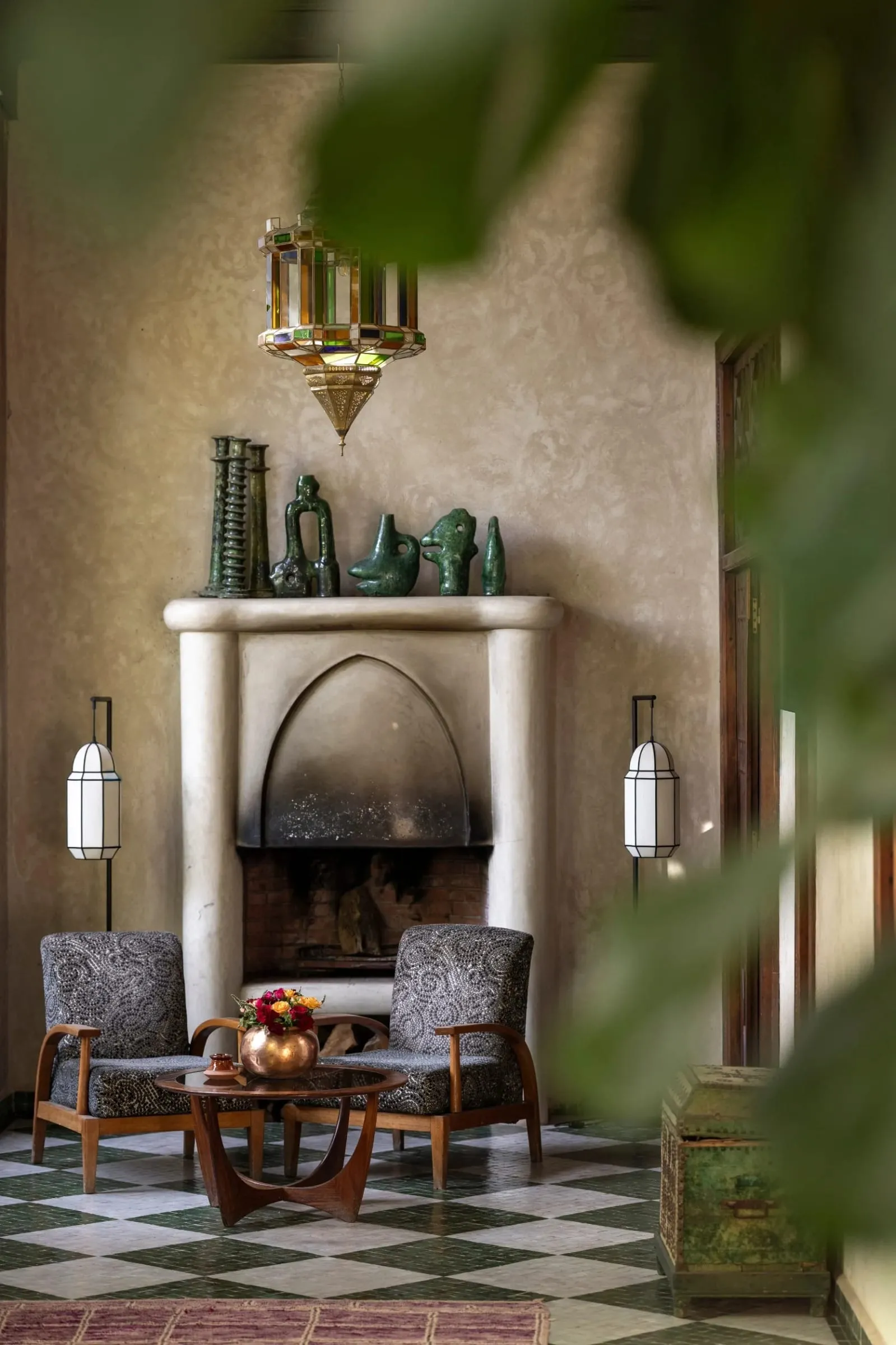
El Fenn’s interiors were built around a deliberate collision: the vernacular craft of the Marrakech riad, tadelakt walls polished to a soft sheen, geometric zellige tilework, carved cedar ceilings and doors, set against contemporary and mid-century furniture and a working art collection that changes over time rather than staying fixed. That approach traces back to the hotel’s origins as a project led by an art gallerist; rather than restoring the original houses as a period piece, the design let traditional craftsmanship serve as the backdrop for pieces that would not look out of place in a private London or New York collection.
The art itself is not a static hang. The permanent collection runs across nearly every surface of the public rooms and many of the guest corridors, and the hotel supplements it with twice-yearly temporary exhibitions organised in partnership with local galleries, including collaborations with Marrakech’s Galerie Siniya28 to show new photographic work. Artists represented at El Fenn over the years have included Hassan Hajjaj, known for his vividly staged photographic portraits, Yto Barrada, Ali Maimoun and Abdelmalik Berhiss, part of a broader roster the hotel describes as spanning Moroccan, African and international names. Because the collection rotates, any given stay offers a different snapshot of it rather than a fixed set of works, which is part of the point: El Fenn functions, in a limited but real sense, as a private gallery that happens to also be a hotel.
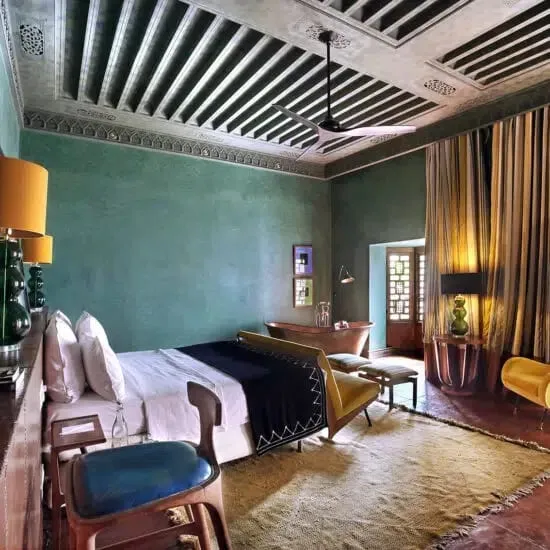
Guest rooms and suites carry the same vocabulary at smaller scale: traditional plasterwork and tilework paired with mid-century furniture, locally made textiles, and individual character from room to room, a byproduct of a property assembled from many separate houses rather than built to a single repeatable template.
Atmosphere
El Fenn sits inside the medina near Bab El Ksour, one of the old stone gateways into the walled city, close enough to Jemaa el-Fnaa, Marrakech’s central square, to reach it on foot in around five minutes, yet tucked behind a genuinely unmarked entrance that gives little away from the street. That contrast, chaotic, commerce-driven medina lanes outside, a quiet sequence of courtyards inside, is central to how the hotel reads on arrival. Because the property was built up from more than a dozen separate houses rather than laid out as a single hotel from the start, moving through it feels less like navigating a hotel corridor system and more like wandering a small, privately owned quarter of the old city, courtyard opening onto courtyard, staircase leading to an unexpected terrace.
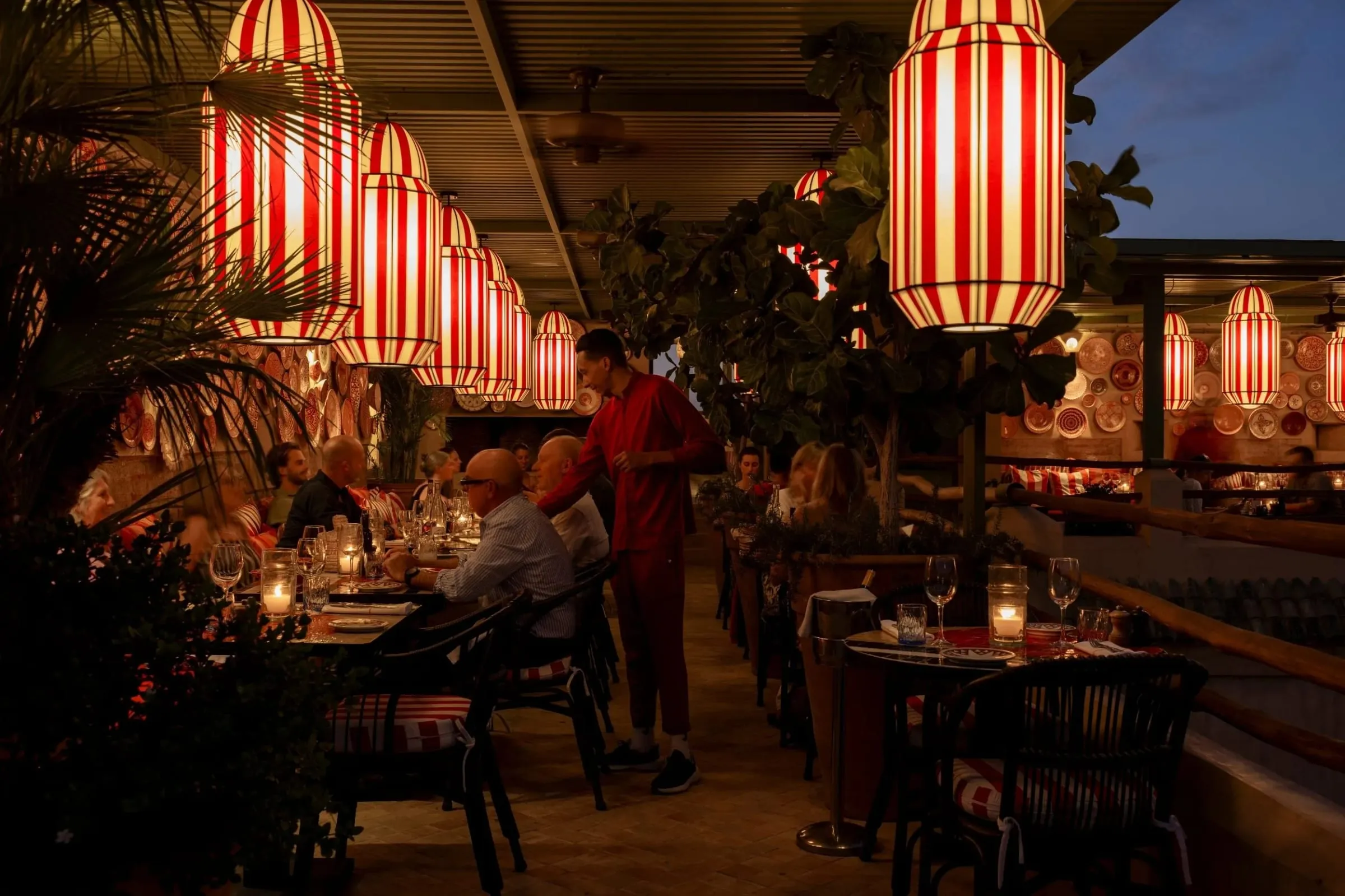
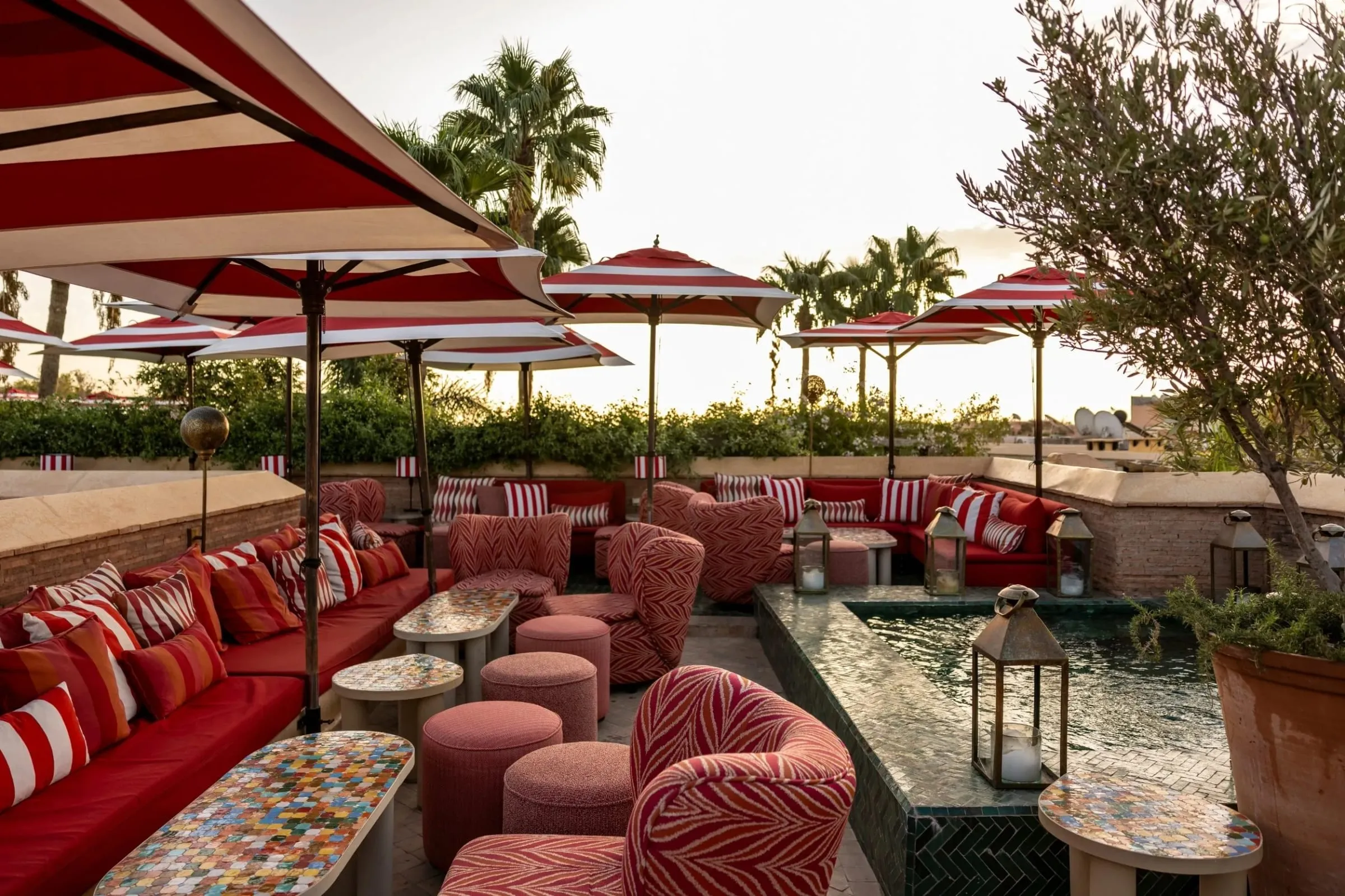
The hotel has also long positioned itself as sociable rather than cloistered: the rooftop bar and restaurant are open to non-resident guests as well as hotel guests, a choice that keeps the property connected to Marrakech’s wider design and hospitality scene rather than functioning purely as a private retreat. A resident family of tortoises, mentioned repeatedly in guest accounts and the hotel’s own materials, has become something of an informal mascot of that relaxed, lived-in atmosphere.
Rooms and Suites
El Fenn opened in 2004 with just 6 rooms and has grown, through successive expansions into neighbouring buildings, to 41 rooms and suites today, spread across the property’s more than a dozen joined structures. Because each original house retains its own layout, proportions and outlook, rooms vary meaningfully in size, shape and view rather than following a single repeated floor plan, categories generally range from smaller, more intimate rooms up through larger suites with private terraces or courtyard views, and travellers with a specific configuration in mind (a particular terrace, view or bed setup) should confirm exact details directly with the hotel at the time of booking, since naming and inventory can shift as rooms are periodically refreshed.
Across categories, the shared elements are the traditional materials, tadelakt plaster, zellige tile, carved cedar, and the presence of art and considered furniture rather than a generic five-star finish. Given the hotel’s layout across multiple buildings, some rooms open directly onto shared courtyards or gardens while others sit higher up with access to private or semi-private terrace space; prospective guests who want step-free access or a specific proximity to the pools and public rooms should raise it when booking, since the property’s organic growth means circulation is not uniform throughout.
Dining
El Fenn’s principal dining venue is its Rooftop Restaurant, open daily for lunch (roughly 12:30 to 3:00pm) and dinner (roughly 7:00 to 10:30pm), serving food built around local, seasonal ingredients sourced from nearby farms and markets, with an emphasis on vegetable-forward Moroccan and international dishes alongside meat and fish drawn from Atlantic Ocean and Atlas Mountain suppliers. The adjoining Rooftop Bar operates through the day and evening, serving cocktails, fresh juices, light bites and tapas on a first-come basis, and, notably, both the rooftop restaurant and bar are open to non-resident guests, making the hotel a functioning part of Marrakech’s wider dining scene rather than a closed-door amenity.
For guests staying at the hotel, the Colonnade Cafe offers a more private, residents-only dining option, open for breakfast, lunch and dinner, with an afternoon tea service typically served in the mid-afternoon. Between the two venues, the hotel effectively runs two distinct registers, a public-facing rooftop scene with medina views over the surrounding rooftops, and a quieter, guests-only courtyard alternative for those who want to eat away from outside visitors.
Spa and Wellness
El Fenn’s spa is a small, deliberately low-key facility set within its own shaded courtyard, with three treatment rooms and a dedicated spa pool (reported at around 8 metres and heated year-round) where guests can cool off between treatments. The spa’s core offering is built around the traditional Moroccan hammam, delivered in a tadelakt-lined steam room with black soap and, in some treatments, a ghassoul clay body mask, alongside massage therapies and facials. Treatments use Maison D’Asa, a Moroccan beauty line built on locally sourced plant ingredients including orange blossom, lavender, verbena, argan oil and prickly pear oil, tying the spa’s product sourcing to the same regional emphasis found in the hotel’s kitchen.
Beyond the treatment rooms, the hotel’s three pools, a heated rooftop pool on the 1,300-square-metre roof terrace, a ground-floor lap pool, and the smaller spa-courtyard pool, function as an informal extension of the wellness offering, giving guests a choice of setting (open rooftop, shaded ground-floor courtyard, or the intimate spa pool) depending on the time of day and their appetite for sun.
Experiences
El Fenn’s location inside the medina, a five-minute walk from Jemaa el-Fnaa, puts guests within easy reach of the square’s night market, the surrounding souks, and landmarks including the Koutoubia Mosque, without requiring a car for any of it; medina streets are pedestrian-only in any case, so exploring on foot is less a lifestyle choice than a practical necessity. The hotel’s in-house boutique sells clothing and objects made by young Moroccan designers and makers, extending the same design sensibility found in the guest rooms into something guests can take home.
Because of its founders’ art-world background, El Fenn has also long functioned as an informal hub for Marrakech’s contemporary art calendar: the hotel has hosted events tied to the 1-54 Contemporary African Art Fair in recent years, and its twice-yearly exhibitions in partnership with local galleries give guests a changing reason to return beyond the fixed permanent collection. The hotel’s history as a Marrakech Biennale venue between 2005 and 2016, and as a host site for events including TEDxMarrakesh in 2012, also speaks to a property that has positioned itself within the city’s cultural life rather than apart from it.
Who It Is For
El Fenn suits travellers with a genuine interest in contemporary Moroccan and African art, given the depth and turnover of the collection and the hotel’s continuing ties to the local gallery scene, and couples looking for a design-forward, atmospheric medina base for a Marrakech city break rather than a resort-style stay outside town. Its central location and relatively informal, sociable rooftop venues also make it a strong fit for first-time Marrakech visitors who want to be within walking distance of the main square and souks without sacrificing a considered, design-led interior. Larger groups or families travelling together can be accommodated across the hotel’s varied room and suite categories, though the property’s medina setting, no vehicle access to the door, uneven internal circulation across joined buildings, is worth weighing for guests who prioritise ease of movement over atmosphere.
Best Time to Visit
Marrakech is most comfortable between March and May and again from September to November, when daytime temperatures are milder than the intense heat of high summer and evenings are cool enough to make the most of the hotel’s rooftop spaces. Deep winter (December to February) brings cooler, occasionally chilly evenings by regional standards, though Marrakech functions as a viable year-round city-break destination and El Fenn’s rooftop terrace and pools remain usable, weather depending, across most of the year. Guests planning a visit around the city’s art calendar, including gallery exhibitions and events tied to fairs such as 1-54, may want to check the hotel’s own events listings, since programming shifts from year to year.
How to Get There
Marrakech Menara Airport (RAK) is the nearest airport, roughly 15 to 20 minutes by road from the medina. Because the medina’s internal streets are largely pedestrian-only and closed to standard vehicle traffic, cars and airport transfers drop guests near Bab El Ksour, the stone gateway closest to the hotel, from where it is a short walk of a few minutes through narrow lanes to El Fenn’s unmarked entrance; the hotel offers a private transfer service, with drivers identifiable by a sign bearing the hotel’s name, and porters are typically on hand to help with luggage for the final stretch on foot. Independent travellers arriving by taxi should ask specifically for Bab El Ksour (locally pronounced “Bab Lxor”) rather than a street address, since medina wayfinding relies heavily on named gates and landmarks rather than conventional signage.
Nearby Experiences
Jemaa el-Fnaa, Marrakech’s UNESCO-recognised main square and its night market of food stalls, performers and storytellers, is roughly a five-minute walk from the hotel, making El Fenn one of the more centrally placed medina properties for guests who want to experience the square by day and by night without a long walk back. The Koutoubia Mosque, the city’s largest and most prominent landmark, and the winding souks that fill the medina’s northern quarters, are both within easy walking distance. For art-focused guests, Marrakech’s contemporary gallery scene, including venues linked to the hotel’s own exhibition partnerships, has grown substantially in the years since El Fenn’s founders launched the Marrakech Biennale, giving repeat visitors a genuinely different cultural landscape to explore on each return.
Things to Know Before Booking
There is no vehicle access directly to the hotel; all arrivals and departures require a short walk through medina lanes from the nearest drop-off point near Bab El Ksour, which is worth planning for with heavy luggage, though hotel porters typically assist. Because the property has been assembled over more than two decades from over a dozen separate riads and houses, internal circulation is not uniform, room proportions, views and proximity to the pools and public rooms vary meaningfully by category, so guests with specific requirements should confirm details directly with the hotel rather than assuming a standard layout. The hotel’s rooftop restaurant and bar are open to non-resident guests and can draw outside visitors, particularly around sunset, which is worth knowing for travellers expecting a fully private rooftop experience. Ownership passed to the Benabbés-Taarji family’s Akan collection in November 2025; while the stated intent has been continuity of the hotel’s art programme and character, guests booking further out should be aware the property is under comparatively new management.
Sustainability
El Fenn’s sustainability case rests primarily on adaptive reuse at an unusually large scale: rather than a single historic building preserved and converted, the hotel represents the incremental restoration and continued use of more than a dozen aging riads and townhouses within the medina that might otherwise have fallen further into disrepair, using traditional materials and techniques, tadelakt, zellige, hand-carved cedar, that keep local craft skills in active use. The kitchen’s stated sourcing model, drawing on nearby farms and markets alongside Atlantic and Atlas Mountain suppliers, and the spa’s use of a Moroccan beauty line built on regionally grown plant ingredients, both point toward a preference for local supply chains over imported alternatives. Specific published data on the property’s energy, water or waste performance was not found and is not claimed here.
Practical Information
Rates at El Fenn vary by season and room category; third-party booking aggregators have shown entry-level rooms available from roughly the mid-$400s USD per night in lower-demand periods, with rates rising into four figures for larger suites and peak-season dates. The figure given above is an indicative starting point rather than a live quote, and travellers should check current rates directly with the hotel or a trusted booking channel. Check-in is from 3:00pm and check-out by 12:00pm noon. The hotel’s address is Derb Moulay Abdellah Ben Hezzian, Bab El Ksour, Medina, Marrakech, reachable on foot from the Bab El Ksour gateway; the hotel can be contacted directly for transfer arrangements from Marrakech Menara Airport.
Editorial Conclusion
El Fenn’s strongest claim on a traveller’s attention is not any single amenity but the sheer accumulation behind it: more than twenty years of incremental growth, from a single derelict riad to 41 rooms across over a dozen joined buildings, run for most of that history by owners with a genuine, documented stake in the contemporary art world rather than a decorative interest in it. That history, a founding gallerist who went on to launch a biennale, an art collection that keeps changing rather than settling into a fixed hang, a location that puts guests inside the working fabric of the medina rather than at a remove from it, gives the hotel a specificity that is harder to fake than atmosphere alone. Under new ownership since late 2025, the test ahead is whether that particular character, part gallery, part guesthouse, part small quarter of the old city, survives its next chapter intact.
In pictures
On the map
Marrakech medina, Morocco
Questions
Frequently asked
Who owns El Fenn?
El Fenn was founded in 2002 by Vanessa Branson, an art gallerist and sister of Richard Branson, and Howell James, a communications adviser and former vice-chairman of corporate affairs at Barclays, who bought a crumbling riad that turned out to come with several adjoining houses. Artist and designer Madeline Weinrib and Graham Head, former president of ABC Carpet & Home, joined as co-owners in 2017. In November 2025, the hotel passed to the Benabbés-Taarji family, a five-generation Marrakech family, as part of their Akan hotel collection, which also includes La Villa des Orangers and Les Deux Tours in the city.
How many rooms does El Fenn have?
El Fenn opened in 2004 with 6 rooms and has since grown to 41 rooms and suites, spread across more than a dozen interconnected riads and townhouses assembled behind a single medina facade on roughly two acres.
What does the name El Fenn mean?
El Fenn (originally styled Riad El Fenn) translates from Arabic as 'the art' or 'house of art', a name that reflects Vanessa Branson's background as a gallerist and the hotel's ongoing role as a private showcase for contemporary Moroccan and African art.
Is El Fenn within walking distance of Jemaa el-Fnaa?
Yes. El Fenn sits inside the medina near the Bab El Ksour gate, roughly a five-minute walk from Jemaa el-Fnaa, Marrakech's main square, though as with most medina hotels, cars cannot reach the door directly and the final approach is on foot through narrow lanes.
Does El Fenn have a pool?
El Fenn has three pools: a heated rooftop pool on the hotel's 1,300-square-metre roof terrace, a ground-floor lap pool, and a smaller heated pool in the spa courtyard, giving guests a choice between sun, shade and privacy depending on the time of day.
Same destination
More hotel guides in Morocco
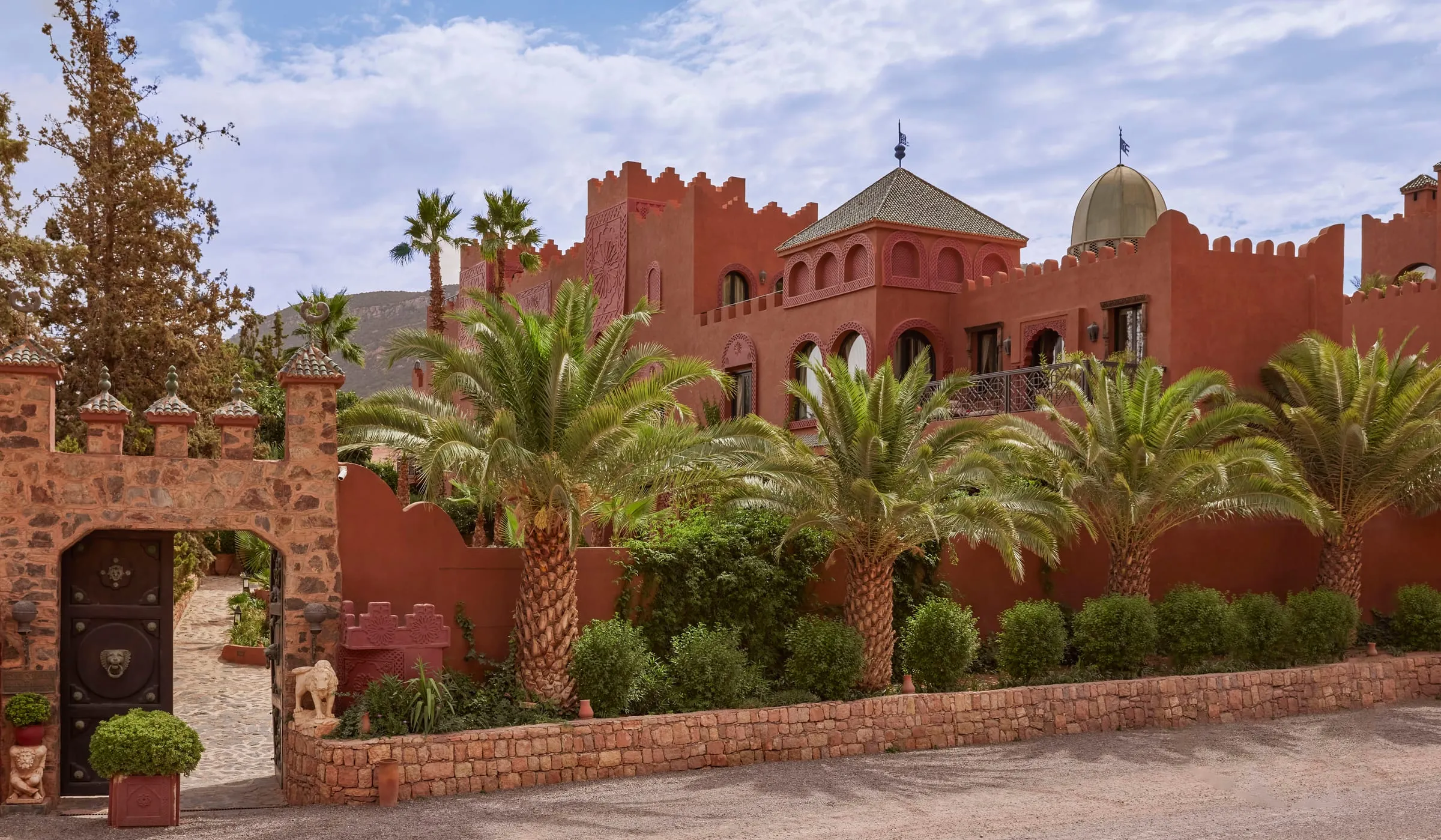
Asni Valley, Atlas Mountains, Morocco
Kasbah Tamadot
Richard Branson's former antiques-dealer's kasbah, rebuilt above the Asni Valley with Berber tents, three-bedroom riads and Mount Toubkal on the horizon.
From $700 per night
Marrakech medina, Hivernage, Morocco
La Mamounia
The 1923 Marrakech palace built around an 18th-century royal garden, where Winston Churchill painted from the balconies and Jacques Garcia's 2009 restoration still sets the city's benchmark for Moorish-Art-Deco grandeur.
From $650 per night
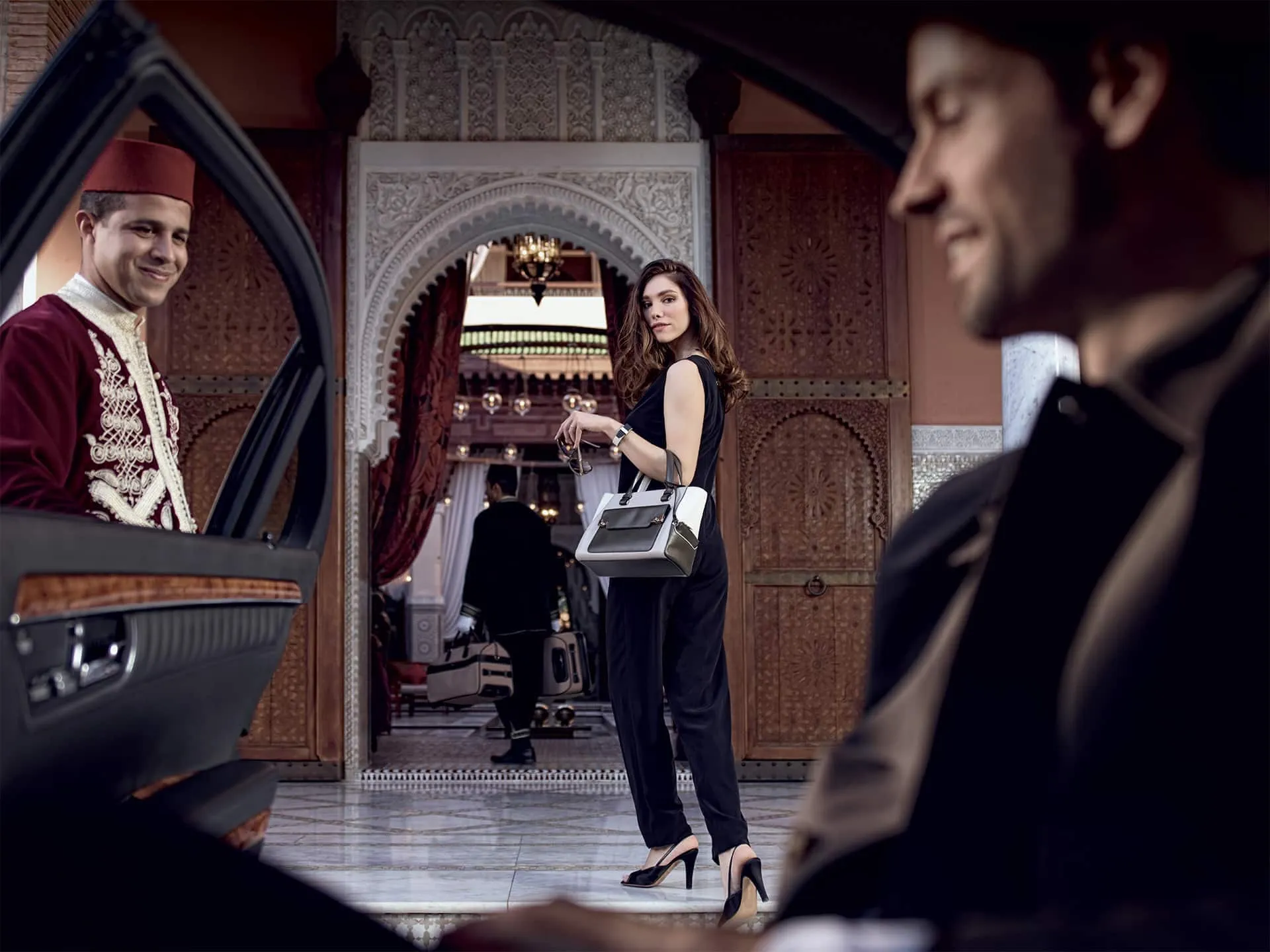
Marrakech medina, Morocco
Royal Mansour Marrakech
A king's private commission built by 1,200 Moroccan artisans, where every guest gets a multi-storey riad and its own rooftop rather than a room.
From $1,500 per night