Moltrasio, Lake Como, Italy
Passalacqua
An 18th-century villa on Lake Como's western shore, restored by one family into the hotel the industry itself voted the best in the world.
- Rates from
- From €1,500 per night
- Nearest airport
- Milan Malpensa (MXP)
- Transfer
- About 1 hour to 1 hour 15 minutes by car, traffic dependent; Milan Linate is a comparable alternative at roughly 1 hour 15 minutes
- Best months
- Late April through June and September through early October, for mild lake weather outside the peak summer crowds; the hotel typically closes over winter
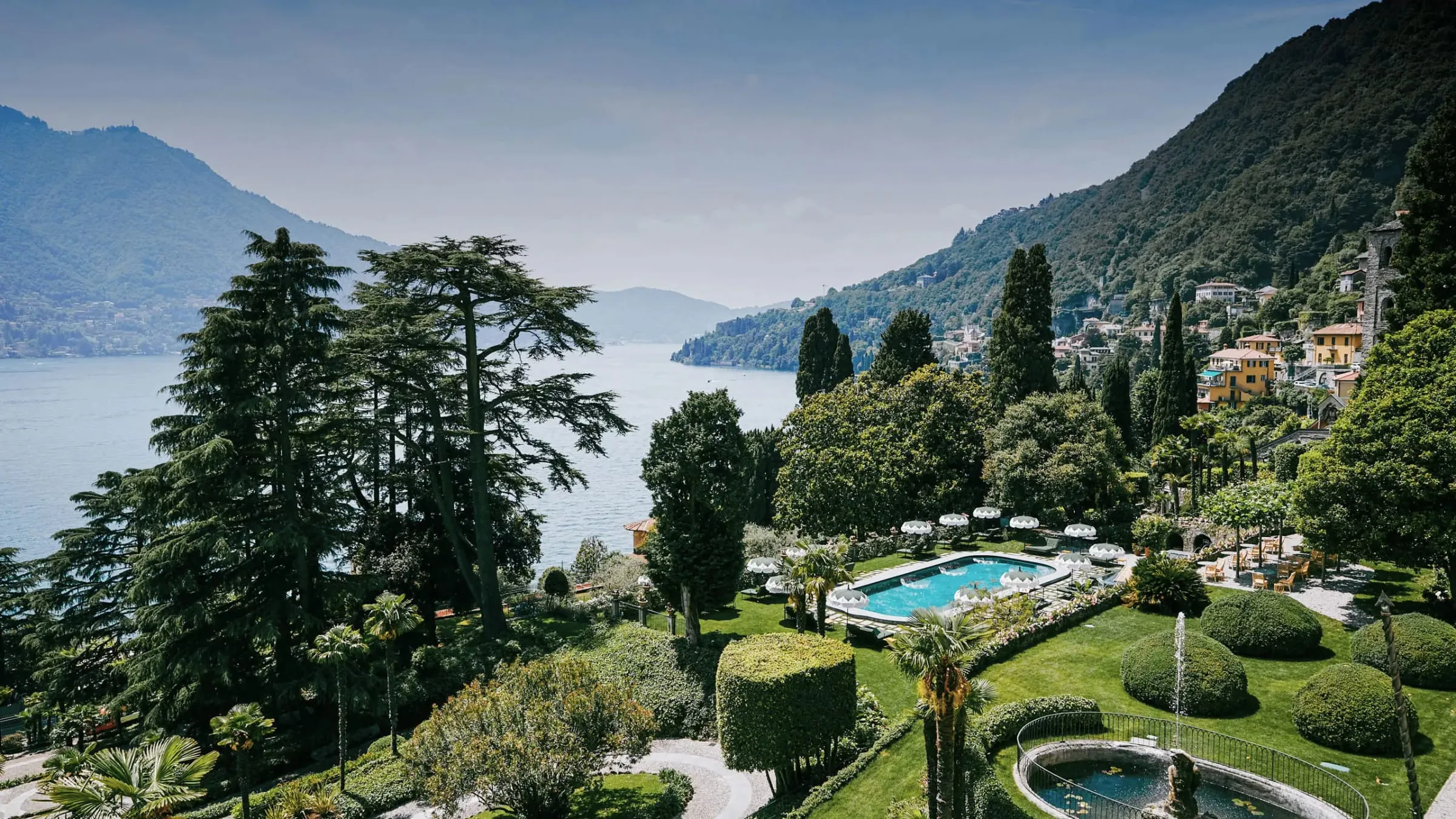
The road along Lake Como’s western shore narrows just past Cernobbio, hugging the waterline through Moltrasio before the trees part to reveal a pale yellow facade rising in tiers above a garden that steps, terrace by terrace, down to a private jetty. There is no sign at the gate large enough to read from a passing boat. Passalacqua does not need one. Since it opened its doors in June 2022, the 18th-century villa has gone from a private residence unknown to most of the hospitality world to, by the industry’s own vote, the best hotel on earth, a title awarded in September 2023 by the inaugural World’s 50 Best Hotels list and defended in the rankings since.
What makes the story unusual is who did the restoring. Passalacqua is not a hotel group’s acquisition or a private-equity flip. It belongs to the De Santis family, Paolo, Antonella, and their daughter Valentina, who already ran the Grand Hotel Tremezzo across the lake and spent three years turning a house that had been Napoleon’s occasional stop and Vincenzo Bellini’s composing retreat into 24 rooms and suites furnished, in large part, with objects the family bought themselves at Italian antique fairs. The result reads less like a hotel renovation than a very grand, very well-funded act of homemaking, which is precisely the effect Valentina De Santis has said the family was chasing.
This guide sets out what a prospective guest can expect to find, researched rather than experienced first-hand: the villa’s construction and architectural pedigree, the interior work carried out since 2019, the Michelin-starred kitchen that arrived in 2024, the spa built into an excavated 18th-century tunnel, and the practical details, from transfer times to seasonal closures, that shape a stay on this stretch of Lake Como’s western bank.
Why It Stands Out
Passalacqua’s central claim on attention is scale of ambition applied to a small property. Twenty-four rooms is a modest count by luxury hotel standards, smaller than most five-star city properties and a fraction of the size of a typical resort, yet the restoration budget and the density of craftsmanship poured into the villa, more than twenty varieties of marble, hand-laid Venetian terrazzo, Fortuny lampshades, Como silk curtains, are closer to what a much larger property might deploy across hundreds of keys. That imbalance, extreme resource concentrated into few rooms, is a large part of why the hotel became the industry’s reference point so quickly after opening.
The other distinguishing factor is ownership continuity. The De Santis family already had a reputation on this lake through the Grand Hotel Tremezzo, and Passalacqua reads as a second, more intimate expression of the same instincts rather than a fresh venture learning as it goes. Valentina De Santis has spoken about the project as a family act of curation as much as a commercial hotel opening, with her parents sourcing antiques at markets and auctions and Valentina placing each piece within the finished rooms. That degree of personal authorship, in an era when many trophy hotel openings are managed by international design consultancies with limited owner involvement, is unusual at this level of the market.
Architecture
The villa at the centre of Passalacqua was built in the second half of the 18th century, raised above the remains of an earlier monastery on land that had belonged to Pope Innocent XI. In 1787, Count Andrea Lucini Passalacqua, a member of one of Moltrasio’s leading noble families, acquired the property and commissioned the architect Felice Soave to expand it into the grandest villa on this stretch of the lake. Soave gave the building its neoclassical proportions and three-storey massing; the decorator Giocondo Albertolli, a figure closely associated with Milanese neoclassicism, carried out the ornamental scheme for the principal rooms, and the painter Andrea Appiani contributed ceiling frescoes, including a Madonna and Child dated 1790.
The finished villa, sited on grounds that extend to roughly 30,000 square metres including its stepped gardens, became one of the largest private residences on Lake Como. Its guest list over the following two centuries reads as a partial history of European power and culture: Napoleon Bonaparte is recorded among its visitors, as is Winston Churchill, and in 1829 the composer Vincenzo Bellini took up residence at the villa to compose two of his best-known operas, La Sonnambula and Norma. The building remained in private hands and was never opened commercially until the De Santis family began restoration work in 2019, an unusually late transition to hotel use for a property of this historical standing on a lake where many grand villas converted to hospitality use decades earlier.
Interior Design
The restoration, which took roughly three years and concluded with the hotel’s June 2022 opening, was led structurally by the local studio Venelli & Kramer, recognised specialists in Larian, or Como-area, architecture and interior work, with the American firm BAMO, led by Pamela Babey and Steve Henry, brought in during the earlier phases of the design. But the interiors that define the finished hotel are, by the family’s own account, largely a De Santis production: Paolo and Antonella De Santis spent the restoration period visiting antique fairs and auction houses across Italy, and Valentina De Santis took responsibility for placing each acquisition within the villa’s rooms.
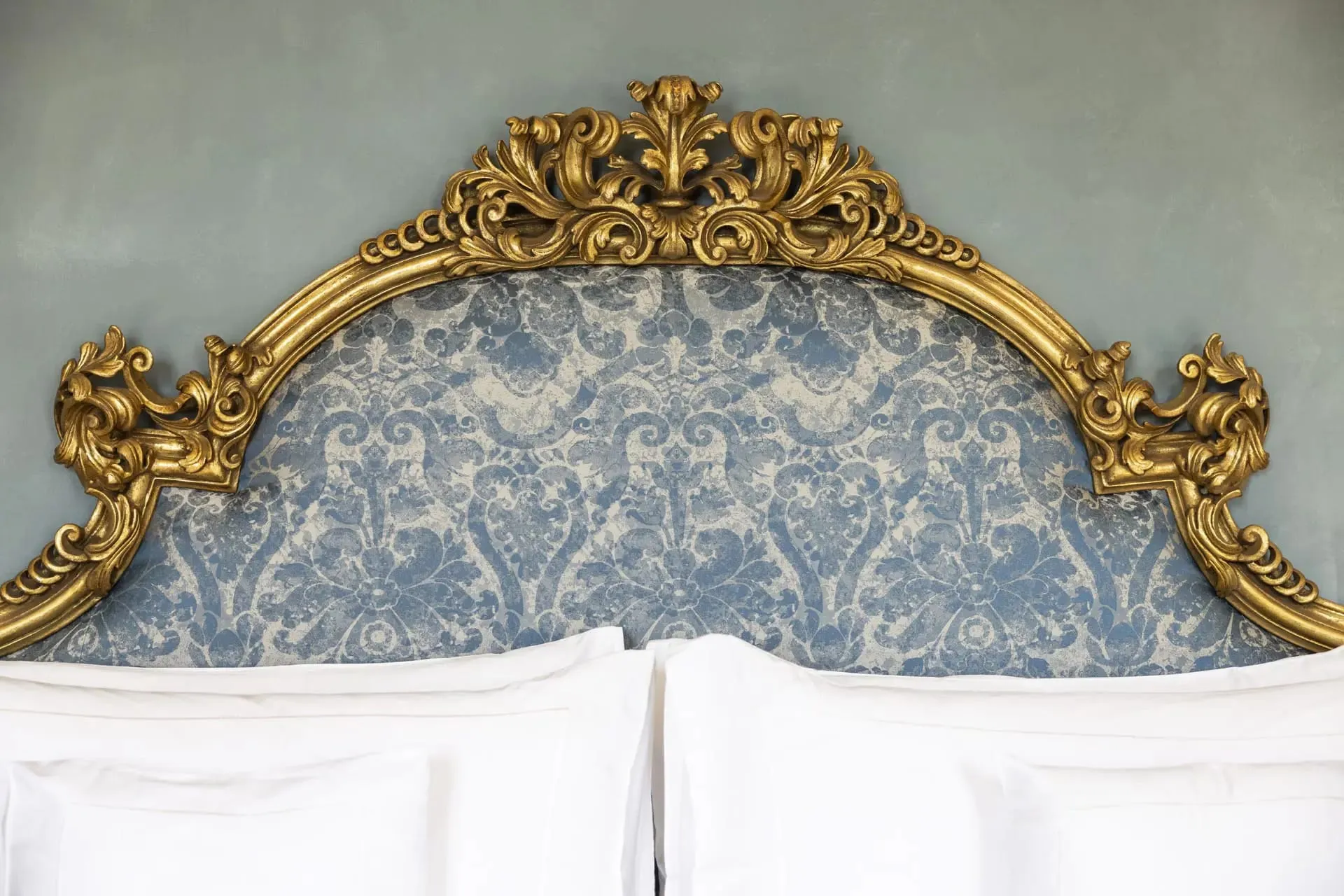
The material palette leans into the villa’s neoclassical bones rather than working against them. More than twenty varieties of marble appear across the property, floors are laid in Venetian terrazzo by artisans still practising the traditional technique, and soft furnishings draw on Fortuny lampshades, Murano glass candelabras, and curtains woven from Como silk taffeta, a material historically produced in the region. Layered against this inherited grandeur is a lighter, more playful register at the pool and bar areas, where the family worked with the designer J.J. Martin of La DoubleJ to introduce maximalist prints and colour, a deliberate counterpoint to the more formal interiors found in the villa’s principal rooms.
Atmosphere
Passalacqua trades on the specific sensation of staying in someone’s inherited family house rather than a purpose-built hotel, an effect the De Santis family has cultivated deliberately. No two of the 24 rooms are decorated alike, and the antiques scattered through the public rooms carry the particular, slightly eccentric logic of a private collection assembled over years rather than a single decorating brief. The pace on-site is unhurried by design: the hotel positions itself around the Italian idea of la villeggiatura, the tradition of retreating to a lakeside or countryside villa for an extended, purposeless stay, and much of the daily rhythm, breakfast on a terrace, an afternoon at the pool, an early-evening walk through the gardens, is built to support that kind of unstructured time rather than a packed activity schedule.
The scale works in the hotel’s favour here. With only 24 keys, the villa rarely feels crowded even at capacity, and the terraced gardens and multiple buildings give guests genuine space to disperse rather than circulate through a handful of shared public rooms.
Rooms and Suites
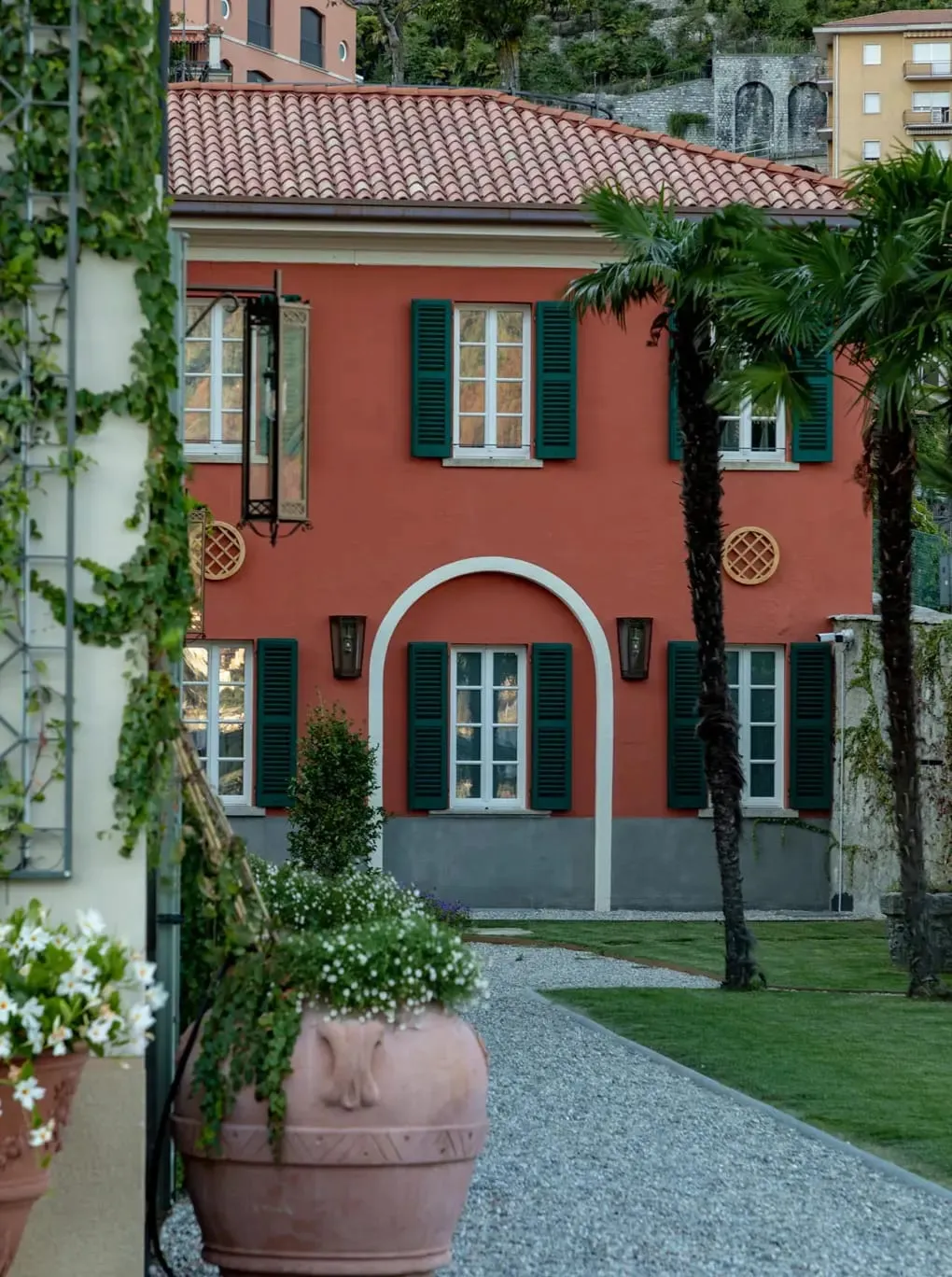
The 24 rooms and suites are distributed across three buildings. The main Villa holds the largest share of accommodation and the most overtly historic rooms, including suites that retain original frescoed ceilings and formal proportions from the Soave-Albertolli scheme. The Palazzo, a converted former stable block on the property, contains a further set of suites with a slightly less formal register than the main house. Casa al Lago, the smallest of the three buildings, sits closest to the water and holds a handful of suites with direct lake views. Room sizes and configurations vary considerably given the individual redesign of each space; some of the largest suites extend past 200 square metres with double-height vaulted ceilings and their own sitting rooms, a reflection of the villa’s original room proportions rather than a standardised hotel floor plan.
Dining
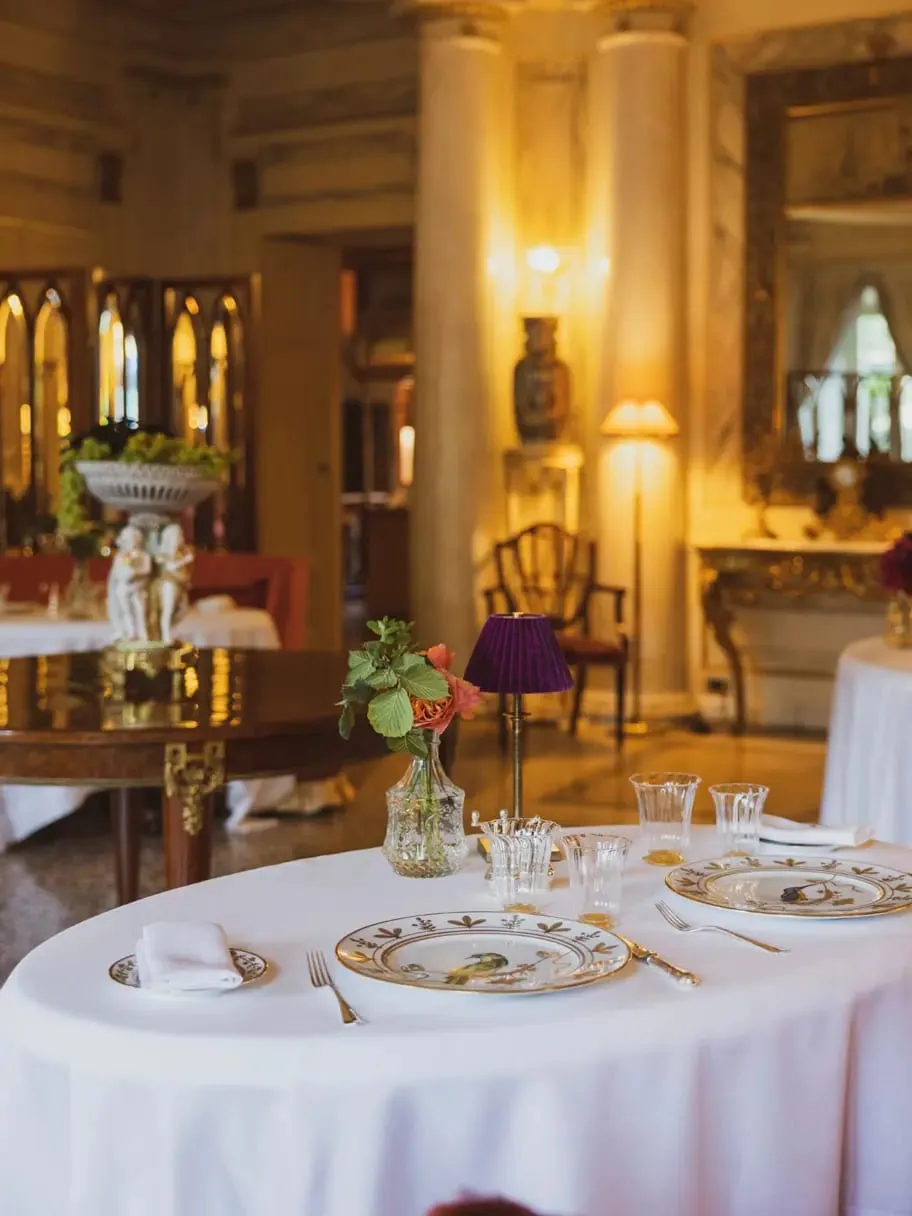
Passalacqua’s kitchen changed hands in March 2024, when chef Viviana Varese, previously best known for her Michelin-starred restaurant Alice in Milan, took over the hotel’s dining programme. Later that year, the restaurant earned its own Michelin star, a rapid endorsement for a kitchen barely months into its tenure. Varese’s cooking at Passalacqua works a contemporary Mediterranean and Lombard register, drawing on the hotel’s own kitchen gardens, fruit trees, and free-range hens alongside lake and regional produce, an approach the hotel frames as garden-to-table rather than formally tasting-menu-driven, even as the food itself operates at a Michelin-starred level of technique. Guests staying at the hotel can eat across several settings depending on the meal and season, from poolside informal service to the more considered evening dining room, and the restaurant also accepts outside reservations from non-guests, subject to availability.
Spa and Wellness
The hotel’s spa is built partly underground, into a network of 18th-century tunnels discovered beneath the gardens during the restoration, a detail that gives the treatment areas a genuinely historic setting rather than a purpose-built one. The centrepiece is an 18-metre indoor pool housed in a converted greenhouse, finished with a Palladian-style marble mosaic cut and laid by hand. Thermal facilities include a dark-fir sauna, a grey marble steam bath in a Mediterranean style, and an onyx shower, and the spa uses the organic Tuscan skincare line Seed to Skin for its treatments, including signature rituals that combine herbal steam, salt scrubs, and an Aufguss sauna ceremony. Beyond the treatment rooms, the hotel builds movement into the daily programme with morning yoga and fitness sessions, some held in or around the indoor pool, and private, after-hours spa access can be arranged for guests seeking additional privacy.
Experiences
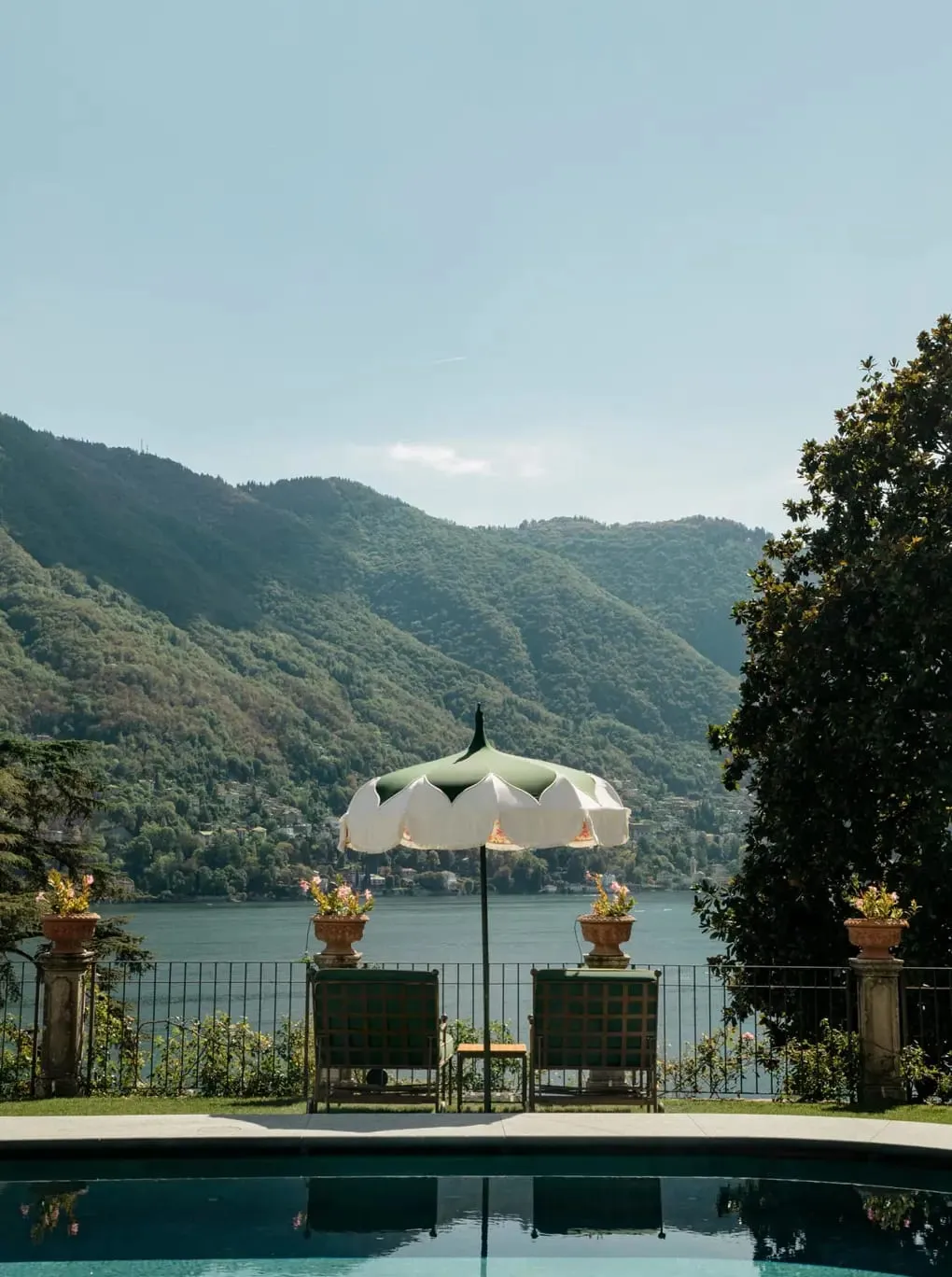
Much of what Passalacqua offers is rooted in the property itself rather than an external excursion list, in keeping with its la villeggiatura framing. The seven acres of terraced gardens, planted with olive groves, roses, magnolia, and mimosa among centuries-old trees, are worked into the daily guest experience: fruit, herbs, and eggs from the kitchen garden and henhouse are available for guests to gather themselves, and the grounds are landscaped specifically to be walked rather than simply viewed from a terrace. The hotel’s outdoor and indoor pools anchor the daytime offering, with the poolside terrace, styled with J.J. Martin’s parasols and prints, functioning as the property’s most sociable space during the warmer months.
Beyond the grounds, the hotel arranges private boat excursions on Lake Como, a near-essential part of any stay on this shore given how much of the lake’s best scenery, and its other landmark villas and towns, is most easily reached by water rather than road. Seasonal programming has included themed evenings and additional spa experiences layered onto the standard offering during the autumn and winter months when the hotel remains open.
Who It Is For
Passalacqua suits travellers whose idea of a Lake Como stay centres on the hotel itself as much as the surrounding towns: couples marking an anniversary or honeymoon, guests with a genuine interest in design, antiques, and restoration who will appreciate the density of craftsmanship in the rooms, and diners drawn specifically by Viviana Varese’s kitchen. Its scale and pricing make it a considered, planned trip rather than a casual booking, and its unhurried pacing suits guests happy to spend long stretches of a day in the gardens or by the pool rather than requiring a packed excursion schedule. It is less suited to large group travel, given the room count, or to travellers who want an extensive on-site activity programme beyond the pool, spa, and boat excursions; those needs are better met by larger resort-style properties elsewhere on the lake.
Best Time to Visit
Lake Como’s most reliable weather runs from late spring through early autumn, and Passalacqua’s own operating calendar reflects that: like most Lake Como luxury properties, the hotel does not operate year-round, closing over the winter months and reopening in spring. Within the open season, late April through June and September into early October tend to offer the mildest temperatures and the lightest crowds, avoiding both the cooler, wetter shoulder weeks and the peak congestion of July and August, when the lake’s towns and roads are at their busiest and rates across the region run highest. Guests planning a stay should confirm exact opening and closing dates for their travel year directly with the hotel, since seasonal calendars can shift slightly year to year.
How to Get There
Passalacqua sits at Via Besana 59, on the lakefront in Moltrasio, roughly 15 minutes by car from the town of Como and about 25 to 30 minutes from Cernobbio. The nearest major airport is Milan Malpensa (MXP), approximately 90 kilometres away; a private car transfer typically takes around an hour to an hour and fifteen minutes depending on traffic, longer during peak periods. Milan Linate is a comparable alternative for travellers on domestic or short-haul European connections, with a broadly similar drive time. The hotel can arrange private transfers from either airport, and also offers transfers from the Como train stations for guests arriving by rail from Milan, a journey of roughly an hour from Milano Centrale to Como San Giovanni. Guests without a private transfer can also reach Moltrasio by lake ferry or taxi boat from Como, a scenic if slower alternative to the road.
Nearby Experiences
Moltrasio itself is a small lakeside village with a handful of restaurants and a public lido, but the wider draw of staying on this shore is the ease of reaching Lake Como’s better-known towns by water. Como, at the lake’s southern tip, holds the Duomo, the funicular up to Brunate for panoramic views, and a lakefront promenade with shopping and dining, all roughly 15 to 20 minutes away by car or boat. Bellagio, often called the pearl of the lake for its position at the junction of Como’s three branches, and the gardens of Villa del Balbianello and Villa Carlotta on the opposite shore are standard private-boat excursions from Passalacqua, with crossing times of well under an hour by chartered boat. Cernobbio, home to the Villa d’Este, sits a short drive south along the same shore road, making a loop of the lake’s grandest historic properties a realistic day trip for guests with a private boat or car arranged through the hotel.
Things to Know Before Booking
Standard check-in is from 3:00 PM and check-out by 11:00 AM, with early arrival or late departure available on request depending on occupancy. The hotel operates seasonally rather than year-round, so travellers should confirm open dates before booking, particularly for stays planned in the winter months. Restaurant reservations, both for hotel guests and outside visitors, are advisable well ahead of a visit given the kitchen’s Michelin recognition and the hotel’s broader profile since 2023. Access by road into Moltrasio follows a narrow lakeside route that can be slow during peak summer traffic, and guests arranging their own transfer should build in extra time accordingly. Pets are generally welcome, though guests are advised to confirm details directly with the hotel in advance.
Sustainability
Passalacqua’s kitchen leans heavily on produce grown on-site, drawing on its own orchard, vegetable garden, and free-range hens to supply a meaningful share of what is served to guests, a garden-to-table approach that reduces the property’s reliance on imported ingredients even as it operates a Michelin-starred kitchen. On the mechanical side, the hotel uses a cooling system that draws cold water from the depths of Lake Como to help condition the building, an approach increasingly used by properties on the lake to reduce conventional air-conditioning loads. As with many restorations of protected historic buildings, the villa’s heritage status limits some of the more invasive efficiency retrofits available to newer construction, a constraint the property shares with other converted historic hotels on the lake.
Practical Information
Passalacqua is located at Via Besana 59, 22010 Moltrasio, Como, Italy. Check-in is from 3:00 PM and check-out by 11:00 AM. The hotel is independently owned and operated by the De Santis family, who also own the Grand Hotel Tremezzo on Lake Como’s eastern shore. Reservations, current seasonal opening dates, and restaurant bookings can be arranged through the hotel’s official website.
Editorial Conclusion
Passalacqua’s rise from private villa to the industry’s own pick for the best hotel in the world happened inside roughly eighteen months of operation, an unusually fast trajectory even by the standards of a hospitality press eager for a new story. What has kept the property at the centre of that conversation since is less the speed of the accolade than the specificity behind it: a family that already understood Lake Como hospitality through the Grand Hotel Tremezzo, applying that experience to a smaller, more personal project where the antiques were bought by the owners themselves and the kitchen has since earned its own Michelin star. For travellers weighing where to spend a Lake Como stay, Passalacqua represents a particular bet, on restraint of scale over breadth of amenity, and on a restoration project’s family narrative being worth the premium, that has, so far, paid off in the eyes of both guests and the industry that rates them.
In pictures
On the map
Moltrasio, Lake Como, Italy
Questions
Frequently asked
When did Passalacqua open as a hotel?
Passalacqua opened on 3 June 2022, after roughly three years of restoration undertaken by the De Santis family, who also own the Grand Hotel Tremezzo on the opposite shore of Lake Como. The villa itself dates to the late 18th century and had never previously operated as a hotel.
Who owns Passalacqua?
The hotel is owned and run by the De Santis family, Paolo, Antonella, and their daughter Valentina De Santis, who serves as CEO. The family also owns the Grand Hotel Tremezzo in Tremezzina, on Lake Como's eastern shore, and worked with the San Francisco design studio BAMO on the initial restoration.
How many rooms does Passalacqua have?
Passalacqua has 24 rooms and suites spread across three buildings: the main Villa, the Palazzo (the former stables), and Casa al Lago, a smaller lakefront building. No two rooms are decorated alike.
Does Passalacqua have a Michelin-starred restaurant?
Yes. Chef Viviana Varese, formerly of the Michelin-starred restaurant Alice in Milan, took over the kitchen in March 2024, and it was awarded a Michelin star later that year. The restaurant draws on Lombard lake produce and the hotel's own kitchen gardens.
Was Passalacqua really named the best hotel in the world?
Yes. In September 2023, Passalacqua was named number one in the inaugural World's 50 Best Hotels list, an offshoot of the World's 50 Best Restaurants organisation. It has remained in the upper tier of the ranking in subsequent years.
How far is Passalacqua from Milan?
Passalacqua is roughly 90 kilometres from Milan Malpensa Airport, a drive of about an hour to an hour and fifteen minutes depending on traffic, and about 15 minutes by car from the town of Como.
Same destination
More hotel guides in Italy
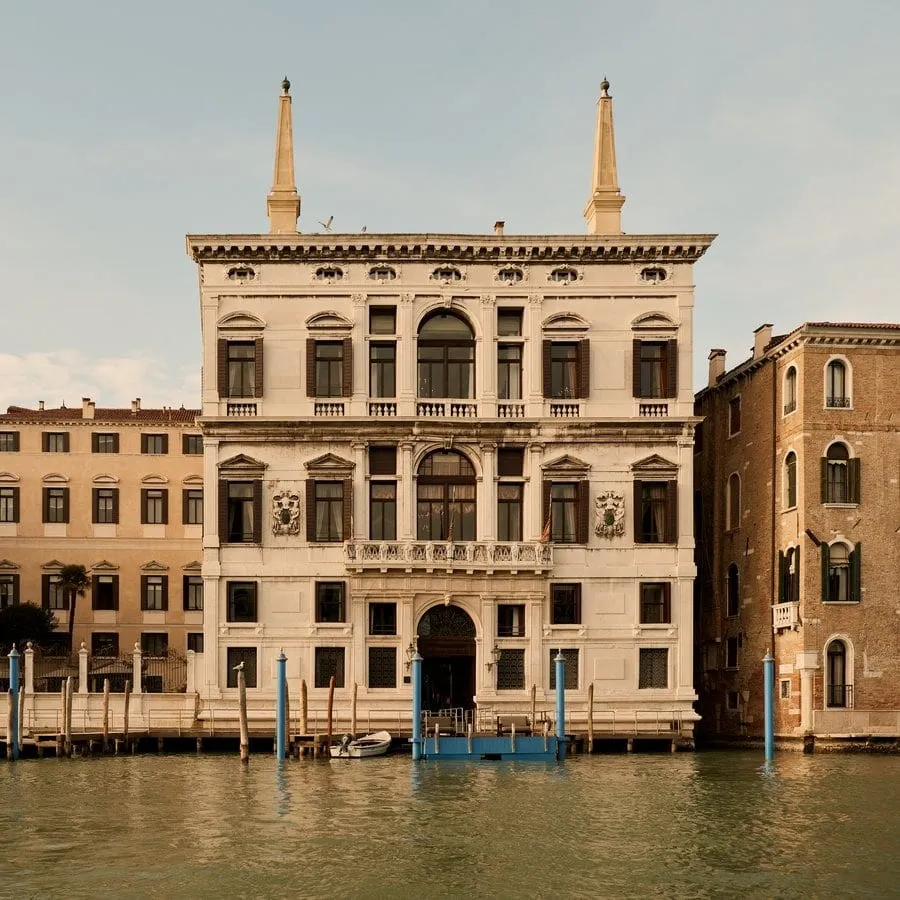
San Polo, Venice, Italy
Aman Venice
A 16th-century Grand Canal palazzo, frescoed by the Tiepolo family and fitted with a rare private garden, reopened in 2013 as Aman's first Italian address.
From €1,800 per night
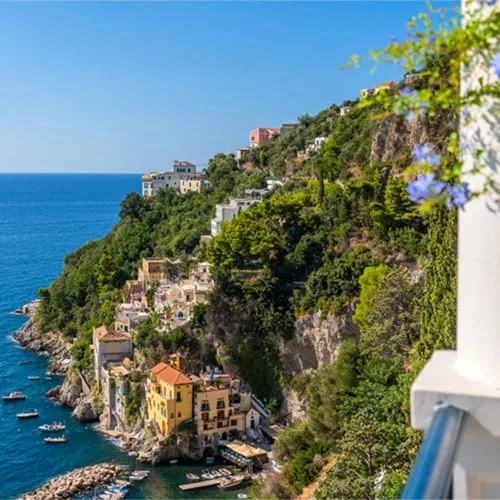
Amalfi, Amalfi Coast, Italy
Borgo Santandrea
A former 1950s seaside hotel rebuilt across nine cliffside levels above Conca dei Marini, reopened in 2022 as the first new luxury address on the Amalfi Coast in over a decade.
From €950 per night
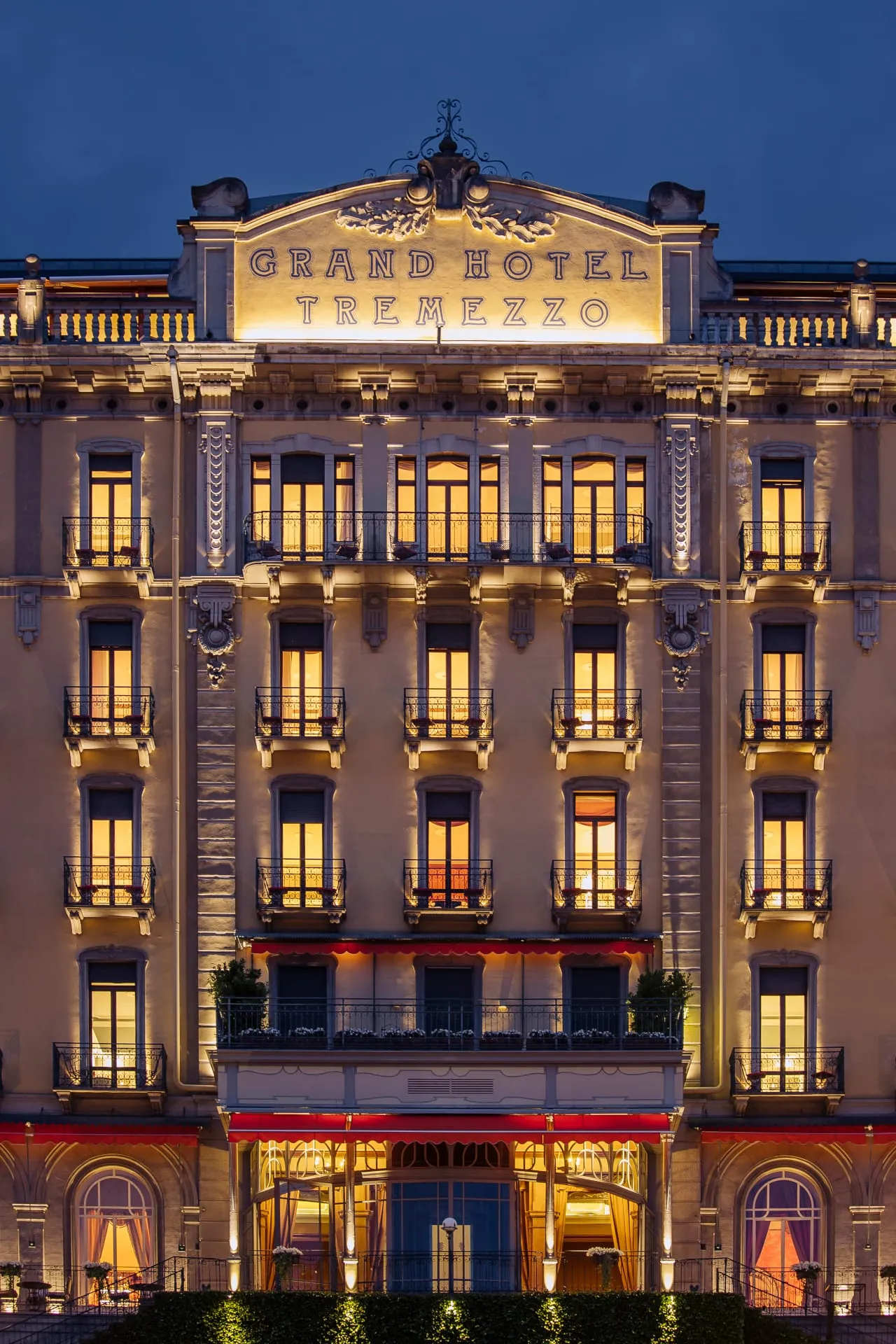
Tremezzo, Tremezzina, Lake Como, Italy
Grand Hotel Tremezzo
A 1910 Belle Époque palace on Lake Como with a heated pool that floats on the lake itself, still run by the family that also opened Passalacqua down the shore.
From €1,000 per night