Montalcino, Val d'Orcia, Italy
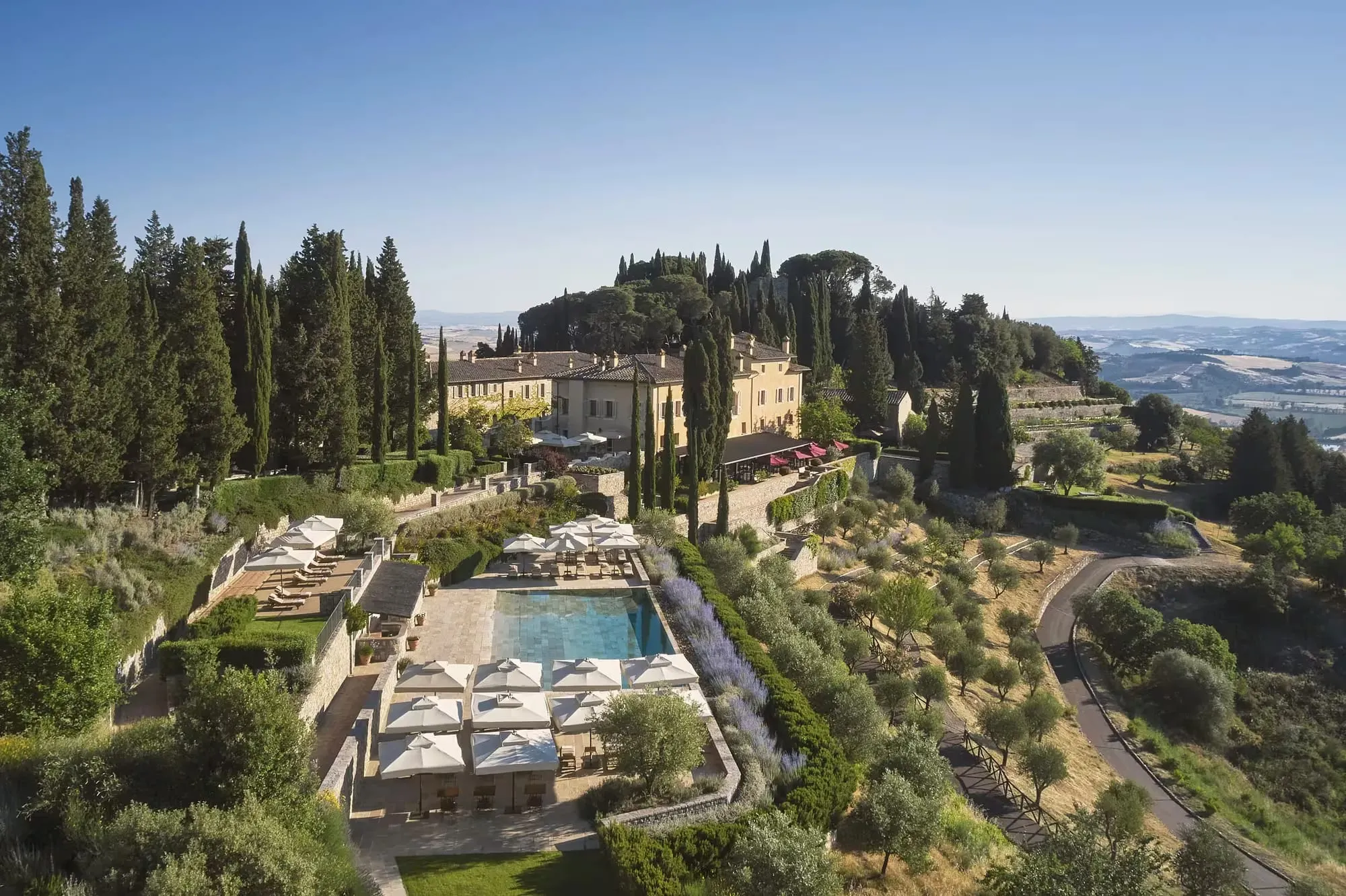
Rosewood Castiglion del Bosco
A 900-year-old fortified borgo turned into Italy's only private golf estate and a working Brunello di Montalcino winery, hidden inside 5,000 acres of UNESCO-listed Val d'Orcia.
- Rates from
- From €1,350 per night
- Nearest airport
- Florence Airport (FLR)
- Transfer
- About 2 hours by road
- Best months
- May to June and September to October
There is a particular kind of Tuscan hotel that photographs beautifully and means very little: a farmhouse dressed up with linen and olive groves, its history invented for the brochure. Rosewood Castiglion del Bosco is not that hotel. Its borgo has stood on this hillside above Montalcino for roughly 900 years, its castle ruins and its 14th-century church predate the idea of Tuscan tourism by half a millennium, and the vineyards spreading out beneath its walls are not landscaping. They are a working Brunello di Montalcino estate, one of the original 25 founding members of the Consorzio del Vino Brunello di Montalcino in 1967, and today reportedly the fifth-largest producer of the wine in the appellation.
The estate belongs to Massimo and Chiara Ferragamo, of the Florentine fashion family, who bought the 5,000-acre property in 2003 in search of land for making serious wine and ended up with a great deal more: an Etruscan-era hillside, a 12th-century castle, a chapel holding a rediscovered 14th-century fresco attributed to the Sienese painter Pietro Lorenzetti, and an entire medieval village largely intact but empty. Rather than build a resort beside this history, the Ferragamos restored the borgo itself and opened it to guests, and in 2015 handed its management to Rosewood Hotels & Resorts, making it the brand’s first property in Italy.
What guests encounter today is less a hotel occupying a historic site than a small, functioning Tuscan village that happens to also be a five-star resort: 42 suites and 11 farmhouse villas scattered across a property that also holds a two-Michelin-starred restaurant, a working winery, and Italy’s only private 18-hole golf course, all inside the boundaries of the UNESCO-listed Val d’Orcia. It is a large claim for a small village to carry, and one of the more interesting questions about a stay here is whether the place manages it without losing the quiet that made the borgo worth saving in the first place.
Why It Stands Out
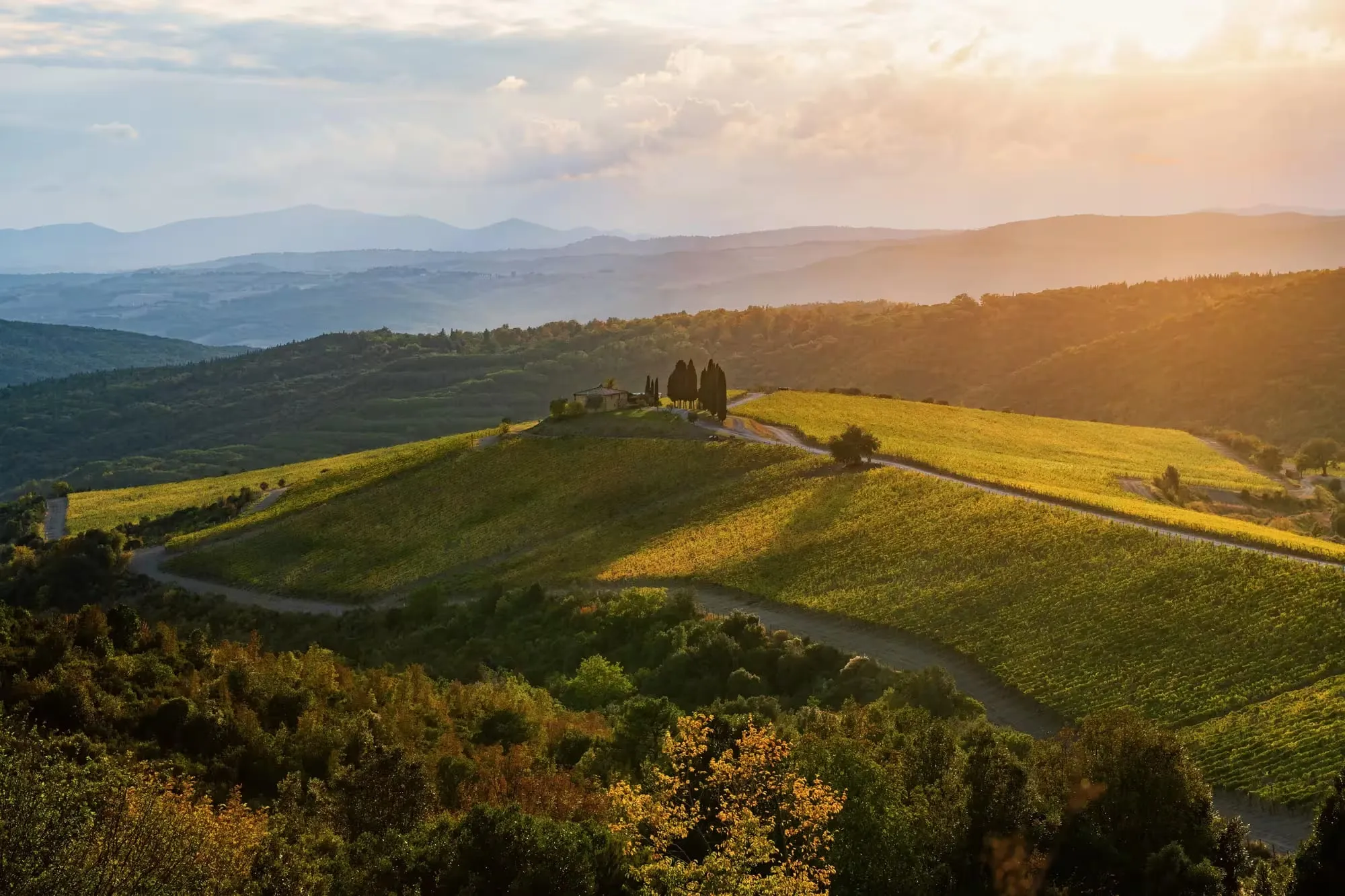
Most Tuscan luxury hotels sell a version of the countryside: manicured, curated, arranged for a view. Castiglion del Bosco sells the actual working landscape, largely unedited. Its Sangiovese vineyards, roughly 62 hectares planted on the Capanna slopes at 350 metres above sea level, exist to make Brunello di Montalcino, Rosso di Montalcino and the estate’s single-vineyard Campo del Drago Brunello regardless of whether a single guest ever checks in; the hotel is, in a real sense, a guesthouse attached to a wine business rather than the other way around. That gives the property a working rhythm most resort vineyards, planted for atmosphere, cannot replicate.
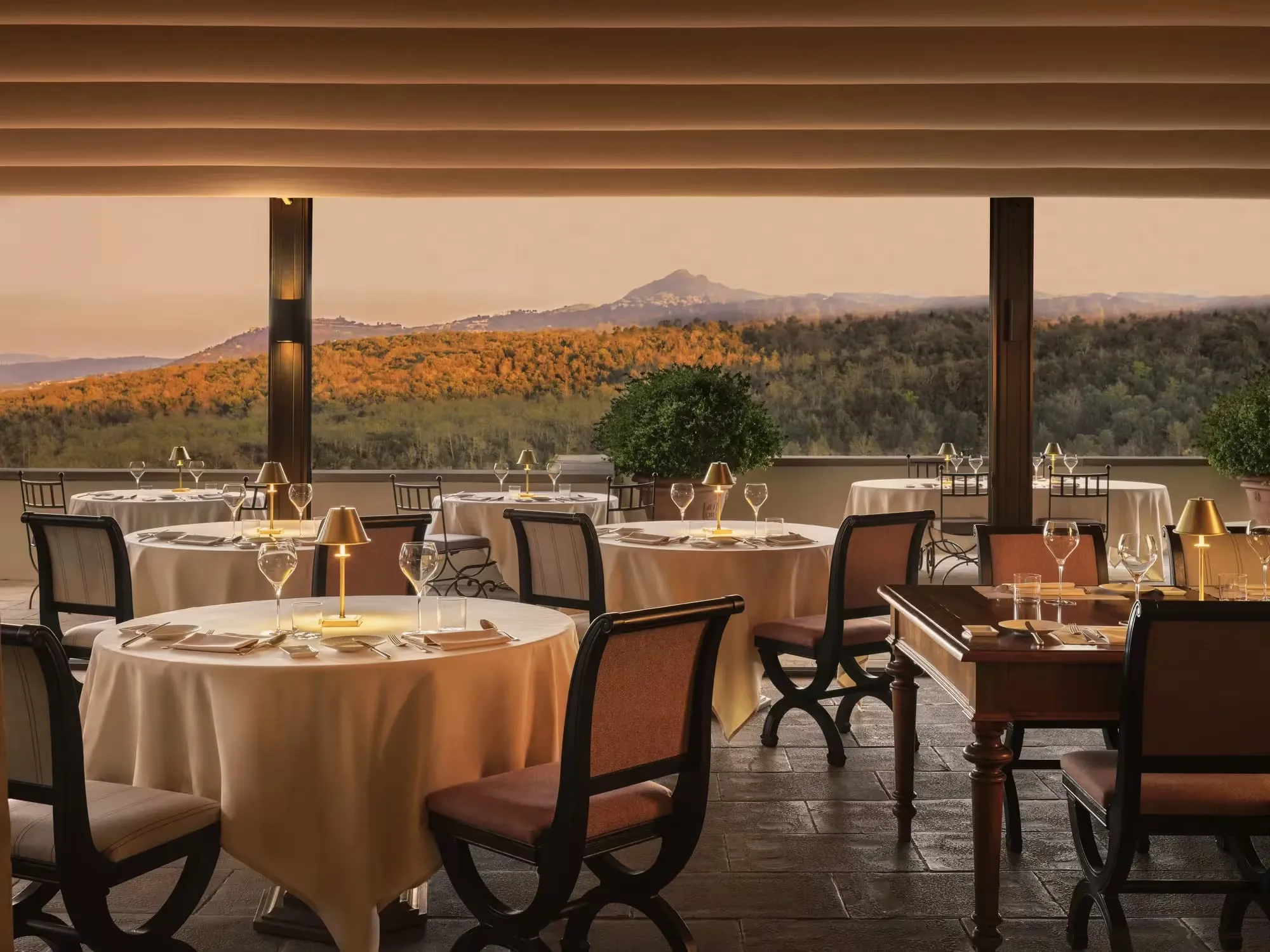
The second distinguishing fact is culinary. Ristorante Campo del Drago, the estate’s fine-dining room, took its first Michelin star in the 2023 Guide and its second in 2025, becoming the first restaurant in the entire Rosewood portfolio, across every country the brand operates in, to hold two stars. That is a meaningful marker for a countryside hotel restaurant working largely from its own organic garden, and it places serious culinary ambition inside a village whose year-round population, before the hotel, would barely have filled the dining room.
The third is golf, an amenity that has nothing to do with the traditional Tuscan itinerary and everything to do with why this particular estate draws the guests it does. The Club at Castiglion del Bosco, an 18-hole course designed by Tom Weiskopf and completed in 2011, is described by the resort as Italy’s only fully private golf club, laid out inside a UNESCO World Heritage landscape that was never built with fairways in mind. Between the wine, the two Michelin stars and the golf, Castiglion del Bosco assembles a set of serious, adult interests inside a single Tuscan address that few properties in the region attempt simultaneously.
Architecture
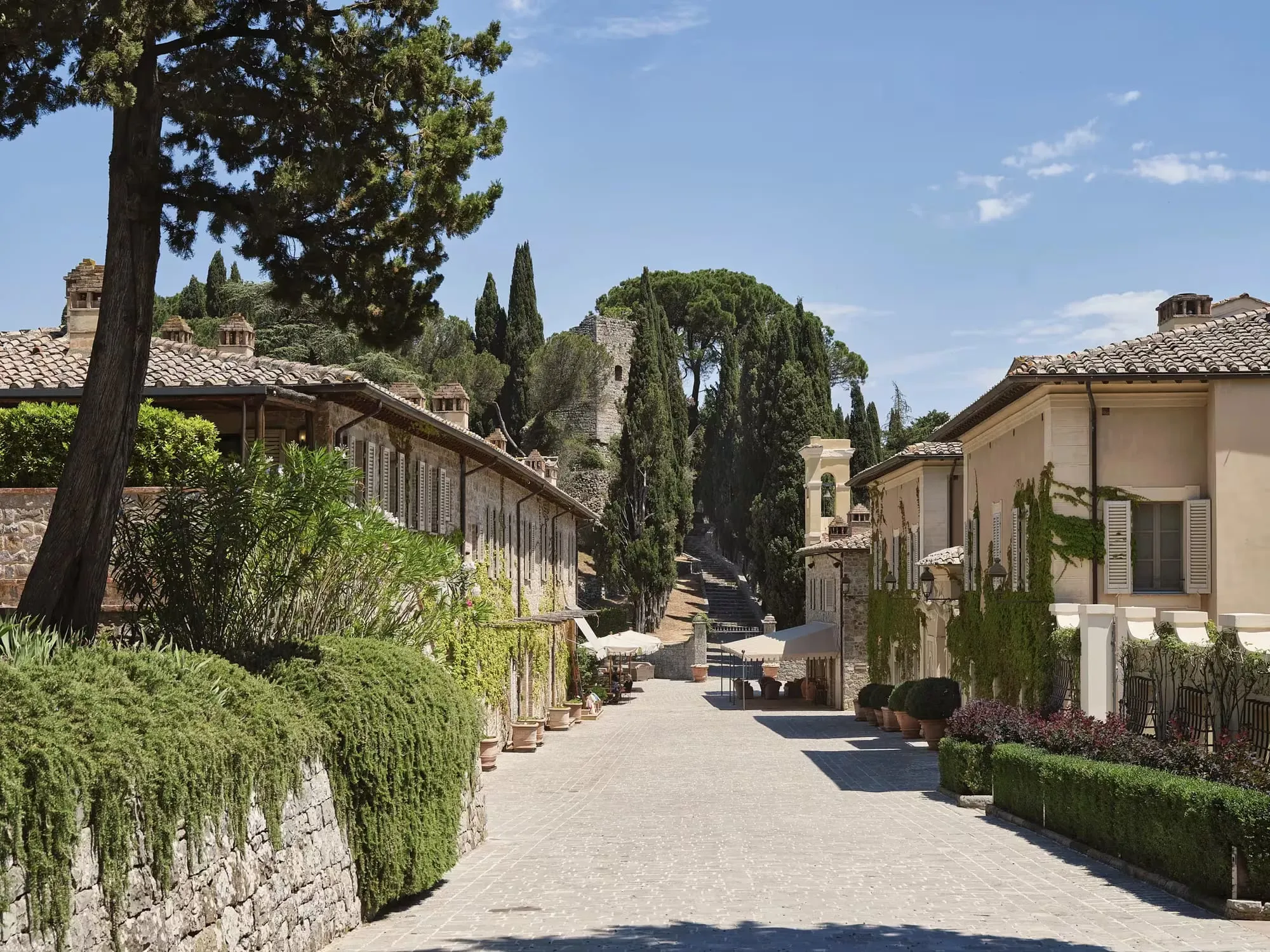
The oldest fabric on the estate predates the hotel by roughly two millennia. Archaeological traces on the hillside point to an Etruscan-era stronghold, and the site’s continuous documented history runs from a castle raised around 1100, whose ruins still crown the property, through a Gothic chapel and the parish church of San Michele Arcangelo, still standing at the heart of the borgo. Behind its altar, a fresco attributed to Pietro Lorenzetti, a leading figure of the Sienese school and dated to around 1345, was rediscovered under later plasterwork and identified by the art historian Cesare Brandi in the 20th century, a genuinely significant piece of medieval Sienese painting still in its original setting rather than relocated to a museum.
Around that historic core, the Ferragamo family’s restoration, undertaken after their 2003 purchase, worked to keep the borgo’s medieval street pattern, stone facades and rooflines intact rather than modernised. Guest suites and public rooms occupy converted village buildings that once housed the estate’s agricultural and residential functions, while the 11 villas elsewhere on the property are restorations of 17th- and 18th-century farmhouses, each standing on its own patch of the wider estate rather than clustered around the borgo. The result is architecture with no single hotel-scale gesture, no grand new wing or signature facade, only a village restored close to what it already was, with a working vineyard, an operating winery and a golf course arranged discreetly around it.
Interior Design
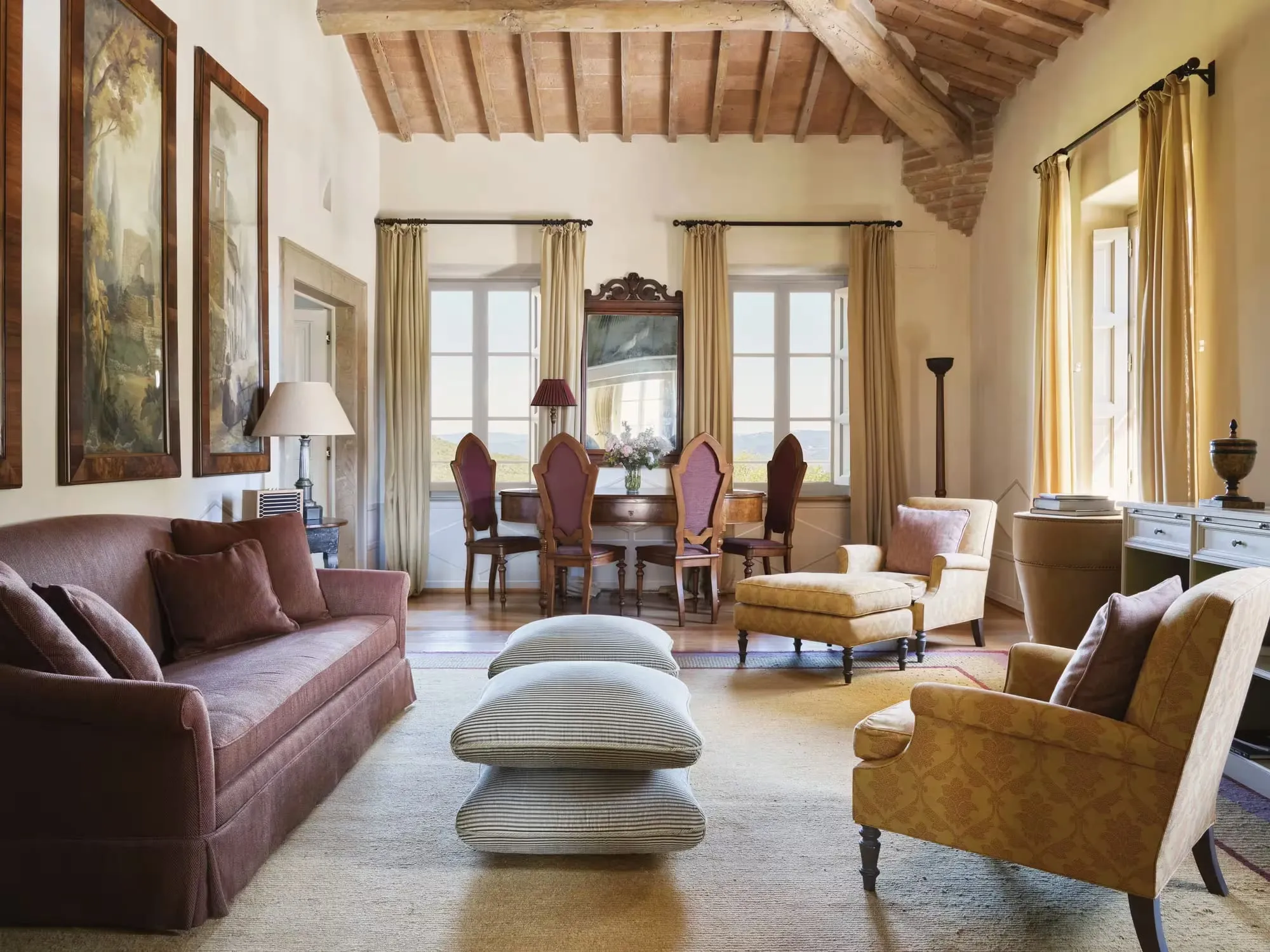
Chiara Ferragamo is widely credited with shaping the interior character of the property, working with antiques and materials sourced to match the age of the buildings rather than importing a generic five-star vocabulary. Inside the suites, exposed wooden ceiling beams, worn stone floors and thick plastered walls are left legible rather than smoothed over, furnished with antique Tuscan pieces alongside quieter, contemporary upholstery and updated bathrooms and technology. The effect leans toward an inherited family house rather than a styled hotel room, muted earth and plaster tones, aged wood, linen and terracotta, consistent with the material palette of the surrounding countryside.
The villas carry a related but distinct character, closer to a private Tuscan farmhouse than a boutique suite: each was converted from a specific 17th- or 18th-century agricultural building, so proportions, ceiling heights and window placements vary from villa to villa in a way no standardised design programme would produce. Public spaces in the borgo, the Lobby Bar with its Tuscan fireplace, the Osteria La Canonica set beside the church, keep to the same restrained, materials-led approach, letting the age of the stone and timber carry the design rather than layering in decorative flourish.
Atmosphere
Because the hotel is dispersed across an entire village and a much wider estate beyond it, the atmosphere shifts noticeably depending on where a guest is standing. Inside the borgo, the mood is intimate and slow: narrow lanes between the church, the osteria and the suites, largely free of vehicle traffic, closer to visiting a small, private hill town than checking into a resort. Out on the wider estate, at the villas, the pools, the golf course or among the vines, the register opens up into something more spacious and rural, cypress-lined roads, long views across the Val d’Orcia, a sense of genuine remove from anything urban.
Service throughout aims for warmth over formality, in keeping with a family-owned property rather than a large international chain, though the Rosewood management layer brings a consistent, practised standard of hospitality across both the borgo and the outlying villas. The overall pace is unhurried by design: this is not a property built around a packed activity schedule, and much of what there is to do, walking the vineyards, tasting wine, playing an early round of golf before the heat sets in, rewards guests who are content to let a day take its own shape.
Rooms and Suites
The hotel counts 42 suites within the borgo and main buildings, alongside 11 standalone villas spread across the wider estate, a relatively modest total room count for a property covering 5,000 acres, which keeps density low even at full occupancy. Suite categories run from one-bedroom Borgo Suites, pairing a master bedroom with a generous living room in the heart of the historic village, up to two-bedroom configurations intended for families or small groups travelling together, all featuring the exposed beams, antique furnishings and updated technology consistent across the property.
The villas sit at the top of the accommodation hierarchy in terms of privacy and self-sufficiency. Each of the 11 is a restored 17th- or 18th-century farmhouse with its own garden, terrace and heated infinity pool, and each comes with the use of a Land Rover Defender or similar 4x4 for exploring the estate independently, a detail that signals how much of the property is genuinely working countryside rather than manicured grounds close to the main buildings. Villa Casa del Fiume, one of the named examples, sits in a valley position with views toward Montalcino and includes a 17th-century wood-fired oven, illustrating the degree to which each villa retains its own distinct architectural history rather than following a repeated template.
Dining
Ristorante Campo del Drago carries the property’s culinary reputation, having earned a first Michelin star in the 2023 Guide and a second in 2025, the only two-starred restaurant across Rosewood’s global portfolio. Executive Chef Matteo Temperini, Tuscan-born, and Maître d’ Maikol Calosci run a kitchen built substantially around produce from the resort’s own organic garden, serving three tasting menus alongside an à la carte option, in a contemporary dining room with a panoramic terrace over the estate.
A more relaxed register sits a short walk away at Osteria La Canonica, positioned within the borgo beside the church of San Michele, serving Tuscan trattoria staples in a setting the hotel describes as capturing the warmth of a genuine village restaurant rather than a hotel dining room recreating one. The Lobby Bar, built around a Tuscan fireplace, covers light lunches, afternoon tea and evening cocktails, while a Pool Bar handles simple Italian food through the day at the estate pool. La Canonica Cooking School runs hands-on classes in traditional regional cooking, and in-villa dining, garden barbecues, wood-fired pizza, private breakfasts, extends the kitchens’ reach out to the farmhouses. Seasonal programming adds further texture across the year: recurring Sunday gatherings, a Monday seafood evening, a midweek aperitivo series, and vineyard dinners staged directly among the vines.
Spa and Wellness
The Spa at Castiglion del Bosco takes its cues from the surrounding Tuscan countryside, offering treatments alongside a sauna, steam bath and an estate pool used for relaxation as much as exercise. It is a comparatively low-key wellness offering by ultra-luxury standards, in keeping with a property whose primary outdoor draws, vineyards, golf, walking trails, already pull guests out of doors rather than into a treatment room, though a fitness centre rounds out the facilities for guests wanting a more conventional workout.
Across the wider estate, the resort maintains a notably high number of swimming pools, reportedly 13 in total when the villas’ private infinity pools are counted alongside the estate pool, giving guests scattered across the property a pool within easy reach of wherever they happen to be staying rather than a single central pool deck shared by everyone.
Experiences
Wine sits at the centre of the experience roster, unsurprisingly for an estate that has been producing Brunello di Montalcino since the early 20th century. The property’s own winery offers tastings and cellar visits through the vineyards that supply Ristorante Campo del Drago and the estate’s bottlings, including the single-vineyard Campo del Drago Brunello and the Millecento Riserva, and guests can generally arrange visits to Tenuta Prima Pietra, the estate’s coastal sister property on the Tuscan coast, which produces a Bordeaux-blend flagship wine from a smaller, separate vineyard.
Golf is the estate’s other signature pursuit: The Club at Castiglion del Bosco, an 18-hole course designed by Tom Weiskopf and opened in 2011, is billed as Italy’s only fully private golf club, laid out within the Val d’Orcia’s UNESCO-protected landscape of cypress avenues and rolling farmland. Beyond wine and golf, the estate offers guided walks and cycling through the Val d’Orcia, cooking classes at La Canonica, horseback riding, and the use of the villas’ included 4x4 vehicles for guests wanting to explore the wider property or the surrounding countryside independently. Montalcino’s medieval centre, with its fortress and its own long association with Brunello, sits a short drive from the estate gates for guests wanting a town to walk through between vineyard visits.
Who It Is For
The property suits travellers whose idea of a Tuscan holiday includes real wine knowledge, or the desire to acquire some, alongside serious dining and the option of golf, rather than a purely scenic countryside escape. Couples drawn to Brunello, to a two-Michelin-starred table, and to genuine medieval architecture will find a concentration of those interests here that few other Tuscan addresses match in one place. Families and small groups are well served by the villa category in particular, each with its own pool, garden and 4x4, offering a degree of privacy and self-sufficiency that suits a multigenerational stay or a group of friends who want their own space alongside shared estate facilities.
It is a less natural fit for travellers seeking a beach, a city-adjacent base, or a hotel with a dense schedule of organised activity and entertainment. Castiglion del Bosco rewards guests happy to set their own pace across a large rural estate, walking vineyards, tasting wine, playing an early round of golf, rather than those looking for constant programming or proximity to Florence’s or Siena’s museums, both a meaningful drive away.
Best Time to Visit
The hotel’s suites operate seasonally, generally reopening in late March and closing around mid-November, which sets the outer bounds of a possible visit before weather even enters the conversation; the 11 villas remain bookable through the winter for guests who want the estate outside that main window. Within the open season, late spring, May and June, and early autumn, September and October, offer the most reliable combination of comfortable temperatures, manageable crowds and clear light across the Val d’Orcia’s hills, alongside the practical bonus of the wine harvest running through September and into October for guests interested in that side of the estate. High summer, July and August, brings the fullest heat of the Tuscan countryside and the busiest stretch for the golf course and pools, while the shoulder weeks at either end of the season, late March to April and late October into November, run quieter and cooler, better suited to walking and vineyard visits than to long pool days.
How to Get There
Florence Airport (FLR) is the closest international gateway, roughly 120 kilometres from the estate and about two hours by road, and is generally the most practical arrival point for most guests. Rome Fiumicino and Pisa airports both carry considerably more international connections but sit a longer drive away, typically around three hours from the property, a trade-off worth weighing against flight availability from a guest’s point of origin. Travellers arriving from within Italy can also reach Siena by train and continue to the estate by private transfer or hire car in under an hour. For guests wanting to bypass the drive entirely, the estate has its own helipad, and a helicopter transfer from Siena or the private airport at Grosseto takes roughly 45 minutes; the hotel can arrange this and any of the road transfers on request.
Nearby Experiences
Montalcino itself, the walled hill town after which the estate’s wine is named, sits a short drive from the property gates and rewards a half-day of wandering its fortress, its narrow lanes and its own concentration of Brunello producers and enotecas. The wider Val d’Orcia opens out from there: Pienza, the planned Renaissance town commissioned by Pope Pius II, and San Quirico d’Orcia, both within easy reach, are natural stops for travellers wanting the region’s classic hill-town architecture beyond Montalcino’s walls. Siena, with its Piazza del Campo and Duomo, sits within roughly an hour’s drive and makes a reasonable full-day excursion for guests willing to give up a day at the estate for a city visit.
Further afield, Florence is within the same two-hour range as the airport transfer, making a day trip feasible for guests staying long enough to spare it, though most visitors treat the estate itself, and the surrounding vineyards and hill towns of the Val d’Orcia, as the primary draw rather than a base for city-hopping. The wider Brunello di Montalcino wine district, dotted with smaller family producers beyond the estate’s own winery, offers further tasting detours in almost any direction from the property.
Things to Know Before Booking
The seasonal calendar is the single most important practical detail to confirm before booking a suite: the main building typically operates from late March to mid-November, and travellers targeting the very start or end of that window should verify exact dates with the hotel, since they shift slightly year to year. Guests wanting a winter stay on the estate should look specifically at the villa category, which remains available year-round independent of the suites’ seasonal closure.
Given the property’s rural, hillside setting, a rental car or private driver is close to essential for guests who want to explore beyond the estate itself; the villas’ included 4x4 vehicles help within the property but are not intended for extended road trips. The golf course is private and reserved for members and resident guests rather than open to the public, so travellers hoping to play should confirm access and tee times as part of their booking rather than assuming walk-up availability. Finally, because Ristorante Campo del Drago holds two Michelin stars and seats a limited dining room, booking dinner well in advance of arrival, ideally at the same time as the room, is worth doing rather than leaving to chance on property.
Sustainability
The estate’s environmental profile is closely tied to its working agricultural character rather than presented as a separate hotel initiative: the vineyards and winery operate as a genuine production business, and the resort draws much of its restaurant produce from its own organic garden rather than importing it. The scale of the property, 5,000 acres of largely undeveloped countryside surrounding a small, dense historic core, keeps the built footprint modest relative to the land it sits within, and the estate’s position inside the Val d’Orcia UNESCO World Heritage landscape ties its stewardship, at least in part, to the wider protections and expectations that designation carries for the surrounding countryside.
Practical Information
Check-in at Rosewood Castiglion del Bosco is from 3:00 PM, with check-out by 12:00 PM. The property’s main suite building operates seasonally, generally from late March to mid-November, while its 11 private villas remain bookable year-round. Rosewood Castiglion del Bosco was recognised as a five-star resort in the 2025 Forbes Travel Guide Star Awards, and its restaurant, Ristorante Campo del Drago, holds two Michelin stars as of the 2025 Michelin Guide to Italy. The nearest airport is Florence (FLR), roughly two hours away by road; Rome Fiumicino and Pisa are further alternatives with more international routes, at closer to three hours’ drive. Most guests find three to four nights sufficient to settle into the estate, work through the wine programme and the golf course, and experience at least one dinner at Campo del Drago.
Editorial Conclusion
What distinguishes Castiglion del Bosco from the broader field of Tuscan countryside hotels is that almost nothing about it was built for guests in the first place. The castle predates the hotel by roughly 900 years, the vineyards exist to make Brunello di Montalcino whether or not a single suite is occupied, and the fresco behind the altar in San Michele Arcangelo was painted for a congregation, not a photograph. Rosewood’s management since 2015 has layered a genuinely serious hospitality operation, a two-Michelin-starred restaurant, a private golf course, eleven fully self-sufficient villas, on top of that inheritance without obscuring it. For travellers who want their Tuscan stay to include real wine, real history and real culinary ambition in roughly equal measure, rather than a beautifully photographed backdrop, this is among the more substantive addresses currently operating in the Val d’Orcia.
In pictures
On the map
Montalcino, Val d'Orcia, Italy
Questions
Frequently asked
Is Rosewood Castiglion del Bosco open year-round?
The hotel's suites operate seasonally, typically reopening in late March and closing in mid-November, in line with most large countryside estates in this part of Tuscany. The property's 11 private villas, however, remain available for booking year-round, so winter travellers still have an option on the estate even when the main suite building is closed. Exact seasonal dates shift slightly year to year and are worth confirming directly with the hotel.
What is the nearest airport, and how far is the drive?
Florence Airport (FLR) is the closest, roughly 120 kilometres away and about two hours by road. Rome Fiumicino and Pisa are both viable alternatives with more international connections, at a longer drive of around three hours. The estate also has its own helipad, and a helicopter transfer from Siena or Grosseto's private airport takes about 45 minutes for guests wanting to skip the drive.
Can non-guests play the golf course or visit the winery?
The Club at Castiglion del Bosco is a private 18-hole course, designed by Tom Weiskopf and set within the Val d'Orcia UNESCO landscape, reserved for members and resident hotel guests rather than the general public. The estate's winery, which produces Brunello di Montalcino, Rosso di Montalcino and the single-vineyard Campo del Drago Brunello, offers tastings and cellar visits that can generally be arranged for hotel guests, and sometimes for outside visitors, through advance booking.
What is the difference between the suites and the villas?
The 42 suites sit within the main hotel buildings and the historic borgo itself, including one-bedroom Borgo Suites and two-bedroom family configurations, all reachable on foot from the restaurants and spa. The 11 villas are freestanding properties converted from 17th- and 18th-century farmhouses scattered across the wider estate, each with its own garden, heated infinity pool and a Land Rover Defender (or similar 4x4) included for exploring the property, making them better suited to families or groups wanting more separation and self-sufficiency.
Does the hotel have a Michelin-starred restaurant?
Yes. Ristorante Campo del Drago, the estate's fine-dining room, was awarded its first Michelin star in the 2023 Michelin Guide to Italy and its second in 2025, making it the first restaurant across the entire Rosewood collection to hold two stars. Executive Chef Matteo Temperini leads the kitchen, working largely with produce from the resort's own organic garden.
Same destination
More hotel guides in Italy
San Polo, Venice, Italy
Aman Venice
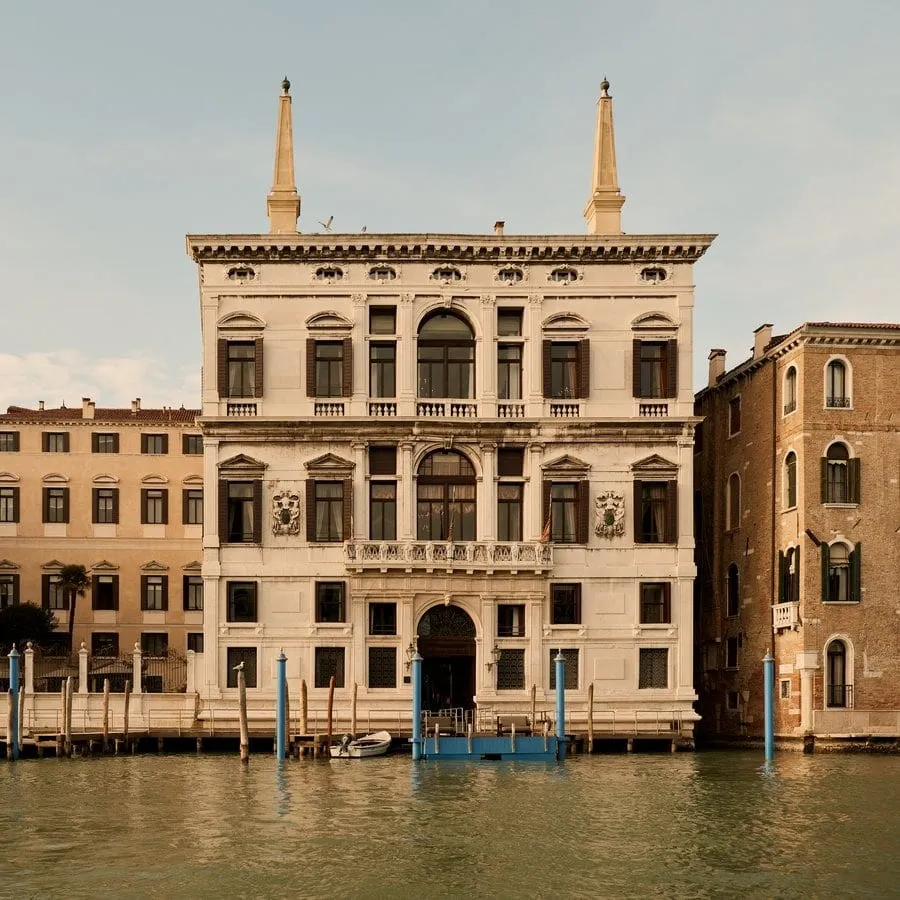
A 16th-century Grand Canal palazzo, frescoed by the Tiepolo family and fitted with a rare private garden, reopened in 2013 as Aman's first Italian address.
From €1,800 per night
Amalfi, Amalfi Coast, Italy
Borgo Santandrea
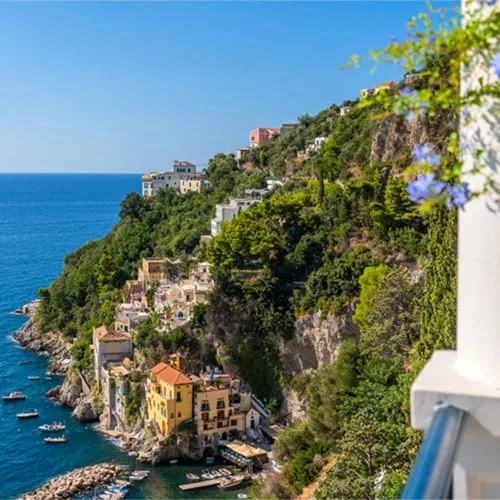
A former 1950s seaside hotel rebuilt across nine cliffside levels above Conca dei Marini, reopened in 2022 as the first new luxury address on the Amalfi Coast in over a decade.
From €950 per night
Tremezzo, Tremezzina, Lake Como, Italy
Grand Hotel Tremezzo
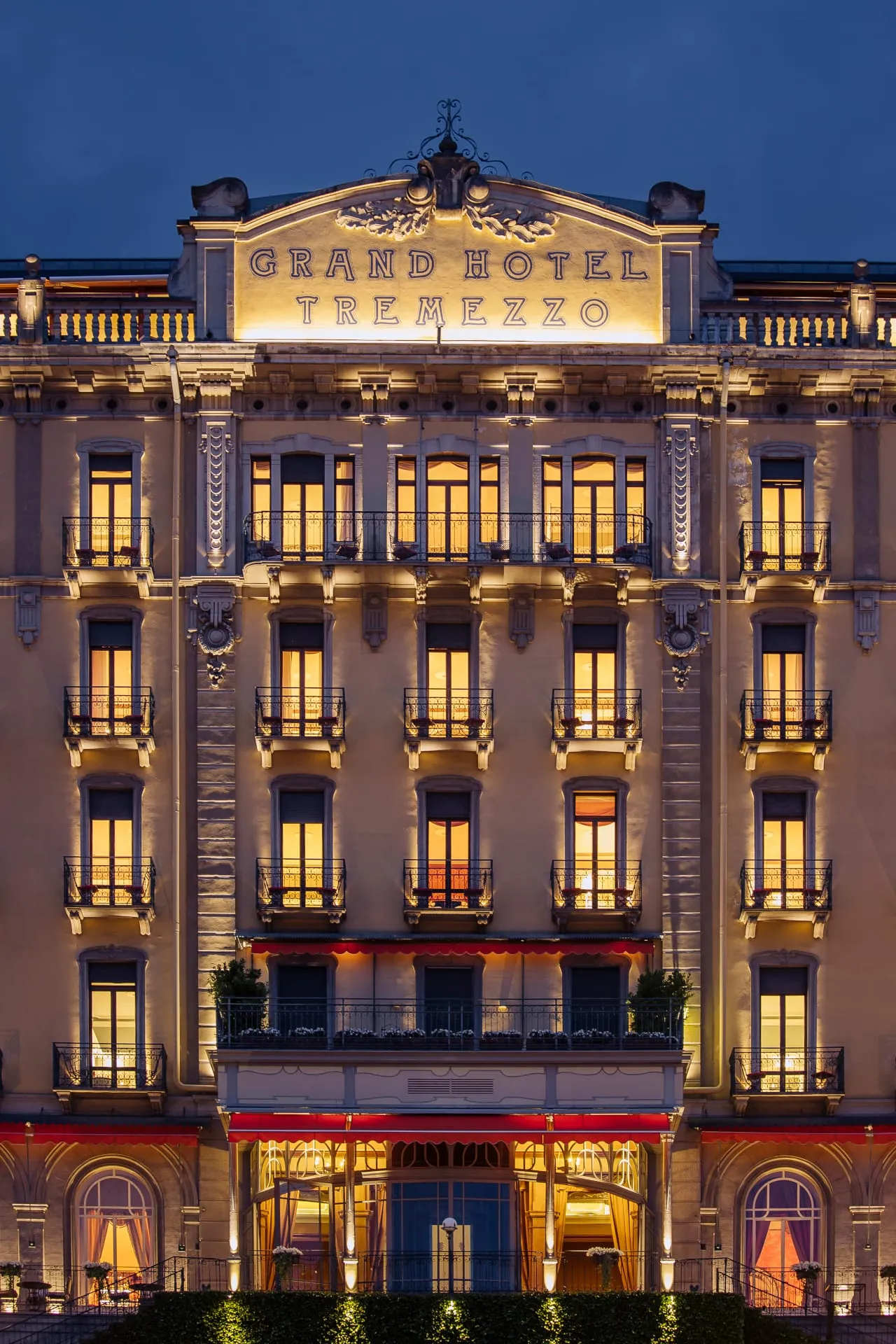
A 1910 Belle Époque palace on Lake Como with a heated pool that floats on the lake itself, still run by the family that also opened Passalacqua down the shore.
From €1,000 per night