Route Amizmiz, near Marrakech, Morocco
Selman Marrakech
A Jacques Garcia palace at the foot of the Atlas Mountains where a private Arabian stud, a Jean-Francois Piege kitchen and one of only six Chenot spas on earth share a single walled garden.
- Rates from
- From $580 per night
- Nearest airport
- Marrakech Menara Airport (RAK)
- Transfer
- About 15 to 20 minutes by road, depending on traffic
- Best months
- March to May and September to November
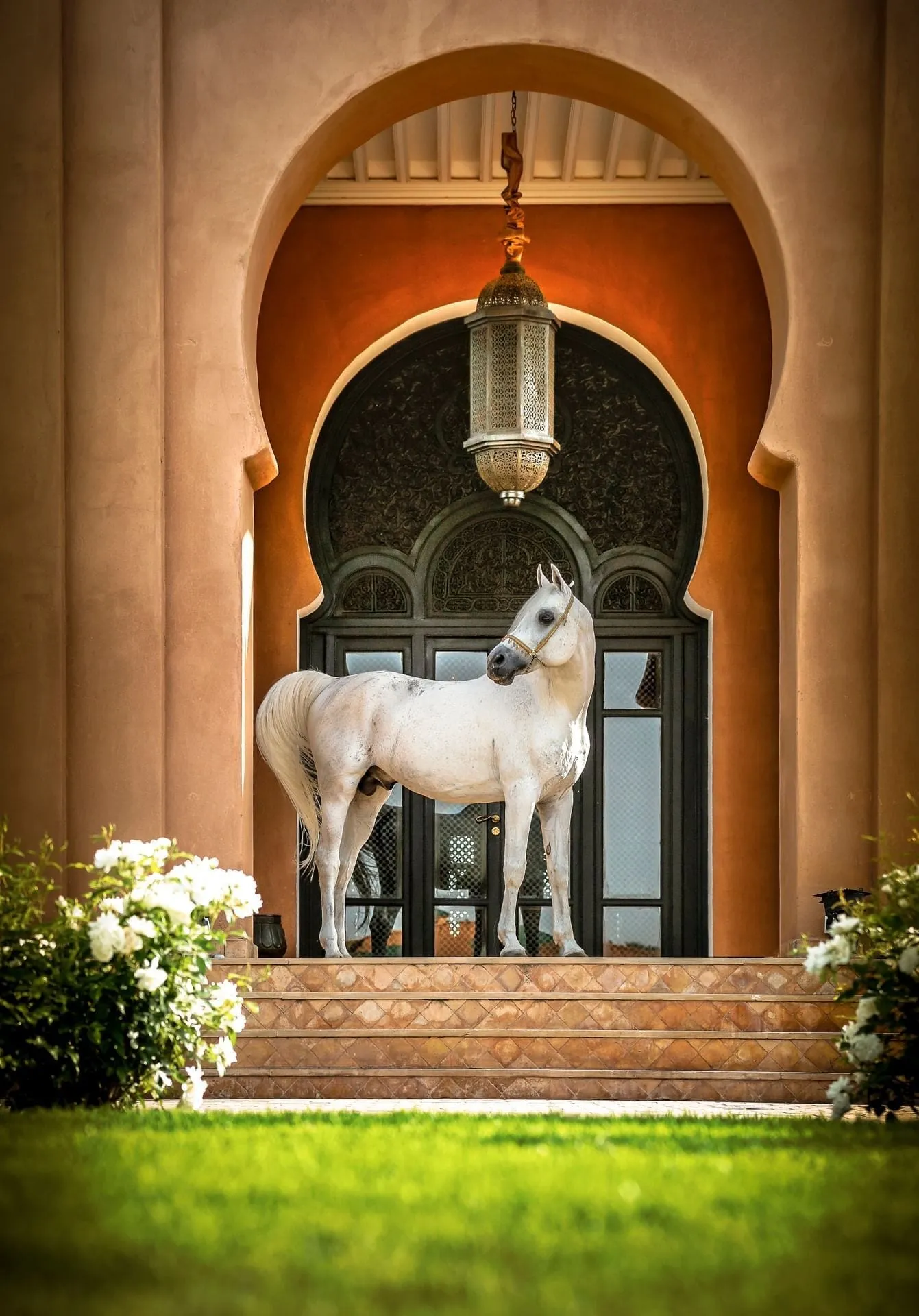
Ten minutes from Jemaa el-Fnaa, past the point where the roundabouts give way to walled orchards and the road narrows toward Amizmiz, the traffic noise drops away and something unexpected takes its place: paddocks, post-and-rail fencing, and Arabian horses standing in the shade of olive trees. This is not a theme, added for atmosphere. Selman Marrakech was built around a working stud, by an owner who was breeding Arabian thoroughbreds before he had a hotel to put them in, and the horses remain the property’s defining fact rather than its garnish.
Everything else about Selman reads as a considered answer to a fairly narrow question: what does a Marrakech palace hotel look like if it is designed once, by one person, with no expense committee softening the result. Jacques Garcia, the French designer behind Hotel Costes in Paris and the 2006-2009 renovation of La Mamounia just across town, spent close to two years on Selman’s interiors and stables before it opened its doors in May 2012. Since then the property has added a further, more recent layer: in late 2024, two-Michelin-starred chef Jean-Francois Piege took over its restaurants, his first project in Morocco, giving a hotel already known for its horses and its architecture a serious culinary claim as well.
None of this is staged for effect. Selman is a family hotel in the literal sense, owned and still closely overseen by the siblings who built it, and the horses, the design and the more recent chef collaboration read less like a marketing checklist than the accumulated interests of people who happen to have the resources to indulge them properly. What follows is an account of what that adds up to on the ground.
Why It Stands Out
Selman Marrakech is, by a fairly comfortable margin, the only luxury hotel in Morocco built around a working Arabian stud rather than a garden or a view. Sixteen horses live on site in stables designed by Jacques Garcia, grazing in paddocks that back directly onto guest terraces, and the hotel’s wider breeding operation, Selman Arabians, run from a separate 30-hectare farm near Rabat, has produced bloodlines recognised in international competition. Owner Abdeslam Bennani Smires was breeding these horses before the hotel existed; the property came afterward, built in large part to give the stud a stage.
The second distinguishing fact is design authorship. Jacques Garcia is not a decorator who dressed an existing building; he shaped the palace from its earliest sketches, reportedly beginning with a meeting with the Bennani Smires family in July 2006, at almost exactly the same moment he was overseeing the historic renovation of La Mamounia a short drive away. Both projects carry his particular reading of Arab-Andalusian architecture, dense, dark-wood, richly upholstered, but Selman is the one built from nothing, without a 1920s shell to work around.
The third is more recent: since late 2024, Selman’s kitchens have been under the direction of Jean-Francois Piege, a two-Michelin-starred chef previously of Les Ambassadeurs at the Hotel de Crillon in Paris. His arrival, split across a reworked garden restaurant and a new evening-only room, gives the hotel a level of culinary ambition that had not previously been part of its reputation. Layered onto the horses and the architecture, and alongside a Chenot Spa outpost, one of only six in the world, Selman assembles a set of genuinely distinct claims that few Marrakech hotels attempt to hold at once.
Architecture
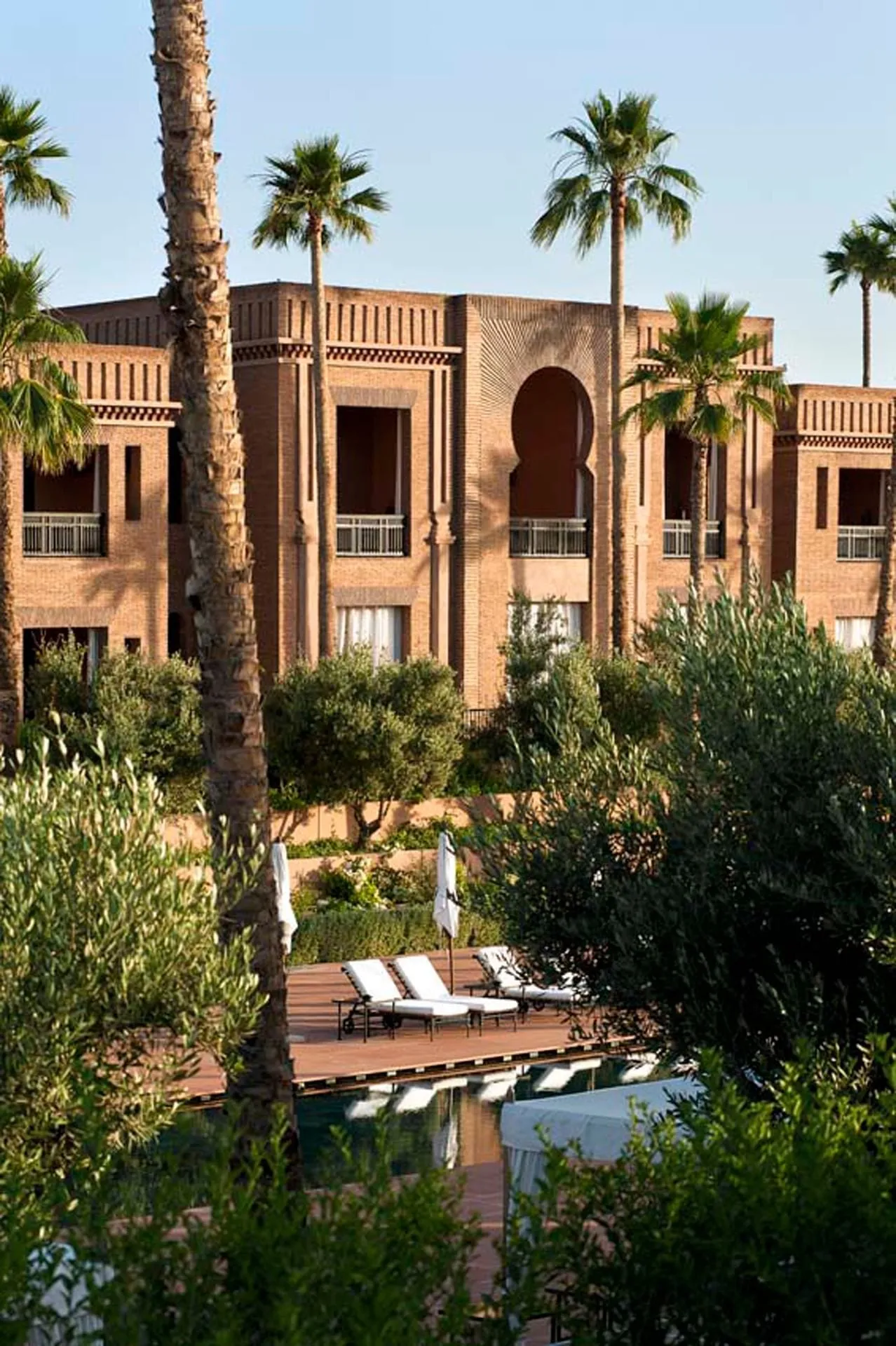
Selman occupies roughly six hectares (about fifteen acres) of walled garden on the Route d’Amizmiz, southwest of Marrakech at the edge of the Atlas foothills. The main building reads as an Arab-Moorish palace: symmetrical facades, deep arcaded galleries, and a central sunken lounge that Garcia used as the architectural anchor of the property, the space every other wing and courtyard organises itself around. The stables sit within the same walled composition rather than pushed to a service area, treated architecturally with the same seriousness as the guest wings, an arrangement that says plainly what the owners considered central to the project.
Construction ran for roughly seven years from Abdeslam Bennani Smires’s initial 2005 concept to the hotel’s opening on 1 May 2012, using largely local materials and craftsmen working under Garcia’s direction, in keeping with his stated approach of grounding new building in regional Arab-Andalusian tradition rather than importing a generic five-star vocabulary. The result sits closer to a large private estate than a hotel campus: a single walled perimeter, formal garden axes, and a scale that, even with roughly sixty keys, feels more like an inhabited palace than a resort built for volume.
Interior Design
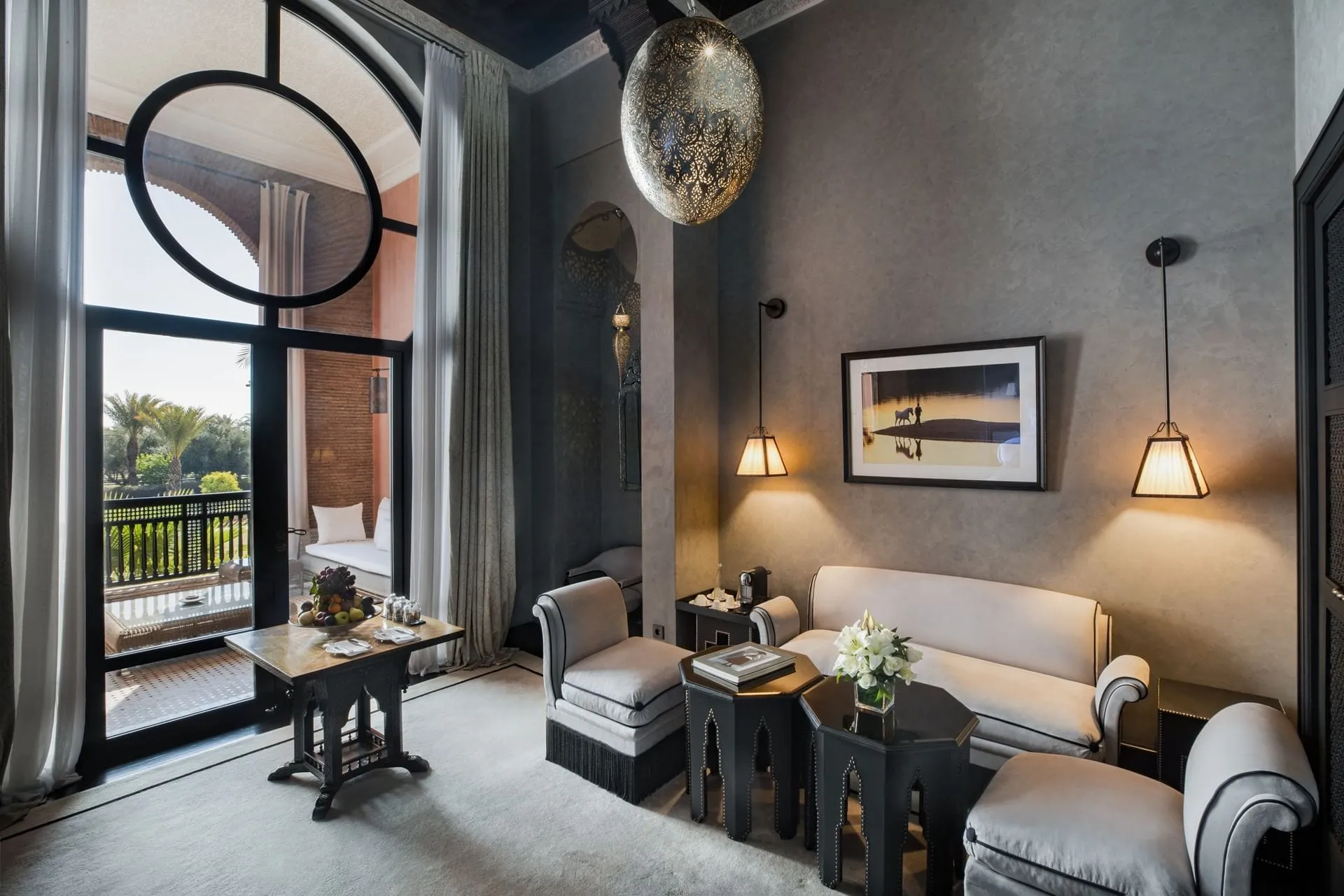
Inside, Garcia’s rooms carry his familiar register: dark polished wood, brass and wrought-iron fittings, deep jewel-toned and neutral textiles, and a density of pattern and material that favours atmosphere over minimalism. It is the same broad language he applied at La Mamounia and at Hotel Costes in Paris, adapted here to a Moroccan vocabulary of carved plasterwork, zellige tiling and moucharabieh screening, with horse motifs appearing as a recurring, unforced decorative thread given the owners’ preoccupation.
The Bennani Smires family is understood to have added personal touches to Garcia’s scheme, pieces of art and furniture reflecting their own taste layered onto his architectural framework, which gives the interiors a slightly less uniform, more inhabited character than a hotel decorated purely to a designer’s single vision. The 2024 renovation of La Terrasse restaurant, also carried out under Garcia’s direction, reworked one of the property’s key public rooms into what the hotel describes as a verdant oasis, evidence that his relationship with the property continued well past its original 2012 opening rather than ending with a single completed brief.
Atmosphere
The overriding sensation at Selman is of having left the city without having travelled very far. The walled six-hectare garden, the paddocks, the low profile of the Atlas Mountains beyond the property line, and the absence of any real street noise combine to produce something closer to a private rural estate than a hotel a fifteen-minute drive from Jemaa el-Fnaa. Horses grazing or being led between paddocks are a constant, ambient presence rather than a scheduled activity, visible from many rooms and from the gardens at almost any hour.
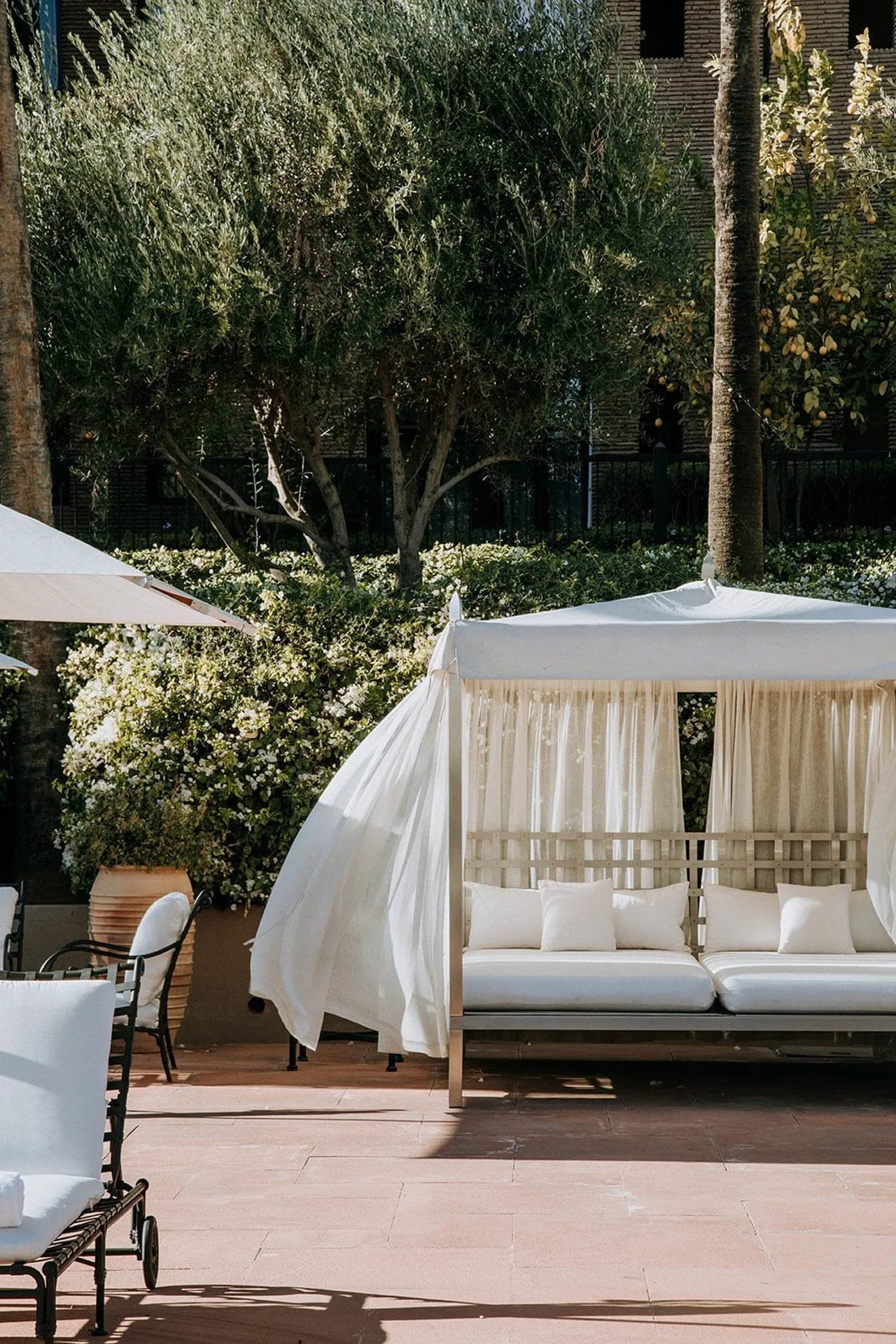
Despite the palace-scale architecture, the tone leans toward the intimate rather than the grand: a roughly sixty-key property, still family-owned and closely overseen by its founders, tends to hold a different rhythm than a branded resort of comparable size. Days move slowly by design, structured loosely around the 80-metre pool, the spa, and whichever restaurant is on the day’s rotation, with the equestrian programme offering the property’s one genuinely distinctive daily punctuation.
Rooms and Suites
Selman comprises around sixty rooms, suites and villas in total: a mix of Deluxe Rooms, Junior Suites and Suites within the main palace building, alongside five private villas set apart in their own section of the garden. Room categories vary in outlook, with a meaningful share looking directly onto the stud’s paddocks or stables and others facing the garden, the pool, or the Atlas Mountains, a detail worth confirming at booking for guests who specifically want a horse view.
The five villas sit at the top of the property’s accommodation hierarchy, each ranging from roughly 580 to 700 square metres with a private pool and butler service, offering a level of self-sufficiency and privacy well beyond even the largest suites. All accommodation carries Garcia’s dark-wood, richly textiled interior language, with bathrooms and technology updated to a standard consistent with the property’s five-star positioning, and private terraces throughout, several of which open directly onto paddock or mountain views rather than shared garden space.
Dining
Selman’s dining programme has two distinct chapters: a long-standing set of restaurants built around Moroccan and international staples, and a newer, more ambitious layer added under Jean-Francois Piege from late 2024. Assyl, the hotel’s dedicated Moroccan restaurant, serves regional dishes with live Andalusian musicians most evenings, while Le Pavillon covers breakfast and a Sunday brunch that typically includes a display from the resident Arabian horses, a genuinely unusual pairing of brunch and equestrian performance.
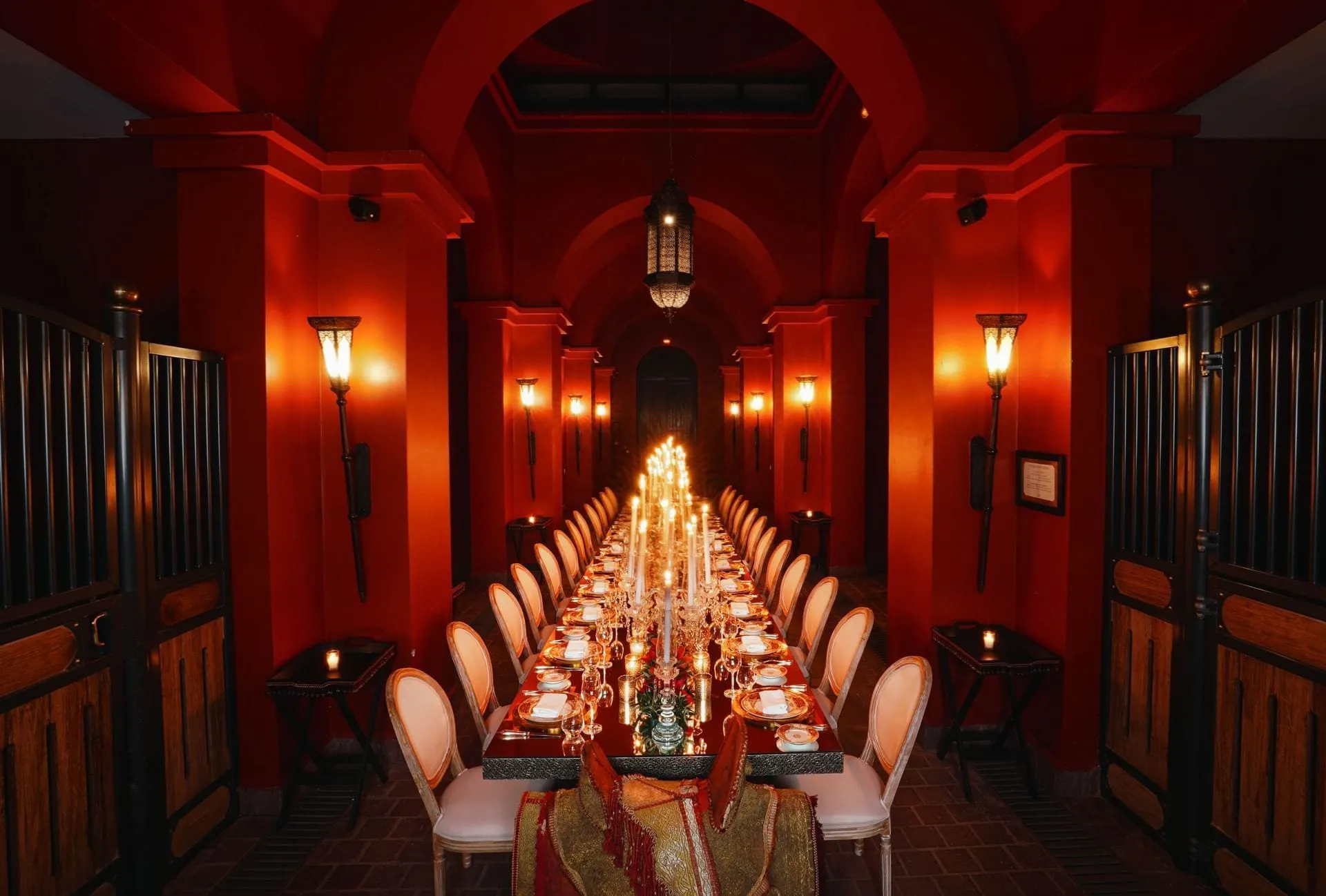
The Piege addition centres on two rooms. La Terrasse, reworked architecturally by Jacques Garcia into what the hotel calls a verdant oasis, serves lighter, produce-driven dishes blending Moroccan ingredients with Mediterranean technique, open for lunch and dinner. SABO, which opened in December 2024, is an evening-only room seating around 55 guests under a retractable roof, built around French technique applied to Moroccan produce, and represents Piege’s first restaurant project in the country. Le Bar Selman handles cocktails and evening service with occasional DJ sets, and a pool bar covers casual daytime dining by the 80-metre lap pool.
Spa and Wellness
The Chenot Spa at Selman is one of only six in the world carrying the Henri Chenot name, and the sole example on the African continent, a genuinely rare credential for a Marrakech hotel spa to hold. Spread across 1,200 square metres, styled with echoes of historic hammam architecture, it houses seven treatment rooms including one couples suite, four hydrotherapy spaces, a heated pool, a plunge pool, a traditional hammam, sauna and steam room, a gym, and a barber and hairdresser.
The Chenot Method itself, developed by Henri Chenot, combines Western diagnostic and detoxification protocols with practices drawn from traditional Chinese medicine, and is offered here both as standalone treatments and as structured cure programmes running from three to ten days, targeting concerns from stress and fatigue to broader detoxification and weight management goals. For wellness travellers, this positions Selman closer to a genuine medical-wellness address than a hotel spa offering massages as an amenity, worth planning around rather than booking as an afterthought.
Experiences
The equestrian programme is Selman’s signature activity and its most differentiated offering in the Marrakech market. Guests can visit the stables, watch dressage and liberty training conducted in partnership with the School of Equestrian Arts of Marrakech, and, subject to availability, arrange a private equestrian display timed around breakfast or dinner. The regular Sunday brunch at Le Pavillon folds a horse performance into a more conventional dining event, giving guests without a separate booking a straightforward way to see the stud in action.
Beyond the horses, the Chenot cure programmes function as a genuine standalone activity for guests structuring a stay around wellness rather than sightseeing, and the hotel’s dining additions under Jean-Francois Piege give food-focused travellers reason to treat an evening at SABO or La Terrasse as the day’s centrepiece. The hotel’s setting on the edge of the Atlas foothills, along the road toward Amizmiz and the rockier Agafay landscape further out, also makes it a practical, quieter base for guests planning day trips into the mountains or the desert-like Agafay plateau without needing to stay inside the city itself.
Who It Is For
Selman suits travellers whose interest in Marrakech extends to genuine equestrian culture, serious design, or a structured wellness stay, more than it suits guests chasing a classic riad-in-the-medina experience. Couples and horse enthusiasts drawn to the idea of watching thoroughbreds from a terrace, paired with Jacques Garcia’s dense, palatial interiors, will find a combination genuinely difficult to replicate elsewhere in the city. Wellness travellers targeting the Chenot Method’s cure programmes have, in this property, one of only six addresses worldwide to do so, a fact that alone justifies a stay for that specific audience.
It is a less natural fit for first-time Marrakech visitors who want to be inside the medina’s walls, walking distance from the souks and Jemaa el-Fnaa at all hours, since Selman’s quieter, walled countryside setting requires a short transfer for any city excursion. Families travelling with children are reasonably well provided for, with a kids’ club that draws on the property’s equestrian theme, though the overall tone leans toward couples and adults seeking a slower, more considered stay over a high-energy, activity-packed resort holiday.
Best Time to Visit
Marrakech’s climate sets the calendar here as much as anywhere else in the region. March through May brings warm, generally dry days and cooler evenings, ideal for the gardens, the pool and any time spent around the paddocks, and is widely considered the most comfortable stretch of the year. September through November offers a close second, with the harshest summer heat receding and daytime temperatures returning to a more manageable range.
High summer, July and August, brings consistently high daytime heat, often well above 35 degrees Celsius, which tends to push activity toward the pool, the spa and shaded terraces rather than extended time outdoors with the horses. Winter, December through February, brings mild, sunny days but noticeably cool evenings and occasional rain, a season better suited to spa-focused stays around the Chenot programmes than to long afternoons in the garden, though it remains a viable, quieter time to visit for travellers prioritising the wellness side of the property.
How to Get There
Marrakech Menara Airport (RAK) is the relevant gateway for almost all guests, sitting roughly 5 to 6 kilometres from the hotel and reachable in about 15 to 20 minutes by road outside peak periods, though traffic through the city can extend that meaningfully at busier times of day. The hotel arranges private car transfers on request, and taxis are readily available at the airport for guests arranging their own transport.
Selman sits on the Route d’Amizmiz southwest of central Marrakech, a similarly short drive from the medina and Jemaa el-Fnaa, making it straightforward to combine a countryside stay at the hotel with evenings or day trips into the old city without a long transfer either way. Guests arriving by international connection through Casablanca or another Moroccan hub should plan on a domestic connecting flight or a considerably longer road transfer to reach Marrakech itself before the short final leg to the hotel.
Nearby Experiences
Central Marrakech, with Jemaa el-Fnaa, the souks of the medina, the Bahia Palace and the Majorelle Garden, sits close enough for a straightforward half-day or evening excursion, giving guests based at Selman easy access to the city’s principal sights without staying inside its walls. The Route d’Amizmiz itself continues southwest toward the rockier, semi-desert landscape of Agafay, a popular half-day or sunset excursion destination for guests wanting a contrasting terrain from the hotel’s own green, walled garden.
Further out, the Atlas Mountains offer day-trip options into villages such as Imlil, a common base for shorter treks and mountain scenery, or the Ourika Valley, known for its waterfalls and Berber villages, both reachable as guided day excursions from the hotel. For guests staying multiple nights, alternating a day in the medina with a mountain or desert excursion, and reserving at least one full day for the spa and the stables, tends to make efficient use of Selman’s position just outside the city rather than fully inside or fully removed from it.
Things to Know Before Booking
Selman sits outside the medina walls, so guests wanting to walk to the souks or Jemaa el-Fnaa directly from their room should look elsewhere; a car or taxi is effectively required for any city excursion, even though the drive itself is short. Room location matters more here than at many hotels, since only some categories look directly onto the paddocks or stables; guests who specifically want a horse view should confirm this at the time of booking rather than assuming it by default.
SABO, the evening-only restaurant helmed by Jean-Francois Piege, seats only around 55 guests under its retractable roof, so reservations are worth making well in advance of arrival, particularly during the busier spring and autumn months. Guests planning to build a stay around the Chenot Method’s structured cure programmes, which run from three to ten days, should also book these ahead of arrival, since they require an initial assessment and a tailored schedule rather than being available as a same-day add-on. Traffic between the hotel and the airport or medina can vary substantially by time of day, so guests with tight flight connections should build in extra time rather than relying on the shortest quoted transfer.
Sustainability
Selman does not publicise a formal sustainability certification or a distinct environmental programme, and no verifiable claims of that kind were found for the property at the time of writing. What can be said with confidence is that its model is inherently low-density for its scale: roughly sixty keys spread across six hectares of walled garden, with a meaningful share of that land given over to paddocks and stables rather than built structure, keeps the built footprint modest relative to the grounds it occupies. The hotel’s most tangible link to conservation is arguably the horse breeding programme itself, Selman Arabians, which represents a genuine, long-running investment in Arabian thoroughbred bloodlines rather than a horses-as-decor arrangement, though this should be read as an equestrian and cultural commitment rather than a formal environmental one.
Practical Information
Check-in at Selman Marrakech is from 3:00 PM, with check-out by 12:00 PM; late check-out to 6:00 PM can typically be arranged, subject to availability, for around half the room rate. The hotel sits on the Route d’Amizmiz, roughly 5 to 6 kilometres and about 15 to 20 minutes by road from Marrakech Menara Airport (RAK), with private transfers available on request. The property comprises around sixty rooms, suites and villas across six hectares of walled garden, alongside the Selman Stables, home to sixteen Arabian horses, and the Chenot Spa, one of only six in the world carrying that name. Indicative rates for entry-level rooms start from around 580 US dollars per night, with suites, villas and Chenot cure packages priced considerably higher; guests should confirm current rates directly with the hotel or its official booking channels, since prices vary significantly by season and room category. Most guests find three to four nights sufficient to settle into the property, spend meaningful time with the horses and the spa, and sample at least one of the Piege restaurants alongside Assyl or Le Pavillon.
Editorial Conclusion
What makes Selman Marrakech genuinely unusual is that its central attraction was never designed as a hotel amenity in the first place. Abdeslam Bennani Smires was breeding Arabian horses before Selman existed, and the property that Jacques Garcia eventually built around that stud, opened in 2012 after roughly seven years of work, reads as an extension of a personal obsession rather than a concept dreamed up for a brochure. Garcia’s architecture, developed alongside his contemporaneous renovation of La Mamounia, gives the hotel a density and seriousness of design that has aged well over more than a decade, and the 2024 arrival of Jean-Francois Piege has added a culinary dimension that the property had not previously claimed. Paired with a Chenot Spa outpost found in only five other places on earth, Selman assembles a genuinely specific set of reasons to choose it, reasons that have comparatively little to do with the usual Marrakech shorthand of riads, souks and rooftop pools, and considerably more to do with horses, design authorship, and a family that built the hotel it wanted rather than the one the market expected.
In pictures
On the map
Route Amizmiz, near Marrakech, Morocco
Questions
Frequently asked
Who owns Selman Marrakech and where does the name come from?
The hotel belongs to Saida and Abdeslam Bennani Smires, a Moroccan brother and sister who built it to fulfil their grandfather's wish for a family property in his hometown. Abdeslam, trained at a hospitality school in Lausanne and a lifelong collector of Arabian thoroughbreds, began the project in 2005 and named the hotel after Selman, the foundation stallion of the bloodline he was breeding at the time. The horse breeding programme, Selman Arabians, and the hotel project developed side by side from the start.
How many Arabian horses live at the property, and can guests see them?
The hotel keeps sixteen Arabian horses in two stables designed by Jacques Garcia, set around five grassy paddocks within the grounds. Many rooms and terraces look directly onto the paddocks or the stables, so horses are visible without leaving the room. Guests can also watch dressage and liberty training sessions run with the School of Equestrian Arts of Marrakech, and Sunday brunch at Le Pavillon typically includes a display by the resident horses. The wider breeding operation, which has produced internationally recognised bloodlines, is based on a separate 30-hectare stud farm near Rabat.
What is the Chenot Spa, and why does it matter here?
Selman's spa is one of only six in the world authorised to carry the Chenot name, and the only one on the African continent. Spread over 1,200 square metres, it offers the Chenot Method, a programme combining Western diagnostic medicine with practices drawn from traditional Chinese medicine, alongside seven treatment rooms, hydrotherapy facilities, a heated pool, a hammam and a gym. Guests can book single treatments or structured cure programmes running from three to ten days.
Has the hotel's dining changed recently?
Yes. In late 2024, two-Michelin-starred chef Jean-Francois Piege, previously of Les Ambassadeurs at the Hotel de Crillon in Paris, took over the kitchens at La Terrasse, a garden restaurant reworked by Jacques Garcia, and opened SABO, an evening-only restaurant with around 55 covers under a retractable roof. It was Piege's first restaurant venture in Morocco. Assyl, the hotel's long-standing Moroccan restaurant with live Andalusian music, and Le Pavillon, its all-day and brunch venue, continue to operate alongside the new additions.
How far is Selman Marrakech from the airport and from central Marrakech?
Marrakech Menara Airport (RAK) is around 5 to 6 kilometres from the hotel, a drive of roughly 15 to 20 minutes outside peak traffic, and longer during busy periods. The hotel sits on the Route d'Amizmiz southwest of the city, a similarly short drive from the medina and Jemaa el-Fnaa, close enough for an evening in town but far enough to feel like open countryside rather than a city hotel.
Same destination
More hotel guides in Morocco
Marrakech medina, Morocco
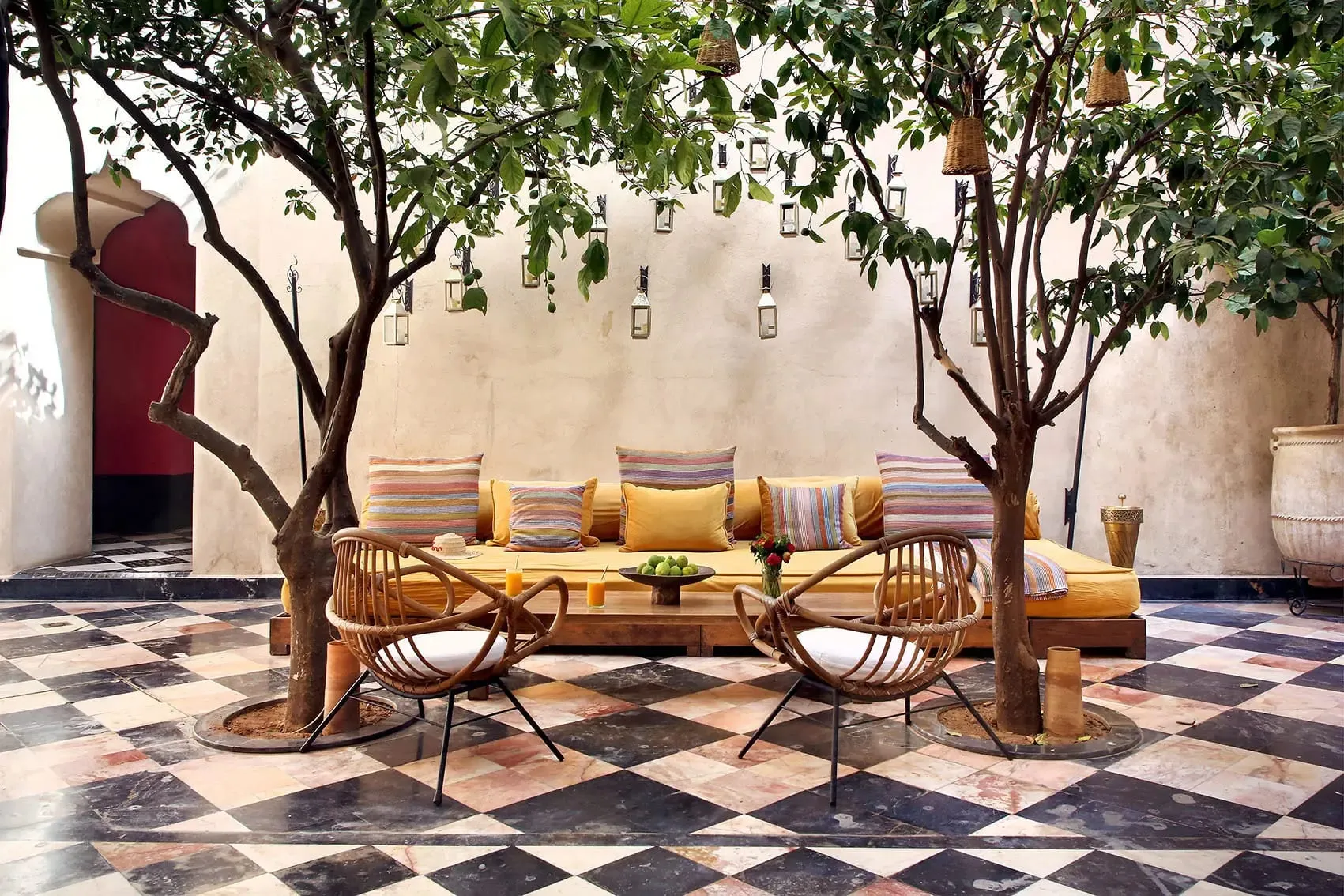
El Fenn
A private art collector's riad turned hotel, stitched together from more than a dozen houses behind the walls of the Marrakech medina.
From $480 per night
Asni Valley, Atlas Mountains, Morocco
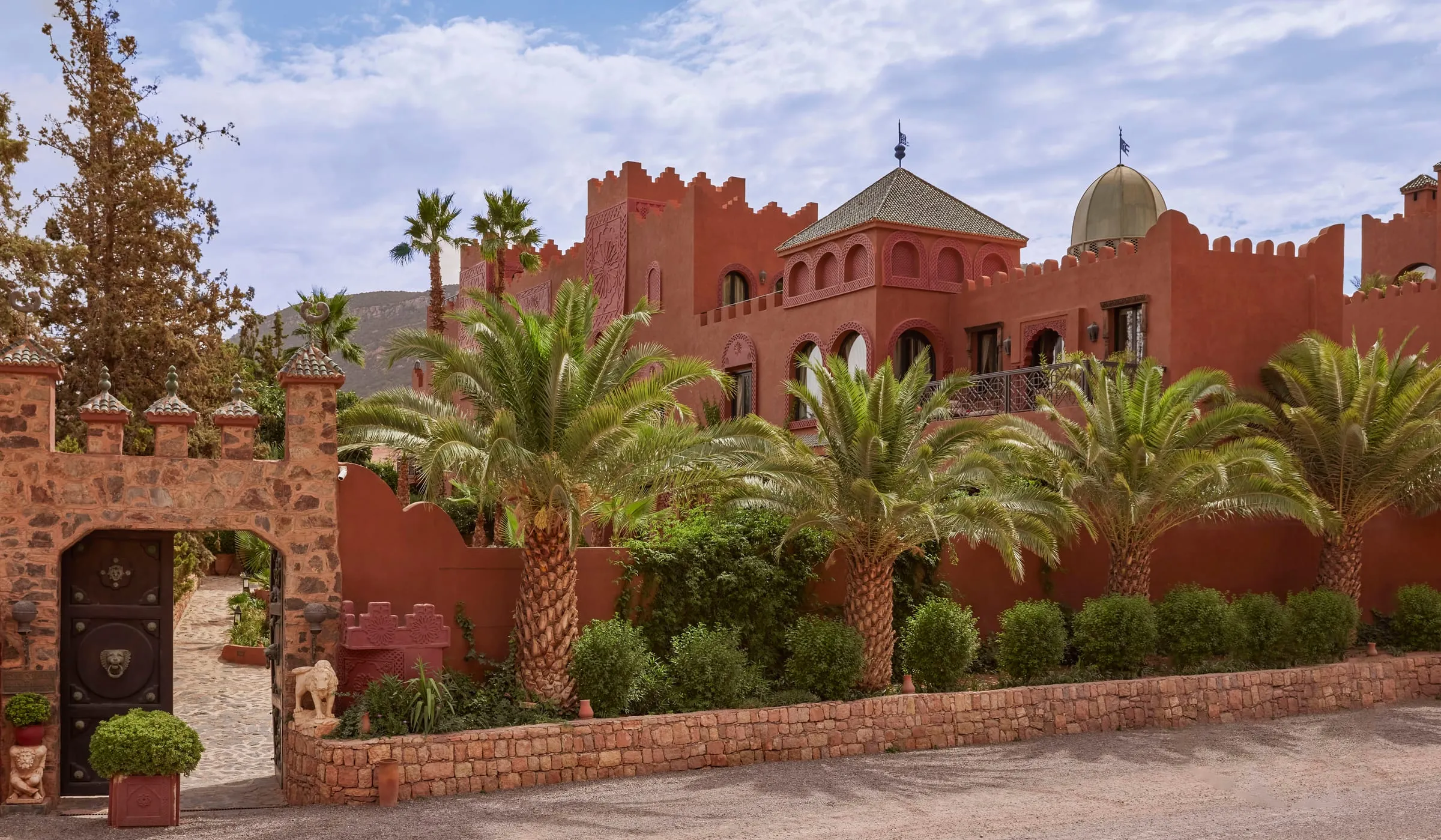
Kasbah Tamadot
Richard Branson's former antiques-dealer's kasbah, rebuilt above the Asni Valley with Berber tents, three-bedroom riads and Mount Toubkal on the horizon.
From $700 per night
Marrakech medina, Hivernage, Morocco
La Mamounia
The 1923 Marrakech palace built around an 18th-century royal garden, where Winston Churchill painted from the balconies and Jacques Garcia's 2009 restoration still sets the city's benchmark for Moorish-Art-Deco grandeur.
From $650 per night