Mayfair, United Kingdom
The Connaught
A Mayfair institution since 1897, run with the kind of consistency that makes reinvention beside the point.
- Rates from
- From £950 per night
- Nearest airport
- London Heathrow Airport (LHR)
- Transfer
- About 35 minutes by car or Heathrow Express plus taxi from Paddington, traffic permitting
- Best months
- Year-round; May to September for gardens and long evenings, November to January for the hotel's Christmas decoration and West End theatre season
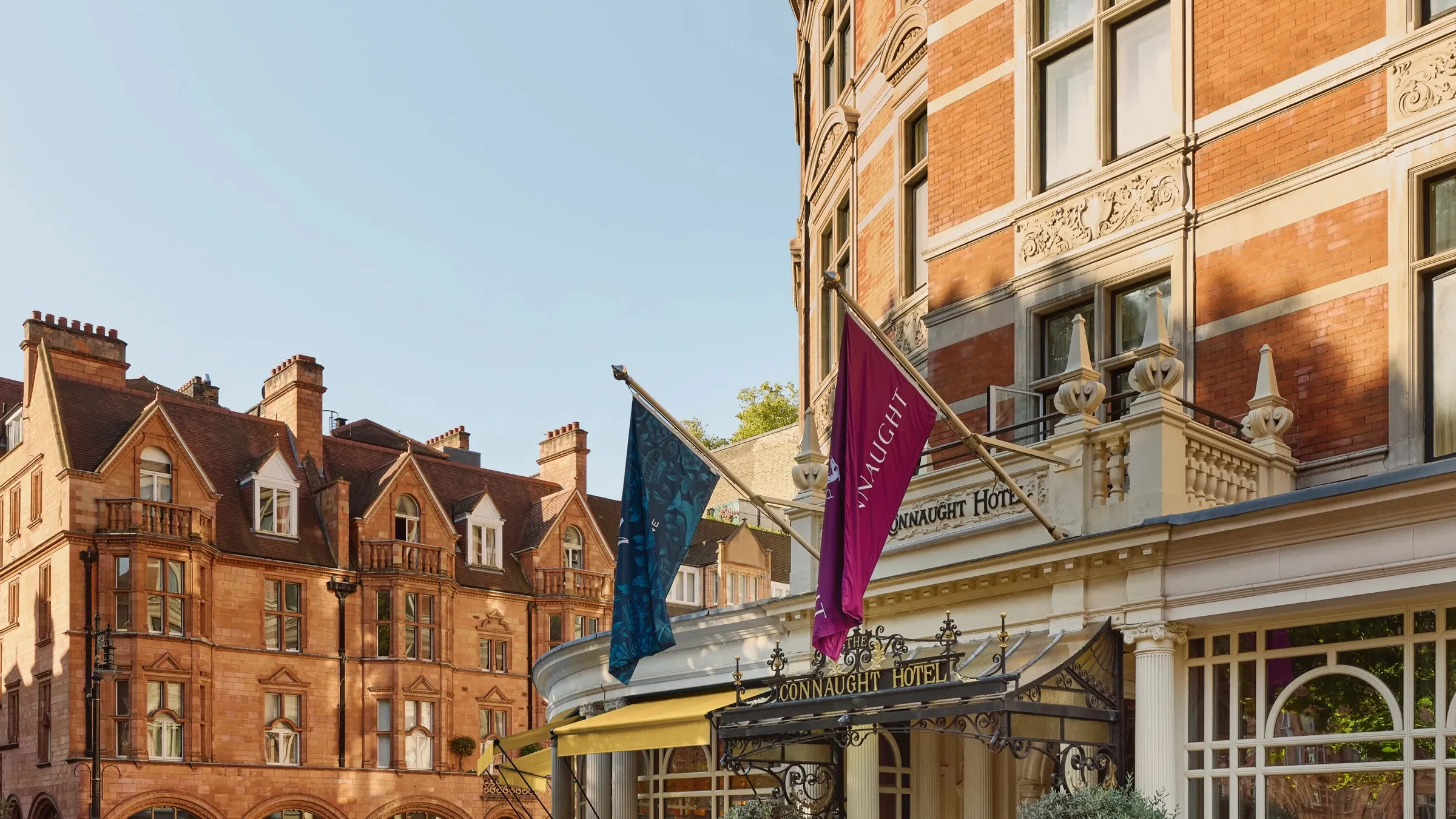
There is a particular kind of hush that settles over Carlos Place in the early evening, when the doormen at The Connaught step forward in unison and the last of the day’s light catches the hotel’s wrought-iron awning. Nothing about the scene has changed very much in decades, which is, for this address, the entire point. The Connaught does not chase the conversation in London hospitality; it has been quietly setting the terms of it since long before most of its rivals existed, and it continues to do so from a single, unassuming corner of Mayfair, three streets back from the crush of Bond Street and a world away from it in temperament.
Founded on this site in 1815 as the Prince of Saxe-Coburg Hotel, an offshoot of the nearby Grillion’s, the property was rebuilt into its current form in 1897 as the Duke of Westminster redeveloped the surrounding streets and created Carlos Place itself. During the First World War, with a German-sounding name no longer tenable, the directors renamed it The Connaught, after Prince Arthur, Duke of Connaught and Strathearn, Queen Victoria’s seventh child. The hotel passed to the Savoy Group in 1956, joining Claridge’s and The Berkeley under common ownership, and in 2005 that group was acquired and renamed Maybourne Hotel Group, which still owns and operates all three London hotels today, alongside The Emory, The Maybourne Beverly Hills and The Maybourne Riviera. Few London addresses can claim this degree of ownership continuity, and fewer still have used it to hold a single, coherent identity for well over a century rather than reinventing themselves with each change of hands.
What distinguishes The Connaught from its Mayfair peers is not scale. It has 121 rooms and suites, a modest count by the standards of the grand hotel category, and it has never tried to compete on square footage or spectacle. Instead it has built a reputation, room by room and generation by generation, on a version of luxury that is almost entirely about restraint: the staff who remember a returning guest’s preferred newspaper, the martini trolley that arrives at the table rather than the drink arriving at the bar, the three-Michelin-star kitchen that does not need to announce itself beyond a small brass plaque. It is the kind of hotel that regulars describe less as a place they stay and more as a place they belong, and it has earned that description the slow way.
Why It Stands Out
The Connaught’s case rests on a rare convergence: a UK-record combination of the Michelin Guide’s highest hotel distinction, three MICHELIN Keys, held alongside a three-Michelin-star restaurant under the same roof, a position no other hotel in Britain currently occupies. Layered onto that is a cocktail bar that has spent close to two decades inside the world’s most competitive rankings, an art collection numbering in the thousands of works woven through the public rooms rather than confined to a gallery floor, and an architectural pedigree, the original 1897 staircase, the Carlos Place facade, that has survived successive renovations without losing its shape. Few hotels anywhere manage to be simultaneously a serious culinary destination, a serious drinking destination and a serious piece of hospitality history; The Connaught has held all three at once for the better part of two decades under Maybourne’s stewardship, and shows no sign of loosening its grip on any of them.
Architecture
The building that stands on Carlos Place today dates to 1897, constructed by Maple & Co. as part of the wholesale redevelopment the Duke of Westminster undertook in this pocket of Mayfair at the turn of the century. Carlos Place itself, the short crescent the hotel now anchors, was cut through as part of that same scheme, which explains the address’s slightly secluded, cul-de-sac character relative to the grid of streets around it. The hotel’s exterior reads as late Victorian red brick and Portland stone dressed with restrained French Renaissance detailing, a register shared with several of its Mayfair contemporaries but handled here with less ornament than at, say, Claridge’s a few streets north. The most significant fixed piece of architecture inside is the carved oak staircase built by Maple & Co. at the time of construction, which climbs through the centre of the hotel and remains the first thing most arriving guests see. It survived a comprehensive £70 million restoration begun in 2007, overseen by designer Guy Oliver, which touched all 88 rooms and suites then in existence along with the public spaces, and it has since become something of a design landmark in its own right: Ralph Lauren, taken with the staircase on a visit, is reported to have tried to buy it outright, and, unable to, commissioned a replica for his New York flagship instead.
Interior Design
Guy Oliver’s 2007 restoration set the template that the hotel’s more recent room renovations, including a fresh phase of suite redesigns completed in 2025, have continued to build on rather than depart from. His guiding instruction to his own successors, by his account, has been that new work should read as though it had always been there: original decorative plasterwork and cornicing preserved, fireplaces retained where they survive, antique Chinoiserie cabinets repurposed as minibars rather than removed. No two rooms at The Connaught are laid out identically, a consequence of the building’s age and its many past subdivisions and combinations of space, and the hotel treats that irregularity as a feature rather than a flaw to be standardised away. Layered through the interiors is an art collection Maybourne numbers in the thousands of pieces, spanning historic works alongside contemporary names such as Julian Opie and Damien Hirst, hung with the same unshowy confidence throughout corridors, landing and suites as in the more obviously public rooms. Outside, the hotel has continued to commission new work for Carlos Place itself, including Tadao Ando’s water sculpture “Silence” and, more recently, an installation by the Los Angeles artist Alex Israel, keeping the property’s relationship with contemporary art active rather than treating its collection as a fixed inheritance.
Atmosphere
The Connaught’s register is quieter and more clubbish than the art deco theatre of some of its Mayfair neighbours. Staff move through the public rooms with the practised discretion of people who have worked here for years, not weeks, and the hotel’s long-serving culture, including decades-long tenures among senior staff, is frequently cited by regulars as the actual product being sold. There is very little visible branding anywhere in the building; guidance and signage are minimal, and much of the experience depends on staff anticipating a request before it is made rather than a guest having to ask. Public rooms favour dark wood, deep upholstery and low lighting over the pale marble grandeur found elsewhere in the neighbourhood, and the overall mood, particularly in the late afternoon and evening, leans toward a members’ club as much as a hotel lobby. It is not a loud or performative kind of luxury, and guests who expect a see-and-be-seen atrium experience may find the hotel initially undersells itself; the reward is in staying long enough to notice how consistently well it is run.
Rooms and Suites
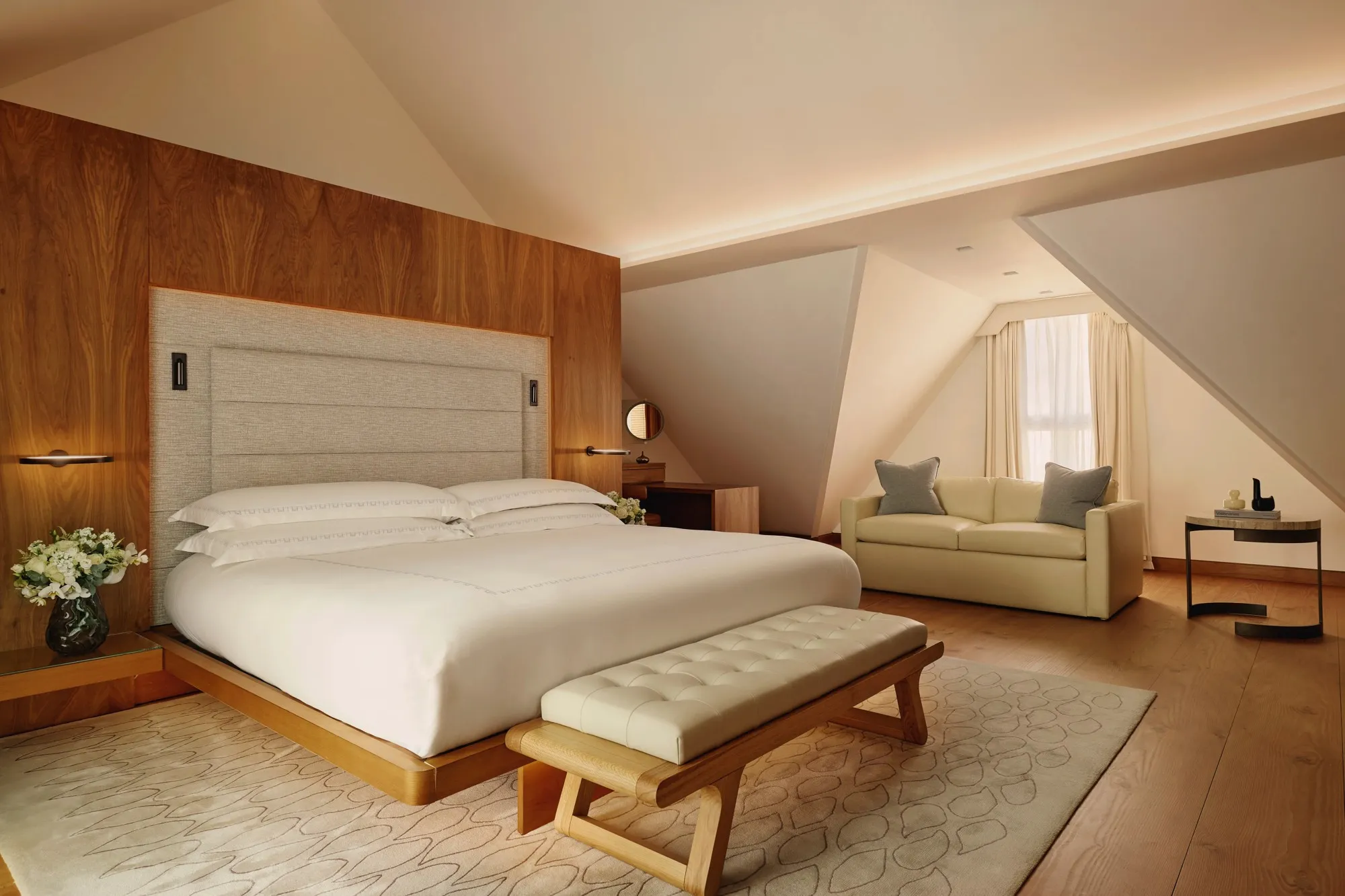
Accommodation at The Connaught runs from Superior Rooms, roughly 21 square metres for a Superior Single up to around 29 square metres for a Contemporary Superior with a king bed, through Deluxe Junior Suites of around 45 square metres, up to the 72-square-metre Connaught Suite, a chandelier-lit one-bedroom layout considered one of the hotel’s signature offerings. A 2025 renovation by Guy Oliver’s practice, Oliver Laws, introduced a fresh set of suites including the paired Sutherland Suites, named for the modernist painter Graham Sutherland, who lived at the hotel for eight years, one of which houses a rare 1909 Steinway Model B piano once owned by the composer Władysław Szpilman, and a set of Connaught Suites overlooking Mount Street. At the top of the hierarchy sit two markedly different top-tier accommodations: The Mews, a self-contained three-floor townhouse entered through its own door on Adams Row, and The Apartment, a two-bedroom penthouse of just over 3,000 square feet with a private internal staircase, its own bar and kitchenette, a wrap-around balcony, hand-carved doors, a butler’s pantry and a formal dining room seating eight. Across categories, guests are met with Billecart-Salmon champagne on arrival, in-suite martini service from a dedicated butler, John Lobb shoe-shine and a curated classic film library, details that read as old-fashioned in the best sense rather than as a checklist of amenities.
Dining
Hélène Darroze at The Connaught anchors the hotel’s culinary reputation and, as of the Michelin Guide Great Britain & Ireland 2026, continues to hold three Michelin stars, a rating the restaurant has retained since Darroze first earned the distinction here. The room itself, refreshed in recent years, is set beneath a chandelier of royal blue wrought iron and glass teardrops by the glassblower Matteo Gonet, and the kitchen’s approach draws on Darroze’s south-western French roots filtered through a set tasting-menu format built around seasonal ingredients. Beyond the flagship, Jean-Georges at The Connaught, chef Jean-Georges Vongerichten’s London outpost, runs from breakfast through supper with a menu that leans on market-fresh produce and a light Asian inflection, while The Connaught Grill focuses on an open-kitchen, British-produce approach to grilled and roasted dishes. A pastry boutique run under Master Pâtissier Nicolas Rouzaud adds a fourth, more casual dimension, turning out viennoiserie and confections that draw a walk-in trade independent of the hotel’s overnight guests. Afternoon tea is served at Jean-Georges rather than in a dedicated tea room, a slightly unconventional arrangement by London grand hotel standards, and in-room and private dining are available across all of the kitchens.
Spa and Wellness
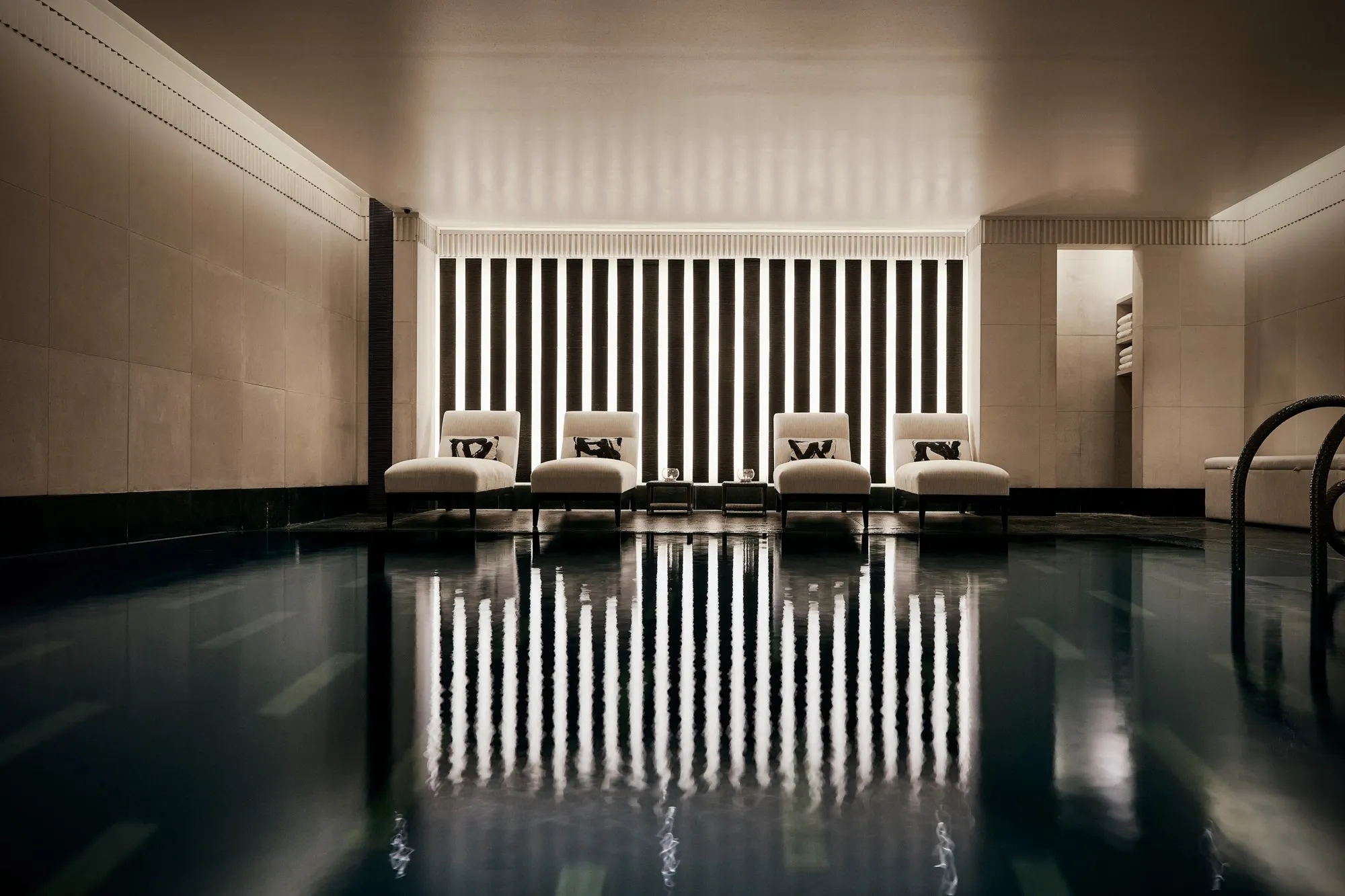
Aman Spa at The Connaught, opened in partnership with the Aman group, sits on a lower level of the hotel and centres on a 60-square-metre black granite vitality pool fed by a cascading water wall, a design that reads more like a private grotto than a conventional hotel pool. Five low-lit treatment rooms offer the Aman Skincare-based signature menu, organised around Grounding, Purifying and Nourishing formations, each with massage, body polish and wrap, facial ritual and full “journey” options, alongside a steam room, relaxation lounge and an intimate Technogym-equipped fitness centre. The spa also maintains a roster of specialist consultants, including an acupuncturist and an osteopath, available by appointment for guests seeking a more clinical approach to wellness alongside the standard treatment menu. Access to the pool, steam room and gym is included for hotel guests; treatments are booked and charged separately, and outside membership is available for the fitness facilities.
Experiences
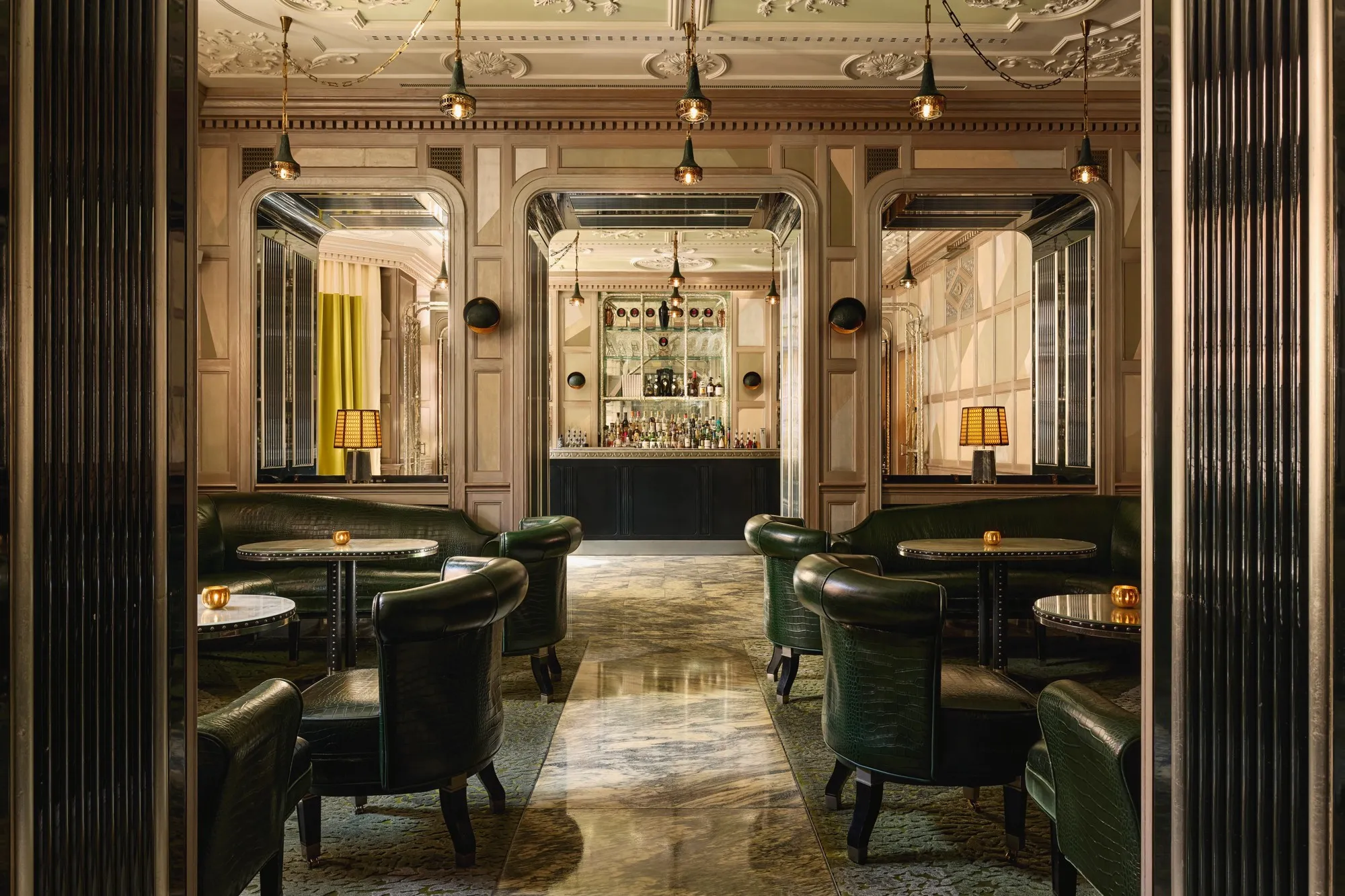
Connaught Bar is the hotel’s best-known set piece and arguably its most consequential contribution to London hospitality over the past two decades. Designed by David Collins Studio in a Cubist-inflected scheme of platinum silver leaf, dark leather and mirrored panels, with hand-painted landscape panels realised in collaboration with Atelier Pierre Bonnefille, the room has changed remarkably little since its 2008 opening even as it has been repeatedly recognised as one of the best bars on earth: it placed No. 6 in The World’s 50 Best Bars 2025, part of a run of appearances on that list that Maybourne describes as unmatched by any other bar. The signature ritual is the tableside martini, wheeled over on a gleaming chrome and black trolley by director of mixology Agostino Perrone or a member of his team, the guest’s chosen spirit stirred with a house blend of vermouths and poured into a pre-frozen glass at the table rather than mixed and delivered from behind the bar. Head bartender Giorgio Bargiani leads day-to-day service alongside Perrone, and the bar’s drinks list beyond the martini draws heavily on rare and aged spirits sourced specifically for the room. Guests who prefer a lower-key evening have two further options under the same roof: the Coburg Bar, a wood-panelled room overlooking Carlos Place favoured for its rare-spirits list and quieter conversation, and the Red Room, a smaller wine bar built around rare vintages and a short plate menu, alongside a dedicated cigar merchants’ room stocked with rare and vintage cigars for guests who want to extend the evening further.
Who It Is For
The Connaught rewards travellers who already know what they want from a hotel and are looking for a place that will deliver it without fuss: return visitors to London who value consistency of service over novelty, cocktail and wine enthusiasts building an itinerary around Connaught Bar and the Red Room, and diners treating Hélène Darroze at The Connaught as a genuine culinary pilgrimage rather than an incidental hotel restaurant. Couples find it a natural choice for a discreet, low-key romantic stay, helped by the spa, the restaurant and the hotel’s generally hushed public rooms, while families are accommodated thoughtfully, with arrival treats and personalised touches for younger guests, though the hotel’s temperament suits a quieter family trip more than one built around active children’s programming. It is a less obvious fit for travellers who want visible spectacle, a lively public bar scene from the moment they walk in, or a hotel that functions as a destination in its own right independent of London; The Connaught’s appeal depends heavily on the city around it and on guests who appreciate understatement as a form of luxury rather than a compromise.
Best Time to Visit
London, and The Connaught with it, works as a year-round destination rather than one with a narrow high season. May through September brings the longest daylight and the best conditions for exploring Mayfair on foot and using the hotel as a base for the city’s parks and gardens, while the run from late November through early January sees the hotel and the surrounding streets take on a distinctly festive character, coinciding with the West End’s Christmas and pantomime season and Mayfair’s seasonal light displays. Shoulder months, March to April and September to October, tend to combine milder weather with somewhat lower citywide hotel demand, which can make table availability at Hélène Darroze at The Connaught and prime Connaught Bar slots easier to secure at relatively short notice.
How to Get There
The Connaught’s nearest airport is London Heathrow, roughly 15 miles west of Mayfair. The fastest route into the city is the Heathrow Express, a nonstop rail service to Paddington station taking around 15 minutes, followed by a short taxi or private transfer to Carlos Place; door-to-door, this route typically runs to under an hour including waiting time. A direct car transfer covers the same distance in roughly 35 to 50 minutes depending on traffic and time of day, and the hotel’s concierge team can arrange a private chauffeur to meet guests at arrivals. London City Airport, Gatwick and the other London airports are all viable alternatives depending on the originating flight, each adding some additional transfer time relative to Heathrow. Within London, the hotel sits a short walk from Bond Street Underground station, putting the Elizabeth line, Jubilee line and Central line all within easy reach for guests who prefer not to rely on cars for getting around the city.
Nearby Experiences
Mayfair’s retail core along Bond Street and Mount Street is within a few minutes’ walk in either direction, taking in the flagship stores of most major luxury houses alongside the neighbourhood’s smaller, longer-established galleries and antique dealers. Hyde Park and its formal gardens are a short walk west, offering an easy counterpoint to the density of the surrounding streets, while the auction houses of Christie’s and Sotheby’s, both a few blocks from the hotel, hold public viewings that make for an easy afternoon detour for guests interested in art and design. The West End theatre district and Piccadilly are within a ten to fifteen minute walk or a very short taxi ride, and Green Park Underground station provides quick access further into central London for guests planning day trips to sights such as Buckingham Palace or the National Gallery.
Things to Know Before Booking
The hotel’s room count, 121 across all categories, means that its best-known suites, and particularly The Mews and The Apartment, book out well in advance for peak weeks; guests with a specific category in mind should plan to reserve several months ahead rather than assuming last-minute availability. Tables at Hélène Darroze at The Connaught and prime evening slots at Connaught Bar are similarly in demand and are best arranged through the hotel’s concierge at the time of booking rather than left until arrival. Because no two rooms are laid out identically, guests with specific requirements, a particular bed configuration, a bath rather than a shower, a quieter aspect away from Carlos Place, should specify these when booking rather than assuming standardisation across a category. The hotel does not offer the scale of amenity found at larger resort-style luxury hotels; guests looking for extensive event space, a large fitness centre beyond the Aman Spa’s intimate gym, or multiple swimming pools should look elsewhere in Maybourne’s portfolio or beyond it.
Sustainability
Maybourne Hotel Group has moved its London properties, including The Connaught, onto renewable electricity supply, with a 2025 agreement securing 100 percent renewable power for its London sites from the UK-based developer Low Carbon. The group reports a recycling rate around 90 percent across its hotels, alongside an ongoing digital project intended to track waste and recycling in real time rather than relying on periodic audits, and has reduced single-use plastics across its operations in favour of more durable or refillable alternatives. The Connaught received recognition in 2024 for its work on energy reduction and waste minimisation specifically, reflecting a property-level sustainability push that sits alongside the wider group initiatives rather than replacing them.
Practical Information
Standard check-in at The Connaught is from 3:00 PM, with check-out at 12:00 PM; earlier arrival and later departure can often be accommodated on request, subject to availability, and are best raised with the concierge team ahead of arrival. Rates begin from around £950 per night for an entry-level Superior Room, rising substantially for the hotel’s suite categories and top-tier accommodations. The hotel is fully accessible for guests with mobility requirements, and its concierge team can arrange airport transfers, restaurant reservations across all four of the hotel’s dining venues, spa bookings and theatre or event tickets. Pets are welcome by prior arrangement, a detail consistent with the hotel’s longstanding reputation as one of London’s more accommodating grand hotels for travelling with a dog.
Editorial Conclusion
The Connaught’s achievement is less about any single element, the staircase, the martini trolley, the three Michelin stars, than about how rarely a hotel this old manages to keep all of its component parts operating at the same exacting level simultaneously, decade after decade, without visibly straining to do so. It is not the flashiest hotel in Mayfair, nor does it attempt to be; its case is built instead on an unbroken, more than century-long habit of doing the fundamentals, service, craft, discretion, better than its neighbours, and on having the self-confidence to let that be the whole pitch. For travellers who value that kind of quiet consistency over spectacle, it remains as strong a case as London’s hotel scene has to offer.
In pictures
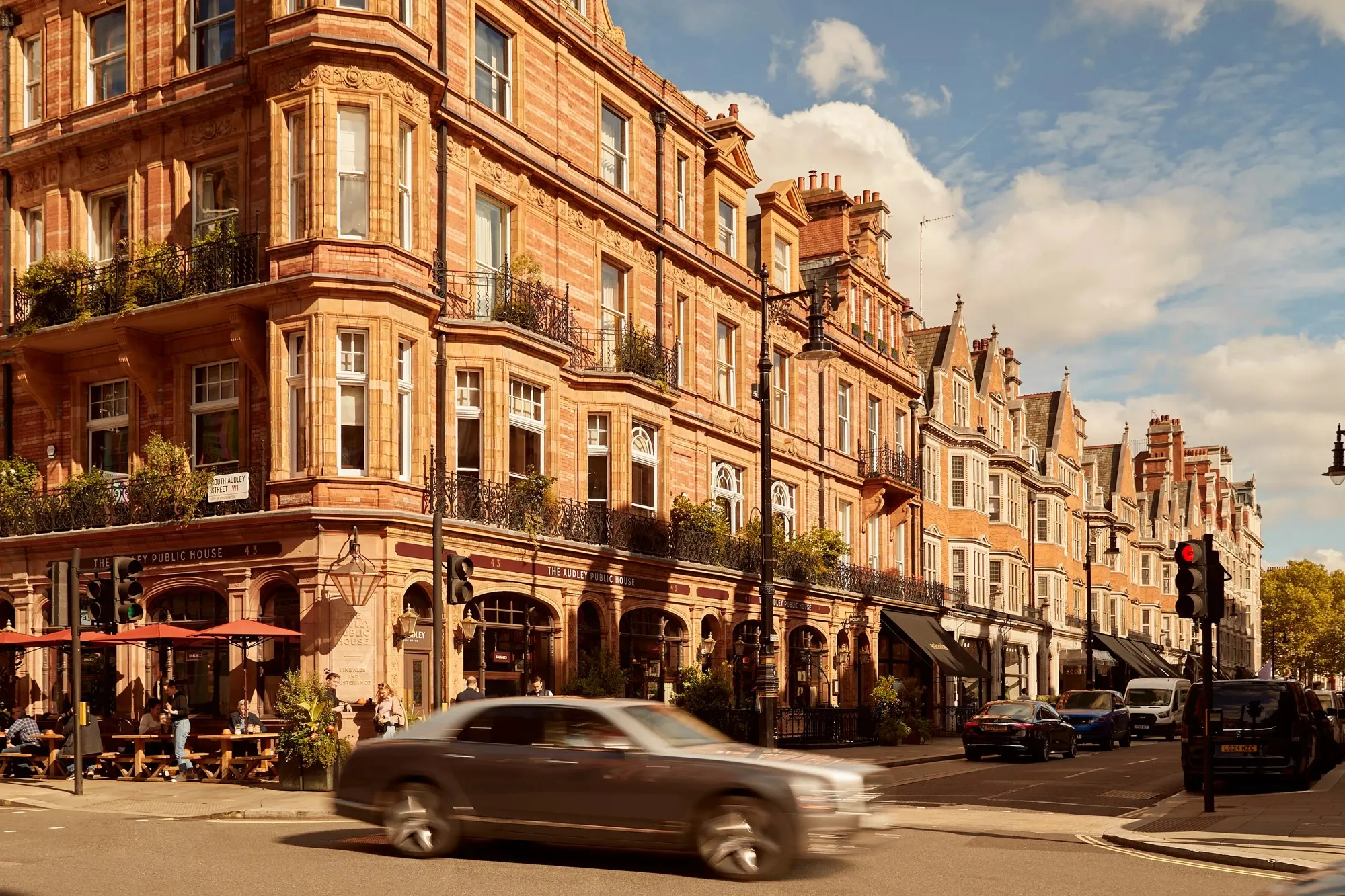
On the map
Mayfair, United Kingdom
Questions
Frequently asked
Who owns The Connaught, and how old is the building?
The Connaught is owned and operated by Maybourne Hotel Group, which also runs Claridge's, The Berkeley and The Emory in London, alongside properties in Beverly Hills and on the French Riviera. The hotel traces its origins to 1815, when the Prince of Saxe-Coburg Hotel operated on the site as an offshoot of Grillion's; the current building dates to 1897, and the property was renamed The Connaught in 1917, during the First World War, after Prince Arthur, Duke of Connaught.
Is Hélène Darroze at The Connaught still a three-Michelin-star restaurant?
Yes. Hélène Darroze at The Connaught held its three-star rating in the Michelin Guide Great Britain & Ireland 2026, making The Connaught the only hotel in the UK to combine a three-Michelin-star restaurant with the guide's three-Michelin-Key rating for the hotel itself.
What is the Connaught Bar known for, and is it still ranked among the world's best?
Connaught Bar ranked No. 6 in The World's 50 Best Bars 2025, continuing a run that has seen it named the world's best bar on more than one occasion since opening in 2008. It is led by director of mixology Agostino Perrone and head bartender Giorgio Bargiani, and is best known for its tableside martini, mixed and poured from a chrome trolley in front of the guest.
Does The Connaught have a spa and pool?
Yes. Aman Spa at The Connaught occupies a lower-ground-floor space with five treatment rooms, a steam room, a private gym and a 60-square-metre black granite vitality pool with a cascading water wall. Access is included for hotel guests, with treatments and spa membership available separately.
How far is The Connaught from Heathrow, and how do guests get there?
Heathrow is roughly 15 miles from the hotel; the fastest route is the Heathrow Express to Paddington (about 15 minutes) followed by a short taxi, or a direct car transfer of around 35 to 50 minutes depending on traffic. The hotel's concierge team can arrange a private chauffeur transfer on request.
What room and suite categories does The Connaught offer?
Categories range from Superior Rooms (from around 21 to 29 square metres) through Deluxe Junior Suites (around 45 square metres) and the 72-square-metre Connaught Suite, up to The Mews, a self-contained three-floor house entered from Adams Row, and The Apartment, a two-bedroom penthouse of just over 3,000 square feet with its own staircase, kitchenette and wrap-around balcony.
Same destination
More hotel guides in United Kingdom
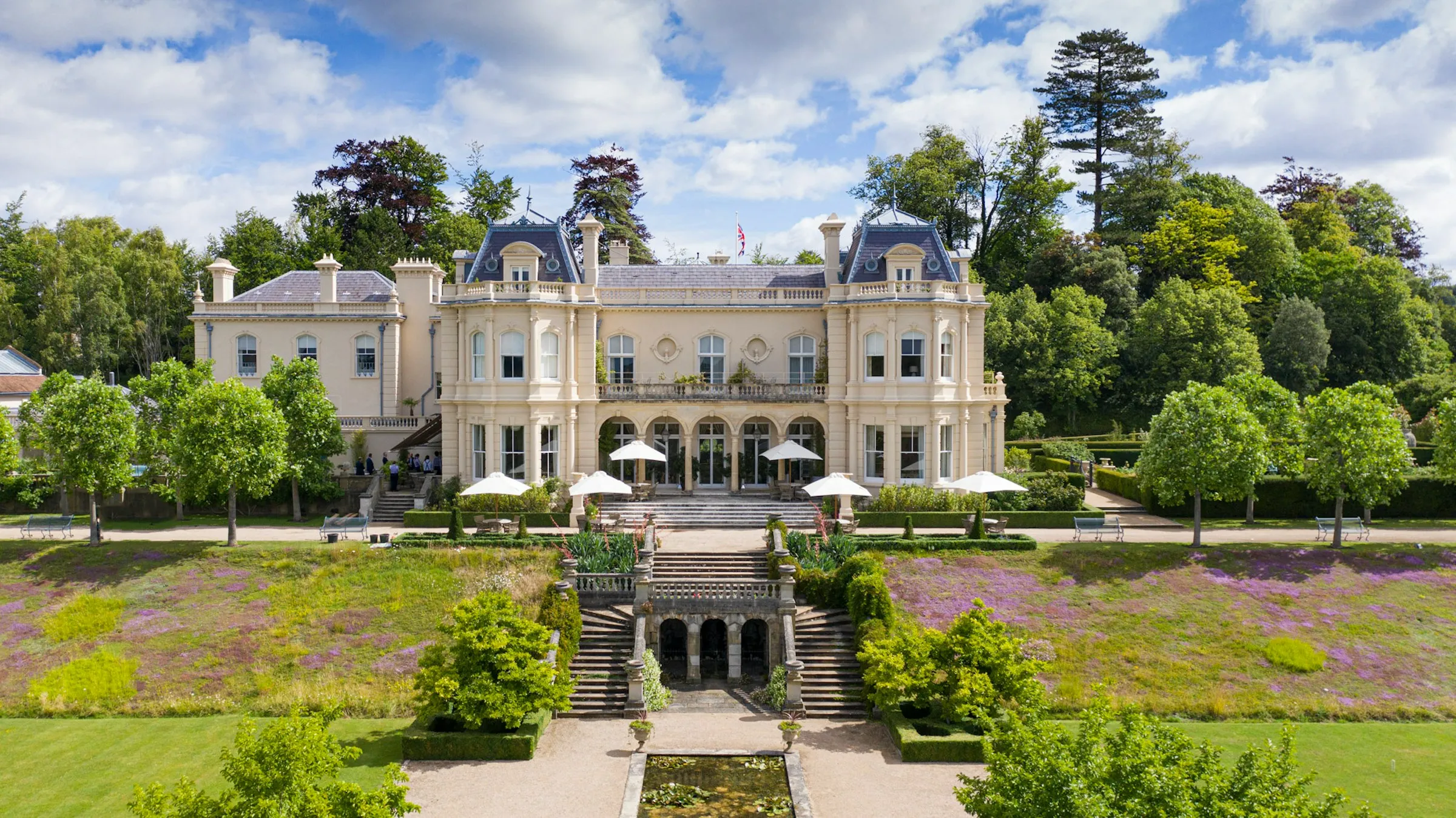
near Leatherhead, United Kingdom
Beaverbrook
A press baron's Surrey estate, once Churchill's wartime refuge, run today as one of England's most quietly assured country house hotels.
From £475 per night
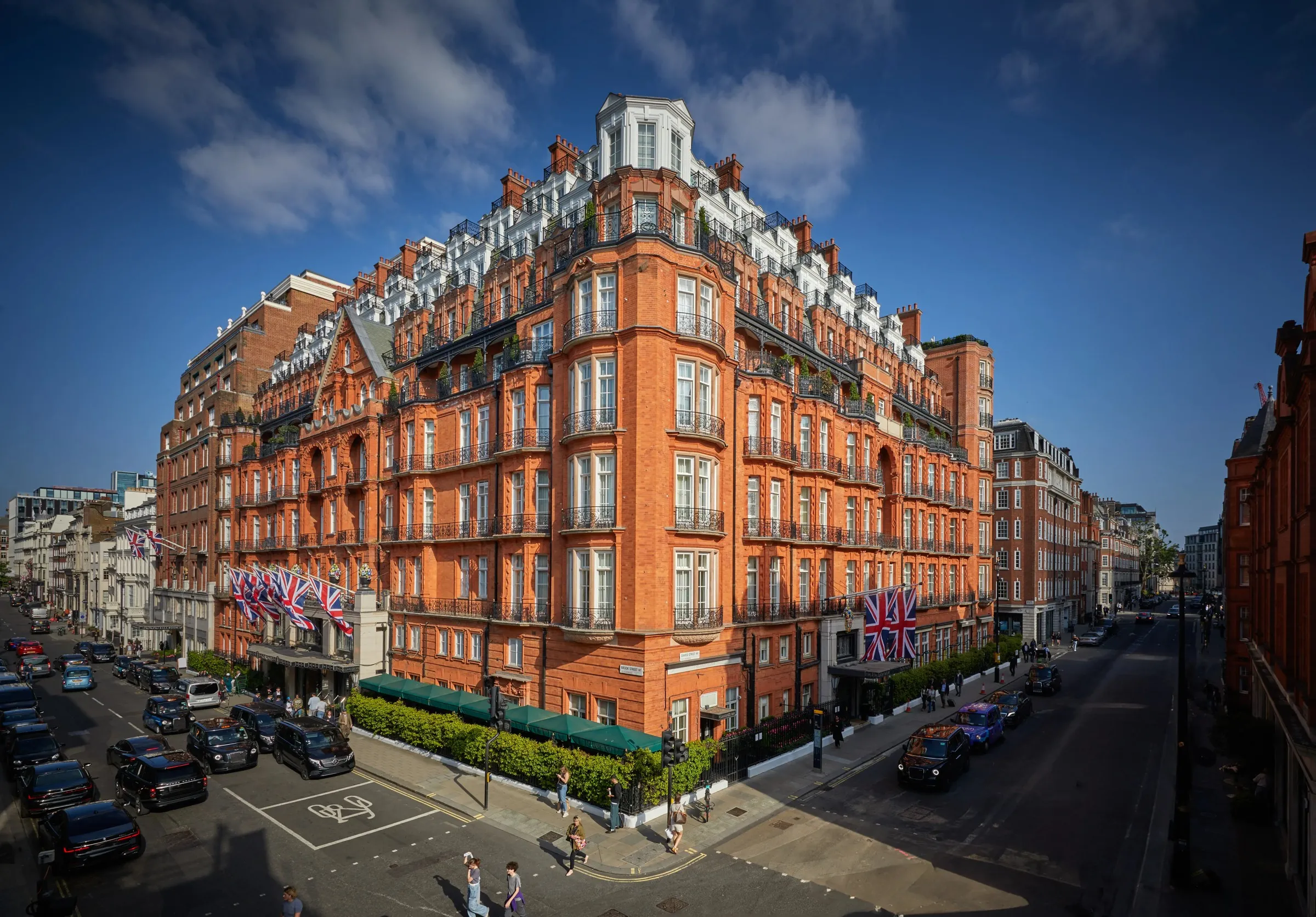
Mayfair, United Kingdom
Claridge's
A 1930s Art Deco time capsule on a Mayfair corner, still the most self-assured address in London.
From £950 per night
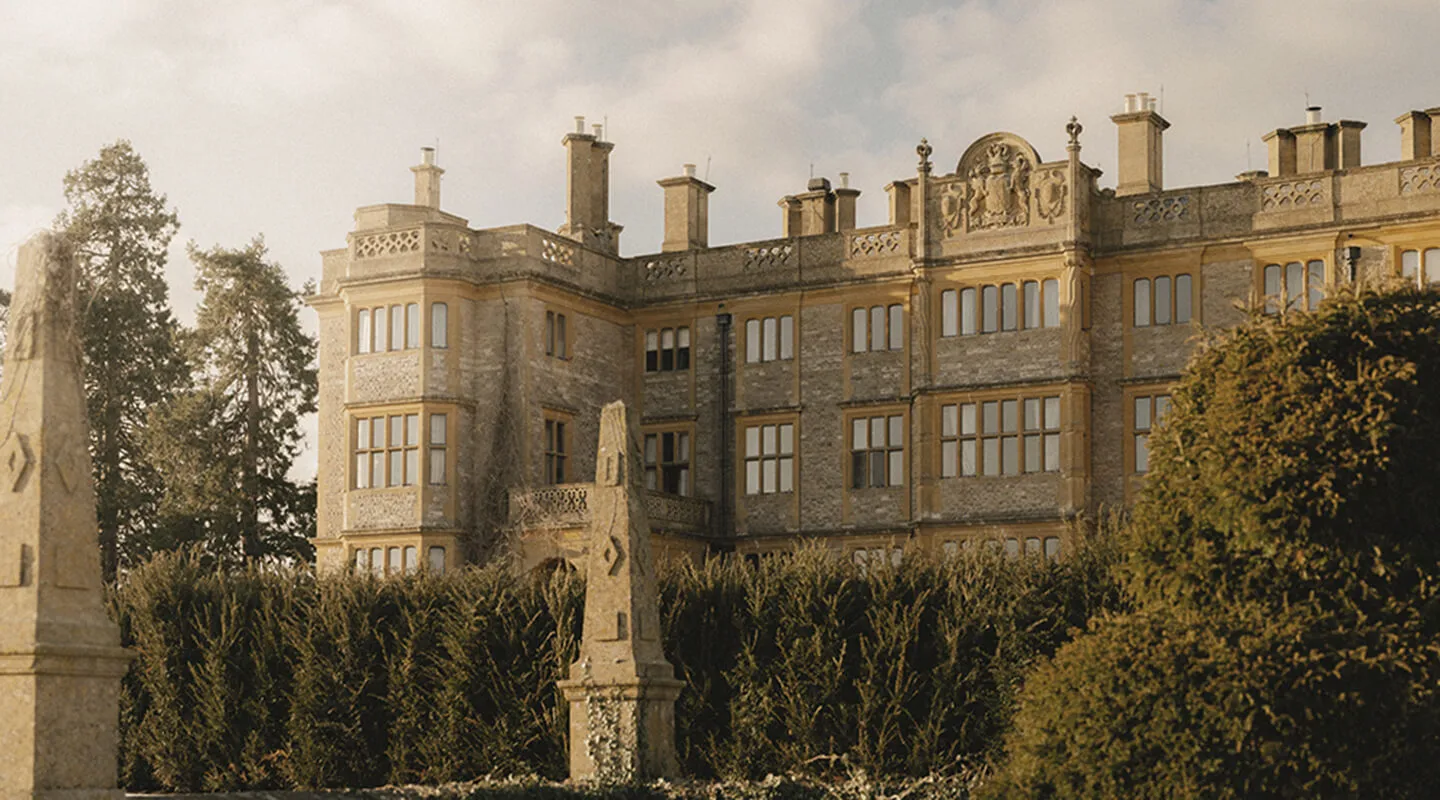
near Witney, United Kingdom
Estelle Manor
A Jacobethan manor turned country club, where a Roman-style bathhouse now sits where a police training centre once stood.
From £450 per night