Alawatugoda, Kandy, Sri Lanka
Aarunya Nature Resort
A regenerative hillside estate above Kandy, where private-pool villas sit inside a working tea and spice garden facing the Knuckles range.
- Rates from
- From $520 per night
- Nearest airport
- Bandaranaike International Airport (Colombo)
- Transfer
- About 3hr by road
- Best months
- December to April, and July to September
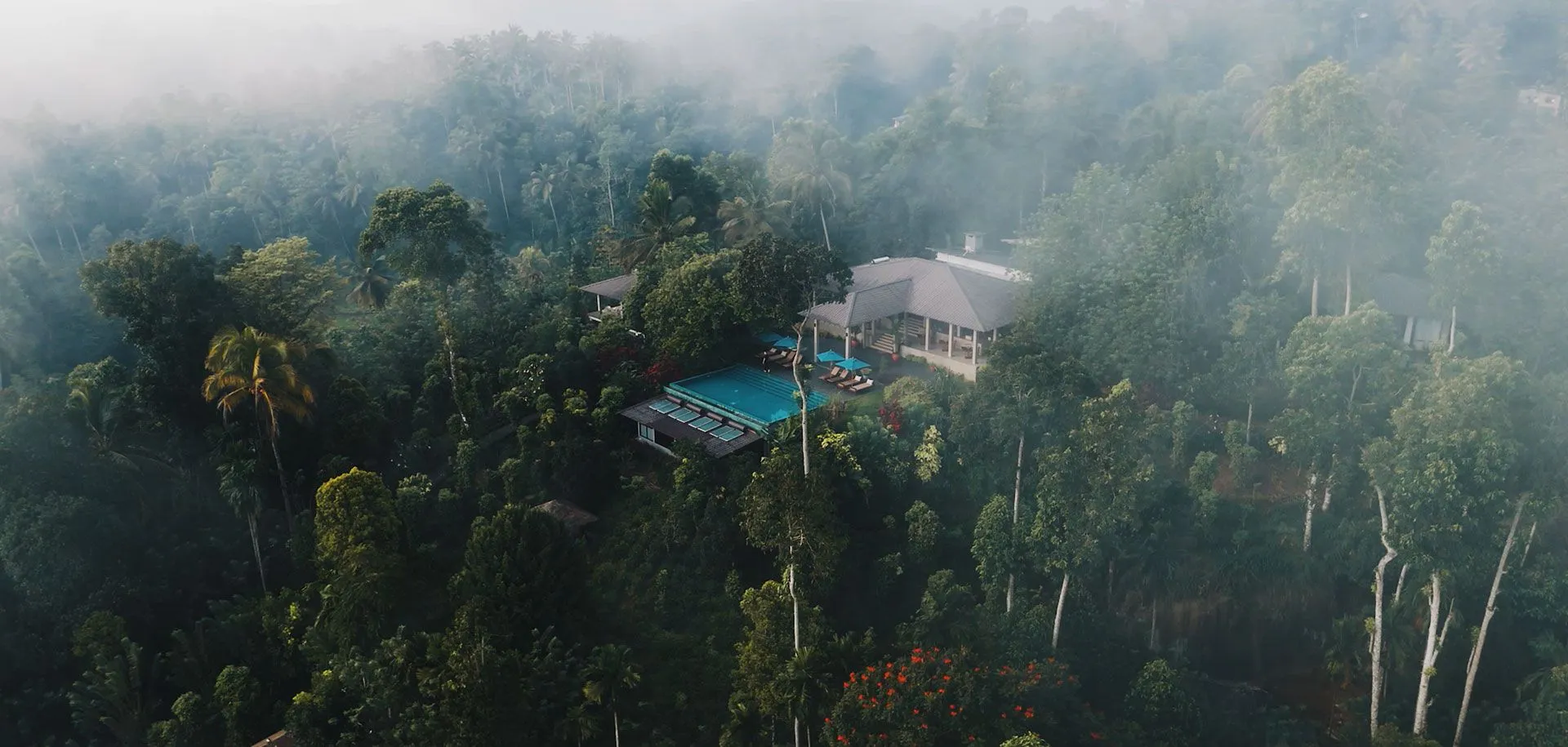
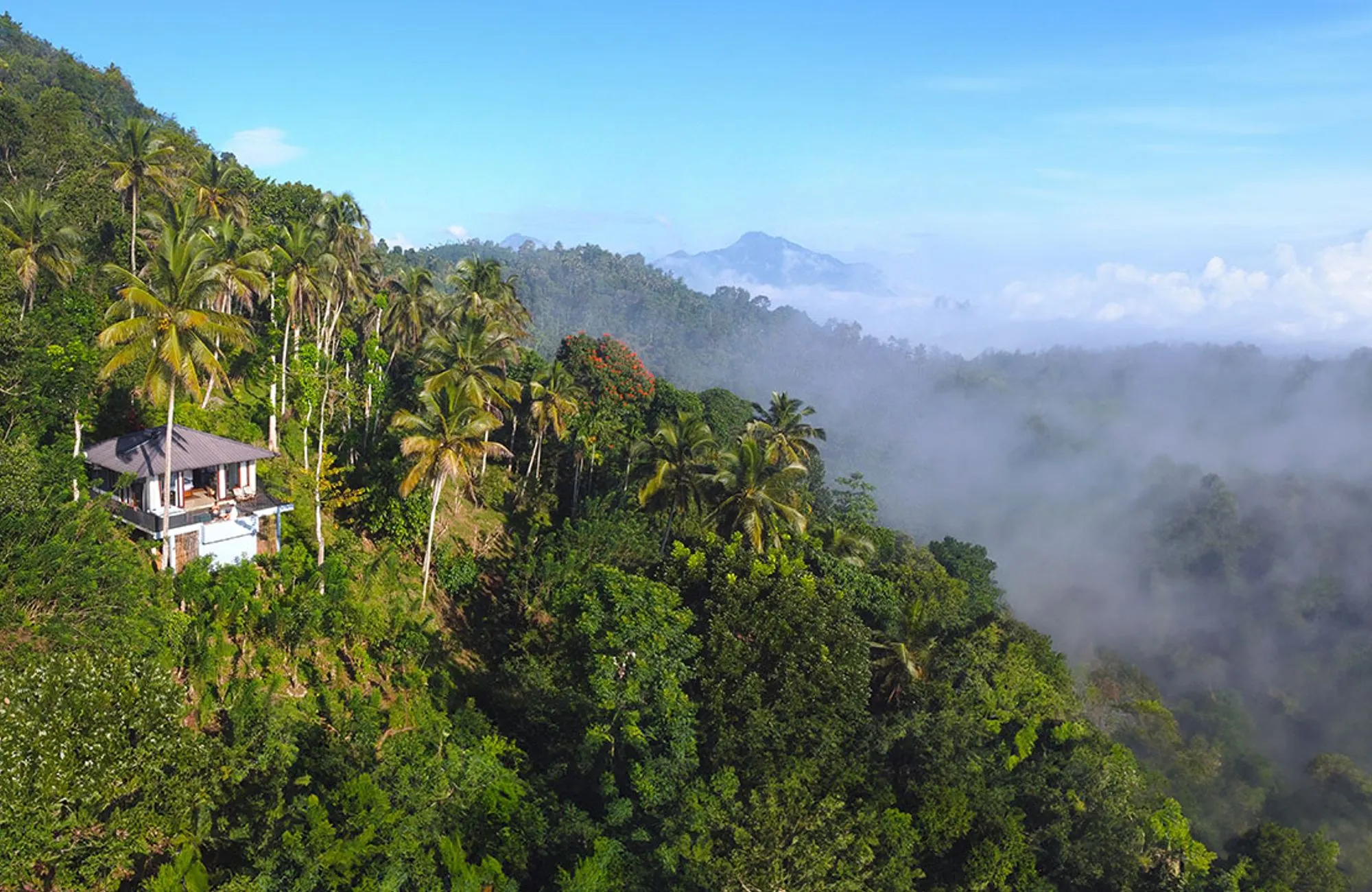
There is a particular kind of hill-country hush that settles over the Kandy highlands in the late afternoon, when the mist starts to gather along the ridgelines and the light turns the tea bushes a deep, wet green. Aarunya Nature Resort is built directly into that hush. It occupies a modest, ten-acre fold of a former tea and spice estate above the village of Alawatugoda, its handful of villas stepped into the hillside so that each one looks out, uninterrupted, toward the forested slopes of the Knuckles Mountain Range, a UNESCO World Heritage site whose folded, knuckle-like peaks give the resort its long view.
This is not a grand hotel in the conventional sense. It is small, deliberately so, and its identity leans less on scale than on the idea of the estate itself as something alive: a working farm, a biodiversity garden, a wellness retreat and a private-pool villa resort operating as one continuous system rather than four separate amenities. Guests arrive for the infinity pool and the mountain view, and tend to leave talking about the vegetable garden, the bird list, or the quiet of a villa terrace at dawn.
It sits at a slight remove from Sri Lanka’s more familiar hill-country circuit, close enough to Kandy for a half-day excursion into the city’s temples and lake, far enough into the hills that the loudest sound most mornings is birdsong and the estate’s own working rhythms.
About Aarunya Nature Resort
Aarunya describes itself as a regenerative rather than merely sustainable property, a distinction it takes seriously across its farming, energy and community programmes rather than treating it as marketing language alone. The estate was shaped from what was previously productive tea and spice land, and much of that agricultural fabric has been retained and intensified rather than cleared for the resort: tea bushes, spice trees, vegetable terraces and rice land remain in active cultivation, feeding the property’s kitchens and giving the grounds a working, unmanicured character that reads as farm as much as resort.
Publicly available information does not detail a specific opening year or the identities of individual founders, and this guide has not been able to verify those particulars independently; readers wanting precise ownership or opening-date history should confirm directly with the resort. What is clear from the property’s own account of itself is a strong emphasis on estate agriculture, biodiversity conservation and staff welfare programmes run under its associated foundation, which together shape the guest experience as much as the villas or the spa do.
Architecturally, the estate favours low, timber-and-thatch structures that sit into the slope rather than announce themselves against it, with the central pavilion, restaurant and infinity pool positioned to catch the widest sweep of the mountain view. It reads as considered rather than showy: a hillside farm dressed for hospitality, not a resort dressed up as a farm.
Location
Aarunya sits in Alawatugoda, a village around 14 kilometres north of Kandy on the road toward Matale, in Sri Lanka’s Central Province. The setting places it within the island’s central highlands rather than its lowland rainforest belt: the resort’s defining backdrop is the Knuckles Mountain Range (locally Dumbara Kanduvetiya), a cloud-forest massif inscribed as part of Sri Lanka’s Central Highlands UNESCO World Heritage listing and known for steep, folded ridgelines, montane forest and high endemism among birds and amphibians.
The most common route in is by air to Bandaranaike International Airport near Colombo, followed by a private road transfer of roughly three hours through the central highlands, a drive that itself passes through changing landscapes of lowland plantation, market towns and rising hill country. Travellers coming via Kandy’s railway station, reached from Colombo on Sri Lanka’s well-loved hill-country line, are closer still, with a transfer of around 40 minutes from the station to the estate.
Climatically, the Kandy hills sit in a transitional zone between Sri Lanka’s wet and dry monsoon influences, which means rainfall is possible across much of the year but tends to be heaviest during the two principal monsoon periods. Many visitors favour the drier windows around December to April, and again around July to September, for the clearest mountain views and the most reliable conditions for garden and forest walks, though the estate’s elevation and forest cover mean showers and mist can arrive at short notice at any time of year, part of what keeps the hillside so green.
Rooms & Suites
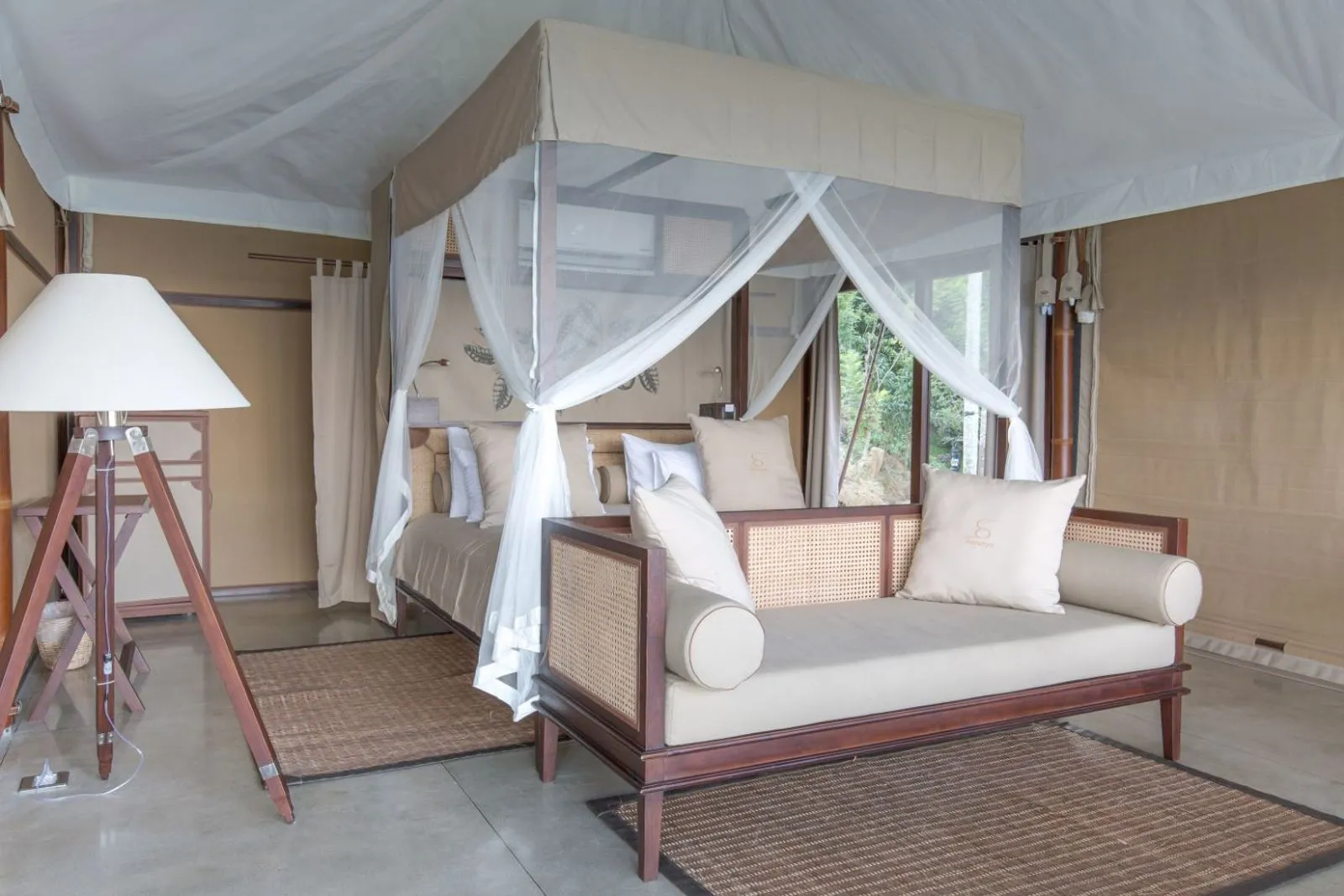
Accommodation at Aarunya is organised around a small collection of private-pool villas rather than conventional hotel rooms, with reported inventory in the range of eight to ten villas depending on the source consulted, split across a small number of categories. The Sky Habitat Villa and Sky Pavilion Villa sit toward the more grounded end of the range, each with a private plunge pool, an outdoor bathing area and a terrace angled toward the estate’s tea-covered slopes. The Sky Tented Villa is the more distinctive design statement, its roofline built as a canopy tent in a style borrowed from safari lodges, paired with an open-air bathtub positioned for mountain views and its own private pool.
At the top of the range, the two-bedroom Sol Sanctuary is built for families or two couples travelling together, offering more generous living space alongside the same private-pool format found throughout the property. Across categories, villas are furnished in a simple, Sri Lankan-influenced style, with four-poster beds, wet-room showers, in-room minibar and fruit platters, and on-call butler service reported as standard rather than an upsell.
Because the resort is built for the villa format rather than a multi-storey block, guests should expect a genuinely low-density stay: quiet grounds, generous spacing between accommodations, and a sense of privacy that owes as much to the estate’s terrain as to its design.
Restaurants & Bars
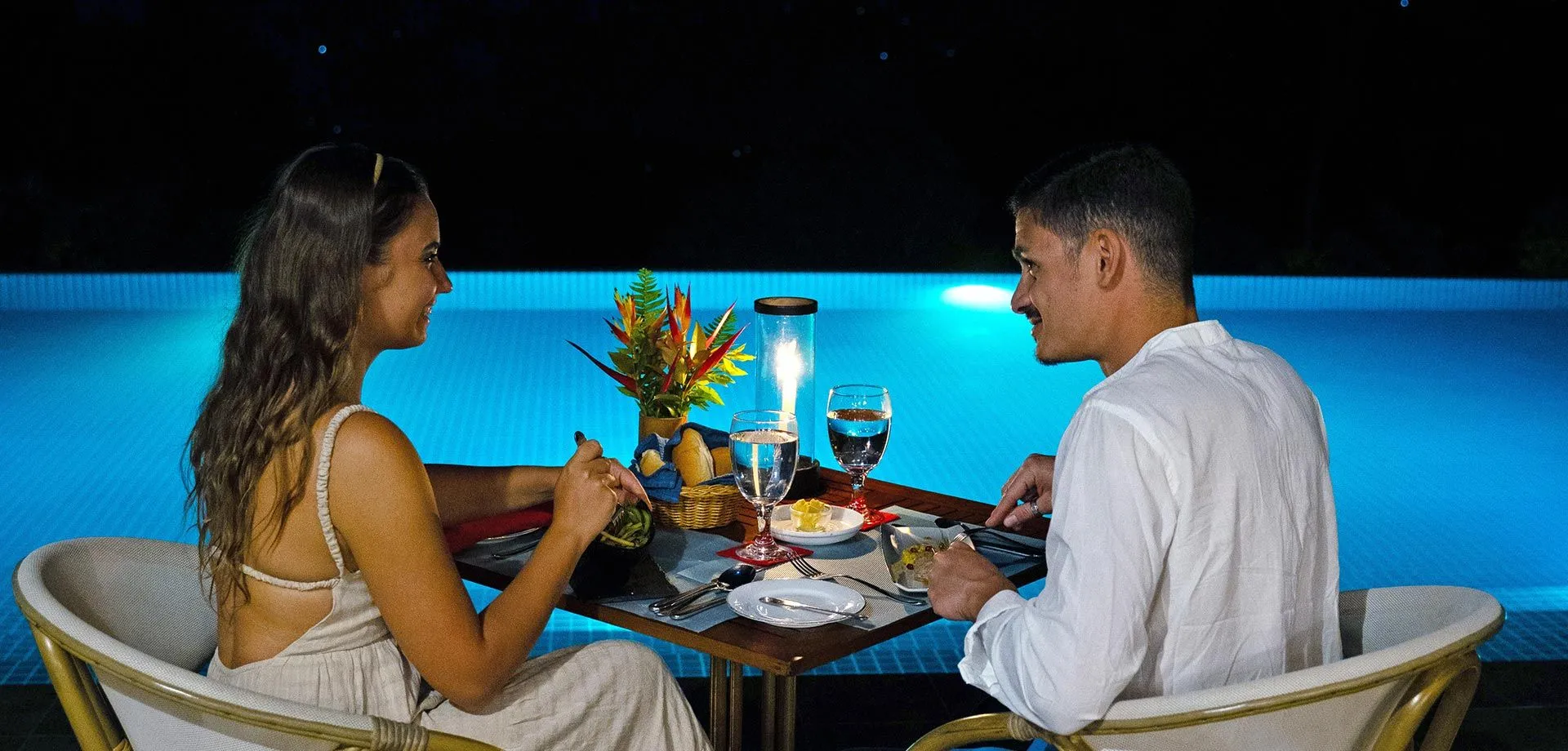
Dining at Aarunya is spread across several distinct settings rather than concentrated in a single flagship restaurant. The Verandah functions as the estate’s main restaurant, lounge and bar, positioned to overlook the infinity pool and the mountains beyond, and serves a broadly international menu inflected with Sri Lankan flavours. Aahaara offers a more immersive, specifically Sri Lankan dining experience, staged in a traditional village-style setting and, on occasion, paired with live music, drawing on the estate’s own gardens for much of its produce.
For something lighter, the Aahaasa Tea Pavilion serves Ceylon tea and afternoon-tea style spreads from a high point on the estate, capitalising on both the property’s own tea heritage and its long sightlines. Poolside dining, in-villa dining, and set-piece experiences such as a floating breakfast round out the offer for guests who prefer to eat on their own terrace rather than at a table.
The kitchens draw heavily on the estate’s own greenhouses, vegetable terraces, rice paddies, coconut groves and spice gardens, with a stated preference for organic and ethically sourced meat, seafood and dairy, including milk bought daily from nearby village farmers. It is a garden-to-table model in the most literal sense: much of what arrives on the plate has been grown or raised within walking distance of the kitchen.
Wellness
Wellness sits close to the centre of Aarunya’s identity. The Aarogya Wellness Centre offers Ayurvedic and Balinese-influenced treatments in single and couples’ treatment rooms, supported by a bathhouse and sauna, and the estate runs a dedicated yoga pavilion with capacity for a small group class alongside an instructor. Beyond individual spa treatments, the resort offers structured, multi-night wellness retreat programmes, built around durations of four, seven, fourteen or twenty-one nights, that combine daily treatments, yoga and meditation with personalised meal planning and, per the resort’s own description, doctor consultations.
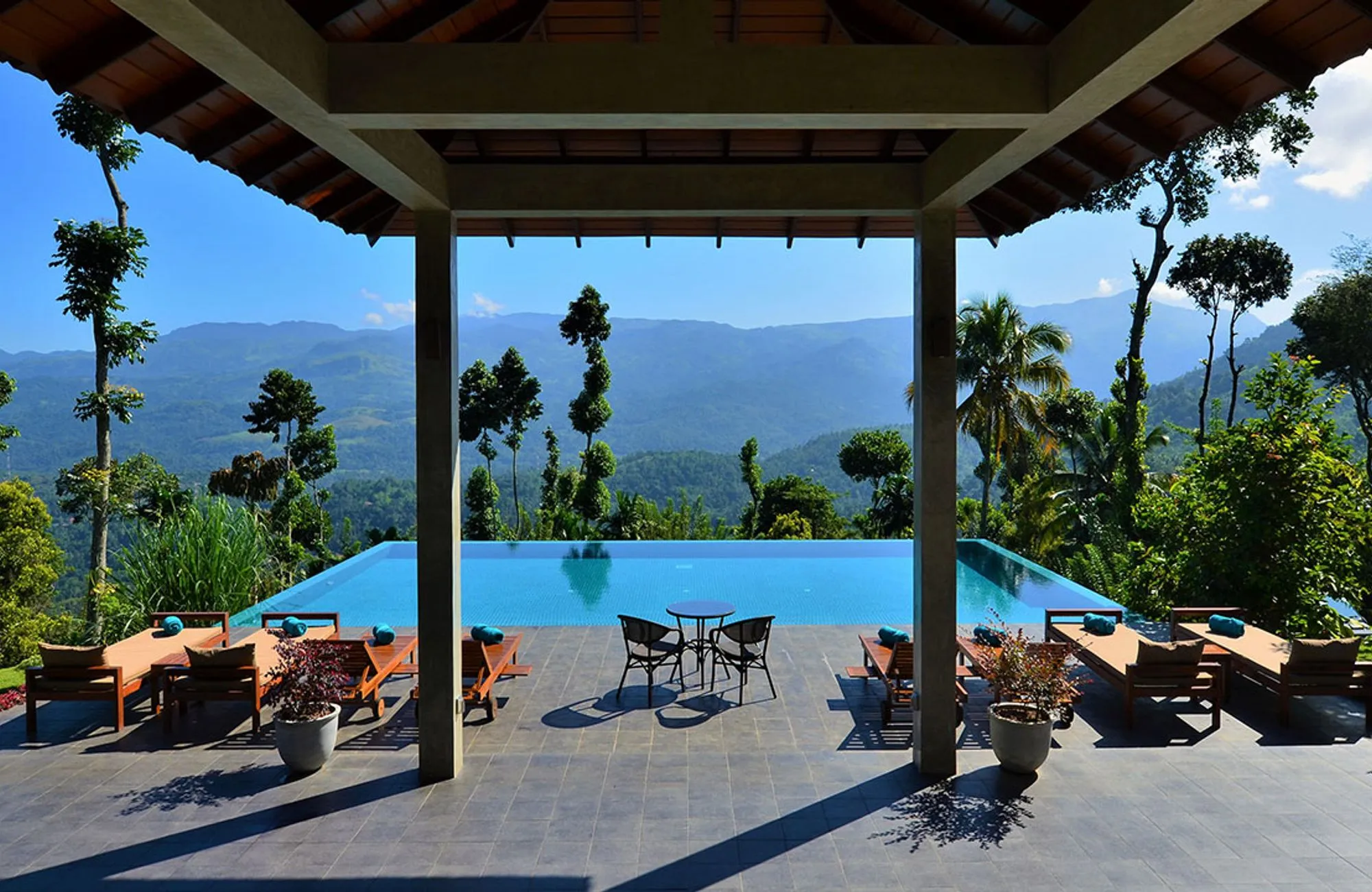
The main infinity pool, reported at 40 by 20 feet and positioned at the central pavilion for uninterrupted mountain views, functions as the estate’s social and scenic centre, while each villa’s private plunge pool offers a quieter, more solitary alternative. A 24-hour gym and an on-call doctor round out the wellness infrastructure, positioning the property as much for guests planning a genuine reset as for those simply wanting a resort pool with a view.
Experiences
Given its hillside, forest-adjacent setting, Aarunya leans heavily into its own grounds and the surrounding countryside for its activity programme rather than importing offsite excursions as the main draw. Guided nature walks led by an in-house naturalist take in the estate’s tea and spice cultivation, vegetable and rice terraces, and forest-edge paths, while complimentary bicycles, including e-cycles powered by the estate’s solar system, allow guests to explore the wider grounds and estate roads independently.
Birdwatching is a genuine strength of the property rather than an incidental amenity: the Knuckles foothills support notably rich birdlife, and the resort reports more than 50 species observed on the estate itself, from kingfishers and herons to raptors such as the crested hawk-eagle, with guided bird walks available through the in-house naturalist team. Cooking classes drawing on the estate’s own produce, spice-garden tours, and village visits into the surrounding community add further texture, and the resort’s proximity to Kandy, roughly 30 to 45 minutes by road, makes a half-day excursion to the city’s Temple of the Sacred Tooth Relic and lake a realistic add-on for guests who want a cultural counterpoint to the estate’s rural pace. Longer excursions further into the Knuckles range itself, for hiking or more serious birding, can typically be arranged through the resort for guests who want to go deeper into the mountain forest beyond the estate boundary.
Sustainability
Aarunya positions its sustainability programme under the banner of “regenerative travel,” a framing that goes beyond minimising harm toward actively rebuilding soil, habitat and local livelihoods, and the property backs the language with a reasonably detailed set of initiatives. On the agricultural side, it is reportedly pursuing certification as one of Sri Lanka’s first fully biodynamic properties, treating the farm as a single living system, intercropping tea with vanilla and pepper to layer habitat as well as yield, and running greenhouses, organic vegetable patches, rice paddies and spice gardens that feed directly into the kitchens.
On energy and infrastructure, the estate has installed solar panels across the property and states an ambition to reach off-grid status by 2030 through a combination of solar generation, battery storage, solar-heated water and biogas, alongside a transport fleet of electric buggies and retrofitted e-cycles. Water drawn from on-site wells is treated before use, wastewater is treated naturally on the property, and a waste programme covers on-site sorting, composting and recycling, including a “waste-to-art” initiative that repurposes discarded materials into work by local artists.
Biodiversity work centres on the estate’s role within the wider Knuckles ecosystem, including habitat protection for the critically endangered Moore’s shrub frog (Pseudophilautus mooreorum), a species endemic to the Knuckles region, maintained within designated biodiversity gardens on the property. A Nature Pavilion, described as a conservation and research hub intended to support university partnerships and naturalist-led programming, was reported as due to open in 2026. Community engagement runs through the associated Aarunya Nature Foundation, which the resort states has supported local schools with supplies and library funding, established IT facilities at a village temple, and provided emergency relief to surrounding villages during the pandemic. As with any resort-authored sustainability programme, these initiatives are best understood as the property’s own account of its work rather than independently audited claims, and guests with a particular interest in the detail should ask directly on property.
Who Is It For
Aarunya suits travellers who want a wellness-forward, nature-adjacent stay in Sri Lanka’s hill country without the scale or formality of a large resort. Birdwatchers and keen walkers will find a genuinely active, working landscape to explore rather than a manicured garden, and the estate’s naturalist-led programme rewards a slower, more attentive pace of travel. Couples looking for a private-pool villa with real seclusion, and anyone building a longer wellness retreat around structured spa and yoga programming, are close to the property’s core audience.
It is a less natural fit for travellers who want a beach-adjacent base, a large-scale resort with extensive facilities, or a jumping-off point for deep, multi-day rainforest trekking; those itineraries are better served elsewhere on the island. As a hill-country property built around a working farm, Aarunya rewards guests who are happy to spend unstructured time on the estate itself, rather than treating it purely as a base for external excursions.
Families travelling with older children who take an interest in farming, cooking or wildlife may also find more here than the villa count suggests, since much of the estate’s daily rhythm, from the vegetable terraces to the naturalist-led walks, is built to be watched and joined rather than simply admired from a sun lounger. Solo travellers on a dedicated wellness break are similarly well catered for, given the structured retreat programmes and the option of a private plunge pool without needing to negotiate a shared social pool scene. What the resort does not offer, by design, is a conventional room-and-buffet hotel experience with a long à la carte activities desk; guests expecting that format elsewhere in Sri Lanka’s hill country may find Aarunya’s slower, estate-centred pace takes some adjusting to.
Practical Information
Rates at Aarunya are positioned at the upper end of Sri Lanka’s boutique villa category, with reported nightly rates from roughly the mid-$400s to low-$500s including breakfast; this guide prices the property from an indicative $520 per night as a general orientation rather than a live rate, and travellers should always confirm current pricing and any minimum-stay requirements directly with the resort, particularly around peak periods.
The nearest international gateway is Bandaranaike International Airport near Colombo, with a private road transfer of roughly three hours to the estate; travellers connecting via Kandy’s railway station, reachable from Colombo on the scenic hill-country rail line, face a considerably shorter final transfer of around 40 minutes. Aarunya operates a flexible, 24-hour check-in and check-out policy rather than fixed clock times, which is worth building into any onward travel planning. For weather and views, the windows around December to April and July to September tend to offer the clearest conditions in the central highlands, though the estate’s forested, high-elevation setting means some rain and mist should be expected at any time of year. A stay of three to four nights allows time to settle into the estate’s slower rhythm, work through a spa treatment or two, and fit in both a guided nature walk and a half-day excursion into Kandy, while guests booking one of the resort’s structured wellness retreats should plan around the programme’s own minimum duration, typically four nights or longer.
Travellers combining Aarunya with a wider Sri Lanka itinerary tend to slot it in as the hill-country chapter of a longer loop, most commonly bridging a stay in the Cultural Triangle to the north with time on the south or west coast beaches, using Kandy as the natural hinge point given its position on the island’s central rail line. Because the estate sits some way outside Kandy proper, travellers without a private vehicle should plan transfers through the resort rather than relying on ad hoc local transport, particularly after dark on the hill roads leading up to Alawatugoda.
Nearby
Kandy itself, Sri Lanka’s hill-country capital and home to the Temple of the Sacred Tooth Relic and Kandy Lake, sits roughly 30 to 45 minutes from the estate by road, making it the most straightforward cultural excursion for guests based at Aarunya. The Knuckles Mountain Range rises directly beyond the property’s own boundary, offering further hiking and birding for guests keen to go deeper into the mountain forest than the estate’s own grounds allow, typically arranged as a guided excursion through the resort. Sri Lanka’s wider hill-country circuit, including the tea country around Nuwara Eliya and the botanical gardens at Peradeniya, is also reachable as a day trip for guests extending their stay beyond the estate itself.
In pictures
On the map
Alawatugoda, Kandy, Sri Lanka
Questions
Frequently asked
Where exactly is Aarunya Nature Resort?
The resort sits on a former tea and spice estate in Alawatugoda, a village roughly 14km north of Kandy in Sri Lanka's Central Province, facing the forested ridgelines of the UNESCO-listed Knuckles Mountain Range. It is a hill-country property, not a rainforest lodge in the island's south.
How do guests get to the resort?
Most guests fly into Bandaranaike International Airport near Colombo and travel by private road transfer, a journey of roughly three hours through the central highlands. Kandy's railway station, reachable from Colombo by the scenic hill-country line, is closer still, around 40 minutes from the property.
Does every room have a private pool?
Yes. Aarunya is built around a small number of villas, reported as eight to ten depending on the source, each with its own plunge pool, alongside a shared 40-by-20-foot infinity pool at the estate's central pavilion.
What is there to do beyond the spa?
The estate runs guided nature walks, cycling on the estate roads, spice and vegetable garden tours, and bird walks with an in-house naturalist; more than 50 species have reportedly been recorded on the property. Excursions further into the Knuckles range and the wider Kandy region can typically be arranged through the resort.
Is Aarunya a good fit for a wellness-focused stay?
It is positioned as one of its central strengths. The Aarogya Wellness Centre offers Ayurvedic and Balinese-influenced treatments, yoga, and structured multi-night wellness retreat programmes, alongside the estate's broader garden-to-table and biodynamic farming approach.
Same destination
More hotel guides in Sri Lanka
Thiranagama, Sri Lanka
Haritha Villas + Spa
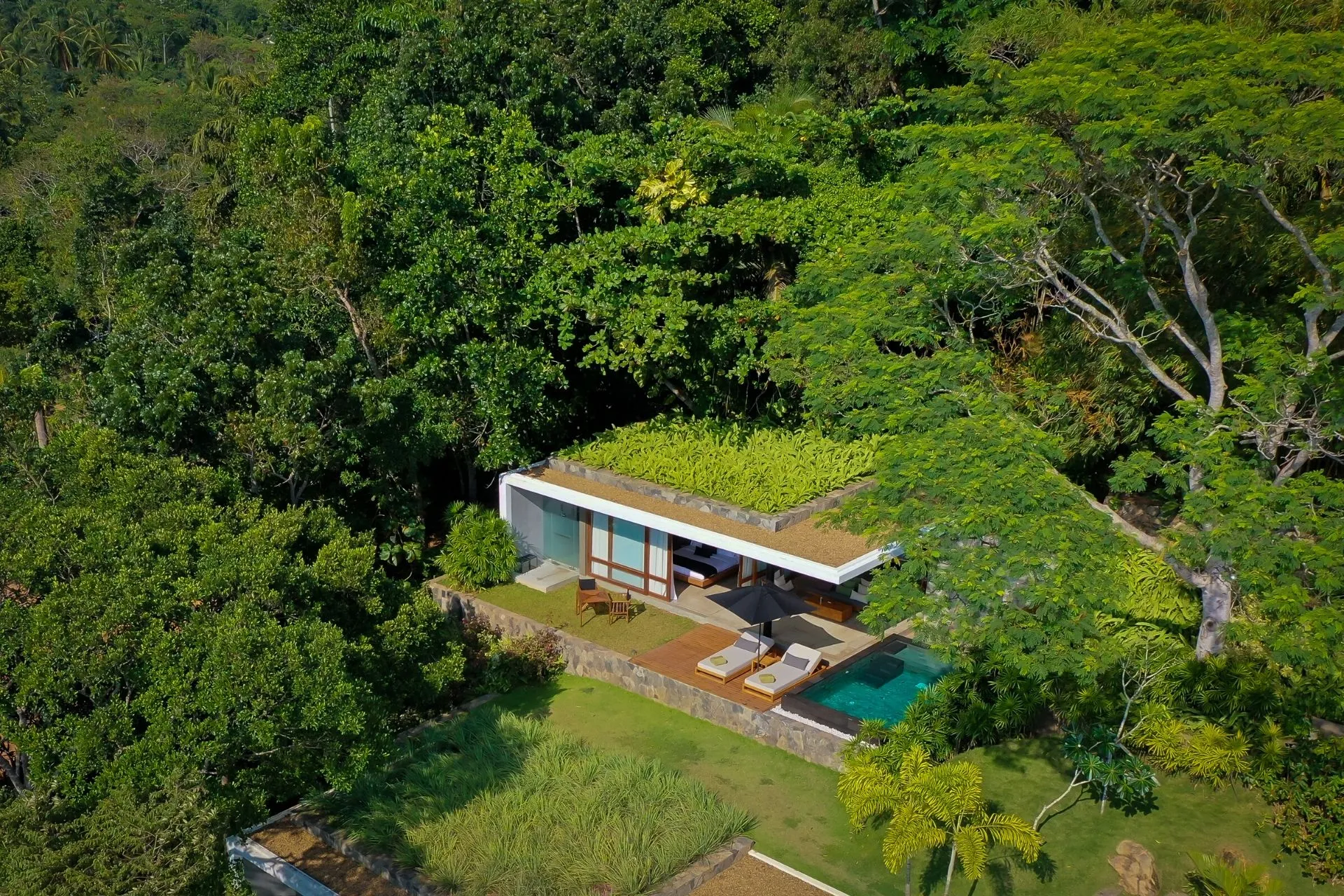
Nine keys on a forested hilltop above Thiranagama, built around private saltwater plunge pools rather than a stretch of sand.
From $460 per night
Tangalle, Sri Lanka
Kayaam House
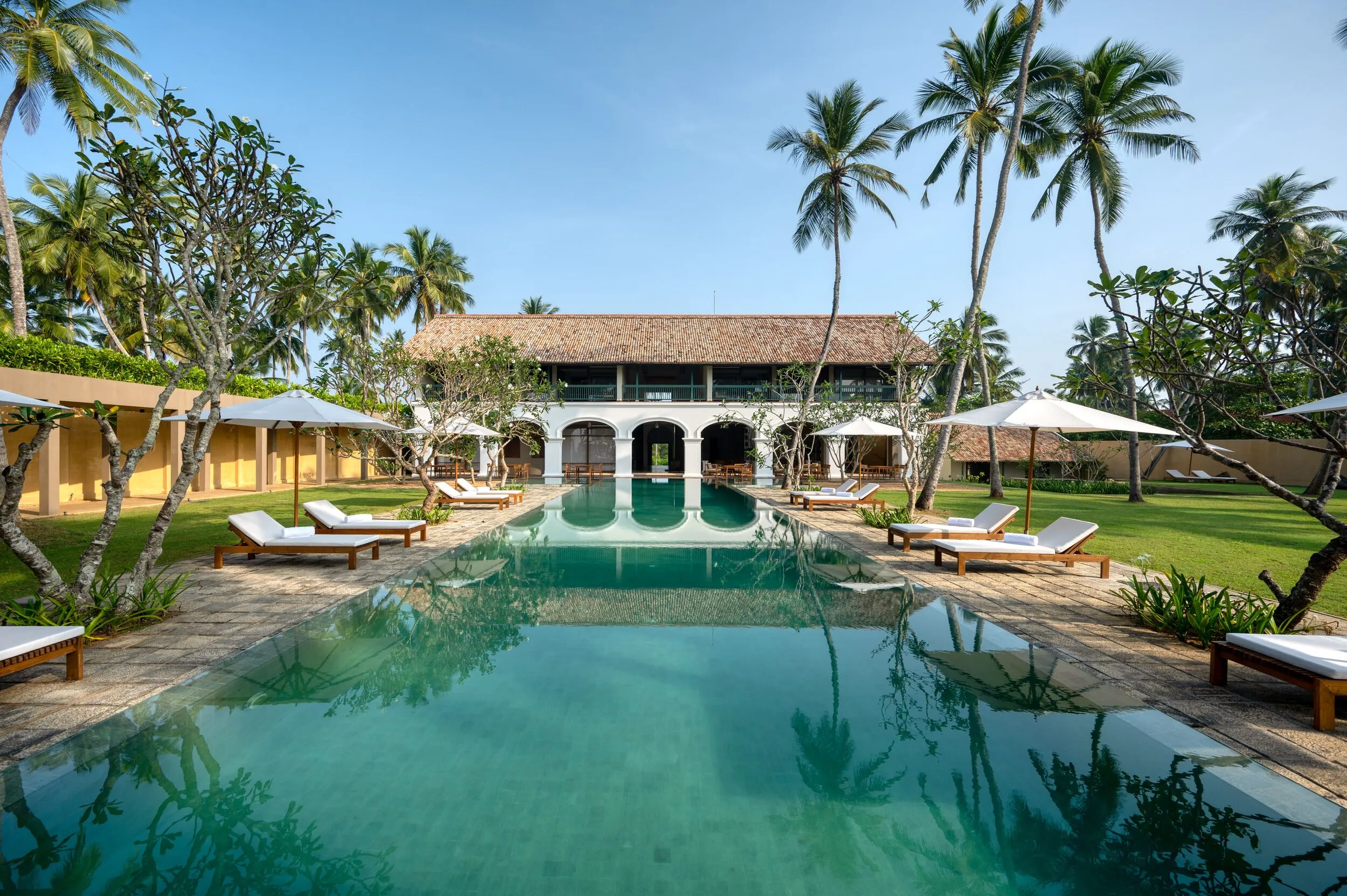
Nine keys, a resident Ayurvedic doctor and a private stretch of turtle-nesting coastline near Tangalle.
From $700 per night
Weligama, Sri Lanka
Cape Weligama
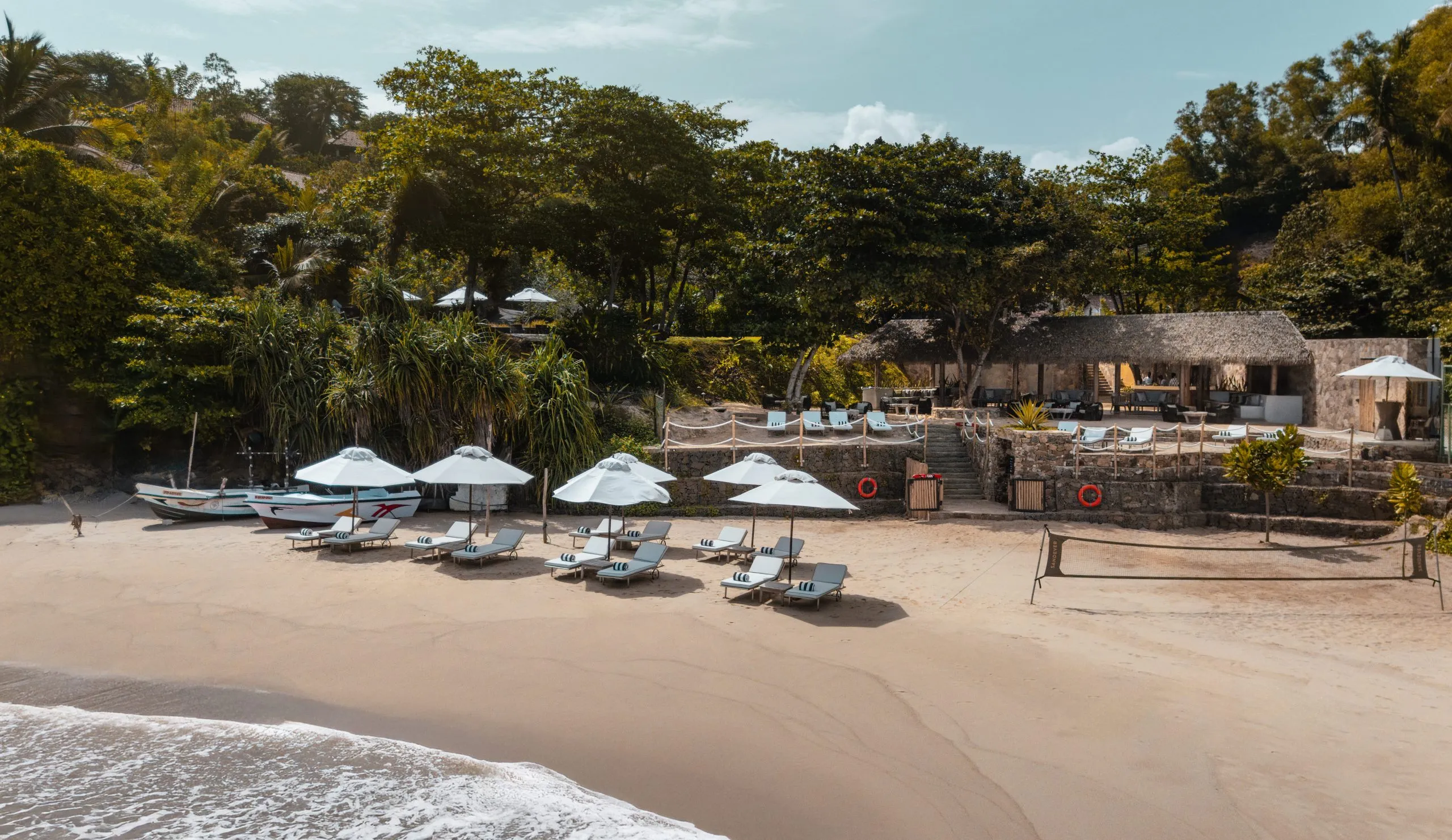
A Thai-designed clifftop village of suites and villas on Sri Lanka's south coast, built around a sixty-metre pool that seems to hang above the Indian Ocean.
From $650 per night