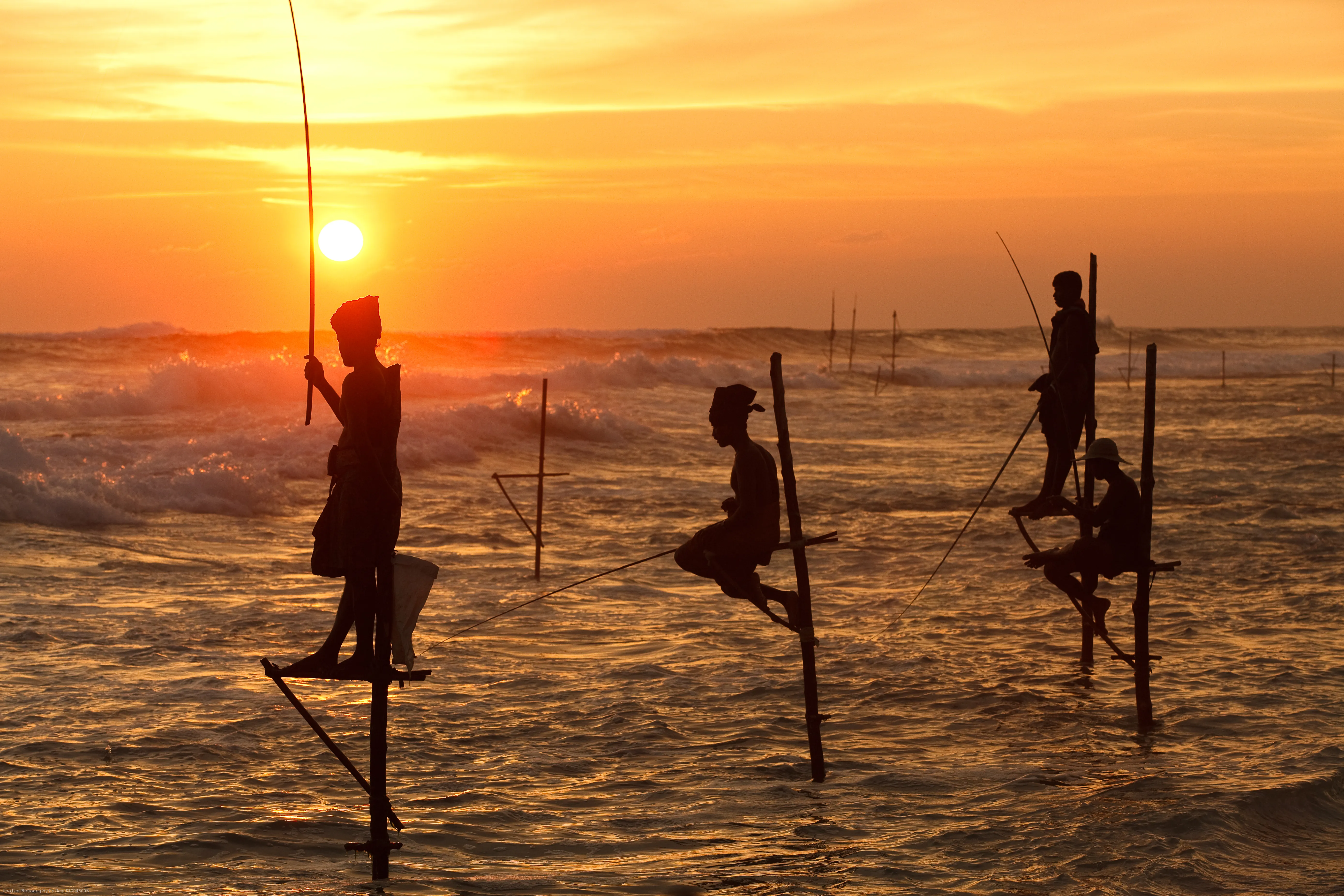
Sri Lanka
One island, four distinct hotel geographies: a surf and lagoon south coast, a mist-cooled tea country, a wildlife-dense dry zone, and a heritage fort city, all within a few hours of each other.
- When to go
- December to March for the south and west coasts, year-round for the hill country, May to September for the drier east coast.
- Getting there
- Roughly 10 to 11 hours direct from London; longer from North America with a connection through the Gulf or Europe.
- Best for
- safari tea country wellness heritage beach
Sri Lanka packs a disproportionate range of hotel geography into an island smaller than Ireland. A property forty minutes from another can sit in an entirely different climate, altitude, and architectural tradition. Planning here is mostly a matter of choosing which two or three of the island’s distinct regions to combine, and in which order.
The regions, briefly
The south coast, from Galle to Yala, is where the island’s design-led hotel openings have concentrated over the past decade: modernist lagoon-front architecture, restored colonial townhouses inside Galle’s fort walls, and a surf economy running from Weligama through to Ahangama. Roads here hug the coast, and the Colombo to Galle expressway makes the whole stretch a manageable two to three hours from the international airport.
The hill country, centred on the tea estates around Hatton, Bogawantalawa, and Nuwara Eliya, runs on a different clock entirely. Altitude replaces heat with a genuine chill after dark, planters’ bungalows outnumber new-build hotels, and the pace is walking and train journeys rather than beach days. The Kandy-to-Ella railway, threading through the tea terraces, is one of the more photographed train routes anywhere, for reasons that hold up in person.
The dry zone and cultural triangle, around Sigiriya, Dambulla, and Yala National Park, is where the island’s wildlife and ancient-kingdom history concentrate. Yala has one of the highest leopard densities recorded anywhere, and the rock fortress at Sigiriya remains one of Asia’s more improbable pieces of fifth-century engineering. Hotels here range from architect-led safari lodges to wetland-restoration properties built on stilts.
The east coast, around Passikudah and Trincomalee, runs on the opposite monsoon calendar to the south and west: its calm season is roughly May through September, exactly when the south coast turns wet. It remains the island’s least developed hotel region, which is itself the appeal for travellers who have already done the south coast.
Getting there and around
Almost all international arrivals land at Bandaranaike International Airport (CMB), north of Colombo. From there, the south coast is a two to three hour drive on the expressway; the hill country and cultural triangle both run four to six hours by road, or can be broken up with an internal flight or the train. Private drivers are the default way to move between regions and are generally arranged through the hotel; self-driving is uncommon among visitors, since Sri Lankan road conventions (mixed traffic, the left-hand side, frequent overtaking) reward local experience.
Where to eat
The best food in Sri Lanka is rarely inside a hotel dining room. Egg hoppers and pol sambol at a roadside stall, a proper rice and curry spread eaten with the hand, and the country’s genuinely excellent coffee culture on the south coast are all worth seeking out deliberately. Colombo has a small but serious fine-dining scene led by Ministry of Crab, built around Sri Lankan lagoon crab and now internationally known; reservations should be made well ahead. Outside the capital, the better hotels increasingly staff kitchens that can hold their own against town restaurants, which is one of the four criteria this site weighs directly.
Luxury experiences worth building a trip around
A dawn safari drive in Yala, timed for leopard activity before the day’s heat sets in. The full-day train from Kandy to Ella, ideally booked in the observation car. A private tea-factory tour in the Bogawantalawa valley, followed by a tasting on the veranda of a restored planter’s bungalow. Whale watching out of Mirissa between December and April, when blue whale sightings are common on the shelf just offshore. An Ayurvedic treatment programme at one of the hill-country wellness retreats, taken across several days rather than a single spa afternoon. And, for those willing to walk it slowly, an early-morning circuit of Galle Fort’s ramparts before the day-trip crowds arrive from Colombo.
Travel tips
Most nationalities can arrive on an Electronic Travel Authorisation (ETA), best applied for online in advance rather than on arrival. The rupee is the local currency; hotels and better restaurants take cards widely, but small vendors and tuk-tuk drivers expect cash. Traffic drives on the left. Dress modestly at temples (shoulders and knees covered, shoes removed), and expect a genuinely warm, unhurried standard of hospitality that the island’s hotel industry has built its international reputation on.
What we look for here
In Sri Lanka, the widest quality gap between properties is service depth and kitchen honesty, not architecture or amenity count. A converted planter’s bungalow with an attentive, well-trained team will consistently outscore a larger resort running a thin roster. Location is judged against what each property claims to be for: a surf villa on its proximity to a suitable break, a safari lodge on its access to the park, a hill-country bungalow on its walking and rail access. The guides below apply the same four criteria throughout.
Where to stay
Hotel guides in Sri Lanka
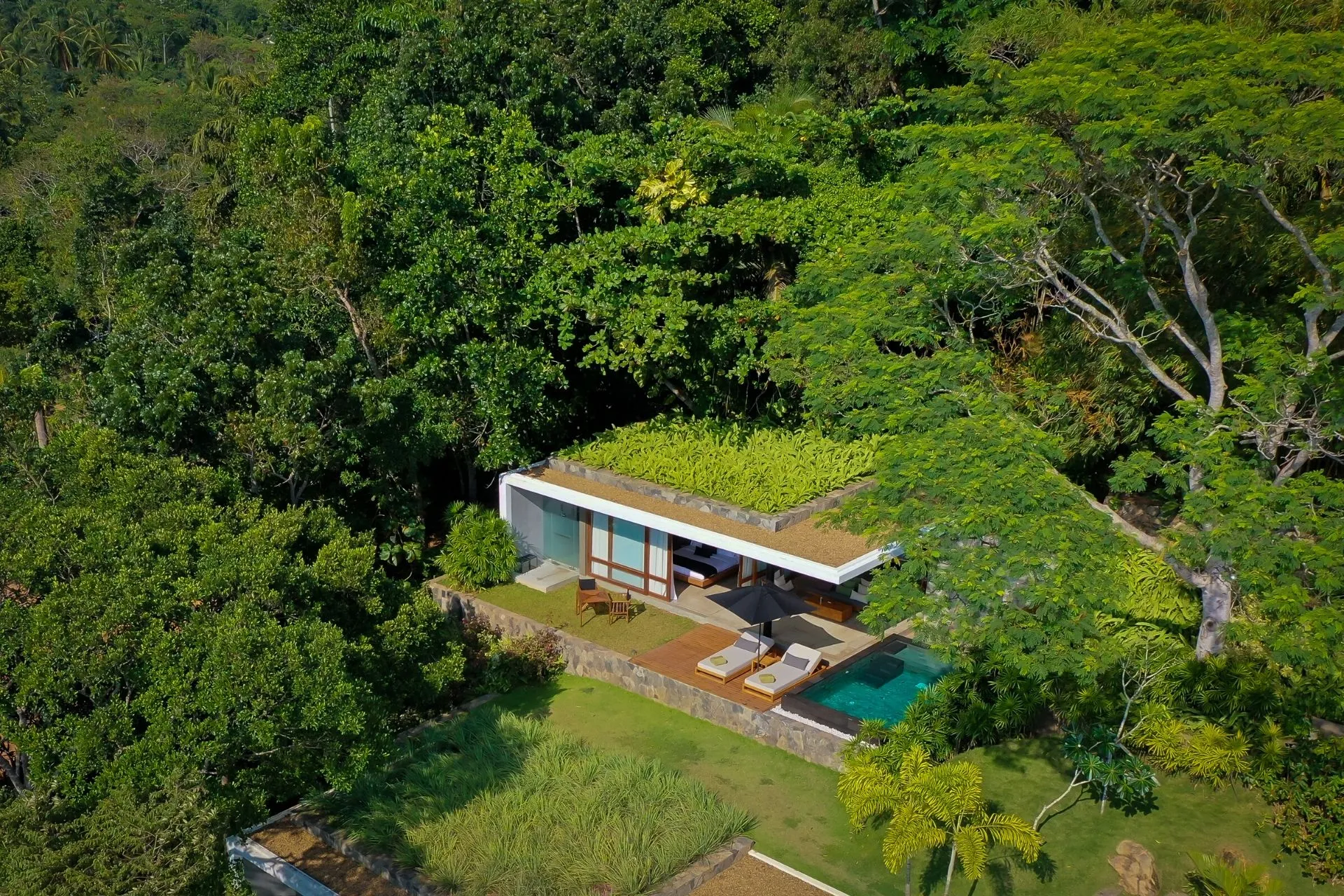
Thiranagama, Sri Lanka
Haritha Villas + Spa
Nine keys on a forested hilltop above Thiranagama, built around private saltwater plunge pools rather than a stretch of sand.
From $460 per night
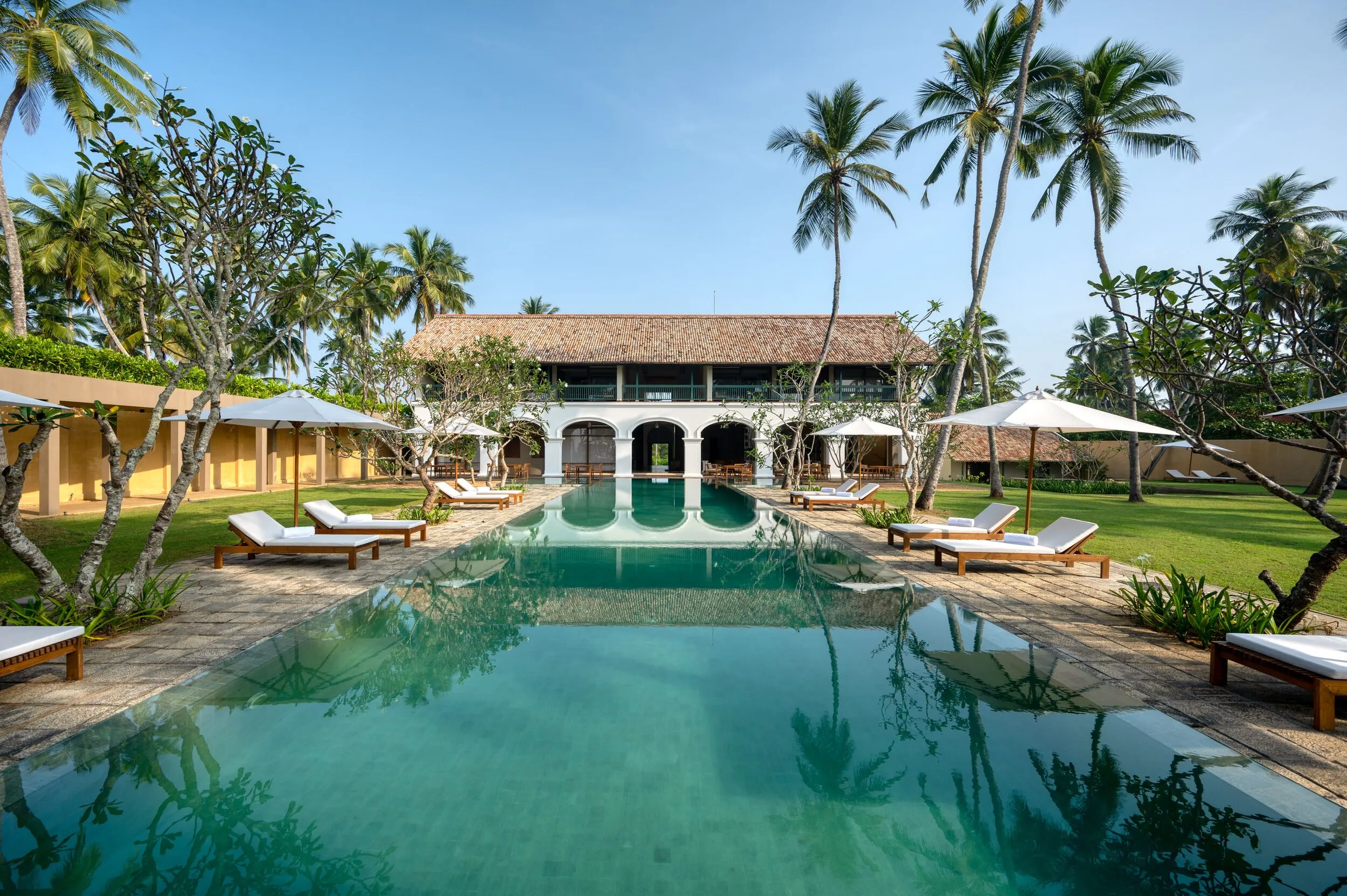
Tangalle, Sri Lanka
Kayaam House
Nine keys, a resident Ayurvedic doctor and a private stretch of turtle-nesting coastline near Tangalle.
From $700 per night
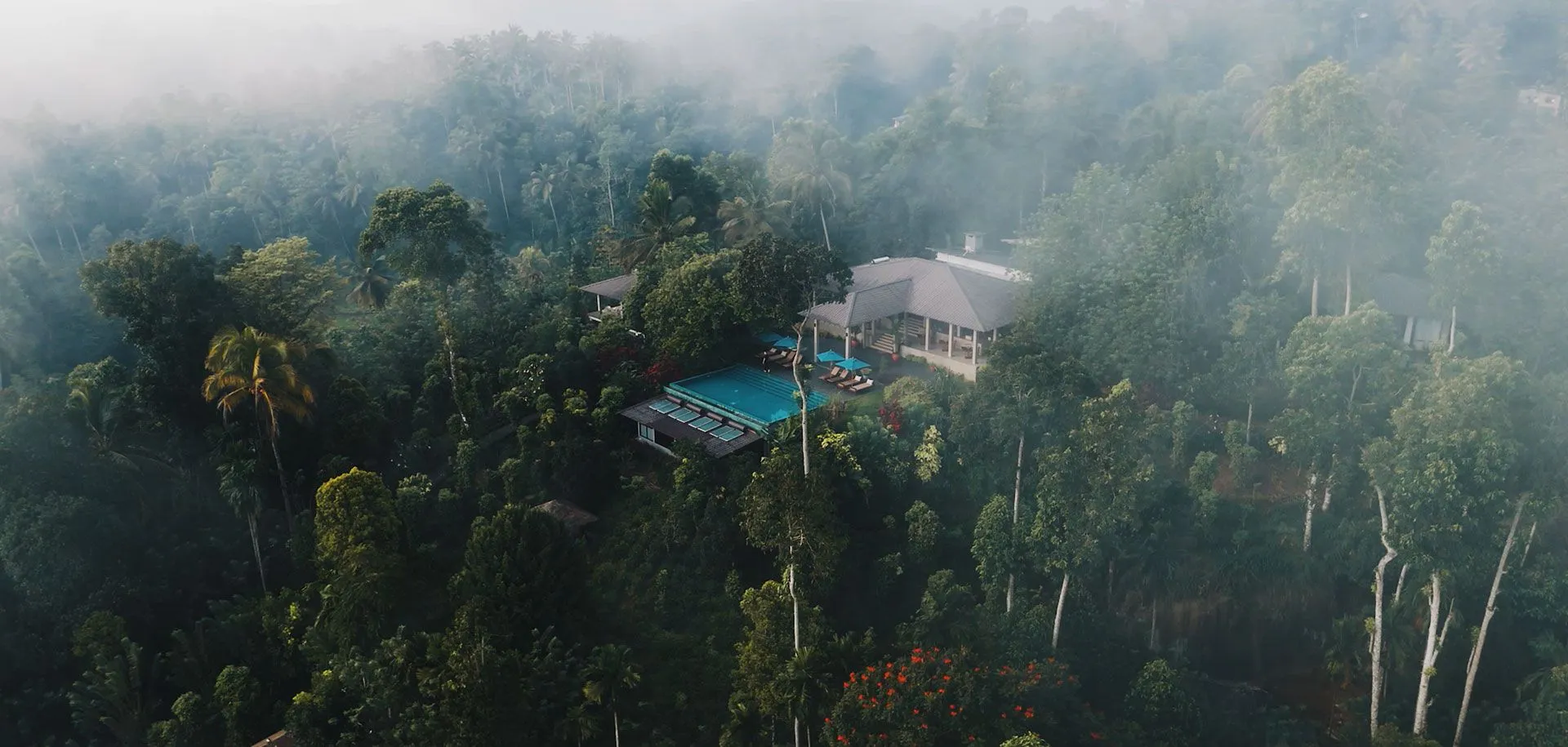
Alawatugoda, Kandy, Sri Lanka
Aarunya Nature Resort
A regenerative hillside estate above Kandy, where private-pool villas sit inside a working tea and spice garden facing the Knuckles range.
From $520 per night
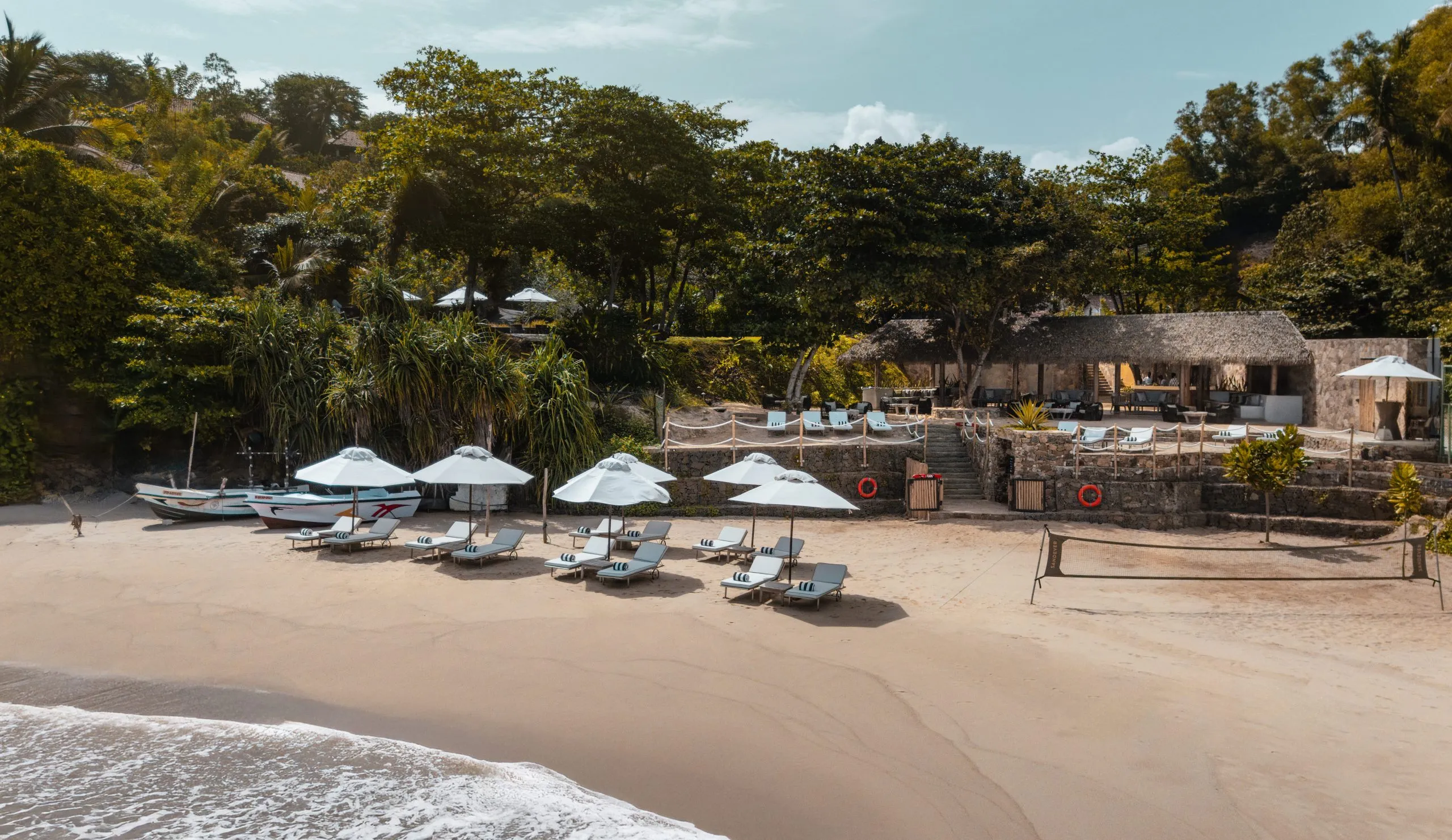
Weligama, Sri Lanka
Cape Weligama
A Thai-designed clifftop village of suites and villas on Sri Lanka's south coast, built around a sixty-metre pool that seems to hang above the Indian Ocean.
From $650 per night
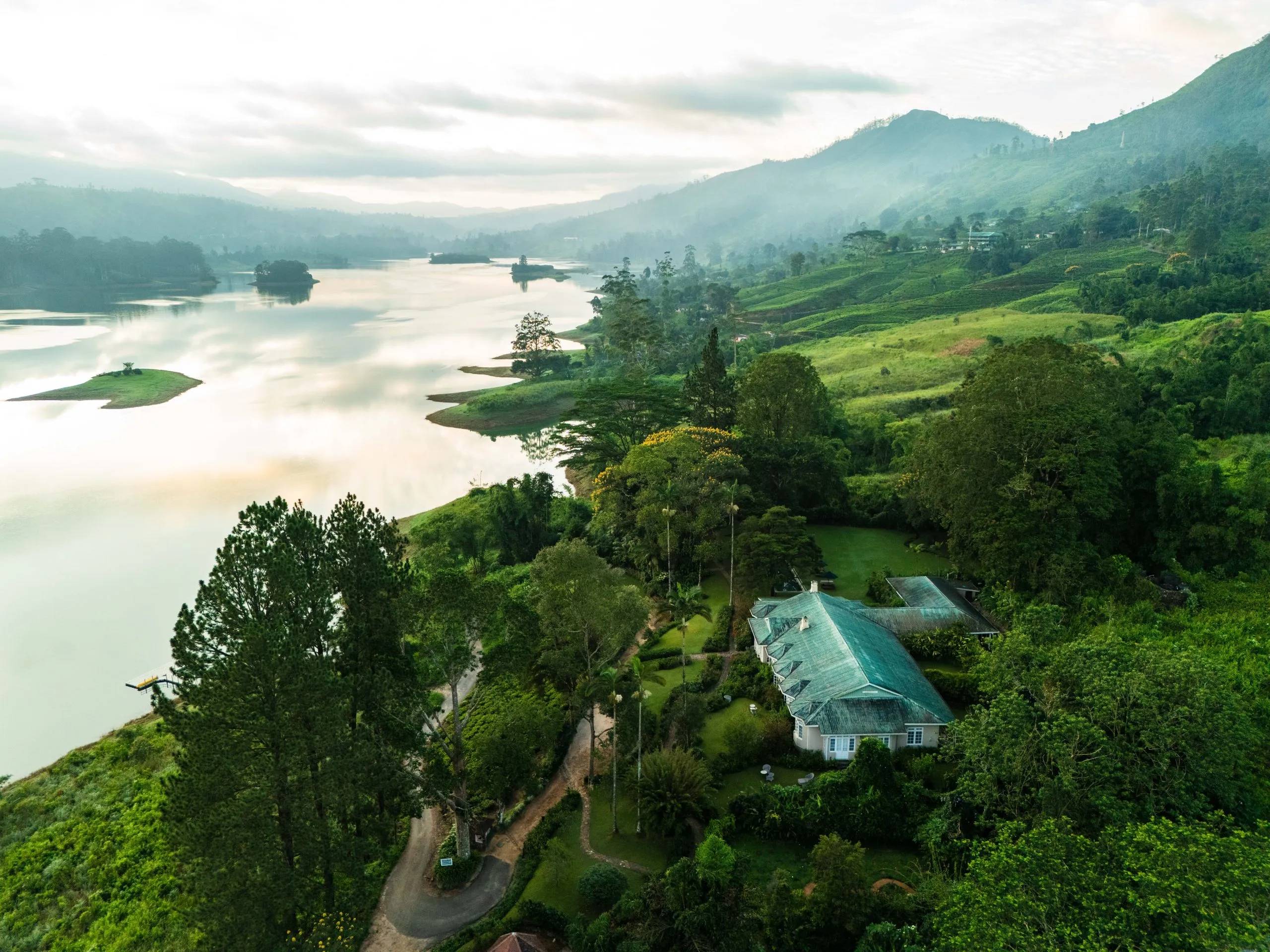
Bogawantalawa, Sri Lanka
Ceylon Tea Trails
Five planters' bungalows scattered across a working tea estate, where the mist, the butlers and the brew all arrive on schedule.
From $900 per night
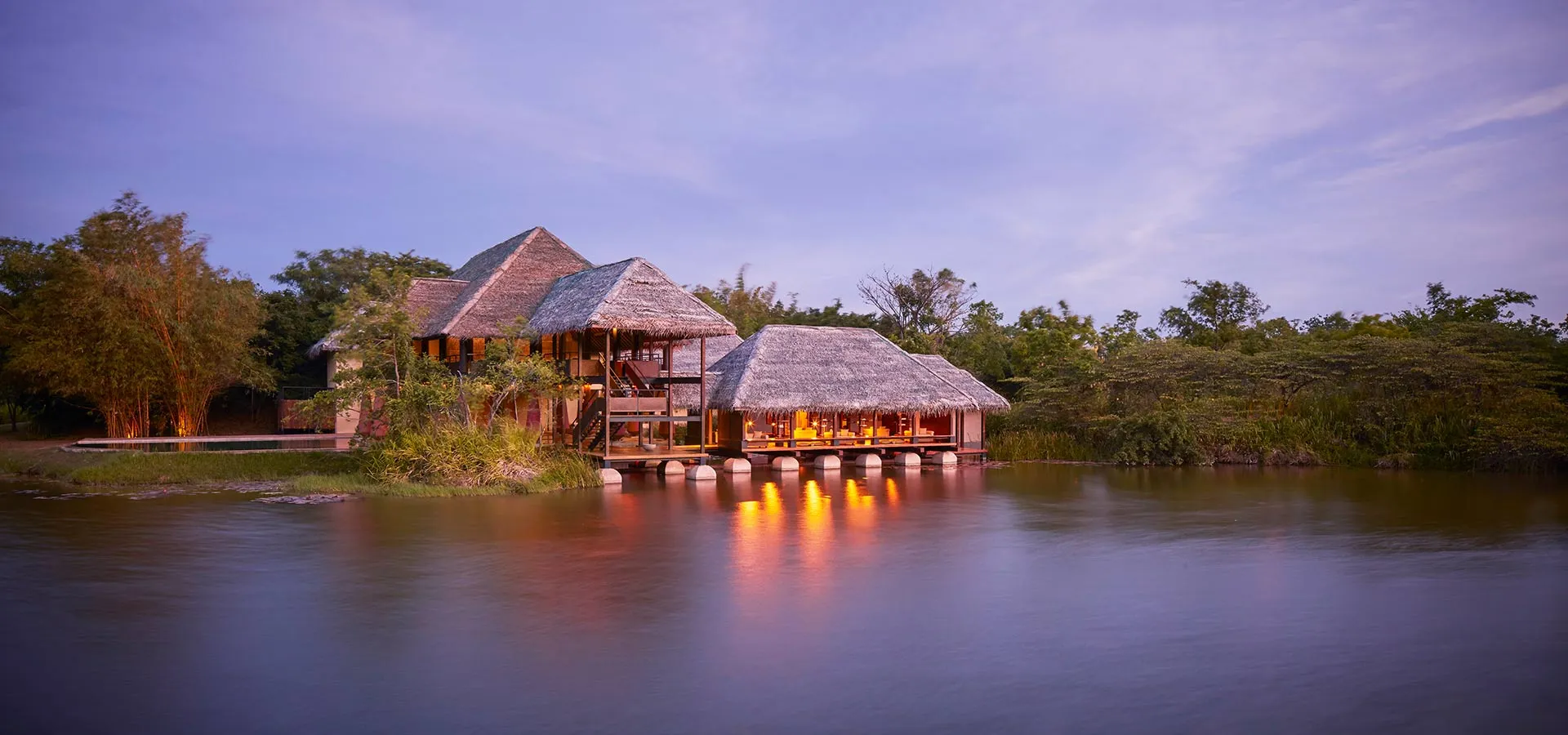
Sigiriya, Sri Lanka
Jetwing Vil Uyana
A paddy field turned wetland, and thirty-six dwellings raised on stilts above the water it restored.
From $320 per night
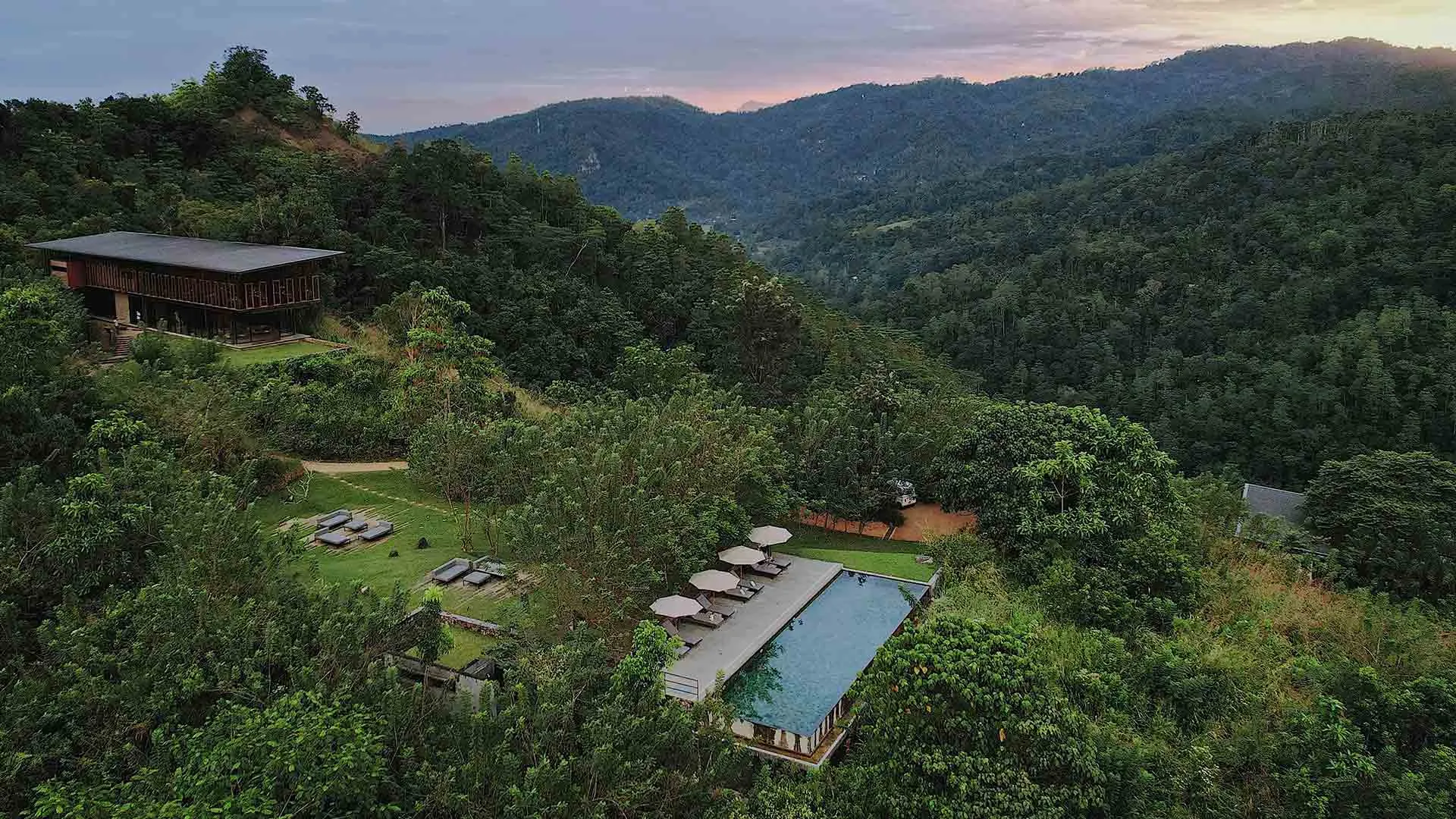
Kandy, Sri Lanka
Santani Wellness Kandy
A hillside retreat above Kandy built on the conviction that silence is a design material.
From $450 per night
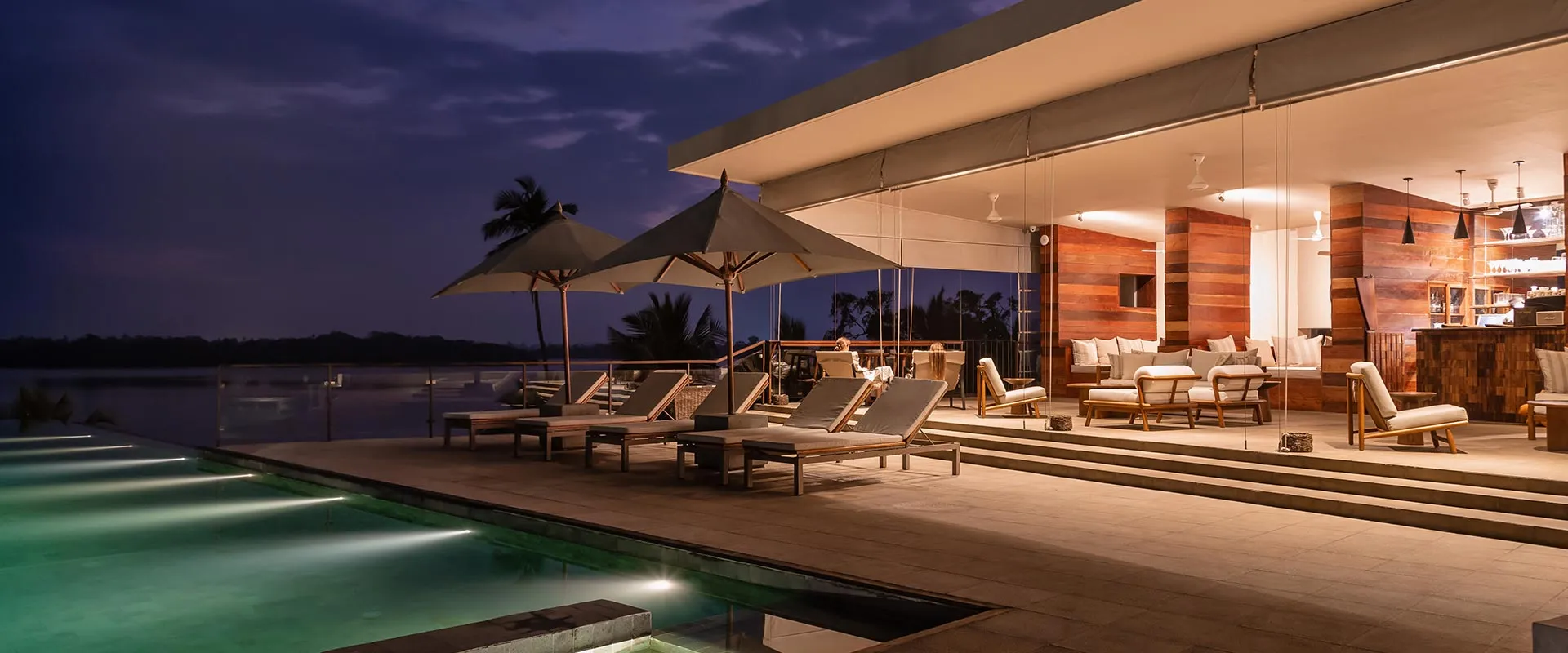
Koggala, Sri Lanka
Tri
A Fibonacci spiral in cinnamon wood and concrete, spun around a lake tower on Sri Lanka's south coast.
From $650 per night
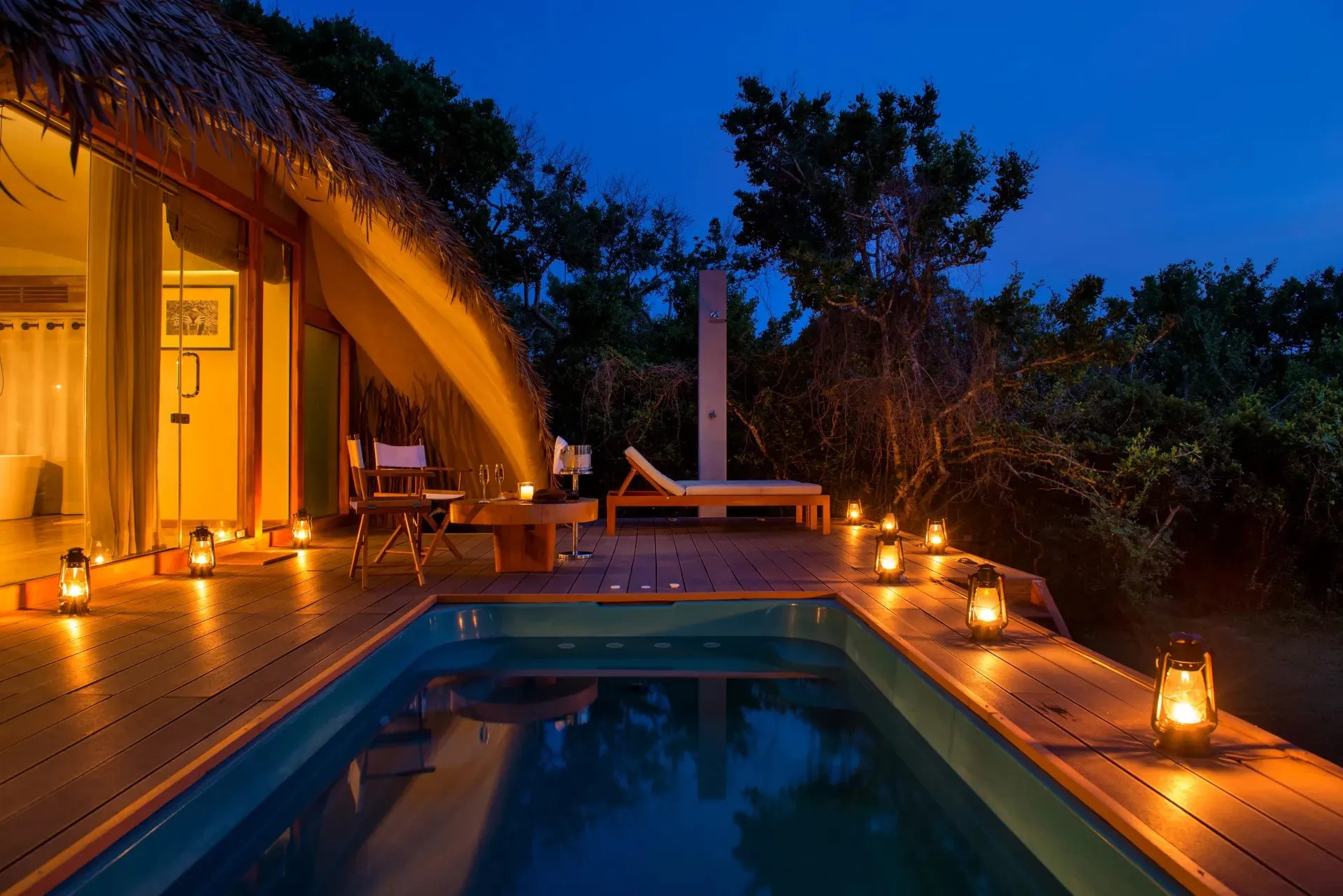
Yala, Sri Lanka
Uga Chena Huts
Eighteen thatched pavilions with private plunge pools, pitched on the scrubland edge of Yala, where the leopard density is the highest recorded on earth.
From $1,200 per night
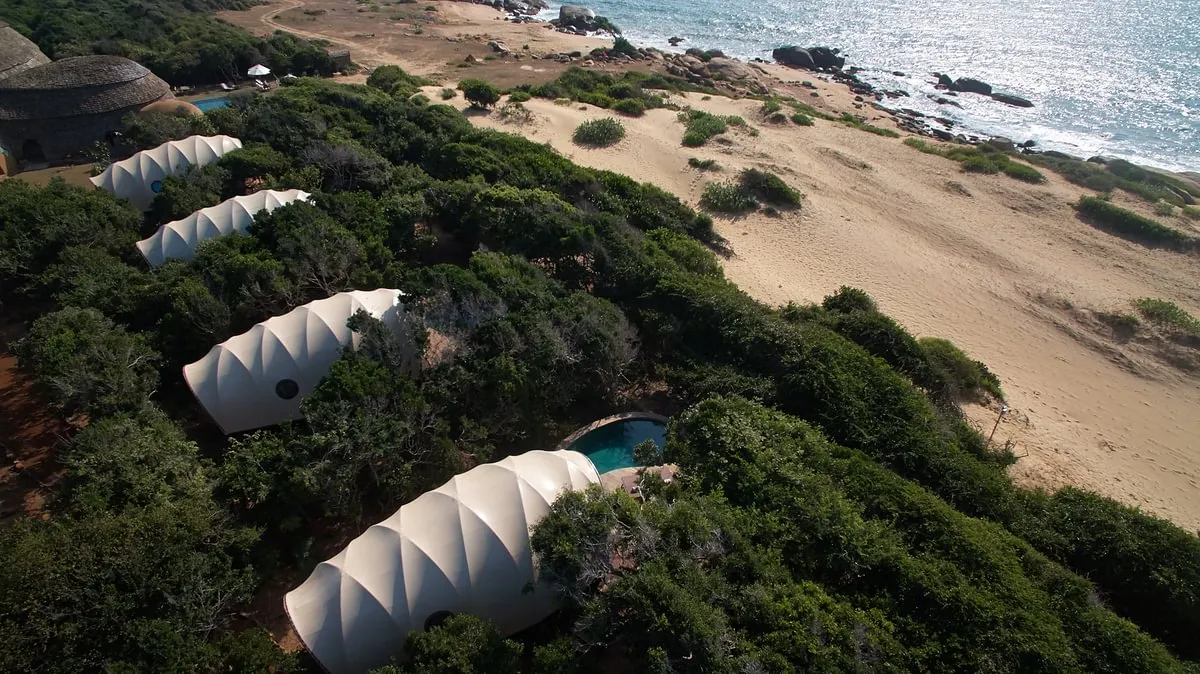
Yala, Sri Lanka
Wild Coast Tented Lodge
Twenty eight cocoon-shaped tents pitched between a wild ocean and a wilder national park.
From $1,000 per night