Tangalle, Sri Lanka
Kayaam House
Nine keys, a resident Ayurvedic doctor and a private stretch of turtle-nesting coastline near Tangalle.
- Rates from
- From $700 per night
- Nearest airport
- Bandaranaike International Airport, Colombo
- Transfer
- About 3hr by road via the Southern Expressway (Tangalle/Ranna exit)
- Best months
- December to March, with April a good-value shoulder month
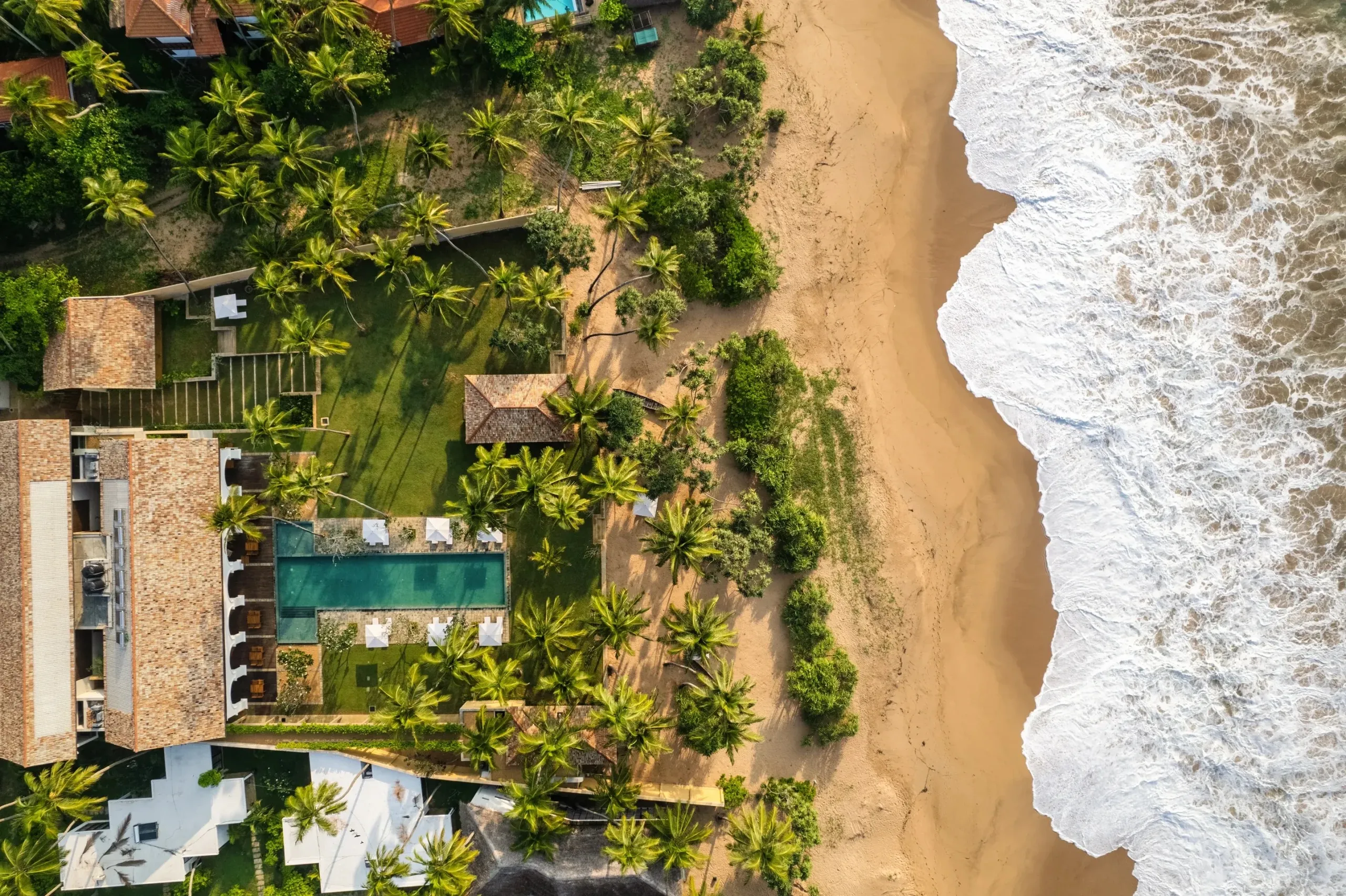
The turn off the Southern Expressway comes with barely any warning: a modest sign for Rekawa, a run of coconut palms, and a lane that narrows until jungle presses in on both sides. A few minutes later it opens again, this time onto a private stretch of the Indian Ocean quiet enough that a single fishing catamaran hauled up on the sand can look like the only sign of human presence for a kilometre in either direction. Kayaam House was built here in 2022, and today trades under the name Kayaam Wellness, occupying that narrow gap between forest and shoreline with nine keys, a resident Ayurvedic doctor and very little else to disturb the point of the visit.
This is the newest and smallest property in the Resplendent Ceylon collection, the design-led portfolio built by the Fernando family, the tea dynasty behind Dilmah, alongside Ceylon Tea Trails in the hill country, Wild Coast Tented Lodge on the edge of Yala National Park, Cape Weligama on the surf coast and Ahu Bay further up the east coast. Where those siblings organise themselves around a landscape, tea, safari, surf, Kayaam organises itself around a single discipline. Ayurveda is applied here with enough medical structure and staffing that treating it as a spa afternoon bolted onto a beach holiday would be a misreading of the place.
It has not taken long to be noticed. Kayaam opened in January 2023 and appeared on Conde Nast Traveler’s Hot List within the year, an unusually fast turnaround for a resort this small and this deliberately unshowy, and a fair signal of how much appetite there has been for serious, doctor-led wellness on Sri Lanka’s south coast, as distinct from the usual spa menu appended to a resort built for something else entirely.
About Kayaam House
Kayaam House is the work of Sri Lankan architect Sudesh Nanayakkara, who designed and completed the property from the ground up in 2022, a meaningful distinction on a coastline where much of the competing boutique inventory is converted from older colonial buildings rather than conceived for its purpose from day one. That purpose-built starting point shows in the way the resort is organised: every pavilion, walkway and treatment room sits along the narrow band of land between the tree line and the beach, oriented for privacy and sea views rather than retrofitted around an existing structure’s constraints.
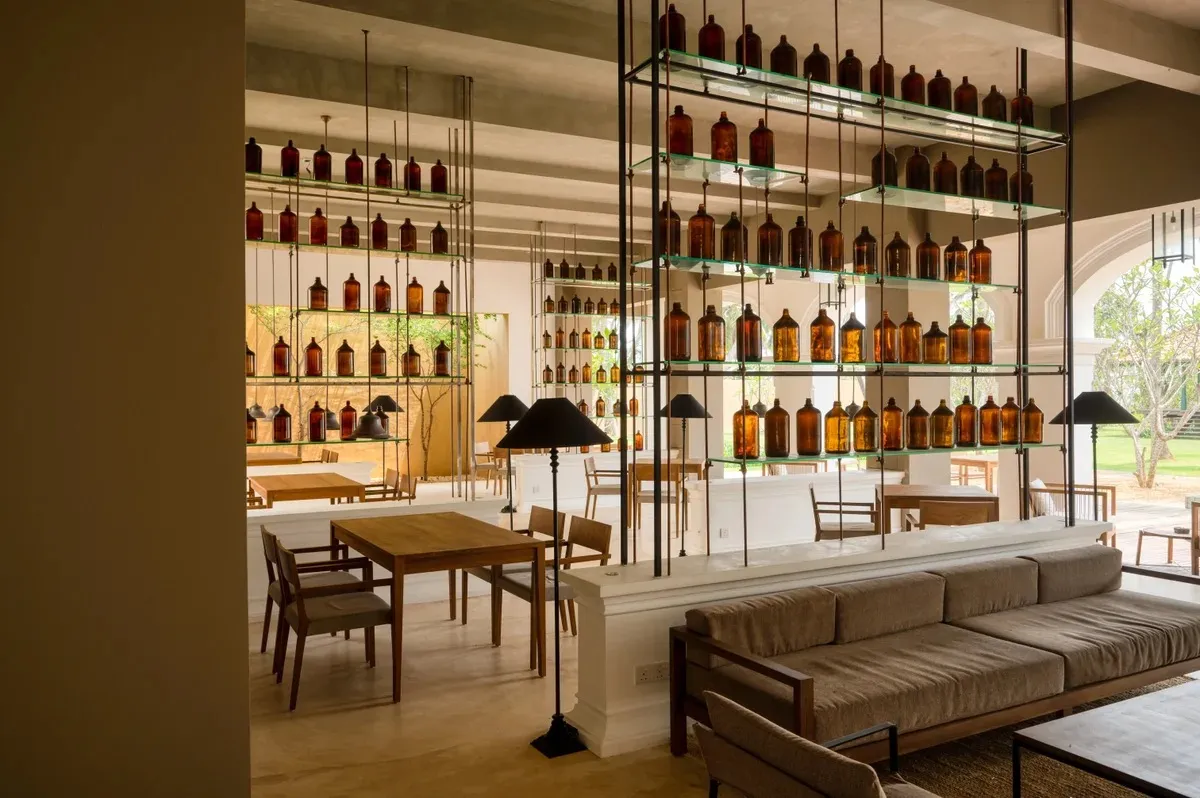
The material palette leans into the dry region’s own rustic aesthetic: earth tones, locally sourced stone and reclaimed teak throughout, rather than an imported luxury vocabulary of marble and glass. Layered into that contemporary shell are older, borrowed fragments that give the place a sense of accumulated history it does not actually have: ceiling patterns drawing on the ancient floral motifs found in island temples such as Mulkirigala and Weherahena, Portuguese carafes and Dutch antiques collected from around the island, and, in one of the more striking details, an old temple door sourced from Jaffna in the north and repurposed inside the resort. The effect is intentional: a new building furnished to feel found rather than fabricated, in keeping with a wellness proposition that wants to feel ancestral rather than trend-driven.
The rebrand from Kayaam House to Kayaam Wellness, which appears across Resplendent Ceylon’s own marketing while the original name persists in general use and in most third-party listings, tracks a broader repositioning: this is being sold less as a boutique beach hotel that happens to have a spa, and more as a dedicated retreat destination, closer in ambition to Sri Lanka’s established hill-country wellness properties than to its south-coast beach resorts, but built at sea level with a genuine private beach rather than an elevated garden setting.
Location
Kayaam sits at Rekawa, a quiet fishing and turtle-nesting stretch of coastline a short drive beyond the town of Tangalle, on Sri Lanka’s far southern coast. The setting is genuinely two-sided: dense jungle presses against the property on one flank, and a long, largely deserted golden-sand beach runs along the other, with the resort’s low pavilions threaded through the narrow strip of land between them. This part of the south coast sits well beyond the more developed strip running from Galle through Weligama and Mirissa, and the relative remoteness is part of the point: Tangalle and its surrounding coves have a reputation for staying secluded even as the coastline further west has filled in with hotels.
Access is via the Southern Expressway, exiting at Tangalle or Ranna and continuing along coastal roads to Rekawa, a drive of roughly 190km and about three hours from Bandaranaike International Airport near Colombo. It is a comfortable, largely direct transfer by Sri Lankan standards, helped by the expressway covering most of the distance, though the final stretch off the highway runs through smaller roads and villages that slow the pace deliberately.
For travellers combining Kayaam with other stops on the island, its position toward the southern tip puts several Resplendent Ceylon sister properties within reach without a full-day transfer: Cape Weligama is roughly 55km and about an hour away, and Wild Coast Tented Lodge, on the edge of Yala National Park, is about 95km and ninety minutes further east, making a wellness-and-safari pairing a realistic two-stop itinerary rather than a logistical stretch.
Rooms & Suites
Kayaam’s nine keys are split across three categories, all built to the same low-slung, earth-toned architectural language and oriented for maximum privacy on a comparatively narrow site.
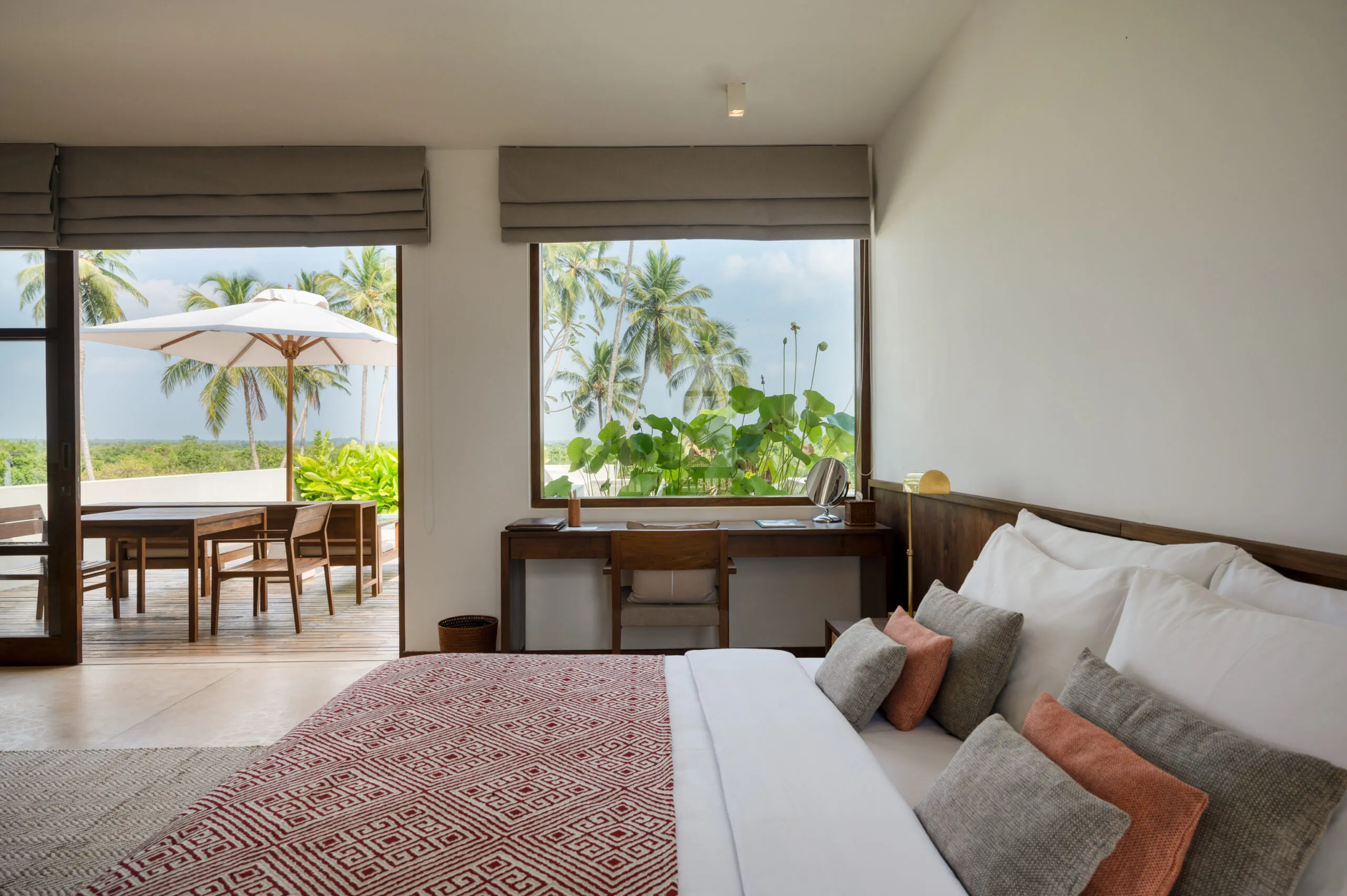
The Ocean Rooms, six in total, are the entry category and the bulk of the property’s inventory, positioned closest to the beachfront with direct or near-direct sea views and access toward the pool. Interiors follow the resort-wide material palette of reclaimed teak, locally sourced stone and the occasional antique object, whether a Dutch cabinet or a set of Portuguese carafes, worked into an otherwise contemporary, uncluttered room.
The Palm Suites, two of them, step up in both space and privacy, oriented toward the property’s palm landscaping rather than directly onto the beach, and each fitted with its own private jacuzzi, a detail that reflects the resort’s wellness positioning as much as its luxury one: private soaking space attached to the room itself, rather than only available at the spa.
At the top of the range sits the Palm Residence, a two-bedroom configuration with its own private garden and jacuzzi, built for a couple travelling with a companion, a small family, or two guests on a shared Ayurvedic programme who want the seclusion of a self-contained house rather than a room within the main resort footprint. It is the only multi-bedroom accommodation on the property and, given the small overall key count, tends to be booked well ahead for family or group stays.
Across all three categories, the resort’s guiding idea is intimacy rather than variety: with only nine rooms total, Kayaam is built to feel closer to a private house than a hotel, an impression reinforced by the antique furnishings, the temple-door and floral-motif detailing carried through from the public spaces, and the sheer quiet of a property this small set against this much open beach and jungle.
Dining
Kayaam’s dining is centred on a single restaurant and bar seating around twenty covers, designed with the open, tropical-modernist sensibility associated with Geoffrey Bawa’s architectural legacy on the island: deep verandas, cross-ventilation and a dining room that treats the view, out toward the pool and the ocean beyond, as part of the menu. Given the resort’s small size, this single venue, rather than a roster of separately branded restaurants, does the work of breakfast, lunch and dinner, supplemented by poolside service through the day.
The kitchen describes its cuisine as an amalgamation of the freshest seasonal produce, and the printed menu runs to internationally accented plates, grilled fish with a vegetable salad, a layered chocolate and vanilla mousse, cheesecake finished with a berry sauce, alongside Sri Lankan dishes, giving guests who are not on a structured programme a conventional a la carte option.
What distinguishes dining here from a standard resort restaurant is the alternative guests are actively offered: rather than ordering from the printed menu, anyone on one of the property’s Ayurvedic programmes can work directly with the resident doctor to build a personalised meal plan, calibrated to their individual constitution and the specific programme they are following, whether that is a digestive-health reset, a detox or a general immersion. Meals under that plan are prepared by the same kitchen but built around what the doctor has prescribed rather than what looks good on a menu, a structure that puts Kayaam’s food closer to a clinical wellness programme than to typical resort dining, even though the setting, teak furniture, poolside tables, ocean air, remains entirely a holiday one.
Wellness
Wellness is not a department at Kayaam; it is close to the entire reason the resort exists, and the programming reflects that ambition in both depth and structure. At the centre of it is a resident Ayurvedic doctor, who consults with each guest on arrival to assess their individual constitution and health goals and then designs a course of treatments and, as noted above, a personalised meal plan to run alongside it. This is a meaningfully different model from a spa menu where guests simply pick a massage from a list; treatments here are prescribed rather than browsed.
That prescriptive approach is organised into eight named programmes of varying length, giving guests entry points from a short taste of the practice through to a genuine clinical reset. An Ayurveda Immersion runs three nights, the shortest and most accessible option for a first visit. Ayurvedic Skincare & Self-Healing runs four, eight or ten nights. Inner Balance is offered across six, eight or fifteen nights. Longer, more intensive programmes, Detox & Cleanse, Digestive & Gut Health Recovery, Ease & Alignment for pain relief and mobility, and Remedy & Restoration, run across eight, fifteen or twenty-two nights depending on the depth of treatment required, and a Weight Loss & Vitality programme is offered at fifteen or twenty-two nights. The range signals that Kayaam is built to serve both the curious short-stay guest and the committed long-stay one, without treating either as an afterthought.
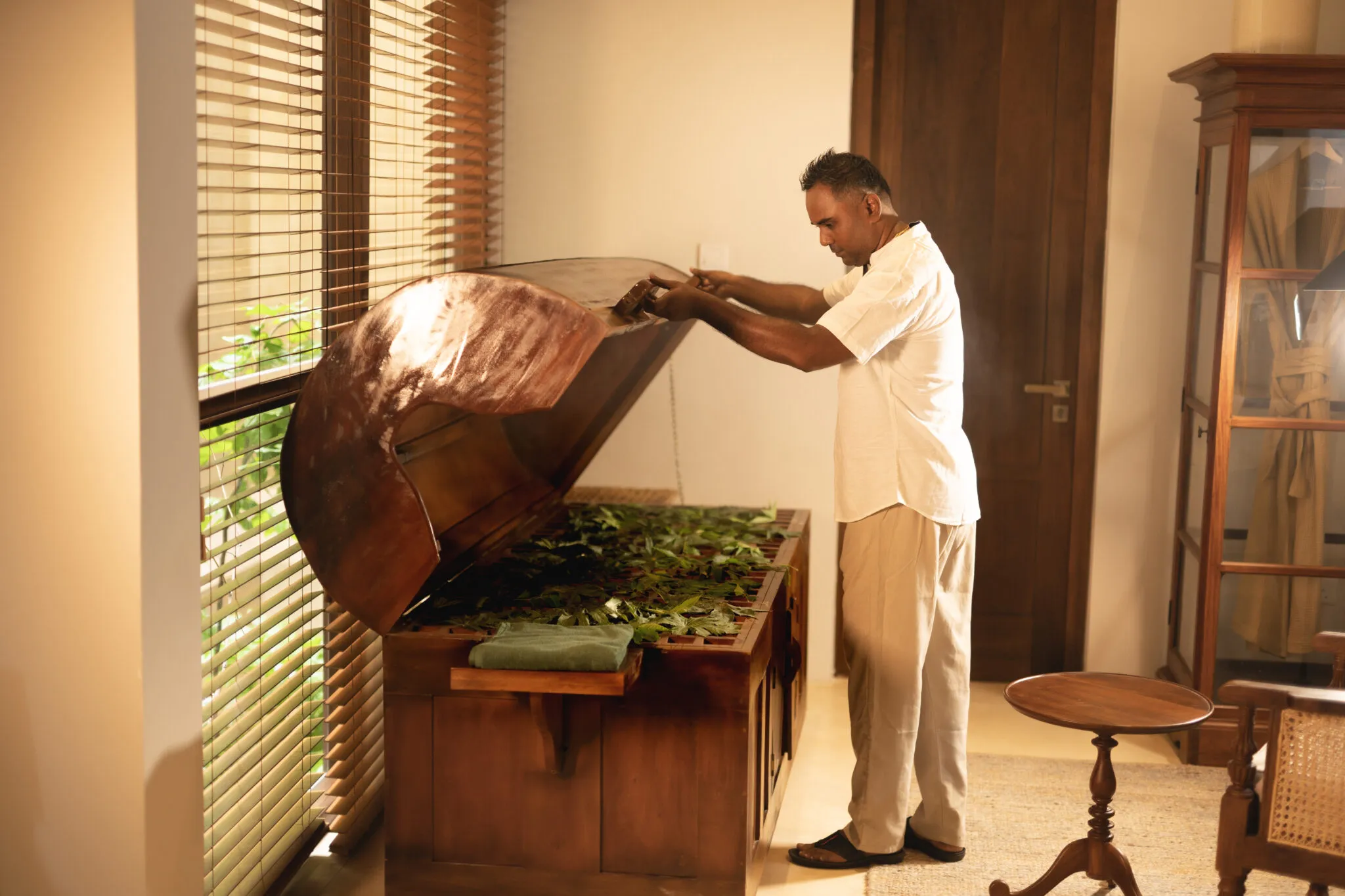
Treatments themselves draw on classical Ayurvedic modalities: abhyanga oil massage, sweda herbal steam therapy, dhara karma and ksheeradhara, forms of continuous oil or medicated-milk pouring over the body or forehead associated with calming the nervous system, shiro lepa herbal head treatments, lepa herbal paste applications, milk-rice poultices, and full panchakarma detoxification protocols for guests on the longer programmes. All of it is delivered from the resort’s Sanctuary Spa, a name shared with the spa at sister property Wild Coast Tented Lodge and built around the same principle of using hyperlocal herbs, spices and oils rather than an imported spa-menu formula.
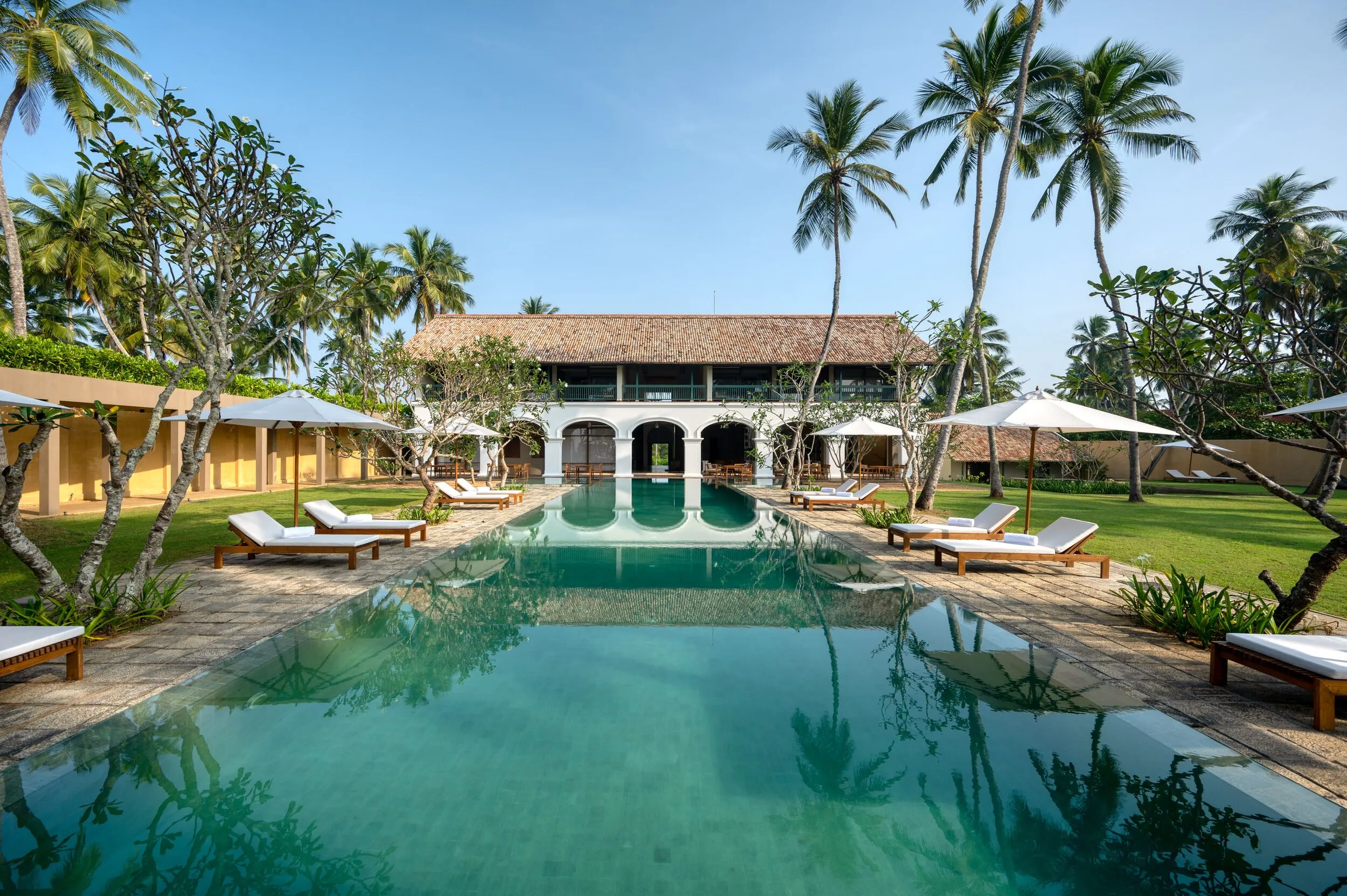
Movement and stillness practice happens at the Yoga Shala, an open-sided pavilion set to face the ocean, running a daily programme of asana, meditation and breathwork that guests can join regardless of which treatment programme, if any, they are on. Beyond the shala and spa, the property’s far-reaching infinity pool, flanked by frangipani and coconut palms, and a set of jacuzzis attached to the Palm category rooms extend the wellness footprint into the resort’s more conventional leisure spaces, so that soaking, floating and quiet time by the water are built into the stay even outside scheduled treatment hours.
Experiences
Kayaam’s activity programme leans, sensibly, into the immediate coastline and countryside rather than trying to compete with the built attractions further up the coast. On the water, guests can kayak through Rekawa Lagoon’s mangrove channels, a calm, scenic paddle well suited to a slower-paced stay, or arrange diving and snorkelling through the PADI-certified Ruhunu Diving Centre near Tangalle for those wanting to get properly into the water rather than beside it.
Inland, the standout excursion is Mulkirigala, an ancient rock monastery roughly the scale of a miniature Sigiriya: seven cave temples cut into five terraced levels of a 676-foot granite outcrop, with surviving frescoes and reclining Buddha statues that have drawn pilgrims and, more recently, visitors for centuries. A gentler, wildlife-focused half-day can be spent at Kalametiya Bird Sanctuary, reached by traditional raft, often paired with an alfresco breakfast on the water among its resident and migratory waterbirds.
For guests who want to cook rather than only eat, the property runs hands-on Sri Lankan cooking classes built around local ingredients and technique, and on select evenings hosts a beach barbecue of grilled seafood and coastal fare served under the stars, a straightforward but well-placed complement to the more structured wellness side of the stay. Long, unhurried walks along the resort’s own stretch of golden sand, particularly at dawn when the beach is at its emptiest, round out a programme built more around slowing down than ticking off sights.
Sustainability
As part of the Resplendent Ceylon collection, Kayaam sits within the same wider philanthropic and environmental structure as its sister properties: the Fernando family’s MJF Foundation and Dilmah Conservation, which direct a share of group profits into community and environmental projects across Sri Lanka. At a property level, the purpose-built construction gave the design team more control over environmental impact than a conversion project would have allowed, and the choice of locally sourced stone, reclaimed teak and hyperlocal spa ingredients, herbs, spices and oils used in Sanctuary Spa treatments, keeps a meaningful share of the resort’s material and treatment supply chain close to home rather than imported.
The setting itself, a narrow, still-undeveloped strip of coastline between jungle and beach near a locally significant sea-turtle nesting ground, also puts an implicit weight on low-impact operation: a resort of only nine keys leaves a considerably smaller physical and resource footprint than a larger property could on the same site. As with any hotel group, guests interested in the specifics of current certifications, offset programmes or community partnerships should treat this as a starting point for direct questions to the resort rather than a fixed, permanent claim, since sustainability programming of this kind tends to evolve from year to year.
Who Is It For
Kayaam rewards travellers who are coming specifically for a structured wellness stay rather than a beach holiday with a spa attached. Couples and honeymooners looking for genuine seclusion, a resident doctor’s individual attention and a property small enough that service never feels stretched will find exactly that here, and the same intimacy suits solo travellers on a personal reset who might feel exposed at a larger, more social resort. Anyone drawn to Ayurveda as a serious practice rather than a marketing word, and willing to commit several days or more to a prescribed programme, is squarely the intended guest.
It is a considerably less natural fit for families wanting a conventional resort holiday: the two-bedroom Palm Residence can technically accommodate a family, but with only nine keys total, no confirmed children’s programming and an atmosphere built around quiet, doctor-led routines, the resort’s whole design skews toward adult travellers on a deliberate retreat rather than toward a multi-generational beach trip. Guests who want a wide choice of restaurants, a lively social pool scene or easy access to Galle Fort’s shops and restaurants without a drive should also weigh that against what Kayaam actually offers: an isolated, single-restaurant, treatment-led retreat on a beach most other visitors never see.
Practical Information
Rates at Kayaam start from around $700 per night, though the property’s own retreat packages are frequently the more relevant comparison for prospective guests: a three-night Ayurveda Immersion programme, for example, has been priced at roughly $2,190 for double occupancy inclusive of treatments, working out close to that same per-night figure once meals and consultations are factored in. As with all Resplendent Ceylon properties, exact pricing varies by room category, programme length and season, and should be confirmed directly with the resort or through Resplendent Ceylon before booking. Check-in is from 2:00 PM and check-out by 12:00 PM.
The nearest airport is Bandaranaike International Airport near Colombo, roughly 190km and about three hours by road via the Southern Expressway, exiting at Tangalle or Ranna for the final coastal stretch to Rekawa. December through March is the most reliable dry-season window on this part of the south coast, with April a reasonable value shoulder month before the mid-year monsoon builds. Given the property’s programme structure, most guests stay considerably longer than a typical beach hotel visit: four to seven nights is a sensible minimum to get real value from a wellness stay here, and guests committing to one of the longer clinical programmes, detox, digestive recovery or weight management, should plan for two weeks or more.
Nearby
Galle Fort, the walled Dutch colonial old town on the south coast, is a worthwhile day trip from Kayaam rather than the setting for the stay itself: roughly 75km and about ninety minutes away by road, it makes a reasonable half-day or full-day excursion for guests wanting a dose of heritage architecture, boutique shopping and a change of pace from the resort’s quiet programme, without ever being mistaken for the hotel’s own neighbourhood.
Closer to home, Rekawa Beach itself is the site of a long-running sea-turtle conservation and nesting project, where several species of marine turtle come ashore to lay eggs and evening viewing can sometimes be arranged with local conservation groups, a genuinely low-impact way to spend a night during the season. Mulkirigala Rock Temple, the terraced cave-temple complex described above, sits inland within reach of a half-day excursion, as does the Hummanaya Blowhole near Kudawella, a natural sea-driven geyser regularly ranked among the largest blowholes anywhere, where incoming swells force seawater through a narrow rock channel and up into the air in bursts. Rekawa Lagoon, paddled by kayak from the resort’s own activity programme, and the Kalametiya Bird Sanctuary a short drive further along the coast round out a set of nearby excursions that, taken together, give guests a reason to leave the property occasionally without ever needing to travel far to do it.
In pictures
On the map
Tangalle, Sri Lanka
Questions
Frequently asked
How many rooms does Kayaam House have?
Kayaam House, now marketed as Kayaam Wellness, is a genuinely small property: nine keys in total, made up of six Ocean Rooms, two Palm Suites with private jacuzzis and one two-bedroom Palm Residence with its own garden and jacuzzi.
Is Kayaam House the same as the Galle Fort townhouses sometimes associated with the name?
No. This Kayaam House is a purpose-built resort completed in 2022 on Rekawa Beach near Tangalle, on Sri Lanka's south coast, designed by architect Sudesh Nanayakkara and operated by Resplendent Ceylon. It has no connection to Galle Fort, which sits roughly 75km and about 90 minutes away and is visited from here as a day trip rather than being the property's own setting.
What makes Kayaam House a wellness resort rather than a beach hotel with a spa?
The property is built around a resident Ayurvedic doctor who designs personalised meal plans and treatment programmes for each guest, an eight-programme menu of structured retreats running from three nights to over three weeks, and dedicated spaces, the Sanctuary Spa and an oceanfront Yoga Shala, purpose-built for that work rather than added on afterwards.
How do guests get to Kayaam House from the airport?
The nearest airport is Bandaranaike International Airport near Colombo, roughly 190km and about three hours away by road via the Southern Expressway, exiting at Tangalle or Ranna and continuing along the coast to Rekawa. Private transfers are typically arranged directly through Resplendent Ceylon.
Is Kayaam House suitable for families with children?
It can accommodate families in the two-bedroom Palm Residence, but the property's small scale, doctor-led programming and quiet, adults-leaning atmosphere are built primarily around couples and solo travellers on a genuine wellness retreat rather than a resort with structured children's activities.
What is the best time of year to visit?
December through March is the reliable dry season on this stretch of the south coast, with calm seas and consistent sun. April is a reasonable value shoulder month, still largely dry before the southwest monsoon builds through the middle of the year.
Same destination
More hotel guides in Sri Lanka
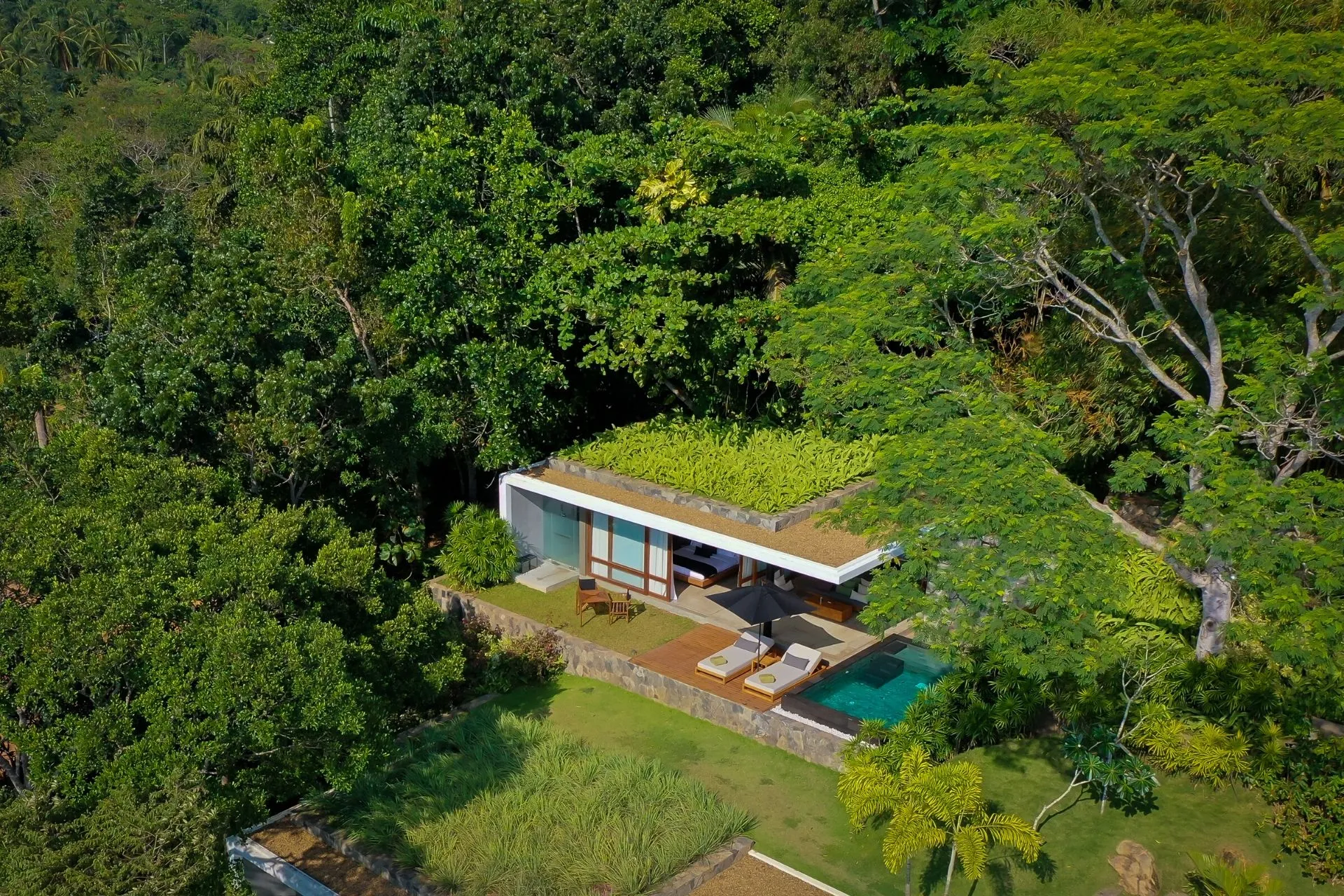
Thiranagama, Sri Lanka
Haritha Villas + Spa
Nine keys on a forested hilltop above Thiranagama, built around private saltwater plunge pools rather than a stretch of sand.
From $460 per night
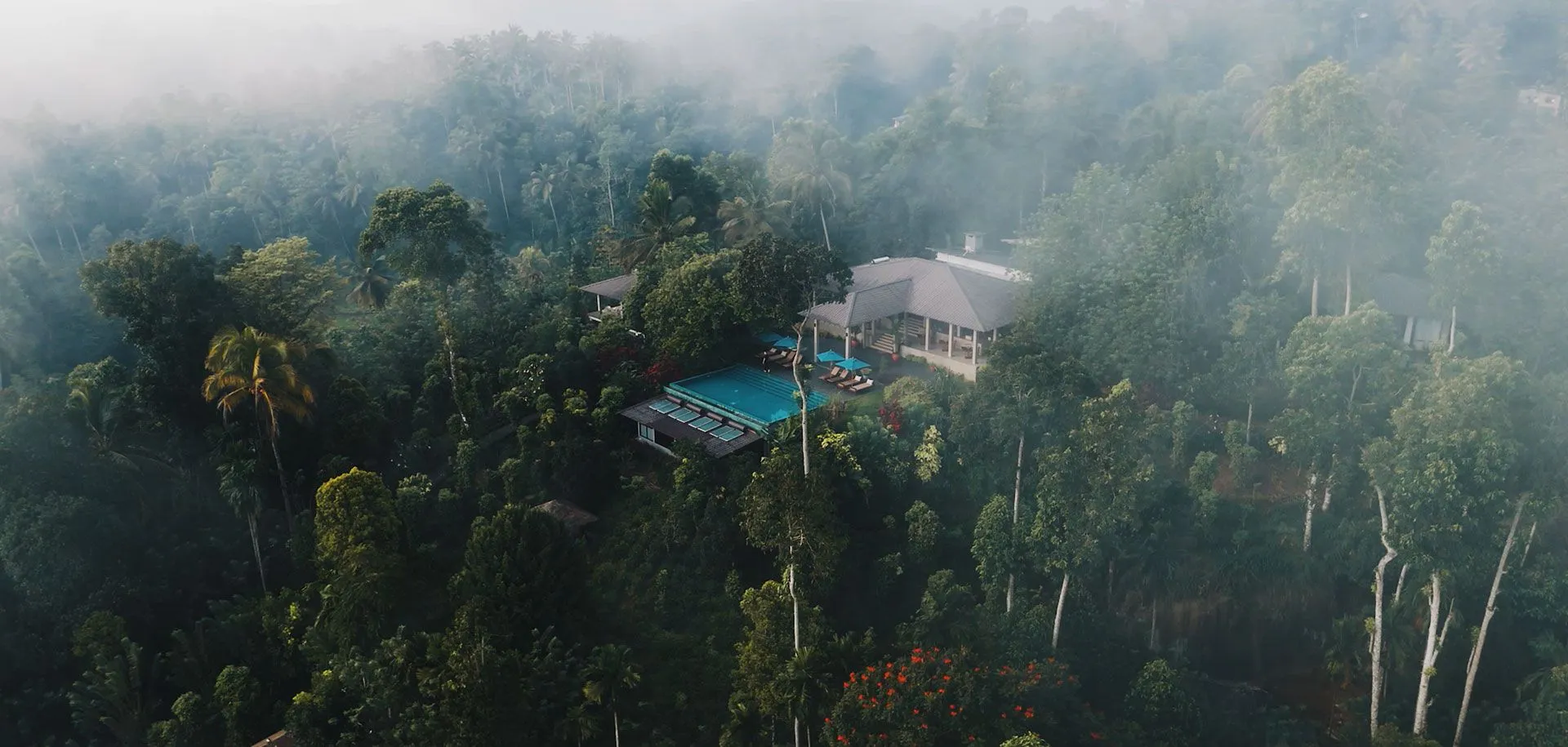
Alawatugoda, Kandy, Sri Lanka
Aarunya Nature Resort
A regenerative hillside estate above Kandy, where private-pool villas sit inside a working tea and spice garden facing the Knuckles range.
From $520 per night
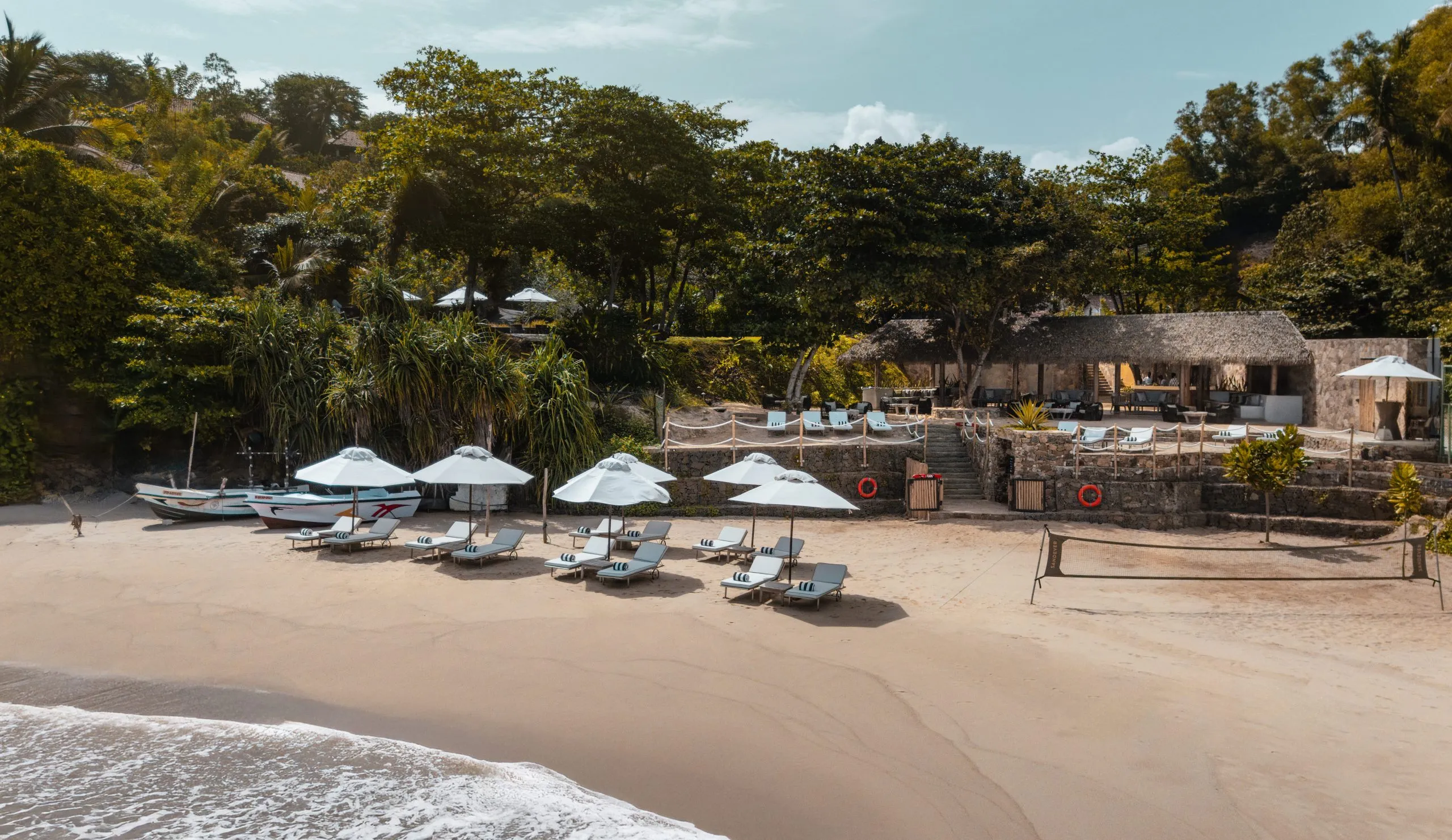
Weligama, Sri Lanka
Cape Weligama
A Thai-designed clifftop village of suites and villas on Sri Lanka's south coast, built around a sixty-metre pool that seems to hang above the Indian Ocean.
From $650 per night