Weligama, Sri Lanka
Cape Weligama
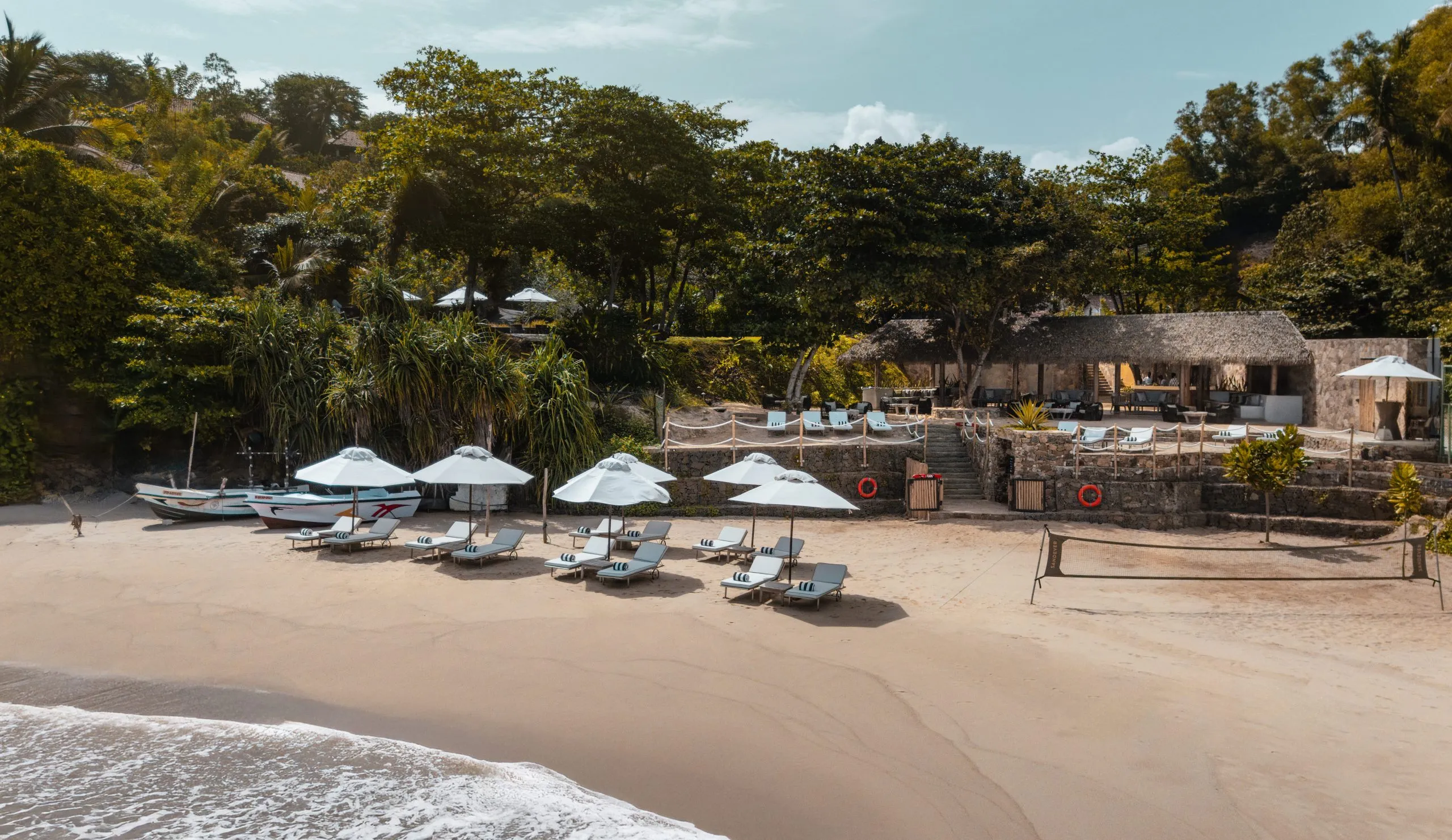
A Thai-designed clifftop village of suites and villas on Sri Lanka's south coast, built around a sixty-metre pool that seems to hang above the Indian Ocean.
- Rates from
- From $650 per night
- Nearest airport
- Bandaranaike International Airport, Colombo (CMB)
- Transfer
- 2.5-3hr by road from Colombo via the Southern Expressway
- Best months
- December to April, when the south coast has its driest, calmest weather
The first thing the eye does at Cape Weligama is refuse to find the edge. The pool runs in a long, curved line along the top of the headland, sixty metres of still water pinned between terracotta rooftops and open ocean, and from most angles it is genuinely difficult to tell where the infinity edge stops and the Indian Ocean begins. It is a trick of engineering as much as geography, but it sets the tone for everything else here: a resort built less as a single grand building than as a settlement, terracing itself down a working headland above one of the south coast’s oldest fishing bays.
Weligama itself has never needed the hotel to justify its existence. Long before Cape Weligama opened, this stretch of coastline was known for its stilt fishermen, balanced on driftwood poles just offshore, and for a broad, gentle bay that has since become one of the island’s most reliable learn-to-surf beaches. The resort was built to sit above that life rather than replace it, which is part of why it reads less like an imported fantasy and more like an extension, however luxurious, of a place that was already distinct.
What makes the property worth a considered look, beyond the pool that launched a thousand photographs, is the degree to which its design commits to a single, coherent idea: that a resort on this coast should feel like a village that has always been there, built from the same terracotta, stone and timber vocabulary as the old planters’ houses and colonial-era manors scattered across the island’s south. It is a rare thing for a large-scale luxury property to resist the urge toward a signature architectural gesture and instead disappear, gracefully, into vernacular.
Cape Weligama also carries the weight of a specific, well-documented ownership story, one that ties the property to Sri Lanka’s tea industry and to a family whose name is more commonly seen on a foil pouch than a hotel gate. That connection shapes the resort’s priorities in ways that go beyond marketing copy, and it is worth understanding before getting into the practical business of rooms, restaurants and reef.
About Cape Weligama
Cape Weligama opened in October 2014 as the second property from Resplendent Ceylon, the hospitality arm of Sri Lanka’s Dilmah tea business. Resplendent Ceylon is owned by the Fernando family, who built the Dilmah brand from a single tea garden into one of the country’s best-known exports, and the group’s first hotel, Ceylon Tea Trails in the central highlands, had already spent a decade establishing the family’s approach to hospitality before Cape Weligama arrived on the coast. The pairing of the two properties, one in cool tea country, one on a hot southern headland, has since become the backbone of the Resplendent Ceylon collection.
The architecture is the work of Lek Bunnag, a Thai architect whose earlier projects include resorts for Four Seasons and Ritz-Carlton in Southeast Asia. At Cape Weligama, Bunnag took his cue from Sri Lanka’s long history as a waystation for traders and explorers moving between Europe and Asia, and from the island’s own domestic architecture: the walauwa, or country manor house, and the watta, the garden compound that traditionally surrounded it. The result is a resort organised less as a hotel block and more as a cluster of settlements, with the suites housed in buildings styled after walauwas (each one named for an artist or writer with a historical connection to Ceylon) and the villas arranged in wattas named after early explorers of the island. Terracotta-tiled, pitched roofs recur across the property, giving the whole headland, seen from the water, the silhouette of a traditional village rather than a resort.
Inside, the material palette stays disciplined: dark timber, stone, woven textiles and a restrained, almost planter’s-house colour scheme of whites, ochres and deep woods, occasionally punctuated by brighter Sri Lankan textiles. It is a classic-contemporary register rather than a minimalist one, with enough furniture and pattern to feel lived-in, but with nothing that competes with the site itself. Bunnag’s plan uses the natural fall of the headland to stagger the buildings down toward the water, which does double duty: it protects privacy between villas (few units directly overlook another), and it means almost every structure gets some kind of ocean sightline, whether a full frontal view or a filtered glimpse through garden planting.
The signature pool, curved along the cliff’s highest point and cantilevered so its infinity edge reads as a straight line to the horizon, is the property’s best-known feature and has been drawing attention from the international travel press since the resort’s earliest seasons. It functions as the resort’s social spine: sun loungers along its length, a bar within reach, and, below it, a second, family-oriented pool set closer to the cove for those travelling with children who want a gentler gradient into the water.
Location
Cape Weligama sits on a rocky promontory above Weligama Bay, in Sri Lanka’s Southern Province, roughly 26km (about 45 minutes by road) from the fortified colonial town of Galle and around 15 to 20 minutes from Mirissa, the coast’s main whale-watching harbour. Weligama itself is a working town first, resort destination second: a fishing community and increasingly a surf town, with its bay’s long, sandy curve and gentle break drawing a growing number of learner and intermediate surfers year-round.
The standard route in is via Bandaranaike International Airport (CMB) outside Colombo, followed by a road transfer of roughly 2.5 to 3 hours, largely on the Southern Expressway that now connects the capital to the south coast far faster than the old coast road ever did. Faster alternatives, including domestic flights or helicopter transfers to airstrips nearer the south coast, can be arranged for guests who want to cut the door-to-door time, though the expressway drive itself is a reasonably comfortable one and doubles as a first look at the island’s palm-lined lowlands.
The south coast runs on a different climate calendar to Sri Lanka’s other coastlines, thanks to the island’s twin monsoon system. The dry, sunny season here generally runs from December through April, when seas are calmest and conditions are most reliable for both beach time and boat-based excursions like whale watching. The intervening months bring the southwest monsoon, with more rain and rougher surf, though the coast is by no means shut down; the swell that arrives with the changing season is, if anything, part of what draws surfers to Weligama specifically. Given the property’s cliffside position and open-air design, the choice of season meaningfully shapes the experience, and it is worth weighing that against travel dates.
Rooms & Suites
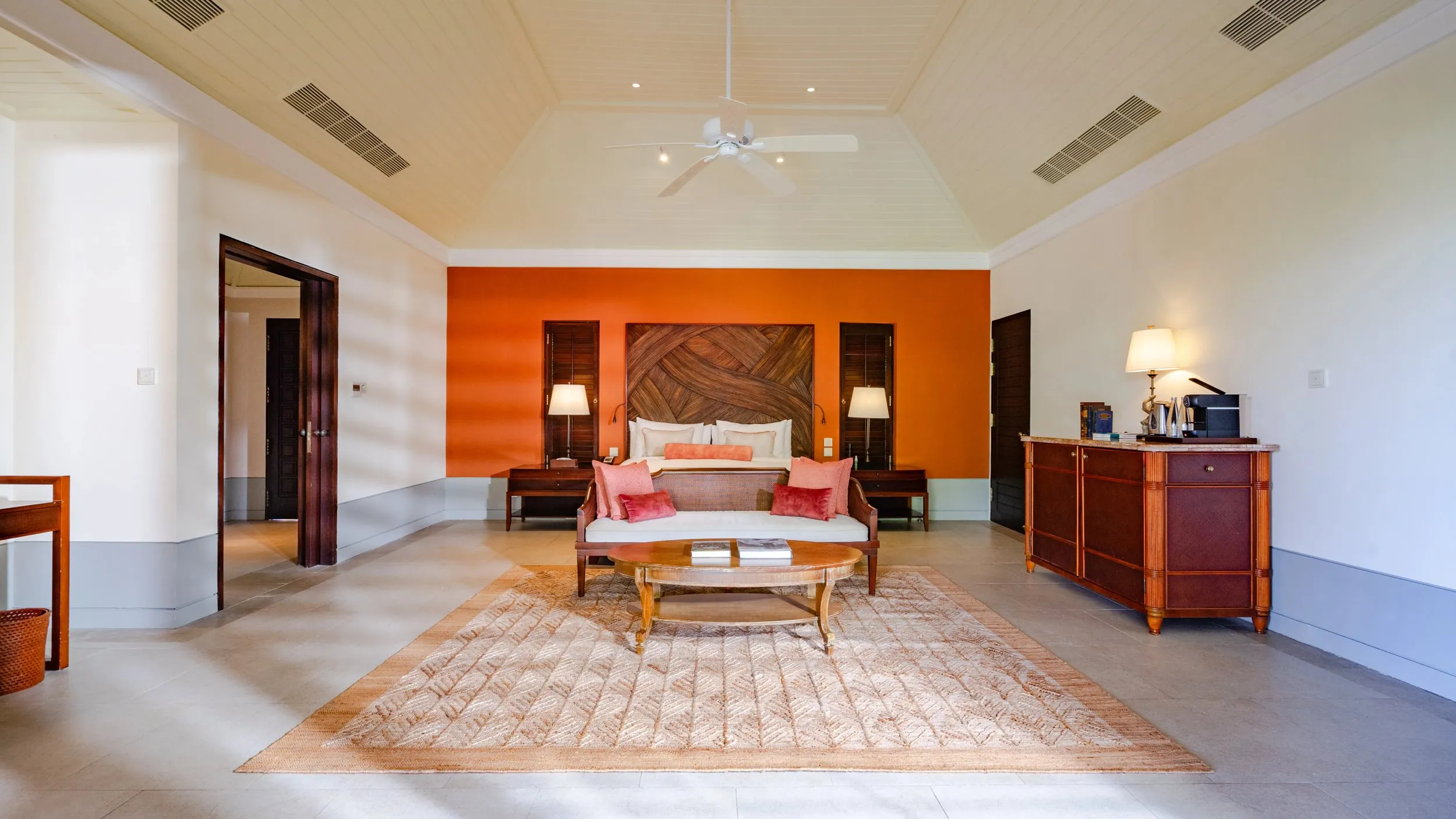
Cape Weligama has 39 suites and villas across nine categories, sized from around 130 square metres up to roughly 300 square metres for the largest configuration, all built with the same open, terrace-oriented logic: generous covered outdoor space, walk-in wardrobes, a steam room, and a stone bathtub as a near-constant fixture across categories.
The Junior Suite, at around 130 square metres, is the entry point into the collection and sets the template that recurs throughout: two queen beds or a single super-king configuration, a bathroom built around a freestanding stone tub with a separate walk-in rain shower and steam room, and an outdoor verandah for in-room dining. Junior Suites can interconnect with the Master Suite tier above them, which makes the pairing a practical option for families or two couples travelling together who still want distinct, private rooms.
The Two-Bedroom Family Suite extends that interconnecting logic further, built specifically to keep a family or small group under one roof without sacrificing separate sleeping quarters, while retaining the same terrace and bathroom standard as the rest of the property.
On the villa side, the Luxury Villa (also around 130 square metres) is the standalone equivalent of the Junior Suite, offering a private plunge pool and its own garden in place of the suite wing’s shared setting. From there, the Premier, Prestige and Grand villa tiers step up in scale, privacy and proximity to the ocean, each adding more outdoor living space and, in the higher categories, more direct or elevated sea views. The Pool Pavilion sits within its own private compound with a dedicated pool, aimed squarely at guests prioritising seclusion over communal resort life.
At the top of the range, the Cape Residence is the largest configuration on the property, at roughly 300 square metres, designed as a multi-bedroom private residence rather than a single hotel room, complete with its own extensive outdoor terracing and pool. It is the natural choice for a family taking over its own wing, a small wedding party, or a group wanting the run of a self-contained compound within the larger resort.
Across every category, the design brief stays consistent: a sun-drenched, furnished terrace suited to in-room dining, walk-in wardrobes, Sonos wireless audio, and bathrooms built around twin vanities and a stone tub, all oriented to make the most of natural light and cross-ventilation in a climate where indoor-outdoor living is the point rather than the exception.
Restaurants & Bars
The Atlas
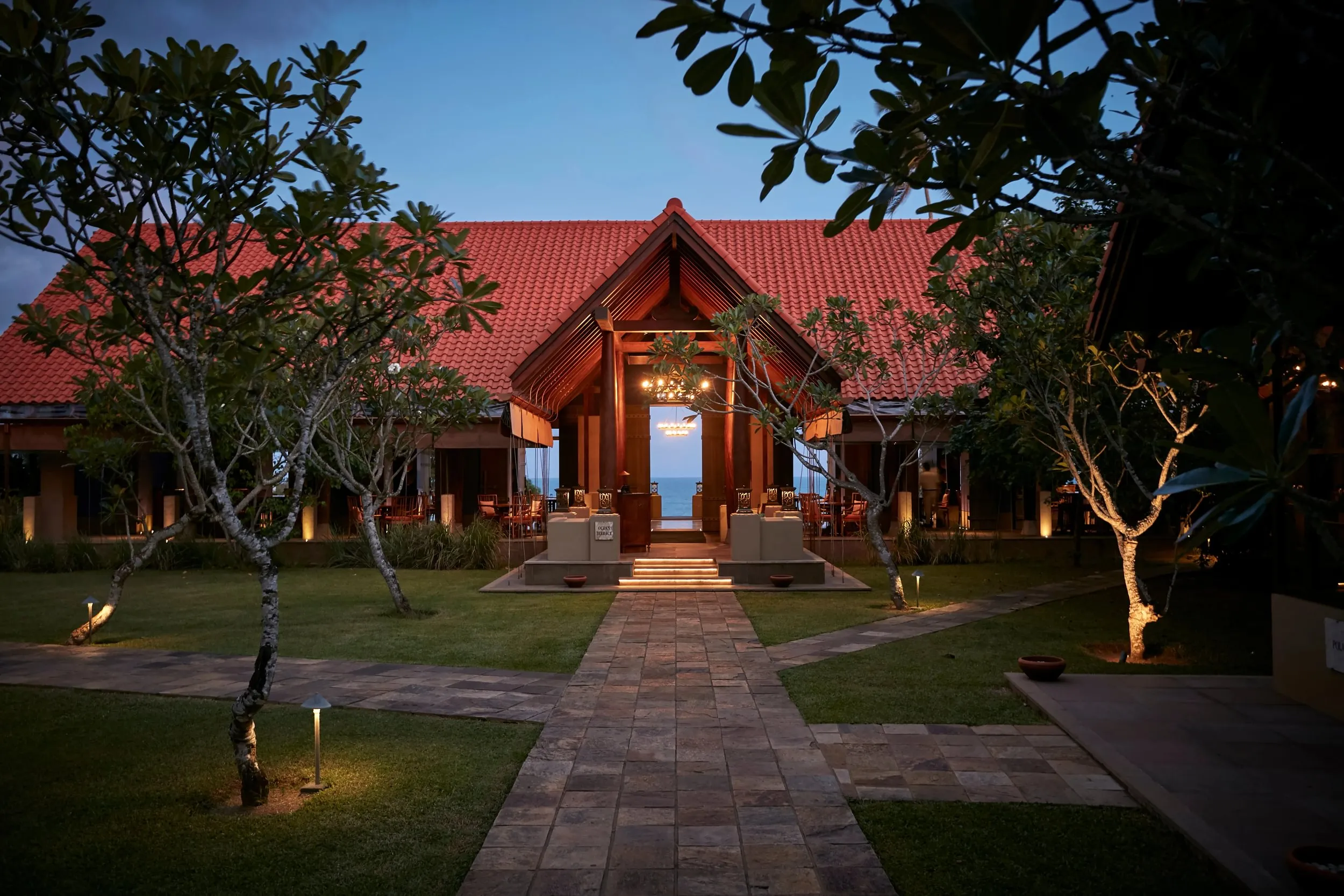
The Atlas is Cape Weligama’s principal restaurant and the property’s main stage for its Sri Lankan culinary identity. The kitchen, led by chef Nishantha Pushpakumara, builds its menus around the day’s catch, pairing fresh fish and seafood with produce sourced from across the region and seasoning drawn from the island’s spice traditions. The restaurant operates for both lunch and dinner, alongside a full breakfast service (continental, English and à la carte), in-room dining, and afternoon high tea, and it accommodates vegetarian, vegan and gluten-free diets as a matter of course. Its setting, open to the ocean air with outdoor seating, keeps the emphasis on the coastal view as much as the plate.
Tableau
For a more intimate format, Tableau offers a chef’s table experience for a small group (up to around a dozen guests), built around a closer, more conversational relationship with the kitchen than the main restaurant allows. It functions as the resort’s occasion-dining venue, suited to a special dinner, an anniversary, or simply a change of register from The Atlas’s broader menu.
The Society
The Society is Cape Weligama’s bar, and doubles as a venue for its cocktail programme, including guided mixology sessions where guests learn to build drinks alongside the bar team. It sits at the more social end of the resort’s evening offering, a counterpoint to the quieter dinner venues.
Cliff-edge and in-pool dining
Beyond its named venues, Cape Weligama runs a rotating set of dining experiences built around its setting rather than a fixed kitchen: floating breakfasts served in a private villa pool, and cliff-edge tasting menus set up at a lookout point along the headland for sunset or evening dining. These are typically arranged in advance through the resort’s experience team and lean into the property’s core asset, which is simply where it sits.
Wellness
Wellness at Cape Weligama is organised around the Sanctuary Spa, a compact, 130-square-metre facility with an unusual operating model: rather than guests coming to the spa, treatments are largely brought to them, delivered in-villa using each room’s own steam shower and stone bathtub. A dedicated spa villa exists on-site for guests who prefer a conventional spa setting or want to book side by side with a partner.
Treatments are organised into signature, pampering and invigorating categories, built around organic, homegrown Sri Lankan ingredients: spice-based body scrubs using clove, nutmeg, sweet orange and sandalwood, and massage oil blends incorporating Ceylon tea, chosen for its antioxidant and calming properties. The format, moving from scrub to herbal steam to a soak in the room’s stone tub, is designed as a full ritual rather than a standalone massage.
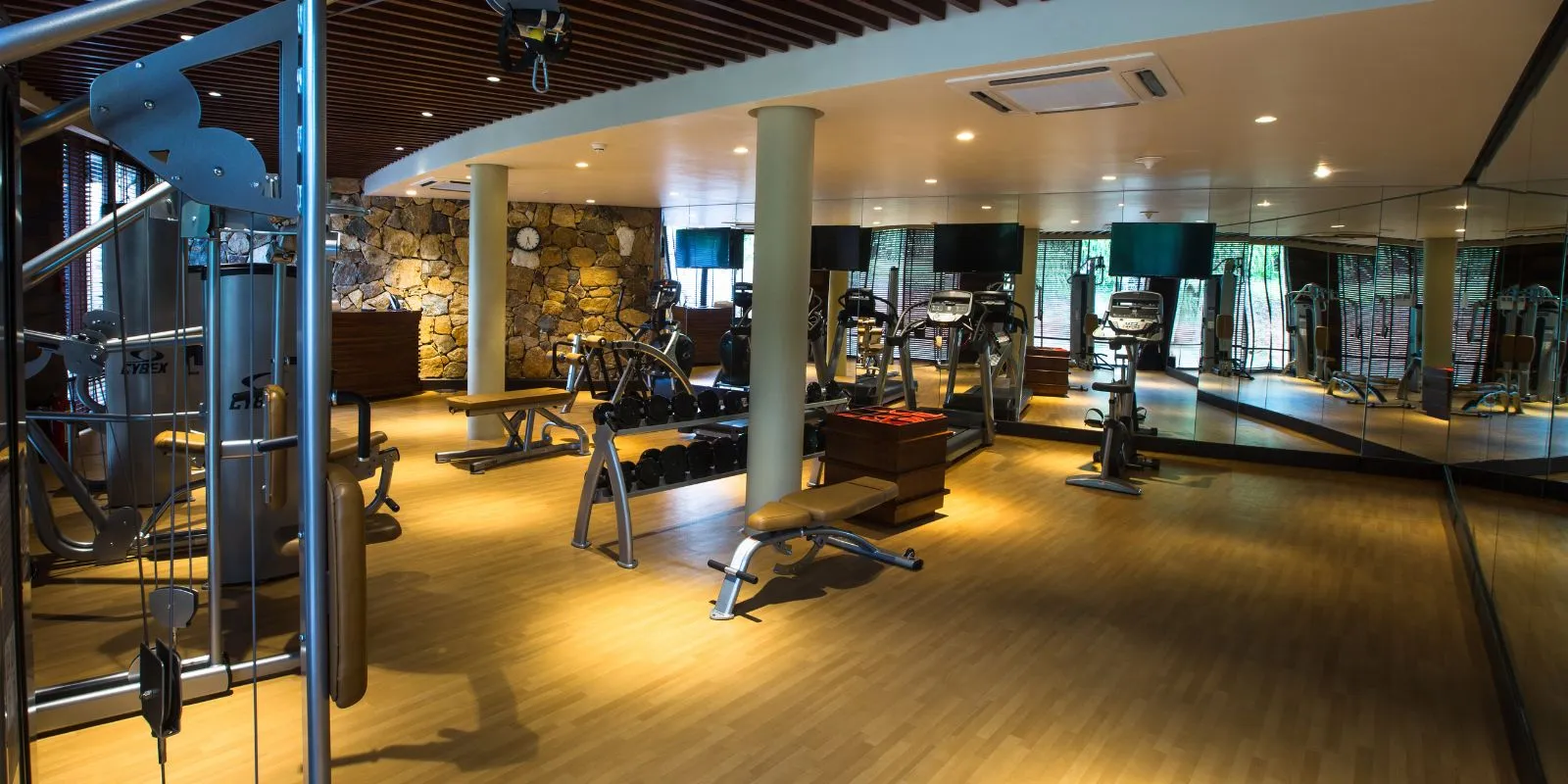
Beyond the spa proper, the resort maintains a fitness centre, and yoga sessions can be arranged for guests looking to work movement into a stay built primarily around water, sun and food. The signature pool itself, cut along the cliff edge with a 270-degree ocean outlook, functions as much as a wellness space as a social one, particularly in the early morning and at sunset when it empties out.
Experiences
Cape Weligama’s experience programme leans hard into its coastal setting and its ownership’s food and tea heritage rather than importing generic resort activities. On the water, the resort sits directly above Weligama Bay, one of Sri Lanka’s most consistent beginner and intermediate surf breaks, and can arrange lessons and board hire for guests who want to try it, alongside diving and general water sports. A short drive along the coast to Mirissa opens up boat-based whale and dolphin watching excursions, one of the south coast’s signature seasonal draws, typically run as half-day trips.
On land and in the kitchen, the resort runs a guided introduction to Sri Lankan cuisine hosted by one of its chefs, alongside an excursion into the walled town of Galle for a hands-on cooking class within the historic fort. A visit to a nearby low-country tea estate, run by a third-generation planter, connects guests to the wider tea culture that underpins the Resplendent Ceylon group, distinct from the high-grown estates around Ceylon Tea Trails further inland. Cultural excursions extend to the region’s elephant sanctuaries and to Galle Fort itself, whose ramparts, boutiques and colonial streetscape reward at least half a day away from the resort.
Closer to home, the resort’s own headland offers a version of local culture without leaving the property: the stilt fishermen who still work the shallows around Weligama Bay, balancing on their traditional wooden poles, are one of the most photographed sights on this coast and are visible from parts of the resort itself.
Sustainability
Resplendent Ceylon is owned by the Fernando family, the founders of Dilmah tea, and the group operates under a specific and long-standing commitment: fifteen percent of the pre-tax profits of the Dilmah/MJF business are directed to the MJF Charitable Foundation, the family’s philanthropic arm. In Weligama specifically, that has translated into an MJF Centre supporting the town’s own fishing community, the resort’s economic neighbour, through livelihood and life-skills programmes aimed at local women and youth, including English-language instruction focused on employability within the tourism industry that the resort itself is part of. Environmental initiatives across the wider Dilmah business are handled through Dilmah Conservation, the group’s separate environmental arm.
It is worth being direct about what is and is not independently verifiable at the level of a single property: Cape Weligama does not publish a detailed, resort-specific sustainability report of the kind some competitors do, so claims about its individual carbon footprint or waste systems are not made here. What is well documented is the structural commitment of its ownership group to directing a fixed share of profit into community programmes in the town the resort sits above, which is a more unusual and binding model than most hotel groups’ general sustainability language.
Who Is It For
Cape Weligama reads most naturally as a couples’ and honeymoon property: the private terraces, in-villa spa model and cliff-edge dining formats are built for two. It also works well for design-minded travellers who want to spend a stay inside a coherent piece of architecture rather than a generic luxury shell, given how deliberately Lek Bunnag’s village concept carries through every part of the property.
Families are well catered for too, particularly given the interconnecting suite options, the Two-Bedroom Family Suite and the multi-bedroom Cape Residence, plus the gentler, lower family pool as an alternative to the main infinity pool. Surfers and water-sports-minded travellers have a genuine, on-the-doorstep reason to choose Weligama over other south coast towns, given the bay’s reputation as a learn-to-surf destination. Food-focused travellers, meanwhile, get a menu of chef-led experiences, from Galle Fort cooking classes to the Atlas’s seafood-driven kitchen, that goes beyond the standard resort dining programme.
It is less suited to travellers wanting anonymity in a large, crowd-absorbing resort; at 39 keys spread across a headland, Cape Weligama’s scale is intimate by design, which is part of its appeal but also means it does not offer the sprawling, endless-amenity experience of a much larger beach resort.
Practical Information
Rates at Cape Weligama start from around USD 650 per night and climb significantly for the larger villa categories and the multi-bedroom Cape Residence, with pricing that moves seasonally in line with the south coast’s dry-season peak from December to April. Check-in is from 2:00pm and check-out by 12:00pm, standard for the category, with early arrival or late departure generally negotiable subject to availability.
The nearest airport is Bandaranaike International Airport (CMB) near Colombo, and the standard transfer is a road journey of roughly 2.5 to 3 hours via the Southern Expressway; faster domestic flight or helicopter options can be arranged directly through the resort for guests looking to shorten the trip. Most stays here run three to four nights, long enough to settle into the property’s rhythm of pool, spa and cliff-edge dinners while still leaving time for at least one or two excursions further afield, whether that is Galle Fort, a whale-watching morning out of Mirissa, or a surf lesson in the bay below.
The best months to visit are December through April, when the south coast’s dry season delivers the calmest seas and most consistent sunshine; the intervening southwest monsoon months bring more rain and rougher water but also, for surfers specifically, some of the season’s better swell.
Nearby
Weligama’s own working town, a short walk or drive from the resort, still runs on fishing and, increasingly, surf tourism, with a scatter of casual cafes and surf schools that have grown up around the bay in recent years. The stilt fishermen who work the shallows here, balanced on their traditional wooden poles just offshore, remain one of the most recognisable images of Sri Lanka’s south coast.
Galle, about 45 minutes west along the coast road, is the obvious half-day or full-day excursion: a UNESCO-listed fortified old town built by the Portuguese and expanded by the Dutch, now a dense, walkable grid of colonial-era buildings, independent boutiques, cafes and the ramparts themselves, best walked in the cooler hours around sunrise or sunset.
Mirissa, a short drive in the other direction, is the south coast’s main harbour for whale and dolphin watching, with boats running seasonal excursions out into deeper water in search of blue whales, among the largest animals on the planet, alongside its own popular curve of beach and a lively strip of beachfront restaurants and bars. Together, Galle and Mirissa bracket Cape Weligama on either side, giving guests two distinct half-day trips, one architectural and historic, one entirely about the ocean, without needing to travel far from the resort itself.
In pictures
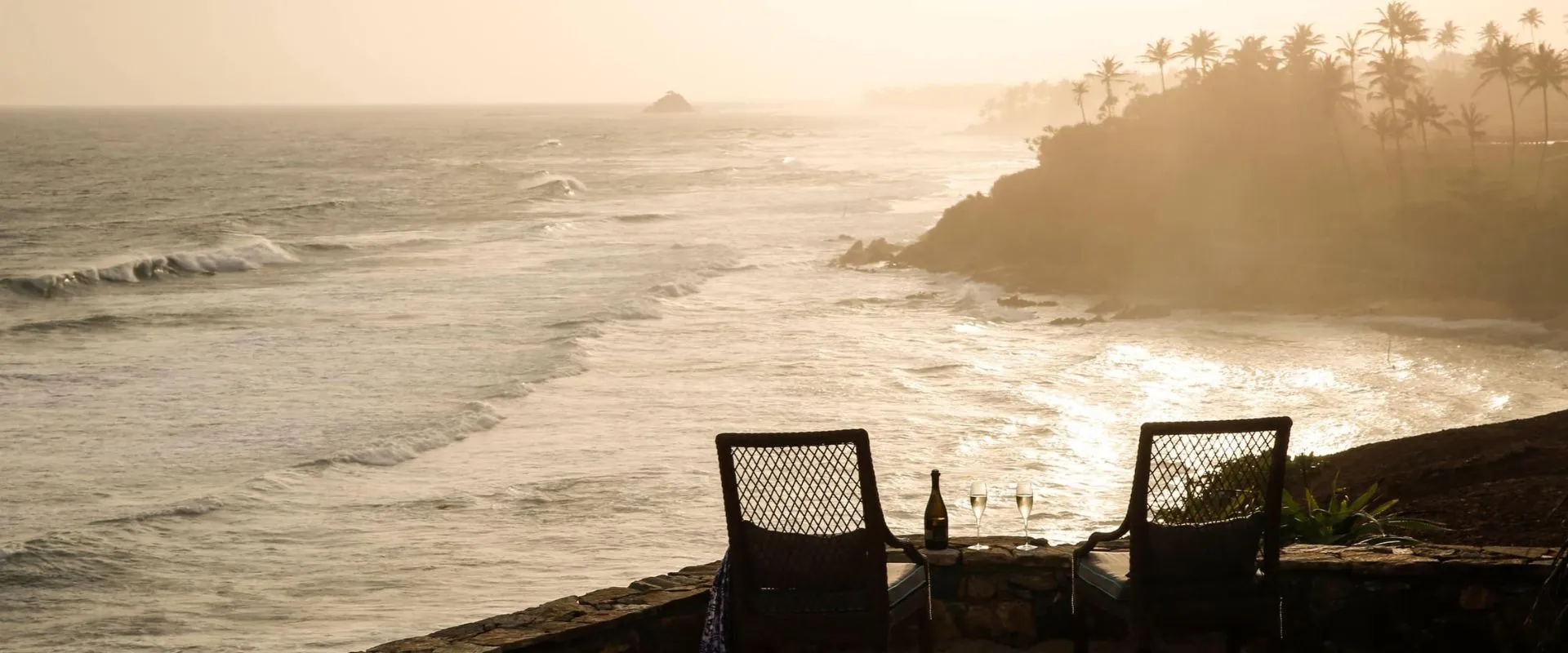
On the map
Weligama, Sri Lanka
Questions
Frequently asked
Where exactly is Cape Weligama, and how do you get there?
Cape Weligama sits on a headland above Weligama Bay on Sri Lanka's south coast, in the Southern Province, about 26km (roughly 45 minutes) from the fortified town of Galle. Most guests fly into Bandaranaike International Airport near Colombo and travel south by road, a journey of around 2.5 to 3 hours largely on the Southern Expressway. Private transfers and, for a faster option, domestic flights or helicopter transfers to airstrips near the south coast can also be arranged through the resort.
How many rooms does Cape Weligama have, and are they villas or suites?
The resort has 39 suites and villas in total, arranged village-style across the headland rather than stacked in a single building. Categories run from the Junior Suite up through Master Suites, a Two-Bedroom Family Suite, several tiers of standalone villa (Luxury, Premier, Prestige and Grand), Pool Pavilions and the multi-bedroom Cape Residence, which is built for a full family or group booking out its own wing of the property.
What is the food like at Cape Weligama, and are there multiple restaurants?
Dining centres on The Atlas, the main restaurant, where the kitchen builds menus around the day's catch and Sri Lankan spicing. Tableau offers a more intimate chef's table experience for small groups, The Society operates as the resort's bar and cocktail room, and cliff-edge tasting dinners and floating breakfasts are set up elsewhere on the property as part of the experience programme. Dietary requirements, including vegetarian, vegan and gluten-free, are routinely accommodated.
Is Cape Weligama a good base for surfing and watching whales?
Yes to both. Weligama Bay directly below the resort is one of Sri Lanka's best-known beginner and intermediate surf breaks, with gentle, consistent waves, and lessons can be arranged through the hotel. Mirissa, a short drive along the coast, is one of the island's principal launch points for blue whale and dolphin watching excursions, typically run as half-day boat trips in season.
Does Cape Weligama have a spa, and how does treatment booking work?
The Sanctuary Spa's model is built around bringing the treatment to the guest: therapists work in-villa using the room's own steam shower and stone bathtub, incorporating Sri Lankan spice scrubs and Ceylon tea oil blends, though a dedicated spa villa is also available for those who prefer to leave their room. Treatments are generally booked a day or so ahead through the resort's guest services or butler team.
Same destination
More hotel guides in Sri Lanka
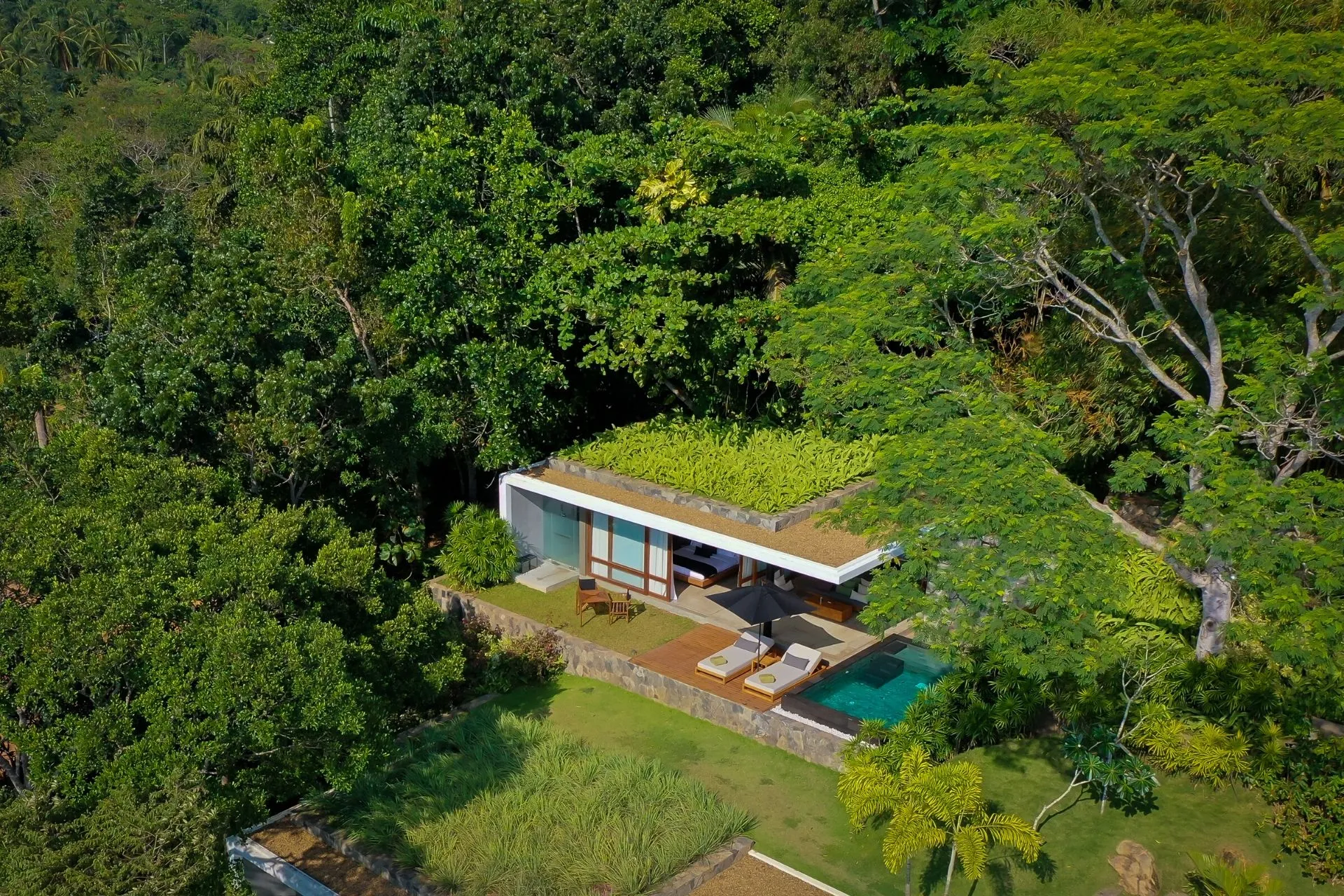
Thiranagama, Sri Lanka
Haritha Villas + Spa
Nine keys on a forested hilltop above Thiranagama, built around private saltwater plunge pools rather than a stretch of sand.
From $460 per night
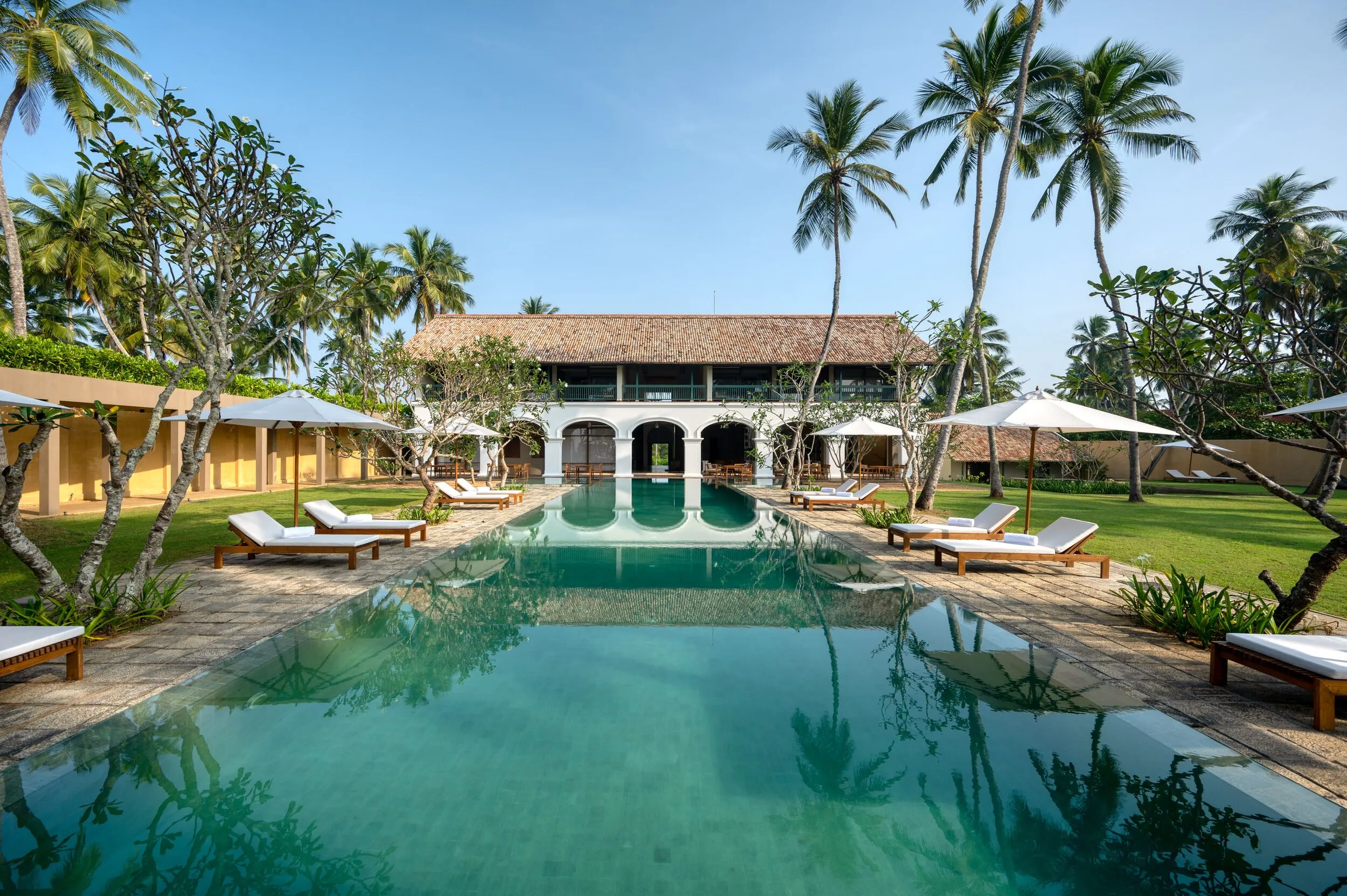
Tangalle, Sri Lanka
Kayaam House
Nine keys, a resident Ayurvedic doctor and a private stretch of turtle-nesting coastline near Tangalle.
From $700 per night
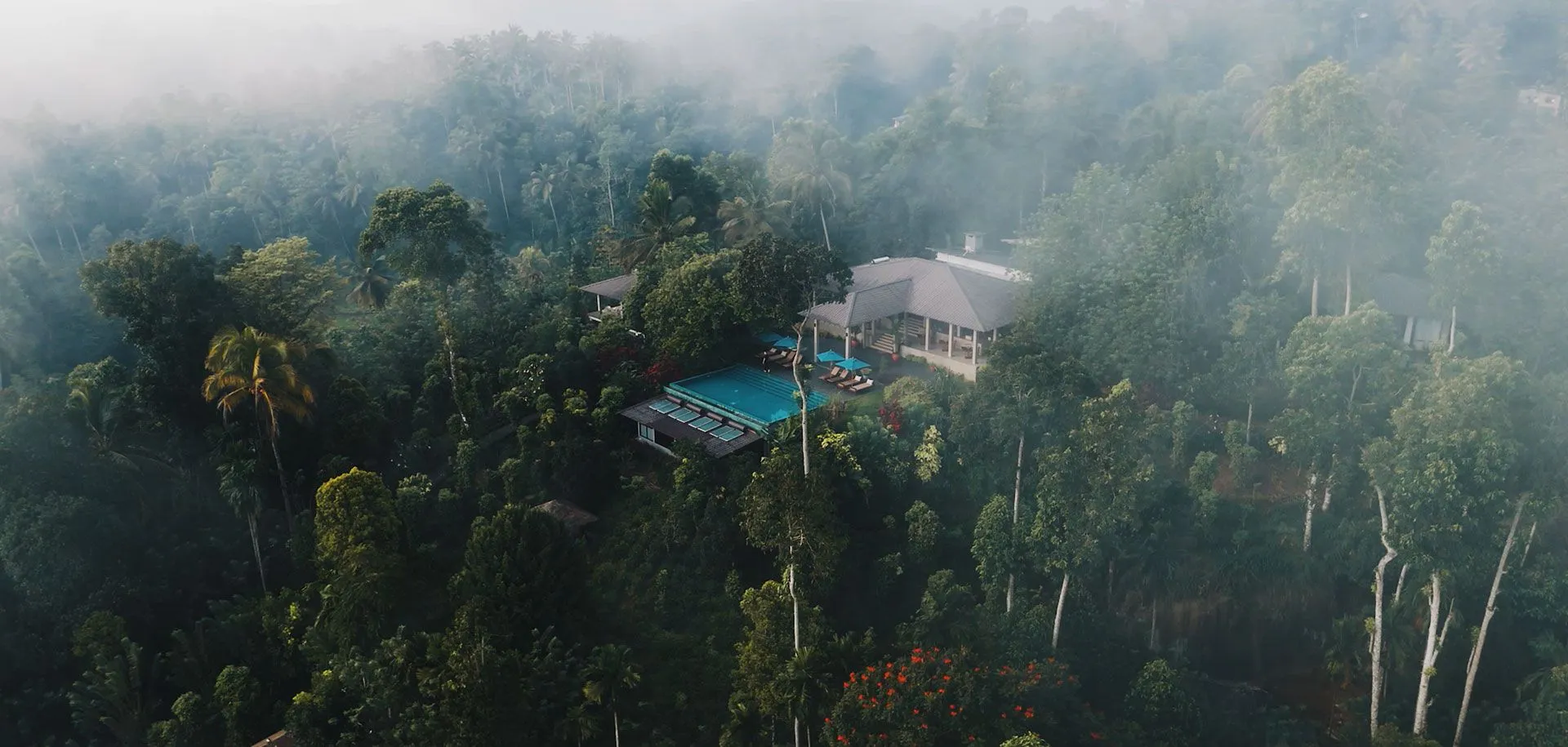
Alawatugoda, Kandy, Sri Lanka
Aarunya Nature Resort
A regenerative hillside estate above Kandy, where private-pool villas sit inside a working tea and spice garden facing the Knuckles range.
From $520 per night