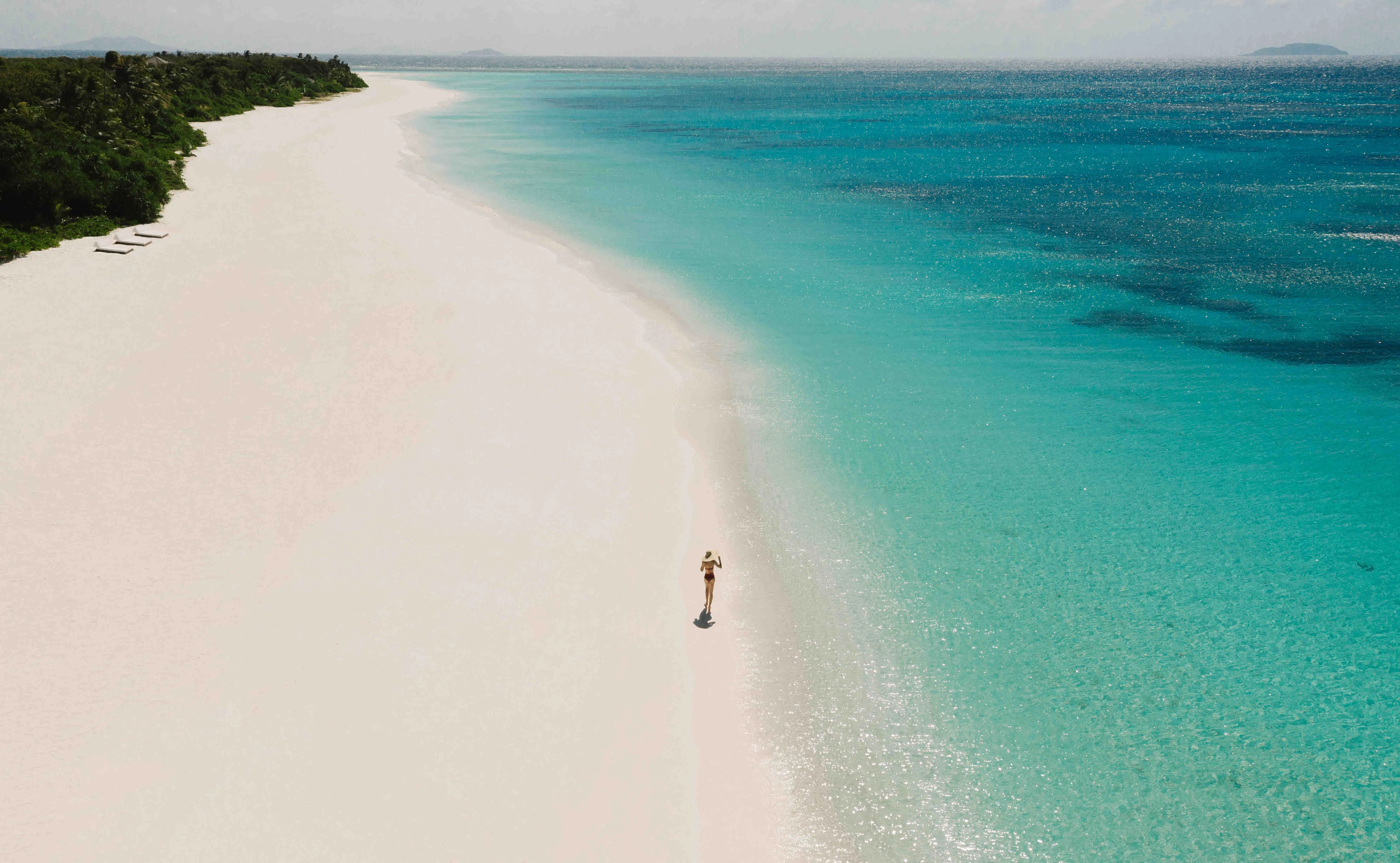
Pamalican Island, Cuyo Islands, Philippines
Amanpulo
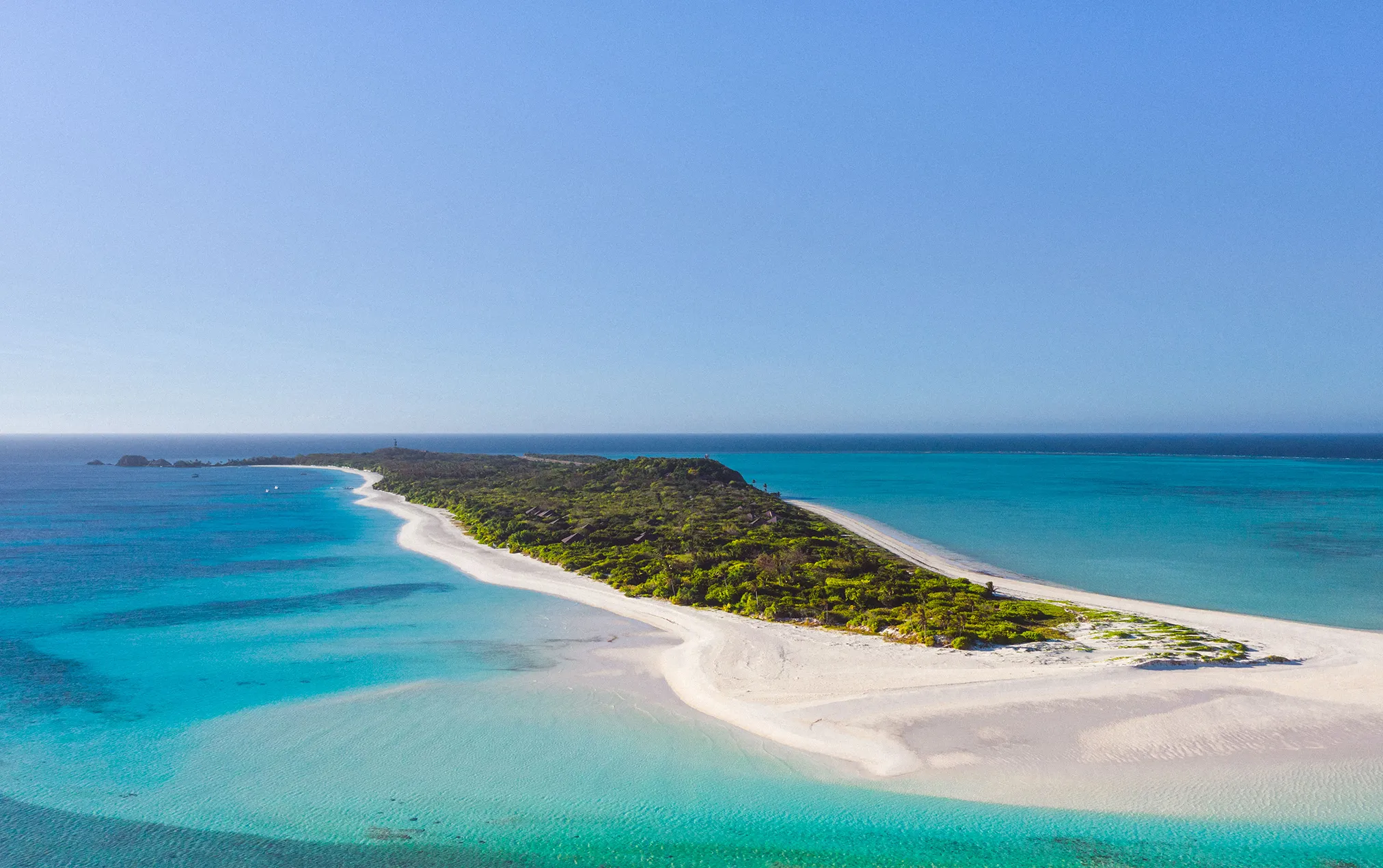
A private island in the Cuyo archipelago, reachable only by Aman's own aircraft, built around bahay kubo-inspired casitas set beneath forty-year-old coconut palms.
- Rates from
- From $1,900 per night
- Nearest airport
- Clark International Airport (CRK), Pampanga, gateway for Amanpulo's own private flight
- Transfer
- 90-minute flight on Amanpulo's private twin-engine aircraft from Clark, landing on the resort's own airstrip
- Best months
- December to May, the dry season across the Cuyo Islands
There is a particular kind of luxury that has nothing to do with square footage or thread count, and everything to do with what a guest does not have to see. At Amanpulo, that starts before arrival: there is no way to reach Pamalican Island except on the resort’s own aircraft, which means there is no ferry terminal, no queue of day-trippers, no other hotel’s guests sharing the same stretch of reef. The island belongs, in practical terms, to one property, and the entire experience of staying there follows from that single, unusual fact.
Pamalican sits in the Cuyo Islands, a scatter of low coral islands in the Sulu Sea roughly midway between the main island of Palawan and Panay, far enough from the well-trodden circuits of El Nido and Coron to have remained genuinely obscure until the Soriano family, sailing through the area, came across it by chance in the early 1980s. What they found was a 90-odd-hectare island ringed by white sand and healthy reef, uninhabited and undeveloped. What they built there, in partnership with Aman founder Adrian Zecha, opened in December 1993 as the seventh property in the Aman collection and remains, more than three decades later, one of the group’s most complete expressions of its founding idea: very few rooms, very little visible infrastructure, and a setting good enough that the architecture’s job is mostly to get out of the way.
That restraint is easy to state and hard to execute, and Amanpulo’s continued reputation, among both the travel press and the small, repeat-heavy clientele that Aman properties tend to cultivate, rests on the fact that it has held the line for over thirty years without the usual creep toward scale. There is no second wing, no conference centre, no beach club open to outside day guests. The island’s whole footprint is still organised around the same casitas that opened in 1993, supplemented later by a small collection of private villas, and a handful of restaurants that rotate guests through the island’s coastline rather than concentrating them in one dining room.
Why It Stands Out
What separates Amanpulo from the broader field of Southeast Asian private-island resorts is the completeness of its isolation. Plenty of properties in the Maldives or the Philippines’ own Bacuit Bay require a seaplane or a boat transfer; few require the resort’s own aircraft as the only means of access, with no independent charter permitted to use the island’s airstrip. That single design choice, made at the outset and maintained ever since, shapes almost everything else about a stay: there is no possibility of a day-tripper, no adjacent development competing for the same beach, and no meaningful population beyond the resort’s own guests and the staff who live in a separate compound elsewhere on the island.
The other distinguishing feature is architectural. Amanpulo was designed by Francisco “Bobby” Manosa, later recognised as a National Artist for Architecture in the Philippines, whose long career was built around a single, stubborn argument: that a genuinely Filipino architecture already existed in vernacular building, and that it did not need to be replaced by imported style to read as luxurious. His casitas at Amanpulo, drawn directly from the bahay kubo, the traditional stilted, thatch-roofed house found across the archipelago, are the clearest large-scale expression of that argument still standing, and they have aged remarkably well against three decades of newer, more generically “tropical modern” competition.
Architecture
Manosa’s brief was to build guest accommodation that felt indigenous to the island rather than imported onto it, and his solution was to take the bahay kubo, essentially a single elevated room under a steep, ventilated roof, and scale it into a resort-grade casita without losing the logic of the original. Each casita is built as a freestanding, single-storey structure raised slightly off the ground, roofed in cogon thatch cut steeply enough to shed the region’s heavy rains and to draw hot air upward and out, a passive cooling strategy that predates air conditioning by centuries and still does real work in the tropical heat.
The casitas are sited across three distinct terrains: directly on the beach, on the hillside above it, and up in the forest canopy on the island’s high ground, a variety that lets the same basic architectural unit produce genuinely different experiences of the island depending on category. Villas, added later and considerably larger, extend the same material language, cogon thatch, dark timber, stone into multi-bedroom private houses, but the fundamental architectural idea, an open, breathing structure calibrated to the specific climate of a small Philippine island, runs through the whole property rather than stopping at the original casitas.
Interior Design
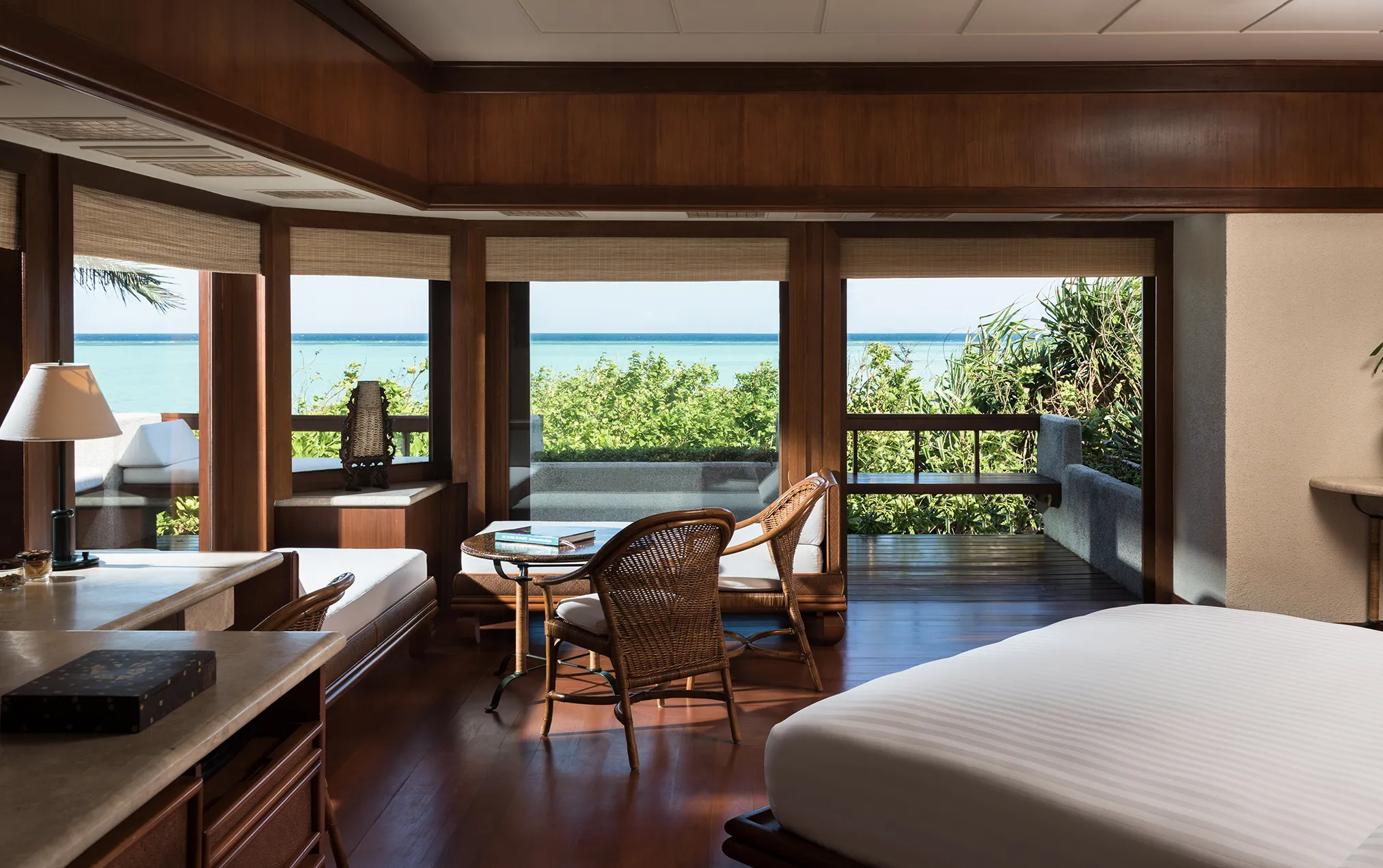
Inside, the casitas keep faith with the same restraint that governs the building envelope. Ceilings run high beneath the pitch of the thatch roof, timber is left largely unpainted, and the material palette leans on things that could plausibly have been sourced from the island or its region: pebble-washed walls, coconut-shell detailing, rattan headboards, and woven basketwork drawn from Palawan’s own craft traditions. Cebu marble appears in the bathrooms, a rare imported material against the otherwise local-feeling palette, chosen for its cool, practical surface in a hot climate as much as for its polish.
The effect is deliberately underdecorated. There is little of the layered pattern-on-pattern approach some tropical resorts use to signal luxury; instead, each casita reads as a well-made, honestly built room that trusts its materials and its view to do the work. Furniture is kept low and functional, walls are largely left to their natural finish, and the wide timber deck that fronts every casita functions almost as a second room, the place where much of the actual living happens once the sea breeze picks up in the afternoon.
Atmosphere
Amanpulo’s atmosphere is quiet in a way that is hard to manufacture and easy to undersell in writing. With guest numbers capped by the casita and villa count, and with no day-trip traffic possible given the private airstrip, the island rarely feels populated even at full occupancy. Paths between casitas are sand tracks through coconut groves rather than paved walkways, buggies move guests around with minimal noise, and the dining venues are spread out enough around the island’s perimeter that meals rarely feel like communal seatings.
That sense of space is the property’s real currency. Guests tend to describe Amanpulo less in terms of any single spectacular feature and more as a cumulative effect: several days without seeing a stranger, without hearing traffic, without a schedule imposed by anyone but themselves. It rewards a slower kind of travel and, being logistically difficult and comparatively expensive to reach, self-selects for guests who have already decided that unhurried privacy is the point of the trip rather than a bonus.
Rooms and Suites
Accommodation at Amanpulo splits into two tiers: casitas, the original standalone cottages, and villas, larger multi-bedroom private residences added later.
The casita categories, arranged by setting and specification, run from the Hillside Casita and Deluxe Hillside Casita, both elevated among the trees with partial or fuller sea views from a private wooden deck, through the Treetop Casita and Treetop Pool Casita, mounted higher still on the island’s forested high ground, the latter adding a private plunge pool overlooking the canopy, to the beachfront tier: the Beach Casita, set directly on the sand with its own deck and hammock, the Beach Pool Casita, which adds a private plunge pool steps from the shoreline, and the Grand Beach Pool Casita, positioned on the more secluded eastern edge of the island for guests prioritising maximum privacy. Every casita follows the same architectural logic regardless of category: a single open room under a thatched roof, a wide deck built for outdoor living, and a bathroom finished in Cebu marble.
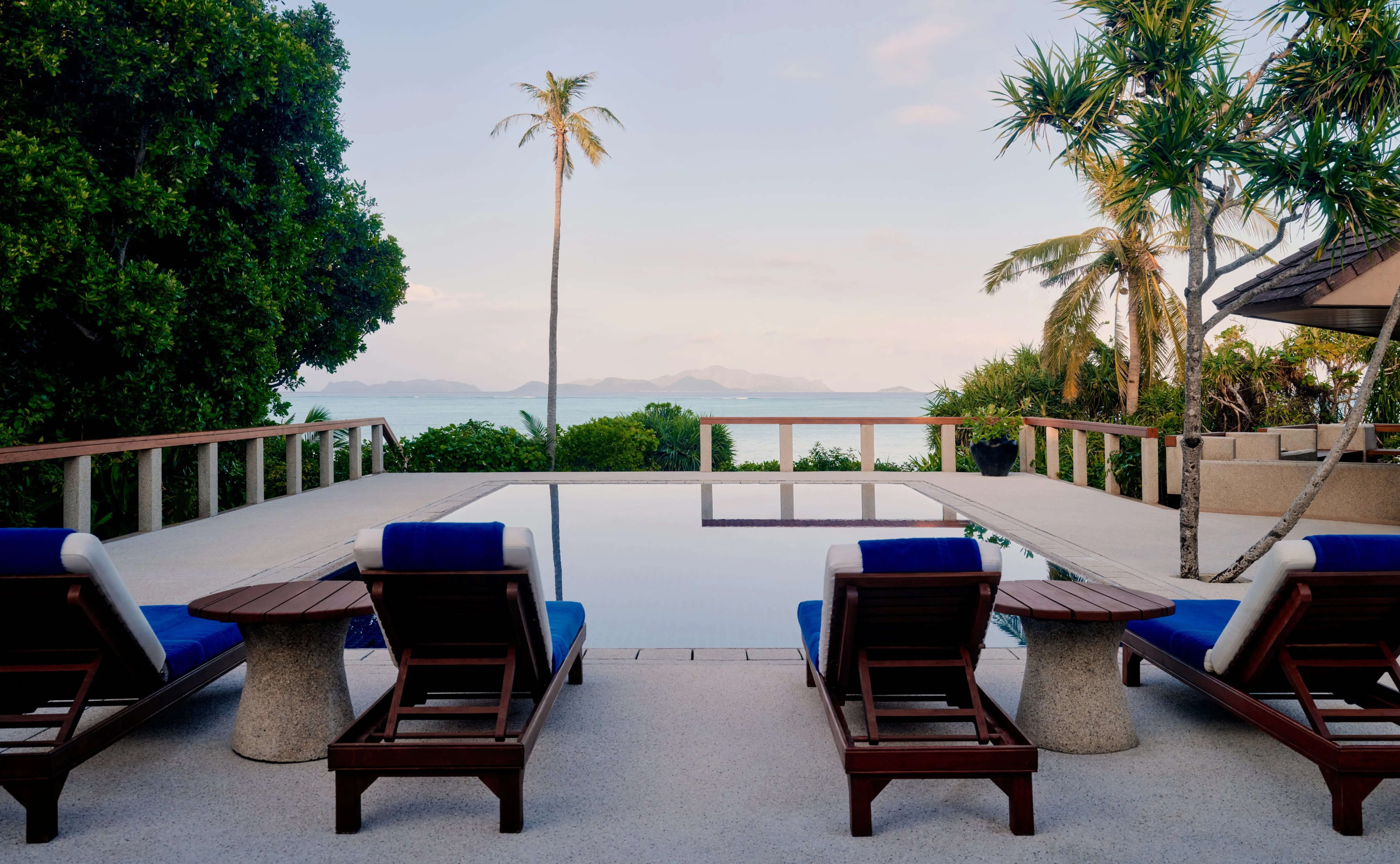
The villas sit apart from the casita collection entirely, ranging from one to four bedrooms and built as full private houses rather than hotel rooms: each has its own swimming pool, a full kitchen, expansive outdoor living space, and dedicated villa staff, including a private chef and butler service. They are the natural choice for families, multigenerational groups, or parties who want to host their own meals and set their own rhythm independent of the resort’s dining schedule, and they represent the top of Amanpulo’s rate card by a considerable margin over even the most private casita category.
Dining
Amanpulo spreads its dining across several distinct venues rather than concentrating it in one main restaurant, a structure that lets guests circulate around the island’s coastline over the course of a stay rather than returning to a single room each evening.
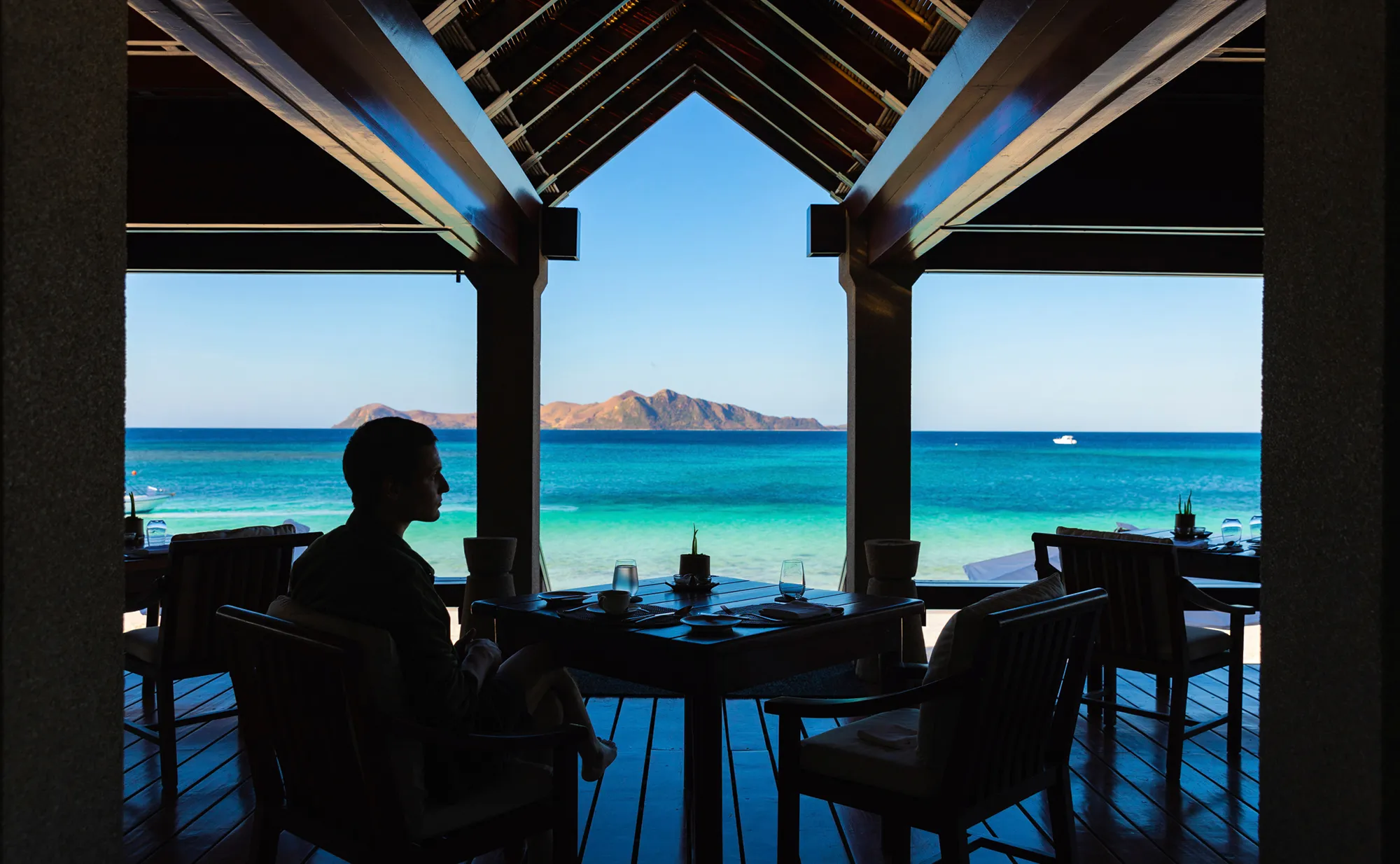
The Clubhouse is the property’s year-round anchor, serving Filipino and international dishes for breakfast, lunch and dinner in both an indoor dining room and a poolside setting. The Lagoon Club, open seasonally on the island’s secluded east coast, serves a Japanese menu from a pavilion facing an unbroken stretch of white sand. The Beach Club, on the island’s western shore, is built around Mediterranean cooking and sunset views, a natural venue for an evening drink before dinner. The Picnic Grove offers a more casual, open-air lunch service under the trees a short walk from the beach, with an Italian-leaning menu. Beyond the fixed venues, Destination Dining lets guests arrange private meals, often barbecue-style or built around a personalised menu, at secluded spots elsewhere on the island, and the Kawayan Bar, a floating bamboo structure just offshore, functions as an all-day lounging and drinks spot reachable by a short paddle or swim.
Spa and Wellness
The Aman Spa at Amanpulo is built around the same open-air, materials-first approach as the rest of the resort: twin treatment rooms designed for couples to be treated side by side, an open-air wooden pavilion for massage, and a cold plunge pool set within the same tropical garden setting. A separate gym, finished in timber and overlooking the grounds, covers more conventional fitness needs.
Beyond the standing spa menu, Amanpulo periodically hosts visiting wellness practitioners who bring their own specialist therapies to the property for limited engagements, a model used across several Aman resorts to keep programming from feeling static across repeat visits. The overall approach favours a small number of well-executed treatment formats over an exhaustive menu, consistent with the brand’s broader preference for depth over breadth.
Experiences
Given that Pamalican has no town, village or commercial development beyond the resort itself, Amanpulo’s experience programme is built almost entirely around the water and the island’s own interior. Diving and snorkelling are the obvious centrepiece: the resort runs its own dive operation directly from the island, taking advantage of a reef environment that has been protected as a de facto marine sanctuary for decades, and the offshore waters are also used for sailing, kayaking, paddleboarding and sport fishing.
On land, guests can explore the island on foot or by bicycle along its network of sand paths, and the resort arranges more occasion-driven activities on request: sunset sailing trips, private beach or reef picnics set up in advance at a secluded spot, and stargazing sessions that take advantage of the island’s near-total absence of light pollution. The absence of any organised excursion circuit off the island is, in effect, part of the point: activity here is calibrated to the property’s own reef and shoreline rather than imported from elsewhere.
Who It Is For
Amanpulo is built most obviously for couples and honeymooners who want privacy at a level that is genuinely difficult to find at a resort of comparable size, given the casitas’ spacing and the island’s total lack of outside foot traffic. It also suits design-minded travellers with a specific interest in Manosa’s architecture and in seeing a large-scale vernacular building project executed at this level of consistency, three decades on.
Families and multigenerational groups are well served by the villa tier in particular, where private pools, full kitchens and dedicated staff make it practical to house several generations under one roof without sacrificing anyone’s privacy. Divers and keen snorkellers have a genuine, on-property reason to choose Amanpulo over resorts where the reef is a secondary feature, given the island’s marine sanctuary status and its own dive centre. It is less suited to travellers who want a lively social scene, extensive nightlife, or the ability to leave the resort for a change of scenery mid-stay; the private-airstrip access that guarantees Amanpulo’s seclusion also means there is, by design, nowhere else nearby to go.
Best Time to Visit
The Cuyo Islands follow the same broad seasonal pattern as the rest of the Philippine archipelago: a dry season running roughly from December through May, when conditions are calmest and most reliable for both beach time and diving, followed by a wetter southwest monsoon period from June through November that brings a higher chance of rain and, in its later months, typhoon risk. December to May is generally regarded as the more dependable window for a stay built as heavily around outdoor and water-based activity as Amanpulo’s is, though the shoulder months at either end of the dry season can offer a quieter island with still-favourable weather.
How to Get There
Getting to Amanpulo is unlike getting to almost any other luxury resort in Southeast Asia, because there is no independent way in. Pamalican Island has its own private airstrip, and it is served exclusively by Amanpulo’s own aircraft; no commercial airline and no independent charter operator is permitted to land there. Every guest, without exception, flies in on a scheduled private flight booked directly through the resort as part of the reservation process.
That flight currently departs from Clark International Airport (CRK) in Pampanga, roughly 116 kilometres, or about two hours by road, north of Manila. Guests arriving internationally typically land first at Ninoy Aquino International Airport (NAIA) in Manila, where an Amanpulo representative meets them and arranges the overland transfer to Clark; guests on itineraries that route directly through Clark can bypass Manila entirely. From Clark, Amanpulo operates its own twin-engine turboprop aircraft, seating up to twelve passengers, on a roughly 90-minute flight to Pamalican’s airstrip, with scheduled departures typically timed around early afternoon and mid-afternoon slots in each direction to allow for same-day connections from international arrivals. Guests with a same-day connection are looked after in the Amanpulo Lounge at the departure airport while they wait for their flight; luggage allowance on the resort’s aircraft is limited (in the region of 20kg per adult, including hand luggage), with complimentary storage available in Manila for anything left behind. The round-trip air transfer is priced and booked separately from the room rate, and given that it is the only means of reaching the island, it should be treated as a mandatory, non-optional part of the total cost of a stay.
Nearby Experiences
Because Pamalican is a single-resort island with no other settlement, there is, by design, no “nearby town” to visit in the way a mainland or larger-island property might offer. The nearest inhabited islands within the Cuyo group support small fishing communities that are not part of the resort’s guest circuit, and the broader Palawan region’s other well-known destinations, El Nido’s karst lagoons and Coron’s wreck-diving sites among them, are a further flight or boat journey away and not realistically combined with an Amanpulo stay within a single trip. In practice, the resort itself, its reef, and its own uninhabited coastline constitute the entirety of the “nearby” experience on offer, which is precisely the point of a property built around total seclusion.
Things to Know Before Booking
The private flight is the single most important planning factor: it must be booked through the resort, it is priced per person in addition to the room rate, and it operates on a limited daily schedule, which means arrival and departure dates need to be built around Amanpulo’s own flight times rather than a guest’s preferred itinerary. Luggage allowances on the aircraft are modest by international standards, so packing light, or planning to store excess baggage in Manila, is worth factoring in ahead of departure.
Given the island’s total isolation, guests should also expect a genuinely unplugged experience in practical terms: mobile connectivity and amenities beyond what the resort itself provides are limited, and there is no option to leave the property for a change of scenery, a restaurant, or a shop during a stay. That is, for the resort’s core audience, a feature rather than a drawback, but it is worth being clear-eyed about before booking a longer stay. Weather is also a genuine planning variable in the wetter months given the resort’s total dependence on small-aircraft access, so building some flexibility into travel dates during shoulder or monsoon periods is sensible.
Sustainability
Amanpulo’s sustainability programme leans heavily on its position within a long-standing, community-observed marine protection area: the waters around Pamalican have functioned as a de facto marine sanctuary for decades, with traditional hand-line fishing the only method permitted among local fisherfolk in the surrounding waters, and the resort employs a marine biologist who monitors coral health and sea turtle nesting activity, including green, hawksbill and, since 2021, olive ridley turtles, feeding data on the latter into wider regional conservation records. Weekly reef monitoring and volunteer-led removal of crown-of-thorns starfish, a coral predator, are part of the same ongoing marine programme.
On the resource side, the resort draws its drinking water from an on-site reverse-osmosis desalination system with multi-stage purification, distributed in reusable glass bottles rather than single-use plastic, and treats all of its wastewater on-site for reuse in irrigation and fire systems rather than discharging it into the surrounding sea. A solar power installation on the island, brought fully online in October 2024, has been reported to supply a substantial share of the resort’s electricity needs, meaningfully reducing its reliance on diesel generation. An on-site organic farm, developed over several years, now supplies a meaningful share of the resort’s fresh salad greens, herbs and mushrooms. Community investment is directed primarily at Manamoc, the nearest inhabited island, where the resort has funded technical-vocational training facilities, spanning culinary, food and beverage, housekeeping and engineering disciplines, within the local high school, alongside recurring immersion placements for students; roughly half of Amanpulo’s workforce is drawn from Manamoc and the surrounding Cuyo communities.
Practical Information
Amanpulo is owned through Seven Seas Resorts and Leisure Inc., a venture majority-held by the Soriano family’s A. Soriano Corporation in partnership with the Aboitiz group, and has been managed by Aman since the resort’s opening in December 1993. Rates for the entry-level casita categories start from roughly USD 1,900 per night and climb substantially through the higher casita tiers and, further still, through the multi-bedroom villas, before the mandatory private-flight transfer is added. Check-in is from 3:00pm and check-out by noon, with early or late arrangements subject to availability.
The nearest airport used for Amanpulo’s own scheduled flight is Clark International Airport (CRK) in Pampanga, roughly two hours by road from central Manila; the flight itself takes about 90 minutes on the resort’s private aircraft and lands on Pamalican’s own airstrip. Most stays run five to seven nights, long enough to justify the effort and cost of getting there and to properly settle into the island’s slower rhythm, though shorter visits are possible for guests combining Amanpulo with other Philippine destinations. The best months to visit are December through May, the archipelago’s dry season, when conditions are most reliable for diving, sailing and beach time alike.
Editorial Conclusion
Amanpulo’s case rests on a genuinely unusual combination: an architecture that took Filipino vernacular building seriously enough to scale it without diluting it, and a level of physical isolation, guaranteed by a private airstrip that admits no one outside the resort’s own guest list, that few properties anywhere can match. Three decades after Francisco Manosa’s casitas first opened, both of those qualities remain intact, which is a rarer achievement in luxury hospitality than it might sound. For travellers willing to accept the cost, logistics and total remove that come with reaching Pamalican Island, the reward is a version of privacy that most resorts can only gesture toward.
In pictures
On the map
Pamalican Island, Cuyo Islands, Philippines
Questions
Frequently asked
How do you actually get to Amanpulo?
There is no commercial or independent charter access to Pamalican Island. Guests fly Amanpulo's own scheduled private aircraft, a twin-engine turboprop seating up to twelve, from Clark International Airport (CRK) in Pampanga, roughly two hours by road north of Manila. The flight takes about 90 minutes and lands on the resort's own airstrip on the island. International arrivals landing at Manila's Ninoy Aquino International Airport are met and transferred overland to Clark, or can fly directly into Clark on certain routes; same-day connections use Amanpulo's private lounge at the departure airport. The round-trip flight is booked directly through the resort as part of the reservation and is priced separately from the room rate.
What is the difference between a casita and a villa at Amanpulo?
Casitas are the resort's original standalone cottages, one-room, freestanding structures with cogon-thatch roofs, set on the beach, on the hillside, or up in the tree canopy, in categories that include Beach Casita, Beach Pool Casita, Grand Beach Pool Casita, Hillside Casita, Deluxe Hillside Casita, Treetop Casita and Treetop Pool Casita. Villas are larger, multi-bedroom private residences, up to four bedrooms, each with its own pool, full kitchen and dedicated villa staff including a private chef, built for families or groups who want a self-contained home rather than a single hotel room.
Is Amanpulo suitable for families with children?
Yes. The multi-bedroom villas in particular are built around family and group stays, with private pools, kitchens and dedicated staff, and the island's calm lagoon waters and low-key programming (snorkelling, kayaking, the Kids Club-style activities arranged through guest services) suit children well. The absence of any commercial development off-property also means the whole island functions as a controlled, low-traffic environment, which many families travelling with children find easier than a mixed-use resort town.
What is there to do at Amanpulo beyond the beach?
The surrounding reef is the main draw beyond the sand: diving and snorkelling directly off the island, with the resort's dive operation running trips to nearby reef sites, plus sailing, kayaking, paddleboarding and sport fishing. On land, the island's interior can be explored on foot or bicycle, and the resort arranges stargazing, sunset sails and private beach or reef picnics. Because Pamalican has no town or village to visit, activity on a stay here centres almost entirely on the water and the island itself rather than external excursions.
Does Amanpulo have a house reef, and is the diving good?
Pamalican sits within a self-declared marine sanctuary that local fishing communities have observed for decades, and the reef around the island supports a resident population of green, hawksbill and, more recently confirmed, olive ridley sea turtles, which the resort's marine biologist monitors during nesting season. The resort runs its own dive centre for reef dives and snorkelling directly from the island, making it a genuine dive-and-stay property rather than one where diving is an afterthought.
Same destination
More hotel guides in Philippines
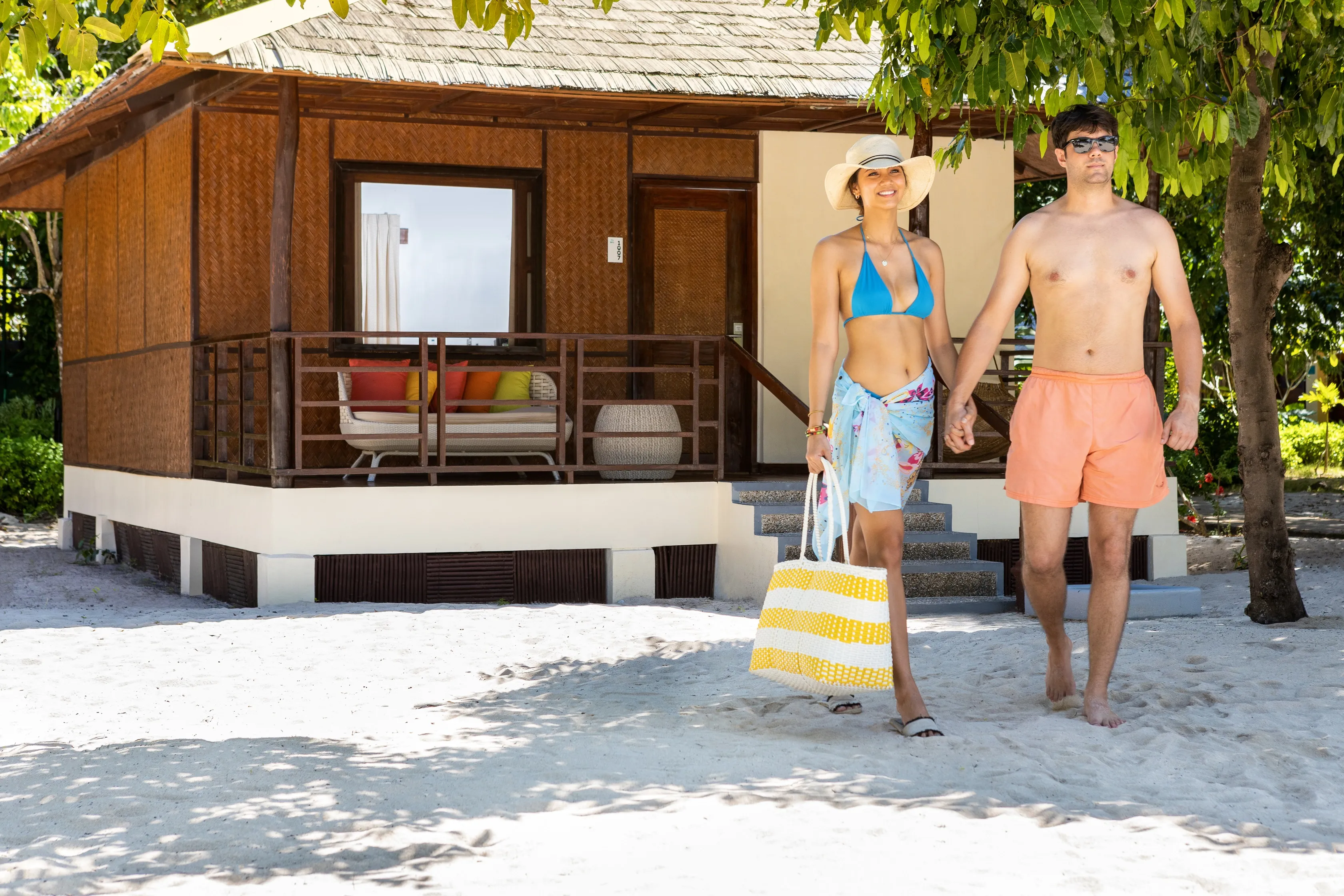
Dimakya Island, Busuanga, Coron, Philippines
Discovery Coron
A nineteen-hectare private island off northern Busuanga, diving Coron's Japanese wrecks by day and disconnecting from everything else after dark.
From $260 per night
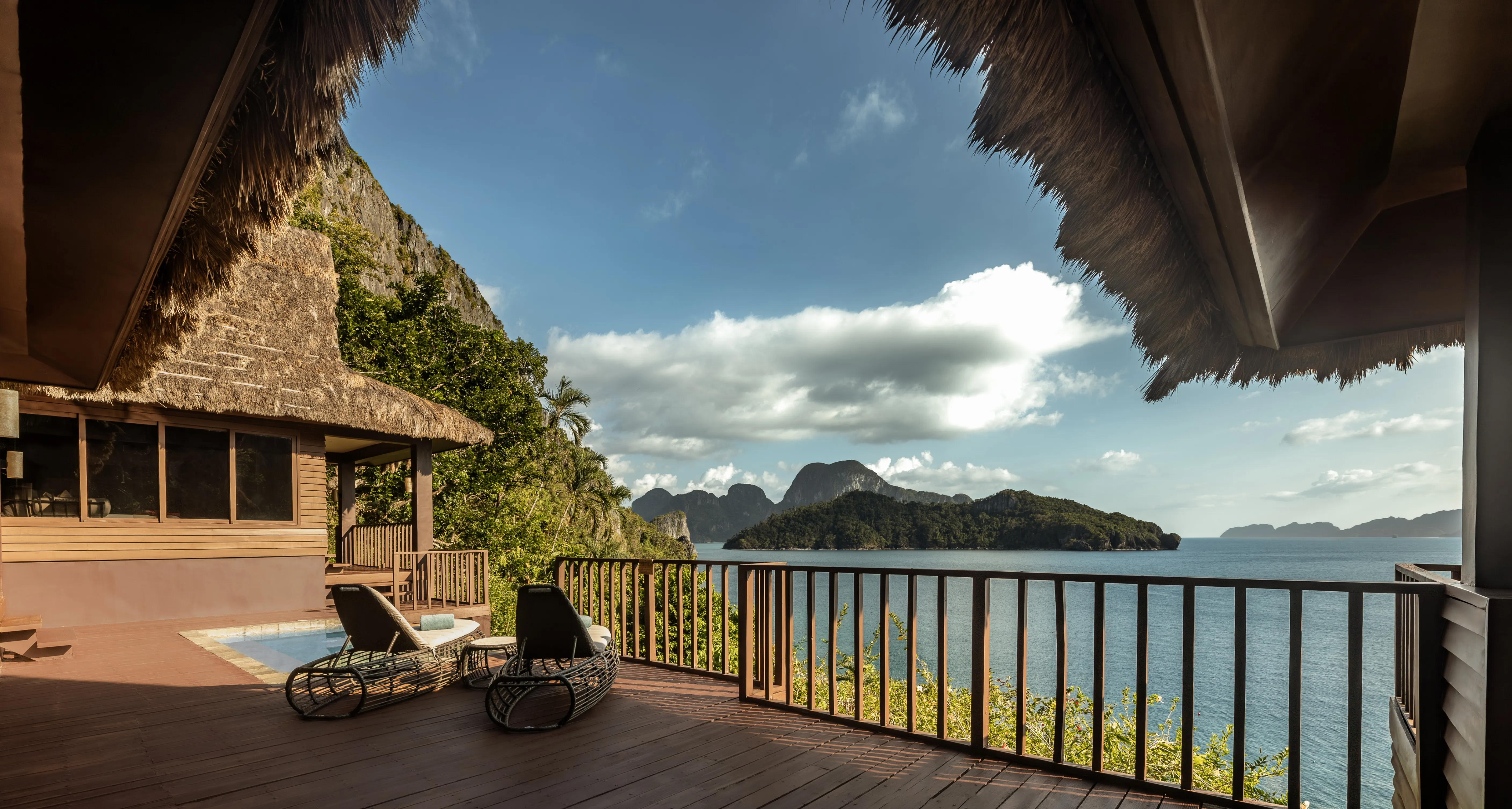
Cauayan Island, Bacuit Bay, El Nido, Philippines
Cauayan Island Resort
A privately owned island in Bacuit Bay, thirty stilt-raised villas set between limestone cliffs and open water, reachable only by boat.
From $500 per night
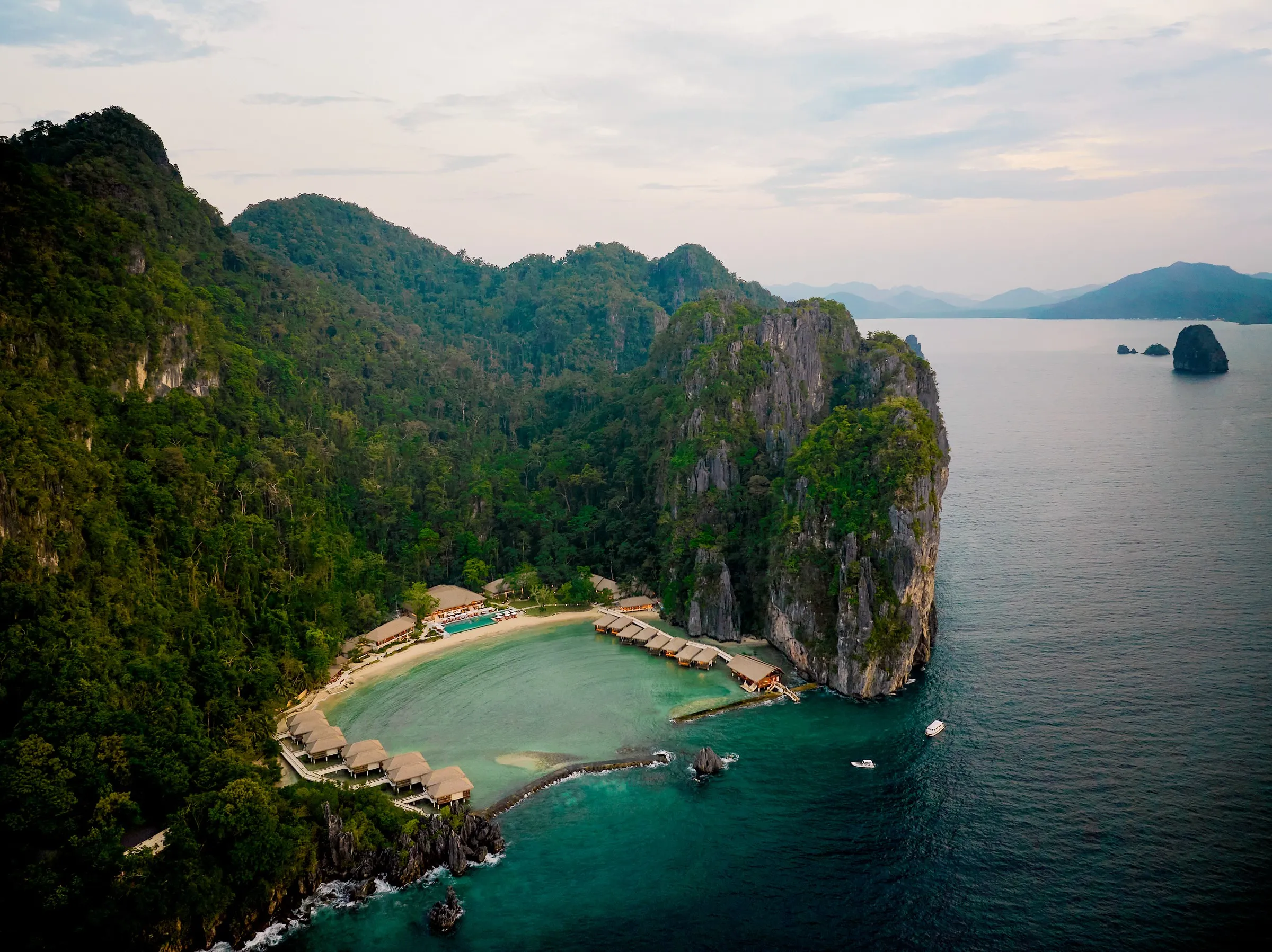
Lagen Island, Bacuit Bay, El Nido, Philippines
Lagen Island Resort
A four-hectare forest reserve wrapped around a lagoon, where the densest limestone forest in the Bacuit archipelago is the amenity, not the backdrop.
From $650 per night