Dimakya Island, Busuanga, Coron, Philippines
Discovery Coron
A nineteen-hectare private island off northern Busuanga, diving Coron's Japanese wrecks by day and disconnecting from everything else after dark.
- Rates from
- From $260 per night
- Nearest airport
- Francisco B. Reyes Airport, Busuanga (USU)
- Transfer
- About 1-1.5hr total: a 15-20min drive from the airport to Decalachao port, then a 30-45min boat crossing to the island
- Best months
- December to May, Palawan's dry season, with December to February bringing the calmest crossings and clearest water
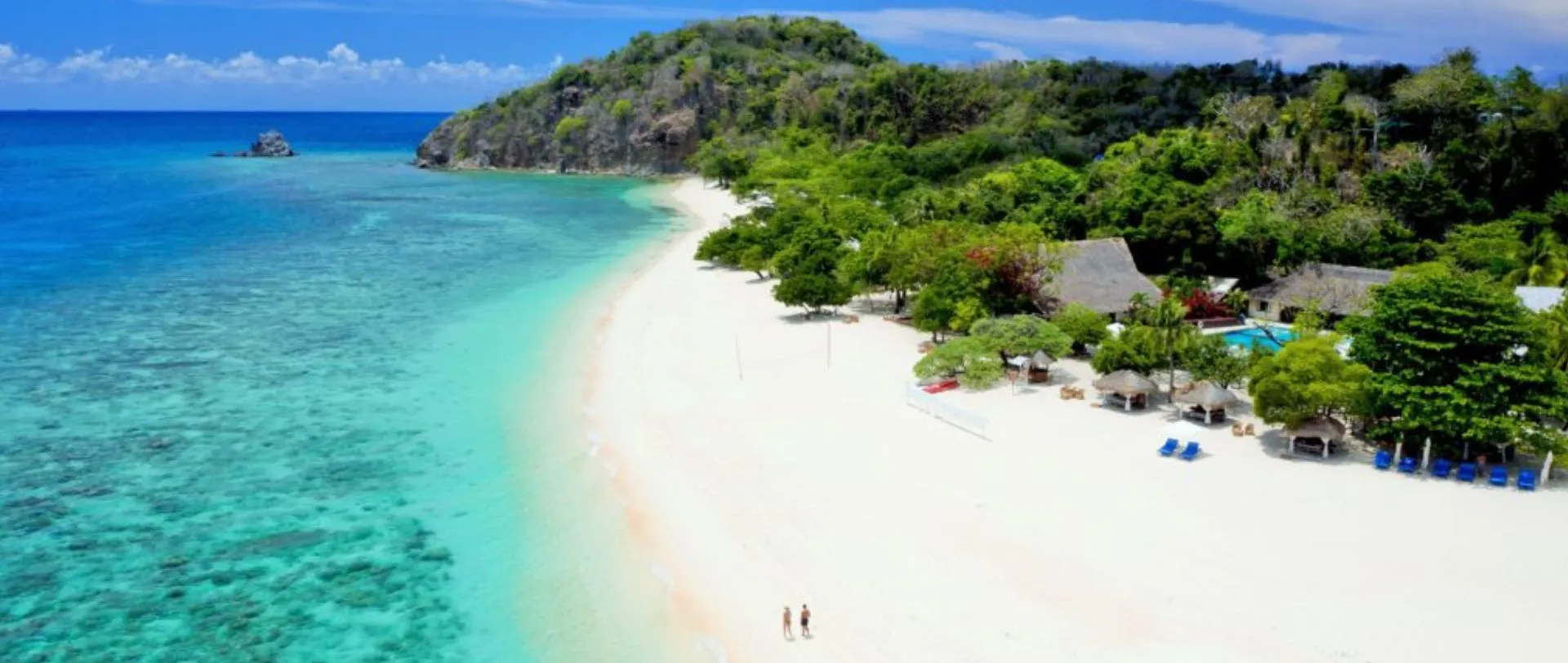
Dimakya Island sits off the northern tip of Busuanga, a nineteen-hectare scrap of white sand and tropical forest that has operated as a private resort island since 1989, longer than almost anywhere else in this corner of Palawan. It opened as Club Paradise, founded by German entrepreneur Jørgen Varnke at a time when reaching Coron meant chartering a flight, and it spent the following decades as one of the region’s better-known dive resorts under its original operator, the German-Filipino company Euro-Pacific Resorts. In 2013, Discovery World Corporation bought the property, and in November 2024 the resort dropped the Club Paradise name entirely, rebranding as Discovery Coron alongside a group-wide overhaul that also renamed sister property Discovery Shores Boracay to Discovery Boracay.
The rebrand changed the name and, gradually, the finish, new restaurants, refreshed rooms, a new spa identity, but not the island’s underlying appeal. Discovery Coron remains a resort built for water: a protected house reef immediately offshore, a cluster of Japanese WWII wrecks within boat range, and Coron town’s limestone lake circuit, Kayangan, Barracuda, Twin Lagoon, a full-day excursion away. It is a private-island stay in the most literal sense, guests occupy the entire island alongside resort staff, with the mainland’s noise, traffic and vendor stalls left behind at the jetty.
Why It Stands Out
Coron’s tourism economy runs almost entirely on day trips out of Coron town, fleets of outrigger bangkas ferrying visitors from mainland guesthouses out to Kayangan Lake and the wreck sites and back before dark. Discovery Coron inverts that arrangement: rather than staying in town and commuting to the water, guests stay on the water, on an island with its own house reef, its own beach, and its own dive operation, and treat Coron town’s attractions as an excursion from a base that is already surrounded by good diving and clear water.
That distinction matters most for the resort’s long institutional memory of diving. Club Paradise Divers, the resort’s in-house dive centre, has operated continuously through the property’s various ownership changes, and the surrounding house reef has been protected for well over a decade, giving it a density of fish life and macro subjects that newer, more heavily trafficked sites around Coron town can struggle to match. Layered onto that diving pedigree is a genuinely long operating history: few resorts in this part of Palawan have been welcoming guests since 1989, and the island’s infrastructure, jetty, dive shop, decades of accumulated local staff knowledge, reflects it.
Architecture
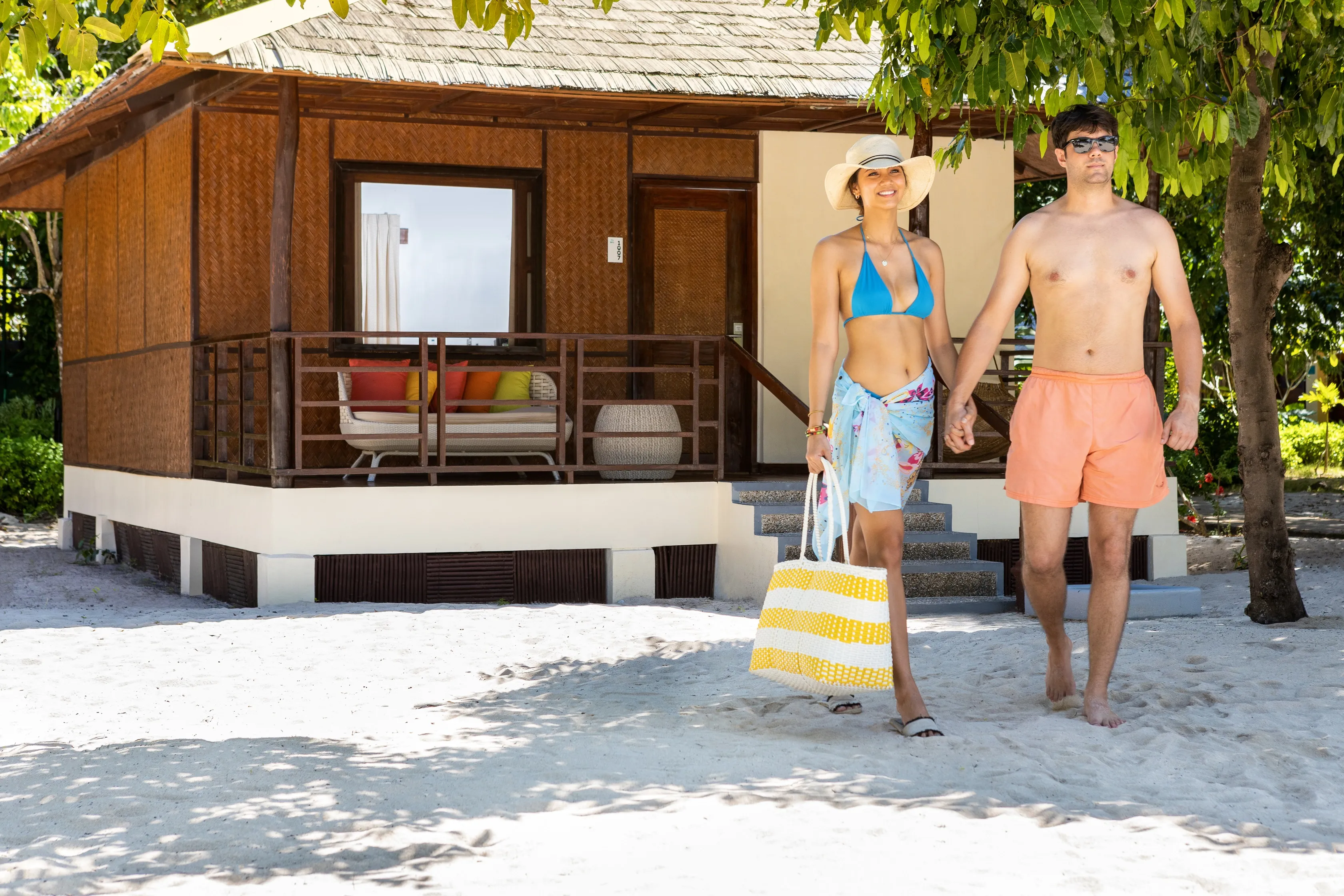
The resort’s built environment favours low-rise, thatched-roof cottages and villas spread along the island’s beach frontage and set back into its tropical interior, in keeping with a long-running regional style rather than a recent architectural statement. Sunset Villas, the resort’s original cottage category, sit as single detached units directly on the western shore, while the newer Sunrise Villas are built as duplex structures facing the sunrise side of the island. A multi-storey Garden Suite and a beachfront Oceanview Suite category round out the built footprint, all kept low to the ground and threaded through the island’s palm cover rather than cleared land.
As part of the Discovery rebrand, the group has been renovating and adding to the property incrementally, including a new Filipino-focused restaurant, Sinag, built out during 2024, rather than undertaking a single wholesale redevelopment. The result is a resort whose bones are decades old but whose finishes, particularly in dining and spa spaces, are considerably newer than the buildings around them.
Interior Design
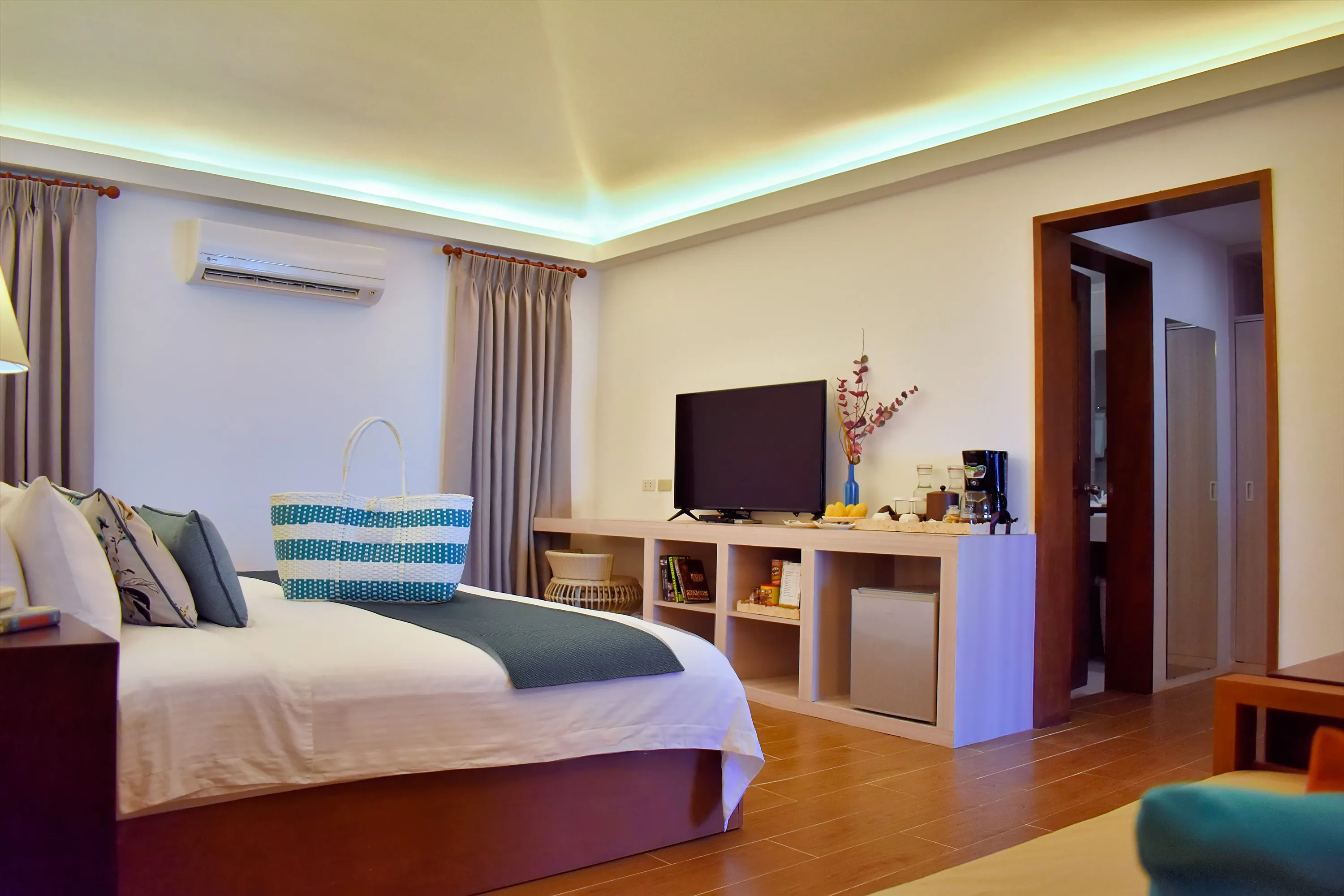
Room interiors lean into natural, warm materials consistent with the resort’s long Palawan history: timber panelling, woven textiles, and rattan furnishings rather than a glossier, more contemporary luxury vocabulary. Higher-tier villas add walk-in closets, Nespresso machines, premium linens and bathrobes, and locally aligned bath amenities, SOAK plant-based toiletries and MAGWAI reef-safe sunscreen among them, that tie the in-room experience to the resort’s sustainability positioning rather than treating it as a separate marketing line.
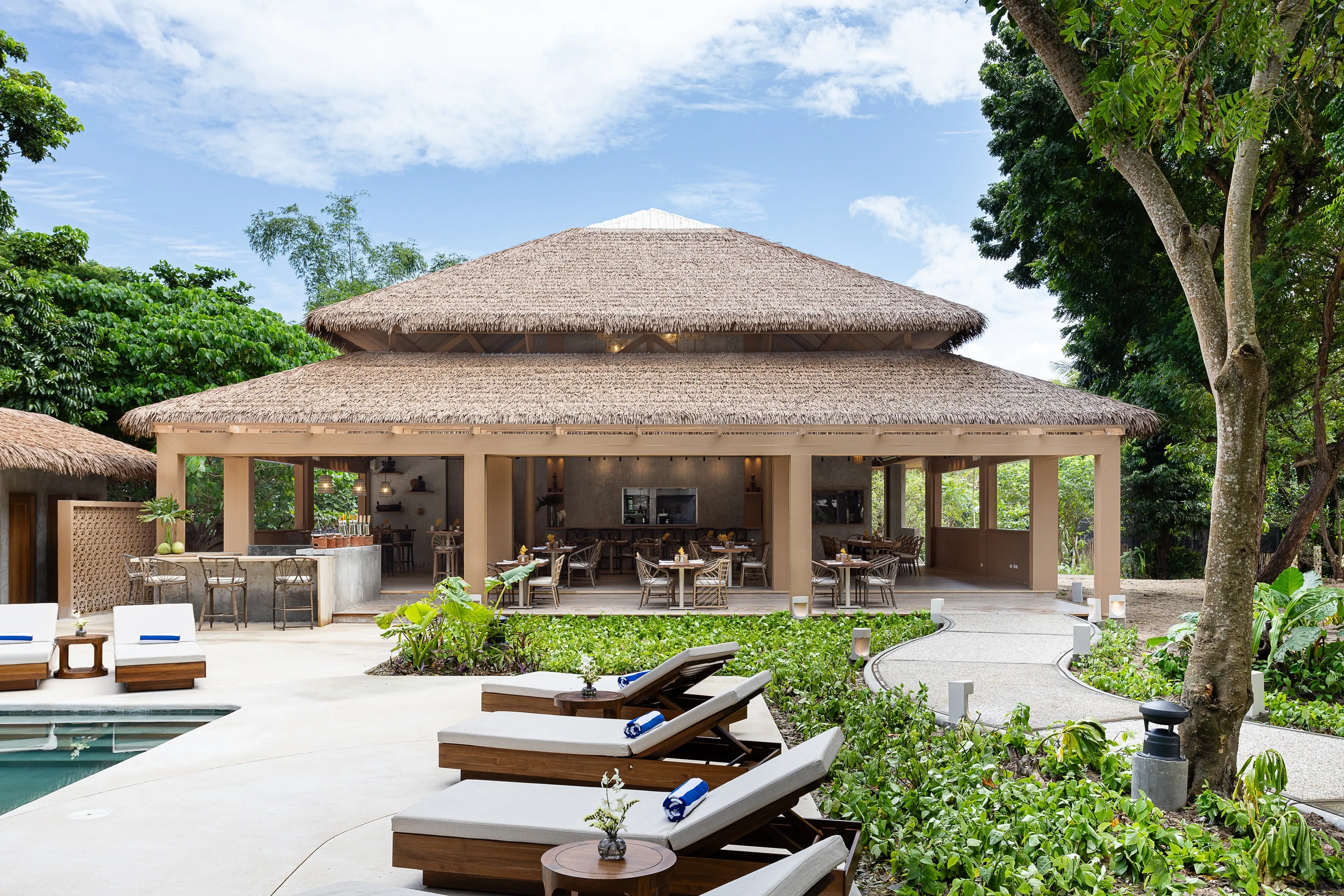
Public spaces follow a similar register: open-air, naturally ventilated restaurant and bar structures with thatched or timber-framed roofs, designed to keep sightlines toward the beach and water rather than enclosing guests in air-conditioned interiors. It is a look built for a tropical dive resort rather than a design-forward city property, unpretentious and functional over showy.
Atmosphere
Discovery Coron’s pace is set by tide charts and dive schedules rather than a resort activities board. Mornings tend to start early for departing dive boats and island-hopping excursions; afternoons settle into pool and beach time; and because the island has no town, no traffic and no outside visitors, evenings are genuinely quiet, restaurant terraces, bar stools, and the sound of water against the shore. Guests share the island only with each other and with staff, a meaningful contrast to Coron town’s harbour, which fills daily with day-trip boats heading out to the same lakes and wrecks this resort’s guests reach by private excursion.
The resort’s own service framing, “Service That’s All Heart,” with staff referred to internally as Guest Experience Makers, points to a hospitality style built on familiarity and warmth rather than formality, in keeping with a property that has employed a large share of its staff from within Palawan province for decades.
Rooms and Suites
Discovery Coron holds 74 keys across four categories. The Sunset Villas, the original cottage category on the island’s western shore, range from a 20-square-metre Standard through a 34-square-metre Deluxe to a 60-square-metre Premier, all single detached units with private verandas. The Sunrise Villas, duplex cottages facing east toward Malpagalen Island, run from 35-square-metre Standard and Deluxe villas up to a 46-square-metre Premier with a king bed and day bed, each with hammock verandas and sea views.
The Garden Suite is a multi-storey unit built around a 27-square-metre air-conditioned bedroom with a more minimalist layout, while the Oceanview Suite sits directly on the beachfront at roughly 40 square metres. Across categories, rooms include air conditioning, Smart TVs, Wi-Fi, minibars and safes, with higher categories adding Nespresso machines, walk-in closets and turndown service. The overall room count and spread, modest by comparison with some newer Palawan resorts, keeps the island from feeling crowded even at full occupancy.
Dining
Two principal restaurants anchor the resort’s food programme. Firefish Restaurant serves Pan-Asian cuisine, drawing on the wider region’s cooking traditions rather than a narrowly Filipino or Western menu, while Sinag, a newer addition built out during the 2024 rebrand, focuses on Filipino dishes and regional ingredients. Three bar venues, Sand Bar, Dugong Bar and Shack Bar, extend the drinking and casual dining options across different parts of the island, from beachfront sundowners to more social evening spots.
The kitchen’s positioning leans on local and regional sourcing where possible, part of a broader set of community food initiatives the resort runs with Palawan farmers, though as with most resort dining programmes, guests should expect a genuinely local menu built around what the surrounding waters and province can supply rather than an imported, resort-generic spread.
Spa and Wellness
Glow Spa is the resort’s dedicated wellness facility, offering aromatherapy and Ayurvedic-influenced treatments, facials, body treatments and a hot tub. Treatment offerings have expanded as part of the post-rebrand refresh, consistent with the wider group’s investment in upgrading spa and wellness facilities across its portfolio. The spa complements rather than dominates the resort’s identity here: guests come to Discovery Coron primarily for diving and island seclusion, and the spa functions as a rest-day option between water activities rather than the central draw.
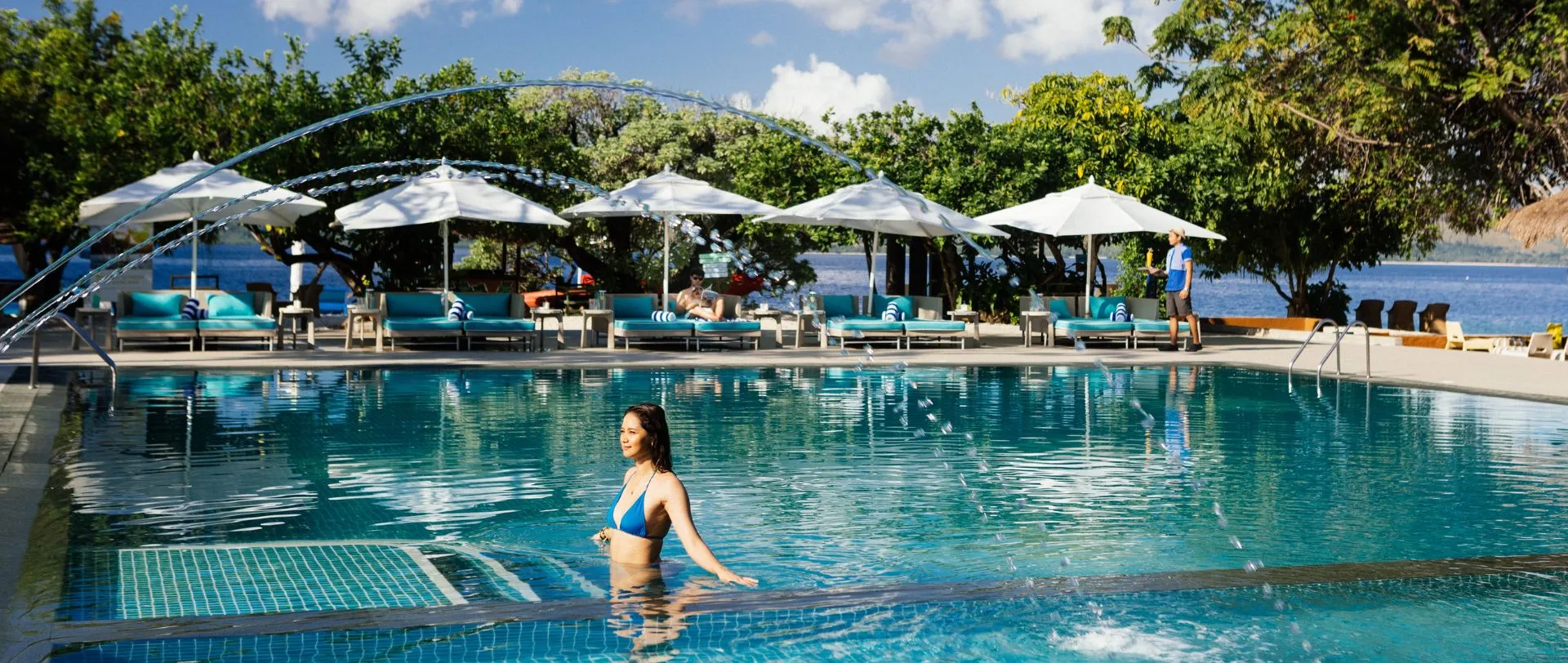
A separate fitness facility rounds out the wellness offering, alongside the resort’s pools, an adult pool and a dedicated pool for children, giving guests options beyond the sea itself.
Experiences
Diving is the resort’s signature activity, run through its long-established in-house operation, Club Paradise Divers. The island’s protected house reef, maintained for well over a decade, sits directly offshore and offers healthy fish life and macro subjects without needing a boat. Further afield, Coron Bay’s cluster of roughly a dozen Japanese naval vessels sunk during a US air raid in 1944 remain one of the world’s best-known wreck-diving destinations, with sites like the Kyokuzan Maru around half an hour away by boat; the resort arranges trips across the full range of wrecks and reef sites regardless of experience level.
Beyond diving, the resort runs full-day Coron Island tours, typically departing around 7am and returning by late afternoon, covering Kayangan Lake, often cited as one of the cleanest lakes in the Philippines, Twin Lagoon’s enclosed and open-water swim, Barracuda Lake’s thermocline dive, snorkelling at Siete Pecados, a stop at Maquinit Hot Spring, and a visit to Coron town itself. Shorter half-day excursions to the nearby private islands of Malpagalen and Diatoy offer a quieter, beach-focused alternative for guests who want time on sand without the full lake-and-lagoon circuit. On the island itself, a hiking trail, kids’ room, entertainment room and picnic area round out the activity list for guests not spending the day on the water.
Who It Is For
Discovery Coron suits divers and snorkellers first: the combination of an in-house dive centre, a protected house reef, and proximity to Coron Bay’s wreck sites is difficult to match from a mainland hotel. It also suits couples and families looking for a genuinely private island experience without the isolation of the more remote, ultra-luxury properties further into the Bacuit archipelago, the resort’s room mix, kids’ room and family-friendly amenities make it more accessible on that front than some of its higher-end island peers. It is a less natural fit for travellers who want a design-forward, architecturally striking resort or an extensive multi-restaurant dining programme; the appeal here is water and access rather than spectacle.
Best Time to Visit
Palawan’s dry season runs roughly from December to May, and it is the most reliable window for calm boat crossings between Busuanga’s port and the island, along with the clearest water for diving and snorkelling. December through February brings the most consistent conditions and the busiest resort calendar, while the shoulder months of March through May offer similar weather with a somewhat higher chance of afternoon heat and haze. The wetter months from June through November can still deliver good stretches of diving weather, but guests should expect a higher chance of rain and rougher water on the boat transfer, and should build flexibility into travel plans booked in that window.
How to Get There
Discovery Coron is reached exclusively by air and boat; there is no road connection to Dimakya Island. Guests fly into Francisco B. Reyes Airport in Busuanga (USU), most commonly connecting through Manila, then take a road transfer of roughly 15 to 20 minutes to Decalachao port, followed by a boat crossing of about 30 to 45 minutes to the resort’s own jetty. Total door-to-door transfer time runs approximately an hour to an hour and a half depending on tide and sea conditions, and the resort coordinates both legs for arriving guests. Because the boat leg is weather-dependent, travellers are advised to avoid booking tight onward connections on departure day.
Nearby Experiences
Coron town, on the Palawan mainland, sits a further boat trip from the resort and is the gateway to the region’s headline attractions: Kayangan Lake, Twin Lagoon and Barracuda Lake within Coron Island’s limestone interior, and the cluster of Japanese WWII shipwrecks scattered through Coron Bay that draw wreck divers from around the world. The resort runs organised full-day excursions into this circuit rather than leaving guests to arrange transport independently, alongside shorter trips to the private islands of Malpagalen and Diatoy for guests who want a quieter half-day on the sand. Maquinit Hot Spring, one of the few saltwater hot springs in the Philippines, is typically folded into the full-day Coron Island tour as a late-afternoon stop.
Things to Know Before Booking
Discovery Coron is a genuine island resort: there is no town, shop or bank on Dimakya Island itself, so guests should arrive with cash and any essentials already sorted. Because access depends on a boat crossing tied to flight schedules, arrival and departure transfers should be booked with some buffer rather than as tight same-day connections, particularly outside the December-to-May dry season. Guests wanting to see Coron town’s lake and lagoon circuit should factor in a full day for that excursion rather than treating it as a quick add-on, since the round trip from the resort runs the better part of a day. As with any resort that has changed ownership and rebranded in recent years, guests booking through third-party sites may still see the property listed under its former name, Club Paradise Palawan or Club Paradise Resort; it is the same property and location.
Sustainability
Discovery Coron runs an EcoConserve programme organised around internal staff committees rather than a single outsourced initiative: GARMA focuses on waste management and recycling, repurposing materials like glass bottles into water containers and used plastic containers into planters, while FEW Champs targets fuel, energy and water conservation, including planning boat trips to reduce fuel consumption and choosing energy-efficient appliances for guest rooms. Guest-facing measures include reef-safe sunscreen and plant-based toiletries in rooms, the elimination of single-use plastics in favour of glass and biodegradable alternatives, and coral propagation work on the house reef aimed at protecting seagrass beds and resident Napoleon wrasse.
The resort partners with the Philippine Department of Environment and Natural Resources, the Palawan Council for Sustainable Development, the United Nations Environment Programme and Green Fins, and has received the ASEAN Green Hotel award twice as well as a Green Destinations Good Travel Seal. Community programmes extend the sustainability framing beyond the environment: roughly seventy percent of staff are sourced from within Palawan, a “Bili ng Ani” programme buys produce directly from local farmers, and a scholarship initiative running since 2013 has supported top-performing students across eight schools in four barangays near the resort. As with any resort-reported sustainability programme, an independent third-party audit of the property’s full environmental footprint is not publicly available, so this guide describes only the specific, documented initiatives rather than extending them into a broader claim.
Practical Information
Discovery Coron holds 74 rooms and suites across four categories, Sunset Villas, Sunrise Villas, Garden Suite and Oceanview Suite, on a nineteen-hectare private island. Check-in is from 2:00pm and check-out by 12:00pm, with early or late arrangements available on request, subject to availability. The resort is reached via Francisco B. Reyes Airport in Busuanga (USU) followed by a combined road and boat transfer of roughly an hour to an hour and a half, and it operates two main restaurants, Firefish and Sinag, alongside three bar venues and the in-house Club Paradise Divers dive centre. The resort has held various industry recognitions in recent years, including Travel + Leisure’s Luxury Awards Asia Pacific and Haute Grandeur’s Best Dive Resort in Asia, reflecting both its diving pedigree and its sustainability programme.
Editorial Conclusion
Discovery Coron’s case rests on a straightforward proposition: a genuine private island, with nearly four decades of diving history behind it, positioned within reach of both Coron Bay’s wreck sites and Coron town’s limestone lake circuit, without requiring guests to actually stay in town. The 2024 rebrand from Club Paradise Palawan brought newer dining and spa finishes to a property whose real asset was never its architecture, its long-protected house reef, in-house dive operation and decades of institutional memory in this specific stretch of water. For divers and travellers who want an island base for exploring northern Palawan’s wrecks and lakes rather than a design-led luxury statement, it remains one of the more established options in the region.
In pictures
On the map
Dimakya Island, Busuanga, Coron, Philippines
Questions
Frequently asked
Is Discovery Coron the same resort as Club Paradise Palawan?
Yes. The resort operated for decades as Club Paradise Resort, founded in 1989 by German entrepreneur Jørgen Varnke on Dimakya Island, at a time when Coron was reachable only by chartered flight. Discovery World Corporation acquired the property from its original operator, Euro-Pacific Resorts, in 2013, and rebranded it from Club Paradise Palawan to Discovery Coron in November 2024, alongside a group-wide rebrand that also renamed sister property Discovery Shores Boracay to Discovery Boracay.
How do guests get to Discovery Coron, and is it actually in Coron town?
No, the resort is not in Coron town itself; it occupies the whole of Dimakya Island off the northern coast of Busuanga Island, a separate landmass from Coron Island. Guests fly into Francisco B. Reyes Airport in Busuanga (USU), typically connecting through Manila, then take a 15-to-20-minute road transfer to Decalachao port followed by a 30-to-45-minute boat crossing to the island, arranged by the resort. The town of Coron and its famous limestone lakes are a further boat trip away from the resort itself, reached on organised excursions rather than on the initial transfer.
What diving does Discovery Coron offer, and how far are the WWII wrecks?
The resort's in-house dive operation, Club Paradise Divers, runs trips for both first-time and highly experienced divers, with the island's protected house reef available directly offshore. Coron Bay's cluster of roughly a dozen Japanese naval wrecks sunk during a US air raid in 1944 are reachable by boat, with the Kyokuzan Maru among the nearer sites, around half an hour from the resort. Full-day excursions into Coron town's Kayangan Lake, Twin Lagoon, Barracuda Lake and Siete Pecados circuit can also be arranged, typically departing the resort around 7am and returning by late afternoon.
What sustainability programmes does the resort run?
Discovery Coron operates an EcoConserve programme built around internal staff committees: GARMA handles waste management and recycling, repurposing items like wine bottles and old tires, while FEW Champs focuses on fuel, energy and water conservation, including planning boat trips to reduce fuel use. The resort sources reef-safe sunscreen and plant-based toiletries for guest rooms, runs coral propagation work on its house reef, and partners with the Philippine Department of Environment and Natural Resources, the Palawan Council for Sustainable Development, and Green Fins. It has twice received the ASEAN Green Hotel award and holds a Green Destinations Good Travel Seal. Community programmes include a scholarship scheme for local students running since 2013 and initiatives to buy produce directly from Palawan farmers.
Same destination
More hotel guides in Philippines
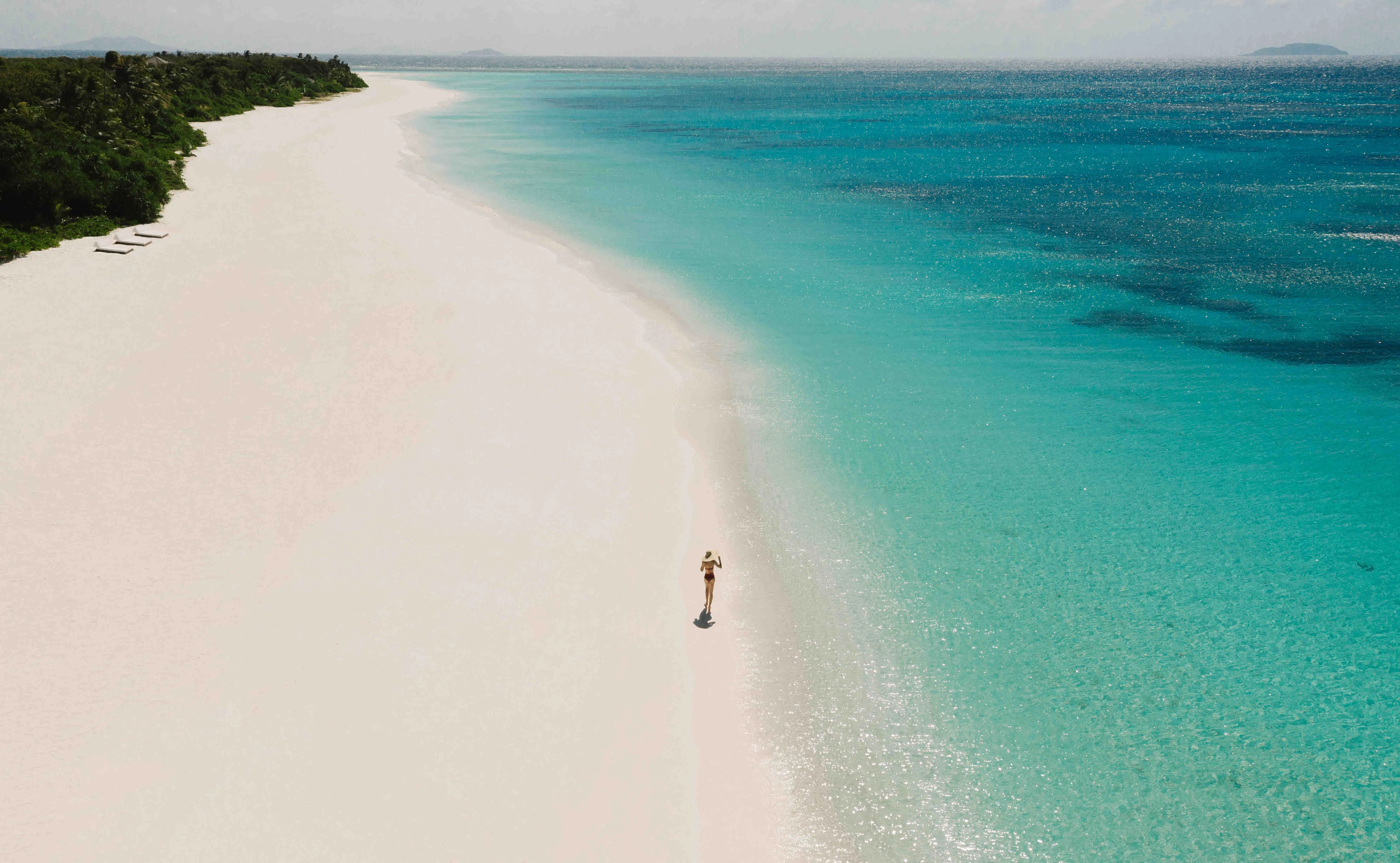
Pamalican Island, Cuyo Islands, Philippines
Amanpulo
A private island in the Cuyo archipelago, reachable only by Aman's own aircraft, built around bahay kubo-inspired casitas set beneath forty-year-old coconut palms.
From $1,900 per night
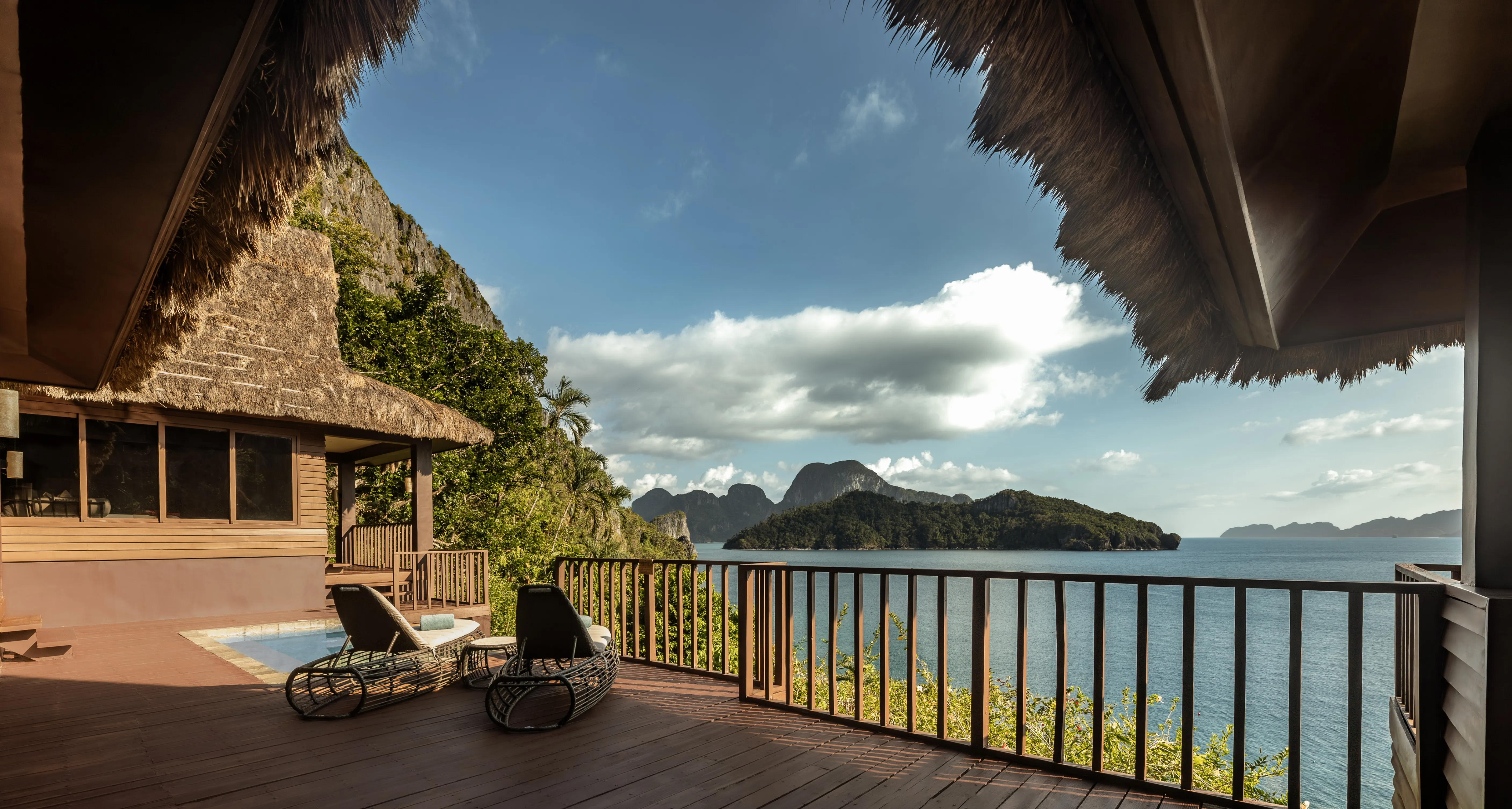
Cauayan Island, Bacuit Bay, El Nido, Philippines
Cauayan Island Resort
A privately owned island in Bacuit Bay, thirty stilt-raised villas set between limestone cliffs and open water, reachable only by boat.
From $500 per night
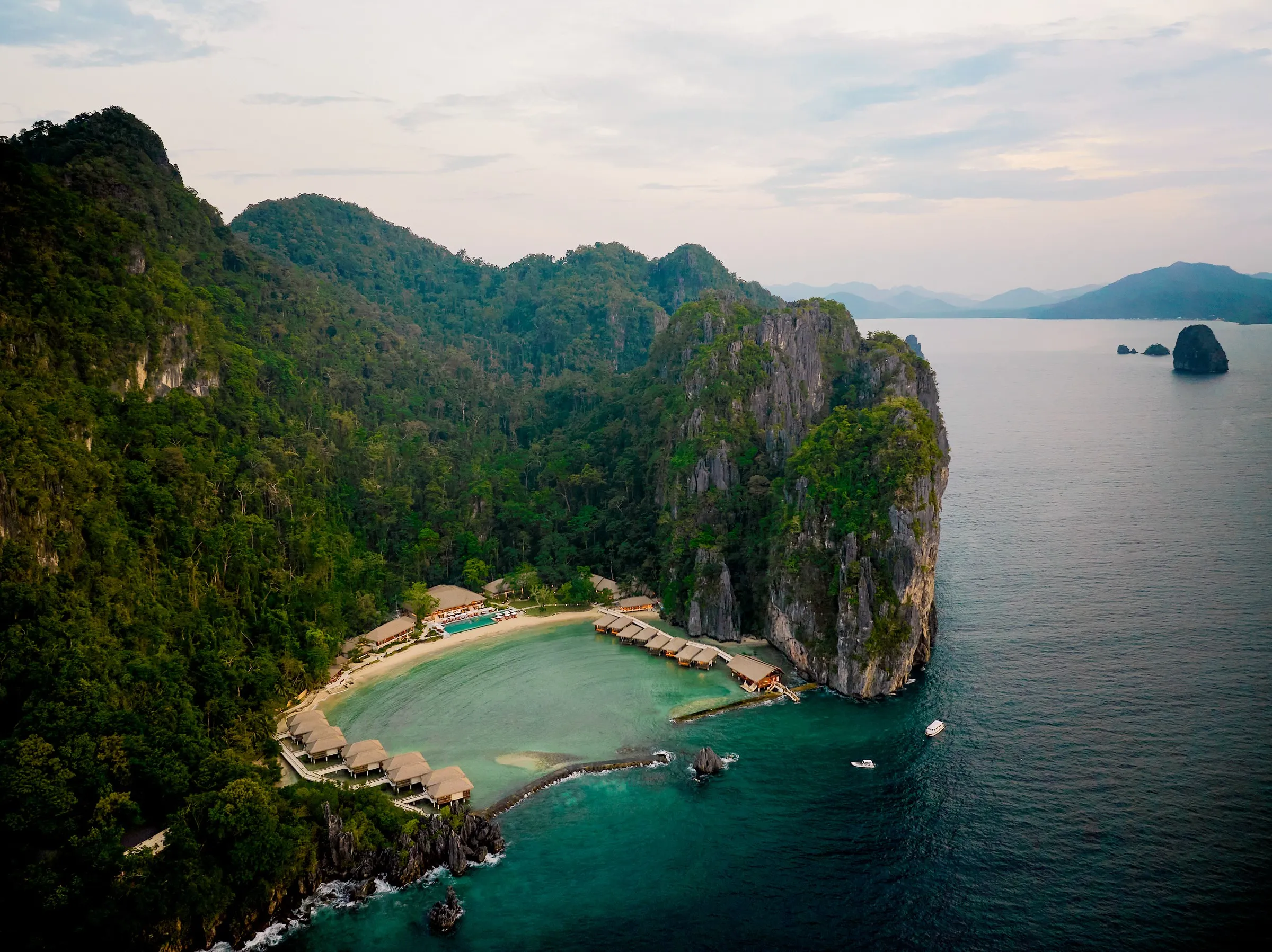
Lagen Island, Bacuit Bay, El Nido, Philippines
Lagen Island Resort
A four-hectare forest reserve wrapped around a lagoon, where the densest limestone forest in the Bacuit archipelago is the amenity, not the backdrop.
From $650 per night