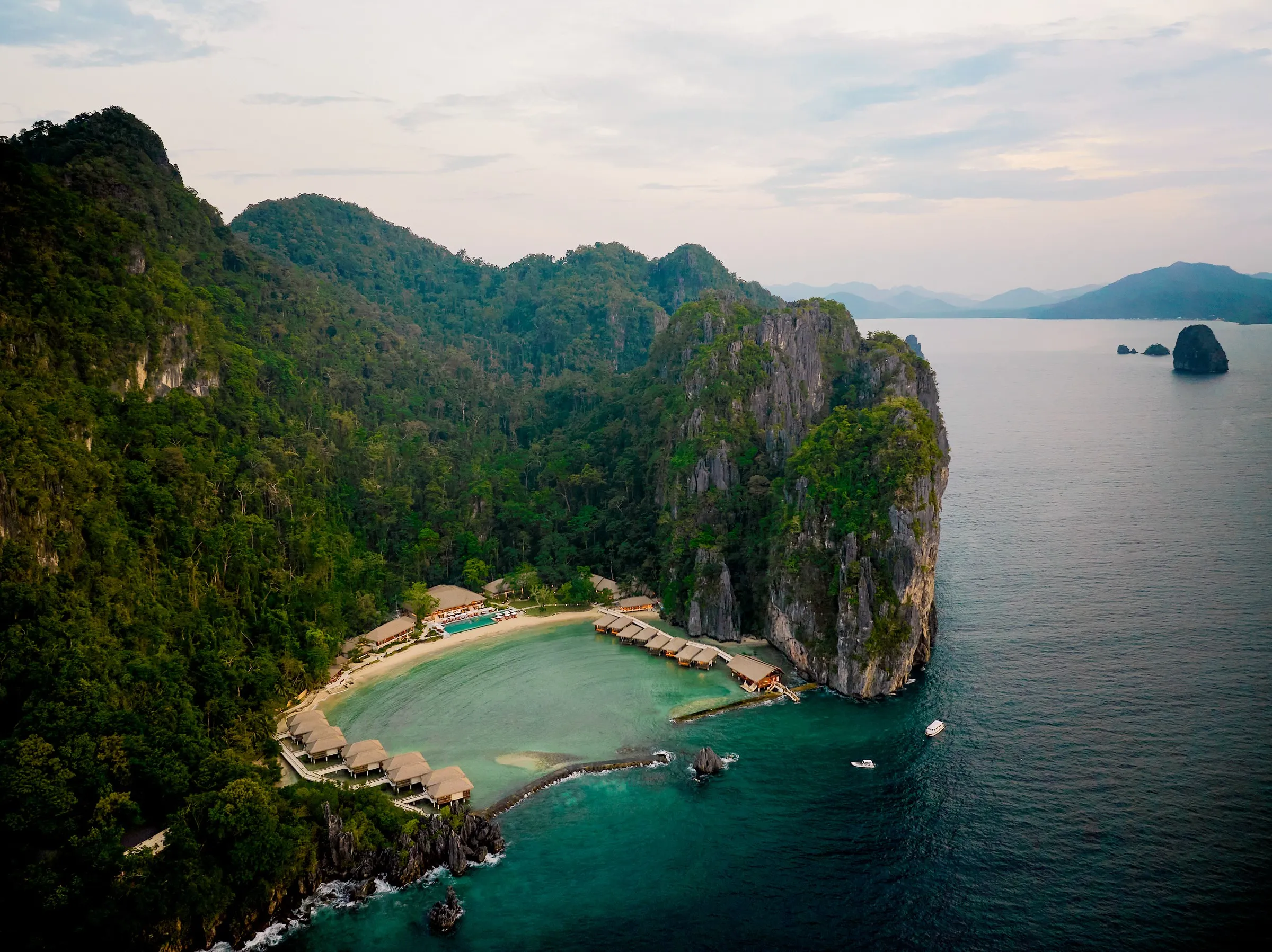
Lagen Island, Bacuit Bay, El Nido, Philippines
Lagen Island Resort
A four-hectare forest reserve wrapped around a lagoon, where the densest limestone forest in the Bacuit archipelago is the amenity, not the backdrop.
- Rates from
- From $650 per night
- Nearest airport
- El Nido (Lio) Airport (ENI)
- Transfer
- 30-50min by boat, tide-dependent
- Best months
- December to May, Palawan's dry season, with December to February bringing the calmest seas and clearest skies
Lagen Island sits in the northern reach of Bacuit Bay, a scrap of limestone and rainforest small enough to walk end to end and yet dense enough, ecologically, to host more than a hundred recorded bird species within its boundary. It was the first island El Nido Resorts developed, opening in 1998, and it remains the group’s clearest statement of intent: rather than clearing land to build a resort, the operator built a resort that works around the land. A four-hectare forest, protected within the wider El Nido-Taytay Managed Resource Protected Area, still covers most of the island’s interior, and the fifty-one rooms and cottages are arranged along its edges rather than through its middle.
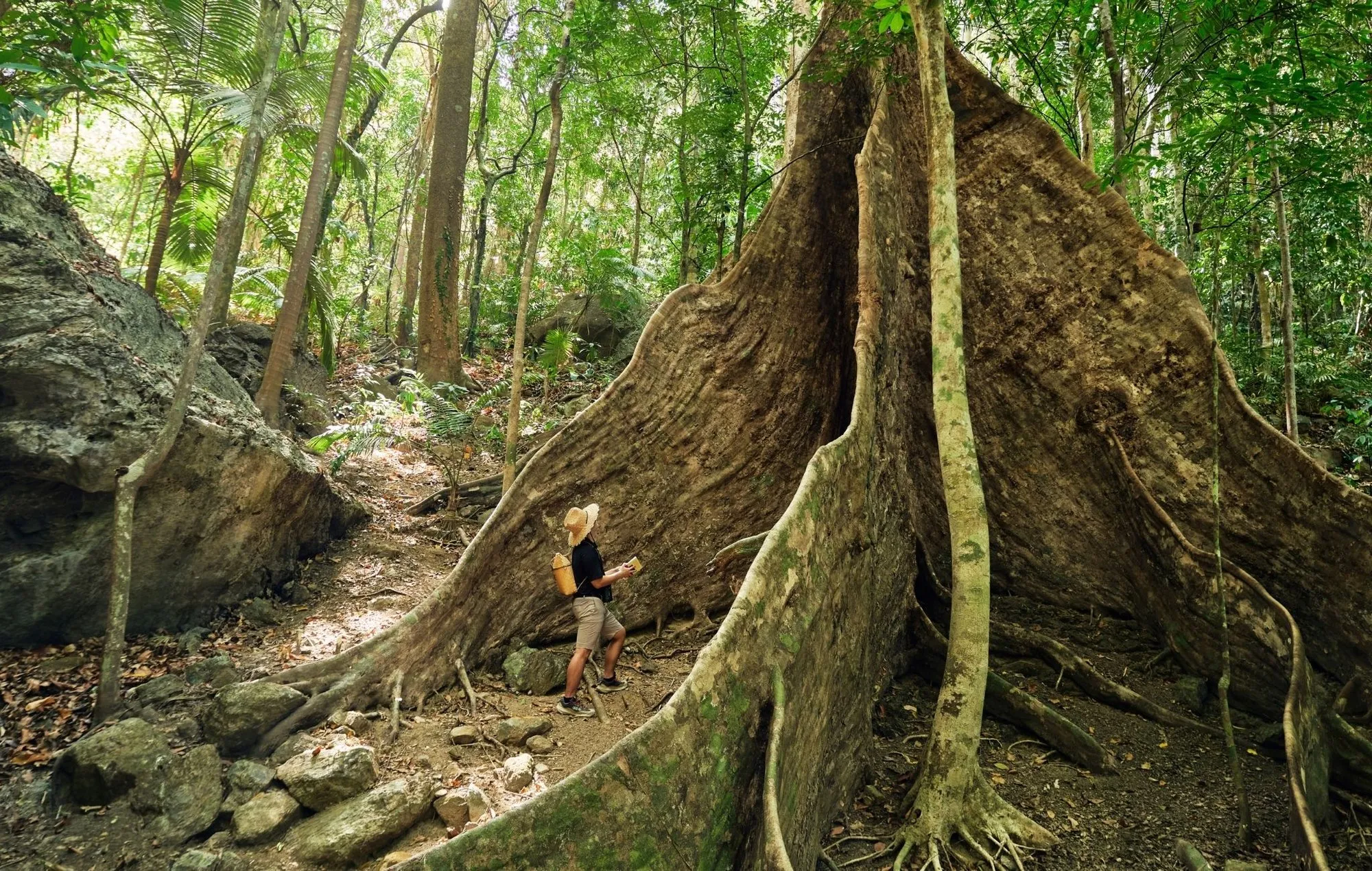
That arrangement is the whole premise of a stay here. Guests wake to birdsong rather than beach-club music, walk boardwalks raised above mangrove and lagoon rather than paved paths, and are as likely to notice a water monitor lizard sunning itself near a walkway as another guest. Lagen has never tried to be the loudest or most photographed of the four El Nido Resorts islands. It has instead built a reputation, among repeat visitors and conservation-minded travellers, as the one where the forest is not scenery but subject.
Why It Stands Out
Most private-island resorts treat their surrounding nature as a view to be maximised: glass walls, infinity edges, unobstructed sightlines to the water. Lagen inverts that logic. Its defining feature is what naturalists and birders have called the densest forest-over-limestone in the region, and the resort’s layout, room design, and activity roster are all built to put that forest at the centre of the experience rather than at its margins. Where Miniloc, El Nido Resorts’ original lagoon property, is built for shallow-water ease and Pangulasian leans into a more conventional, higher-polish luxury register, Lagen’s identity is squarely ecological: a resort that functions, in effect, as a managed sanctuary for the birds, reptiles, and marine life that share the island with its guests.
This is not a marketing gloss layered onto an otherwise standard beach resort. The island sits inside a formally protected resource area, the operator runs an established programme of coastal clean-ups, turtle monitoring, and reef maintenance across Bacuit Bay, and a recent, extensive renovation of Lagen’s buildings was explicitly framed around opening the architecture toward the forest and limestone cliffs rather than away from them. For a guest, the result is a resort that reads less like an escape from the natural world and more like a considered, comfortable way of being let into it.
Architecture
Lagen’s built environment was substantially reimagined in a renovation led by the international design and architecture firm WATG, working across advisory, architecture, and interiors, with the project completed in 2026. The guiding idea was to organise the island’s structures around two natural conditions already present on Lagen: the sea and the forest. Buildings closest to the water, namely the water cottages built out on stilts and linked by boardwalk, were designed with cleaner, more contemporary lines suited to their open lagoon setting. Buildings set back against the tree line, the forest rooms and forest suites, were designed to sit closer to the rehabilitated greenery around them, with structures oriented to draw the canopy and limestone cliff face into view rather than screen it out.
Critically, the renovation retained and adapted much of the resort’s original architecture rather than demolishing and rebuilding from scratch, a decision made explicitly to reduce disruption to the surrounding forest and reef. Locally sourced materials and traditional Palawan construction techniques were used throughout, both to lower the project’s carbon footprint and to keep the buildings visually and materially connected to the region rather than importing a generic tropical-resort vocabulary. Even a practical detail like the spa’s flooring was elevated above ground level specifically to preserve the forest floor beneath it, a small but telling example of how conservation constraints shaped design decisions rather than being bolted on afterward.
Interior Design
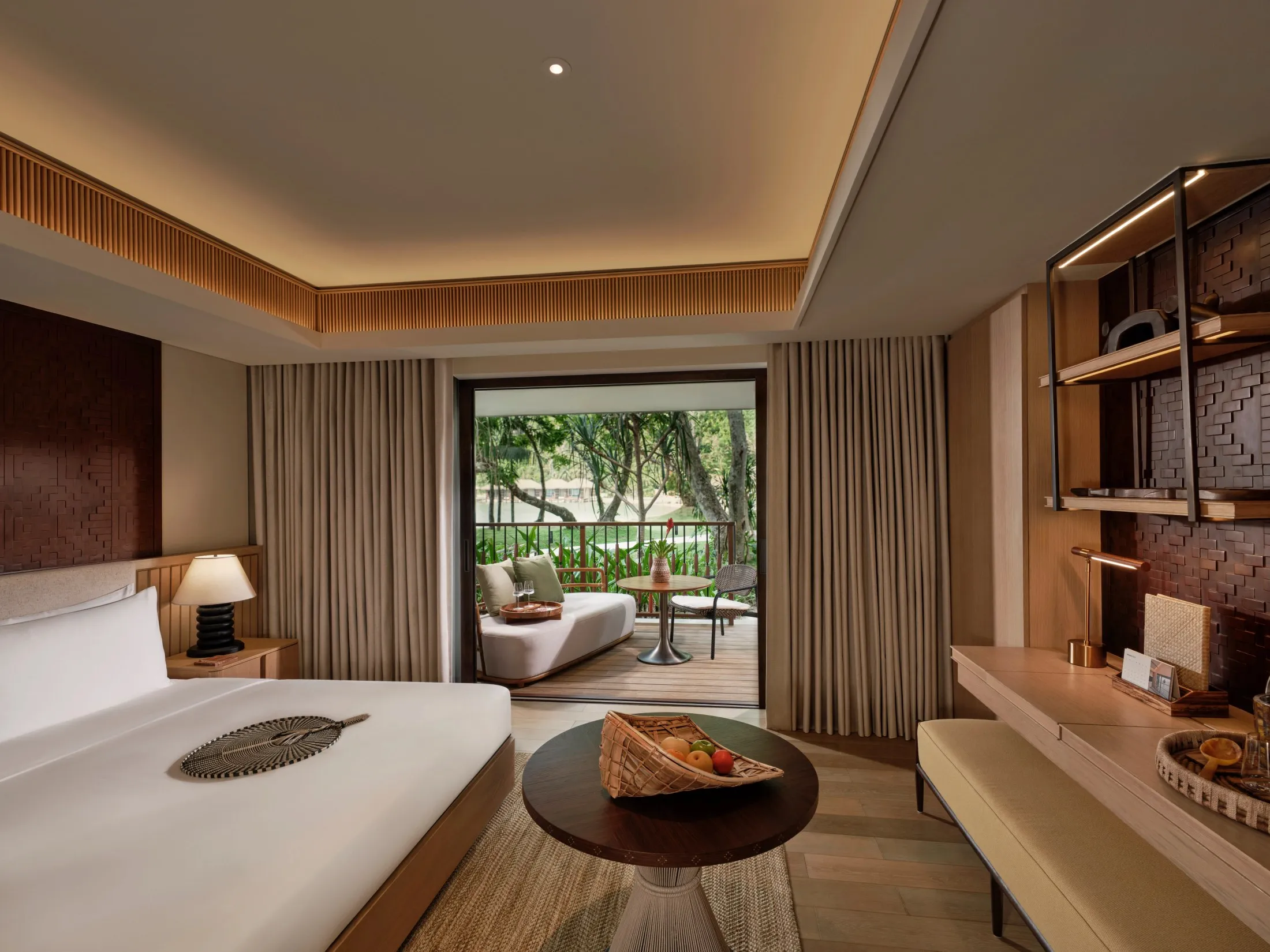
Inside, the design strategy follows the same sea-and-forest logic. The Water Villas favour a cooler, more graphic palette: clean lines, a restrained range of neutrals and blues, and low, sunken lounge seating designed to keep sightlines close to the water outside. The Forest Rooms and Forest Suites shift the register toward warmth and texture, with deep timber tones, greens drawn from the surrounding canopy, and furnishings that lean into weight and grain rather than the breezy lightness typical of beach-resort interiors elsewhere in the region.
Throughout, the interiors draw on indigenous Palawan craft traditions, tribal weaving and carving worked into furniture, architectural detailing, and the resort’s dining spaces. Repurposed narra wood, salvaged from the original structures, has been reworked into feature wall panelling rather than discarded, and terracotta pottery sourced from local tribal communities informs some of the resort’s decorative choices. Rope, wicker, and rattan weaving appear consistently across furnishings, reinforcing a material language that is specific to the region rather than a placeless idea of tropical luxury. The overall effect favours craft and material honesty over polish, in keeping with a property that positions its forest, not its finishes, as the primary asset.
Atmosphere
Lagen is quiet in a way that is deliberate rather than incidental. There is no single sprawling beach with rows of loungers; instead, the island’s social spine runs along a compact stretch of pool, bar, and open-air restaurant that sits between the water cottages, framed by dramatic limestone outcrops rising straight out of the lagoon. Evenings tend toward conversation over the terrace rail rather than organised entertainment, and the loudest sound after dark is as likely to come from the forest, insects, frogs, the occasional bird call, as from another guest.
That restraint is consistent with how the resort frames itself: a sanctuary first, an amenity-stacked resort second. Guests who want daily excursions, a busy activities desk, and constant staff interaction will find all of that available, but the island does not push it. Left alone, a guest at Lagen can spend an entire stay moving between room, forest trail, house reef, and dining terrace without ever feeling underserved, which is precisely the point.
Rooms and Suites
Lagen’s fifty-one accommodations are split across four categories, each tied to one of the island’s two defining conditions, forest or water. The twenty Forest Rooms, at roughly 52 square metres, sit at the edge of Napuro Forest with floor-to-ceiling windows, a private veranda, and a choice of a king bed or twin configuration; their timber-and-glass design keeps the tree canopy in constant view from inside the room. The Forest Deluxe category sits further into the jungle canopy itself, adding a more spacious bathroom and a private balcony angled toward unobstructed forest views.
At the top of the forest-facing categories sit the four Forest Suites, roughly 70 square metres, each with a Royal King bed, a separate living area, a soaking tub, and a private veranda; these are the island’s most spacious rooms and the ones most explicitly designed around the forest as a feature rather than a backdrop. On the water side, nine Beachfront Cottages sit directly on the sand with uninterrupted views over the bay, while eighteen Water Cottages are raised on stilts above the lagoon itself and connected to the main resort by a network of boardwalks, putting guests to sleep directly over the water they will snorkel the next morning.
Across every category, the design consistently favours natural materials, timber, rattan, woven textiles, over glossier, more generic luxury signifiers, and the room mix is deliberately weighted toward the forest categories, underlining how central that setting is to the resort’s identity.
Dining
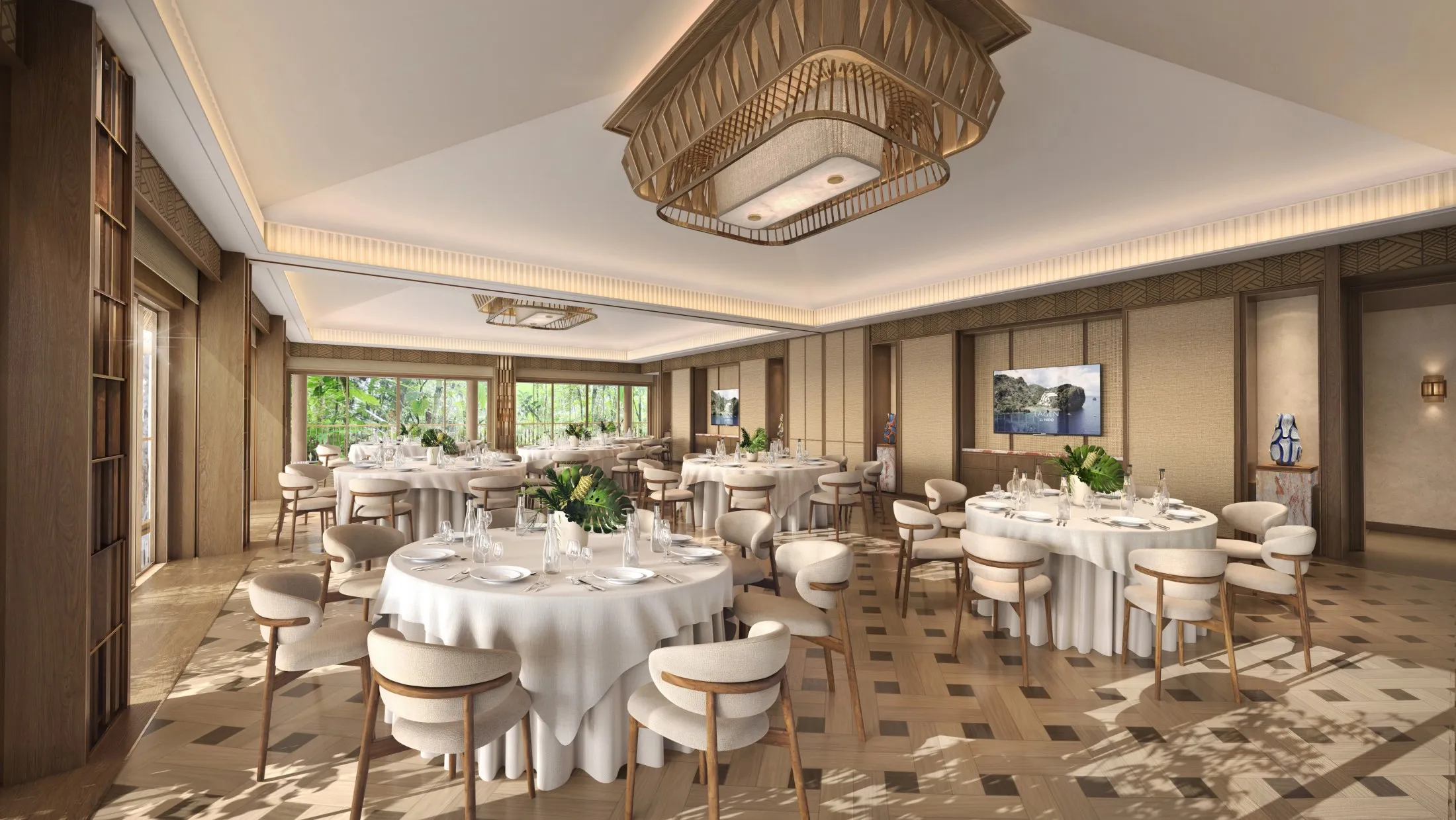
Dining on Lagen centres on the resort’s open-air Clubhouse, with both an air-conditioned indoor section and an alfresco terrace extending toward the water, serving a mix of international dishes and Filipino cooking built around fresh, largely local seafood and produce. The setting itself does much of the work: dinner is typically taken within sight of the lagoon and the forest treeline, with the day’s catch and regional ingredients forming the backbone of the kitchen’s approach rather than an imported, resort-generic menu.
As with the rest of El Nido Resorts’ portfolio, sourcing leans toward what the surrounding waters and the operator’s own supply relationships can provide, part of a broader effort across the group to keep its food operations aligned with the same sustainability principles that shape its building and conservation work. Guests should expect a single principal dining venue rather than a multi-restaurant resort complex, in keeping with Lagen’s smaller, more contained footprint relative to some of its regional peers.
Spa and Wellness
Lagen’s spa and gym facility was reworked as part of the island’s broader renovation, designed as a dedicated space for treatments, massage, and body therapies set within the resort’s forest surroundings. In a detail that captures the resort’s wider design philosophy, the spa’s flooring was raised above ground level specifically so construction would not disturb the forest floor beneath it, allowing the facility to sit within the tree cover rather than displacing it.
Treatments draw on the same restrained, natural-materials sensibility found throughout the resort’s interiors, with beachfront and forest-adjacent treatment spaces offering guests a choice of setting depending on whether they want sea air or shade. The wellness offering here is deliberately understated: this is not a resort built around an expansive spa village, but one where treatments are positioned as a complement to the forest and water experiences that define the stay.
Experiences
Lagen’s activity programme is built around its two natural assets, and both are treated with the same conservation-minded seriousness that shapes the rest of the resort. A guided forest hike, typically departing in the early morning, leads guests along trails cut through the island’s dense limestone forest, past resident water monitor lizards and toward a lookout over one of the coves on the far side of the island. Birdwatchers are especially well served: the island’s bird list runs past a hundred species, mixing endemics, seasonal migrants, and permanent residents, with the White-vented Shama and Common Emerald Dove among the more frequently sighted along the trail, and flycatchers turning up for the more patient observer.
In the water, the house reef immediately off the island offers snorkelling access to a healthy range of reef fish and marine life without the need for a boat, while the resort also runs excursions further into Bacuit Bay for diving, kayaking, and the lagoon and limestone-island circuits the archipelago is known for. Mangrove paddling trips and further birdwatching excursions extend the nature programming beyond the island itself. Across all of it, the throughline is consistent: Lagen positions its wildlife and habitat not as an incidental amenity but as the core reason to visit, and the activity roster is built to give guests direct, guided access to both forest and reef rather than treating either as background scenery.
Who It Is For
Lagen suits travellers who want a private-island stay with a genuine point of view rather than a generic tropical-luxury template. It rewards couples looking for quiet over spectacle, birdwatchers and naturalists drawn by a bird list few resorts anywhere can match, and divers or snorkellers keen to combine reef time with forest trails rather than choosing between them. It is less suited to travellers wanting a buzzing social scene, an extensive multi-restaurant dining programme, or the more overt design statement of some of its sister properties. Families are welcome, but the resort’s pace and programming lean toward calm engagement with nature rather than structured children’s activities, and travellers with very young children or specific entertainment expectations should check current policies directly with the resort.
Best Time to Visit
Palawan’s dry season runs roughly from December to May, and this is the most reliable window for Lagen, with calm seas easing the boat transfer and clear skies supporting both forest walks and reef visibility. December through February brings the most consistent weather and the busiest resort calendar, while the shoulder months of April and May offer a similar climate with a somewhat higher chance of afternoon showers, generally lighter crowds, and softer pricing. The wetter months from June through November can still deliver good stretches of weather, but guests booking then should expect a higher likelihood of rain and rougher water on the boat transfer.
How to Get There
There is no road to Lagen Island; access is exclusively by air and boat. Guests fly into El Nido (Lio) Airport, most commonly connecting through Manila, and are met on arrival by an El Nido Resorts representative who arranges the short road transfer to the operator’s Jetty Lounge. From there, a resort boat carries guests across Bacuit Bay to Lagen, a crossing that typically takes between 30 and 50 minutes depending on tide and sea conditions. Boat departures run on a scheduled timetable coordinated with flight arrivals, and guests are generally asked to check in at the Jetty Lounge at least an hour ahead of their scheduled crossing. Because both the flight and boat legs are somewhat weather-dependent, travellers are advised to avoid booking tight onward connections on departure day.
Nearby Experiences
Lagen’s location inside Bacuit Bay puts it within boat range of the wider El Nido island-hopping circuit, the network of lagoons, hidden beaches, and limestone karst formations that draws visitors to this part of Palawan in the first place. The resort can arrange excursions to nearby snorkelling and diving sites throughout the bay, as well as trips to see other parts of the archipelago beyond Lagen’s own house reef and forest trail. El Nido town itself, on the Palawan mainland, is reachable by boat for guests wanting a change of pace, restaurants, and the area’s more conventional tourist infrastructure, though most guests choosing an island resort like Lagen do so specifically to avoid needing to.
Things to Know Before Booking
Lagen is a genuinely remote island property: there are no shops, banks, or town services on-site, so guests should arrive with any cash, medication, or essentials already sorted. Wi-Fi is available across the resort but, given the location, can be inconsistent, which suits the resort’s broader disconnect-and-unwind positioning more than it suits guests needing reliable connectivity for work. The resort does not accept day visitors, so any plans to see the island are contingent on an overnight booking. Because transfers depend on boat schedules tied to flight timings, guests should book arrival and departure flights with some buffer rather than tight same-day connections, and should confirm current transfer logistics directly with the resort or their travel agent at the time of booking.
Sustainability
Sustainability at Lagen is not a marketing layer, it is close to the organising principle of the property. The island sits within the El Nido-Taytay Managed Resource Protected Area, and the resort’s four-hectare forest reserve is actively protected as habitat for the more than one hundred bird species and resident wildlife recorded there, including the water monitor lizards guests regularly encounter along the trails. El Nido Resorts, through its operating company Ten Knots (a subsidiary of Ayala Land since 2013), runs conservation programmes across its full Bacuit Bay footprint: monitoring wildlife sightings, tagging and releasing endangered marine turtles, maintaining mooring buoys at numerous sites around the bay to protect reef systems from anchor damage, and running regular coastal clean-ups. The operator has also partnered with the El Nido Foundation on artificial reef installation in the bay.
That conservation ethos shaped the physical resort as directly as it shaped its programming. The recent architectural renovation deliberately retained and adapted existing structures rather than demolishing them, reducing construction disruption to the surrounding forest and reef. Materials were sourced locally and built using traditional techniques to lower the project’s carbon footprint and support regional craft industries, and specific design choices, like raising the spa above ground level to protect the forest floor beneath it, show conservation constraints working as a design input rather than an afterthought. For a guest, the practical result is a resort where forest trails, birdwatching, and reef access are core to the itinerary rather than optional add-ons, and where the island’s ecological condition is treated as the asset worth protecting above all others.
Practical Information
Lagen operates year-round, with fifty-one rooms across four categories: Forest Rooms, Forest Deluxe, Forest Suites, and a mix of Beachfront and Water Cottages. Check-in is from 3:00pm and check-out by 12:00pm, with early arrival or late departure available on request and subject to availability. The resort is reached exclusively via El Nido (Lio) Airport followed by a resort boat transfer of roughly 30 to 50 minutes, and it does not accept day visitors. Dining is centred on the Clubhouse restaurant, and the spa, forest trail, and house reef are all accessible directly from the resort grounds. Given the island’s remote setting, guests should confirm current transfer schedules, connectivity expectations, and any family or accessibility requirements directly with the resort or a specialist travel agent ahead of booking.
Editorial Conclusion
Lagen Island makes its case less through spectacle than through restraint: a resort willing to let a protected forest, rather than a manufactured amenity list, define the experience. Its rooms are built to look outward at tree canopy and limestone rather than inward at décor, its dining and spa programmes stay deliberately contained rather than expansive, and its most memorable moments, a water monitor lizard on the boardwalk, a White-vented Shama calling from the trail, the lagoon gone glass-still at dusk, are the kind that no amount of infrastructure can manufacture. For travellers who want proof that a private-island resort can be built around conservation rather than merely branded with it, Lagen remains one of the clearer examples in this part of the Philippines.
In pictures
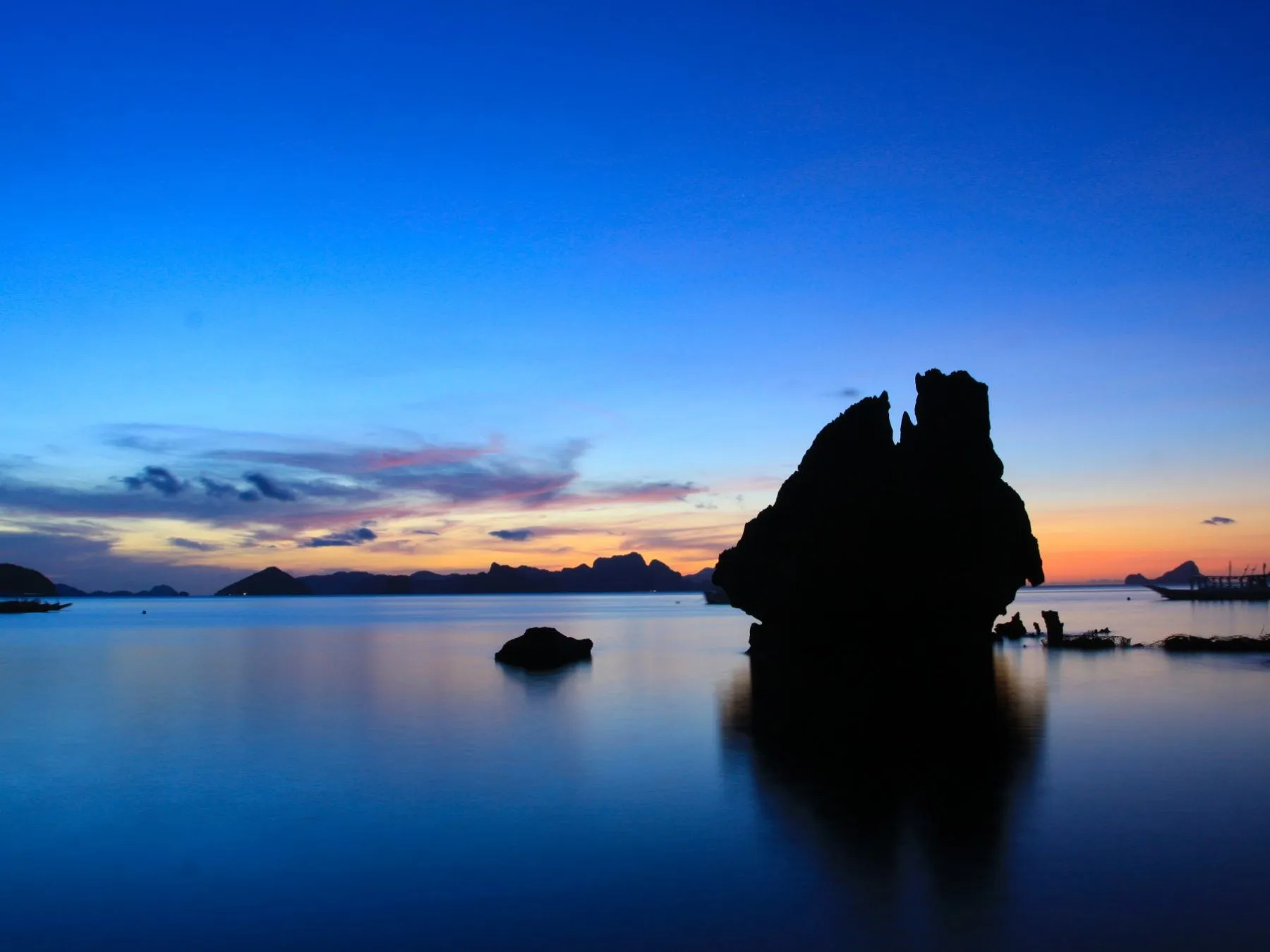
On the map
Lagen Island, Bacuit Bay, El Nido, Philippines
Questions
Frequently asked
How do guests get to Lagen Island Resort?
Access is by air and boat only; there is no road connection. Guests fly into El Nido (Lio) Airport, are met by a resort representative, and taken by van to the El Nido Resorts Jetty Lounge before boarding a resort boat for the crossing to Lagen, which takes roughly 30 to 50 minutes depending on tide and weather. Flights to Lio Airport typically connect through Manila or, seasonally, other domestic hubs.
What makes Lagen Island different from the other El Nido Resorts properties?
All four El Nido Resorts islands (Lagen, Miniloc, Pangulasian, and Apulit) are run by the same operator, Ten Knots, under Ayala Land, but each has a distinct character. Lagen is positioned around its forest: a four-hectare reserve inside the El Nido-Taytay Managed Resource Protected Area, home to over a hundred recorded bird species and resident water monitor lizards. Miniloc is built around a shallow lagoon and is the group's original, more casual property; Pangulasian leans into a higher-end, more overtly luxurious design; Apulit, on the Taytay side, is the most remote and diving-focused.
Is Lagen Island suitable for families with children?
The resort accepts families, though its emphasis on quiet forest trails, birdwatching, and a low-key pace makes it better suited to couples and older children than to travellers seeking organised kids' clubs or high-energy entertainment. Guests with young children should confirm current age policies and activity suitability directly with the resort at the time of booking.
Can non-guests visit Lagen Island for the day?
No. Lagen operates as a closed resort island reserved for overnight guests; there is no day-trip or walk-in access, which is part of how the property limits pressure on its forest reserve and house reef. Guests wanting to see other parts of Bacuit Bay do so on resort-organised boat excursions rather than by receiving outside visitors on Lagen itself.
What should first-time guests know about connectivity and facilities on the island?
Lagen is a genuine island retreat: there are no shops, ATMs, or town amenities on-site, and guests should arrange currency and any essentials before travelling out. Wi-Fi is available in common areas and rooms but can be inconsistent given the location, which is broadly in keeping with the resort's disconnect-and-unwind positioning.
Same destination
More hotel guides in Philippines
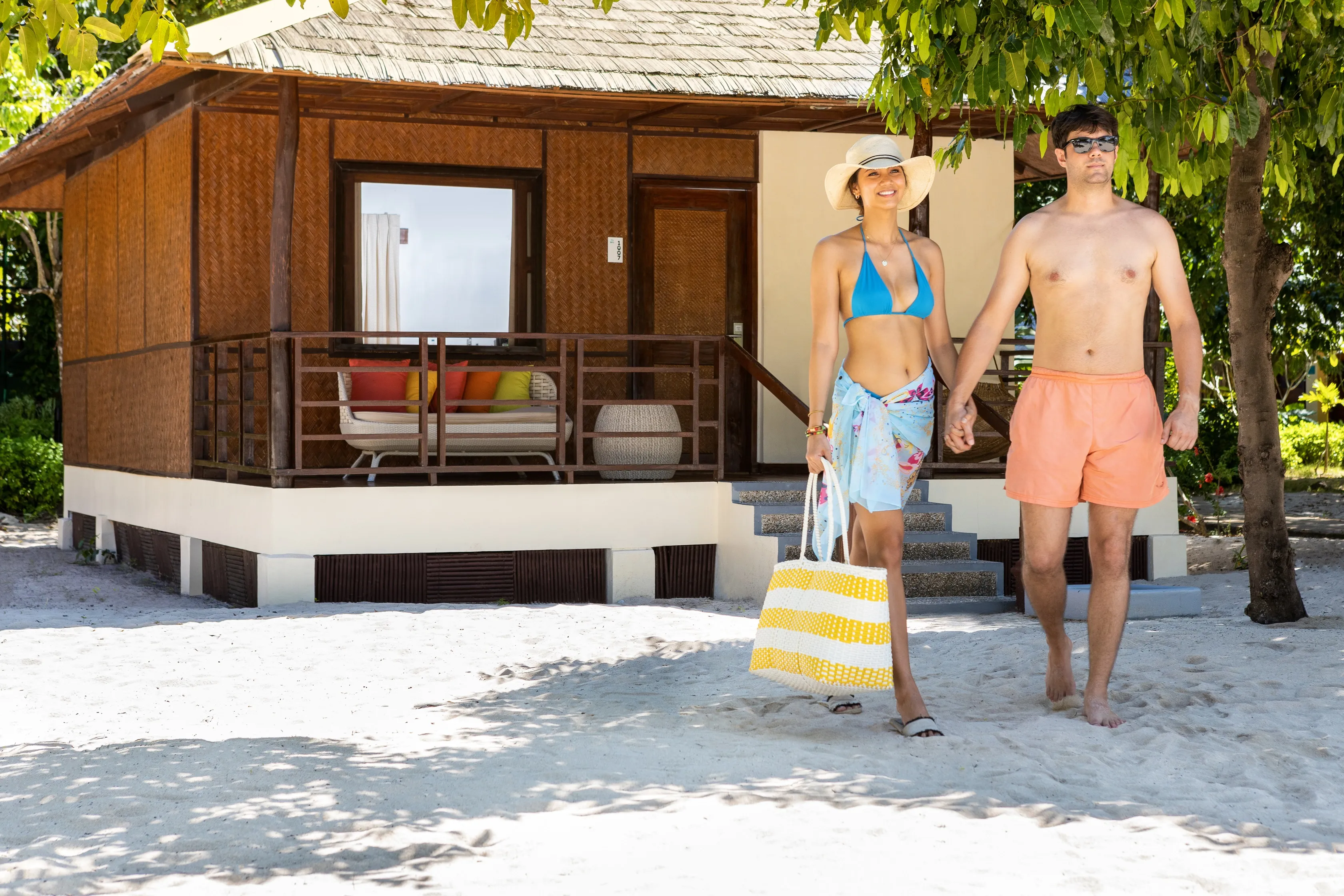
Dimakya Island, Busuanga, Coron, Philippines
Discovery Coron
A nineteen-hectare private island off northern Busuanga, diving Coron's Japanese wrecks by day and disconnecting from everything else after dark.
From $260 per night
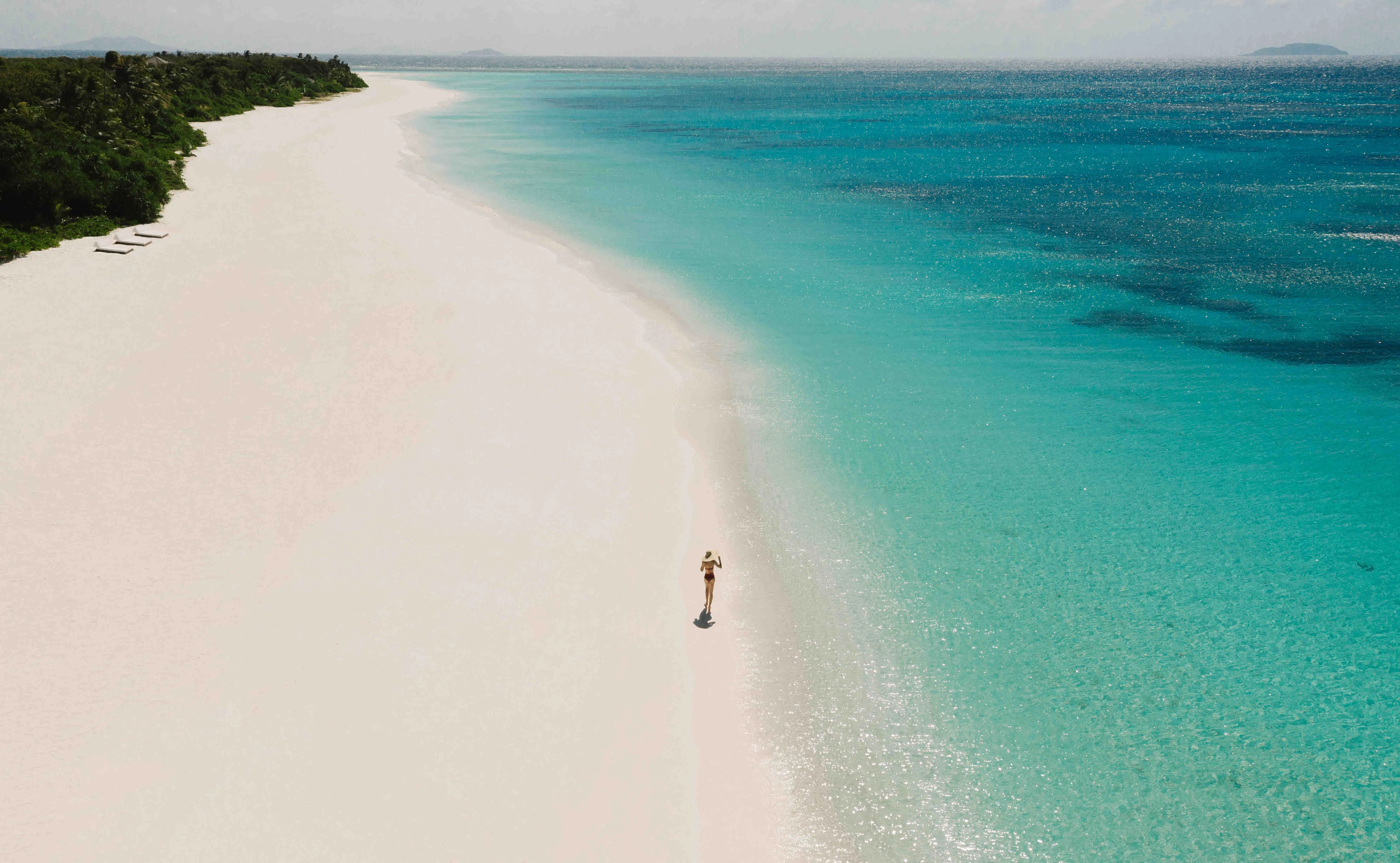
Pamalican Island, Cuyo Islands, Philippines
Amanpulo
A private island in the Cuyo archipelago, reachable only by Aman's own aircraft, built around bahay kubo-inspired casitas set beneath forty-year-old coconut palms.
From $1,900 per night
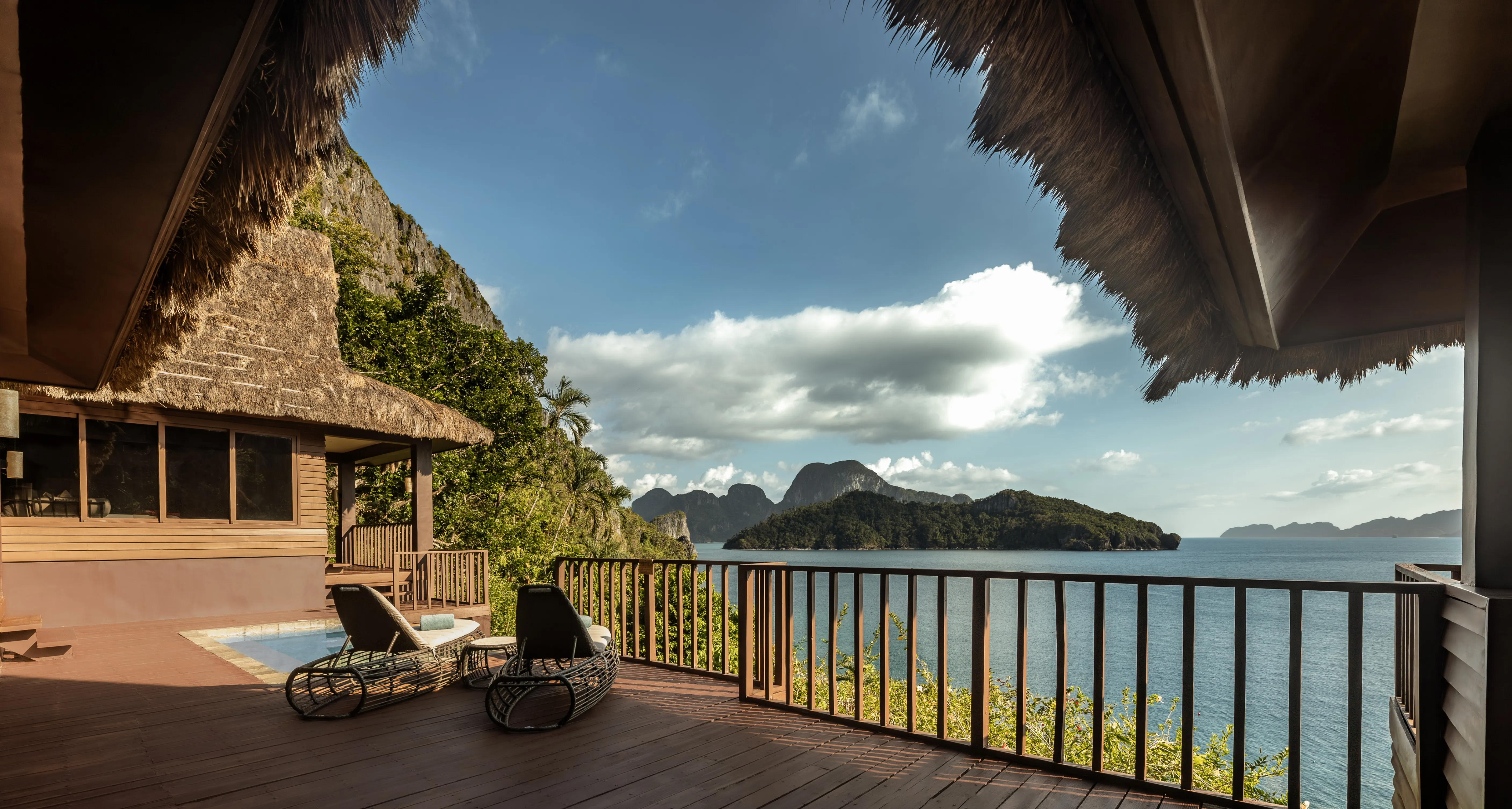
Cauayan Island, Bacuit Bay, El Nido, Philippines
Cauayan Island Resort
A privately owned island in Bacuit Bay, thirty stilt-raised villas set between limestone cliffs and open water, reachable only by boat.
From $500 per night