Pansea Beach, Phuket, Thailand
Amanpuri
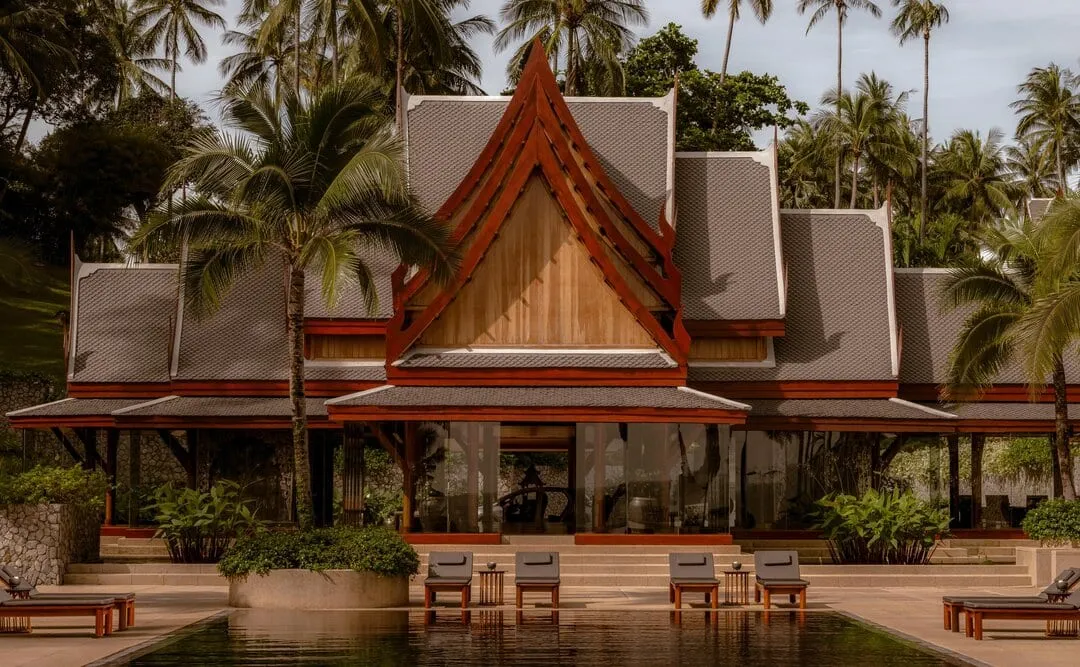
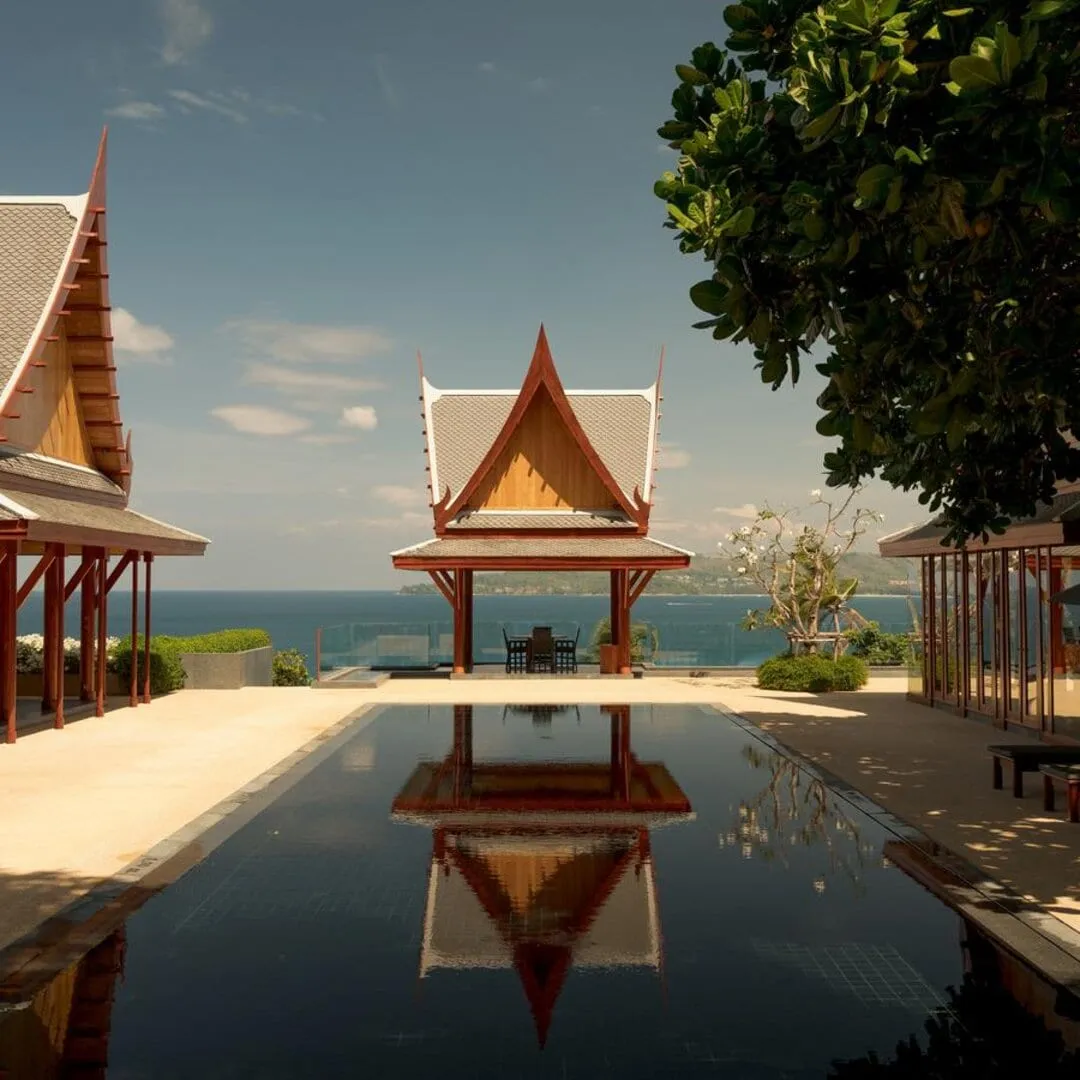
Opened in 1988 on a former coconut plantation on Phuket's Pansea Beach, Amanpuri is the founding property of the entire Aman brand, a village of temple-inspired teak pavilions that set the template every Aman since has followed.
- Rates from
- From $1,200 per night
- Nearest airport
- Phuket International Airport (HKT)
- Transfer
- About 30 minutes by road
- Best months
- November to April, for the driest weather and calmest seas on Phuket's west coast
Every hotel that now calls itself an Aman owes something to a coconut plantation on the west coast of Phuket. In 1985, Adrian Zecha went looking for a plot of land on which to build a holiday house. What he found on Pansea Beach was a grove of coconut palms running down to a curve of white sand, with no other development in sight, an increasingly rare thing on an island already being reshaped by tourism. The house he had in mind grew into something else: a small resort, built with his own money and that of a handful of partners, because no bank would lend against a property with so few rooms. It opened on New Year’s Day 1988, priced at roughly five times the going local rate, and it worked. That resort was Amanpuri, and the company that grew out of it, Aman, now operates more than 30 properties across as many countries.
None of that history would matter much if Amanpuri had simply become one more legacy address, coasting on being first. It hasn’t. The pitched-roof pavilions that architect Ed Tuttle scattered through the original coconut grove, drawing on months spent studying the temple architecture of Ayutthaya, still set the template for how an Aman resort is meant to feel: low-slung, materially honest, deferential to the site rather than dominant over it. Later Aman properties borrowed this vocabulary and adapted it; Amanpuri is where it was worked out for the first time, under real financial pressure, on a beach that still shapes the resort’s daily rhythm of sunset views straight out over the Andaman Sea.
What makes Amanpuri worth a long look today, nearly four decades on, is less the founding-myth appeal, though that is real, and more the fact that the place has kept renewing itself without abandoning the original brief. Forty pavilions sit discreetly among the palms much as they did in 1988; forty privately styled villas, some with up to nine bedrooms, occupy the quieter reaches of the headland; and a rotating cast of restaurants, most recently a Mediterranean beach club called Nura, has kept the dining programme current without disturbing the resort’s fundamental architecture. Phuket has changed considerably around Amanpuri since 1988. Amanpuri, in its bones, has not.
Why It Stands Out
Amanpuri’s claim to attention rests on a fact that is easy to state and hard to overstate: it is where the entire idea of Aman, and by extension a meaningful share of contemporary “quiet luxury” resort design, was worked out for the first time. Ed Tuttle’s decision to build low, pitched-roof pavilions modelled on Thai temple architecture rather than a conventional multi-storey beach hotel was, in 1988, a genuinely unconventional bet, one financed privately because institutional lenders wouldn’t back a resort with so few keys. That bet paid off commercially and, more lastingly, aesthetically: the pavilion-and-villa model, the emphasis on natural materials and site-specific design, and the restraint of Amanpuri’s original scheme became the house style for a global hospitality brand. Visiting Amanpuri now means seeing the source material rather than a later interpretation of it, on the same stretch of Pansea Beach where the coconut plantation Zecha found still gives the resort most of its shade and structure.
Architecture
Ed Tuttle, an American architect who had not previously worked in Southeast Asia, spent months travelling around Thailand before drawing a single plan for Amanpuri, studying temple complexes and vernacular teak houses to understand how Thai builders had historically handled climate, materials, and roofline. The result, most visible in Amanpuri’s steep, multi-tiered, dark-tiled roofs, draws specifically on the architecture of Ayutthaya, the former Thai royal capital, translated into a hospitality building rather than a religious or royal one. Rather than a single monolithic hotel block, Tuttle laid the resort out as a loose village of low pavilions and villas threaded through the existing coconut grove, a planning decision that preserved the site’s mature palms (some considerably older than the resort itself) and kept sightlines and circulation informal rather than institutional.
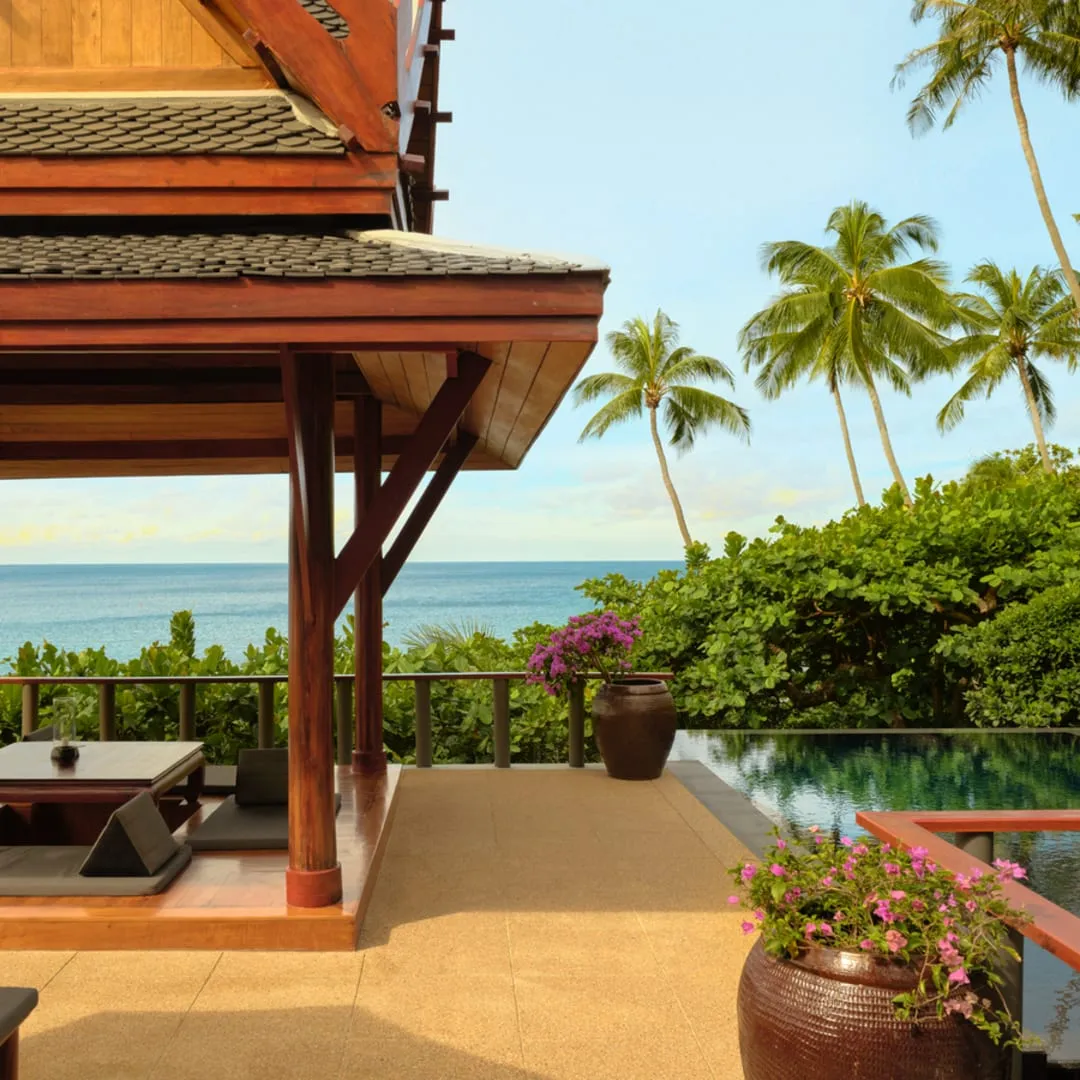
That village layout, uncommon for large-scale luxury hospitality in 1988, has proven durable precisely because it never depended on any single architectural trend. Wood panelling, deep overhanging eaves for shade and monsoon rain, open-sided salas for outdoor living, and a material palette drawn from teak, stone, and tile give Amanpuri’s public and private buildings a continuity that has aged into something closer to vernacular authenticity than period style. The property’s later villas, built up the peninsula’s headland in phases as demand grew, extended Tuttle’s language rather than replacing it, so that a nine-bedroom ocean villa built decades after the original pavilions still reads as part of the same architectural family.
Interior Design
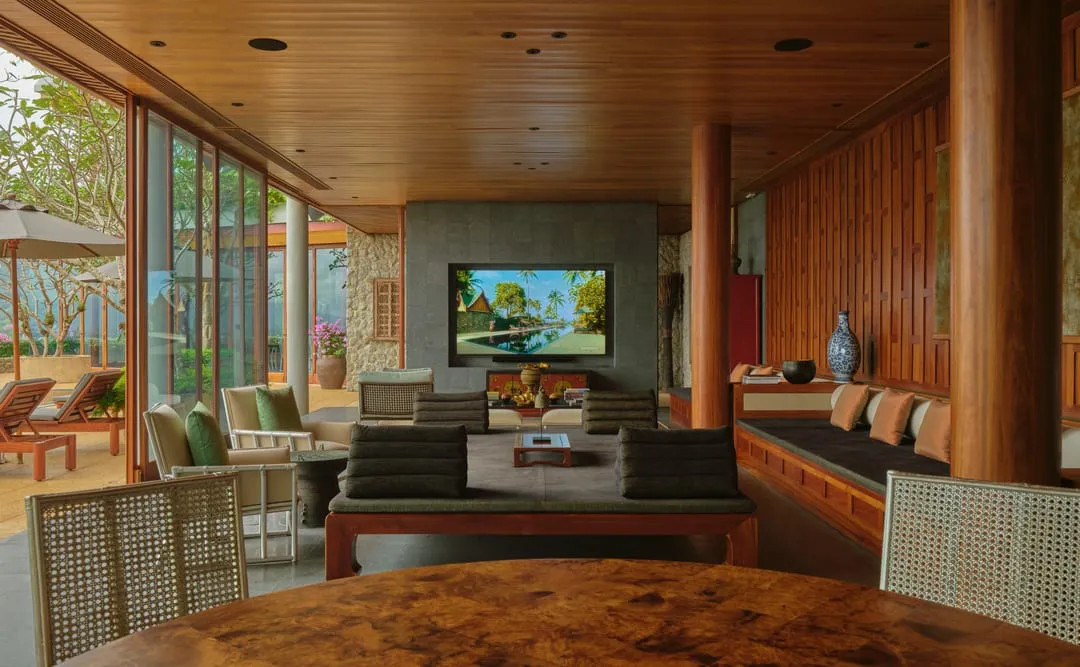
Where Amanpuri’s exteriors commit fully to a Thai vernacular language, its interiors have always run a more contemporary, comparatively unornamented counterpoint, in keeping with the wider Aman house style that Tuttle helped originate here. Guest pavilions are wood-panelled and light-filled, with king-size beds, generous bathrooms and dressing areas, and outdoor salas for lounging or dining that function as an extra room rather than a decorative afterthought. The aesthetic inside each pavilion is clean and largely uncluttered: natural materials, restrained furniture, and an absence of the heavy Thai decorative motifs that some competitor resorts lean on more heavily, so that the architecture’s temple-inspired roofline and the interior’s plainer, more contemporary furnishing sit in deliberate contrast rather than matching each other note for note.
The villas take a different approach, since each is individually decorated with hand-picked art and antiques, giving Amanpuri’s villa portfolio more variation than its more standardised pavilion categories. That individuality, paired with private pools, separate living and dining pavilions, and in the larger configurations full kitchens and multiple free-standing bedroom structures, makes the villas function closer to private residences loaned out for a stay than hotel suites in the conventional sense, a distinction that has become one of Amanpuri’s defining features over time.
Atmosphere
Amanpuri sits on its own peninsula on Phuket’s west coast, a position that does more than any single design choice to set the resort’s mood: quiet, self-contained, and oriented almost entirely toward the sea. The property fronts a private stretch of Pansea Beach, a west-facing crescent of white sand that puts the sunset directly in view from the beachfront restaurants and terraces most evenings. Because the resort is spread loosely through a mature coconut grove rather than concentrated into a single building, walking between a pavilion, the main pool, and the beach involves passing through genuine shade and greenery rather than manicured show-garden landscaping, which gives Amanpuri a settled, unhurried feel that newer, more architecturally dramatic resorts on the island rarely replicate.
That sense of seclusion is reinforced by Amanpuri’s relationship to the rest of Phuket. Pansea Beach and the neighbouring Surin area have long been among the island’s quieter, more upscale corners, distinct from the density of Patong or even the increasingly built-up stretches nearer Kamala, so guests who want privacy without leaving the island altogether have historically gravitated here. The resort’s own scale, 40 pavilions and 40 villas spread across the site rather than stacked into a single tower, keeps guest density low even at full occupancy, and the emphasis throughout, from the wellness centre’s hillside pavilions to the tennis courts and gym positioned at the property’s highest point, is on space and separation rather than a single central hub.
Rooms and Suites
Accommodation at Amanpuri splits into two distinct categories: pavilions and villas. The 40 pavilions run across eight room types, from entry-level Pavilion and Garden Pavilion categories through Garden Pool, Partial Ocean Pool, and Ocean Pool Pavilions, up to a single Deluxe Ocean Pool Pavilion and Premium Ocean Pool Pavilion, and a larger Two-Bedroom Pool Pavilion. Most pavilion categories share a consistent 50 square metre indoor footprint, with outdoor terrace space expanding from 50 square metres in garden-facing rooms to around 95 square metres in ocean-facing pool categories, while the Two-Bedroom Pool Pavilion offers 100 square metres indoors and a substantial 300 square metre outdoor area with garden and ocean views. Every pavilion includes a king-size bed, a large bathroom with dressing area, and its own outdoor sala for lounging or private dining.
The 40 villas are considerably larger and more varied, ranging from three-bedroom garden and ocean configurations up to nine-bedroom ocean villas with plot sizes reaching well over 10,000 square metres in the largest cases. Each villa has its own private swimming pool, and Aman’s fact sheet notes that villas are individually decorated with hand-picked art and antiques rather than following a single repeated scheme, so no two villas at Amanpuri are furnished identically. Larger villas function as self-contained residences, with separate structures for living, dining, and multiple bedrooms, making them a natural fit for multi-generational family groups, weddings, or extended-family gatherings who want a private compound within the wider resort rather than a cluster of adjoining hotel rooms. Prospective guests booking a specific villa or pavilion category should confirm current configuration and view directly with Aman, since categories and exact layouts can shift slightly between renovations.
Dining
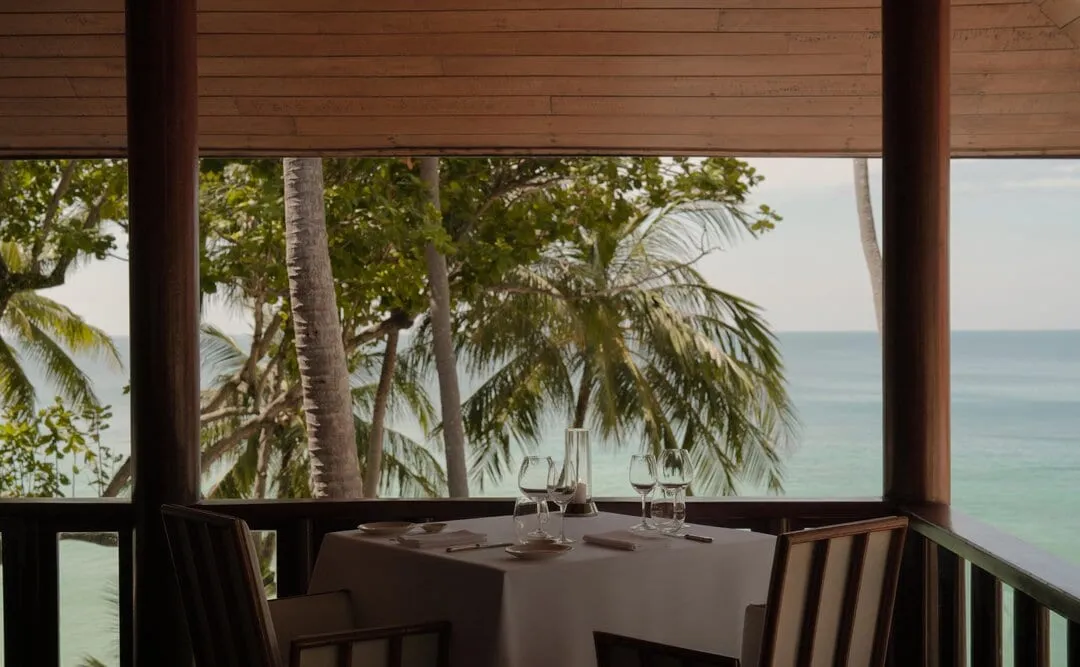
Amanpuri’s dining programme runs across four principal restaurants plus a set of more casual terraces and bars. Buabok, the resort’s main restaurant, serves Thai cuisine, fresh Andaman fish, curries, tom yam, and green mango salad among them, from breakfast through dinner, seating around 44 guests in a pavilion beside the main pool. Arva serves Italian food built around seasonal, simply prepared ingredients from land and sea, in keeping with the Aman group’s pattern of pairing its Italian restaurants with a produce-led, unfussy approach rather than elaborate tasting-menu formats. Nama is the resort’s Japanese restaurant, focused on washoku, the UNESCO-recognised heritage cuisine of Japan, with sushi, sashimi, and robata-grilled dishes served in a room that seats up to 80.
The newest addition to the lineup is Nura, a Mediterranean-leaning beach club restaurant directly on Pansea Beach, built around open-charcoal grilling of seafood and meats alongside Spanish- and Greek-inflected sharing plates; a hand-grilled, tableside-carved Phuket pineapple has become something of a signature dessert there. Beyond the four named restaurants, Amanpuri operates the Sunset Terrace for cocktails inspired by Thai storytelling traditions, a Pool Terrace serving a Mediterranean lunch menu with a wood-fired pizza oven, a thatched beachfront bar for casual drinks, and the Magnum Room, a private dining space with its own bar, wine lockers, and a cigar humidor stocked with selections from Cuba, Nicaragua, and the Dominican Republic. As with any resort of this scale, exact restaurant names, hours, and concepts can shift between seasons or renovations, so guests planning a stay around a specific venue should confirm current offerings with the hotel.
Spa and Wellness
Wellness at Amanpuri is organised around the Amanpuri Holistic Wellness Centre, a series of pavilions built down a lushly planted hillside above the resort, holding twelve treatment rooms, each with its own shower, restroom, and dressing area, along with a sauna, granite steam room, infrared saunas, jacuzzi, and cold plunge pool. The wellness programme extends beyond individual spa treatments into structured Aman Wellness Immersions, multi-day programmes aimed at fitness, weight management, deep cleansing, or general renewal, reflecting Aman’s broader shift toward longer, outcome-oriented wellness stays rather than single stand-alone treatments.
A separate gym, positioned at the resort’s highest point for sweeping sea views, houses a Pilates studio, free weights, cardio equipment, and a dedicated Muay Thai studio, with personal trainers available for private sessions in Thai boxing, high-intensity interval training, beach bootcamp workouts, and TRX. Complimentary daily group wellness sessions run in open-sided wooden salas set high on the hillside, and four floodlit tennis courts, with lessons and hitting partners available on request, round out the resort’s more active offerings. For guests who prefer to swim rather than train, the resort’s 27-metre midnight-blue-tiled main pool functions as much as a wellness centrepiece as a straightforward amenity, alongside a secondary 20-metre lap pool at the Pool Terrace and a separate children’s pool at the Eco-Beach Discovery Centre.
Experiences
Amanpuri’s location on a private stretch of Pansea Beach puts water at the centre of most guest experiences. The resort operates a fleet of boats for chartered excursions, from half-day fishing and scuba-diving trips to overnight, fully crewed island-hopping charters through the Andaman Sea, and offers a full menu of motorised and non-motorised watersports directly off the beach, including kayaking, stand-up jet skis, and wakeboarding. A PADI-accredited diving programme gives access to well-known regional sites including Shark Point, Koh Dok Mai, and Racha Island, all within relatively easy reach of Phuket’s west coast.
Beyond the water, Amanpuri runs an Eco-Beach Discovery Centre offering daily nature and craft-based programmes for children aged five and above, and a separate space called Hot Spot aimed at teenagers and younger adults, with a bouldering wall, a skateboarding half-pipe, and digital and music-focused activities. An on-site art gallery, curated by the Bangkok-based Lotus Arts de Vivre, and a boutique selling Asian jewellery, antiques, and textiles give the resort a cultural dimension beyond the beach and spa, while the surrounding area, within 40 minutes’ drive of five golf courses and a short boat ride from Phang Nga Bay’s limestone karsts, extends the range of what’s feasible as a day trip.
Who It Is For
Amanpuri suits travellers who care about the history and design lineage behind a hotel as much as its amenities, since a stay here means experiencing the original template for an entire luxury hospitality category rather than a later, more polished descendant of it. It particularly suits honeymooners and couples marking a significant anniversary who want a formal, established address with genuine pedigree, and multi-generational families or groups who can make full use of the larger villa configurations, up to nine bedrooms with private pools and separate living structures, rather than booking multiple standard rooms. It is less suited to travellers seeking a high-energy social scene or nightlife on-site, since Amanpuri’s identity has always leaned toward privacy and quiet rather than spectacle.
Best Time to Visit
Phuket’s most reliable weather runs from November through April, when the northeast monsoon has passed and the island sees drier conditions, calmer seas on the west coast, and generally warm, sunny days, broadly in the 23 to 32 degree Celsius range. December and January are the busiest and most expensive months within that window; November and March to April offer a similar weather profile with somewhat lighter demand. The wetter southwest monsoon season, roughly May through October, brings heavier rain and rougher seas to Phuket’s west coast, including Pansea Beach, and Aman has historically closed Amanpuri for a portion of that period each year for maintenance; for 2026 specifically, the resort has scheduled an extended closure from 15 May to 13 September for property-wide enhancements, reopening 14 September 2026, so travellers should confirm current operating dates before booking.
How to Get There
Phuket International Airport (HKT) is the gateway for Amanpuri, connected by direct flights from a range of international hubs including Abu Dhabi, Bangkok, Dubai, Frankfurt, Hong Kong, Kuala Lumpur, Seoul, Shanghai, Singapore, and Sydney, among others. From the airport, Amanpuri is roughly a 30-minute drive by road, down the island’s west coast to the Pansea Beach peninsula. The resort includes complimentary return airport transfers for stays of three nights or longer, and can also arrange private transfers or vehicles for guests arriving on shorter stays.
Nearby Experiences
The neighbouring Surin Beach area, a short walk or drive from Amanpuri, has developed into one of Phuket’s more refined beach-and-restaurant enclaves, with a cluster of casual and upscale dining options along the shore. Several Buddhist temples lie within easy reach for guests interested in Thai religious architecture and culture, a natural complement to Amanpuri’s own temple-inspired design. Further afield, Amanpuri’s boat charters give access to Phang Nga Bay’s limestone karst islands, including Koh Phing Kan, familiar to many as a filming location for the James Bond film The Man with the Golden Gun, as well as the Similan Islands roughly 80 kilometres north and the Phi Phi Islands around 80 kilometres southeast, both significant draws for diving and snorkelling day trips.
Things to Know Before Booking
Amanpuri undergoes an annual closure during Phuket’s wettest months, and for 2026 that closure runs longer than usual, from 15 May to 13 September, for property-wide enhancements, with reopening set for 14 September 2026; anyone planning a stay in that window should verify current availability directly with Aman before making other arrangements. Villa and pavilion category names and exact configurations have shifted somewhat over the property’s history and can be adjusted again around renovations, so guests booking a specific room type, especially a particular villa size or view category, should reconfirm details at the time of booking rather than relying solely on older published material. Restaurant concepts have also evolved over time, with newer venues such as Nura joining longer-standing rooms like Buabok, Arva, and Nama, so guests with a specific dining venue in mind should check it is currently operating before their stay.
Sustainability
Amanpuri’s sustainability programme centres on marine conservation appropriate to its beachfront setting: the resort partners with the Phuket-based foundation Oceans for All, supporting coral farming and a bamboo shark breeding and release programme run with the resort’s own marine biologist, through which guests can occasionally take part in juvenile shark releases into the Andaman Sea. On land, the resort maintains a Wellness and Kitchen Garden built on reclaimed bamboo terraces for soil regeneration, sources produce from local growers and small-scale producers for its restaurants, composts food and garden waste on site, and leans toward plant-forward, lower-carbon dishes across its menus. Daily beach cleaning covers both Pansea Beach and the adjoining rocky shoreline toward Surin, intensifying during the monsoon season when debris is more likely to wash ashore.
Community initiatives include support for the nearby Surin Childcare Centre, which serves roughly 60 children, along with engineering assistance, vocational placements, and English-language learning opportunities for local students and staff families. The resort also partners with a mangrove planting project at Paklok through a linen conservation programme, and offers guests an opt-in scheme to reduce how often bed linen is changed, cutting water, chemical, and energy use during a stay. Specific published data on the resort’s overall energy or water consumption performance was not found and is not claimed here.
Practical Information
Amanpuri is located directly on Pansea Beach in the Cherngtalay area of Phuket’s Thalang District, address Pansea Beach, Phuket 83110, Thailand. Check-in is from 2:00pm and check-out by 12:00pm noon. Published rates for entry-level pavilions have started from around USD 1,200 per night, though rates vary considerably by season, room category, and current promotions, and villa rates, particularly for larger multi-bedroom configurations, run substantially higher; the figure given here is an indicative starting point rather than a live quote, and travellers should confirm current pricing directly with Aman. Amanpuri is closed for scheduled enhancements from 15 May to 13 September 2026, reopening 14 September 2026, and prospective guests should check current operating status before booking any stay near that window.
Editorial Conclusion
Amanpuri’s significance is structural rather than merely historical: this is the property that established, almost by financial necessity as much as design intent, the pavilion-and-villa, low-density, materially restrained model that an entire category of contemporary luxury resort has since drawn on. Nearly four decades after Ed Tuttle finished studying the temples of Ayutthaya and began drawing a hotel around a Phuket coconut grove, Amanpuri still functions as both a working resort and something close to a founding document for the brand it started. For travellers drawn to that lineage, and willing to plan around its seasonal closures, it remains one of the more consequential addresses in Southeast Asian hospitality.
In pictures
On the map
Pansea Beach, Phuket, Thailand
Questions
Frequently asked
Why is Amanpuri considered the founding Aman property?
Amanpuri opened on New Year's Day 1988 on Phuket's Pansea Beach, the first hotel built by Adrian Zecha, who developed it with business partner Anil Thadani after failing to find a bank willing to finance a small, non-standard resort. Its success established the boutique-luxury model that the wider Aman brand, now spanning more than 30 destinations, has followed ever since.
How many rooms and villas does Amanpuri have?
Amanpuri has 40 guest pavilions and 40 villas, according to Aman's own property fact sheet. Pavilions run from garden-view rooms to ocean-facing pool categories, while villas range from three to nine bedrooms, each with a private pool, making Amanpuri as much a village of individually owned-style residences as a conventional hotel.
Is Amanpuri open now?
Amanpuri closes annually during Phuket's wettest months. For 2026, Aman has scheduled a longer closure than usual, from 15 May to 13 September, for property-wide enhancements, with reopening confirmed for 14 September 2026. Travellers should check current availability directly with Aman before booking any stay in that window.
What are the main restaurants at Amanpuri?
Amanpuri's principal restaurants are Buabok for Thai cooking, Arva for Italian food, Nama for Japanese washoku-style dining, and Nura, a newer Mediterranean-focused beach club restaurant on Pansea Beach. The resort also runs the Sunset Terrace for cocktails, a Pool Terrace serving wood-fired pizza, a beachfront bar, and the Magnum Room, a private dining space with its own cigar humidor and wine lockers.
How far is Amanpuri from Phuket International Airport?
Amanpuri is roughly a 30-minute drive from Phuket International Airport (HKT) on the island's west coast. The resort arranges return airport transfers as a complimentary inclusion for stays of three nights or more.
Who designed Amanpuri's architecture?
American architect Ed Tuttle designed Amanpuri after spending months travelling around Thailand studying traditional temple buildings and classical teak houses, drawing particular inspiration from the former Thai capital of Ayutthaya. It was his first project for Aman and set the pitched-roof, courtyard-pavilion language that later Tuttle-designed Aman properties across Asia would echo.
Same destination
More hotel guides in Thailand
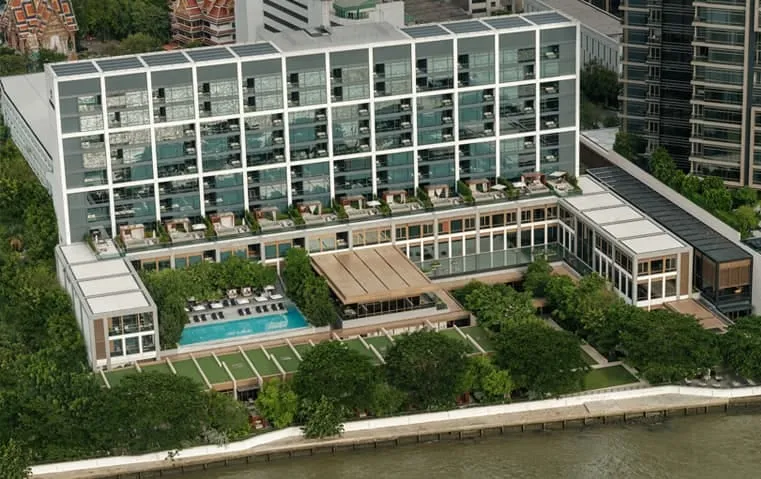
Charoen Krung, Chao Phraya riverside, Bangkok, Thailand
Capella Bangkok
A low-rise riverside sanctuary on the Chao Phraya, where Thai pavilion architecture, a two-Michelin-starred Riviera table and only 101 keys have made a decade-old promenade site into the hotel the rest of Bangkok is measured against.
From $850 per night
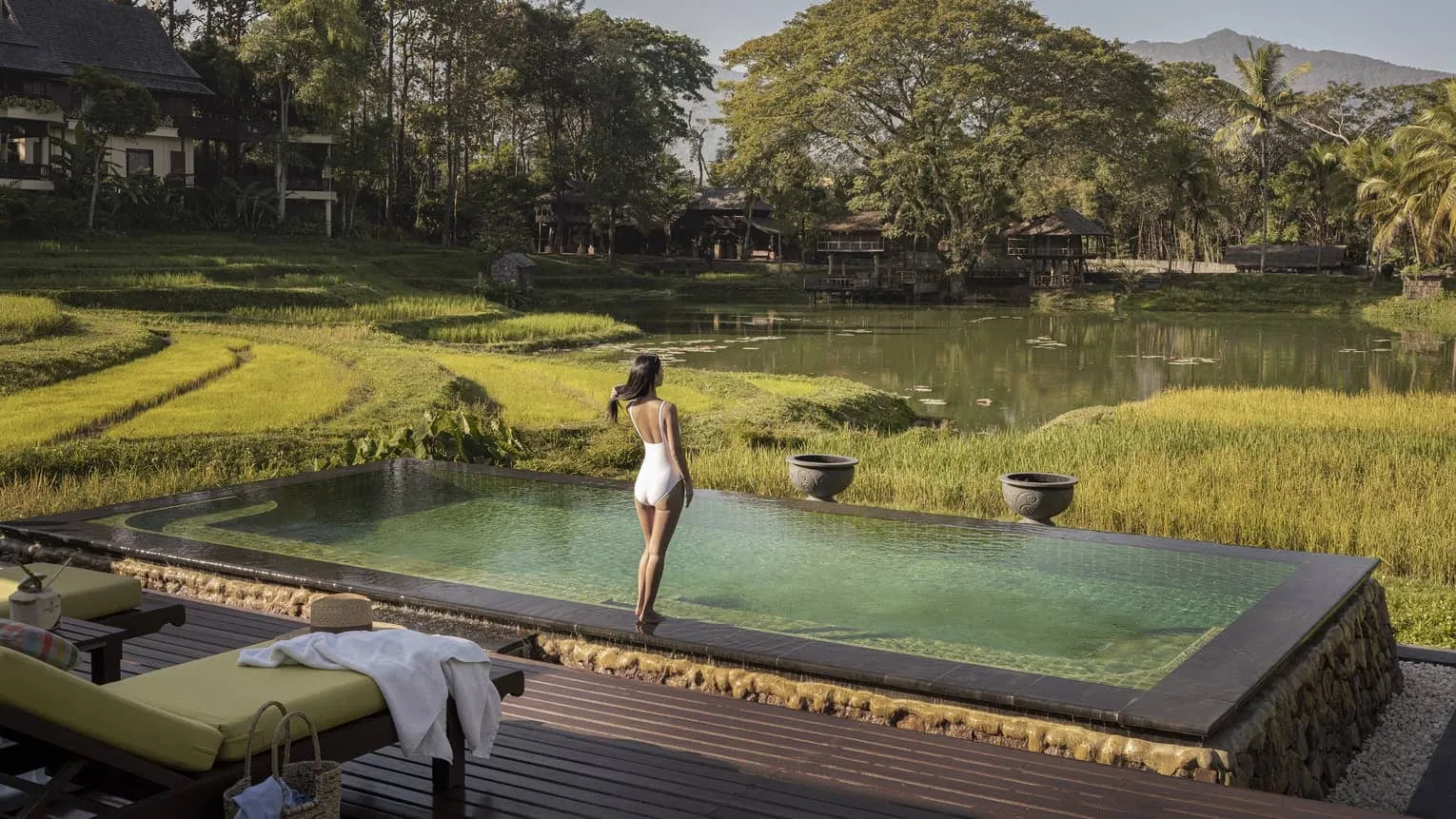
Mae Rim Valley, Chiang Mai, Thailand
Four Seasons Resort Chiang Mai
A working rice valley reimagined as a resort, where teak pavilions and a Michelin-starred kitchen sit inside paddies still farmed by hand.
From $850 per night
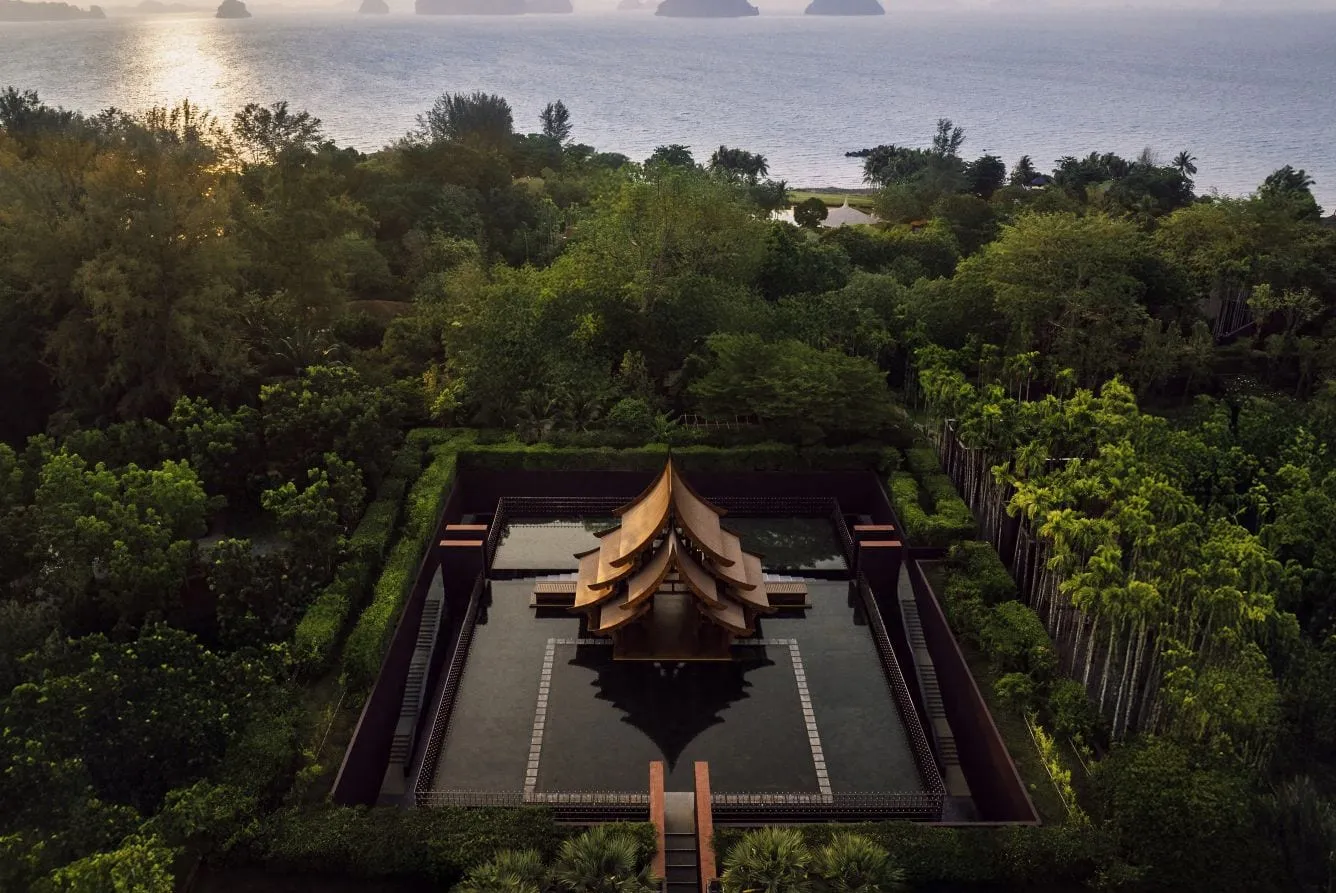
Tab Kaek Beach, Krabi, Thailand
Phulay Bay, A Ritz-Carlton Reserve
The resort that launched the Ritz-Carlton Reserve brand in 2009, a cluster of Thai-pavilion villas set against Krabi's limestone karsts on the Andaman Sea.
From $650 per night