Tab Kaek Beach, Krabi, Thailand
Phulay Bay, A Ritz-Carlton Reserve
The resort that launched the Ritz-Carlton Reserve brand in 2009, a cluster of Thai-pavilion villas set against Krabi's limestone karsts on the Andaman Sea.
- Rates from
- From $650 per night
- Nearest airport
- Krabi International Airport (KBV)
- Transfer
- About 45 minutes by road, roughly 40km from the airport
- Best months
- November to April, Krabi's dry season with calm seas and the most reliable sunshine
There is a reason Ritz-Carlton chose a stretch of Krabi coastline, rather than anywhere in the Maldives or the Mediterranean, to launch its most exclusive brand tier. Phulay Bay sits on Tab Kaek Beach facing the Andaman Sea, with the limestone karsts that define this part of southern Thailand rising out of the water in the middle distance, a backdrop few other beach destinations can supply on demand. When Ritz-Carlton needed a debut property for the Reserve concept in 2009, a format built around small scale, a singular design idea and privacy over volume, this setting did much of the argument for it.
More than fifteen years on, Phulay Bay remains one of fewer than a dozen Ritz-Carlton Reserve hotels operating worldwide, a list that has since grown to include Dorado Beach in Puerto Rico, Zadun in Mexico and Mandapa in Bali, among others. It has aged into its role rather than been overtaken by it. The Thai architect Lek Bunnag’s pavilion-based design, with its sweeping rooflines and candlelit arrival sequence, still reads as considered rather than dated, and the resort’s modest scale, 54 villas and pavilions in total, keeps it closer in feel to a private compound than a branded international hotel.
This guide sets out what the resort actually offers: the architecture and interiors, the villa categories, the six dining venues and ESPA-operated spa, and the practical detail, from the airport transfer to the best months to go, that shapes whether a stay here is the right call for a given trip to Thailand.
Why It Stands Out
Phulay Bay’s clearest claim to distinction is chronological: it was the first hotel built under the Ritz-Carlton Reserve name, the brand’s answer to the ultra-small-scale, design-led resorts that Aman and its imitators had spent two decades proving there was a market for. Opening a debut property in Krabi rather than a more obviously glamorous location was itself a statement about what the Reserve tier would prioritise: a strong sense of place over a famous address.
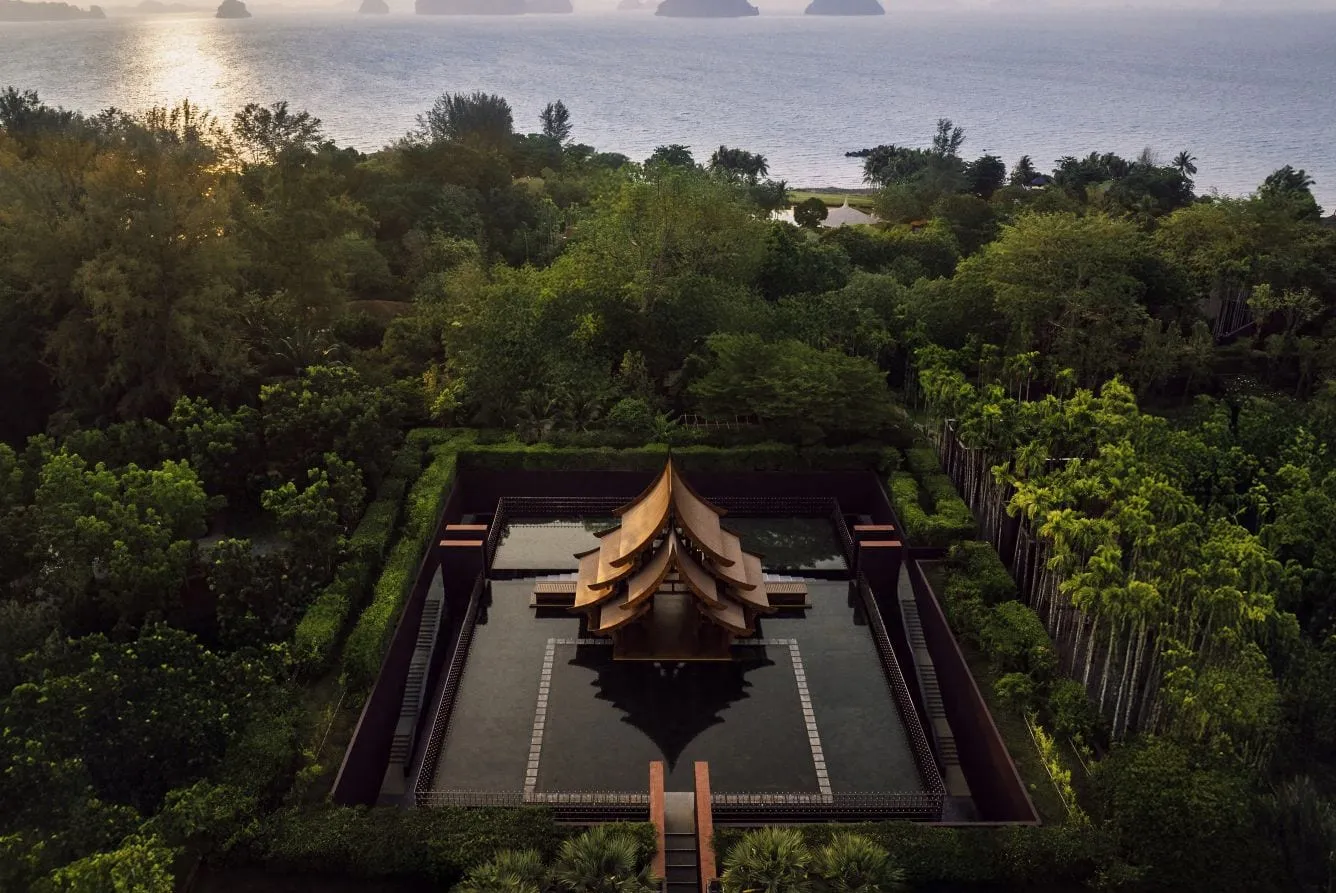
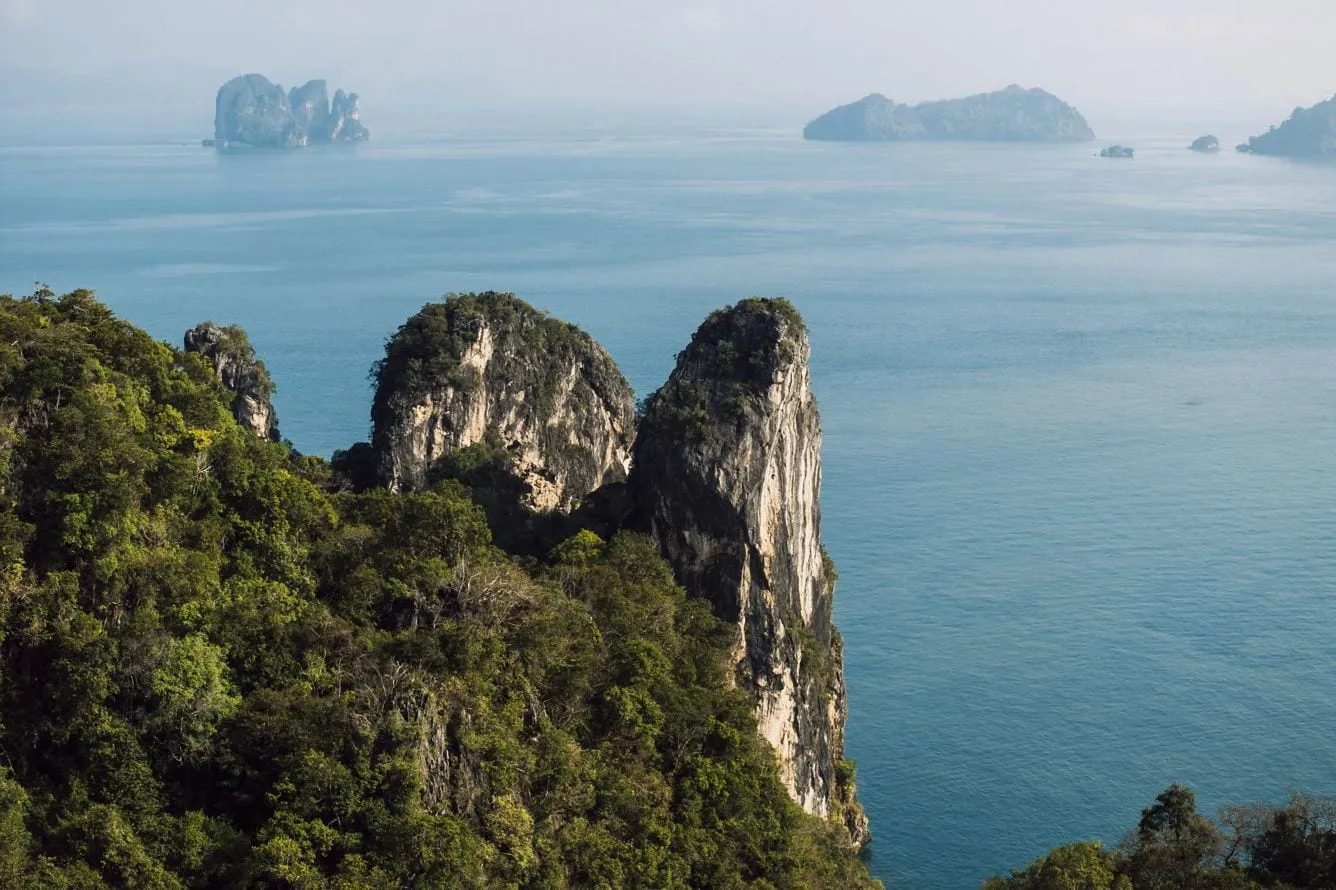
That sense of place is delivered almost entirely through the setting and the architecture. The resort looks directly onto the Andaman Sea with Krabi’s limestone karst islands visible from the beach and from many of the villas, a geological backdrop that photographs as dramatically at sunrise as it does at sunset. Lek Bunnag, the Thai architect behind the resort, built the property around a sequence of pitched-roof pavilions rather than a single central hotel block, so guests move through a series of distinct, garden-buffered structures rather than down a hotel corridor. The arrival experience alone, a walk between twenty-foot indigo walls to a wooden welcome pavilion set on an island in a reflection pool lit by candles after dark, sets an unusually theatrical tone for what is, underneath the ceremony, a genuinely intimate and low-key property once guests reach their villas.
The other differentiator is scale. At 54 villas and pavilions, Phulay Bay is small even by Reserve standards, and every guest is assigned a dedicated round-the-clock butler, known here as a Ton Hong, or “golden butler”, from the moment of arrival. That ratio of staff to guests, combined with the resort’s spread-out, garden-screened layout, gives it a level of privacy that larger five-star resorts along Thailand’s more built-up coastlines, Phuket in particular, generally cannot match.
Architecture
The resort was designed by Lek Bunnag, a Thai architect known for combining traditional Thai pavilion forms with a more contemporary, oversized sense of scale. At Phulay Bay that combination is visible from the first approach: guests enter through walls roughly twenty feet high, finished in a deep indigo-aubergine tone and screened by indigenous tree hedges, before the path opens onto a large reflection pool with a pitched-roof Thai pavilion appearing to float at its centre. The roofline, with its steep, layered pitch and upturned eaves, draws directly on traditional Thai temple and palace architecture, but Bunnag has scaled it up and simplified the ornament, so it reads as grand rather than folkloric.
Beyond the entrance pavilion, the design vocabulary carries through the rest of the resort with accents that several reviewers and design writers have noted go beyond a purely Thai reference, picking up details that read as Middle Eastern and Moroccan in places, particularly in the treatment of walls, archways and screening. The effect is a resort that feels rooted in southern Thailand without being a literal reconstruction of a specific historical style, which gives the architecture room to feel current rather than like a museum piece.
Villas and pavilions are dispersed across the property rather than stacked into a single building, each set within its own garden and, for the pool categories, its own outdoor bathing area, so the masterplan functions more like a small village of individually sited structures than a conventional hotel wing. That dispersal is also what allows Phulay Bay to keep its guest count so low relative to its footprint, since privacy here is built into the site plan rather than relying purely on soundproofing or staff discretion.
Interior Design
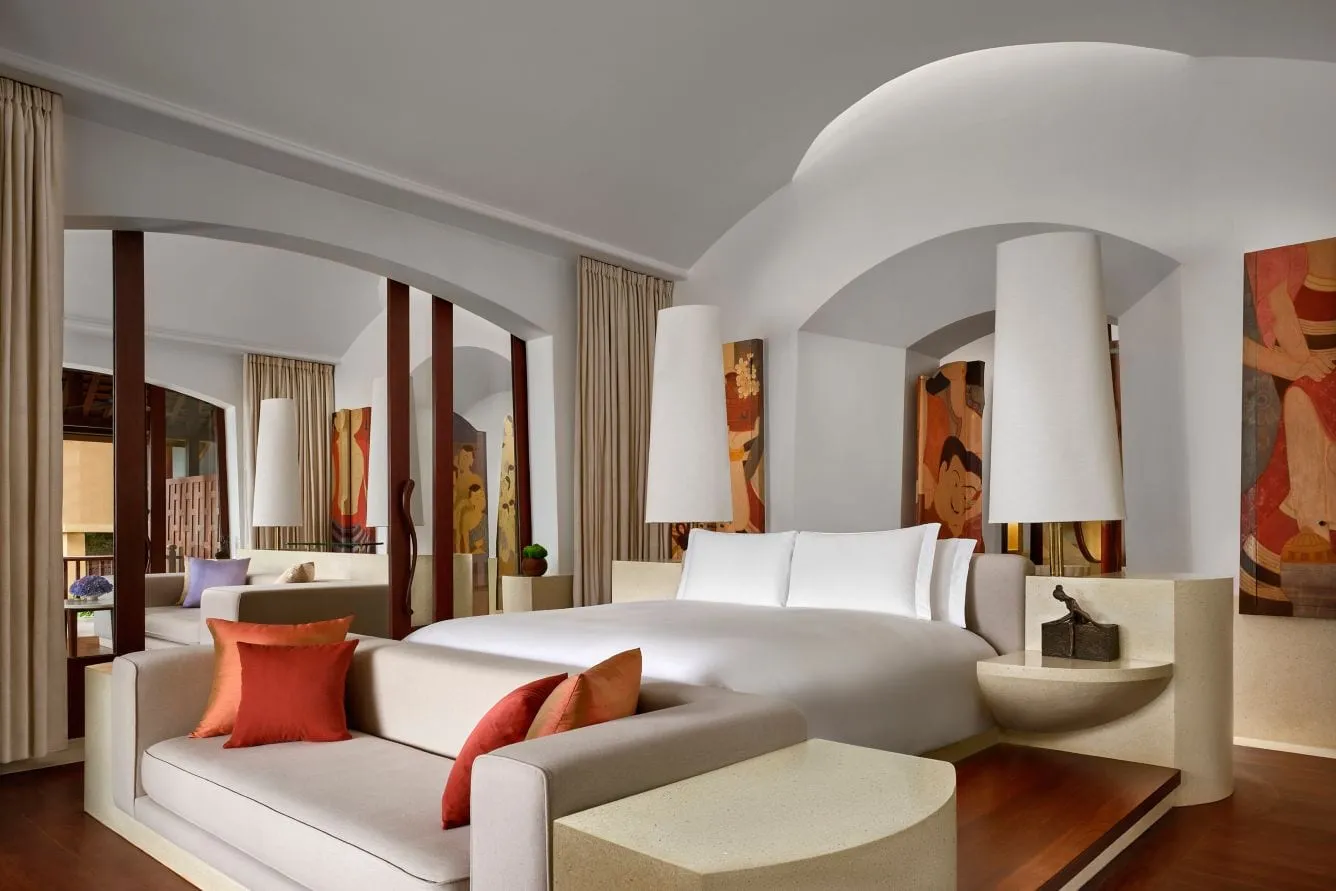
Inside the villas, the material palette leans on natural stone and teak, worked into dramatic, sweeping rooflines that continue the exterior’s temple-adjacent silhouette into the ceiling line of the bedroom itself. Beds are built oversized, roughly three metres by two, and bathrooms are treated as a genuine second living space rather than a utility room, typically built around a deep sunken bath and, in the pool categories, direct access to an outdoor bathing area screened by garden walls.
The overall register sits closer to a well-appointed private residence in the region than to an international hotel chain’s standard room package: fabrics and finishes draw on a Thai palette without tipping into overt ornament, and the pool villas in particular are laid out so that indoor and outdoor space blur into each other, with sliding glazed walls opening bedrooms directly onto a private terrace, pool and garden. Public spaces extend the same material language at a larger scale, with the restaurants and spa pavilions built from the same combination of dark timber, stone and steep, layered roofs that define the villas, so the property reads as a coherent design statement rather than a hotel block dressed up with a few showpiece public areas.
Atmosphere
Phulay Bay’s mood is quiet and residential rather than resort-busy, a function of both its small guest count and its garden-dispersed layout, which keeps most movement around the property feeling more like walking between houses than crossing a hotel campus. The beach itself, a private stretch of Tab Kaek facing the Andaman Sea and the limestone islands offshore, anchors most days, with the resort’s dining venues, spa and pool spread out enough that encountering other guests is the exception rather than the rule.
Evenings lean into ceremony without becoming stiff: the resort runs a Sunset Experience most weeks, pairing food and drink with the changing light over the water, and the candlelit arrival pavilion is lit again after dark for guests moving between the villas and the restaurants. Because each guest has a dedicated Ton Hong butler on call, the pace of a stay here is unusually adjustable, guests can lean on scheduled activities and dining reservations or simply let the day run loose around the villa’s own pool, and the service style is built to accommodate either without friction.
Rooms and Suites
There are 54 villas and pavilions across the resort. The entry point is the Pavilion category, which has a private verandah with outdoor lounge seating and contemporary Thai décor with sea or garden views, but no private pool, so the outdoor component of the stay defaults to that verandah rather than a plunge pool. Above that sit 30 Pool Villas, ranging from 67 to 578 square metres, each with its own private pool, sundeck and outdoor bathing area, and this is the category most guests associate with the core Reserve experience, since the private pool functions as the centre of daily life in the villa rather than an add-on.
At the top of the range are 16 signature Reserve Villas, the resort’s largest and most secluded accommodations, offering the fullest expression of the property’s design, from expansive gardens to private rooftop dining options and, in some configurations, dedicated lap pools. Every category, regardless of size, comes with 24-hour butler service, high-speed internet and the resort’s oversized beds and sunken baths, so the differences between categories are primarily about space, privacy and proximity to the water rather than a tiered amenity list. Prospective guests choosing between categories should weigh the Pavilion’s lack of a private pool carefully against the premium of the Pool Villa tier, since it materially changes what a typical day in the room looks like.
Dining
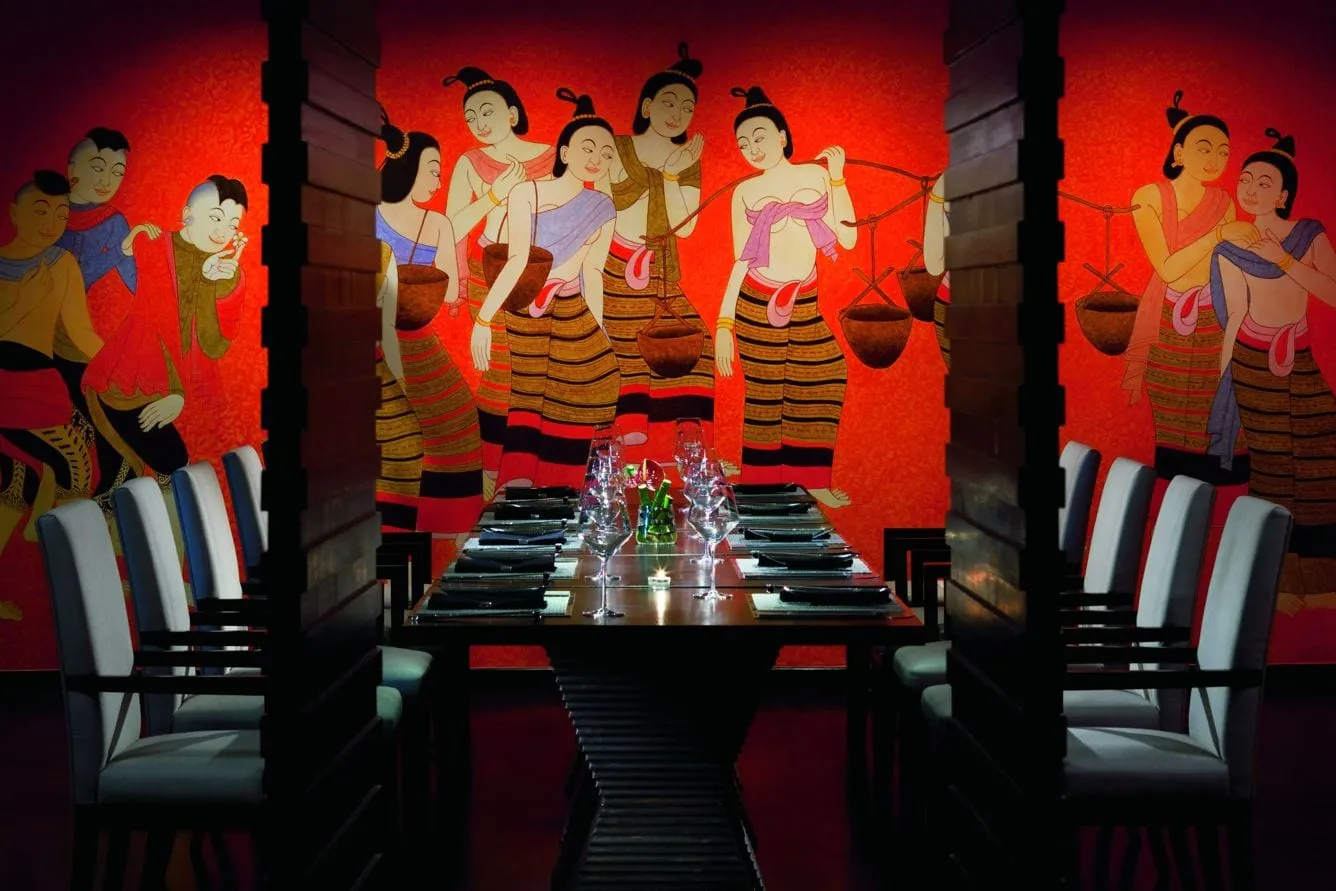
Phulay Bay runs six distinct dining and drinking venues rather than concentrating around a single flagship restaurant. Lae Lay is the resort’s fine-dining venue, built around seafood with an international fusion sensibility and set with beachfront and pool views. Chomtawan operates as a more casual beachfront lounge for relaxed meals through the day, while Plai Fah sits by the pool and serves a mix of international and local Thai dishes suited to a swimsuit lunch. Jampoon takes the resort’s French Mediterranean and Western cooking, and Sri Trang is dedicated entirely to traditional Southern Thai cuisine, served in a deliberately minimalist pavilion that lets the food carry the room rather than heavy decoration. Pirom Bar rounds out the offering as the resort’s dedicated venue for cocktails and evening drinks.
Beyond the fixed venues, private dining can be arranged through a guest’s Ton Hong butler, including beach barbecue dinners on a secluded stretch of shoreline, a format the resort positions as one of its signature bespoke experiences rather than a standard add-on package. Given the resort’s small scale, advance booking for the main restaurants is worth doing during the busier December-to-February stretch of the dry season, when occupancy runs highest.
Spa and Wellness
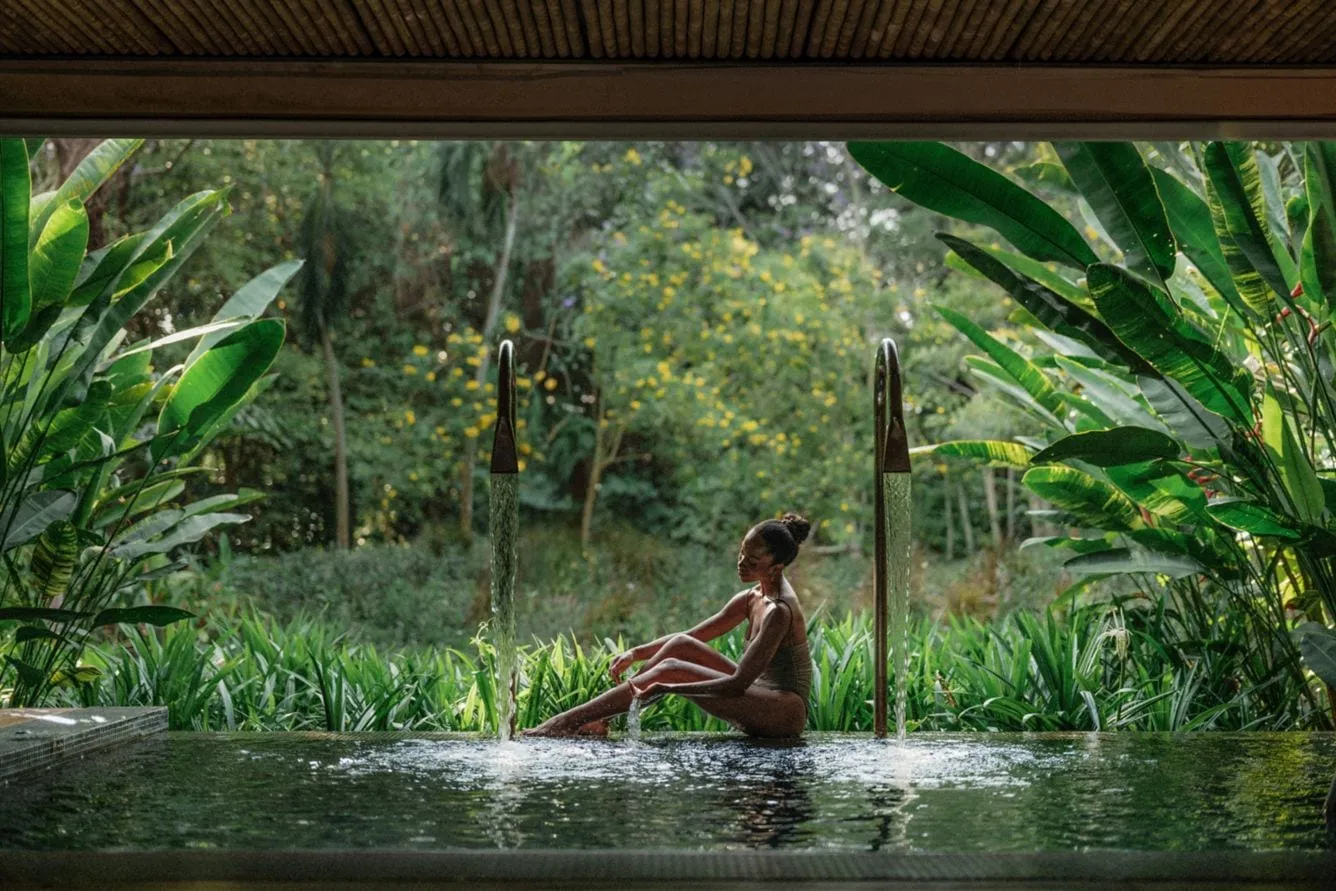
The Spa at Phulay Bay is operated in partnership with ESPA and spans roughly 2,200 square metres across three traditional Thai pavilions, with 11 treatment rooms in total, including single and couples suites plus two VIP treatment suites with their own private decks. Most rooms are positioned to look onto the surrounding lagoon or gardens rather than an internal corridor, continuing the resort’s broader habit of building water and greenery into almost every guest-facing space. Facilities include a vitality pool, saunas, steam rooms and a dedicated wellness studio for movement-based sessions.
Wellness extends beyond the spa building itself: the resort offers beach yoga sessions and can arrange private sessions with a resident wellness practitioner through the butler service, and the surrounding landscape, including the hike up nearby Dragon Crest Mountain, gives guests a more active complement to the spa’s treatment menu for those who want to combine relaxation with time outdoors.
Experiences
Much of Phulay Bay’s activity programme draws on its setting among Krabi’s limestone islands and forested hills. The resort can arrange boat voyages out to the surrounding islands, watercraft rental for guests who want to explore independently, and guided hikes up Dragon Crest Mountain (Khao Ngon Nak), a popular local trail known for its ridge-top views back over the coastline and karst formations. Beach yoga and other wellness sessions run alongside these more active options, and the resort hosts a weekly Sunset Experience that pairs the changing evening light with food and drink.
The Ton Hong butler service is the mechanism through which most bespoke experiences are arranged, from private beach barbecue dinners to curated cultural journeys and off-the-beaten-path nature excursions in the surrounding area, so a meaningful share of what a stay looks like is shaped in conversation with the assigned butler rather than chosen from a fixed activities menu. Recreation for children is also available, making the resort workable for families who want an active programme alongside the more adult-oriented spa and dining offering.
Who It Is For
Phulay Bay suits travellers who want the privacy and design coherence of a small, architecturally driven resort without the multi-flight logistics that some other Ritz-Carlton Reserve properties demand. Its scale, with only 54 villas and pavilions spread across gardens rather than stacked into a hotel block, and its one-butler-per-guest service model make it a strong match for honeymooners and couples who want a genuinely private stay, and for design-minded travellers drawn to Lek Bunnag’s pavilion architecture and the resort’s status as the founding Ritz-Carlton Reserve property.
It is a reasonable choice for first-time visitors to the Reserve tier as well, given its relatively accessible pricing within that category and its straightforward, 45-minute road transfer from Krabi International Airport. It is less suited to travellers chasing a high-energy nightlife scene or a dense international restaurant strip on their doorstep, both of which are more the territory of Phuket, an over-two-hour drive away; Phulay Bay’s strengths lie in stillness, privacy and its immediate natural setting rather than a busy resort town atmosphere.
Best Time to Visit
Krabi runs on a clear dry-and-wet seasonal split. The dry season, from roughly November to April, brings calm seas, consistent sunshine and the best conditions for boat trips out to Railay Beach, the Hong Islands and the wider Krabi archipelago, with December through February generally considered the most reliable stretch of all. This period is also the resort’s busiest and most expensive, so guests prioritising availability and the fullest activities programme should book well ahead for these months.
The south-west monsoon runs roughly May through October and brings intermittent rain and rougher seas, which can disrupt some boat-based excursions, particularly during the wettest stretch from mid-September to mid-October. Rates drop meaningfully during this period, and the resort continues operating in full, so travellers comfortable with some weather uncertainty in exchange for lower prices and quieter grounds can find real value outside the peak window.
How to Get There
Almost all guests arrive via Krabi International Airport (KBV), which sits roughly 40km from the resort, a transfer of about 45 minutes by road. Phuket International Airport (HKT) is a secondary option, at around 130km and over two hours away, and is generally only worth considering if a guest’s international routing makes Phuket meaningfully easier to reach than Krabi directly. Given the difference in distance and cost, Krabi’s own airport is the practical choice for the large majority of arrivals, and the resort can arrange private transfers on request.
Nearby Experiences
Krabi’s coastline is one of the most distinctive in Thailand, and several of its signature sights are within easy reach of the resort by boat or road. Railay Beach, accessible only by boat and hemmed in by sheer limestone cliffs, is among the most photographed beaches in the country and a common half-day or full-day trip from resorts along this stretch of coast. The Hong Islands, a cluster of karst islets with a hidden lagoon at their centre, offer a similar limestone-and-turquoise-water landscape a short boat ride further out.
Inland, the Emerald Pool in Thung Teao Forest National Park is a popular full-day excursion, its turquoise, mineral-rich water fed by natural springs within a forested park setting, often combined with a stop at nearby hot springs. A classic Four Island tour, taking in Koh Poda, Chicken Island, Tup Island and Phra Nang Cave, covers snorkelling, swimming and several of the region’s most recognisable limestone formations in a single day, and can typically be arranged directly through the resort.
Things to Know Before Booking
The clearest decision point when booking is villa category: the entry-level Pavilions have a private verandah rather than a private pool, which changes the daily rhythm of a stay noticeably compared with the Pool Villa and Reserve Villa categories above them. Guests who see a private pool as central to the Reserve experience should budget for at least the Pool Villa tier rather than assuming the entry category will deliver a comparable stay.
Because the resort is genuinely small, at 54 villas and pavilions, its shared facilities, including the main pool areas, scale accordingly, and the busiest weeks of the December-to-February high season can see them fill up more than the resort’s overall sense of space might suggest. Booking restaurants ahead during peak season, and communicating preferences to the assigned Ton Hong butler before arrival, both tend to improve how smoothly a stay runs. Given its setting and pace, Phulay Bay also tends to work best as a dedicated stay of three to four nights rather than a single-night stop within a longer, multi-destination Thailand itinerary.
Sustainability
Phulay Bay is certified by Thailand’s Green Leaf Foundation, a national hotel sustainability programme that assesses environmental management across energy, water and waste practices. The resort publishes a per-room-night environmental footprint as part of that certification, reporting a carbon footprint of 195.68kg and a water footprint of 8,817.59 litres per room per night, figures that give prospective guests a concrete, published baseline rather than a general sustainability claim.
The resort’s dispersed, garden-based layout, with individual pavilions and villas set among planted grounds rather than concentrated into a single large structure, also reduces the built footprint relative to a conventional multi-storey hotel of comparable room count, though this is a byproduct of Lek Bunnag’s architectural approach as much as a dedicated environmental strategy.
Practical Information
Check-in is from 3:00pm and check-out by 12:00pm. Rates start from around USD 650 per night for the resort’s entry-level Pavilion category, rising through the Pool Villa and Reserve Villa tiers, particularly during the November-to-April high season. The nearest airport is Krabi International Airport (KBV), roughly 40km and about 45 minutes away by road, with Phuket International Airport available as a considerably longer secondary option. Most stays run three to four nights, enough time to settle into the villa and spa while still leaving room for at least one full day exploring Krabi’s limestone coastline by boat.
Editorial Conclusion
Phulay Bay’s significance is straightforward to state and easy to underrate in person: this is the resort that proved the Ritz-Carlton Reserve concept could work, and more than fifteen years after its 2009 opening it still delivers the small scale, architectural coherence and privacy that concept was built around. Lek Bunnag’s pavilion architecture, from the candlelit entrance sequence to the sweeping rooflines that carry through every villa, gives the resort a genuine design identity rather than a generic luxury-resort finish, and its position on Tab Kaek Beach, facing Krabi’s limestone karsts across the Andaman Sea, supplies a backdrop that the architecture works with rather than against. For travellers weighing where to spend a Ritz-Carlton Reserve stay in Southeast Asia, the fact that this is where the tier began remains a genuinely good reason to choose it.
In pictures
On the map
Tab Kaek Beach, Krabi, Thailand
Questions
Frequently asked
Why is Phulay Bay significant within the Ritz-Carlton portfolio?
Phulay Bay opened on 22 December 2009 as the first Ritz-Carlton Reserve, the brand's most exclusive tier and one that today counts fewer than a dozen properties worldwide, among them Dorado Beach in Puerto Rico, Zadun in Mexico, Mandapa in Bali and newer additions in Saudi Arabia, Costa Rica, Japan and China. As the tier's founding property, Phulay Bay established the template the others have since followed: small scale, a single strong architectural idea, and a level of privacy closer to a private estate than a conventional resort.
How many villas does the resort have, and do they all have private pools?
The resort has 54 villas and pavilions in total. Thirty are Pool Villas with their own private pools, ranging from 67 to 578 square metres, while the entry-level Pavilion category has a private verandah rather than a pool. At the top of the range sit 16 signature Reserve Villas, the resort's largest and most secluded accommodations. Guests who want the full Reserve-style experience, with a private pool as the centrepiece of the villa, should book into the Pool Villa category or above rather than the entry-level Pavilions.
How do guests get from the airport to the resort?
Almost all guests arrive via Krabi International Airport (KBV), roughly 40km and about 45 minutes by road from the resort. Phuket International Airport is a further option, though at around 130km and over two hours away it is a considerably longer and more expensive transfer, so Krabi's own airport is the practical choice for the great majority of arrivals.
What is the food and drink programme like?
The resort runs six dining and drinking venues built around distinct concepts rather than a single central restaurant: Lae Lay for seafood-led fine dining with an international fusion edge, Chomtawan as a casual beachfront lounge, Plai Fah for poolside international and local dishes, Jampoon for French Mediterranean and Western cooking, Sri Trang for traditional Southern Thai cuisine served in a minimalist pavilion, and Pirom Bar for cocktails and evening drinks. Private dining on the beach can also be arranged directly through a guest's assigned butler.
Is the resort suitable for a short stopover, or does it need a longer stay?
Phulay Bay tends to work best as a dedicated stay of three to four nights rather than a single night tacked onto a longer Thailand itinerary, since much of its value lies in settling into the villa, the spa and the resort's own beach rather than treating it as a base for constant day trips. Krabi's limestone-studded coastline, including Railay Beach and the Hong Islands, rewards at least one full day of exploring by boat, which is easiest to fit into a stay of three nights or more.
Same destination
More hotel guides in Thailand
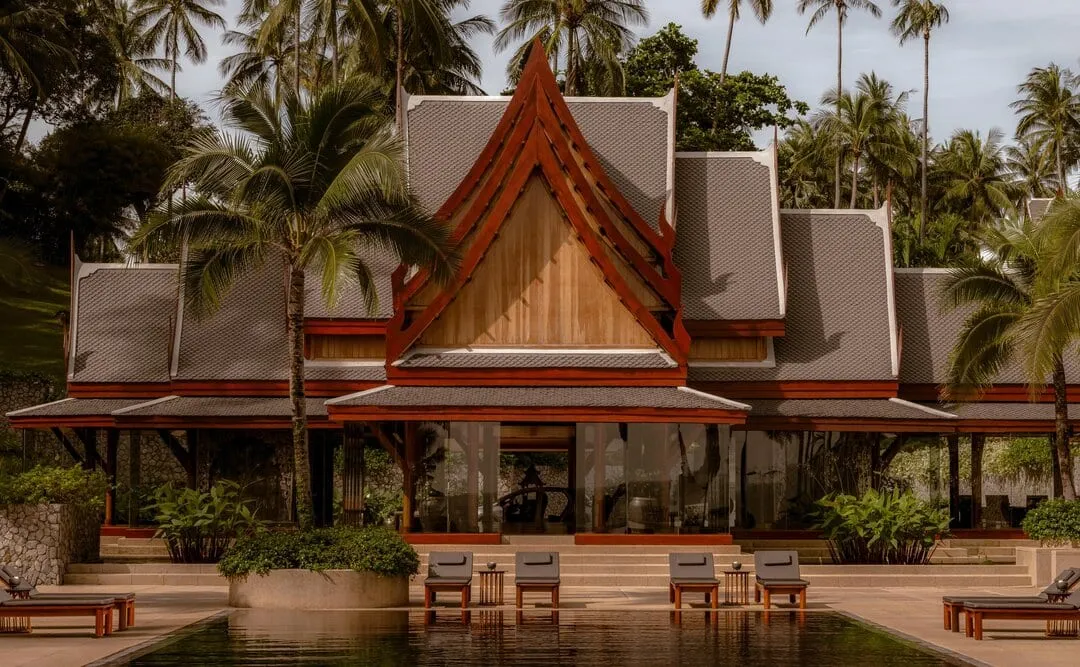
Pansea Beach, Phuket, Thailand
Amanpuri
Opened in 1988 on a former coconut plantation on Phuket's Pansea Beach, Amanpuri is the founding property of the entire Aman brand, a village of temple-inspired teak pavilions that set the template every Aman since has followed.
From $1,200 per night
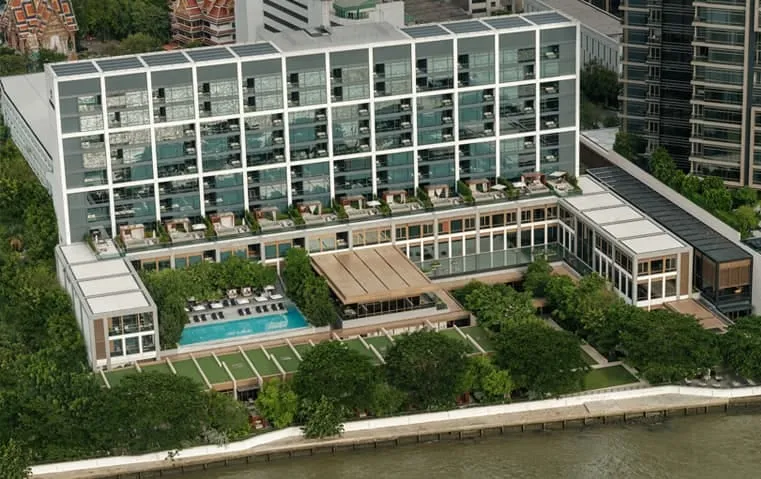
Charoen Krung, Chao Phraya riverside, Bangkok, Thailand
Capella Bangkok
A low-rise riverside sanctuary on the Chao Phraya, where Thai pavilion architecture, a two-Michelin-starred Riviera table and only 101 keys have made a decade-old promenade site into the hotel the rest of Bangkok is measured against.
From $850 per night
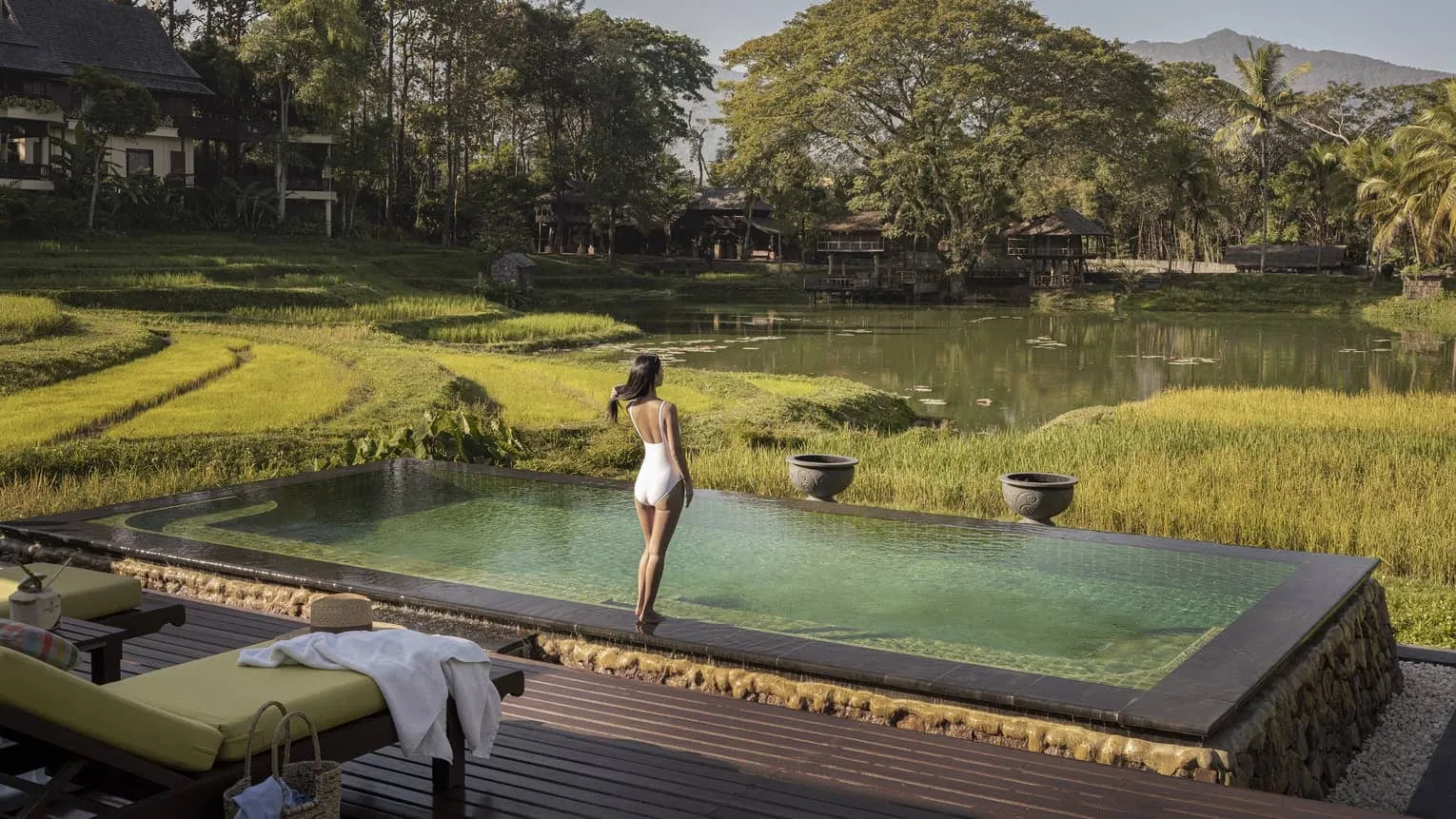
Mae Rim Valley, Chiang Mai, Thailand
Four Seasons Resort Chiang Mai
A working rice valley reimagined as a resort, where teak pavilions and a Michelin-starred kitchen sit inside paddies still farmed by hand.
From $850 per night