Charoen Krung, Chao Phraya riverside, Bangkok, Thailand
Capella Bangkok
A low-rise riverside sanctuary on the Chao Phraya, where Thai pavilion architecture, a two-Michelin-starred Riviera table and only 101 keys have made a decade-old promenade site into the hotel the rest of Bangkok is measured against.
- Rates from
- From $850 per night
- Nearest airport
- Suvarnabhumi Airport (BKK)
- Transfer
- Roughly 30 to 45 minutes by car, depending on traffic; Don Mueang Airport (DMK) is a similar or slightly longer drive
- Best months
- November to February, for cooler, drier weather and clearer river views; shoulder months of March and October are also workable
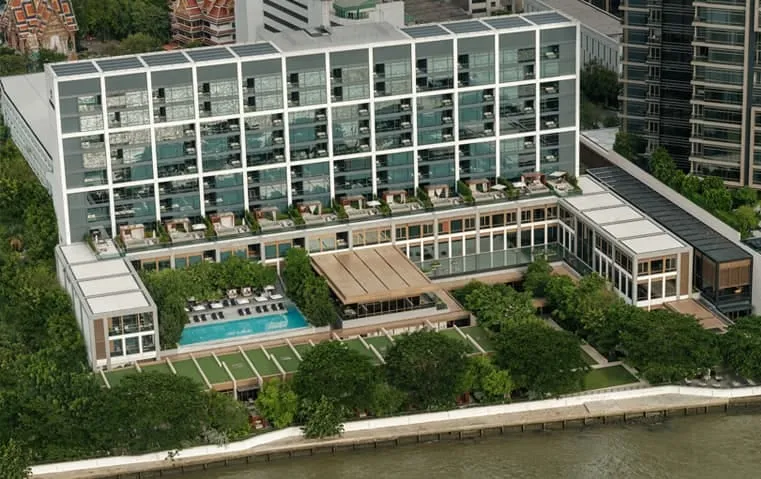
Bangkok has never lacked for riverside hotels, but most of them stack their rooms into towers and sell the view as compensation for scale. Capella Bangkok did something closer to the opposite. When it opened in October 2020, on a slender stretch of Chao Phraya waterfront shared with the Four Seasons next door, it arrived as a deliberately low-rise, 101-key property, more boutique pied-a-terre than skyscraper resort, built around the idea that the river itself, not a rooftop bar or a soaring atrium, should be the thing guests remember.
That restraint has paid off in a way that is unusual even by the inflated standards of hotel awards season. In 2024, Capella Bangkok was named the world’s best hotel by The World’s 50 Best Hotels, and it followed that with third place in 2025, an unusually sustained run for a property still working through its first five years. It now also holds Two MICHELIN Keys in the Michelin Guide’s hotel selection, sits on Conde Nast Traveler’s 2025 Gold List, and carries Forbes Travel Guide Five-Star ratings for both the hotel and its spa, Auriga Wellness. None of that happened by accident, and none of it rests on a single showpiece feature. It is the product of a specific architectural brief, a small, disciplined room count, and a kitchen, Cote by Mauro Colagreco, that would be a genuine culinary destination even if it were not attached to a hotel at all.
The site itself explains a good deal of the thinking behind the design. Capella Bangkok occupies part of Chao Phraya Estate, a mixed-use waterfront development on Charoen Krung Road in the Yannawa area of Sathon district, one of the last substantial undeveloped riverfront plots left in central Bangkok when the project began. Rather than build tall to maximise room count, as most riverside towers in the city have done, the hotel’s architects and owners chose to spread the building low across the site, prioritising direct river frontage, private gardens and villa-style accommodation over height. The result reads less like an international hotel brand’s Bangkok outpost and more like a piece of considered, site-specific architecture that happens to also be a hotel.
For a first-time visitor, the practical implication of that choice is worth understanding before booking: this is not a hotel built around a dramatic lobby view from the 40th floor, or a rooftop infinity pool visible from across the river. It is a hotel built at water level, designed to put guests as close to the Chao Phraya as the site allows, with a scale (101 keys, plus seven villas) that keeps the experience genuinely intimate rather than merely marketed as such.
Why It Stands Out
The single most distinctive decision behind Capella Bangkok is its low-rise form on a site where almost every competitor would have built a tower. Bangkok’s riverfront hotel market is dominated by high-rise properties competing on the number of floors between their rooms and the water; Capella Bangkok instead spread its 101 rooms, suites and villas horizontally across a low-rise building and a run of standalone garden villas, so that every accommodation category faces the Chao Phraya directly rather than looking down on it from height. That single choice, more than any individual amenity, is what critics and the World’s 50 Best judging panel have repeatedly pointed to when explaining the hotel’s run of awards.
The second distinguishing element is Cote by Mauro Colagreco, a restaurant that would draw its own audience independent of the hotel around it. Colagreco, the only Argentine chef to hold three Michelin stars, built his reputation at Mirazur on the French-Italian border, voted the World’s Best Restaurant in 2019; Cote is his first Southeast Asian outpost, and it now holds two Michelin stars of its own in the Michelin Guide Thailand, an unusually fast validation for a hotel restaurant barely five years old.
Third is the sheer density of design pedigree behind a relatively small building: architecture by Hamiltons International, led by former Foster + Partners architects Andy Miller and Richard Scott-Wilson; interiors by the Los Angeles-based studio BAMO; the riverfront villas designed separately by PIA Interiors; and the spa built out by GOCO Hospitality, a specialist wellness design firm with a strong Asia-Pacific portfolio. Few 101-key hotels assemble that many specialist firms, and fewer still manage to make the result feel unified rather than assembled by committee.
Architecture
Capella Bangkok’s architecture, by Hamiltons International, takes its basic form from a specific and explicitly stated reference: the classical Thai riverside pavilion, and the proportions and framing found in traditional Thai panelling and cabinetry. Rather than reproduce vernacular Thai architecture literally, with tiered roofs or overt temple references, the practice abstracted its geometry, using the rhythm and proportion of traditional Thai marquetry and joinery as a structuring device for a contemporary low-rise building.
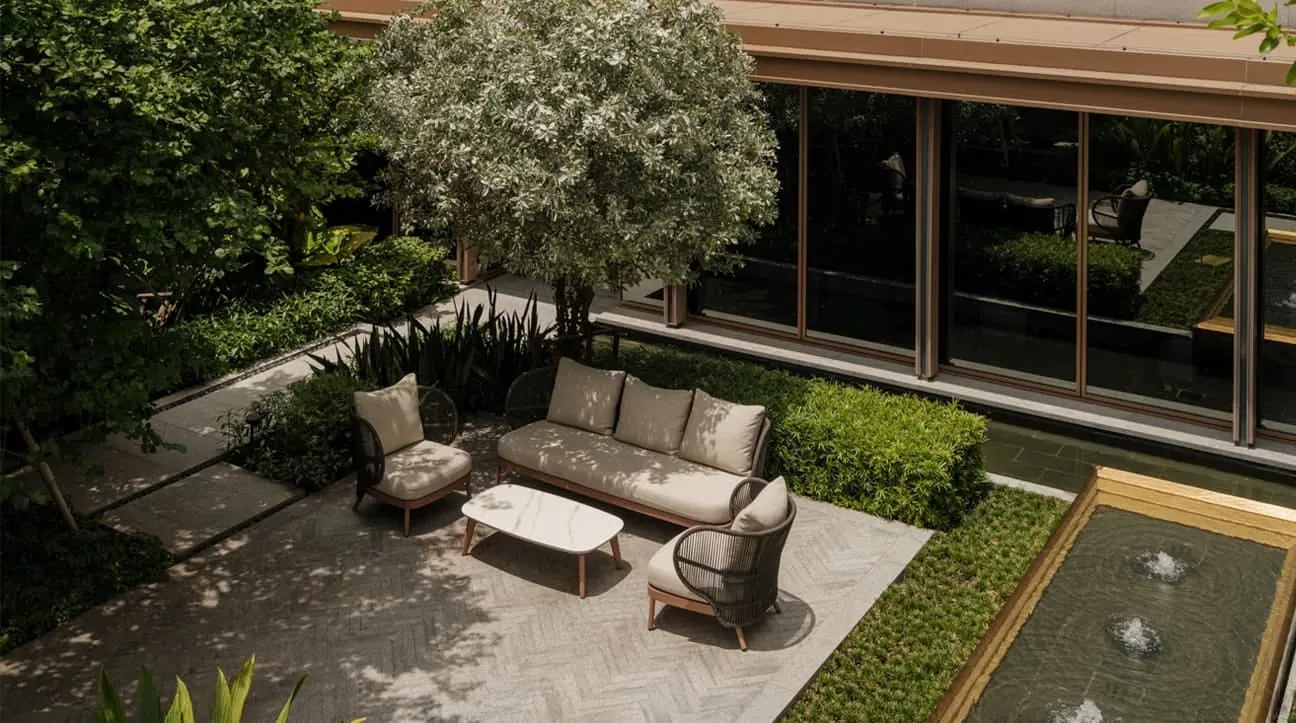
The site plan itself was organised around three distinct, carefully scaled components: a horizontal hotel block set back from the water; a ground and first-floor level built around courtyard spaces and internal connections between public areas; and a lower ground floor opened out to riverside gardens. That layering is what allows the building to stay low without feeling compressed, since much of its programme, gardens, courtyards, pool terraces, is pushed outward and downward toward the water rather than stacked vertically. The seven riverfront villas sit at the base of that layered plan, each occupying ground-floor garden plots directly on the water’s edge, physically separate from the main guestroom block.
The building’s material palette on its exterior leans toward warm timber tones and screening details that reference Thai lattice and panel work without becoming pastiche, a language carried through consistently from the public facade into the guestroom balconies above. Because the hotel sits on the same broader waterfront parcel, Chao Phraya Estate, as the neighbouring Four Seasons Hotel Bangkok, the two properties share infrastructure and site history but were designed as architecturally distinct buildings with separate design teams and separate identities.
Interior Design
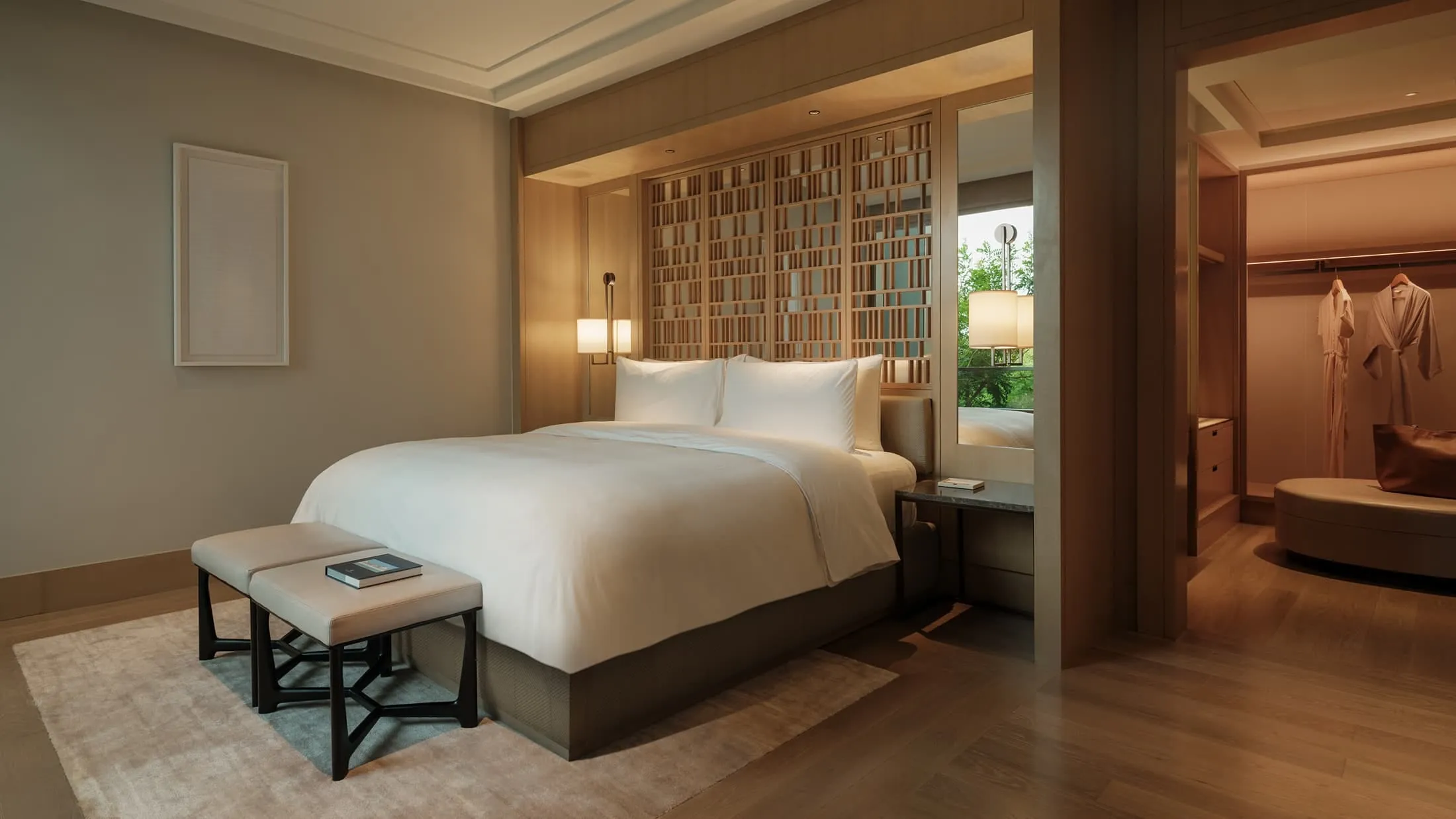
Interiors throughout the guestroom building were led by BAMO, the Los Angeles-based design studio, working in a register that pairs contemporary, residentially styled rooms with quieter references to Thai craft: rattan seating, latticework detailing on headboards, and artwork drawing on traditional Thai techniques and motifs, set against a largely neutral, materials-led backdrop of stone, wood and warm textiles. The intent, consistent with the architecture above it, was to avoid an overtly themed or heavily decorated take on “Thai luxury” in favour of something closer to a well-appointed private residence that happens to overlook the Chao Phraya.
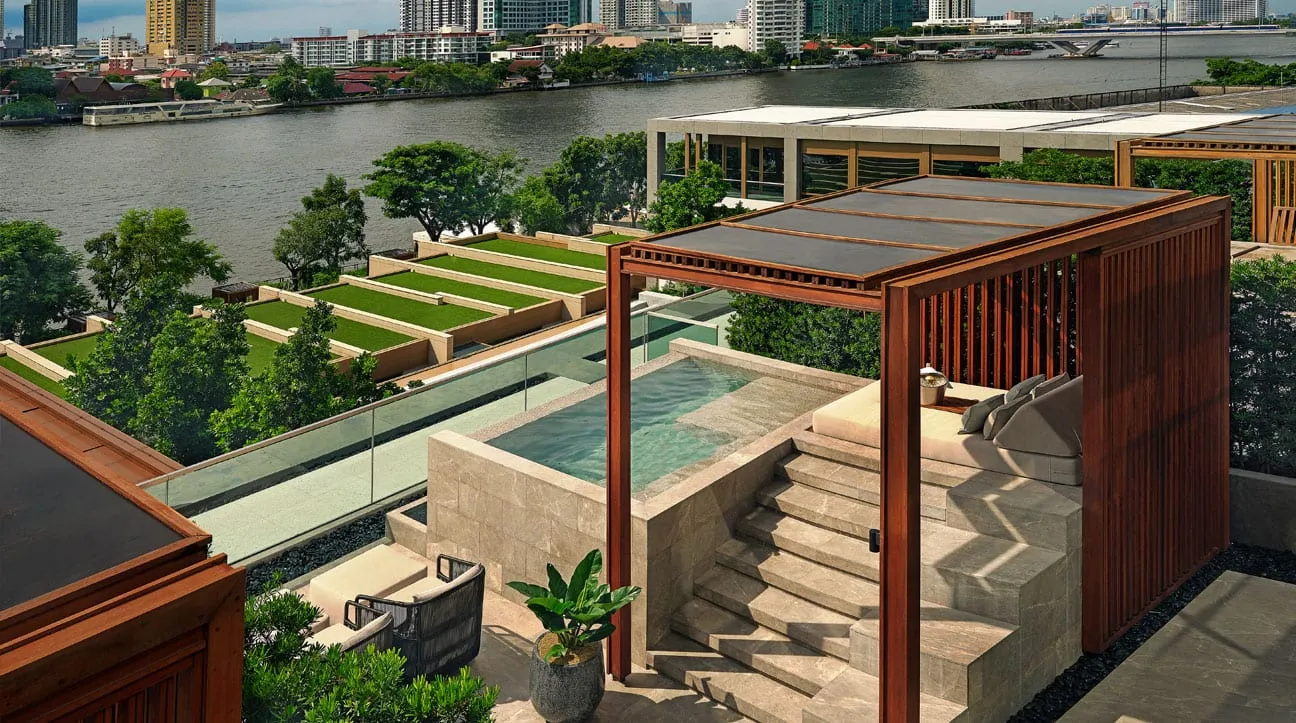
The seven riverfront villas were designed separately by PIA Interiors, distinct from the main guestroom interiors, and lean further into indoor-outdoor living: folding glass doors that open living and dining spaces directly onto private gardens, oversized sunlit bathrooms with both indoor and outdoor showers, and outdoor jacuzzi plunge pools set at the river’s edge on a riverfront daybed terrace.
Public spaces carry the same restrained material language into more theatrical territory in specific rooms, most notably Stella, the hotel’s riverfront cocktail bar, which layers swirling marble, art-deco detailing and traditional Thai murals around a white peacock centrepiece, a deliberate departure from the calmer palette used in the guestrooms and a signal that the hotel is willing to be more expressive in its evening spaces than in its private ones.
Atmosphere
Despite sitting inside one of Southeast Asia’s busiest cities, Capella Bangkok is built to feel deliberately separate from it. The low-rise plan, generous garden and courtyard spacing, and a room count kept to 101 keys across a site that could plausibly have supported a much larger tower all work toward the same end: keeping guest density low and sightlines toward the river uninterrupted. Reviewers and the World’s 50 Best judging panel have consistently described the property in terms of calm and privacy rather than spectacle, a contrast with several of its higher-rise riverside competitors that lean harder into scale and skyline drama.
That said, the atmosphere is not uniformly hushed. Stella, the riverfront bar, and the open conservatory and garden terrace at Phra Nakhon, the hotel’s Thai restaurant, both bring a livelier, more social register to the evening programme, while the pool terrace and villa gardens stay oriented toward quieter, more private use during the day. The overall effect is a hotel that shifts register by space and time of day rather than committing to a single mood throughout, a flexibility that suits both couples seeking privacy and guests who want at least one properly glamorous evening space.
Rooms and Suites
Capella Bangkok’s 101 accommodations are organised across three tiers, all facing the Chao Phraya River. Rooms, the entry category, start at 61 square metres in the low-rise guestroom wing, each with floor-to-ceiling windows, a private balcony or outdoor living space, and panoramic river views as standard rather than an upgrade; the Riverfront Premier category, on higher floors within this tier, adds a private balcony fitted with a daybed for a more elevated vantage point over the water.
Suites range from 95 to 209 square metres and add separate living rooms, sunlit bathrooms and larger balconies suited to in-room breakfasts or sunset drinks. The Capella Suite, at 153 square metres and positioned on the first and second floors, wraps a full balcony around the room and looks out over both the river and the hotel’s pool terrace, pairing a separate living room and dining table with a spacious bedroom and a large marble bathroom.
At the top of the range, the hotel’s seven riverfront villas sit at ground level directly on the water’s edge, each with a private garden, an outdoor jacuzzi plunge pool, and a riverfront daybed terrace; the standard villa configuration runs to 259 square metres, while the two-bedroom Presidential Villa, the largest accommodation on the property, spans 595 square metres with its own separate living and dining spaces, private garden and plunge pool. Every category, from the entry-level 61-square-metre room to the Presidential Villa, is built around uninterrupted views of the Chao Phraya, a consistency the hotel treats as a baseline standard rather than a premium feature reserved for its highest tiers.
Dining
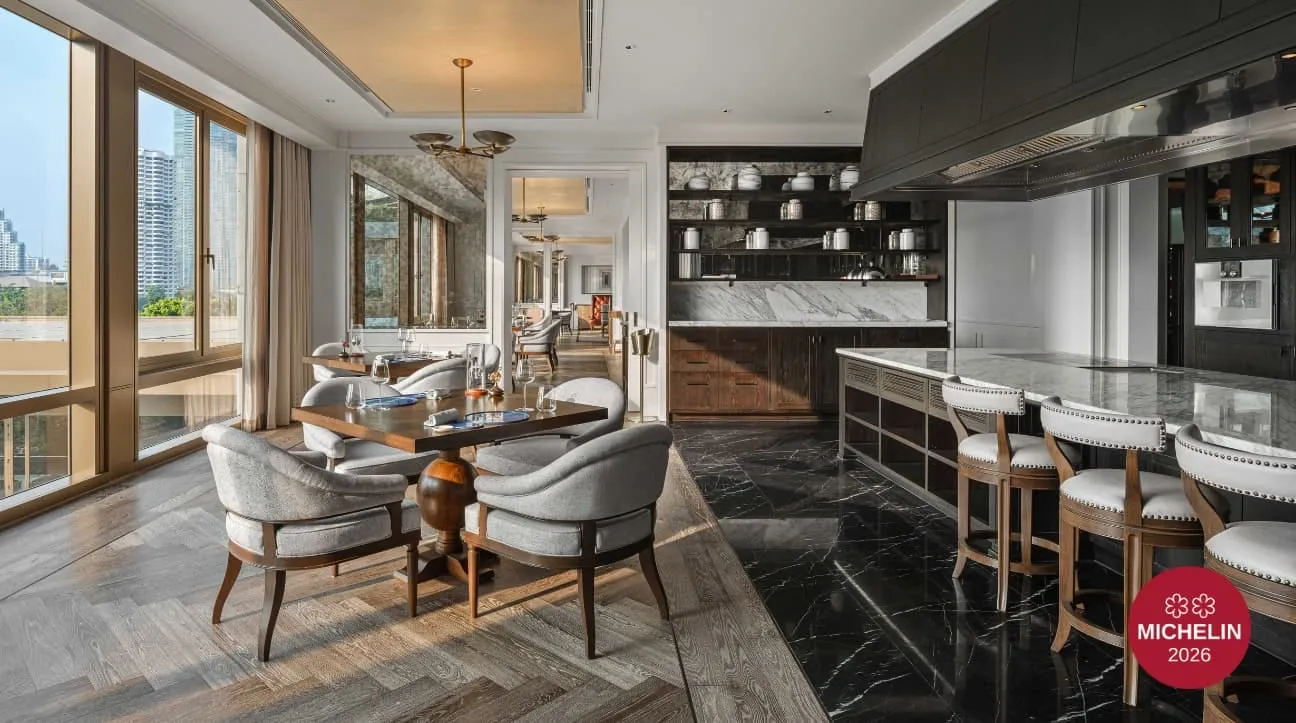
Cote by Mauro Colagreco is the hotel’s principal draw and the restaurant most responsible for its wider reputation. Led by three-Michelin-starred chef Mauro Colagreco of Mirazur, and run on a daily basis by executive chef Davide Garavaglia, Cote reinterprets the traditional cooking of the French and Italian Riviera, from Nice to Genoa, through Colagreco’s signature approach: clean, ingredient-driven, sustainability-minded plates that draw where possible on Thai and regional produce. The restaurant holds two Michelin stars in the Michelin Guide Thailand, an unusually strong result for a hotel dining room barely five years into operation, and reservations are correspondingly difficult to secure without advance planning.
Phra Nakhon, the hotel’s Thai restaurant, takes the opposite approach: home-style Thai cooking built on family recipes, adapted for the restaurant by chef Kannika Jitsangworn and her team, served across an open conservatory dining room and a garden terrace looking out to the river. It appears on the Michelin Guide Thailand’s recommended list, a separate distinction from Cote’s starred status but a strong signal in its own right for a hotel restaurant working in a genre, everyday Thai cooking, that is notoriously hard to elevate without losing its character.
Stella, the riverfront cocktail bar, serves a menu of craft cocktails set against art-deco interiors and traditional Thai murals, while KIN, a patisserie boutique positioned beside Phra Nakhon’s dining room, offers artisan breads, pastries and made-to-order cakes curated by executive pastry chef Paulo Bairan. A dedicated Tea Lounge rounds out the daytime dining programme with afternoon tea service.
Spa and Wellness
Auriga Wellness, the hotel’s spa, occupies 1,074 square metres and was designed by GOCO Hospitality, a wellness-focused design and consultancy firm with an extensive Asia-Pacific hotel spa portfolio. The facility includes seven treatment rooms, among them two dedicated spa suites for couples, alongside a thermal bathing area and a naturally lit tea lounge that opens onto an outdoor spa garden.
The spa’s programme pairs contemporary wellness techniques with traditional Asian practices, offering deep-tissue, hot stone, sports and Swedish massage alongside aromatherapy, Ayurvedic treatments, body scrubs and wraps, an approach the hotel frames as tailored and integrative rather than a fixed, one-size menu. Auriga Wellness holds a Forbes Travel Guide Five-Star rating in its own right, a distinction separate from and additional to the hotel’s own five-star rating. Beyond the spa itself, the hotel’s central feature is a rectangular infinity-edge pool overlooking the river, open around the clock, alongside a fitness centre for guests who want a workout with the same waterfront outlook as the rest of the property.
Experiences
Capella Bangkok’s experience programme leans heavily on the Chao Phraya itself and the neighbourhoods that line it. A private longtail boat tour through one of Bangkok’s artisan communities runs across roughly half a day with an English-speaking guide, taking in traditional and contemporary craft, including Thai puppetry. A separate itinerary pairs a walk through Bangkok’s Portuguese quarter, known for its bakeries and colonial-era streets, with a solar-powered longtail boat ride along the historic Thonburi canals, passing wooden shophouses built on stilts and riverside temples.
On land, the hotel arranges a Muay Thai experience built around attending a live match and meeting a champion fighter, sent home with a pair of authentic Muay Thai shorts, alongside seasonal cultural programming that has included Khon mask painting and Lanna umbrella workshops. A dedicated Little Stars programme runs activities for younger guests, and the hotel’s in-house culture team maintains relationships with local artisans and neighbourhood figures across the surrounding Charoen Krung district, used to build more bespoke, less scripted excursions on request.
Who It Is For
Capella Bangkok suits design and architecture travellers drawn to Hamiltons International’s low-rise reinterpretation of the Thai riverside pavilion, and to seeing that idea carried through consistently from the building’s form down to BAMO’s guestroom interiors. It is equally well suited to food-focused travellers who want access to Cote, a genuinely world-class table under a chef with three Michelin stars to his name elsewhere, without needing a separate reservation strategy from their hotel booking.
Couples looking for a riverside city sanctuary, rather than a hotel built around nightlife proximity, will find the villas and suites, and the calm, low-density atmosphere across the property, a strong match, as will travellers prioritising a serious spa programme at Auriga Wellness. It is a less natural fit for guests who want to be within walking distance of Sukhumvit or Silom’s bar and restaurant density, or for large groups seeking a bigger, more convention-oriented hotel; at 101 keys plus seven villas, Capella Bangkok is built for a smaller, quieter kind of stay than Bangkok’s larger riverside towers.
Best Time to Visit
Bangkok’s most comfortable weather runs from November through February, when temperatures and humidity both drop from their peak and skies tend to stay clearer, an advantage for a hotel built around unobstructed river views from every room. March through May brings the hottest and most humid conditions of the year, while the wet season, roughly June through October, brings regular afternoon downpours and periodically higher river levels, worth checking directly with the hotel around the September to October peak of the rainy season. The shoulder months of March and October are workable for travellers prioritising lower rates over ideal weather, though with a higher chance of heat or rain respectively.
How to Get There
The nearest international gateway is Suvarnabhumi Airport (BKK), roughly 36 kilometres from the hotel and typically 30 to 45 minutes away by car depending on traffic, with private transfers bookable directly through the hotel. Don Mueang Airport (DMK), used primarily by low-cost carriers, sits at a broadly similar or slightly longer driving distance from the property.
Within the city, Capella Bangkok’s Charoen Krung Road address places it near the river rather than directly on the BTS Skytrain network, so most guests arrive by car or hotel boat transfer rather than rail; the hotel can arrange river transfers connecting to nearby piers for guests who want to explore central Bangkok by boat rather than by road, a practical option given the traffic congestion common on Charoen Krung and the surrounding riverside roads at peak times.
Nearby Experiences
The hotel sits within the Charoen Krung district, one of Bangkok’s oldest commercial corridors and now a recognised hub for contemporary art and design, including the TCDC (Thailand Creative and Design Center) and a growing run of independent galleries and studios along the road. Iconsiam, one of the largest riverside shopping and cultural complexes in Southeast Asia, sits a short distance up the river and is reachable by hotel boat or a short drive.
Further along the Chao Phraya, the historic core of old Bangkok, including the Grand Palace, Wat Pho and Wat Arun, is reachable by river ferry or longtail boat, a journey that avoids much of the road traffic between the hotel and the old city. The Bang Rak neighbourhood immediately surrounding the hotel retains a mix of colonial-era shophouses, longstanding trading businesses and newer restaurants and bars, giving guests a walkable, lower-key alternative to the newer commercial districts further from the river.
Things to Know Before Booking
Cote by Mauro Colagreco is genuinely difficult to book given its scale and two-Michelin-star status, and reservations are worth arranging as early as possible, ideally at the time of booking the room rather than after arrival. The hotel’s Charoen Krung location, while central to the river and its immediate district, sits apart from the Sukhumvit and Silom areas most associated with Bangkok’s broader nightlife and business districts, worth factoring in for travellers planning to split time across the city by taxi rather than boat.
Bangkok’s road traffic can be significant, particularly around peak hours, and the hotel’s riverside address means some destinations are meaningfully faster to reach by boat than by car; guests planning day trips into the old city or to piers further up the river should build that option into their planning rather than defaulting to road transfers. Room and suite rates vary substantially by season and category, and the step up from entry-level rooms into the suite and villa tiers is considerable, worth weighing against how much of the stay will be spent in-room versus in the hotel’s restaurants, spa and pool areas.
Sustainability
Capella Bangkok holds EarthCheck Silver certification, a program that benchmarks a property’s environmental, community, cultural-heritage and local-economic impact against defined standards. In practical terms, the hotel operates without single-use plastic in guestrooms and communal areas, uses recycled or FSC-certified paper throughout, and grows organic herbs and vegetables in an onsite greenhouse used by both Cote and Phra Nakhon.
The hotel’s cultural and community activities extend into its sustainability programme as well, including guest workshops built around sustainable materials, such as kite-making and art created from melted-down plastic bottle caps, and an in-house culture team that maintains ongoing relationships with local artisans and neighbourhood figures around Charoen Krung rather than treating community engagement as a one-off marketing exercise. The hotel’s own low-rise, garden-forward design, prioritising ground-level courtyards and planting over additional room count, is also presented by the property as part of a broader case for lower-density, less extractive development on a waterfront site that could otherwise have supported a much larger tower.
Practical Information
Capella Bangkok is owned by Waterfront Hotel Co., Ltd, part of the Chao Phraya Estate development led by Country Group Development Public Company Limited, and has been operated by Capella Hotels & Resorts since opening in October 2020. Architecture is by Hamiltons International, with interiors by BAMO, villa interiors by PIA Interiors, and spa design by GOCO Hospitality. Indicative rates for entry-level rooms start from around USD 850 per night, rising substantially through the suite and villa categories; exact rates vary by season and should be confirmed directly with the hotel or a travel advisor. Check-in is from 3:00pm and check-out by noon.
The hotel is located at 300/2 Charoen Krung Road, Yannawa, Sathon, Bangkok 10120, Thailand, on the east bank of the Chao Phraya River. The nearest international airport is Suvarnabhumi (BKK), roughly 30 to 45 minutes away by car depending on traffic; Don Mueang (DMK) is a broadly comparable drive. Most stays run three to four nights, enough time to make full use of the spa, pool and dining programme, including a reservation at Cote, while leaving room for at least one river-based excursion into the surrounding city. November through February offers the most reliable weather for a property built around its river views.
Editorial Conclusion
Capella Bangkok’s achievement is a case of restraint working harder than scale. On a waterfront site that could have supported a much taller, much larger hotel, Hamiltons International and BAMO built something deliberately low, deliberately small, and oriented entirely toward the river it sits beside, and then backed that architectural discipline with a kitchen, Cote by Mauro Colagreco, capable of drawing its own audience regardless of the rooms attached to it. Five years on, the World’s 50 Best judging panel, the Michelin Guide and Forbes Travel Guide have all reached a similar conclusion from different directions: that a 101-key hotel built around calm, craft and the Chao Phraya has more to say about contemporary Bangkok luxury than most of the towers built to out-scale it. For travellers willing to trade proximity to Sukhumvit’s nightlife for river views, genuine quiet and one of the best tables in the city, it remains difficult to match.
In pictures
On the map
Charoen Krung, Chao Phraya riverside, Bangkok, Thailand
Questions
Frequently asked
Where exactly is Capella Bangkok located?
Capella Bangkok sits on the east bank of the Chao Phraya River at 300/2 Charoen Krung Road, in the Yannawa subdistrict of Bangkok's Sathon district, just off Soi Charoen Krung 62. It occupies part of a larger waterfront site known as Chao Phraya Estate, developed by Country Group Development, which it shares with the neighbouring Four Seasons Hotel Bangkok. The location places it a short drive or boat ride from the Charoen Krung art and design district, the Iconsiam riverside mall and the old trading quarter around Bang Rak.
How many rooms does Capella Bangkok have, and what are the categories?
The hotel has 101 keys in total across a low-rise building plus seven standalone villas. Rooms start at 61 square metres with floor-to-ceiling river views and a private balcony or outdoor living space; suites range from 95 to 209 square metres, including the 153-square-metre Capella Suite with a wraparound balcony; and the villas, set at the river's edge with private gardens and jacuzzi plunge pools, range from a 259-square-metre standard villa up to the two-bedroom, 595-square-metre Presidential Villa.
What is Cote by Mauro Colagreco, and does it require advance booking?
Cote is the hotel's flagship restaurant, led by three-Michelin-starred Argentine chef Mauro Colagreco of Mirazur (voted the World's Best Restaurant in 2019) and run day to day by executive chef Davide Garavaglia. It reinterprets French and Italian Riviera cooking, from Nice to Genoa, using Thai and regional ingredients, and holds two Michelin stars in the Michelin Guide Thailand. Given its scale and reputation, reservations are genuinely competitive and are best made well ahead of arrival, ideally at the time of booking the room.
What awards has Capella Bangkok won?
Capella Bangkok was ranked No. 1 on The World's 50 Best Hotels list in 2024 and No. 3 in 2025, holds Two MICHELIN Keys in the Michelin Guide's hotel selection, and Cote by Mauro Colagreco holds two Michelin stars. The property also appears on Conde Nast Traveler's 2025 Gold List, holds Forbes Travel Guide Five-Star ratings for both the hotel and Auriga Wellness spa, and carries EarthCheck Silver sustainability certification.
Is Capella Bangkok a good fit for a first visit to Bangkok?
Yes, with a caveat. Its riverside setting on Charoen Krung Road puts it within reach of the old trading quarter, the Iconsiam mall and river ferry routes to the Grand Palace and Wat Arun, but it sits apart from the Sukhumvit and Silom business and nightlife corridors, so guests who want to be in the middle of that action may prefer a hotel further along the BTS line. For travellers prioritising calm, river views, design and dining over central nightlife proximity, it is a strong first-time base.
Same destination
More hotel guides in Thailand
Pansea Beach, Phuket, Thailand
Amanpuri
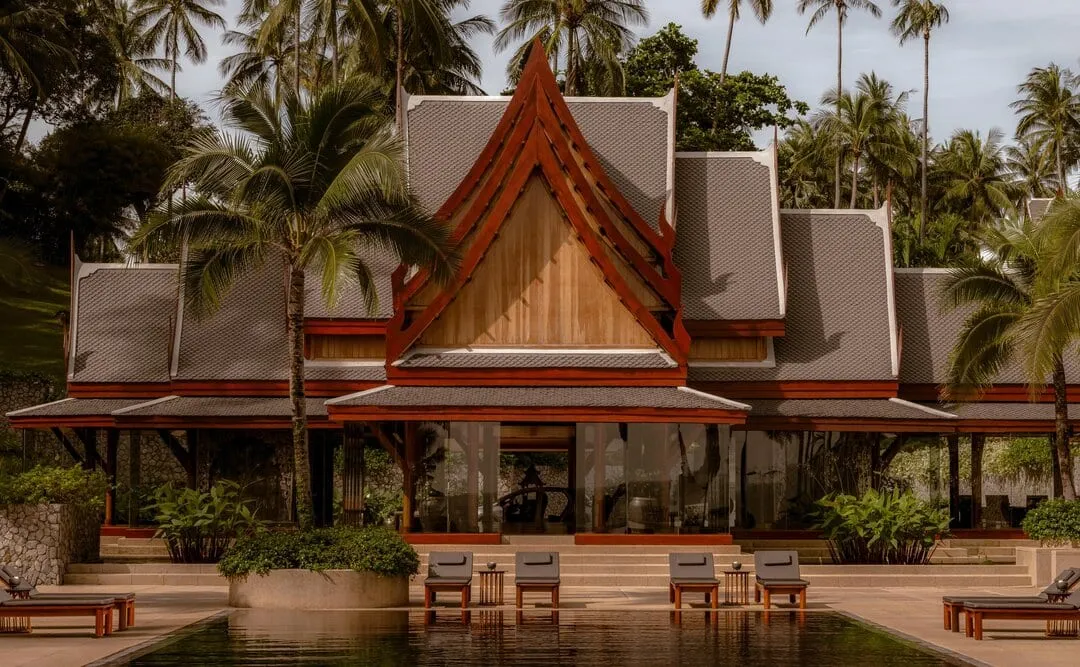
Opened in 1988 on a former coconut plantation on Phuket's Pansea Beach, Amanpuri is the founding property of the entire Aman brand, a village of temple-inspired teak pavilions that set the template every Aman since has followed.
From $1,200 per night
Mae Rim Valley, Chiang Mai, Thailand
Four Seasons Resort Chiang Mai
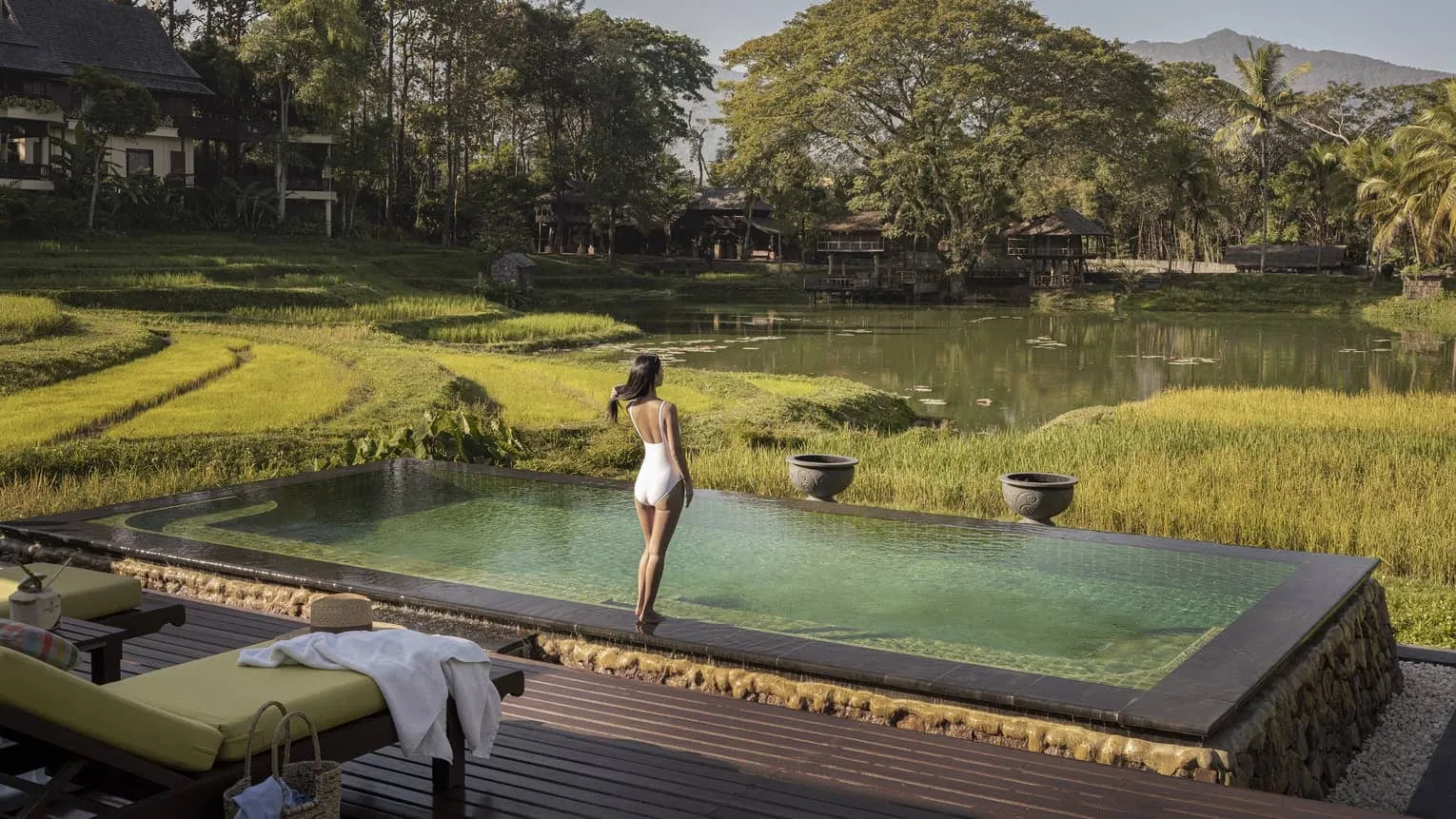
A working rice valley reimagined as a resort, where teak pavilions and a Michelin-starred kitchen sit inside paddies still farmed by hand.
From $850 per night
Tab Kaek Beach, Krabi, Thailand
Phulay Bay, A Ritz-Carlton Reserve
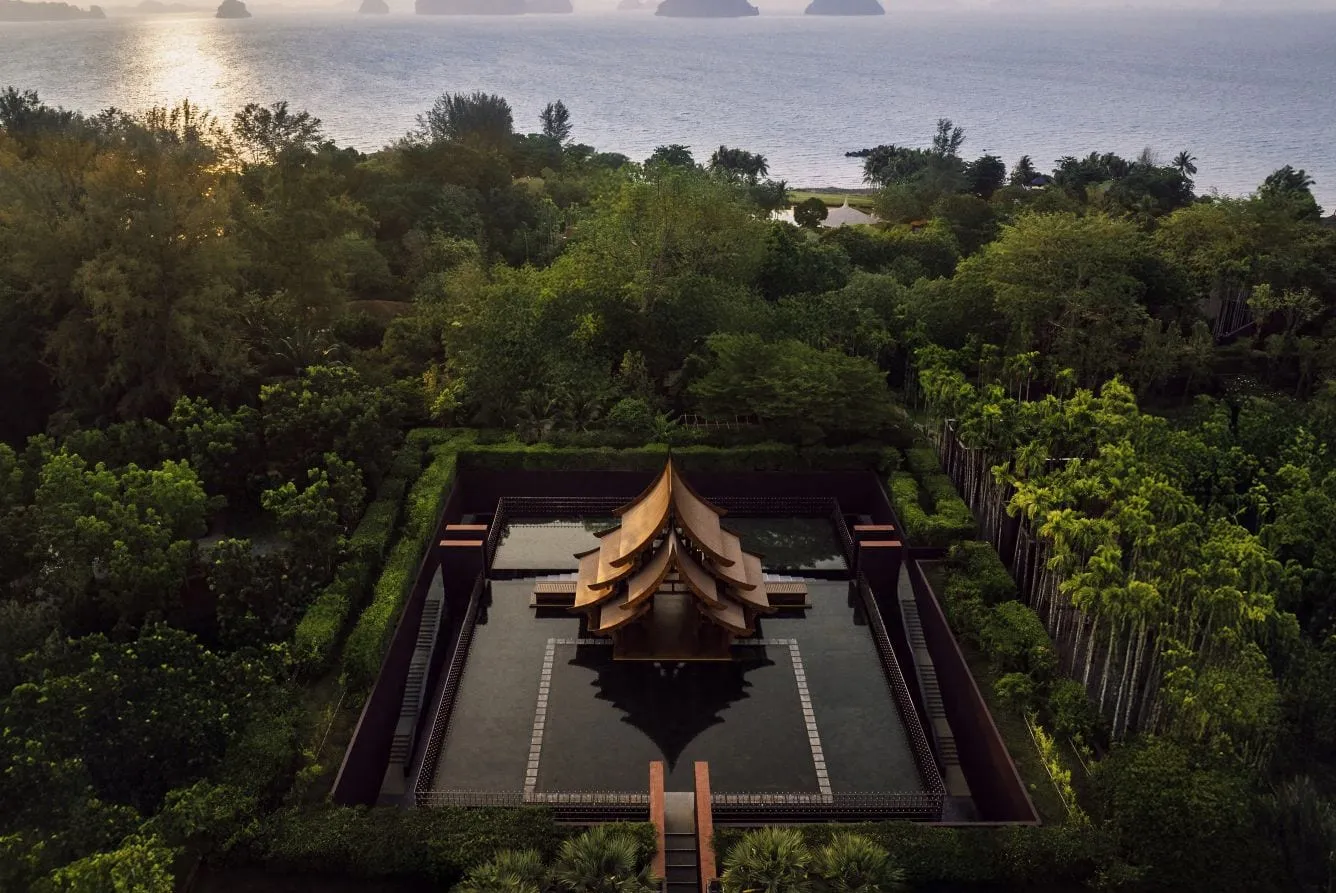
The resort that launched the Ritz-Carlton Reserve brand in 2009, a cluster of Thai-pavilion villas set against Krabi's limestone karsts on the Andaman Sea.
From $650 per night