Naoshima, Seto Inland Sea, Japan
Benesse House
A Tadao Ando concrete museum with guest rooms built into its galleries, the founding building of the Seto Inland Sea's art-island movement.
- Rates from
- From ¥40,000 per night
- Nearest airport
- Takamatsu Airport (TAK) or Okayama Airport (OKJ), both connecting onward by ferry
- Transfer
- About 1.5 to 2 hours door to door from either airport, combining a bus or train transfer to the port with a 20 to 60 minute ferry crossing
- Best months
- April to June and late September to November, avoiding the humid peak of midsummer and the Setouchi Triennale's most crowded festival weekends
There is no lobby check-in desk at Benesse House in the conventional sense, no clear seam between where the museum ends and the hotel begins. A guest walks the same board-formed concrete corridors as a day-tripping art tourist, passes the same works by Jean-Michel Basquiat or Yayoi Kusama on the way to a room, and only really registers the shift from public to private space at the door to their own suite, which turns out to have another artwork hanging inside it. This blurring is not an accident of layout. It is the entire premise of the place: a museum you can sleep inside, conceived from the outset as a single continuous experience of art, architecture and the Seto Inland Sea rather than a hotel with a gallery attached.
Benesse House opened in 1992 on Naoshima, a small island in Japan’s Seto Inland Sea that had spent much of the twentieth century as the site of a copper refinery and little else. Designed by Tadao Ando and built by what was then Fukutake Publishing (later renamed Benesse Holdings), it was the founding structure of a project that has since transformed Naoshima and two neighbouring islands, Teshima and Inujima, into one of the more improbable art pilgrimages in the world, anchored by the Chichu Art Museum, the Lee Ufan Museum and a scattered collection of outdoor works and converted houses known as the Art House Project. Benesse House came first, though, and it remains the only place in that entire archipelago where a visitor can actually spend the night among the art rather than simply passing through it.
Three decades on, the property has grown from a single museum building into four distinct accommodation wings, Museum, Oval, Park and Beach, spread across a hillside and shoreline site, each designed by Ando at a different point in the project’s development and each offering a slightly different register of the same idea. It is not a large hotel by any conventional measure, and it was never built to compete on amenity count with a resort. Its case rests instead on something harder to replicate: the sense of being granted private, after-hours run of a serious contemporary art collection, in a building whose architecture is itself one of the exhibits.
Why It Stands Out
Benesse House’s core distinction is structural rather than cosmetic. Most hotels with notable art collections treat the work as decoration, pieces bought to furnish public spaces and corridors. Benesse House inverts that relationship: the museum came first, the guest rooms were built into and around it, and the art was never an afterthought layered onto a standard hospitality floor plan. Overnight guests in the Museum and Oval wings are given access to the galleries outside the hours open to day visitors, which means the possibility of standing alone, or nearly alone, in front of major contemporary works after the last ferry back to Takamatsu or Okayama has departed for the evening.
It is also the founding site of a broader phenomenon. Benesse Art Site Naoshima, the umbrella name for the art activities Benesse Holdings and the Fukutake Foundation now run across Naoshima, Teshima and Inujima, began here, and Benesse House’s 1992 opening set the template that later projects such as the Chichu Art Museum and the Setouchi Triennale would build on. Staying at Benesse House is, in that sense, closer to visiting the source than to visiting one more stop on an established art-tourism circuit.
The architecture is a reason to visit in its own right, independent of the art it houses. Tadao Ando’s board-formed concrete, deep apertures and framed views of the Inland Sea are not backdrop to the collection so much as a fifth wing of it, and the way the buildings sit into the hillside, rather than atop it, has become one of the more studied examples of site-responsive museum design of the past thirty years.
Finally, there is scarcity. With a total room count across all four wings numbering in the dozens rather than the hundreds, and demand that spikes hard during Setouchi Triennale years, a night at Benesse House is a considerably harder booking to secure than its modest room rate might suggest, and that scarcity is part of what has kept the experience feeling considered rather than commodified even as Naoshima’s broader profile as a destination has grown.
Architecture
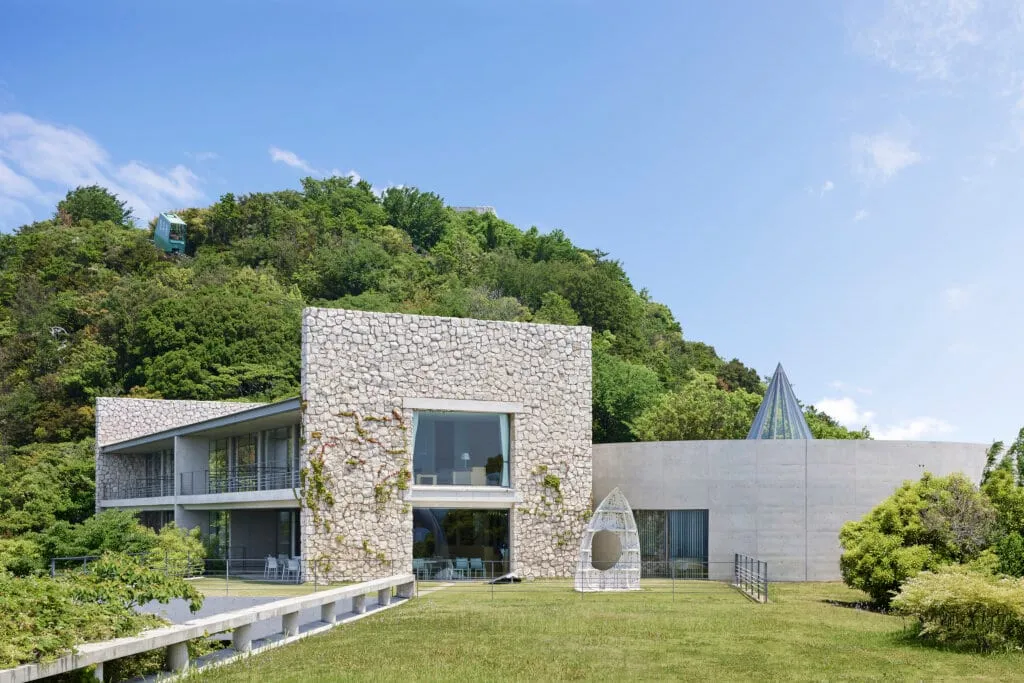
Tadao Ando’s design for the original Museum building, completed in 1992, sets the terms for everything that has followed on the site. The building is cut into high ground overlooking the Inland Sea, its main circulation routes running partly underground so that the structure reads less as an object placed on the landscape than as an excavation within it, a strategy Ando would later push further at the nearby Chichu Art Museum. Board-formed concrete, poured against timber formwork to leave a faint grain in the finished surface, is the dominant material throughout, offset by large, deliberately placed apertures that frame specific views of the sea and the Shikoku mountains beyond rather than opening indiscriminately to the outside.
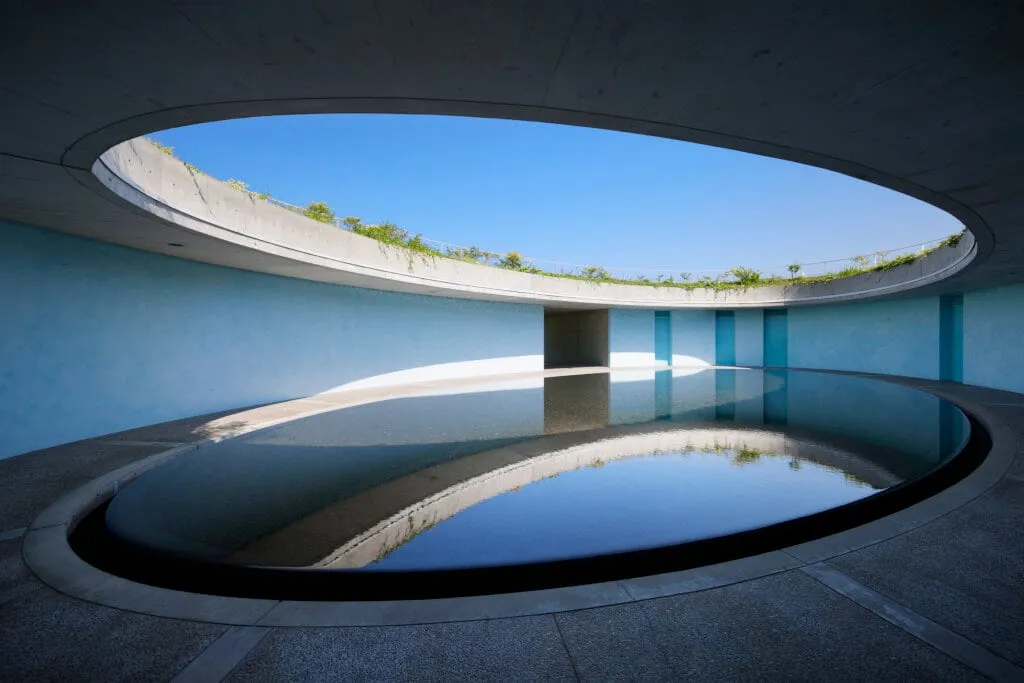
The Oval wing followed in 1995, a satellite structure reached from the Museum by a short monorail, its six rooms arranged around a courtyard in a plan whose name describes its geometry precisely. It sits at a further remove and higher elevation than the Museum, reinforcing a sense of ascending privacy the further a guest travels from the original building. Park and Beach, both completed in 2006, extended the property down toward the shoreline: Park is notable within Ando’s own body of work as one of relatively few wooden structures he has designed, sited on a gentler slope amid lawns dotted with outdoor sculpture, while Beach sits closest to the water of any of the four wings, its rooms angled so that sightlines align with the sea’s own horizon.
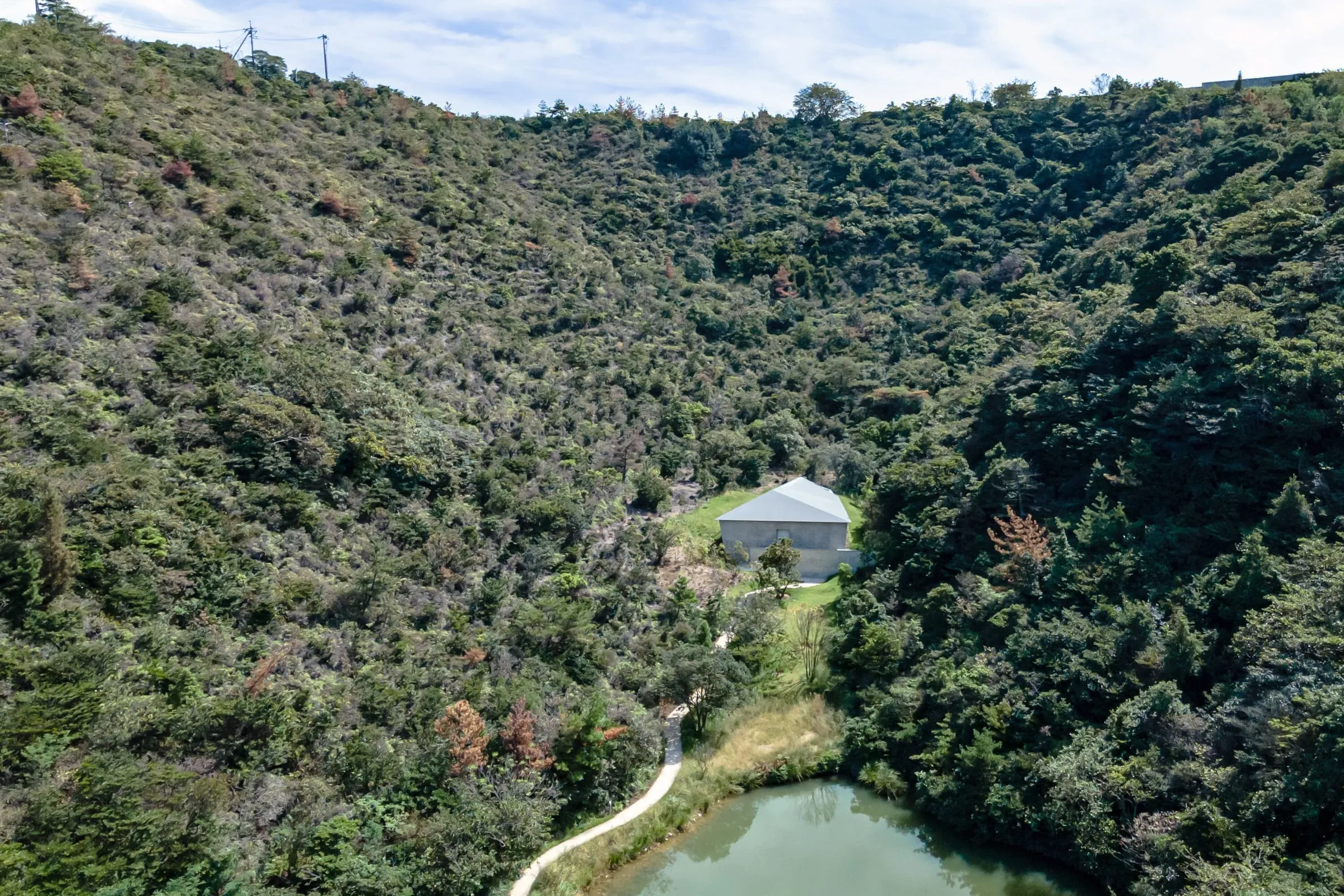
Since 2022, Ando has added two further structures to the wider complex nearby, the Valley Gallery and the Hiroshi Sugimoto Gallery, continuing a working relationship between architect and client that by now spans more than three decades and has become as much a part of Naoshima’s identity as any single building within it.
Interior Design
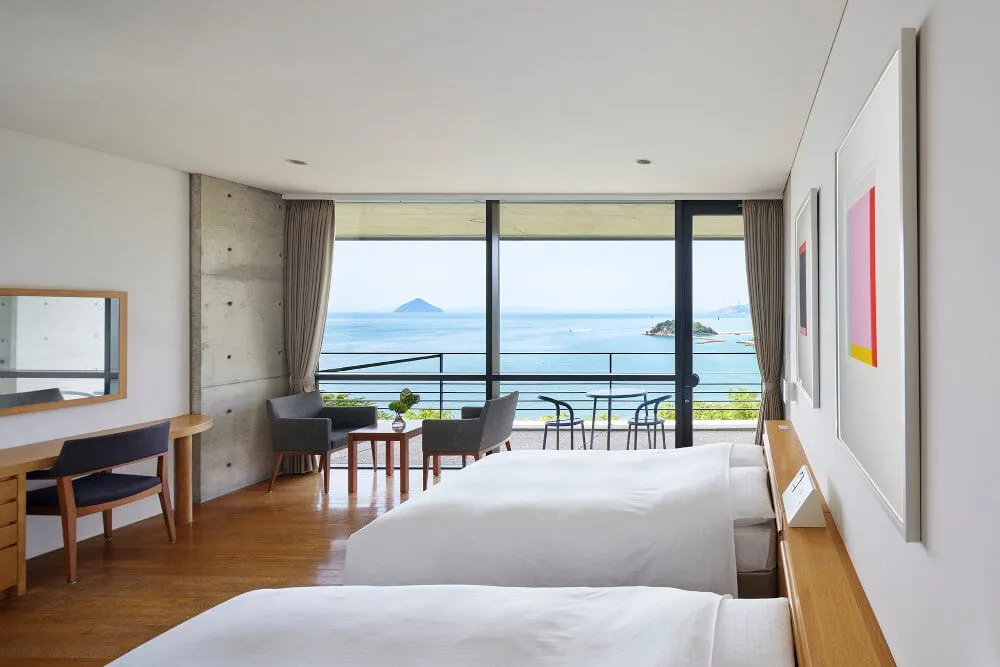
Inside, the same concrete vocabulary that defines the exteriors continues largely uninterrupted, with guest rooms treated less as a retreat from the museum’s architectural language than as a further room within it. Furnishings are restrained and secondary to the building fabric and the art: clean-lined beds, simple desks, generous glazing, and walls that in several rooms carry actual pieces from the collection rather than reproductions or purely decorative prints. In the Oval wing, guest room walls have been given over to site-specific work by artists including Richard Long, David Tremlett and Apichatpong Weerasethakul, effectively converting the guest room itself into a small, private gallery space rather than a conventional hotel interior with art hung as an afterthought.
Room categories vary in scale and outlook by wing. Museum Twin rooms, at 27 square metres, occupy what the property describes as its highest vantage point, with balconies over the Inland Sea; the Museum Suite and Family Suite step up to 70 square metres on the third floor, oriented south and west toward both sea and mountains. Oval’s six rooms run from 30 to 70 square metres, all with floor-to-ceiling glazing. Park’s rooms, more numerous at around 40 across two floors, are a more modest 28 square metres with sea-facing balconies, while Park’s two suites reach 57 square metres. Beach’s eight rooms, the newest and closest to the water, run 61 square metres, several with audio and visual works by Janet Cardiff and George Bures Miller, and Lee Ufan, built into the room itself.
The consistent design decision across all four wings is restraint: nothing in the furnishing competes for attention with the concrete architecture or the art on the walls, and the effect is closer to staying inside a curated exhibition than inside a hotel that happens to display some paintings.
Atmosphere
The mood at Benesse House owes as much to what is absent as to what is present. There is no resort animation, no poolside entertainment, no lobby bar working through a cocktail list; evenings are quiet, oriented toward the changing light over the Inland Sea and the after-hours quiet of the galleries rather than toward organised diversion. The concrete architecture, which could read as severe in a different context, is softened considerably by its framing of the sea and the Shikoku mountains beyond, so that the dominant sensory experience shifts through the day: cool and contemplative in the corridors and galleries, warmer and more expansive on the terraces and lawns where outdoor sculpture and Ando’s material palette give way to open water and sky.
It is a place built for unhurried, deliberate attention rather than for the kind of ambient background luxury more common at a conventional resort. Guests who come expecting bustle or a full activity roster will find Naoshima’s rhythms slower and quieter than they anticipated; guests who come specifically for that quiet, and for the rare privilege of an art museum after the day’s visitors have left, tend to describe the stay as one of the more singular hotel experiences available in Japan.
Rooms and Suites
Across its four wings, Benesse House offers roughly sixty guest rooms in total, a small number for a property with this level of international recognition, and each wing has its own distinct character rather than a shared standard room type repeated at scale. The Museum wing’s ten rooms, split between Twin, Deluxe Twin, Suite and Family Suite categories, sit within the original 1992 building and carry the highest floors and, by the property’s own description, its best views over the Inland Sea and Shikoku mountains, ranging from 27 to 70 square metres.
The Oval wing, reached only by monorail and reserved exclusively for its own guests, comprises six rooms, four Twins at 30 square metres and two Suites at 70 square metres, each with floor-to-ceiling glazing and, in several cases, walls given over to site-specific artist commissions. An exclusive Oval Lounge, open from 7:30am to 6:00pm, serves continental breakfast and welcome drinks to guests of that wing only. Children aged five and under are not accepted in the Museum or Oval wings, a policy the property applies consistently to protect both the art and the quiet register of those two buildings.
Park, the largest wing by room count with around forty rooms across two floors plus two suites, is built largely in wood, unusual within Ando’s concrete-dominated body of work, and set on a gentler slope amid lawns scattered with open-air sculpture; its rooms run a consistent 28 square metres (57 for the suites), each with a sea-facing balcony. Beach, the newest wing and the one closest to the shoreline, offers eight rooms at 61 square metres, several incorporating audio and visual artworks directly into the room, with sightlines designed to align with the water’s surface for what the property describes as a sense of floating on the sea.
Dining
Food at Benesse House runs across a small number of distinct venues rather than a single all-purpose restaurant. The Terrace Restaurant, near the Park building, serves a buffet breakfast each morning and shifts in the evening to French-inflected cuisine, its large windows and high ceilings opening onto the Inland Sea; dinner seatings run at fixed start times through the evening. Museum Restaurant Issen, on the ground floor of the Museum building, serves Japanese cuisine built around kaiseki and Setouchi seafood for dinner, with breakfast and lunch options drawing on the same seasonal, local sourcing. A more recent addition, Setomae Sushi Nagi, opened in 2026 adjacent to Park as an eight-seat counter restaurant, led by a chef with prior Michelin-starred experience in Bangkok, serving sushi built on Setouchi seafood at lunch and dinner. A Museum Cafe on the second floor of the Museum building rounds out the daytime options with lighter fare and views over the collection’s outdoor works.
Spa and Wellness
Benesse House operates a spa on site, open through the afternoon and evening with a treatment menu built around multisensory therapies that incorporate music alongside more conventional bodywork and aesthetic treatments. It is a modest offering by the standards of a dedicated wellness resort, in keeping with a property whose primary draw is art and architecture rather than spa infrastructure, but it gives guests a way to unwind after a day spent walking Naoshima’s museums and installations.
Experiences
The most significant experience Benesse House offers is simply time: overnight guests in the Museum and Oval wings can move through the Benesse House Museum’s galleries before opening and after closing, when the day’s ferry-borne visitors have gone and the building’s concrete corridors and framed sea views are theirs alone. That after-hours access, more than any single artwork, is the experience the hotel is actually selling.
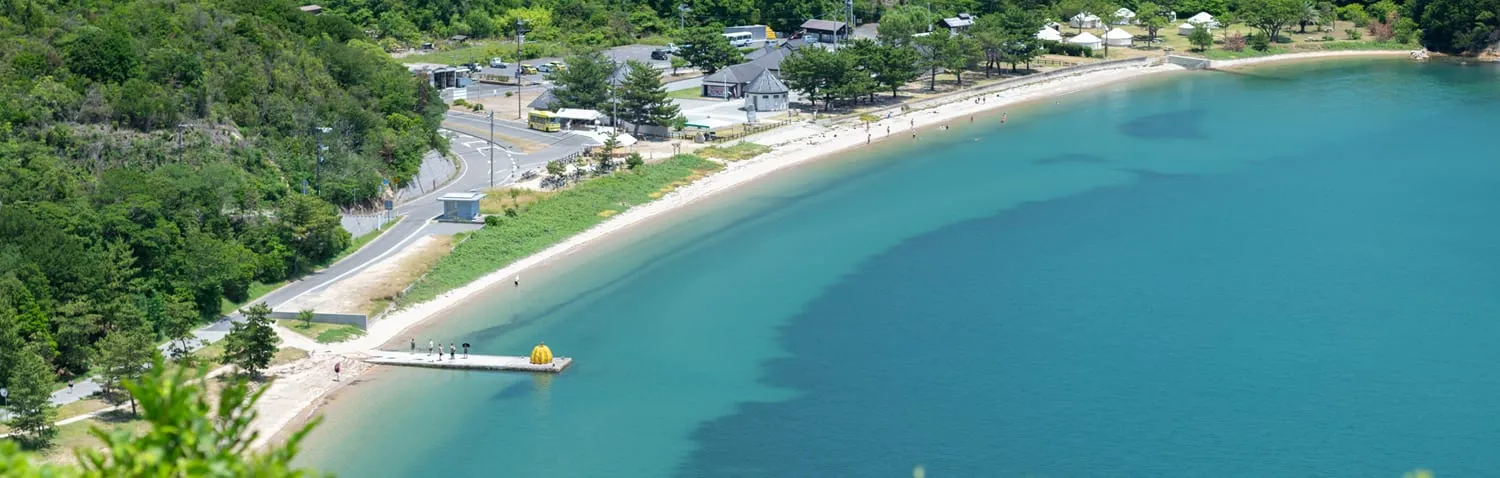
Beyond the Museum building itself, Naoshima’s wider art landscape is reachable on foot, by bicycle or by the island’s local bus network. The Chichu Art Museum, another Ando-designed building sunk almost entirely underground and home to works by Claude Monet, James Turrell and Walter De Maria, sits a short distance away, alongside the Lee Ufan Museum and the Art House Project, a cluster of traditional houses in the village of Honmura converted into individual installations by different artists. Yayoi Kusama’s yellow and red pumpkin sculptures, among the most photographed works on the island, stand at the water’s edge within easy walking distance of Benesse House itself.
Every three years, roughly, the Setouchi Triennale transforms the wider region into a temporary festival ground, with installations spread across Naoshima and a dozen or so neighbouring islands in the Inland Sea, and Naoshima, as the site of Benesse Art Site Naoshima’s founding project, functions as one of the festival’s central venues.
Who It Is For
Benesse House suits travellers whose primary motivation for the trip is art and architecture rather than beach time, spa treatments or nightlife, and who are comfortable with a quiet, contemplative pace over an activity-driven one. Couples and solo design travellers are a natural fit, as are museum-goers specifically drawn by the promise of after-hours gallery access unavailable to day visitors. It also rewards architecture pilgrims with a particular interest in Tadao Ando’s work, given the density of his buildings concentrated on this single small island.
It is a less natural fit for families with very young children, given that the Museum and Oval wings do not accept guests aged five and under, or for travellers wanting the amenity range of a full-service resort, extensive pools, multiple bars, structured entertainment, none of which is part of Benesse House’s proposition. Guests set on a conventional beach holiday, rather than an art-and-architecture-focused stay with the sea as backdrop, are better served elsewhere.
Best Time to Visit
Spring, from April through June, and autumn, from late September through November, offer the most comfortable travelling weather for exploring Naoshima on foot, avoiding the high humidity and heat of Japan’s midsummer months and the rains of the June rainy season. Triennale years, held roughly every three years since the first edition in 2010, bring a significant surge in visitor numbers to the island during the festival’s spring, summer and autumn sessions, meaning rooms and ferries book out well in advance and the after-hours museum quiet that is part of Benesse House’s core appeal is harder to find amid the crowds. Travellers prioritising a quieter, less crowded stay may prefer to time a visit outside those Triennale sessions.
How to Get There
Naoshima has no airport of its own and is reached exclusively by ferry. The two main gateways are Takamatsu, on the island of Shikoku, and Uno, near Okayama on the Japanese mainland. From Takamatsu Port, regular ferries to Miyanoura Port on Naoshima take around 60 minutes, with a high-speed boat option cutting that to roughly 35 minutes; from Uno Port, the crossing is shorter still, around 20 minutes. Both routes are operated by Shikoku Kisen and run multiple times daily.
Getting to those ports typically starts at Takamatsu Airport, connected to Takamatsu city by a roughly 40-minute limousine bus, or Okayama Airport, connected to Okayama Station by a roughly 30-minute limousine bus and onward to Uno Port by a further 45 to 50 minutes by train or bus. From Miyanoura ferry terminal on Naoshima, Benesse House can be reached by local bus toward the Tsutsujiso stop followed by a short walk or complimentary shuttle, by taxi, by rented bicycle, or on foot in around 45 to 60 minutes.
Nearby Experiences
Naoshima’s other art landmarks sit within easy reach of Benesse House by bicycle, local bus or on foot. The Chichu Art Museum and the Lee Ufan Museum, both designed by Tadao Ando, anchor the island’s western side alongside Benesse House itself, while the Art House Project, a scattering of traditional houses in Honmura village reimagined as individual art installations, offers a very different, village-scale counterpoint to the museum architecture. The island’s ferry terminal building at Miyanoura, designed by SANAA with a distinctive transparent roof, is worth a look on arrival or departure in its own right.
Further afield within the Seto Inland Sea, the neighbouring islands of Teshima and Inujima, both part of the wider Benesse Art Site Naoshima and Setouchi Triennale network, are reachable by ferry for travellers extending their stay, each with its own smaller-scale art museums and installations distinct from Naoshima’s more concentrated offering. Takamatsu itself, the mainland gateway city, has its own attractions worth a stop, including Ritsurin Garden, one of Japan’s most highly regarded landscape gardens, for travellers routing through on the way to or from the island.
Things to Know Before Booking
Room availability at Benesse House is genuinely limited, roughly sixty rooms across all four wings combined, and demand climbs sharply during Setouchi Triennale sessions, so advance booking is worth prioritising for any Triennale-year stay. Children aged five and under are not accepted in the Museum or Oval wings specifically, though the Park and Beach wings may have different policies worth confirming directly at the time of booking. Ferry schedules to and from Naoshima are limited compared with mainland transport, so onward travel plans should be built around the timetable rather than assumed to be flexible on short notice, particularly for the last sailing of the day. The museum galleries close periodically for maintenance and rehanging, so travellers with a particular artwork in mind should confirm it will be on view before finalising a stay.
Sustainability
Benesse House and the wider Benesse Art Site Naoshima grew directly out of an environmental remediation effort: Naoshima’s northern shore had been heavily degraded by decades of copper smelting before Fukutake Publishing (now Benesse Holdings) and the town of Naoshima began, from 1985, a joint project to restore the island’s landscape while building it into a base for contemporary art. That founding logic, using art and architecture as a tool for regenerating a damaged place rather than simply building on an untouched one, continues to inform the wider project today, including the 2012 establishment of the Fukutake Foundation, funded by a gift of Benesse Holdings stock, to help sustain the art site’s long-term operation independent of the company’s core publishing and education business. Beyond this documented history, a fully independent audit of the current property’s energy use, waste management or carbon footprint is not publicly available, so this guide describes only what has been reported rather than extending it into a broader claim about present-day operational sustainability.
Practical Information
Rates at Benesse House start from around JPY 40,000 per night, rising with room category, wing and season. Check-in runs from 3:00pm to 8:00pm, with check-out by 11:00am; luggage storage is available outside those hours for guests arriving early or departing late. The nearest airports are Takamatsu and Okayama, both requiring a combined bus or train transfer to a ferry port followed by a Seto Inland Sea crossing of 20 to 60 minutes, for a door-to-door journey of roughly 1.5 to 2 hours from either. Most stays run two to three nights, enough time to work through Benesse House’s own collection at leisure, take in after-hours museum access, and still leave a full day for the Chichu Art Museum, the Lee Ufan Museum and the Art House Project elsewhere on Naoshima.
Editorial Conclusion
Benesse House is not, by conventional metrics, a large or amenity-dense hotel, and it was never built to be one. Its case rests instead on a genuinely unusual premise, fully realised: a working contemporary art museum, designed by one of the defining architects of his generation, that a guest can also sleep inside, with after-hours access to galleries that close to everyone else at the end of the day. Three decades after its 1992 opening, it remains the founding structure of an art-island project that has expanded across Naoshima, Teshima and Inujima and helped seed the Setouchi Triennale, and it is still, of everything that project has built since, the only place where staying the night is itself part of the exhibition. For travellers whose idea of luxury runs toward quiet, considered architecture and genuine proximity to serious art rather than amenity count, it remains one of the more distinctive hotel stays available anywhere in Japan.
In pictures
On the map
Naoshima, Seto Inland Sea, Japan
Questions
Frequently asked
What exactly is Benesse House?
Benesse House is a contemporary art museum on the Japanese island of Naoshima that also functions as a hotel, with guest rooms built directly into and around the museum building rather than in a separate accommodation block. It opened in 1992 as the first structure in what has become the wider Benesse Art Site Naoshima, and it remains the only place on the island where visitors can stay overnight inside the museum itself.
Who designed Benesse House and when did it open?
The architect is Tadao Ando, who has gone on to design nearly every major building across Benesse Art Site Naoshima since. The original Museum building opened in 1992, followed by the Oval wing in 1995 and the Park and Beach wings in 2006, all designed by Ando in his signature board-formed concrete.
How do guests get to Naoshima and Benesse House?
Naoshima is reached by ferry, most commonly from Takamatsu Port on Shikoku (about 60 minutes on the regular ferry or around 35 minutes on the high-speed boat) or from Uno Port near Okayama (about 20 minutes). Takamatsu and Okayama both have airports with limousine bus or train connections to their respective ports. From Miyanoura ferry terminal on Naoshima, Benesse House runs a shuttle bus, or it is reachable by local bus, taxi, bicycle or a roughly 45 to 60 minute walk.
Do overnight guests get special access to the art?
Guests staying in the Museum or Oval wings can access the Benesse House Museum galleries outside normal visiting hours, effectively having the collection to themselves before opening and after closing to day-trippers. Artworks are not confined to the galleries either; pieces by artists including Yayoi Kusama, Jean-Michel Basquiat, David Hockney and Shinro Ohtake appear in corridors, guest rooms, the surrounding lawns and along the shoreline.
Is Benesse House connected to the Setouchi Triennale?
Benesse House and the wider Benesse Art Site Naoshima predate the Setouchi Triennale, an international art festival held across several Seto Inland Sea islands roughly every three years since 2010, but the two are closely linked. Benesse Holdings and the Fukutake Foundation, which built and operate Benesse House, are also central organisers of the Triennale, and Naoshima is one of its main venues, so rooms and ferries are considerably harder to secure during festival months.
Same destination
More hotel guides in Japan
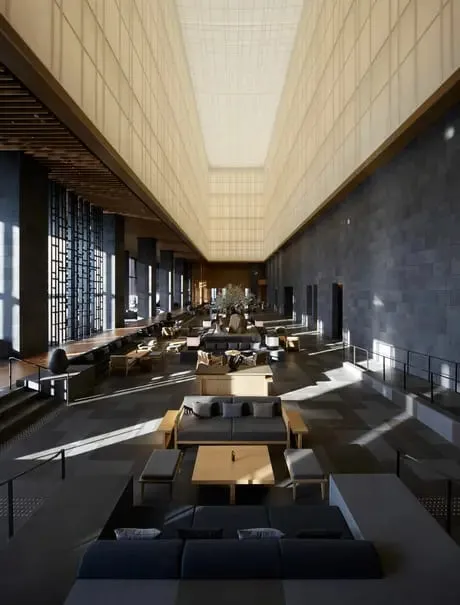
Otemachi, Chiyoda, Japan
Aman Tokyo
Six floors of dark basalt and washi paper, stacked atop a financial-district tower, where a giant paper lantern lobby turns the Otemachi skyline into a Japanese garden.
From ¥250,000 per night
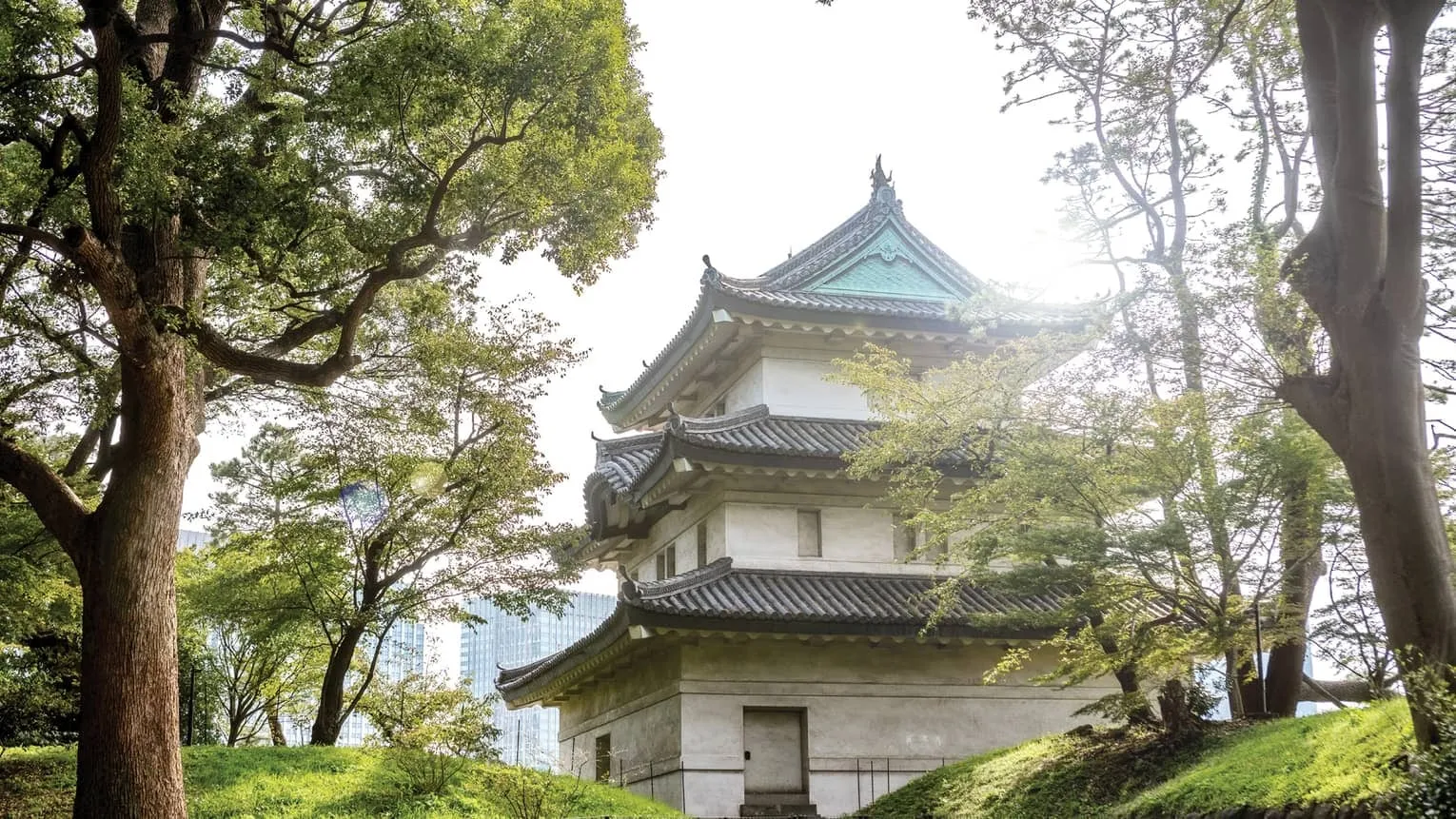
Otemachi, Chiyoda, Japan
Four Seasons Hotel Tokyo at Otemachi
A 190-room aerie stacked into the top six floors of a Tokyo financial-district tower, with the Imperial Palace moat on one side and a Michelin star in the kitchen.
From ¥145,000 per night
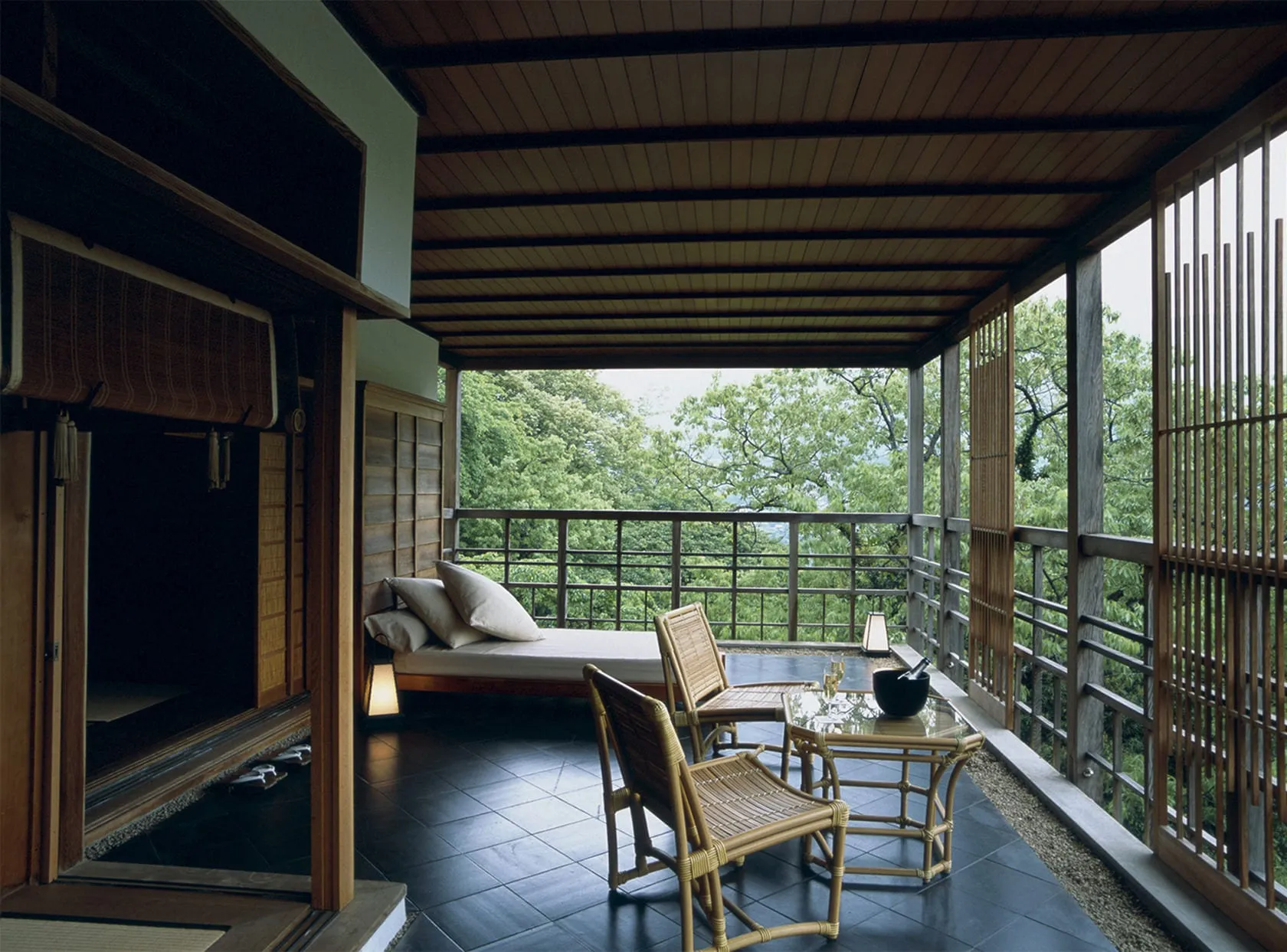
Gora, Hakone, Japan
Gora Kadan
A former Imperial villa in the hills above Hakone, rebuilt as a 38-room ryokan where private volcanic-spring baths and kaiseki dinners define the stay.
From ¥100,000 per night