Bogawantalawa, Sri Lanka
Ceylon Tea Trails
Five planters' bungalows scattered across a working tea estate, where the mist, the butlers and the brew all arrive on schedule.
- Rates from
- From $900 per night
- Nearest airport
- Bandaranaike International Airport (CMB), Colombo
- Transfer
- 4 to 4.5hr by road
- Best months
- January to April
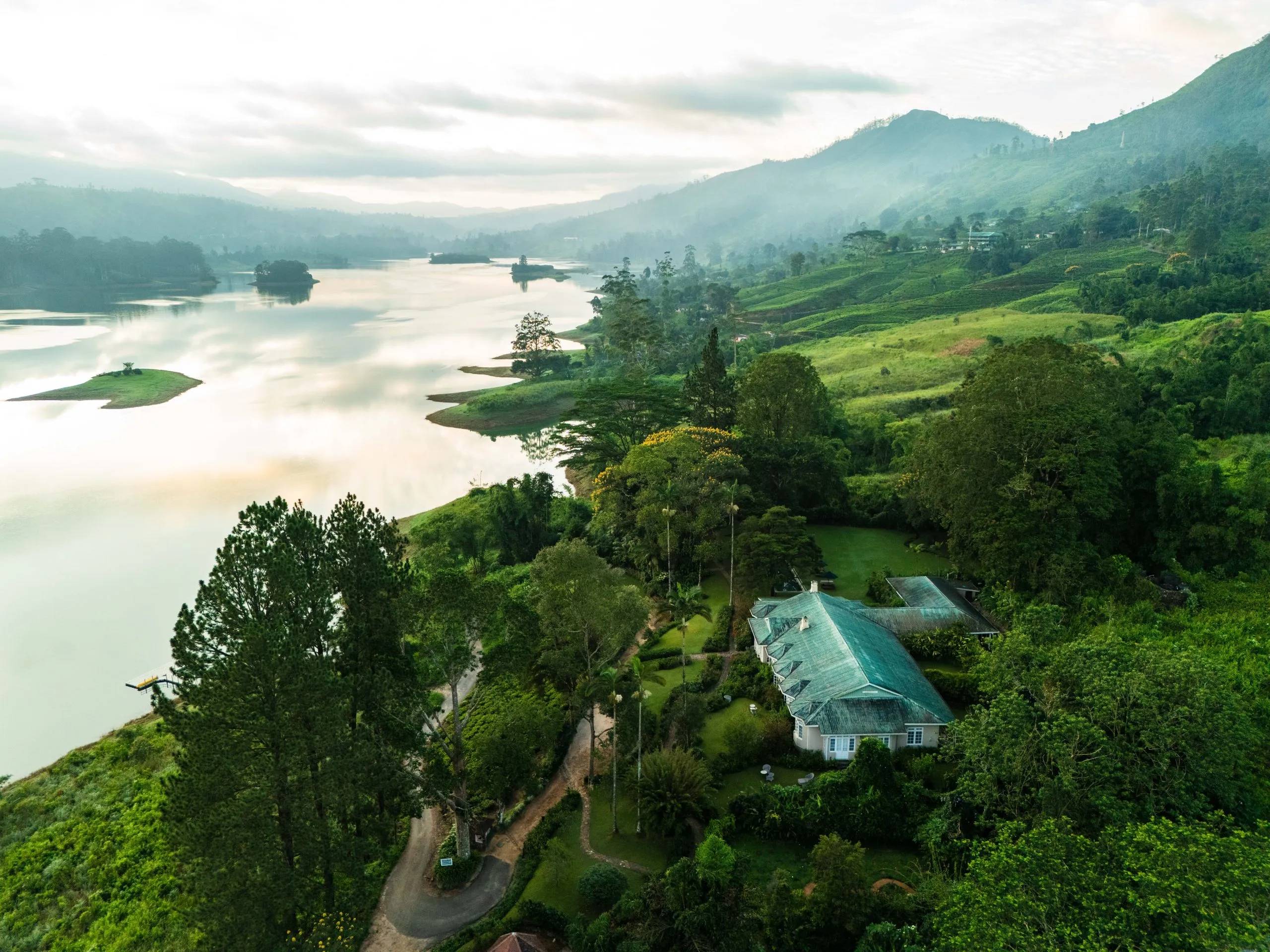
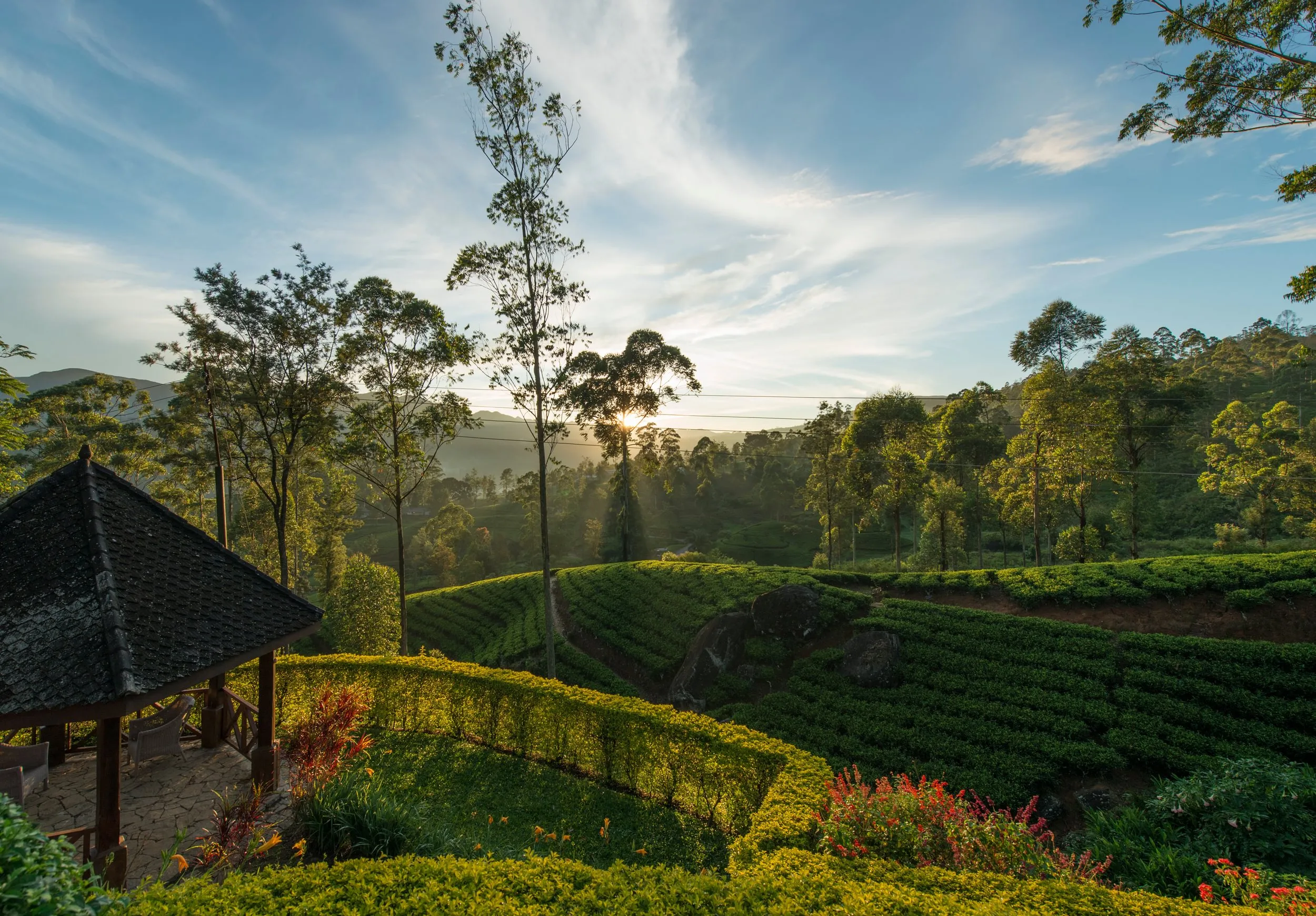
The road climbs for hours before the tea appears, and then it does not stop. Past Kandy the switchbacks tighten, the air cools by the degree, and the valley floor gives way to terrace after terrace of clipped green bushes, planted so densely and so precisely that the hillsides look combed rather than farmed. Somewhere past 1,200 metres, where the cloud sits low enough to touch the windscreen, a gate opens onto a gravel drive, and a bungalow appears: whitewashed, deep-eaved, fronted by a lawn cut as tight as a cricket pitch. A butler is already on the steps.
This is Ceylon Tea Trails, five former planters’ residences scattered across a single working tea estate in Sri Lanka’s Bogawantalawa Valley, and it does not behave like a hotel. There is no reception desk, no shared restaurant, no printed menu of room categories. Each bungalow is its own small house, run for the guests staying in it, with meals cooked to order and a routine built around the rhythms of the estate rather than the rhythms of a resort. It is a strange, specific kind of luxury: not built for the purpose, but inherited, and treated with enough care that the inheritance still feels lived-in rather than preserved under glass.
The tea itself is not incidental scenery. Ceylon Tea Trails sits inside an operating Dilmah estate, and the fields that surround every veranda are still plucked, withered, rolled and fired within walking distance of where guests take breakfast. That proximity, more than the antique furniture or the butler service, is what separates the place from almost anything else in the region: it is not a hotel with a tea theme, but a tea estate that happens to have five extraordinary houses on it.
About Ceylon Tea Trails
The five bungalows, Castlereagh, Summerville, Dunkeld, Norwood and Tientsin, were built as private residences for British and, later, Sri Lankan tea planters between the late 1880s and the 1930s, when Ceylon’s hill country was being carved into one of the world’s great tea-growing regions. Tientsin, the oldest of the five, takes its name from the Chinese village that supplied the estate’s original tea seedlings; Castlereagh sits directly on the shore of the reservoir it is named after. Each was a working planter’s home first, built for altitude and outlook rather than show, with deep verandas designed to catch the light and keep out the frequent hill-country rain.
The bungalows belong to the Fernando family, founders of the Dilmah tea company, and operate under Resplendent Ceylon, the family’s small collection of hospitality properties. It was Malik Fernando, son of Dilmah founder Merrill J. Fernando, who set the restoration in motion, drawn back from a career overseas by the pull of these houses and the estate around them. Ceylon Tea Trails opened in 2005 as what is generally credited as the world’s first tea bungalow resort, and it remains the only property in Sri Lanka in the Relais & Châteaux association.
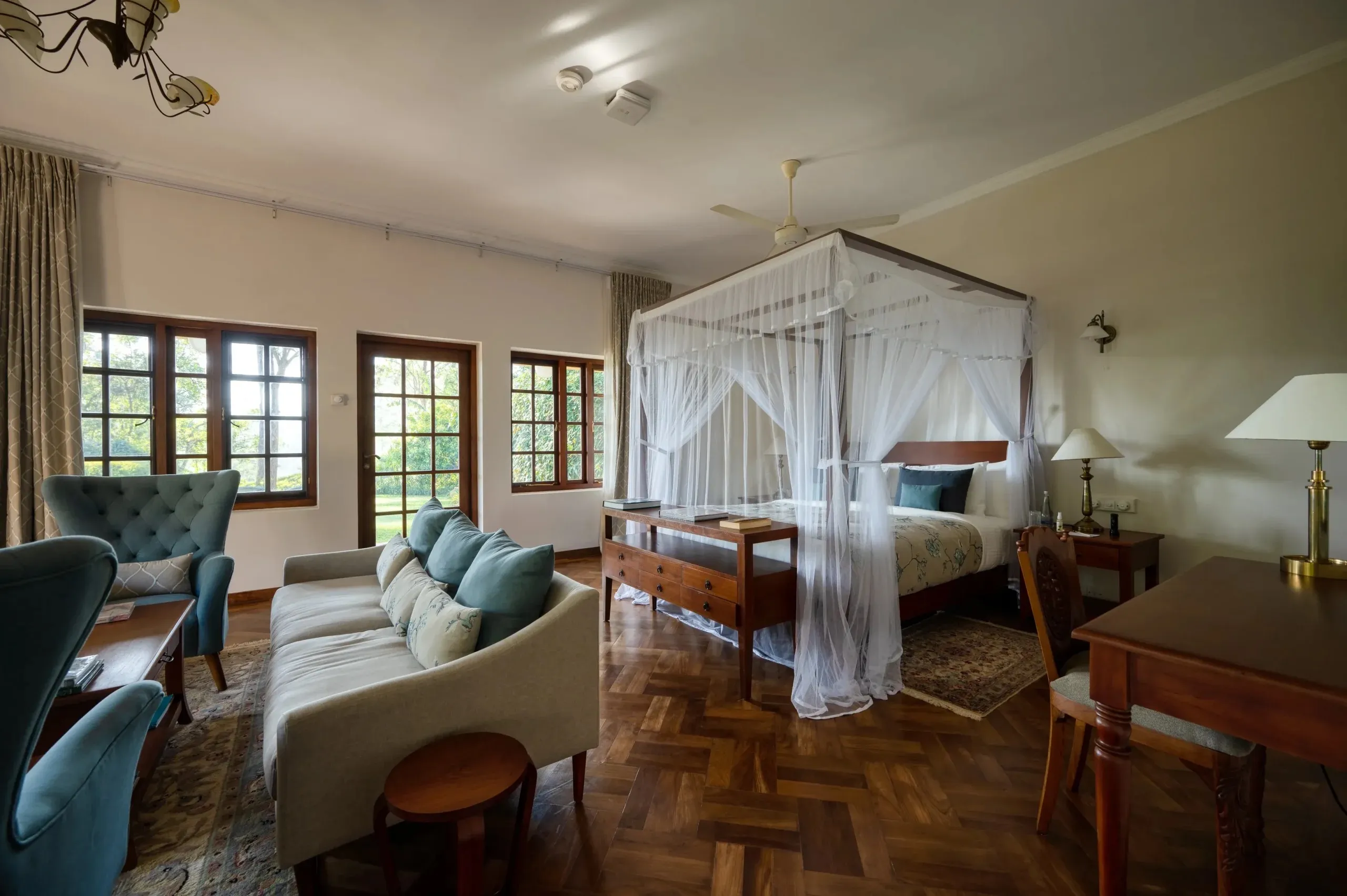
The restoration philosophy across all five houses has been conservative rather than reinventive: original teak floors, colonial-era furniture, claw-foot bathtubs and fireplaces have been kept and repaired rather than replaced, and each bedroom is named for a planter historically associated with that bungalow. The effect is closer to staying in a well-maintained family estate than a designed hotel: mismatched but considered furnishings, faded rugs on old wood, silver tea services that look used because they are. Outside, the architecture gives way almost immediately to the estate itself, cultivated hillsides that fall away in every direction, cut through by the trails that give the resort its name.
The wider context matters here more than at most hotels. Dilmah was founded by Merrill J. Fernando on the then-unusual premise that Ceylon tea should be grown, picked and packed at origin rather than shipped in bulk and blended elsewhere, a single-origin argument that reshaped how the company thought about the estates it worked with. Ceylon Tea Trails grew out of that same instinct applied to hospitality: rather than building a hotel and importing an idea of tea country to furnish it, the family restored the houses that were already standing on ground the company already farmed. The bungalows were never conceived as a themed resort. They were the actual homes of the men who ran these fields, and the restoration has tried, with reasonable success, not to argue with that fact.
Location
Ceylon Tea Trails sits in the Bogawantalawa Valley, in Sri Lanka’s Central Province, at an altitude of roughly 1,250 metres, on the fringe of the Central Highlands UNESCO World Heritage Site. The nearest airport is Bandaranaike International Airport (CMB) outside Colombo, and the standard approach is a private road transfer of four to four and a half hours, climbing steadily through Kandy and the tea country beyond it. An alternative, and for many the more memorable option, is the train from Colombo to Hatton, one of Sri Lanka’s classic scenic rail routes, followed by a road transfer to the bungalow of between 20 and 45 minutes depending on which of the five is booked. Helicopter transfers landing at the Castlereagh Reservoir can also be arranged.
The climate at this altitude is markedly different from the coast: cool, often misty mornings, bright but mild afternoons, and evenings cold enough that fires are lit in the bungalow drawing rooms. Rainfall is a near-constant feature of hill-country life, arriving most reliably in the afternoons, so the estate’s relationship with weather is closer to a temperate hill station than a tropical resort. January to April is generally the driest, clearest stretch of the year, with good visibility across the valley for walking and photography; a second, quieter window in July to September coincides with the year’s second tea flush. May and June bring the southwest monsoon in earnest and are best avoided.
Rooms & Suites
Guests choose among five bungalows, each independently staffed and each with its own character, and either book a room within one or take over the whole house.
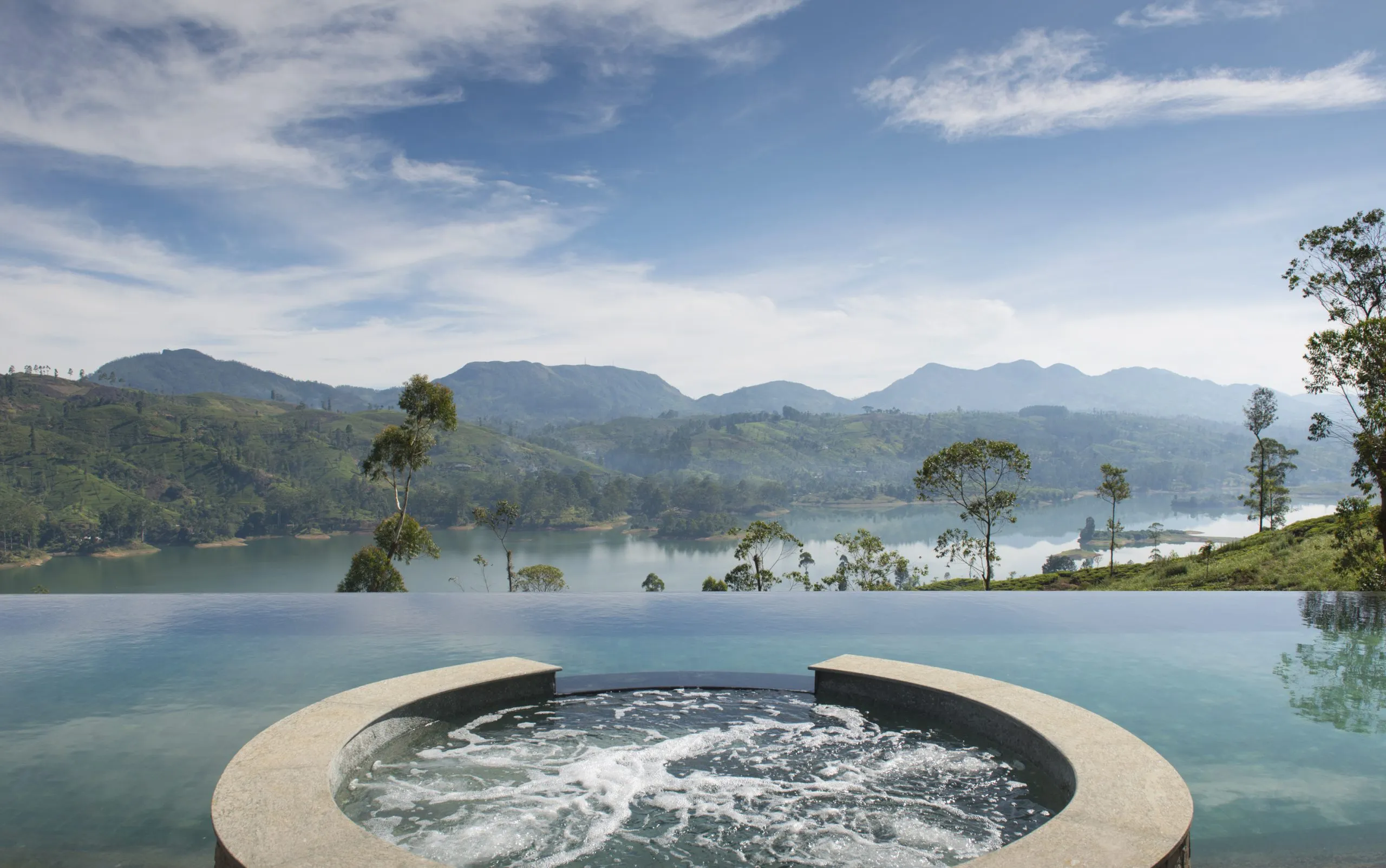
Castlereagh, a century-old house on the banks of the reservoir that shares its name, offers five rooms and recently refurbished garden suites, with summerhouses scattered across its grounds for guests who want a spot away from the main house. Summerville, perched on the estate’s edge above the lake, has five bedrooms, a croquet lawn and an infinity pool, and carries the looser, cottage-like feel its name suggests. Dunkeld, also lake-facing and the closest bungalow to the Dunkeld Tea Factory, has five rooms styled with the interior language of a traditional members’ club, its own infinity pool, and Taylor’s Owner’s Cottage attached to it, a private one-bedroom retreat with twin bathtubs and its own jacuzzi, suited to a couple wanting complete separation from the main house.
Norwood, with six rooms and sweeping views across the eastern end of the Bogawantalawa Valley, is the bungalow most set up for families and groups, with a croquet lawn and a billiards room built for shared evenings rather than solitude. Tientsin, the estate’s oldest residence and its most classically colonial in feel, also has six rooms, set within gardens that give it the quietest, most reflective atmosphere of the five. Across all five houses there are 27 rooms and suites in total, each furnished with a mix of original and restored period pieces and named for a planter once associated with that particular house.
Dining
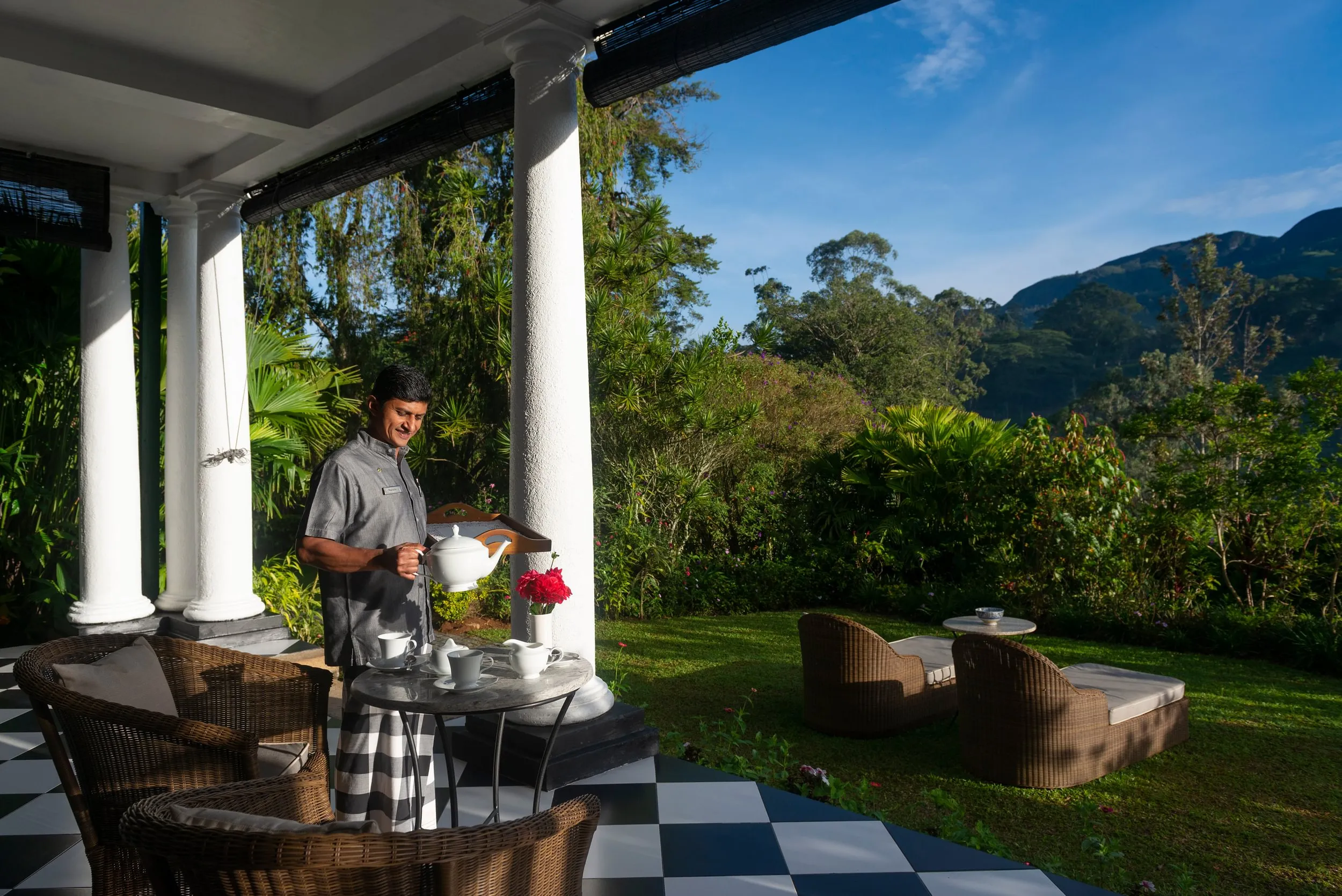
There is no central restaurant at Ceylon Tea Trails, and no printed menu handed to every table. Meals are prepared to order in each bungalow’s own kitchen and served course by course, wherever guests choose to sit: on the veranda, in the dining room, or, weather permitting, out on the lawn. Rates are fully inclusive of breakfast, lunch, afternoon tea and dinner, alongside a curated list of wines, spirits and soft drinks, so the day’s meals are less a series of transactions than an ongoing conversation with the kitchen about what to eat and when.
Breakfast can run from a full English spread to Sri Lankan short-eats depending on what a guest requests the night before. Afternoon tea, unsurprisingly, is treated with some ceremony: a three-tiered tray of finger sandwiches, scones and small cakes, served alongside estate-grown tea. Cooking classes with the resident chef, individual or in small groups, are available for guests who want to take some of the technique home with them. Given the working estate on the doorstep, tea itself runs through the food in ways beyond the pot: as an ingredient, an accompaniment, and the reason the whole valley looks the way it does.
Wellness
Wellness at Ceylon Tea Trails is understated rather than a purpose-built spa complex. In-room massage and spa treatments can be arranged in each bungalow, and several of the houses, Dunkeld and Summerville among them, have their own unheated outdoor infinity pools looking out over the reservoir and valley. Tennis courts are available on the estate. The setting itself does a good deal of the work: cool air, altitude, long uninterrupted walking trails and evenings quiet enough that a fire and a book are their own form of recovery.
There is no gym or dedicated fitness studio pushing against that pace, and no wellness programme built around schedules or targets. What stands in for it is the estate’s topography: the same trails used for guided walks and factory visits double as a genuinely demanding form of exercise for anyone who wants it, climbing and descending through tea terraces at altitude, and several guests find that a morning walk before breakfast does more for them than a spa menu would.
Experiences
The centrepiece experience is the estate itself. A complimentary guided tour of the Dunkeld Tea Factory is offered daily, walking guests through the full process, plucking, withering, rolling, oxidising, firing, drying, grading and packing, before a tasting of the finished leaf. Guided walks through the surrounding tea fields and forest reserve are available at a pace to suit, from a gentle hour on flat estate roads to longer treks into the hills, and the “trails” in the resort’s name refer to a genuine network of estate paths and old planters’ roads that connect the five bungalows.
Beyond the tea itself, the estate offers biking, fishing, canoeing and kayaking on the reservoir, croquet on several of the bungalow lawns, and birdwatching across a landscape that supports a notable range of hill-country species. Billiards is available at Norwood. For guests wanting to go further afield, the surrounding hill country opens onto some of Sri Lanka’s best-known highland walks and rail journeys, though the core Tea Trails experience is deliberately built around staying close to the estate rather than commuting out from it.
The estate paths themselves, the “trails” of the property’s name, are largely the old roads and footways planters once used to move between bungalows, factories and fields, and walking them today with a guide gives a fairly direct sense of how the estate actually functions: where the plucking is happening on a given week, how the workforce moves across the terraces, which slopes are being rested and replanted. It is a working landscape rather than a curated one, and the experiences on offer lean into that rather than smoothing it over.
Sustainability
Ceylon Tea Trails operates within Dilmah’s broader ethos of tea production built around the communities that grow it, an approach the company has long framed around profit-sharing with estate workers rather than purely external shareholders. The Fernando family channels part of the business into the MJF Charitable Foundation and Dilmah Conservation, which fund community welfare and environmental projects connected to the tea-growing regions the company operates in, including the estate around Ceylon Tea Trails itself. Guests staying at the bungalows are, in effect, staying within that same estate economy: the tea served at breakfast is grown, processed and packed by the same workforce whose welfare the foundation supports.
Who Is It For
Ceylon Tea Trails suits couples looking for a quiet, cool-climate counterpoint to a Sri Lankan itinerary built mostly around coast and safari, and it suits them especially well in Dunkeld’s Owner’s Cottage or a smaller bungalow taken as a private retreat. It is equally well suited to families and groups of friends who want to take over a whole house, Norwood in particular, and treat the stay as a private country retreat with built-in staff rather than a hotel stay. Anyone drawn to colonial-era architecture, restoration done with restraint, or the mechanics of tea production will find genuine substance here rather than dressing: this is a working estate first, and a hotel built carefully around it second.
It is less suited to travellers wanting a conventional resort experience, with a pool bar, a spa menu and an à la carte restaurant open at fixed hours, or to anyone chasing warm-water swimming and beach weather; the hill country’s charm depends on cool air and frequent rain, which is precisely what makes the tea so good. It is also worth weighing for anyone with a tight itinerary: the appeal here is unhurried, and a single overnight en route to somewhere else undersells what the estate, and its staff, are actually set up to offer.
Practical Information
Rates at Ceylon Tea Trails are all-inclusive, covering accommodation, all meals, a house wine and spirits list, daily laundry and the Dunkeld Tea Factory tour, and should be treated as an indicative “from” tier that varies by bungalow, room category and season rather than a fixed nightly figure. Check-in is from 2:00 PM and check-out by 11:00 AM. The nearest airport is Bandaranaike International Airport (CMB) outside Colombo, from which the standard transfer is a four to four and a half hour private road journey, with a scenic train-and-road combination via Hatton as an alternative. January to April offers the clearest, driest conditions for walking the estate, with a secondary window in July to September; most guests find three to four nights enough to settle into the rhythm of a bungalow, take the factory tour, and walk at least one or two of the estate trails without feeling rushed.
Nearby
The town of Hatton, the nearest rail hub and a working hill-country town in its own right, sits within reach of the estate and is the usual gateway for guests arriving by train. Adam’s Peak, the pilgrimage mountain sacred to several of Sri Lanka’s faiths, rises within the wider region and draws hikers for its dawn summit climb, typically undertaken as a dedicated excursion rather than a casual add-on given its early start and steep ascent. Horton Plains National Park, with its cloud forest and the sheer drop of World’s End, and the former British hill station of Nuwara Eliya, with its colonial-era racecourse, golf course and cooler still climate, both sit within a manageable drive and are commonly combined with a Tea Trails stay as part of a broader hill-country itinerary.
Kandy, the last major town on the road up from Colombo and a UNESCO World Heritage city in its own right, is a natural stop to break the drive in either direction, with its lake, temple complex and markets offering a change of register from the quiet of the estate. Guests threading Ceylon Tea Trails into a longer Sri Lankan itinerary commonly pair it with a night or two in Kandy on the way up or down, using the hill country as the cool, slow middle chapter between the cultural triangle and the coast. Closer to the bungalows themselves, the estate’s own tea factories and the reservoir at Castlereagh remain the more immediate draw, on the doorstep rather than an excursion away.
In pictures
On the map
Bogawantalawa, Sri Lanka
Questions
Frequently asked
How many bungalows are there, and can you book just one room?
There are five: Castlereagh, Summerville and Dunkeld (all five rooms), and Norwood and Tientsin (six rooms each), plus Taylor's Owner's Cottage, a private one-bedroom retreat at Dunkeld. Each bungalow operates as a small, staffed house with a shared dining room and drawing room, and individual rooms within a bungalow can be booked separately or the whole house can be taken over by one group.
Is Ceylon Tea Trails all-inclusive?
Yes. Rates cover all meals (breakfast, lunch, afternoon tea and dinner), a curated list of wines, spirits and soft drinks, daily laundry, a guided tour of the Dunkeld Tea Factory, and the services of a personal butler assigned to each bungalow for the length of the stay.
How do guests get to Ceylon Tea Trails from Colombo?
Most arrive by private car from Bandaranaike International Airport, a scenic but winding four to four and a half hour drive up into the hill country. An alternative is the train from Colombo to Hatton, a well-known scenic railway route through Kandy, followed by a 20 to 45 minute road transfer depending on which bungalow is booked. Helicopter transfers landing at the Castlereagh Reservoir are also arranged on request.
Which bungalow should families or larger groups choose?
Norwood, with six rooms, a croquet lawn and a billiards room, is generally recommended for families and groups who want shared social space. Dunkeld and Summerville both have infinity pools and lake views and suit groups who want a quieter, more romantic register within a group setting.
What is the best time of year to visit?
January to April brings the clearest skies and driest, coolest weather to the Central Highlands, ideal for walking the estate and for visibility on the tea terraces. A secondary window in July to September coincides with the second flush tea harvest in the Uva side of the hill country. May and June, when the southwest monsoon settles over the highlands, are best avoided.
Same destination
More hotel guides in Sri Lanka
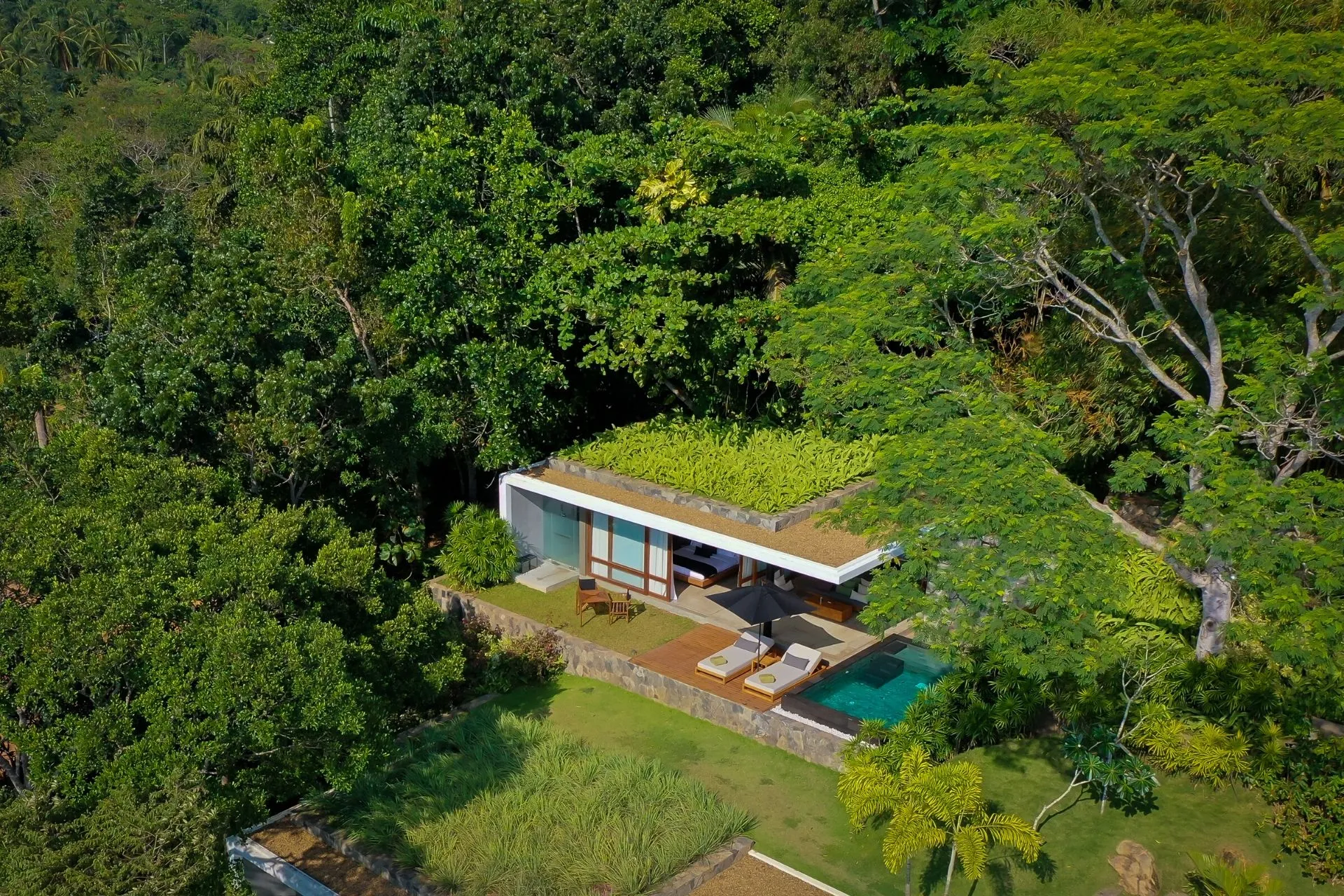
Thiranagama, Sri Lanka
Haritha Villas + Spa
Nine keys on a forested hilltop above Thiranagama, built around private saltwater plunge pools rather than a stretch of sand.
From $460 per night
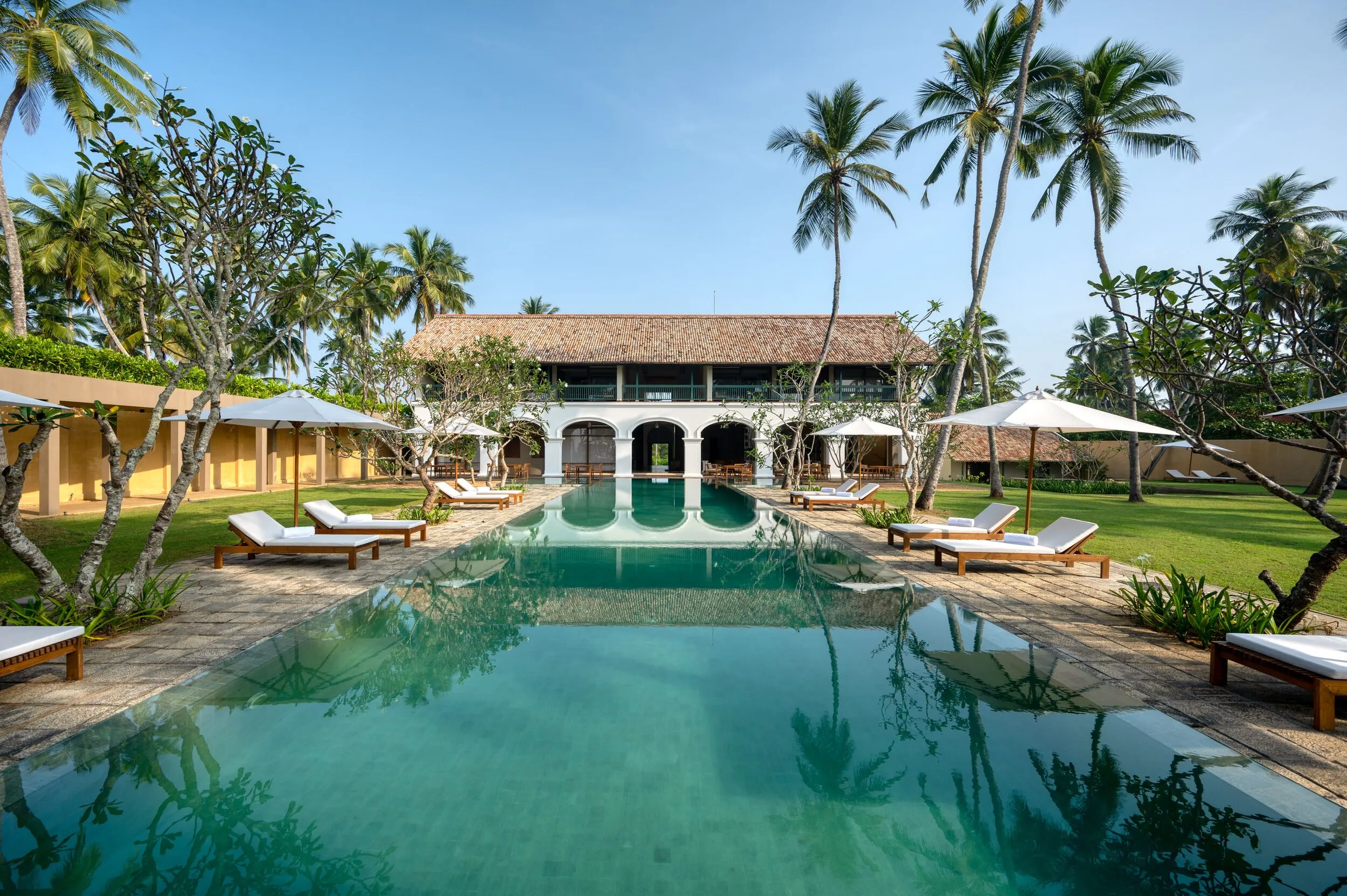
Tangalle, Sri Lanka
Kayaam House
Nine keys, a resident Ayurvedic doctor and a private stretch of turtle-nesting coastline near Tangalle.
From $700 per night
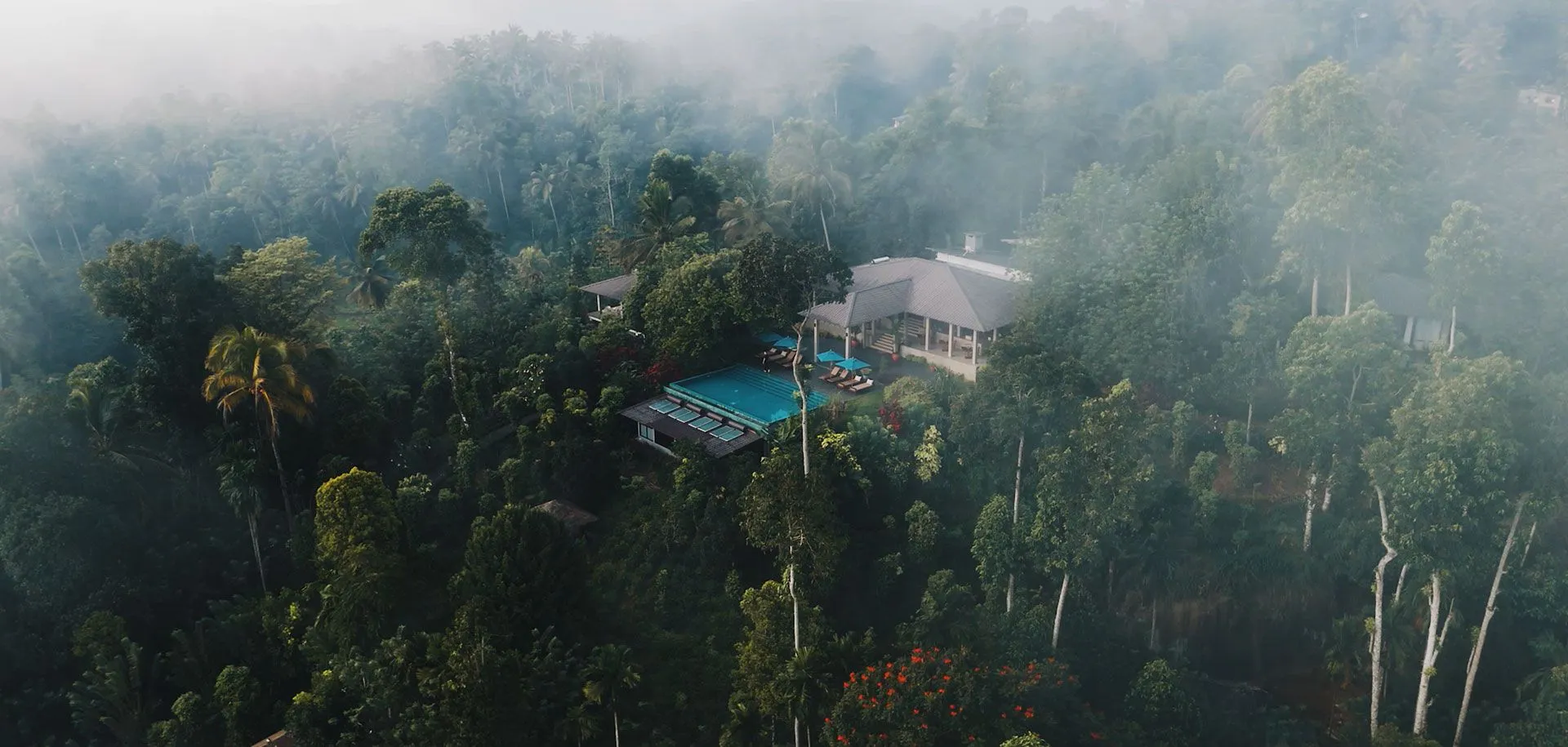
Alawatugoda, Kandy, Sri Lanka
Aarunya Nature Resort
A regenerative hillside estate above Kandy, where private-pool villas sit inside a working tea and spice garden facing the Knuckles range.
From $520 per night