8th arrondissement, Paris, France
Four Seasons Hotel George V Paris
An Art Deco palace on the Golden Triangle where six Michelin stars, a legendary flower program and a newly reimagined set of rooms keep a century-old address at the front of Paris hospitality.
- Rates from
- From €1,950 per night
- Nearest airport
- Paris-Charles de Gaulle (CDG)
- Transfer
- 30-45 min by road, traffic dependent
- Best months
- April to June and September to October
There is a particular kind of hush that settles over the lobby of the Four Seasons Hotel George V in the seconds before a guest notices the flowers. Then the scale of the thing registers, a sculptural mass of stems rising out of a courtyard urn or spilling across a console table, color-matched with a precision that reads as almost theatrical, and the hush breaks into something closer to a double take. It happens to first-time guests and to Parisians who have walked past the hotel for decades. The floral program is the detail most visitors mention first, and it is also, deliberately, a kind of decoy: it draws attention away from just how much else this address is doing at the same time.
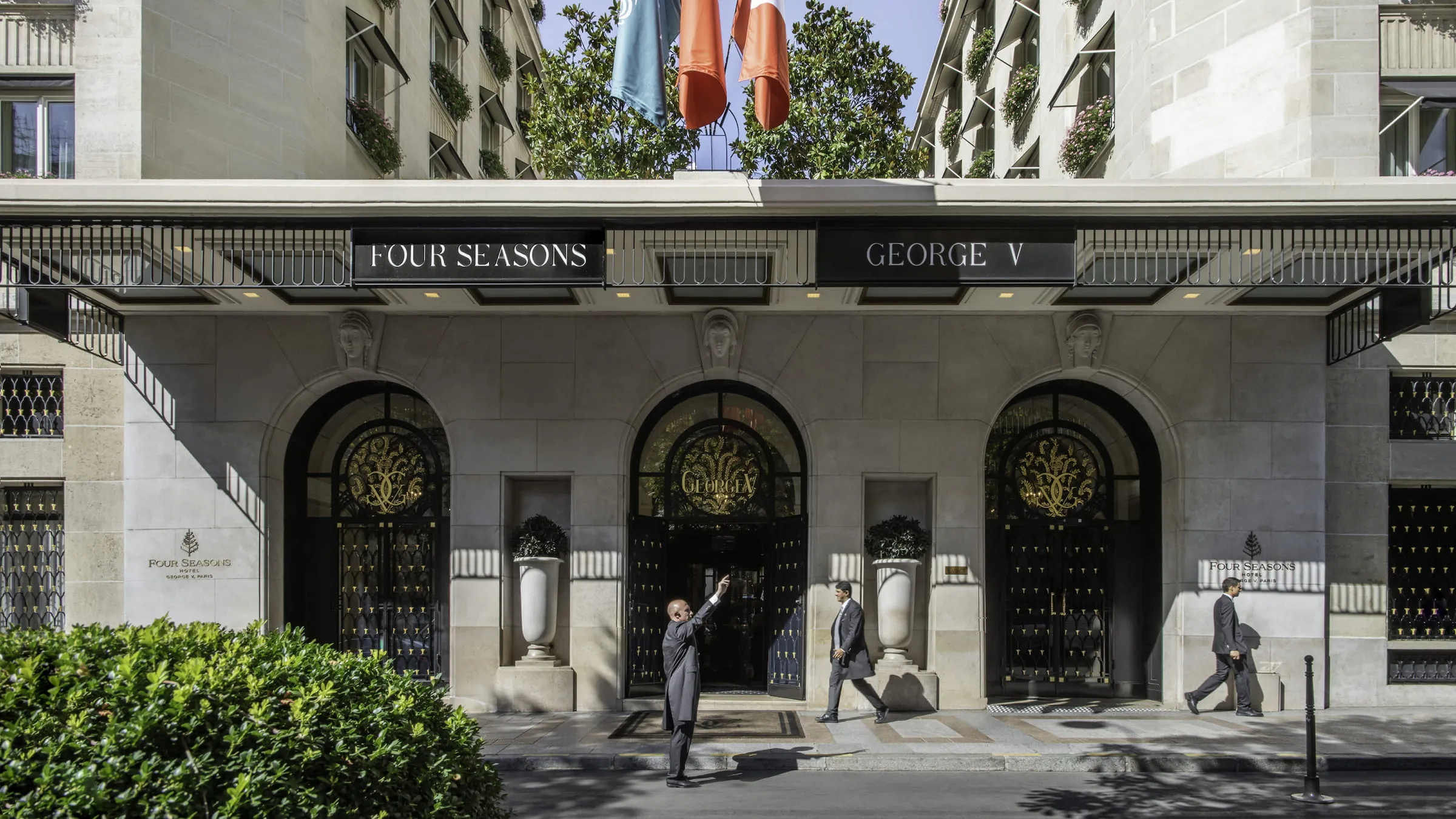
Set on Avenue George V in the heart of the Golden Triangle, a few minutes’ walk from the Champs-Élysées and the Seine, the hotel occupies an Art Deco building that opened in 1928 as one of Paris’s original grand hotels, went through a transformative renovation under Four Seasons management in 1999, and has spent the years since consolidating a reputation as one of the most complete luxury hotels in Europe. It holds France’s official Palace distinction, a state classification above ordinary five-star status. Its three restaurants carry six Michelin stars between them, a concentration matched by almost no other hotel on earth. And in 2026, a multi-year renovation of every one of its 243 rooms and suites reached completion, reframing the entire property around a fresh idea: not a hotel room, but a private Parisian apartment.
None of this is inherited reputation coasting on an old name. The George V has been actively rebuilt, restaffed and re-argued for at every stage of its modern life, and the version operating today, floral extravagance, triple-starred kitchen and newly domestic room design all included, is the product of continuous, fairly aggressive reinvestment rather than a museum piece resting on its Art Deco bones.
Why It Stands Out
Most palace hotels in Paris pick a lane: a great restaurant, a famous bar, an address, a history. The George V has spent the past quarter-century refusing to choose. Le Cinq has held three Michelin stars for a full decade under chef Christian Le Squer, an unusually long run of consistency at the top tier of French cuisine, while L’Orangerie and Le George add two more stars and a Green Star to the same building, meaning a guest can eat at three genuinely distinct, independently celebrated restaurants without leaving the hotel. Layered on top of that is Jeff Leatham’s floral program, a piece of living design that has run continuously since 1999 and has become, in its own right, one of the reasons people book a room here rather than at any of the city’s other palace hotels.
What sharpens all of it further is timing. The 2026 completion of Pierre-Yves Rochon’s room renovation means the George V is, right now, showing its newest face in over two decades, while its dining program is at a documented peak and its floral identity remains as distinctive as ever. Few hotels this established manage to feel simultaneously historic and freshly rebuilt; the George V currently does.
Architecture
The hotel’s bones date to 1928, when architect Georges Wybo designed an eight-story Art Deco building for American businessman Joel Hillman, financed at a moment when this stretch of the 8th arrondissement was still establishing itself as Paris’s premier hotel district. At its opening, the George V offered amenities that were genuinely unusual for the period: two bathrooms in every suite, a telephone with an outside line, and dumbwaiters running food directly from the kitchens to guest floors. It was, from the start, a hotel built to impress on technical grounds as much as aesthetic ones.
The building’s most consequential architectural chapter came seven decades later. Prince Alwaleed bin Talal’s Kingdom Holding Company acquired the hotel in 1996, and a two-year, 125-million-dollar renovation followed under architect Richard Martinet and interior designer Pierre-Yves Rochon, culminating in the property’s reopening as a Four Seasons hotel on December 18, 1999, with a formal gala the following March. That renovation preserved the Art Deco shell, the proportions, the stone facade along Avenue George V, while rebuilding the interior infrastructure and public spaces almost entirely. The result is a building that reads as a period piece from the street and functions as a fully modern hotel once a guest steps through the door, a split that has defined the property’s architectural identity ever since.
Interior Design
The George V’s interiors work on two registers that rarely coexist this comfortably: formal, museum-grade decoration in its public rooms, and, since 2026, a deliberately domestic, residential language in its private ones. The lobby sets the formal tone immediately, with mosaic floors, restored seventeenth-century Flemish tapestries and crystal chandeliers establishing a scale closer to a private mansion than a hotel reception. La Galerie, the hotel’s tea salon and bar, carries the same language further with its own Flemish tapestries, large-format oil paintings and nineteenth-century furniture, while the Marble Courtyard, overlooked by the hotel’s grandest suites, functions as an open-air extension of the same decorative ambition.
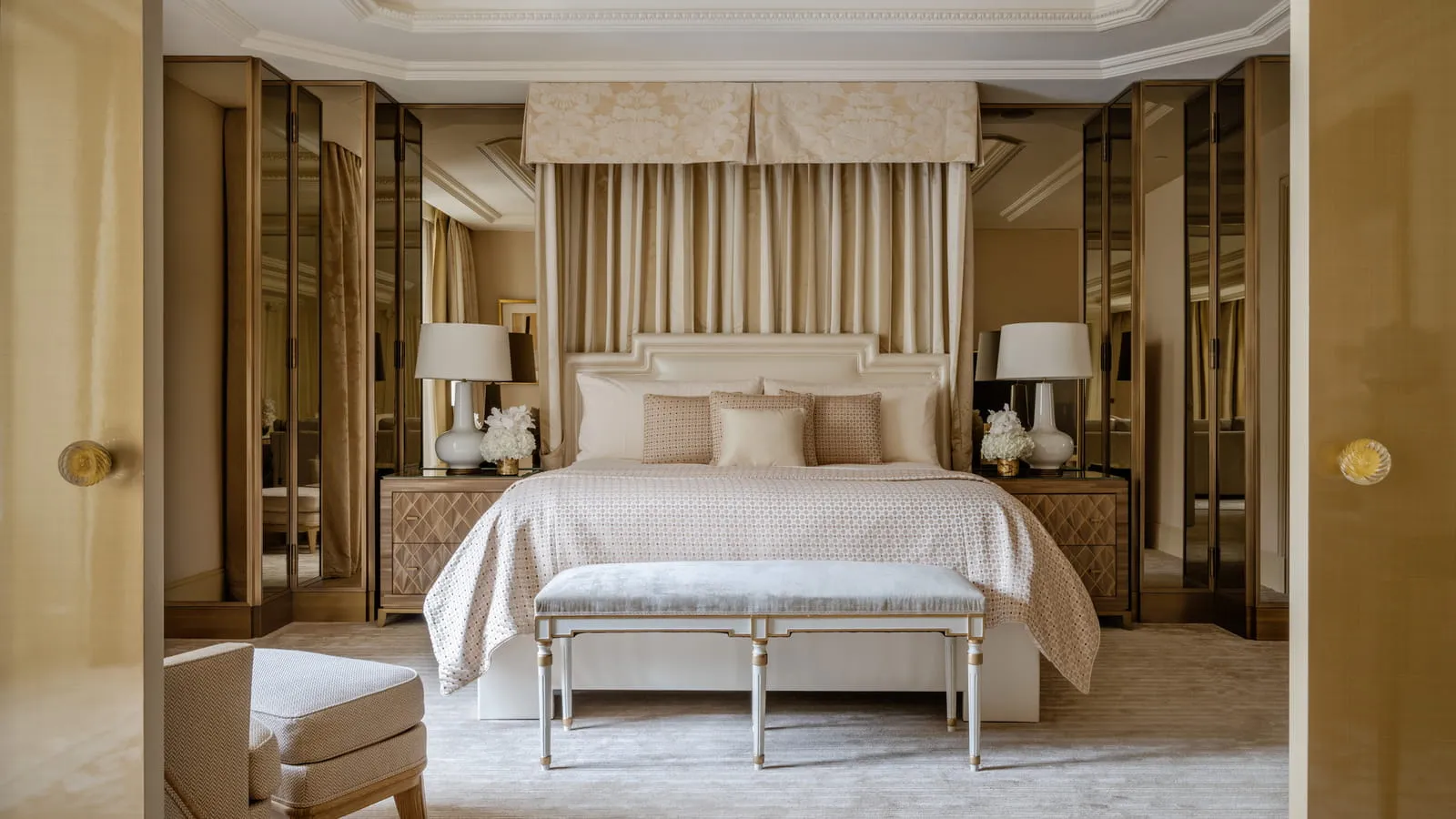
The 2026 renovation of the guest rooms, again led by Pierre-Yves Rochon, more than twenty-five years after his original 1999 scheme, took a markedly different approach from the public spaces. Rather than restating period grandeur, Rochon reorganized all 243 rooms and suites around the idea of a Parisian apartment: vestibules in place of hotel corridors, dressing rooms modelled on couture fitting rooms, and library or dining nooks built to reinforce a sense of domestic life rather than transient stay. Materials lean into craft rather than spectacle, patinated oak Versailles parquet, Carrara marble, Baccarat crystal fittings, hand-tufted rugs, and a Louis XVI furniture language mixed with contemporary and nineteenth-century artworks, with French windows and reworked sightlines used deliberately to pull daylight deep into each room. The renovation ran in careful phases over three years so the hotel never closed, and it left the total key count essentially unchanged, a sign of how much square footage was reclaimed from back-of-house circulation to give each room its new, apartment-like proportions.
No account of the interiors is complete without Jeff Leatham, whose floral installations function less as decoration than as a rotating, living art program layered over the architecture. Leatham arrived at the property in 1999, while it was still under renovation, and has served as Artistic Director ever since, building arrangements that use roughly 9,000 fresh flowers a week, flown in from Holland, reworked into new color stories and compositions approximately every three weeks. His style favors bold, graphic color blocking and dramatic scale over the softer, traditional florals typical of European grand hotels, an approach that turned the lobby and courtyard into genuine visitor attractions in their own right and earned Leatham France’s Chevalier of the Legion of Honour in 2014. The flowers are not a seasonal flourish here; they are a permanent design department, with their own budget, schedule and creative direction, running in parallel with the architecture rather than simply dressing it.
Atmosphere
For a hotel of its scale and formality, the George V manages a surprisingly wide emotional range across the day. Mornings in La Galerie, under the tapestries and beneath whatever floral composition is currently on rotation, have the unhurried quality of a private drawing room, coffee service moving at its own pace, low conversation, natural light pooling across the marble. By evening, the same public rooms sharpen into something more theatrical: guests dressed for Le Cinq or Le George crossing the lobby past the latest Leatham installation, the Marble Courtyard lit for dinner, a sense of occasion that is deliberately cultivated rather than incidental.
That formality never quite tips into stiffness, largely because the hotel’s staff-to-guest ratio and long institutional memory allow for a degree of personalization that undercuts the grandeur. Regulars are recognized, preferences are remembered, and the service register, while unmistakably palace-level, tends toward warmth over ceremony once a guest has been through the door more than once. The result is an atmosphere built to impress on a first visit and to feel more like a known address on every one after that.
Rooms and Suites
Following the 2026 completion of Pierre-Yves Rochon’s renovation, all 243 rooms and suites at the George V now share the same design philosophy, residential rather than institutional, while scaling up in size and formality through a clear hierarchy. Entry-level Premier Rooms sit at the foundation of the category structure, offering the newly reworked apartment layout, vestibule entry and craft materials at the hotel’s most accessible size. From there, the hierarchy climbs through Parisian Suites and the Royal Suite, each adding living and dressing space, before reaching two signature categories: the Eiffel Tower Suite, prized specifically for its sightlines to the tower across the rooftops, and, at the top of the property, The Penthouse, the hotel’s most expansive and formally appointed accommodation.
Across every category, the renovation’s stated priorities show through consistently: deep, light-filled sightlines drawn through French windows, dressing rooms designed with the same attention as a couture atelier, patinated oak parquet and Carrara marble throughout, and vestibule entries that separate a private sitting or dining area from the bedroom in a way conventional hotel-room layouts rarely attempt. The effect, by design, is closer to renting a beautifully appointed Parisian apartment for a few nights than checking into a hotel room, which is precisely the shift Rochon set out to make.
Dining
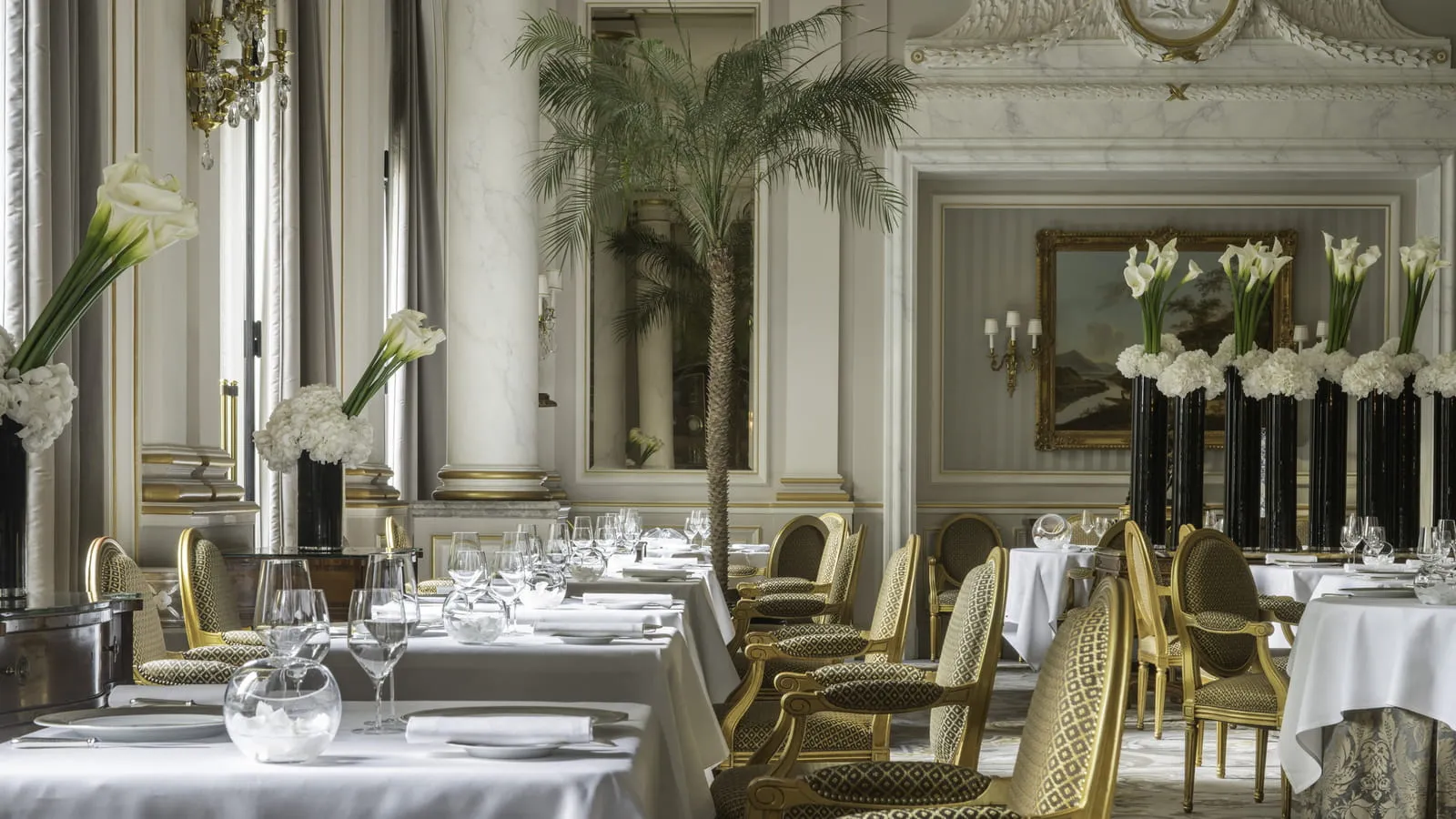
Dining is where the George V distinguishes itself most decisively from its Paris palace-hotel peers, and the Michelin Guide France 2026 confirms why: six stars, held across three separate restaurants under one roof, a concentration almost no other hotel in the world can currently match.
Le Cinq is the flagship, holding three Michelin stars under chef Christian Le Squer for ten consecutive years, a run of sustained excellence that places it among a very small group of restaurants worldwide able to maintain the top tier of French gastronomy for that length of time. The room itself, set within the hotel’s most formal public space, matches the kitchen’s ambition, with tasting and à la carte menus built around classical French technique executed with contemporary precision. L’Orangerie, the hotel’s second Michelin address, holds two stars in the same 2026 guide, recognized specifically for the finesse of its sauce work, a more intimate, tightly focused dining room than Le Cinq but no less exacting in its standards. Le George rounds out the trio with one Michelin star and, notably, a Michelin Green Star for sustainable gastronomic practice; under chef Simone Zanoni, its Mediterranean and Italian-inflected menu is deliberately more convivial and less formal than its two siblings, a register shift that gives the hotel a genuine range of dining moods rather than three variations on the same formal theme.
Beyond the three starred kitchens, La Galerie operates as the hotel’s all-day tea salon and light-bites venue beneath its own tapestries and floral installations, while Le Bar handles cocktails and evening drinks. Underpinning all of it is a wine cellar of roughly 50,000 bottles stored in climate-controlled conditions beneath the hotel, one of the more significant private cellars attached to any Paris hotel, and a resource the sommelier teams across all three restaurants draw on directly.
Spa and Wellness
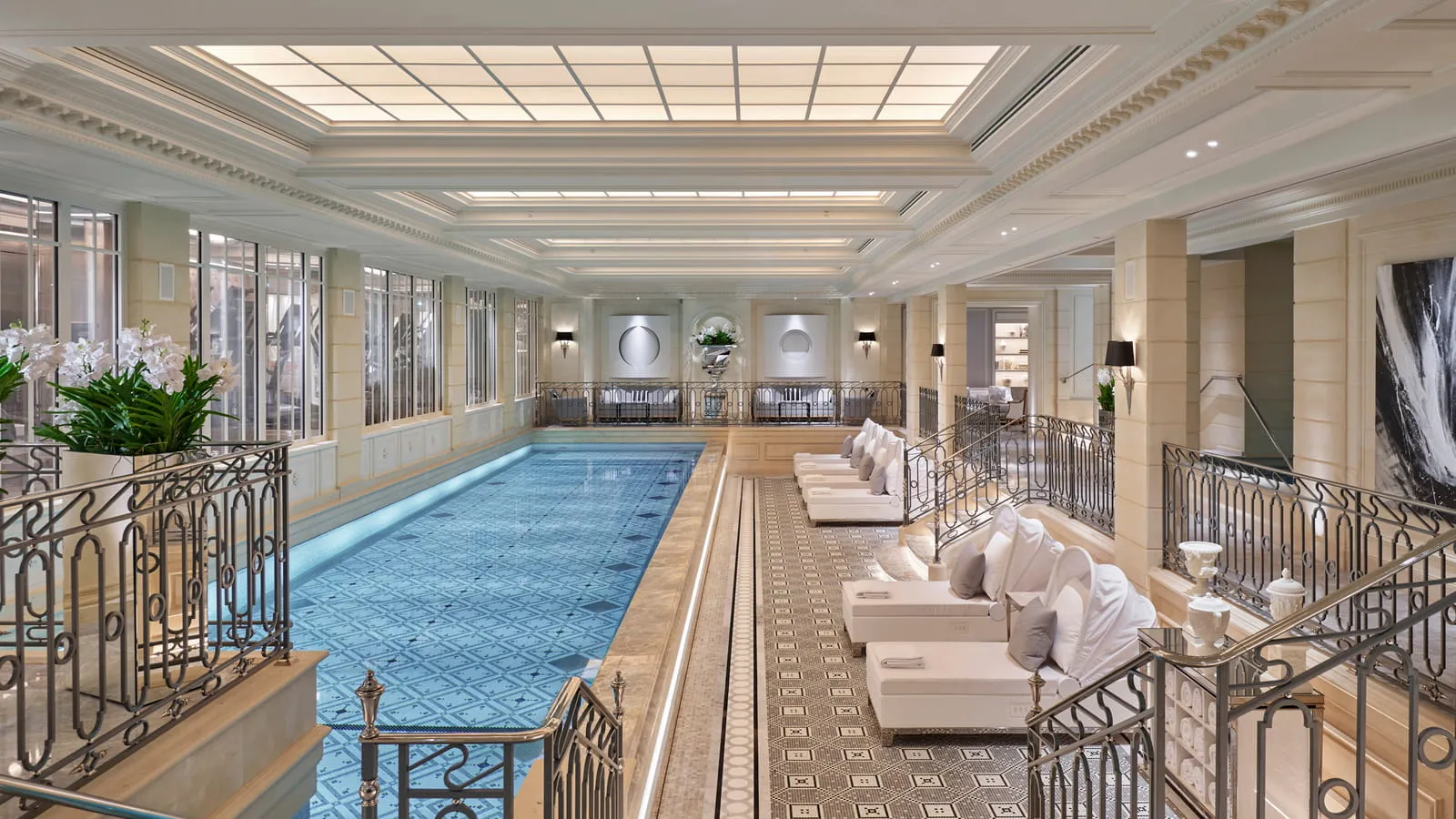
Le Spa at Four Seasons Hotel George V occupies roughly 720 square metres dedicated entirely to wellness, a substantial footprint by central Paris hotel standards. The space is built around a 17-metre swimming pool and a separate vitality pool with a heated hydrotherapy circuit, complemented by a 90-square-metre fitness room, a hair salon, five single treatment rooms, separate hammams for men and women, and a dedicated Spa Suite designed for couples’ treatments.
Treatment offerings include a signature ritual developed exclusively for the property by Dr Burgener Switzerland, alongside options from Dior, giving the spa menu a genuinely Parisian, fashion-adjacent identity rather than a generic five-star spa program. The combination of a proper lap pool, a real hydrotherapy circuit and a fitness room of usable scale sets it apart from several central Paris competitors, where wellness facilities are often compressed into far smaller basement footprints.
Experiences
Much of what guests come to the George V specifically for happens inside the building: the floral installations change often enough to reward repeat viewing across a single stay, and the wine cellar and three restaurants alone can occupy several evenings without repetition. The hotel also runs structured experiences built around its own strengths, including sommelier-led wine masterclasses drawing on the cellar’s depth and culinary experiences connected to its Michelin kitchens.
Beyond the property, the hotel’s concierge team arranges the kind of access that distinguishes a palace hotel from a very good five-star one: private, after-hours visits to the Eiffel Tower, including areas closed to general visitors, and private Seine river cruises timed for sunset or evening light, both bookable directly through the hotel. Given the address, walking access to the Champs-Élysées, Avenue Montaigne’s flagship boutiques and the Théâtre des Champs-Élysées is immediate, and the hotel’s location inside the Golden Triangle means most of central Paris’s landmark shopping and cultural institutions are a short walk or brief car ride away rather than a planned excursion.
Who It Is For
The George V suits travellers who want the full, formal register of a Paris palace hotel and are specifically drawn to its two defining strengths: a dining program deep enough to anchor an entire trip, and a design identity, both the Leatham florals and the newly renovated rooms, distinctive enough to be a destination in itself rather than a backdrop. Couples marking a significant occasion, serious food travellers building an itinerary around Le Cinq or Le George, and design-minded guests curious to see Rochon’s newly completed apartment-style rooms in person are all well served here.
It is a less natural fit for travellers prioritizing a quieter, more understated version of Paris luxury, or families needing extensive dedicated children’s facilities, since the hotel’s identity leans formal and adult-oriented even where its service is warm. Guests who find elaborate floral display or maximalist decoration overwhelming rather than delightful should also weigh that carefully, since the Leatham program is not an optional accent here but a defining, unmissable part of the stay.
Best Time to Visit
Paris rewards a visit across most of the calendar, but April to June and September to October remain the sweet spots for a George V stay specifically, mild temperatures, long daylight for the private Eiffel Tower and Seine experiences the hotel arranges, and a citywide calendar (fashion weeks, art fairs, the French Open in late May and early June) that keeps the surrounding Golden Triangle lively without the peak-summer crowding of July and August. Winter, particularly the run-up to Christmas, brings its own draw: Leatham’s holiday floral installations are among the most elaborate of the year and have become a seasonal attraction for Parisians as well as guests, though this is also when the hotel’s rates and demand both climb.
How to Get There
Paris-Charles de Gaulle (CDG) is the standard international gateway, with a private road transfer to the hotel typically running 30 to 45 minutes depending on traffic and time of day; the hotel’s concierge team arranges private car transfers on request. Paris-Orly (ORY), used by a mix of domestic, European and some long-haul routes, offers a broadly comparable transfer time into the city. Travellers arriving by private aviation typically route through Le Bourget, slightly closer to central Paris than either commercial airport. Within the city, the hotel sits directly on Avenue George V, close enough to the Alma-Marceau and George V Métro stations that guests without luggage or a car can reach much of central Paris without a taxi at all.
Nearby Experiences
The hotel’s Golden Triangle address puts an unusual concentration of Paris’s landmark experiences within easy reach. The Champs-Élysées and the Arc de Triomphe are a short walk away, as is Avenue Montaigne, the address most closely associated with French haute couture flagship stores. The Seine and the Pont de l’Alma, a common starting point for river cruises, sit just beyond that, with the Eiffel Tower visible from several of the hotel’s upper floors and reachable on foot in well under twenty minutes.
Further afield but still well within a short car ride, the Grand Palais and Petit Palais host major art exhibitions across the year, the Musée d’Art Moderne and the Palais de Tokyo cover the city’s modern and contemporary art scene, and the Place Vendôme and Rue Saint-Honoré extend the shopping and jewellery landscape that begins on Avenue Montaigne. Guests building a full itinerary around the hotel rarely need to travel far to fill it.
Things to Know Before Booking
The George V’s Michelin-starred restaurants, particularly Le Cinq, require advance reservations, often weeks ahead for prime evening seatings, and a formal dress code applies; guests hoping to dine there during a stay should book at the time of, or shortly after, confirming the room. The 2026 room renovation means photography and reviews from before that date reflect an earlier, now-superseded design scheme, worth bearing in mind when comparing older third-party reviews to the current property. As with most Paris palace hotels, a municipal tourist tax of a few euros per person, per night is added to the bill locally and is not typically included in quoted room rates. Rates vary substantially by season and room category, and the figures published here should be read as an entry-level indication rather than a fixed or guaranteed rate.
Sustainability
The George V’s sustainability program is more structurally embedded than the typical hotel green initiative. The property holds BREEAM In-Use certification in both the Asset and Management categories, rated Excellent in both, a distinction it holds as the only Paris palace hotel to have achieved that dual rating. In 2025, the hotel won the World’s Leading Sustainable Supply Chain Programme award at the World Sustainable Travel & Hospitality Awards, recognition tied to a responsible purchasing charter that applies environmental and social criteria across fourteen categories of goods and services, from office supplies to technical equipment. At the restaurant level, Le George holds a Michelin Green Star specifically for sustainable gastronomic practice, meaning the hotel’s sustainability credentials extend into its kitchens rather than sitting solely in back-of-house operations.
Practical Information
Four Seasons Hotel George V Paris sits at 31 Avenue George V in the 8th arrondissement, inside the Golden Triangle formed by the Champs-Élysées, Avenue Montaigne and the Seine. Standard check-in is from 3:00 PM and check-out by 12:00 PM, with early arrival and late departure available on request, subject to availability. The property comprises 243 rooms and suites across eight floors, three restaurants (Le Cinq, L’Orangerie and Le George) carrying six Michelin stars between them, a 720-square-metre spa with a 17-metre pool, and a climate-controlled wine cellar of roughly 50,000 bottles. Rates published here should be treated as an indicative “from” figure for an entry-level Premier Room in lower-demand periods; suites, peak season and holiday-period stays run considerably higher. Most guests find two to three nights sufficient to experience the hotel’s dining program properly alongside a full Paris itinerary, though food-focused travellers building a trip around Le Cinq or Le George specifically may prefer to extend that.
Editorial Conclusion
Few hotels manage to feel simultaneously like an institution and a fresh proposition at the same time, and the George V’s current moment, a newly completed room renovation, a decade-deep run of Michelin consistency at Le Cinq, and a floral program still setting the pace it set in 1999, is precisely that rare overlap. It is not a subtle hotel, and it does not attempt to be; the scale of the flowers, the formality of the service and the depth of the dining program are all pitched deliberately at the top of what Paris hospitality offers. For travellers who want that register specifically, rather than a quieter or more understated version of French luxury, the George V remains one of the clearest arguments in the city for what a fully resourced palace hotel can still do.
In pictures
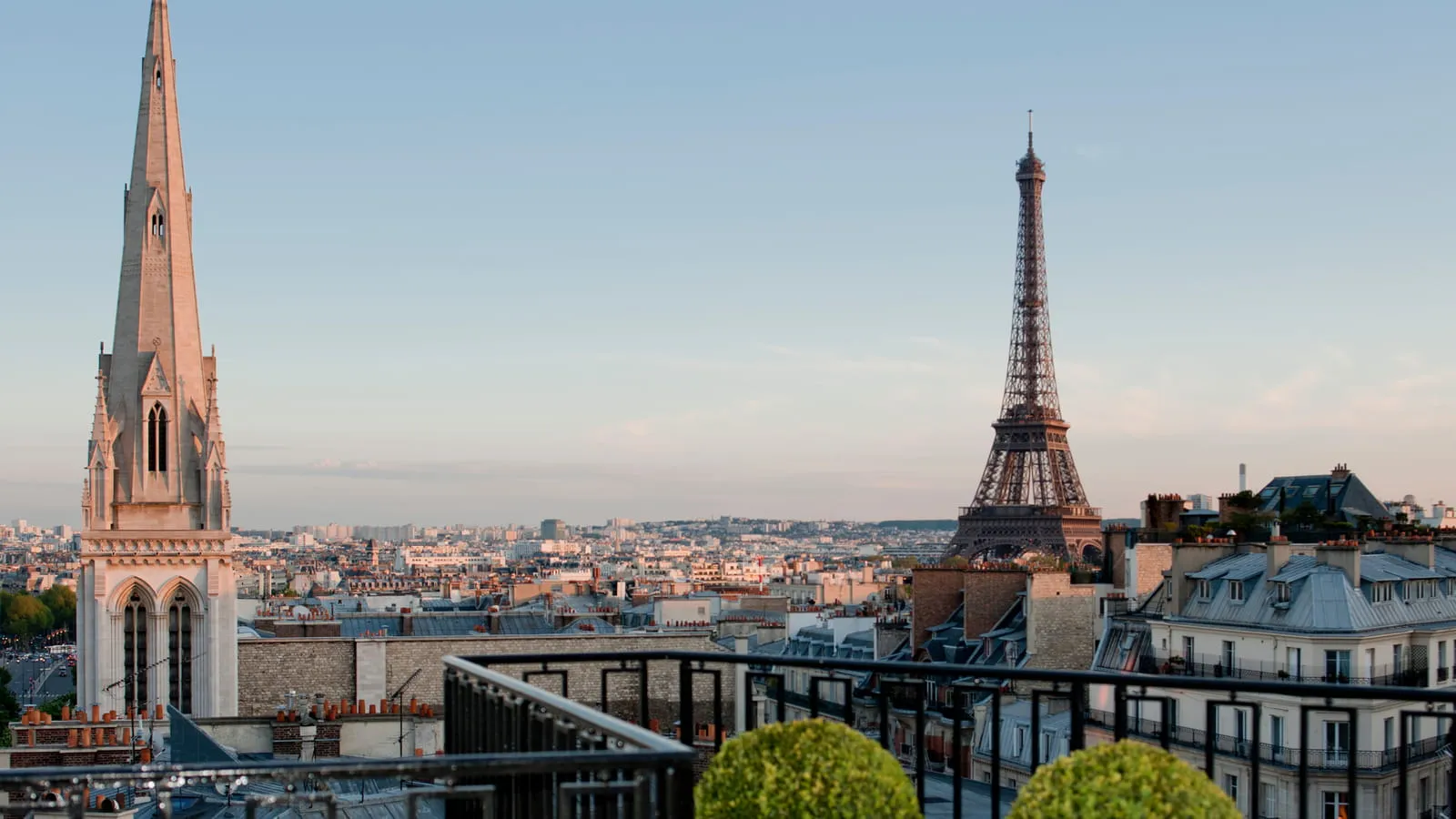
On the map
8th arrondissement, Paris, France
Questions
Frequently asked
Is Four Seasons Hotel George V Paris Michelin-starred?
Yes, and unusually thoroughly. The Michelin Guide France 2026 confirms six stars across the hotel's three restaurants: three stars at Le Cinq under chef Christian Le Squer, two at L'Orangerie, and one at Le George under chef Simone Zanoni, which also holds a Michelin Green Star for sustainable practice. Few hotels anywhere hold this concentration of stars under one roof.
Who designs the hotel's famous flower displays?
Jeff Leatham, an American floral artist who has held the title of Artistic Director since 1999. His team reworks the lobby, courtyard and public rooms roughly every three weeks using thousands of fresh flowers flown in from Holland, a program that made the George V internationally known as Paris's 'flower hotel' and earned Leatham the Chevalier of the Legion of Honour from the French state in 2014.
Has Four Seasons Hotel George V Paris been renovated recently?
Yes. A phased, three-year renovation of all 243 rooms and suites, which kept the hotel operating throughout, was completed in 2026 by Pierre-Yves Rochon, the same designer behind the original 1999 Four Seasons conversion. The new scheme reframes every category as a residential Parisian apartment rather than a conventional hotel room, with vestibules replacing corridors and dressing rooms modelled on couture ateliers.
What is the nearest airport and how long is the transfer?
Paris-Charles de Gaulle (CDG) is the standard arrival point, with a road transfer of roughly 30 to 45 minutes depending on traffic. Paris-Orly (ORY) runs a broadly similar transfer time and is used by some connecting and short-haul flights, while Le Bourget serves private aviation arrivals a little closer to the city centre.
Is the George V an official French Palace hotel?
Yes. It holds France's Palace distinction, a state-awarded category set above standard five-star classification and reserved for a small number of properties judged to combine exceptional architecture, service and heritage. The hotel has also been awarded Three Michelin Keys, the Michelin Guide's own top hotel classification, alongside its restaurants' six stars.
Same destination
More hotel guides in France
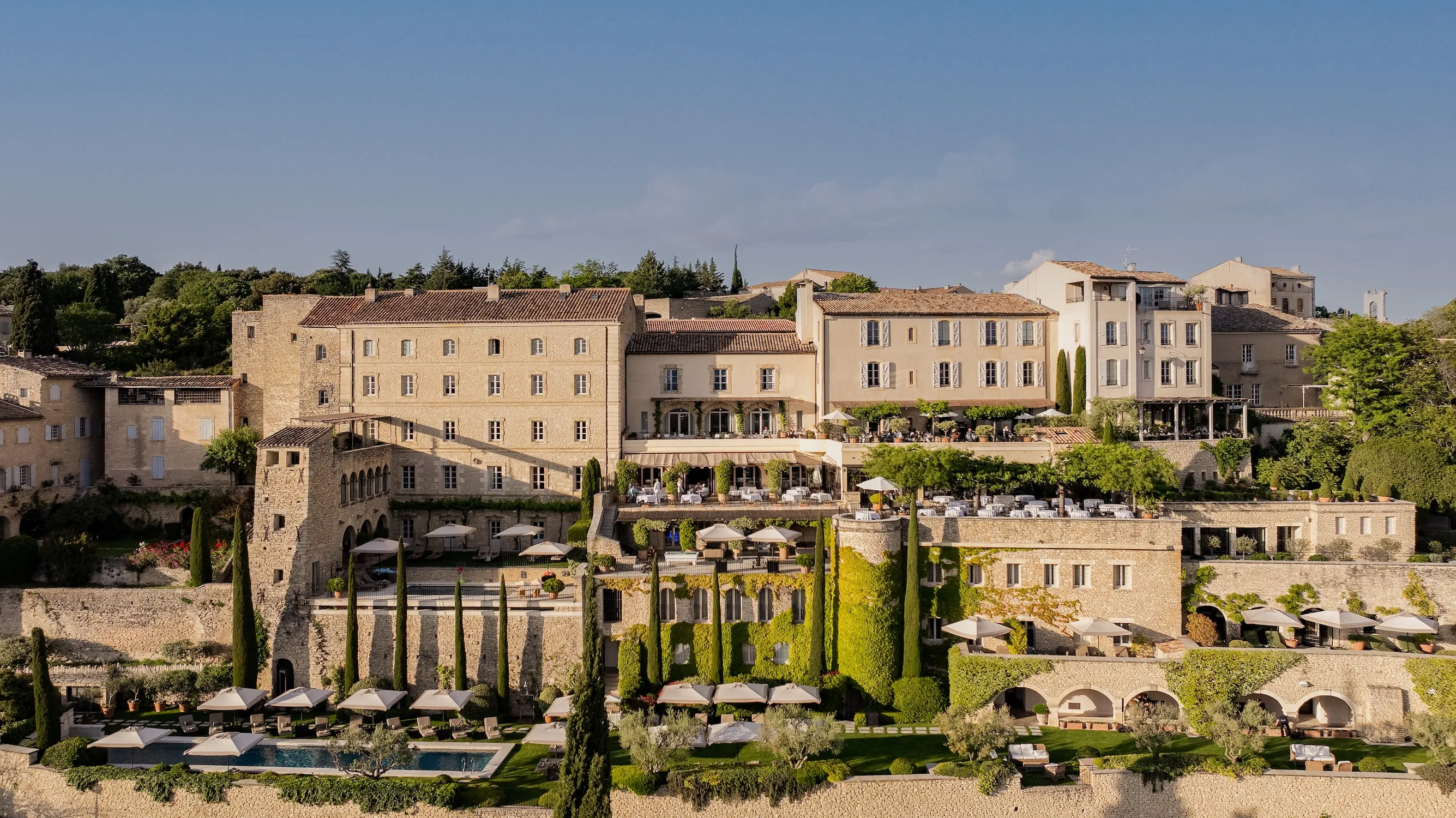
Gordes, Luberon, France
Airelles Gordes, La Bastide
A 16th-century manor built into the ramparts of a hilltop village, run as one of only two dozen hotels in France to hold the official Palace title.
From €950 per night
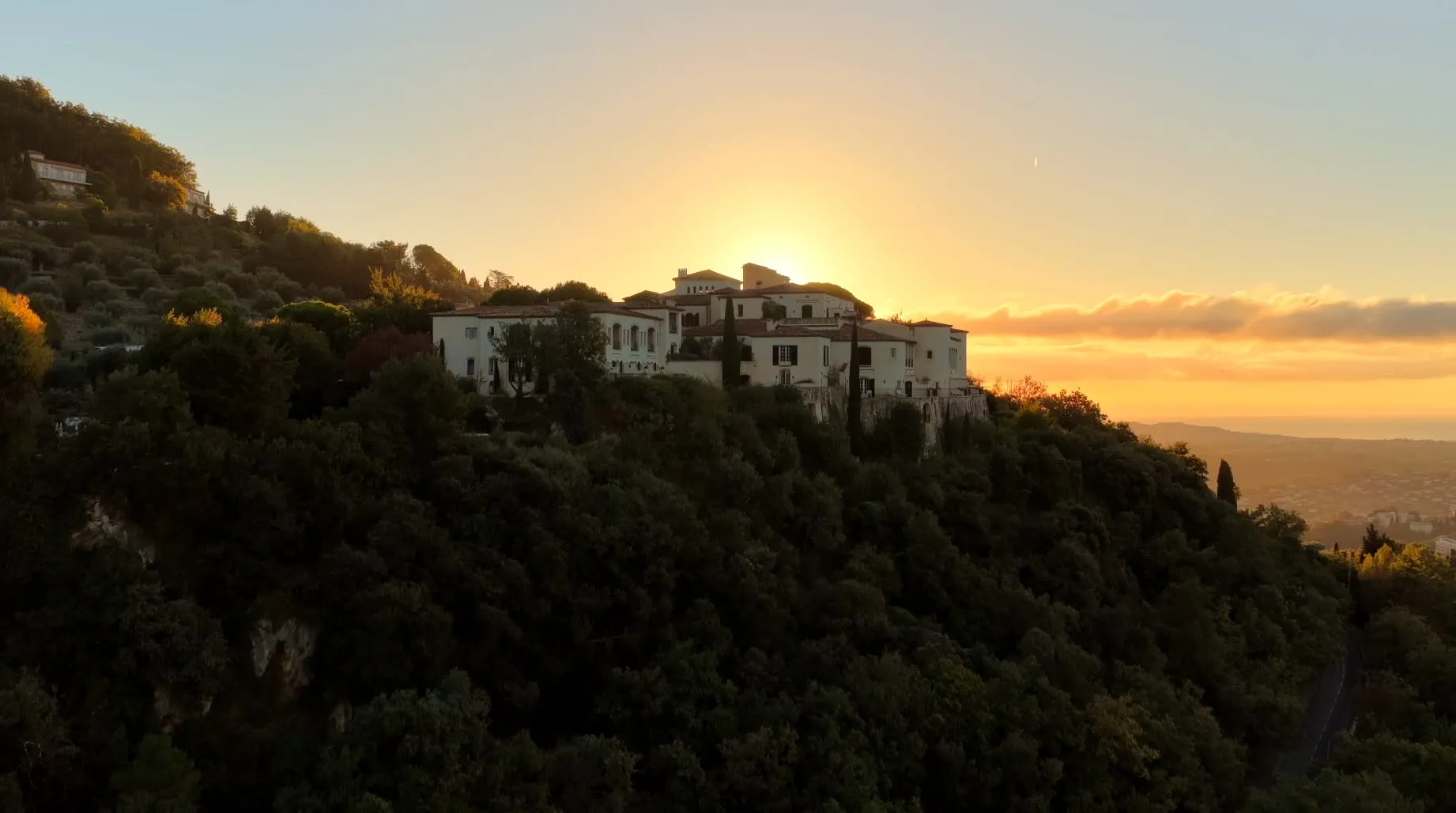
Vence, above the Riviera coast, France
Chateau Saint-Martin & Spa
A 12th-century Knights Templar commandery turned Relais & Châteaux estate, its own olive groves and vineyards spread across a Vence hillside above the Mediterranean.
From €1,050 per night
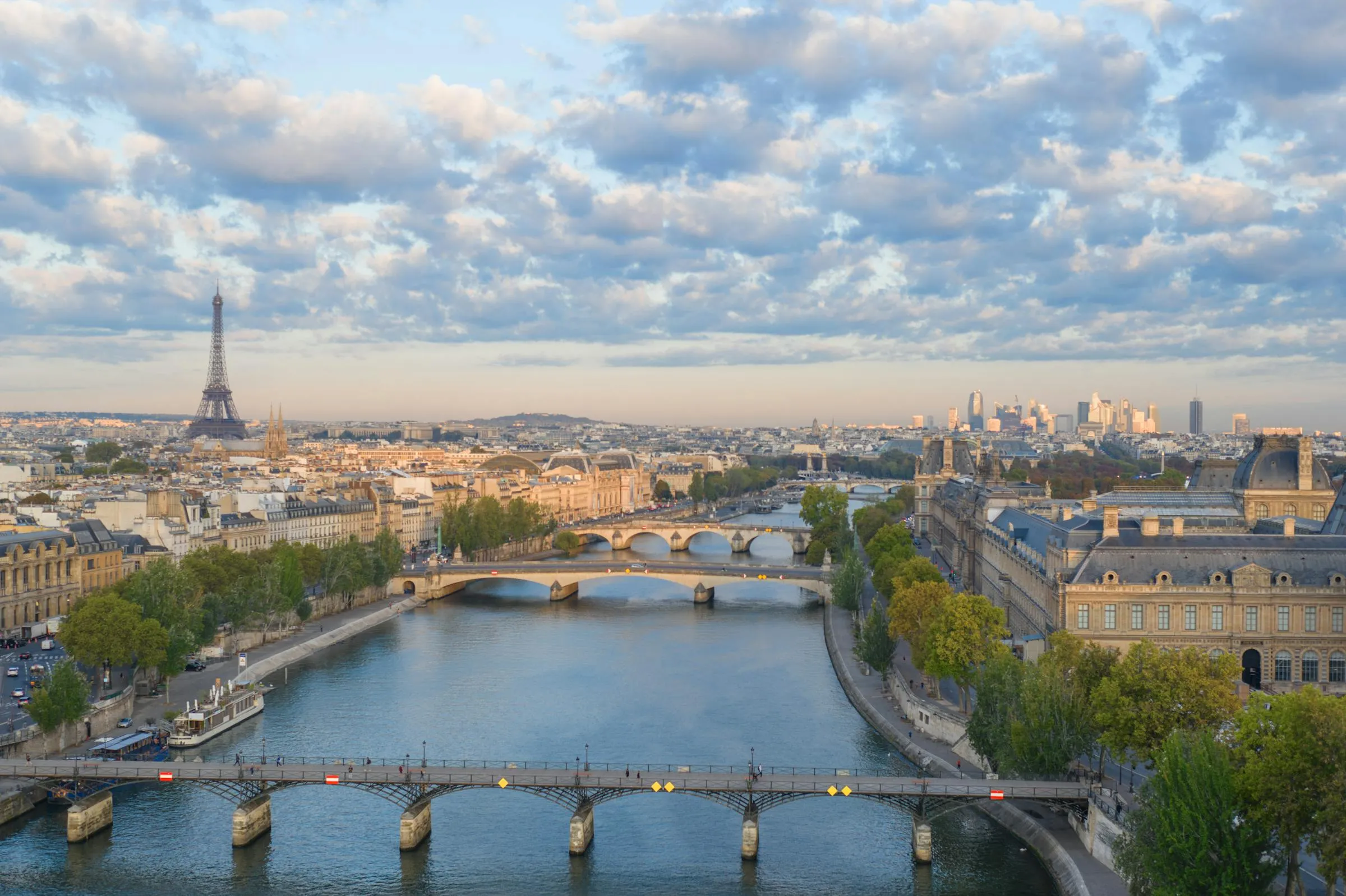
1st arrondissement, Paris, France
Cheval Blanc Paris
A Belle Epoque department store reborn as LVMH's most architecturally ambitious Paris address, with the Seine on one side and the Louvre on the other.
From €2,200 per night