Lankanfushi Island, Maldives
Gili Lankanfushi
The Maldives resort that invented barefoot luxury and has spent two decades refusing to put its shoes back on.
- Rates from
- From $1,550 per night
- Nearest airport
- Velana International Airport (MLE), Male
- Transfer
- About 20 to 30 minutes by speedboat
- Best months
- November to April for calm seas and the clearest visibility; May to November brings a higher chance of manta ray and whale shark sightings, along with more frequent afternoon rain
There is a particular kind of quiet that settles over Lankanfushi Island within the first hour of arrival, and it has less to do with the absence of noise than with the absence of choice. Shoes come off on the boat. Villas connect by timber walkway rather than road. No cart, cab or golf buggy has ever crossed the island’s sand, and none is coming. What remains, once the usual mechanics of a resort stay are quietly removed, is water on three sides of every structure and a philosophy the property has never once diluted for convenience: “No News, No Shoes.”
Gili Lankanfushi sits in North Male Atoll, a short speedboat run from the airport, which makes it geographically closer to Male than many of the Maldives’ more remote seaplane-only properties and psychologically further from anywhere at all. It has been operating under this name since 2012, when Singapore’s Hotel Properties Limited took over management of what was originally Soneva Gili and rebuilt the identity around barefoot simplicity rather than visible extravagance. The result is a resort that reads as unpolished by design: reclaimed timber decking, open-air living pavilions with no glass walls to speak of, and a working theory that true luxury in the Maldives has more to do with subtraction than addition.
Why It Stands Out
Most Maldives resorts compete on villa size, beach length or spa square footage. Gili Lankanfushi built its reputation on the opposite instinct: taking things away. There are no vehicles on the island at all, not even electric ones, so movement happens on foot or by bamboo bicycle across a network of raised timber walkways. There is no formal dress code and, functionally, no shoes; guests surrender theirs on the crossing over and rarely see them again until departure. News, in the traditional sense of televisions playing rolling headlines in public spaces, does not feature.
That restraint extends to the resort’s calling card, the Private Reserve, widely reported as the largest standalone overwater villa in the world: a four-bedroom, multi-tier compound set apart from the main island with its own boat, its own live-in staff and its own infinity pool suspended over the lagoon. Between that villa and the entry-level Villa Suites sits a resort built almost entirely from natural, low-impact materials, run by a butler system named for a literary castaway, and priced, at its upper end, among the most expensive single accommodations anywhere in the region. Few properties commit this completely to one idea and let every other decision follow from it.
Architecture
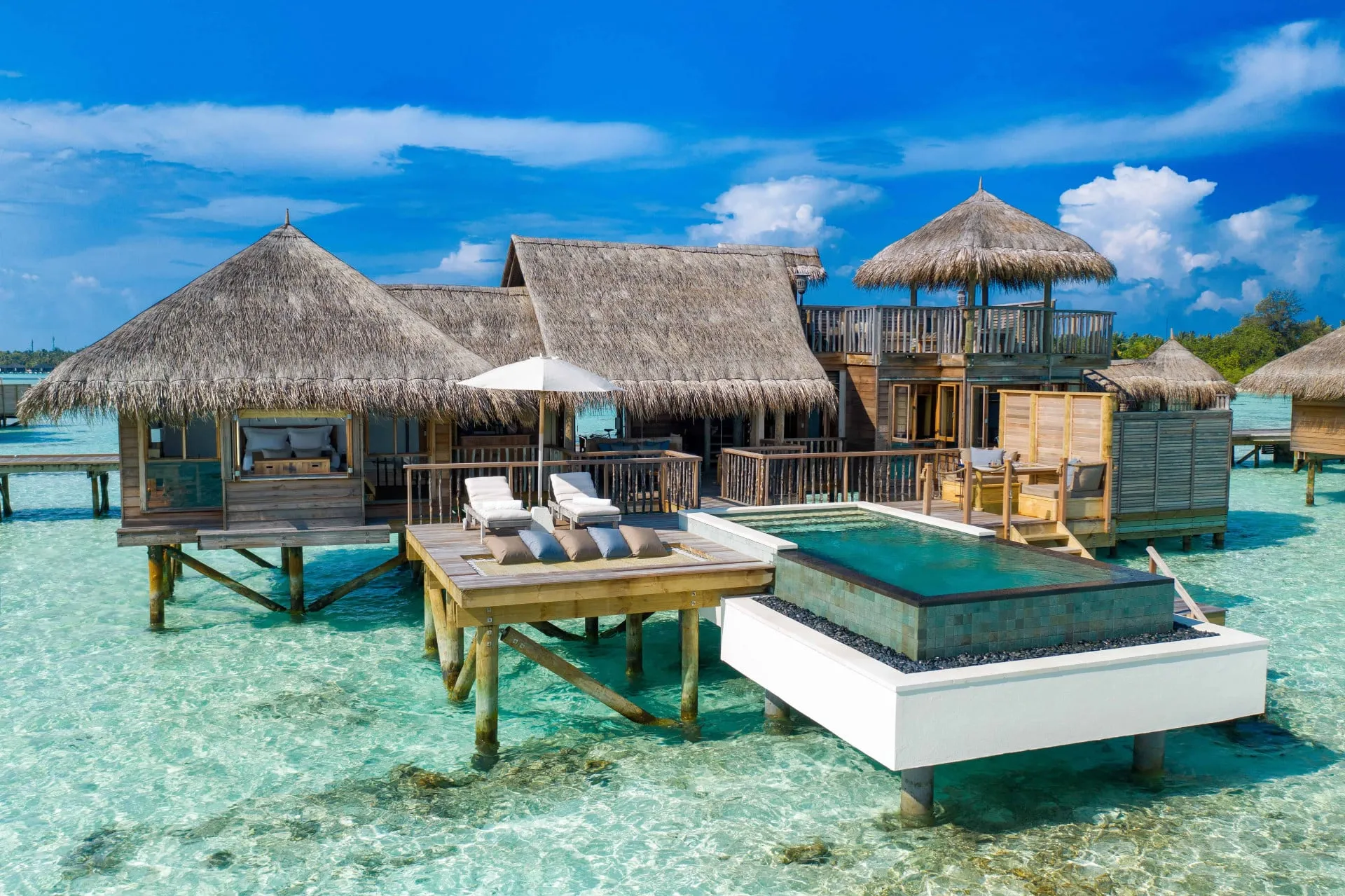
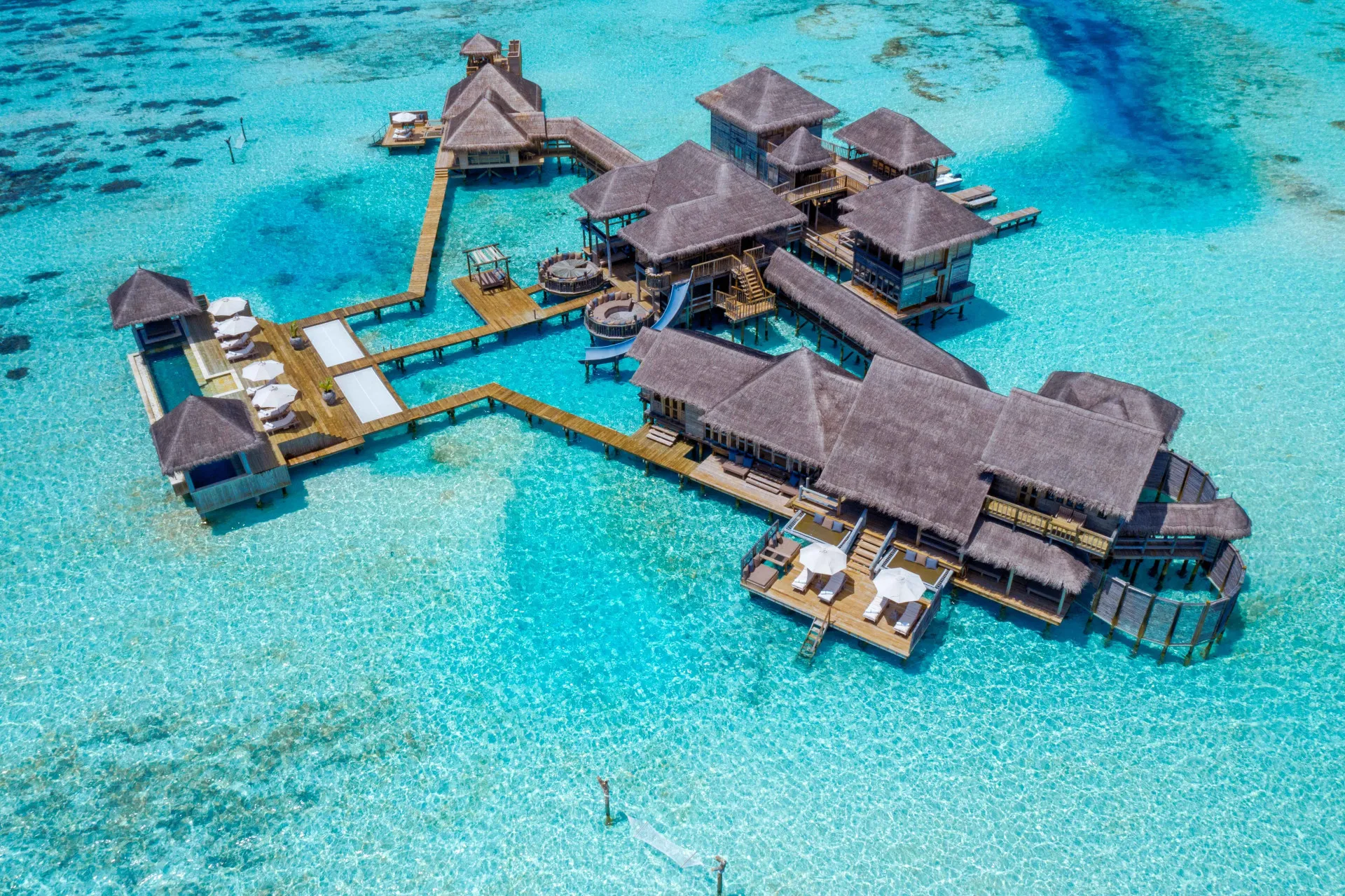
The architecture at Gili Lankanfushi is deliberately unfinished-looking, built to read as though the island grew the structures itself rather than had them installed. Villas and residences sit almost entirely over water, raised on stilts above a shallow, coral-fringed lagoon and connected to the island’s small landmass and to each other by a continuous run of timber walkways rather than paths cut through vegetation. Roofs are thatched, decking is reclaimed and weathered rather than freshly milled, and the great majority of villas are left open on at least one side, with woven screens or timber shutters standing in for glass. There is no central multi-storey building dominating the skyline; the resort spreads low and horizontal across the lagoon, so that from a boat approaching the island, the villas barely interrupt the tree line behind them.
That same logic governs circulation. Because no motorised vehicle has ever operated on Lankanfushi, every structure had to be planned around foot traffic and boat access rather than road access, which flattens the resort’s footprint and keeps sightlines uninterrupted between the jungle interior and the surrounding reef. The Private Reserve pushes the same architectural instinct furthest: built roughly 500 metres from the main island as its own standalone overwater structure across multiple tiered levels, it functions less like a single villa and more like a small private outpost, reachable only by its own dedicated boat.
Interior Design
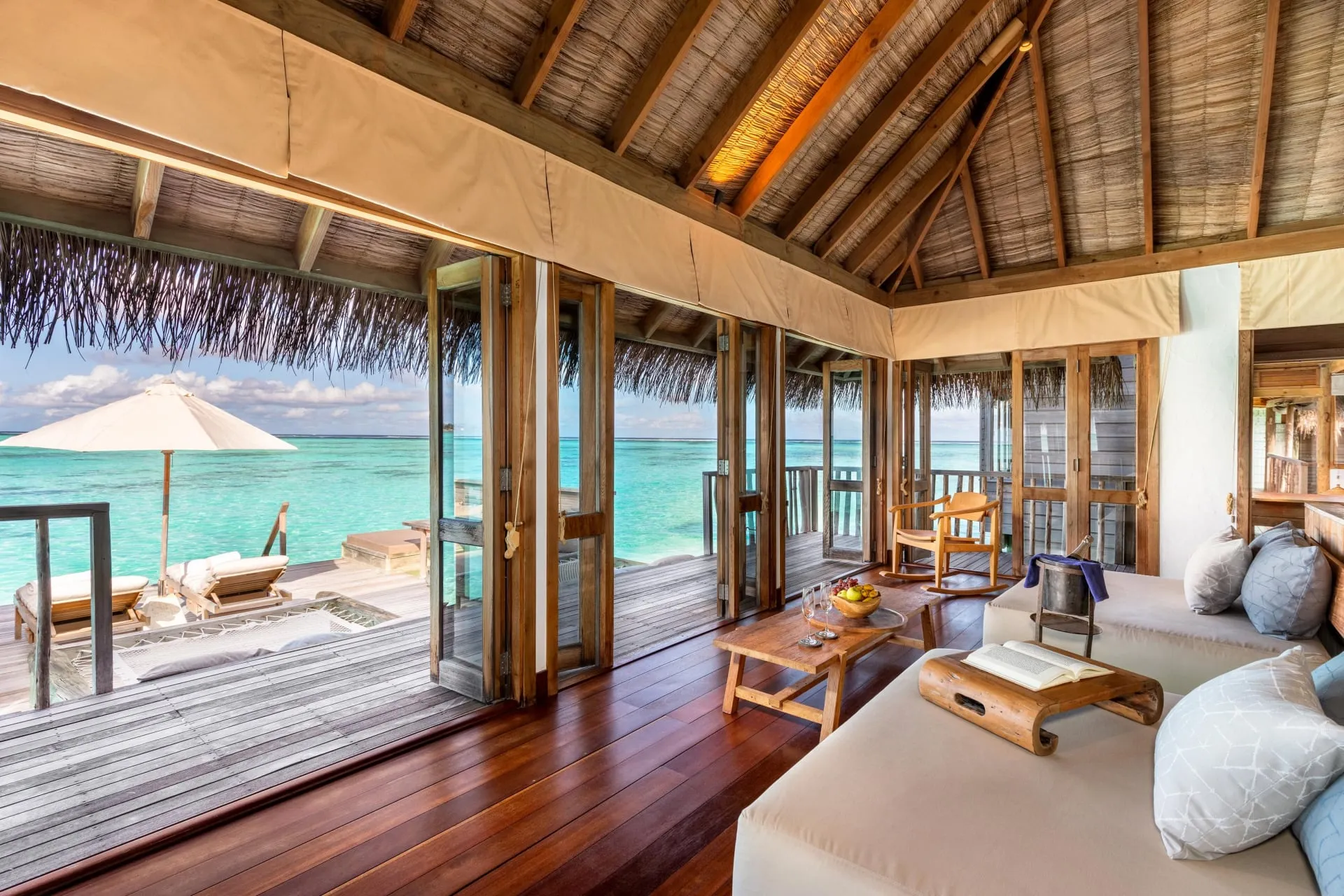
Inside the villas, the material language stays consistent with the architecture outside: reclaimed and driftwood-toned timber, woven rattan, undyed cottons and linens, and very little in the way of hard, reflective surfaces. Furniture leans toward the handmade and asymmetric rather than matched sets, with daybeds, hammocks and low platform beds positioned to face the water rather than a screen. Bathrooms typically open partly to the outdoors, and several villa categories include an open-air rain shower as the primary washing space rather than an enclosed indoor one.
Colour is kept close to what the island already supplies: sun-bleached wood tones, sand, sea-glass greens and the deep blue-black of the lagoon after dark, with almost nothing introduced that would read as imported or synthetic. The effect is intentionally more rustic-chic than polished five-star, and it is consistent whether a guest is in an entry Villa Suite or the Private Reserve, where the scale changes considerably (a private cinema, a fully equipped kitchen, a wine cellar holding several hundred labels) but the material palette does not.
Atmosphere
The atmosphere at Gili Lankanfushi is unhurried in a way that some guests need a day or two to adjust to. Without vehicles, without a dress code, and largely without shoes, the ordinary friction of a resort stay is stripped away: nobody is waiting for a buggy, nobody is choosing what to wear to dinner. Each guest is assigned a Mr or Ms Friday, a dedicated host named after Robinson Crusoe’s companion, who handles everything from restaurant reservations to laundry to unscheduled requests, which removes much of the need to interact with a formal front desk at all.
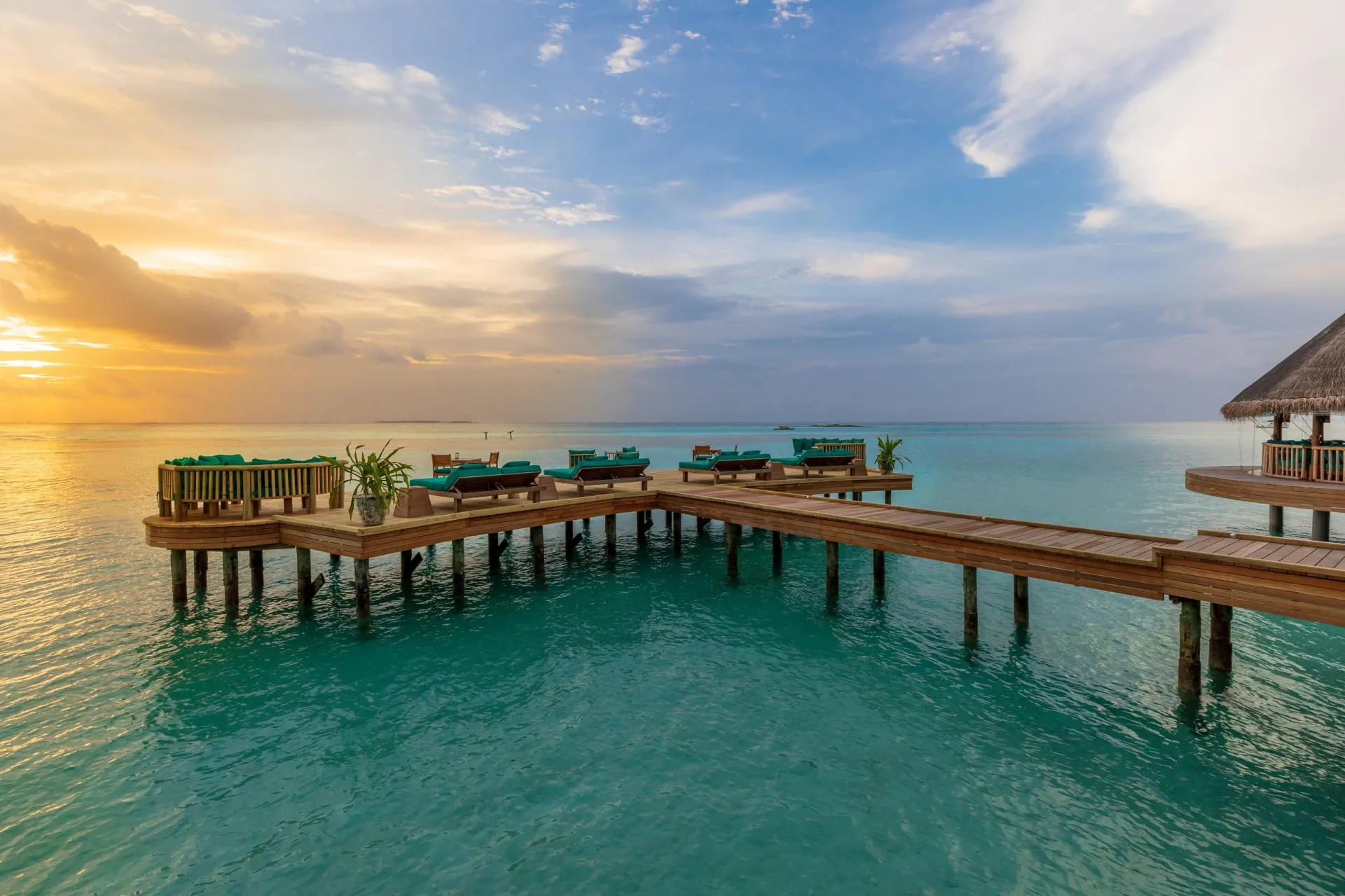
Public spaces stay low-key rather than performative: an overwater bar built for sunset rather than spectacle, a wine cellar, a beach restaurant that shifts its theme through the week. Because the island is small and almost entirely given over to water and walkway, there is a persistent sense of being suspended just above the lagoon rather than standing on solid ground, reinforced by glass-floored spa rooms and villas whose decks sit directly over living coral. It reads less like a hotel than like an extended, well-staffed exercise in doing very little, deliberately.
Rooms and Suites
Villas and residences at Gili Lankanfushi number around forty-five in total, arranged across a handful of categories that scale from an entry-level overwater suite up to the standalone Private Reserve. The Villa Suite is the resort’s base category, an overwater unit with an open-air bathroom and direct lagoon access from its own deck. Villa Suites with Pool add a private plunge pool to the same footprint, while the Two-Bedroom Villa with Pool and the Sunset Two-Bedroom Villa extend the format for families or two couples travelling together, the latter oriented specifically toward the island’s sunset-facing side. The Gili Lagoon Villa sits further out over open lagoon water, prized for its seclusion and reef access.
On the residence side, the Residence and Residence with Pool categories are positioned for families of up to four, connected to the main island by a short walkway or boat ride, with the Gili Lagoon Residence, Sunset Crusoe Residence and Island View Crusoe Residence adding variations on view and orientation, the latter two carrying the Crusoe name that runs through the resort’s Friday-and-castaway theming.
At the top sits the Private Reserve, the villa most responsible for Gili Lankanfushi’s reputation. Reported to be the largest standalone overwater villa in the world at around 1,700 square metres, it is built across multiple tiered levels roughly 500 metres from the main resort and reachable only by private boat. It sleeps up to four bedrooms across two master suites and two further en-suite guest rooms, and its own facilities read more like those of a small private hotel than a single villa: an infinity pool with a sound system built into the upper sundeck, sea-level decks with direct access to the coral below, a private cinema, a couples’ spa pavilion with sauna and steam room, an air-conditioned gym, a fully equipped kitchen for private dining, a wine cellar stocked with several hundred labels, and a water slide dropping straight into the lagoon. It comes with its own live-in Friday staff and a dedicated boat and can be booked as a self-contained retreat for a family, wedding party or group rather than as an upgrade within the standard villa categories.
Dining
Dining at Gili Lankanfushi runs across a small cluster of venues rather than a single sprawling buffet operation, in keeping with the resort’s generally low-key public spaces. Kashiveli, the signature restaurant, sits where the island meets the beach and serves breakfast and dinner built around organic-garden and local-water ingredients, with executive chef Aldo Cadau overseeing a rotating schedule of themed evenings, including an Asian Street Market, a Mediterranean Spice Souk, a Passage to India night and a Maldivian Seafood Grill. By the Sea, set among tropical planting with ocean views, focuses on Japanese cooking, from sushi and sashimi to teppanyaki, using locally caught reef fish. Fini Foni is the resort’s casual, poolside stop for ice cream, light bites and drinks through the day.
The Overwater Bar handles sunset and evening cocktails from a platform built out over the lagoon, while the Underground Wine Cellar, holding several hundred labels and thousands of bottles, runs sommelier-led pairings and wine-focused dinners for guests who want to go beyond the standard restaurant list. An Organic Garden at the centre of the island supplies produce to the kitchens and doubles as a venue in its own right, with chef-led tours and tasting menus served among the beds it grows. Private dining is a significant part of the offer here, arranged on sandbanks, in-villa or at other spots around the island, alongside bespoke beverage experiences built around cocktail and wine tastings.
Spa and Wellness
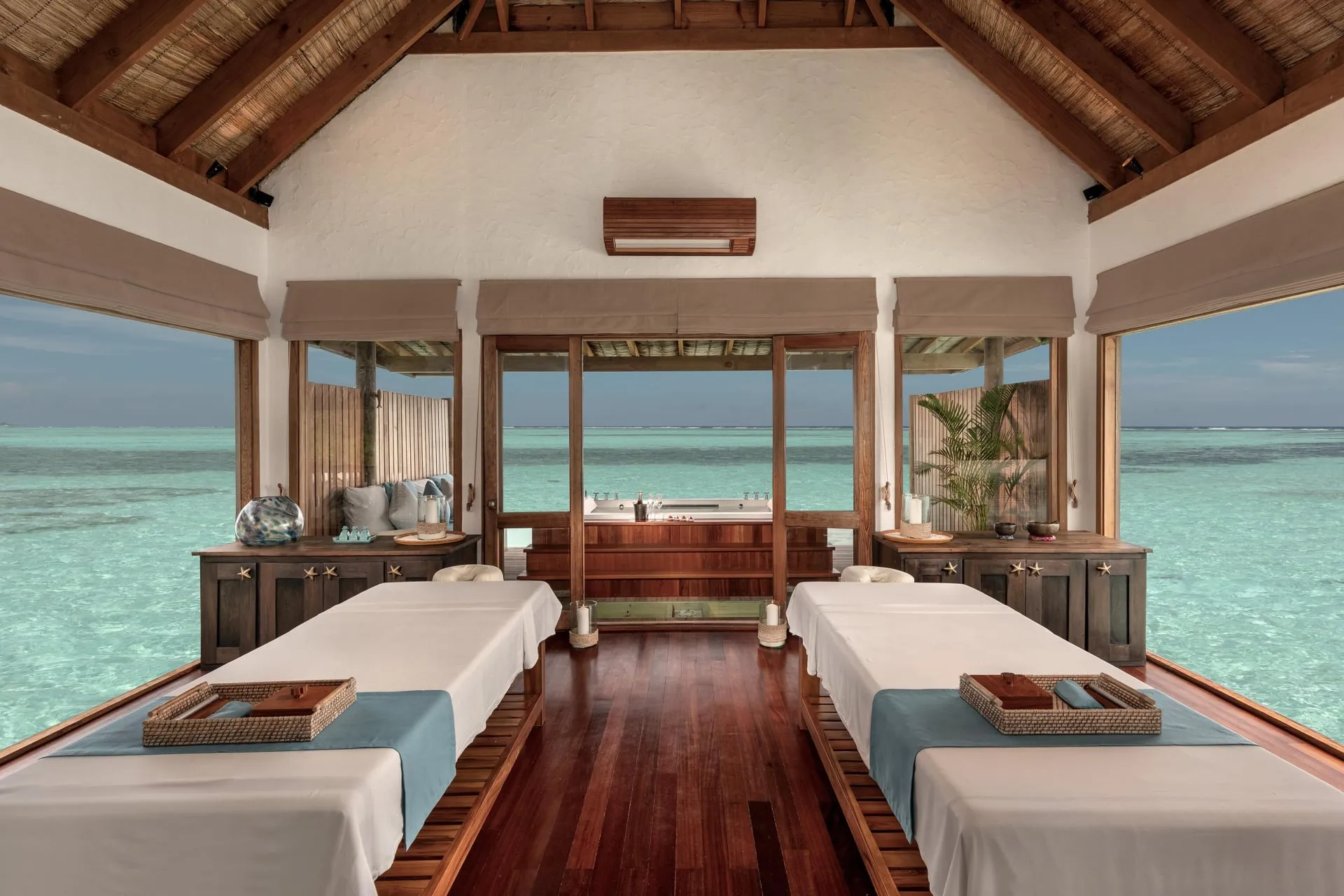
The Meera Spa occupies a secluded bay of its own, built with six overwater treatment rooms whose glass floors let guests watch the reef and its fish move beneath them during a massage or facial. Sauna, steam and open-air relaxation areas connect the rooms via covered walkways, keeping the spa’s footprint as quiet and low-built as the rest of the resort.
Treatments draw on organic products from Voya and the spa’s own Meera line, built around plant and marine extracts, and the menu is structured loosely around the five elements of earth, water, fire, air and space, running from single treatments up to multi-day wellness journeys that combine several therapies. A regular programme of yoga, meditation, reiki and sound-bowl sessions runs alongside visiting practitioners on rotation, and more active guests can combine spa time with surfing or diving-focused wellness packages built around the resort’s water sports offering. The overall approach favours a slower, more exploratory kind of wellness over a fixed treatment menu, consistent with the resort’s wider resistance to anything that feels overly scheduled.
Experiences
Water dominates the activity list, unsurprisingly, given the resort’s shallow, coral-edged house reef and its position within North Male Atoll’s wider dive and snorkel network. Guests can snorkel directly from their villa deck in many categories, join guided dives out to nearby reef sites, or head out on excursions timed around the region’s manta ray and whale shark seasons, generally strongest between May and November. Traditional Maldivian dhoni cruises, sandbank picnics and sunset fishing trips round out the more classic on-water offering.
The resort also builds in a genuine environmental angle for guests who want to do more than observe: coral restoration and reef-cleaning activities, some run in partnership with marine research groups such as the Manta Trust, give visitors a way to contribute directly to the same reef they are diving or snorkelling above. On land, options stay deliberately limited given the size of the island and the no-vehicle layout: bamboo-bicycle exploration of the walkways, garden tours through the Organic Garden, and the spa’s more active programming for guests who want a workout that isn’t a dive.
Who It Is For
Gili Lankanfushi suits travellers who want the idea of the Maldives (overwater architecture, a private house reef, total physical separation from the mainland) without a resort that leans on polish or formality to prove its value. Couples marking a honeymoon or anniversary are an obvious fit, given the privacy of the villas and the general absence of anything that would disrupt an intentionally slow pace. Divers and snorkellers benefit from the shallow, easily accessed house reef, and travellers genuinely trying to disconnect, rather than simply saying they want to, will find the no-shoes, low-technology framing does more of that work for them than willpower alone usually does.
It also works well for families booking a Residence or a group taking over the Private Reserve outright, since the car-free layout, shallow lagoon and live-in Friday staff make it easier to relax into than a resort built around a beach road and shared amenities. It suits this profile less well for travellers who want a lively social scene, extensive nightlife or a resort with multiple large pools and a busier, more programmed activity schedule; the entire point of Lankanfushi is that there is less to do, not more.
Best Time to Visit
The Maldives’ dry season, running roughly from November through April, brings the calmest seas, the clearest underwater visibility and the most reliably sunny days, making it the strongest window for snorkelling, diving and simply spending time on the water without interruption. The wetter months from May through November bring a higher chance of afternoon squalls and short-lived rain, but they also coincide with the best odds of manta ray and whale shark sightings in the surrounding atoll, which some divers and photographers will trade a little weather risk to catch. Neither season closes the resort or meaningfully changes its operation; the choice comes down to whether calm, reliably dry days or richer marine sightings matter more to a given trip.
How to Get There
Every arrival routes through Velana International Airport near Male, the Maldives’ main international gateway. From there, Gili Lankanfushi sits roughly 20 kilometres away in North Male Atoll, a distance covered by a resort-arranged speedboat transfer of about 20 to 30 minutes, one of the shorter and more straightforward crossings among Maldives resorts, since it requires no seaplane or domestic flight connection. Staff meet guests at the airport and manage the entire crossing, including the shoe-collecting ritual that marks the practical start of the “No News, No Shoes” stay.
Nearby Experiences
Lankanfushi’s position in North Male Atoll puts it within reach of some of the region’s better-known dive and snorkel sites without requiring a long boat transfer to reach them, a genuine advantage over resorts sitting in more remote atolls further from the airport. Excursions from the resort can be arranged out to nearby reef systems and channels known for manta ray aggregations, along with the kind of open-water dive sites that draw repeat visitors to this stretch of atoll specifically. Male itself, the Maldives’ compact capital, lies close enough for a half-day excursion for guests curious about local markets, the Old Friday Mosque or simply a change of scenery from the resort’s single-island world, though few visitors treat it as a priority against the pull of staying put.
Things to Know Before Booking
The island’s defining constraint, no vehicles of any kind, means longer walks between some villa categories and the main restaurants than at resorts served by buggies, worth factoring in for guests with mobility considerations. Villa categories vary considerably in distance from the island’s centre, so travellers who prioritise a short walk to dinner over maximum privacy should confirm villa placement at the time of booking. The Private Reserve, given its size and separate location roughly 500 metres from the main resort, functions best for a family or group travelling together rather than a couple looking for a standard honeymoon villa, and it should be booked directly with that scale in mind.
Because the resort’s identity leans so heavily on disconnecting from news and formality, travellers who want constant connectivity, a busy schedule of resort activities or a more conventional dress-code-and-buffet Maldives stay may find the pace slower than expected. It is also worth budgeting for the transfer and any add-on excursions separately, since speedboat transfers and specialised dive trips are typically quoted apart from the room rate.
Sustainability
Gili Lankanfushi’s environmental approach starts with its building materials: villas and residences are constructed largely from responsibly sourced timber, palm wood, bamboo and palm fronds rather than concrete and steel, keeping both the physical footprint and the visual profile of the resort close to what the island would otherwise look like undeveloped. A dedicated desalination plant supplies the resort’s water, guest toiletries are provided in refillable earthenware rather than single-use plastic, and kitchens draw on the on-site Organic Garden along with pole-caught local seafood to shorten the distance food travels before it is served.
The resort has held EarthCheck certification, an independent sustainability benchmarking programme, and has publicised a pledge tied to the Protect Maldives Seagrass movement alongside a coral restoration project using coral lines, reported as among the first efforts of its kind in the Maldives. Guests can join reef-cleaning and coral-monitoring activities, some run with marine research partners such as the Manta Trust, giving visitors direct, hands-on exposure to the conservation work rather than a purely promotional gesture. As with most resort sustainability programmes, the detail and scale of these initiatives shift over time, so travellers who weigh environmental credentials heavily in a booking decision should confirm current practices directly with the resort.
Practical Information
Rates at Gili Lankanfushi start from around USD 1,550 per night for an entry-level Villa Suite, rising substantially for pool villas, residences and, at the very top, the Private Reserve, which is priced as a standalone multi-bedroom booking rather than a per-person rate. Check-in runs from 2:00 PM and check-out by 12:00 PM, with early arrival or late departure available on request, subject to availability. The resort accommodates dietary requirements, including vegan, vegetarian and allergy-specific requests, when notified in advance through a Mr or Ms Friday.
The property sits in North Male Atoll, reached via a speedboat transfer of about 20 to 30 minutes from Velana International Airport near Male. Most guests find four to five nights enough to properly settle into the resort’s slower pace, work through its dining venues and fit in both spa time and reef excursions without the stay feeling compressed.
Editorial Conclusion
Gili Lankanfushi has spent more than a decade proving that a Maldives resort does not need to compete on scale or spectacle to hold its position among the region’s most recognisable names. Its case rests on restraint, taken further and more consistently than almost anywhere else in the atolls: no vehicles, no fixed dress code, no shoes, and an architecture built to disappear into the lagoon rather than announce itself above it. The Private Reserve gives it a genuine trophy property at the very top of the market, but the wider resort, still built from reclaimed timber and run by Fridays rather than a front desk, is the part of Gili Lankanfushi actually worth booking for. For travellers who want the Maldives stripped back to water, reef and very little else, few properties commit to that idea as completely, or for as long, as this one has.
In pictures
On the map
Lankanfushi Island, Maldives
Questions
Frequently asked
What does the 'No News, No Shoes' philosophy actually involve?
On arrival, guests hand their shoes to their host on the boat ride over and are given a bag to keep them in for the length of the stay. Footwear stays off across the island's sand paths and timber walkways, newspapers and rolling news are absent from public areas, and the resort's pace is built around that same idea of stepping away from the outside world rather than around it.
Is Gili Lankanfushi the same resort as Soneva Gili?
It occupies the same island and overwater structure. The resort opened in the early 2000s as Soneva Gili by Six Senses; Singapore-based Hotel Properties Limited, through its HPL Hotels & Resorts arm, took over management on 1 July 2012 and relaunched the property as Gili Lankanfushi Maldives, a name it has carried since.
How do guests get around the island if there are no vehicles?
On foot, along raised timber walkways and sand paths that link the villas, restaurants and jetty, or by bamboo bicycle for longer stretches. There are no cars, golf buggies or motorised carts anywhere on Lankanfushi; a Mr or Ms Friday, the resort's dedicated butlers, can also ferry guests and luggage by boat between the main island and the more distant villas or the Private Reserve.
What is the Private Reserve, and is it bookable on its own?
The Private Reserve is a standalone overwater villa of roughly 1,700 square metres set apart from the main resort, built across multiple tiers with four bedrooms, an infinity pool, a private cinema, a couples' spa pavilion, a gym, a wine cellar and a water slide into the lagoon. It is bookable as its own reservation, complete with its own live-in Friday staff and private boat transfers, and functions as a self-contained retreat for a family or group rather than an add-on category.
Does Gili Lankanfushi work for families and larger groups?
Yes. Residence categories are built with extra bedrooms and connecting configurations for families, and the Private Reserve in particular suits multi-generational groups or wedding parties who want a private compound rather than adjoining rooms. The island's car-free layout and shallow house reef also make it an easier property for parents to relax into than a resort built around a beach and a road.
How far is the resort from the airport, and what does the transfer involve?
Gili Lankanfushi sits roughly 20 kilometres from Velana International Airport in Male, reached by a speedboat transfer of about 20 to 30 minutes. The resort meets guests at the airport and manages the crossing directly, so no seaplane or domestic flight connection is required, which makes it one of the more straightforward Maldives transfers on arrival day.
Same destination
More hotel guides in Maldives
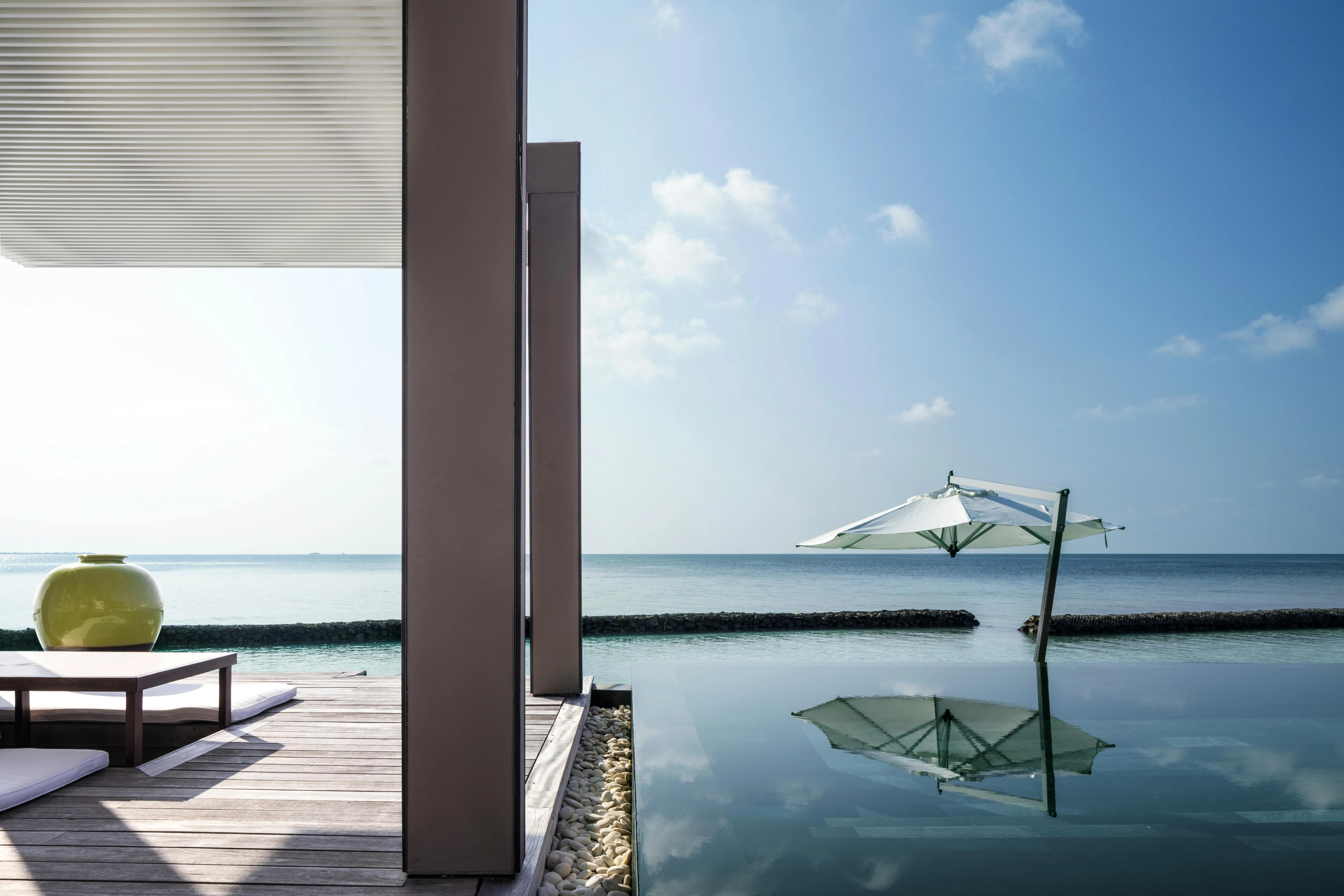
Randheli Island, Maldives
Cheval Blanc Randheli
Jean-Michel Gathy's private-island debut for LVMH's hotel house, forty minutes by seaplane into the Noonu Atoll.
From $2,200 per night
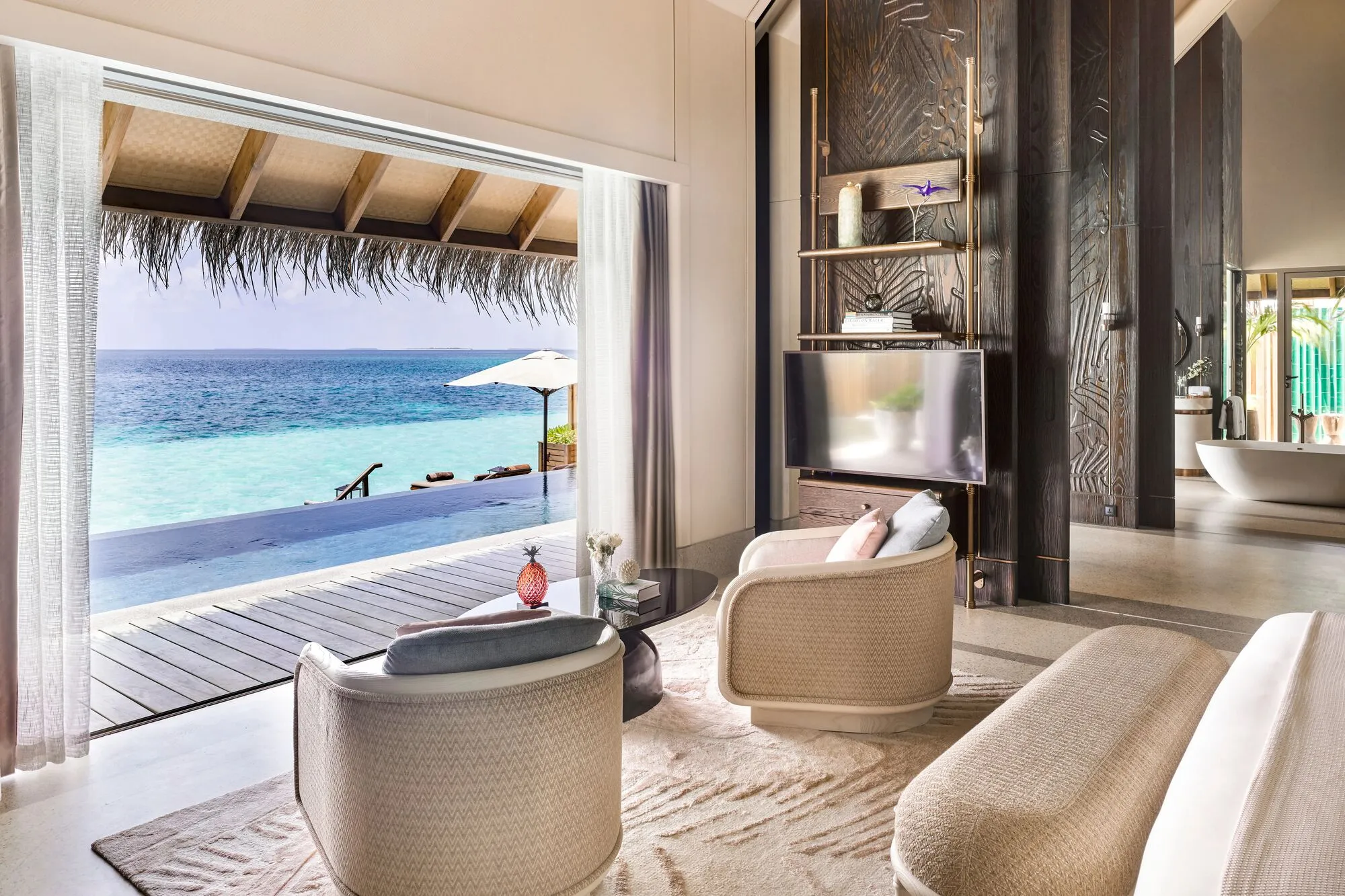
Muravandhoo Island, Maldives
JOALI Maldives
An art-immersive private island in Raa Atoll where more than forty commissioned installations sit alongside 73 villas and a working coral restoration reef.
From $1,600 per night
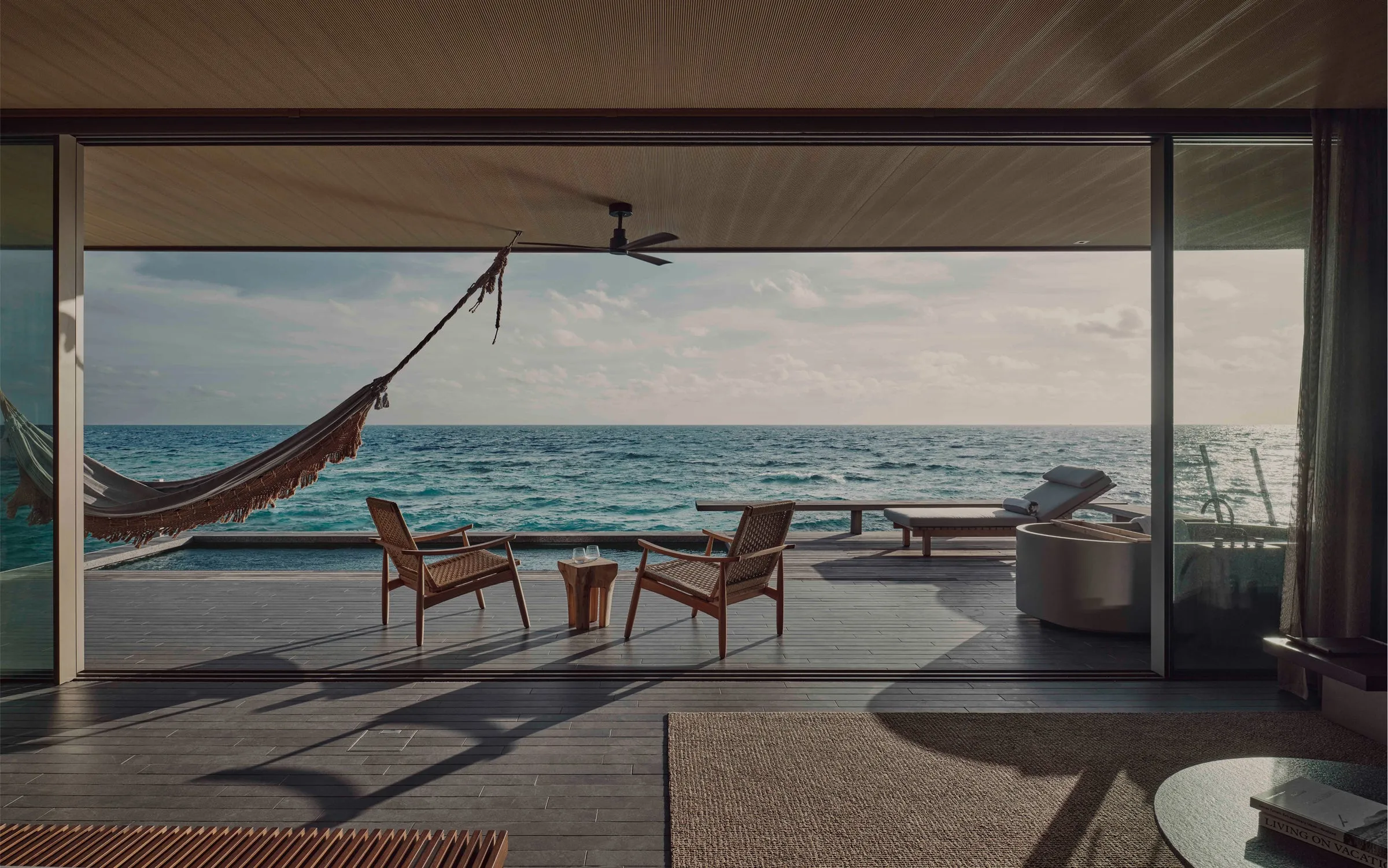
Fari Islands, Maldives
Patina Maldives
A Brazilian architect's low, canopy-height villas and a shared four-island marina make this the Maldives resort built for people who find most private-island luxury a little too private.
From $1,600 per night