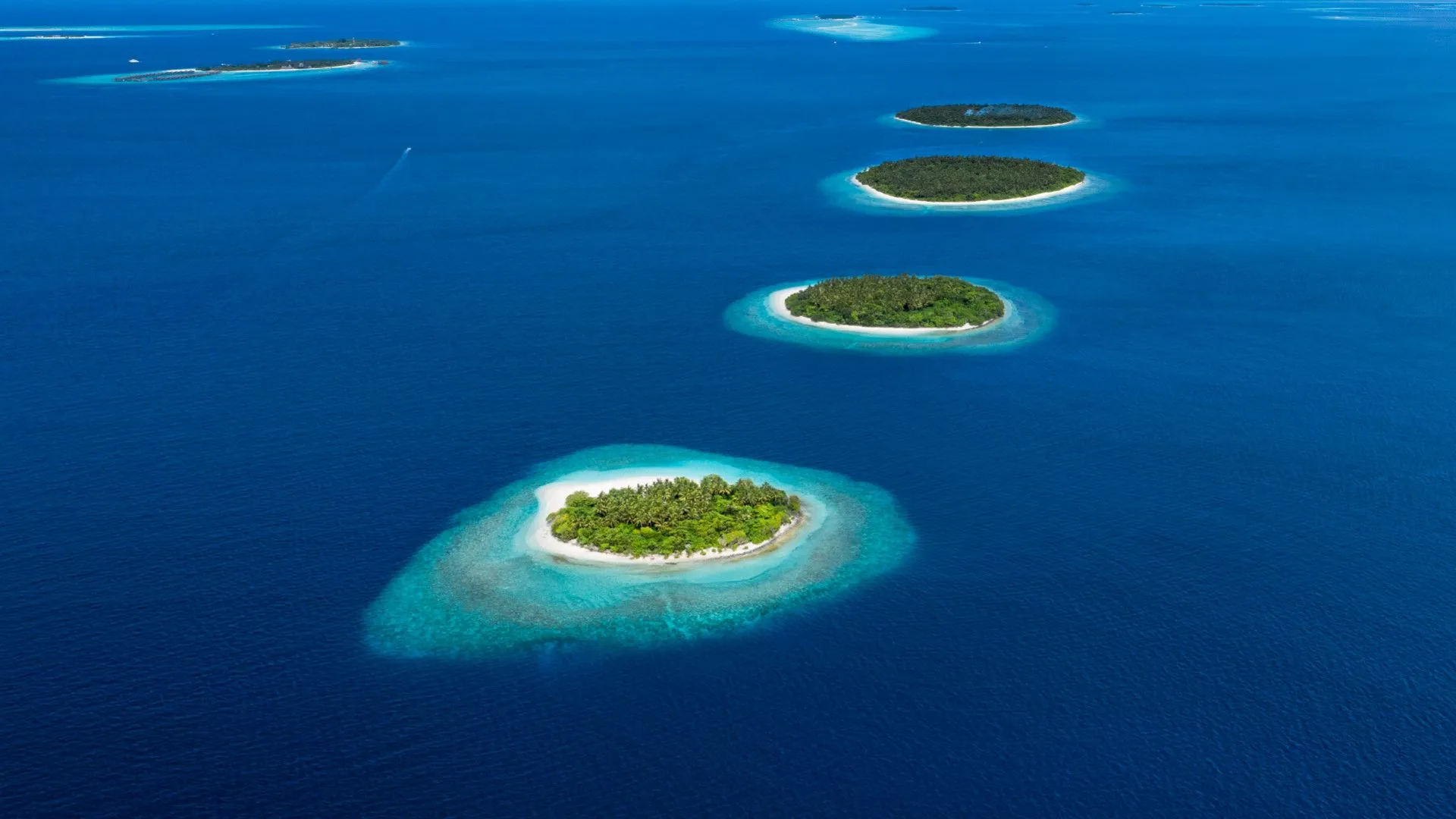
Maldives
Twenty-six atolls of the same warm, clear water, divided almost entirely into single-resort islands: one property, one price ecosystem, one idea of what an island should feel like.
- When to go
- November to April is the dry, calm-seas season. May to October brings afternoon squalls and lower rates, with the best surf on the western atolls.
- Getting there
- Most arrivals land at Velana International Airport near Male, then transfer on by seaplane, domestic flight, or speedboat depending on the atoll.
- Best for
- overwater villas diving manta rays private islands
The Maldives works on a logic no other beach destination quite matches: almost every resort occupies its own island, and the island is the whole experience. There is no town to walk to, no restaurant across the street. What a property builds into its one piece of coral sand and reef is, for the length of a stay, the entire world available to a guest.
The private-island model
A Maldives resort is bought in full, not room by room: the room rate, the meal plan (increasingly all-inclusive at the upper end), and a transfer that can be a genuine leg of the trip in itself, a seaplane flight of thirty to forty-five minutes low over the atolls, or a speedboat run of similar length. That transfer cost and time should be treated as part of the property’s true distance, not an afterthought, since it can add several hundred dollars and half a day of travel on either side of the stay.
The trade a guest makes for that isolation is total design control: house reef quality, overwater villa spacing, the depth of a spa program, and the kitchen’s ability to hold up over four, five, seven consecutive nights with no other restaurant in reach. A resort with a thin kitchen or an inconsistent dive team has nowhere to hide, which is exactly why service depth and food quality matter more here than almost anywhere else this site covers.
Reading an atoll map
North and South Male atolls hold the highest concentration of resorts and the shortest transfers from the airport, which suits shorter stays. Further atolls, Baa, Raa, Noonu to the north, and Laamu, Gaafu, and the far south, trade a longer transfer for quieter house reefs and, in Baa Atoll’s case, a UNESCO Biosphere Reserve status built around the seasonal manta ray and whale shark aggregation at Hanifaru Bay. The choice of atoll is largely a choice between proximity and marine life density, and the better resorts are honest about which side of that trade they sit on.
What we look for here
In the Maldives, location is judged first on water access: house reef quality, the walk or swim from villa to reef, and the reliability of the diving and snorkelling program, since a resort with a mediocre reef cannot be redeemed by architecture alone. Because the transfer is unusually costly in time and money, service and food quality are weighted heavily too. A guest cannot simply leave for a better dinner. The guides below apply that standard consistently, from a five-figure-a-night private island to any more accessible option that clears the same bar.
Where to stay
Hotel guides in Maldives
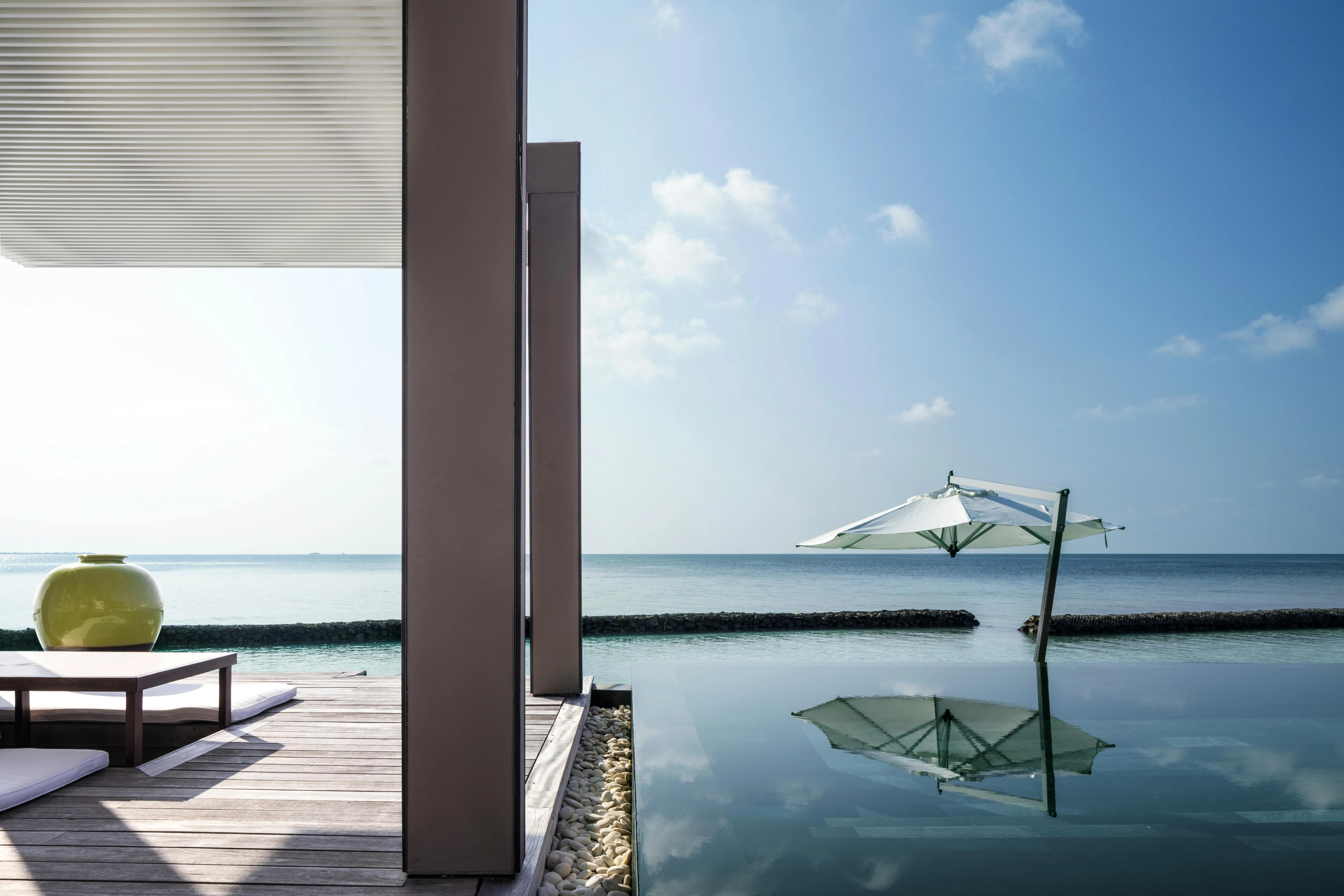
Randheli Island, Maldives
Cheval Blanc Randheli
Jean-Michel Gathy's private-island debut for LVMH's hotel house, forty minutes by seaplane into the Noonu Atoll.
From $2,200 per night
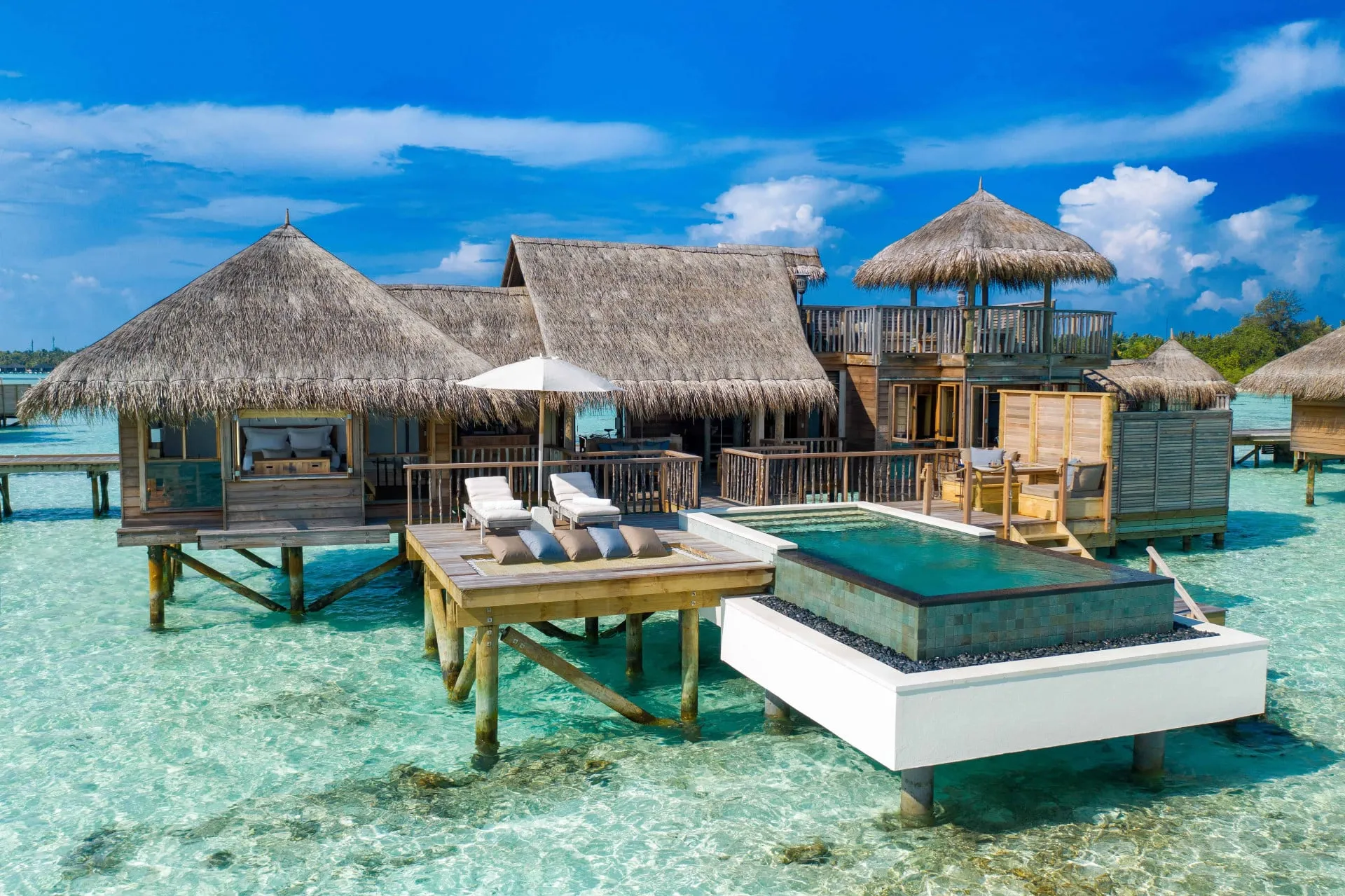
Lankanfushi Island, Maldives
Gili Lankanfushi
The Maldives resort that invented barefoot luxury and has spent two decades refusing to put its shoes back on.
From $1,550 per night
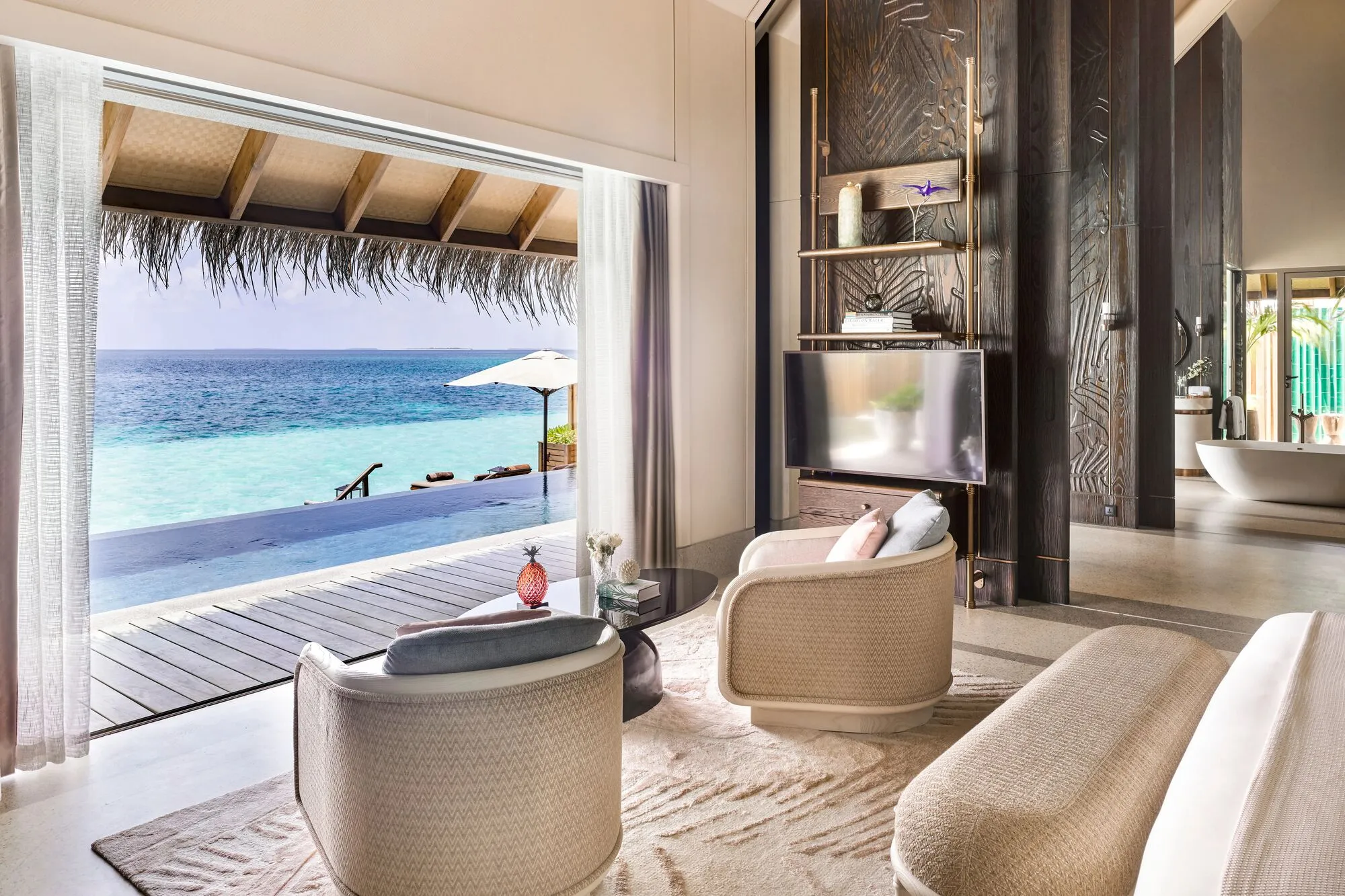
Muravandhoo Island, Maldives
JOALI Maldives
An art-immersive private island in Raa Atoll where more than forty commissioned installations sit alongside 73 villas and a working coral restoration reef.
From $1,600 per night
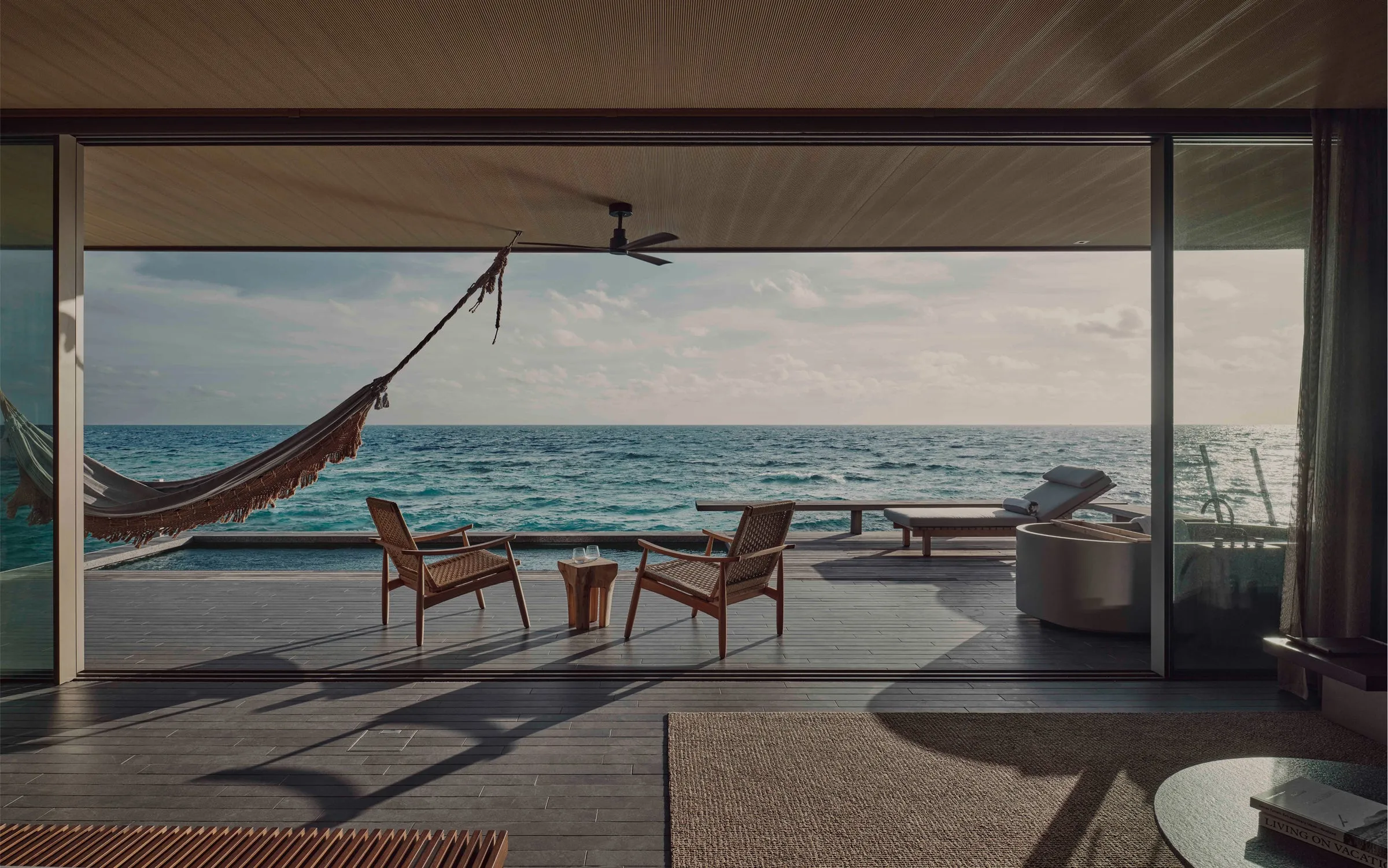
Fari Islands, Maldives
Patina Maldives
A Brazilian architect's low, canopy-height villas and a shared four-island marina make this the Maldives resort built for people who find most private-island luxury a little too private.
From $1,600 per night
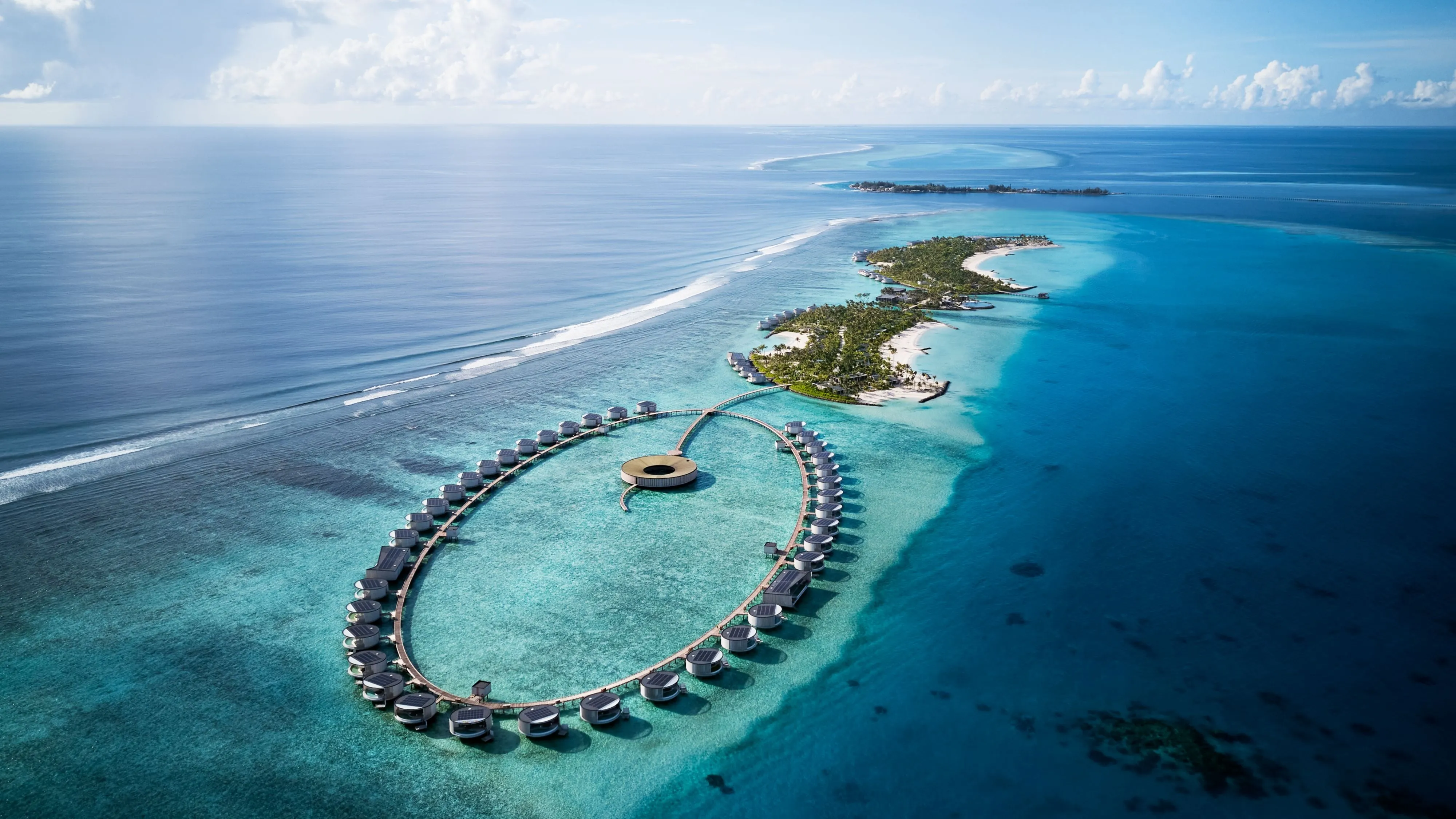
Fari Islands, Maldives
The Ritz-Carlton Maldives, Fari Islands
A resort built almost entirely from circles, the last major commission of architect Kerry Hill, where geometry does the work most Maldives properties leave to thatch and timber.
From $2,500 per night
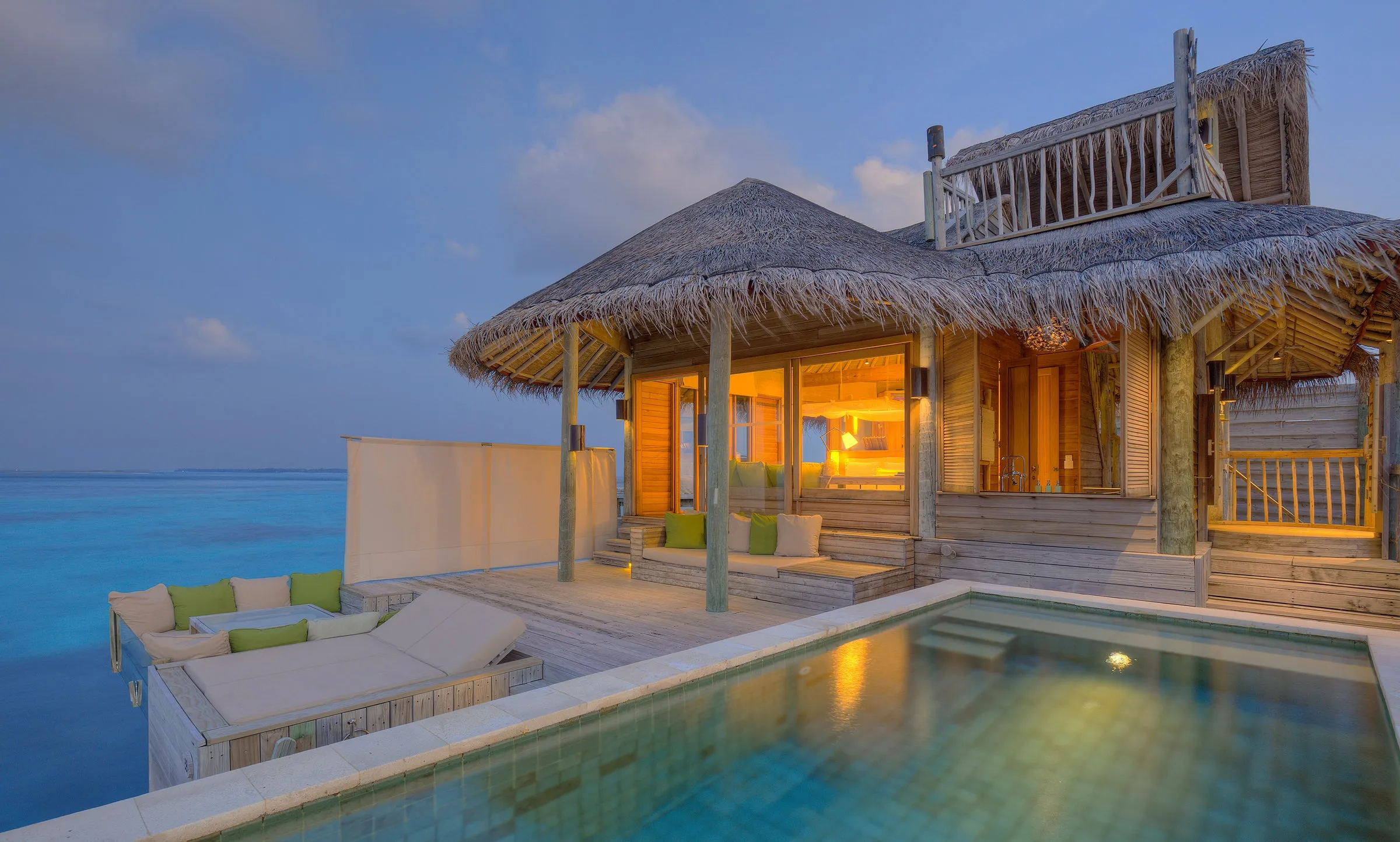
Olhuveli, Maldives
Six Senses Laamu
The only resort on its atoll, built on stilts over a lagoon and staffed, in part, by resident marine biologists.
From $950 per night
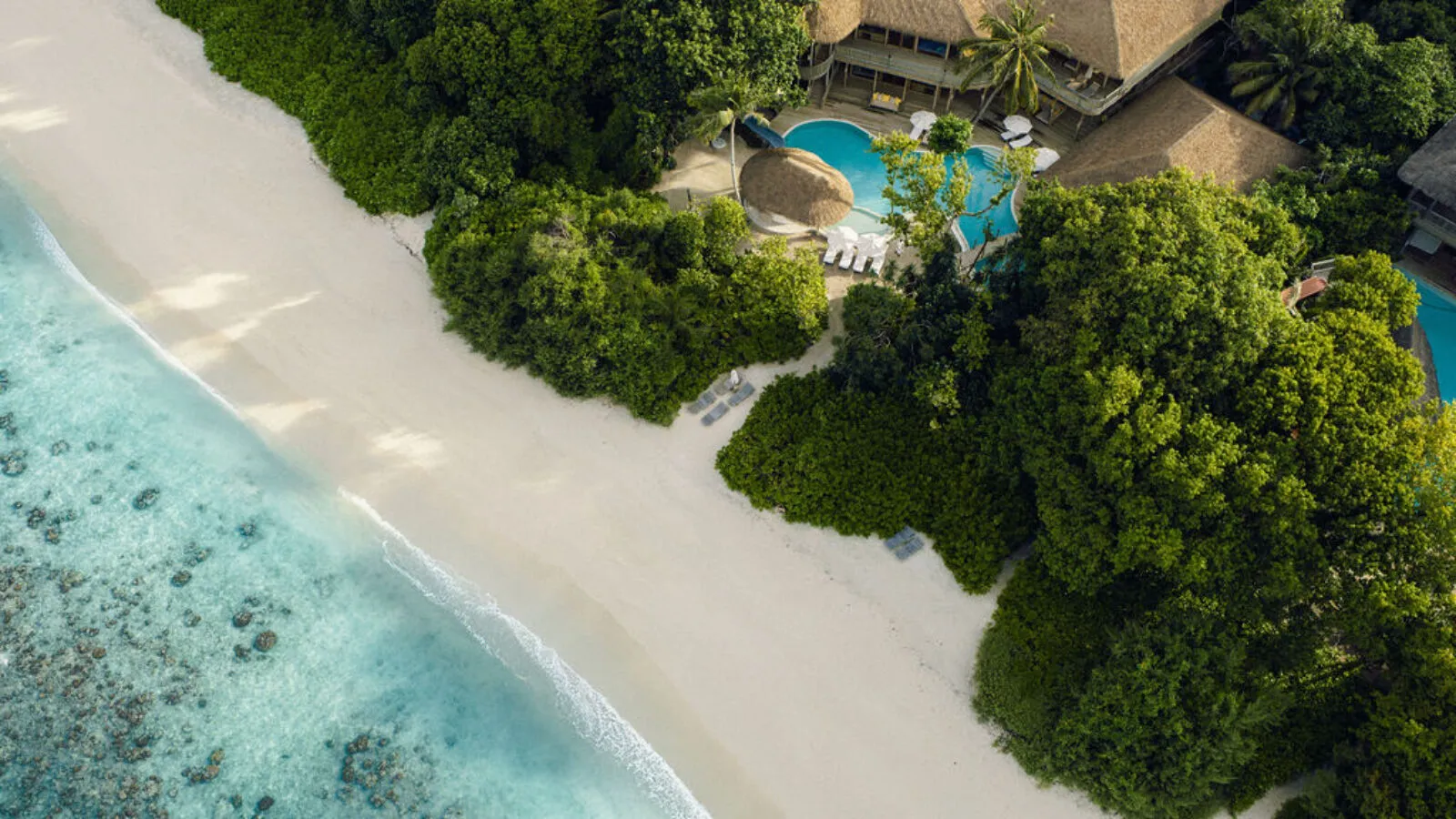
Kunfunadhoo Island, Maldives
Soneva Fushi
The resort that invented barefoot luxury in the Maldives, and has spent three decades refusing to modernise the idea away.
From $1,750 per night
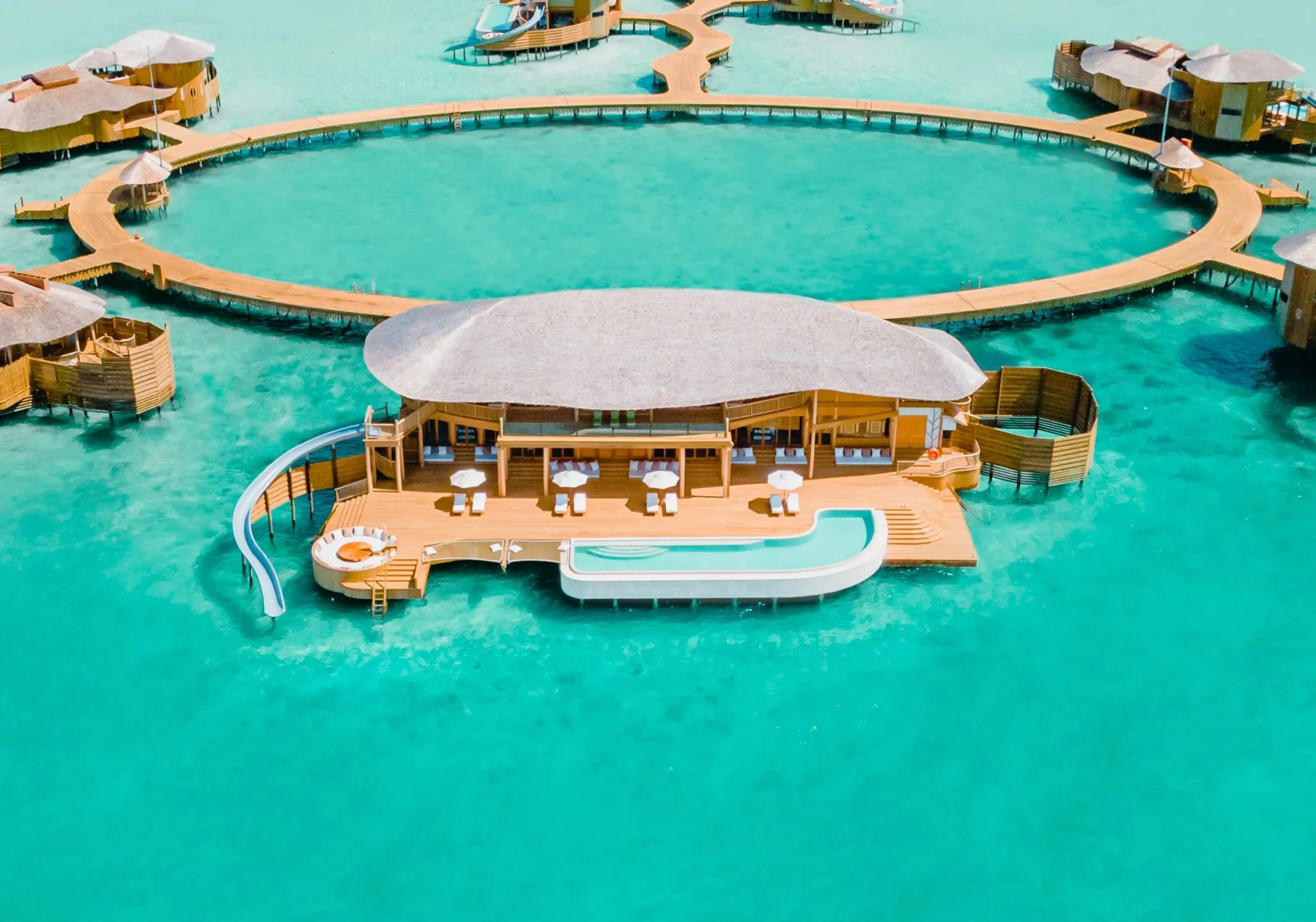
Medhufaru, Maldives
Soneva Jani
A retractable-roofed overwater village in Noonu Atoll, built by the founders of barefoot luxury to make stargazing, not the beach, the point of the room.
From $2,500 per night
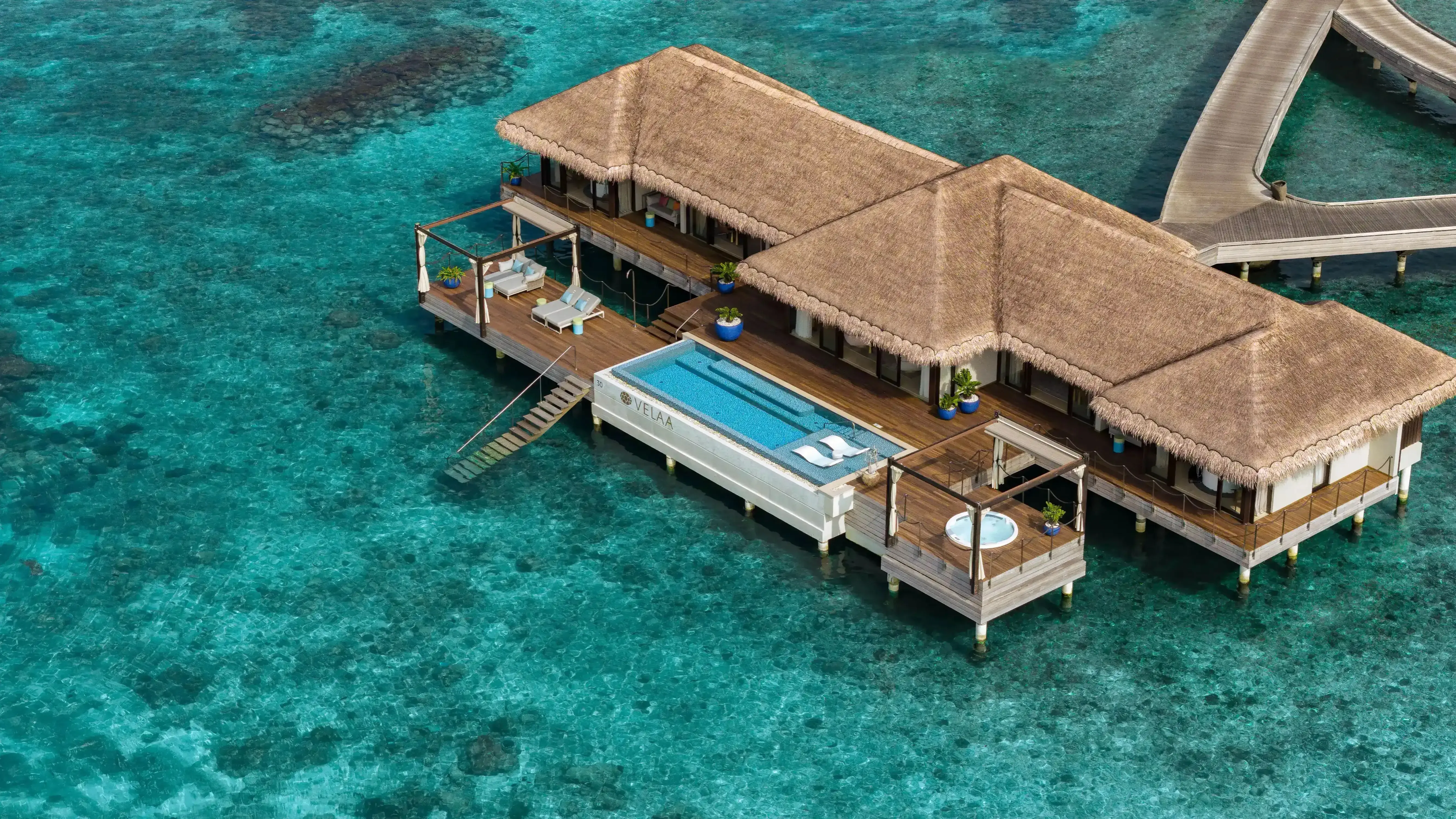
Velaavaru, Maldives
Velaa Private Island
A billionaire's private island fantasy in the Maldives' Noonu Atoll, built around a working golf academy, the Indian Ocean's largest wine cellar and a turtle colony the resort is named for.
From $2,800 per night
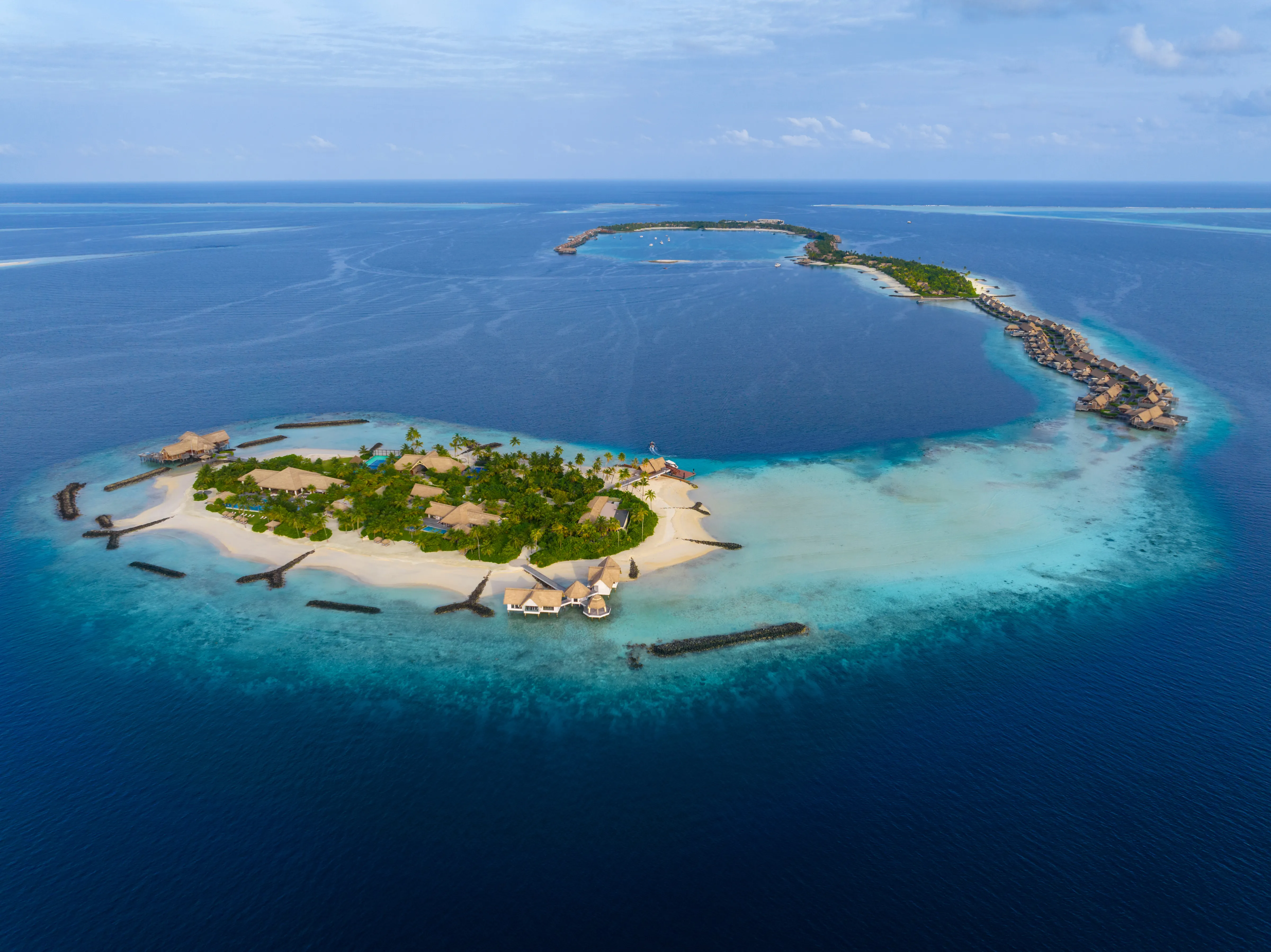
Ithaafushi, Maldives
Waldorf Astoria Maldives Ithaafushi
A 119-villa resort built across three linked islands in South Male Atoll, scaled less like a single hotel than a small, self-contained archipelago.
From $1,800 per night