Cap d'Antibes, France
Hotel du Cap-Eden-Roc
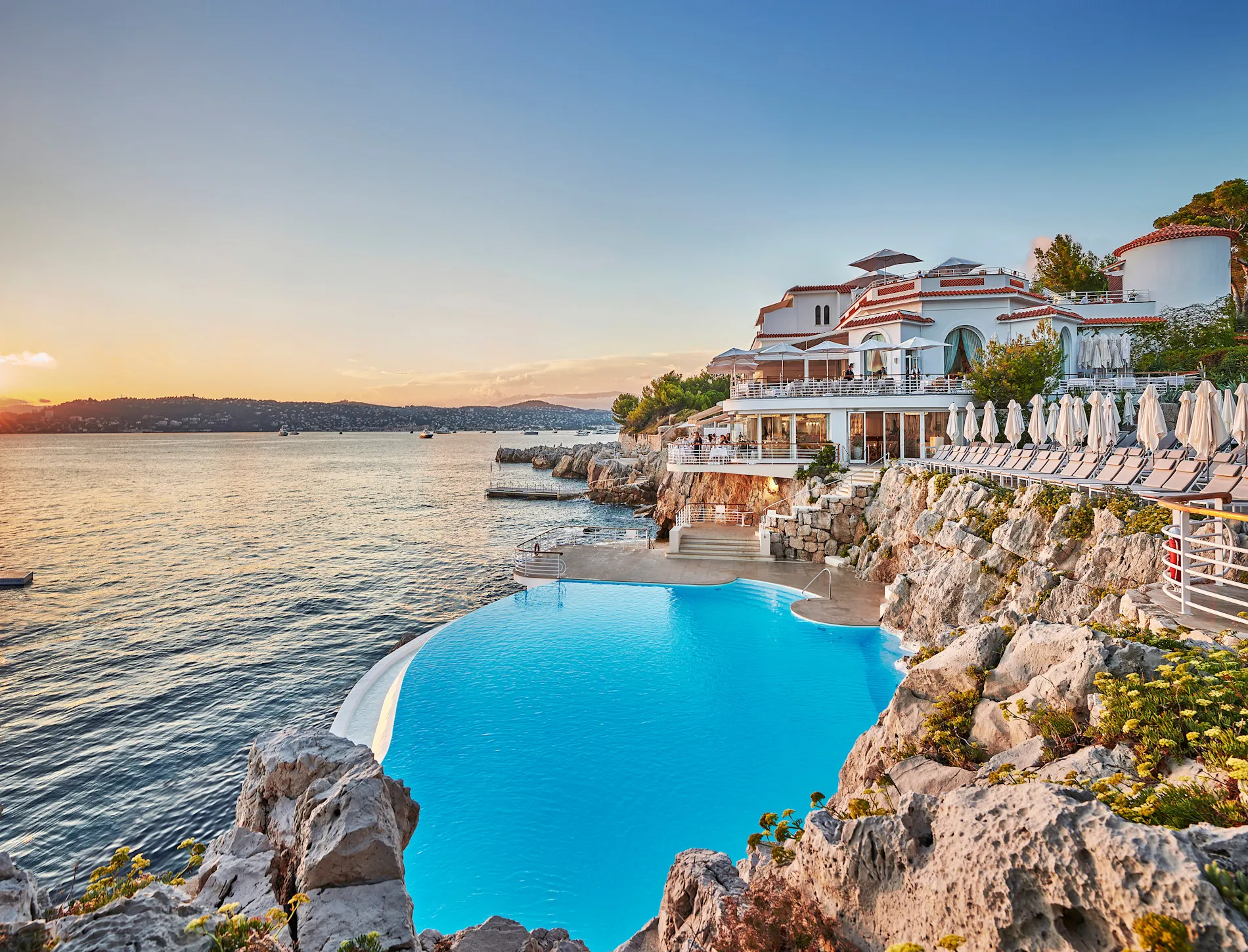
A saltwater pool blasted into the clifftop rock in 1914, a documented supporting role in F. Scott Fitzgerald's Tender Is the Night, and eight decades of Cannes Film Festival history add up to the most storied address on the French Riviera.
- Rates from
- From €2,200 per night
- Nearest airport
- Nice Cote d'Azur Airport (NCE)
- Transfer
- 25-30 minutes by road
- Best months
- Late April to mid-October, the hotel's operating season; June, early July and September are calmer than the mid-May Cannes Film Festival and the peak of August
Some hotels are known for a view, a chef or a spa. Hotel du Cap-Eden-Roc is known for a piece of engineering: a saltwater swimming pool blasted directly into the coastal rock at the tip of Cap d’Antibes in 1914, filled with seawater pumped up from the Mediterranean below rather than a municipal supply. It remains the single image most associated with the French Riviera as an idea, reproduced in photographs and film for over a century, sitting exactly where it was cut, roughly equidistant between Cannes and Nice.
The hotel around that pool carries its own layered history. What began in 1870 as Villa Soleil, a private residence commissioned by Hippolyte de Villemessant, founder of the newspaper Le Figaro, became a hotel in 1889 under Italian hotelier Antoine Sella, passed through his family’s stewardship for eighty years, and has been owned by the Oetker family since 1969, now as the flagship of their Oetker Collection group. Along the way it acquired a genuine literary footnote, as the model for the hotel in F. Scott Fitzgerald’s Tender Is the Night, and a decades-long role in the Cannes Film Festival that continues every May.
Why It Stands Out
The clifftop pool at the Eden-Roc pavilion is the hotel’s defining physical feature and the reason most people can picture the property before they can name it. Blasted into the rock in 1914 rather than built up from a poured foundation, it sits at the cliff’s edge with open Mediterranean beyond its far side, a genuinely unusual piece of hospitality engineering that no amount of contemporary infinity-edge design has quite replicated.
The second distinction is historical depth that holds up to scrutiny. The hotel’s association with Tender Is the Night traces to a real, documented stay by Gerald and Sara Murphy, the American expatriates whose Riviera summers drew a circle that included Hemingway and the Fitzgeralds themselves, and its role as a Cannes Film Festival retreat, including hosting amfAR’s Cinema Against AIDS gala for close to two decades, is an ongoing fact of the property rather than a historical footnote. In 2016 the hotel also became the nineteenth property in France to receive the country’s official “Palace” distinction, a government-recognised category reserved for a small number of five-star hotels judged on heritage, setting and service.
The third is the survival of a genuine institutional quirk. For most of the twentieth century the hotel did not accept credit cards, settling bills only in cash or by wire transfer, a policy that lasted until 2006. It now takes major cards like any other five-star property, but the reputation still circulates, a small, honest reminder that this hotel spent decades operating by its own rules rather than the industry’s.
Architecture
The property’s oldest structure, Villa Soleil, dates to 1870. It was converted into a hotel in 1889 by Antoine Sella, who in 1914 extended the grounds to the rocky tip of the cape and built the Eden-Roc pavilion there, roughly 400 metres from the main house, specifically to house the new saltwater pool and an adjoining tearoom, now Bar La Rotonde. That decision effectively split the hotel across two connected addresses on the same headland, a piece of early-twentieth-century resort planning still legible in the property’s layout today.
The two buildings, along with the more secluded Les Deux Fontaines residence elsewhere on the grounds, sit within roughly 22 acres of gardens rather than clustered tightly together, giving the property a sense of scale and separation unusual for a hotel of its size. Mature Aleppo pines shade much of the walk between the main house and the pavilion, alongside palms, cypress, citrus and olive trees that were part of the original landscaping.
Interior Design
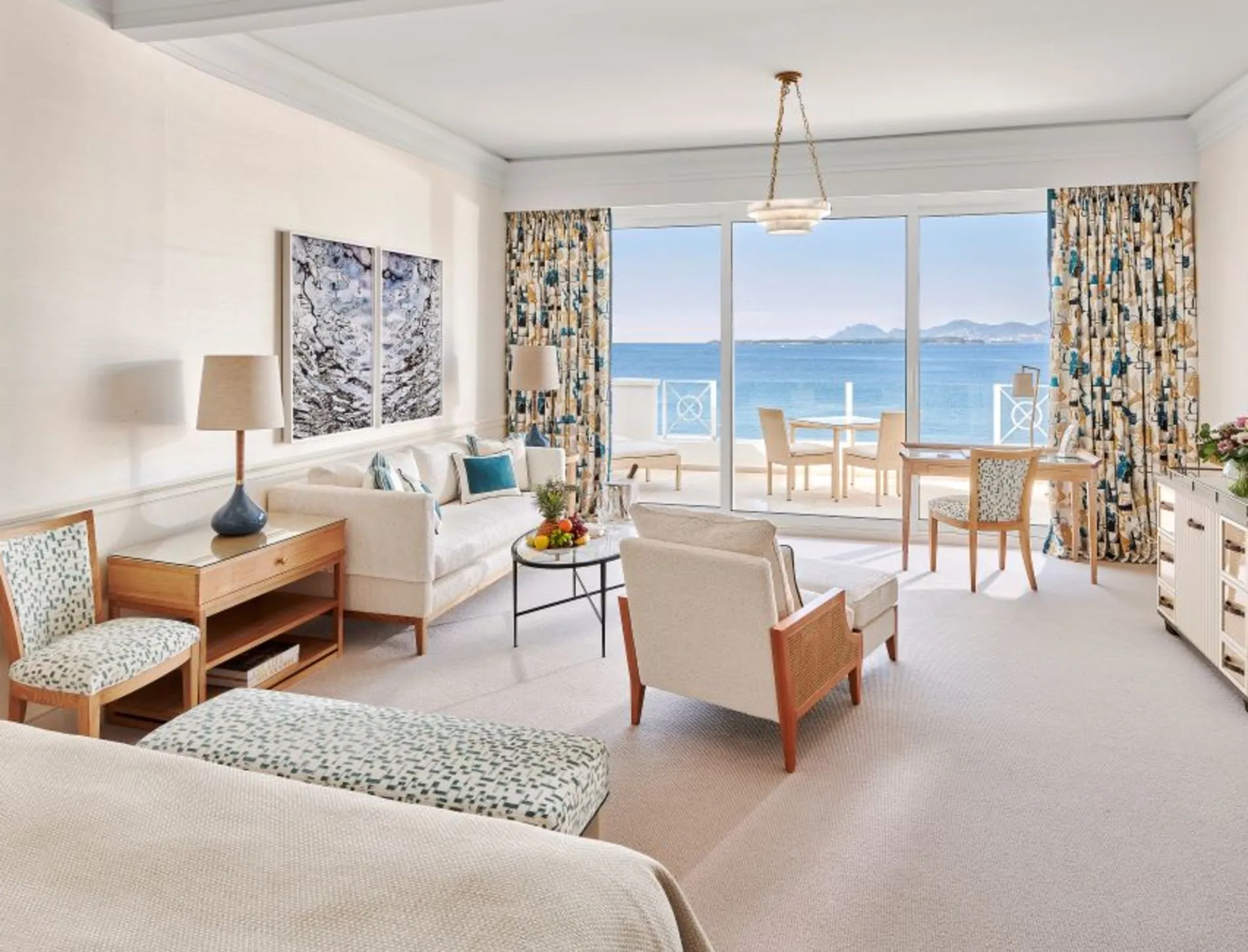
Recent renovation work across the hotel’s suites has been overseen by Countess Bergit Grafin Douglas of the Frankfurt-based MM-Design studio, working with fabrics and furnishings from houses including Pierre Frey, Loro Piana and Manuel Canovas. The resulting palette leans on blues and whites, a deliberate nod to the setting rather than a generic five-star template, kept warm with antique-style furniture, marble bathrooms and the kind of restrained detailing meant to read as timeless rather than trend-driven.
Public spaces carry the same instinct toward understatement over spectacle. The Bellini Bar, just off the main lobby, is arranged around Corinthian stone columns and white 1920s-style sofas, while Bar La Rotonde, built in 1914 as the Eden-Roc pavilion’s original tearoom and long favoured by artists including Marc Chagall, still functions as the property’s piano bar.
Atmosphere
The hotel’s atmosphere runs on privacy first and spectacle second, an unusual ordering for a property this famous. Guests are shielded from the road by the gardens and a long private drive, and the hotel’s house culture actively discourages photographing other guests, a policy that has helped it remain a genuine retreat for public figures rather than a backdrop for other people’s holidays.
That said, the property is not quiet in the conventional sense during its two busiest stretches, the Cannes Film Festival in mid-May and the height of August. At those times the Bellini Bar and the pool terrace carry real social energy and a visible concentration of well-known faces, a contrast to the calmer, more contemplative pace of the shoulder-season weeks in June, early July and September.
Rooms and Suites
The hotel has 111 keys across four categories: 40 rooms, 57 junior suites, 11 suites and 4 private villas, spread across the historic main building, the Eden-Roc pavilion and the separate Les Deux Fontaines residence. Categories in the main building tend toward classic French decorative language, garden or partial sea views and the blue-and-white palette introduced in the most recent renovation, while rooms and suites at the Eden-Roc pavilion sit closer to the pool and the water, generally at a premium reflecting that proximity.
The suites and private villas are built for longer, more self-contained stays, several with their own terraces, and Les Deux Fontaines offers the most complete degree of separation from the main hotel for guests prioritising discretion above all else. Given the hotel’s long-standing profile among industry guests during festival season, the higher categories are typically booked well ahead of the May and August peaks.
Dining
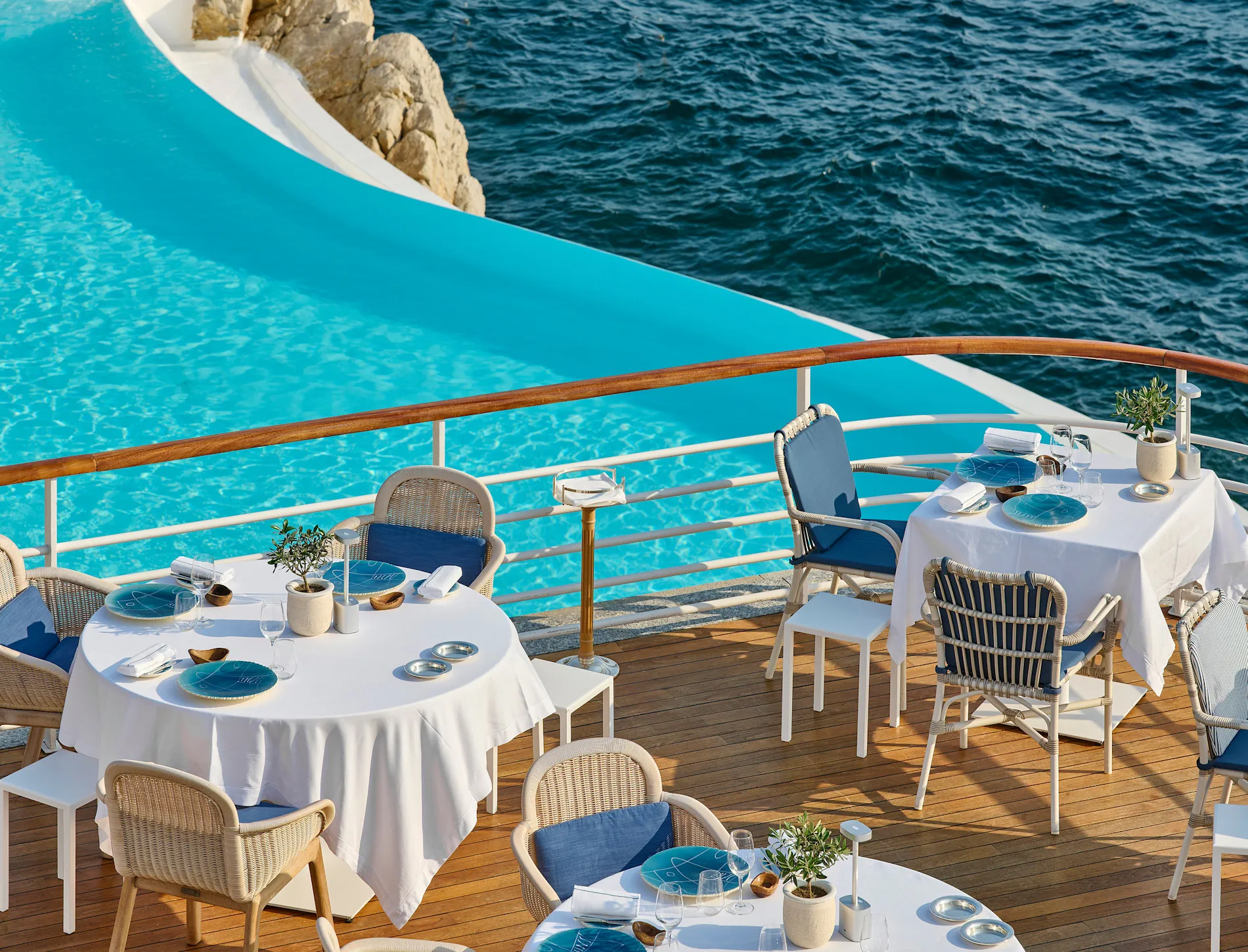
Executive Chef Sebastien Broda oversees a spread of distinct venues built around Mediterranean and Provencal cooking rather than one signature restaurant. Louroc, the hotel’s fine-dining room, holds a Michelin star in the 2026 Guide, while the Eden-Roc Restaurant, set beside the clifftop pool with views toward the Lerins Islands, serves lunch and dinner built around dishes like tableside lobster Caesar salad and grilled lamb and veal chops.
The Grill sits directly above the saltwater pool with some of the property’s best sunset views, running a simpler, market-driven menu through the day, while Giovanni’s serves classic Italian dishes under a pergola. The Bellini Bar and Bar La Rotonde, the latter a piano bar occupying the pavilion’s original 1914 tearoom, cover the hotel’s cocktail and late-afternoon culture, the Bellini Bar in particular retaining its decades-long role as the informal social centre of the property during festival weeks.
Spa and Wellness
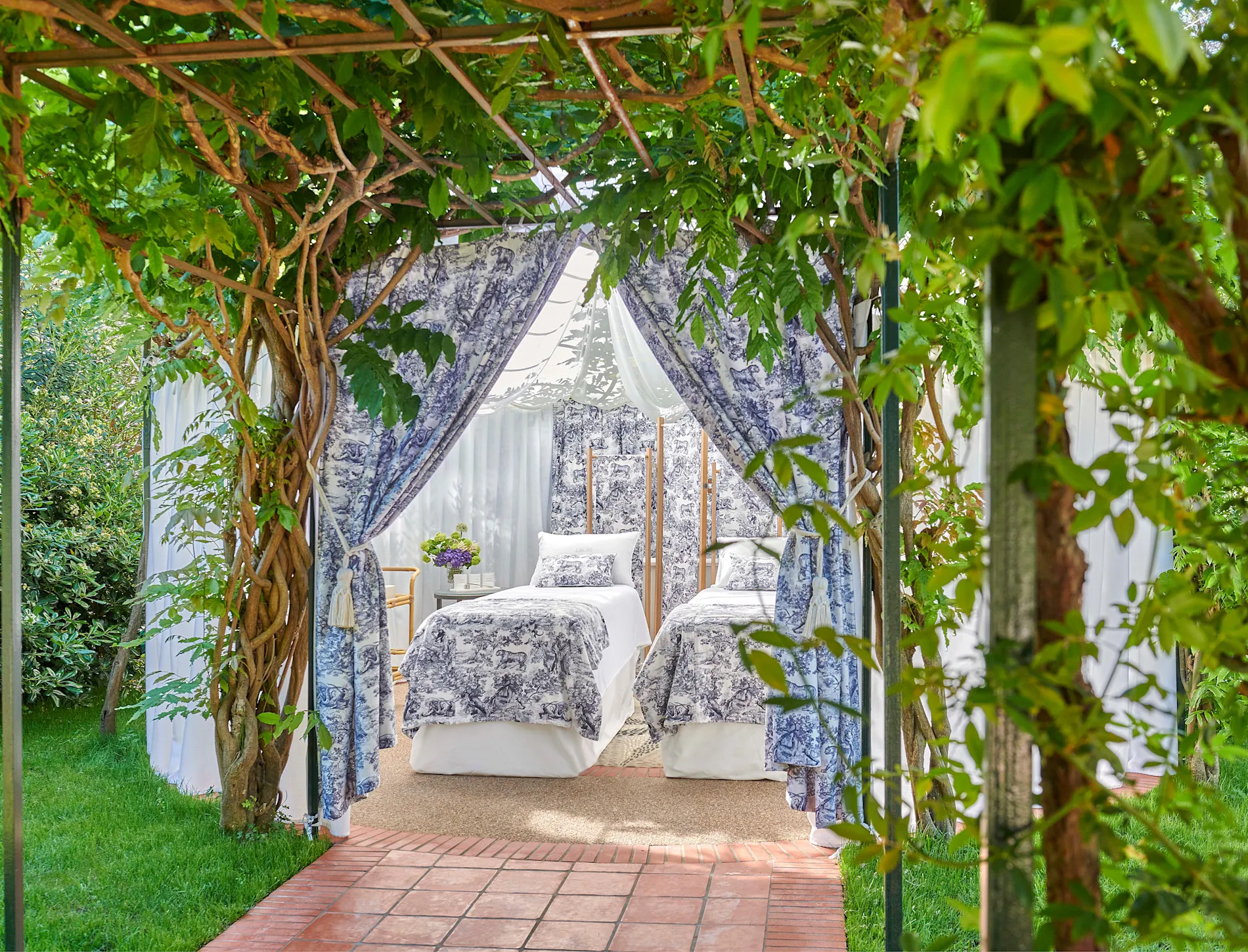
Wellness is handled by Dior Spa Eden-Roc, one of a small number of Dior-branded spas worldwide, built around the Dioriginels Rituals, treatments created specifically for this property and inspired by its own garden, sea, rock and sun. The spa’s menu also draws on La Prairie for facial and body care and the Bamford organic body range, alongside a full-service beauty salon and modern fitness facilities.
The spa adds a formal wellness offering to a hotel whose original draw was always the outdoors, the saltwater pool, the gardens and the sea, functioning as a complement to that outdoor-first culture rather than a replacement for it.
Experiences
Most of what defines a stay here happens outdoors and on the water. The Eden-Roc pool remains the day’s centrepiece, its cliffside setting offering direct sea access via ladders and a diving platform. The hotel arranges boat excursions along the Cap d’Antibes coastline and out to the Lerins Islands, a short crossing from Cannes, and its own private pontoon lets guests arriving by sea step directly onto the grounds, a normal part of summer traffic on this stretch of coast.
The hotel’s cultural calendar is inseparable from its two marquee weeks each year. During the Cannes Film Festival in mid-May, the property functions as an informal industry hub, and the decades-long association between this stretch of coastline and the festival, including years of hosting amfAR’s Cinema Against AIDS gala on its grounds, remains one of the more distinctive live threads connecting the hotel’s Fitzgerald-era history to its present-day role.
Who It Is For
The hotel suits travellers for whom history and setting matter as much as amenity lists, particularly those drawn to the property’s specific literary and cinematic weight. Honeymooners and couples are well served by its romantic register and its long tradition as a discreet, adults-oriented retreat rather than a family resort in the conventional sense.
It is a natural choice for guests attending or following the Cannes Film Festival, given the short drive into town and the hotel’s decades-long role in festival week culture, and for history-minded travellers who want a genuinely original piece of Riviera hospitality rather than a newer property built to evoke one. It is a less natural fit for travellers seeking children’s programming or a lively, activity-dense resort format, and for anyone visiting outside the April-to-October season, when the hotel is simply closed.
Best Time to Visit
The hotel operates seasonally, generally opening in late April and closing in mid-October, so any visit has to fall within that window. Within the season, June, early July and September tend to offer the most balanced experience, warm Mediterranean weather without the two periods of heaviest demand: the Cannes Film Festival in mid-May, when the hotel and the surrounding coastline are at their busiest and most expensive, and the peak of August, when French and international summer travellers fill the Riviera.
How to Get There
The hotel is reached via Nice Cote d’Azur Airport (NCE), the Riviera’s main international gateway, followed by a road transfer of roughly 25 to 30 minutes along the coast to Cap d’Antibes. The drive is short enough that a private car or transfer arranged through the hotel is the standard option, and it keeps Nice’s other coastal towns, and Cannes itself, within realistic day-trip distance.
Nearby Experiences
Cannes sits around 20 to 30 minutes away by road, making it an easy trip both for the film festival in May and for its shopping, dining and beachfront promenade at other times of year. Antibes itself, with its old town, ramparts and the Picasso Museum housed in the former Chateau Grimaldi, is closer still, a short drive or taxi ride from the hotel’s gates.
The Lerins Islands, reached by a short boat crossing from Cannes, offer a genuine change of pace, with walking trails, a working monastery on Saint-Honorat and quiet coves largely free of the mainland’s crowds. Further along the coast, Nice’s old town and the hill villages above the Riviera, including Saint-Paul-de-Vence, round out a realistic set of half-day excursions for guests staying several nights.
Things to Know Before Booking
The hotel’s cash-only reputation is now historical rather than current. Credit cards have been accepted since 2006, alongside wire transfer, cash and cheques, though bank transfer is generally the recommended method when confirming a booking. The seasonal closure, typically mid-October through mid-April, is worth checking directly against the current year’s calendar before planning a trip outside the core summer months, since exact opening and closing dates can shift slightly year to year.
Rates move dramatically across the season, and travellers should expect one of the widest ranges of any Riviera property: entry-level rooms in quieter shoulder-season weeks can cost meaningfully less than the same room during the Cannes Film Festival or the height of August, when suite rates in particular climb into a different bracket altogether. Booking well ahead of both the festival and peak summer is strongly advised given the hotel’s relatively modest 111-key count relative to demand.
Sustainability
The hotel has signed the Antibes Sustainable Tourism Charter, a local framework covering environmental and heritage preservation across the town’s tourism sector, and has partnered with France’s Office National des Forets and the Region Sud on a reforestation project in the state-owned forest of Les Maures, aimed at improving the forest’s resilience to climate change and its capacity for carbon sequestration. On the grounds themselves, nesting boxes support local bird populations and sponsored beehives produce honey on site.
As part of the Oetker Collection, the hotel also benefits from group-level commitments around energy use and sourcing, though, in keeping with the property’s generally low-key public communications, it does not publish the kind of detailed, resort-specific sustainability report that some competitors do.
Practical Information
Rates at Hotel du Cap-Eden-Roc start from around EUR 2,200 per night in a standard entry category, with suites and villas running substantially higher, and pricing that varies more sharply by season here than almost anywhere else on the Riviera, spiking hardest around the Cannes Film Festival in mid-May and through August. Check-in is from 3:00pm and check-out by 12:00pm. The hotel is open seasonally, typically from late April to mid-October, and closed to guests over the winter.
The nearest airport is Nice Cote d’Azur Airport (NCE), with a standard road transfer of 25 to 30 minutes. Most stays run three to four nights, enough time to settle into the rhythm of the Eden-Roc pool, dinner across the hotel’s restaurants, and at least one excursion, whether into Cannes, across to the Lerins Islands, or along the coastal path that rings the property’s own grounds.
Editorial Conclusion
Hotel du Cap-Eden-Roc does not need to manufacture a point of difference the way many luxury hotels do, because its history already supplies one: a pool cut into the rock in 1914, a documented literary connection to one of the twentieth century’s defining novels, and eight decades of continuous relevance to the Cannes Film Festival each May. What has changed, credit cards accepted since 2006, suites renovated in a fresh blue-and-white palette, is incremental. What has not changed is the reason people have been coming to this particular tip of Cap d’Antibes since the 1920s, and that continuity, more than any single amenity, is what the hotel is actually selling.
In pictures
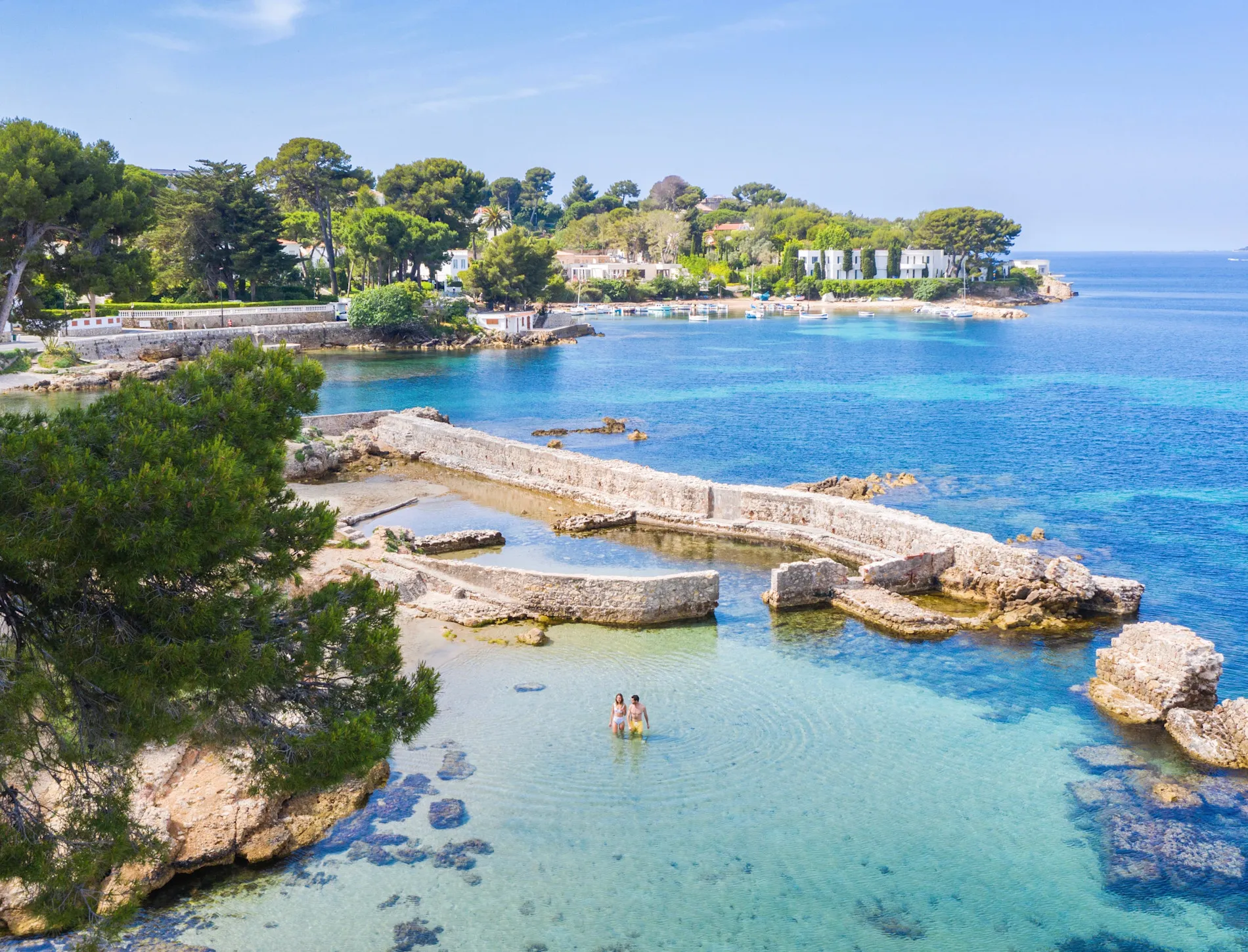
On the map
Cap d'Antibes, France
Questions
Frequently asked
Is Hotel du Cap-Eden-Roc still a cash-only hotel?
No, not anymore, though the legend persists. For much of the twentieth century the hotel was well known for not accepting credit cards, requiring guests to settle their bill in cash or by wire transfer, a policy that ended in 2006. Today the hotel takes major credit cards alongside bank transfer, cash and cheques, with bank transfer generally recommended when confirming a booking.
Is Hotel du Cap-Eden-Roc open all year?
No. It is a strictly seasonal hotel that closes over winter for maintenance and refurbishment, typically opening in late April and closing in mid-October; its 2026 season ran from around April 20 to October 18. Exact dates shift slightly year to year, so travellers considering a shoulder-season stay should confirm current opening and closing dates directly with the hotel.
How many rooms and suites does the hotel have?
The hotel has 111 keys in total: 40 rooms, 57 junior suites, 11 suites and 4 private villas, spread across the historic main building, the Eden-Roc pavilion at the tip of the headland, and the more secluded Les Deux Fontaines residence within the grounds.
What is the connection between Hotel du Cap-Eden-Roc and F. Scott Fitzgerald?
Gerald and Sara Murphy, American expatriates whose Riviera summers in the 1920s drew a circle that included Fitzgerald and Ernest Hemingway, spent extended time at the hotel, and Fitzgerald is widely understood to have used it, lightly fictionalised as the Hotel des Etrangers, as a model for the setting of his 1934 novel Tender Is the Night. That documented history is one of the property's most distinctive, non-marketing-driven claims to fame.
Does the hotel have a connection to the Cannes Film Festival?
Yes, a long one. The hotel's short drive from Cannes has made it a favoured retreat for actors, directors and industry figures during festival week for decades, and its grounds hosted amfAR's Cinema Against AIDS gala, one of the festival's marquee fundraising events, for close to twenty years. Rooms during the festival's mid-May dates are booked well in advance and priced at the top of the hotel's seasonal range.
Same destination
More hotel guides in France
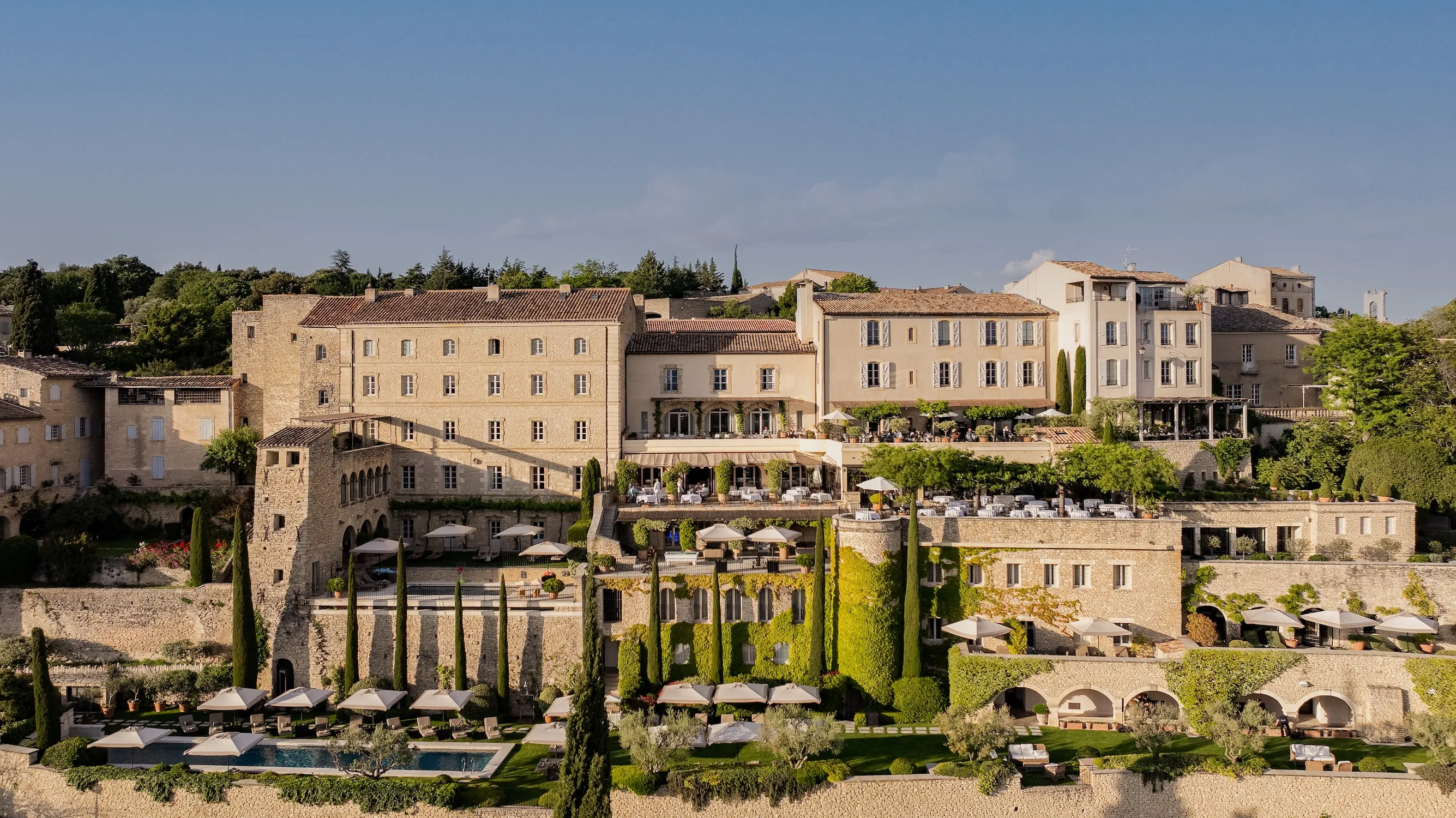
Gordes, Luberon, France
Airelles Gordes, La Bastide
A 16th-century manor built into the ramparts of a hilltop village, run as one of only two dozen hotels in France to hold the official Palace title.
From €950 per night
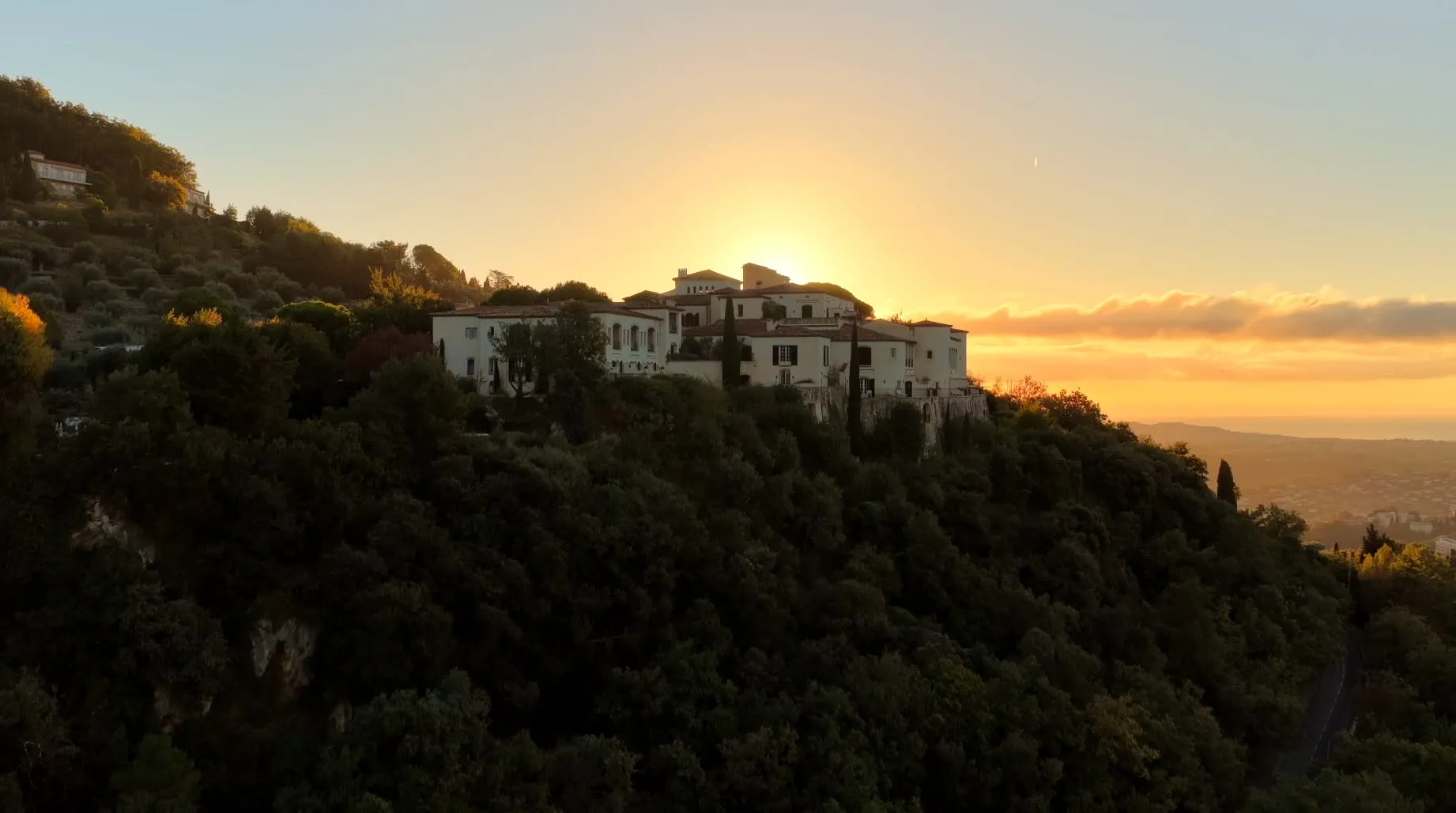
Vence, above the Riviera coast, France
Chateau Saint-Martin & Spa
A 12th-century Knights Templar commandery turned Relais & Châteaux estate, its own olive groves and vineyards spread across a Vence hillside above the Mediterranean.
From €1,050 per night
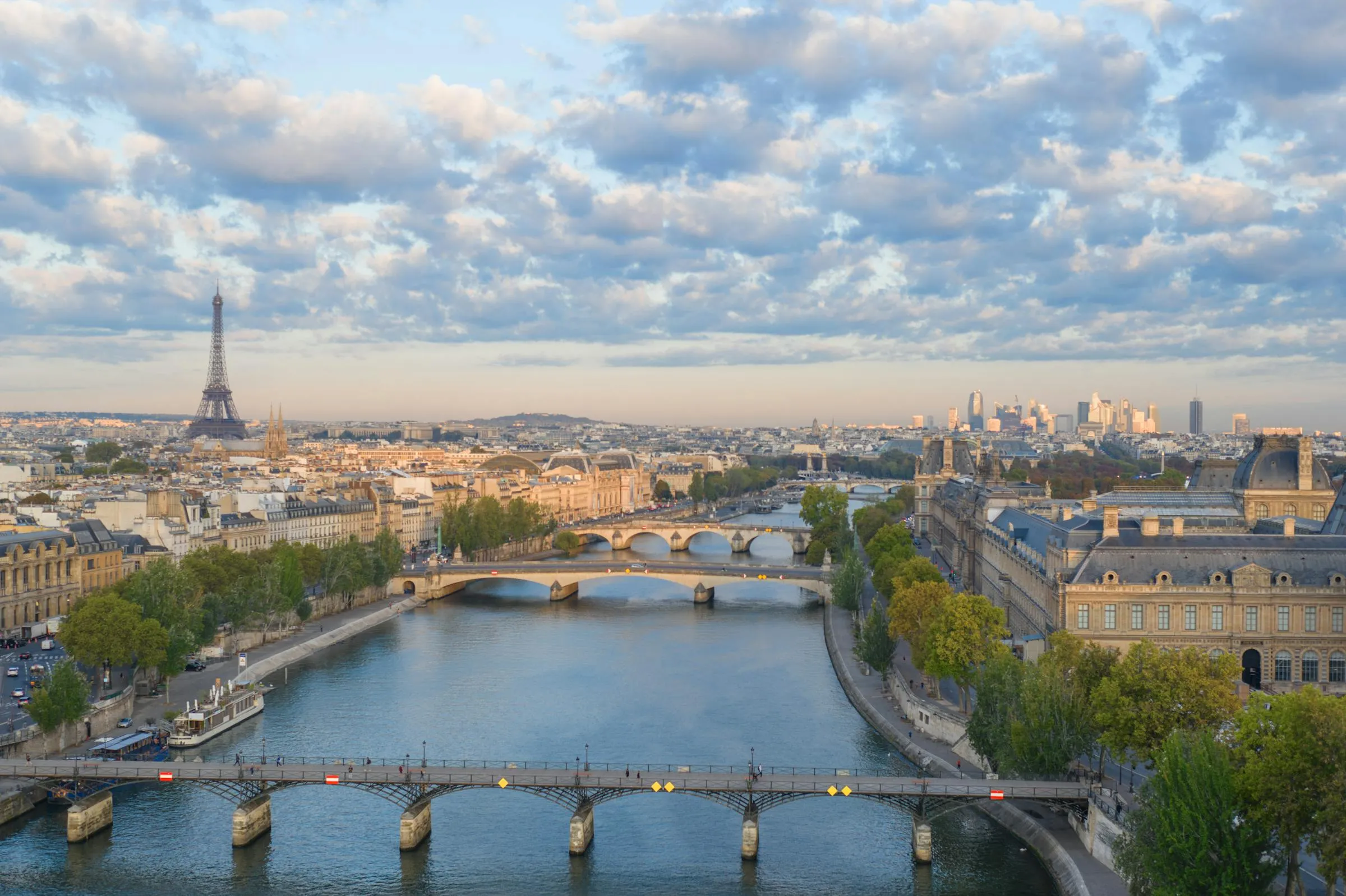
1st arrondissement, Paris, France
Cheval Blanc Paris
A Belle Epoque department store reborn as LVMH's most architecturally ambitious Paris address, with the Seine on one side and the Louvre on the other.
From €2,200 per night