Avenue Montaigne, 8th arrondissement, France
Hotel Plaza Athenee
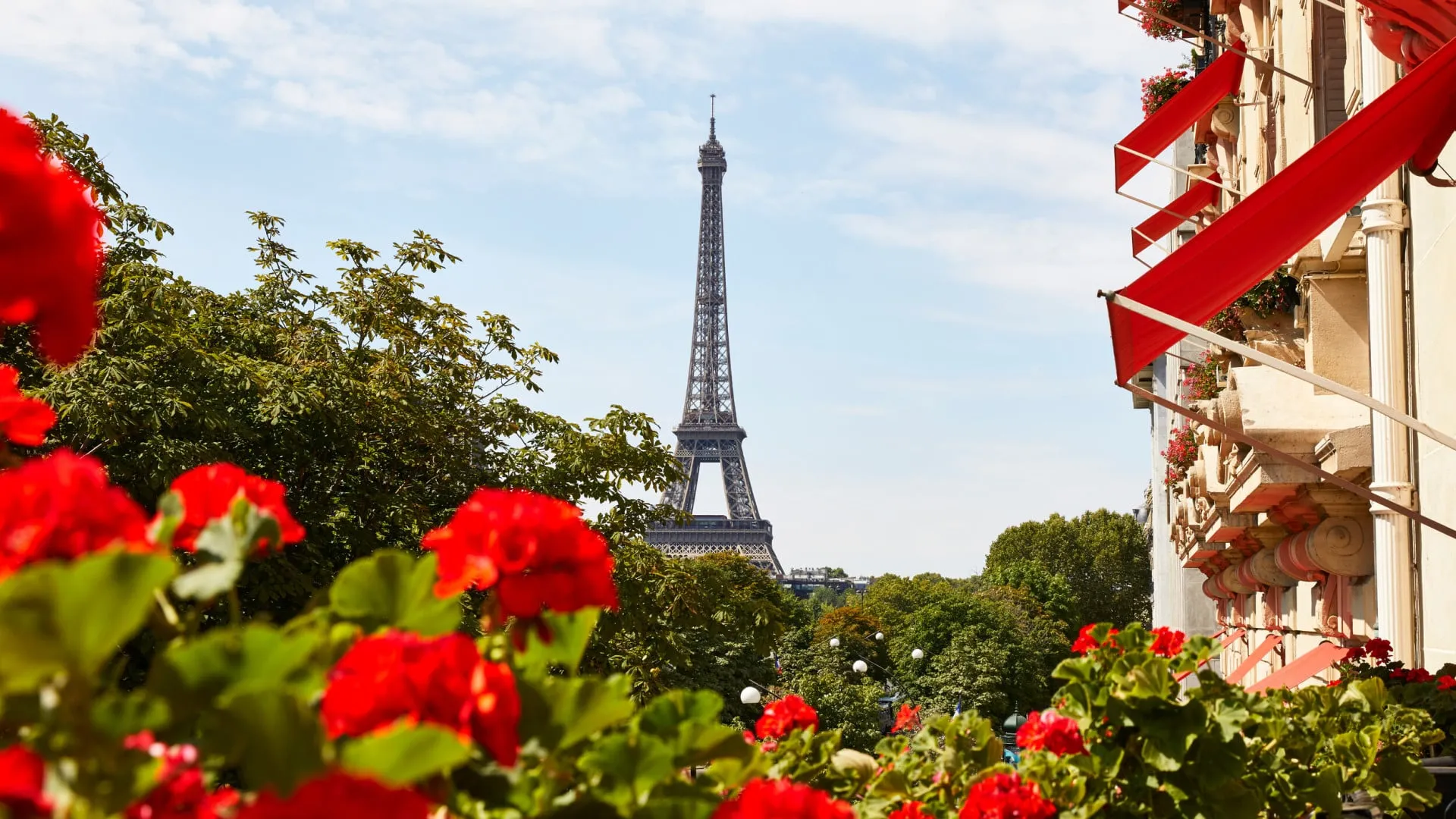
The red-awninged, geranium-lined Avenue Montaigne address that has anchored Paris's couture quarter since 1913, and one of the city's dozen officially recognised Palace hotels.
- Rates from
- From €2,100 per night
- Nearest airport
- Paris-Charles de Gaulle Airport (CDG)
- Transfer
- 45 minutes to 1 hour by road, depending on traffic
- Best months
- April to June and September to October, when Paris is at its most walkable and the spring and autumn fashion weeks bring Avenue Montaigne to life
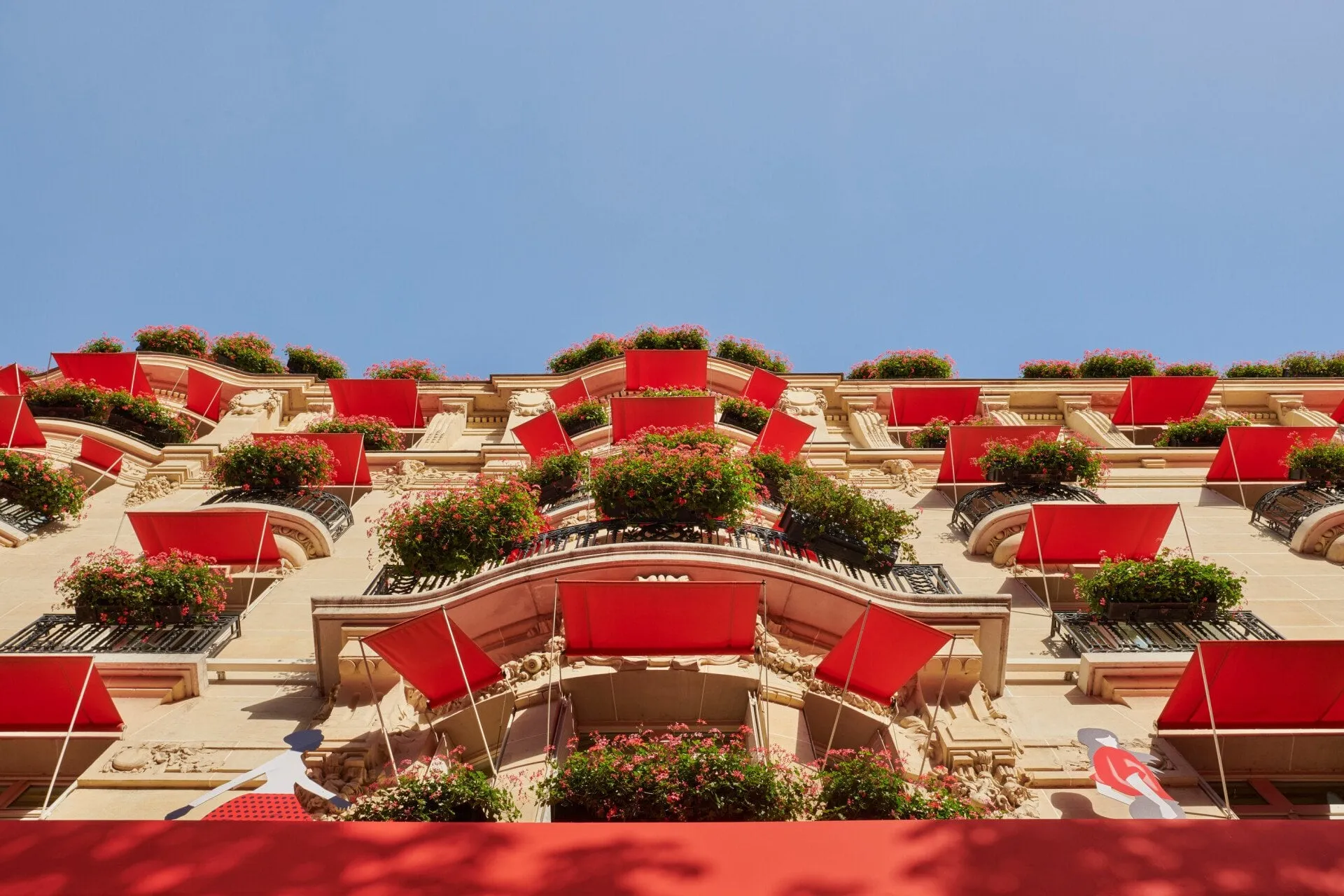
There is a stretch of Avenue Montaigne where the pavement narrows slightly and the taxis slow down without being asked to, and it is there, at number 25, that the red awnings begin. They run the width of the building, punctuated by window boxes thick with geraniums, forming what is probably the single most photographed hotel facade in Paris: the calling card of Hotel Plaza Athenee, the Dorchester Collection property that has occupied this address on the couture street since April 1913.
What makes the Plaza Athenee unusual, even among Paris’s small circle of Palace hotels, is how little of that original identity has been sanded down across more than a century of ownership changes and renovations. Kitchens have turned over more than once, most recently and most abruptly in 2026, interiors have been rebuilt floor by floor, and the surrounding avenue has gone from a quiet residential street to the address of nearly every major couture house in Paris. Through all of it, the red awnings and the geraniums have stayed, maintained as a matter of near-institutional discipline, because they are, in a very literal sense, the brand.
Why It Stands Out
The Plaza Athenee’s clearest distinction is its address, not as a marketing line but as a working fact. Few hotels anywhere sit this close to the industry they serve: Dior’s maison stands directly opposite, Chanel and Louis Vuitton are within a few doors, and the concierge desk is practised at securing runway seats and coordinating fittings during Paris Fashion Week rather than treating that as a novelty request.
The second distinction is continuity through change. The building has carried the same red-awning, geranium-box facade since the 1940s, through a full renovation in 1998 to 2000, a further reopening in 2014 after a reported 200 million euro renovation, and the most recent redesign of its top-floor suites in 2024. Layered onto that physical continuity is a restaurant history that has changed hands more than once, from Alain Ducasse’s two-decade, three-star tenure to Jean Imbert’s shorter run, to a 2026 transition still unfolding at the time of writing, which makes the hotel a useful case study in how a Palace hotel manages its most public, most scrutinised asset without disrupting the rest of the property around it.
The third is the guest list itself, historical rather than current: Grace Kelly, Jackie Kennedy, Josephine Baker, Marlene Dietrich, and Elizabeth Taylor and Richard Burton all stayed here across the hotel’s mid-century decades, and that history is treated as part of the fabric of the place rather than framed memorabilia in a corridor.
Architecture
The hotel occupies a building constructed in two phases between 1902 and 1909 by architects Charles Lefebvre and Louis Duhayon, in an eclectic style typical of the grander addresses built along this stretch of the 8th arrondissement in the years before the First World War. Its opening was delayed to April 20, 1913, by a legal dispute over the unregistered Plaza name; first manager Emile Armbruster resolved it by adding the name of his previous hotel, l’Athenee, to create Plaza Athenee, a compound name that has stuck for more than a century.
The building expanded through the 1920s under Jules Lefebvre, who added further apartment buildings, two salons, and the restaurant that became La Cour Jardin. Ownership changed hands more than once across the twentieth century: the Forte Group acquired the hotel in 1968, and in 2001 it passed to Dorchester Collection, the hospitality group ultimately linked to the Brunei Investment Agency, which completed the acquisition in 2003 and has run the property since alongside sister hotels including The Dorchester in London and Hotel Eden in Rome. The hotel holds France’s official Palace distinction, awarded in 2012, the state-recognised tier reserved for a small number of properties judged to exceed the standard five-star classification.
Interior Design
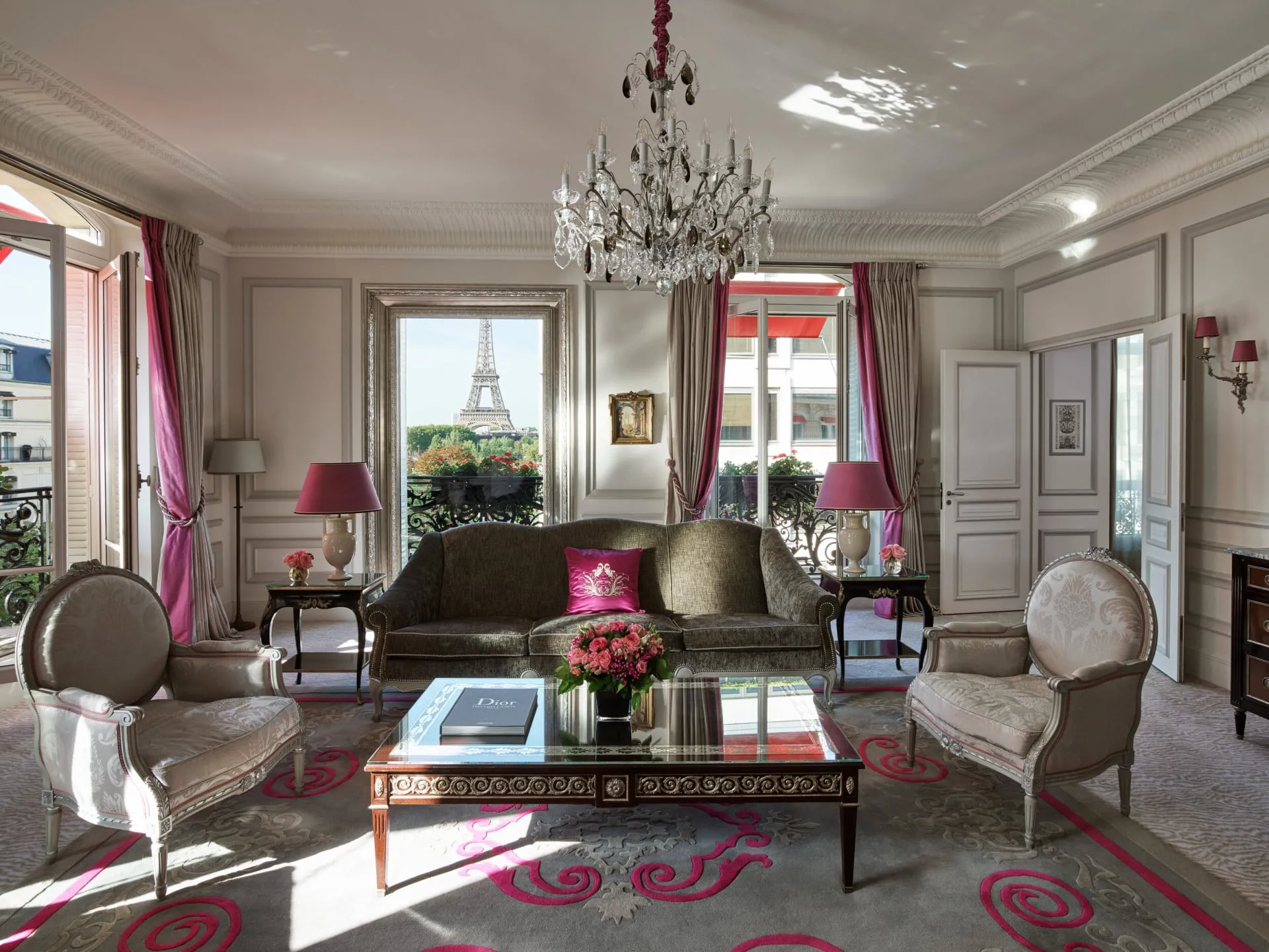
A major renovation led by designers Patrick Jouin and Sanjit Manku closed parts of the hotel through 2013 and into 2014, reopening that August with reworked dining rooms and bar spaces while preserving the exterior’s red awnings and geranium boxes untouched. Interiors elsewhere follow a classical French register, Louis XVI-inflected furniture, marble bathrooms, gilt detailing, with the hotel’s top floors carrying a more deliberately Art Deco treatment in places.
The most recent significant interior project renovated 49 rooms and suites on the fifth and sixth floors, including the Royal Suite, unveiled in September 2024 under French design house Moinard Betaille, the same firm behind the hotel’s lobby, gallery, La Cour Jardin and Le Relais Plaza. The project kept the hotel’s eighteenth-century and haute-couture-inflected identity intact while introducing six new colour palettes and a more contemporary finish, with no two rooms or suites configured identically, and folded in a set of concrete environmental measures, external insulation to reduce heat loss and presence sensors with automated lighting and temperature control, into what might otherwise have been a purely cosmetic refresh.
Atmosphere
Hotel Plaza Athenee runs formal, in the way the Palace category generally does, but its formality is inflected by its address rather than generic. Staff are accustomed to guests moving between fitting appointments and the hotel’s own restaurants during fashion week, and the concierge desk is built around exactly that rhythm.
Outside of fashion week, the hotel settles into a quieter register built around Le Relais Plaza’s brasserie routine and, in the warmer months, the ivy-walled calm of La Cour Jardin. Winter brings a seasonal shift: the courtyard restaurant space converts into an ice-skating rink strung with lights and Christmas trees, one of the more theatrical seasonal transformations among Paris’s Palace hotels.
Rooms and Suites
The hotel has 208 rooms and suites in total, 154 rooms and 54 suites, spread across categories that scale from Deluxe Rooms up to the property’s best-known address, the Royal Suite. Interiors follow the classical French register throughout, with many rooms on the Avenue Montaigne side looking out over the red-awninged facade itself or, on upper floors, toward the Eiffel Tower.
At the top of the range, the Royal Suite spans four bedrooms and bathrooms, a living room, a dining room and its own kitchen, with views running the length of Avenue Montaigne; it was part of the 2024 Moinard Betaille renovation of the fifth and sixth floors and is widely cited as the largest hotel suite in Paris. Two Eiffel Suites sit just below it in scale, one in an Art Deco register, one built around an 18th-century, haute-couture-inflected decorative scheme, alongside L’Appartement, an Art Deco suite with its own private terrace, and a tier of balconied Prestige Suites.
Dining
Dining at the Plaza Athenee has gone through a genuine, repeated change of direction. For two decades the hotel’s flagship restaurant operated under Alain Ducasse, closing out that run in mid-2021 as a three-Michelin-star dining room built around vegetable, fish and grain-forward “naturalite” cooking that had held its stars since 2001. Chef Jean Imbert reopened the room in January 2022 with a more classical French repertoire, staged around a Breccia pink marble table beneath a ceiling gilded with some twenty thousand gold leaves, and the restaurant earned its own Michelin star within roughly nine weeks of opening.
That chapter closed abruptly in its own right: in spring 2026, the hotel separated Jean Imbert from the kitchen’s leadership amid a domestic violence investigation. Jocelyn Herland, the restaurant’s executive chef since 2021 and a veteran of Alain Ducasse at The Dorchester in London, Le Meurice and Taillevent, has since taken charge of the kitchen, with a rename of the restaurant anticipated but not yet finalised at the time of writing. Guests booking specifically for the gastronomic restaurant should confirm its current name, chef and format directly with the hotel given how recent this change is.
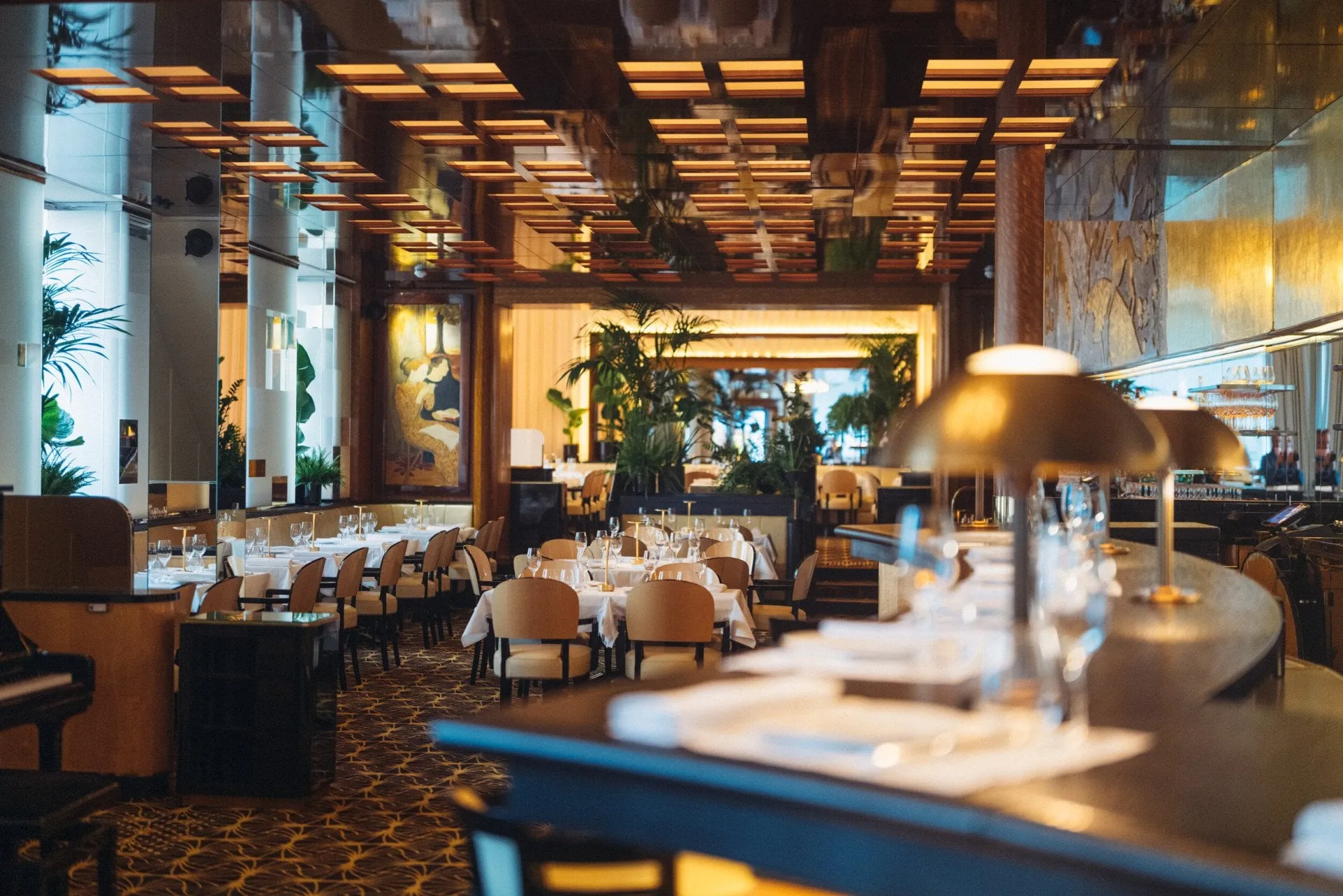
Beyond the flagship, Le Relais Plaza, an Art Deco brasserie opened in 1936 and modelled on the first-class dining hall of the ocean liner SS Normandie, serves classic Parisian brasserie fare in one of the hotel’s most striking rooms. La Cour Jardin, added to the hotel during its 1920s expansion, occupies the internal courtyard for a seasonal menu through the warmer months, and La Galerie handles all-day dining and afternoon tea. For drinks, the Bar du Plaza Athenee, redesigned by Jouin and Manku around a glowing resin counter and a deep blue fabric ceiling, is among the more recognisable bar rooms in Paris.
Spa and Wellness
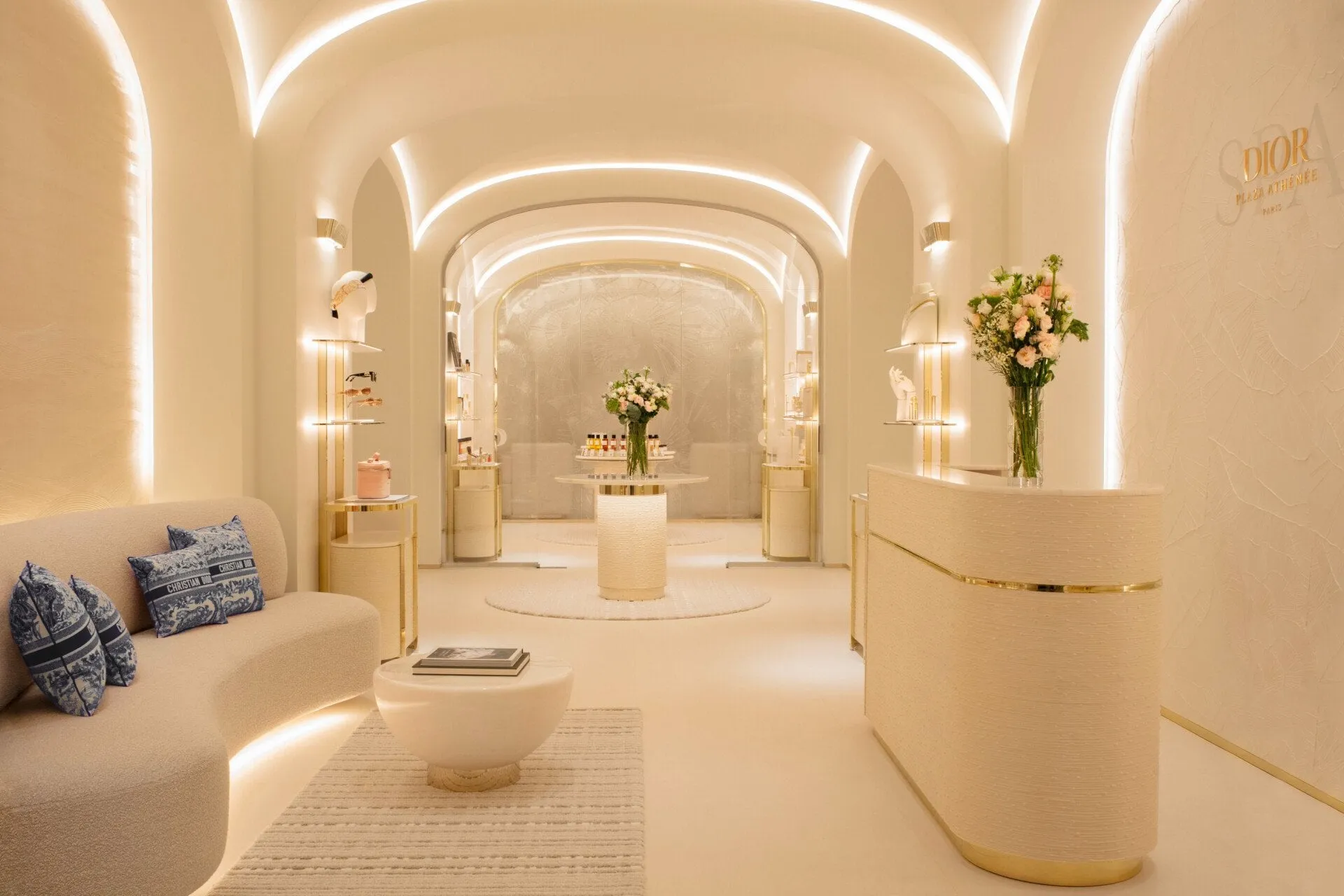
The hotel’s spa, the Dior Institut, occupies a roughly 400-square-metre space within the building and carries a specific piece of history: it was the first spa Dior ever created, opening in 2008. Facilities include several treatment rooms, a manicure and pedicure suite, sauna and steam areas, and a fully equipped gym, alongside the Dior Light Suite, a relaxation room whose ceiling is fitted with LEDs engineered to reproduce natural daylight, a detail that sets it apart from the more standard hammam-and-massage format found at most Paris hotel spas. The pairing reflects Christian Dior’s own history with the address: he opened his first boutique nearby on Avenue Montaigne in 1946, specifically to draw on the hotel’s clientele, and the two addresses have shared a view of each other ever since.
Experiences
Much of what a stay at the Plaza Athenee offers lies immediately outside its front door. Avenue Montaigne itself functions as the experience, a single street lined with flagship boutiques walkable in full within twenty minutes, and the hotel’s concierge team routinely arranges private appointments and fittings on guests’ behalf, work made easier by the address’s decades of relationships with the houses along its own street. Private guided visits to the Louvre, the Musee d’Orsay and other major collections can be arranged for guests with a serious interest in art, and the Theatre des Champs-Elysees, a near-contemporary of the hotel that opened within weeks of it in 1913, sits close enough for an easy evening of opera, ballet or concert programming.
The Cour Jardin’s winter transformation into an ice rink, complete with festive lighting and Christmas trees, has become a seasonal draw in its own right, drawing outside visitors as well as hotel guests during the holiday months.
Who It Is For
The Plaza Athenee suits travellers who want their Paris stay built around fashion and address prestige as much as around the hotel itself: shoppers, Fashion Week attendees, and anyone drawn to stepping directly from a couture flagship into a century-old lobby. Couples marking an anniversary or a first trip to Paris will find the suite ratio, the Eiffel Tower sightlines from upper floors, and the red-awninged facade a strong match for a classic, high-ceremony stay.
Food-focused travellers have long had reason to choose this hotel specifically, though the 2026 change in the gastronomic restaurant’s leadership means that reason is, for now, in transition; those visiting for that dining room specifically should treat its current details as provisional until closer to their stay. It is a less obvious fit for travellers prioritising a quiet, garden-set retreat, since the hotel’s identity is tied closely to its busy fashion-house street rather than to green space, or for guests seeking a more contemporary, minimalist design register over the hotel’s classical French decorative language.
Best Time to Visit
Paris rewards a visit at almost any time of year outside the deepest, most crowded weeks of summer, and the Plaza Athenee’s own calendar adds a further layer to that general pattern. April through June and September through October bring the city’s most comfortable walking weather and, for travellers with a specific interest in the hotel’s fashion-industry setting, overlap with the spring and autumn ready-to-wear and haute couture show weeks that bring Avenue Montaigne to its busiest and most animated. Winter has its own distinct appeal here specifically, given the courtyard’s seasonal conversion into an ice rink and the hotel’s broader holiday decoration, though rates and demand for the surrounding avenue’s boutiques also run highest during the fashion weeks themselves.
How to Get There
Most international visitors arrive via Paris-Charles de Gaulle Airport (CDG), roughly 35 kilometres northeast of the city, with a road transfer into central Paris and Avenue Montaigne running approximately 45 minutes to an hour depending on traffic and time of day; the hotel can arrange a private car transfer directly from the airport. Orly Airport, closer to the city on its southern edge, serves a smaller share of arrivals, largely domestic and some European routes, with a somewhat shorter transfer time into the city centre. Paris’s RER and metro networks also connect both airports to the city, though guests travelling with significant luggage or arriving for fashion week generally opt for a private transfer given the hotel’s central, high-traffic location.
Nearby Experiences
The hotel’s own street does much of the work here: Avenue Montaigne itself is lined with the flagship boutiques of Dior, Chanel, Louis Vuitton and Prada, all within a few minutes’ walk, making a car largely unnecessary for a fashion-focused stay. The Champs-Elysees and Arc de Triomphe sit a short walk north, while the Seine, the Pont de l’Alma and a clear view toward the Eiffel Tower are an easy walk south and west. The Theatre des Champs-Elysees, opened within weeks of the hotel in 1913, remains an active opera, dance and concert venue a few steps from the front door, and the Petit Palais and Grand Palais are within comfortable walking or short-taxi range for guests wanting a museum counterpoint to the shopping.
Things to Know Before Booking
The hotel’s gastronomic restaurant is mid-transition as of this guide’s publication: chef Jean Imbert was separated from the kitchen’s leadership in spring 2026 amid a domestic violence investigation, executive chef Jocelyn Herland has since taken charge, and a rename of the restaurant was anticipated but not yet finalised. Guests booking specifically around that dining room should confirm its current name, chef and reservation policy directly with the hotel rather than relying on older references. Rates here sit at the upper end of the Paris Palace category, and Avenue Montaigne’s fashion-week weeks bring both the highest rates and the busiest concierge desk of the year, worth avoiding for travellers who prioritise a quieter stay over proximity to the shows.
Sustainability
The hotel’s most recent renovation cycle folded a set of concrete environmental measures into what might otherwise have been a purely cosmetic refresh: external insulation added to the facade to reduce heat loss, and presence sensors and automated systems fitted to manage lighting and temperature in the renovated rooms. Bathroom amenities have shifted toward refillable containers over single-use miniatures. These property-level changes sit within Dorchester Collection’s broader sustainability reporting across its hotel portfolio, and the constraints of operating inside a century-old, heritage-listed building shape what physical retrofitting is realistic; guests wanting more detail on current initiatives are best served asking the hotel directly.
Practical Information
Rates at Hotel Plaza Athenee sit at the top of Paris’s Palace hotel tier, with this guide pricing the property from an indicative EUR 2,100 per night for entry-level rooms as a general orientation; travellers should confirm current pricing, seasonal packages and any Fashion Week premiums directly with the hotel or a specialist agent, since published third-party rates vary considerably by season. Check-in is from 3:00pm and check-out by 12:00pm, standard for the category, with a city tax applied in addition to the room rate.
The nearest international gateway is Paris-Charles de Gaulle Airport (CDG), roughly 45 minutes to an hour away by road depending on traffic, with Orly Airport a workable alternative for some routings. Most guests plan two to three nights, enough time to move through the hotel’s restaurants, the Dior Institut, and a day or two working through Avenue Montaigne and the wider 8th arrondissement. Best months to visit are April through June and September through October, when the city’s weather and its fashion calendar are both at their most favourable.
Editorial Conclusion
Hotel Plaza Athenee’s case rests on an address that very few hotels can claim: a working seat inside the neighbourhood that defines French fashion, with more than a century of continuous operation behind the claim. Its architecture and decorative language have stayed remarkably stable since 1913, even as the hotel has absorbed real change elsewhere, in its bar, in its top-floor suites, most recently and most visibly in the still-unsettled handover of its gastronomic kitchen. For travellers whose idea of Paris runs through Avenue Montaigne specifically, that combination of continuity and current relevance is difficult to find matched elsewhere in the city; for those approaching the hotel primarily through its restaurant history, the ongoing transition is worth confirming directly before booking.
In pictures
On the map
Avenue Montaigne, 8th arrondissement, France
Questions
Frequently asked
Is Hotel Plaza Athenee within walking distance of Paris's fashion houses?
Yes, more directly than almost any other Paris palace hotel. The address sits on Avenue Montaigne itself, and couture and jewellery flagships including Dior, Chanel, Prada and Louis Vuitton line the same short stretch of street as the hotel's front door, with Dior's own maison directly opposite.
Who runs the kitchen now, and how does it compare to the Alain Ducasse era?
The gastronomic restaurant Alain Ducasse ran from 2000 to 2021, holding three Michelin stars for most of that period around his plant-forward 'naturalite' style, closed out that partnership in mid-2021. Chef Jean Imbert reopened the room in January 2022 with a more classical French repertoire, and it earned a Michelin star within about nine weeks. In spring 2026, the hotel separated Imbert from the kitchen's leadership amid a domestic violence investigation, and Jocelyn Herland, the restaurant's executive chef since 2021 and previously of Alain Ducasse at The Dorchester, Le Meurice and Taillevent, has since taken charge of it. A rename was anticipated at the time of writing; guests booking specifically for this restaurant should confirm its current name and format directly with the hotel.
Why are the hotel's awnings and window boxes red?
The red canvas awnings and cascading geraniums along the facade are the hotel's best-known visual signature. Hotel lore traces the detail to the 1940s romance between actor Jean Gabin and Marlene Dietrich, guests at the hotel, whose balcony was reportedly meant to be filled with roses and was filled with red geraniums instead when roses proved too hard to source in the necessary quantity. The story is widely repeated by the hotel and the Paris press, though it is best treated as cherished house legend rather than strictly documented fact; what is documented is that every balcony on the building has carried the same red geraniums ever since.
Is there a spa, and does it have a connection to Dior?
Yes. The Dior Institut opened at the hotel in 2008, the first spa Dior ever created, and occupies a roughly 400-square-metre space with several treatment rooms, a fitness studio and the Dior Light Suite, a light-therapy relaxation room whose ceiling is fitted with LEDs engineered to reproduce natural daylight. The pairing reflects Christian Dior's own history with the address: he opened his first boutique nearby on Avenue Montaigne in 1946, opposite the hotel.
How many rooms and suites does the hotel have, and what is the top category?
The hotel counts 208 rooms and suites in total, 154 rooms and 54 suites. At the top of the range sits the four-bedroom Royal Suite, part of a block of 49 rooms and suites on the fifth and sixth floors renovated by French design house Moinard Betaille and unveiled in September 2024, with six new colour palettes and no two rooms configured identically.
Same destination
More hotel guides in France
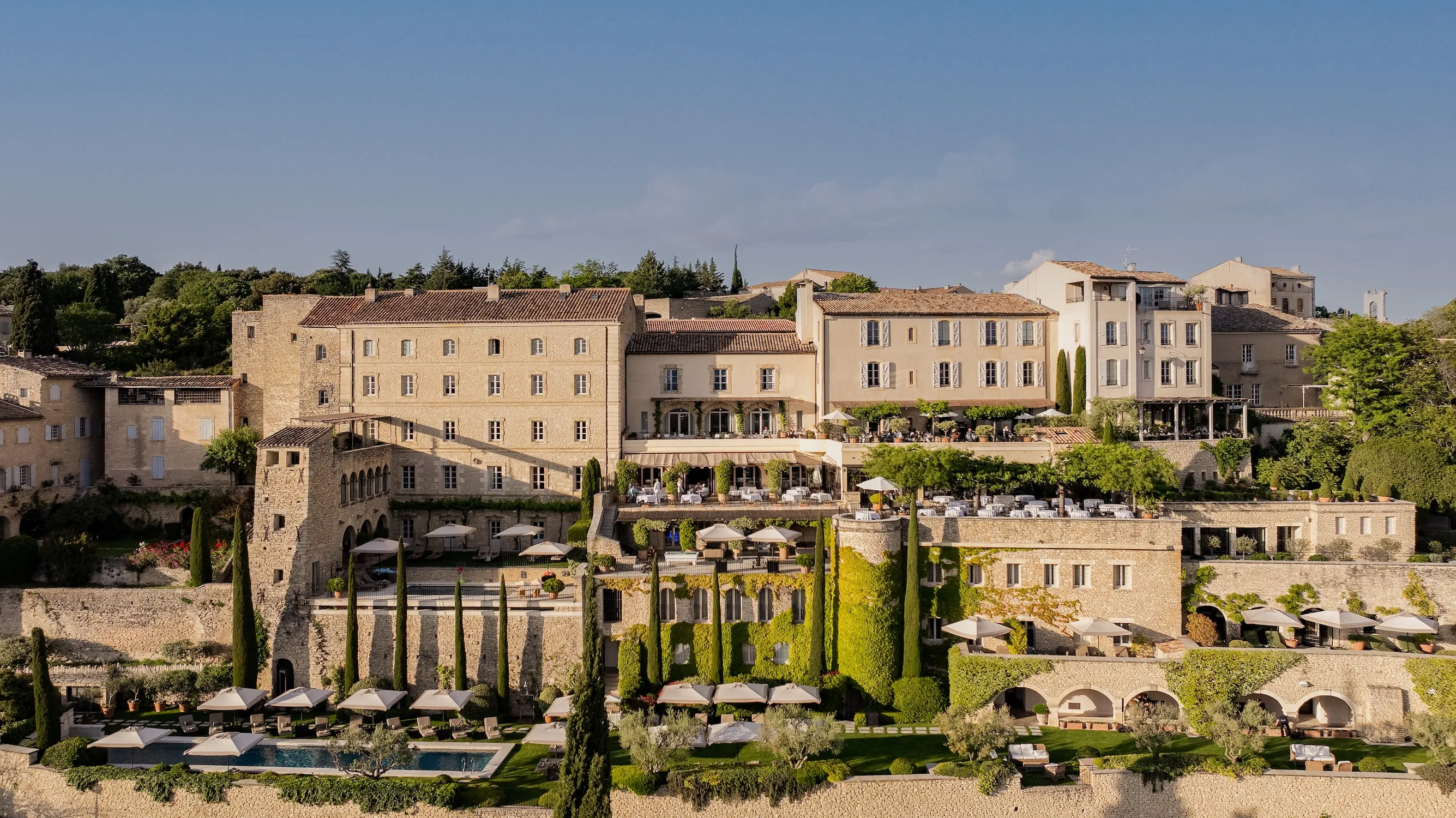
Gordes, Luberon, France
Airelles Gordes, La Bastide
A 16th-century manor built into the ramparts of a hilltop village, run as one of only two dozen hotels in France to hold the official Palace title.
From €950 per night
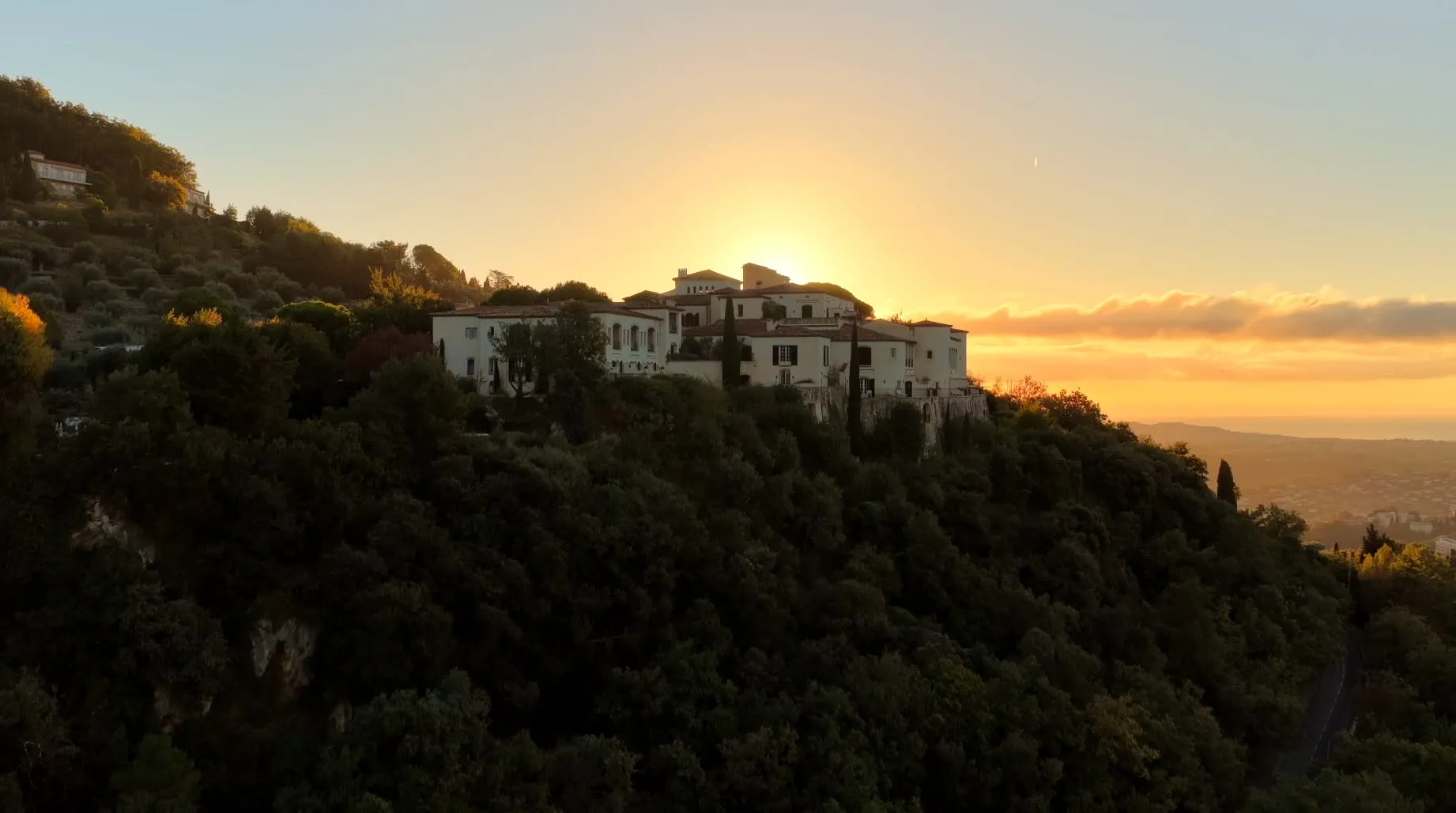
Vence, above the Riviera coast, France
Chateau Saint-Martin & Spa
A 12th-century Knights Templar commandery turned Relais & Châteaux estate, its own olive groves and vineyards spread across a Vence hillside above the Mediterranean.
From €1,050 per night
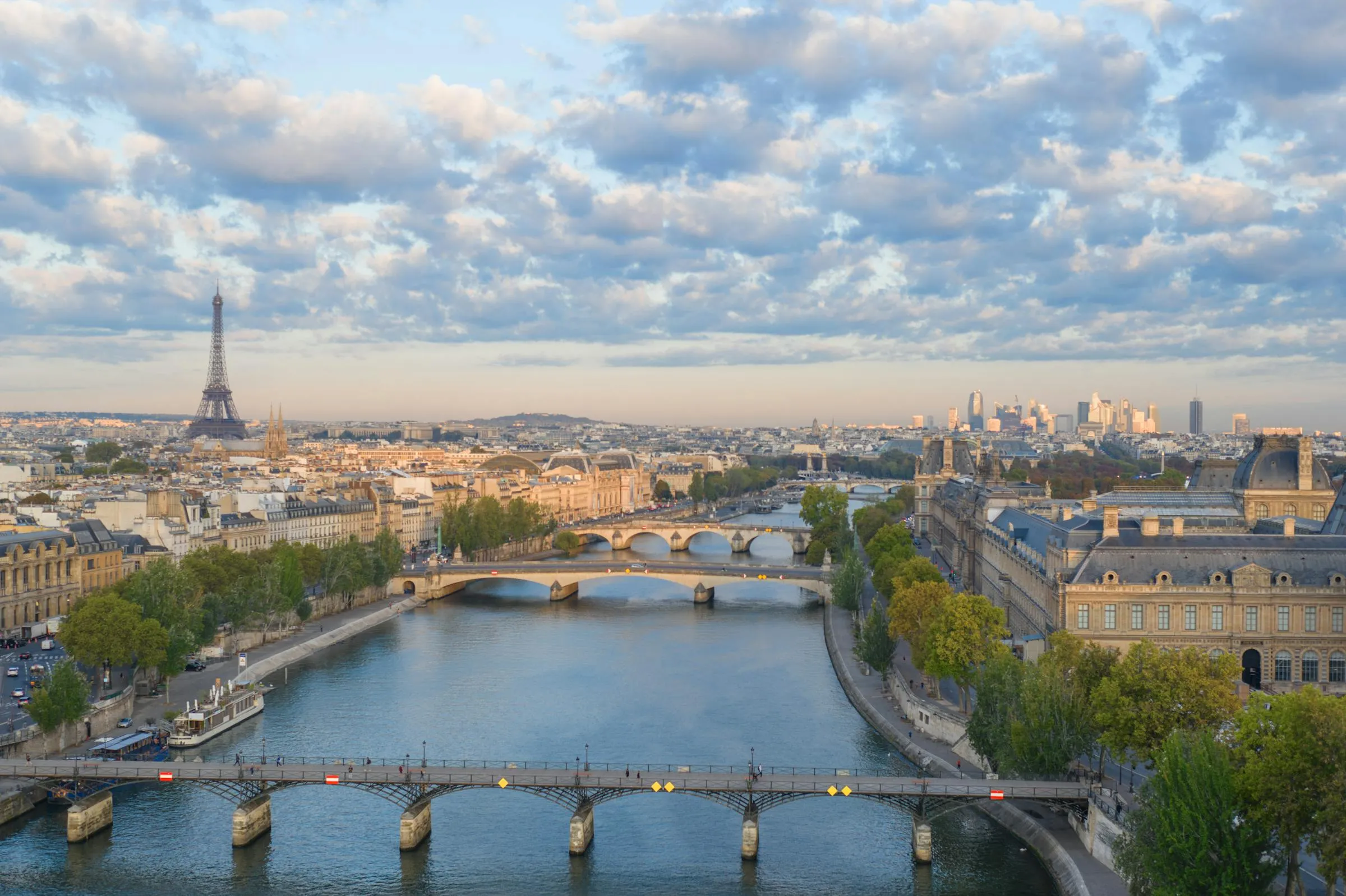
1st arrondissement, Paris, France
Cheval Blanc Paris
A Belle Epoque department store reborn as LVMH's most architecturally ambitious Paris address, with the Seine on one side and the Louvre on the other.
From €2,200 per night