Ruaha National Park, Tanzania
Jabali Ridge
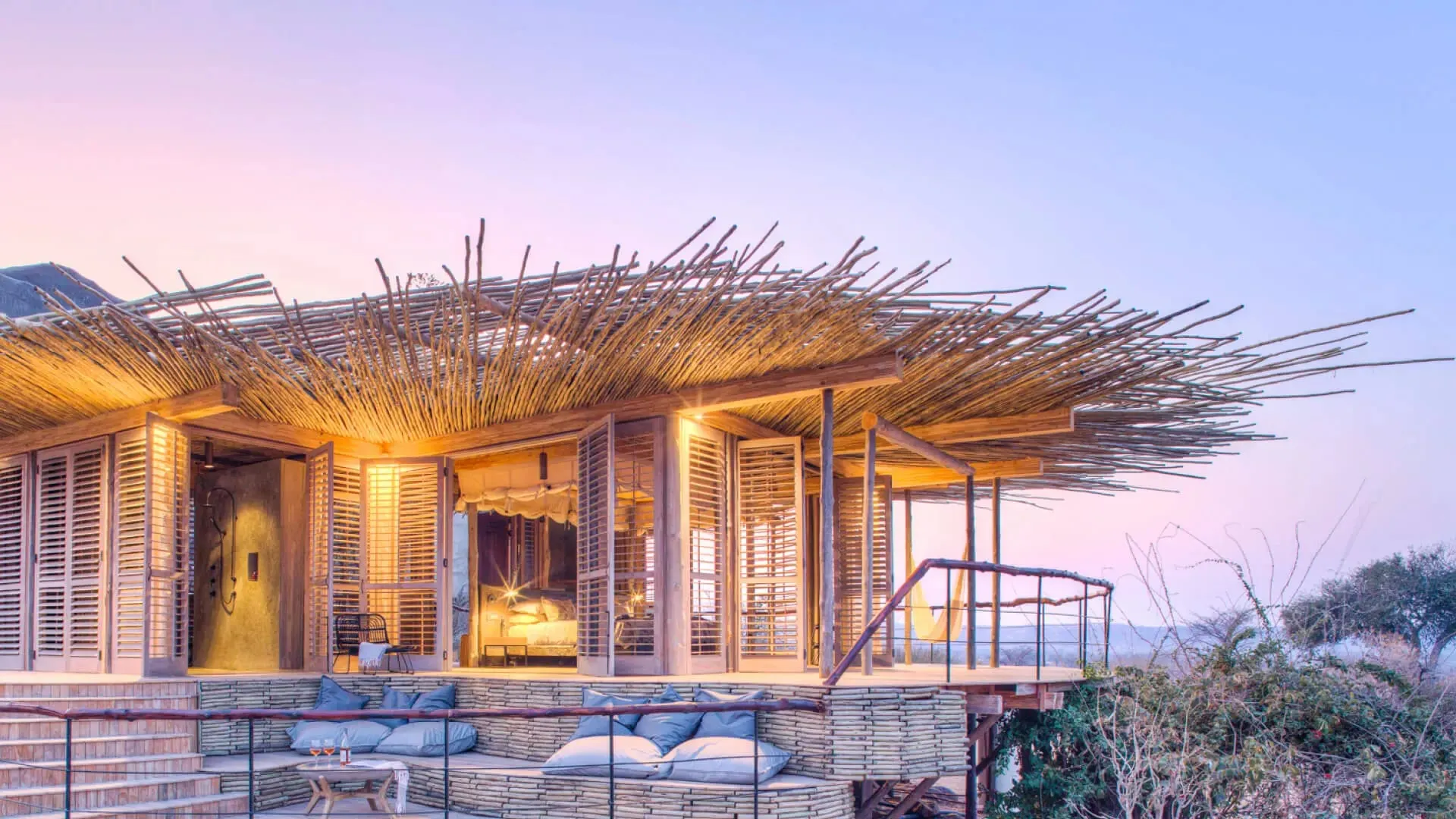
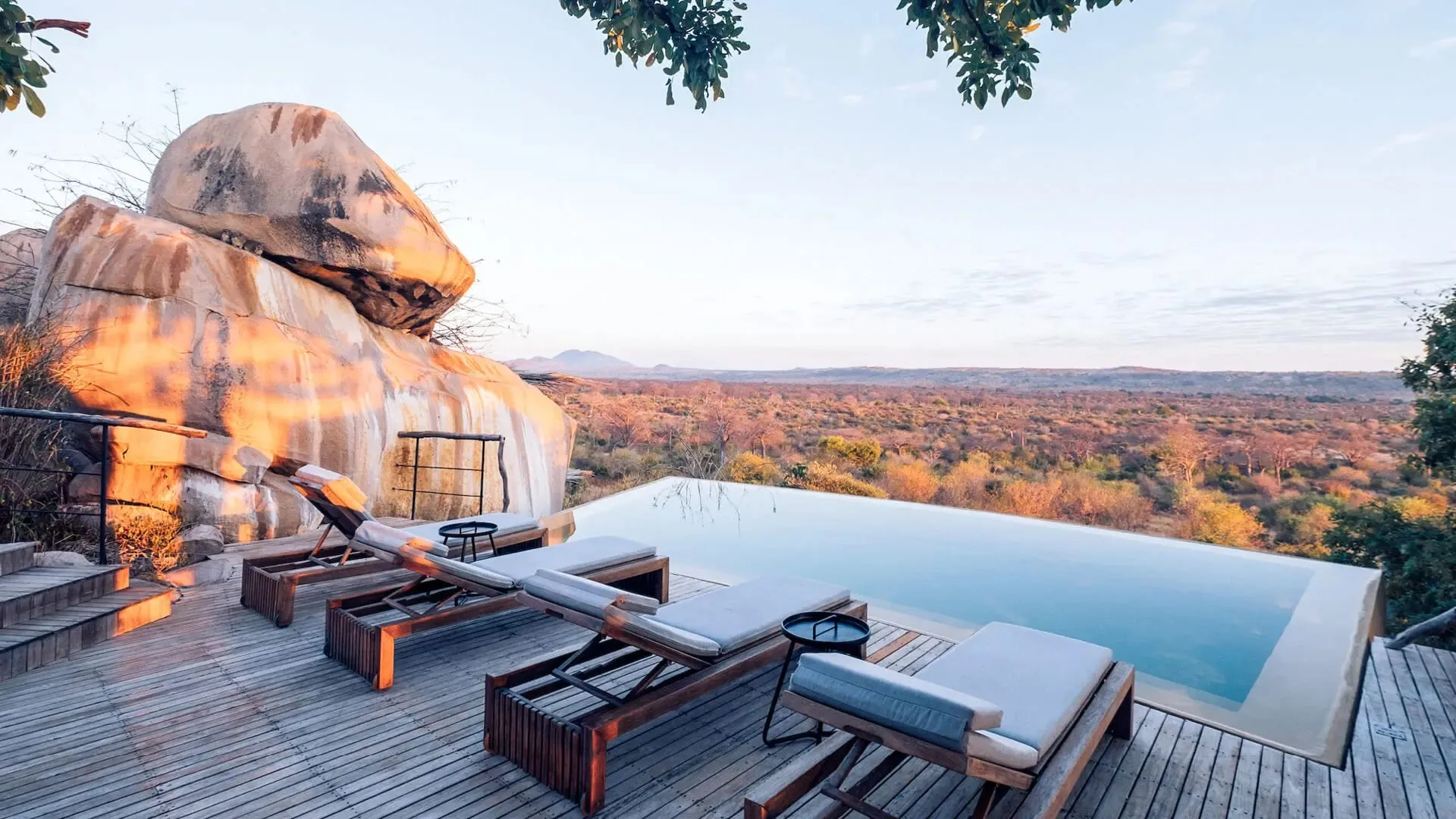
Eight suites threaded through a kopje of house-sized granite boulders in Ruaha, Tanzania's largest and least-visited major national park.
- Rates from
- From $880 per person, per night, all-inclusive (low season)
- Nearest airport
- Msembe Airstrip (HTMR), Ruaha National Park
- Transfer
- Roughly 50min by road from Msembe Airstrip; Msembe itself is reached by light aircraft from Dar es Salaam, Zanzibar or Arusha
- Best months
- June to October for peak dry-season wildlife viewing; the lodge is open June through mid-March
Ruaha does not announce itself the way the Serengeti does. There is no great migration crossing the plains on a predictable annual clock, no procession of vehicles converging on a single sighting. What Tanzania’s largest national park offers instead is scale and quiet: roughly 20,000 square kilometres of baobab-studded miombo woodland and open grassland, threaded by the seasonal Mwagusi and Great Ruaha rivers, holding one of the highest concentrations of lions left anywhere in Africa, and receiving a small fraction of the visitors that pass through the northern circuit each year.
Jabali Ridge sits inside that emptiness on a kopje, a wind-scoured outcrop of granite boulders piled by geology rather than design, in the park’s core game-viewing ground near the Mwagusi River. Asilia Africa opened the lodge in September 2017 as its flagship Ruaha property, and the brief given to its architects was unusual even by safari-lodge standards: build eight suites into a landscape of boulders the size of houses without disturbing the boulders, or the view.
What resulted is less a hotel dropped onto a dramatic site than a lodge that appears to have negotiated its way around one. Roofs stay flat and low so they never rise above the rock line; walkways curve around outcrops rather than through them; suites tuck into shaded pockets between stones that have sat in roughly the same arrangement for millions of years. The effect, deliberately, is of a camp that arrived after the boulders and asked their permission.
For a region so often described in relation to what it lacks, migration crowds, marketing budgets, name recognition, Jabali Ridge makes a case for what Ruaha actually has: genuine wildlife density, a landscape unlike anywhere else on the safari circuit, and, in this one lodge, a piece of architecture considered enough to match it.
Why It Stands Out
Jabali Ridge’s defining fact is site-specific in a way few safari lodges can claim: it is built literally around and into a kopje of granite boulders rather than beside one, with individual suites tucked into gaps and shelves in the rock rather than aligned in a row facing a view. Nicholas Plewman, the lodge’s architect, has described the underlying brief as an attempt to get out of the landscape’s way entirely, working around the shadows the boulders cast rather than competing with their bulk.
The second distinguishing fact is geographic rather than architectural. Ruaha is regularly cited as Tanzania’s largest national park, at around 20,226 square kilometres, though the 2019 redesignation of part of the former Selous Game Reserve as Nyerere National Park has since made Nyerere marginally larger by strict area; either way, Ruaha remains vast and lightly trafficked, and is home to an estimated one-tenth of the world’s remaining wild lion population alongside significant numbers of elephant, buffalo, leopard, cheetah, African wild dog, and the sable and roan antelope that are largely restricted to Tanzania’s southern parks. Jabali Ridge sits inside that ecosystem with only eight suites, a guest density that would be unremarkable in the Serengeti’s private conservancies but is genuinely rare set against Ruaha’s near-total absence of crowding.
The third is a level of design ambition, in both architecture and interiors, that is more commonly associated with East Africa’s northern-circuit flagship camps than with a park most travellers still have to be persuaded to visit. Dhow-wood beds, vegetable-dyed textiles, Bali-made timber shutters and a rim-flow infinity pool cut into the rock are not typical furnishings for a park this far off the well-worn Tanzanian safari route, and the gap between Ruaha’s profile and Jabali Ridge’s finish is a large part of what makes the lodge notable.
Architecture
Jabali Ridge was designed by Nicholas Plewman Architects, the Johannesburg-based practice behind a number of East and Southern Africa’s more considered safari lodges, with the firm’s Duran Bezuidenhoudt leading the project and De Villiers Sheard handling the engineering. The founding idea, as Plewman has described it, was that the ideal room on this site would be no room at all, simply the deep shelter already offered by a boulder or a baobab, and that the built structure should do as little as possible to argue with that.
In practice, that meant designing around the kopje’s existing boulders rather than clearing or reshaping them: roofs across the property are kept deliberately flat and low so that the building’s silhouette never rises above or competes with the granite formations it is threaded through. Timber boardwalks connect the eight suites, the dining and lounge areas, and the pool deck across the uneven surface of the rock, curving around outcrops rather than cutting through them, so that a walk from one end of the lodge to the other reads as a route through a boulder field that happens to have a camp built into it.
Construction leans on timber, thatch and stone sourced with an eye to blending into, rather than standing out from, the surrounding granite and vegetation, a materials palette Asilia has framed as core to the lodge’s environmental approach as much as its aesthetic one. The result photographs less like a conventional hotel elevation and more like a settlement that has grown into the gaps between rocks, which was, by the architect’s own account, precisely the intention.
Interior Design
Interiors and furnishings were curated by Caline Williams-Wynn of Artichoke Design, working in a register the studio has described as eclectic and distinctly African rather than a generic safari-lodge shorthand of khaki canvas and animal-print cushions. Bed frames are built from aged dhow boat timber, reclaimed from the wooden sailing vessels once common along the Swahili coast; each frame is reportedly heavy enough that positioning a single one inside a suite required eighteen men, a detail that says as much about the scale of the furniture as about the logistics of building anything on top of a boulder field with no vehicle access to individual rooms.
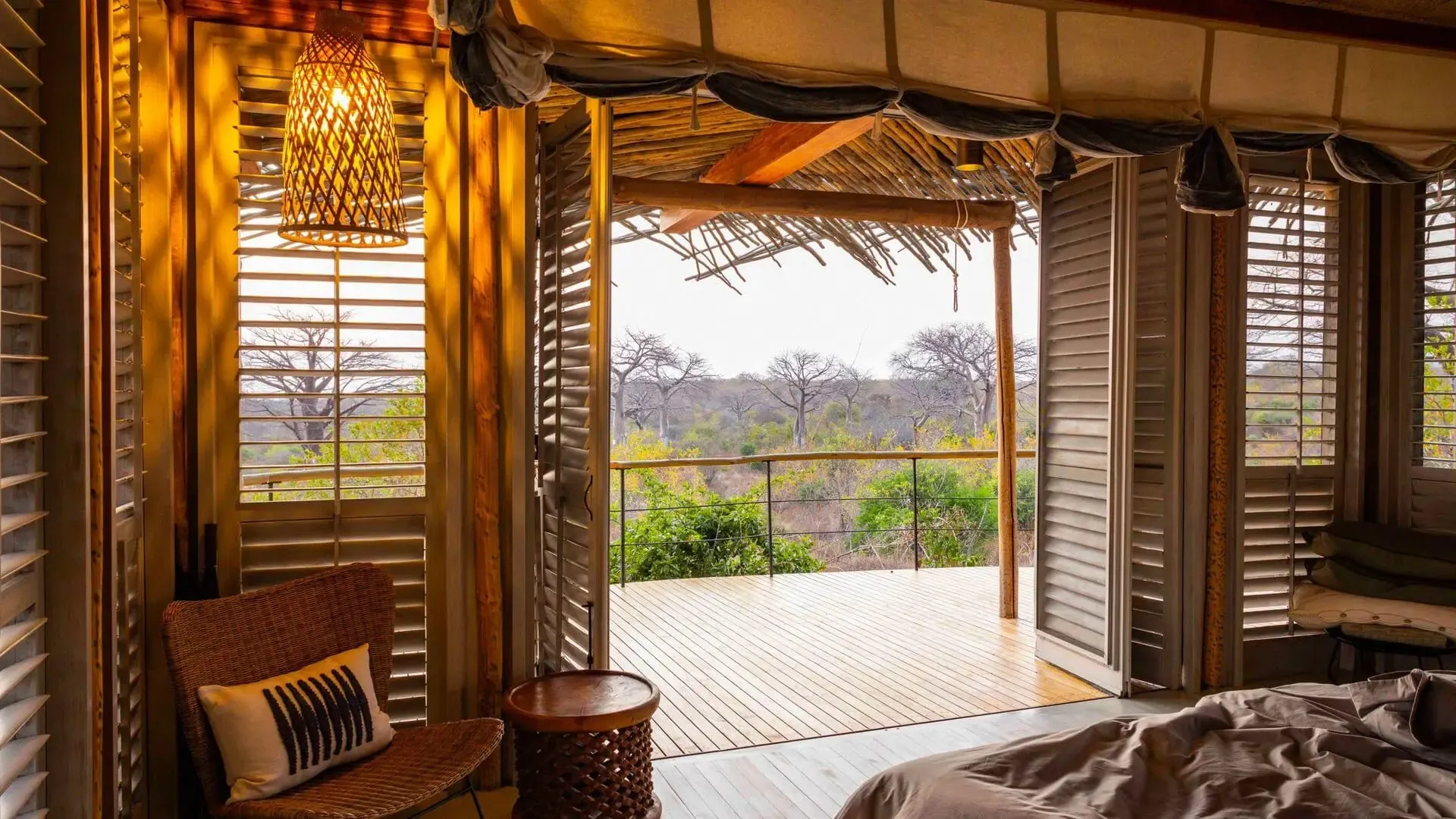
Fabrics carry the same handmade attention: linen throws and cushions are wrapped in eucalyptus leaves and dyed with vegetable dye to approximate the streaked, weathered tones of the granite boulders outside, a deliberate echo between textile and rock face. Ceilings are woven from Zanzibar palm matting, pergolas combine Indian teak with phragmites reed, and the timber louvred shutters that stand in for solid walls across much of each suite were handmade in Bali before being shipped to the site. Interior walls, where they exist at all, are finished in a curved, putty-toned plaster in slate grey, intended to recall the trunks of the baobabs scattered across the surrounding plain rather than a conventional painted surface.
The cumulative effect is a lodge that leans on craft and material specificity rather than on safari cliché: little here reads as generic luxury-lodge furnishing, and a fair amount of it, from the dhow-wood beds to the eucalyptus-wrapped cushions, exists nowhere else on the Ruaha circuit, or arguably on the wider Tanzanian one.
Atmosphere
Because so much of each suite’s wall space is louvred timber shutter rather than solid partition, Jabali Ridge reads as unusually porous for a lodge in a region with a real, resident predator population: light, sound and air move through the rooms in a way that keeps the surrounding bush constantly present rather than sealed out behind glass and air conditioning. Bed-encircling insect curtains substitute for fully enclosed windows in several rooms, a design choice that trades a degree of climate control for a much closer relationship with the landscape outside.
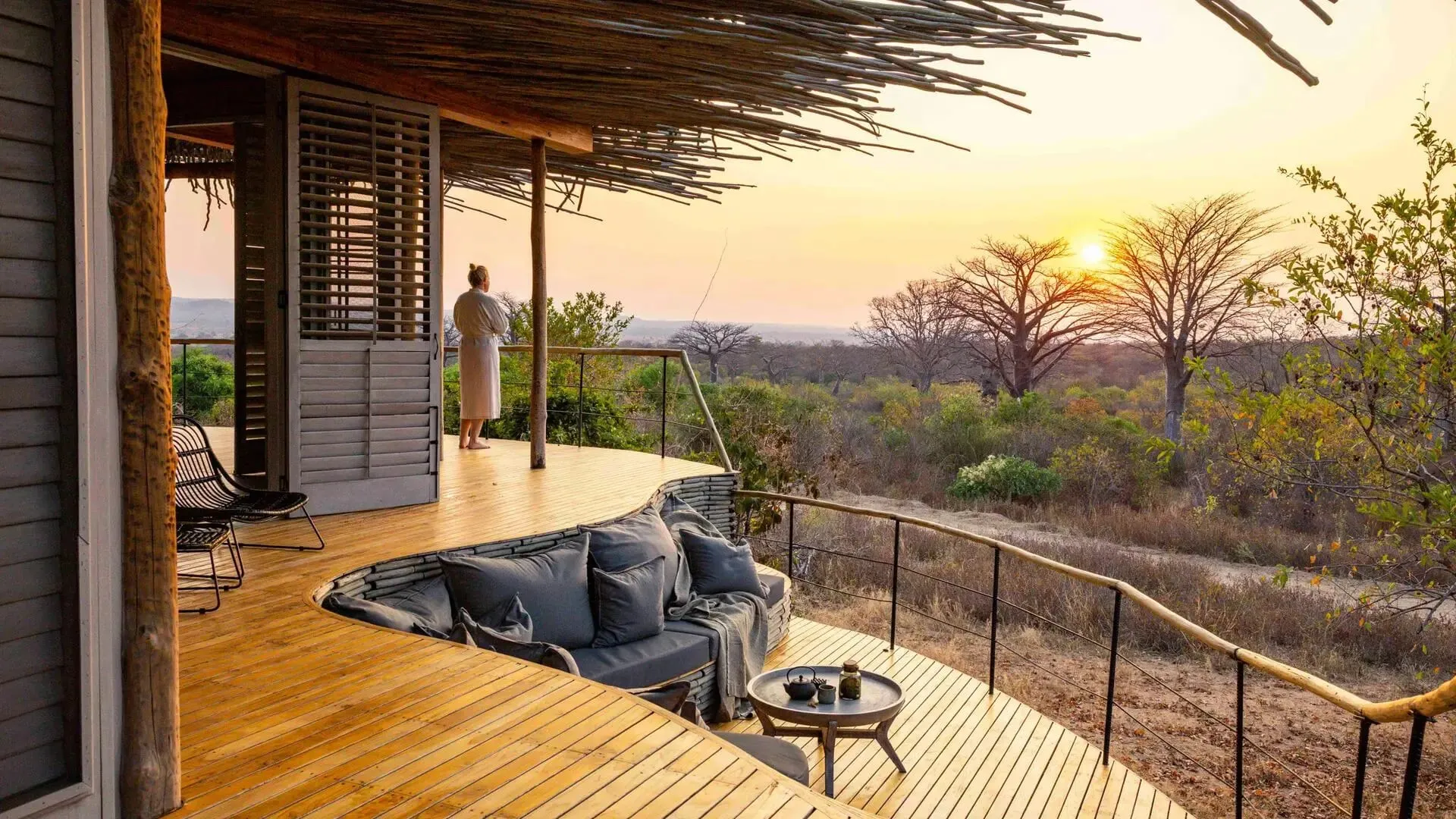
The kopje setting itself shapes the mood as much as any furnishing choice. Boulders the size of small buildings sit between and around the suites, boardwalks rise and fall with the rock’s natural contours, and the lodge’s public spaces, arranged around a domed rock circle used for evening fires, sit high enough on the outcrop to catch views running out toward the Mwagusi River and the baobab forest beyond. Hyrax colonies and troops of vervet monkey are reported to move freely around the camp’s boulders during the day, a small but constant reminder that the lodge is a guest on this rock formation rather than its sole occupant.
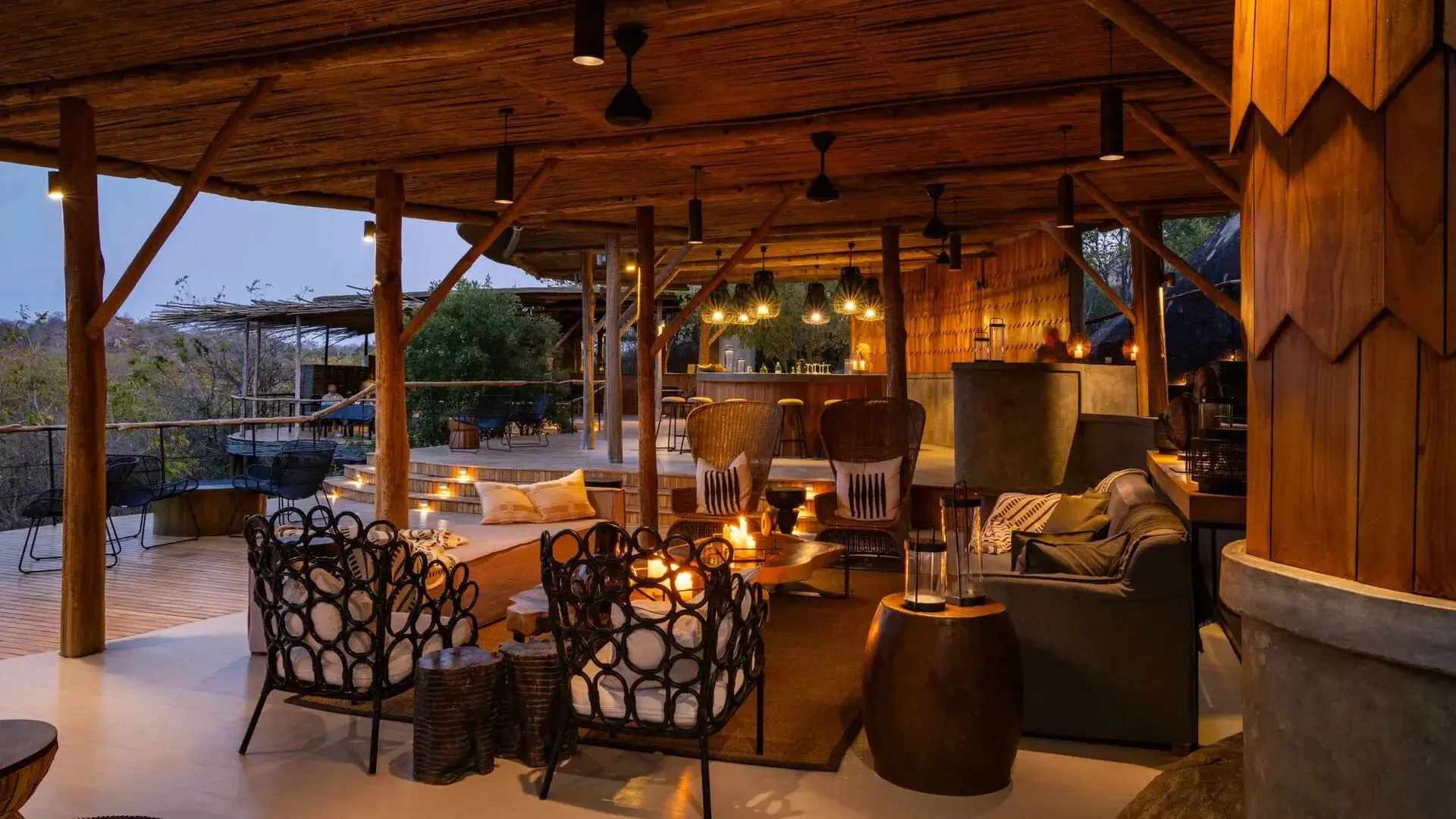
Evenings settle into the register typical of a small, remote camp: fires lit within the rock circle, a single open-sided dining and bar area rather than multiple competing venues, and a silence broken mostly by the sounds of a national park that receives a fraction of the visitor traffic of Tanzania’s northern parks. There is little here built for spectacle or crowd energy; the atmosphere depends almost entirely on the size and character of the rock the lodge is built on.
Rooms and Suites
Jabali Ridge has eight suites, arranged around the north and west flanks of the kopje, each fitted with a king-sized bed on a dhow-wood frame, an en-suite bathroom, and a private veranda that in most suites includes a sunken lounge seating area and a hammock. Walls are largely composed of slatted timber shutters rather than solid partitions, an approach that maximises airflow and views at the cost of full enclosure, with insect-net curtains around the beds providing protection where walls remain open. Several suites include outdoor showers, and each has a private serving hatch through which staff deliver morning Tanzanian coffee and ginger biscuits before a game drive, without needing to enter the room itself. In-suite Wi-Fi and standard electrical power are provided throughout.
Separately from the eight-suite main lodge, Jabali Private House sits roughly 200 metres away and operates as a self-contained, exclusive-use villa. Built around a central baobab tree, it has three bedrooms and a wraparound veranda, sleeps up to six to eight guests, and comes with its own private pool, plus a dedicated chef, butler, housekeeper and safari guide and vehicle, along with two separate entrances that allow it to function as either one large family unit or two more private pairings within the same house. It is the natural choice for families with children under Jabali Ridge’s minimum age of five for the main lodge, and for groups who want the flexibility of their own kitchen and staff rather than sharing the lodge’s communal dining schedule.
Dining
Jabali Ridge’s dining room is open-sided and elevated on the kopje, positioned to make the most of the reserve views rather than to shelter guests from them, with a domed rock circle nearby used for evening fires and drinks before or after dinner. The kitchen’s style leans toward hearty, unfussy cooking rather than fine-dining formality: dishes described by past coverage include aubergine lasagne, beef curry, and grilled meats served alongside fresh salads, food built for appetite after a long game drive rather than for elaborate presentation.
Meals can be taken communally in the main dining room or, on request, arranged more privately elsewhere on the kopje, and bush breakfasts and sundowner drinks out on a game drive are a regular part of the daily rhythm rather than a special add-on. Rates are all-inclusive of meals and a house selection of drinks, with premium wines and spirits generally available at additional cost.
Spa and Wellness
Wellness at Jabali Ridge is deliberately modest in scale: a single-treatment spa room offers massage using baobab oil, sourced from the same tree species that shapes so much of the surrounding landscape and the lodge’s own interior design language. There is no larger spa complex or multi-room wellness centre, consistent with the lodge’s small footprint and its emphasis on the natural setting over built amenity.
The rim-flow infinity pool, cut into the western edge of the kopje, functions as the lodge’s central relaxation space as much as any treatment room, with views running out across the baobab forest toward the Mwagusi River. Given the modest scale of the treatment offering, most guests treat wellness at Jabali Ridge as a complement to the safari programme rather than a primary reason for the stay, built around the pool, the boulders, and the general quiet of the site rather than a formal spa menu.
Experiences
The core of a Jabali Ridge stay is built around a private vehicle and guide assigned to each party, allowing game drives to be scheduled flexibly rather than run on a fixed group timetable, with both day and night drives available in a park where nocturnal sightings, including some of Ruaha’s less commonly seen predators, are a genuine draw. The lodge also operates one of Asilia’s specially modified photographic vehicles, built with beanbag rests and low, unobstructed sightlines for guests travelling specifically to shoot wildlife.
Guided walking safaris run seasonally, generally from 1 June to 15 February, offering a slower, on-foot reading of the bush, tracks, dung, insect life, and the smaller detail a vehicle tends to pass over, led by armed guides and local trackers. Bush meals, whether a breakfast laid out mid-drive or a sundowner stop overlooking the Mwagusi’s dry sand bed, are a regular feature of the daily programme rather than a rare treat. Scenic balloon safaris over the park can be arranged, though these run as a separately charged excursion rather than as part of the standard inclusive rate.
Who It Is For
Jabali Ridge suits travellers who have already done a conventional northern-circuit Tanzania safari, or who want to skip the migration-season crowds entirely, and are drawn to a park with genuine wildlife density but a fraction of the visitor traffic of the Serengeti or Ngorongoro. Photography-focused guests are particularly well served by the dedicated photographic vehicle and by Ruaha’s lower vehicle density at sightings, and design-conscious travellers will find more architectural and interior ambition here than the region’s profile might suggest.
Couples and small groups suit the main eight-suite lodge well, while families, especially those with children under the lodge’s minimum age of five, are better matched to Jabali Private House, with its own staff, pool and separate entrances. It is a less natural fit for first-time African safari-goers who specifically want the wildebeest migration, or for anyone unwilling to fly on a light aircraft and accept a genuinely remote, seasonally closed property with a modest single-room spa rather than a full wellness complex.
Best Time to Visit
June through October, the heart of Ruaha’s dry season, is generally considered the strongest window for wildlife viewing, as vegetation thins and animals concentrate around the Mwagusi River and the park’s other permanent water sources, making sightings more predictable and walking safaris more comfortable underfoot. This period overlaps with Jabali Ridge’s higher-rate season and with the window in which shared walking safaris are offered.
The lodge remains open into November, December and through to mid-March, a period that brings a greener landscape, newborn wildlife and comparatively lower rates, sometimes marketed as a “secret season,” alongside a real chance of rain. From roughly mid-March to the end of May, Ruaha’s long rains make many park roads impassable and Jabali Ridge closes for the season entirely, reopening each June.
How to Get There
Jabali Ridge is reached almost exclusively by air. Scheduled light aircraft, operated by carriers including Coastal Aviation and Auric Air, connect Dar es Salaam, Zanzibar and Arusha to Msembe Airstrip (ICAO code HTMR), the airfield serving Ruaha National Park’s headquarters area in the Iringa region. From Msembe, Jabali Ridge arranges a private road transfer of roughly 50 minutes into the park to the lodge itself, included as part of the standard stay.
There is no realistic self-drive option for most international visitors; the distances and road conditions from Dar es Salaam or the northern safari circuit make flying the practical, and in most cases the only offered, means of arrival. Guests combining Jabali Ridge with a northern Tanzania itinerary typically route through Arusha, while those arriving from the coast connect via Dar es Salaam or Zanzibar.
Nearby Experiences
The Mwagusi River itself, a wide, seasonal sand river that runs dry for much of the year but remains the focal point of Ruaha’s core wildlife circuit, sits within easy reach of the lodge and anchors much of its daily game-drive programme, drawing elephant, buffalo and predators to the pools that persist along its bed even in the dry months. The wider baobab forest visible from Jabali Ridge’s suites and pool deck is itself a destination for photography and slower exploration, with some of the park’s oldest and largest trees found within a relatively short drive of the lodge.
Because Ruaha covers such a large area, Asilia and other operators run additional camps deeper into the park’s south, including around the Jongomero area, that can be combined with a Jabali Ridge stay for guests wanting to sample more than one part of the reserve on a single visit. Given the park’s overall remoteness, however, most Jabali Ridge guests build their nearby experiences around the immediate Mwagusi circuit rather than travelling extensively elsewhere within Ruaha during a single stay.
Things to Know Before Booking
Jabali Ridge is a seasonal property, open from June through mid-March and closed entirely from roughly mid-March to the end of May for the long rains, so travel dates need to be planned around that window well in advance. The lodge sets a minimum age of five for children staying in the main suites; families travelling with younger children should book Jabali Private House instead, which operates independently with its own staff and facilities.
Because the lodge is built directly into and around a kopje of granite boulders, walkways include steps and uneven, rock-following sections between suites and the main areas, worth noting for guests with significant mobility concerns. Standard rates are all-inclusive of meals, house drinks, laundry and game-drive activities, but typically exclude Tanzania National Parks entry fees, premium wines and spirits, spa treatments and scenic balloon safaris, all of which should be budgeted separately when planning a stay.
Sustainability
Asilia Africa has framed Jabali Ridge’s construction and operation around a broadly low-impact approach: the lodge draws the large majority of its electricity, reported at more than 90 percent, from solar power, and its buildings were constructed predominantly from locally sourced, sustainably harvested timber and stone rather than imported or high-embodied-carbon materials. The design’s central architectural conceit, working the built structure around existing boulders and vegetation rather than clearing the site, also limited the physical footprint of construction on the kopje itself.
Beyond the property, Jabali Ridge supports the Ruaha Carnivore Project, a conservation organisation working to reduce human-wildlife conflict and protect the region’s lion, leopard and African wild dog populations in a landscape that has historically seen some of the highest rates of carnivore killing anywhere in Africa, and the Southern Tanzania Elephant Program, which monitors and works to protect elephant populations across the wider Ruaha-Rungwa ecosystem. Asilia also backs Twende Porini, a community education initiative that brings local schoolchildren into the park to learn directly about the wildlife and ecosystems on their doorstep, part of a broader effort to build local support for conservation in the communities surrounding the park.
Practical Information
Indicative rates at Jabali Ridge start from around USD 880 per person per night in the lodge’s lower “secret season” pricing, rising to roughly USD 1,600 to 1,660 per person per night in high season, on an all-inclusive basis covering accommodation, meals, house drinks, laundry and game-drive activities with a private vehicle and guide; park fees and premium extras are charged separately. Check-in is from 2:00pm and check-out by 10:00am, with timing generally built around flight schedules into and out of Msembe Airstrip.
The lodge is open from June through mid-March and closed for the long rains from roughly mid-March to the end of May. Most stays run three to four nights, enough time to cover both day and night game drives, a walking safari where seasonally available, and time to simply sit with the view from the pool deck or a suite veranda across the kopje’s boulders and the baobab forest beyond.
Editorial Conclusion
Jabali Ridge makes its case less through amenity count than through the specificity of its site and the discipline of what its architects and designers chose to do with it. Building eight suites, a pool and a dining room into a kopje of house-sized granite boulders without letting the architecture compete with the rock is a genuinely difficult brief, and Nicholas Plewman Architects and Artichoke Design have answered it with flat rooflines, curving boardwalks, dhow-wood beds and vegetable-dyed textiles rather than with scale or spectacle.
That the lodge sits inside Ruaha, a park with a serious claim to being Tanzania’s largest and one of its least visited, only sharpens the proposition: genuine wildlife density, including a meaningful share of Africa’s remaining wild lions, delivered with a level of design ambition that would be notable anywhere on the continent’s safari map. For travellers willing to fly into a seasonal, off-circuit park and accept a single-treatment spa over a full wellness wing, Jabali Ridge offers one of the more thoughtfully built lodges in southern Tanzania, and a genuinely different Ruaha to the one most safari itineraries still overlook.
In pictures
On the map
Ruaha National Park, Tanzania
Questions
Frequently asked
How many suites does Jabali Ridge have, and is there a private house option?
Jabali Ridge has eight suites built into and around the granite kopje, each with a king-sized bed, en-suite bathroom and private veranda. Separately, roughly 200 metres from the main lodge, Jabali Private House is a three-bedroom exclusive-use villa built around its own baobab tree, sleeping up to six to eight guests with a private pool, chef, butler, housekeeper and dedicated safari guide and vehicle.
What is included in the nightly rate at Jabali Ridge?
Rates are all-inclusive, covering accommodation, all meals, a house selection of drinks, laundry, and a private vehicle and guide for day and night game drives, alongside shared walking safaris when in season. Park entry fees, premium spirits and wines, spa treatments and scenic balloon safaris are typically charged separately.
How do guests get to Jabali Ridge?
Access is by scheduled light aircraft, operated by carriers such as Coastal Aviation and Auric Air, from Dar es Salaam, Zanzibar or Arusha into Msembe Airstrip, the airfield serving Ruaha National Park's headquarters area. From Msembe, Jabali Ridge arranges a private road transfer of roughly 50 minutes into the park.
Is Jabali Ridge open all year?
No. The lodge operates from June through mid-March and closes for Ruaha's long rains, from roughly mid-March to the end of May, when many park roads become impassable. June to October, the heart of the dry season, brings the most concentrated wildlife viewing around the Mwagusi River.
Who designed Jabali Ridge, and is it suitable for young children?
The lodge was designed by Johannesburg-based Nicholas Plewman Architects, with interiors and furnishings curated by Caline Williams-Wynn of Artichoke Design. Asilia sets a minimum age of five years for children staying in the main lodge; families with younger children are generally better served by booking Jabali Private House, which operates as a self-contained villa with its own staff.
Same destination
More hotel guides in Tanzania
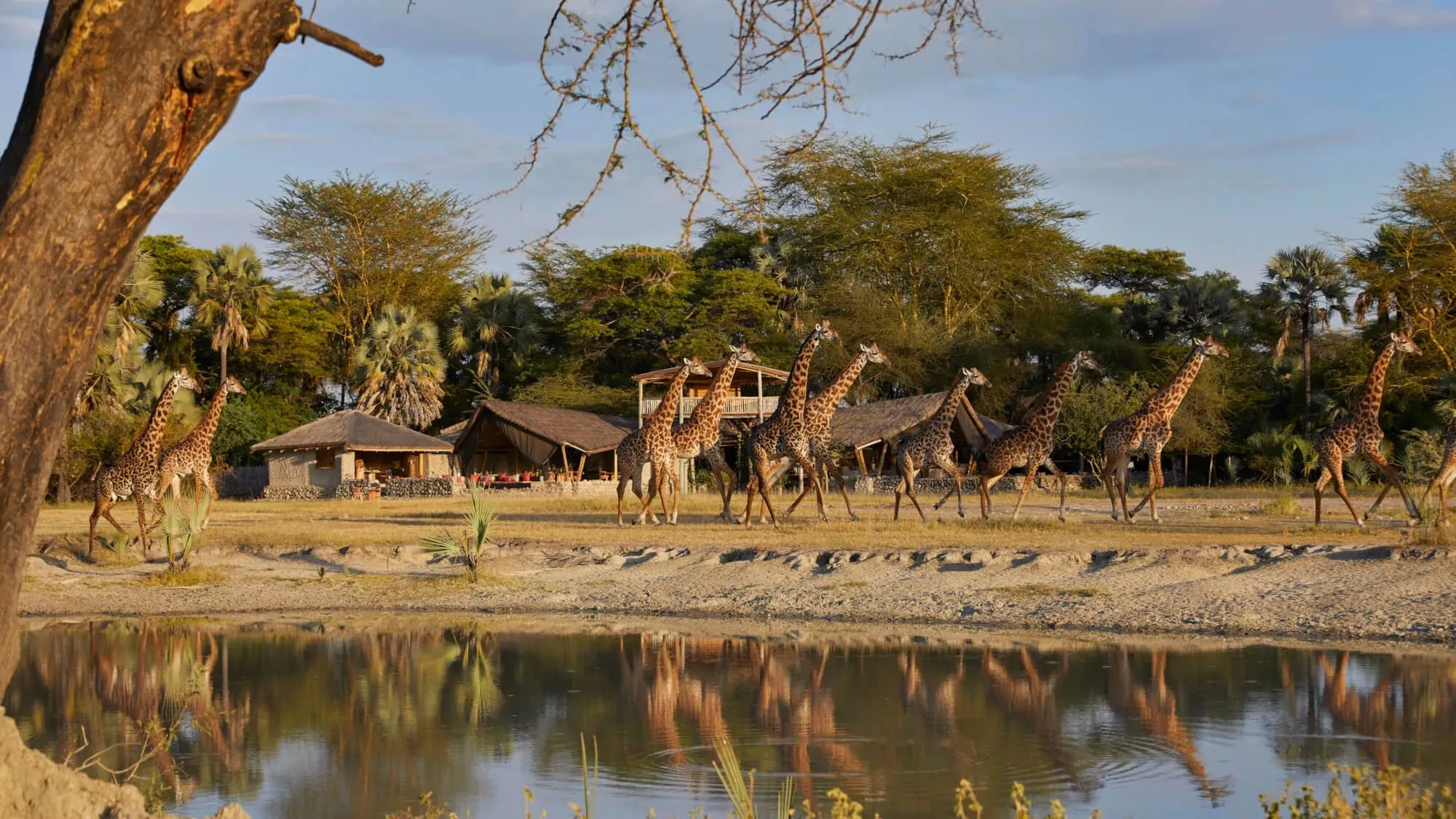
Chem Chem concession, between Lake Manyara and Tarangire, Tanzania
Chem Chem Lodge
Seven tented suites and a family unit set in a palm-fringed private concession where a conservation project, not a marketing brief, first drew the wildlife back between Lake Manyara and Tarangire.
From $1,420 per person, per night, all-inclusive (excludes mandatory conservation and community fee)
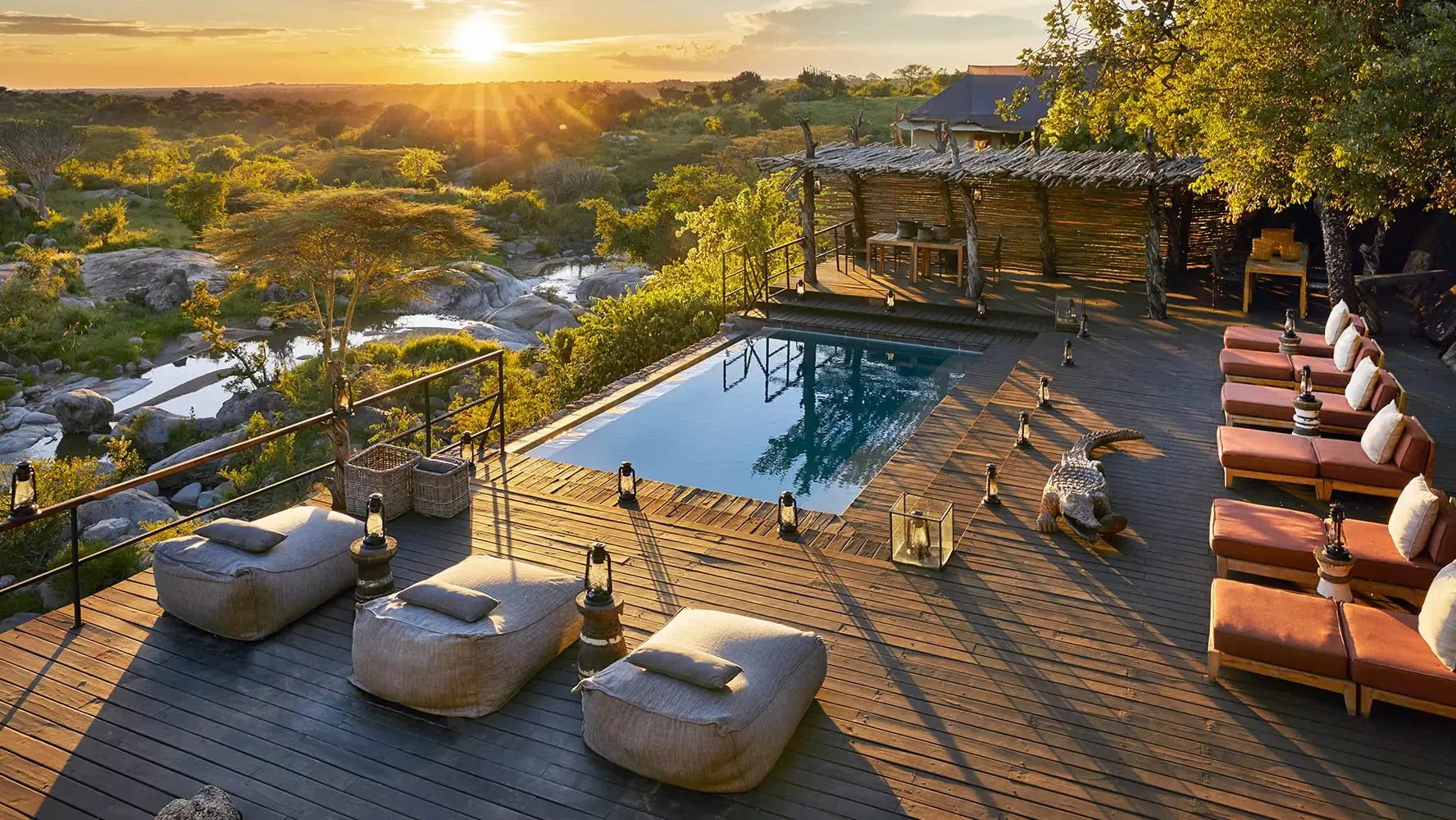
Mwiba Wildlife Reserve, Tanzania
Mwiba Lodge
Ten stone-and-canvas suites built into a granite outcrop above a river gorge in a private reserve that buys the Serengeti's southern migration corridor breathing room.
From $2,000 per person, per night, all-inclusive
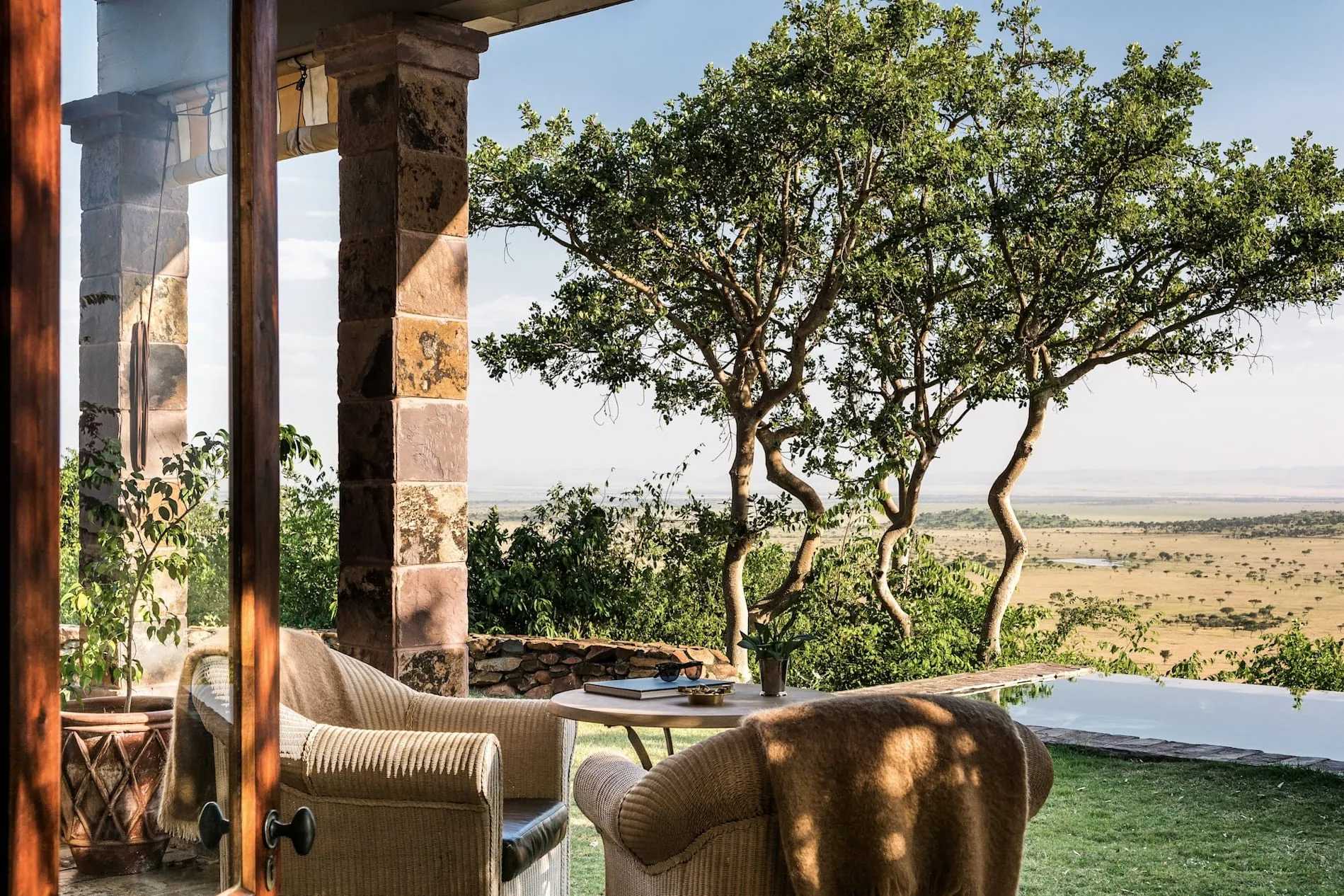
Grumeti Reserves, Serengeti, Tanzania
Singita Sasakwa Lodge
An Edwardian manor house on a Serengeti hilltop, built where a colonial-era settler once farmed, now run as the flagship of a 350,000-acre private reserve and its own rhino-recovery program.
From $2,550 per night, per person, all-inclusive