Grumeti Reserves, Serengeti, Tanzania
Singita Sasakwa Lodge
An Edwardian manor house on a Serengeti hilltop, built where a colonial-era settler once farmed, now run as the flagship of a 350,000-acre private reserve and its own rhino-recovery program.
- Rates from
- From $2,550 per night, per person, all-inclusive
- Nearest airport
- Kilimanjaro International Airport (JRO), via light aircraft to the Sasakwa airstrip
- Transfer
- About 1 hour by light aircraft from Kilimanjaro or Arusha, plus a short drive to the lodge
- Best months
- June and July for the Grumeti River crossings; December through March for calving season and dense predator activity
There is a particular kind of surprise built into the first sight of Singita Sasakwa Lodge, and it has nothing to do with wildlife. After a light-aircraft flight over an unbroken expanse of Serengeti bush, a scattering of stone chimneys, wraparound verandas and manicured lawns rises out of the grass on top of a hill, looking considerably more like a Edwardian country estate transplanted from rural England than anything resembling a conventional East African safari camp. There is no thatch, no canvas, no obvious nod to the vernacular lodge style that dominates this part of Tanzania. There are, instead, silver candelabra, wood-panelled rooms and a wine cellar.
That incongruity is deliberate, and it is rooted in the site’s actual history rather than pure invention. Sasakwa Hill was, in the early twentieth century, the site of a settler homestead, and when Singita developed the property in the early 2000s it chose to build in that idiom rather than erase it, restoring the sense of a colonial-era manor house while adding the infrastructure, plunge pools, air conditioning, a private airstrip, of a modern ultra-luxury lodge. The result sits inside the Grumeti Reserves, a roughly 350,000-acre private concession that Singita manages jointly with the nonprofit Grumeti Fund along the Serengeti’s western corridor, directly on one of the wildebeest migration’s key seasonal routes.
Singita itself has built its reputation less on any single property than on a broader model: leasing or managing large tracts of land adjoining flagship national parks and reserves, in Tanzania, South Africa, Zimbabwe and Rwanda, and funding conservation and community programs across them as a condition of operating there at all. Sasakwa is the brand’s flagship in the Serengeti ecosystem specifically, and its conservation record, including a 2019 reintroduction of Eastern black rhino that had been locally extinct for decades, is now as central to its story as the architecture.
For a certain kind of traveller, the pitch is straightforward: private, unfenced land bordering one of the world’s most storied national parks, an operator with a genuine and measurable conservation track record, and a lodge built to look nothing like what everyone expects a safari camp to look like.
Why It Stands Out
Sasakwa’s most obvious distinction is architectural: it is one of the very few high-end lodges in East Africa built in an explicitly European manor style rather than a safari vernacular of canvas, thatch and exposed timber. That choice reads as a genuine design risk rather than a safe default, and it works largely because the site’s own history, a colonial-era hilltop homestead, gives the conceit a factual foundation rather than a purely decorative one.
The second distinction is land tenure. Rather than operating inside Serengeti National Park itself, Sasakwa sits within the privately managed Grumeti Reserves, giving Singita control over vehicle density, off-road driving rules and night drives that public national park regulations do not generally allow. Combined with the Grumeti Fund’s conservation and anti-poaching program, which runs a team of roughly 100 scouts drawn substantially from local communities and a network of permanent patrol camps and observation posts, the reserve offers a version of the Serengeti experience with meaningfully lower vehicle traffic than the park’s more visited sectors, and a conservation story with real, published outcomes attached to it.
Architecture
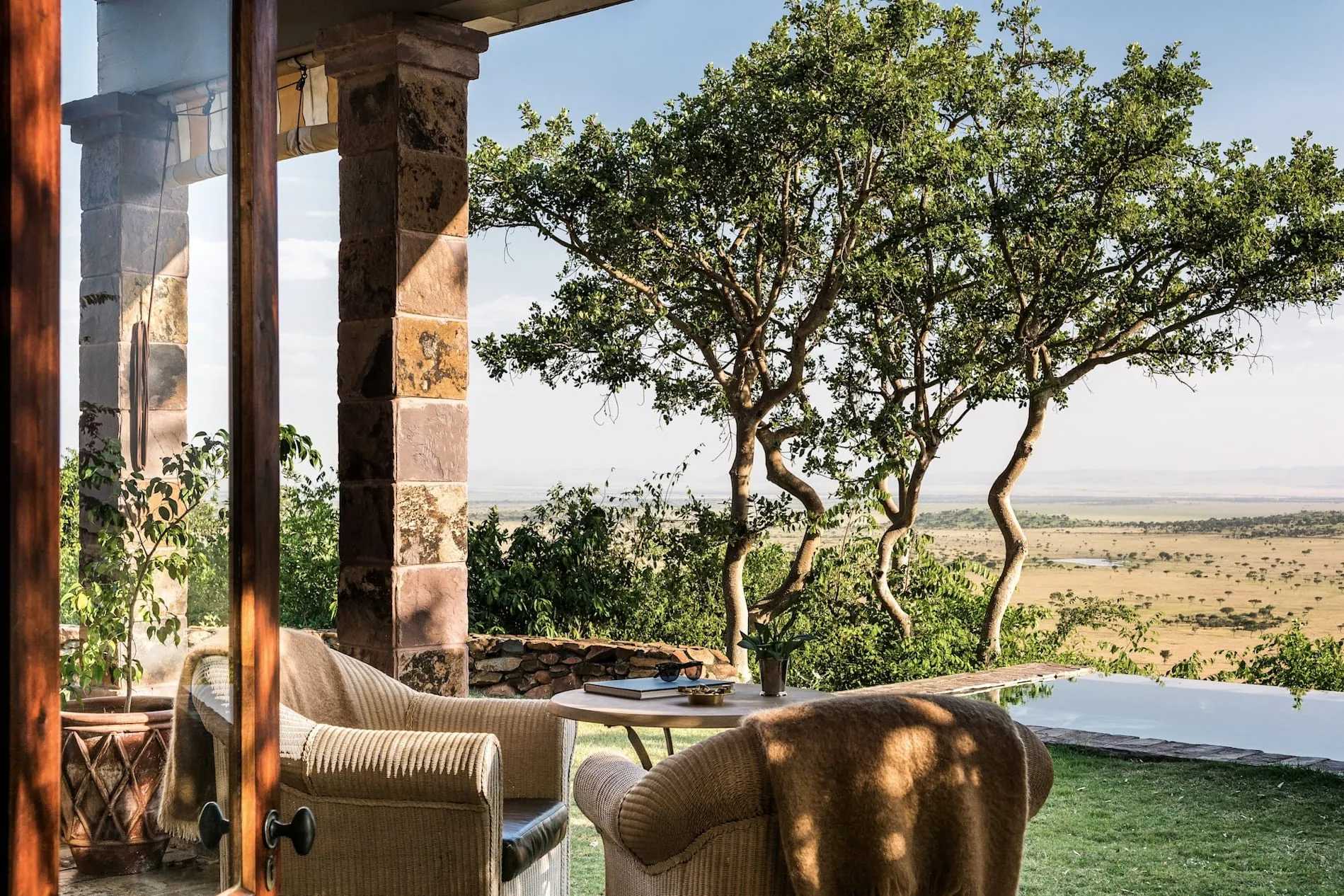
The main lodge at Sasakwa was built to evoke a stately Edwardian country house: a grand entrance, deep stone walls, high ceilings and a wraparound veranda that wraps around the building’s principal rooms, all overlooking manicured lawns and the plains beyond. The style is unmistakably a colonial-era reference, and Singita has been candid that the site itself was once a settler homestead on this same hill, which the design leans into rather than obscures.
Individual cottages carry the same architectural language at a smaller scale, stone and timber construction with the high ceilings and deep verandas of the main house, each set apart from its neighbours across the hillside to preserve a sense of privacy and unbroken outlook. The layout deliberately avoids the compact, clustered footprint common to tented camps: cottages are dispersed enough that guests can move between their rooms and the main house without much sense of a shared property, an arrangement closer to a private estate than a hotel.
Interior Design
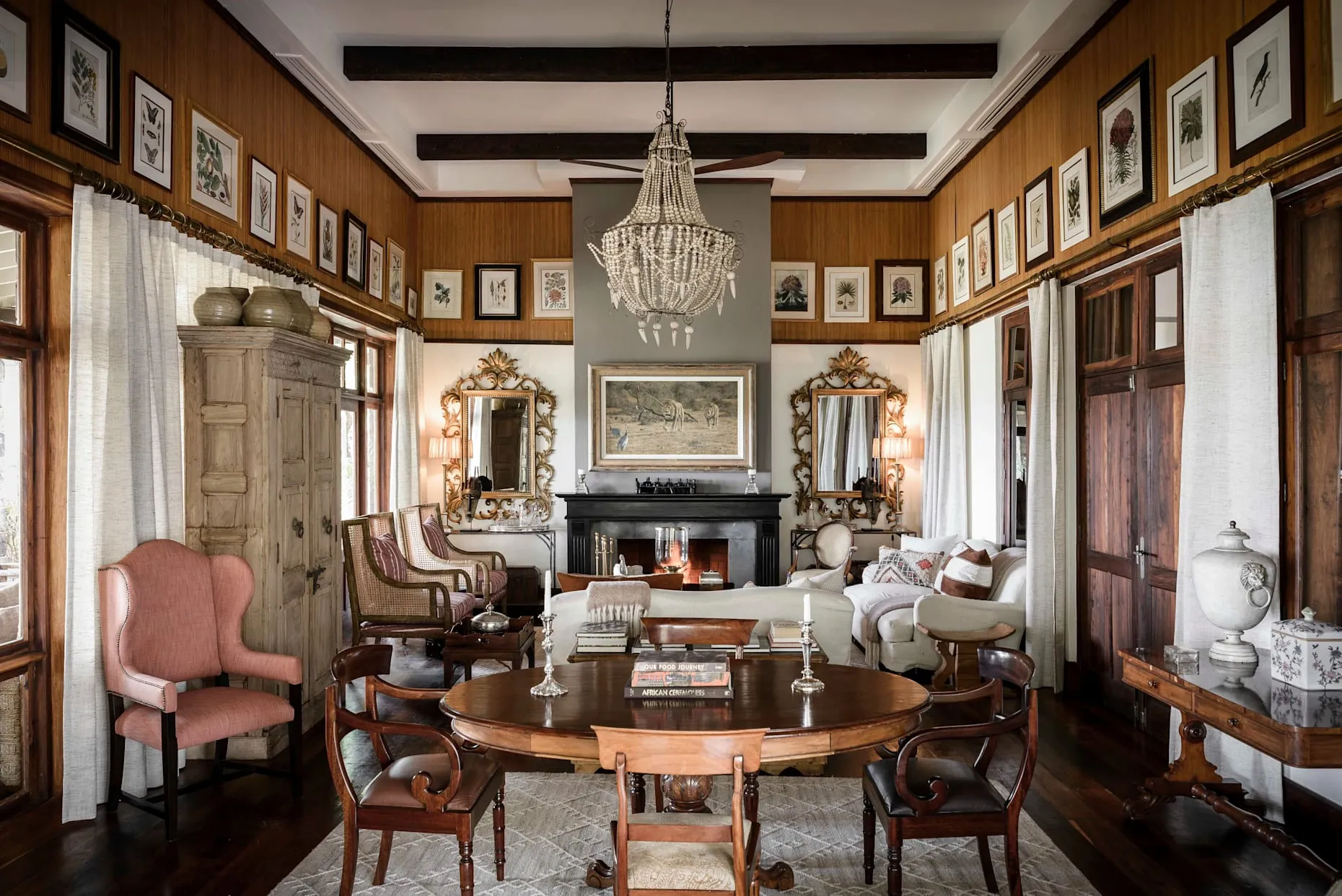
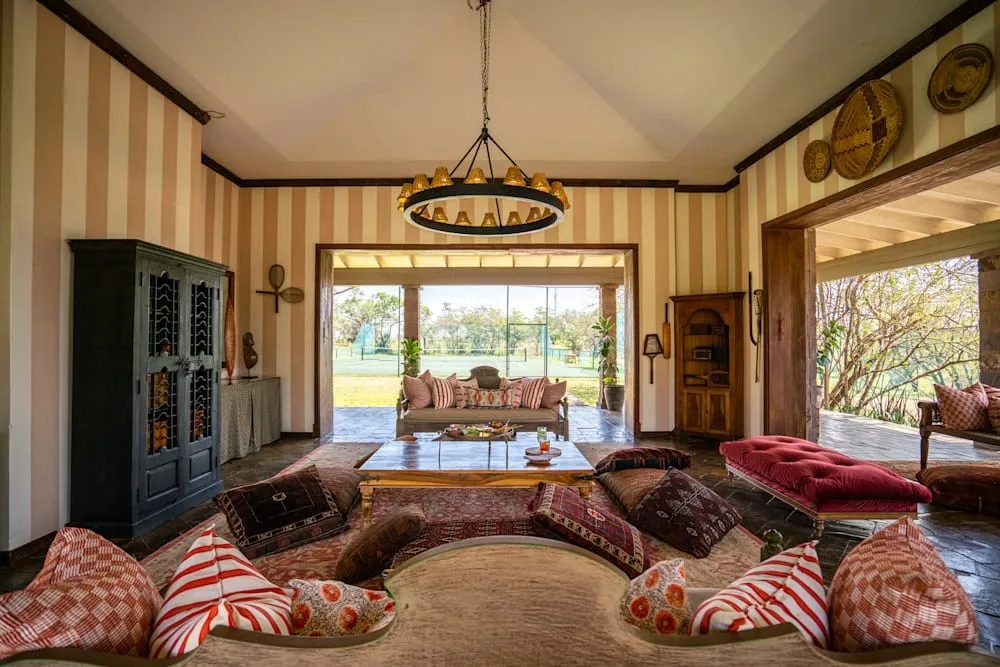
Inside, the manor-house conceit continues in earnest. The main house holds a dining room built around a marble fireplace and a grand chandelier, a bar and lounge, a garden room, a family television room, a wood-panelled billiards room, a quiet library and a wine cellar stocked with roughly 222 labels curated under Singita’s group sommelier program. Furnishings lean on dark woods, richly patterned upholstery in deep reds and golds, imported chandeliers, vintage collectables and polished parquet floors, a palette closer to an English country estate than to the neutral, safari-inspired interiors found at most East African lodges in this price bracket.
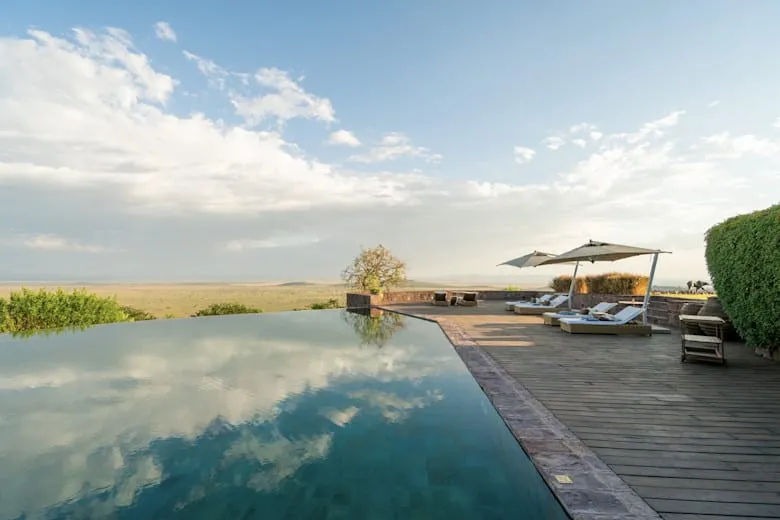
Cottage interiors soften that formality slightly with African-influenced touches, leather, wood and glass alongside crisp linens and hand-crafted furniture, but the four-poster beds, fireplaces and dressing areas keep the manor-house register intact. Every cottage opens through French doors onto a private veranda and its own heated infinity plunge pool, which is where the interior scheme gives way most directly to the reserve outside.
Atmosphere
Sasakwa’s atmosphere leans formal by safari standards, closer to a private country house party than a typical tented-camp conviviality. Afternoon tea is served on the main veranda, dinners in the manor’s dining room can carry a degree of ceremony uncommon elsewhere in the region, and the overall register is more hushed and curated than boisterous. That said, the setting undercuts any stiffness: the veranda looks directly over lawns, the shared pool and the open plains beyond, and it is not unusual for game to be visible from the main house itself.
Because cottages are spread out across the hillside and each has a private pool and veranda, the property also allows guests to opt out of the shared spaces almost entirely if they prefer, an arrangement that suits both sociable groups gathering in the library or billiards room and couples who would rather see the migration from their own veranda than from a shared vantage point.
Rooms and Suites
Sasakwa has eleven accommodations spread across the hillside below and around the main house: six one-bedroom cottages, two two-bedroom cottages, a three-bedroom cottage, a four-bedroom private villa and a two-level Hillside Suite, each with its own layout but a consistent set of features, en-suite bathrooms, dressing areas, a fireplace, a separate living room and French doors opening onto a private veranda. Every category, without exception, includes a private heated infinity plunge pool positioned to take in the reserve.
The larger multi-bedroom cottages and the four-bedroom villa are built for families or groups travelling together, with the villa including additional twin-bedded rooms suited to children or staff accompanying the party, while the Hillside Suite sits at the top of the rate card as a dual-level, more secluded option with its own private swimming pool and a correspondingly higher degree of privacy and space. Air conditioning, Wi-Fi where signal allows, and daily housekeeping are standard across every category.
Dining
Meals at Sasakwa are built around the main house’s dining room, with its marble fireplace and chandelier, and a broader run of spaces, the bar and lounge, garden room and veranda, that give guests options beyond a single set dining venue depending on the meal and the weather. The wine program is a genuine point of distinction: a cellar of roughly 222 labels, curated under Singita’s award-recognised group wine program and overseen by the brand’s head sommelier, with an emphasis on pairing bottles to individual guests’ meals and preferences rather than offering a fixed list.
Cuisine draws on a broadly international, produce-driven menu rather than a narrowly regional one, with meals also available in-cottage, on private verandas, or as bush breakfasts and sundowner setups arranged around the day’s game drives, a standard feature across Singita’s properties but one executed with particular attention to setting at Sasakwa given the hilltop’s views.
Spa and Wellness
Sasakwa’s Bush Spa runs a program of signature treatments, including a Serengeti Stress Relief Ceremony and a Njozi za Africa (“Dreams of Africa”) body ritual, using Dermalogica products, alongside a steam room and the option to have certain treatments performed in-cottage. A gym with modern equipment, two tennis courts and an archery range round out the property’s wellness and activity facilities beyond the spa itself, while a shared swimming pool sits at the main house for guests who want to swim somewhere more social than their own cottage plunge pool.
Experiences
Game drives are the core activity, run twice daily in the private Grumeti Reserves with the flexibility, off-road driving and night drives among them, that a private concession allows but a national park generally does not. Because the reserve borders rather than sits inside Serengeti National Park, guests can also cross into the park itself on excursions, combining the private-land advantages with occasional access to the park’s own game-viewing areas.
Beyond driving, Sasakwa offers guided walking safaris, a visit to the Singita Boutique & Gallery on-site, and access to the Grumeti Fund’s conservation work directly, guests can visit anti-poaching operations and community projects run by the Fund, giving the conservation narrative a tangible, on-the-ground component rather than leaving it purely as marketing material. During the migration season, driving routes are planned specifically around reported river-crossing activity along the Grumeti River, though, as with any wild migration, sightings are never guaranteed on a fixed schedule.
Who It Is For
Sasakwa suits travellers who want a serious, well-resourced safari experience without the higher vehicle density of Serengeti National Park’s most popular sectors, and who are drawn as much to the reserve’s conservation record as to game viewing itself. Couples and design-minded travellers curious about the Edwardian architectural conceit will find it a genuine point of interest rather than a gimmick, and families or small groups are well served by the multi-bedroom cottages and villa.
It is a less natural fit for travellers who want the specific atmosphere of a classic canvas tented camp, or who prioritise being inside the national park itself over the flexibility private land affords. The lodge’s formality, dinners in a manor-house dining room, an emphasis on wine and interiors over rustic bush charm, will also read differently depending on what a guest is looking for from a Serengeti stay.
Best Time to Visit
June and July generally offer the best chance of witnessing the wildebeest migration’s crossings of the Grumeti River, as the herds move through the western corridor and the Grumeti Reserves on their route north toward the Maasai Mara, though the timing shifts from year to year and is never fully predictable. December through March, the Serengeti’s calving season further south and east, brings dense predator activity and newborn wildebeest and gazelle, and is a strong alternative for travellers less fixed on the river crossings specifically. The Grumeti Reserves also support resident wildlife year-round, including lion, leopard and the reintroduced black rhino population, so game viewing does not depend entirely on migration timing.
How to Get There
Access to Sasakwa is by light aircraft rather than road. Most guests fly into Kilimanjaro International Airport (JRO) or Arusha Airport, connecting via a roughly one-hour scheduled or chartered flight, operated by carriers such as Grumeti Air or Coastal Aviation, directly to the private Sasakwa airstrip, followed by a short drive to the lodge itself, a drive that frequently produces wildlife sightings of its own given the surrounding reserve. There is no realistic overland option for a standard arrival given the distances involved across northern Tanzania.
Nearby Experiences
Within the Grumeti Reserves themselves, guests can visit Grumeti Fund conservation projects, including anti-poaching operations and the site associated with the Eastern black rhino reintroduction, as a guided excursion distinct from a standard game drive. The reserve’s stretch of the Grumeti River is the focal point for migration-season crossings between May and July, and remains a strong game-viewing area outside those months as well.
Because the reserve borders Serengeti National Park’s western corridor directly, guests can also arrange excursions into the park itself, extending the range of terrain and wildlife accessible beyond the private concession. Singita operates additional properties within the wider Grumeti Reserves, including a tented camp elsewhere on the concession, giving repeat visitors or larger multi-generational groups the option to split a longer stay across more than one property within the same reserve.
Things to Know Before Booking
Rates are quoted per person and are fully inclusive of meals, premium wines and spirits, twice-daily game drives, laundry, Wi-Fi where available, and road transfers between the airstrip and the lodge; park fees, carbon offset contributions and spa treatments are typically excluded and billed separately. Standard cottages include shared, twice-daily game drives, while the Hillside Suite and larger multi-bedroom cottages are generally allocated a private vehicle and guide.
Check-in is at 1:00 PM and check-out at 11:00 AM year-round. Given the light-aircraft access and luggage weight restrictions common to bush flights in this part of Tanzania, guests should confirm baggage allowances with their air operator well ahead of arrival. Rates vary substantially by season, with the May to September and December to early January peak periods priced well above the January to May and November low season.
Sustainability
Sasakwa’s environmental and conservation program is run through the nonprofit Grumeti Fund, which Singita established and funds as the custodian of the roughly 350,000-acre Grumeti Reserves. The Fund’s anti-poaching operation includes around 100 game scouts, many drawn from local communities and with some history of prior involvement in poaching themselves, working from a network of permanent patrol camps and observation posts supported by a digital radio network and law enforcement database.
The Fund’s most publicised achievement is the 2019 reintroduction of Eastern black rhino to the reserve, a breeding nucleus translocated from an out-of-range population in South Africa after decades of local extinction, with the first calf born in the reserve roughly seven months after release. Alongside anti-poaching and species reintroduction work, the Fund runs community development programs in the areas surrounding the reserve, positioning the conservation partnership as a condition of the lodge’s operation rather than a separate marketing initiative.
Practical Information
Singita Sasakwa Lodge is located on Sasakwa Hill within the Grumeti Reserves, in the Mara region of northern Tanzania, bordering the western corridor of Serengeti National Park. Check-in is at 1:00 PM and check-out at 11:00 AM. Access is exclusively by light aircraft via the private Sasakwa airstrip, roughly a one-hour flight from Kilimanjaro International Airport or Arusha Airport, followed by a short road transfer. Rates are quoted per person, all-inclusive of meals, premium beverages, twice-daily game drives and airstrip transfers, with park fees and carbon offset contributions charged separately.
Editorial Conclusion
Singita Sasakwa Lodge makes an unusual bet for a Serengeti-area property and largely wins it: an Edwardian manor house, built on the actual site of a colonial-era homestead, set down on a private hilltop inside one of East Africa’s more consequential conservation concessions. The architecture could easily have read as pastiche in less careful hands; instead it functions as a genuine point of differentiation in a category otherwise dominated by canvas and thatch. What ultimately anchors the property, though, is not the manor house but the land around it: a 350,000-acre private reserve positioned directly on the migration’s route, managed jointly with a nonprofit fund whose anti-poaching and rhino-reintroduction work is measurable rather than merely stated. For travellers weighing a Serengeti stay against the crowding of the national park’s most popular sectors, Sasakwa offers a genuinely different proposition, at a genuinely ultra-luxury price.
In pictures
On the map
Grumeti Reserves, Serengeti, Tanzania
Questions
Frequently asked
How many rooms does Singita Sasakwa Lodge have?
Sasakwa has eleven accommodations in total: six one-bedroom cottages, two two-bedroom cottages, a three-bedroom cottage, a four-bedroom private villa and a two-level Hillside Suite. Every category has its own heated infinity plunge pool, so the lodge never houses more than a few dozen guests at once even when fully booked.
Is Singita Sasakwa Lodge inside Serengeti National Park?
No. The lodge sits on Sasakwa Hill inside the Grumeti Reserves, a roughly 350,000-acre (about 141,000-hectare) private concession bordering the Serengeti's western corridor and managed under a long-term partnership between Singita and the nonprofit Grumeti Fund. The reserve is unfenced, so wildlife moves freely between it and the national park, but game drives happen on private land rather than inside the park itself.
Why does Singita Sasakwa Lodge look like an English manor house rather than a typical safari lodge?
The property was built on the site of a colonial-era settler homestead and designed deliberately in an Edwardian style, stone walls, a grand entrance, wraparound verandas, silver candelabra, antiques and polished parquet floors, rather than the thatch-and-canvas look common to East African camps. It is one of the more unusual architectural statements among Serengeti-area lodges for that reason.
When is the best time to see the wildebeest migration from Singita Sasakwa Lodge?
The Grumeti Reserves sit on the migration's route through the Serengeti's western corridor, and the wildebeest typically pass through and attempt crossings of the Grumeti River between May and July, with June generally considered the strongest window. Timing is never guaranteed since the herds move on their own schedule, but the reserve also offers strong year-round game viewing, including resident big cats and the reintroduced Eastern black rhino population, outside the migration months.
How do guests get to Singita Sasakwa Lodge?
Access is by light aircraft. Guests typically fly into Kilimanjaro International Airport (JRO) or Arusha Airport and connect via a roughly one-hour scheduled or charter flight to the private Sasakwa airstrip, followed by a short road transfer to the lodge. There is no practical overland route for standard guest arrivals given the distance and terrain involved.
Same destination
More hotel guides in Tanzania
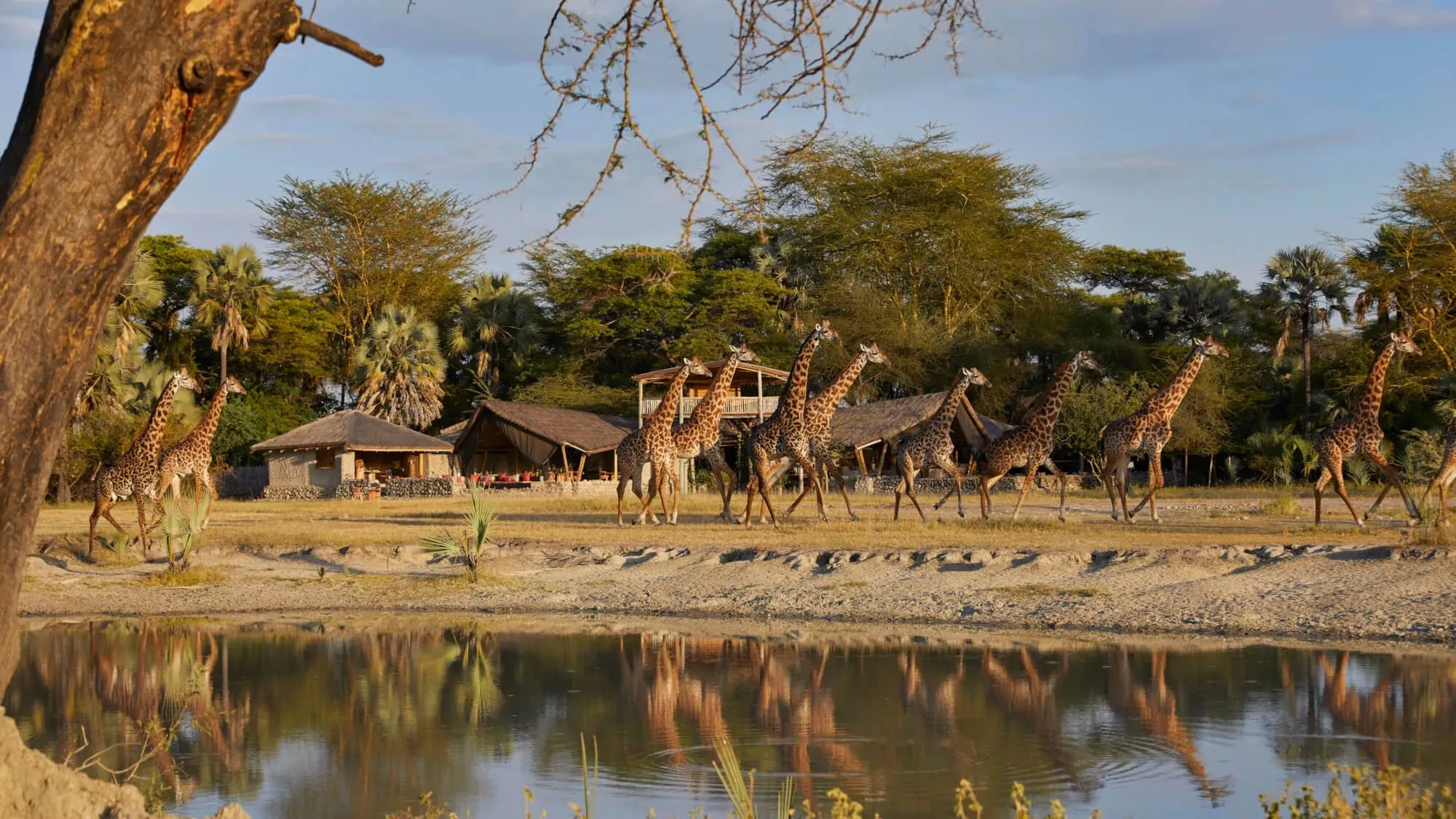
Chem Chem concession, between Lake Manyara and Tarangire, Tanzania
Chem Chem Lodge
Seven tented suites and a family unit set in a palm-fringed private concession where a conservation project, not a marketing brief, first drew the wildlife back between Lake Manyara and Tarangire.
From $1,420 per person, per night, all-inclusive (excludes mandatory conservation and community fee)
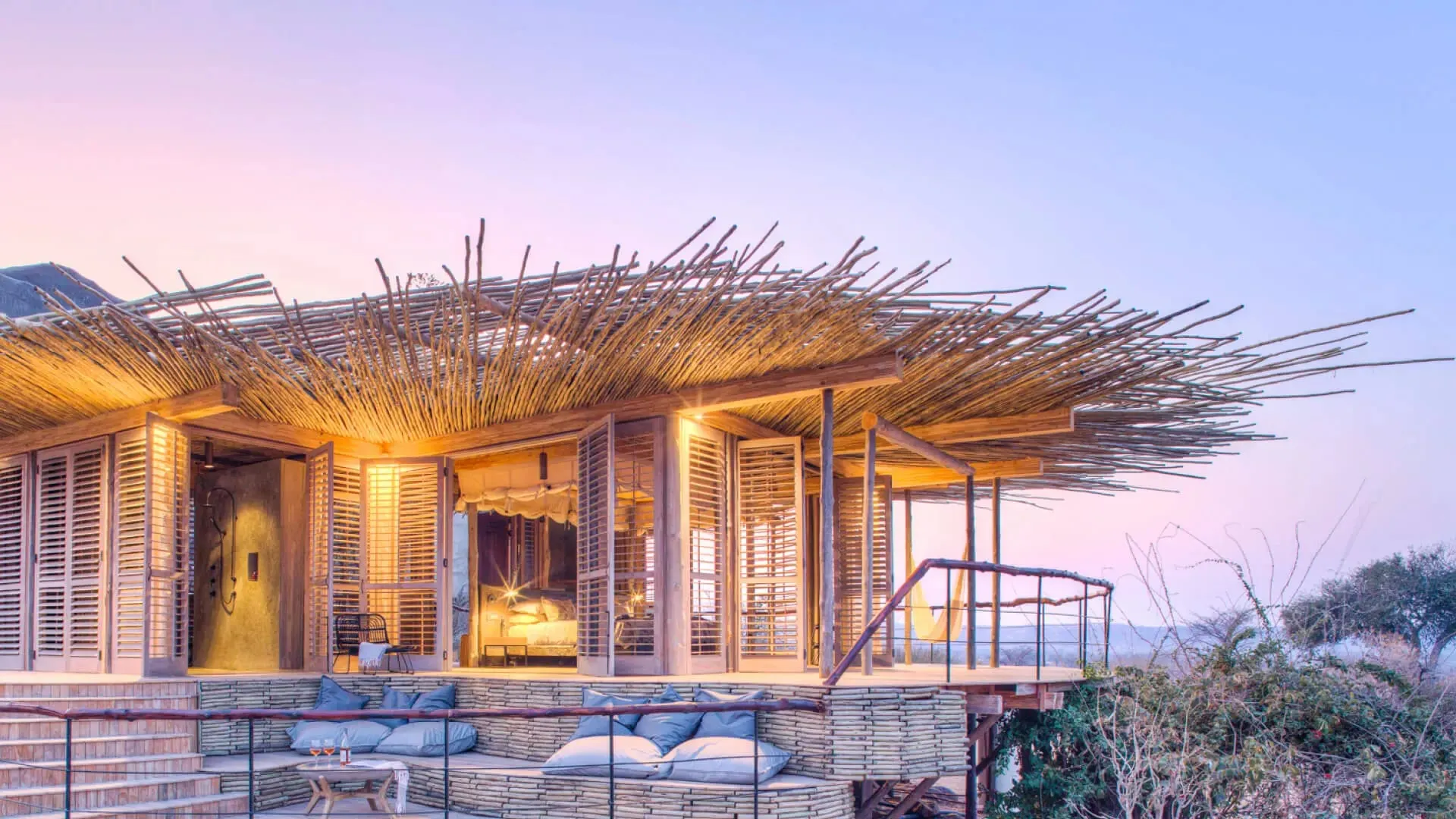
Ruaha National Park, Tanzania
Jabali Ridge
Eight suites threaded through a kopje of house-sized granite boulders in Ruaha, Tanzania's largest and least-visited major national park.
From $880 per person, per night, all-inclusive (low season)
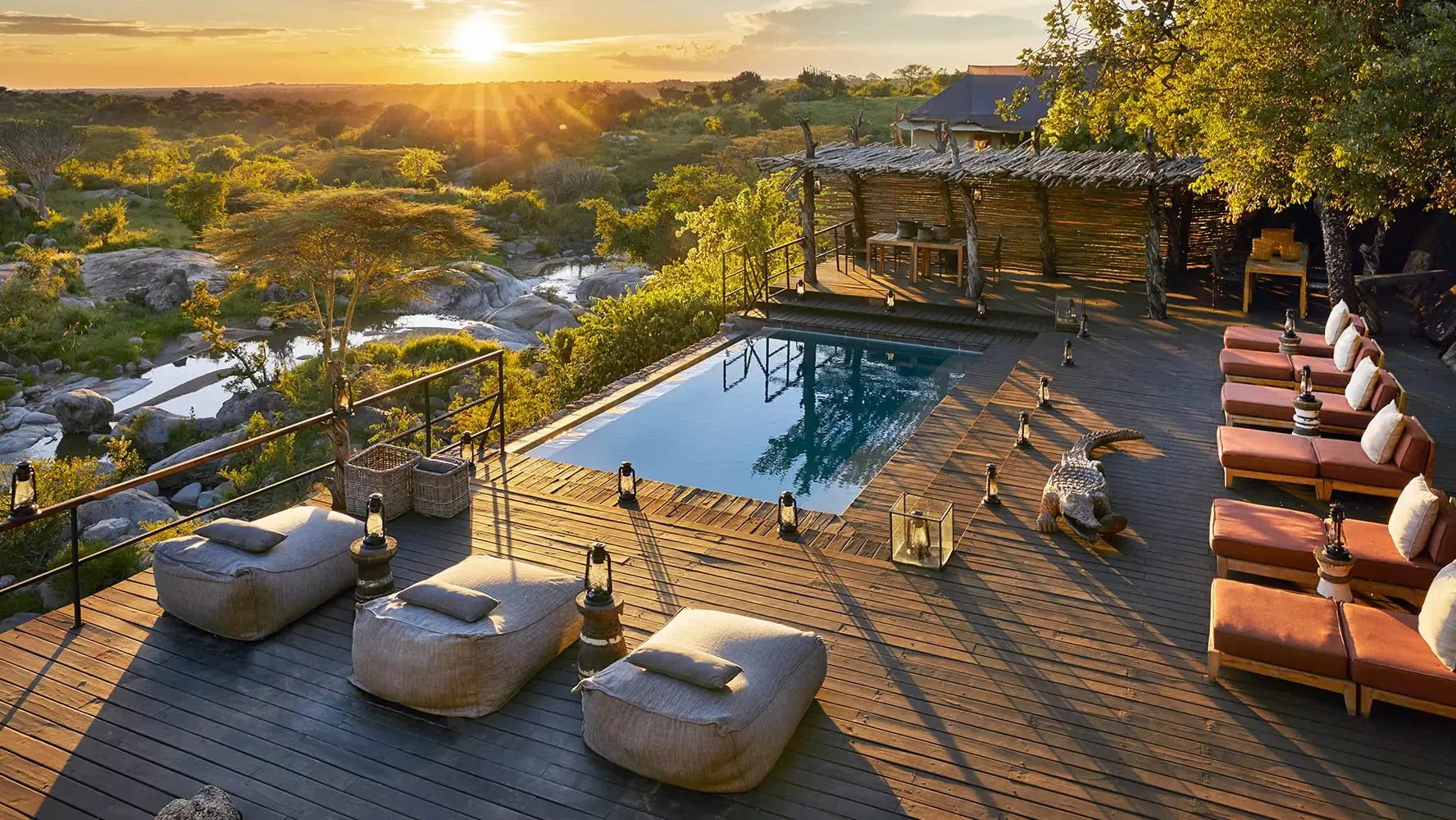
Mwiba Wildlife Reserve, Tanzania
Mwiba Lodge
Ten stone-and-canvas suites built into a granite outcrop above a river gorge in a private reserve that buys the Serengeti's southern migration corridor breathing room.
From $2,000 per person, per night, all-inclusive