Sigiriya, Sri Lanka
Jetwing Vil Uyana
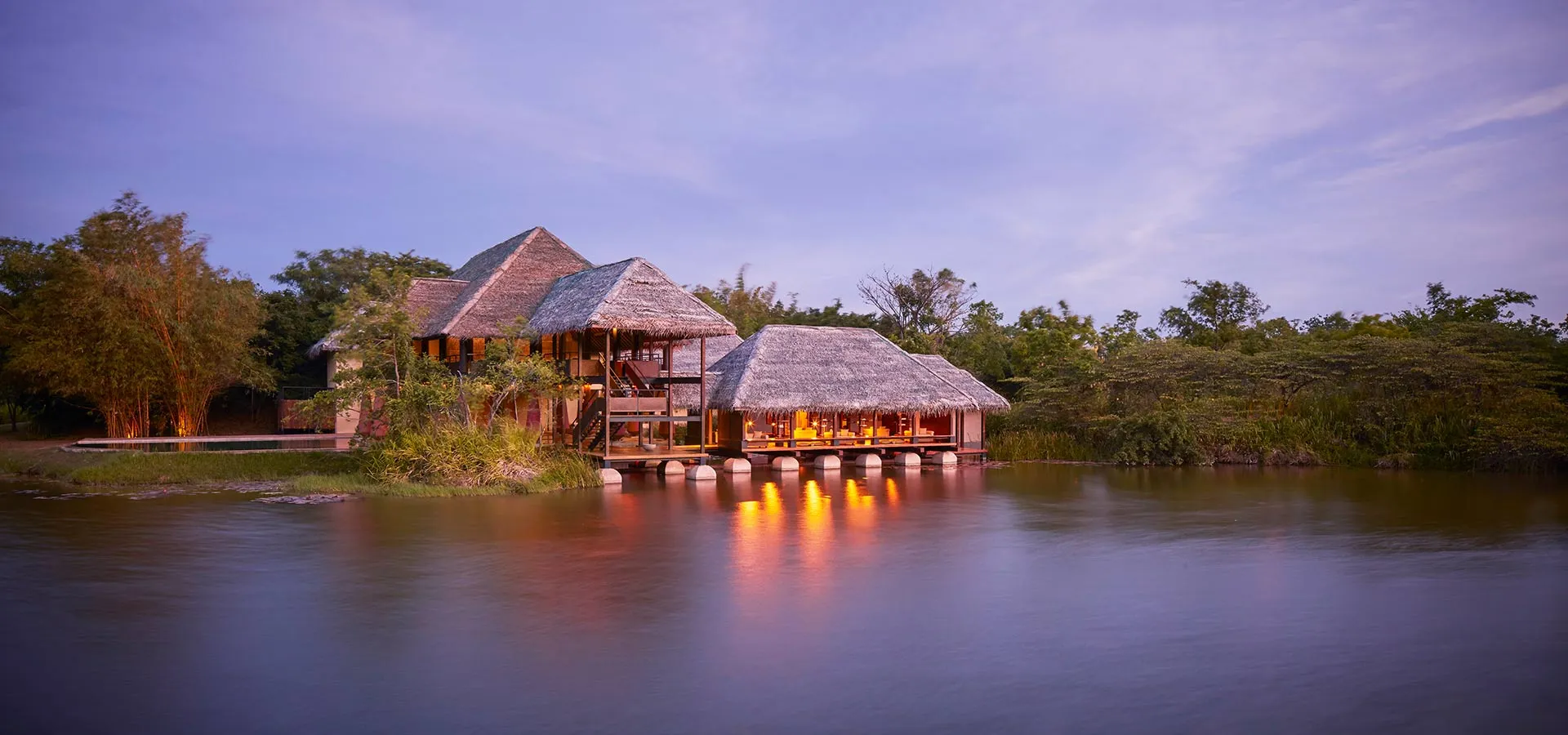
A paddy field turned wetland, and thirty-six dwellings raised on stilts above the water it restored.
- Rates from
- From $320 per night
- Nearest airport
- Bandaranaike International Airport (CMB), Colombo
- Transfer
- About 4hr by road; a 30min domestic flight to Sigiriya Airport is also available
- Best months
- May to September (driest weather; Minneriya's elephant gathering peaks August-September)
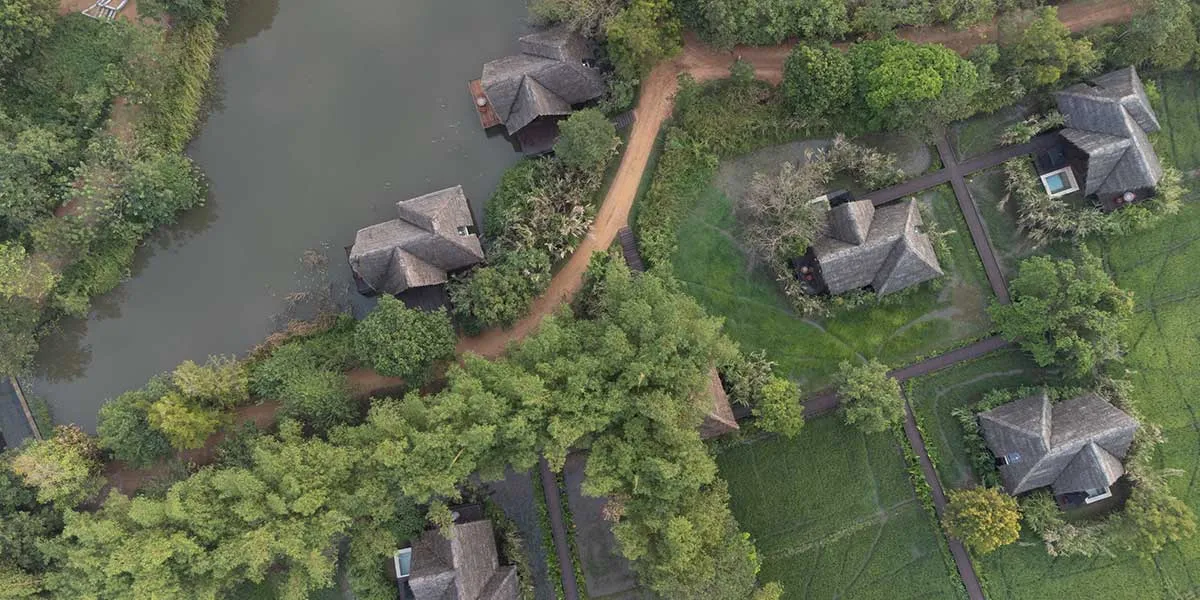
There is a particular quiet to arriving at Jetwing Vil Uyana by boardwalk rather than by drive. The car stops short of the rooms; what follows is a walk across timber decking, low over reed beds and still water, herons lifting off ahead of the footsteps, the silhouette of Sigiriya rock sitting flat and improbable on the horizon. The dwellings themselves, thatched, raised on stilts, clustered in loose groups around the water, only come into view a little at a time.
That sequence is not incidental. Vil Uyana was built on what had been an abandoned paddy field on the edge of Sri Lanka’s Cultural Triangle, and rather than clearing the site for construction, its developers reshaped it: digging lakes, replanting marsh and forest, and only then setting rooms into the habitat that resulted. The hotel is, in effect, a wetland with accommodation attached, not accommodation with a wetland view.
It is an unusual proposition for a five-star property, and one that reads more like a restoration project with beds in it than a resort with a nature theme bolted on. Two decades after opening, the density of birdlife across the grounds, and the presence of a resident population of the endangered grey slender loris, are treated by Jetwing less as amenities than as the actual measure of whether the project worked.
For travellers building an itinerary around Sri Lanka’s Cultural Triangle, that combination, serious habitat restoration a short drive from Sigiriya rock, the Dambulla cave temples, and the ruined city of Polonnaruwa, gives Vil Uyana a rare double identity: a wildlife-forward retreat and a well-placed base for ancient-city touring, without asking guests to choose between the two.
The pace the property sets is unhurried almost by design. Distances between dwellings, restaurant, and spa are covered on foot, over timber decking rather than tarmac, which slows arrivals and departures to something closer to a walk than a transfer. Guests tend to notice the birdlife before they notice the room decor: egrets working the shallows at dawn, kingfishers cutting low over the lake, the occasional flash of a purple-faced langur in the tree line. It is a hotel that asks to be experienced at the speed of its own ecosystem.
About Jetwing Vil Uyana
Vil Uyana opened in 2006, developed by Jetwing Hotels, the Colombo-based hospitality group behind a number of Sri Lanka’s better-known design-led properties. The site had previously been chena land, degraded through slash-and-burn cultivation, before being reworked over roughly four years into a 28-acre reserve of lakes, marsh, forest, and paddy. The environmental architect Sunela Jayawardena led the design, drawing on the water-management logic of Sri Lanka’s ancient hydraulic civilisation, the same network of tanks and channels that once made the dry zone around Sigiriya and Polonnaruwa agriculturally viable, and applying it at hotel scale.
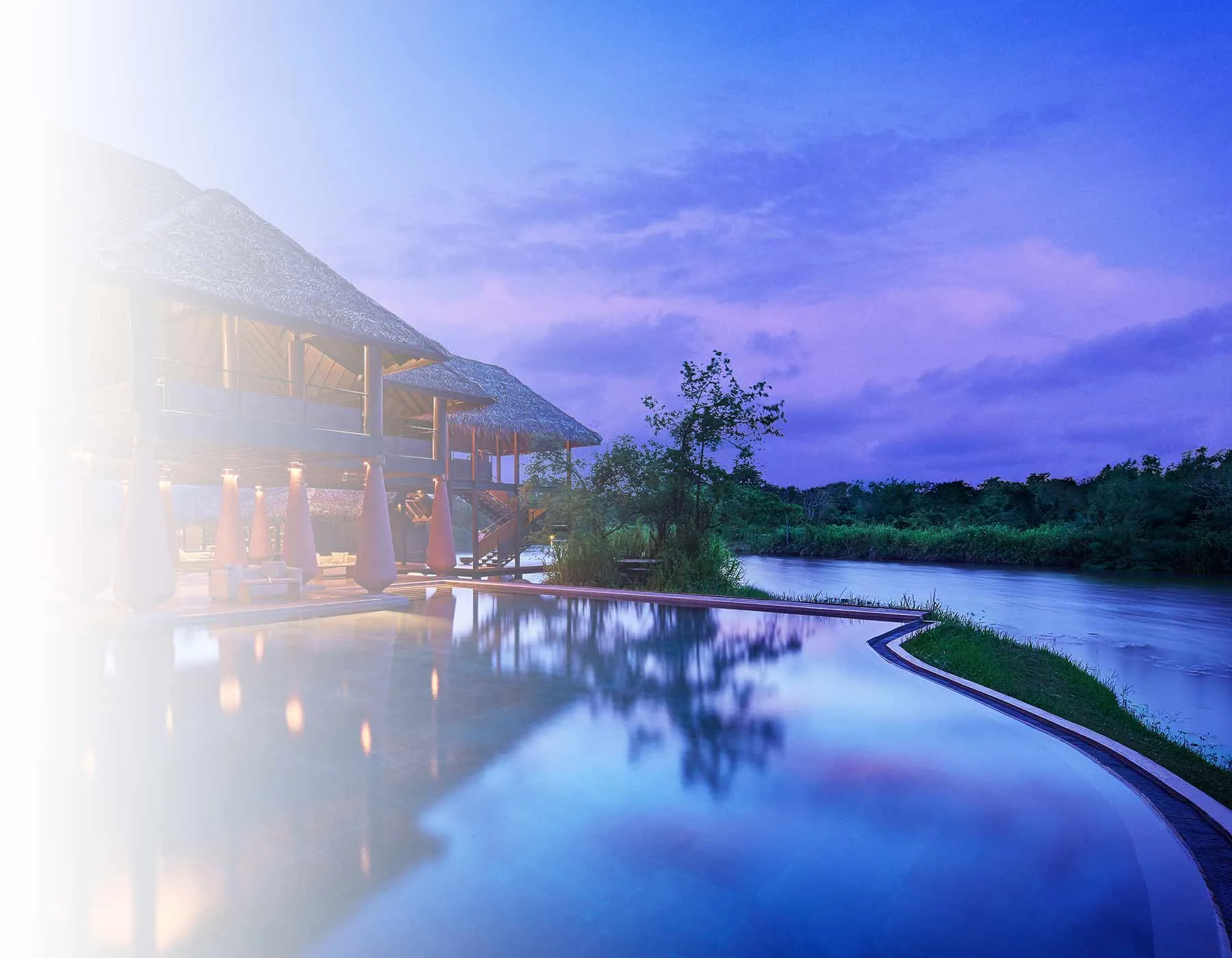
The concept was reportedly influenced in part by London’s Barnes Wetland Centre, itself a former industrial site turned into a functioning urban wetland reserve. At Vil Uyana the same idea underpins the whole property: a set of interconnected, largely rain-fed lakes that recharge the local water table rather than draw down on it, with wastewater from hotel operations treated on-site and returned for irrigation. The result, thirty-six dwellings distributed across five distinct habitats, water, marsh, paddy, forest, and garden, was designed less as a collection of room categories than as a set of vantage points onto a working ecosystem.
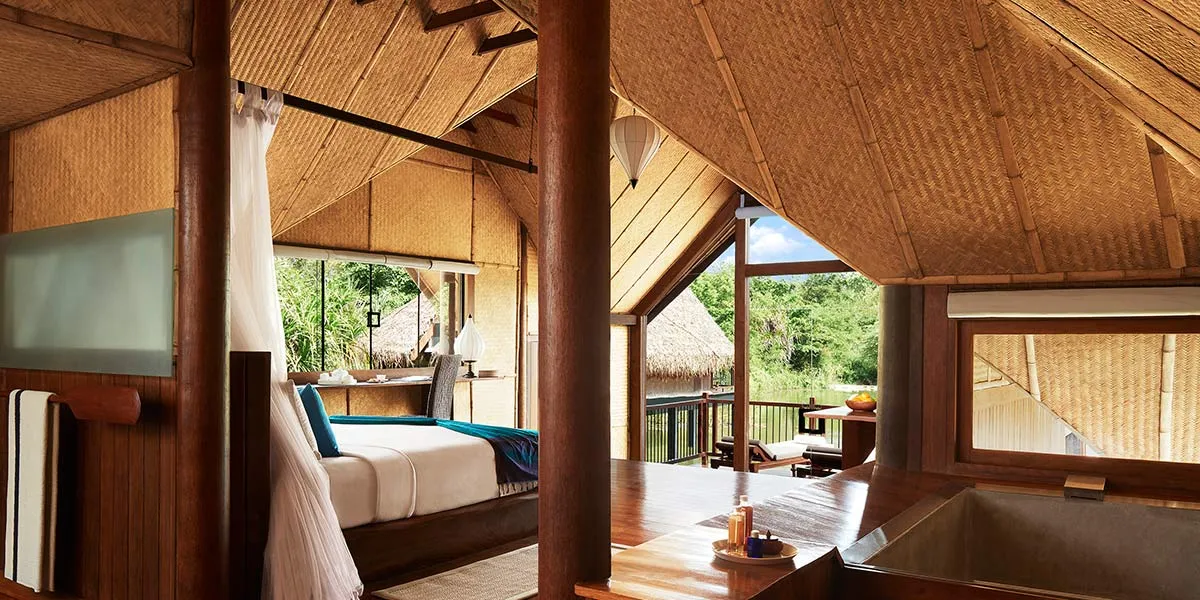
Architecturally, the dwellings borrow their form from the watch huts that farmers in the Sigiriya jungles have traditionally built on stilts to guard crops overnight, a vernacular reference rendered in a more finished register: thatched or tiled roofs, timber and stone construction, walls detailed in woven reed and rattan. Interiors lean toward a warm, tactile minimalism, natural fibres, stone floors, muted tones, with large openings that keep the water or forest immediately present rather than treating it as a framed backdrop. Boardwalks rather than roads connect the clusters, and the overall effect is deliberately low-key against the landscape: a hotel that reads as an intervention in a habitat, not the other way around.
That restraint carries through to the public spaces. There is no attempt at a grand arrival sequence in the conventional five-star sense, no soaring lobby or long driveway; guests are met, oriented, and walked into the wetland almost immediately. The architecture’s real ambition shows up instead in smaller decisions: the way a bathroom is angled to frame reed beds rather than a wall, the choice to leave boardwalk timber to weather and grey naturally, the placement of dwellings far enough apart that another guest’s presence rarely intrudes on the sense of having the habitat to oneself. Two decades on from opening, the planting has matured enough that the property now reads less as a designed landscape than as a wetland that has simply reclaimed a set of buildings within it.
Location
Vil Uyana sits just outside Sigiriya, in Sri Lanka’s Cultural Triangle, the cluster of ancient capitals and monuments in the island’s dry-zone interior that also takes in Dambulla, Polonnaruwa, and Anuradhapura. Sigiriya rock fortress itself, the fifth-century royal citadel and UNESCO World Heritage Site, is a short drive away, close enough to combine an early climb with a return to the hotel before the day’s heat sets in.
The property is reached from Bandaranaike International Airport (CMB) near Colombo, a journey of around four hours by road across the width of the island. Travellers looking to cut that down have two alternatives: a roughly 30-minute domestic flight with Cinnamon Air into Sigiriya Airport, about a 10-minute drive from the hotel, or rail into Habarana station, half an hour away by car, which connects to Colombo’s main line.
Climate in the Cultural Triangle runs warm and fairly consistent year-round, generally between 24 and 28°C, with the wetter months falling in November and December. The driest, sunniest stretch runs roughly from May through September, which also happens to coincide with “the Gathering” at nearby Minneriya National Park, when several hundred elephants converge on the park’s receding water source, typically peaking in August and September. January to March, cooler and equally dry, is often cited as the more comfortable window for the climb up Sigiriya rock itself.
The Cultural Triangle sits inland, in Sri Lanka’s dry zone, distinct in both landscape and rhythm from the wet, palm-lined south coast that most first-time visitors picture. Vegetation here runs to scrub jungle, rice paddy, and the flat-topped granite outcrops the region is known for, Sigiriya chief among them. It is a landscape built around water management, ancient reservoirs, or “tanks,” and irrigation channels that have shaped agriculture in the area for well over a thousand years, and Vil Uyana’s own wetland design deliberately echoes that older engineering rather than importing an unrelated aesthetic.
Rooms & Suites
All thirty-six dwellings share a material language, woven reed, rattan, timber, stone, but are differentiated by which of the property’s five habitats they sit within, and each rewards a slightly different kind of guest.
Water Dwellings are raised on stilts directly over the property’s man-made lake, reached via the boardwalk network, with reed-panelled walls, a private balcony over the water, and a bathtub positioned to take in the view. These are the rooms that best deliver the hotel’s central idea, waking up suspended above still water, reed beds, and whatever birdlife happens to be working the shallows that morning.
Paddy Dwellings face the working rice fields on the property’s edge, a more agrarian outlook than the lake rooms, with their own plunge pool and roughly 115 square metres of space. They suit guests who want the wetland atmosphere without being quite so enclosed by it, and who like the idea of paddy cultivation continuing, visibly, just beyond the terrace.
Forest Dwellings are the largest category, two-storey structures built from earth and stone and set into restored tree cover, with a bedroom and dining area upstairs and a private pool on the lower level, around 195 square metres in total. Their duplex layout and denser screening make them the most private of the four categories, well suited to travellers prioritising seclusion over an open water outlook.
Garden Dwellings are the smallest and most intimate, roughly 103 square metres, each with its own plunge pool and an open-air lounge area, set within the property’s cultivated garden habitat rather than its wilder marsh or forest zones. They make a reasonable entry point into the property for guests who want the design language and the plunge pool without committing to the more remote water or forest positions.
Across all categories, capacity is generally built around two adults per dwelling, in keeping with the property’s positioning toward couples and honeymooners, though the scale of the Forest Dwellings in particular gives families or groups travelling with connecting arrangements some flexibility to ask about.
What unites the four categories more than any single amenity is orientation: every dwelling is built to look outward onto its habitat rather than inward onto a corridor or car park, and privacy is achieved through distance and planting rather than through walls alone. Bathrooms throughout favour natural stone and open or semi-open layouts, continuing the sense that the room is a considered clearing within the wetland rather than a sealed box set beside it. Air conditioning is present but the design leans on cross-ventilation and shade wherever the climate allows, part of the same low-intervention logic that shapes the rest of the property.
Restaurants & Bars
Dining at Vil Uyana is spread across a small handful of venues, each keyed to a different part of the property and a different register of meal.
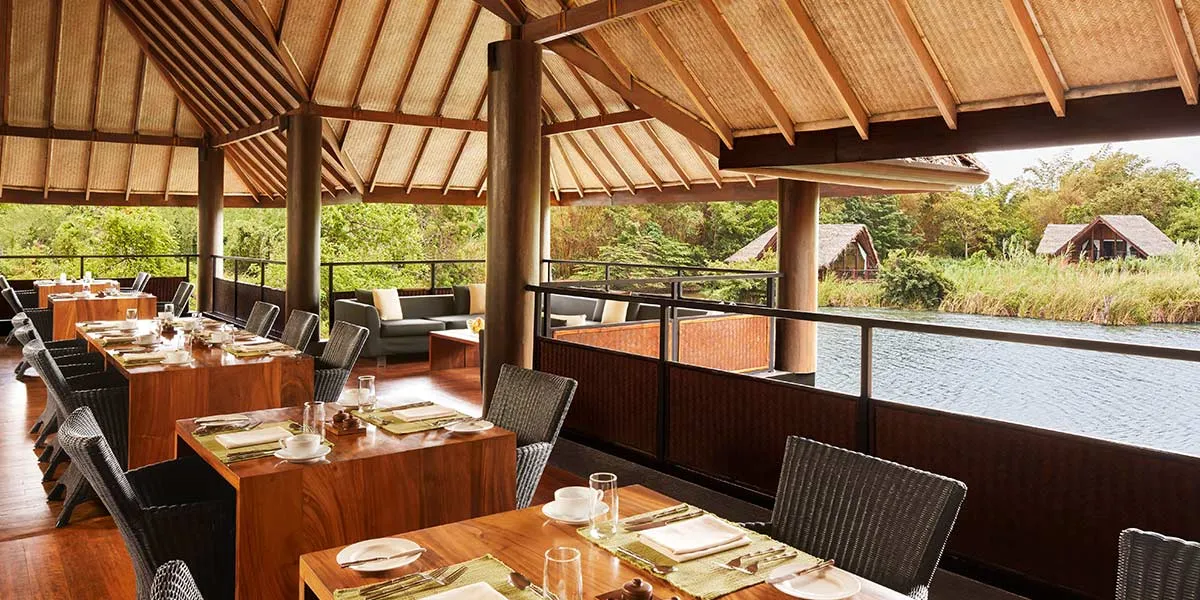
Apsara is the main restaurant, set beside the lake with a direct sightline to Sigiriya rock on clear days, serving a mix of Western, Asian, and Sri Lankan dishes across breakfast, lunch, and dinner service. It functions as the property’s principal dining room, the venue most likely to anchor a stay’s meals.
Tree House Dining offers a more occasional, higher-concept format: an elevated platform set into the property’s tree cover for a Sri Lankan and Western menu away from the main restaurant, the kind of one-off dinner worth booking ahead for on a stay of two nights or more.
Graffiti Bar handles the wine and spirits list, while Sulang serves as the more casual café option, cocktails, juices, and smoothies through the day. Between the two, the property covers both a proper evening bar and a lighter poolside or daytime stop without needing guests to leave the grounds.
Wellness
The on-site spa draws on Ayurveda, aromatherapy, and more conventional massage therapies, Swedish, deep-tissue, hot stone, Thai, alongside body scrubs, wraps, and facials, delivered from treatment rooms that include options for couples. Like the rest of the property, the spa sits within the wetland grounds rather than in a separate wellness block, so a treatment slot tends to come bookended by the same water and birdlife views as the rooms.
Experiences
Vil Uyana’s signature activity is arguably not a spa treatment or an excursion but a walk: the Loris Night Trail, a guided evening outing using red-light headlamps, harmless to the animal’s night vision, to track the endangered grey slender loris through its habitat on the property. It is offered as a Vil Uyana exclusive and is generally the first thing repeat visitors and reviewers mention.
Daytime guided nature walks with the resident naturalist run for around 90 minutes and cover the property’s own wildlife trail; birders can also head to the nearby Rangirigama Birding Trail, regarded as one of the better open birding circuits in the country, on top of the more than 140 species already recorded within the hotel’s own grounds.
Beyond the property line, the hotel’s position inside the Cultural Triangle makes it a workable base for the region’s major sites: the climb up Sigiriya rock fortress itself, the cave temples at Dambulla, the ruined royal city of Polonnaruwa, and a dry-season safari at Minneriya National Park for its elephant gathering. Most of these can be arranged as half- or full-day excursions directly through the hotel.
For guests less inclined toward early starts and dawn climbs, the wetland itself is enough of a destination to fill a day: a slow circuit of the boardwalks, time at the spa, and an evening at Apsara watching the light change over the lake toward Sigiriya. The two paces, active Cultural Triangle touring by day, quiet wetland immersion in between, are the two registers most stays here end up alternating between.
Sustainability
Vil Uyana’s environmental credentials are not an add-on to the concept, they are the concept. The property was built by converting 28 acres of degraded, previously slash-and-burn (chena) agricultural land into a functioning wetland reserve, a process that took roughly four years before the hotel could open. The lakes at its centre are filled almost entirely by harvested rainwater rather than by drawing from local irrigation canals, a deliberate choice to avoid competing with neighbouring farmers for water. In turn, the wetland acts as a groundwater recharge point for the surrounding area, helping stabilise the local water table.
Wastewater from hotel operations is treated on-site and reused for irrigation, reducing the property’s net freshwater draw. The habitat that has resulted supports a documented recovery in biodiversity, well over 140 recorded bird species along with a resident population of the endangered grey slender loris, changes tracked closely enough that the hotel has built its own conservation area and information centre around the loris population specifically. Jetwing has also linked the property to community programming in the surrounding area, including support for local education initiatives tied to conservation awareness. The wetland’s design and results have drawn recognition from environmentally focused travel press, including a listing among the world’s best eco-hotels.
Who Is It For
Vil Uyana is built for travellers who want their hotel to be part of the reason they came, not just where they sleep between excursions: birders and wildlife-minded guests will find a genuine, actively managed habitat rather than a marketing gesture toward “nature.” Couples and honeymooners are well served by the intimacy of the individual dwellings, the plunge pools, and the general hush of the boardwalk approach. Architecture and design-minded travellers will find the stilted, reed-and-timber construction and the underlying restoration concept unusually considered for the category. And because the hotel sits inside the Cultural Triangle itself, it also works well for culture-focused itineraries built around Sigiriya, Dambulla, and Polonnaruwa, without requiring a separate change of base.
It is less suited to travellers wanting a conventional beach-resort pace, high-energy nightlife, or large-group facilities; the room count is modest, the mood is quiet, and the property’s identity is tied closely to its wetland setting rather than to scale.
Practical Information
Rates at Jetwing Vil Uyana generally start from around $320 per night, varying by dwelling category, season, and any package inclusions; the higher-tier Forest Dwellings and peak dry-season dates sit above that figure. Check-in is from 2:00 PM and check-out by 12:00 PM. The property is reached via Bandaranaike International Airport (CMB) near Colombo, roughly four hours away by road, with a faster domestic flight option into Sigiriya Airport, about ten minutes from the hotel. The most reliably dry weather for touring and wildlife falls between May and September, with the Minneriya elephant gathering peaking around August and September; January to March offers a cooler, equally dry alternative better suited to the Sigiriya climb itself. Most guests build a stay of two to three nights around the property, enough time for the Loris Night Trail, a guided birding walk, and at least one Cultural Triangle excursion without feeling rushed.
Nearby
Sigiriya rock fortress, the fifth-century royal citadel and one of Sri Lanka’s most recognisable landmarks, sits a short drive from the hotel and is generally climbed in the cooler early morning hours. Dambulla cave temple, a complex of Buddhist cave shrines dating back over two millennia, lies within easy reach and pairs naturally with a Sigiriya visit as a single day out. Polonnaruwa, the island’s medieval capital and now an extensive archaeological site of temples, statues, and royal ruins, sits further afield but is still workable as a day excursion from the hotel. Minneriya National Park, roughly 20 kilometres from Sigiriya, is best known for its dry-season elephant gathering, when the park’s dwindling water source draws large herds into open view, and is typically visited on a half-day safari arranged through the hotel.
In pictures
On the map
Sigiriya, Sri Lanka
Questions
Frequently asked
What makes Jetwing Vil Uyana different from other Sigiriya hotels?
The 28-acre property was built by converting an abandoned paddy field into a man-made wetland, then raising its dwellings on stilts over and around the water it created. Rather than being sited within an existing landscape, the hotel's grounds are themselves a restored habitat, now home to more than 140 recorded bird species.
What dwelling types are available?
There are four core categories set across five habitats: Water Dwellings on stilts above the lake, Paddy Dwellings overlooking working rice fields, two-storey Forest Dwellings with private pools set in tree cover, and Garden Dwellings with a plunge pool and private lounge. All are furnished with woven reed and rattan detailing.
How far is the hotel from Colombo airport, and is there a faster way in?
Bandaranaike International Airport (CMB) is roughly four hours away by road. Travellers short on time can take a 30-minute domestic flight to Sigiriya Airport, about a 10-minute drive from the hotel, or the train to Habarana, half an hour away by car.
Is Jetwing Vil Uyana suitable for climbing Sigiriya rock?
Yes. The hotel sits a short drive from Sigiriya rock fortress, and its position within the Cultural Triangle also puts Dambulla's cave temples and the ancient city of Polonnaruwa within reach for a half- or full-day excursion.
What is the birding and wildlife program like?
Guests can join guided nature walks with the resident naturalist, a dedicated Loris Night Trail using red-light headlamps to track the endangered grey slender loris, and birding on the property's own wetland or the nearby Rangirigama trail. Minneriya National Park, known for its dry-season elephant gathering, is also within reach.
Does the hotel have a spa?
Yes. The on-site spa offers Ayurveda, aromatherapy, and massage treatments, including couples' treatment rooms, set within the same wetland grounds as the dwellings.
Same destination
More hotel guides in Sri Lanka
Thiranagama, Sri Lanka
Haritha Villas + Spa
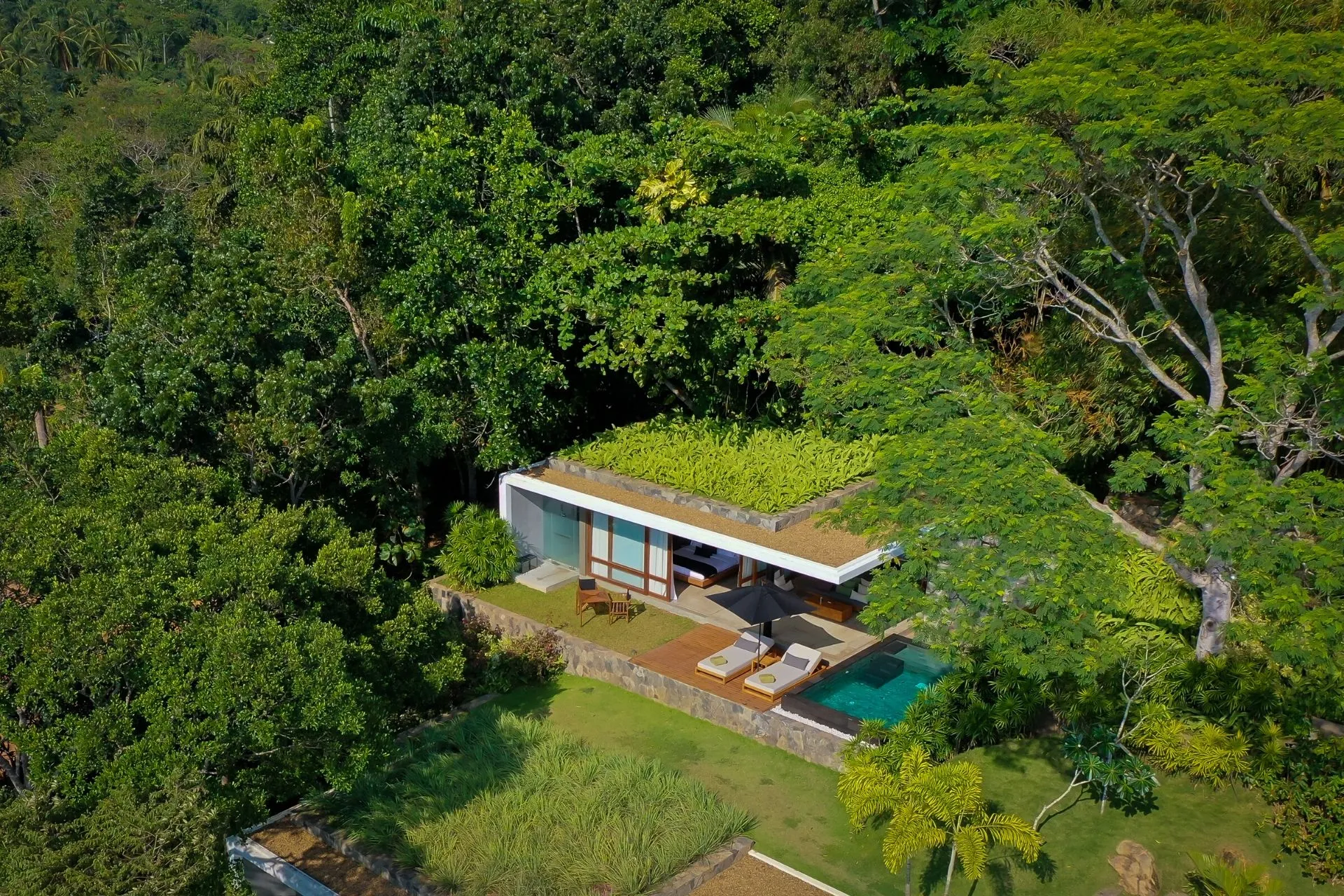
Nine keys on a forested hilltop above Thiranagama, built around private saltwater plunge pools rather than a stretch of sand.
From $460 per night
Tangalle, Sri Lanka
Kayaam House
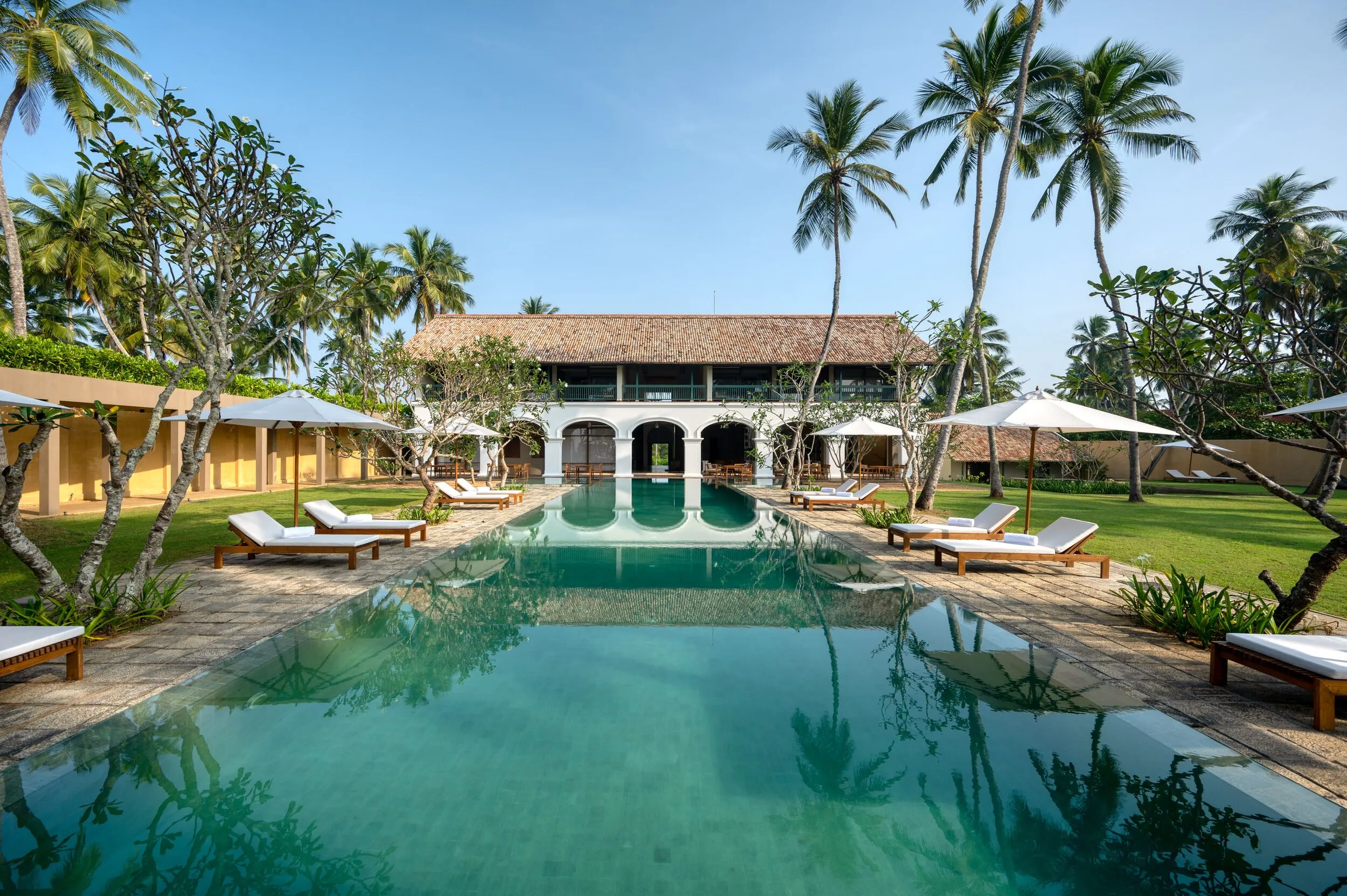
Nine keys, a resident Ayurvedic doctor and a private stretch of turtle-nesting coastline near Tangalle.
From $700 per night
Alawatugoda, Kandy, Sri Lanka
Aarunya Nature Resort
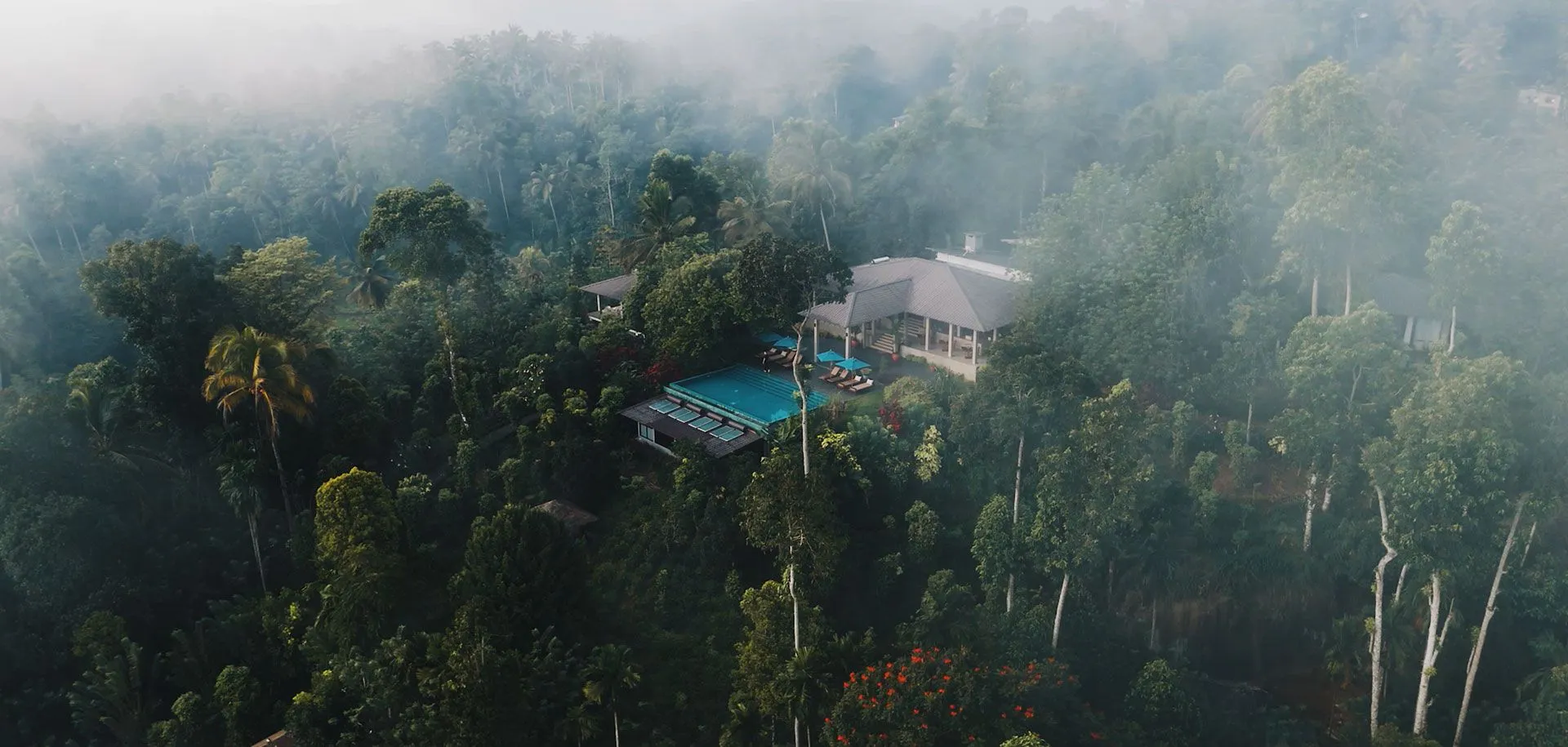
A regenerative hillside estate above Kandy, where private-pool villas sit inside a working tea and spice garden facing the Knuckles range.
From $520 per night