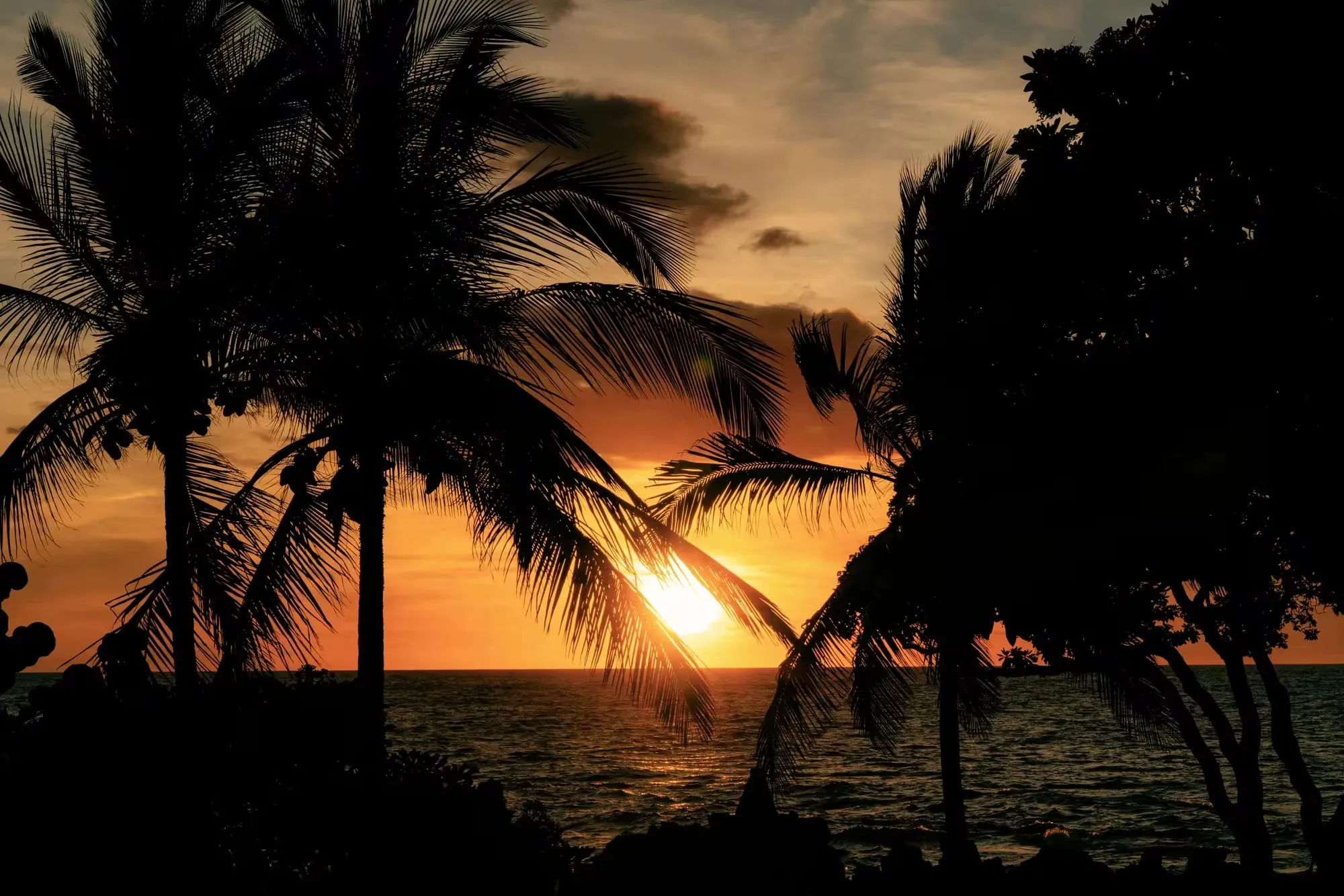
Kona-Kohala Coast, Big Island, United States
Kona Village, A Rosewood Resort
A 1960s Hawaiian hideaway erased by the 2011 tsunami and rebuilt over a decade, reopened as 150 freestanding hale on the same lava-lined bay, with no televisions by design.
- Rates from
- From $1,700 per night
- Nearest airport
- Ellison Onizuka Kona International Airport (KOA)
- Transfer
- About 15 to 20 minutes by road, with a complimentary house car provided by the resort
- Best months
- April to June and September to November, for lighter trade winds, fewer holiday-period crowds, and calmer seas for snorkeling and reef access
There is a particular kind of luxury hotel that sells its absences as loudly as its amenities, and Kona Village, A Rosewood Resort, is built almost entirely on that premise. No televisions in the rooms. No high-rise silhouette breaking the coastline. No single main building at all, in fact: just 150 freestanding hale scattered across 81 acres of lava rock and coconut palm on the Big Island’s Kona-Kohala Coast, each one its own small structure, connected to the next by sand paths lit at night by torches rather than streetlamps. It is a studied kind of plainness, and it is also, in this specific case, a genuine act of restoration rather than a design conceit borrowed for effect.
The story explains the choices. The original Kona Village Resort opened in 1965 at Kaupulehu, a former fishing village on Hawaii Island, founded by Johnno and Helen Jackson after they sailed into the bay on a schooner and found the site all but abandoned. It became, over the following decades, one of the more mythologized hideaways in American resort history: a place with no air conditioning, no phones, no clocks in many rooms, and a guest list that reportedly included sitting presidents and Silicon Valley founders who came precisely because nobody there cared who they were. On March 11, 2011, a tsunami generated by the Tohoku earthquake off Japan crossed the Pacific and tore through the property’s oceanfront hale. The resort never reopened under its own steam. It sat closed for more than a decade, its future uncertain, while ownership, the landowner Kamehameha Schools, and a cultural leadership committee made up of lineal descendants of Kaupulehu worked through what a rebuild should actually look like.
What reopened on July 1, 2023, under the Rosewood banner, is not a replica of the old resort so much as a considered continuation of it, built with the same footprint, many of the same values, and direct input from the families whose ancestors lived on this land before it was ever a hotel. The Shipwreck Bar, for instance, is built in part from timbers salvaged from the Jacksons’ original schooner. A handful of oceanfront hale sit on the literal foundations of the pre-tsunami resort, preserved as protected “legacy” units rather than rebuilt to a new template. And the property sits directly atop what is described as one of the densest fields of Hawaiian petroglyphs anywhere, alongside anchialine ponds, a freshwater spring, and the remains of a traditional hōlua sled run, none of which the rebuild was permitted to disturb.
For Third Night, that combination, a resort defined as much by what its owners chose not to change as by what they built, is the reason Kona Village belongs in the same conversation as the Big Island’s more architecturally showy resorts, even though it deliberately looks like almost none of them.
Why It Stands Out
Most ultra-luxury resorts differentiate through scale, spectacle, or a signature architect’s name. Kona Village differentiates through restraint, continuity, and a rebuild process that took roughly as long as the wait for two Olympic cycles. Its case rests on four things working together: a genuine 1965 pedigree rather than a manufactured one, a no-television policy that is a real operating decision rather than a marketing line, a footprint of 150 entirely freestanding hale with no interior corridors connecting them, and a level of Hawaiian cultural involvement, formalized through a lineal-descendant cultural leadership committee working alongside landowner Kamehameha Schools, that goes well beyond the lobby art and welcome chants many resorts use as shorthand for cultural authenticity.
Architecture
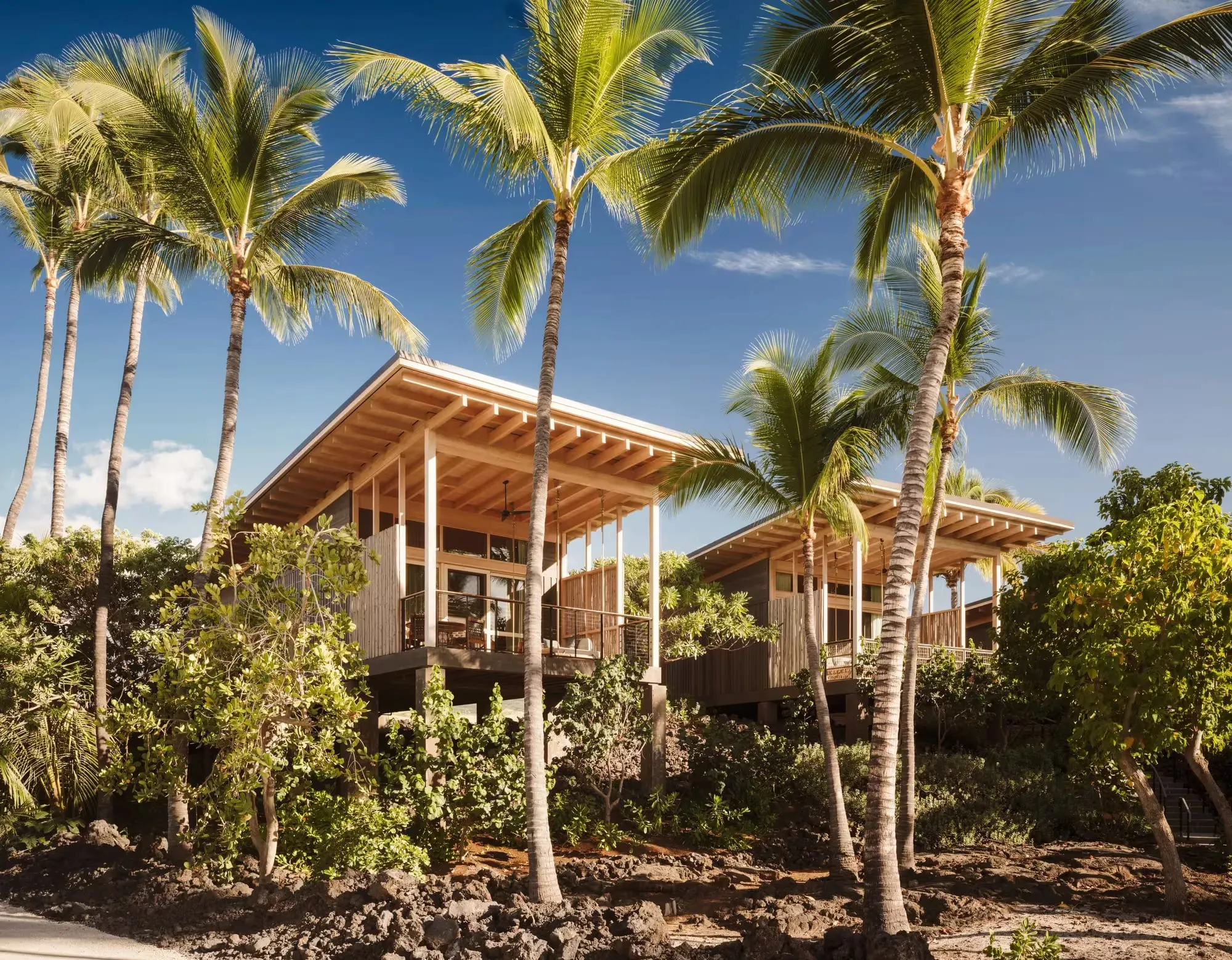
The rebuild was led by architect Greg Warner of Walker Warner Architects, working across an 81-acre, lava-lined beachfront site at Kaupulehu that the original resort occupied from 1965 until the 2011 tsunami. Rather than consolidating guest rooms into a conventional multi-story hotel block, the design keeps the resort’s historic decentralized layout: 150 separate hale, ranging from single-room bungalows to four-bedroom kauhale suites, are distributed across the property’s lava fields, coconut groves, and shoreline, linked by outdoor walkways rather than hallways.
That approach carries real technical difficulty on a site this archaeologically sensitive. The property contains what has been described as the highest-density field of Hawaiian petroglyphs anywhere, 22 anchialine pools that support rare endemic species, a pūnāwai (freshwater spring) surrounded by petroglyphs and rare hala trees, and the remains of a kahua hōlua, the sledding course used for a traditional Hawaiian sport. Construction had to route around all of it, guided by a cultural leadership committee of lineal descendants working alongside archaeologists. A number of oceanfront hale that survived on their original foundations were rebuilt in place and are treated as protected “legacy” units rather than redesigned to a standard template, a direct architectural link back to the pre-2011 resort.
Sustainability was built into the site plan as much as the buildings themselves: Rosewood and Kennedy Wilson, the resort’s owner-developer, describe the property as running on one of the largest privately owned solar microgrids in Hawaii, supplying essentially all of the resort’s power, alongside several LEED Gold-certified structures and on-site reverse osmosis and wastewater treatment.
Interior Design
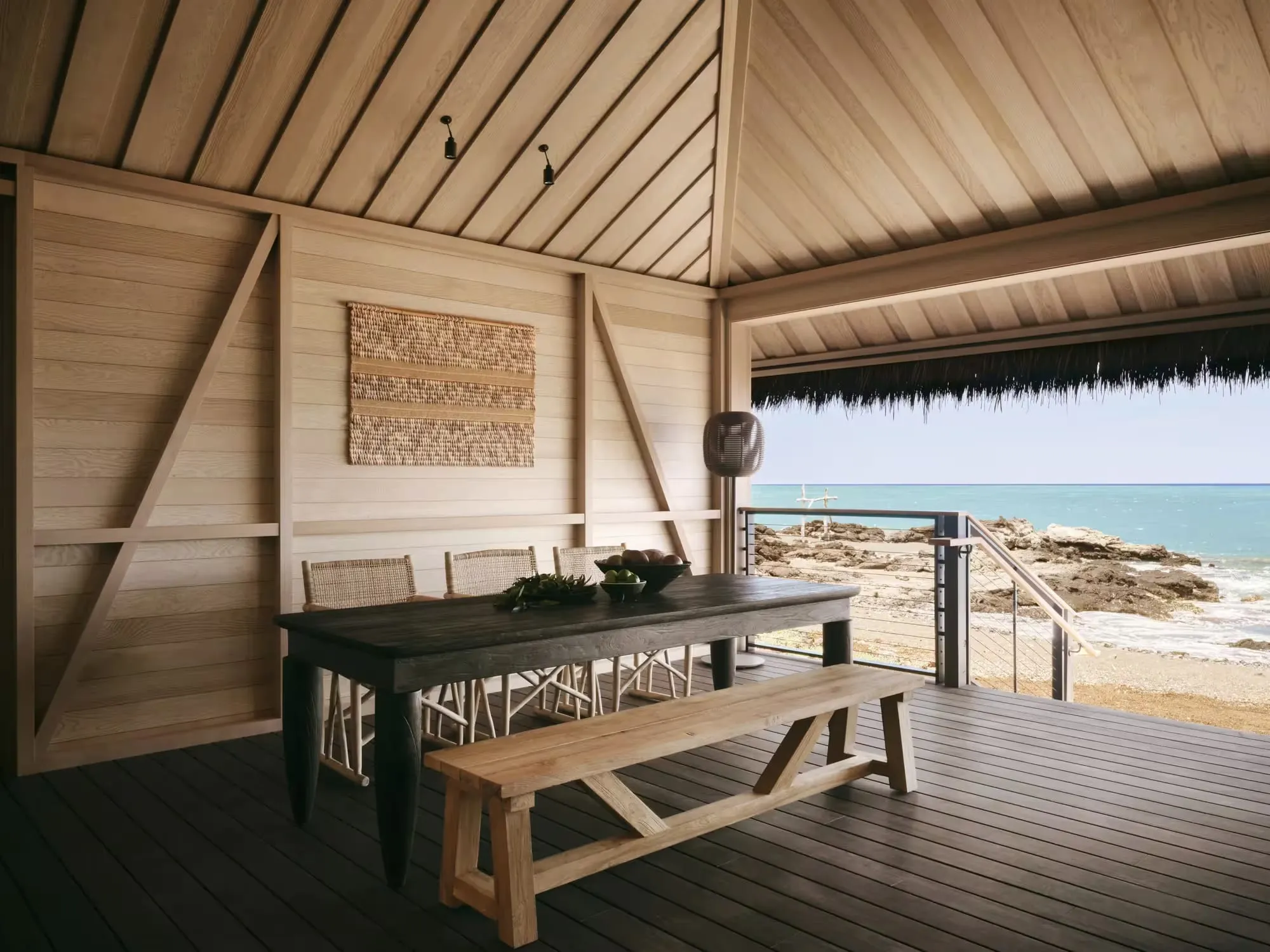
Interiors were developed by the San Francisco-based firm NICOLEHOLLIS, working within Warner’s low-rise hale format rather than against it. The material language leans on natural, local-feeling finishes, wood, woven fiber, stone, and Hawaiian artisan pieces sourced through the resort’s own program, set against a muted, sand-and-sea palette that keeps focus on the lanai and the ocean or lagoon view beyond it rather than on the room itself.
Every hale, regardless of category, is built around an oversized lanai and an outdoor shower, both treated as core parts of the room rather than add-ons. Standard hale are compact, generally accommodating up to three guests with a king or two queen beds, while the property’s 37 kauhale suites scale up considerably, from one and two-bedroom configurations to four-bedroom houses such as the oceanfront Maheawalu Kauhale and the ‘Ohana Pool Kauhale, which comes with its own private pool, hot tub, and fire pit. The deliberate absence of in-room televisions, a policy carried over from the original 1960s resort, is the most-discussed design decision on the property, and it shapes the interiors as much as any finish choice: without a screen to orient a room around, layouts default instead toward the lanai, the outdoor shower, and the view.
Atmosphere
Kona Village trades the vertical drama of a high-rise beach resort for horizontal sprawl and low light after dark. There is no towering lobby atrium; arrival happens at a modest reception area, and guests are typically moved around the 81-acre property by golf cart or on foot along sand and gravel paths lit by tiki torches rather than overhead lighting. The effect, repeatedly noted by visitors and press covering the reopening, is closer to a self-contained village than a conventional hotel campus, unsurprising given the name and the intent behind it.
That low-key mood is reinforced by the no-television policy and by a broader house style that discourages constant connectivity without being severe about it: Wi-Fi is available, but the resort’s own marketing and much of the press coverage since 2023 leans hard into the idea of digital detox, quiet, and a return to the original resort’s pre-smartphone pace. Days tend to run around the shoreline, the pools, and the cultural center rather than any single dramatic set piece, and evenings gravitate toward the restored Shipwreck Bar and Talk Story Bar, both named and run in direct reference to the original 1960s resort’s social rituals.
Rooms and Suites
The resort holds 150 guest accommodations split between two broad formats. Standard hale are single-room, freestanding bungalows with an oversized lanai and outdoor shower, generally sleeping up to three guests across a king or two queen beds, with view categories running from mountain and garden through lagoon, ocean, and full oceanfront or beachfront positions. A distinct Tree Top King Hale category sits above the resort’s center overlooking Kahuwai Bay.
Above the standard hale sit 37 kauhale, larger suites built for families and multigenerational groups, starting around one and two-bedroom configurations and scaling up to four-bedroom houses. Named categories include the Beach Front and Ocean Front Black Sand Two-Bedroom Kauhale, positioned along a secluded black sand cove; the Ocean Front Four-Bedroom Maheawalu Kauhale, set on a lava rock point with its own plunge pool and hot tub; the ‘Ohana Pool Four-Bedroom Kauhale, a presidential-style residence with a private pool, hot tub, and fire pit; and the Ocean Front Accessible Four-Bedroom Kumukea Kauhale, at the resort’s northernmost point. A number of oceanfront hale that occupy the literal foundations of the original pre-2011 resort are preserved as protected legacy units rather than rebuilt to the newer template, a detail worth asking about directly for guests who want that specific connection to the property’s history.
Consistent across every category is the absence of an in-room television and, in many rooms, of a bedside clock, continuing the original resort’s studied resistance to the trappings of a conventional hotel room. Guests who want a television can request one; the point of the default is the default itself.
Dining
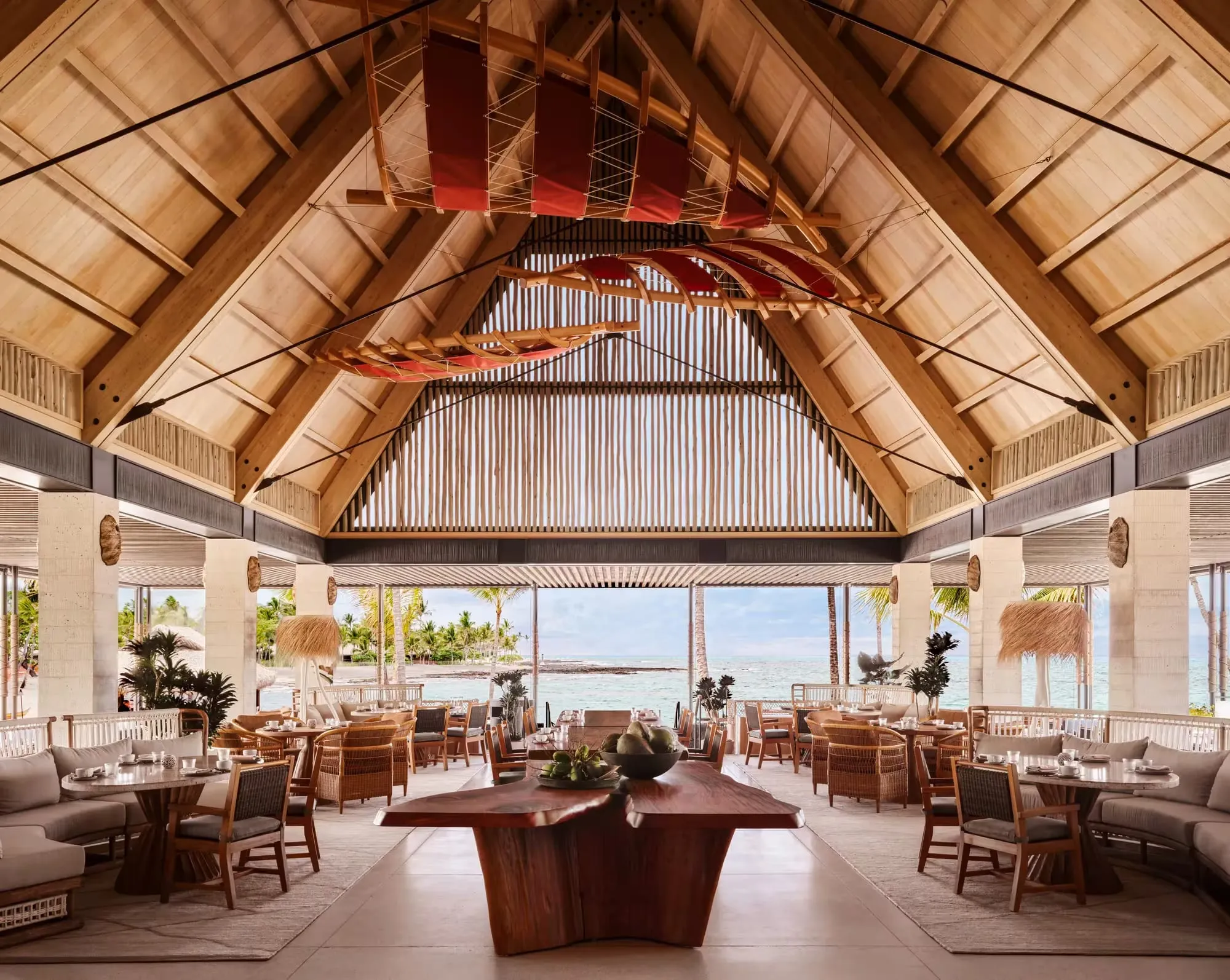
Kona Village runs five dining and drinking venues, several of them named and conceived with direct input from the resort’s cultural leadership committee. Moana is the signature restaurant, serving Pacific Rim-influenced, land-and-sea cuisine built around Hawaiian and regional ingredients for breakfast and dinner. Kahuwai Cookhouse and Market takes its cues from paniolo (Hawaiian cowboy) cooking traditions, built around kiawe wood-fired preparation.
The Shipwreck Bar and Sushi venue is one of the property’s more direct links to its own history: it incorporates timbers from the schooner that founders Johnno and Helen Jackson sailed into Kaupulehu in the 1960s, restored and repurposed rather than replaced. Talk Story Bar, named for the Hawaiian pidgin phrase for catching up with friends, serves sunset cocktails, while the Moana Cocktail Bar offers a separate evening venue with live music. Across the outlets, the resort’s stated approach favors local and regional sourcing, in keeping with its broader sustainability positioning, though guests planning a stay around a specific chef or menu should confirm current details directly with the resort, since kitchen leadership at single-restaurant properties changes over time.
Spa and Wellness
Wellness is handled through Asaya, Rosewood’s integrative wellness brand, here built around open-air treatment spaces and a program the resort describes as drawing on the restorative properties of the land itself. The spa lounge includes a hot tub, cold plunge, and steam and sauna rooms, alongside a treatment menu that includes rituals such as the Mahina Renewal Ritual. A state-of-the-art fitness center equipped with TechnoGym machines, tennis and pickleball courts, and four outdoor pools round out the property’s wellness and activity infrastructure, giving guests options well beyond the spa building itself.
Experiences
Kona Village’s activity program leans heavily into the Kaupulehu site’s cultural and natural significance rather than manufactured resort spectacle. A dedicated on-site cultural center, developed with the resort’s lineal-descendant cultural leadership committee, houses artifacts and runs immersive programming tied to the property’s history. Guided archaeological tours take in the resort’s own petroglyph fields, among the densest recorded anywhere in Hawaii, along with its anchialine ponds, freshwater spring, and the remains of a traditional hōlua sled course.
Beyond the cultural program, the resort runs wildlife walks, coral reef restoration projects, and beach and pond cleanups that guests can join directly, framed as stewardship activities rather than passive excursions. Families are served by the Rosewood Explorers Keiki Club, built specifically around cultural appreciation and environmental responsibility rather than a generic kids’ club format, and the resort’s black sand cove and calm bay waters support snorkeling and other water activities close to shore.
Who It Is For
Kona Village suits multigenerational families most naturally: the kauhale suite format, with configurations up to four bedrooms and private pools, was clearly built with extended groups in mind, and the Rosewood Explorers Keiki Club gives parents a genuine program rather than a token one. It also suits travelers who want an actual break from screens rather than a resort that merely markets the idea, given the no-television policy is a real operating default rather than a slogan.
Honeymooners and couples looking for privacy over visible luxury will find the freestanding hale format and low-key atmosphere appealing, though those wanting nightlife, a large pool scene, or dense on-property programming may find the pace slow by design. The property is also a natural draw for travelers with a specific interest in Hawaiian history and cultural preservation, given the depth of the archaeological program and the lineal-descendant involvement in how the resort is run.
Best Time to Visit
The Kona-Kohala Coast sits in Hawaii’s driest, sunniest microclimate, so weather is consistently warm and dry across most of the year, with the western, leeward position sheltering it from the wetter trade-wind weather that affects the island’s Hilo side. Late spring, April through June, and fall, September through November, generally bring lighter trade winds, calmer seas for snorkeling and reef access, and fewer crowds than the peak winter holiday season (mid-December through mid-January) and the busy summer school-break months, when family travel and kauhale suite demand both run highest.
How to Get There
Ellison Onizuka Kona International Airport (KOA) is the nearest gateway, roughly 15 to 20 minutes by road north of the resort along the Kona-Kohala Coast. KOA receives nonstop flights from several US mainland cities as well as connections through Honolulu’s Daniel K. Inouye International Airport. Kona Village provides a complimentary house car for the airport transfer, continuing the original resort’s tradition of managing arrival itself rather than leaving guests to arrange a rental car or taxi.
Nearby Experiences
The Kona-Kohala Coast is dense with other resort properties, black sand and lava coastline, and some of the Big Island’s best snorkeling and diving access, including the wider Kaupulehu and Kekaha Kai State Park area just south of the resort, known for its undeveloped beaches and tide pools. Kailua-Kona town, with its historic Kailua Pier, Hulihe’e Palace, and Ali’i Drive shops and restaurants, sits within reach by road for guests wanting a change of pace from the resort’s self-contained rhythm. Further afield, Hawaii Volcanoes National Park and the observatories atop Mauna Kea are feasible as full-day excursions from the Kona side of the island for travelers with a rental car or private driver arranged through the resort.
Things to Know Before Booking
There are no in-room televisions across any hale or kauhale category, and many rooms also omit bedside clocks, continuing a policy from the original 1960s resort rather than a modern minimalist affectation; guests who want a television can request one from the resort. The property has no single connected hotel building, so getting between a guest hale, the dining venues, the spa, and the beach involves walking outdoor paths or riding a golf cart, worth factoring in for guests with mobility considerations, though an accessible kauhale category is offered. A daily resort fee applies on top of the room rate, and published third-party rates for the same dates can vary considerably by booking channel, so confirming the total cost directly with the resort or a travel advisor before booking is worthwhile.
Sustainability
Kona Village’s sustainability program is substantial by the standard of ultra-luxury resorts of its size. The property is powered by what Rosewood and owner-developer Kennedy Wilson describe as one of the largest privately owned solar microgrids in Hawaii, intended to supply the resort’s electricity needs from onsite generation rather than the island grid. Several buildings on the property have achieved LEED Gold certification, and the resort has stated an intention to pursue TRUE zero-waste and SITES sustainable-landscape certifications, alongside on-site reverse osmosis and wastewater treatment infrastructure.
Beyond energy and water systems, the resort’s redevelopment was built around active conservation of the site’s cultural and natural resources: its anchialine ponds, lava fields, freshwater spring, and archaeological sites were mapped and protected during construction under guidance from the cultural leadership committee and archaeologists, rather than treated as obstacles to be cleared. Guest-facing programs, including coral reef restoration projects and beach and pond cleanups, extend that conservation focus into the day-to-day guest experience rather than confining it to the construction phase.
Practical Information
Kona Village, A Rosewood Resort is located at 72-300 Maheawalu Drive, Kailua-Kona, Hawaii 96740, at Kaupulehu on the Big Island’s Kona-Kohala Coast. Published third-party rates for the resort’s 150 hale and kauhale have ranged roughly from the low to mid four figures per night in US dollars depending on season, room category, and booking channel, with a daily resort fee added on top; the figure given above is an indicative starting point rather than a live quote, and travelers should confirm current rates directly with the resort. Check-in is from 3:00pm and check-out by 12:00pm noon. The resort reopened on July 1, 2023, after more than a decade of closure following the March 2011 tsunami that destroyed the original 1965 property.
Editorial Conclusion
Kona Village’s real achievement is not any single amenity but the discipline of its rebuild: a resort that could easily have modernized its way out of what made the original property distinctive instead spent over a decade making sure it didn’t. The no-television policy, the freestanding hale format, the legacy units rebuilt on their original foundations, and the direct, structural involvement of Kaupulehu’s lineal descendants in how the property is run all point the same direction, toward continuity rather than reinvention. For travelers willing to trade a conventional resort’s visible spectacle for something quieter and more historically grounded, it remains one of the more genuinely distinctive returns in recent American luxury hospitality.
In pictures
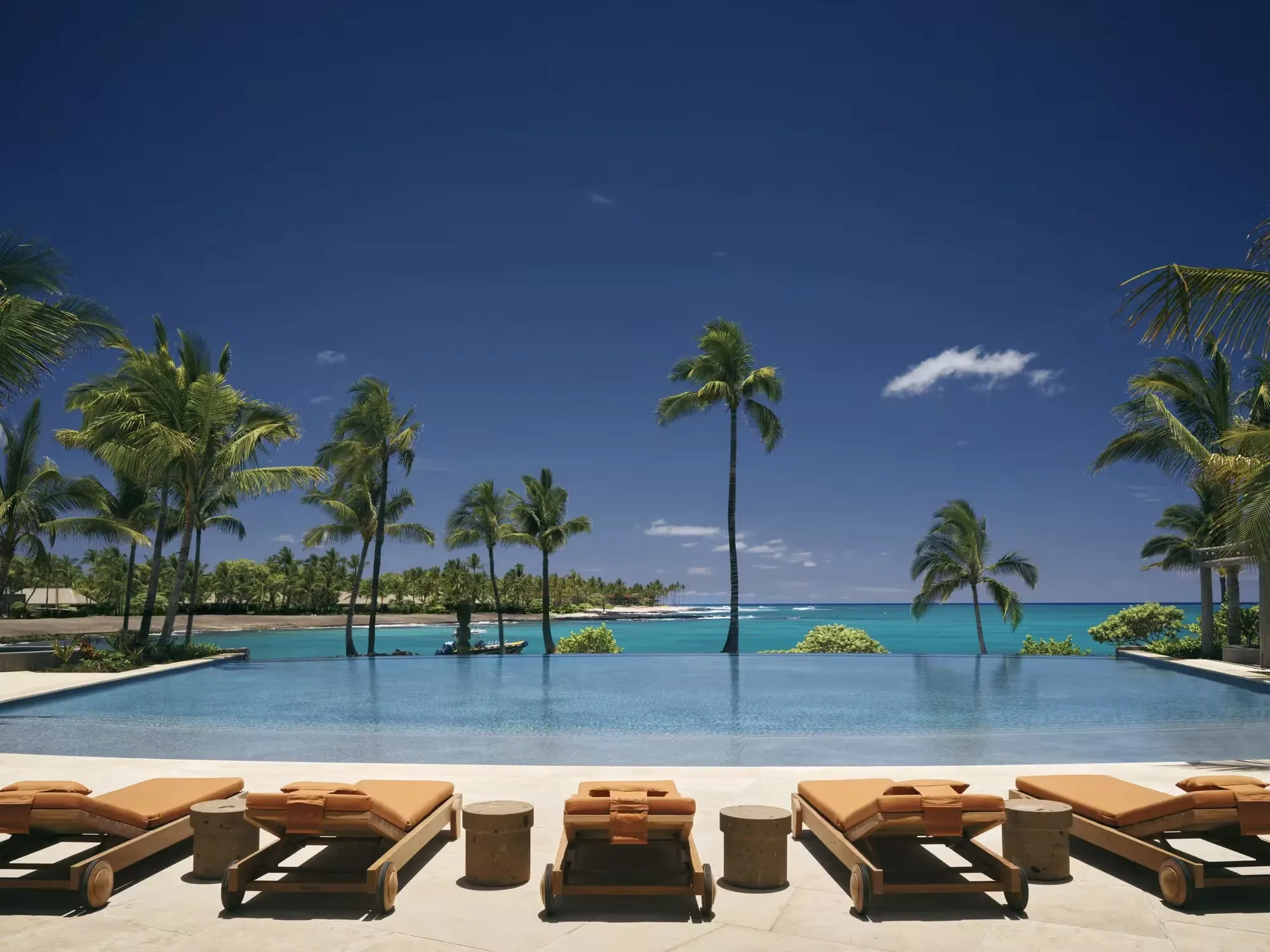
On the map
Kona-Kohala Coast, Big Island, United States
Questions
Frequently asked
Is Kona Village, A Rosewood Resort the same property as the original Kona Village Resort?
It occupies the same 81-acre, lava-lined site at Kaupulehu on the Big Island's Kona-Kohala Coast, founded in 1965 by Johnno and Helen Jackson as the original Kona Village Resort. That resort was destroyed by the March 2011 Pacific tsunami and stayed closed for over a decade before reopening on July 1, 2023, as a 150-hale Rosewood property built in partnership with landowner Kamehameha Schools and a cultural leadership committee of Kaupulehu lineal descendants.
Do the rooms at Kona Village really not have televisions?
By design, the resort's 150 hale (freestanding Hawaiian-style bungalows) are built without in-room televisions, continuing a policy the original 1960s resort was known for. Guests wanting a television can request one from the resort, but the intent of the design, alongside the absence of clocks and alarms in many rooms, is to encourage a genuine break from screens during the stay.
How many rooms does Kona Village have, and are they really all separate buildings?
The resort has 150 guest accommodations across two formats: standard hale, one-room bungalows with oversized lanai and outdoor showers, and larger kauhale suites of one to four bedrooms, including oceanfront configurations with private plunge pools. There is no single main hotel building with interior corridors; every guest room is its own freestanding structure connected by outdoor pathways.
What is the nearest airport to Kona Village, and how do guests get there?
Ellison Onizuka Kona International Airport (KOA) is the nearest airport, roughly a 15 to 20 minute drive north of the resort along the Kona-Kohala Coast. The resort provides a complimentary house car for the transfer, and most travelers connect through Honolulu or fly nonstop from several US mainland gateways to KOA.
What happened to Kona Village during the 2011 tsunami?
On March 11, 2011, a tsunami generated by the Tohoku earthquake off Japan crossed the Pacific and struck the Kaupulehu shoreline, destroying much of the original resort's oceanfront hale and infrastructure. The property remained closed for more than a decade while ownership, Kamehameha Schools as landowner, and a cultural leadership committee of local lineal descendants planned a rebuild that respected the site's archaeological and cultural significance before Rosewood reopened it in July 2023.
Same destination
More hotel guides in United States
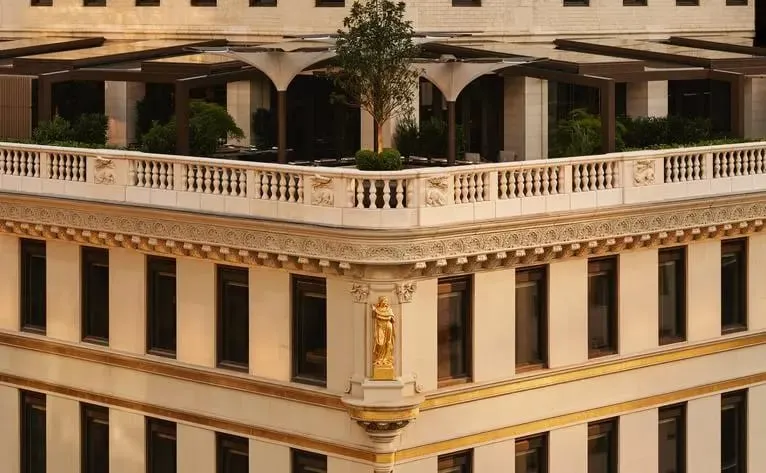
Midtown Manhattan, New York City, United States
Aman New York
Eighty-three suites folded into a landmarked 1921 Beaux-Arts tower on Fifth Avenue, with a three-floor spa larger than any other Aman on earth.
From $2,300 per night
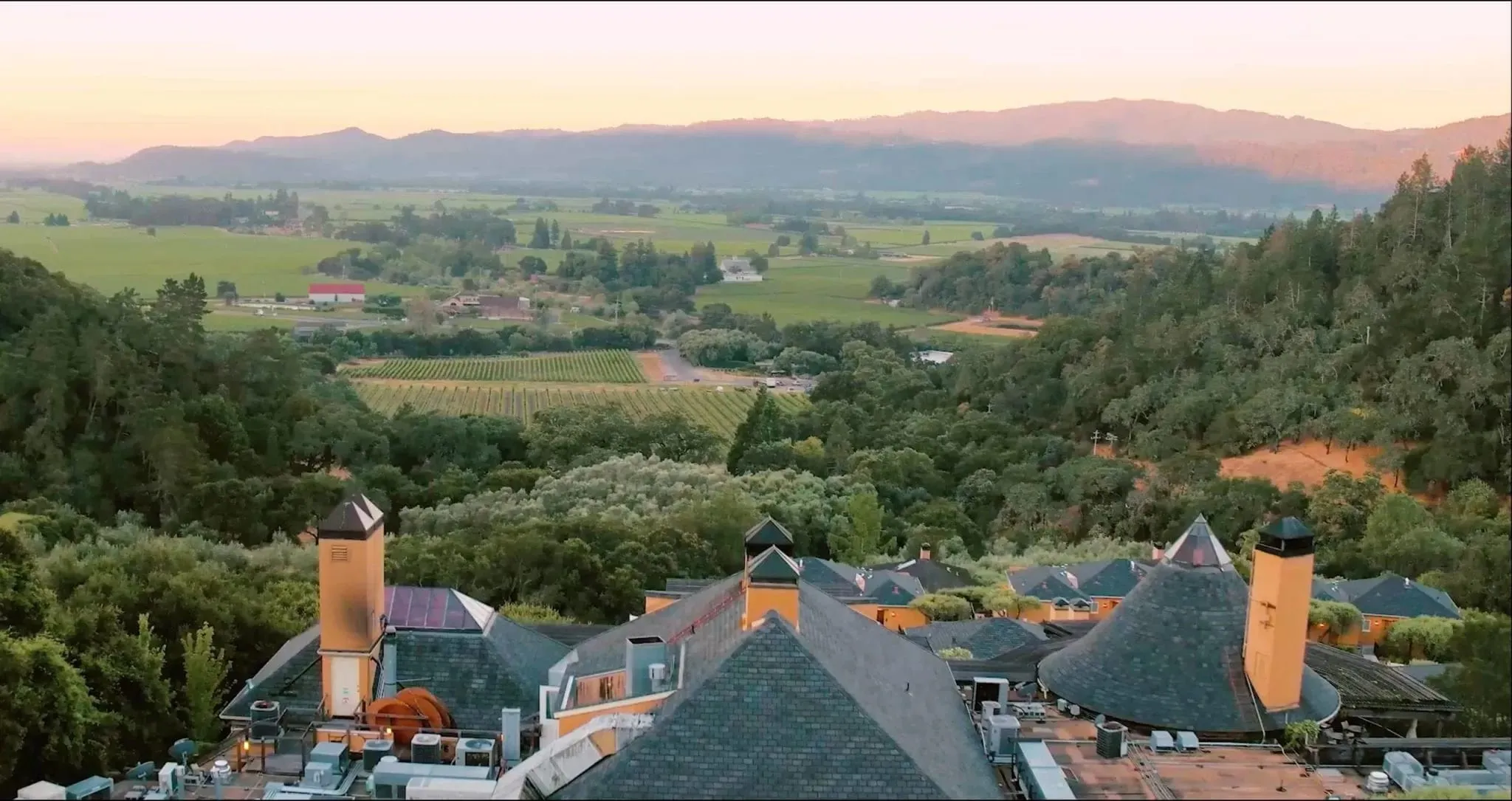
Rutherford, Napa Valley, United States
Auberge du Soleil
The Provence-inspired hillside inn that gave an entire hotel group its name, its philosophy, and one of Napa Valley's longest-running Michelin stars.
From $1,200 per night
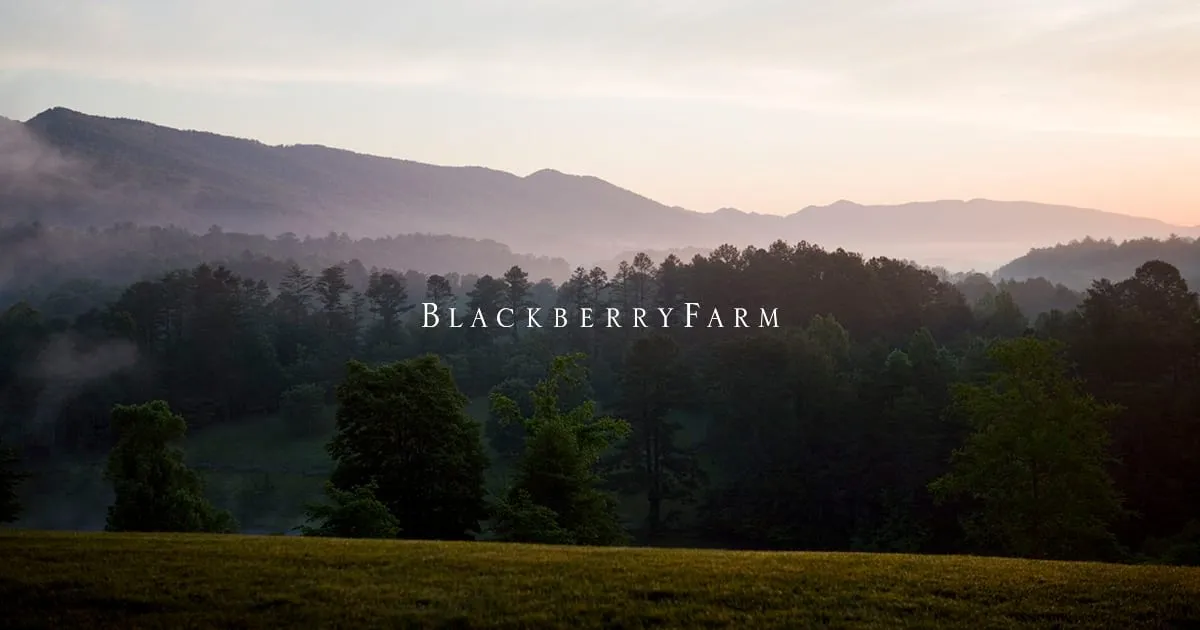
Walland, Great Smoky Mountains foothills, United States
Blackberry Farm
A 4,200-acre working farm at the foot of the Great Smoky Mountains where the Beall family built an entire school of American cooking around cheese, garden and pasture.
From $1,145 per night