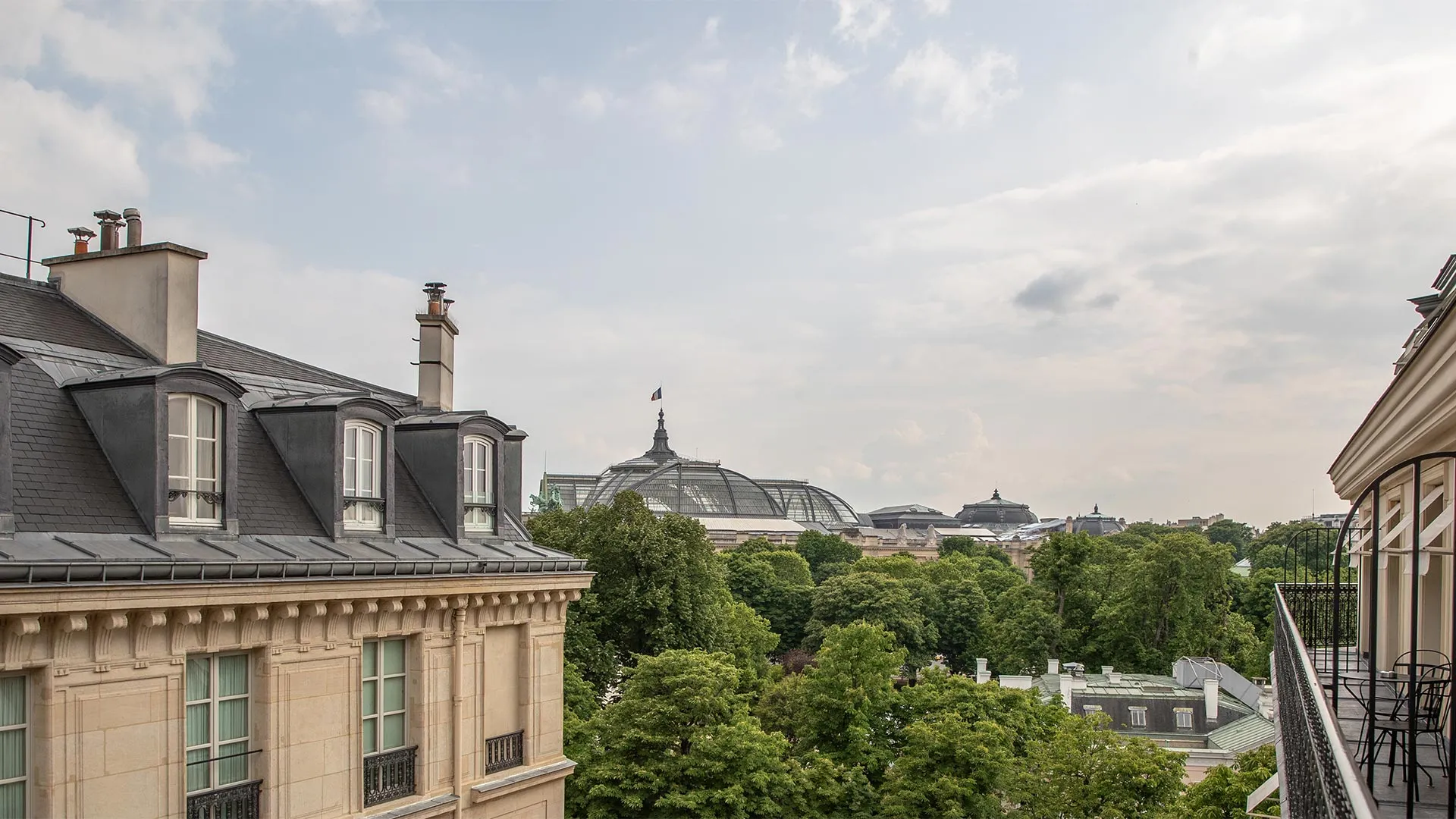
8th arrondissement, Paris, France
La Reserve Paris
A single restored 1854 mansion off the Champs-Elysees, run as forty rooms rather than four hundred, and rated the world's best hotel by La Liste two years running.
- Rates from
- From €1,800 per night
- Nearest airport
- Paris Charles de Gaulle (CDG)
- Transfer
- 35-50min by road, depending on traffic
- Best months
- April to June and September to October, when Paris is at its most walkable and least crowded
Paris has twelve hotels that carry the official Palace distinction, and eleven of them are what the word suggests: high-ceilinged, gilded, built for hundreds of guests and staffed to match, their lobbies designed to be seen from the street. La Reserve Paris is the twelfth, and it does not look like the others. From Avenue Gabriel, a quiet lane running parallel to the Champs-Elysees, the hotel presents almost nothing: a plain stone facade, a single unmarked door, no awning, no name in gold letters. It could be a private residence, and for most of its history, that is exactly what it was.
That contrast is the point. Where the grand Right Bank palaces compete on scale, ballrooms, and a certain theatrical formality, La Reserve Paris has built its reputation on the opposite instinct: forty rooms, a single restrained facade, and a level of discretion that has made it a default address for guests who would rather not be recognised in a lobby. It opened in 2015 under Michel Reybier, the French entrepreneur behind the La Reserve hotel group and the Bordeaux estate Cos d’Estournel, and within a decade had become, by at least one influential ranking, the best hotel on earth.
Why It Stands Out
Most Paris palace hotels measure their scale in the hundreds: guest rooms, staff, square metres of public space. La Reserve Paris measures it in the dozens. Its forty keys, twenty-six suites and fourteen rooms, would fit inside a single wing of some of its Right Bank rivals, and that scale is not an accident of the building it occupies but a deliberate choice about what kind of hotel to run inside it.
The effect shows up in the ratio of staff to guest rather than in any single amenity: a house this size can know its guests by name within a day, hold a table without a formal reservation system, and rearrange a schedule around a single request in a way that a five-hundred-room hotel structurally cannot. It is also, notably, the only Paris palace still under the direct ownership and hands-on involvement of the individual who created it, which shows in details that read as personal rather than corporate, from the wine list drawn partly from Reybier’s own vineyard to the near-total absence of hotel branding on the building itself.
The distinction was formally recognised in 2016, when Atout France, the state tourism body that administers the Palace title, added La Reserve Paris to its list a year after the hotel opened, an unusually fast endorsement for a category that typically rewards decades of institutional history. In July 2026, La Liste, the French ranking body that aggregates data from hundreds of guides and travel sources, named it the best hotel in the world for the second consecutive year, tied at the top of its table with Le Meurice on a score of 99.5 out of 100. For a forty-room house competing against resorts and palaces many times its size, that result is itself a kind of statement about what the ranking’s methodology values: consistency and precision at a small scale, rather than scale itself.
Architecture
The building at 42 Avenue Gabriel dates to 1854, built during the Second Empire as a private mansion in the Haussmannian idiom that still defines much of central Paris: dressed stone, tall shuttered windows, a formal but unornamented street facade set back from the pavement. Its early ownership traced through the family of the Duc de Morny, Napoleon III’s influential half-brother, and the building later passed through a series of private residents, including a period in the twentieth century when it was occupied by the couturier Pierre Cardin, before Michel Reybier acquired it for conversion into a hotel.
Turning a nineteenth-century private house into a functioning hotel without destroying the qualities that made it a house in the first place is a specific and difficult brief, and it is the reason La Reserve Paris reads so differently from hotels built as hotels from the outset. The mansion’s original room proportions, generous by residential standards but modest by grand-hotel ones, dictated a small room count rather than the other way around; rather than gut the building to maximise key count, the conversion preserved room sizes closer to those of an apartment than a hotel suite, and the Nescens Spa and its sixteen-metre pool were built into the lower level rather than added as a separate structure. The result keeps the building’s original bones largely intact: its exterior remains close to unchanged from the street, which is precisely why it is so easy to walk past without noticing it at all.
Interior Design
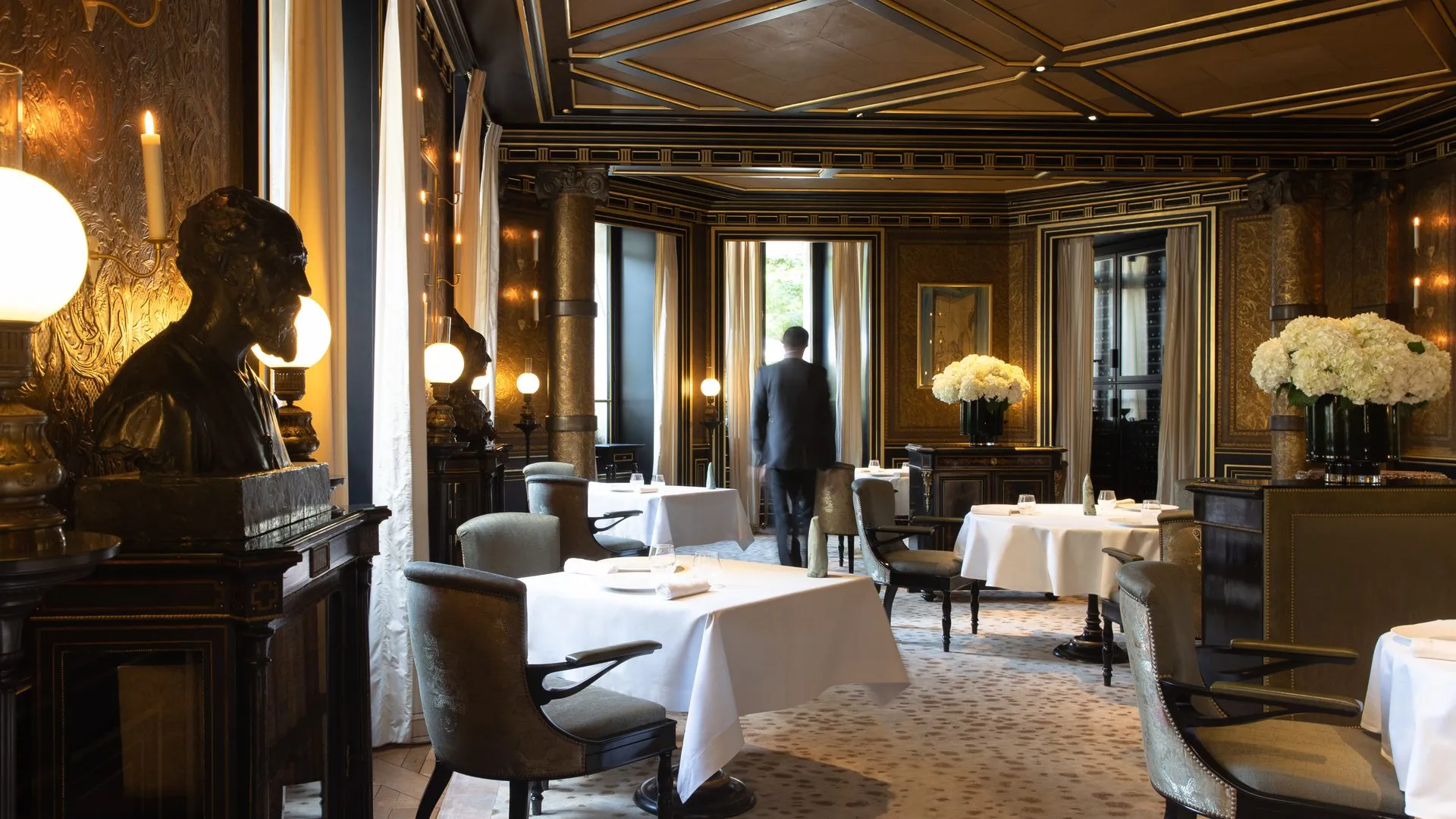
The interiors are the work of Jacques Garcia, the French designer whose earlier commissions include the Hotel Costes and NoMad in New York, and whose signature register, dense, dark, opulently detailed, is unmistakable throughout the building. Garcia worked in a Belle Epoque and Napoleon III vocabulary: mahogany panelling, gilded mouldings, tooled Cordoba leather, Versailles-pattern parquet, heavy wall hangings and a considered mix of period antiques and Art Deco pieces, assembled to read as a house furnished over generations rather than fitted out in a single campaign.
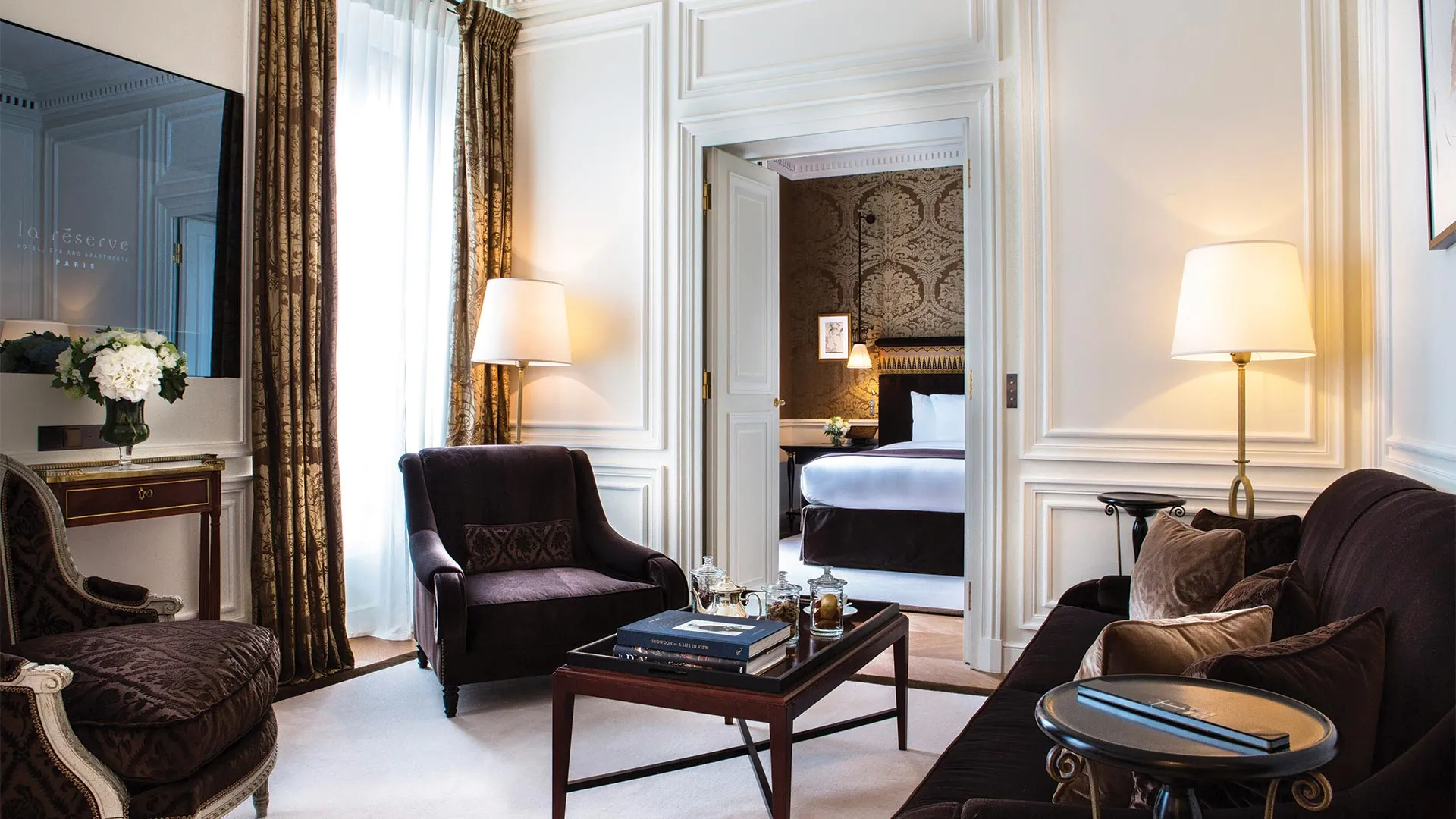
For the guest rooms and suites, Garcia developed four distinct colour schemes, bronze, beige, deep plum and tea rose, rotated across the categories so that no two floors feel identical while the overall material language stays constant. Bathrooms lean toward Carrara marble and silver-finished Devon & Devon fittings, underfloor heating, and technology worked into the fabric of the room rather than left visible: televisions concealed within mirrors, tablets for room controls set discreetly on writing desks. The public rooms carry the same density of detail as the private ones, with pink onyx columns and further Carrara marble flooring appearing in La Pagode, the hotel’s more relaxed restaurant, and dark wood panelling used throughout to keep circulation spaces feeling more like a private club’s corridors than a hotel’s.
Atmosphere
The atmosphere La Reserve Paris cultivates is closer to a well-run private house than a hotel in the conventional sense, and every operational choice reinforces it. There is no grand lobby to process through; arrival is handled quietly, often at a small desk rather than a sweeping reception counter, and the absence of exterior signage means most passers-by have no idea a hotel operates behind the facade at all. Public rooms are sized for a handful of guests rather than a crowd, and the hotel’s small footprint means staff-to-guest familiarity builds quickly, guests are recognised, preferences are remembered, and requests tend to be handled with a personal directness rather than routed through layers of departments.
That intimacy comes with trade-offs worth naming plainly: there is no sprawling amenity programme, no multiple pools or extensive event infrastructure, and guests looking for the buzz and see-and-be-seen energy of a larger palace’s bar or terrace will find La Reserve Paris deliberately quiet by comparison. What it offers instead is consistency and privacy, qualities that are harder to market but, based on its recent run of accolades, evidently resonate strongly with a certain kind of traveller.
Rooms and Suites
The forty accommodations split into twenty-six suites and fourteen rooms, ranging from roughly 40 square metres at the entry level up to around 225 square metres for the largest suite configurations, sizes that sit closer to a well-proportioned Parisian apartment than a standard hotel room even at the lower end of the range. Every category carries Garcia’s material signature: dark wood joinery, marble bathrooms, one of the four rotating colour palettes, and a level of soundproofing and detail that reflects the building’s residential origins rather than a hotel’s need to standardise.
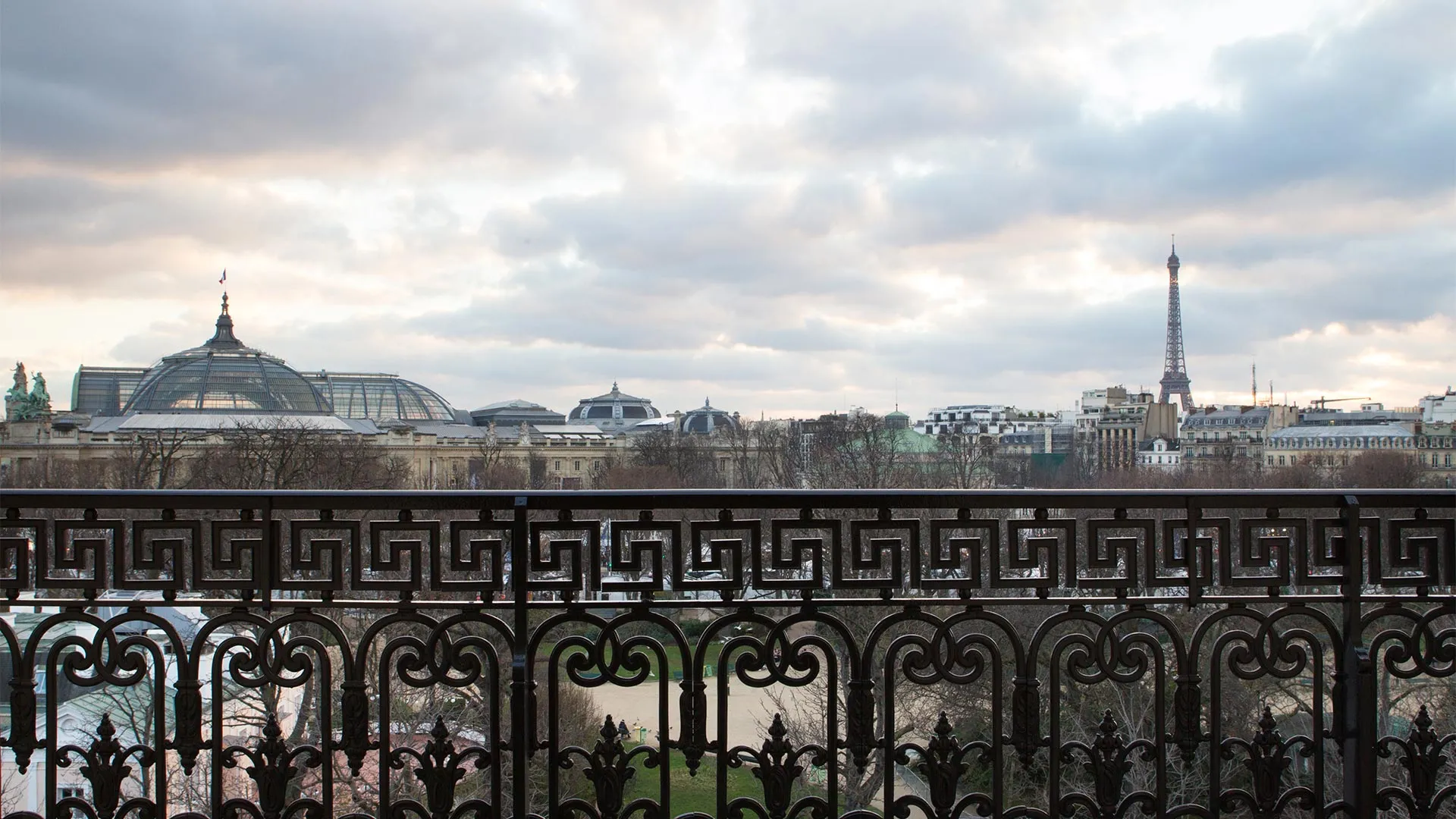
Higher categories add working fireplaces, separate salons, dining areas suited to private entertaining, and in the top suites, direct or partial views over the Champs-Elysees gardens and the surrounding rooftops of the 8th arrondissement. Because the hotel occupies a single converted mansion rather than a purpose-built tower, room configurations are not uniform floor to floor, a quality that can mean more character but also means guests with specific requirements, an interconnecting pair, a particular exposure, a fireplace, are better served booking through the hotel directly or a specialist agent who can match the request to a specific room rather than a category alone.
Dining
Both of La Reserve Paris’s restaurants operate under executive chef Jerome Banctel, a Brittany-born chef whose training included stints with some of France’s most decorated kitchens before he took over the hotel’s dining programme.
Le Gabriel is the formal dining room and the hotel’s culinary flagship, awarded a third Michelin star in 2024 and holding it through the 2025 and 2026 editions of the guide, placing it among a small handful of three-star tables in Paris. Banctel’s cooking there is built on a small set of recurring techniques, notably limewater cooking and a preference for stocks and jus built without cream or butter as the primary vehicle for flavour, applied across two tasting menus: Viree, which draws on his native Brittany with buckwheat, seaweed and shellfish, and Perple, a more exploratory menu that ranges toward Japan and Turkey. The dining room itself is small and restrained rather than grand, seating considerably fewer covers than a typical Parisian three-star, which keeps the meal feeling closer to a private dinner than a performance.
La Pagode, the hotel’s second restaurant, takes its name from Cos d’Estournel, the Bordeaux estate that gives the wine its Chinese-pagoda-inspired label, a nod to Reybier’s ownership of the vineyard rather than to any historical building of the same name elsewhere in Paris. It operates as the more accessible, all-day option, open for breakfast, lunch and dinner, with a personal, globally inflected take on French cooking served in a Belle Epoque room finished in pink onyx columns and Carrara marble. Both restaurants draw on an extensive wine list that includes bottles from Cos d’Estournel itself, an unusual degree of vertical integration between a hotel’s dining programme and its owner’s other holdings.
Spa and Wellness
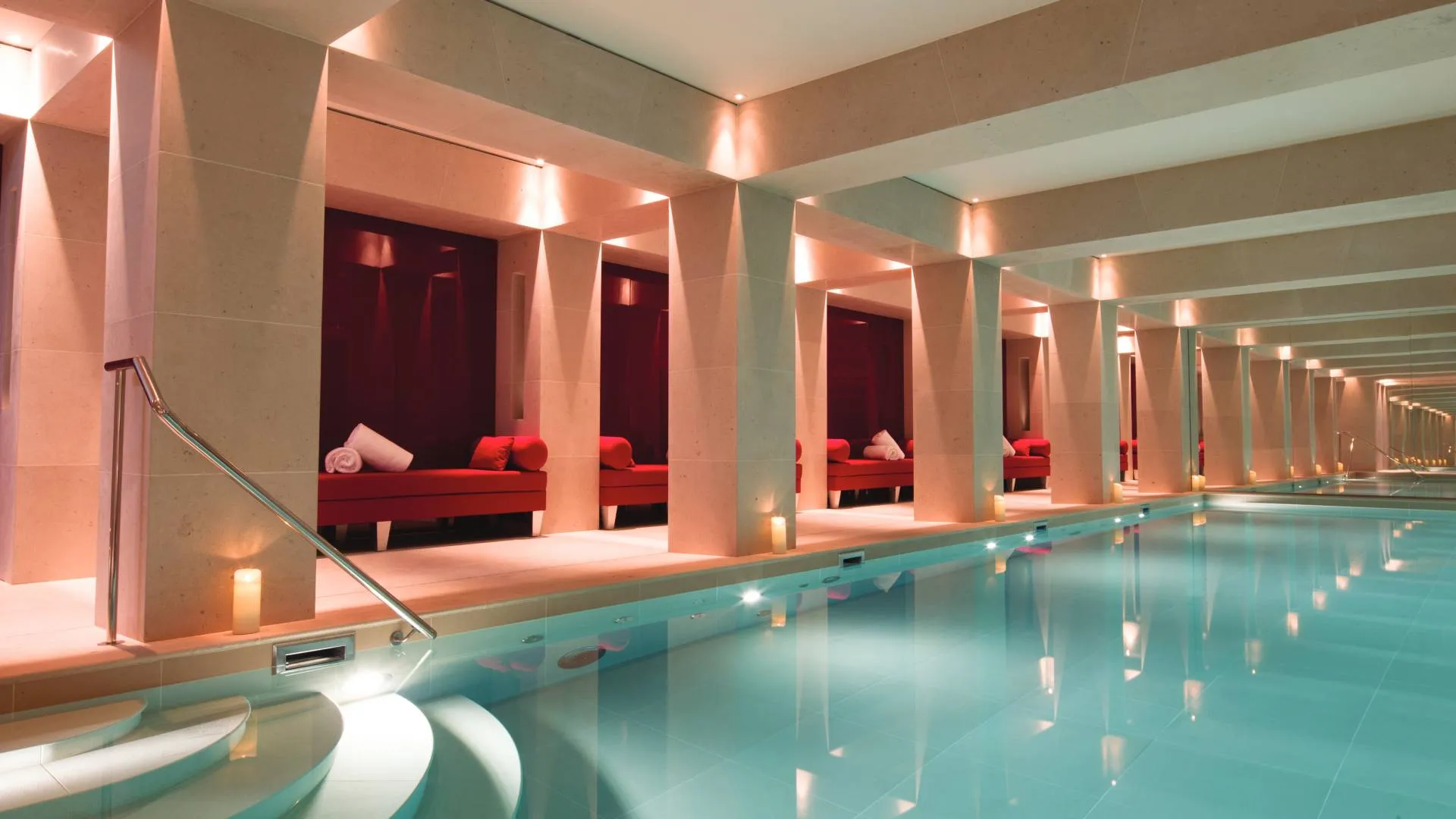
The Nescens Spa sits on the mansion’s lower level, built around a sixteen-metre indoor pool, a hammam, three treatment rooms and a fitness area where a personal trainer is available by request. Its treatment philosophy is licensed from Nescens, a Swiss preventive-medicine and longevity brand developed in partnership with the Clinique de Genolier, a well-regarded private medical clinic in Switzerland, which gives the spa’s programme a more clinical, longevity-oriented framing than the purely relaxation-focused menus found at many hotel spas.
Given the compact scale of both the hotel and the spa itself, treatment slots are limited relative to a larger resort-style facility, and guests wanting specific appointment times, particularly around peak Fashion Week or high season dates, are generally better served booking ahead through the concierge rather than on arrival.
Experiences
La Reserve Paris runs a comparatively restrained experience programme relative to hotels built around excursions and activities, reflecting both its city-centre setting and its general preference for facilitation over programming. The concierge team is positioned as the primary vehicle for anything beyond the building itself: private guided access to museums and monuments, made-to-measure shopping appointments along the Rue du Faubourg Saint-Honore and Avenue Montaigne, theatre and opera tickets, and arrangements with the Cos d’Estournel estate for guests interested in wine, from private tastings on-site to visits to the Saint-Estephe vineyard itself.
Because the hotel sits inside one of the most walkable, sight-dense stretches of central Paris, much of what would elsewhere be organised as a formal “experience” is, here, simply a short walk out the door, which suits the hotel’s broader philosophy of a house that facilitates a guest’s own version of Paris rather than one that prescribes it.
Who It Is For
La Reserve Paris reads most naturally as a couples’ and honeymoon hotel, and as a discreet choice for anyone, public figures, executives, guests in the middle of sensitive negotiations, who has good reason to want a stay that leaves no visible trail through a busy lobby. Its scale and service model also make it a strong fit for design-minded travellers who want to spend a few nights inside a coherent, fully realised interior rather than a generic luxury shell, and for food-focused guests for whom a three-Michelin-star kitchen under the same roof is close to the entire point of the trip.
It is a considerably less natural fit for families needing connecting rooms at scale, or for travellers who want the full infrastructure of a grand hotel, extensive event space, multiple bars and lounges, a ballroom, a large fitness centre. At forty keys, La Reserve Paris does one thing, a private, highly attended stay in a beautifully finished mansion, and does not attempt to be a self-contained destination the way a larger palace or resort can be.
Best Time to Visit
Paris rewards a visit outside its most crowded stretches, and La Reserve Paris, given how much of its appeal depends on the surrounding neighbourhood being walkable and pleasant rather than jammed, benefits particularly from timing around the shoulder seasons. April through June brings the city’s best light and mildest temperatures, with gardens along the nearby Champs-Elysees and the Grand Palais grounds in full bloom, while September and October offer a similar calm after the August lull, when much of Paris itself is on holiday and many smaller restaurants and boutiques close for the month.
Winter, particularly the run-up to Christmas, brings its own appeal in the form of illuminations along the Champs-Elysees and a quieter, more intimate version of the city, though days are short and weather unpredictable. Fashion Week periods in late September and early March drive demand and rates sharply upward across central Paris, including at La Reserve Paris, and are worth avoiding for travellers prioritising value or availability at Le Gabriel.
How to Get There
The standard arrival point is Paris Charles de Gaulle Airport (CDG), roughly 35 to 50 minutes from the hotel by road depending on time of day and traffic, with private transfers arranged directly through the hotel the most common option for guests at this level. Orly Airport (ORY), somewhat closer to central Paris on the southern side, serves as an alternative for guests arriving on certain domestic or European routes, with a broadly comparable transfer time. The Gare du Nord, terminus for Eurostar services from London and Thalys and TGV trains from Brussels and northern Europe, sits roughly 20 to 25 minutes away by road and is a common arrival point for guests travelling within Europe by rail.
Within the city, the hotel’s Avenue Gabriel address is itself the main convenience: it sits close enough to the Champs-Elysees, the Place de la Concorde and the principal shopping streets of the 8th arrondissement that many guests use taxis or walking rather than the Metro for most of a stay, though the Champs-Elysees-Clemenceau and Franklin D. Roosevelt stations are both a short walk away for those who prefer it.
Nearby Experiences
The Champs-Elysees itself begins just a few minutes’ walk from the hotel’s door, running from the Place de la Concorde up toward the Arc de Triomphe, and while its lower stretch near the Concorde end is more genteel than the flagship-store-lined upper avenue, both ends reward at least a walk-through for the scale and history of the boulevard. The Grand Palais, recently restored and reopened after a multi-year renovation, sits an easy walk away and hosts major art exhibitions, fashion shows and public events beneath its landmark glass-and-iron roof; its smaller sibling, the Petit Palais, offers a free permanent collection and a genuinely restful interior garden courtyard in a city not always generous with quiet spaces.
The Place de la Concorde, with its Luxor obelisk and views down toward the Tuileries and the Louvre in one direction and the Arc de Triomphe in the other, anchors the western edge of the neighbourhood, while the Rue du Faubourg Saint-Honore and Avenue Montaigne, the city’s two most concentrated luxury shopping streets, sit within a few minutes in opposite directions from the hotel, giving guests a genuine choice of register depending on which side of Avenue Gabriel they head out from.
Things to Know Before Booking
The hotel’s forty rooms mean it sells out well ahead of peak periods, particularly around Fashion Week in late September and early March and during the pre-Christmas illuminations season, and last-minute availability at this scale is far less forgiving than at a larger property. Because there is no exterior signage, first-time guests arriving by taxi should confirm the exact address, 42 Avenue Gabriel, rather than relying on a driver recognising the hotel by name or facade.
Le Gabriel’s small dining room and three-star status mean reservations, for hotel guests and outside diners alike, are genuinely competitive and worth arranging as early as possible, ideally at the time of booking the room itself. Given the mansion’s converted layout, room configurations vary more than at a purpose-built hotel, and guests with specific needs are better served discussing them directly with the hotel or a specialist travel advisor rather than assuming uniformity across a stated category.
Sustainability
Michel Reybier’s broader business, including Cos d’Estournel, the Bordeaux estate that supplies much of the hotel’s wine list, has published concrete environmental commitments: the vineyard achieved High Environmental Value (HVE) certification in 2019 and ISO 14001 certification in 2020, alongside long-running practices such as cover cropping and hedgerow planting aimed at supporting biodiversity across the estate. Those commitments describe the ownership group’s viticultural operations specifically rather than the Paris hotel’s own building systems, and La Reserve Paris does not publish a detailed, property-level sustainability report of the kind some larger hotel groups now issue, so specific claims about the mansion’s own energy or waste performance are not made here.
What can be said with more confidence is structural: a forty-room hotel converted from an existing nineteenth-century building, rather than built new, carries an inherently different footprint than a large purpose-built resort or a from-the-ground-up palace hotel, and the property’s small scale limits its resource intensity relative to grand hotels many times its size, independent of any formal certification.
Practical Information
Rates at La Reserve Paris start from around EUR 1,800 per night and rise substantially for the larger suite categories, in line with its position among the top tier of Paris’s Palace hotels. Check-in is from 3:00pm and check-out by 12:00pm, with early arrival and late departure generally available on request, subject to occupancy.
The nearest airport is Paris Charles de Gaulle (CDG), roughly 35 to 50 minutes away by road depending on traffic, with private transfers the standard arrangement for guests at this level. Most stays run two to three nights, enough time to settle into the hotel’s rhythm, a dinner at Le Gabriel or La Pagode, a spa session at the Nescens Spa, a walk through the surrounding streets, while leaving room for the wider city beyond the immediate neighbourhood. The best months to visit are April through June and September through October, when Paris is at its most temperate and least congested, outside of Fashion Week’s periodic surges in both crowds and rates.
Editorial Conclusion
La Reserve Paris makes an unusual argument for a hotel at the very top of the market: that scale and grandeur are not the same thing, and that a converted private mansion with forty rooms can out-compete palaces many times its size on the qualities that matter most to a certain kind of traveller, privacy, consistency, and a kitchen good enough to anchor a trip on its own. Its recent run at the top of La Liste’s world ranking suggests that argument is being heard well beyond Paris.
What it will not offer is the theatre of a grand hotel lobby, the reassurance of scale, or the sprawling amenity list of a resort, and travellers who want those things are better served elsewhere on the Right Bank. For those who want a single beautifully finished house, run with real attention and anchored by one of the best restaurants in France, La Reserve Paris remains a difficult property to improve on.
In pictures
On the map
8th arrondissement, Paris, France
Questions
Frequently asked
Is La Reserve Paris officially a palace hotel?
Yes. It received the Palace distinction from Atout France, the state tourism agency, in 2016, one year after opening. It holds the title alongside roughly a dozen other Paris hotels, but at forty keys it is by a wide margin the smallest property to carry it, which shapes almost everything about how it operates day to day.
How many rooms does La Reserve Paris have?
Forty in total: twenty-six suites and fourteen rooms, spread across a converted private mansion rather than a purpose-built hotel block. Sizes run from around 40 square metres for the entry rooms up to roughly 225 square metres for the largest suites.
What is the restaurant situation, and does it have a Michelin-starred kitchen?
Both of the hotel's restaurants, Le Gabriel and La Pagode, are overseen by executive chef Jerome Banctel. Le Gabriel, the formal dining room, has held three Michelin stars since 2024 and retained them in the 2025 and 2026 guides. La Pagode, the more relaxed all-day restaurant, serves a personal, globally inflected take on French cooking in a Belle Epoque dining room.
Where exactly is the hotel, and how far is it from the Champs-Elysees?
La Reserve Paris sits at 42 Avenue Gabriel in the 8th arrondissement, a quiet residential lane that runs parallel to the Champs-Elysees between the Place de la Concorde and the Rond-Point. The Champs-Elysees itself, the Grand Palais and the Petit Palais are all within a five to ten minute walk, and the Avenue Montaigne and Rue du Faubourg Saint-Honore shopping districts are close by in opposite directions. The United States Embassy stands a short walk away on the same avenue.
Does La Reserve Paris have a spa and pool?
The Nescens Spa occupies part of the mansion's lower level, built around a sixteen-metre indoor pool, a hammam, three treatment rooms and a fitness area with a personal trainer available on request. Its programme is built on Nescens protocols developed with the Clinique de Genolier in Switzerland, oriented toward preventive and longevity-focused treatments rather than a standard resort spa menu.
How far in advance should Le Gabriel be booked?
Because the dining room is small and holds three Michelin stars, reservations at Le Gabriel are best made several weeks ahead, and considerably further out for weekend dates or during Paris Fashion Week and other peak-demand periods. Hotel guests can usually secure a table through the concierge with less lead time than the general public, though it is not guaranteed.
Same destination
More hotel guides in France
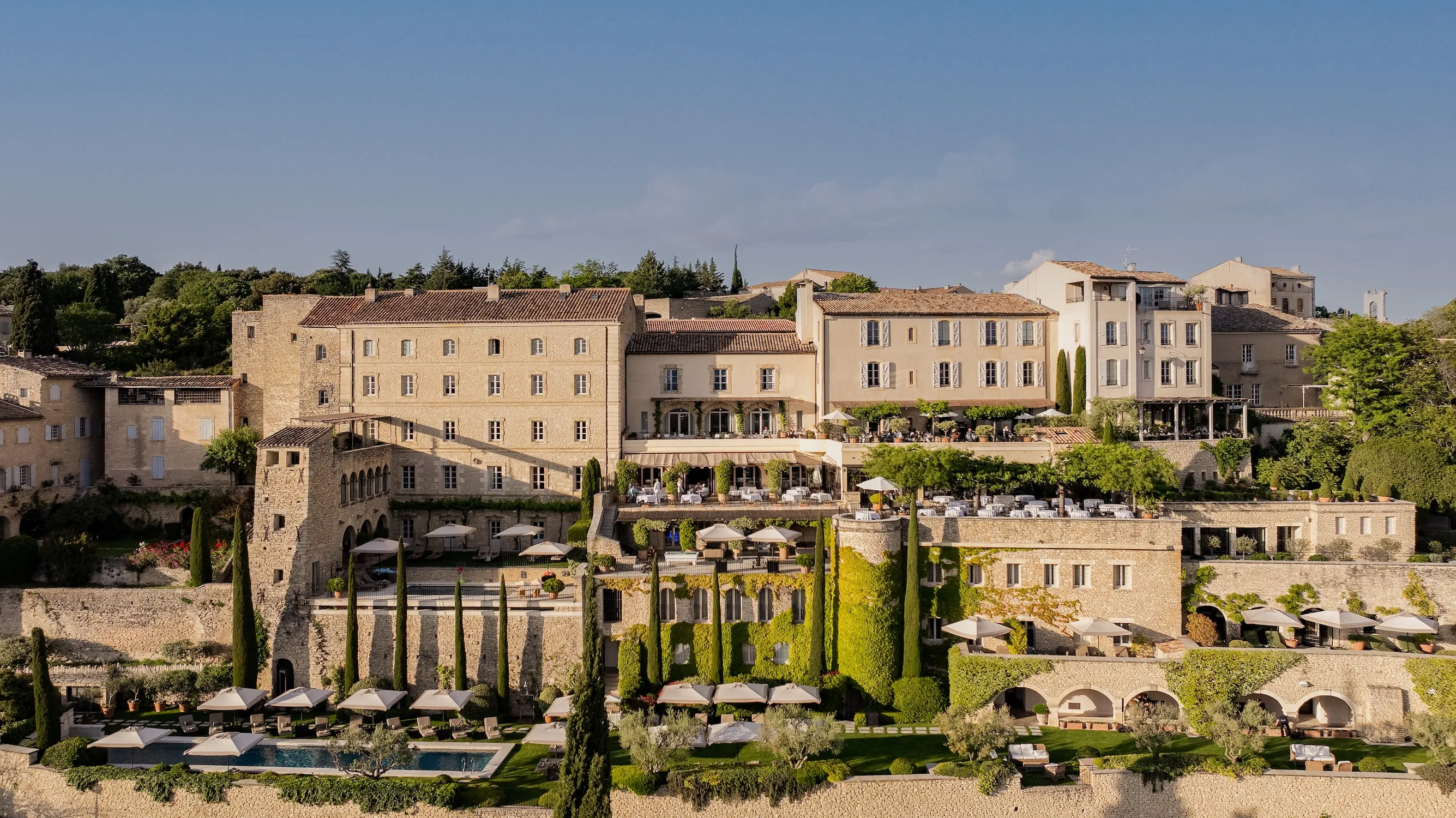
Gordes, Luberon, France
Airelles Gordes, La Bastide
A 16th-century manor built into the ramparts of a hilltop village, run as one of only two dozen hotels in France to hold the official Palace title.
From €950 per night
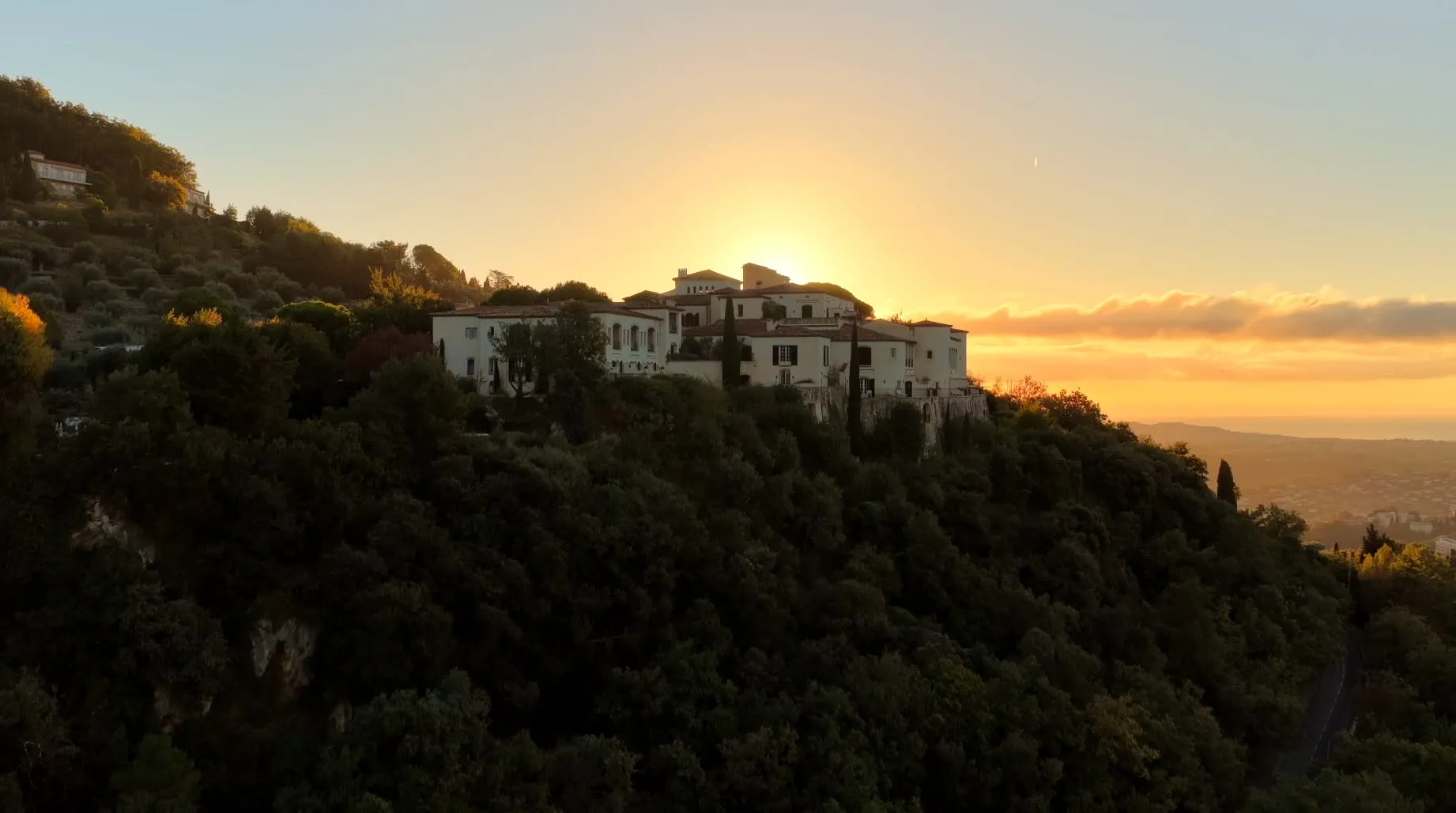
Vence, above the Riviera coast, France
Chateau Saint-Martin & Spa
A 12th-century Knights Templar commandery turned Relais & Châteaux estate, its own olive groves and vineyards spread across a Vence hillside above the Mediterranean.
From €1,050 per night
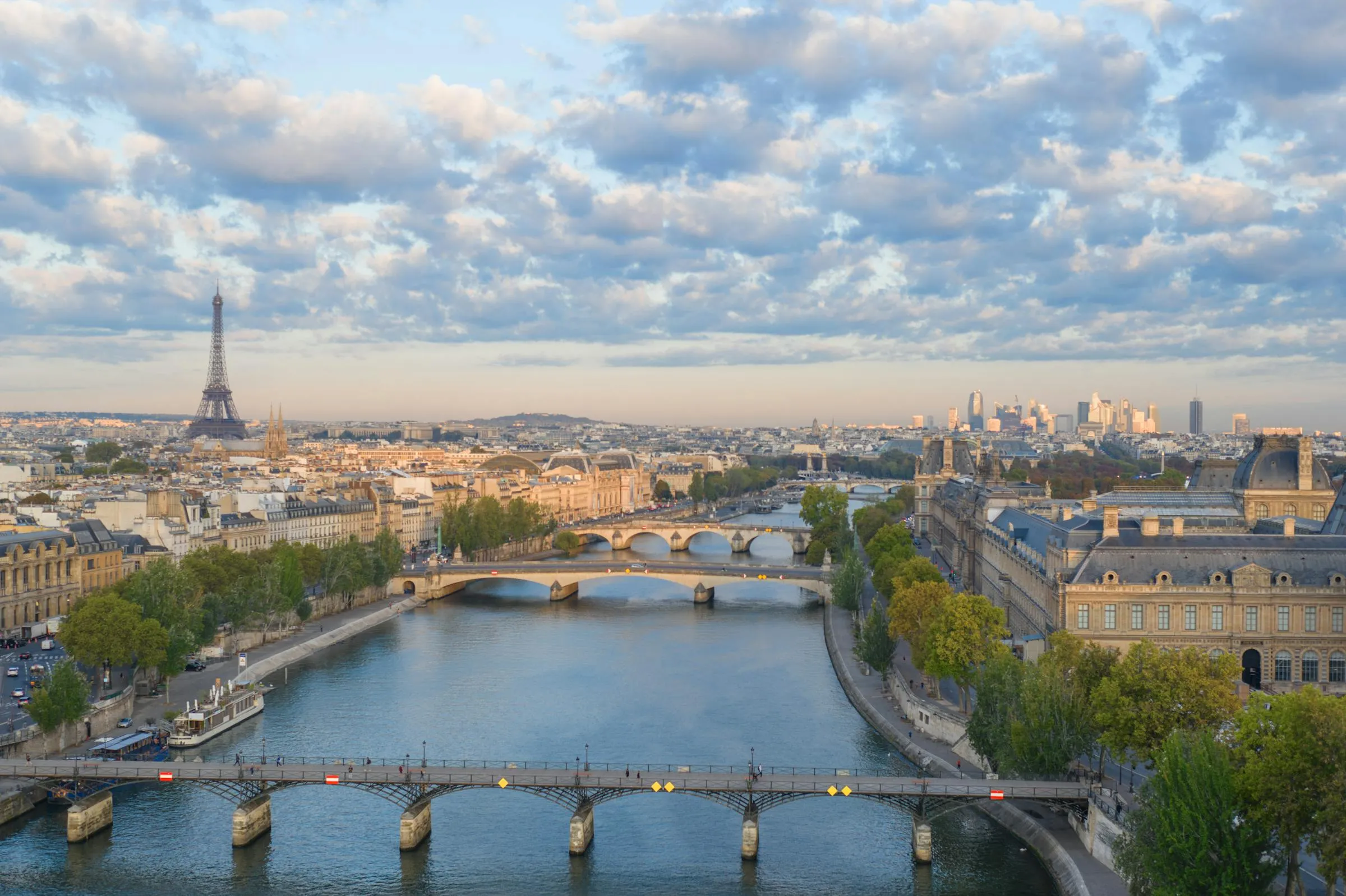
1st arrondissement, Paris, France
Cheval Blanc Paris
A Belle Epoque department store reborn as LVMH's most architecturally ambitious Paris address, with the Seine on one side and the Louvre on the other.
From €2,200 per night