Miniloc Island, Bacuit Bay, El Nido, Philippines
Miniloc Island Resort
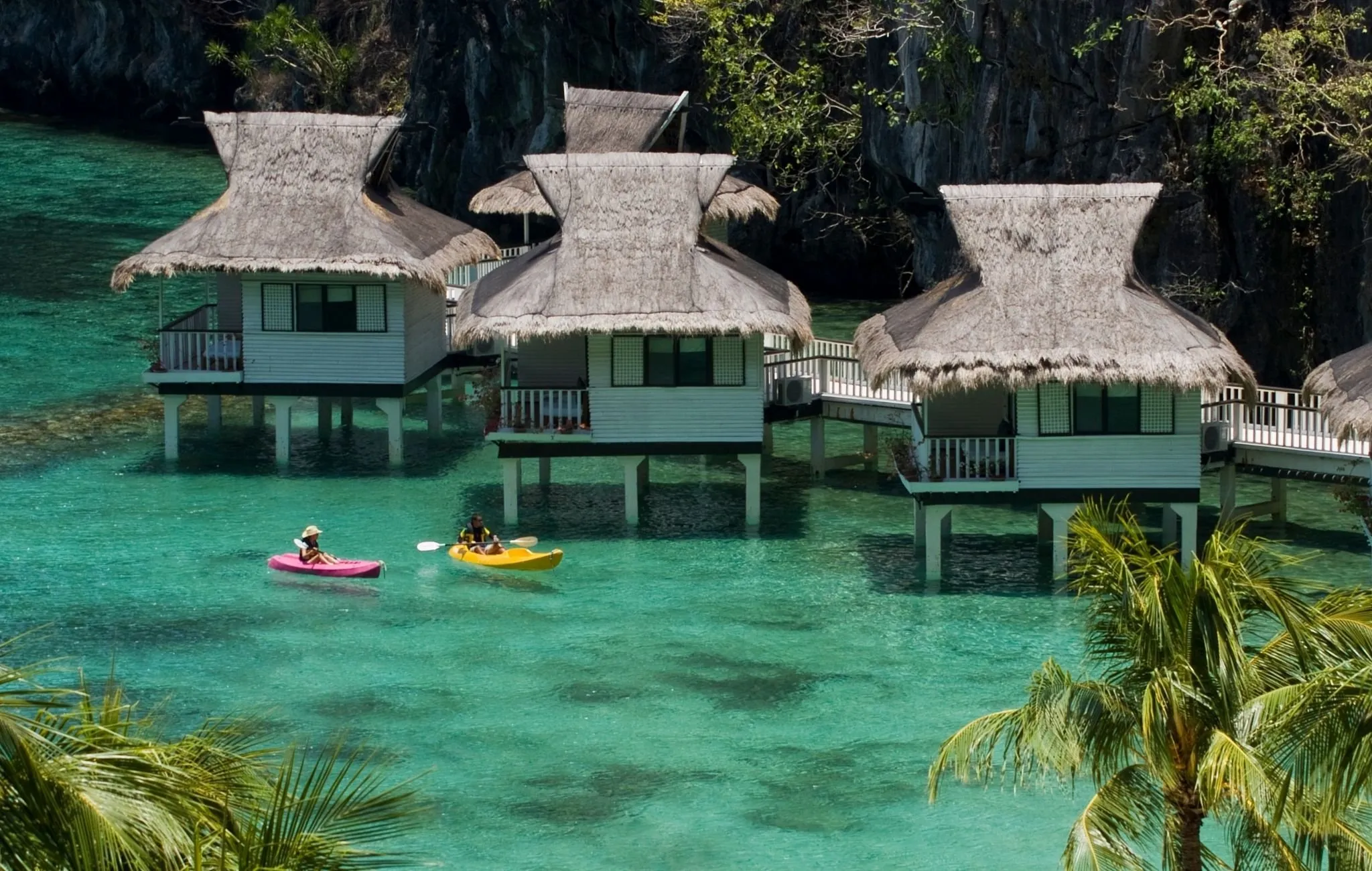
A cluster of thatched cottages on stilts beneath limestone cliffs, with El Nido's most famous lagoons reachable by kayak, not by tour boat.
- Rates from
- From $650 per night
- Nearest airport
- El Nido Airport (ENI), also known as Lio Airport
- Transfer
- About 45 minutes by boat from Lio Jetty, after a short transfer from the airport
- Best months
- November to May
There is a particular kind of quiet that settles over Bacuit Bay in the last hour before sunset, when the day-tour boats from El Nido town have pulled back toward the mainland and the limestone cliffs start throwing long shadows across the water. Miniloc Island Resort is built to catch exactly that hour. Its cottages, roofed in thatch and raised on stilts along a curve of pale sand, face out toward karst formations that most visitors to this part of Palawan only ever see from the deck of a passing banca. Here, they are the view from the veranda.
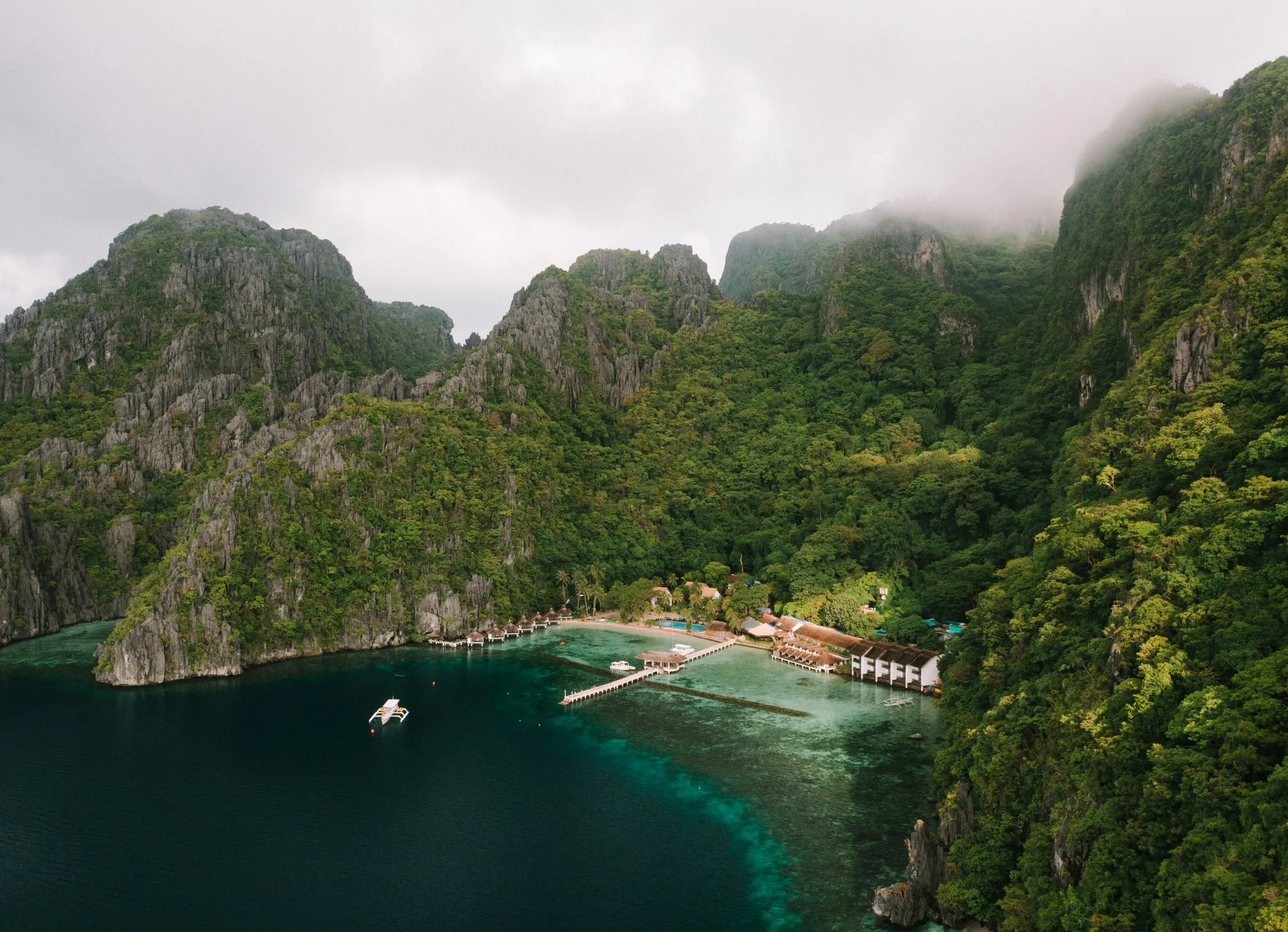
Miniloc holds a specific place in the story of El Nido as a destination: it was the site of the operator’s first camp on this stretch of coast, decades before Bacuit Bay’s cliffs and lagoons became one of the most photographed corners of the Philippines. What began as a simple dive camp has grown, gradually and with the same operator’s hand throughout, into a resort of roughly fifty rooms spread across a small, self-contained island, still built around the same idea that made the original camp work: put guests close to the water, keep the architecture low and native to the setting, and let Bacuit Bay’s geography do the rest of the work.
Why It Stands Out
What sets Miniloc apart from newer arrivals in El Nido, including sister properties within the same resort group, is proximity rather than scale. The Big Lagoon, Small Lagoon and Secret Lagoon, three of the most recognizable sights in Philippine tourism photography, all sit on the same island as the resort itself. Guests staying elsewhere in Bacuit Bay typically see these lagoons as a stop on a chartered island-hopping tour, sharing the water with dozens of day-trip bancas from town. From Miniloc, they are a kayak paddle away, reachable before the tour boats arrive in the morning or after they have gone in the late afternoon, when the light through the karst walls turns the water a different, deeper turquoise.
The resort is also, by the standards of Philippine island tourism, a long-running one. Its cottages were not designed to chase a contemporary resort aesthetic; they were built, and have been maintained, in the idiom of a native fishing village, thatched roofs, timber walkways, structures that sit low against the cliff line rather than announcing themselves against it. For travelers who want El Nido’s geology and marine life without a resort that reads as an import from elsewhere, that continuity is the point.
Architecture
Miniloc’s built environment follows the logic of a small coastal village rather than a single planned resort campus. Cottages are grouped in loose clusters along the shoreline and up the hillside behind it, connected by raised timber walkways rather than paved paths, with construction that leans on native materials, cogon thatch for roofing, local hardwoods, woven and bamboo detailing, over poured concrete or glass. Water Cottages and some Seaview Rooms are built on stilts directly over the tideline, close enough to the cliffs that the rock face is visible from bed. Cliff Cottages climb the hillside behind the beach, trading direct water access for elevation and a wider outlook over the bay. Garden Cottages sit further back, tucked into planting rather than facing the open water, while the newer Beachside Rooms and Deluxe Seaview Rooms occupy ground-level positions directly on or above the sand.
The overall footprint stays deliberately modest. There is no multi-story block, no glass-walled lobby competing with the cliffs for attention; the tallest structures on the property are the cottages’ own thatched roofs. It is an approach to building on a small tropical island that predates the current vocabulary of “barefoot luxury” by a couple of decades, and the resort has largely kept faith with it through subsequent renovations rather than modernizing the architecture into something more generic.
Interior Design
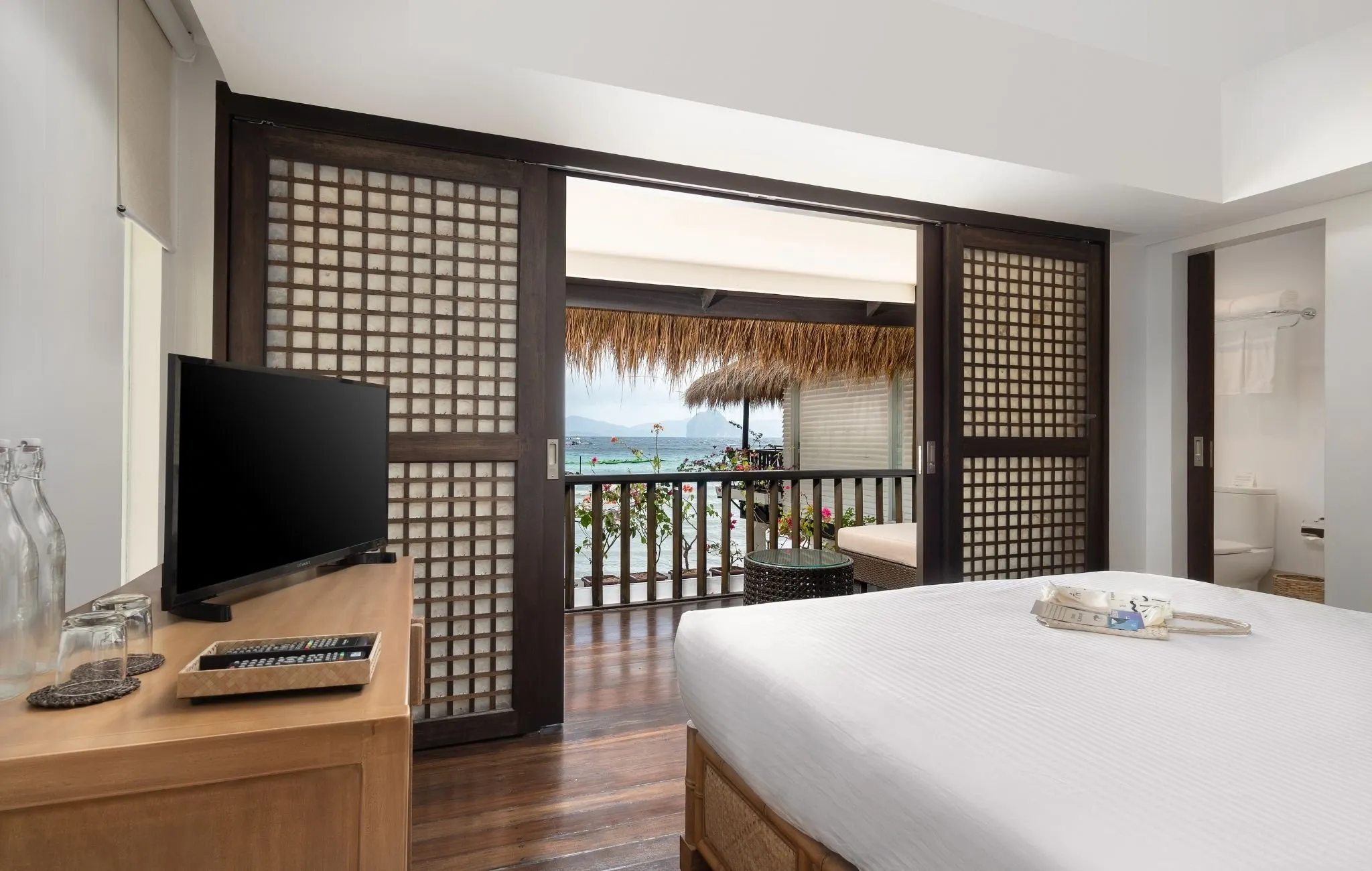
Inside, the cottages carry the same native-materials palette through to the furnishings: timber floors and paneling, thatch or timber-lined ceilings, woven textiles, and simple, uncluttered layouts that put the emphasis on the view rather than the room itself. Air conditioning and modern bathrooms are present throughout, so the rustic exterior does not come at the cost of basic comfort, but the design intent is closer to an elevated village guesthouse than to the glass-and-marble language of many contemporary luxury resorts. Verandas are a consistent feature across categories, positioned to catch either the direct waterfront in the case of the Water and Beachside categories, or the wider bay outlook from the Cliff Cottages on the hillside.
Newer and renovated categories, notably the Deluxe Seaview and Beachside Rooms, bring a slightly more contemporary finish and larger floor plans, but even these stay within the same material vocabulary rather than breaking from it. The result across the property is consistency: a guest moving between room categories, or from their cottage to the restaurant, stays within a single, coherent design idea rather than crossing between different aesthetic zones.
Atmosphere
Miniloc’s pace is set by its own geography as much as by its operator. Because the resort sits on a small island reachable only by boat, with no town, road traffic or neighboring development, the atmosphere is contained and unhurried in a way that is difficult to manufacture on a mainland property. Days tend to organize themselves around the tides and the light: an early kayak into the Small Lagoon before the day-trip boats arrive, a slow afternoon around the house reef, sundowners as the cliffs catch the last light.
It is a livelier, more activity-driven atmosphere than a pure wellness retreat, closer in spirit to a well-run dive and adventure camp that happens to have very comfortable beds. Staff, many with long tenures at the property, run a fairly structured daily program of excursions and water activities, which suits travelers who want their island time organized for them rather than left entirely open-ended.
Rooms and Suites
Accommodation at Miniloc splits broadly between water-level and hillside settings, with newer categories adding more contemporary space and finish at the beachfront end of the property.
Water Cottages are the resort’s most characteristic room type: built on stilts directly over the water along the base of the cliffs, with a double bed and space for two guests. These are the most traditional and most photographed category, prized for the sense of sleeping directly over the tide.
Garden Cottages sit back from the shoreline among tropical planting, again accommodating up to two guests, and offer the most secluded, least exposed setting on the property for travelers who want privacy over a direct water view.
Cliff Cottages climb the hillside behind the beach and are the largest standard category, sleeping up to five guests, which makes them a practical option for families or small groups who want more space without booking multiple rooms.
Seaview Rooms, also built on stilts above the water, sleep up to four guests and pair the elevated, over-water setting of the Water Cottages with more interior space.
Beachside Rooms sit directly in front of the resort’s white-sand beach, sleeping up to three guests, and are among the more recently renovated categories on the property.
Deluxe Seaview Rooms round out the range as the newer, more contemporary oceanfront category, sleeping up to three guests with twin-bed configurations available alongside double.
Across all categories, the emphasis stays on proximity to water and cliff rather than square footage; this is not a resort built around sprawling suites, and travelers looking for large-format villas will generally find more space at some of El Nido Resorts’ newer sister properties in the bay.
Dining
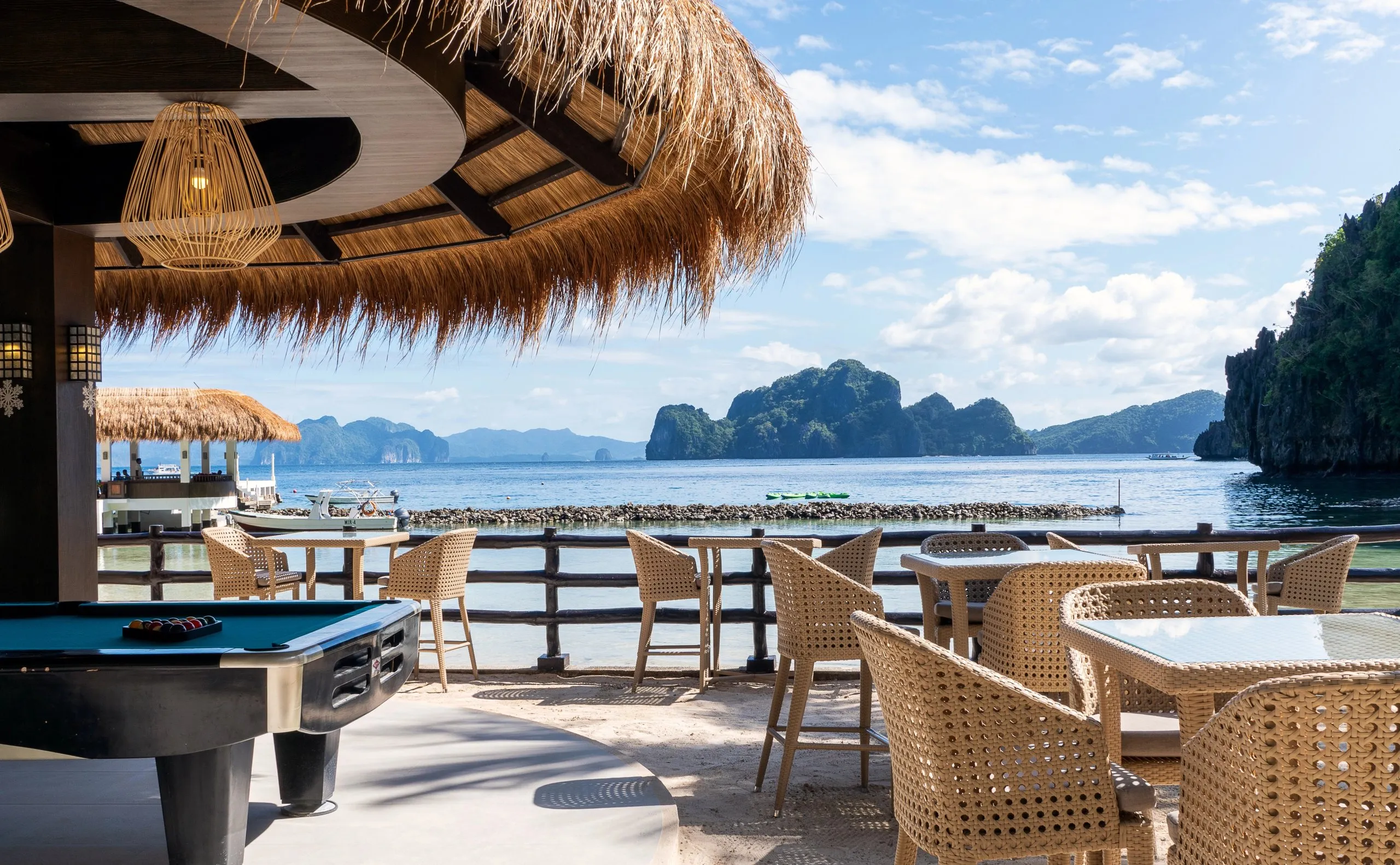
Miniloc centers its food and beverage program on a single main venue, the Clubhouse Restaurant, an open-sided, beachfront dining room built in the same Filipino village style as the rest of the resort, serving a mix of international dishes and Filipino specialties with sea views built into every table. A beach bar supplements the Clubhouse for casual drinks and lighter food through the day, and the kitchen draws on the resort’s own gardens for salad greens and herbs where possible, in keeping with the wider group’s sustainability commitments.
Guests staying at Miniloc can also arrange meals and excursions to two of El Nido Resorts’ other food venues within the same bay: Dibuluan Beach Club, a separate island stop used for lunch during boat excursions, and Entalula Beach Club, used similarly for a beach picnic lunch away from the main resort. Transfers to the group’s larger Lagen Island property, a short boat ride away, are also arranged for guests wanting a change of dining scene during a longer stay.
Spa and Wellness
Wellness at Miniloc is modest in scale but consistent with the resort’s overall pace: a dedicated spa and massage cabana offers body treatments, aromatherapy and beach massages, generally positioned to take advantage of the same water views as the guest cottages rather than enclosed in a windowless treatment block. There is no large-format spa complex on the scale of some destination wellness resorts; treatments here function as a complement to a day spent in the water rather than the central draw of the stay.
Experiences
Miniloc’s activity program is built around the fact that Bacuit Bay’s signature landmarks sit on the resort’s own doorstep. The Big Lagoon and Small Lagoon are both reachable by kayak or short resort boat directly from the property, and the Secret Lagoon, accessible via a swim through a narrow limestone tunnel, sits on the same stretch of coastline. Kayaks and snorkeling gear are available for independent exploration of the house reef, where a resident population of reef fish, and reported sightings of blacktip reef sharks and sea turtles, gives snorkelers a reasonable chance of a genuinely wild encounter without a boat trip.
Beyond the water immediately around the resort, Miniloc runs a fuller activity program that includes island-hopping to Snake Island’s sandbar, cave exploration, mangrove river tours, hiking, birdwatching and picnics on nearby beaches, generally organized through a resort activity coordinator rather than left to guests to book independently. A dedicated dive center operates from the property, with more than twenty dive sites accessible in the surrounding bay, ranging from shallow reef dives suited to beginners and certification courses to deeper sites known for macro life and larger schooling fish.
Who It Is For
Miniloc suits travelers who want El Nido’s geography, the lagoons, the cliffs, the reef, delivered with minimal separation between the resort and the landscape it sits inside. Snorkelers and divers are well served by the house reef and the on-site dive center, and families will find the Cliff Cottages and Beachside Rooms practical for groups larger than a couple. It is also a natural fit for travelers who want a more traditional, village-style architectural experience over the more contemporary villa resorts that have opened elsewhere in the bay in recent years.
It is a less obvious match for travelers seeking large, air-conditioned suites, a big-format spa, or the kind of hushed, adults-only atmosphere found at some newer luxury openings; Miniloc’s rooms are comfortable but modestly scaled, and its energy leans toward an active, activity-driven day rather than a still one.
Best Time to Visit
The most reliable weather window for El Nido runs from November through May, when rainfall is lowest and seas across Bacuit Bay tend to stay calmer, which matters directly for lagoon access and boat transfers on a resort reached only by water. December through April is generally regarded as peak season, with the driest, sunniest conditions and correspondingly higher demand. The wetter southwest monsoon season, roughly June through October, brings more frequent rain and rougher water, which can affect boat transfers and lagoon excursions, though it also means quieter beaches and lower rates for travelers willing to build some flexibility into their plans.
How to Get There
Access to Miniloc runs through El Nido Airport, also known as Lio Airport (IATA code ENI), a small private airstrip served principally by AirSWIFT, which operates ATR turboprop flights from Manila in around 55 minutes. On arrival, a resort representative meets guests at the airport and coordinates the transfer to Lio Jetty, followed by a boat crossing to the island of roughly 45 minutes; scheduled boat departures typically run several times a day in each direction, timed loosely around check-in and check-out. Puerto Princesa, Palawan’s main international airport, is a further five to six hours from El Nido by road and is generally a less practical routing than flying directly into Lio Airport, though it remains an option for travelers combining El Nido with other parts of Palawan.
Nearby Experiences
Beyond the lagoons that sit on Miniloc’s own island, Bacuit Bay’s wider archipelago is within reach by boat, including Snake Island’s sandbar, a narrow strip of sand connecting two islets that appears and disappears with the tide, and the coral gardens and cave systems that make this part of Palawan a long-standing dive destination in its own right. El Nido town, the mainland base for the wider municipality, sits within range of an organized excursion for travelers wanting a taste of local life beyond the resort’s own island, though most guests build a Miniloc stay around the resort’s own program rather than town-based day trips. A transfer to Lagen Island, El Nido Resorts’ larger sister property nearby, gives guests staying multiple nights a change of scene without leaving the group’s own network of islands.
Things to Know Before Booking
Miniloc is currently listed by El Nido Resorts as temporarily closed for essential repairs, part of a phased renovation program that has already been completed at its sister property, Lagen. Reopening timelines for island resorts of this kind can shift with weather, logistics and the scope of the work involved, so travelers should confirm current operating status, expected reopening dates and any interim arrangements directly with El Nido Resorts or a specialist Philippines travel agent before committing to dates.
Because the resort is accessible only by boat, itineraries need to build in some flexibility around transfer timing, particularly outside the dry season when rougher water can affect crossing schedules. Room categories at Miniloc are, by design, more modestly scaled than at some of El Nido Resorts’ newer properties, so travelers expecting large villa-style suites should look at sister properties in the group instead. Rates are generally sold on an all-inclusive or full-board basis covering meals, non-motorized activities and scheduled transfers, which makes like-for-like comparison with room-only pricing elsewhere in the region worth doing carefully.
Sustainability
Miniloc operates within El Nido Resorts’ wider sustainability program, run by parent company Ten Knots and its owner, Ayala Land, across all of its island properties in Palawan. The group maintains its own sewage treatment infrastructure using reed-bed filtration, a materials recovery facility for recyclable and organic waste, rainwater catchment, a desalination plant for freshwater supply, and solar power generation, reducing reliance on diesel shipped in from the mainland.
On the marine conservation side, El Nido Resorts co-founded the El Nido Marine Turtle Conservation Network and holds the world’s first Sea Turtle Friendly Tourism Certification from the Wildlife Friendly Enterprise Network, awarded for its work tagging and monitoring endangered turtle populations across Bacuit Bay. The group also maintains mooring buoys at more than twenty sites across the bay to reduce anchor damage to reef, runs bi-weekly coastal clean-ups, partners with universities on coral reef surveys, and has worked with the El Nido Foundation to install artificial reef structures. Guests can take part directly in some of this work, including mangrove walks and reef-monitoring outings, rather than encountering sustainability only as signage around the property.
Practical Information
Rates at Miniloc start from an indicative USD 650 per night for entry-level categories, typically sold on an all-inclusive or full-board basis that bundles meals, non-motorized water activities and scheduled transfers; travelers should confirm current pricing, package inclusions and operating status directly with El Nido Resorts or a specialist agent given the property’s temporary closure. Check-in is from 3:00 PM and check-out by 12:00 PM, timed around the resort’s scheduled boat transfers to and from Lio Jetty.
The nearest airport is El Nido Airport (Lio Airport, ENI), reached from Manila on AirSWIFT in around 55 minutes, followed by a resort transfer and a roughly 45-minute boat crossing to the island. November through May is the most reliable weather window, with December through April as the busiest and driest stretch. Most guests build a stay of three to four nights around Miniloc’s on-site lagoon access and activity program, often as one stop within a longer Palawan itinerary that includes one of El Nido Resorts’ other island properties or a separate stay in El Nido town.
Editorial Conclusion
Miniloc’s case rests on a straightforward piece of geography: a resort built on the same small island as two of the most photographed lagoons in the Philippines, reachable by kayak rather than tour boat. That proximity, combined with an architecture that has stayed close to its origins as a native-style fishing camp rather than chasing a more contemporary luxury vocabulary, gives Miniloc a character distinct from newer arrivals elsewhere in Bacuit Bay. It rewards travelers who want to spend their days in and on the water, with the lagoons, the reef and the dive sites doing most of the work, rather than those seeking a large-format spa or oversized suites. Given its current closure for essential repairs, the practical first step for anyone drawn to it is confirming reopening dates directly with El Nido Resorts, but the underlying appeal, a compact, water-level resort inside one of Southeast Asia’s most striking limestone bays, has not changed.
In pictures

On the map
Miniloc Island, Bacuit Bay, El Nido, Philippines
Questions
Frequently asked
What are the room categories at Miniloc Island Resort?
Miniloc has around 50 rooms across several categories built in the style of a native Filipino village. Garden Cottages and Water Cottages are the more traditional, rustic categories, the latter built on stilts along the shoreline; Cliff Cottages sit up on the hillside for elevated views; and Beachside Rooms and Deluxe Seaview Rooms are newer, larger categories built directly on or above the sand. All are thatched-roof structures finished in native materials rather than the glass-and-concrete style of some newer luxury resorts in the bay.
Can guests reach the Big Lagoon and Small Lagoon directly from the resort?
Yes. Miniloc Island Resort sits on the same island as the Big Lagoon, Small Lagoon and Secret Lagoon, three of Bacuit Bay's best-known landmarks, along with Payong-Payong beach. Guests can kayak or take a short resort boat to reach them rather than joining an El Nido town island-hopping tour, which is one of the main reasons this particular property, among El Nido Resorts' island properties, draws repeat visitors.
How do guests get to Miniloc Island Resort?
Most guests fly into El Nido Airport (also known as Lio Airport, code ENI) on AirSWIFT from Manila, a flight of roughly 55 minutes. A resort representative meets arrivals at the airport and transfers them to Lio Jetty for a boat crossing to the island, typically around 45 minutes. Puerto Princesa, Palawan's main international gateway, is a further road journey of around five to six hours from El Nido and is a less practical route for most travelers.
Is Miniloc Island Resort currently open?
El Nido Resorts has listed Miniloc as temporarily closed for essential repairs as part of a phased renovation program across its island properties (Lagen has already reopened following a similar closure). Travelers should confirm current operating status and reopening dates directly with El Nido Resorts or a specialist agent before booking, since timelines for island-resort refurbishments in the Philippines can shift with weather and logistics.
What is included in the room rate?
El Nido Resorts properties, including Miniloc, are typically booked on an all-inclusive or full-board basis covering accommodation, meals, selected non-motorized activities such as kayaking and snorkeling gear, and the scheduled boat and land transfers between the airport and the resort. Specialist dive courses, spa treatments and some excursions are usually charged separately.
Is Miniloc suitable for families?
Yes. Several room categories, including Cliff Cottages and Beachside Rooms, accommodate three to five guests, and the resort's calm house reef, shallow lagoons and organized activity program suit children old enough to swim and snorkel. It is a more low-key, activity-oriented property than some of the newer luxury openings in the bay, which tends to suit multi-generational groups as much as couples.
Same destination
More hotel guides in Philippines
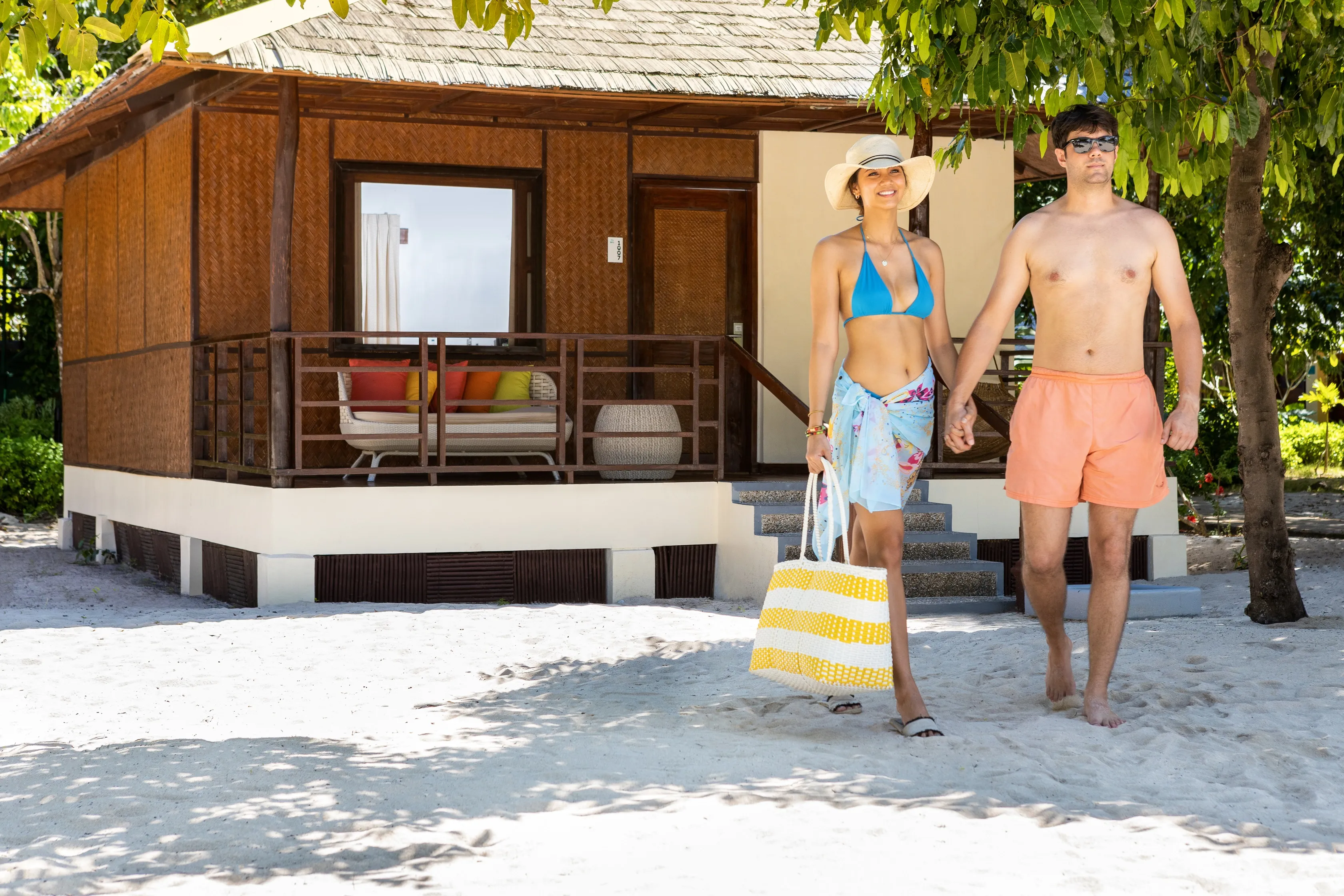
Dimakya Island, Busuanga, Coron, Philippines
Discovery Coron
A nineteen-hectare private island off northern Busuanga, diving Coron's Japanese wrecks by day and disconnecting from everything else after dark.
From $260 per night
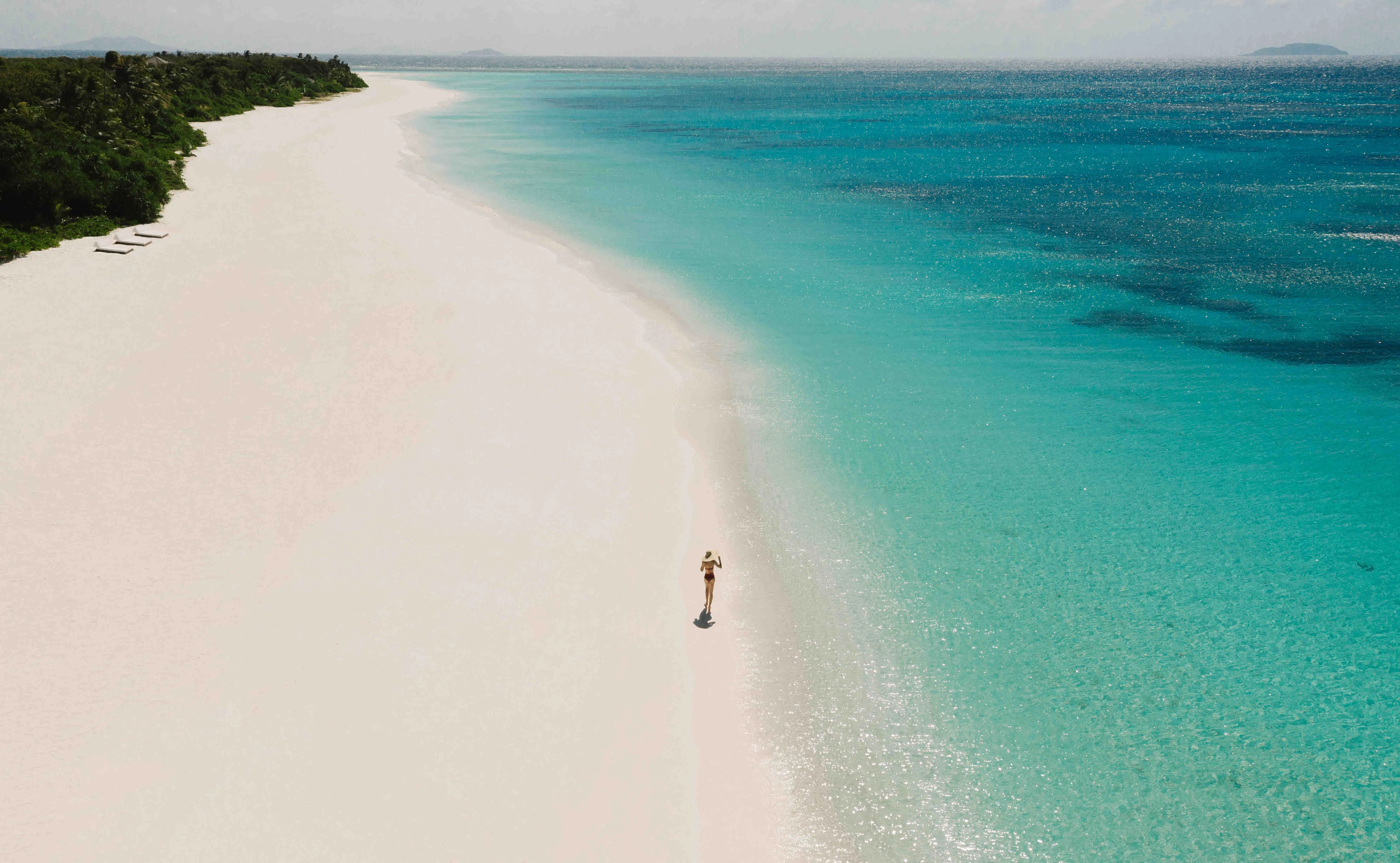
Pamalican Island, Cuyo Islands, Philippines
Amanpulo
A private island in the Cuyo archipelago, reachable only by Aman's own aircraft, built around bahay kubo-inspired casitas set beneath forty-year-old coconut palms.
From $1,900 per night
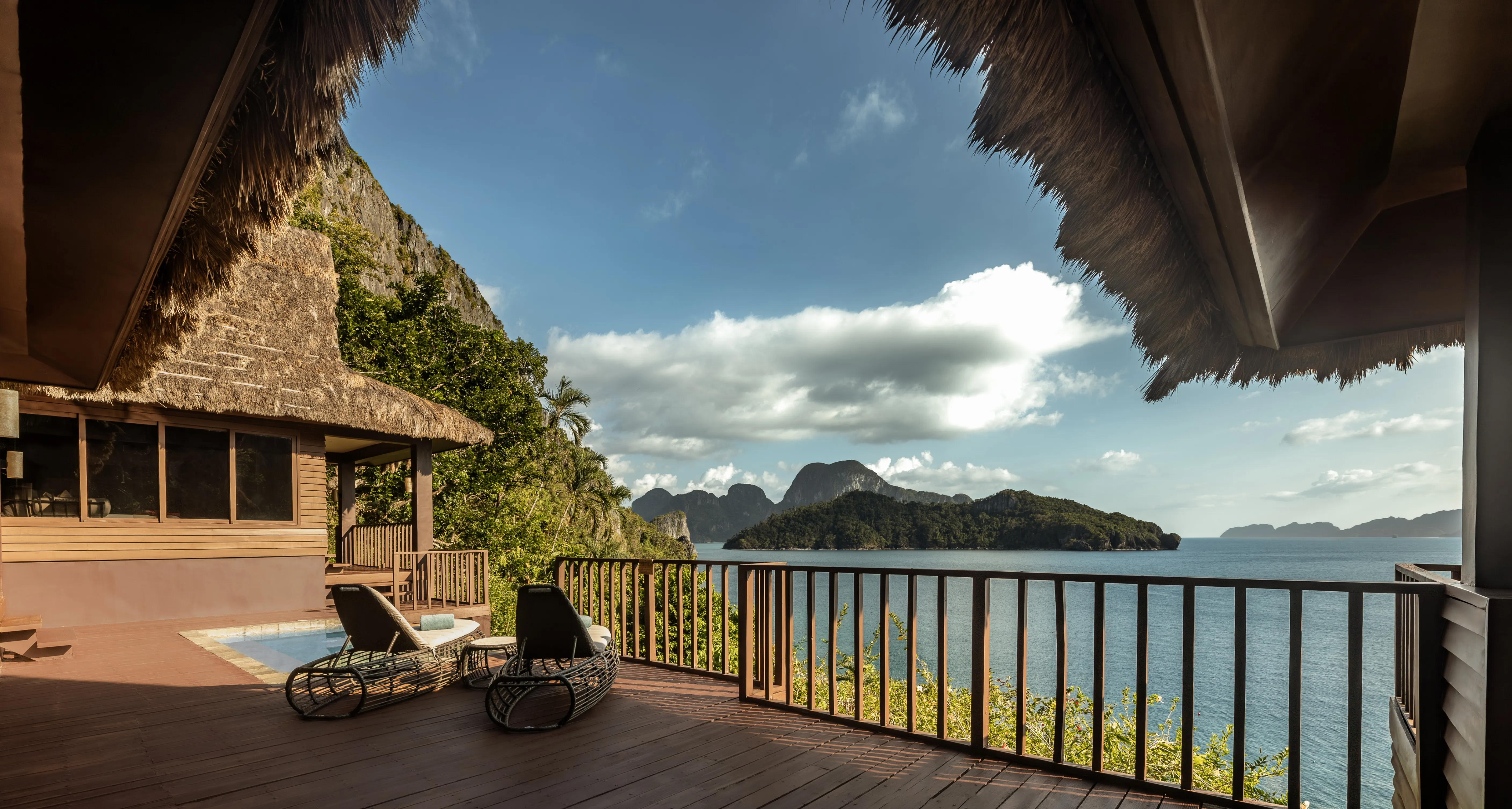
Cauayan Island, Bacuit Bay, El Nido, Philippines
Cauayan Island Resort
A privately owned island in Bacuit Bay, thirty stilt-raised villas set between limestone cliffs and open water, reachable only by boat.
From $500 per night