Marunouchi, Chiyoda, Japan
Palace Hotel Tokyo
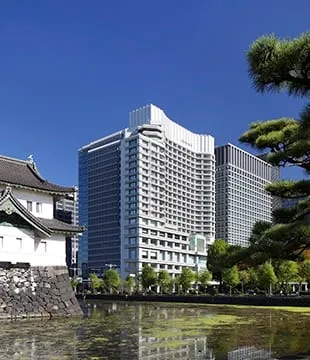
A Marunouchi institution rebuilt from the ground up in 2012, with 266 rooms and 18 suites facing the moat, the pines and the Otemon Gate of the Imperial Palace.
- Rates from
- From ¥118,000 per night
- Nearest airport
- Tokyo Haneda Airport (HND)
- Transfer
- Around 30 to 40 minutes by taxi or airport limousine bus, or about 30 minutes by train via monorail or the Keikyu line, traffic and connections permitting
- Best months
- Late March to April for cherry blossom and October to November for autumn foliage, though the hotel's indoor dining and spa make it a reliable year-round base
There is exactly one hotel in Tokyo that can claim the address directly across the water from the Imperial Palace’s Otemon Gate, and it has held that position, in one form or another, since 1947. Palace Hotel Tokyo is not the tallest or the newest name in the city’s crowded luxury tier, but its geography is not replicable: a 23-storey block in Marunouchi with the palace moat, its pines and its stone walls on one side, and the financial district’s towers on the other.
The current building is only the hotel’s second incarnation, opened in 2012 after the 1961 original was demolished and rebuilt from the ground up. Before that, the same plot briefly held Hotel Teito, a postwar property opened in 1947 under Allied occupation authorities in what had originally been the Imperial Household’s Forestry Office. That layered history, plus a decade spent since the 2012 reopening racking up Forbes five-star ratings and, more recently, the MICHELIN Guide’s Three Keys, is what separates Palace Hotel Tokyo from other business-district five-stars: it reads as an institution that happened to modernize, not a new hotel borrowing gravitas from its address.
This guide covers what the hotel actually is today: a 284-room and suite property split between palace-facing and city-facing categories, a ten-venue restaurant and bar programme anchored by a Michelin-starred French dining room, an Alpine-themed evian spa, and a location that puts Tokyo Station, Otemachi, Ginza and Nihonbashi all within a short walk.
Why It Stands Out
Plenty of Tokyo hotels advertise proximity to the Imperial Palace; Palace Hotel Tokyo is the one actually named for it and sitting on its moat. The address at 1-1-1 Marunouchi has carried a hotel since the postwar occupation years, giving the property a claim to institutional continuity that its glassy 2012 exterior does not immediately suggest. Add a Michelin-starred restaurant under Alain Ducasse’s supervision, sushi from a chef behind a two-star restaurant elsewhere in the city, and the MICHELIN Guide’s Three Keys, a hotel rating introduced only in 2024 and held by a small handful of Tokyo properties, and the hotel’s case rests on a combination of location and consistency that is hard for newer arrivals to match.
Architecture
The present 23-storey building, completed in 2012, was designed by Mitsubishi Jisho Sekkei, the architecture practice responsible for a large share of the Marunouchi business district’s office towers, including many of the buildings visible from the hotel’s own city-facing rooms. It replaced the 1961 Palace Hotel, founded by Masatomo Yoshihara and opened on 1 October 1961 with a gala reception for 5,000 guests, itself notable for being the first hotel in Tokyo built to share a site with an office building, and for winning the Architectural Institute of Japan Prize in 1963 for reconciling modern construction with Japanese aesthetics. That original hotel operated for nearly half a century before closing in 2009 for a full three years of demolition and rebuilding. The 2012 rebuild deliberately kept a link to the demolished structure: the new facade retains the shigaraki tiles that lined the original hotel’s exterior, a small but pointed gesture toward continuity on a site that could easily have been handed to an entirely anonymous tower, and one of the few visible threads connecting the glass-and-steel building of today to the postwar and 1960s hotels that preceded it on the same plot.
Interior Design
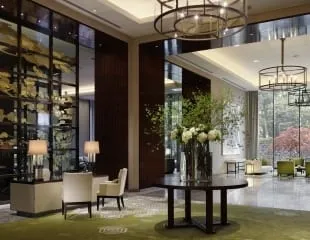
Public spaces, all 266 rooms and all 18 suites were designed by GA Design International, working to a brief to produce, in the design team’s own framing, a hotel that honestly reflects its surroundings and heritage in material choices rather than literal ornament. Grey marble runs through the lobby and corridors, chosen for an effect the designers described as strength and harmony; bespoke hand-tufted carpets in deep green draw on traditional kimono fabric patterns; door frames and wall panels in macassar ebony are used as “portals” linking one public space to the next. Stone walls, wide corridors and wooden design gates borrow the vocabulary of a stately residence rather than a conventional hotel lobby. The result favours restraint and craftsmanship over spectacle, closer to the register of a private members’ club than a statement hotel entrance, which suits a building whose main view, on one side at least, is a centuries-old moat rather than a skyline.
Atmosphere
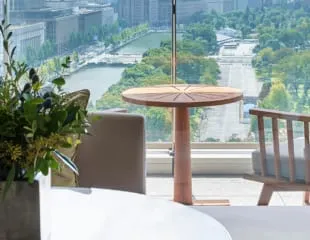
Marunouchi is Tokyo’s financial and corporate core, and the hotel’s day-to-day rhythm reflects that: business travellers and Otemachi executives moving through the lobby on weekday mornings, a Club Lounge on the 19th floor doing steady trade, and a formality to service that suits the neighbourhood. What softens it is the palace side of the building. Rooms and lounges facing the moat trade the district’s office-tower energy for a genuinely quiet, green outlook, pine trees and stone ramparts instead of glass curtain walls, a contrast few hotels in central Tokyo can offer within the same building.
Rooms and Suites
The hotel holds 266 rooms and 18 suites, 284 keys in total, across categories that start at 45 square metre Deluxe and Deluxe with Balcony rooms and rise through the 55 square metre Grand Deluxe. Club-designated versions of these same categories (Club Deluxe, Club Deluxe with Balcony, Club Grand Deluxe) add access to the 19th-floor Club Lounge. Suites run from the 75 square metre Executive and Garden Suites through the Chiyoda Suite, the 90 square metre Premier Suite, the 120 square metre Park and Terrace Suites, up to the Palace Suite, the hotel’s flagship at 210 to 250 square metres on the 18th floor. Every category, the hotel notes, is designed to look out over either the palace gardens and moat or the Marunouchi skyline; which side a guest faces is worth specifying at booking, since the two views set genuinely different tones for a stay. Club categories add access to the 19th-floor Club Lounge, where breakfast, all-day refreshments and evening cocktails are served with its own outlook over the city, a useful add-on for guests who want a quieter alternative to the ground-floor restaurants for casual meals between meetings or sightseeing. The Palace Suite, the hotel’s largest accommodation on the 18th floor, is sized closer to a private apartment than a hotel room and is the category most often used for the hotel’s high-end wedding and event bookings, alongside the property’s dedicated convention and banqueting facilities.
Dining
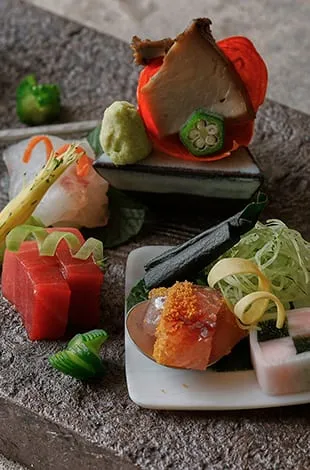
Palace Hotel Tokyo runs ten restaurants and bars, an unusually large in-house collection for a single property, built around several outside chef partnerships rather than one signature name. Esterre by Alain Ducasse, on the sixth floor with floor-to-ceiling views toward the palace gardens, serves contemporary French cuisine built on Japanese produce under chef Kei Kojima, formerly of the three-Michelin-starred Le Louis XV in Monaco; it holds a star in the current MICHELIN Guide Tokyo. Wadakura serves Japanese kaiseki, with a tempura counter and a sushi bar operated in partnership with Shinji Kanesaka, whose own restaurant Sushi Kanesaka carries two Michelin stars. Amber Palace, the hotel’s Chinese restaurant, is run by the Chugoku Hanten Group, known elsewhere in Tokyo for the two-starred Fureika, and serves Shanghainese and Cantonese dishes. Grand Kitchen offers an all-day, multi-cuisine menu spanning American, French, Spanish and Italian registers with Japanese touches, GO is a teppanyaki counter, and the bar programme runs from the classic cocktails of the Royal Bar to the Palace Lounge, which pairs afternoon tea and cocktails with live jazz most evenings, and the more intimate Lounge Bar Prive, which looks out over the palace gardens and the Marunouchi skyline. A Sweets & Deli counter turns out chocolates, bread and seasonal pastries for takeaway, and in-room dining runs 24 hours for hotel guests. The overall approach, several outside chef partnerships housed under one roof rather than a single named chef’s restaurant defining the property, gives Palace Hotel Tokyo a broader and more varied dining identity than most comparable five-stars in the city, at the cost of the single unmistakable signature restaurant some competitors build their reputation around.
Spa and Wellness
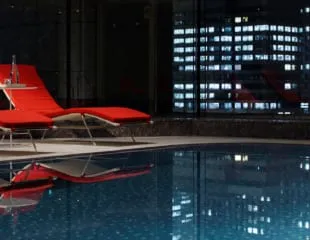
evian SPA TOKYO, the first evian-branded spa in Japan, occupies around 1,200 square metres with floor-to-ceiling windows and, on clear days, views toward Mount Fuji. Its design draws on the journey evian mineral water takes through the French Alps, with treatment rooms named after Alpine peaks, marble saunas, and separate relaxation lounges for men and women. Treatments use French lines including Anne Semonin and Omnisens alongside the Japanese brand warew. The spa has held a Forbes Travel Guide five-star rating for multiple consecutive years. House guests also have access to an indoor pool and a fitness centre, and the hotel runs complimentary morning yoga sessions on Saturday and Sunday mornings for guests of any experience level. The evian partnership is the spa’s organising idea throughout: rather than a generic hotel spa carrying a well-known water brand’s name, the treatment concept, room names and even some product formulations are built around the mineral water’s journey through the French Alps, giving the spa a more coherent identity than the pairing might initially suggest.
Experiences
Beyond dining and the spa, the hotel’s positioning gives it a distinct role in a Tokyo stay: it functions less as a resort with in-house programming and more as an extremely well-placed base for the city itself. Its direct underground connection to Otemachi station and its short walk to Tokyo Station’s Shinkansen platforms make it a practical anchor for guests splitting time between Tokyo and day trips to Hakone, Kyoto or Nikko, while its palace-facing rooms and lounges offer a version of Tokyo, quiet, green, historically layered, that the city’s other five-star addresses in Ginza or Roppongi cannot replicate. The hotel’s convention, meeting and wedding facilities also make it a working venue for corporate Tokyo, not simply a backdrop for it: guests staying for leisure will notice a steady flow of business events and functions moving through the building’s lower floors, a reminder that Marunouchi’s identity as the country’s financial and corporate heartland is as central to the hotel’s daily life as its palace view.
Who It Is For
The hotel suits business travellers with meetings in Otemachi or Marunouchi who still want a genuine sense of place rather than a generic tower; first-time Tokyo visitors who want one exceptionally central, well-connected base for the whole trip; serious diners visiting specifically for Esterre or the hotel’s sushi and Chinese restaurants; and design-minded guests who appreciate a hotel that treats restraint, rather than maximalism, as its main statement. It is less suited to travellers chasing nightlife-adjacent addresses in Shibuya or Shinjuku, since Marunouchi is a business district that quiets down considerably after office hours.
Best Time to Visit
Cherry blossom season, typically late March into April, and the autumn foliage window from late October through November, are the two peak periods, both worth booking well in advance given demand across Tokyo generally. Because so much of the hotel’s appeal, its restaurants, spa and palace-view rooms, works indoors, it remains a comfortable choice through the humid summer months and Tokyo’s cooler winters as well, when rates are often more accessible.
How to Get There
Haneda Airport is the closer of Tokyo’s two international gateways, around 20 kilometres from the hotel, reachable in roughly 30 to 40 minutes by taxi or airport limousine bus depending on traffic, or about 30 minutes by monorail or train connecting into central Tokyo. Narita Airport is considerably further, around 60 kilometres away, with a journey of roughly 60 minutes by the Narita Express train to Tokyo Station (an eight-minute walk from the hotel) or by taxi in light traffic, extending to 80 to 120 minutes by airport limousine bus.
Nearby Experiences
The Imperial Palace East Gardens are about a five-minute walk away, and the Kokyo Gaien plaza in front of the palace, with views of the Nijubashi bridges, is similarly close. Otemachi station connects directly to the hotel by underground passage, and Tokyo Station, an eight-minute walk, offers Shinkansen access to the rest of Japan. Ginza’s flagship shopping and Nihonbashi’s older commercial streets are both reachable on foot in under twenty minutes, and the Mitsubishi Ichigokan Museum, a red-brick Victorian-style building turned art museum, sits within the same Marunouchi district a short walk from the hotel. Marunouchi Naka-dori, the tree-lined avenue running through the business district’s ground floors, is worth a slower walk in its own right for its mix of flagship boutiques, seasonal street art installations and the KITTE building’s food halls and observation deck overlooking Tokyo Station. For guests with more time, the hotel’s Shinkansen-adjacent position at Tokyo Station makes it a workable base for day trips to Kamakura, Nikko or the hot-spring town of Hakone, all reachable within roughly ninety minutes to two hours by train.
Things to Know Before Booking
Guests who want the moat and palace outlook should specify a palace-facing room at booking, since city-facing categories look toward the Marunouchi office towers instead. Esterre and the hotel’s other named-chef restaurants can book up during peak Tokyo travel weeks, so reservations are worth making at the same time as the room. Marunouchi is a corporate district rather than a nightlife one, so guests planning late evenings out are better based near, but not necessarily eating dinner near, the hotel.
Sustainability
Palace Hotel Tokyo became the first Japanese-owned and operated hotel to earn certification from the Global Sustainable Tourism Council, announced in early 2026. Its Eco-Palace programme, running since the late 1990s, was an early adopter in the Japanese hotel industry of converting kitchen food waste into compost, which is used by a partner farm to grow rice the hotel then buys back for staff meals. The hotel says it met, ahead of schedule, a target to cut usage of specified single-use plastics by 60 percent against a 2019 baseline, and it upcycles waste cooking oil from its restaurants into biodegradable dish and hand soap. In 2025 the hotel reported that 61 percent of its food ingredients were sourced domestically and 73 percent of fresh produce was grown within Japan, and it works with the Ministry of the Environment’s Kokyogaien National Garden Office on monitoring aquatic plant growth in the adjacent Wadakura moat, the body of water separating the hotel from the palace grounds it faces. Sustainability governance runs through a Sustainability Liaison Group made up of department heads, meeting monthly under the hotel’s senior managing director and general manager, with all staff required to complete training on the GSTC framework and the hotel’s own sustainability policies. The hotel also donates excess baked goods to Food Bank Net, a food-poverty charity operating in Saitama Prefecture, and upcycles waste cooking oil from its ten restaurants and bars into a biodegradable dish and hand soap used in back-of-house operations.
Practical Information
Palace Hotel Tokyo is located at 1-1-1 Marunouchi, Chiyoda-ku, Tokyo, directly across the moat from the Otemon Gate of the Imperial Palace. Check-in is from 3:00pm and check-out by 12:00pm. Entry-level Deluxe rooms start at roughly JPY 118,000 per night before tax and service, moving considerably higher for palace-facing categories, Club access and suites; treat this figure as an indicative starting point rather than a fixed rate, since pricing shifts with season and availability. The hotel is a member of the Leading Hotels of the World collection and holds the MICHELIN Guide’s Three Keys distinction alongside a Forbes Travel Guide five-star rating.
Editorial Conclusion
Palace Hotel Tokyo’s case rests on a piece of geography no competitor can duplicate and a decade of consistency since its 2012 rebuild that has kept it near the top of the city’s five-star tier without leaning on novelty. The moat-facing rooms and the Marunouchi address do the work that a hotel’s branding usually has to do artificially; everything else, the Ducasse-supervised dining room, the Alpine-themed spa, the direct Otemachi subway connection, functions as confirmation that the institution behind Tokyo’s most historically loaded hotel address has kept pace with the city around it.
In pictures
On the map
Marunouchi, Chiyoda, Japan
Questions
Frequently asked
Is Palace Hotel Tokyo actually across from the Imperial Palace?
Yes. It stands at 1-1-1 Marunouchi, directly across the moat from the Otemon Gate, one of the main entrances to the Imperial Palace grounds. Rooms on the palace-facing side look over the water, the pines and the palace's outer walls rather than the city.
How old is the hotel, and is the current building the original one?
The address has hosted a hotel since 1947 and the Palace Hotel name since 1961, but the building in use today is not the original. The hotel closed in 2009, was demolished, and reopened in 2012 as Palace Hotel Tokyo after a full rebuild by architecture firm Mitsubishi Jisho Sekkei, which retained the shigaraki roof tiles and some decorative elements from the 1961 structure.
Does the hotel have a Michelin-starred restaurant?
Esterre by Alain Ducasse, the hotel's French restaurant on the sixth floor, holds a Michelin star in the 2026 Tokyo guide. The hotel's Chinese restaurant, Amber Palace, and its sushi counter, run in partnership with chef Shinji Kanesaka of the two-starred Sushi Kanesaka, are also part of a ten-venue restaurant and bar collection. The hotel as a whole holds the MICHELIN Guide's Three Keys distinction, its highest hotel rating, awarded since the ratings launched in 2024 and retained in 2025.
What is the nearest train station?
Tokyo Station is roughly an eight-minute walk from the Marunouchi North Exit, with direct Shinkansen, JR and subway access. The hotel is also directly connected by underground passage to Otemachi subway station, which serves several Tokyo Metro lines.
Is there a spa and pool?
evian SPA TOKYO occupies around 1,200 square metres with treatment rooms named after Alpine peaks, separate men's and women's relaxation lounges, and an indoor pool and fitness centre for house guests. It holds a Forbes Travel Guide five-star rating.
Same destination
More hotel guides in Japan
Otemachi, Chiyoda, Japan
Aman Tokyo
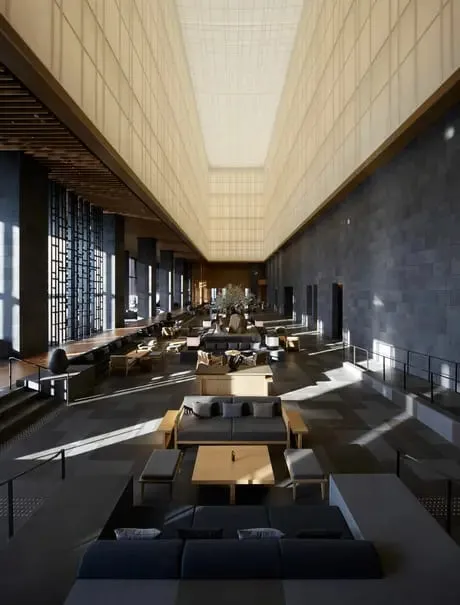
Six floors of dark basalt and washi paper, stacked atop a financial-district tower, where a giant paper lantern lobby turns the Otemachi skyline into a Japanese garden.
From ¥250,000 per night
Naoshima, Seto Inland Sea, Japan
Benesse House
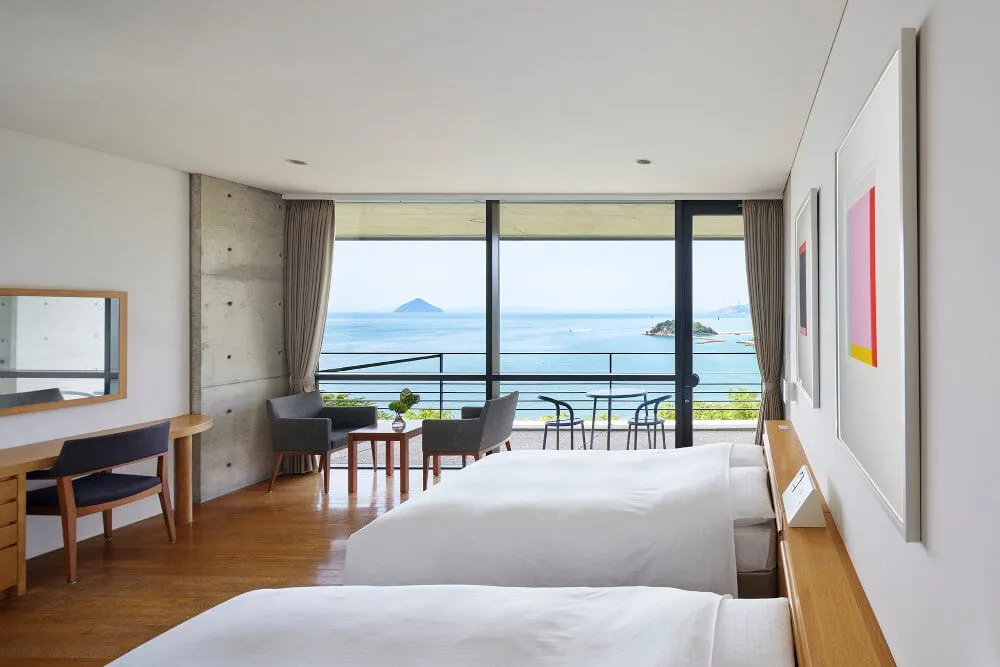
A Tadao Ando concrete museum with guest rooms built into its galleries, the founding building of the Seto Inland Sea's art-island movement.
From ¥40,000 per night
Otemachi, Chiyoda, Japan
Four Seasons Hotel Tokyo at Otemachi
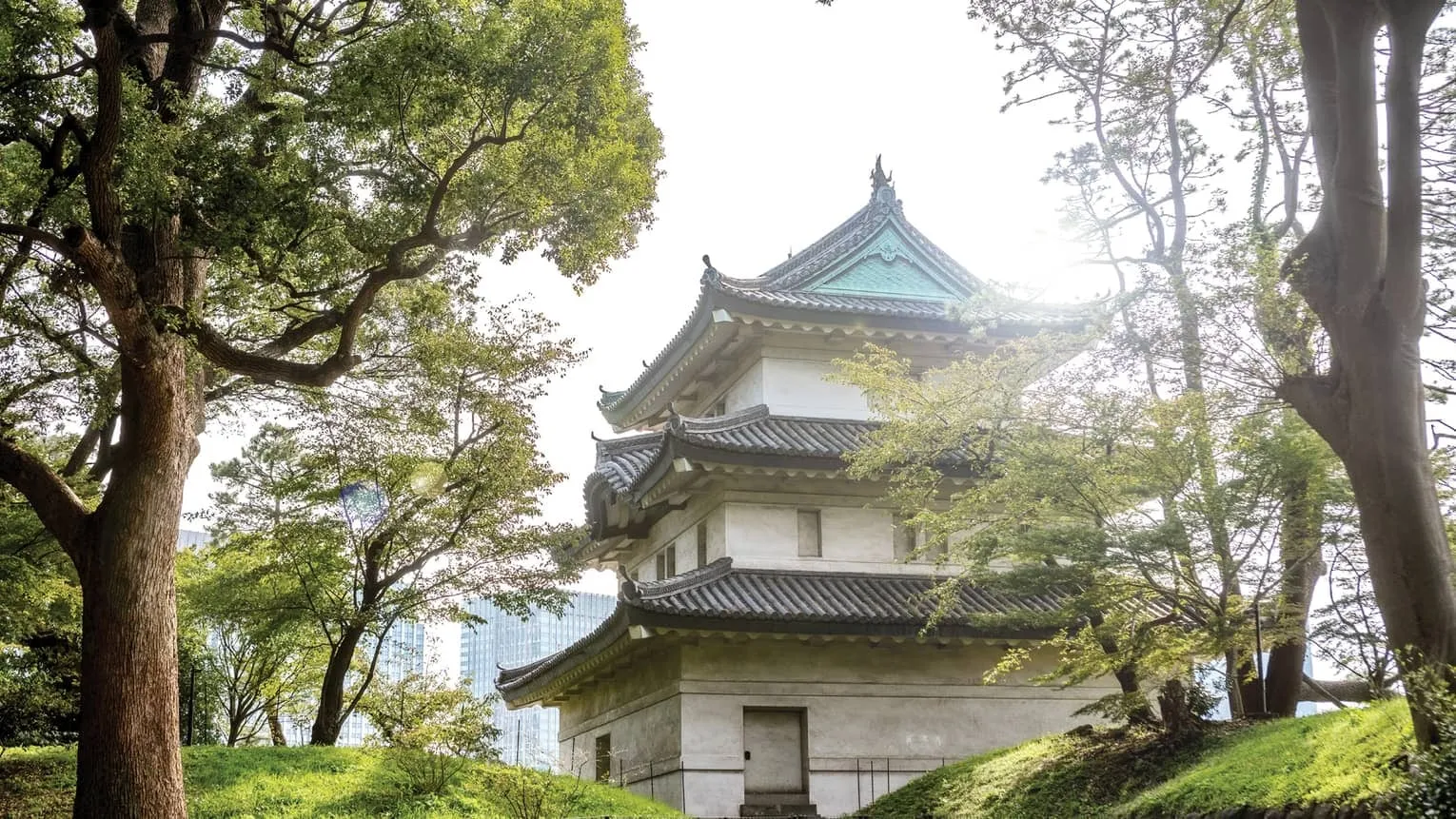
A 190-room aerie stacked into the top six floors of a Tokyo financial-district tower, with the Imperial Palace moat on one side and a Michelin star in the kitchen.
From ¥145,000 per night