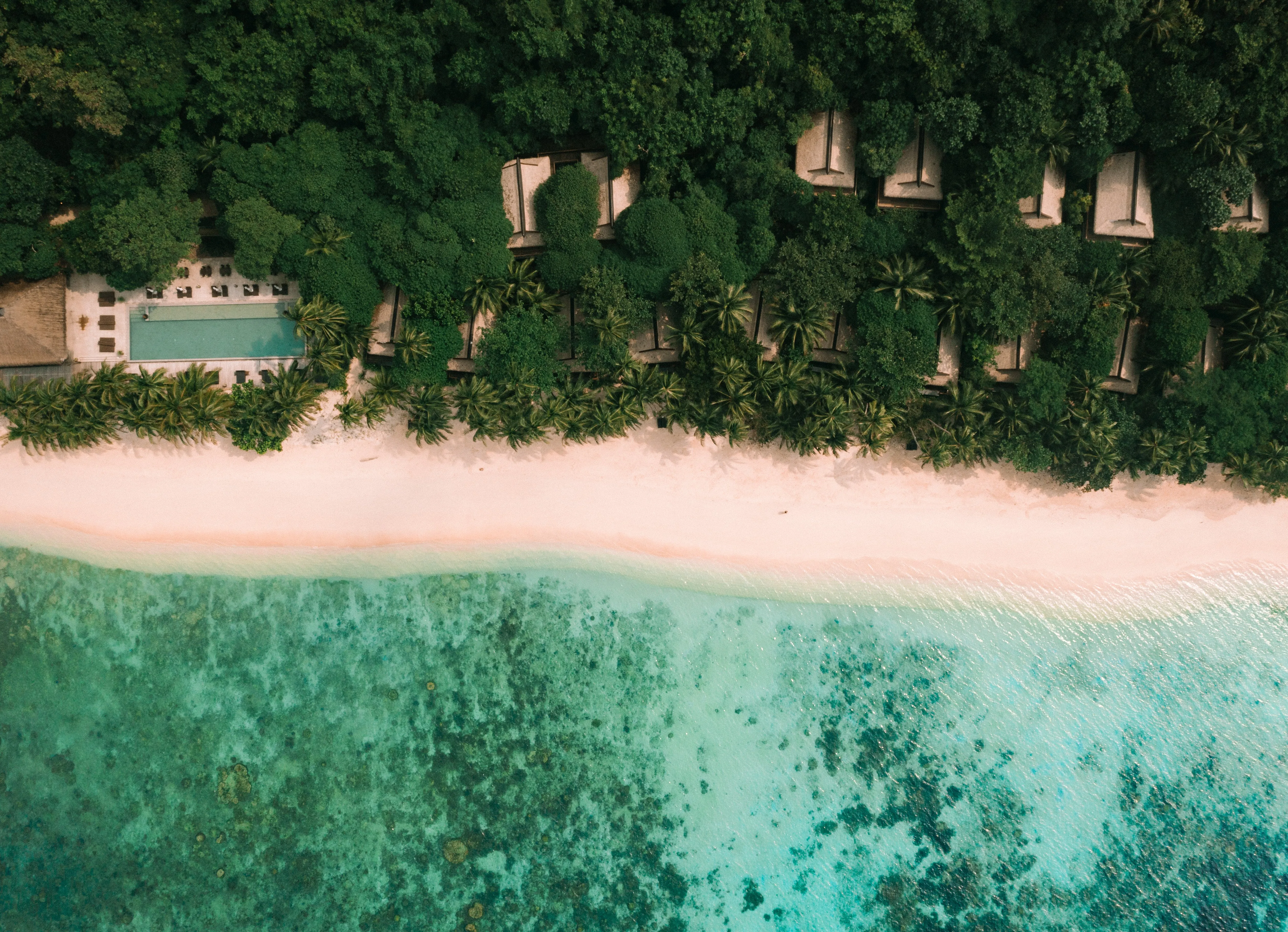
Pangulasian Island, Bacuit Bay, El Nido, Philippines
Pangulasian Island Resort
A single private island in Bacuit Bay's karst-ringed waters, built to forty-two Filipino-designed villas and positioned as El Nido Resorts' most exclusive address.
- Rates from
- From $900 per night
- Nearest airport
- El Nido (Lio) Airport (ENI)
- Transfer
- About 55 minutes by chartered plane from Manila to Lio Airport, then a roughly 30 to 45 minute scheduled boat transfer to the island
- Best months
- December to May, Palawan's dry season, when Bacuit Bay is calmest for boat transfers and island-hopping
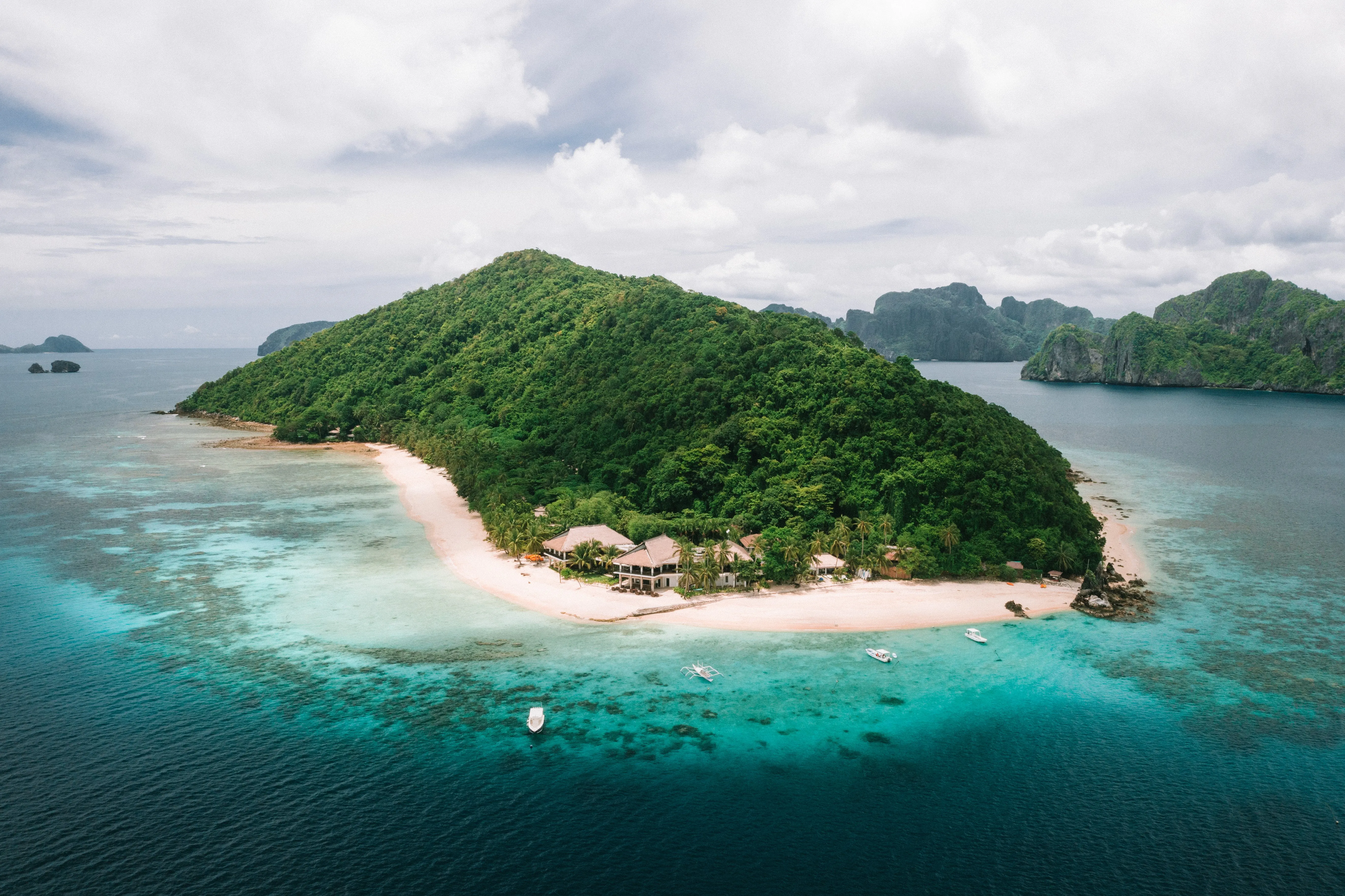
There is a particular kind of quiet that only a single-island resort can offer, and Pangulasian trades on it deliberately. No other hotel shares its shoreline, no other guests wander past on their way somewhere else, and the 750 metres of white sand that wraps the island’s eastern edge belongs, for the length of a stay, entirely to whoever is booked there. It is the smallest and most recently built of the four resorts that make up El Nido Resorts, the group that has spent decades defining what a private-island stay in the Philippines looks like, and it was designed from the outset to sit at the top of that group’s own hierarchy: the most architecturally considered, the most restrained in scale, the most private of the four.
Pangulasian sits inside Bacuit Bay, the scatter of limestone karst islands off El Nido, Palawan, that gave this whole corner of the Philippines its reputation. The bay is a protected marine reserve, its towering rock formations rising almost vertically out of turquoise water, its hidden lagoons reachable only by paddling or swimming through narrow rock openings. The resort’s own island is modest in size, a low forested hill ringed by beach and reef, but its setting inside that karst geography is the reason people travel this far to begin with: nowhere else in the Philippines packs quite so much dramatic limestone scenery into a single, boat-accessible bay.
What distinguishes Pangulasian within the El Nido Resorts portfolio, and within the wider crowd of Philippine private-island properties, is a design brief that resisted the obvious move of importing a generic tropical-luxury look. Instead of teak villas that could sit on any beach from Bali to the Maldives, the resort committed to a specifically Filipino architectural and material vocabulary, built by the same group whose earlier properties, Miniloc and Lagen, had already established a slower, more understated model of island hospitality. Pangulasian is where that model was given its most polished expression.
Why It Stands Out
The case for Pangulasian rests on scale as much as setting. With only 42 villas spread across an island with no other lodging and no permanent local population competing for shoreline, density here reads closer to a private compound than a conventional resort footprint. That scarcity is a structural choice, not a marketing line: El Nido Resorts operates three other properties within a short boat ride, Miniloc, Lagen and Apulit, each with a different character and price point, which frees Pangulasian to be positioned squarely as the group’s most exclusive and most design-forward address rather than trying to be all things to all travellers.
The island’s own hilltop adds something few resorts in this bay can offer: an on-site 30-minute forest walk that ends at a view deck looking out across the full sweep of Bacuit Bay’s karst islands, useful for sunrise, sunset, or simply understanding the geography a guest has flown and boated so far to reach. Paired with a signature in-house experience, swimming alongside juvenile blacktip reef sharks in the shallows just off the resort, Pangulasian offers a set of things to do that exist because of this specific island rather than because a spa menu needed filling out.
Ownership matters here too. Pangulasian and its three sister resorts are operated by Ten Knots Philippines, now a subsidiary of Ayala Land, one of the country’s largest property developers, which took a controlling stake in the operator in 2010. That corporate backing has translated into a sustainability and conservation programme (detailed further below) that is unusually substantial for a resort of this size, including a marine-turtle protection effort that has drawn international certification. For travellers weighing an island stay against its environmental footprint, that track record is a genuine point of differentiation rather than incidental good behaviour.
Architecture
Pangulasian opened in December 2012 as the newest and, at the time, most ambitious addition to the El Nido Resorts group. Its 42 villas were built in a contemporary Filipino idiom: sleek, low-slung structures with open, cross-ventilated layouts, palm-thatched roofs, and a material palette drawn from rattan and abaca rather than the imported hardwoods more common across Southeast Asian resort architecture. The intent was for the buildings to read as an evolution of Filipino vernacular construction rather than a foreign luxury template dropped onto a Philippine beach, and the choice of local, renewable materials over shipped-in stone or dense tropical timber was as much an environmental decision as an aesthetic one, keeping the resort’s physical footprint lighter on an island with no existing infrastructure to build from.
The four villa categories were sited according to the island’s own terrain rather than forced into a uniform layout. The 24 Beach Villas occupy the flattest, most sheltered stretch of shoreline, close to the resort’s centre of gravity: the infinity pool, beach bar and main restaurant. The 8 Canopy Villas were built roughly 15 metres up into the forest canopy, connected by an elevated timber walkway that threads between the trees, an arrangement that trades beach proximity for a genuinely different vantage point over the treetops and out toward the bay. The 6 Pool Villas sit in a more secluded position again, each with its own private 22-square-metre pool, and the 4 Kalaw Villas occupy a cove on the island’s western side, deliberately separated from the rest of the resort and built to share a single 85-square-metre lap pool and 55-square-metre living room between them, an arrangement clearly conceived for a family or friend group booking the whole cluster together.
That siting logic, working with the island’s existing hill, forest and cove rather than levelling it, is the architectural decision that shapes almost everything else about how a stay at Pangulasian feels: dispersed, private, and organised around the geography rather than the other way round.
Interior Design
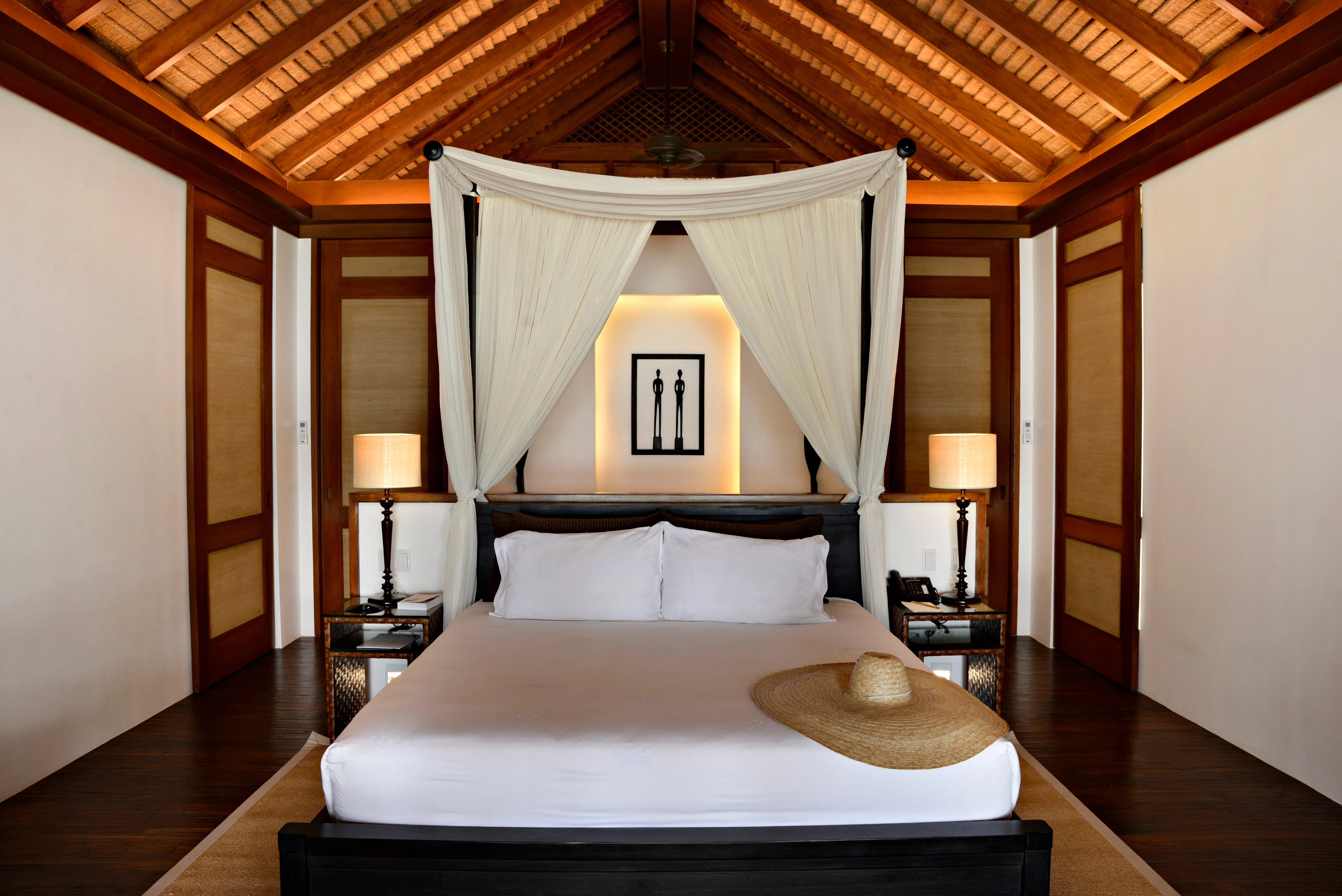
Inside the villas, the design language stays consistent with the exterior architecture: generous, light-filled interiors with private balconies, built using the same local materials, rattan seating, woven abaca detailing, timber joinery, that define the resort’s public spaces. Rather than the heavy, dark-wood colonial references found at some of the region’s older luxury properties, Pangulasian’s interiors lean toward an open, breathable register, in keeping with a building method designed for cross-ventilation and a hot, humid island climate.
Each villa is built with what the resort describes as bespoke, generous interiors rather than a stock furniture package repeated across every category, and the differences between the four villa types extend beyond square footage into genuinely distinct room experiences: the Canopy Villas, for instance, are fitted with a bathtub positioned to take advantage of their elevated forest views, while the Beach Villas prioritise direct, unobstructed access to the sand outside. Across all categories, the balcony or terrace functions as a genuine extension of the interior rather than an afterthought, consistent with a resort built around the idea that most of a guest’s time should be spent looking out rather than in.
Atmosphere
The atmosphere at Pangulasian is set almost entirely by its scale and its isolation. With only 42 villas and no other accommodation sharing the island, there is little of the choreography that larger resorts rely on, no competing pool decks, no crowded breakfast seatings, no sense of scheduling around other guests. What replaces it is a slower, more self-directed rhythm: mornings built around the beach or the dive centre, afternoons free for the hilltop walk or a boat out to one of Bacuit Bay’s lagoons, evenings gathered loosely around Amianan’s terrace or the beach bar.
Because the resort sits inside a working marine reserve rather than a built-up resort strip, there is also a genuine sense of remove from the outside world, no passing traffic, no neighbouring properties visible from the beach, just forest, sand and the karst silhouettes of Bacuit Bay on the horizon. That isolation is precisely what a certain kind of traveller is paying for here, and it is worth being honest about the flip side: with a single restaurant and a fixed, small-scale infrastructure, Pangulasian asks guests to commit to its particular pace rather than offering the variety of a larger destination resort.
Rooms and Suites
All 42 villas share a common design logic, generous covered outdoor space, an emphasis on natural materials, and direct or near-direct access to either beach, forest canopy, or a private pool, but they differ meaningfully in size, position and configuration.
The Beach Villa is the resort’s most numerous category, with 24 units built at 65 square metres plus a 15-square-metre private balcony, positioned just back from the sand and closest to the resort’s central facilities: the infinity pool, beach bar and Amianan restaurant. Each accommodates up to three guests and is fitted with the resort’s standard amenities, including Wi-Fi, satellite television and tea and coffee facilities.
The Canopy Villa takes the opposite approach to setting: eight units built around 15 metres above the forest floor, reached by an elevated timber walkway rather than a beachfront path. In exchange for distance from the water, guests get panoramic views over the tree canopy and out toward Bacuit Bay, a private bathtub positioned to make the most of that outlook, and a genuinely different sense of place from the beach-level categories, elevated, quiet, and oriented toward sunrise and sunset rather than the shoreline.
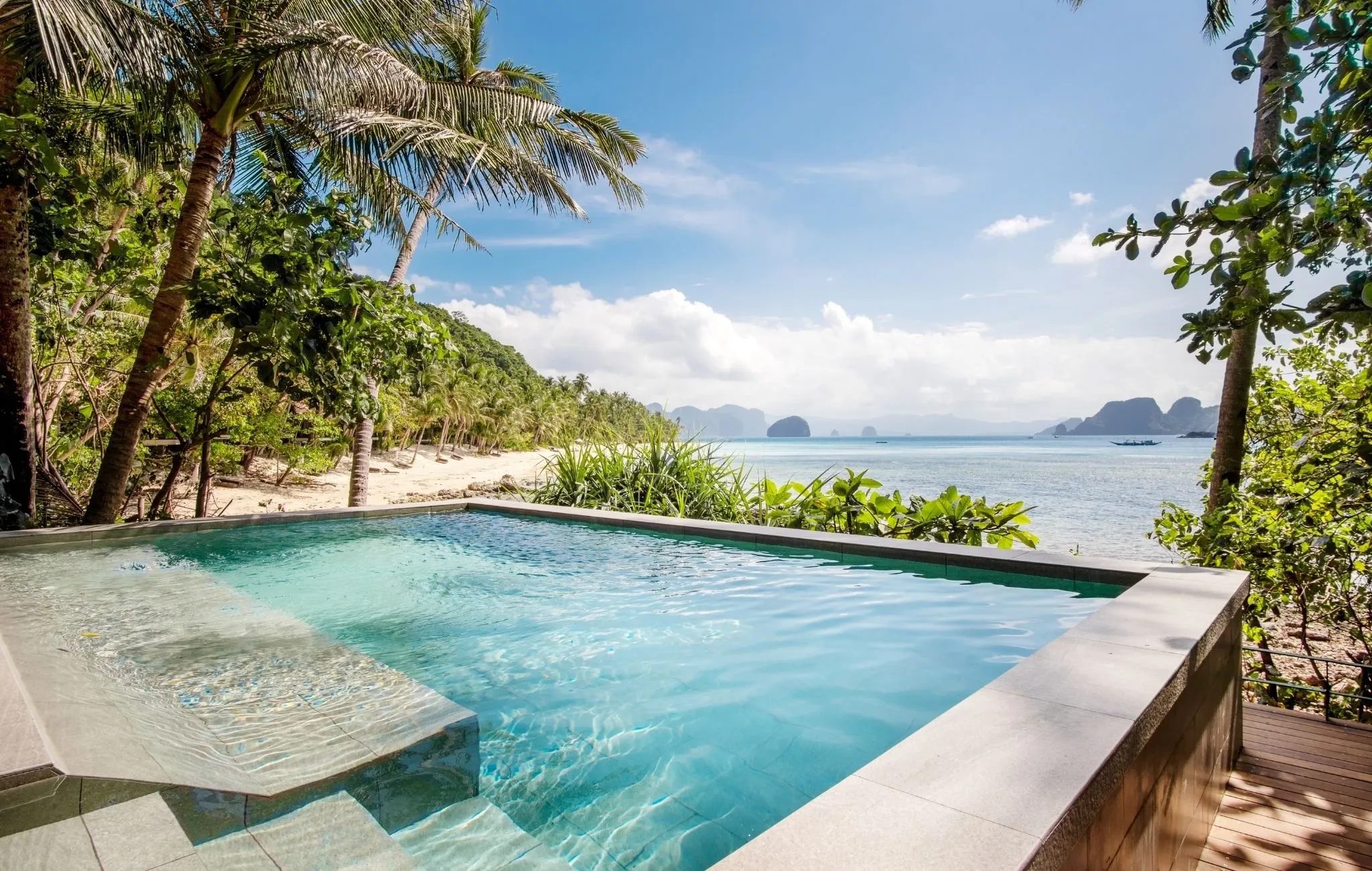
The Pool Villa sits in a more secluded pocket of the island again, with six units each built around a private 22-square-metre plunge pool connected directly to the villa’s balcony. This is the category built for guests who want the privacy of their own water feature without stepping into the shared lap pool at Kalaw or the more sociable stretch of sand near the Beach Villas.
At the top of the range, the four Kalaw Villas occupy a secluded cove on the island’s western side, deliberately set apart from the rest of the resort. Rather than individual pools, the four villas share an 85-square-metre lap pool and a 55-square-metre living room, an arrangement built for a family or small group wanting to take over the entire cluster and its shared spaces rather than book individually. It is the resort’s clearest option for a multigenerational trip or a small private gathering that wants its own corner of the island.
Dining
Pangulasian keeps its dining programme deliberately compact, a decision consistent with the resort’s overall approach to scale. Amianan, the island’s main restaurant, serves breakfast, lunch and dinner from an open-air setting with sea views, built around Filipino cooking alongside broader Asian and international dishes, live music adding to the room’s atmosphere on some evenings. It functions as both the resort’s principal dining room and its default social gathering point, given there is no second full-service restaurant on the island.
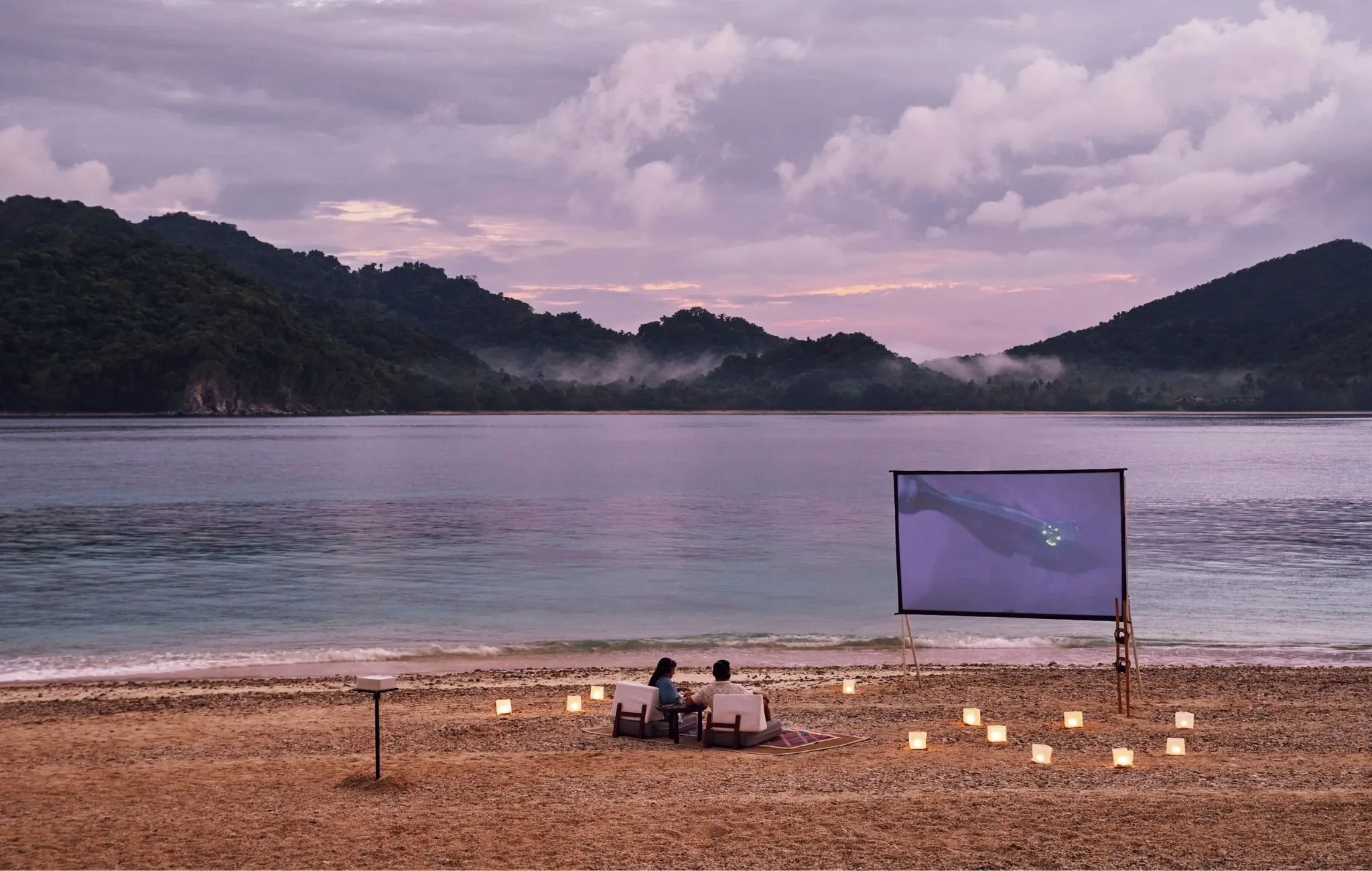
Beyond Amianan, a beach bar and a poolside grill sit near the resort’s infinity pool, covering casual daytime dining and drinks without requiring a walk back to the main restaurant. For guests wanting something more private, the resort arranges set-piece experiences directly: beach dinners, and, drawing on the surrounding karst lagoons, floating cocktail or dining set-ups on the water nearby. Guests staying at Pangulasian can also arrange day visits to Miniloc and Lagen, the two neighbouring El Nido Resorts properties, extending the dining and activity options beyond the single island without needing to check out.
Dietary requirements are handled on a request basis, as is standard across the group’s properties, and the kitchen’s dependence on local and regional produce means the day’s catch and seasonal ingredients tend to shape the menu as much as any fixed formula.
Spa and Wellness
The resort’s spa operates from its own dedicated setting, offering a spread of Asian, European and tropical treatments across massage, body scrubs, wraps and facials. The standout on the menu draws on Filipino healing tradition rather than a generic regional spa formula: a hilot treatment paired with dagdagay, an Igorot foot-massage technique using small wooden sticks to work the soles of the feet, a specific and well-documented piece of Philippine wellness heritage rather than an imported spa concept. Treatments can typically be taken at the spa itself or, for guests who prefer not to leave their villa, arranged in-room.
A small gym rounds out the wellness offering, though given the resort’s setting, most of the physical activity on offer at Pangulasian, diving, snorkelling, the hilltop walk, kayaking, tends to happen in or around the water rather than indoors.
Experiences
Pangulasian’s activity programme leans almost entirely on its marine setting and Bacuit Bay’s surrounding geography rather than manufactured resort entertainment. The resort operates its own PADI dive centre with access to more than twenty sites scattered around the bay, and snorkelling is possible straight off the beach given the reef sits close to shore. The signature in-house experience, and the one most specific to this particular island, is swimming with juvenile blacktip reef sharks in the shallow water near the resort, a controlled, low-impact encounter rather than anything staged.
Beyond the water directly around Pangulasian, Bacuit Bay’s wider geography is the main draw: island-hopping trips out to the karst formations and hidden lagoons that made El Nido famous, waters that open through narrow rock passages into still, cliff-ringed pools, are the classic way to spend a day away from the resort itself, typically arranged by boat with the resort’s activities team. Kayaking, sailing and windsurfing are also on offer for guests who want to explore closer to home, and the hilltop trail, a roughly 30-minute climb through forest to the island’s view deck, gives a vantage point over the whole bay that is worth timing around sunrise or sunset.
For a change of scene without leaving the group’s own properties, day trips to Miniloc and Lagen islands are straightforward to arrange, opening up their own beach clubs, dive sites and dining rooms to Pangulasian’s guests.
Who It Is For
Pangulasian suits travellers who want a private-island stay without the vast scale of some regional competitors, honeymooners and couples chasing genuine seclusion, divers and snorkellers drawn by direct reef access and Bacuit Bay’s wider dive sites, and design-minded guests curious about a resort built in a specifically Filipino architectural language rather than a borrowed one. The Kalaw Villas’ shared pool and living room make a strong case for multigenerational families or small groups wanting their own private corner of the island, while the smaller Beach and Pool Villas suit couples or solo travellers prioritising direct beach or pool access.
It is a less natural fit for travellers who want restaurant variety, nightlife, or the option to leave the property for a change of scene: with a single main restaurant and no neighbouring town, a stay here means committing to the resort’s own rhythm, offset by day trips to its sister islands, for the length of the visit.
Best Time to Visit
Palawan’s dry season, running roughly from December through May, is the most reliable window for a stay at Pangulasian, with calmer seas making the boat transfer from Lio Airport smoother and island-hopping trips into Bacuit Bay’s lagoons more consistently possible. The intervening months bring the southwest monsoon and, at its most intense between roughly June and October, typhoon risk across the wider Philippine archipelago, which can affect both flight schedules into El Nido and the resort’s own boat transfers. Given how much of a stay here depends on being on the water, whether for the transfer itself, diving, or the island-hopping trips that are one of the main reasons to visit Bacuit Bay, timing a trip within the dry season meaningfully reduces the chance of a disrupted itinerary.
How to Get There
There is no way to reach Pangulasian directly from outside the Philippines; every guest routes through Manila, or in some cases Cebu, first. From Manila, a chartered domestic flight of around 55 minutes reaches Lio Airport, El Nido’s own airstrip, run for El Nido Resorts guests rather than as a general commercial hub. From the airport’s jetty lounge, a scheduled boat completes the final leg to Pangulasian Island, a crossing of roughly 30 to 45 minutes depending on conditions and which source’s timing is used. Both the domestic flight and the boat transfer are typically arranged as part of the booking process, and the resort works to a fixed daily boat schedule, so it is worth confirming timings directly with El Nido Resorts before finalising flight arrangements, particularly for guests arriving later in the day.
Nearby Experiences
Bacuit Bay itself is the primary nearby attraction, and its karst islands and hidden lagoons are best explored by boat, whether through El Nido Resorts’ own arranged excursions or the classic town-based island-hopping tours (commonly grouped into set routes covering destinations like the Big and Small Lagoons and Seven Commandos Beach) that made El Nido famous long before any resort opened here. Guests based at Pangulasian can also arrange day visits to Miniloc and Lagen, the group’s two other nearby island properties, for a change of beach, dive site or dining room without leaving the wider resort ecosystem. El Nido town itself, on the Palawan mainland, offers a more conventional taste of the region’s fishing-village-turned-tourism-hub character for guests who want a day away from private-island life altogether.
Things to Know Before Booking
Pangulasian’s small scale and single-island setting are worth weighing carefully against a traveller’s expectations. There is one main restaurant, so guests wanting nightly variety should factor in day trips to Miniloc or Lagen or plan accordingly. Transfers are weather-dependent and run on a fixed schedule rather than on demand, so flight timings into Manila and onward to El Nido need some buffer, particularly outside the December-to-May dry season. Because the resort operates as part of a working marine reserve with an active conservation programme, guests should also expect activities to be genuinely nature-based, meaning no motorised water sports close to the reef, in place of the jet-ski and speedboat menus some other resort destinations offer. Booking well ahead is advisable given the limited villa count, especially for the four Kalaw Villas, which suit only a single family or group at a time.
Sustainability
El Nido Resorts, the operator behind Pangulasian and its three sister properties, runs one of the more substantial conservation programmes among Philippine private-island resorts, a track record that predates the group’s current ownership under Ayala Land and has continued to develop under it. The group was awarded the world’s first Sea Turtle Friendly Tourism Certification, granted jointly with sister property Lio Tourism Estate by the Wildlife Friendly Enterprise Network, recognition of a marine-turtle protection effort that includes a tag-and-release programme run in cooperation with the local Protected Area Office and monitored releases of hatchlings from nests safeguarded on the group’s beaches.
Beyond turtle conservation, El Nido Resorts participates in El Nido’s Marine Monitoring Task Force, runs monthly coastal cleanups, and has installed eco-reefs and mooring buoys around its properties to reduce anchor damage to live coral. On Pangulasian specifically, that conservation ethos shapes the activity programme directly: the resort offers only nature-based, non-motorised experiences close to the island, swimming, snorkelling, kayaking, diving, rather than jet skis or speedboat tours run through the surrounding reef. Operationally, the resort relies on desalination to reduce pressure on freshwater resources and manages waste through on-site sewage treatment, materials recovery and rainwater catchment, standard infrastructure for an island with no mainland utility connection but one the group has built out more thoroughly than many comparable properties in the region.
Practical Information
Pangulasian Island Resort operates 42 villas across four categories: 24 Beach Villas, 8 Canopy Villas, 6 Pool Villas and 4 Kalaw Villas. Check-in is from 3:00pm and check-out by 12:00pm noon. Rates vary substantially by villa category and season, generally running from around $900 a night for entry-level categories into several thousand dollars for the Kalaw Villas at peak times; current pricing and availability are confirmed directly through El Nido Resorts. Access is via a chartered domestic flight from Manila (around 55 minutes) to Lio Airport in El Nido, followed by a scheduled boat transfer of roughly 30 to 45 minutes to the island; both legs are typically arranged as part of the booking. The resort is owned and operated by Ten Knots Philippines, a subsidiary of Ayala Land, as part of the four-property El Nido Resorts group that also includes Miniloc, Lagen and Apulit islands.
Editorial Conclusion
Pangulasian’s appeal comes down to a fairly simple proposition, executed with unusual discipline: take one of the most dramatic bays in the Philippines, build the smallest, most private resort possible within it, and resist every temptation to make that resort bigger, busier or more generically luxurious than the setting requires. Forty-two villas, one main restaurant, a single conservation-minded activity programme, and Bacuit Bay’s karst islands doing most of the remaining work. For travellers who want that specific, quiet version of a private-island stay, and who are comfortable trading restaurant variety and easy access for genuine seclusion, Pangulasian remains one of the clearest arguments in the Philippines for staying on an island with nothing else on it.
In pictures
On the map
Pangulasian Island, Bacuit Bay, El Nido, Philippines
Questions
Frequently asked
How do you actually get to Pangulasian Island Resort?
There is no direct international access. Guests fly into Manila (or connect via Cebu) and take a chartered domestic flight of roughly 55 minutes to Lio Airport in El Nido, Palawan. From the airport's jetty lounge, a scheduled resort boat completes the journey to Pangulasian Island in around 30 to 45 minutes. Boat departures run on a fixed daily schedule, so it is worth confirming times with the resort before booking a flight, since land and boat transfers are arranged as part of the stay.
How many villas does Pangulasian have, and what are the categories?
The resort has 42 villas in total, split across four categories: 24 Beach Villas set just behind the shoreline (65 square metres plus a 15-square-metre balcony), 8 Canopy Villas raised about 15 metres into the forest and reached by elevated walkway, 6 Pool Villas with a private 22-square-metre plunge pool each, and 4 Kalaw Villas in a secluded cove on the island's west side, which share an 85-square-metre lap pool and a 55-square-metre living room and suit families or small groups travelling together.
Is Pangulasian a good choice for diving and marine life?
Yes. The resort runs its own PADI dive centre with access to more than twenty sites around Bacuit Bay, and snorkelling is possible directly offshore. A signature in-house experience is swimming with juvenile blacktip reef sharks in the shallows near the resort. Guests can also arrange day trips to Miniloc and Lagen, the two other El Nido Resorts properties nearby, for further diving, snorkelling and beach-club time.
What is dining like, and is there more than one restaurant?
Pangulasian's main restaurant, Amianan, serves breakfast, lunch and dinner with a menu built around Filipino cooking alongside broader Asian and international dishes, in an open-air setting with sea views. There is also a beach bar and a poolside grill near the resort's infinity pool. Private set-ups, including beach dinners and floating arrangements in a nearby lagoon, can be arranged directly with the resort.
What is El Nido Resorts doing on sustainability, and does it affect the guest experience?
El Nido Resorts, the operator behind Pangulasian, was awarded the world's first Sea Turtle Friendly Tourism Certification (with sister property Lio Tourism Estate) by the Wildlife Friendly Enterprise Network. On the ground, that translates into a turtle tag-and-release programme with the local Protected Area Office, monitored hatchling releases, installed eco-reefs and mooring buoys, monthly coastal cleanups, and participation in El Nido's Marine Monitoring Task Force. Guests will notice it most directly in what is absent: there are no motorised water sports run close to the reef, and activities on offer lean toward swimming, snorkelling, kayaking and diving rather than anything with an engine.
Same destination
More hotel guides in Philippines
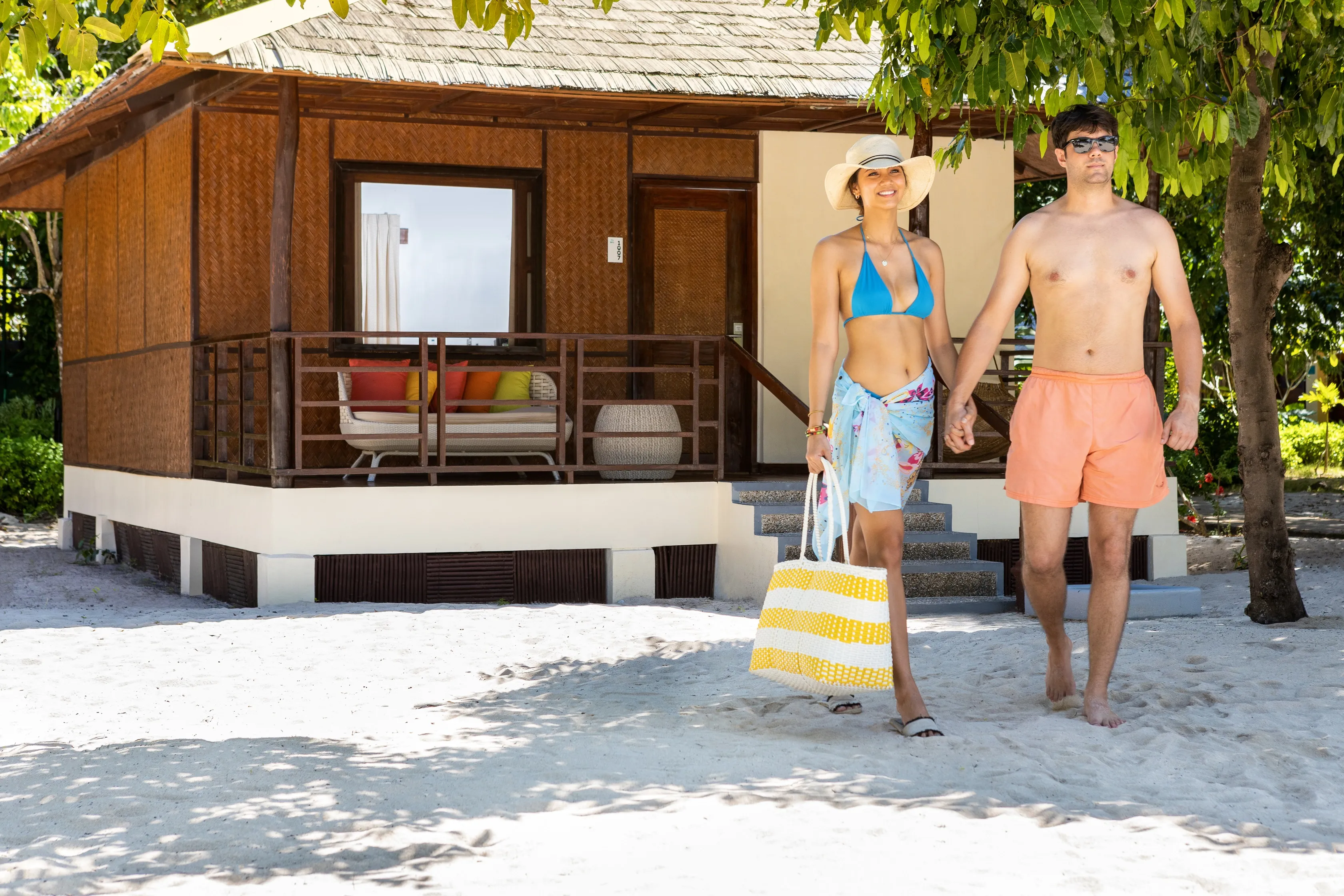
Dimakya Island, Busuanga, Coron, Philippines
Discovery Coron
A nineteen-hectare private island off northern Busuanga, diving Coron's Japanese wrecks by day and disconnecting from everything else after dark.
From $260 per night
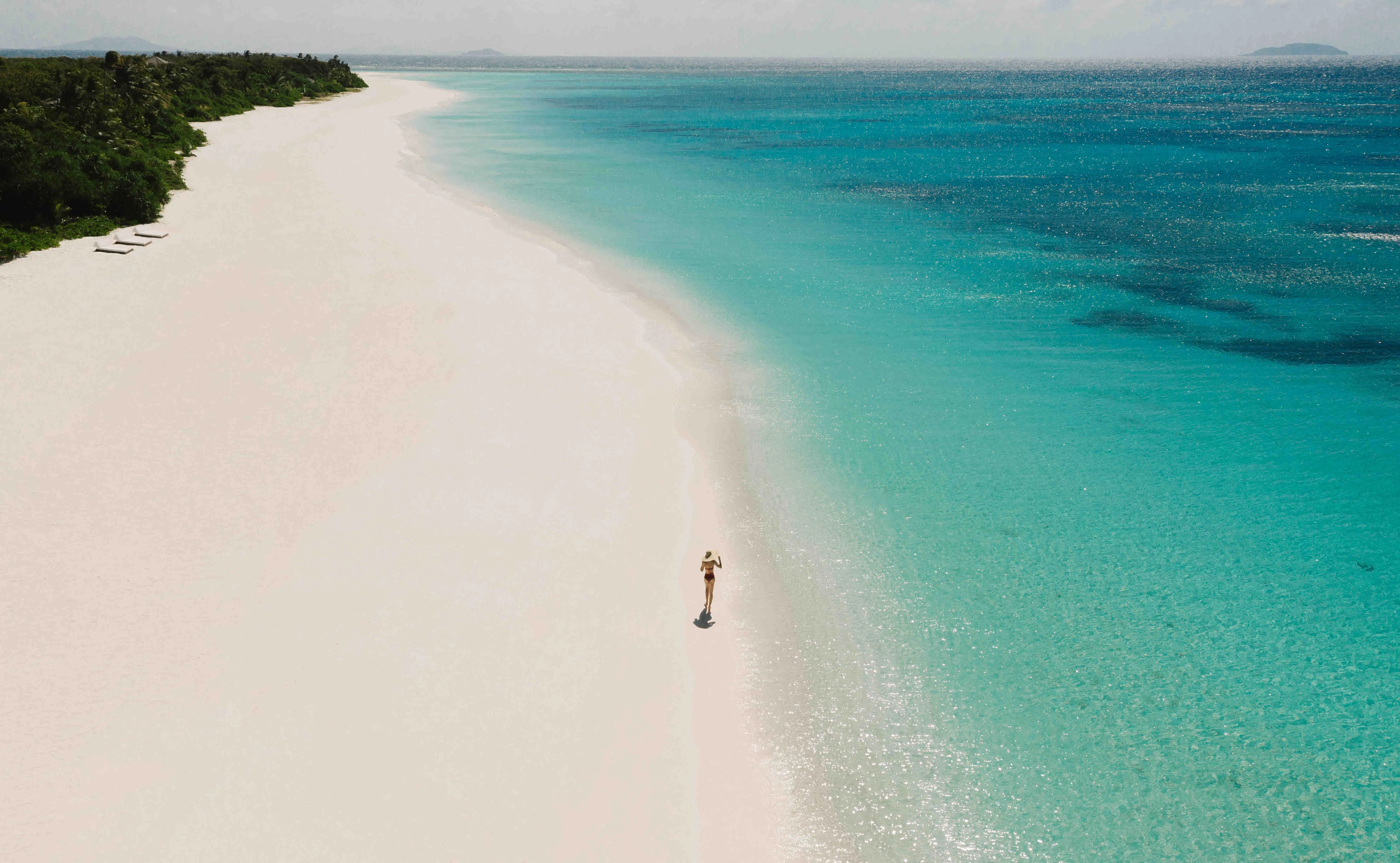
Pamalican Island, Cuyo Islands, Philippines
Amanpulo
A private island in the Cuyo archipelago, reachable only by Aman's own aircraft, built around bahay kubo-inspired casitas set beneath forty-year-old coconut palms.
From $1,900 per night
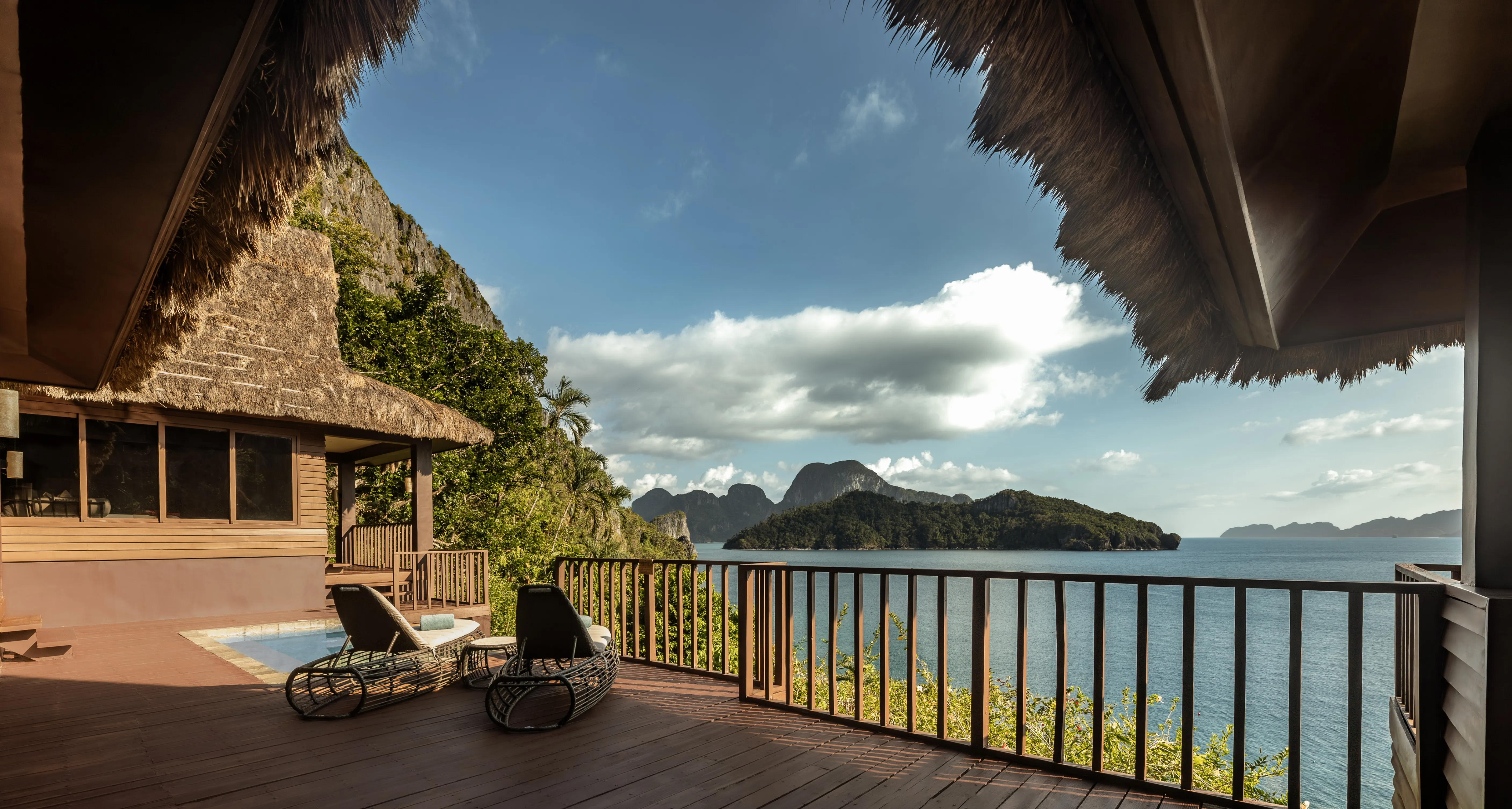
Cauayan Island, Bacuit Bay, El Nido, Philippines
Cauayan Island Resort
A privately owned island in Bacuit Bay, thirty stilt-raised villas set between limestone cliffs and open water, reachable only by boat.
From $500 per night