Emerald Bay, Phuket, Thailand
Rosewood Phuket
A tiered village of 71 pavilions, villas and houses cascading down a forested hillside to a private stretch of Emerald Bay, built as Rosewood's first foothold in Southeast Asia.
- Rates from
- From $850 per night
- Nearest airport
- Phuket International Airport (HKT)
- Transfer
- About 45 to 60 minutes by road
- Best months
- November to April
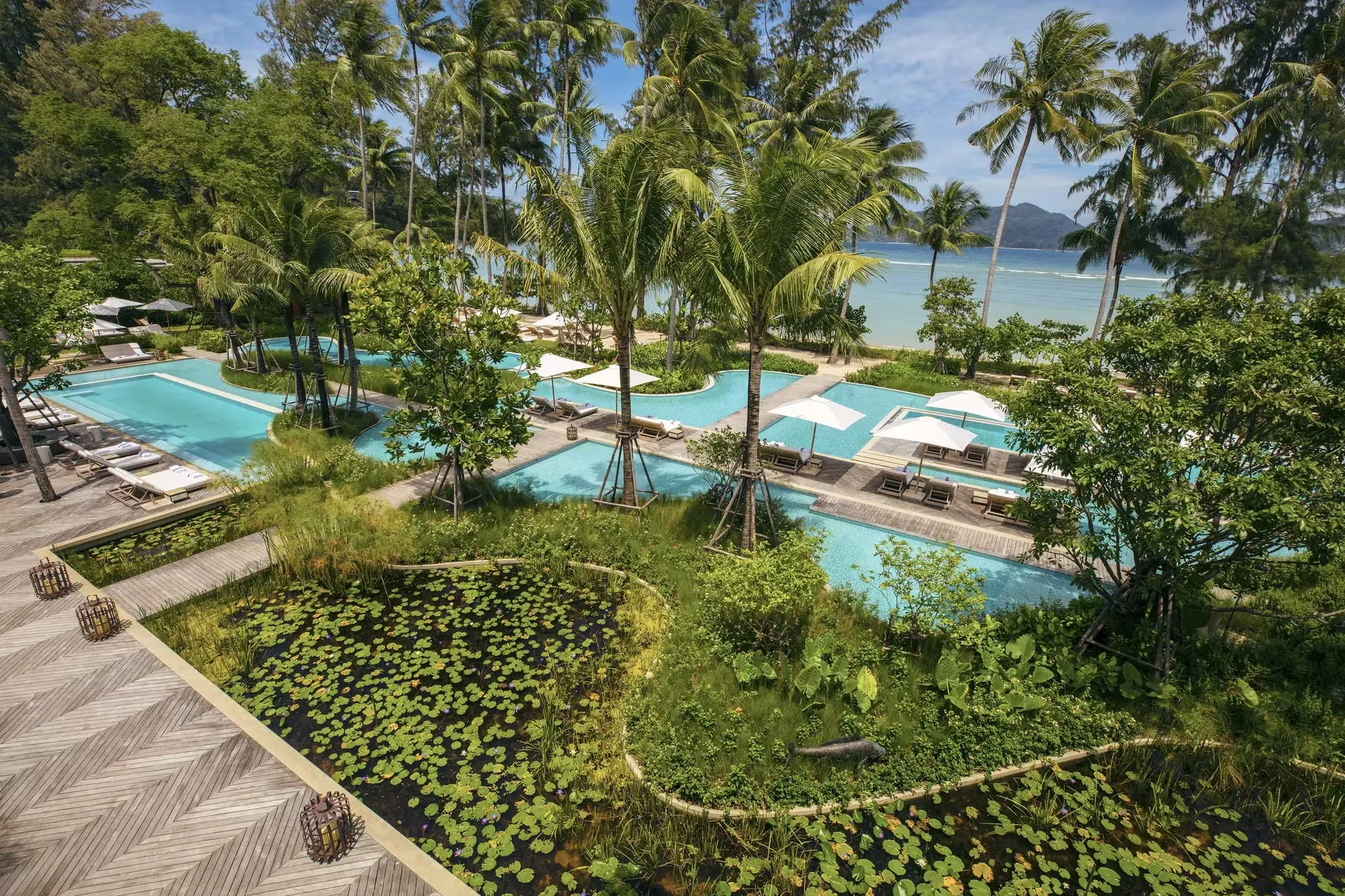
Phuket has no shortage of hillside resorts promising seclusion, but few commit to the site as literally as Rosewood Phuket does. Rather than clearing a hilltop for the best view, the resort was built as a village, a sequence of 71 pavilions, villas and houses connected by paths that run from a forested rise down to 600 metres of private beachfront on Emerald Bay, part of Tri Trang Beach on the island’s quieter southwest coast. The land itself has a specific, somber history: it sat largely undeveloped in the years after the 2004 tsunami, and the resort’s landscape design was conceived partly as an ecological revival of that ground, with native planting, bio-swale irrigation and a rainwater system built to restore rather than simply decorate the site.
Opened on 20 November 2018, Rosewood Phuket was the brand’s first property in Southeast Asia, arriving with a design brief from Melbourne-based BAR Studio, under architect Stewart Robertson, that treated the resort less as a single building than as a settlement, low-rise, tiered, threaded through jungle, garden and shoreline in stages. It was also the birthplace of Asaya, Rosewood’s holistic wellness concept, which launched here before being rolled out to other properties across the group, giving Phuket a claim on the brand’s wellness identity that few sister hotels can match.
What follows is a look at how that hillside village works in practice: the architecture and interiors, the accommodation categories, the restaurants (including Ta Khai, which has carried Michelin Guide recognition every year since 2019), the Asaya spa, and the practical detail a traveller needs to plan a stay, from the nearest airport to the best months to visit.
Why It Stands Out
Most Phuket resorts occupy a single stretch of beach or a single hillside plot; Rosewood Phuket does both, using the change in elevation as its organising idea rather than an obstacle to build around. The result is a property where a guest’s daily geography, walking from a hilltop pavilion down through garden terraces to the sand, is built into the design itself, described by the resort’s architects as a route through several distinct landscapes in the space of a few hundred metres.
The second distinguishing fact is that this was Rosewood’s entry point into Southeast Asia, opened in November 2018, which gave the project outsized importance within the brand and likely explains the ambition of its landscape and sustainability programme: the largest solar installation of any Phuket hotel at the time of opening, and a rainwater harvesting system built to supply the entire property. The third is Asaya. Rosewood’s wellness concept did not arrive at this resort as a licensed spa brand bolted onto an existing hotel; it was developed here first, which gives the wellness programming a depth and a sense of origin that later Asaya outposts, opened after the fact, do not carry in quite the same way.
Architecture
The resort’s architecture was led by BAR Studio, a Melbourne firm directed by Stewart Robertson, working with Bangkok-based landscape architects PLA. Their brief was to build what the design team has described as a village-like configuration: low-rise pavilions, villas and houses connected by paths that link the hilltop to the beach, rather than a single hotel block or a repeated cluster of identical units. Locally sourced and recycled teak runs through structural elements, walls, floors and ornamentation, paired with sandstone finishes and floor-to-ceiling glass that keeps the surrounding jungle visible from almost every interior space.
The landscape design carries its own narrative beyond aesthetics. PLA’s approach, presented publicly as “Hospitality with Conscience,” treated the site’s post-tsunami condition as a starting point for ecological restoration rather than a blank canvas, prioritising native plant species sourced through nurseries the project helped establish nearby, and building a irrigation network of bio-swales and rain gardens that reduces the property’s demand on an island that regularly faces freshwater scarcity. Grey water from guest rooms is treated through layered sediment and phyto-remediating plants before reuse, a detail more typical of a conservation project than a five-star resort. Structurally, the property also carries a substantial sustainability footprint for its era: the largest photovoltaic solar system of any hotel in Phuket at the time of opening, with panels set discreetly on rooftops, and roof overhangs and green roofs used for passive cooling rather than relying solely on air conditioning.
Interior Design
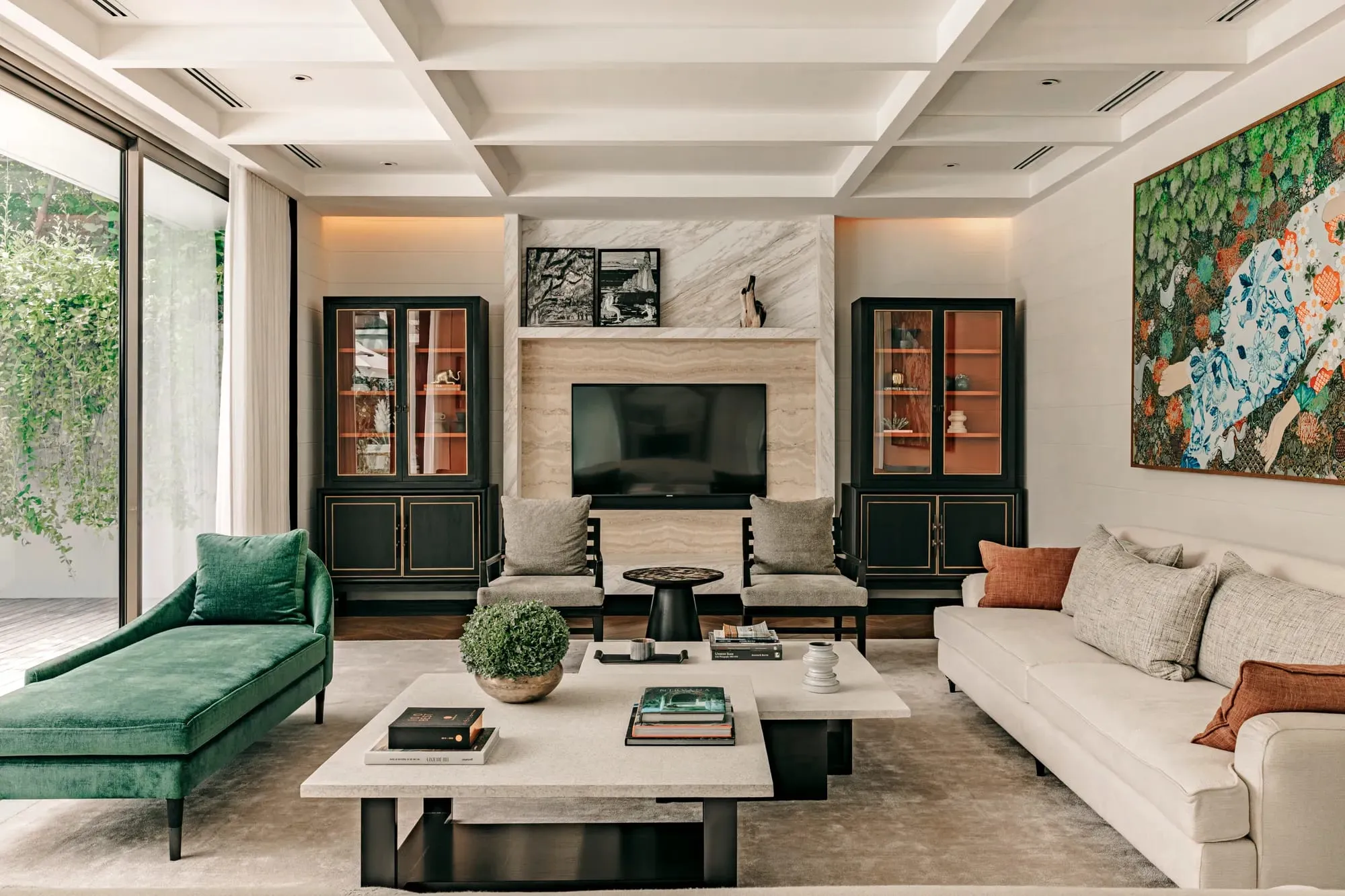
Inside the pavilions, villas and houses, the material language set by the architecture continues without a hard break between exterior and interior: teak floors and detailing, stone finishes, and glass walls that fold the tropical garden into the room rather than framing it as a view to be looked at from a distance. The design brief reportedly drew, in part, on the idea of a Thai equivalent to a Hamptons summer house, residential in scale and materials rather than styled like a conventional hotel suite, with private entries via bridges or garden gates that give each unit its own sense of arrival before a guest ever reaches the front door.
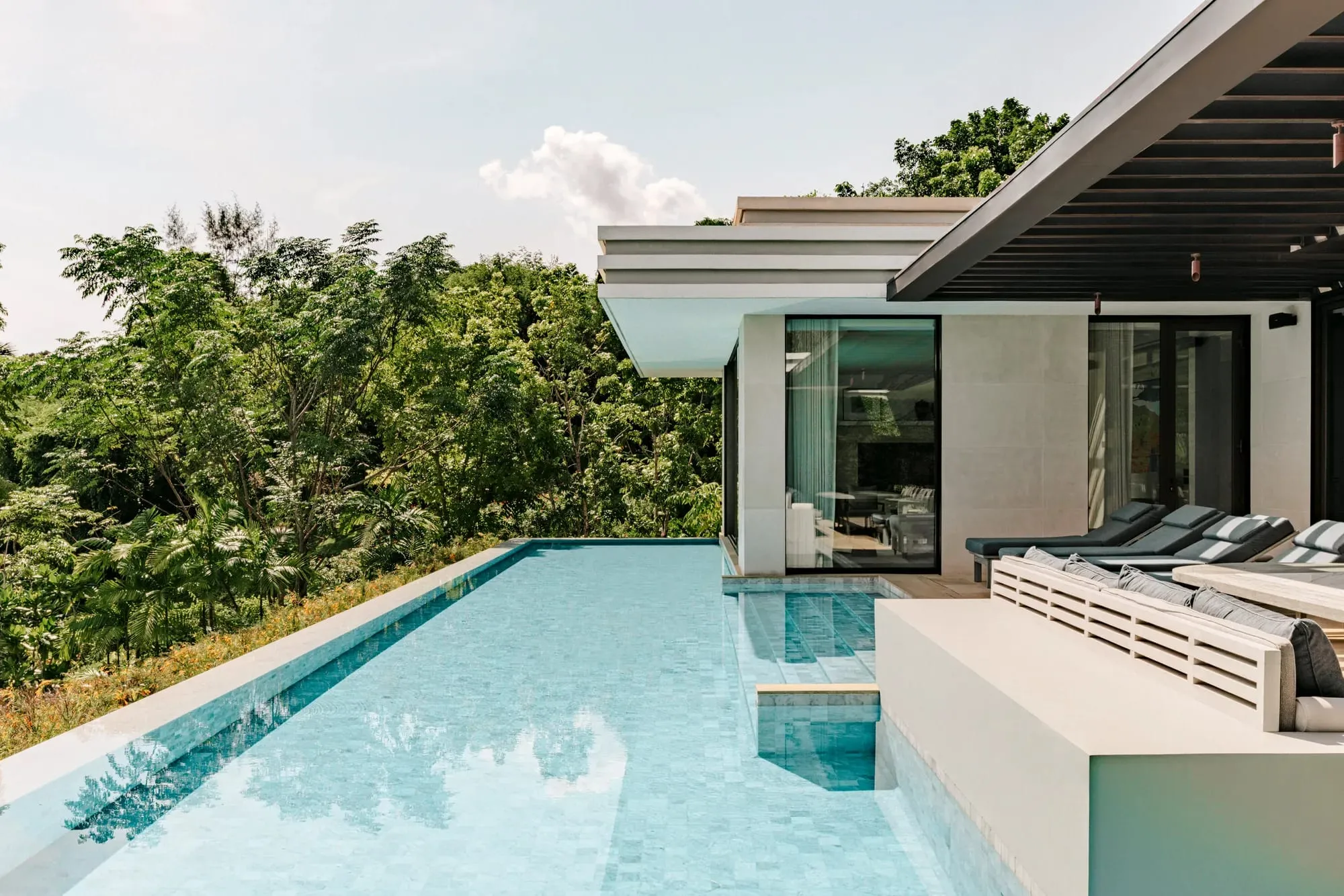
Each accommodation category carries private outdoor space, whether a plunge pool off a pavilion terrace or the larger cascading pools that run through multi-bedroom houses such as The Palm House and The Coral House. The consistent thread across categories is restraint: warm, tactile materials, muted tones drawn from the surrounding forest and sand, and a deliberate lack of ornament that lets the site itself, banyan trees, hillside greenery, the Andaman Sea beyond, carry most of the visual interest.
Atmosphere
Because the resort is laid out as a village descending a hillside, the atmosphere changes as a guest moves through it. Near the top, among the pavilions set into the forest, the mood is enclosed and quiet, closer to a jungle retreat than a beach resort. Moving down through the garden terraces and toward the shoreline, the setting opens into brighter, more conventional resort territory, restaurants, pools, the 600-metre beach on Emerald Bay, with the Andaman Sea as a constant backdrop rather than a feature reserved for a handful of premium rooms.
Patong’s nightlife sits roughly five kilometres away, close enough for an evening out but distant enough that Rosewood Phuket itself stays largely insulated from it, trading proximity to bars and street life for a genuinely secluded stretch of coastline. The overall register leans toward calm and unhurried, reinforced by a resort layout that discourages rushing between points, guests are, by design, meant to walk the paths between hilltop and beach rather than shuttle between them.
Rooms and Suites
Rosewood Phuket counts 71 accommodations in total, spread across pool pavilions, villas and larger multi-level houses, a relatively low unit count for a 43-acre site that keeps density well below what a comparably sized conventional resort would carry. Entry categories are the Garden Pool Pavilion and Lagoon Pool Pavilion, each with a private plunge pool and floor-to-ceiling glazing, sized around 130 square metres for the ocean-facing versions; Partial Ocean View Pool Pavilions are available in one- and two-bedroom configurations for guests wanting more separation between sleeping and living space.
At the top of the hierarchy sit the Beachfront Pool Villas and the resort’s named multi-bedroom houses. The Palm House is a multi-level residence with dual pools cascading through its gardens and four master bedrooms, suited to a large family or group; The Coral House sits directly on the beachfront with sun-drenched terraces and a calmer, more contained interior; and The Ocean House, the largest configuration at roughly 796 square metres, spans multiple bedrooms with its own private infinity pools. Every category, from entry pavilion to full house, includes private outdoor space and the same material palette of teak, stone and glass that runs through the resort’s public architecture.
Dining
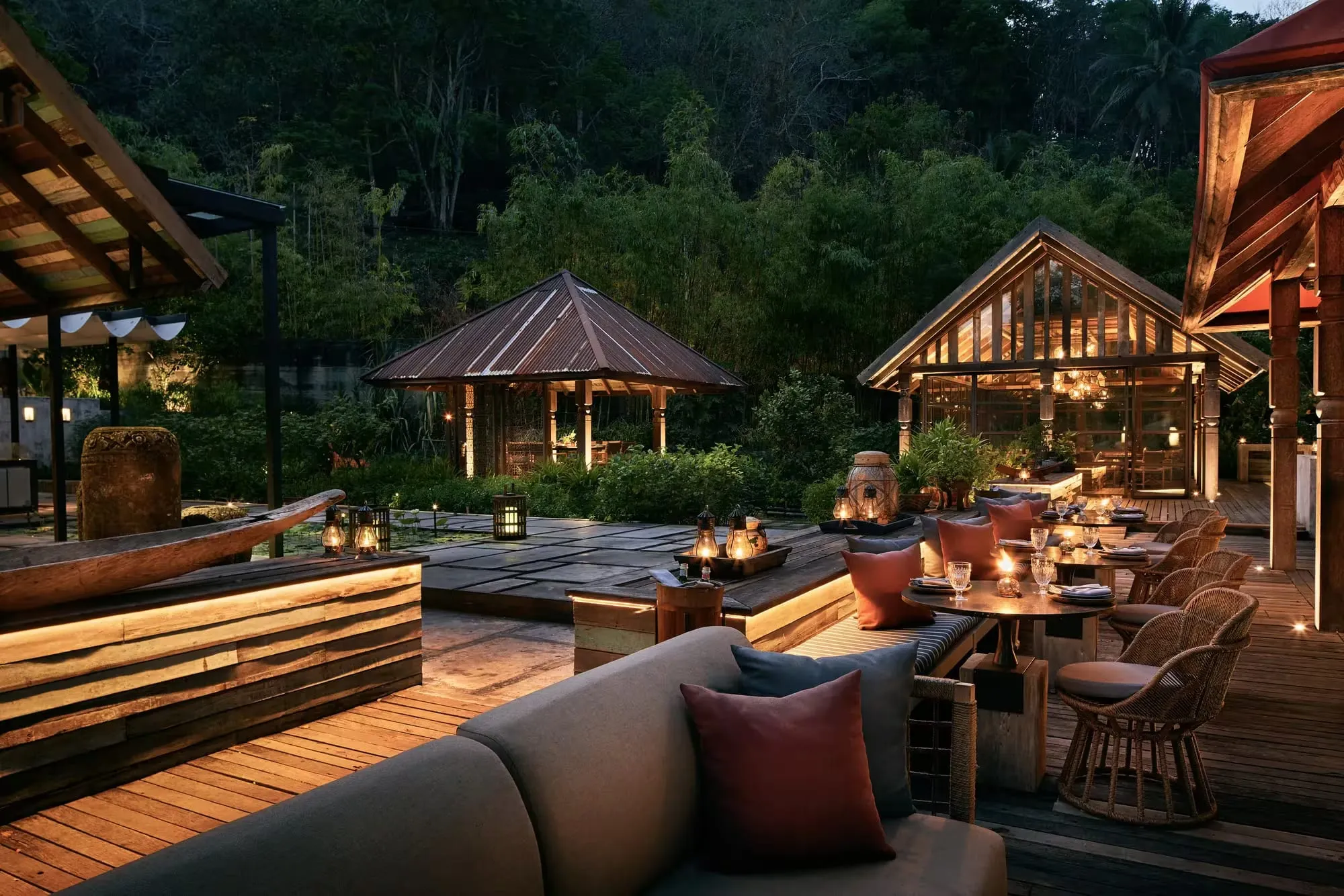
Rosewood Phuket operates four restaurants and bars. Ta Khai is the resort’s signature venue, serving Southern Thai cuisine built around local ingredients, and it has held Michelin Guide recognition every year from 2019 through 2024, a run the resort itself has publicly marked as five consecutive years of acknowledgment. Red Sauce is the property’s Italian restaurant, leaning on seafood alongside its pasta and pizza menu, while The Shack offers a more casual seafood setting closer to the water. Mai Bar handles poolside cocktails and light bites through the day, rounding out a dining programme that runs from beachside casual to a Michelin-noted tasting room without requiring guests to leave the property.
Spa and Wellness
Asaya, Rosewood’s holistic wellness concept, launched at this resort in 2018 before being introduced to other properties across the brand, and it remains one of Rosewood Phuket’s defining features rather than a standard hotel spa bolted onto the programme. The facility covers a spa, sauna and steam rooms, a warm pool, and a fitness studio, framed around what Rosewood describes as an integrative approach to emotional balance, physical vitality and inner clarity, pairing more conventional spa treatments with a running calendar of Wellness Ateliers.
Signature treatments include the Mountain Blooms aromatherapy massage, built around floral oil and a scalp treatment, and Phaoya Therapy, aimed at bloating and joint discomfort, alongside vibration and sound therapy sessions using Tibetan singing bowls. Fitness and movement programming extends to yoga, Muay Thai boxing and padel tennis, giving Asaya a broader remit than treatment rooms alone, closer to a resort-wide wellness calendar than an isolated spa building.
Experiences
Beyond the spa, the resort’s own site does much of the work: guests can walk the hillside paths between garden terraces planted with restored native species, spend time on the private 600-metre stretch of Emerald Bay, or make use of the property’s pools scattered across its different accommodation tiers. The Pavilion, a dedicated events venue that includes a 243-square-metre Glass House, hosts weddings and private events against the same hillside-to-beach setting that defines the rest of the resort.
Given its position on the Andaman coast, Rosewood Phuket is also a starting point for the wider southwest Phuket coastline: nearby beaches, boat excursions into Phang Nga Bay’s karst islands, and day trips to Phuket Old Town’s Sino-Portuguese architecture are all commonly arranged through the resort for guests wanting to leave the property for a day without straying far.
Who It Is For
The resort suits couples and honeymooners drawn to a design-forward, secluded hillside setting who still want proximity, rather than total isolation, to a wider destination; Patong’s restaurants and nightlife are a short drive away for guests who want an occasional change of pace. Families and larger groups are well served by the multi-bedroom houses, The Palm House, The Coral House and The Ocean House in particular, each offering multiple bedrooms and private pools that suit a multigenerational trip better than a standard hotel room configuration.
Wellness-focused travellers have a particular reason to consider this property specifically, given that Asaya originated here rather than being introduced as a later addition. It is a less obvious fit for guests who want to be within walking distance of Patong’s bars and street markets, or who prefer a flat, compact resort layout over one built around a hillside walk between accommodation and the beach.
Best Time to Visit
Phuket’s dry season, running roughly from November to April, offers the most reliable weather for a resort built around outdoor movement between hilltop pavilions and the beach, with lower humidity, less rainfall and calmer seas on the Andaman coast. December through February tends to be the busiest and most in-demand stretch of that window, coinciding with the Northern Hemisphere winter holidays, while November and March to April offer similar weather with comparatively lighter demand. The wetter season from May to October brings more frequent rain and rougher seas, though showers are often short and the surrounding landscape, restored and densely planted as part of the resort’s own design, is at its greenest during these months.
How to Get There
Phuket International Airport (HKT), on the island’s northern tip, is the nearest gateway, with international connections from across Asia, the Middle East, Australia and Europe. The resort sits roughly 40 kilometres from the airport, and the drive typically takes between 45 minutes and an hour depending on traffic conditions and the route taken around the island. Rosewood Phuket can arrange a private limousine transfer directly from the airport, and taxis and ride-hailing services are also readily available for guests booking their own transport.
Nearby Experiences
Patong Beach, roughly five kilometres from the resort, offers Phuket’s densest concentration of restaurants, bars and nightlife for guests wanting a contrast to the resort’s quieter setting. Phang Nga Bay, reachable by boat excursion, is known for its dramatic limestone karst formations and is among the most commonly arranged day trips from resorts on this side of the island. Phuket Old Town, with its Sino-Portuguese shophouse architecture, cafes and weekend markets, sits further north and offers a cultural counterpoint to the beach-focused itinerary most guests build around the resort itself.
Things to Know Before Booking
Rosewood Phuket sits on Tri Trang Beach within Emerald Bay, distinct from the more built-up main beaches of Patong, Kata or Karon, so travellers expecting to walk directly into Patong’s restaurant scene should plan on a short taxi ride rather than a walk. Because the resort is arranged across a hillside, guests with mobility concerns should ask in advance about accommodation placement relative to the lobby, restaurants and beach, since some categories involve a longer walk or a buggy transfer than others. Standard check-in is 3:00 PM and check-out 12:00 PM; guaranteed late check-out can be arranged for an additional charge, calculated as a percentage of the nightly rate depending on departure time. Given Ta Khai’s Michelin Guide recognition, booking dinner reservations in advance, ideally alongside the room itself, is worth doing rather than relying on availability once on property.
Sustainability
Sustainability is built into the resort’s foundations rather than added afterward. The landscape design, led by PLA, was explicitly framed as an ecological revival of land left largely undeveloped after the 2004 tsunami, prioritising native plant restoration through nurseries the project helped establish, and an irrigation system built around bio-swales, rain gardens and rainwater harvesting intended to supply the property’s full water needs. Grey water from guest accommodations is treated through layered sediment and phyto-remediating plants before reuse, and the resort’s rooftop solar array was, at the time of opening, the largest photovoltaic installation at any hotel in Phuket. Passive cooling measures, including roof overhangs and green roofs, reduce reliance on mechanical air conditioning across the property’s public and private spaces.
Practical Information
Check-in at Rosewood Phuket is from 3:00 PM, with check-out by 12:00 PM. The resort opened on 20 November 2018 as Rosewood’s first property in Southeast Asia and holds Two MICHELIN Keys in the MICHELIN Guide’s hotel selection, alongside Michelin Guide recognition for Ta Khai restaurant in every edition from 2019 to 2024. The nearest airport is Phuket International Airport (HKT), roughly 40 kilometres away and about 45 minutes to an hour by road. Most travellers find three to four nights enough to move through the resort’s hillside layout, work through its four restaurants, and spend meaningful time with the Asaya wellness programme.
Editorial Conclusion
Rosewood Phuket’s strongest claim is architectural rather than promotional: it is genuinely built as a village descending a hillside to the sea, not merely marketed that way, and that decision shapes almost everything about a stay here, from the walk between a hilltop pavilion and the beach to the way the property’s own landscape design was conceived as ecological repair rather than decoration. As Rosewood’s first Southeast Asia resort and the birthplace of Asaya, it also carries a specific institutional weight within the brand that later Rosewood openings in the region do not. For travellers who want a Phuket stay built around a genuinely secluded stretch of Emerald Bay, serious wellness programming with real origins on site, and dining recognised by the Michelin Guide, without giving up easy access to Patong when they want it, this is among the more considered ultra-luxury addresses on the island.
In pictures
On the map
Emerald Bay, Phuket, Thailand
Questions
Frequently asked
When did Rosewood Phuket open?
Rosewood Phuket opened on 20 November 2018, becoming the first Rosewood Hotels & Resorts property in Southeast Asia. The resort was designed by Melbourne-based BAR Studio, led by Stewart Robertson, with landscape architecture by the Bangkok firm PLA, and it sits on a 43-acre site that had been left largely undeveloped since the 2004 tsunami.
Where exactly is the hotel located, and how far is it from Patong?
Rosewood Phuket sits on its own 600-metre stretch of Emerald Bay, part of Tri Trang Beach on the island's southwest coast, in the Kathu district. Patong Beach, with its restaurants, bars and nightlife, is roughly five kilometres away, close enough for an evening out but far enough that the resort itself stays quiet.
What is Asaya, and is it exclusive to this resort?
Asaya is Rosewood's holistic wellness concept, and Rosewood Phuket is where it first launched before being introduced across the wider Rosewood portfolio. At Phuket, it covers a spa, sauna and steam facilities, a warm pool, a fitness studio and a programme of Wellness Ateliers, plus signature treatments such as the Mountain Blooms aromatherapy massage and Phaoya Therapy, alongside activities like yoga and Muay Thai.
How many rooms does the resort have, and what are the main categories?
The resort has 71 accommodations in total, arranged across pool pavilions, villas and larger multi-bedroom houses. Entry-level Garden and Lagoon Pool Pavilions each come with a private plunge pool, while categories such as Beachfront Pool Villas and the multi-level Palm House, Coral House and Ocean House suit families or groups wanting several bedrooms and more separation from other guests.
What is the nearest airport, and how long is the transfer?
Phuket International Airport (HKT) is the nearest gateway, roughly 40 kilometres from the resort. The drive typically takes between 45 minutes and an hour depending on traffic, and the hotel can arrange a private limousine transfer for guests who prefer not to book their own car.
Same destination
More hotel guides in Thailand
Pansea Beach, Phuket, Thailand
Amanpuri
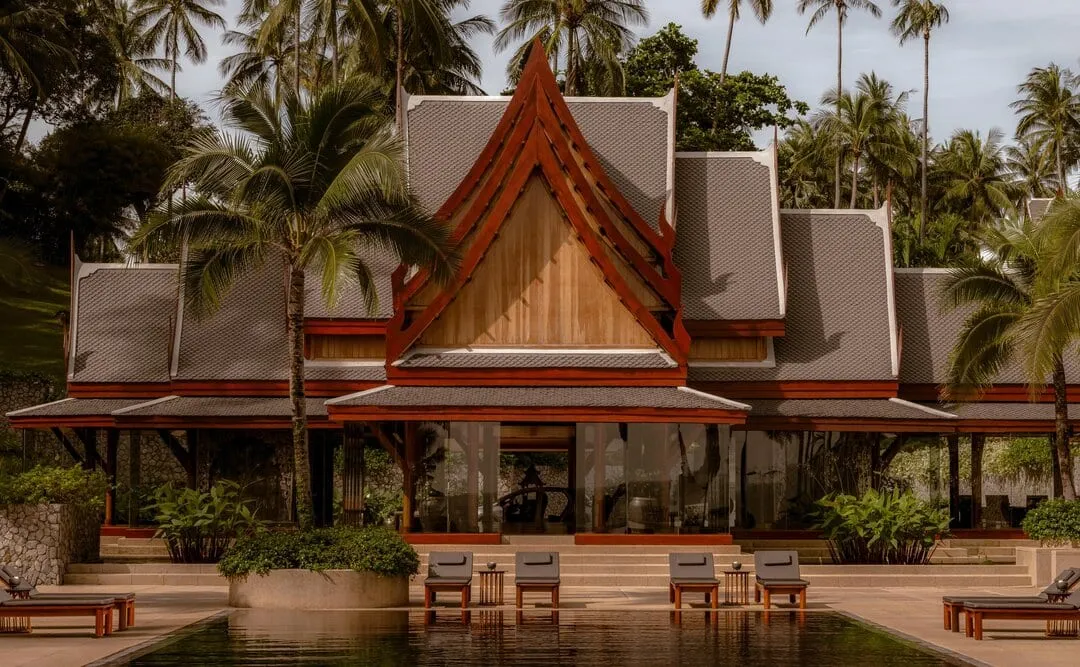
Opened in 1988 on a former coconut plantation on Phuket's Pansea Beach, Amanpuri is the founding property of the entire Aman brand, a village of temple-inspired teak pavilions that set the template every Aman since has followed.
From $1,200 per night
Charoen Krung, Chao Phraya riverside, Bangkok, Thailand
Capella Bangkok
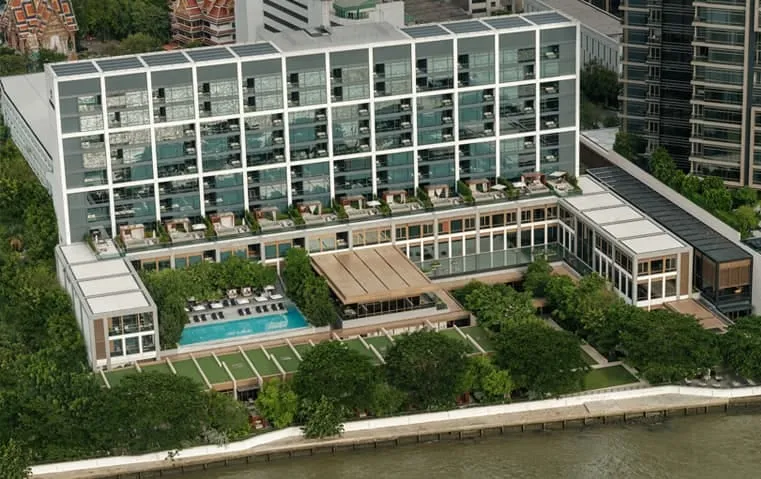
A low-rise riverside sanctuary on the Chao Phraya, where Thai pavilion architecture, a two-Michelin-starred Riviera table and only 101 keys have made a decade-old promenade site into the hotel the rest of Bangkok is measured against.
From $850 per night
Mae Rim Valley, Chiang Mai, Thailand
Four Seasons Resort Chiang Mai
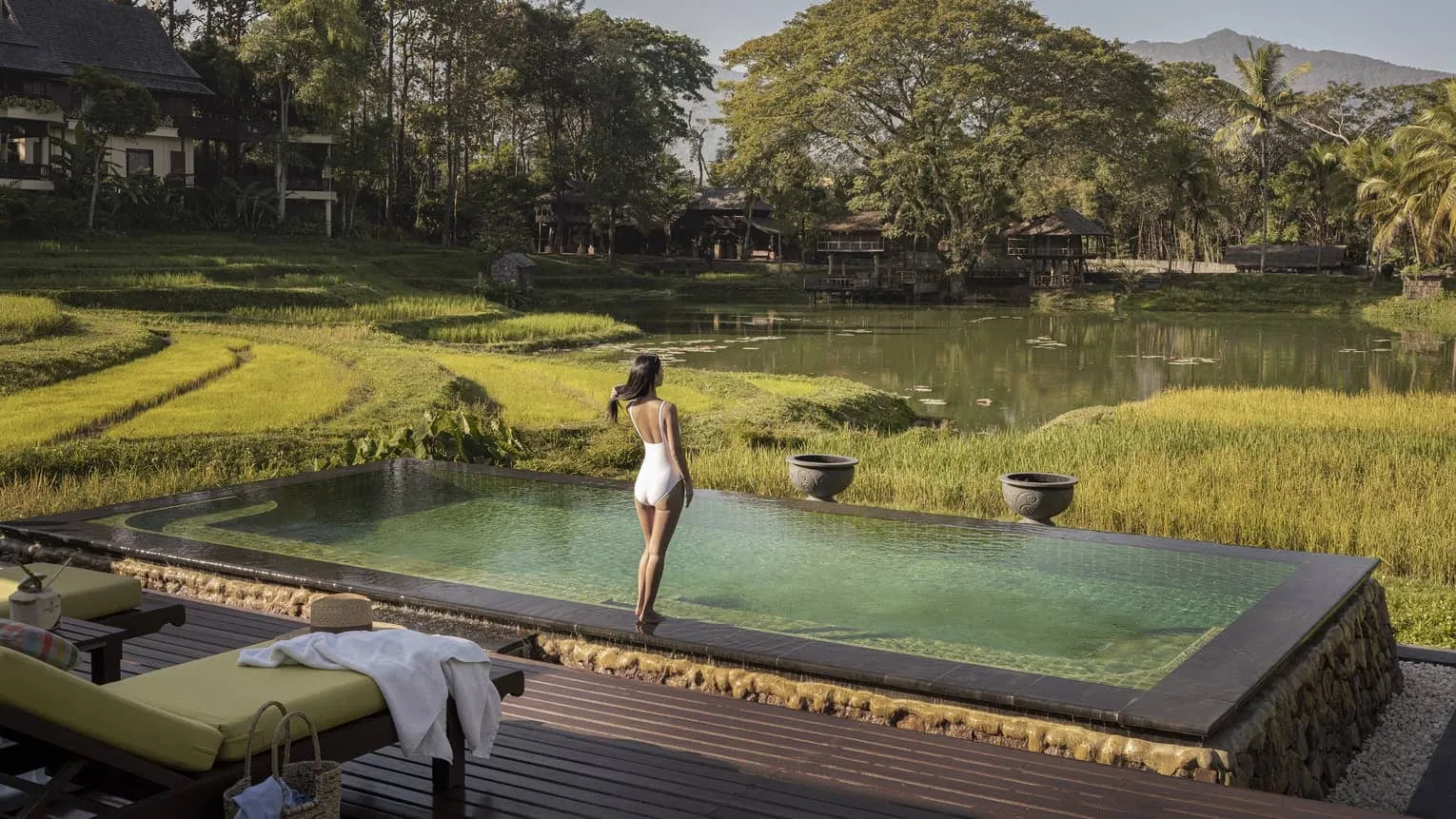
A working rice valley reimagined as a resort, where teak pavilions and a Michelin-starred kitchen sit inside paddies still farmed by hand.
From $850 per night