Kandy, Sri Lanka
Santani Wellness Kandy
A hillside retreat above Kandy built on the conviction that silence is a design material.
- Rates from
- From $450 per night
- Nearest airport
- Bandaranaike International Airport (Colombo)
- Transfer
- About 4hr by road from Colombo
- Best months
- December to April
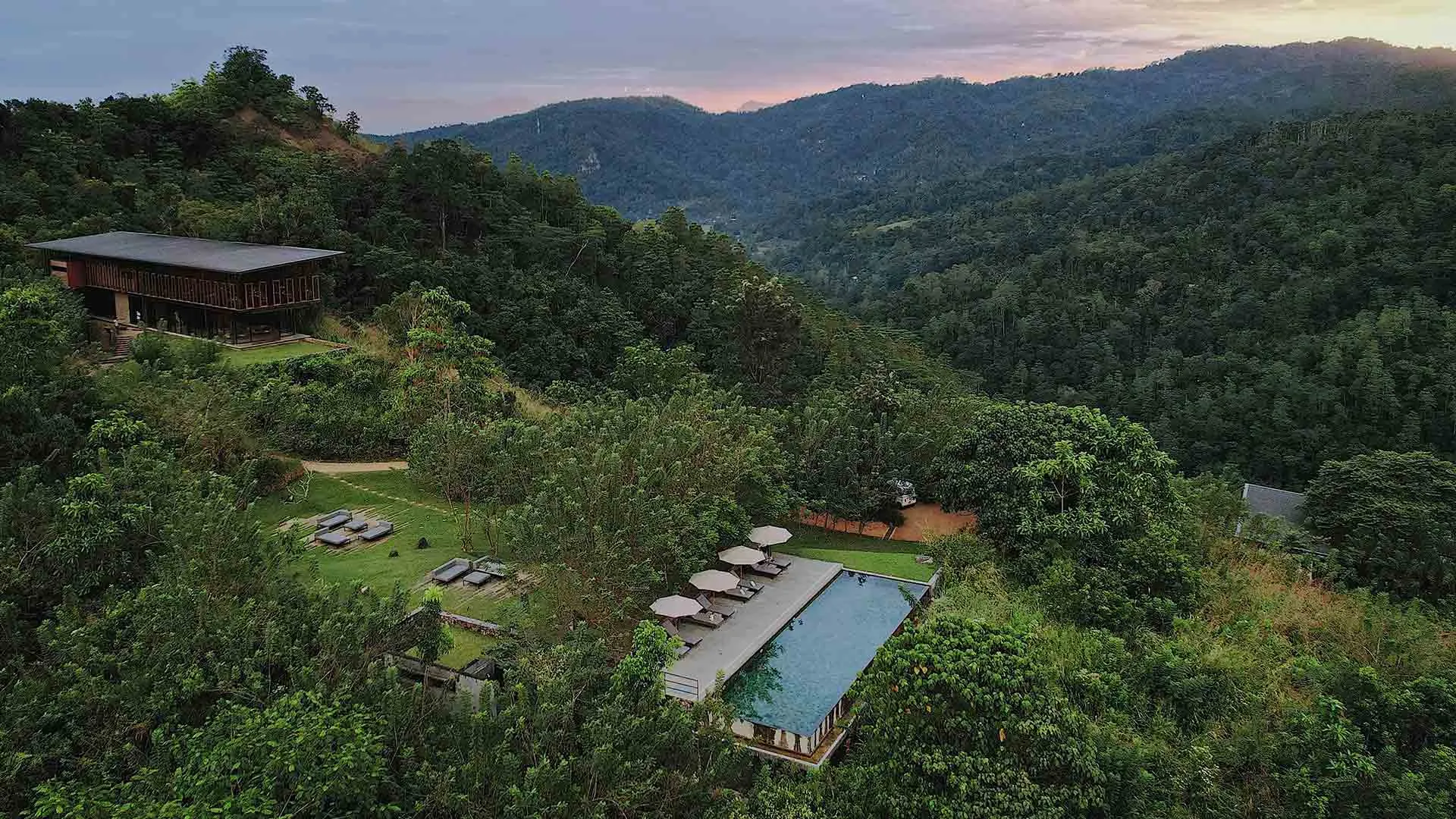
The road climbs for the better part of an hour past the last of Kandy’s traffic, through tea country gone slightly wild, before it narrows into something closer to a forest track. There is no gate announcing arrival, no marble porte-cochère. What appears instead, cut into a 48-acre former tea estate at nearly 2,800 feet, is a scattering of timber chalets raised on stilts, half-hidden by canopy, angled so that no two look directly into another’s windows. This is Santani, and the approach itself is the first clue to what the place is actually selling: not luxury in the conventional sense, but the removal of everything that usually competes for attention.
There is no air conditioning here, and no television. Wi-Fi exists only if a guest specifically asks for it, and only inside the room. These are not the oversights of a remote property struggling to modernise; they are deliberate omissions, argued for by the architecture itself. Sri Lankan architect Murad Ismail, who designed the resort, has described the guiding idea as an “architecture of silence”: buildings conceived to dissolve the boundary between the built and the natural, so that a guest’s attention drifts outward, toward birdsong and rain and the slow movement of cloud across the Knuckles range, rather than inward toward a screen.
Santani opened in 2016 as one of the first resorts in Sri Lanka built specifically around wellness rather than retrofitted for it, and it has spent the years since refining a single proposition: that recovery, whether from burnout, insomnia, illness or simple accumulated modern fatigue, is better served by a structured programme in an unmedicated landscape than by a menu of spa treatments bolted onto a beach holiday. What follows is less a hotel stay than a stretch of days organised around sunrise yoga, Ayurvedic consultation and long silences, in a setting that does most of the persuading on its own.
About Santani Wellness Kandy
Santani was founded by Vickum Nawagamuwage, a Sri Lankan who spent years in corporate strategy and consulting abroad before a period of professional burnout led him back, by way of yoga and meditation, to something like the freedom he remembered from camping trips into the island’s wilderness as a student. That personal recalibration became the premise for the resort: the Sanskrit-derived name Santani translates roughly to “in harmony with,” and the property, operated under Dumbara Hotels, is built to make that harmony a daily, structured practice rather than a marketing line.
The architecture carries the philosophy through in material terms. Chalets stand on stilts above the sloping terrain, their footprint kept deliberately light on ground that was, within living memory, tea plantation. Walls of glass open the interiors to the forest and the paddy fields below, while polished concrete floors and furniture built from reclaimed and upcycled rubberwood and teak keep the palette pared back and tactile. Nothing is finished to a high gloss; the intent is closer to a considered rusticity; wood left to show its grain, light left soft rather than engineered, ventilation left to the hillside breezes rather than compressors.
The wider landscape does much of the design work. Santani sits between the Knuckles Mountain Range and the Campbell’s Lane Forest Reserve, with views that fall away over rice paddies toward layered hills that turn from green to blue as the day wears on. It is a working relationship with the land as much as a scenic one: the estate’s own gardens supply a meaningful share of the kitchen’s produce, footpaths are lit low to limit disturbance to the surrounding forest, and much of the resort’s water for irrigation is recycled on site. The overall effect, walking between chalets after dark with only the path lights and cicadas for company, is of a property that has tried, with reasonable sincerity, to behave like a guest on the hillside rather than its owner.
Location
Santani sits on the Aratenna Estate in Werapitiya, in the Theldeniya area of the Kandy District, Central Province, roughly an hour and a half beyond Kandy town itself, deep enough into the hills that the last stretch of road narrows and climbs through forest and smallholdings. The Central Province’s hill country has been UNESCO-recognised terrain for its biodiversity and tea-growing history, and the resort’s isolation, no neighbouring hotels, no roadside development, is part of what the property sells.
The nearest airport is Bandaranaike International in Colombo, and the transfer runs to roughly four hours by road across the island’s interior, a journey that itself functions as a decompression period before arrival. Santani arranges complimentary one-way road transfers for direct bookings of five nights or longer, and complimentary return transfers for stays of a week or more; shorter stays can arrange a private car or SUV transfer at additional cost.
Kandy town, with the Temple of the Tooth Relic (Sri Dalada Maligawa) and its lake, botanical gardens at Peradeniya and the operating tea estates that made this stretch of hill country famous, sits within reach as a half-day or full-day excursion rather than a walkable neighbour. Because of the elevation, the climate stays comparatively mild and rarely oppressive year-round, though the December-to-April window across the central hills tends to bring the clearest skies and least rainfall, making it the most dependable season for hiking, outdoor yoga and unbroken mountain views, while the intervening monsoon months bring more cloud and rain to the interior without making the retreat any less functional indoors.
Rooms & Suites
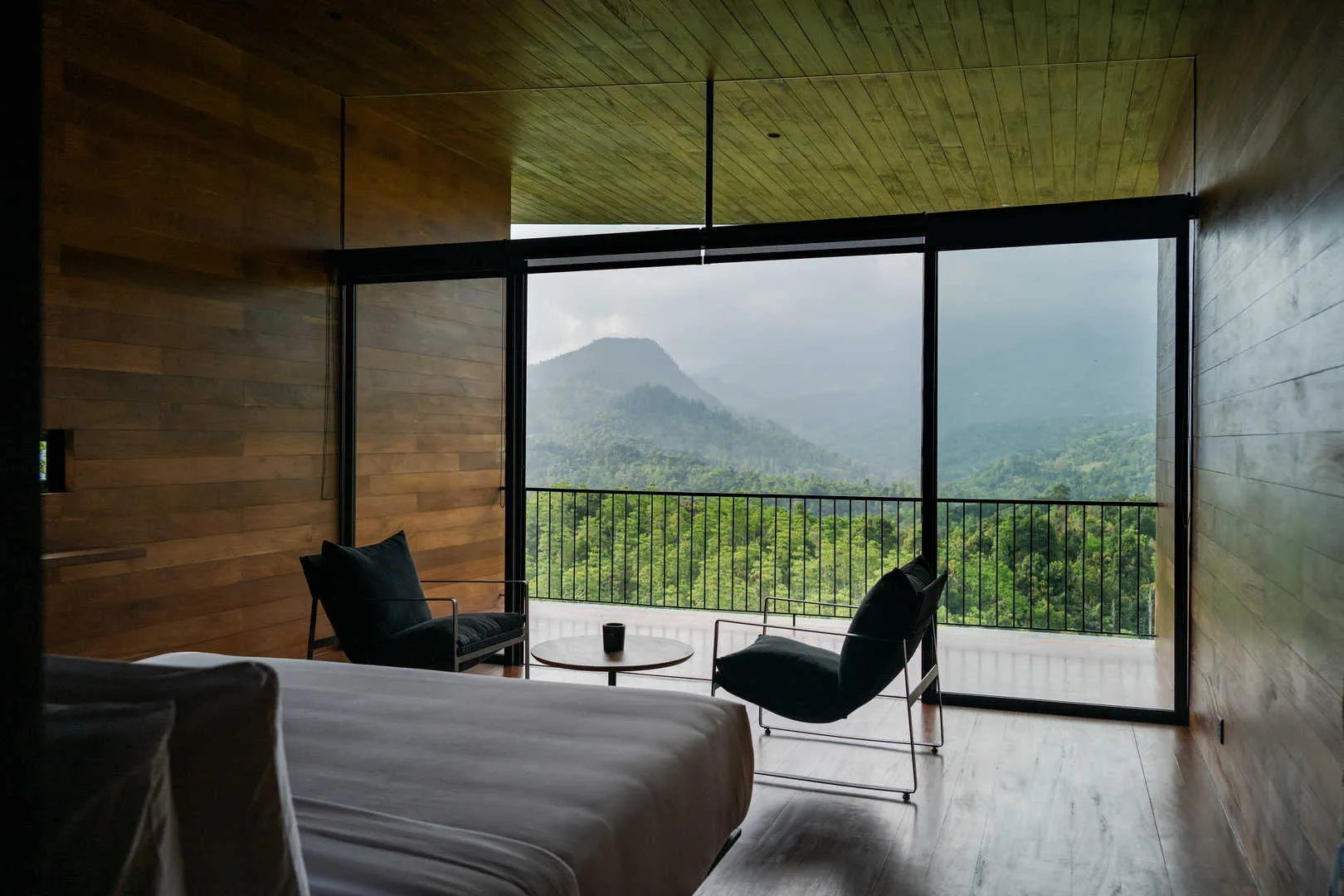
Accommodation is limited to 20 chalets in total, a scale kept intentionally small to preserve the sense of privacy and quiet that the resort’s whole design argument depends on. Sixteen are Mountain View Chalets, angled toward the Knuckles range and the forested valley; four are Garden View Chalets, set into calmer, more enclosed garden settings and configured to accommodate families, within the resort’s general policy of welcoming children aged 12 and over. Each chalet runs to roughly 500 square feet, modest by resort standards, and each is built as a standalone structure raised on stilts, with its own private terrace or deck facing the view rather than a neighbouring building.
Interiors follow the same restrained material language throughout the property: polished concrete floors, reclaimed rubberwood and teak furniture, glass walls that fold the outdoors into the living space, and bathrooms finished with the same unfussy, natural materials rather than imported marble. None of the rooms carry air conditioning or television; ventilation is handled by cross-breezes and the chalets’ elevation and orientation, and Wi-Fi is switched on in-room only when a guest specifically requests it. For travellers who want more room to spread out, or who are travelling as a small group or family, multi-bedroom Pool Villas offer two to three bedrooms with their own plunge pools and butler service when booked at full occupancy, among them a hillside villa known for uninterrupted valley views. Across every category, the design brief is consistent: strip out distraction, let the forest and the light do the work, and keep the guest’s attention on the programme rather than the room.
Dining
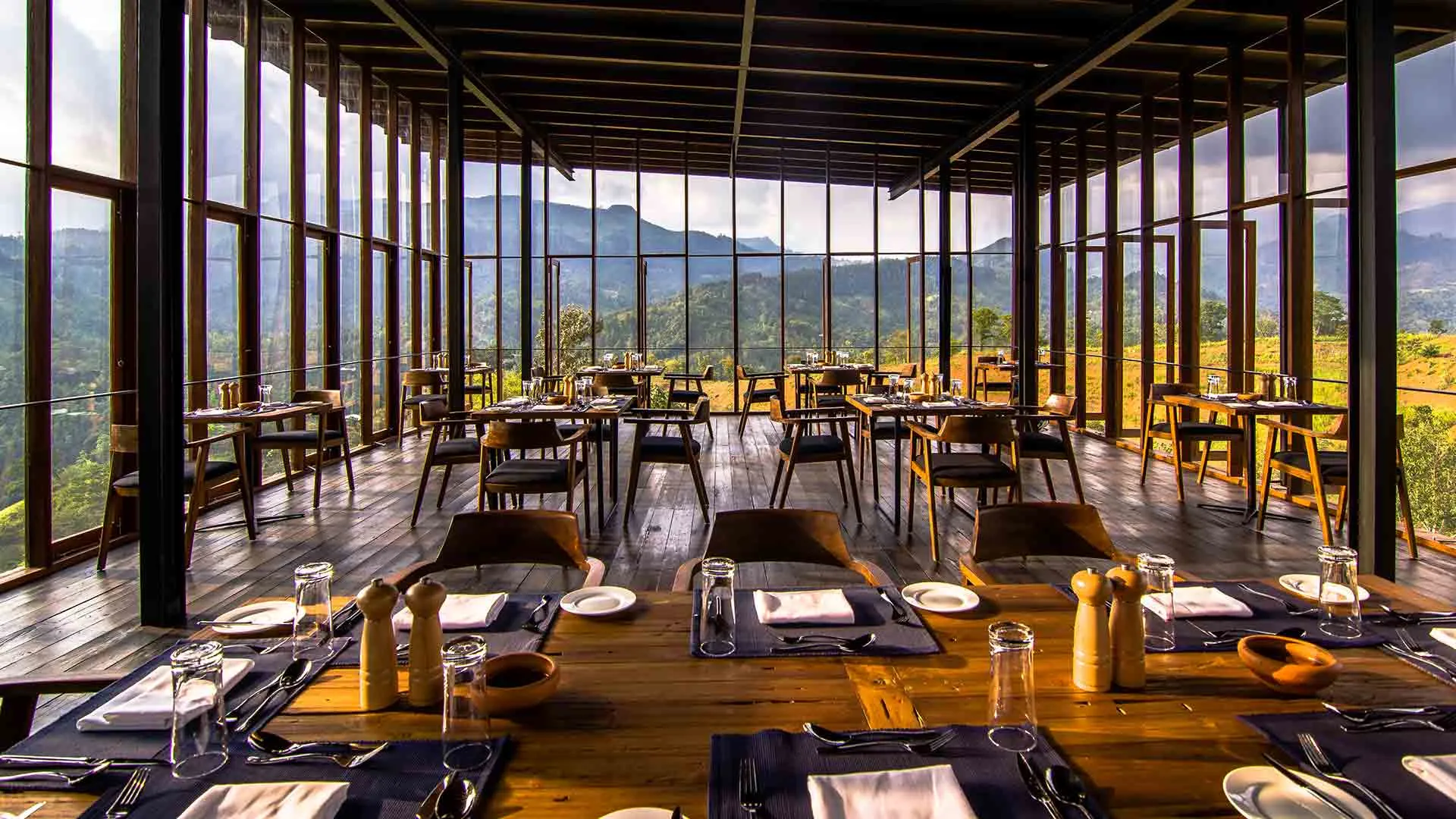
Santani’s kitchen operates on a concept the resort calls Rasa Haya, drawn from the Ayurvedic idea that balanced nutrition should engage all six recognised tastes, sweet, sour, salty, bitter, pungent and astringent, within a day’s meals rather than leaning on any single flavour profile. In practice this produces menus built around organic vegetables, many grown on the estate itself, alongside proteins ranging from traditional Sri Lankan curries to simply grilled options, tailored where needed to a guest’s specific wellness programme and any dietary requirements flagged during their Ayurvedic consultation.
Meals are served on a full-board basis as part of the nightly rate, covering breakfast, lunch and dinner along with unlimited fresh juices and herbal teas, with breakfast typically running from around 7 to 10am, lunch from midday to mid-afternoon, and dinner in the early evening. A small, similarly minimalist bar offers a short list of healthier cocktails alongside more conventional options for guests who want them. There is no attempt here at destination gastronomy in the usual resort sense, chef showcases, tasting menus, imported ingredients; the dining programme is deliberately in service of the wellness programme rather than a standalone attraction, which is very much the point for the guests who choose Santani in the first place.
Wellness
Wellness is not an amenity at Santani so much as the entire premise of the property, and it is structured accordingly. Guests typically arrive against one of more than a dozen defined programme pathways, among them detox and recovery, immune-support detox, weight management, sleep optimisation, personalised Ayurvedic dosha-balancing, anti-ageing, de-addiction support, a menopause-focused “No Pause” track, and general stress-management and meditation retreats, each combining daily treatments, consultations and activity into a single itinerary rather than leaving guests to assemble their own spa schedule.
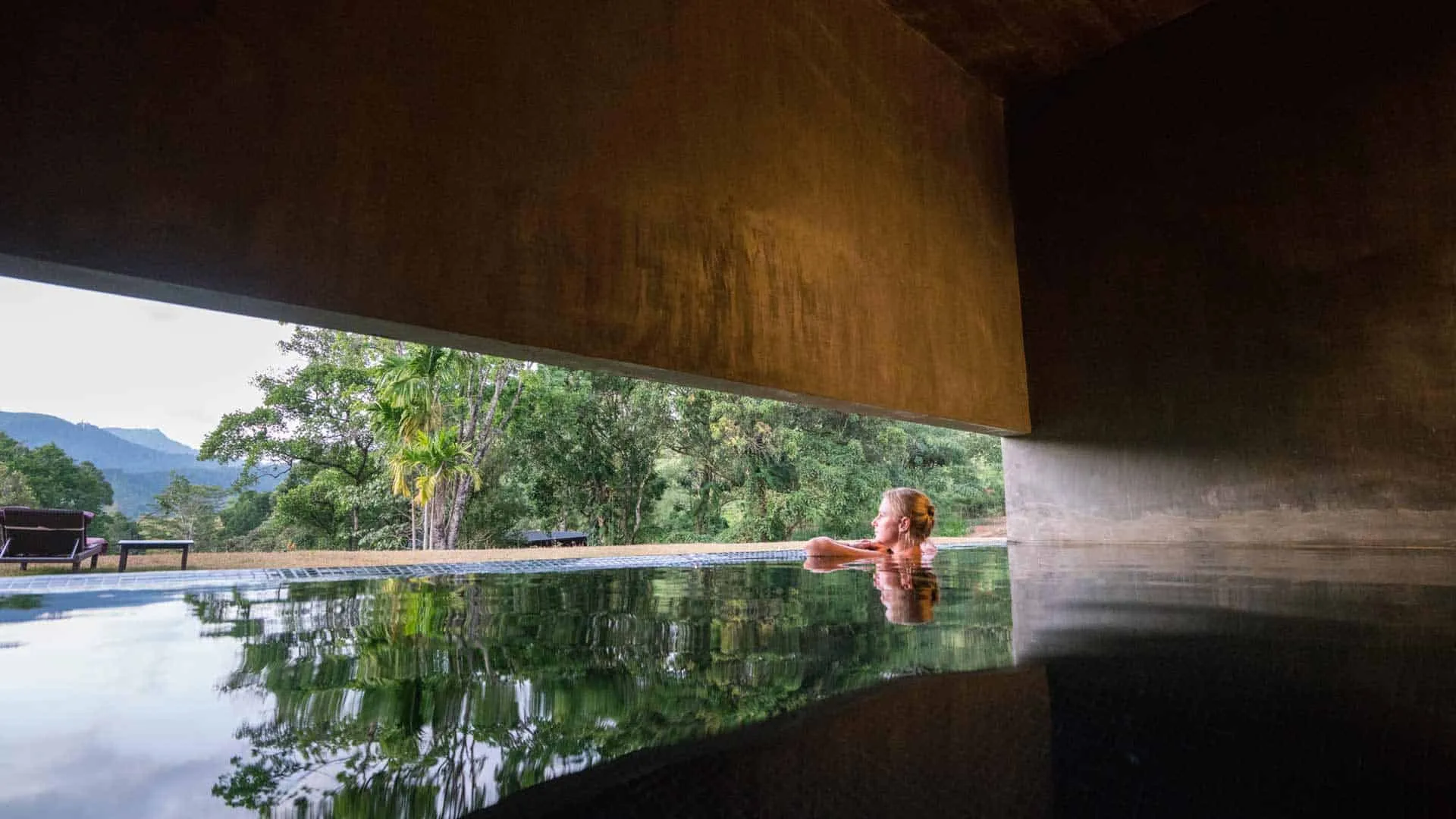
At the centre of each stay sits a consultation with an on-site Ayurvedic doctor, who reviews a guest’s constitution and goals and shapes both the treatment plan and, where relevant, the kitchen’s approach to their meals. The spa itself is built across three levels into the hillside, with a cedarwood sauna positioned to look out over the rice paddies and the Knuckles range, a steam room, hydrotherapy facilities and a thermal salt-soak pool, and most programmes include a daily 90-minute treatment as standard, drawing on Ayurvedic therapies such as Shirodhara (a continuous stream of warm oil across the forehead, used for stress and sleep) and Takra Dhara (a related therapy using medicated buttermilk).
Movement and stillness practices run on a daily rhythm rather than an optional booking: Hatha yoga is offered twice a day, at sunrise and again toward evening, in open-sided pavilions set into the landscape, alongside guided meditation sessions aimed, in the resort’s own language, at building a clearer connection between mind, body and the surrounding environment. Guided nature walks through the estate and surrounding forest round out the daily structure, functioning as much as a wellness practice as a sightseeing activity, given how much of Santani’s therapeutic case rests on unmediated time outdoors.
Experiences
Beyond the programme itself, Santani sits within reach of a genuinely rich stretch of Sri Lanka’s hill country, though the resort’s own rhythm discourages treating it as a checklist. Guests who want to venture out can arrange a Kandy city tour taking in the Temple of the Tooth Relic and the lake at its centre, or quieter temple walks to sites such as Narampanawa and the Bambaragala Cave Temple, well off the main tourist circuit. For August travellers, the Esala Perahera, Kandy’s grand annual procession of drummers, dancers and caparisoned elephants honouring the Sacred Tooth Relic, is one of the island’s most significant cultural events and falls within reach of the resort.
Hikers can take on the Hanthana mountain range near Kandy or push further into the Knuckles Conservation Forest, a UNESCO World Heritage-listed massif of cloud forest and grassland known for its biodiversity and its own microclimates, while more ambitious day trips can extend to Wasgamuwa National Park for wildlife viewing, or to waterfalls and river walks scattered through the surrounding hills. Given the estate’s own history as a tea plantation, tours of working tea factories and the wider tea country landscape that made this region famous are a natural and easy addition, along with birdwatching across the forest reserve bordering the property. None of these are mandatory, and Santani’s own literature is fairly candid that the resort works best for guests content to let most days unfold inside its own boundary.
Sustainability
Santani’s environmental posture is embedded in decisions that were made at the design stage rather than added afterward. The absence of air conditioning across every chalet is presented by the resort as an energy-saving measure as much as an atmospheric one, and pathways are deliberately kept low-lit after dark to limit light pollution spilling into the adjoining forest reserve. On-site movement leans on electric buggies rather than fuel-powered vehicles, a meaningful share of the estate’s irrigation water is recycled, and much of the furniture across the property is built from reclaimed or upcycled timber rather than new-cut wood.
The kitchen’s reliance on produce grown within the estate’s own gardens shortens supply chains and ties the dining programme directly to the land the resort sits on, reinforcing a broader ethos that runs through the property: that a wellness retreat which asks guests to slow down and reconnect with a landscape has some obligation to leave that landscape, and the forest reserve it borders, roughly as it found it.
Who Is It For
Santani is built for guests arriving with an actual intention, whether that is physical recovery, stress relief, a structured Ayurvedic reset, or simply an extended stretch without a phone in hand. It suits couples looking for a quiet, adults-oriented retreat rather than an activity-packed honeymoon, and it suits solo travellers particularly well, given how much of the daily structure, consultations, yoga, guided walks, is built around individual rather than group experience. Digital detoxers will find the absence of in-room Wi-Fi and television less an inconvenience than the entire point. It is a considerably poorer fit for families with young children, for travellers who want an active, sightseeing-driven itinerary, or for anyone hoping for air conditioning, a resort pool scene or conventional evening entertainment; Santani is upfront that none of that is on offer, by design.
Practical Information
Rates run on a full-board basis from roughly $450 per night, typically built around a multi-night wellness programme rather than sold as a simple room booking, with pricing varying by chalet category, programme length and season. Check-in begins at 2:00pm and check-out is at noon, with some flexibility depending on occupancy. The nearest airport is Bandaranaike International in Colombo, roughly a four-hour road transfer away; Santani offers a complimentary one-way transfer for direct bookings of five nights or more and a complimentary return transfer for stays of seven nights or longer, with private car or SUV transfers available at additional cost for shorter visits. Given the elevation keeps temperatures comfortable throughout the year, there is no strict off-season, though December through April tends to deliver the clearest weather across the central hills. Most guests stay between four and seven nights, roughly the minimum runway needed for one of the resort’s structured programmes to show a meaningful effect.
Nearby
The wider Kandy region rewards a guest willing to leave the estate for a day. Kandy town itself, home to the Temple of the Tooth Relic and its lakeside centre, sits within a manageable drive, alongside the Royal Botanical Gardens at Peradeniya and the tea estates and factories that built the region’s reputation and economy. The Knuckles Mountain Range, a UNESCO World Heritage forest of cloud cover and endemic species, borders the property directly and offers hiking for guests willing to trade a spa afternoon for a harder climb, while Wasgamuwa National Park extends the range of day trips for those interested in wildlife. Sri Lanka’s central hill country, of which this stretch above Kandy is a quieter, less-visited corner, remains one of the island’s most scenic regions, and Santani’s relative remoteness within it is less a limitation than the resort’s entire reason for being there.
In pictures
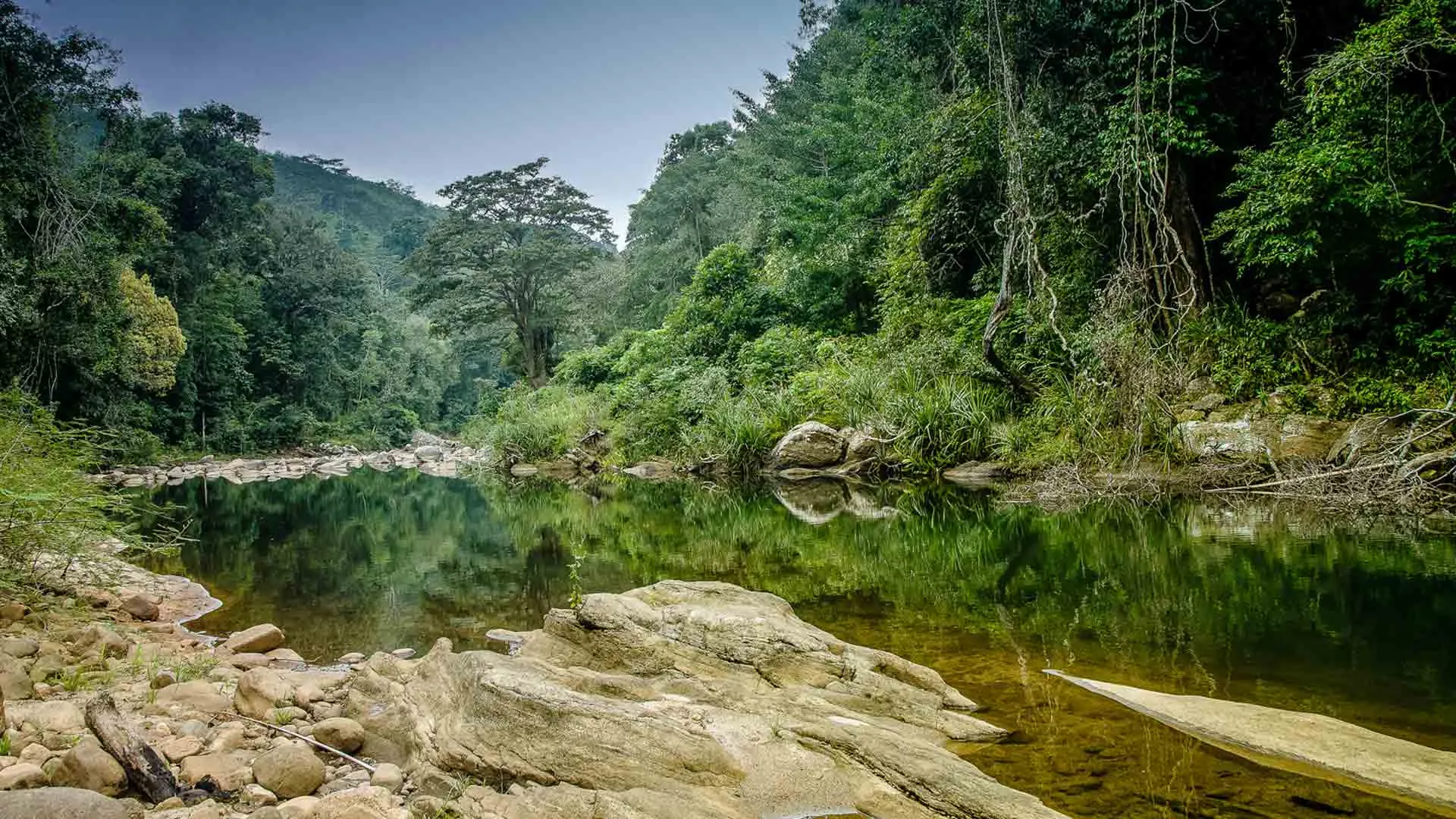
On the map
Kandy, Sri Lanka
Questions
Frequently asked
Is Santani Wellness Kandy suitable for children?
The resort leans adults-focused. Garden View Chalets can accommodate families, but the general house policy is for children aged 12 and over, in keeping with the retreat's quiet, treatment-led atmosphere.
Do the rooms have air conditioning or Wi-Fi?
No. Chalets are designed for natural cross-ventilation rather than air conditioning, and there is no television. Wi-Fi is available only on request within the room, part of a deliberate digital-detox ethos rather than an oversight.
How do guests get from the airport to the resort?
The nearest airport is Bandaranaike International in Colombo, roughly a four-hour road transfer into the Central Province hills. Santani offers a complimentary one-way transfer for stays of five nights or more, and a complimentary return transfer for stays of seven nights or more when booked directly.
What is included in the nightly rate?
Rates are full board, covering breakfast, lunch and dinner from the Rasa Haya wellness menu plus unlimited fresh juices and herbal tea. Most stays are built around a structured programme (detox, Ayurveda, sleep, stress management or similar) that bundles daily treatments and yoga sessions into the rate.
What is the best time of year to visit?
The property's elevation, around 2,800 feet, keeps temperatures mild year-round, so there is no single unmissable season. December through April tends to bring the clearest, driest weather across the central hill country, making it the most reliable window for hiking and outdoor treatments.
Same destination
More hotel guides in Sri Lanka
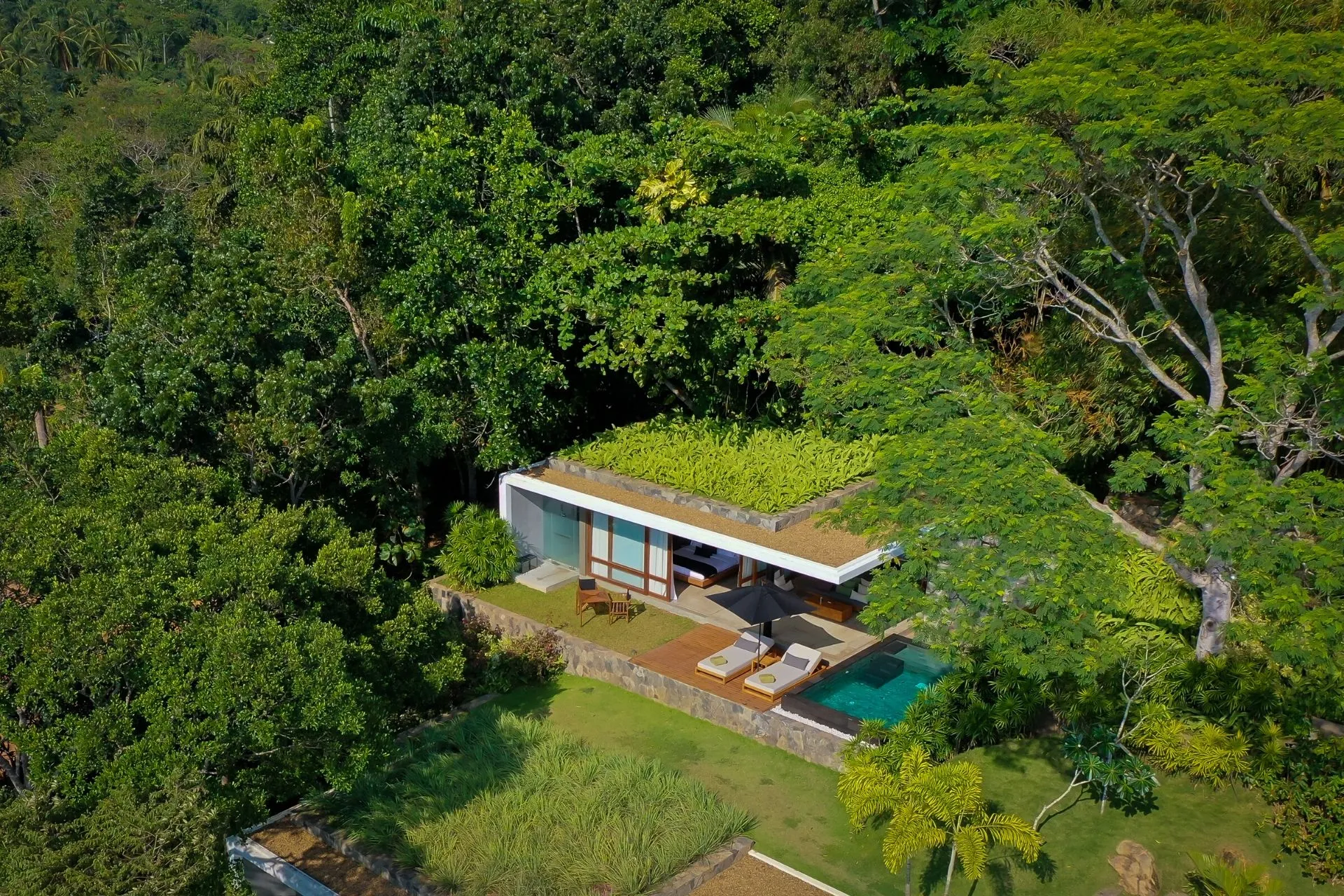
Thiranagama, Sri Lanka
Haritha Villas + Spa
Nine keys on a forested hilltop above Thiranagama, built around private saltwater plunge pools rather than a stretch of sand.
From $460 per night
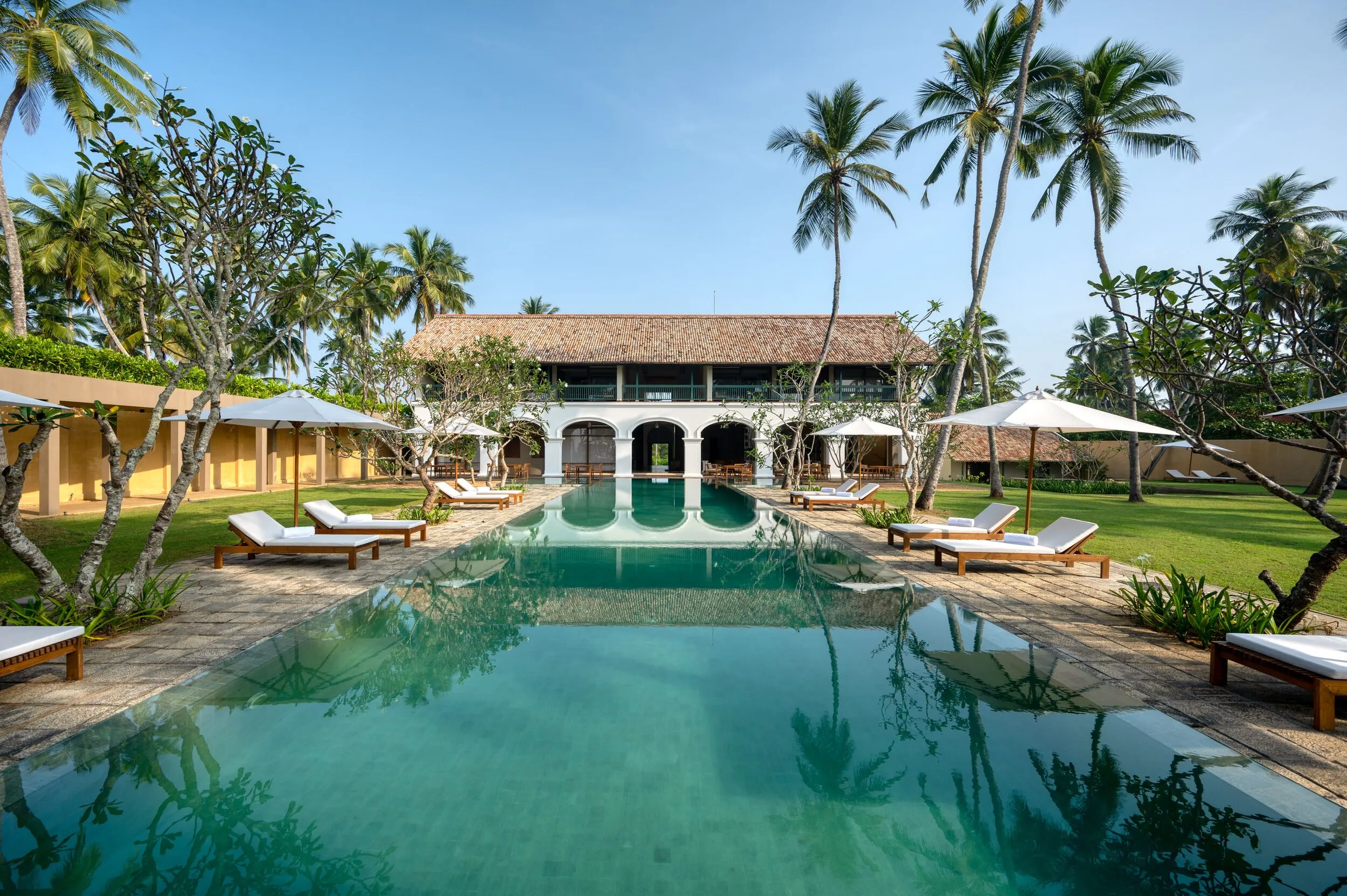
Tangalle, Sri Lanka
Kayaam House
Nine keys, a resident Ayurvedic doctor and a private stretch of turtle-nesting coastline near Tangalle.
From $700 per night
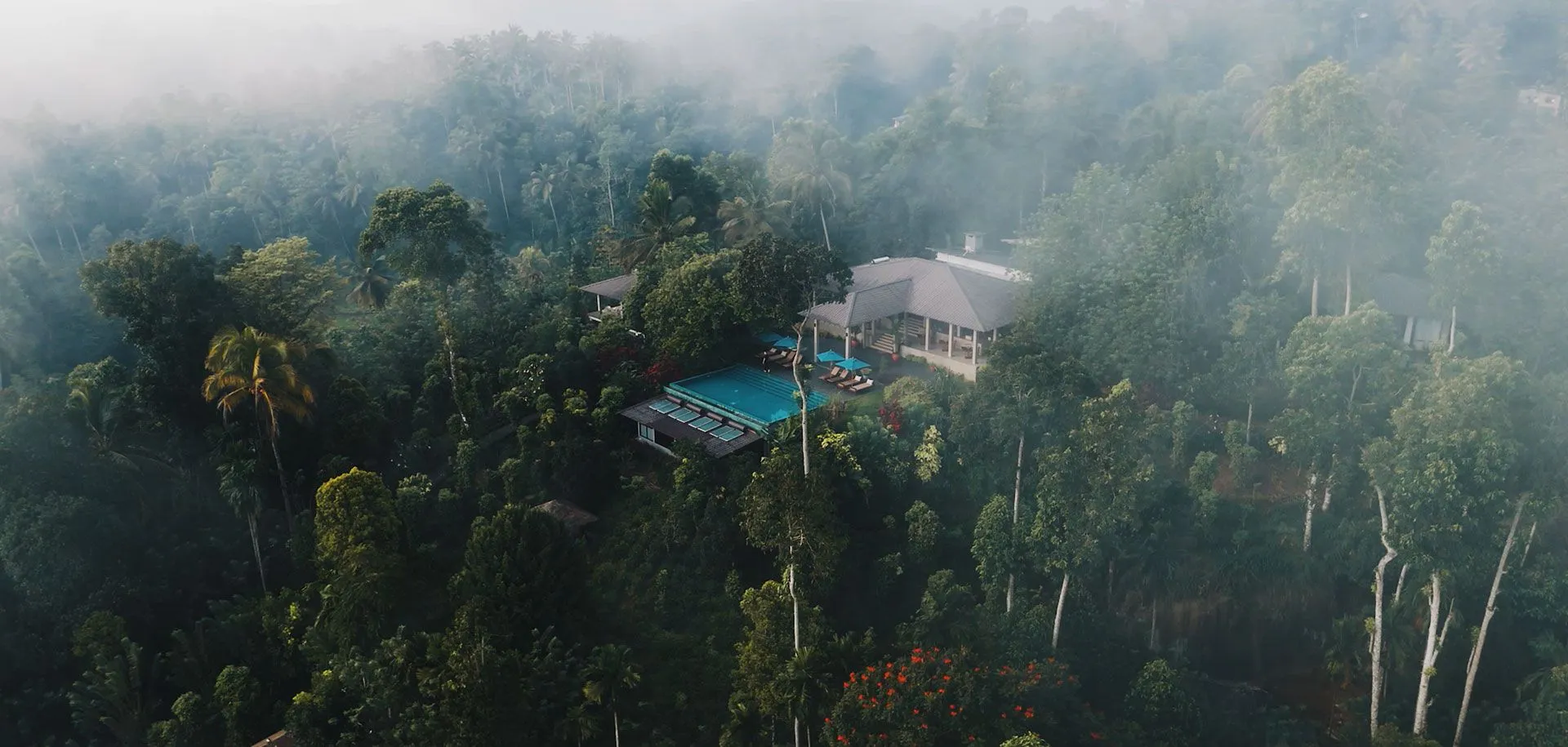
Alawatugoda, Kandy, Sri Lanka
Aarunya Nature Resort
A regenerative hillside estate above Kandy, where private-pool villas sit inside a working tea and spice garden facing the Knuckles range.
From $520 per night