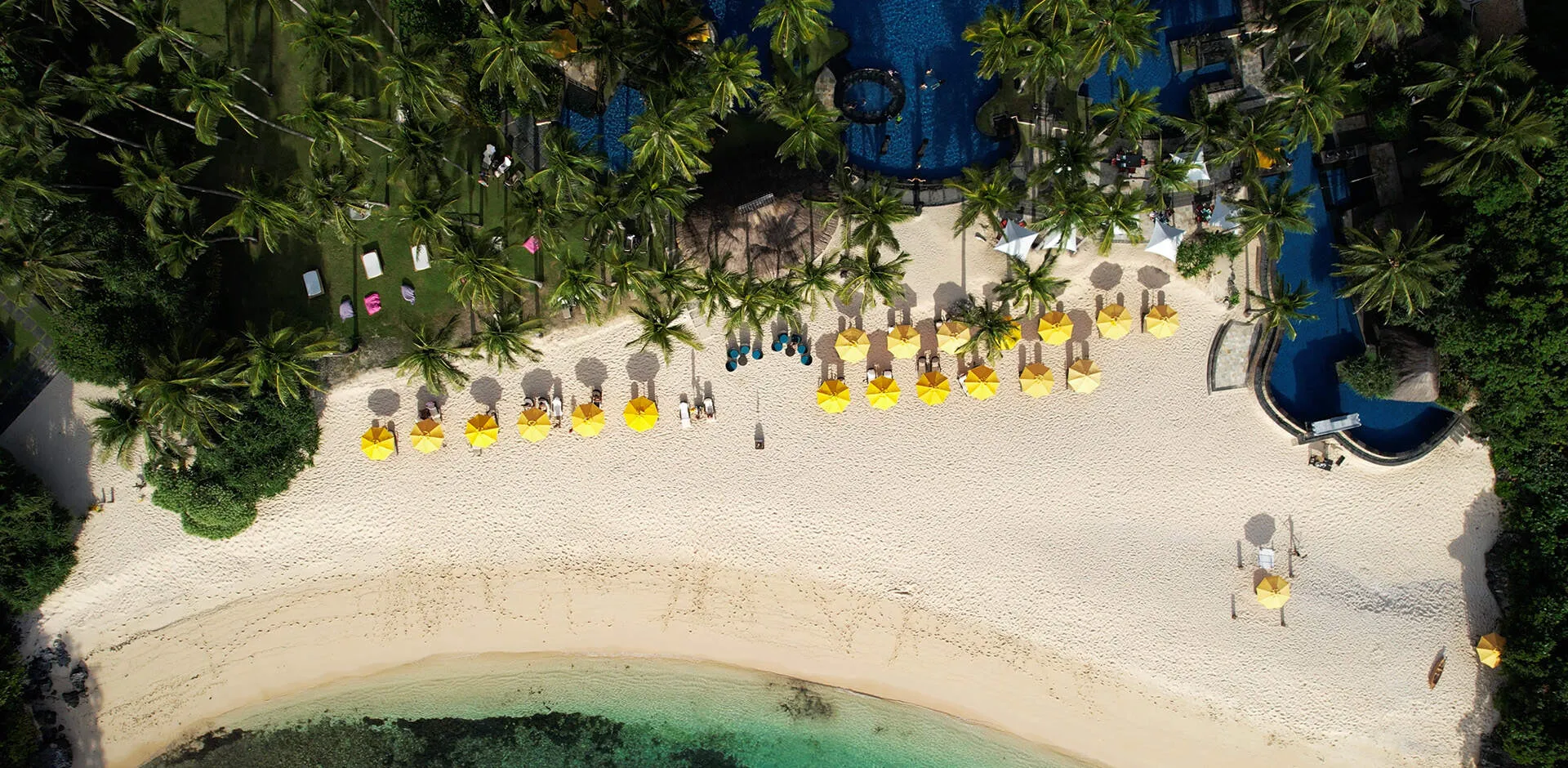
Punta Bunga, Boracay Island, Philippines
Shangri-La Boracay Resort & Spa
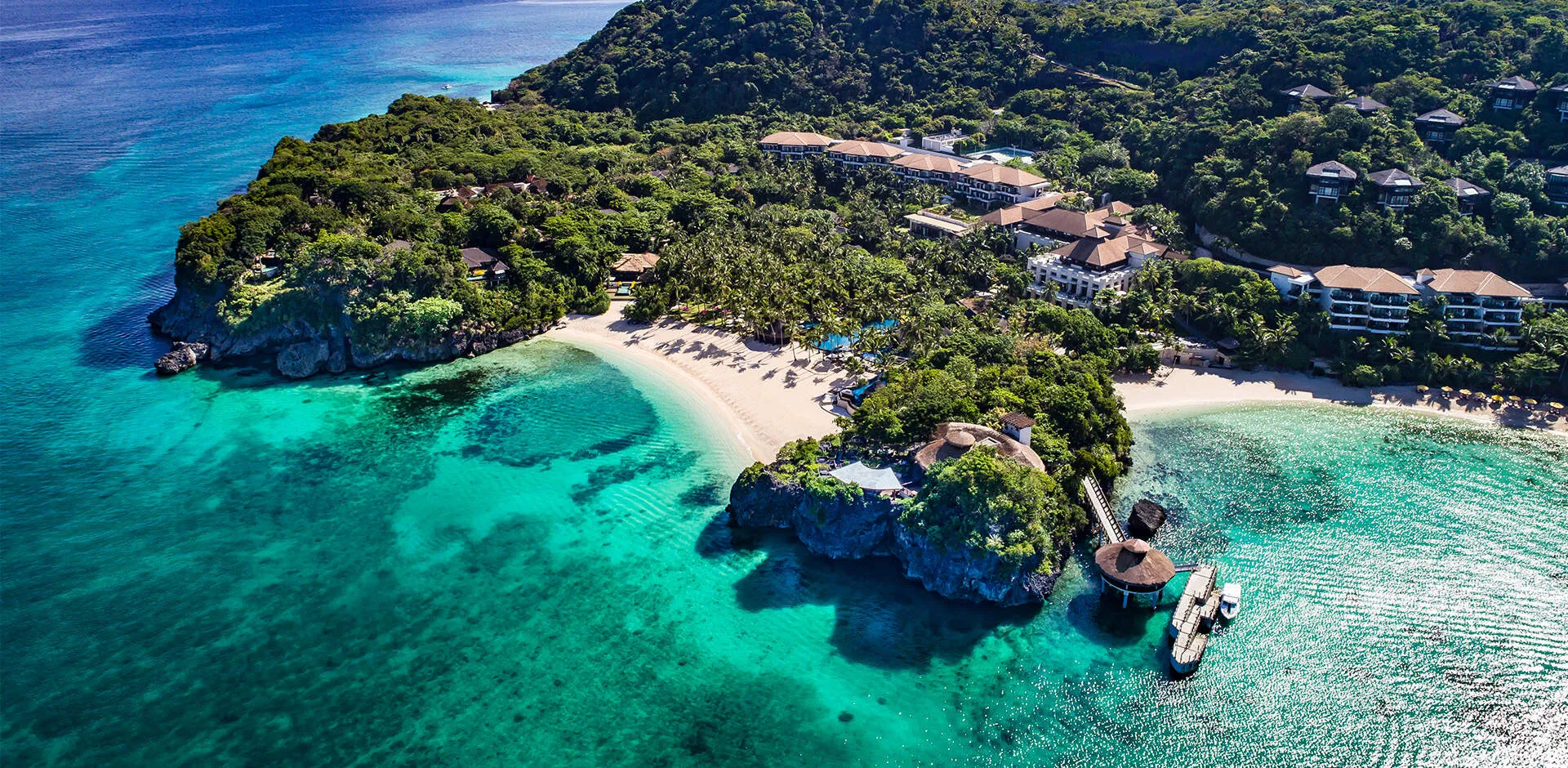
A twelve-hectare hillside and beachfront resort on Boracay's quieter northern tip, built around two private coves and a nature reserve most of the island paved over decades ago.
- Rates from
- From $350 per night
- Nearest airport
- Godofredo P. Ramos Airport, Caticlan (MPH)
- Transfer
- About 40 minutes total: a short drive from Caticlan airport to the jetty, then a 15-20 minute boat crossing to the resort's own pier. Kalibo International Airport (KLO) is a further alternative, roughly 1.5-2 hours by road to the Caticlan jetty before the same boat transfer.
- Best months
- December to May, the Philippines' dry season, avoiding the heaviest southwest monsoon and typhoon risk between July and October
Boracay’s reputation was built on a single stretch of sand, the four-kilometre run of White Beach on the island’s west coast, powder-fine and lined for most of its length with bars, dive shops and beachfront hotels standing more or less shoulder to shoulder. Shangri-La Boracay Resort & Spa deliberately sits apart from all of it, occupying twelve hectares at the island’s northern tip on Punta Bunga cove, a headland separated from the main tourist strip by several kilometres of coastline and, more usefully, by its own private beach and a forested nature reserve that the resort backs directly onto. It opened in 2009, part of the Hong Kong-based Shangri-La Hotels and Resorts group’s long-standing presence in the Philippines, and has spent the years since establishing itself as the island’s clearest argument for staying somewhere that is not White Beach at all.
The property’s defining physical trait, a resort built across two distinct levels, a beachfront tier and a forested hillside above it, gives it a layout unlike almost anything else on the island, where flat, narrow beachfront lots are the norm. Two private beaches, Punta Bunga and the smaller crescent cove of Banyugan, bookend the grounds, while 219 rooms, suites and villas are spread between low-rise buildings near the water and freestanding villas climbing the slope behind them. It is a resort built for a specific kind of traveller: one who wants genuine seclusion, a serious spa, and a private stretch of the same turquoise water Boracay is famous for, without walking distance to the bars.
Why It Stands Out
Most of what distinguishes Shangri-La Boracay from its White Beach competitors comes down to geography it does not share with them. Punta Bunga and Banyugan are working private beaches rather than a segment of a public strip, which means none of the vendor traffic, longtail boats and roaming photographers that define the White Beach experience reach the resort’s own sand. The twelve-hectare site, backing onto a forest reserve rather than another row of hotels, gives the property a sense of scale and greenery that is simply unavailable to its more tightly packed neighbours further south.
The second distinguishing feature is the hillside itself. Rather than treating the slope behind the beach as unusable terrain, the resort built its most private accommodation into it, the Treetop Collection villas rising toward the property’s highest point, with views that clear the tree canopy to take in both the ocean and the forest reserve inland. Few resorts on the island can offer that kind of elevated, forest-immersed villa stay alongside a conventional beachfront one under the same roof.
Finally, CHI, The Spa gives the resort a wellness credential that goes beyond a standard hotel spa menu. Set on its own rocky peninsula with a private bay view, it operates as a near-standalone destination within the property, one that a guest could reasonably build an entire stay around rather than treating as an afterthought between beach sessions.
Architecture
The resort’s built environment follows its terrain rather than fighting it. Low-rise guest buildings and the main pool occupy the flatter beachfront land close to Punta Bunga, while the villa collections climb the hillside behind in stages, using terracing rather than a single tall structure to preserve sightlines and keep the buildings from dominating the tree line. Indigenous and regional materials, timber, stone and thatch-inflected rooflines, run through the construction, a choice that keeps the architecture legible as Filipino rather than a generic tropical-resort template dropped onto the site.
The two-tier layout is functional as much as aesthetic. A network of internal roads connects the lower beachfront tier, where check-in, the main pool, most guest rooms and the bulk of the dining sit, to the upper hillside tier where the Treetop Collection’s villas are set among mature trees at the property’s highest points. Guests move between the two levels by golf buggy, driven by resort staff on request, a system that keeps the hillside villas genuinely private without requiring guests to manage a steep walk in the tropical heat. It is worth noting for anyone picturing a funicular or cable system: the resort’s own materials describe golf buggy transfers as the method of moving between levels, not a rail or cable arrangement.
CHI, The Spa gets its own architectural treatment entirely, built out on a rocky peninsula that separates it physically from the rest of the resort’s buildings, oriented to look across a private bay rather than back toward the main pool or beach.
Interior Design
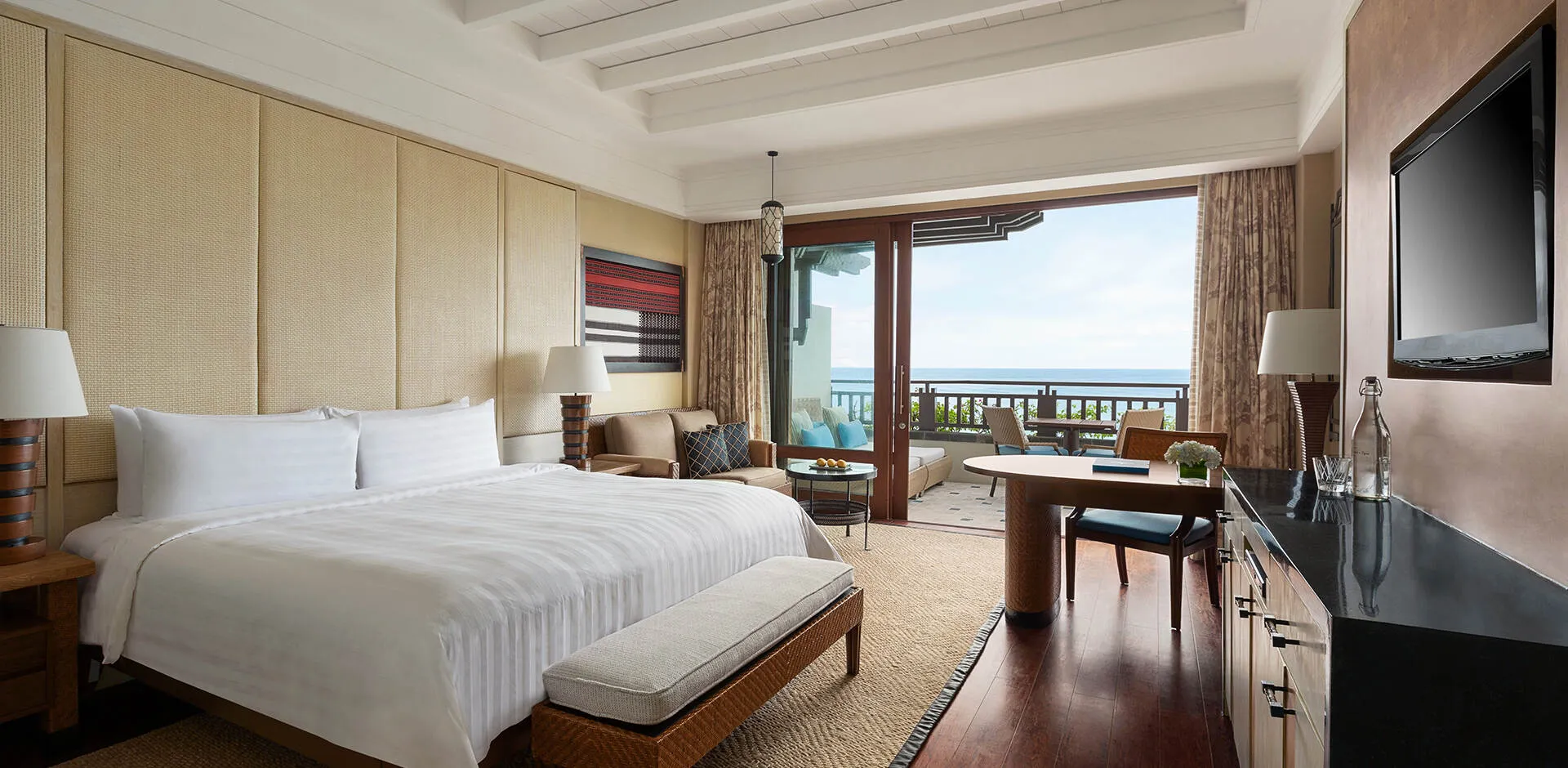
Guest rooms and villas favour a restrained, contemporary palette built around natural materials, timber floors and furniture, woven and textile accents, and neutral tones that let the views, whether garden, sea or forest canopy, do the visual work rather than competing with heavy decoration. Filipino craft touches run through the furnishings and finishes as a quieter thread rather than a dominant theme, keeping the interiors feeling grounded in place without tipping into resort-cliché tropical kitsch.
The villa categories scale up in both size and design ambition as they climb the hillside or move toward the water’s edge. The Tree House, Loft Garden and Loft Villas of the Treetop Collection, each around 216 square metres, lean into their forest setting with open-plan living areas and generous glazing toward the canopy outside. Further down, the One and Two-Bedroom Pool Villas add private plunge or lap pools and outdoor living space, while the largest units, the Two-Bedroom Ocean and Beach Villas and the resort’s Presidential Villa on Banyugan beach, at roughly 1,727 square metres, extend into full private compounds with their own gardens and multiple living and dining areas.
Atmosphere
Shangri-La Boracay reads as considerably calmer and more grown-up than the island’s central tourist strip, a function of its distance from White Beach as much as any deliberate design choice. There is no walkable nightlife immediately outside the gates, no beach vendors working the sand, and the two private beaches keep the resort’s own guests as the only crowd on view. That seclusion cuts both ways: travellers who came to Boracay specifically for its bar-and-beach-party reputation will find this property a poor match, while those looking for a genuinely restful island stay, with the option of a short trip into town when the mood strikes, are well served.
The two-tier layout adds a further layer to the atmosphere, giving guests staying in the hillside villas a quieter, more enclosed, forest-adjacent experience distinct from the more sociable, pool-and-beach energy of the lower tier. A family with young children gravitating toward the main pool and a couple tucked into a Tree House Villa above the canopy can both be having very different, equally valid versions of the same resort stay.
Rooms and Suites
Accommodation runs from conventional hotel rooms through suites to a substantial villa collection, thirteen categories in total across roughly 63 to 1,727 square metres. The entry-level Deluxe Room and Deluxe Vista Room, both around 63 square metres, look out over landscaped gardens or, in the Vista category, catch glimpses of the sea through the trees. The Premier Seaview Room and the slightly larger Premier Family Seaview Room step up to direct sea views, the latter sized and configured for families travelling with children. The Seaview Suite, at 127 square metres, adds a separate living area with views over Punta Bunga beach.
Above the suites, eight villa categories occupy the balance of the property. The Treetop Collection, Tree House, Loft Garden and Loft Villas, each roughly 216 square metres, sits at or near the resort’s highest point with panoramic views over the forest canopy to the sea. The Poolside Collection’s One-Bedroom Pool Villa, at 266 square metres, adds a private pool set within tropical garden. Larger still, the Two-Bedroom Pool Villa (700 square metres) and the Oceanview Sanctuary Collection’s Two-Bedroom Ocean Villa and Two-Bedroom Beach Villa (858 square metres each) offer either cliffside sea views or direct beach access on Punta Bunga, depending on category. At the top of the range, the Presidential Villa spans 1,727 square metres with views over the resort’s second, more secluded beach, Banyugan.
Dining
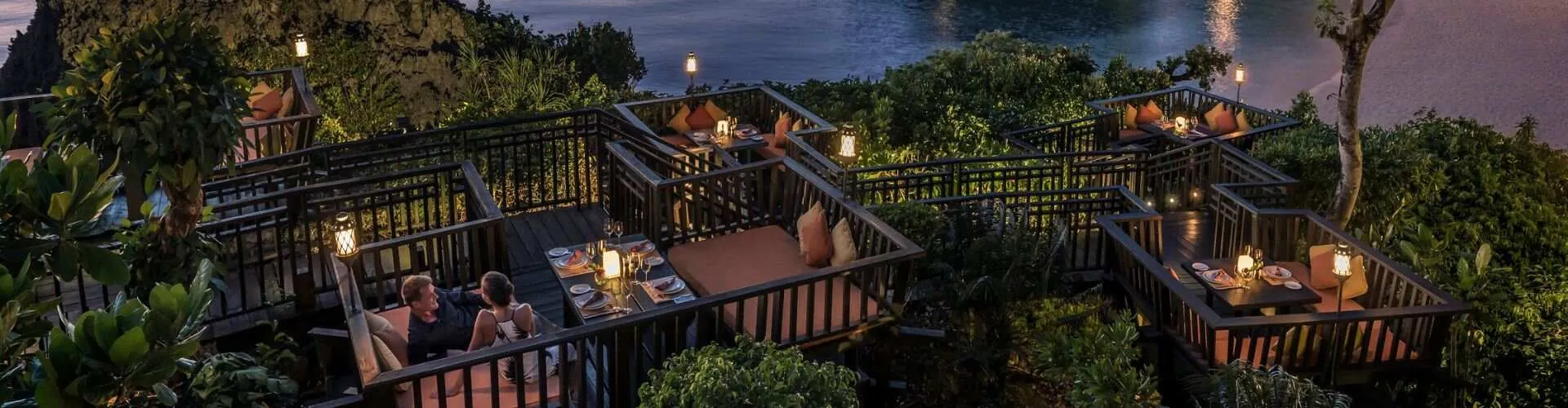
The resort’s dining programme spreads across several distinct venues rather than concentrating around a single main restaurant. Sirena, a seafood restaurant and clifftop bar, is built for sunset drinks and fresh seafood with cabana seating and live music, taking advantage of its elevated position over the water. Vintana, the all-day Asian café, covers the resort’s broadest, most casual menu, drawing on cuisines from across the region for breakfast through dinner. Cielo, the poolside restaurant and bar, keeps things lighter still, serving cocktails and food built around the main pool’s more social atmosphere. Sea Pavilion offers a more private, beachfront format, surf-and-turf barbecues or menus built around a personal chef for guests wanting a dedicated table away from the main restaurants. A Lobby Lounge rounds out the programme with all-day drinks and light bites against an ocean view.
Spa and Wellness
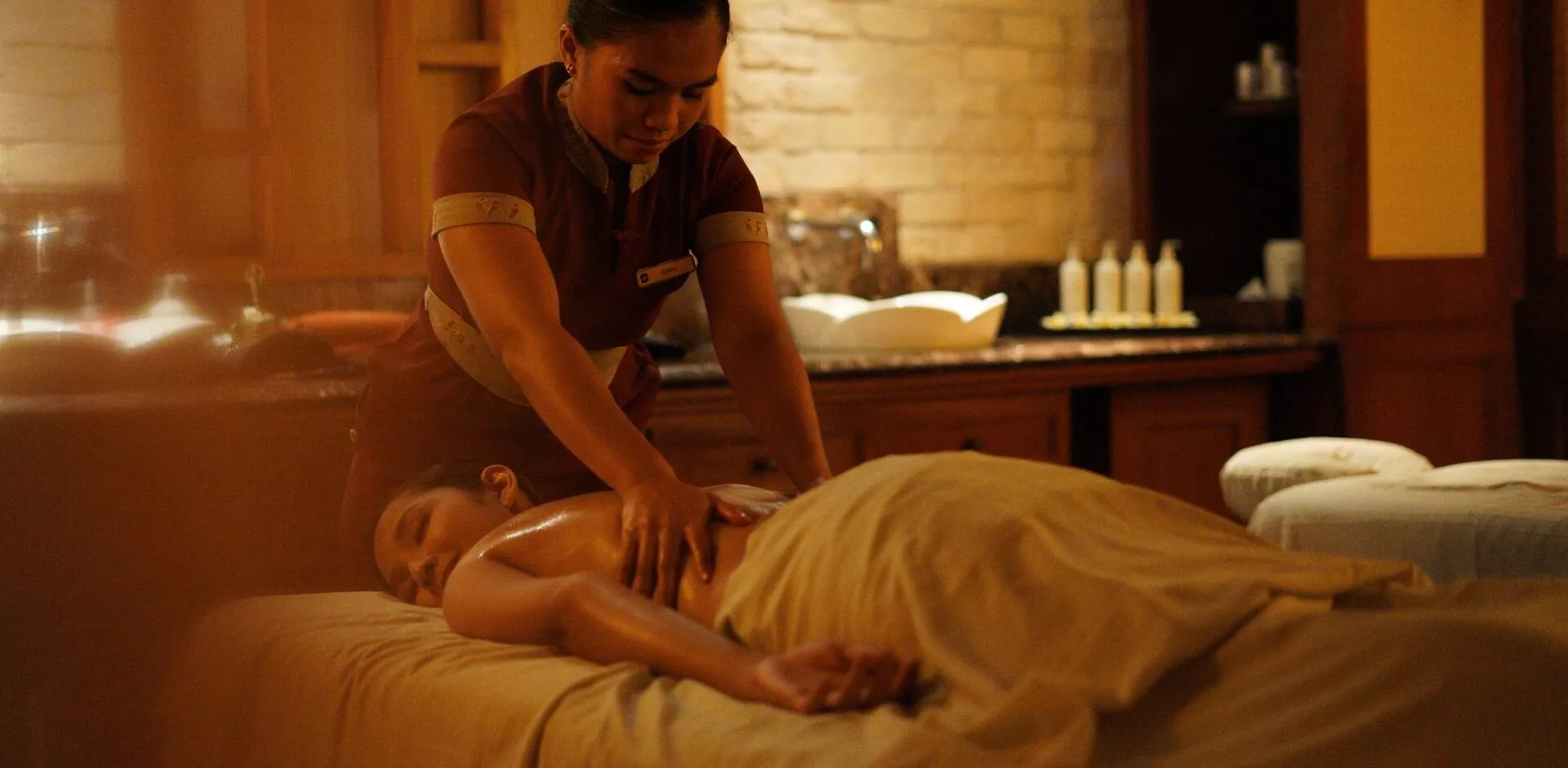
CHI, The Spa gives the resort one of its strongest claims to distinction: a 5,714 square metre spa set on its own rocky peninsula, physically separated from the rest of the property and looking out across a private bay. Its design draws explicitly on the Shangri-La legend itself, framed as a retreat toward personal peace rather than simply a treatment menu attached to a resort. The programme covers massage, facials using Phytomer and Biologique Recherche products, body soaks and treatments, and longer wellness retreats built around multiple sessions, with every treatment including access to the Relaxation Pavilion, Spa Pool and a hot whirlpool bath.
The spa operates by appointment from 10am to 8pm and is run as an adults-focused environment, closed to guests under 16 and asking for mobile phones to be switched off, a policy that reinforces the sense of a space kept deliberately apart from the resort’s more family-oriented pool and beach areas. Beyond CHI, the resort’s Health Club adds a more conventional fitness offering for guests who want to keep a workout routine going alongside spa time.
Experiences
Water is the organising activity at Shangri-La Boracay, unsurprising given its two private beaches and position on one of the world’s more celebrated stretches of coastline. A Dive Centre arranges diving trips and courses on request, while the resort’s Snorkeling Safari programme ties conservation and recreation together, taking guests out to see the coral and marine life the resort’s own sustainability work is helping to protect. An Adventure Zone and Entertainment Centre cover land-based activity and evening programming, and tennis and pickleball courts are available with both peak and off-peak pricing for guests who want a more structured game.
The Eco Centre functions as the resort’s most direct link between its guests and its conservation work, an educational space covering the surrounding island’s flora and fauna alongside the specifics of the resort’s own environmental programmes, from the Giant Clam Sanctuary to the on-site apiary launched in 2022. It gives curious guests, and particularly children, a concrete way to engage with the sustainability claims most resorts leave as marketing copy.
Who It Is For
Shangri-La Boracay’s combination of scale, two private beaches and a genuine hillside villa collection suits families particularly well: children have the main pool, Adventure Zone and Entertainment Centre to occupy them, while parents have a full-scale spa and a beach that is not shared with the rest of the island’s visitors. Couples and honeymooners are equally well served, especially by the more secluded Treetop villas and Banyugan beach, which sees far less traffic than the main Punta Bunga shoreline.
It is a considerably less natural fit for travellers whose idea of a Boracay trip centres on White Beach’s bars, restaurants and nightlife within stumbling distance of their room; that scene sits a meaningful boat and road transfer away from this property, and guests who want it nightly are better served by a hotel directly on the strip.
Best Time to Visit
The Philippines’ dry season, running roughly from December through May, is the most reliable stretch for Boracay’s calm seas, consistent sun and lower rainfall, and it is correspondingly the resort’s busiest and most expensive period, particularly around the December and Lunar New Year holidays. The wet season, June through November, brings the southwest monsoon and the country’s heaviest typhoon risk between July and October specifically, a period worth approaching with flexible dates and travel insurance rather than avoiding outright, since the shoulder months on either side of the heaviest rains can still deliver good weather at meaningfully lower rates.
How to Get There
Access runs through one of two airports. Godofredo P. Ramos Airport in Caticlan (MPH) is the closer option, a short domestic flight from Manila or Cebu, followed by a brief drive to the Caticlan jetty and a 15 to 20 minute boat crossing to the resort’s own pier, roughly 40 minutes door to door. Kalibo International Airport (KLO), further from the island but able to handle more international and charter traffic, adds a further 1.5 to 2 hours of road transfer to reach the same Caticlan jetty before the same boat crossing. The resort coordinates both routes for guests as part of the booking process, and staff meet arrivals at the pier for the final transfer onto the property.
Nearby Experiences
Boracay’s White Beach, the island’s four-kilometre stretch of restaurants, bars, dive shops and sunset-watching crowds, sits a boat and road transfer away from Punta Bunga rather than a walk, but it remains an easy half-day or evening excursion for guests who want to see the island’s more social side without staying in the middle of it. Boracay town, inland from the beach, offers a lower-key look at everyday island life, along with markets and smaller local restaurants outside the resort circuit. Closer to the property itself, the surrounding waters off Punta Bunga and Banyugan give snorkellers and divers a quieter alternative to the boat trips that leave from White Beach’s more crowded shoreline.
Things to Know Before Booking
The resort’s distance from White Beach, its main selling point for guests seeking seclusion, is worth weighing carefully for anyone who also wants easy access to Boracay’s wider restaurant and nightlife scene, since reaching it involves a deliberate excursion rather than a short walk. The two-tier property layout means that a hillside Treetop villa, however scenic, sits a golf buggy ride from the main beach and pool rather than steps away, a detail worth confirming at booking if beach proximity matters more than elevation and privacy. CHI, The Spa’s adults-only policy, closed to guests under 16, is also worth noting for families planning to build spa time into a trip together. Finally, given the wet season’s typhoon risk between July and October, travel insurance and flexible cancellation terms are a sensible addition for stays booked in that window.
Sustainability
Shangri-La Boracay’s most substantive environmental programme is its on-site water bottling plant, which fills reusable glass bottles for use across the resort and is credited with displacing at least 300,000 single-use plastic bottles a year, backed by refillable amenity dispensers in guest rooms, biodegradable straws, and wooden key cards in place of standard PVC. Marine conservation work centres on a Giant Clam Sanctuary at Punta Bunga, protecting eight endangered giant clams within a municipal protected area, alongside a Fish House Project that invites guests to help build shelters for local marine life and a Snorkeling Safari programme that pairs recreation with reef education.
Biodiversity efforts extend inland as well, with a resort apiary launched in June 2022 supporting pollinators alongside guest education tours and its own honey production, part of a broader stated focus on protecting the fruit bats, moths and birds that share the property’s forest reserve boundary. On the food side, the resort participates in the wider Shangri-La group’s “Rooted in Nature” sourcing programme and has committed to sourcing cage-free eggs by 2026. As with most single-resort sustainability claims, an independent, third-party audit of the property’s full environmental footprint, energy use, waste management and supply chain beyond these named programmes is not publicly available, so this guide describes only the specific, documented initiatives rather than extending them into a broader claim about the resort’s overall footprint.
Practical Information
Rates at Shangri-La Boracay start from around USD 350 per night for an entry-level Deluxe Room, rising substantially through the suite and villa categories, with the Presidential Villa at the top of the range. Check-in is from 2:00pm and check-out by 12:00pm, with early or late arrangements available on request, subject to availability.
The nearest airport is Godofredo P. Ramos Airport in Caticlan (MPH), reached from the resort by a roughly 40-minute combined road and boat transfer, with Kalibo International Airport (KLO) available as a secondary option a further 1.5 to 2 hours away by road before the same boat crossing. Most stays run four to five nights, enough time to work through both beaches, spend a proper afternoon at CHI, The Spa, and take at least one buggy ride up to the hillside villas even for guests booked into the lower tier.
Editorial Conclusion
Shangri-La Boracay Resort & Spa makes its case on geography as much as on the specifics of its rooms or restaurants: a twelve-hectare property spread across a private beachfront and a forested hillside, at a genuine remove from the crowds, vendors and nightlife that define the rest of the island. That distance is the resort’s whole argument, and it is a persuasive one for travellers who came to Boracay for the water rather than the strip, particularly families and couples drawn to the scale of two private beaches, a substantial villa collection climbing the slope behind them, and a spa serious enough to anchor a stay on its own. Guests hoping to fold Boracay’s central bar scene into their daily routine will find this property working against that instinct by design; guests hoping to leave it behind entirely will find that design working very much in their favour.
In pictures
On the map
Punta Bunga, Boracay Island, Philippines
Questions
Frequently asked
Where exactly is Shangri-La Boracay, and how is it different from White Beach?
The resort sits on Punta Bunga cove, on the northern tip of Boracay Island in Barangay Yapak, a considerable distance from the island's famous White Beach strip and its bars, restaurants and boat traffic. It occupies twelve hectares of beachfront and forested hillside next to a nature reserve, with two private beaches, Punta Bunga and Banyugan, that are not open to the general public the way White Beach is.
How do guests get between the beachfront and the hillside villas?
The resort is built on two levels: a lower beachfront tier with the main pool, most rooms and the bulk of the dining, and an upper hillside tier where the Treetop Collection villas sit among the trees. Guests move between the two by golf buggy, driven by resort staff, rather than on foot or by any funicular or cable system.
How do you get to Shangri-La Boracay from the airport?
Most guests fly into Godofredo P. Ramos Airport in Caticlan (MPH), a short domestic hop from Manila or Cebu, then take a brief drive to the Caticlan jetty followed by a 15 to 20 minute boat crossing to the resort's own pier, roughly 40 minutes door to door. Kalibo International Airport (KLO), which handles more international charters, works as an alternative but adds 1.5 to 2 hours of road transfer to reach the same jetty.
What is CHI, The Spa like, and is it suitable for a spa-focused stay?
CHI, The Spa occupies a 5,714 square metre site on its own rocky peninsula overlooking a private bay, with treatments spanning massage, Phytomer and Biologique Recherche facials, body soaks and wellness retreats, all including use of the Relaxation Pavilion, Spa Pool and a hot whirlpool bath. It is an adults-focused environment, closed to children under 16, and open by appointment from 10am to 8pm.
What sustainability initiatives does the resort run?
The resort operates its own water bottling plant, filling reusable glass bottles on site and displacing at least 300,000 single-use plastic bottles a year, alongside refillable amenity dispensers, biodegradable straws and wooden key cards. Marine and biodiversity programmes include a Giant Clam Sanctuary protecting eight endangered clams within a municipal protected area off Punta Bunga, a Fish House Project, guided Snorkeling Safaris, and a resort apiary established in 2022 that runs guest education tours.
Same destination
More hotel guides in Philippines
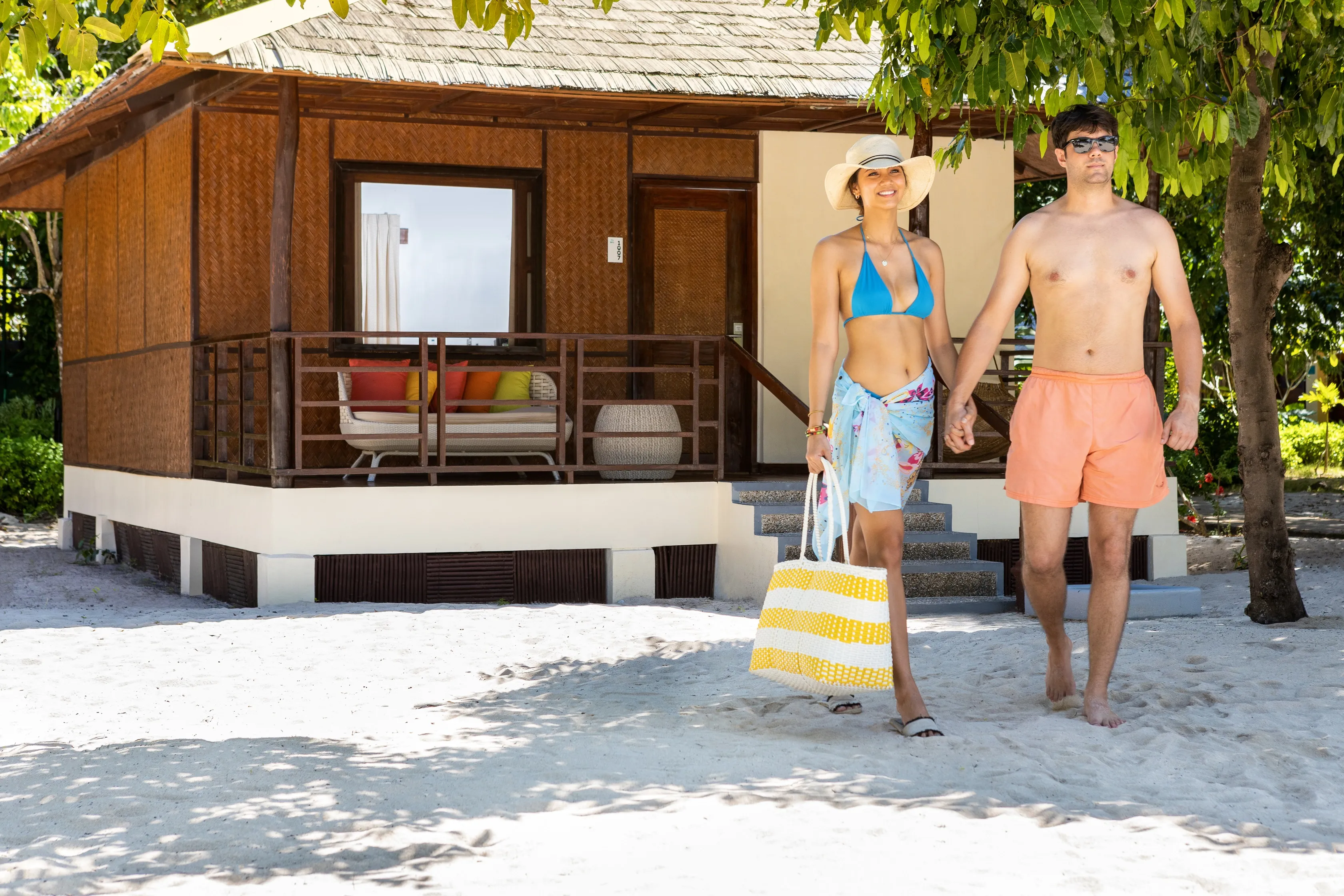
Dimakya Island, Busuanga, Coron, Philippines
Discovery Coron
A nineteen-hectare private island off northern Busuanga, diving Coron's Japanese wrecks by day and disconnecting from everything else after dark.
From $260 per night
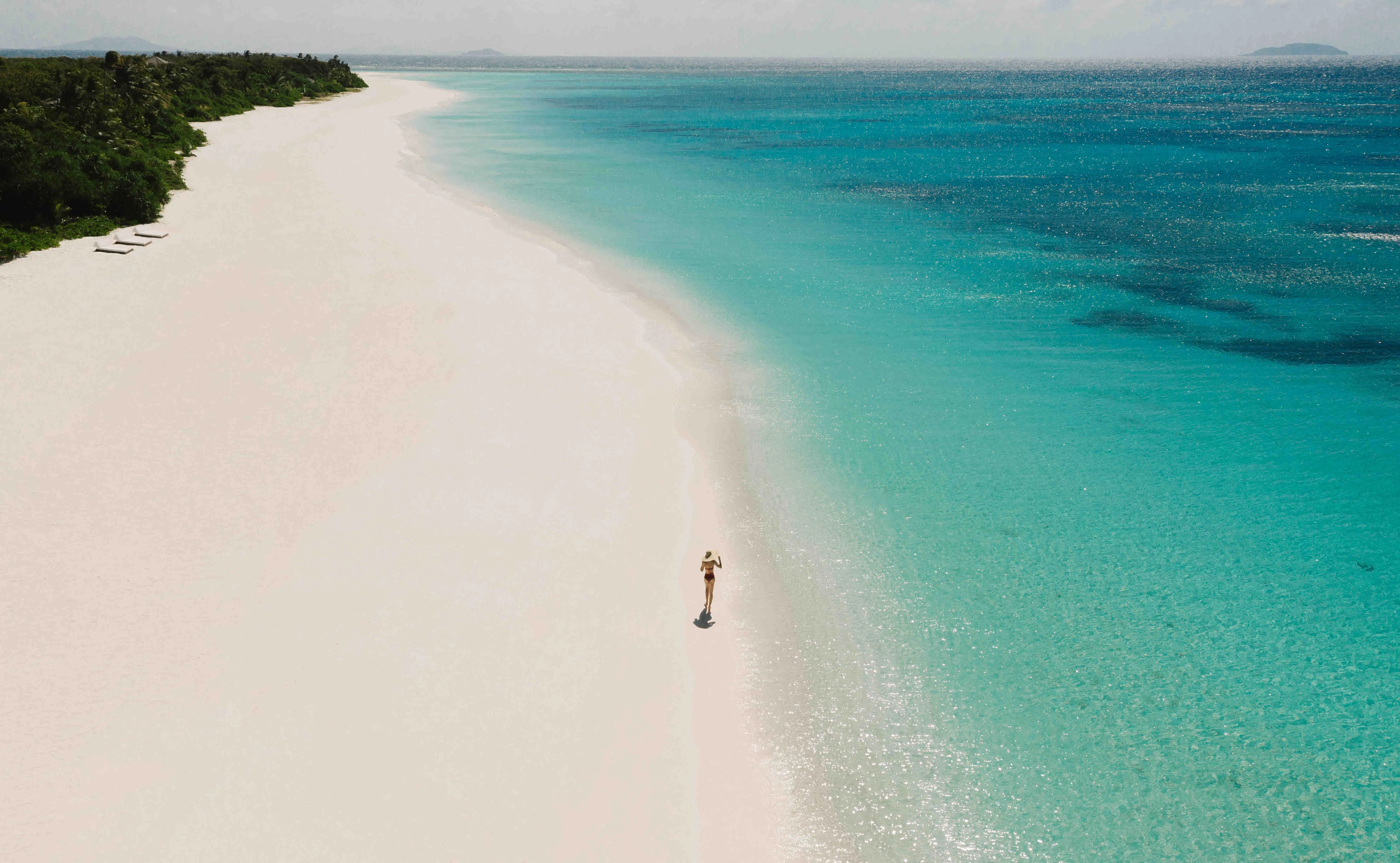
Pamalican Island, Cuyo Islands, Philippines
Amanpulo
A private island in the Cuyo archipelago, reachable only by Aman's own aircraft, built around bahay kubo-inspired casitas set beneath forty-year-old coconut palms.
From $1,900 per night
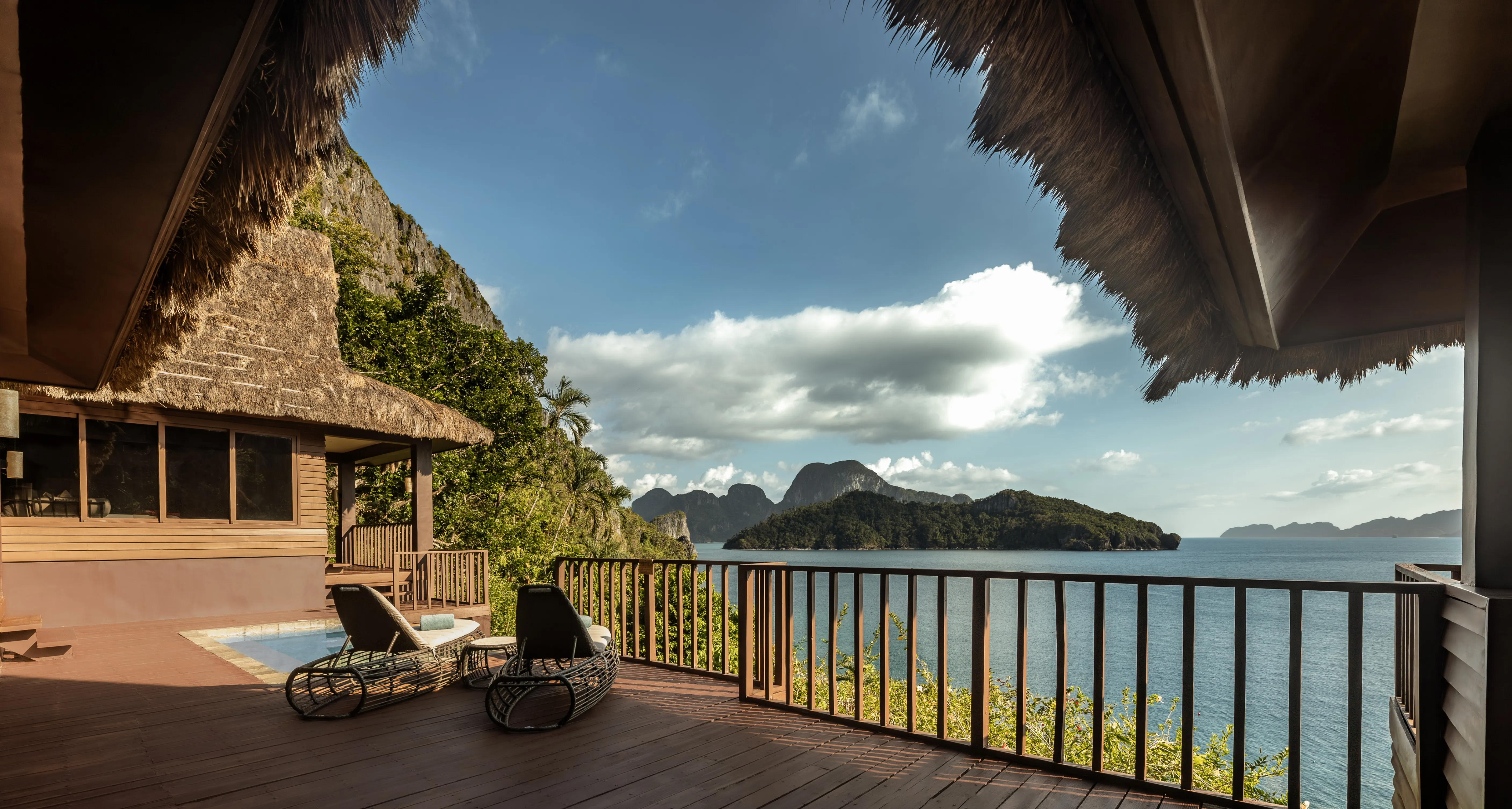
Cauayan Island, Bacuit Bay, El Nido, Philippines
Cauayan Island Resort
A privately owned island in Bacuit Bay, thirty stilt-raised villas set between limestone cliffs and open water, reachable only by boat.
From $500 per night