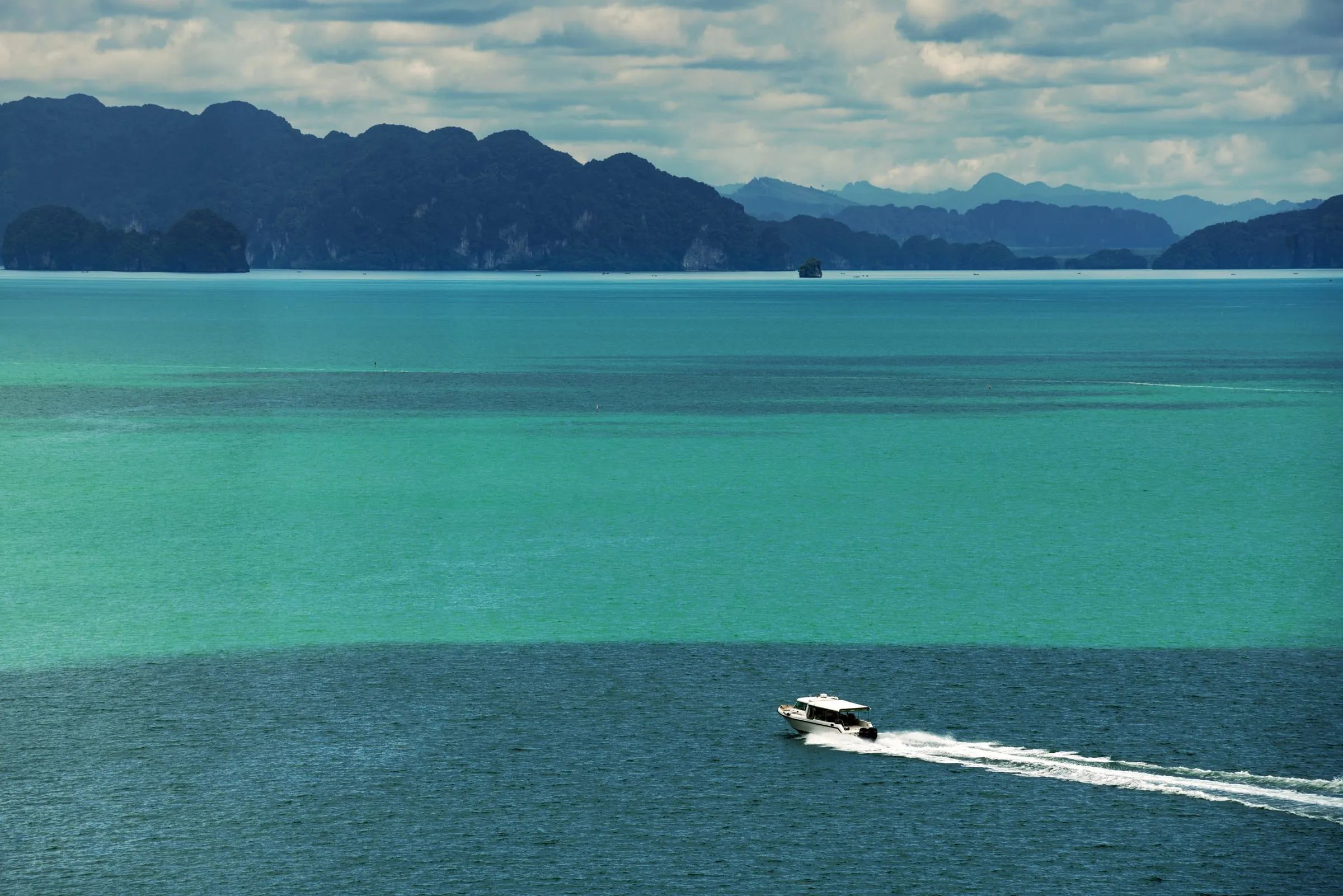
Koh Yao Noi, Phang Nga Bay, Thailand
Six Senses Yao Noi
Fifty-six hillside pool villas built to disappear into the jungle above Phang Nga Bay's limestone karsts.
- Rates from
- From $700 per night
- Nearest airport
- Phuket International Airport (HKT)
- Transfer
- About 30min by road to Ao Po Grand Marina, then roughly 40min by speedboat across Phang Nga Bay
- Best months
- November to April for the driest, calmest conditions on the Andaman coast
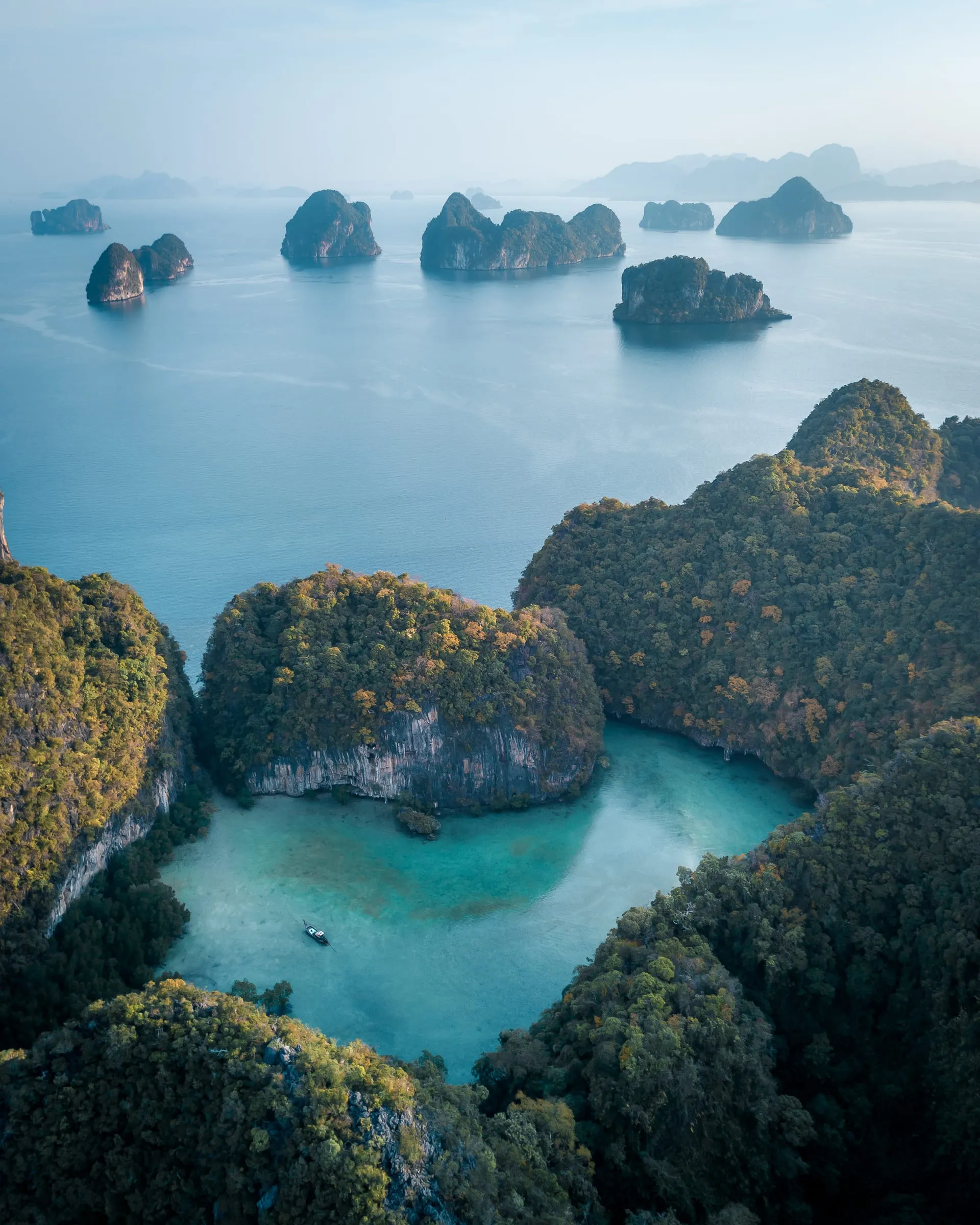
Phang Nga Bay is one of the most photographed seascapes in Thailand, a shallow, karst-studded inlet between Phuket and Krabi where limestone towers rise straight out of still, jade-coloured water. Koh Yao Noi, one of two larger islands sitting roughly at the bay’s centre, has stayed markedly less developed than either of its mainland neighbours, in large part because getting there still requires a boat rather than a bridge or a runway. Six Senses Yao Noi occupies a stretch of jungled hillside on the island’s northeast coast, its 56 pool villas terraced into the slope rather than lined up along a beach, each one built to look, and largely to be, half-hidden in the trees.
The resort opened on 1 October 2007 as the Evason Hideaway & Six Senses Spa at Yao Noi, one of several Evason-branded properties Six Senses operated at the time under a separate, slightly more relaxed sister brand. In December 2010, as part of a company-wide decision to consolidate its portfolio under the more globally recognised Six Senses name, the property was rebranded Six Senses Hideaway Yao Noi, and later simplified to Six Senses Yao Noi, the name it carries today. The physical resort, its villas, its hillside layout, its architecture, has changed relatively little since; what changed was the signage and, gradually, the level of wellness and sustainability programming layered on top of the original design.
What distinguishes it within a crowded field of Thailand luxury resorts is less any single amenity than the totality of its setting: a private hillside on a quiet island, inside a bay whose limestone scenery needs no embellishment, reached deliberately by boat rather than by road. It is a resort built around distance from Phuket’s density, not proximity to it, and that choice shapes almost everything else about a stay here, from the architecture’s low, camouflaged footprint to the pace the property seems designed to encourage.
Why It Stands Out
Most Phuket-area luxury resorts sit on the mainland or on Phuket island itself, competing for the same stretch of increasingly built-up coastline. Six Senses Yao Noi instead sits across the bay on Koh Yao Noi, an island that has deliberately restricted large-scale development, so the resort’s hillside remains one of relatively few luxury footprints on it. The boat crossing from Phuket, roughly 40 minutes by speedboat after a short road transfer, filters out casual day-trip traffic and gives the resort a sense of remove that a same-island property simply cannot replicate.
The architecture reinforces that isolation rather than working against it. Designed by the Bangkok-based Habita Architects, the resort was conceived explicitly to minimise disruption to the hillside’s existing vegetation and topography, with villas subdivided into small components and threaded between trees rather than cleared for a conventional resort footprint. The result, by multiple accounts, is a property that within a few years of opening had drawn nesting hornbills back to the site, a detail the resort still treats as a point of pride and now folds into its own wildlife programming for guests.
Layered on top of the setting and the architecture is a genuinely structured wellness offering, including multi-day programmes built around an onsite Ayurvedic doctor and dedicated spa hillside, and a sustainability operation, the Earth Lab and its associated garden, water and waste systems, that goes further than the recycling-bin gestures common at resorts of this tier. Few Phang Nga Bay properties combine a limestone-karst setting, a serious spa programme and this depth of operational sustainability in the same package.
Architecture
Habita Architects designed the resort around a single guiding brief: to touch the hillside as lightly as possible. Rather than terracing the slope into flat building pads, the firm broke the resort into a large number of small, dispersed structures, each villa and each restaurant pavilion sized and positioned to fit around existing trees and contours instead of clearing them. The design draws directly on southern Thai vernacular housing, most visibly in the hipped roof forms used across the property, a traditional profile adapted here in sugar palm leaf thatch over timber lattice ridge structures, a construction method chosen partly for its ability to withstand monsoon winds and rain.
Structural columns throughout are built from timber logs rather than milled lumber or concrete, and covered outdoor living areas, verandahs, open-sided dining pavilions, breezeways between villa components, are used extensively, both to keep the architecture visually light and to encourage a level of transparency between built structure and surrounding jungle. Over time, the natural materials have weathered into the hillside in a way that several visitors and design critics have described as making the buildings look as though they have always been there, an effect the architects appear to have been aiming for from the outset rather than a happy accident of ageing materials.
The steep topography that makes the site so visually dramatic also shaped the practical logistics of the resort: villas step down the hillside toward the water at varying elevations, connected by paved paths and, given the terrain, electric buggies for guests who would rather not walk the full incline in the tropical heat.
Interior Design
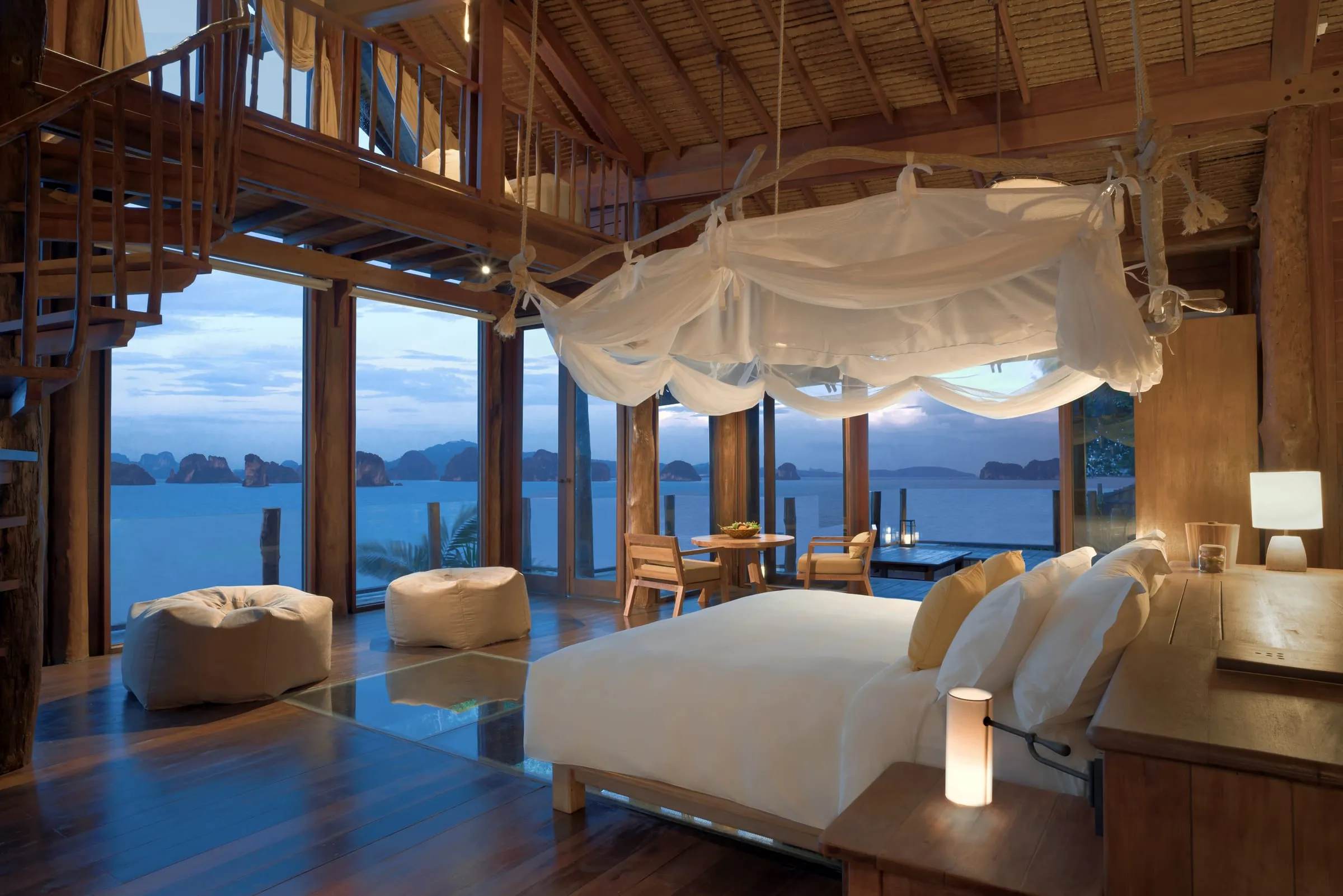
Interiors extend the architecture’s material language rather than departing from it: natural timber, thatch, and locally sourced textures throughout, with a restrained, unfussy aesthetic that keeps the jungle and bay views as the visual focus rather than competing with them through heavy furnishing or ornament. Villas typically include a dining area, an outdoor deck, at least one outdoor sala, and a master bedroom built around a driftwood-framed canopy bed, paired with indoor and outdoor shower options that treat bathing as an extension of the outdoor living space rather than a purely functional back-of-house room.
The design vocabulary stays consistent across villa categories even as the scale changes: from the smaller, forest-facing Hideaway Pool Villas up through the larger, multi-bedroom Ocean Retreat and View categories, the same combination of timber, thatch and open-plan living carries through, differentiated more by size, elevation and proximity to the water than by a fundamentally different interior style. It is a design approach consistent with Six Senses’ broader brand identity: understated and materials-led, built to feel appropriate to a jungle hillside rather than imported wholesale from a generic luxury-resort template.
Atmosphere
The defining quality of a stay at Six Senses Yao Noi is quiet, both in the literal sense, the resort is genuinely removed from Koh Yao Noi’s already limited development, and in a broader sense of pacing. Villas spread widely across the hillside rather than clustering around a single pool or beach, so the property rarely feels crowded even at full occupancy, and there is little in the way of a dense, see-and-be-seen social scene of the kind found at more centrally located Phuket resorts.
That remove shapes how a stay tends to unfold. Days lean toward villa time, pool time and spa time punctuated by boat excursions out into the bay, rather than a resort built around a single central hub that guests circulate through repeatedly. The tone is closer to Six Senses’ house style of barefoot, informal luxury than to a more formal, dress-for-dinner resort experience, though the level of service, delivered in part through each villa’s dedicated Guest Experience Maker, keeps it from reading as rustic. It suits travellers who want the bay’s scenery and the jungle setting to do most of the work, with the resort’s role largely to stay out of the way.
Rooms and Suites
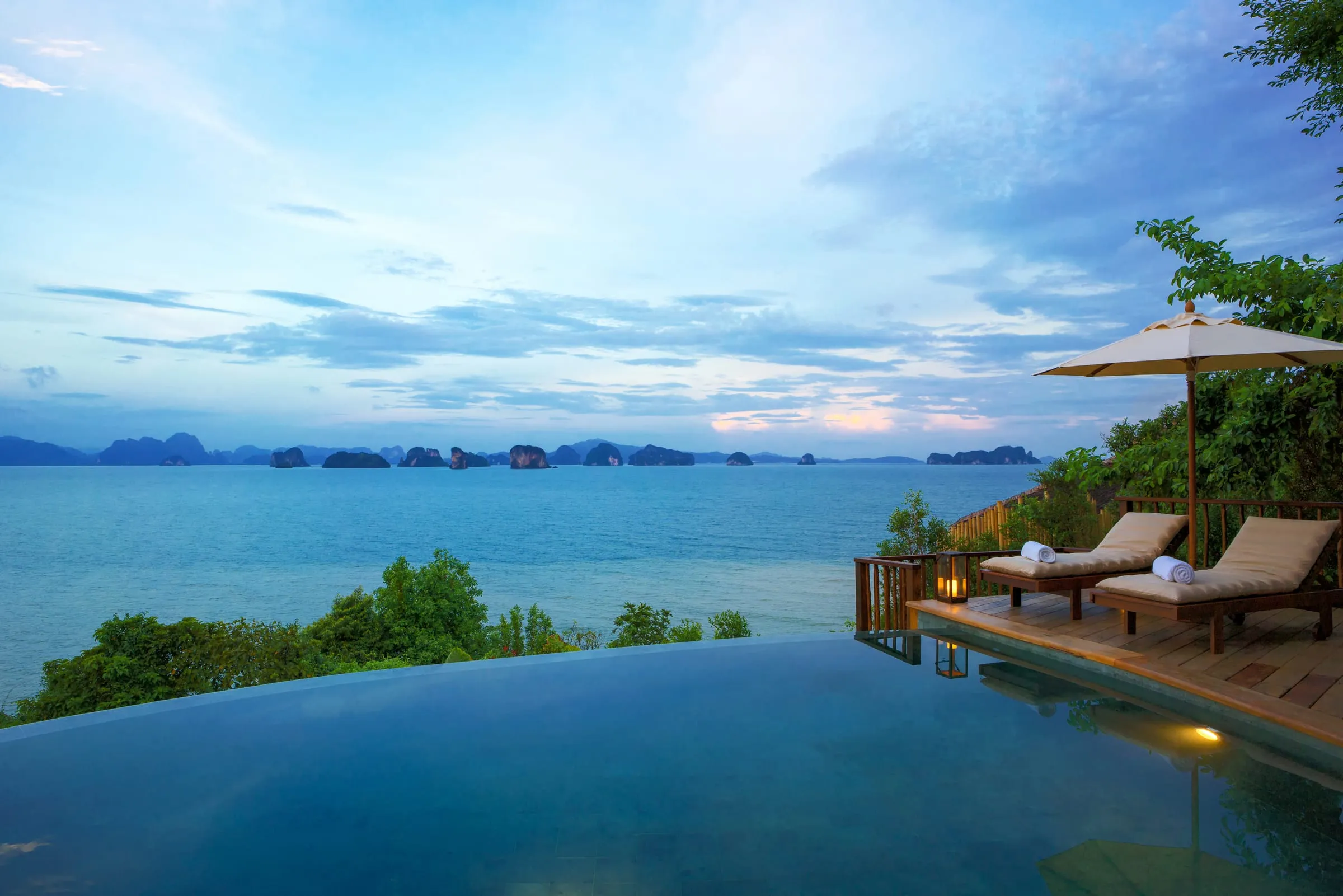
Six Senses Yao Noi has 56 villas in total, ranging from one to four bedrooms, and every villa, across every category, has its own private infinity-edge pool, a rarity at this scale among Thailand resorts. The entry category, the Hideaway Pool Villa, sits within the resort’s forested hillside without a direct ocean view, prioritising privacy and jungle immersion over bay scenery; larger Hideaway Four-Bedroom Pool Villas extend the same forest-set format to bigger family or group bookings.
Higher categories bring the bay into the picture directly. Ocean Panorama Pool Villas are positioned for wide views across Phang Nga Bay’s karst-dotted water, while Beachfront Pool Villa Suites sit at the base of the hillside with direct beach access, the closest villa category to the water’s edge. At the top of the range, multi-bedroom villas marketed as The View and The Ocean Retreat combine larger footprints, from roughly 154 square metres upward, with the resort’s most expansive layouts, suited to families or groups wanting shared space alongside individual privacy.
Across categories, the consistent design signature is the private pool paired with a substantial outdoor living area, dining deck, sala and often an outdoor shower, treating the villa’s exterior space as equal in importance to its interior. Guests choosing between categories are largely trading off between jungle seclusion (lower, forest-set categories) and bay views with beach proximity (higher, water-facing categories), with elevation on the hillside as the other major variable to weigh against the length of a buggy ride back to the resort’s dining and spa facilities.
Dining
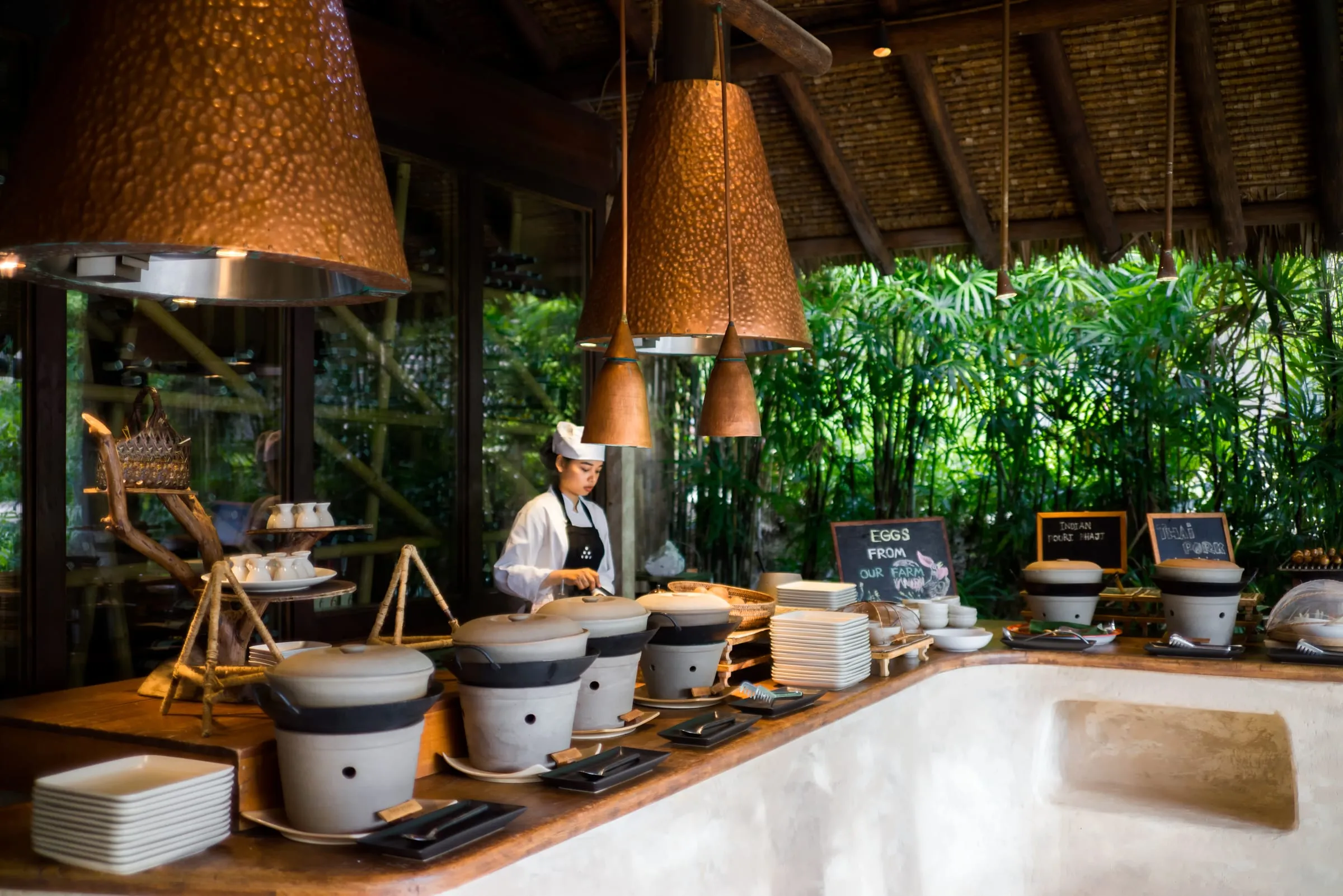
Dining at Six Senses Yao Noi is spread across a small number of distinct venues rather than concentrated in one flagship room. The Living Room serves as the resort’s all-day, most relaxed dining option, positioned near the beach with a menu built around Thai classics alongside broader international dishes, and functions as the default venue for breakfast. Nithan, the resort’s fine-dining Thai restaurant, sits within its own jungle-surrounded kitchen garden and offers a la carte southern Thai dishes or a chef’s degustation menu, served from a split-level structure that includes a dedicated chef’s table on its upper level; it typically opens for dinner service in the evening and also hosts cooking classes during the day. The Hilltop, positioned at elevation with panoramic views over Phang Nga Bay’s limestone pinnacles, functions as a casual daytime pool bar and shifts into a destination dinner venue after dark, trading on its view as much as its menu.
Beyond the three main restaurants, The Den operates as the resort’s cocktail bar, and a gelateria rounds out the more casual end of the food and drink offering. An extensive wine cellar supports the dining programme across venues. Where possible, kitchens draw on the resort’s own onsite organic gardens and mushroom hut, along with eggs from an onsite hen and duck enclosure, a sourcing model tied directly into the resort’s broader sustainability operation rather than treated as a separate marketing initiative.
Spa and Wellness
The Six Senses Spa at Yao Noi is built into the property’s tropical hillside as a series of individual treatment salas arranged around a Thai-inspired long house, rather than a single enclosed spa building, an approach that echoes the architecture used across the rest of the resort. The spa’s layout is organised around four elemental spaces, broadly representing earth, water, fire and air, each hosting different categories of treatment drawn from Thai and Ayurvedic tradition, with signature ingredients including green tea, mogra flower, turmeric and coconut.
Beyond individual treatments, the resort structures three, five and seven day personalised wellness programmes under the guidance of an onsite Ayurvedic doctor, a yoga teacher and a meditation expert, using wearable tracking technology to assess sleep, movement and general health markers before recommending a tailored combination of treatments, diet and activity, in keeping with the biohacking and sleep-focused wellness approach Six Senses has rolled out more broadly across its portfolio. An Alchemy Bar allows guests to blend their own oils and scrubs, and a juice bar supports the wellness programming with cold-pressed and cleanse-oriented options. Visiting and resident practitioners in yoga, Ayurveda and related modalities supplement the core spa team, and a fitness centre rounds out the wellness facilities for guests who prefer a straightforward gym session to a structured programme.
Experiences
The bay itself is the resort’s primary experience, and most guided activity revolves around getting out onto it. Boat excursions into Phang Nga Bay take in the karst formations that give the area its distinctive look, including Ko Hong’s hidden lagoons and the widely recognised limestone tower at Khao Phing Kan, familiar from The Man with the Golden Gun and still commonly referred to locally by its film association. Kayaking, snorkelling and sunset cruises are organised through the resort, making use of the same sheltered, island-studded water.
On land, cooking classes at Nithan’s kitchen garden let guests work directly with the produce that supplies the restaurant, and the resort’s sustainability programming extends into guest-facing activities through the Earth Lab, an educational space built around the property’s own gardens, composting and water systems, and the Junior Eco Warrior Program, aimed at engaging younger guests with the same conservation work in an age-appropriate format. Wildlife viewing, centred on the hornbills that returned to nest on the property after its low-impact construction, is a quieter but genuinely distinguishing draw for guests interested in the site’s ecology rather than only its scenery. Each villa is assigned a dedicated Guest Experience Maker, functioning as a personal concierge who can arrange and adjust any of the above around a guest’s own pace rather than a fixed activity schedule.
Who It Is For
Six Senses Yao Noi suits travellers who want a structured, design-conscious wellness stay set inside genuinely dramatic natural scenery, without the density of a mainland Phuket resort. Couples on honeymoon or anniversary trips will find the villa privacy and hillside seclusion well suited to a quieter, more private stay than most bay-facing alternatives offer, and wellness-focused travellers get a spa programme with real structure behind it, including onsite Ayurvedic and yoga practitioners, rather than a menu of standalone treatments. Families with older children, particularly those old enough to engage with the Junior Eco Warrior Program, boat excursions and cooking classes, are also well accommodated across the resort’s larger multi-bedroom villa categories.
It suits less well travellers who want to be within easy walking distance of nightlife or a wider choice of restaurants beyond the resort gates, since Koh Yao Noi’s own infrastructure remains deliberately limited and the boat transfer effectively rules out spontaneous trips back to Phuket. Guests uncomfortable with a hillside layout that requires buggies or a reasonable amount of walking between villa, restaurants and spa may also find the topography, dramatic as it is, more physically demanding than a flat, beachfront resort.
Best Time to Visit
The Andaman coast’s dry season, running broadly from November through April, brings the calmest seas, the lowest rainfall and the most reliable conditions for the speedboat crossing from Ao Po Grand Marina, making it the most heavily booked window and the safest choice for travellers prioritising predictable weather over lower rates. Within that window, the cooler months toward the start and end of the period, roughly November to February, tend to offer the most comfortable daytime temperatures for boat excursions and outdoor dining.
The green season, from roughly May through October, brings the southwest monsoon’s more frequent rain and a higher chance of a rougher, wetter crossing from the mainland, alongside noticeably lower rates and a quieter, lusher version of the same hillside setting. Neither season should be treated as an absolute rule, tropical weather on the Andaman coast can vary considerably within any given month, but travellers with a fixed itinerary and limited flexibility around the boat transfer are generally better served by the dry season window.
How to Get There
Phuket International Airport (HKT) is the practical gateway for Six Senses Yao Noi, and the resort does not offer, nor does the island support, any form of direct public transport connection, so all onward travel is arranged through the property itself. On arrival, guests are met and driven roughly 30 minutes by road to Ao Po Grand Marina on Phuket’s east coast, from where a speedboat crosses Phang Nga Bay to the resort’s own pier on Koh Yao Noi in approximately 40 minutes, weather permitting.
The resort offers both shared and private versions of this transfer, priced and booked in advance, and recommends guests share flight details ahead of arrival so a pickup can be coordinated without delay. Because the sea crossing is weather-dependent, particularly during the green season, travellers should build some flexibility into arrival-day plans rather than scheduling tight onward connections, and should confirm current transfer pricing and scheduling directly with the resort, since options and rates are subject to change.
Nearby Experiences
Phang Nga Bay itself is the main draw beyond the resort’s grounds, and its limestone karst towers, hidden lagoons and mangrove channels are most commonly explored by chartered longtail or speedboat rather than any land-based route. Ko Hong’s sheltered inner lagoon and the well-known limestone pinnacle at Khao Phing Kan, familiar from its James Bond film appearance, both sit within a reasonable boat trip of the resort and are commonly included in half or full day excursions arranged through the property.
Koh Yao Noi and its sister island Koh Yao Yai retain a slower, more traditional pace of life than Phuket, with local fishing villages, rubber plantations and Muslim fishing communities that give visitors a sense of the region beyond its resorts; travellers interested in that side of the island are best served by arranging a guided excursion through the resort given the limited independent transport infrastructure on Koh Yao Noi itself. Krabi’s own karst coastline and beaches lie within reach across the bay as well, though most guests treat a Six Senses Yao Noi stay as a self-contained base rather than a springboard for wider Krabi exploration given the additional boat and road travel involved.
Things to Know Before Booking
The boat transfer is the single most important planning variable for a stay here: it is compulsory, weather-dependent, and not something guests can substitute with their own arrangements, so flight timing on arrival and departure days should allow a reasonable buffer around the scheduled road-and-sea transfer rather than being booked back to back. Given the hillside layout, guests who prefer minimal walking should ask about villa proximity to the main restaurants and spa when booking, since lower, forest-set categories and higher, more secluded villas can differ meaningfully in distance from the resort’s central facilities.
The resort’s no-plastics policy extends into daily guest life, with lemongrass drinking straws and reusable glass bottles used in place of single-use plastic, a detail worth knowing in advance for travellers with specific preferences. Standard check-in is 2:00 PM and check-out is 12:00 PM noon, with early check-in and late check-out available on a request basis, subject to availability and, in the case of guaranteed early check-in, typically an additional charge. As with most Six Senses properties, current villa availability, wellness programme scheduling and transfer arrangements are best confirmed directly with the resort ahead of a visit rather than assumed from general brand information.
Sustainability
Six Senses Yao Noi’s sustainability operation is substantial enough to be a genuine part of the resort’s identity rather than a marketing afterthought, run under a dedicated onsite sustainability manager. Two organic gardens and a mushroom hut supply the resort’s restaurants with produce, supplemented by eggs from an onsite hen and duck enclosure, closing part of the property’s food supply chain within its own grounds. A no-plastics policy runs across guest-facing operations, replacing single-use plastic with lemongrass straws and reusable glass bottles, with drinking water purified and bottled onsite via reverse osmosis rather than shipped in from off-island.
Waste systems extend the same logic: kitchen and garden waste is composted for reuse as fertiliser, wastewater is treated onsite and reused for irrigation around the property, and glass bottles are recycled into construction material or decorative items rather than discarded. The Earth Lab functions as the resort’s guest-facing sustainability education space, and the Junior Eco Warrior Program extends that engagement specifically to younger guests. The resort also points to nesting hornbills returning to the site following its low-impact construction as an informal indicator of the surrounding habitat’s recovery, and supports local community initiatives on Koh Yao Noi, including school, water and health clinic projects, though the precise scope and current status of any individual community partnership is best confirmed directly with the resort, since such programmes can evolve over time.
Practical Information
Rates at Six Senses Yao Noi sit within the upper tier of the Thailand luxury resort market, with entry-level Hideaway Pool Villas commonly starting from around THB 25,000 per night depending on season, translating to roughly USD 700 at typical exchange rates; this guide prices the property from an indicative $700 per night as a general orientation rather than a live rate, and travellers should always confirm current pricing and any meal plan inclusions directly with the resort. The gateway airport is Phuket International Airport (HKT), reached from the resort by a road transfer of about 30 minutes to Ao Po Grand Marina followed by a speedboat crossing of roughly 40 minutes.
Standard check-in is 2:00 PM and check-out is 12:00 PM. November through April brings the driest, calmest conditions for both the resort stay and the boat transfer, while the green season from May through October offers lower rates and a quieter, lusher hillside at the cost of more frequent rain. A stay of four to six nights is a reasonable baseline, long enough to make use of the resort’s dining venues, spa programming and at least one or two boat excursions into Phang Nga Bay without the transfer time dominating a shorter visit.
Editorial Conclusion
Six Senses Yao Noi has spent nearly two decades proving that a resort built to disappear into its hillside can still be one of the more memorable properties on Thailand’s Andaman coast, precisely because it declines to compete with Phang Nga Bay’s limestone scenery rather than trying to out-design it. The 56 pool villas, the Habita Architects hillside plan, and the resort’s structured wellness and sustainability programmes all point in the same direction: a stay defined by quiet, by genuine distance from Phuket’s busier coastline, and by a setting that does most of the persuading on its own. It is not the resort for a traveller chasing nightlife or a wide radius of restaurants beyond the gates, but for anyone willing to take the boat across the bay, it delivers a rare combination of architectural restraint, real wellness infrastructure and one of the most striking backdrops in the region.
In pictures
On the map
Koh Yao Noi, Phang Nga Bay, Thailand
Questions
Frequently asked
How do guests get to Six Senses Yao Noi?
Almost everyone arrives via Phuket International Airport. From there, the resort arranges a road transfer of about 30 minutes to Ao Po Grand Marina on Phuket's east coast, followed by a speedboat crossing of roughly 40 minutes across Phang Nga Bay to the resort's own pier on Koh Yao Noi. There is no public transport access to the property, so all transfers are arranged directly through the resort and are effectively compulsory; guests should share their flight details in advance so a pickup can be scheduled around arrival.
How many villas does Six Senses Yao Noi have, and do they all have private pools?
The resort has 56 villas, ranging from one to four bedrooms, and every villa has its own private infinity-edge pool. Categories run from the forest-set Hideaway Pool Villa, with no ocean view, up through Ocean Panorama Pool Villas with wide bay views and Beachfront Pool Villa Suites with direct beach access, to larger multi-bedroom villas such as The View and The Ocean Retreat, suited to families or groups travelling together.
Is Six Senses Yao Noi a good choice for a wellness-focused stay?
Yes. The resort's Six Senses Spa is built into the hillside as a series of individual treatment salas around a Thai-inspired long house, and treatments draw on both Thai and Ayurvedic tradition. Beyond a la carte spa bookings, the resort structures three, five and seven day personalised wellness programmes under the guidance of an onsite Ayurvedic doctor, yoga teacher and meditation expert, using wearable tracking to inform recommendations on sleep, movement and nutrition, in line with the broader Six Senses wellness approach found across the brand's other properties.
What is Phang Nga Bay, and why does it matter for this resort?
Phang Nga Bay is a large, shallow inlet on Thailand's Andaman coast studded with dramatic limestone karst towers rising directly out of the water, the same formations made famous by the James Bond film The Man with the Golden Gun. Koh Yao Noi sits within the bay roughly midway between Phuket and Krabi, and the resort's hillside setting, elevated dining venues and boat excursions are built around that seascape, with karst-dotted water visible from many villas and from The Hilltop bar.
When is the best time to visit Six Senses Yao Noi?
November through April brings the Andaman coast's dry season, with the calmest seas, lowest rainfall and most reliable conditions for the speedboat crossing from Phuket, making it the most popular and most heavily booked window. The green season, roughly May through October, brings more frequent rain and rougher crossings but also lower rates, lusher jungle scenery and fewer other travellers, a trade-off worth weighing depending on priorities.
Same destination
More hotel guides in Thailand
Pansea Beach, Phuket, Thailand
Amanpuri
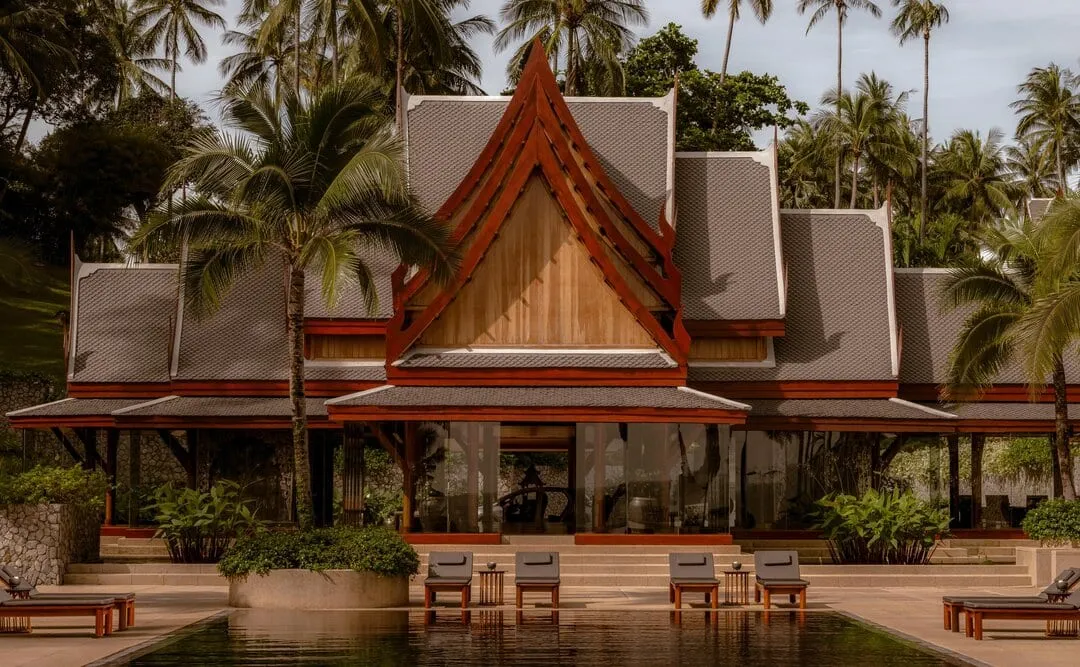
Opened in 1988 on a former coconut plantation on Phuket's Pansea Beach, Amanpuri is the founding property of the entire Aman brand, a village of temple-inspired teak pavilions that set the template every Aman since has followed.
From $1,200 per night
Charoen Krung, Chao Phraya riverside, Bangkok, Thailand
Capella Bangkok
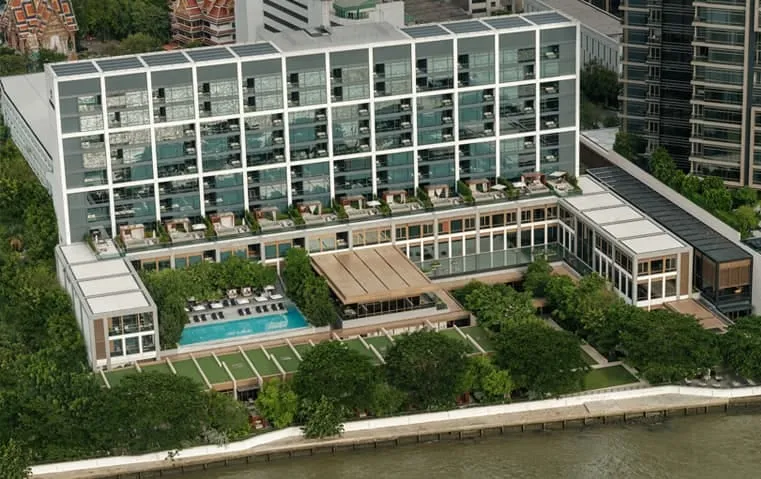
A low-rise riverside sanctuary on the Chao Phraya, where Thai pavilion architecture, a two-Michelin-starred Riviera table and only 101 keys have made a decade-old promenade site into the hotel the rest of Bangkok is measured against.
From $850 per night
Mae Rim Valley, Chiang Mai, Thailand
Four Seasons Resort Chiang Mai
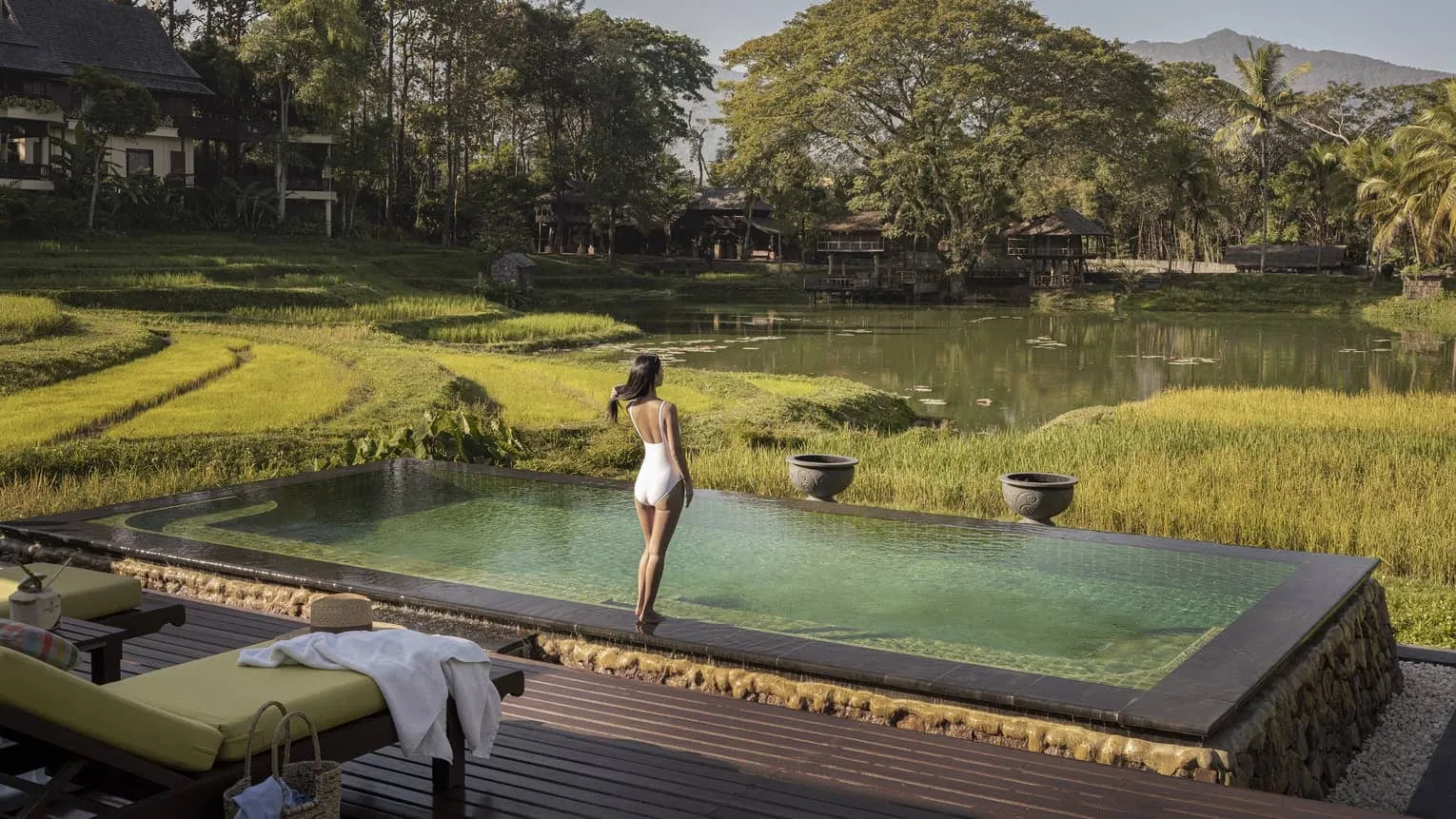
A working rice valley reimagined as a resort, where teak pavilions and a Michelin-starred kitchen sit inside paddies still farmed by hand.
From $850 per night