Medhufaru, Maldives
Soneva Jani
A retractable-roofed overwater village in Noonu Atoll, built by the founders of barefoot luxury to make stargazing, not the beach, the point of the room.
- Rates from
- From $2,500 per night
- Nearest airport
- Velana International Airport, Male
- Transfer
- About 40-45 minutes by seaplane
- Best months
- November to April
There is a particular moment, usually somewhere around the second night, when a guest at Soneva Jani first presses the button beside the bed and watches the villa’s roof slide back to reveal the sky. It is a small piece of engineering theatre, and it works precisely because the resort does not oversell it. The roof simply opens, the ceiling fan stops, and the lagoon air moves through a room that a minute earlier had been sealed against the heat. What follows, a few hours of stars over Noonu Atoll with no glass and no screen between the bed and the night, is the closest thing this resort has to a signature.
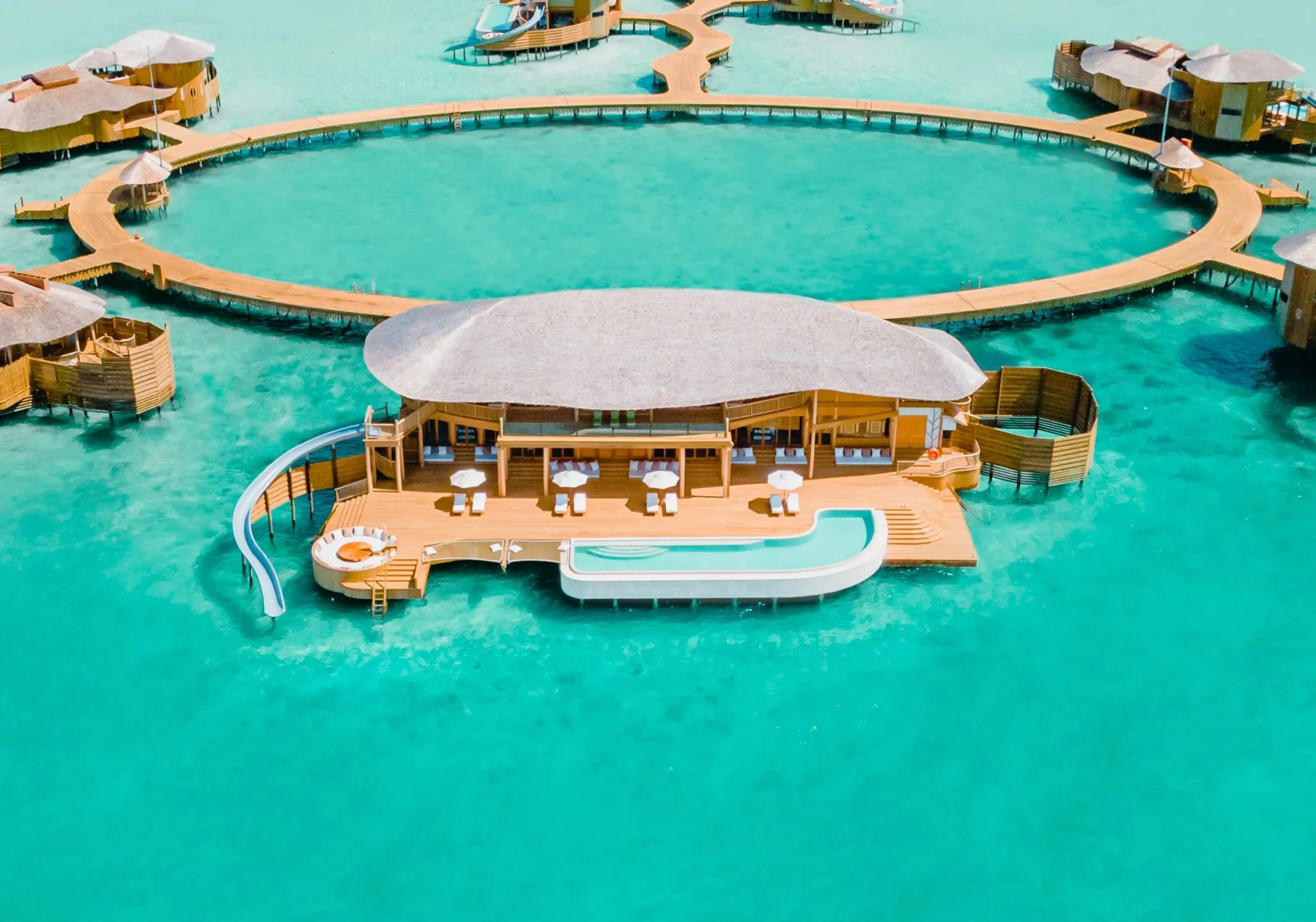
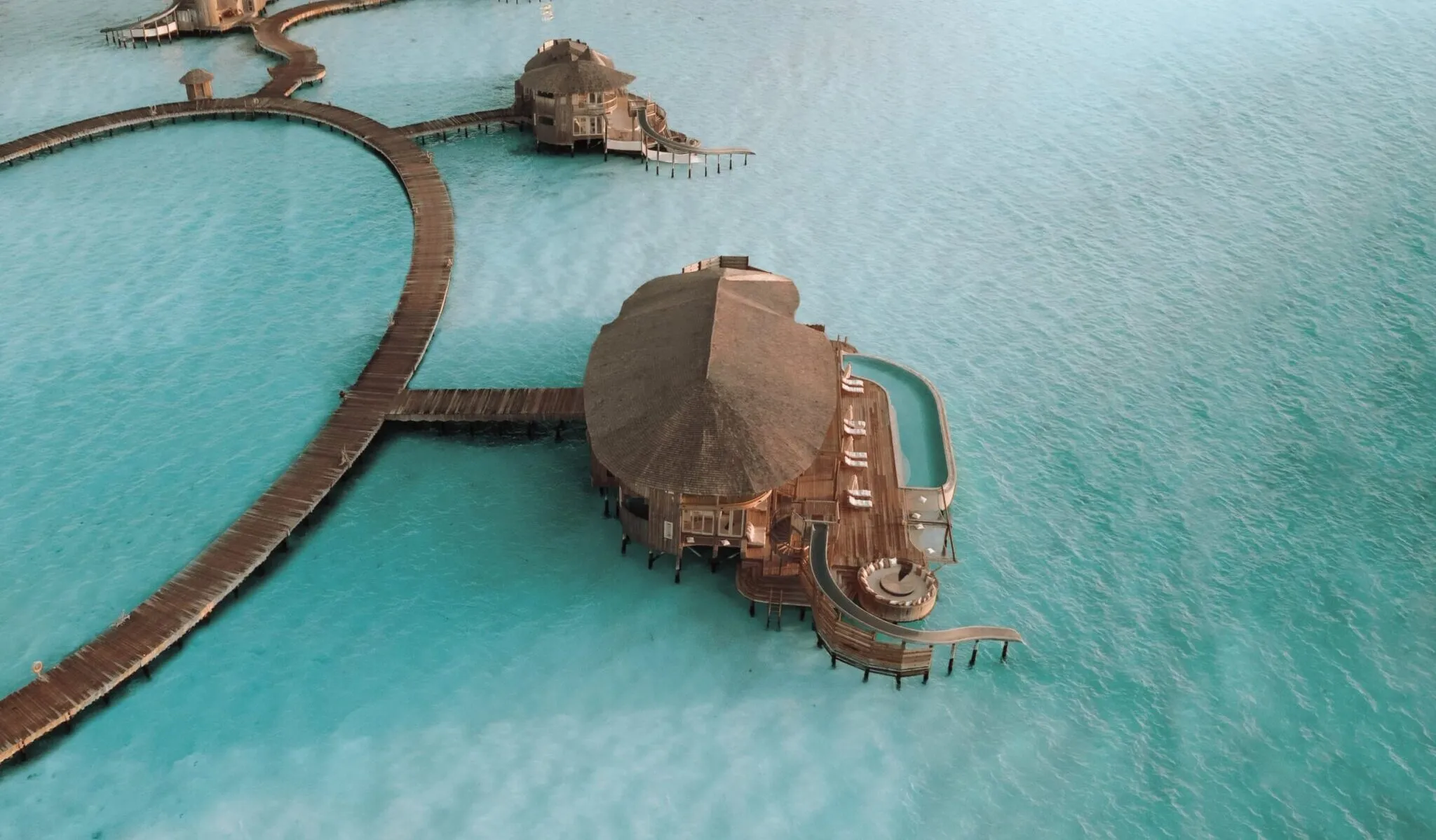
Soneva Jani sits inside a five-and-a-half-kilometre private lagoon in one of the Maldives’ quieter atolls, a little over an hour north of Male by seaplane and a world away from the country’s more crowded southern archipelago. It opened in 2016 as the second act of a hotel group that had already spent two decades defining what “barefoot luxury” meant in the Maldives, and it arrived with a clear thesis: that the overwater villa, by then a familiar Maldivian format, still had room for a genuinely new idea. The retractable roof and the lagoon waterslide were that idea, and both have since been widely copied across the region, a fact the resort treats less as flattery than as evidence it got there first.
What makes the property hold up nearly a decade on is that the engineering never entirely displaces the softer values it was built on. Villas are still timber-framed and thatched rather than glass-walled towers on stilts. Staff still work from the same unhurried, barefoot service style that defined the group’s earlier resort at Fushi. And the sustainability commitments that underpin the whole operation, carbon neutrality since the day it opened among them, are treated as structural rather than promotional. Soneva Jani asks a guest to notice the spectacle first and the substance underneath it second, which is a harder trick to sustain than it looks.
The result is a resort that reads, at first glance, as one of the most photographed properties in the Maldives, all drone shots of villas strung along wooden jetties and pale turquoise water. Spend a few days there and the photographs start to feel like the least interesting part of the story.
Why It Stands Out
Soneva Jani’s core claim to distinction is specific rather than general: it was the resort that made the retractable roof and the private waterslide the two defining features of a Maldivian overwater villa, at a moment when most competitors were still differentiating on thread count and reef access. Nearly a decade later, both features have been widely adapted across the archipelago, but Soneva Jani remains the resort most closely associated with them, in large part because the group has kept refining rather than resting on the original concept.
The second, less photographed distinction is the depth of the resort’s own infrastructure. An overwater astronomical observatory, said to be the first of its kind in the Maldives, anchors a dedicated stargazing dining experience with a resident astronomer on hand. An outdoor cinema floats above the lagoon. A 16,000-square-foot children’s club comes with its own waterslide pool, zipline and pirate ship. None of these are typical Maldivian resort amenities, and together they give Soneva Jani a range of things to do that goes well beyond the beach-and-spa formula the destination is often reduced to.
The third is scale of ambition without scale of size. At under 60 villas across a genuinely private lagoon, Soneva Jani has kept itself smaller and quieter than many of the mega-resorts that have since opened elsewhere in the Maldives, while investing in infrastructure, the Gathering, the observatory, the Den, that a resort of its size would not typically justify.
Architecture
The villas at Soneva Jani are built from timber and thatch rather than concrete and glass, raised on stilts over the lagoon or set back into the tree line on Medhufaru’s beach frontage, and designed to read as structures grown out of the island rather than imposed on it. The retractable roof is the architectural centrepiece: a section of the bedroom ceiling, engineered to slide open on a track, that turns the sleeping area into something closer to an open-air pavilion for part of the night. Waterslides, where fitted, run from an upper deck or roof terrace down to a private pool or directly into the lagoon, a feature that required the villas’ structural design to accommodate load and water flow in a way conventional overwater bungalows do not.
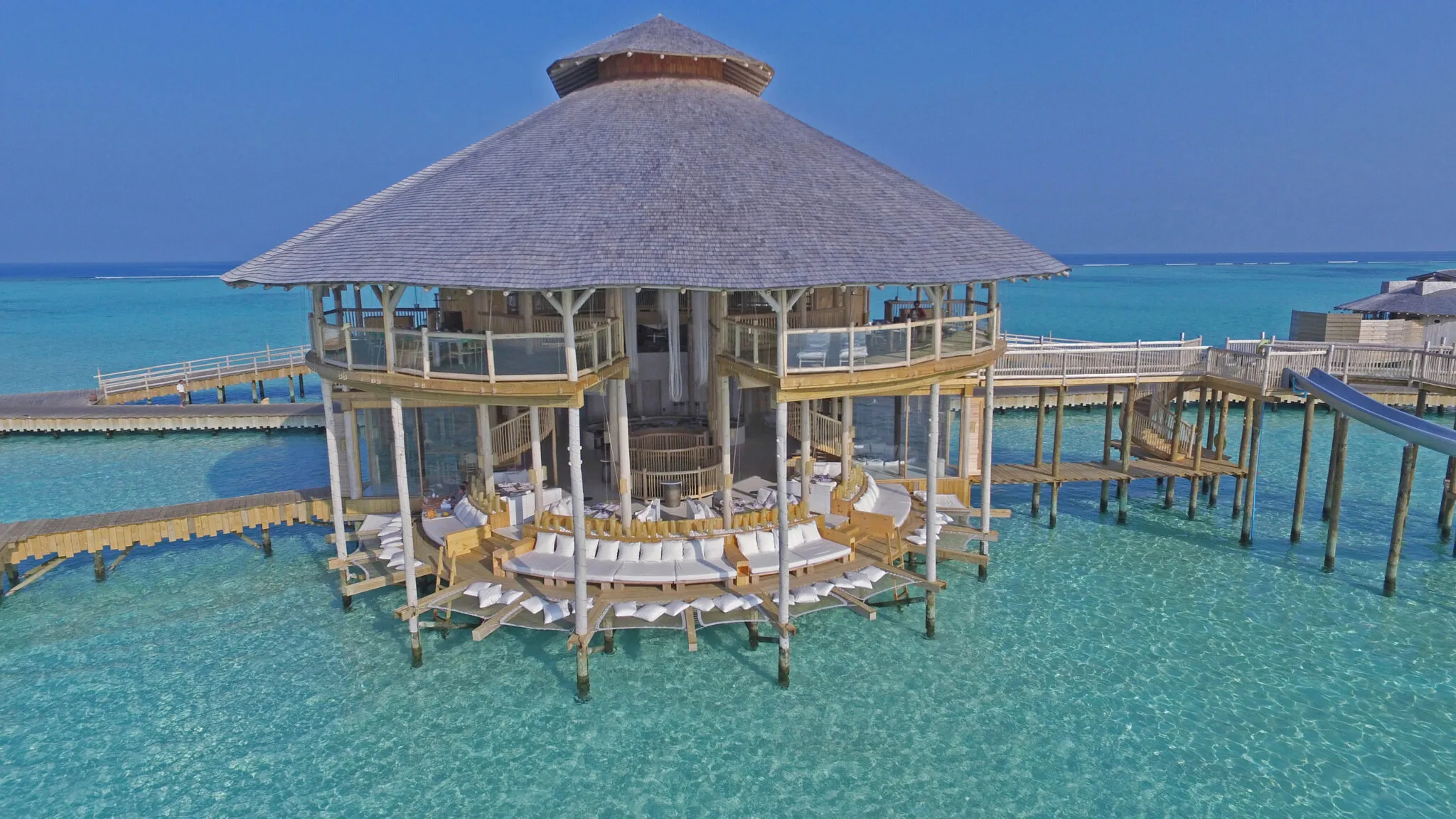
The Gathering, the resort’s three-storey overwater hub, is the most architecturally ambitious single structure on the property, built out over the lagoon to house the bulk of the dining venues, the spa reception, a library, retail space and a wine cellar under variations on the same timber-and-thatch language used throughout the villas. The overwater observatory and the floating cinema screen extend that same logic, treating the lagoon itself as buildable space rather than a boundary, an approach that has become one of the more identifiable traits of Soneva’s design thinking across its resorts.
Interior Design
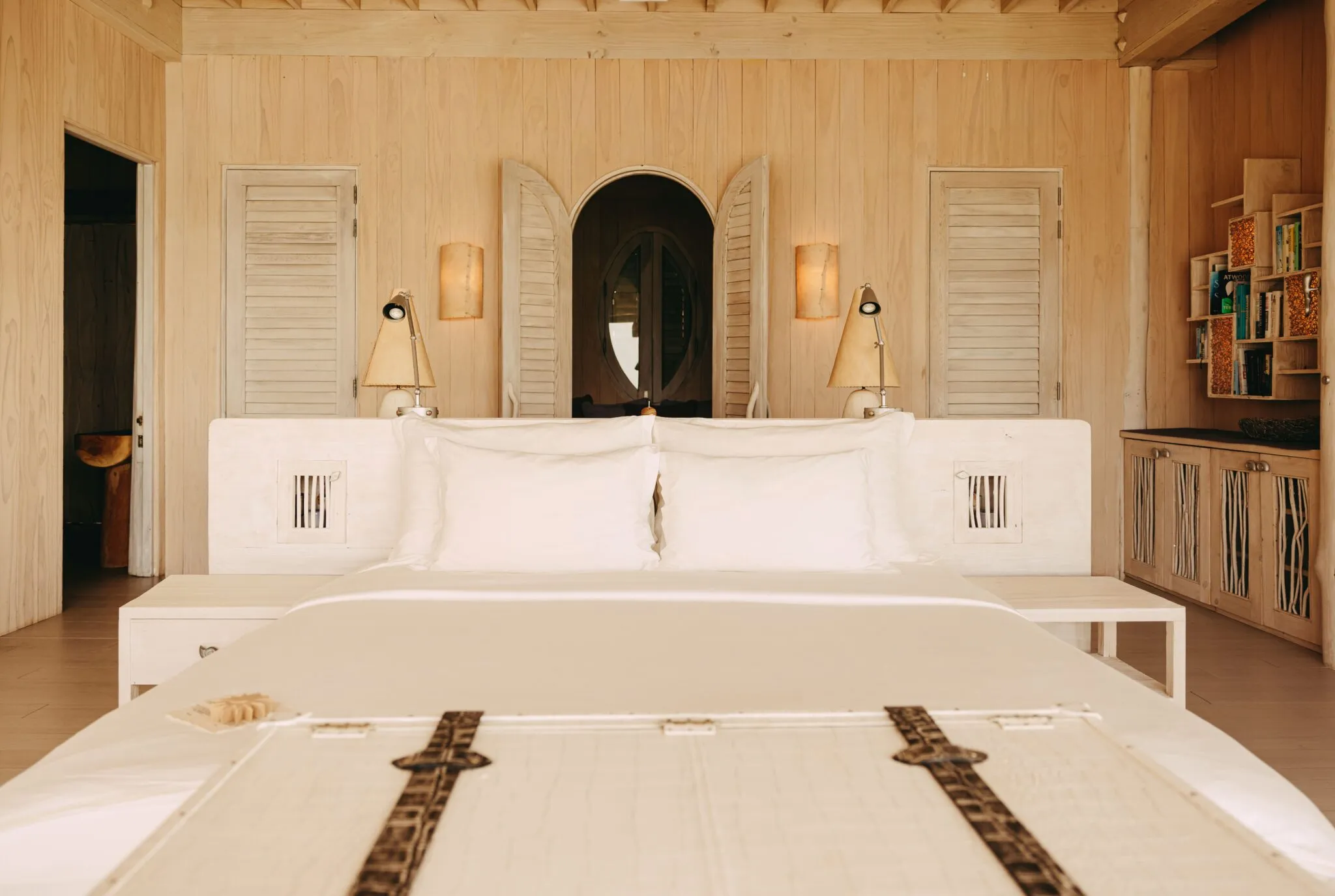
Accommodation design across the resort is credited to Eva Malmström Shivdasani, co-founder of Soneva alongside her husband Sonu Shivdasani, working with Studio Arne Boon, and the interiors carry a consistent restraint: pale timber, woven textures, and neutral, natural palettes that keep the focus on the lagoon views rather than competing with them. Villas favour open-plan living over compartmentalised rooms, with indoor and outdoor space treated as a continuum, decks, sun-loungers and outdoor bathing areas extend the living space rather than sitting apart from it.
Furnishing throughout leans toward natural and sustainably sourced materials, in keeping with the group’s broader environmental positioning, and larger villa categories add features like wine cellars, chocolate rooms and dedicated media or games areas that push the format well past the basic overwater bungalow template. The consistent thread, across categories that otherwise vary enormously in size, is a deliberate lack of formality: no villa is dressed to look like a conventional five-star hotel room, and the interiors are built to support a barefoot, unstructured way of living rather than a scripted one.
Atmosphere
The mood at Soneva Jani sits somewhere between engineering showcase and genuine retreat, and the resort works because it does not let the first overwhelm the second. Days move at an unhurried pace; barefoot service, a founding principle of the Soneva brand since its first resort opened in 1995, remains the norm rather than an affectation, with staff generally on a first-name basis with guests and shoes an optional accessory rather than a house rule.
Evenings shift the register slightly, toward the more theatrical end of what the resort offers: the observatory dinner with its resident astronomer, the floating cinema screen under the stars, a roof rolled back over the bed for the walk to sleep. Families with children experience a noticeably different, livelier atmosphere centred on the Den, while couples booking the more remote villa categories can spend a stay barely encountering another guest outside mealtimes. The lagoon itself, at five and a half kilometres across and largely undeveloped beyond the resort’s own footprint, keeps the whole property feeling more spacious and less densely built than its villa count alone might suggest.
Rooms and Suites
Soneva Jani’s accommodation runs across eleven categories, split broadly between overwater “Water” villas built out over the lagoon and “Island” or “Beach” villas set on Medhufaru itself, most bearing “Reserve” or “Retreat” naming depending on their exact configuration and generation of design.
At the compact end, the Beach Hideaway is a two-floor villa tucked into the island’s mangroves with direct beach access and a private pool, while the 1 Bedroom Water Reserve with Slide and 1 Bedroom Water Retreat with Slide both combine a retractable-roof master bedroom with a curved slide into the lagoon, sleeping up to three guests including children.
Family-oriented mid-tier options include the 2 Bedroom Island Retreat with Slide, set among gardens near the shore with a private pool and slide, and the 2 Bedroom Water Retreat with Slide and 2 Bedroom Water Reserve with Slide, both built over the lagoon with catamaran-net pool features and rooftop dining areas.
At the top of the range, the 3 Bedroom Water Retreat with Slide, 3 Bedroom Island Reserve with Slide, and the four-bedroom Water and Island Reserve and Retreat categories add wine vaults, private gyms, saunas and steam rooms, with the largest configurations able to sleep up to nine guests across multiple decks and viewing towers. Every category, at every size, includes a personal butler as standard.
Dining
Soneva Jani spreads its kitchens across close to ten distinct venues rather than concentrating dining in one or two flagship restaurants. The Gathering, the resort’s three-storey overwater hub, is the main draw, housing several dining concepts under one roof alongside the spa reception, a library and a wine cellar; venues within it have included an all-day dining room, an Asian-focused kitchen and a dedicated fresh and raw counter.
Overseas is run in partnership with the acclaimed Swedish chef and restaurateur Mathias Dahlgren, built around Indian Ocean seafood and produce grown in the resort’s own gardens. The Crab Shack gives seafood a more casual, hands-on setting, while So Starstruck pairs a tasting menu with the resort’s overwater astronomical observatory, seating a handful of tables around the telescope with a resident astronomer on hand to talk guests through the night sky. Cinema Paradiso, an outdoor screen suspended over the lagoon, doubles as a dining venue on cinema nights, and in-villa dining, including breakfast served on a floating tray in-pool, rounds out a genuinely varied offer for a resort this size.
Spa and Wellness
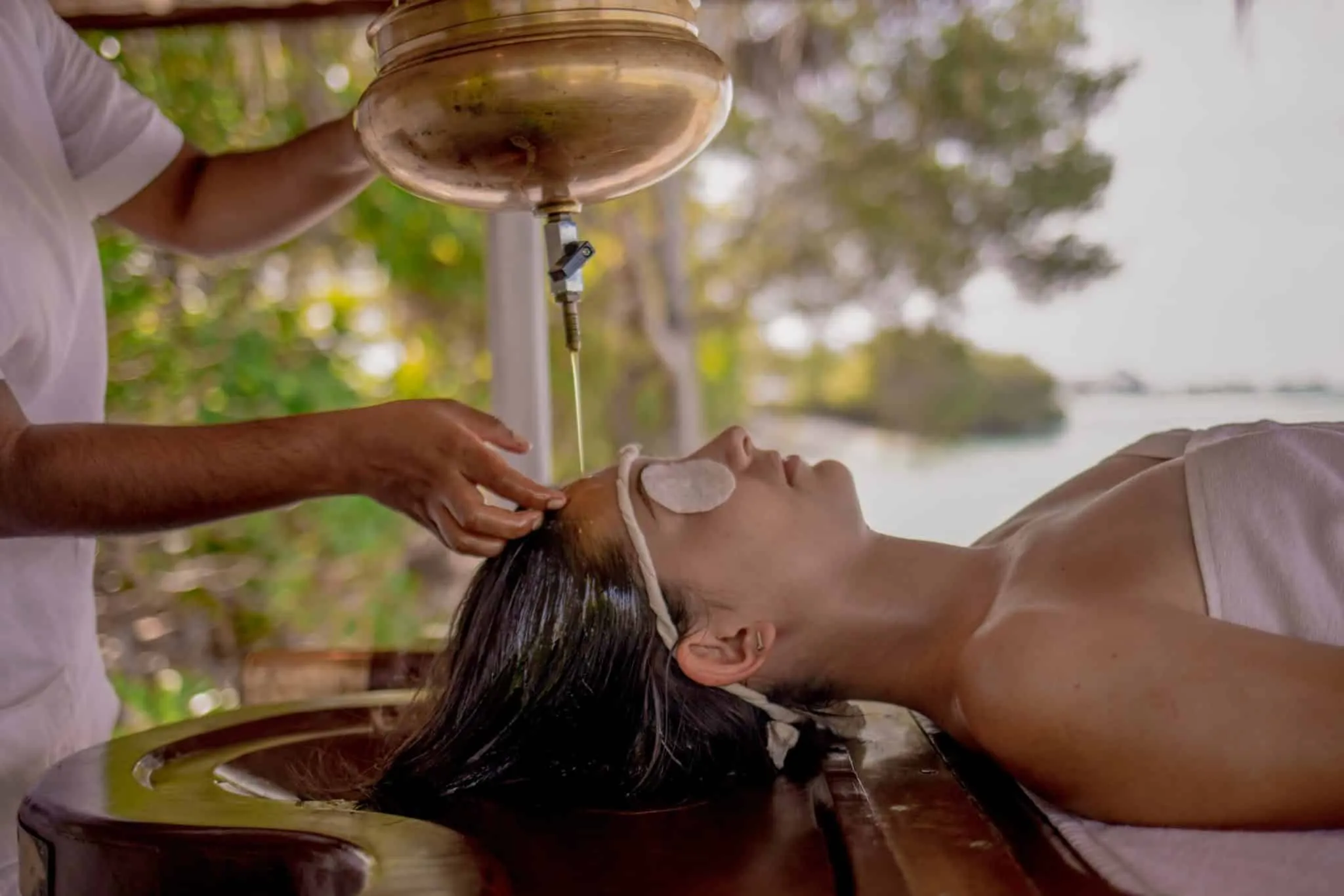
Wellness at Soneva Jani operates under Soneva Soul, the group’s broader wellness concept, spread across two linked complexes: the original overwater spa and a newer Island Spa connected by raised walkways through the trees. The programme blends traditional practices, Ayurveda, Traditional Chinese Medicine, herbalism, with more clinical, technology-driven treatments such as heart rate variability testing, IV nutrient therapy, cryotherapy and hyperbaric oxygen therapy, aimed at guests seeking a genuine wellness programme rather than a single spa afternoon.
Facilities include open-air treatment rooms and champas, consultation suites, a functional fitness gym, a jungle gym and beach fitness area, and a yoga pavilion and meditation platform raised above the tree line with views across the lagoon. Guided meditation, yoga nidra and sound healing sessions sit alongside conventional massage and body treatments on the programme, giving guests a genuine choice between a light spa visit and a structured, multi-day wellness itinerary.
Experiences
Beyond the villas themselves, Soneva Jani’s activity list leans into the infrastructure it has built rather than relying solely on the reef and lagoon that most Maldives resorts depend on. The overwater observatory anchors regular stargazing sessions with a resident astronomer, a distinctive offering in a destination where light pollution is otherwise minimal but dedicated astronomical facilities are rare. The floating cinema screen at Cinema Paradiso runs outdoor film nights over the water, and a dive centre and watersports programme cover the more conventional Maldivian activity list: snorkelling and diving on the surrounding reefs, dolphin cruises at sunset, and excursions to nearby sandbanks.
Families are especially well served by The Den, a 16,000-square-foot children’s club with a bowling alley, cinema, Lego and craft rooms, a cooking area that runs a regular Junior MasterChef competition, and its own pool complete with a waterslide, waterfalls, catamaran nets and a 105-foot zipline. A grotto behind one of the waterfalls converts into the Cave Bar after dark, a supervised teen hangout with a DJ booth and dance floor. Guests of all ages can also explore the resort’s marine and sustainability programmes directly, including tours related to the property’s solar infrastructure and its mosquito-control research.
Who It Is For
Soneva Jani suits travellers who want the full spectacle of a purpose-built, engineering-led Maldivian resort rather than the more minimal, reef-focused experience some competitors favour: honeymooners and couples drawn to the retractable roof and the theatre of the observatory dinner, and families who can make genuine use of the Den’s scale and programming rather than a token kids’ club. Guests booking the larger multi-bedroom villa categories, with private gyms, wine vaults and viewing towers, are well matched to multi-generational groups or two families travelling together who want a single, self-contained base for a week or more.
It is a less natural fit for travellers seeking a strictly minimalist, unplugged Maldivian stay with fewer built amenities, or those prioritising proximity to Male above atoll seclusion; Noonu Atoll’s distance from the capital is a deliberate trade for a quieter, less trafficked lagoon, and guests unwilling to add the extra transfer time may be better served by a resort in North or South Male Atoll. Divers chasing a specific, well-known house reef should also confirm current reef conditions directly with the resort, since Soneva Jani’s identity rests more on its built environment than on a signature dive site.
Best Time to Visit
The Maldives’ dry season, running roughly from November to April, brings the calmest seas, the least rainfall and the most reliable conditions for seaplane transfers, snorkelling and stargazing at Soneva Jani’s observatory, making it the peak and most heavily booked period at the resort. The remaining months, May to October, fall within the wetter southwest monsoon, bringing a higher chance of afternoon squalls and rougher inter-atoll boat transfers, but also quieter grounds and, for travellers less concerned with guaranteed clear skies, meaningfully lower rates.
Given the resort’s strong emphasis on stargazing through its overwater observatory, travellers building a trip specifically around that experience should lean toward the dry season for the best odds of clear night skies, while accepting that some cloud cover is possible at any time of year in a tropical maritime climate.
How to Get There
All guests arrive first at Velana International Airport near Male, the country’s main international gateway. From there, the most direct route to Soneva Jani is a seaplane transfer of roughly 40 to 45 minutes, flying low over the atolls directly to the resort’s own seaplane jetty, arranged through the resort once flight details are confirmed. Seaplanes in the Maldives generally operate only during daylight hours, so late-arriving flights into Male may require an overnight stay near the airport before the onward transfer.
An alternative route runs via a short domestic flight from Male to Maafaru International Airport, the regional airport serving Noonu Atoll, followed by a speedboat transfer of around 15 minutes to the resort. This option can be faster and less weather-dependent for guests arriving later in the day, and is worth discussing with the resort’s travel team when booking, particularly for guests with tight connection windows.
Nearby Experiences
Noonu Atoll sits further from Male than the more heavily developed North and South Male atolls, which trades convenience for a quieter, less trafficked stretch of reef and open lagoon. Within the atoll, the resort’s own dive centre and boat programme reach nearby reef and channel dive sites, sandbank excursions, and sunset dolphin-watching cruises, all organised directly through Soneva Jani rather than requiring travel to another island.
Guests interested in the Maldives’ wider marine conservation story can look toward the country’s better-known aggregation sites, such as the manta ray and whale shark seasons further south in Baa Atoll, though these typically require a longer excursion or a stay at a different property rather than a straightforward day trip from Noonu. Within the resort’s own lagoon and reef system, the emphasis stays local: a five-and-a-half-kilometre private lagoon gives guests a substantial area to explore by paddleboard, kayak or snorkel without leaving the property’s own waters.
Things to Know Before Booking
Soneva Jani operates on a genuinely remote, single-resort-island basis, meaning the meal plan and transfer arrangements should be treated as part of the total cost of the stay rather than an afterthought; most guests book on a full-board or all-inclusive basis given the absence of any alternative dining beyond the resort’s own venues. The seaplane transfer, while a highlight for many guests, adds real time and weather sensitivity to the journey on both ends of a stay, and guests with tight onward connections should build in a buffer.
Villa categories vary enormously in size, price and configuration, from a compact one-bedroom Water Reserve to four-bedroom villas with private gyms and wine vaults, so prospective guests should confirm exactly which category they are booking rather than assuming all “Water Retreat” or “Water Reserve” villas are equivalent. Families travelling with young children should note that the Den’s structured daily programme is designed primarily for children aged four and older, though younger children are welcome with a parent or babysitter. Standard check-in is at 2:00pm and check-out at 12:00pm, with early check-in or late check-out available on request, subject to availability and, in some cases, an additional charge.
Sustainability
Soneva Jani has operated on a carbon-neutral basis since it opened in 2016, calculating and offsetting emissions from both resort operations and guest flights, the latter representing the majority of its footprint, through the Soneva Foundation. The Foundation is funded in part by a 2 percent environmental levy applied to room revenue across the Soneva group since 2008, which has channelled millions of dollars into carbon-mitigation projects including reforestation and clean cookstove programmes in the wider region.
On site, Soneva Jani significantly expanded its solar generation capacity in 2024 as part of a group-wide renewable energy push, targeting close to half of its energy needs from photovoltaic sources and cutting annual diesel consumption meaningfully as a result. The resort also runs a chemical-free Zero Mosquito Project, deploying several hundred targeted traps that use carbon dioxide and lactic acid lures rather than fogging to suppress the local mosquito population, a programme built on similar work first proven at the group’s original resort, Soneva Fushi. As with any resort-reported sustainability programme, these figures reflect the property’s own disclosures and industry press coverage rather than independent third-party audit, and guests with a specific interest in the detail are best served asking directly on property.
Practical Information
Soneva Jani sits in Noonu Atoll, roughly 40 to 45 minutes from Male by seaplane, with a shorter domestic-flight-and-speedboat alternative available via Maafaru International Airport. The resort’s nearly 60 villas span eleven categories, from a compact one-bedroom Beach Hideaway to four-bedroom Water and Island Reserve villas built for large family groups, all with a personal butler included as standard.
Rates start from an indicative $2,500 per night, though the exact figure depends heavily on villa category, season and meal plan, and prospective guests should confirm current pricing directly with the resort or a specialist Maldives travel agent given how significantly rates move between low and peak season. Standard check-in is 2:00pm and check-out 12:00pm. The dry season, from November to April, offers the calmest transfers and clearest skies for the resort’s stargazing programme, while a stay of four to five nights gives most guests enough time to move between the villa, the Gathering’s dining venues, a spa treatment or two, and at least one evening at the observatory or the floating cinema.
Editorial Conclusion
Soneva Jani earns its reputation less for any single feature than for how completely it commits to the ideas it was built around: a retractable roof is not a gimmick if it changes how a guest actually experiences a week of nights, and a waterslide is not a novelty if the villa’s whole architecture is organised to make it feel inevitable rather than bolted on. Where the resort could easily have let the engineering do all the talking, it has instead kept the barefoot, unhurried service culture that built the wider Soneva name intact underneath the spectacle.
For travellers weighing it against the Maldives’ other headline resorts, the calculation is fairly clear: Soneva Jani asks for a longer, costlier transfer than the Male-adjacent properties in exchange for a quieter atoll, a genuinely distinctive villa format, and an activity programme, from the overwater observatory to the Den, built to be lived in rather than simply photographed. For couples and families prepared to make that trade, it remains one of the more complete arguments in the Maldives for what a private-island resort can be.
In pictures
On the map
Medhufaru, Maldives
Questions
Frequently asked
What makes Soneva Jani's villas different from other overwater villas in the Maldives?
Most Soneva Jani villas have a retractable roof panel above the bed that slides open at the touch of a button, letting guests sleep, or simply lie, under the open sky. Many categories also add a curved waterslide running from an upper deck straight into the lagoon, a feature the resort helped popularise in the Maldives when it opened in 2016.
How do guests get from Male to Soneva Jani?
The most common route is a seaplane transfer of roughly 40 to 45 minutes from Velana International Airport direct to the resort's own seaplane jetty. An alternative is a short domestic flight from Male to Maafaru International Airport in Noonu Atoll, followed by a speedboat transfer of around 15 minutes.
Is Soneva Jani suitable for families with children?
Yes. Several villa categories are configured to sleep two adults and two children, and the resort operates The Den, a purpose-built children's club of more than 16,000 square feet with a bowling alley, cinema, cooking area and its own waterslide-and-waterfall pool, open daily for children aged four and up, with younger children welcome alongside a parent or babysitter.
What is Soneva Jani doing on sustainability?
The resort has operated on a carbon-neutral basis since it opened in 2016, offsetting emissions including guest flights through the Soneva Foundation, which is funded in part by a 2 percent environmental levy on room revenue introduced across the group in 2008. In 2024 Soneva Jani significantly expanded its onsite solar capacity, and the resort also runs a chemical-free Zero Mosquito Project using targeted trapping rather than fogging.
What dining venues does Soneva Jani have?
Dining is spread across around ten venues. The Gathering is the resort's main overwater hub, housing several restaurants, a wine cellar and bar under one roof. Overseas is helmed in partnership with Swedish chef Mathias Dahlgren, The Crab Shack focuses on seafood, So Starstruck serves dinner beside the resort's overwater astronomical observatory, and Cinema Paradiso is an outdoor screen suspended over the lagoon.
Same destination
More hotel guides in Maldives
Randheli Island, Maldives
Cheval Blanc Randheli
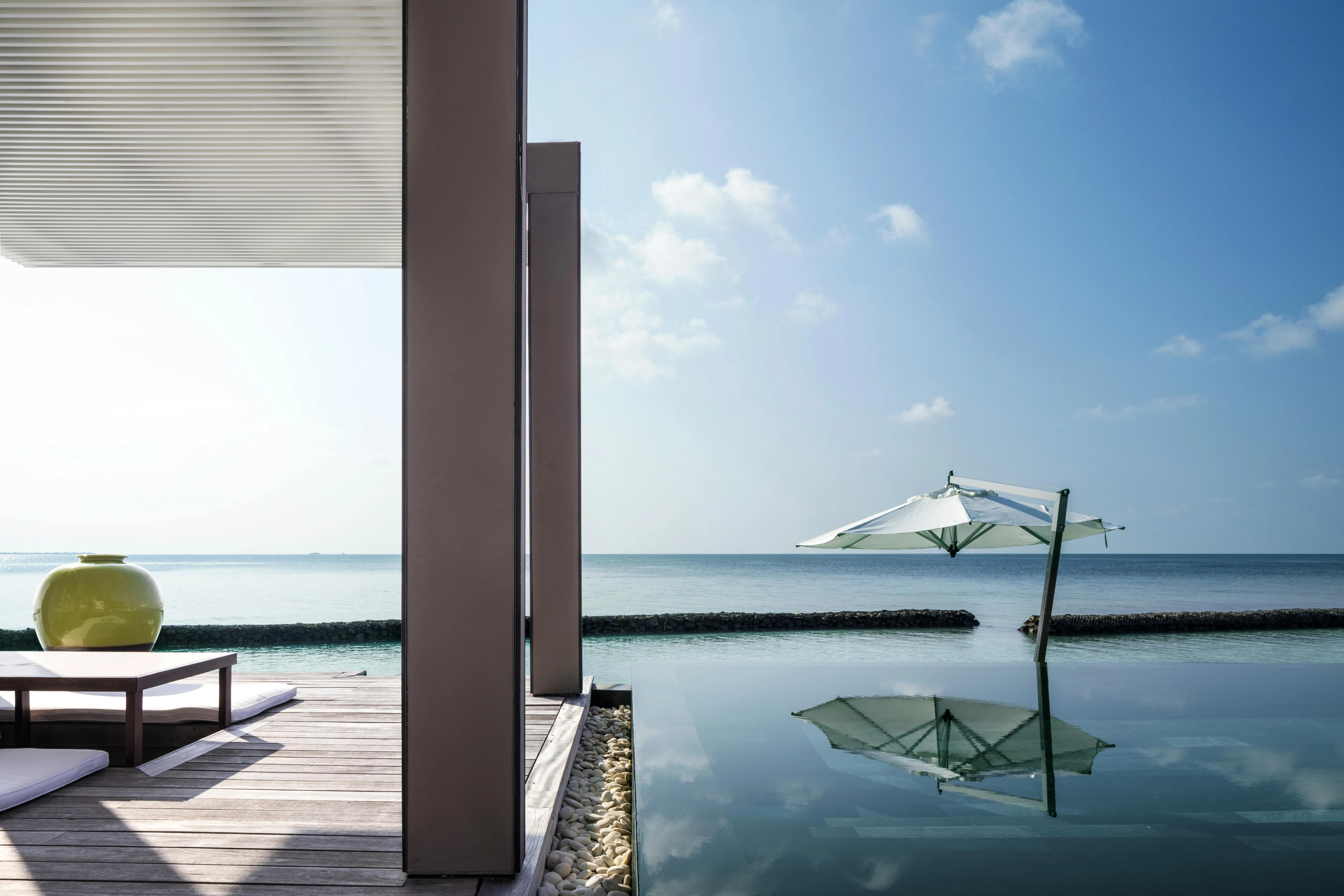
Jean-Michel Gathy's private-island debut for LVMH's hotel house, forty minutes by seaplane into the Noonu Atoll.
From $2,200 per night
Lankanfushi Island, Maldives
Gili Lankanfushi
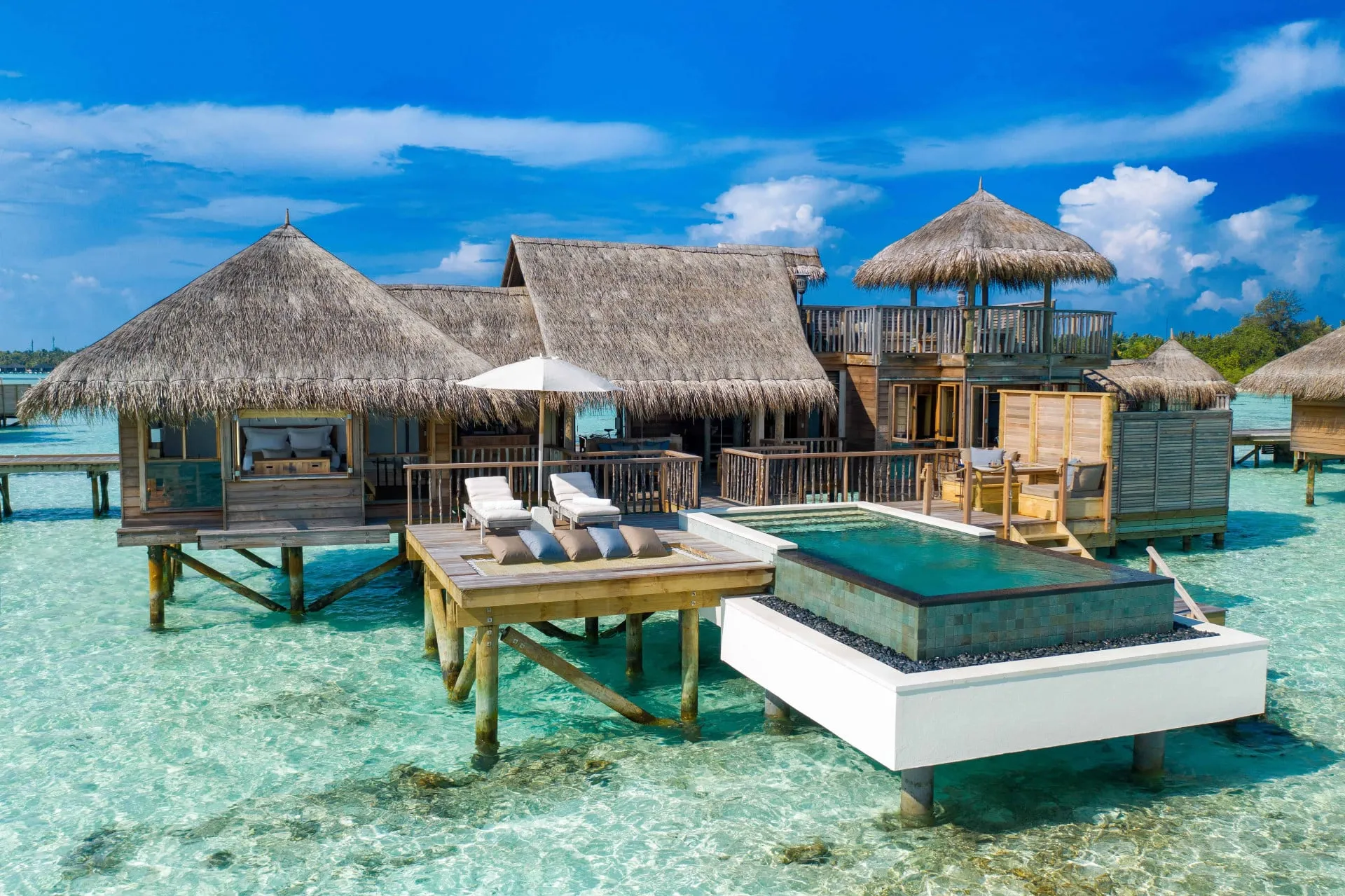
The Maldives resort that invented barefoot luxury and has spent two decades refusing to put its shoes back on.
From $1,550 per night
Muravandhoo Island, Maldives
JOALI Maldives
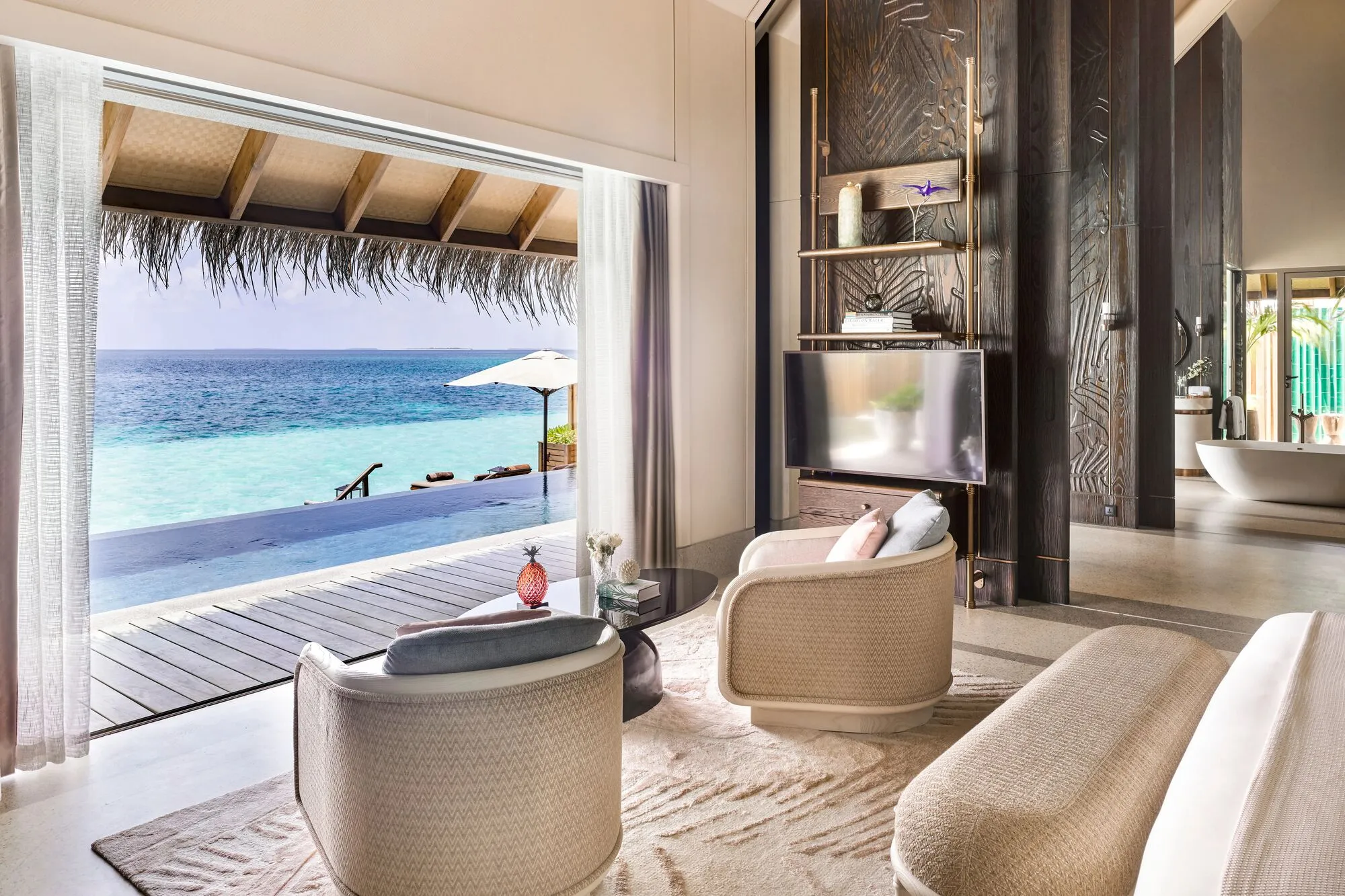
An art-immersive private island in Raa Atoll where more than forty commissioned installations sit alongside 73 villas and a working coral restoration reef.
From $1,600 per night