Dusit, Chao Phraya riverside, Bangkok, Thailand
The Siam
A 39-key riverside retreat in royal Dusit, built by a rock-star hotelier to look, deliberately, a century older than it actually is.
- Rates from
- From $750 per night
- Nearest airport
- Suvarnabhumi Airport (BKK)
- Transfer
- Around 45 minutes to over an hour by car depending on Bangkok traffic; Don Mueang Airport (DMK) is a comparable distance for travellers on regional or low-cost carriers. The hotel's own pier also runs a private boat shuttle to Sathorn Central Pier, near the Saphan Taksin BTS stop, for onward travel around the city.
- Best months
- November to February, for Bangkok's cool, dry season, though the riverside garden setting works year-round
Most new hotels try to look new. The Siam did the opposite. When Bill Bensley designed this 39-key property on a bend of the Chao Phraya River, he built it, deliberately, to look as though it had opened in 1912 rather than 2012, on the theory that a sense of history reads as more valuable than a sense of newness. It is a strange and specific ambition for a ground-up construction project, and it explains almost everything unusual about the place: the antique Thai teak houses moved onto the site piece by piece, the thousands of curios collected by the hotel’s founder, and the general sense of walking through someone’s very well-travelled family attic rather than a hotel built for the purpose.
That founder is Krissada Sukosol Clapp, a Thai rock musician and actor turned hotelier, whose family has run Bangkok hotels for generations under the Sukosol name. The Siam sits on riverfront land his family had held for decades, in Dusit, the royal district north of Bangkok’s commercial core, surrounded by palaces, temples, and museums rather than shopping malls and Skytrain interchanges. Working with Bensley, Krissada built a 39-suite property around his own decades-long antique collection, individually decorating each room and public space with pieces that range from Tang dynasty figurines to vintage naval instruments to a restored antique boat from Bangkok’s old floating markets.
The result reads less like a conventional five-star hotel and more like a private museum that happens to rent out its rooms, with a professionally equipped Muay Thai boxing ring, a cooking school, a screening room lined in French velvet theatre seats, and a spa built partly around an opium den motif. It is an unusual, specific, and heavily personal piece of hospitality design in a city that has no shortage of large international-brand riverside hotels, and it has been recognised by Forbes Travel Guide with a Four-Star rating since shortly after opening.
Why It Stands Out
Bangkok has several excellent riverside hotels with far larger footprints, bigger brand names, and more restaurants. The Siam’s case for itself rests on scale and specificity rather than size: 39 suites and villas set on three acres of garden and river frontage, built around one family’s private antique collection rather than a corporate design brief, in a royal district most large hotels skip in favour of the more central Riverside or Silom stretches. Few hotels anywhere let a guest walk from an antique-filled Explorer Bar containing sunken shipwreck relics and deep-sea diving gear straight into a Muay Thai gymnasium with a proper boxing ring, then out to a private pier for a speedboat ride into the city. That combination, a genuinely personal collection, an unusual location, and a working Thai boxing sala inside a luxury hotel, is close to unique in Bangkok.
Architecture
The Siam opened on 12 June 2012, the product of a multi-year project led by Bill Bensley, the Bangkok-based architect and designer whose studio has shaped hotels across Southeast Asia, working alongside lead architect Khemvadee Paopanlerd. The site itself was not new to the family: it was riverfront land in Dusit that Krissada Sukosol Clapp’s family had held for decades before development began. Bensley’s brief, by his own account, was to make the new building read as though it had stood there since 1912, a full century before it actually opened, reasoning that historical presence carries more weight with guests than visible newness.
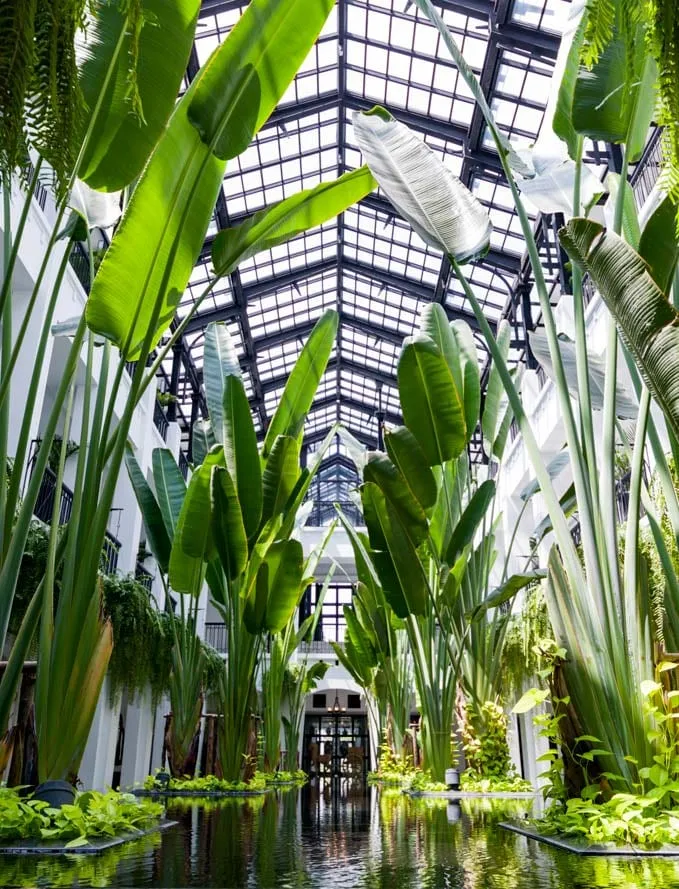
That philosophy shaped the physical construction as much as the decoration. Several antique Thai teak houses were sourced and relocated onto the property rather than built from scratch, sitting among gardens and reflecting pools alongside the hotel’s newer structures. The main residence building drew a design reference from the Musée d’Orsay in Paris, itself a 19th-century structure repurposed for a later use, a fitting touch for a hotel built on the same logic of reuse and reinvention. A large glass-ceilinged atrium shelters mature, three-storey palms at the heart of the property, softening the transition between the antique houses, the newer suite blocks, and the riverfront gardens outside. The overall architectural language blends Art Deco detailing, the style associated with Bangkok’s own early 20th-century building boom, with traditional Thai forms and materials, an approach the hotel’s own design team describes as evoking the city’s golden age under King Rama V.
Interior Design
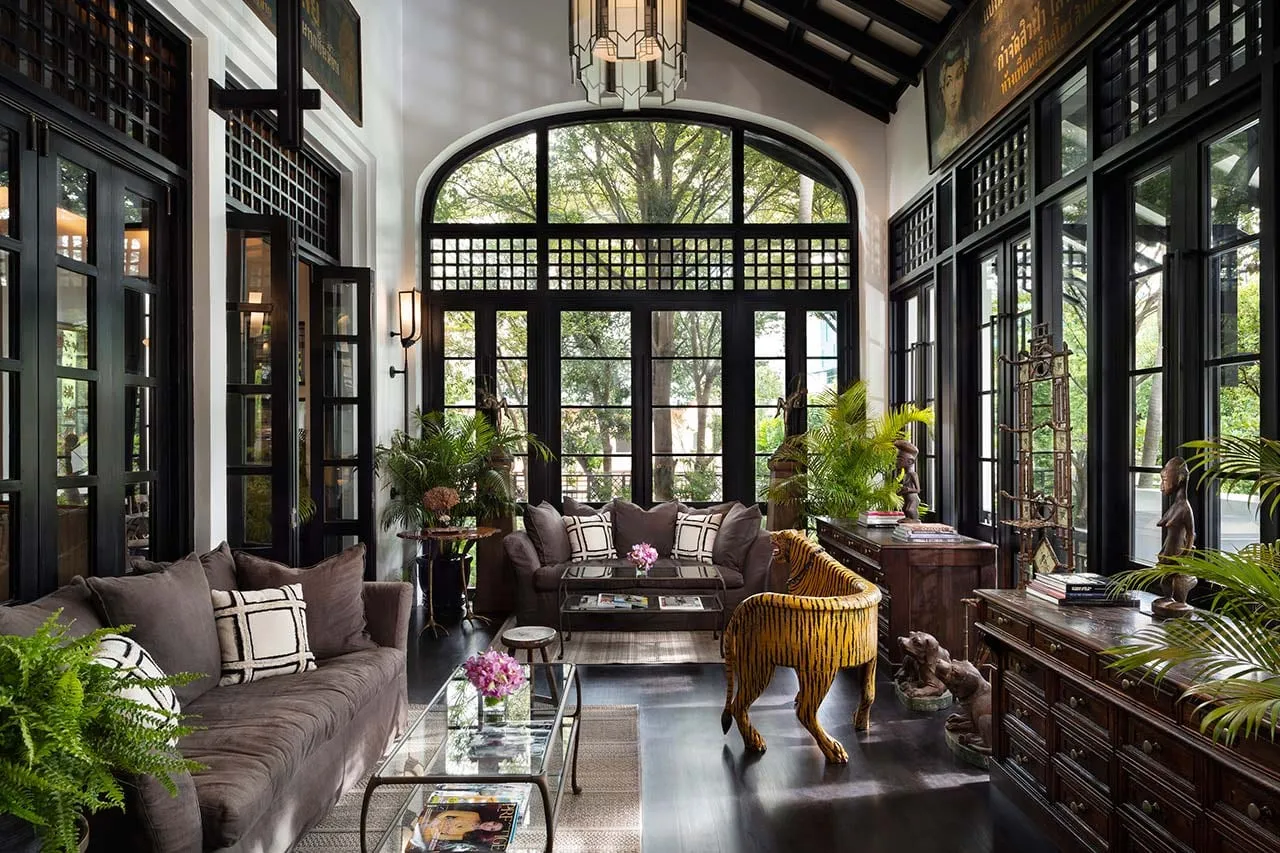
Where the architecture sets the stage, the interiors are where The Siam’s central idea, that this is a private collection as much as a hotel, becomes unmistakable. Krissada Sukosol Clapp spent years buying at antique markets and fairs in Thailand and abroad, and by the time the hotel opened in 2012 that collection ran to more than 2,000 individual pieces; hotel materials now describe a considerably larger holding, still growing, still displayed throughout the public rooms rather than locked away in storage or a formal gallery.
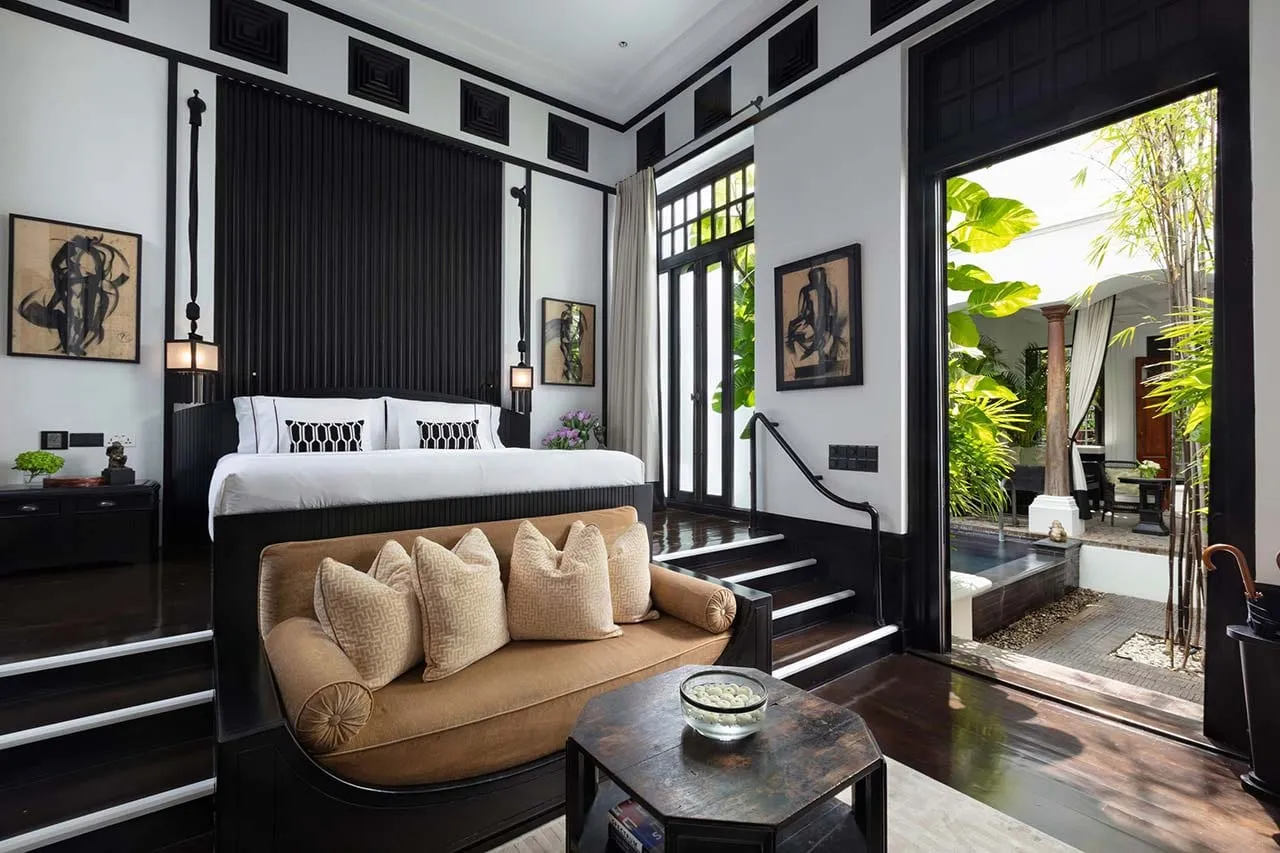
The range is genuinely wide. The library holds Tang dynasty figurines and Neolithic Thai pottery. Antique Chinese opium daybeds and Burmese carved wooden columns sit in the lounges. A private screening room is fitted with French vintage velvet theatre seating. A dedicated Vinyl Room houses vintage record players and an accompanying collection. The Explorer Bar functions as something closer to a small maritime museum, with objects recovered from historic shipwrecks off the Thai and Chinese coasts, period deep-sea diving equipment, naval telescopes and compasses, tribal spears, and an antique canal boat once used on Bangkok’s floating markets. Each of the hotel’s suites carries its own individual theme, ranging across local architecture, Thai beauty queens, music, the military (one room is furnished around 1940s cigarette cards and vintage machetes), diplomacy, and contemporary Thai art, a level of room-by-room specificity that is unusual even among boutique hotels that describe themselves as individually designed. The base palette across the property runs to black, white, cream, and grey, with natural materials, wood, weave, leather, and stone, giving the collection itself room to be the most colourful element in any given space.
Atmosphere
The Siam trades the density of central Bangkok for the relative quiet of Dusit, a royal administrative district built up around palaces, government buildings, temples, and museums rather than malls or nightlife strips. It is a genuinely different register from the Sukhumvit or Silom hotel corridors: fewer passing tourists, more parkland and tree cover, and a slower pace set by the neighbourhood itself. The hotel’s own fitness studio looks out over a neighbouring monastery, and that kind of view, calm, low-rise, unmistakably local, is characteristic of the wider setting.
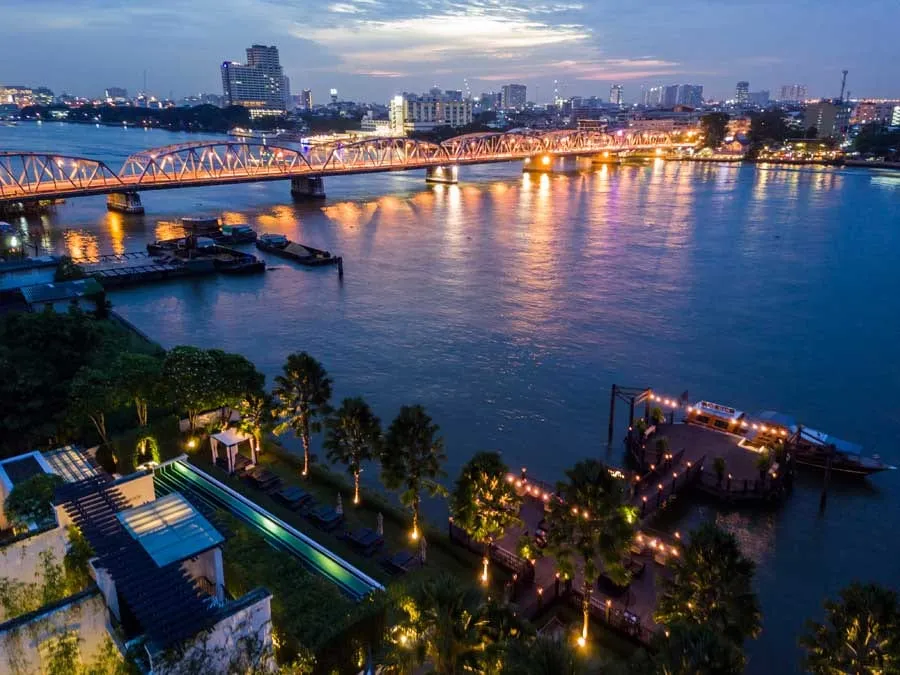
Inside the gates, the atmosphere shifts again, into something closer to a well-stocked private house than a conventional hotel lobby. The scale is intimate by five-star standards, 39 keys across three acres, and the density of antiques and art throughout the public spaces gives every walk between the restaurant, the bar, and a guest suite the feel of moving through a series of small exhibitions. The Chao Phraya River itself runs along the property’s edge, with longtail boats, barges, and the occasional temple procession providing a constantly moving backdrop that is very specifically Bangkok rather than generic riverside luxury.
Rooms and Suites
Accommodation is organised into seven categories, all suites or villas rather than standard rooms: the Siam Suite, Garden View Suite, Premier Garden View Suite, River View Suite, and Premier River View Suite, followed by two villa categories, the Courtyard Pool Villa and the Riverside Pool Villa, which come with private plunge pools. Reported figures for the total room count vary slightly between sources, most commonly citing 39 suites and villas across the property, a small number by international five-star standards and a deliberate choice that keeps the guest-to-staff and guest-to-antique ratio intimate.
Each suite is individually decorated around one of the collection’s recurring themes, so two guests booking the same category on paper may end up in very different rooms in practice, one furnished around vintage Thai beauty pageant memorabilia, another around military history, another around contemporary Thai art. Every suite and villa comes with a personal butler, a service model the hotel has offered since opening and one that suits the scale of the property: with so few keys, and so much individually curated detail in each one, a dedicated point of contact does more work than a conventional concierge desk. The Riverside Pool Villas, unsurprisingly, are the top tier, opening directly onto private pools with Chao Phraya views, while the entry-level Siam Suite and Garden View categories look over the property’s internal gardens and antique teak houses rather than the water.
Dining
The Siam’s food and drink programme runs across five distinct venues. Chon Thai Restaurant is the hotel’s principal dining room, focused on Thai cuisine. Deco Bar & Bistro leans into the property’s Art Deco design language for a more casual, all-day menu. The Story House and The Pier both work as more intimate or destination-specific settings within the wider grounds, and Bathers Bar sits by the hotel’s pool for a lighter, poolside format. Beyond the fixed venues, the hotel also runs a Thai cooking school, letting guests take the antique-filled setting as a starting point for hands-on classes in Thai cuisine rather than only eating it.
Specific chef leadership and seasonal menu details are the kind of thing that changes year to year at any single-property hotel, and travellers with strong dietary or culinary interests should confirm current offerings directly with the hotel ahead of a stay. What is consistent across published accounts is the range: guests have the option of a formal Thai dining room, a more relaxed all-day bar and bistro, and a pool bar, without needing to leave the three-acre property.
Spa and Wellness
Wellness at The Siam runs on two distinct tracks. The first is Opium Spa & Wellbeing, the hotel’s spa, which uses Sodashi products from Australia across a menu of facials, massages, and body treatments, including a signature age-defying facial and a warming, mineral-based facial treatment, alongside steam saunas and a themed Opium Den space that continues the property’s collector’s-house aesthetic into the treatment areas. Yoga and meditation sessions are also offered through the spa programme.
The second, more unusual track is fitness built specifically around Muay Thai, Thailand’s national combat sport. The hotel’s gymnasium houses a professionally equipped boxing ring alongside modern Life Fitness and Octane cardio and strength equipment, set behind original Art Deco gymnasium doors and vintage sports posters, with floor-to-ceiling windows looking out toward the neighbouring monastery. Guests can book one-on-one or small-group Muay Thai training with resident trainers, in sessions typically run at 60 minutes, scaled from beginner to advanced level and bookable from a single class up to a multi-day course. It is a genuinely working facility rather than a decorative gesture, and it is one of the more distinctive fitness offerings among Bangkok’s luxury hotels.
Experiences
Beyond the spa and gym, The Siam’s experiences lean into the same two ideas that run through the rest of the property: Thai heritage and river life. The cooking school offers hands-on Thai cuisine classes. Muay Thai training, covered above, doubles as both a fitness activity and a cultural one, given the sport’s national significance. The hotel’s private pier, with a fixed wooden deck and a floating pontoon, is used for evening cocktails looking out over the Chao Phraya, and the same pier serves a private cruise boat that shuttles guests along the river, both for sightseeing and as a practical connection to Sathorn Central Pier, near the Saphan Taksin BTS Skytrain stop, for guests heading into the city centre. The property’s screening room and its Vinyl Room, both drawn from the antique collection, function as informal experiences in their own right for guests who want an evening in rather than out.
Who It Is For
The Siam suits travellers who want a design and culture story attached to their Bangkok stay, rather than a hotel chosen purely for a central address or a rooftop bar. Its scale and river-set gardens make it a strong option for honeymooners and anniversary trips looking for privacy over proximity to nightlife, while its pool villas and generous suite sizes work well for families or small groups travelling together. Fitness-minded guests with a specific interest in Muay Thai, or simply a curiosity about it, have a genuine reason to choose this hotel over most other five-star options in the city, given the working boxing ring on site. It is a less natural fit for travellers who want to walk out the door directly into Bangkok’s densest shopping, dining, or nightlife districts, since Dusit’s appeal is precisely its distance from that intensity.
Best Time to Visit
Bangkok’s cool, dry season, roughly November through February, offers the most comfortable conditions for exploring the city on foot and by river, with lower humidity and less rainfall than the rest of the year. March through May brings the hottest temperatures, while the rainy season runs from roughly June through October, with afternoon downpours that can affect river conditions and outdoor plans, though rarely for long stretches at a time. Because so much of The Siam’s appeal, the gardens, the private pier, the pool villas, is tied to being outdoors and on the water, the cooler months generally make for the most comfortable stay, though the property functions as a garden retreat in any season.
How to Get There
Suvarnabhumi Airport (BKK) is Bangkok’s main international gateway and the most common arrival point for guests, with a drive to the hotel that typically runs from around 45 minutes up to well over an hour depending on the city’s notoriously variable traffic. Don Mueang Airport (DMK), used by a number of regional and low-cost carriers, sits at a broadly comparable distance from the Dusit riverside. From either airport, guests generally continue by private car or hotel transfer directly to the property. For the final approach, or for onward trips into the city during a stay, The Siam’s own pier and shuttle boat connect guests by river to Sathorn Central Pier, close to the Saphan Taksin BTS Skytrain station, offering a way to bypass Bangkok’s road traffic entirely for at least part of the journey.
Nearby Experiences
Dusit’s palaces, temples, and museums are the natural extension of a stay here. The Grand Palace and Wat Phra Kaew, along with the National Museum and the older royal residences clustered around Dusit itself, sit within a relatively short drive or river journey, giving guests a cultural itinerary that draws on the same historical material referenced throughout the hotel’s own design. The Chao Phraya River itself is an experience in its own right, whether via the hotel’s private boat or the wider network of public and tourist river ferries that connect Dusit to central Bangkok’s riverside temples, markets, and the Chinatown district further downstream. For guests who do want a taste of the city’s busier commercial core, Sathorn Central Pier and the Saphan Taksin BTS stop, reachable by the hotel’s own shuttle boat, open up the Sukhumvit and Silom districts without requiring a car.
Things to Know Before Booking
The Siam’s location in Dusit is a genuine trade-off: it delivers quiet, greenery, and a strong sense of place, but it sits a meaningful distance from Bangkok’s central shopping and nightlife districts, best bridged by the hotel’s own river shuttle or a private car rather than on foot. Reported figures for the total suite and villa count vary slightly between sources (commonly 38 or 39), and travellers with a specific themed suite in mind, given that each is individually decorated, should confirm the exact room and its theme directly with the hotel at the time of booking, since availability by theme is not guaranteed. The property is compact by five-star standards, which suits guests who want an intimate, all-suite stay but may not suit those expecting the scale of amenities found at larger riverside resort hotels in the city.
Sustainability
The Siam’s clearest sustainability credential is architectural rather than operational: rather than clearing the riverfront site and building entirely new structures, the project incorporated several antique Thai teak houses, relocated and restored rather than replaced, preserving vernacular buildings that might otherwise have been lost. The wider antique collection displayed throughout the property similarly represents a form of preservation, keeping historic objects, from ceramics to boats to furniture, in active use and public view rather than in storage. Specific published data on the hotel’s current energy, water, or waste performance was not found at the time of writing and is not claimed here.
Practical Information
The Siam is located at 3/2 Thanon Khao, Vachirapayabal, Dusit, Bangkok 10300, Thailand, on the Chao Phraya River. Published rates for entry-level suite categories have run from roughly THB 27,900 net per night upward, with pool villa categories priced significantly higher; the figure given above is an indicative starting point based on recently published rates and should be confirmed directly with the hotel or a trusted booking channel, since five-star Bangkok rates shift with season and demand. Check-in is from 2:00pm and check-out by 12:00pm noon. Guests can reach the hotel directly at +66 2206 6999 or via its official website.
Editorial Conclusion
The Siam is one of the more genuinely personal luxury hotels in Bangkok, built less as a hospitality product than as a home for one family’s collection and one architect’s fairly specific idea about what a hundred years of history should look like when compressed into a single construction project. The result, a 39-key riverside property in a quiet royal district, stocked with everything from Tang dynasty figurines to a working Muay Thai ring, will not suit every traveller looking for a central Bangkok base. For those drawn to a hotel with a real story behind its decoration and a river setting removed from the city’s busiest districts, it remains one of the more distinctive choices the city has to offer.
In pictures
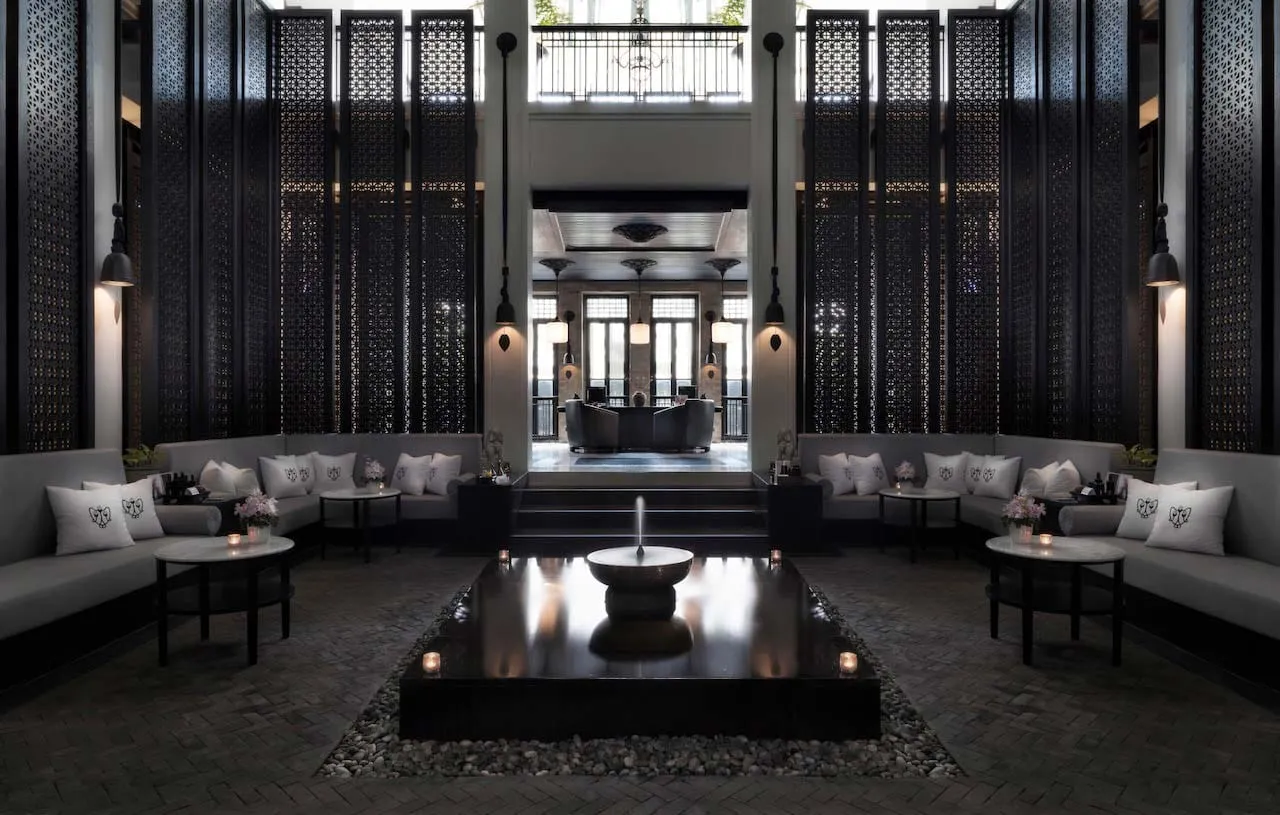
On the map
Dusit, Chao Phraya riverside, Bangkok, Thailand
Questions
Frequently asked
When did The Siam open and who created it?
The Siam opened on 12 June 2012 on a stretch of Chao Phraya riverfront in Bangkok's Dusit district that had belonged to the Sukosol family for decades. It was conceived by Krissada Sukosol Clapp, a Thai musician and actor from the family behind Sukosol Hotels, working with the Bangkok-based architect and designer Bill Bensley, whose studio led the architecture and interiors.
How many rooms does The Siam have?
The Siam is a small, all-suite property, widely reported at 39 suites and pool villas across seven categories: the Siam Suite, Garden View Suite, Premier Garden View Suite, River View Suite, Premier River View Suite, Courtyard Pool Villa, and Riverside Pool Villa. Each is individually decorated around a distinct theme, drawn from the owner's personal antique collection.
Does The Siam really have a Muay Thai boxing ring?
Yes. The hotel's fitness studio includes a professionally equipped Muay Thai ring alongside standard gym equipment, and guests can book private or group training sessions with resident trainers, from single sessions to multi-day courses, through the hotel's spa desk.
Where exactly is The Siam located, and how do guests get there?
The Siam sits on the Chao Phraya River in Dusit, north of Bangkok's central business and shopping districts, near the city's cluster of royal palaces, temples, and museums. Suvarnabhumi Airport is the primary gateway, roughly 45 minutes to over an hour away by car depending on traffic; the hotel also operates a private pier and shuttle boat connecting guests to Sathorn Central Pier near the Saphan Taksin BTS station for onward travel by Skytrain.
What is the Sukosol family's antique collection at The Siam?
Krissada Sukosol Clapp assembled the collection over years of visiting antique markets and dealers, both in Thailand and abroad. At the hotel's 2012 opening it was reported at more than 2,000 pieces, and hotel materials now describe a considerably larger holding spanning Tang and Han dynasty artefacts, vintage photography, naval instruments, and a restored antique canal boat, displayed throughout the public rooms rather than confined to a gallery.
Same destination
More hotel guides in Thailand
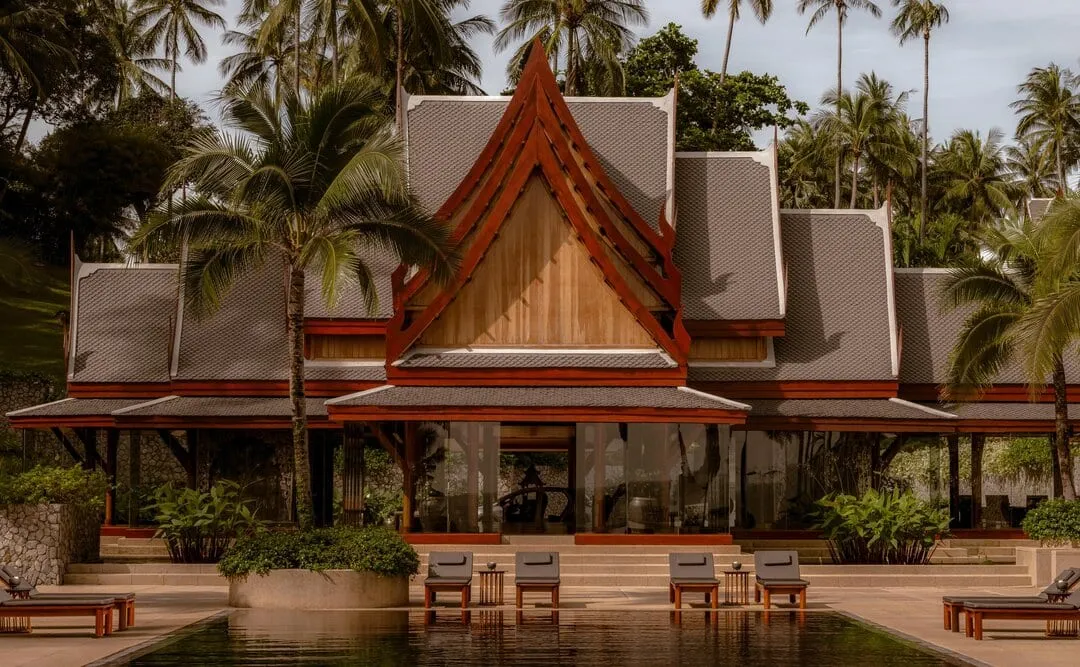
Pansea Beach, Phuket, Thailand
Amanpuri
Opened in 1988 on a former coconut plantation on Phuket's Pansea Beach, Amanpuri is the founding property of the entire Aman brand, a village of temple-inspired teak pavilions that set the template every Aman since has followed.
From $1,200 per night
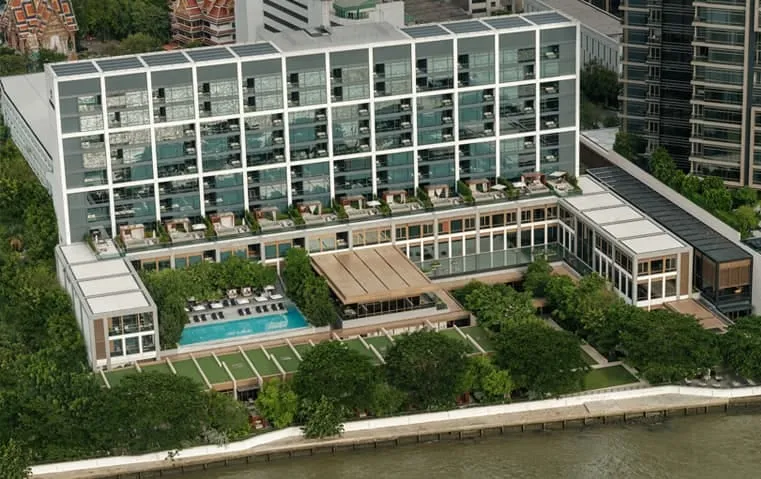
Charoen Krung, Chao Phraya riverside, Bangkok, Thailand
Capella Bangkok
A low-rise riverside sanctuary on the Chao Phraya, where Thai pavilion architecture, a two-Michelin-starred Riviera table and only 101 keys have made a decade-old promenade site into the hotel the rest of Bangkok is measured against.
From $850 per night
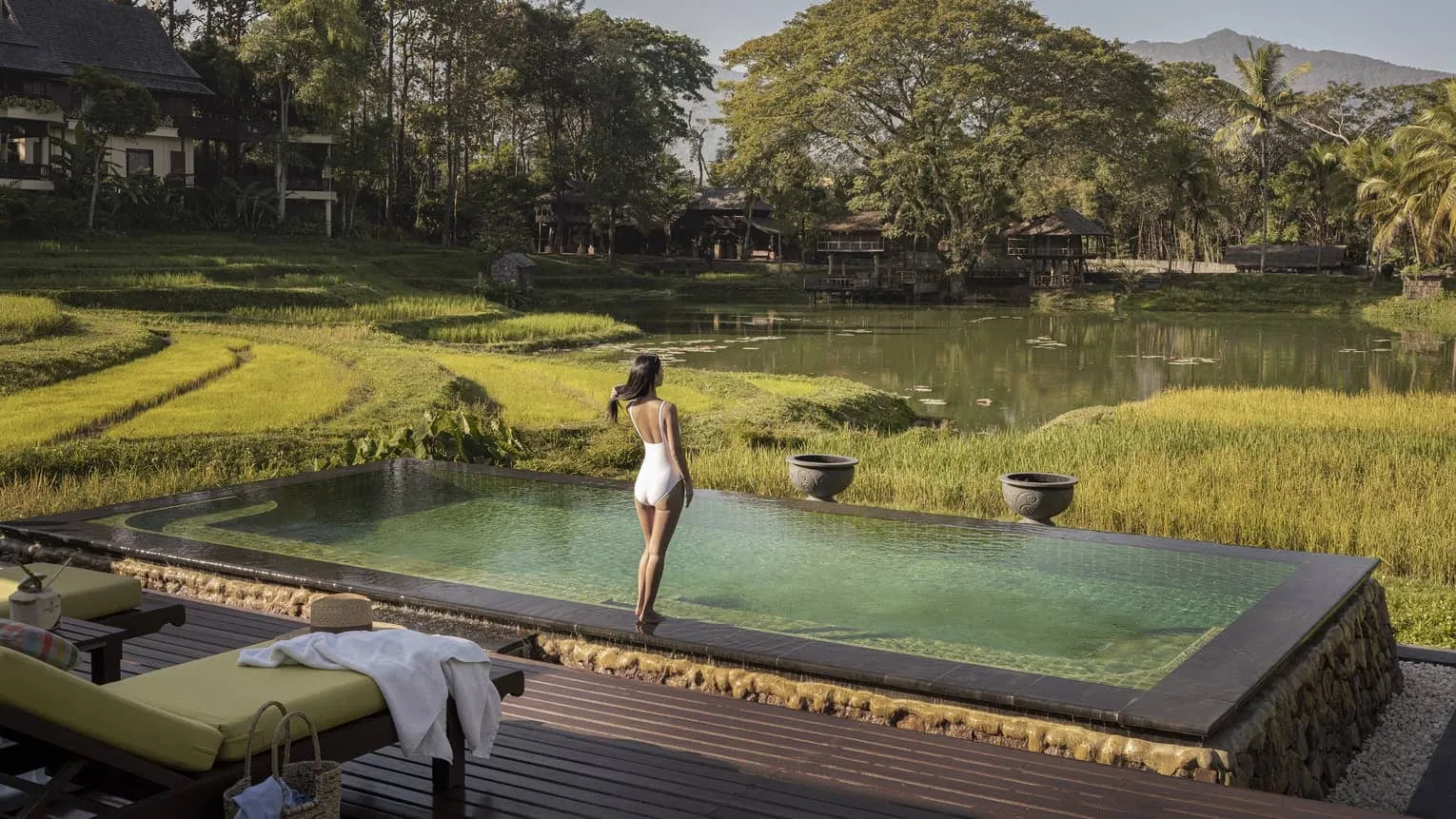
Mae Rim Valley, Chiang Mai, Thailand
Four Seasons Resort Chiang Mai
A working rice valley reimagined as a resort, where teak pavilions and a Michelin-starred kitchen sit inside paddies still farmed by hand.
From $850 per night